← The Morning Edition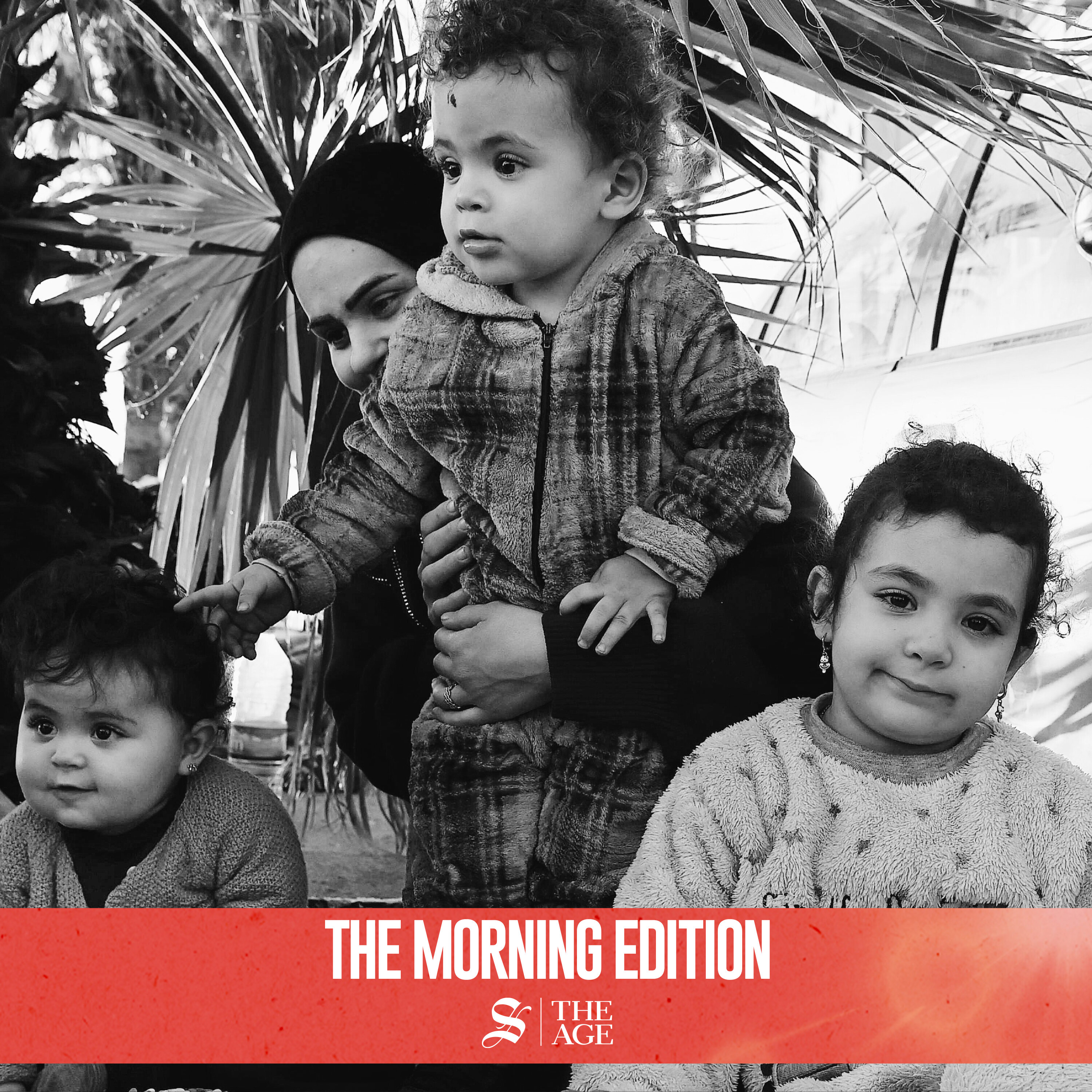
Loading summary
Transcript42 lines
- [00:00]
Australian Financial Review Narrator
It took late night breakthroughs, 404s, a coffee machine that stopped working, a co founder who did too. New code, new investors who said maybe next round, seeing the sector quietly pivot, knowing your idea held true. Model trained, model failed, friends backing you, reading the hype, reheating the spaghetti. Another round, a working demo and a first client for this AI developer to believe they might actually have a business. It's not for everyone. The Australian Financial Review, the daily habit of successful people.
- [00:31]
David Crowe
We're here near the docks in Beirut. There are cranes, there are shipping containers, there are trucks going past. There's also a community here for displaced people in pretty makeshift shelters. What happens in this situation is that you get people who no longer have a home. Some of them have had their homes destroyed or they live in constant anxiety about the fact that their home is standing now, but they don't know whether it'll be there tomorrow. And in this situation, it feels like the war can only go on because the people here are so angry about what's happened to them. It will not lead to peace. They don't think this is going to end. Well.
- [01:13]
Samantha Salinger Morris
I'm Samantha Salinger Morris and you're listening to the MORNING Edition from the Age and the Sydney Morning Herald. That was our correspondent David Crowe, who with photojournalist Kate Garrity is reporting from Lebanon this week after the United States and Israel's war on Iran expanded to the region today. David Crow and Kate Geraghty join us from Beirut. Kate and David, thank you so much for coming on the podcast there on the ground in Lebanon.
- [01:46]
Kate Geraghty
Thanks for having us.
- [01:47]
David Crowe
It's good to talk to you again.
- [01:49]
Samantha Salinger Morris
Kate, can you just describe for listeners where you and David are at the moment? And also Iran is of course the epicenter of this new outbreak of war. But you're in Lebanon, why?
- [02:00]
Kate Geraghty
So currently we are in Beirut, the capital of Lebanon, and we have come to Lebanon to report on the hundreds of thousands of people who have had to flee their homes due to the Israeli airstrikes and also the forced evacuations as the conflict between Israel and Hezbollah has escalated due to the outbreak of war in Iran. We've spent a day travelling south of Beirut. We travelled through several villages, some were quite empty. We also went to the aftermath of a strike, an Israeli strike, and spent the afternoon talking to people who have been impact by that strike.
- [02:48]
Samantha Salinger Morris
And David, talk us through this. Can you tell us a bit more about how Lebanon actually became part of this war between Iran, the US And Israel? When did this all begin?
- [02:58]
David Crowe
It happened within days of Donald Trump and Benjamin Netanyahu launching those attacks on Iran.
- [03:07]
Samantha Salinger Morris
New Israeli strikes hit Beirut's southern suburbs again today.
- [03:11]
David Crowe
Waves of heavy airstrikes in the capital, Beirut, after Hezbollah began fir on Israel earlier this week in support of its patron, Iran. The Beirut bombardment. Israeli fighter jets launching strikes across the Lebanese capital against claimed Hezbollah targets. It's like shock waves going around the world. The strikes on Iran have had a direct impact on what's happening several countries away because Hezbollah forces here have fired on Israel, Israel has fired back. And you get ordinary people in the south of Lebanon who are now caught up in war because of what's happened that's totally outside their control. And they're the people that we've been talking to who've been displaced. And that's why I think it's so compelling. The impact is actually the greatest outside Iran itself in terms of the number of people being killed, the number of people being wounded, and definitely the number of people being displaced from their homes. It's actually a huge impact here. When you think that Lebanon only has a population of 6 million and you've got something like 400,000, probably more than 500,000 now, who've been displaced from their homes. And for instance, today we were looking at a house that had been destroyed. It was not in an evacuation zone. So we were looking and talking to the people at this site where, you know, it looked like it had been a lovely house and it was totally destroyed, but it wasn't in an area where Israeli had said, you must evacuate. And so the zone, I think, if you can put it that way, is widening by the day.
- [05:02]
Samantha Salinger Morris
And so, David, tell us a bit more about that. Tell us about where this once lovely home was that wasn't in an evacuation area. And what did the people around there say to you about what they're experiencing there on the ground?
- [05:15]
David Crowe
Oh, there's a lot of anger when we talk to people, you can understand this. I find it fascinating that there are so many different opinions about what's happening. You talk to people with a range of backgrounds, but one common theme is when you get a situation like this, you get people who talk about the importance of resistance because they feel that they are really under attack. And they don't say, we'll leave our homes and we'll just move away because there's somewhere else we can live. We talk to people who say, I'm not leaving my home. I talked to a guy today whose parents are still in the south of Lebanon because they refuse to Leave. They've left before in previous conflicts, and they refuse to do it this time because they don't enjoy not being in their own home. So, I mean, I think Kate would have seen this also in Ukraine. People who are near the front, they want to stay in their communities, even though the risk is high. You do find people like this, and you find that it really fuels anger. And you can see why each wave of conflict in the Middle east only deepens the conditions that lead to the next wave of conflict.
- [06:30]
Samantha Salinger Morris
And tell us, so what does that actually look like? So when people are in areas that have been hit or they're near areas that have been hit, and it's actually fueling their sense of resistance, like, no, we are going to stay here. Are they living amongst rubble? Are they living in makeshift tents? What does it actually look like?
- [06:45]
Kate Geraghty
Well, I mean, one thing is that the forced evacuations and, you know, the people who've had to flee, they're now living on footpaths. They're living in tents. They are, if they're lucky, they're in a school that's been converted to a shelter. The entire family is in one room. They are sleeping, you know, in parks. They are having their one meal, hot meal brought to them through, you know, the rallying of community and local NGOs. And you have to remember that this is winter. But then when you go down outside of Beirut, there will be empty streets, there will be traffic jams in other areas where they're trying to flee. There are people who are already relaying the bricks of. Of a wall of the house that next door people were killed in. It is an enduring toll that civilians are asked or, well, not. They're not even asked to force, to put in. They were forced to pay. They bear the brunt of decisions by politicians and governments.
- [08:08]
Samantha Salinger Morris
And, Kate, this is your third time covering war in Lebanon. You were there just 18 months ago. This was the last time Leban under Israeli bombardment. So do you have a sense yet of whether there's, I guess, anything different this time around?
- [08:23]
Kate Geraghty
Well, the first time I went to or I came to Lebanon was actually 20 years ago. It was a 2006 conflict between Hezbollah and Israel. And then 18 months ago, we were here before the ceasefire agreement, and now we're back again. The one thing that I would say is different from 20 years ago is that nowhere is safe in Lebanon for the civilian population. Anywhere can be targeted. The other thing is, is that other countries have air raid alerts. They have air raid sirens. They have apps on their Phones that will tell them when there are, you know, incoming missiles. In Lebanon, there is no such luxury. You are given little or no notice. You might get a, a text message or there might be a, like a post on, on social media by the Israeli military or government. But many times people have very, very little time to flee. So that would be the one rather large you know, difference. The other thing that never changes in war is what we've been talking about before, and that's the cost of war on civilians. I mean, there is over 400 people dead, there is over a thousand injured, and that's in a week. So that, that never changes. But one thing that does remain the same is what I've always seen in Lebanon is the dignity of civilians enduring pretty much the unimaginable to people back home.
- [10:10]
Samantha Salinger Morris
And what does that look like? How does that dignity manifest? What are you seeing?
- [10:14]
David Crowe
Well, I guess it's the fact that they have an incredible resilience in the way they deal with this situation. I talked to an accountant the other day who decided to get together with friends and set up a shelter for displaced people in a school that wasn't being fully used. And so that school became a shelter. Every classroom was turned into short term accommodation. And on the ground floor, on the concrete, they put up tents. But in the middle of that building, in a kind of a courtyard, a paved area where the kids would normally play at lunchtime, all these fantastic children were playing, they were playing soccer. They came up to us. They loved talking to Kate. I mean, you know, once they saw that Kate was taking photographs, they were crowding around, looking at the photographs that Kate took. They're dealing with an incredibly difficult situation. But there's this spirit in the people dealing with it that shows how they can get through things like this. I spoke to an old man who was sitting and watching this and sort of laughing as he watched the children. He's about 70, lovely old man. He's seen civil war, he's seen conflict after conflict after conflict. And still he has this kind of ability to endure it and still, I think, you know, enjoy those little moments of the day where he's seeing the community around him manage to get through it. Kate took a lovely photograph of him as well. I think that's what you see even in the hardest times. You see the spirit of people being
- [11:53]
Samantha Salinger Morris
able to get through it after the break.
- [11:57]
Kate Geraghty
So the city is somewhat under strain, to answer your question. I hope it doesn't continue. But you know, I've covered three wars with the same actors Involved.
- [12:19]
Australian Financial Review Narrator
It took the 4:30am starts, a run, ice bath agony. Clear mind clarity, projections that added up then didn't. The deal on the table. News of regulation changes, the deal slipping away. Urgent school pickup, urgent new projections. The forecast turning arrival bid landing a near perfect pitch. The waiting, the legal papers arriving and a signed deal for this corporate leader to finally relax. It's not for everyone. The Australian Financial Review. The daily habit of successful people.
- [12:52]
Samantha Salinger Morris
Kate, can you describe to us, I guess, what a day has been like there? Because so many of us listening to you both have never thankfully been to a war zone before. So I guess just tell us, what is it like there? Where do you sleep? Can you sleep? And how do you actually follow the story there? When of course there's always the threat or the reality of bombs dropping attacks and the like.
- [13:15]
Kate Geraghty
Well, every day you approach it with the knowledge that it will probably change from the way you've planned. Could be that airstrikes have happened in a certain place or you can't get to one location that you wanted to go to because you know it's been turned into a no go zone due to security reasons or the person that you would want to meet, you know, has had to make other plans themselves. So there's a lot of uncertainty regarding sleep. I mean, whatever we're enduring is absolutely minimal compared to what the civilian population are dealing with. But what you do hear as a constant is the sound of Israeli drones. They there's just like this background hum that canvases the city and then you could be woken up to the kind of the echo of Israeli war or fighter jets. You might hear the thud of explosions.
- [14:28]
David Crowe
I find it to be a really strange time and place because you go down a crowded street, there'll be cars double parked or triple parked because people are sleeping in those cars because they've driven in from the south of Lebanon into Beirut, parked the car and that's their accommodation. At the very same time, there's a barber shop where the young blokes are getting their haircuts as if it's just another day. A few stores down there's a hardware store that's open, then there's a carpet store that's open. And if you go through the wealthier districts of town, you find you can go into a store and buy a Swiss watch. That is the nature of things. But that dichotomy in Beirut is jarring. It means that we're not saying we're sleeping in tents, we're very fortunate compared to the people who have come into Beirut because they've been displaced. And so it's possible to sit in a cafe and have a coffee and then go for a short drive and go to a hill. And from that hill, you look out over South Beirut and you can see the strikes, you can see the flames, you can see the black smoke rising over this neighborhood in the south of the city. You go 10 minutes another way and you can go back to a coffee while you look at the Mediterranean. So it's a very. It's a strange time. And there is this anxiety about what could happen next in this country when this chaos and death has been unleashed only in the last 10 days or so.
- [16:08]
Samantha Salinger Morris
Well, that's what I wanted to ask you, David, just zooming out. What is the impact of this second front of the Iran war, both in Lebanon and more widely in the Middle East?
- [16:20]
David Crowe
Well, everything changes because the Iranian regime is under such pressure. There hasn't been a situation like this before, since 1979, because the Islamic Republic dates from 1979, so that's 47 years. And they're coming under pressure they have not seen before. And that has consequences for every other part of the region where there's been a group supported by the Islamic Republic. And that changes things. In Lebanon, because of Hezbollah, we drove through a neighborhood today where there was a large poster of the former Supreme Leader of Iran. There are people here who saw him as a. As a guiding light, but they no longer have the same level of support from Iran. And. And that changes the dynamic here. And I think that's a big explanation for why Israel now sees this moment to intensify its attacks on Hezbollah and this southern part of Lebanon and other parts of Lebanon in a way that may be quite different. We don't really know how that's going to play out, but it's certainly a time where. Where there's a lot of anxiety about how much worse it could get.
- [17:36]
Samantha Salinger Morris
This is what I've been wondering. Might this conflict between Israel and Lebanon continue no matter what happens with Iran, as Israel and Hezbollah just continue attacking each other? Even if Iran and the US were to sign a ceasefire or something like
- [17:49]
Kate Geraghty
that, Even after the 2024 ceasefire agreement, there have been violations. Communities have not been able to. Been able to return. So the people who have been fleeing the south and also Bakar and also the southern suburbs are joining some of the tens of thousands that had fled in 2024. So the city is somewhat under strain. To answer your question, I hope it doesn't continue. But, you know, I'VE covered three wars with the same actors involved.
- [18:34]
David Crowe
Also, we've talked to people who don't think it ever really stopped. They see this as just another phase in a long war and that, you know, academics could argue over that.
- [18:49]
Samantha Salinger Morris
Right.
- [18:50]
David Crowe
And politicians would argue over that. But I'm just saying what people tell you when you walk through a shelter for displaced people. They see it as a constant war and they see their task as constant resistance.
- [19:09]
Samantha Salinger Morris
Well, David and Kate, we are so lucky to be reporting with you. Listeners wouldn't have known this, but right before we started recording, your electricity went out, such as the conditions that you're in. So thank you so much both for your time.
- [19:22]
Kate Geraghty
Thank you.
- [19:23]
David Crowe
Thanks for having us on.
- [19:29]
Samantha Salinger Morris
Today's episode was produced by Chi Wong. Our executive producer is Tammy Mills. And our podcasts are overseen by Lisa Muxworthy and Tom McKendrick. If you like our show, follow the Morning edition and leave a review for us on Apple or Spotify. Thanks for listening.
- [19:50]
Australian Financial Review Narrator
It took the 4:30am starts a run. Ice bath, agony. Clear mind clarity, Projections that added up, then didn't. Then the deal on the table. News of regulation changes, the deal slipping away. Urgent school pickup, urgent new projections. The forecast turning arrival bid landing a near perfect pitch. The waiting, the legal papers arriving and a signed deal for this corporate leader to finally relax. It's not for everyone. The Australian Financial Review. The daily habit of successful people.
- [20:20]
Samantha Salinger Morris
Jack Harndale was helping his daughter Emily lift an awkward dresser up a staircase when he slipped and fell backwards. A week later, Emily asked him how he was doing.
- [20:29]
David Crowe
I'm good.
- [20:30]
Samantha Salinger Morris
Truth was, he wasn't good. Jack needed help. Then the darndest thing happened. Emily called Pacific Source my health plan. Jack learned that Pacific Source provides members with support beyond health care. In Jack's case, we got him in touch with the local food bank.
- [20:46]
David Crowe
You guys do that?
- [20:48]
Samantha Salinger Morris
Yes, we do, Jack. Pacific Source health plan.