← The Morning Edition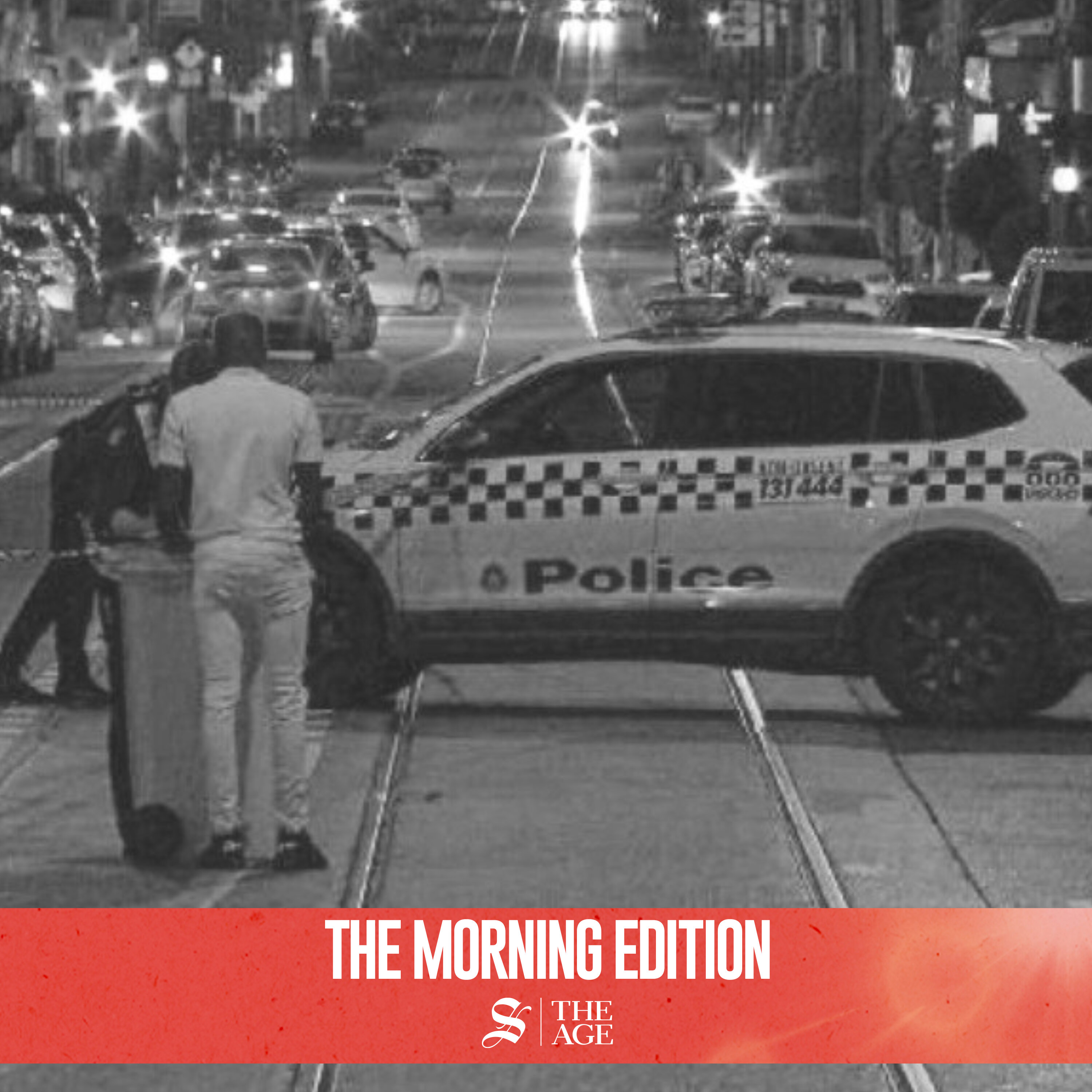
The Morning Edition
Why Melbourne's nightclubs have been targeted by a 'Fagin-like' mystery figure
00:16:38
Loading summary
Transcript42 lines
- [00:05]
A
It sounds like something from a crime drama. Firebombs, drive by shootings and kidnapping attempts. But this is no work of fiction. Rather it is Melbourne's nightlife industry, which has been beset by violent crimes for much of this year. Another Melbourne nightclub has been firebombed and badly damaged. Nightclub owners in Melbourne are on edge as firebombing attacks terrorise the hospitality sector.
- [00:29]
B
The violence is escalating.
- [00:32]
A
What were once relatively rare crimes in the city have recently become regular occurrences. So just what is happening on the streets of Melbourne? I'm Benjamin Price filling in for Samantha Sellinger Morris, and you're listening to the Morning Edition from the Age and the Sydney Morning Herald. Today, crime reporters Chris Vitilago and Carla Yeager on the crime wave that swept Melbourne. It's Monday, May 18th. Welcome, Carla and Chris, to the Morning Edition.
- [01:06]
C
Happy to be here.
- [01:07]
B
Thank you.
- [01:08]
A
Can you help set the scene for us, Chris, when did this series of nightclub attacks start and what has been happening?
- [01:14]
B
Well, we believe it started in February with an attempted firebombing at the Emerson, a very popular nightclub in South Yarra, in one of our most popular kind of nightlife precincts in Melbourne. Since then, there's been nearly 40 attacks and basically the most of them are people drive up in the COVID of night after the nightclubs are closed and everyone's gone home and they ram into the front of the business or they break the front of the business and they throw Molotov cocktails into it, they try to burn it down. And it's basically started as a string of arson attacks against nightclubs that were closed. But it's escalated into drive by shootings at venues during operating hours when people are out drinking and partying. There's been home invasions, kidnappings, carjackings, drive by, shootings of other places, fires at warehouses. It's nearly 40 attacks and it's been going on constantly for nearly two and a half months.
- [02:04]
A
And normally you might expect that these might be linked to control over the drug trade or nightclub security. Do we have that kind of motive here?
- [02:12]
B
This is something we haven't seen before. And you're right, normally we'd be talking about people trying to control drugs, moving through clubs or the sale of alcohol, or who runs security in order to control those things inside the clubs. In this case, it's a motiveless crime. We just don't know why they're doing this and yet they keep doing it. It's kind of paralyzed Melbourne's nightlife community because they really don't understand what's going on. It's been very, very violent in a very short period of time.
- [02:39]
A
So, Carla, what has been the impact on the nightlife scene in Melbourne?
- [02:43]
C
I guess talking, you know, the physical impact. There have been, you know, 40 foot trucks parked out the front of places in an attempt to prevent if there was a drive by shooting. There have been bollards put up. You know, venues have been using cast iron gates and reinforcements. Then there is this second element of terror really among venue owners, people working in the industry because they have no idea what's going on, but they, they know that not only is their venue at risk, but their lives. Too many of them have been told by police to go into hiding. That includes club promoters. There was three attempted kidnappings in April. One of them was actually a successful kidnapping, but police believe they targeted the wrong man. This man was abducted from his home. He was allegedly held overnight. He was allegedly assaulted and then the accused offenders are accused of dumping him outside a hospital. Police believe that the intended target of that kidnapping was a club promoter. So I, I suppose I say that to, to just, you know, give an example of, of how extreme the level of violence is and the, the threat to safety for, for people and paint
- [04:02]
A
the geographical picture for us. Where are these attacks actually happening? Are they widespread or confined to particular nightlife spots?
- [04:10]
C
That's what's really interesting about this and what police have said is the closest pattern that they found in the venues being targeted is that they all seem to be, for the most part, constrained to three areas, and that's Melbourne cbd, the Chapel street precinct and South Melbourne. So these very, you know, city and inner city nightlife hotspots, essentially there are a couple anomalies in that when they've targeted residential areas, and these are areas
- [04:42]
A
that are very popular on weekends, aren't they? So in Sydney, they're comparable to Oxford street or Fortitude Valley in Brisbane. A lot of nightlife people going out late into the night.
- [04:53]
C
Yeah, absolutely. I mean, they're big party venues. If you think about Chapel street, that's sort of the, I guess not so much now, but it had kind of a more of iconic nightlife feel about it. It's got Revolver, Love Machine, which is part of this whole spread of attacks. It burnt down it in March. You know, the Emerson, the Osborne. It's kind of a, you know, a real hotspot.
- [05:15]
A
Chris, these attacks have been highly unusual for Melbourne. What do you think's driving them?
- [05:20]
B
Well, it's interesting about this is. I mean, arson has become a real weapon of choice for the underworld in the last four or five years. We saw it with the tobacco war. There was 150 firebombings in Melbourne and Victoria alone. This is unusual because they're targeting actual venues that people congregate at for fun. Right. And sometimes those venues are occupied, like in a drive by shooting at the Emerson. Other times they're closed. But we've never seen people target places where people go for pleasure like this before. And in such a confined area, it's really, really intense. And what's driving it is the thing is nobody knows, nobody really understands why this is happening. Not the venue owners, not the police. There's no answer to what these people want and why they keep this sustained campaign of violence going.
- [06:05]
A
And you've reported multiple owners received an encrypted message in the lead up to some of these attacks. It was from an Iraq based crime gang. If you got this message, we're after you, your family, your business, homes and souls. But they didn't list any specific demands. Who is this Iraqi crime gang and what do you think it wants?
- [06:25]
B
This is the strangest thing, that as an extortion demand, there's no payoff. There's this. It's not even an implied threat. It's a serious direct threat. But they're not saying this is how you make this stop. What we've come to understand is that this threat is coming from an Iraq based crime group that's associated with the tobacco wars in particular. We believe it's centered around one particular 23 year old who left the country in 2022 following a shooting and has for some reason decided to use the infrastructure of the tobacco war, this ability to order anonymous attacks, firebombings and shootings to wage war on Melbourne's nightlife.
- [07:04]
A
So can you talk a little bit more about that relationship between this spate of nightclub attacks and Melbourne's tobacco wars, in which tobacco retailers across the city have been targeted with firebombings.
- [07:16]
B
So what we saw was an effectively an attempt to control the sale of illicit tobacco in Melbourne, Victoria and elsewhere in Australia. The powers that be that were doing this were based overseas in Iraq. So the command structure of the organized crime group lives in another country. And they were directing attacks and extortion demands at local businesses here through encrypted apps and diffuse networks of offenders. It was kind of a transnational crime wave that we'd never really seen before. And what we see now is that somebody has picked up the reins of that and is applying it away from tobacco shops and into the nightlife scene where they're basically using street kids, ordering street kids anonymously and paying them off anonymously to conduct this war of terror on nightclubs.
- [08:05]
C
After the break, they are now able to reach kids with little to no criminal links. Somehow kids who have never been exposed to crime are being contacted by people online.
- [08:29]
A
So Carla, can you tell us a bit more about who is actually going to these venues and setting fire to them and how are these attacks ordered?
- [08:38]
C
Yeah, well, as Chris said earlier that these are street kids predominantly. So the Victoria police said that there have been 44 arrests. We know of 20ish. And almost all of them are teenagers and these sort of low level offenders. I think the youngest is about 14 years old. They range between 14 and 17. They get contacted on an encrypted messaging app, typically signal. They are then paid anywhere between $1,000, $3,000 to then go. They usually get given a location, they arrive at that location, there's a stolen car waiting for them. They'll take that car to the address and there will be jerry cans of petrol in the car and then they will carry out or attempt to carry out an arson or in some cases there have been shootings. And you know, what we see is that police have not been able to get any further than the arrests of these street kids. So they can't figure out who is actually ordering these attacks. But it has sort of reached a new escalation that's separate to the tobacco wars in that they are now able to reach kids with little to no criminal links. Somehow kids who have never been exposed to crime are being contacted by people online and then, you know, keen to make a few thousand dollars or however much money go and go and do this.
- [10:14]
A
So when I hear that one might assume that they've got connections to the underworld, but is their involvement really just random?
- [10:21]
C
Yeah, I mean that's a really fair assumption. But it's the million dollar question. Police don't know how this network was formed and I think that is so befuddling for everyone involved. It really feels like a mystery figure that is pulling these strings and they can't get further than those low level ranks in their investigations.
- [10:46]
B
I've heard it referred to as kind of one or more Fagin, like characters from Oliver Twist, that this person who's ever receiving the orders from Arak is somehow plugged into this network of children that are encouraging them to go from 0 to 100 and commit these violent crimes. And there's these people are out there, but we Just don't know who they are, how they're doing this.
- [11:07]
A
And listeners may not have seen this reported, but CCTV footage has captured some of these attacks. This footage shows suspects taking out mobile phones and filming themselves at the scene. Why are they doing that?
- [11:20]
C
For proof for the boss. Basically, if they don't film it to prove that they did it, they don't get paid. In one instance, the accused. There was four alleged offenders in a warehouse that was targeted and three were allegedly paid $3,000 to carry out the attack and there was one who was allegedly paid $1,000 purely to be the cameraman. It's really important for the, you know, business of this sort of crime Tasker syndicate, really.
- [11:49]
A
Chris, can you tell us about how the venue owners have responded?
- [11:53]
B
They're terrifying. They don't understand what's going on, they don't know how to make it stop. There's genuine fear out there because they can't work out why it's happening. And they've responded by beefing up security, hiring guards round the clock guards to guard venues, putting bollards and trucks and containers outside their venues. I mean, it's a bizarre scene down on Chapel street, if you go and have a look. And in those areas, they're terrified. And some of them, because their homes have been invaded and their relatives have been beaten up or they've been carjacked, they've had to go into hiding. I mean, they've had to move into Airbnbs in various parts of the city on police advice, because they terrified and they don't know when it's going to stop.
- [12:36]
A
So, Carla, this goes wider than clubs, though, doesn't it? I mean, how is it that a French restaurant like Francois has been targeted in this?
- [12:44]
C
Yeah, that one was quite a peculiar case, I suppose, of the targets. There's also been brothels and strip clubs that have been targeted, I suppose. Francois, for our national listeners, is, you know, one of the most iconic bistros in. In Melbourne. And what was very peculiar about that is the. The owner told us that they had received calls in the lead up to the attack. So the attack happened on a Thursday, or attempted attack in the lead up to that they had concerned customers calling them to say that they had heard that a threat had been made against Francois and checking if they. They're all right. Now, the owners say that they had no idea about any of that and it was only until two people were arrested the following Thursday that they had any sense of what was going on. It's incredibly perplexing you know, not only for the owners, but for us as journalists to sort of make sense of, you know, what exactly is the aim. And as, as Chris has said, it's perplexing for police as well.
- [13:52]
A
So tell us, what are police saying about these attacks and what are some of their lines of investigation?
- [13:58]
C
Well, publicly, they are very adamant that they're keeping all lines of investigations open. That includes looking into theories about the illicit alcohol trade in conjunction with a cell of cocaine. They go hand in hand with each other in those, in those trades. They're also looking at, as we mentioned, the. This Iraqi crime gang. They have not publicly confirmed that, but we have privately, through several sources, they have established a task force called Operation Eclipse. And it seems like that they have narrowed down line investigation into this Iraqi crime gang, but will not confirm anything for the moment. We obtained a recording of a police briefing where the head of the arson squad said that it was very unlikely that illicit alcohol was the cause of all of this mayhem.
- [14:55]
A
So just finally, do you think this has had any impact on people's decisions about whether to go out or not?
- [15:01]
C
Well, it's hard to know exactly what people are thinking, but, you know, it was such an extraordinary warning that police gave in mid April, warning revelers, if you are out, look out for suspicious activity, be alert, be aware, call anything into police. And that that was across for, you know, any part of Inner Melbourne, which is pretty extraordinary.
- [15:25]
B
And look, the venue owners are determined to stay open. The police are determined to allow them, to help them stay open. They flooded the zone down in the Chapel street precinct with undercover police, a uniform police, these kind of vans with the cameras on the top so people can go out and feel safe. And on top of that, just this week, the state government gave, basically gave the industry $10 million to beef up their security so people can continue to enjoy Melbourne's nightlife.
- [15:57]
A
Kala and Chris, thanks very much for joining us today on the Morning edition.
- [16:02]
B
Thank you.
- [16:02]
C
Thank you so much.
- [16:13]
A
Today's episode was produced by Josh Towers. Our executive producer is Tammy Mills. And our podcasts are overseen by Lisa Muxworthy and Tom McKendrick. If you like our show, follow the Morning Edition on Apple or Spotify. And while you're there, leave a review. Thanks for listening.