← The Morning Edition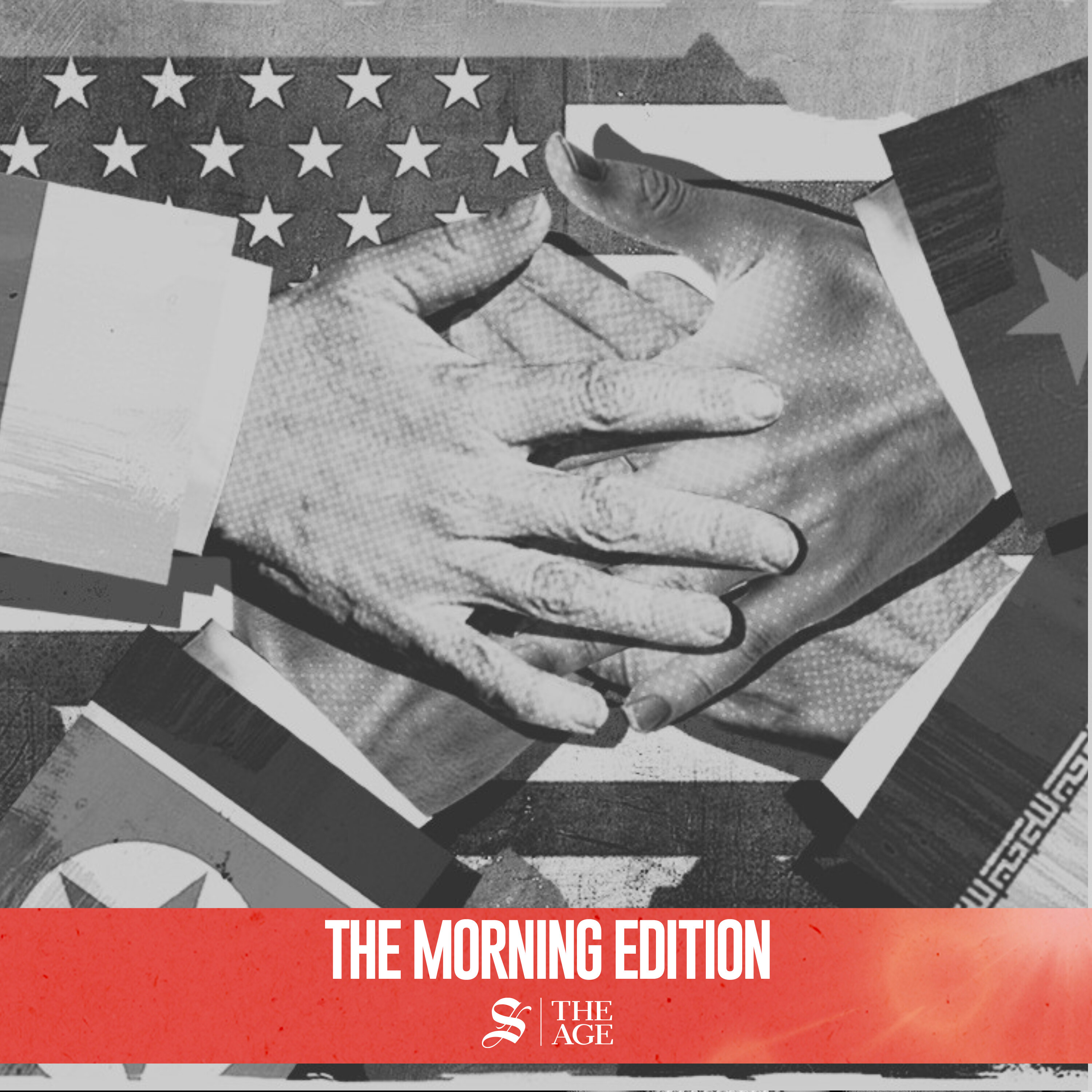
Loading summary
Transcript45 lines
- [00:00]
A
Just a quick note before we launch into today's episode, because next Thursday we'll be airing a special episode with international and political editor Peter Harger in which he will be answering your questions. So if you'd like us to talk about what you're wondering about, whether it's about local politics or geopolitical matters, please send your questions to podcastsin.com au and we may feature it next week on air. And now to today's episode. Since the Cold War ended more than 35 years ago, many of us have likely not given much thought to block warfare, those nuclear threats that the Western and Eastern blocs hurled at each other. A thing of the past. But lately, the beginnings of a return to block warfare have revealed themselves. I'm Samantha Salinger Morris, and you're listening to the Morning Edition from the Age and the Sydney Morning Herald. Today, international and political editor Peter Harcher on the group of countries that are assisting each other to fight wars and why few of us have heard about their grouping. It's April 23rd. Welcome, Peter, back to the podcast.
- [01:23]
B
Pleasure to be here, Samantha.
- [01:24]
C
Okay, can you start off by telling us who makes up this KRINKS grouping and why were you moved to write about them now? Because you point out in your column it, you know, formed about nine years ago. It's not new.
- [01:36]
A
So why now?
- [01:38]
B
Well, it was first cooked up as simply an acronym to describe a group of four countries, three that sort of made up America's leading enemies, the leading enemies of the West. So it's krinks, which is China, Russia, Iran, North Korea. That's the group. But it wasn't in any way a group. It was just four countries that were deemed to be anti American, anti Western interests.
- [02:04]
A
Okay.
- [02:05]
B
The reason to write about it now is that we see those four countries cooperating on the battlefield. They had done it in and continue to do it in Ukraine during the Russian invasion of Ukraine. They've all come in on Russia's side to help Russia defeat Ukraine. And now the new element, and the reason I wrote about it, is that on the battlefield In Iran, the four have coalesced again to support the Iranians against the U.S. so it's more not anymore just an acronym or a random bunch of names. It's a battlefield coalition where four countries come together to support each other in wars against Western interests.
- [02:52]
C
Okay, so, Peter, let's start off. Can you walk us through the various and practical ways in which China is helping Iran in, of course, its war against Israel and the United States?
- [03:03]
B
Well, China is Of course, the biggest and most capable of the four Krinks countries. It's helping Iran in a number of ways and has been. And one of those is supplying propellant for solid fuel rockets, for missiles. There are sanctions, international sanctions on Iran to prevent them getting this stuff. But we've learned from various media reporting that thousands of tons of solid fuel missile propellant precursors have been sent from China to Iran which would allow them to build, to assemble, it's been estimated thousands, thousands of ballistic missiles, at least 1,000 ballistic missiles depending on the size and range. So that's big.
- [03:48]
C
That's huge.
- [03:49]
B
Another one is that China has given Iran access to its proprietary and military grade GPS system. So the world has a few different GPS systems. There's the US based one which we in Australia use and most countries in the west use. The Russians have got their own one, the EU has their own one, Galileo, and the Chinese have their one called the Beidou system. The Beidou system has been around for a few years. It's global, it's high tech, and they've given the Iranians access to their top level, military grade, most sensitive and secret Beidou satellite system, which comes down to very fine resolutions to allow them to target their missiles better. Then there's another revelation from just last week that China has also given Iran access to a high grade satellite system that gives particular assistance in targeting for missile and drone attacks on U.S. bases and interests and also the other Gulf countries. One example of how it appears to have worked, according to London's Financial Times, which obtained the logs for the use of this satellite by the Iranians, is that the US had five Air Force planes on the tarmac in Saudi Arabia refueling, and the Iranians successfully hit all of them using the satellite it seems provided by China. So that's quite a bit of assistance already. Plus, China buys something like 90% of all Iran's oil and that gives the Iranians, depending upon the year and the oil price, about between a third and a half of all government revenues that flow to Iran. So without that sale of sanctioned oil to China, the Iranian government would have collapsed long ago.
- [05:41]
C
Okay, so this would have helped Iran presumably continue to prosecute its war against Israel and the United States. But it's not just China, of course, that is helping Iran. So tell us what North Korea is doing to help Iran.
- [05:53]
B
Well, the North Koreans, this surprisingly didn't get a lot of publicity, but the North Koreans have proven that they have both intercontinental ballistic missiles and they also have nuclear warheads which they've been Testing underground. So we know that they work. The Iranians have said that if Israel should attack Iran with a nuclear weapon, then the North Koreans would explode, would fire nuclear weapons into Israel. So that's pretty spicy, say the least. Yeah. So that's a pretty fulsome expression of support by Kim Jong Un. The other big and important assistance, and this is not a threat or theoretical, this is actual, is missile technology. The North Koreans have been sending engineers for years to help the Iranians improve and perfect the technology for all of their short and medium range missiles, making them faster, more lethal, better targeting and all of that. So that's been really important for the Iranians to get that help from Pyongyang.
- [07:05]
C
Okay. But it's not just all the ways in which the Krinks are coming together to support Iran in its war that you've mentioned just now. Because Russia and North Korea, they're also then benefiting from China, right?
- [07:17]
B
Yes. So again, oil is a big thing because it's how these countries remain solvent. They're only able to continue as functioning states because the Chinese government buys their oil in large quantities. Russia, North Korea, Iran, all of them are kept afloat. In the case of North Korea, they're such an impoverished country they can't afford the oil imports that they need to keep their economy running. So their Chinese friends help them with a heavily discounted oil friendship prices, they call it, into North Korea. So it's a system where of mutual assistance that we see coalescing on the battlefield more and more, not only in Ukraine. And we saw that really bizarre scene last year in Ukraine on the battlefield where 15,000 North Korean soldiers turned up. That's way out of zone from North Korea to Ukraine fighting against the Ukrainians to help the Russians. That was really something. And if there were any doubt anymore that the two theaters, the European Theater and the Indo Pacific Theater were actually one and the same, they were dispelled with that battlefield evidence and operates on many other aspects and realms as well. But that's a real thing. And the Krinks actually had their own little coming out moment last year.
- [08:48]
C
Well, they did, they did. And you, you had a spicy sentence about that one. So I might just lead you to that, Peter, because you said that yes, there was this coming out party in September. Some listeners might remember that. That was of course when the leaders of Iran, Russia, China and North Korea gathered in Beijing. And you said there were some useful idiots for the Chinese Communist Party. Among them victorious ex Premier Dan Andrews and New South Wales ex Premier Bob Carr. Though, as you noted, Carr didn't appear at the military parade. A big deal was made of that at the which leads me to my question, which is does the presence of Bob Carr, Dan Andrews, among others, does this explain why perhaps many of us haven't heard of krinks? Like are they an example of perhaps people that don't recognize the danger in
- [09:34]
A
this block that they pose?
- [09:36]
B
Well, it's true that most people haven't heard the acronym krinks, but we're going to be hearing more about it in the year ahead as they continue to coalesce and cooperate. In the case of those two ex labor premiers, I don't think they have that excuse. They're both run governments, they're well briefed on international affairs and well informed. They've both emerged as apologists for the Chinese Communist Party. In an embarrassing event for Victoria and for our country, Dan Andrews signed Victoria up for the Belt and Road agreement with China.
- [10:13]
C
That's right.
- [10:14]
B
It was embarrassing for two reasons. First of all, Victoria was able to raise funds more cheaply issued bonds to finance state borrowing more cheaply in its own name than doing it from China. The Chinese would have charged them more. So why you would make yourself subject to their political influence by allowing your state to do that is one question. And the answer was provided by the federal government which cancelled that arrangement on behalf of the Victorian government. So that was one measure. And Bob Carr is just a consistent friend for the Chinese Communist Party in Australia. So they were showing up in Beijing to show support for the Chinese Communist Party and their historic celebration of victory over the Japanese in World War II. So that's what that was about. But was it naive? Was it conniving? Was it just a gesture of friendship? I don't know, but it was foolish.
- [11:16]
C
Just one more question on that, Peter. Just more broadly in terms of why so many of us hadn't really heard about this bloc, didn't know much about it because you quote Lavinna Lee, she's the director of the Foreign Policy and Defence Program at the University of Sydney's University US Study center, and she says, you know, it's quite alarming. She says the world is becoming extremely dangerous because these countries are assisting each other to fight wars. And you also quote a pair of American scholars that call them an axis of upheaval who are presenting a generational challenge. So why don't we know about it, Peter?
- [11:50]
B
Well, partly it's because it is new and unfolding day by day, week by week, which is why I wrote my column about it because this is a new development we should know about. But it's also important because it gives, if you look at the geography on the map of where Iran, Russia, China are, you can see it gives them a commanding position over the Eurasian land mass, which in a lot of conventional strategic thinking means that they have, they're in the box seat for global dominance. If you can dominate the Eurasian landmass. There's a contending school of thought that says it's about sea power, but there is no question that it gives them a strong combined position together with the North Koreans and their strategic position, obviously, which they have a land border with China gives them a large band of continuity across three separate continents, which is, you know, a large and increasingly relevant phenomenon, which gives them, which makes them more than the sum of their parts. After the break, as China and North Korea are now working more closely with Russia and Iran. You can't pick your enemy. You're getting all four, whether you like it or not.
- [13:17]
C
Okay, so is this why Lavina Lee again from the US Study center at the University of Sydney, is this why she said that even if there is a ceasefire between Iran and us and Israel, she said China, Russia and North Korea will not stop. This isn't going to stop. This isn't over even if that ceasefire were to come to pass. Is this why? Because.
- [13:39]
B
Yes, because this is. This is not a one off event where they've come together just for a few weeks to help each other. This is an enduring structural system now. And they will continue to help the Iranians to rebuild their stock in drones and missiles. And the Iranians, when they have space, will continue their support for the other countries in the group. Their shahed drones, for example, have become famous worldwide because the Iranians have supplied their drones and their technology to Russia to make war against Ukraine. All of those elements come together. It's not a one off, it's a package deal.
- [14:22]
A
Okay.
- [14:23]
C
And so you and I were talking just before we started recording today about the announcement just on Tuesday that Japan made that they are now allowing the sale of weapons abroad to 17 countries. This includes selling warships to us. This is of course very notable for Japan, which has that power pacifist constitution. So tell us about the significance of this, Peter. Does this indicate, you know, a practical counterpoint, I guess, to the danger that is being posed by this Krinks collective?
- [14:51]
B
Yeah, I'd make two points. In the immediate sense, what Japan has done is realising that the US is not a reliable ally. It's decided it needs to do much more in its own defense. And that's been going on for a few years. But the current Prime Minister, Japan's first female Prime Minister, Takaichi Sanae Takaichi is accelerating Japan's doubling of its defense budget as a percentage of GDP from 1% to 2. She's taken a much more assertive and open stance against China and North Korea. And as part of that, Japan is now selling weaponry to countries. There are 17 countries to which it says it's friendly or like minded, countries to which it can sell even its biggest military hardware, ships and planes and all the rest of it. Australia is buying a $10 billion worth of frigates, the Mogami class frigates from Japan, which is helpful to Australia because it gives us a source that's not the us. It helps diversify our supplies of military hardware. Essentially this says we can't rely on the us. We're not big enough ourselves. We need to help arm our friends. And what are they arming against? They're arming against China and North Korea. But as China and North Korea are now working more closely with Russia and Iran, you can't separate, you can't pick your enemy. It comes as a boxed set. You know you're getting all four whether you like it or not. So that's the immediate point about Japan. The larger point I'd make is Japan obviously was unique with its post war pacifist constitution. The other big pacifist or quasi pacifist state since World War II has been Germany. Although it's been a member of NATO, it's really been reluctant in terms of defence and security matters. The Chancellor Friedrich Merz has said that the NATO bloc can't be relied on, the US can't be relied on, that the European nations have to be prepared to stand on their own feet. He has declared the pre existing world order, he said, quote, it no longer exists. So Germany has announced a massive upgrading of its defence budget, doubling of its defence budget and is taking many more active steps to prepare for war, including talking to the French about using the French nuclear shield. And Germany's also started a pilot program in national service. It's not the old style conscription or military national service, but it is a pilot program starting with some thousands of young men and women if they choose to do a year or so of training. And they've said that they'll ramp this up in over the years to come to be more prepared for war. They're preparing for war with Russia. So this is big stuff and these are big decisions, big Changes in our time.
- [17:58]
C
Wow, that's interesting.
- [17:59]
A
And Peter, just to wrap up, I
- [18:00]
C
wanted to ask, I mean, we've recently had announcement from our defense department in the government, of course, about their upping spending. So might we become part of this counter effort against Krinks? You know, obviously Japan with its selling his weapons in Germany. And what about us, Peter?
- [18:17]
B
Well, we are already effectively.
- [18:19]
C
Are we? Yes, in a practical way.
- [18:22]
B
Very practical ways. So in the last couple of years, the Australian government has signed agreements with Japan, for example, to share each other's military bases and facilities. This is big stuff for Japan. And Japan obviously had its post war alliance with the U.S. but the next biggest arrangement it's had, defence arrangement with another government was this agreement with Australia. So Australia has also been doing signing deals and arms contracts and military cooperation deals, new treaty with Papua New guinea last year, defence arrangement with Indonesia in the last few months, as well as increasing the defence budget, which we, and we saw some further announcements about that last week. Using the NATO definition of what our military budget is, Australia is going from its current 2.8% of GDP budget to 3 over the next few years. And at the same time, the unspoken enemy in public, the government's too polite to talk openly about China as Australia's enemy. But all the defence planning is done with China in mind. The previous government was more outspoken, but that didn't, didn't go well. There was a bit of a blowback, electoral blowback from that. So they've, governments have gone quiet about it, but the defence planning continues apace. And as we've been discussing, if you're preparing for confrontations with China, you have to be prepared for them to be cooperating with Russia, Iran and North Korea as well. The box set, the box of nasty tricks.
- [19:55]
C
Yeah, that's right. You said before recording we can no longer pick an enemy. They come as a set.
- [20:00]
B
That's right.
- [20:00]
C
I mean, that's not good, Peter. Not the first time I've said this in our conversations, but it is an
- [20:06]
B
interesting development because, you know, we've seen block rivalry, the Cold war, World War II, Cold War, classic examples where you had two competing blocks. With the end of the Cold War, the Soviet bloc collapsed and the US bloc continued. What's now happened is that that splintered atomized bloc of former Soviet communist states, some of those countries have now picked themselves up and putting themselves together. Those four in particular, those Krink's countries where we see active and increasing battlefield cooperation. So this is a new bloc at the very same time as the US Led bloc is loosening and maybe even falling apart. It's a bit early to tell, but Donald Trump is certainly not doing anything to hold it together.
- [20:51]
C
So even though you felt like you had to write this column to let people know, hey, there is this new development and it is significant, really. This is historic in terms of, you know, it's a new block, powerful block.
- [21:03]
B
Oh, yes.
- [21:03]
C
I mean, this is again, I know we've used this phrase on this podcast together before, but this sounds like another instance of, of big history in the making.
- [21:12]
B
It absolutely is. It's the emergence of block confrontation in the world once more. It, it's not great the trend in which the world is heading, but it's real.
- [21:24]
C
Well, I'm glad you're writing about it. Thanks, Peter.
- [21:26]
B
Pleasure, Samantha.
- [21:33]
A
In other news today, Kate McClyment exclusively reported that philanthropist Judith Nielsen has accused her secretary of stealing $1.5 million for first class flights, extravagant hotel stay days, designer clothes, accessories, jewelry and artwork. And Health Minister Mark Butler announced sweeping changes to the NDIs, with access to the scheme moving to assessments of a person's functional capacity rather than relying on diagnosis alone. He said actual spend by NDIS participants will be cut to 2023 levels and the cost of the third parties involved in the scheme reduce by 30%. You can find full coverage of these long anticipated reforms along with analysis and what it means for impacted families on our websites. Visit smh.comau and theage.com au Today's episode was produced by Chee Wong. Our executive producer is Tammy Mills, and our podcasts are overseen by Lisa Muxworthy and Tom McKendrick. If you like our show, follow the Morning Edition and leave a review for us on Apple or Spotify. Thanks for listening.
- [22:57]
D
Remember 1981 car payments were 200, maybe $300 a month. Yeah, we missed that during our 45th anniversary. We're not bringing back the 17% interest rates or the hairstyles, but we are bringing back something better, payments that actually make sense. Drive home a new Mazda with modern tech, safety and reliability with real offers that work today. Enter to win $4,500 for you and $4,500 for a local nonprofit. Stop by any McCurley location to enter. No purchase necessary. McCurley Mazda, your way home.