Loading summary
Transcript36 lines
- [00:00]
A
Moto Casino is pure American energy. Born in the USA and with the
- [00:04]
B
same 1776 spirit that built this country,
- [00:07]
A
Moto America's social casino is celebrating that Freedom with a 1,000,000 sweeps coin prize giveaway. One lucky American is going to win 1,000,000 sweeps coins. So what are you waiting for?
- [00:18]
B
Spin now on Moto Casino.
- [00:20]
A
Download the Moto Casino app today. Moto Casino is a social casino. We're prohibited. No purchase necessary.
- [00:23]
B
Visit Moto US for more details.
- [00:25]
A
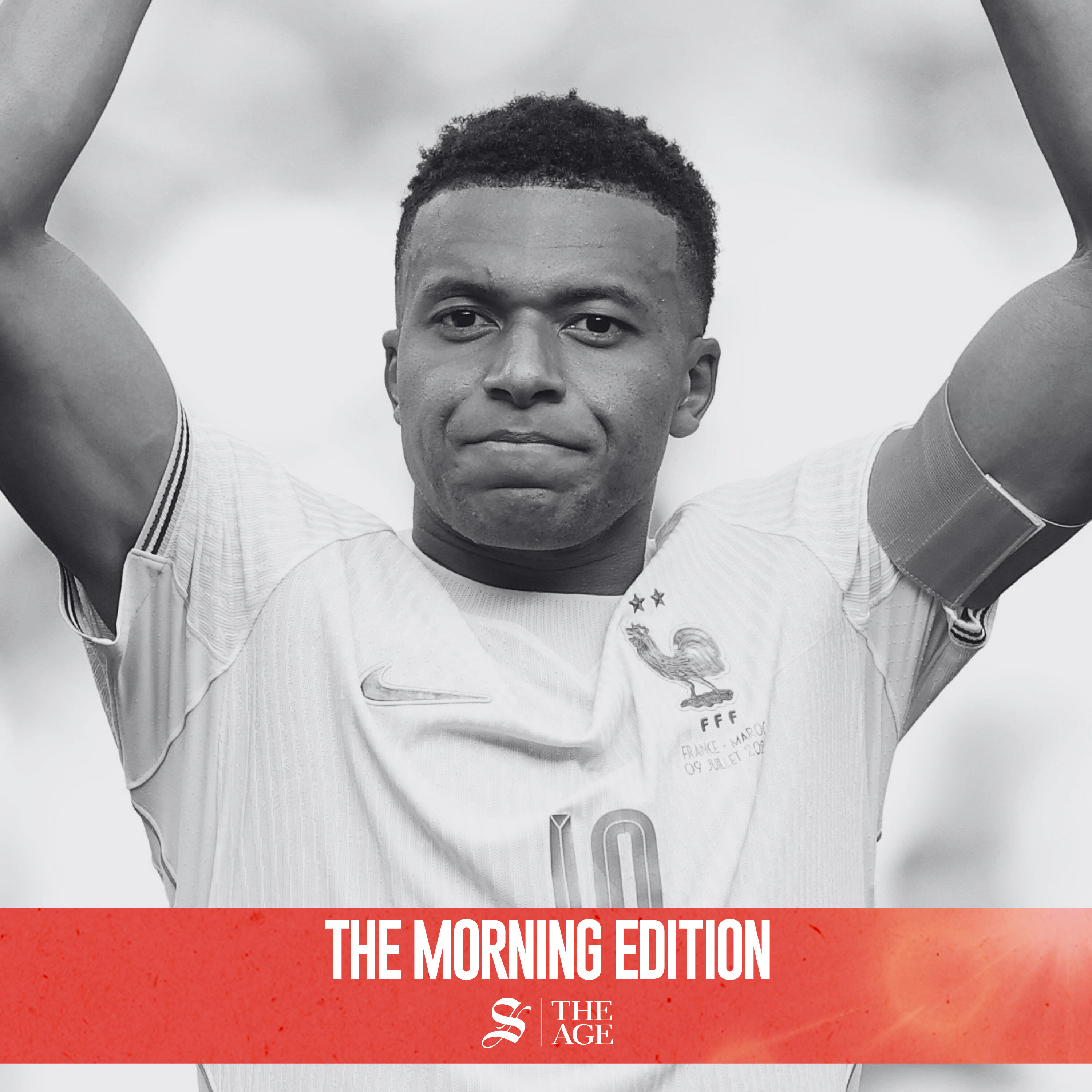
Moto Casino America Social casino. For decades, the World cup has carried fans from all over the world to great heights of unity and joy in a way that is perhaps unique to an event that sees strangers drinking a foreign pub dry together and reveling in the strange and wonderful offerings at the local grocery store while witnessing incredible feats of football. But a maelstrom of complications threatened the sense of inclusion this year, not least of all because for the first time, one team's country is currently at war with its host country. I'm Samantha Selinger Morris, and you're listening to the Morning Edition from the Age and the Sydney Morning Herald Today Deputy and investigations editor Nick Rolston on the joy and tension he witnessed on the ground at World cup matches in the United States and Canada. And yes, that viral Aussie chant about Donald Trump. It's July 15th. Welcome, Nick, back to the podcast.
- [01:44]
B
It's good to be here.
- [01:46]
A
Okay, now you just spent a month going to World cup games in the U.S. also in Canada, and I just wanted to ask you, what was the expectation as you were heading over there, like, was it this expectation that, that this event in particular brings people from all around the world, unites them in some way?
- [02:03]
B
Well, FIFA likes to promote itself as football unites. I think there was sort of a bit of apprehension, a bit of angst about how the 2026 FIFA World cup would probably play out. You know, the World Cup's got a long history of sort of having this political overtones. You know, you go back to 1930, even when the very first World cup tournament that was hosted by Uruguay was sort of used as a, a nation building sort of exercise that had sort of, you know, three decades or so of civil war. And then they get to host this, you know, first ever world football tournament, which they also famously won. You go to sort of 1934, where Mussolini used it as a bit of a propaganda tool for his fascist regime. I think there's even sort of reports of it being sort of the first World cup where there was World cup merchandise, where the, the fascist logo Appeared on some of that, you know, and it's got a long history of sort of being this device as well as a footballing one. You know, 1978, I think, is the most controversial World cup, where the military junta in Argentina, you know, there was corruption, you know, match fixing and sort of seen as a sort of a form of sports washing. Before, it was really a phrase back then to sort of try and legitimize the regime there that was also sort of, you know, oppressing and killing a number of its opponents. And then, you know, more recent times, you had Russia in 2018, which was obviously a controversial choice as Putin tried to sort of show Russia is this, you know, open, modern, accepting society with all the other sort of stuff playing out in the background. And then Qatar, which had its own, you know, it was the sort of real sport washing tournament as it tried to become a legitimate host nation. So 2026 was awarded, I think, in 2016, 10 years ago. And I think at the time, everyone was sort of expecting that a return to North America. The US had hosted the tournament quite famously in 1994. I think everyone thought that 2026 was going to be a return to sort of some sort of normality or at least some sort of a more simple way of hosting a tournament. They weren't going to build big new stadiums. They were going to use, you know, existing infrastructure. It was going to be shared across, you know, three countries sort of united all together. But a lot happened in the 10 years since North America, North America were awarded it. And so I think, look, I think myself flying into North America, there was sort of apprehension about what to expect. A lot was made about visas. There was a lot made about ticket prices, about just general expenses towards this World cup and. And how it would go. It wasn't helped, I think, on the eve of the tournament, I think even the day or two days before it kicked off, the US rejected the visa application for a Somali refugee who'd been appointed by FIFA. Sort of one of the top referees in Africa was told he wasn't allowed into the country. And I think everyone was sort of bracing themselves as to what to expect. But, as is the World Cup's known to do it once the sort of the first whistle goes. And once we started watching, you know, Mexico playing the Azteca Stadium in Mexico City against South Africa, you know, early goals, lots of red cards, the focus very quickly turned to football. And I think for much of the four weeks so far, the focus has really been on football with, you know, with a Few exceptions.
- [05:25]
A
Okay, so can you tell us, I guess, some of the moments that you witnessed on the ground that really did sort of bring about a unity or perhaps celebration of fans from different teams or, you know, sporting solidarity or moments. Like, were there many moments like that on the ground, despite all of what you've just said, which is, you know, slight feelings of trepidation given the Trump administration's restrictive immigration policies and people being denied visas. Like, were there still those moments of unity that FIFA sort of promises?
- [05:54]
B
But, you know, yeah, once, once the tournament itself kicked off, I think all of that has faded massively into the background. I think this has sort of been very much a, a fan driven World Cup. You know, FIFA will take a lot of the credits. You know, we've seen record crowds, record number of goals. We are obviously seeing more matches. But it has really been the fans, for me, as someone who was there for four weeks, that have really made this World cup. It's had 16 different sort of host cities, so it's been very well spread out. But you've seen some, you know, pretty remarkable things happen. You've seen Scotland in their first World cup since 1998, taking over Boston, you know, literally drinking the city dry. You've seen sort of, you know, Japanese fans down in Dallas trying Texas barbecue for the first time and being amazed by that. You've seen Norwegian fans on the New York subway performing there, you know, now infamous Viking Row as they went down the escalators into the New York subway. And so it's been a very well spread out tournament. You've seen lots of, I guess, parts of America. I think I was reading before that the Spanish team, you know, one of the favorites of the tournament have been based out at Chattanooga in Tennessee, where, you know, locals have been able to come out and watch, you know, some of the best footballers in the world train out there. One of the Kansas universities learned the. One of the marching bands learned the how to perform the Algerian national anthem because the Algerians were based at out of Kansas University as well. The Socceroos themselves were based out in, in Oakland, just outside of San Francisco, an area sort of a bit down on its luck in terms of sporting teams. They, you know, lost. An NFL team moved to Vegas. The Golden State Warriors NBA team moved into San Fran. So the Oakland residents really embraced the Socceroos as well. So it's sort of been this sort of, I guess, mix of fans from around the world coming into America and Canada into probably areas that they might not have been previously. And also People in America probably being exposed to, to fans and cultures that they might not previously have expected to be exposed to either.
- [08:18]
A
Okay, so can you just, I guess, break it down for us as someone who's been there on the ground? What is that? World cup fever? Like, what is it that sort of brings this spirit of, I guess, just unfettered joy among people who barrack for different teams whose countries might be at odds in very serious ways over the generations. Like, what is that?
- [08:39]
B
Yeah, look, I think it is kind of strange. I've been trying to think about this as sort of. We talk about Australian sport, and Australian sport, for mine is, is very tribal. You know, there's a lot of heated rivalries and, and tension between it all. I think there's a different atmosphere in a World Cup. I mean, I guess if you, you, you have to be realistic about it. There's probably only a handful of nations that, you know, were ever going to be a chance of, of lifting the trophy. So I think there is this expectation that everyone goes there to support their nation, to show a bit of pride, but really to enjoy themselves and in the hope that their country may, you know, exceed expectations on the field and go further than they, than they possibly could. But, I mean, the Australian fans gained a bit of notoriety over there for, you know, obviously some of the chants. There was the one which specifically referenced Donald Trump and being a sex offender. There is also the sort of, you know, we're flying home, you're stuck here chant which they made at the US and there was also that moment in Dallas in the lead up to the, the tense morning lead up to the game against Egypt where a whole lot of Australian fans took it upon themselves to go into and take over a Walmart and start their Aussie boys chant inside a Walmart to many shocked, uh, shoppers on a, on a early morning in, in Arlington, just outside of Dallas. So I think there's just this real feeling of fun. And, you know, there are obviously countries that go to a World cup expecting to do well and, and, you know, expecting to win. But I think on the whole, I mean, you've seen Mexican fans over there sort of, they do this thing where they, you know, love to pick up a, you know, well, they've been doing it with TV reporters, but they've been picking up, you know, rival fans and tossing them up into the air. Just everyone celebrating in a way that I think only a World cup can really bring people together. After the break, there's this sort of feeling amongst the diaspora that whether or not supporting the football team would also be supporting the regime, which many are against. But they also wanted to use the opportunity of Iran playing on the national stage to have their voices heard.
- [11:11]
A
Virginia Giuffre helped vanquish A Prince and a Millionaire.
- [11:15]
B
And I won't stop fighting.
- [11:16]
A
I will never be silenced. But one of her toughest battles was a very private one. It was the worst thing that could have happened to her, her children or her life.
- [11:28]
B
Virginia A podcast from the newsrooms of
- [11:31]
A
the age, the Sydney Morning Herald and WA today out. Now. We have to talk about some of the sporting moments either that you witnessed or that are just absolutely a standout at this particular World cup. As I saw in one of the stories that you wrote. You wrote that there was three megastars of the tournament. Kylian Mbappe, Arling Haaland, Lionel Messi. They all scored multiple goals across three separate stadiums. That must have just been absolutely incredible. So I guess what is it like to be there to see that so sort of star playing on just an incredible scale. And were there other just moments like that that really lit up this World Cup? I guess, yeah.
- [12:11]
B
I think that one of the successes of this World cup has been that all of the, that, you know, a number of the big footballing superstars, like you said, you're Erling Harlands, who seems to have captured the attention of everyone this World Cup. Kilim Mbappe, you know, Messi scoring a hat trick days just before he turned 39 in his sixth World Cup. You know, Harry Kane of England, Jude Bellingham of England have all really turned up and performed. We've also got a situation where the, the four highest ranked teams in the world, Spain, France, Argentina and England are the last four teams left in the tournament. So it's been, you know, remarkable that that's, you know, that FIFA has had that outcome for this World Cup. Some may say, you know, well, there was, you know, things put in place to make that happen. But there's been other great moments as well. You know, I think everyone was sor captivated by the run of, you know, Cape Verde in their first World Cup. You know, a tiny nation making it through to the, to the knockout stages. And you know, even when, when Kuraka managed to score that first World cup goal against Germany, it was one all against Germany. I think everyone was kind of shocked. They, you know, ended up losing that game by a fair margin. But there's been moments like that which there was a lot of criticism about. Maybe not so much criticism, but concern about whether or not expanding the World cup from 48 teams, from 32 would see a dilution in the sort of quality of games and, and, and how the tournament would play out. But I think largely it's been, it's been a massive success. And, and for those reasons, you've said a number of countries that previously hadn't appeared at World Cups get to play and, and perform pretty well. You've seen other countries, you know, for a long time, Oceania didn't get an automatic spot in the World cup, but New Zealand obviously got to play again at this World Cup. So they, there's been, I think, the quality of football and I think the 48 teams has worked, which I think has been another highlight.
- [14:09]
A
I wanted to ask you about something you wrote about as well, which is a complicated emotional element of this particular World cup, which is, of course, the presence of an Iranian team when, of course, Iran has been at war with the host country, with the United States. So what was that tension like on the ground?
- [14:24]
B
Yeah, I didn't really probably fully know what to expect going to this game. So this was the first time that, that a host nation in the US Was at war or a military conflict with a, with a participating nation in Iran. And they, a lot of sort of talk in the build up to the tournament. Iran qualified sort of back in March last year, long before any of the strikes by Israel and the US Against Iran had, had begun. And there was a lot of talk about whether or not Iran should be able to compete in this World Cup. They were kicked out of their training base, was meant to be in Arizona. They got moved to Mexico. And so I went down to, to L A, to the Sofi Stadium, not really knowing what to expect. But, you know, L A has the largest Iranian community outside of Tehran or outside of Iran. There's something like 125,000 Iranians living in the area. And it was a very divided group of people. So there's this sort of feeling amongst the diaspora that whether or not supporting the football team would also be supporting the regime, which many are against. But they also wanted to use the opportunity of Iran playing on the national stage to have their voices heard. FIFA tried to ban their, you know, certain flags and symbols from inside the stadium. So I was sort of outside the stadium and you'd speak to, you know, a mother who was there with her son who said, oh, you know, I can't really support the team. I'm just here to have my voice heard. And then you turn to her son and he'd Say, oh, no. You know, I'm a former soccer player myself. I know what these players have done to get here. I support the team, but I don't support the regime. And I spoke to another bloke as I was leaving who had spent, I think it was something like US$600 to be there just to boo the national anthem and to jeer the team as they ran onto the field. So it was a very, yeah, complex situation and, you know, sort of, sort of almost hard to describe. Literally any. Every person you spoke to there would have a different view on the Iranian team and whether or not they should be competing and whether or not they should be supporting them. And, you know, many others opted to stay at home because they didn't want to even be seen to be part of it. So, very complex and difficult situation.
- [16:43]
A
But I'm assuming there was nothing like we saw during that Women's cup here. Of course, famously, there was a number of members of the women's team that looked like they were in the process of going to defect. And I believed some of them stayed on after being granted humanitarian visas. But there was nothing like that, though, was there, in the USA with Iranian players during the World Cup?
- [17:03]
B
No. And they had pretty strict restrictions put on place, I guess, to sort of prevent any of that sort of incident like that possibly taking place. The. As part of their visa restrictions, the Iranians were only allowed to fly in, I think, the day before a match and had to fly out straight afterwards, which the team and the coach complained about, sort of saying no other team should be had been subjected to situations like this. But I think that was, you know, in part to just ensure that there wasn't any sort of issues around defections or any other sort of political fallout from having the Iranian players in the
- [17:37]
A
US it's really interesting. And Nick, just to wrap up, I wanted to ask you about what we might see, I guess, at the 2030 World cup, because as you mentioned earlier, this World cup had 48 teams. And FIFA president Gianni Infante Tino mentioned the other day that the organization is considering having 64 teams for the 2030 World Cup. So tell us, I guess, what you think might be the risks of having that many teams, you know, is it going to dilute the fun, you know, or. Or the quality?
- [18:04]
B
Well, you know, more fans, more fun, possibly. I mean, 64 is a lot. I think it's something like more than, than 30% of, of. Of all FIFA sort of countries who are playing football at the moment. 64 does seem a lot you've got to, obviously, and the infrastructure to host that many games. I think 20, 30, we're already looking at a World cup across three continents because it will be 100 years since the first World Cup. I think they're playing some games in South America and then the rest will be shared between Morocco, Spain and Portugal. Look, I think the 48 teams has worked quite well. 64, there are some reasons why it might work. You know, it's a cleaner number of teams. There's been a lot of, you know, not to get too into the weeds, but there's all this sort of maths around how a third place team gets through to the knockout stages and, and you know, 64 teams gives you, you know, a cleaner number to get to 32. That's the top two teams in every group. But yes, there's already talk about how, how possible it is for a. Well, I don't think, I don't think a solo country could host a World cup by itself anymore. And then if you're getting to, you know, 64 teams, however, any matches that works out to be finding base camps for all those teams, finding stadiums to host all those games, it's a big logistical exercise. But if there's one thing we know with FIFA is that they make most of their money, if not all their money from, from a World Cup. And 64 teams probably means bigger broadcast deals, more ticket sales, more merchandise, everything else. So if there's money to be made, I don't doubt that FIFA will take a, a very long look at this if it's not already possibly happening.
- [19:57]
A
Thank you so much, Nick, as always for your time.
- [20:00]
B
Thank you.
- [20:05]
A
In other news today, Education Minister Jason Clare has categorised the Job Ready Graduate scheme, an attempt by Scott Morrison's government to steer students away from, from the humanities to the sciences by restructuring the cost of degrees as unfair and failed. Investing in more fossil fuels and halting wind and solar farms could cut 5% from electricity costs by 2050, according to the CSIRO, but would increase atmospheric pollution and accelerate global warming. And in the past 40 years, there have been 10 property downturns, with seven lasting less than a year. This time, experts are tipping that prices will keep falling until there's signs of an interest rate cut, which could be some time away. You can read more@the age.comau or smh.com Today's episode was produced by Chee Wong. Our executive producer is Tammy Mills and our podcasts are overseen by Lisa Muxworthy and Tom McKendrick. If you like our show, follow the Morning Edition and leave a review for us on Apple or Spotify. Thanks for listening. You ain't heard about Moto Casino? Moto has real Vegas slots. Any game you can find on the floor in Vegas, you can play it on. Moto.
- [21:32]
B
I like my slots hot.
- [21:33]
A
Moto's free to play like food stamps in line at the grocery store, at
- [21:36]
B
a funeral in traffic Keep your eyes on the road? Hop on Moto Casino.
- [21:40]
A
Moto Casino Got jackpots that are bigger than my belly.
- [21:42]
B
Moto America's hottest free to play social casino.
- [21:45]
A
Download the Moto Casino app today. Moto Casino is a social casino board. We're prohibited. No purchase necessary.
- [21:49]
B
Visit Moto Us for more details.