← The Morning Edition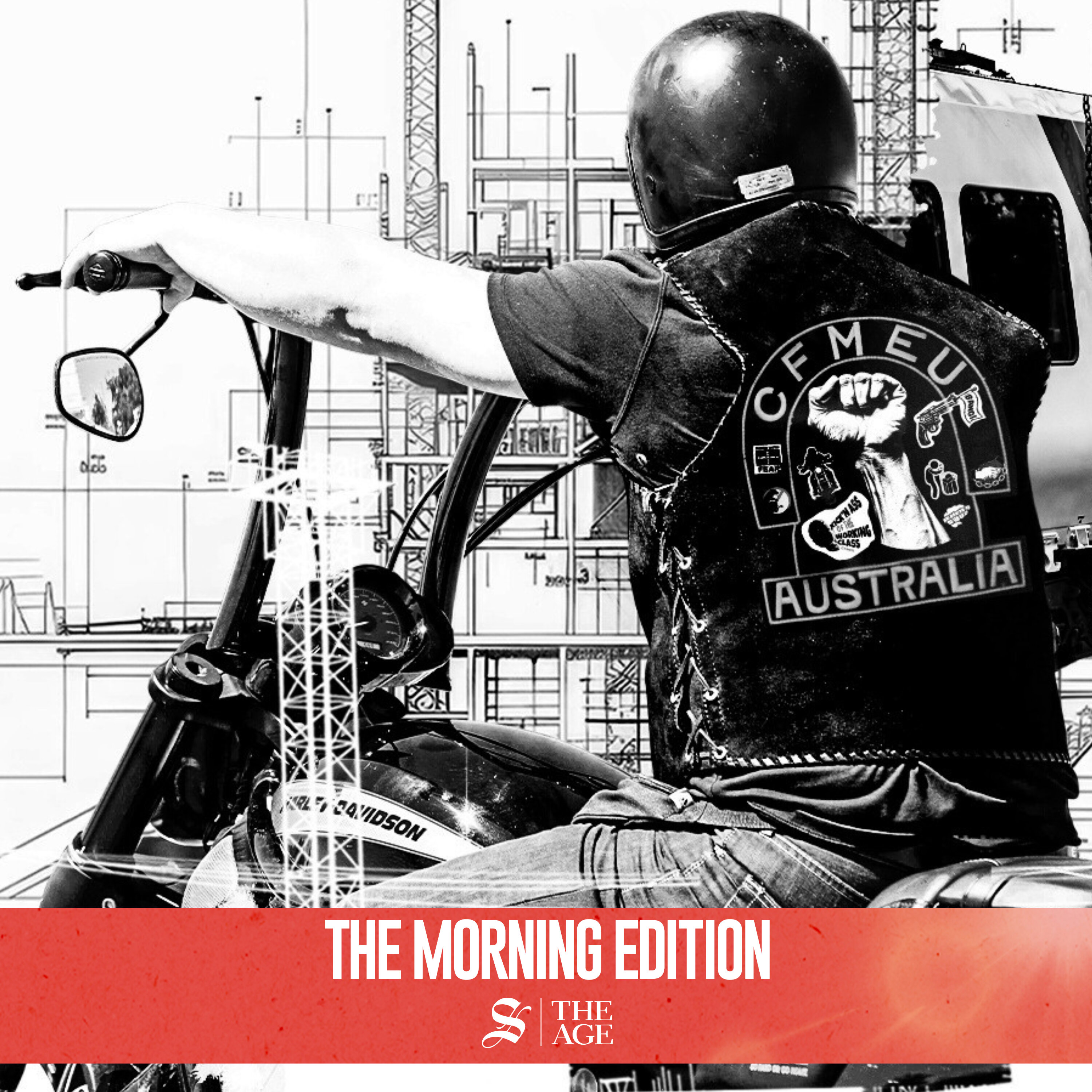
The Morning Edition
The CFMEU ‘crime gang’: A honeypot of money, and a government that looked the other way
00:19:35
Loading summary
Transcript32 lines
- [00:02]
A
At ncs, we solve technology problems where others can't challenge us. Search NCS Australia.
- [00:16]
B
Investigative reporter Nick McKenzie's expose of the criminal infiltration of the construction sector over a year ago prompted a slew of investigations. Inquiries from from federal and state governments and law enforcement around the country. The conclusions of those investigations now reveal the extent of that corruption and its findings are damning, including that CFMEU lawless behaviour could have cost taxpayers $15 billion and the Victorian state government knew of the problems but did not fix it. Drug trafficking and shocking sexual exploitation of women on major infrastructure sites are just some of the other claims. I'm Julia Karkatzel and you're listening to the Morning Edition from the Age and the Sydney Morning Herald. Today, Nick McKenzie on the serious questions the government must answer. Welcome back to the podcast, Nick.
- [01:17]
A
Great to be with you.
- [01:18]
B
Last week, corruption busting lawyer Geoffrey Watson released his landmark report into the construction sector. But just to start off, when we talk about corruption in the sector, what are we talking about? Who are the main players in this story?
- [01:32]
A
The heart of the corruption scandal involving the sector really goes to government projects. So principally those funded by the Victorian government and to a lesser extent the Albanese government and ie then all our listeners, taxpayers. These projects, how they were infiltrated by corrupt union officials in bed with gangland figures and bikie gangs. Now how did this corruption work? Well, a couple of ways it occurred. Number one, you had bikie gangs who would use corrupt union officials to place many of their members in very lucrative roles on government sites. So you got bikies earning $300,000 a year, sometimes more than that, and sometimes for work they didn't even have to on occasion turn up for a pretty handy rod if you're a bikie. And then there's more orchestrated corruption involving subcontractors owned by organised crime or linked very closely to organised crime. These subcontractors getting placed on the same or different government projects, earning huge amounts of money, care of these corrupt union officials who are placing them on these government projects. Now the listener should be saying to themselves, how on earth can a corrupt union official boss a person or a company onto a government project? And therein goes to the really core part of this scandal. That is the union had such influence over these government sites, so did the bureaucrats running these government sites over the big contractors working on these government sites. They could force gangland entities onto these projects and no one did much about it.
- [03:11]
B
And this is all over the country, right?
- [03:14]
A
It's all over the country, but it's is happening at a grander scale or the worst scale in Victoria. Why is that? Well, the CFMEU and the most corrupt elements of it were at their worst in Victoria. The former leadership regime of the sea from the UN Victoria has been roundly outed, including most recently in the Queensland Commission of Inquiry into the union as a really corrupt force in in fact in words of one corruption expert who testified as a crime gang. And there was also once in a generation spending spree to upgrade Victoria's road and rail known as the Big Build. And so combining those two elements, there's a huge honey pot of money, a corrupt union, lots of gangland figures seeking to get rich and a government, a state government, in the words of corruption expert Geoffrey Watson SC on the stand this week at the Queensland Commission of Inquiry. A government that was looking the other way, turning a blind eye to corruption and to that extent enabling or fueling it.
- [04:18]
B
And what would you say about the way the Big Build project has been run that makes it so vulnerable to corruption?
- [04:25]
A
Well, you can imagine if you're running your own house renovation, you'd be wanting to know what your subcontractors, the person doing your tiling and doing your carpentry were charging. You'd be pretty keen to know if they were overcharging you and if they rocked up on a Harley Davidson in bikie colors, you'd be especially concerned. Now let's times that by many multiples that's what was happening on the Big Build. We had subcontractors sometimes run by bikie gangs, certainly linked to baki gangs linked to other gangland figures charging well over the odds getting work they should never have got at a vast scale. I mean there's bikie gangland figures driving Ferraris around Victoria at the moment, care of the taxpayer thanks to that negligence, that failure to keep contractors under control on these major, major sites. So why was this happening? I mean we still really haven't got to the bottom of why the labor government didn't protect public funds. We know they didn't, but why? Was it because they wanted an ally in the cfmeu? Was it because they wanted the projects done on time? I mean, at the end of the day the projects weren't done on time, the budgets were blown out and relations with the CFEMEU were poor. Geoffrey Watson SC the corruption expert, his expert testimony, they said his view was that the government was seeking some sort of an accord with the union, that it was ultimately scared of the union's industrial might was so Great. The government didn't know how to deal with it and thought by passing the problem on to major government contractors on these sites, the problem was simply go away or disappear. And of course it has not.
- [06:01]
B
And Geoffrey Watson, he's just handed in this 18 month report. What have been some of the more shocking allegations in this report? There's been talk of sexual exploitation on work sites, drug dealing. Can you go into some of that detail? What have we learned?
- [06:17]
A
I mean, it's hard to really describe or accurately portray just how damning and explosive it is. It reads a bit like a Hollywood script or something out of, you know, the Wire or Breaking Bad. You had baki gangs running amok, placing bikie gang members onto sites. There's allegations that to get work on some big build sites, these Victorian government sites, women had to perform sexual favors. There's allegations that women on these sites were stripping for men on site sheds. There's allegations described as credible in Watson's report of drug trafficking on these sites at a significant scale of bribery and corruption. The allegations of bribery and corruption are very credible. People have gone on the record, they have confirmed that they paid what looks a lot like bribes, but certainly significant sums of money to get access to the big bill to get the union favour that was needed to win work on these sites. These are people who've gone on the record and said they've done this, so it can be believed. A really stunning set of allegations that amount to a really significant heist on the public purse.
- [07:32]
B
And one of the key figures in all of this is Mick Gatto. Gatto is variously described as a mediator. Listeners may remember he was a well known figure in Melbourne's notorious gangland war of the 2000s. How has Watson described his role in this industry?
- [07:48]
A
Well, it must be said that Mick Gatto denies all wrongdoing. And of the allegations and the conclusions of Watson that I've just described Gatto, there's no suggestion from us that he's involved in those allegations. But Watson's report does make Dan conclusions about Mick Gatto and we can talk about those because that report's been tabled in the Commission of Inquiry. Effectively he calls Gatto a criminal. He says Gatto has been running a racket in Victoria's building industry, basically engaged in extortion and intimidation, forcing builders and building companies to pay significant sums of money to Gatto to deal with problems with the union or other building industry problems that sometimes would not existed if not for the very improper accord or relationship between Gatto and the Union. A classic Mafia style racketeering is how Geoffrey Watson has depicted Gatto's role in the building industry. Again, this must be said, Gatto denies these allegations.
- [09:06]
B
After the break.
- [09:08]
A
Who is the minister most responsible for the Big Build? It's Premier Victoria Jacinta Allen. There's been an absolute absence of accountability down the government chain of command. Not a single public servant and not a single politician has been meaningfully held to account.
- [09:39]
B
And so you've given us a snapshot of the corruption taking place. But a big question in all of this and what you alluded to before is just how much the labor government knew and when. Because Watson's report does suggest that ministers knew much more than they're letting on, is that right?
- [09:57]
A
Absolutely suggests that. I mean, Watson concludes that not only did the state government of Victoria have a duty to know how the money was being spent and misused on these government sites, but that it did know it was being misspent and abused. Union corruption on the Allan government's signature Big Build projects has cost Victorian taxpayers billions of dollars. The CFMEU is accused of funnelling more than $15 billion from Victorian taxpayers straight into the pockets of criminals. Accusations sites were hotbeds for drug trafficking and even strippers, all while the state government allegedly turned a blind eye. The bureaucrats running these projects or overseeing these projects knew about this corruption and this impropriety and the government itself knew and chose to do nothing about it. That stands for absolute reason. I mean, there are many government officials that have been involved in these mega projects. We know that there's reports of serious corruption, unlawful or improper behaviour on many of these sites on many occasions. So in some respects it's a matter of sheer logic, backed up by hard evidence that the government knew. What's very disturbing in Victoria is having established that the government did know, well, where's the accountability? In a Westminster system? If a minister presides over a series of corrupt projects, responsibility should flow to that minister. Well, who is the minister most responsible for the Big Build? It's the Premier of Victoria, Jacinta Allen. There's been an absolute absence of accountability down the government chain of command. Not a single public servant and not a single politician has been meaningfully held to account. And ultimately there's growing calls for an independent inquiry to really lay out who knew what when in government and if they did, if politicians, if public servants did, as Geoffrey Watson has concluded, indeed, now a vast amount of this corruption was going on, then what's the appropriate penalty? We live in a country where the poor or the marginalised and indigenous person can be thrown in jail for pinching a Mars bar. Yet a politician can seemingly get away with turning a blind eye or not stopping rorts involving bikies and gangland figures worth billions of dollars. And something's pretty rotten with that.
- [12:21]
B
And what has Jacinta Allen said in response?
- [12:24]
A
Well, Jacinta Allen has been very good at sticking to her tried and tested lines. That is to say, she's disturbed at this appalling conduct. She doesn't support corruption and reports of unlawful conduct should be always referred to the police.
- [12:40]
B
When allegations were raised with me, they were referred to the relevant agencies for their investigation and response. When that.
- [12:49]
A
When that. But that only goes so far. Police are very restricted in what they can do when it comes to questions of public service failure and of political failure. It's not the job of the police to hold a politician to account for stopping a baki gang from rorting a government project. It's the job of the political system, the media and other entities to hold the political system of the Parliament politicians to account. But ultimately we need the Premier herself to ensure there's full accountability, not just handball the problem to the police. So while the Premier does talk about the need for there to be police involvement, she does make clear that she's appalled by these shocking allegations and conclusions of Geoffrey Watson.
- [13:31]
B
The powers that sat with the Federal government, government under the industrial relations framework, saw them appoint the Federal administrator, who is weeding out this rotten culture and these bad actors. One of those claims, though, was that there's been a cost to taxpayers of over $15 billion. Jacinta Allen said that those claims were not well founded or properly tested. What do you make of her response to that claim in particular?
- [13:58]
A
Well, they've been made by credible people. Geoffrey Watson sc, a corruption expert and the General manager of the Fair Work Commission, Murray Furlong. So if the Premier's contention is they're not well founded or tested, let's test them. Let's get a credible analysis, at least according to the Premier and the Government as to the extent of the rorting Victorians deserve that. I mean, whether it's $15 billion, $1 billion or $100 million or $50 million, every one of those dollars that's gone to organised crime, to bikie gangs, to corrupt union officials or corrupt companies. Is the dollar too much? So how much is it? We don't know because there's been no independent, thorough investigation and that's what's required.
- [14:45]
B
And how do you reflect on the administrator Mark Irving's governance over the past few years, what has been achieved under his leadership and is it enough?
- [14:54]
A
Well, Irving's done some fearless and terrific things. He's sacked many union officials, he's instituted reforms, he's sought to clean up a rotten culture. He's placed some very good union leaders back in charge of the cfmu, albeit under administration. But he's also, and perhaps his power's limited and his jurisdiction is limited, but he's also only gone so far. Now, many would say it's not Mark Irving's job to call out this political negligence and inaction that others have that ultimately the see if me use corruption has not operated in a vacuum. It's operated because of government inaction. It's operated because of corporate corruption that supported it. It's operated because gangland figures and bikie gangs have been part of these rackets. Now, Mark Irving has exposed some of that, but certainly that's not gone far enough. Mark Irving has been hesitant to call out labor, the state government, the federal government for not doing more. He's gone some of the way, but I think many would like to see him go harder.
- [16:08]
B
Do you think a royal commission would do anything here?
- [16:11]
A
Well, there's been royal commissions into the building industry in the past. They've achieved some things, but not achieved enough, and that much is a fact. But in the absence of any proper systems of accountability, in the absence of any proper accounting for how much money has gone to bikie gangs, in the absence of any politician being held to account, in the absence of Mig Gatto being properly thoroughly investigated as to how far his reach into the building industry has gone, in the absence of having a single building company properly thoroughly investigated for their role in this alleged vast corruption, then what are we left with? A royal commission should be a last resort. There could be some better mechanisms if the labor government of Victoria or the Albanese government chose to institute them. A closed door inquiry with appropriate powers that wasn't quite a royal commission done in a fast and efficient way might be one of those means, but we don't have that. So if Labor's not going to act, then all we're left for are calls for a royal commission and all we can have is a royal commission. So the critical part is not really what means we take to find accountability. The critical part is saying we need accountability by whatever measure. And it's got to happen and it should have happened yesterday.
- [17:28]
B
And lastly, Nick, your reporting on this has had serious personal consequences. And it seems anyone who's been trying to change the culture. You had a break in at your house. There have been threats. Why do you continue reporting on this despite the danger involved?
- [17:44]
A
Well, it's my job as an investigative reporter to do this, so the threats are awful, but they're part and parcel of what I do and what I've chosen to do. The real people who cop it and shouldn't cop it are innocent people, the good people who work in the cfmeu, and there are very good people who do work in the CFMEU who've tried to combat corruption, the good people in the building industry, the owners of big companies and small who've been stood over or tried to blow the whistle on these problems. There's so many good, honest Victorians and Australians who've tried to stand up to this corruption, to this violence, and it's they who pay the price every day. There's not enough investigation and accountability. And that's the real tragedy of this scandal. Violence and fear has been normalised in the critical part of our economy and that's bled down to ordinary people trying to make an honest living. It's created a vastly unequal, unfair playing field in the building industry. It's led to serious corruption in a vital part of our society, that is the union. It's led to a lack of accountability in big parts of the corporate sector that operate in the building industry. It's a really ugly scenario and really, it shouldn't be happening in modern times. I didn't think when I started reporting on this sort of stuff back in 2008 it would be even worse today, and yet it is.
- [19:08]
B
Well, Nick, thank you so much for your time today.
- [19:11]
A
Thanks for having me.
- [19:23]
B
Today's episode was produced by Josh Towers. Our executive producer is Tammy Mills, and our podcasts are overseen by Lisa Muxworthy and Tom McKendrick. If you like our show, follow the Morning Edition and leave us a review on Apple or Spotify. Thanks for listening.