← The Morning Edition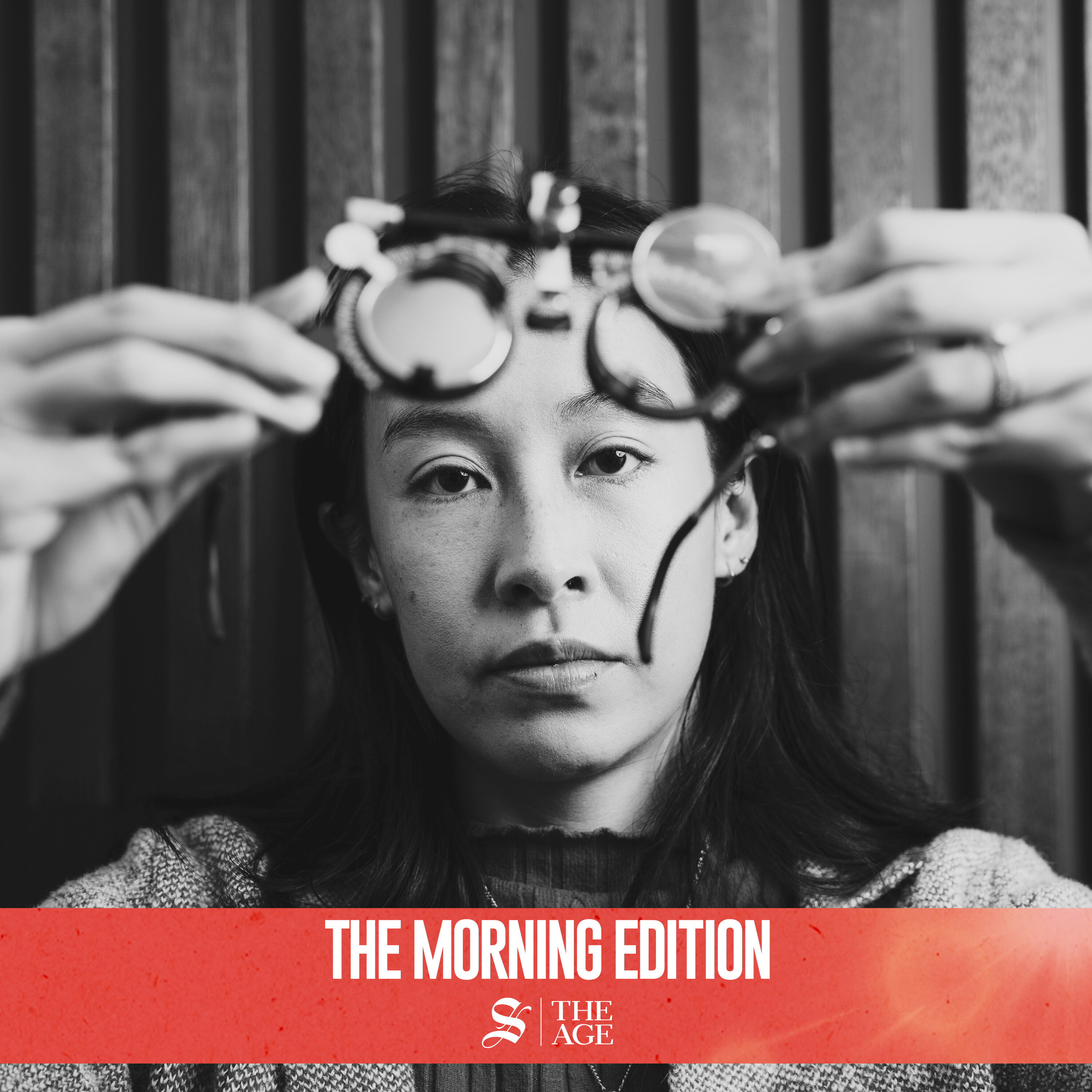
Loading summary
Transcript27 lines
- [00:04]
A
If you've ever felt that you're being rushed through a healthcare appointment, you're not alone. Now, a number of optometrists have told our mastheads that they are being pressured to yes, rush appointments and even skip providing clinical tests in order to sell, sell, sell. I'm Samantha Sellinger Morris and you're listening to the morning edition from the Age and the Sydney Morning Herald. Today, health reporter Rachel Rasker on the optometry chains allegedly prioritizing money over patient health. It's July 21st. Rachel, welcome to the podcast.
- [00:47]
B
Thanks for having me.
- [00:48]
A
Okay, now you've spoken to a number of Australian optometrists, I guess you could call them whistleblowers. And they say that numerous optometry chains are risking patients health with various types of practices. So how. So what are they telling you?
- [01:02]
B
So they've told me that at big optometry chains including Specsavers and opsm, kind of being the biggest chains in Australia, these optometrists who are essentially registered health professionals, are being pressured to hit sales targets like glasses sales as well as rush through clinical consultations in order to maximize profits, basically. And they reckon this puts public safety at risk, Public health at risk. And in terms of pressures by that, I mean being threatened with pay cuts or disciplinary reviews if they don't hit enough capabilities, KPIs in terms of sales, basically, in terms of what this could mean for patients, basically. I mean, on one hand maybe you go to the optometrist and you just think, I'm here to get some new glasses, you know, not that big of a risk. But they're also trained to detect things like cancers, possible strokes. There's all kinds of things that can point to how our overall health is doing in our eyes, essentially. And they reckon this can put a lot of. Yeah, a lot of patient health care at risk.
- [01:58]
A
And so you have reviewed more than 80 internal reports and correspondence from within a variety of optometry brands. So did that research, I mean, what did it tell you? Does it correspond with what these optometrists are telling you or did it paint a different picture?
- [02:13]
B
Yeah, I think when I first heard all this, I kind of thought, oh, surely not. I mean, I didn't, I didn't quite believe it. And especially because a lot of these individual outlets, they are franchises. And I thought maybe it's just a few franchisees who are bad apples, they're trying to make ends meet, it's cost living crisis. But essentially, from what I've looked at, this is essentially company policy. I've Seen messages from people who are in head office at Specsavers, in group chats with optometrists saying, we're going to basically cut your pay if what they call conversions, which is essentially same day glasses sales don't improve, as well as disciplinary reviews kind of being threatened to come into meetings. Yeah. And even training documents which kind of stipulate the way that clinical consults should be done, which is in line with these KPIs that the optometrists have been telling me about.
- [03:03]
A
And you spoke with one optometrist, this is Matt Trinh. He worked at OPSM in Sydney and Newcastle for more than a decade and he warned that such practices could actually result in vision loss or in extreme cases, fatalities. So can you tell us, I guess, a bit about that and other sort of warning stories that other optometrists told you could result when they are, for instance, pressured to sell or pressured to red reduce the number of time consuming clinical tests, for instance, that they book in a day?
- [03:33]
B
Yeah, I mean, Matt spoke a lot about the possible risks that can happen when the focus is on sales and not on patient health. And he also spoke about the industry and optometrists as being really the front line for eye health, kind of like a GP would be, where they're meant to be screening for everything, looking at everything, and if something's a concern, then they will refer you on to an ophthalmologist who is that specialist. That is much more expensive. But this is more the everyday person is going to an optometrist for their eye health. So in terms of risks, I mean, one optometrist at Bailey Nelson, they mentioned that at one of these peak sales periods, they're also called blackout periods in the industry, where essentially optometrists are discouraged from doing too many time consuming clinical tests because these are the time when they can make a lot of glasses sales, essentially because health fund benefits may be expiring and yeah, they can, they can get some good profits at that time. But they essentially ignored this directive because they were concerned about a patient with some red flag symptoms. They carried out some further tests and it turned out after a referral to an ophthalmologist, that this patient had an unruptured brain aneurysm and the patient had surgery on it the week after. And essentially this patient would have died had that not been picked up.
- [04:45]
A
I mean, that's shocking. Were there any other instances where other optometrists told you that they had picked up a potentially bad health outcome that would have been missed had they not taken that time to give that person that test.
- [04:58]
B
Yeah, I think every optometrist has a story of picking up something like this. I think it's something that you would be doing every day in that line of work. But it is definitely a possibility. I know that opsm, on the other end of the spectrum, they're pressured to give extra treatment. They're called dry eye treatments, essentially. And a dry eye treatment is essentially red light therapy used to treat dry eyes. Opsm think maybe 1 in 3 people have these dry eye problems. Whether or not that's accurate is hard to say. And optometry told me this shouldn't be a KPI. This should be based on clinical judgment, patient to patient. But they have these pressures. And we know that at least one patient has received burns to their eyelids and eyes as a result of this dry eye therapy.
- [05:39]
A
And so just to confirm. So some of these optometrists have said they're being pressured not to conduct clinical tests in particular during these so called blackout periods because they should be using the time to just focus on selling instead. Is that it?
- [05:52]
B
Yeah, so it's kind of a bit of both. So at some points in time it's. Or some chains, they're being told don't do these tests, they take too long. We're trying to get more patients in and out of the door to sell glasses. And other places they're either trying to bill the patient or Medicare at higher rates to get a bit more bang for their buck each appointment and do extra tests that may or may not be necessary or treatments just. Yeah, get that extra bit of profit.
- [06:18]
A
After the break.
- [06:20]
B
So one optometrist that I spoke to who worked at both OPSM and Specsavers, and she actually quit at the recommendation of her psychologist because she was so stressed, she got this really bad reflux and she couldn't eat normally.
- [06:42]
A
Okay. And so as you've pointed out just a bit earlier, these are registered health professionals that we're talking about. They aren't just there as they are for many of us. When we go in, we think, okay, they're just here to help me choose spectacles. But actually they're trained to detect glaucoma. Sometimes they're even spotting tumors or impending strokes. But you've spoken to optometrists who've been so stressed out by working at some of these chains from the pressure to sell and other practices. It's really impacting their health. Right.
- [07:08]
B
These optometrists are kind of worried with A story like this that would make them come off as these terrible health professionals and they're really worried about that. But it is impacting them too. I mean, they want to be delivering the best patient care they can. I mean, I don't think many people got into a five year optometry course to just sell glasses. I mean, there's meant to be a different role for that. It's called dispensers or retail stuff in these stores, but the lines are being blurred. So one optometrist that I spoke to, Helene Lai, who worked at both OPSM and specsavers, and she actually quit at the recommendation of her psychologist because she was so stressed, she got this really bad reflux and she, she couldn't eat normally. Another person mentioned that she was so stressed out that she was grinding her teeth at night as she slept to the point where she cracked a tooth. And Matt, who you mentioned earlier, spoke about when he was at opsm, he started obsessively looking at his appointment books and would try and calculate if he would make enough sales, like glasses sales to his KPI that day, even for patients he hadn't even seen yet in terms of the ones coming in later that day. And he'd be worried about it. And he just kind of looking back, he just felt it was really ethical and he kind of, he didn't like it that he was doing that. And at the end of the day, the APPA registrations, it's based on an individual optometrist. It's not the store chain or the store manager that's at risk. It is the individual optometrist that is at risk of losing their registration, of losing their career if something goes wrong in these cases.
- [08:26]
A
Okay, but what would you say to those who say, okay, yes, but these are businesses, they're in business to make a profit. And determining individual KPIs or key performance index is central to many for profit business models.
- [08:39]
B
I mean, definitely, I mean cost of living is going up. A lot of these stores are in places like Westfields where we know that the, the rents to have a spec saversavers in a Westfield is going to be very high and you need to make ends meet at some point. I don't believe the Medicare benefits have gone up very much in terms of payments. We've seen it across GPS as well where they're not making that much with each consultation. And then yeah, Luca Rundle, the Chief Clinical Officer, Optometry Australia, who I also spoke with, kind of said this anecdotal evidence These anecdotal stories, they don't prove that KPIs are harming patients. He said they're a very safe profession. I mean, only 1% of optometrists were the subject of an APRA, which is a regulator of an APRA complaint in 2024, 2025, compared with 1.7% across all registered health practitioners. So, you know, it is possible that the two don't connect, but optometrists are pretty concerned.
- [09:31]
A
And so you've mentioned a number of optometry chains that many of us would be familiar with in this interview just today. You know, opsm, Bailey Nelson, Specsavers. So what did they say in response?
- [09:41]
B
Yeah, I didn't hear back from OPSM and Bailey Nelson, unfortunately. But Specsavers essentially said that their optometrists are empowered to make clinical decisions in the best interests of their patients and that their clinical benchmarking and practice standards, aka their KPIs, help practitioners learn from their peers, strengthen their professional development and deliver consistently high standards of care for every patient. And I do understand they've sent out an all staff email since our report where they sent all of their optometrists their full statement because I could only use a little in my story. And yeah, maybe they'll be changing some things. I guess we'll see.
- [10:15]
A
And one last question that I've got to ask you. You know, your story really hit a nerve. The last time I checked, it had more than 350 comments. I mean, that's the number of comments that we often get at our mastheads on like the biggest global political stories. So why do you that this is connected with so many readers and listeners?
- [10:34]
B
I think is everyone's had that experience of going to a health professional, whether it's an optometrist or a dentist or a physio, and feeling like you're being ripped off. Maybe they're saying you need this test, you need this treatment, and you think, do I really need it or are they just trying to get a bit more money out of me or my help fund? And it's really hard to know as a average consumer what you actually need in these instances. And I think seeing these corporate practices which are essentially directing optometrists to someone, I think put it as pull the wool over the eyes of patients, it's really tough to hear. And it kind of confirms a lot of our suspicions, I think.
- [11:10]
A
And I guess a lot, a lot of Australians, like myself, like Josh, my producer who's sitting next to me, wear glasses and so have you got much feedback, you know, beyond the 350 comments, have you received emails from anybody that's saying, hey, this has happened to me as well, or what sort of feedback besides the comments have you received?
- [11:27]
B
Yeah, we put in a call out box for people to get in touch if they've had similar experiences. I just had a count before we chatted and I've got more than 60 responses to that, as well as separate emails. And we've got comments on Instagram from a mix of optometrists and patients and others inside and outside of the industry on their experiences on this. So I think there's definitely more to come in this space.
- [11:52]
A
Well, thank you so much, Rachel, for your time.
- [11:55]
B
Thank you.
- [12:10]
A
In other news today, children should be monitored for high blood pressure from the age of seven under new national guidelines aimed at reducing organ damage, heart attacks and stroke later in life. Strong commodity prices and the nation's job market have helped wipe billions of dollars from the budget deficit and government debt. But consumers face more pain as the war against Iran risks a fresh spike in petrol prices and inflation. And Christopher Nolan's the Odyssey has become the director's biggest global opening ever and grossed over $13.5 million in its opening weekend in Australia. You can read more@the age.comau or smh.com Today's episode was produced by Josh Towers. Our executive producer is Tammy Mills, and our podcasts are overseen by Lisa Muxworthy and Tom McKendrick. If you like our show, follow the MORNING Edition and leave a review for us on Apple or Spotify. Thanks for listening.