← The Morning Edition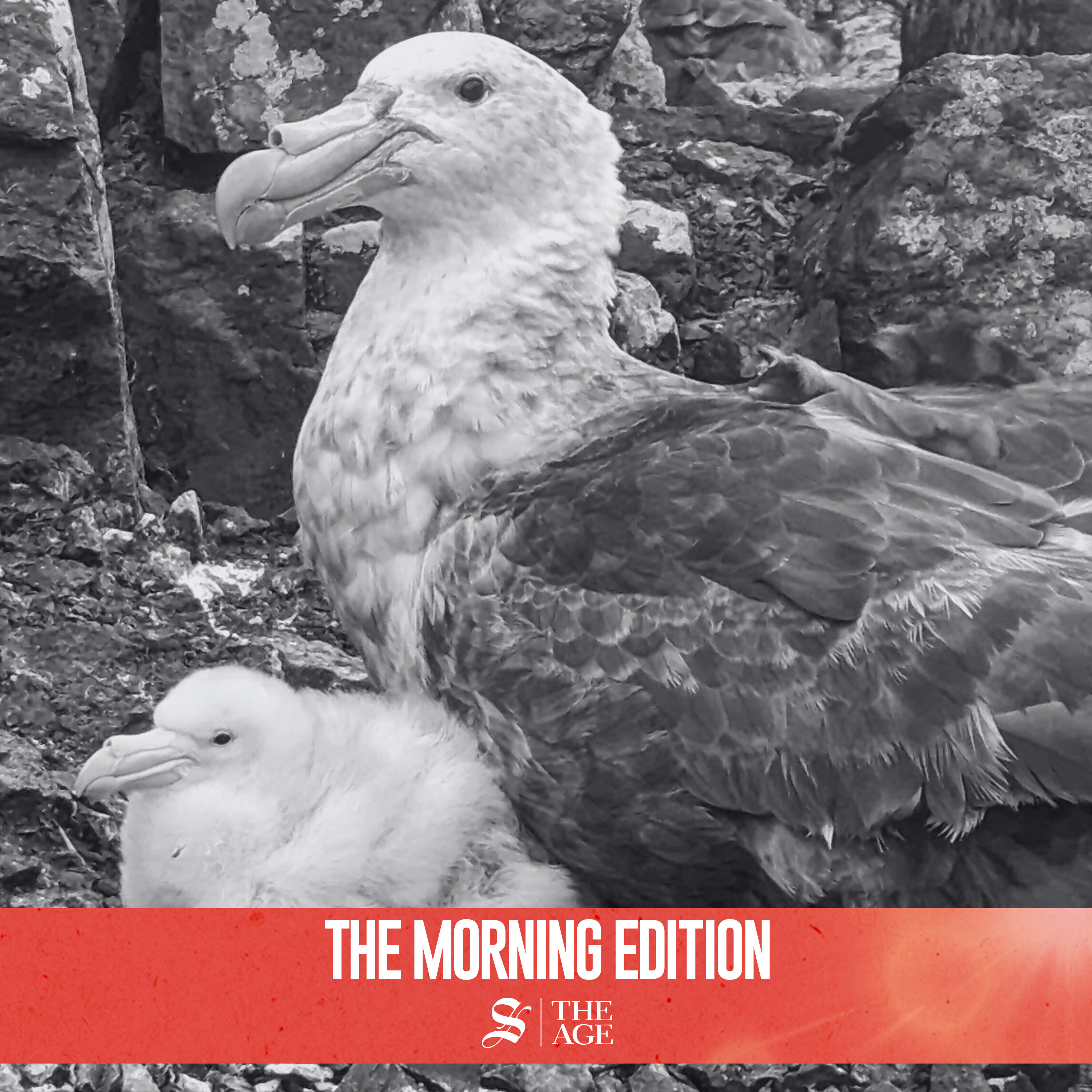
Loading summary
Transcript23 lines
- [00:04]
A
Over the weekend, a particularly deadly strain of bird flu was confirmed in New South Wales for the very first time. This now takes the total of confirmed cases nationwide to six. I'm Samantha Sellinger Morris and you're listening to the Morning Edition from the Age and the Sydney Morning Herald. Today, science reporter Angus Dalton on how much of a risk we're dealing with now. It's July 7th. Angus, welcome back to the podcast.
- [00:40]
B
Thanks for having me, Sam.
- [00:41]
A
Okay, let's get straight into this. Why are we reading about bird flu now? You know what's happening.
- [00:46]
B
We're reading about bird flu because this really virulent deadly form of the disease, which first arose in 2021, has finally made it to Australian shores. And until about two weeks ago when we had the first couple confirmed case in Western Australia, Australia was actually the final continental holdout for this disease. And I think a lot of experts are surprised it hasn't arrived earlier, to be honest. But overseas we have seen massive, massive, catastrophic levels of damage to wildlife populations. Not just birds, but it's also gotten into marine mammals like seals, dolphins. And of course, in places like the US they've also seen widespread devastation to their poultry industry, as with upwards of, I think 160 million chickens culled to do with this specific very deadly strain of bird flu.
- [01:38]
A
Okay, so tell us first of all, why has it just arrived now? Like how did it get here? And I guess just tell us very briefly about where these cases have been found. Cause of course you reported just over the weekend that the first case had been confirmed in New South Wales. But it's national, right?
- [01:54]
B
Yeah. There's two ways to answer that question. One is that the virus is getting here through migratory sub Antarctic birds that sort of cross, cross from Antarctic waters over into waters off Australia. We're seeing the virus so far in species like skuas and also the giant petrel, which is a really big bird. It's got a wingspan of about 2 meters, so it can travel a really long distance. And the other key thing about these species is that they are scavengers. So they will often eat carcasses that they come across. And that's one key way that the virus can spread from a sick animal, which it might have killed, into a living animal that can then travel a very long distance and take the virus from somewhere like the sub Antarctic, where we know the virus has taken hold, to Australian waters. And the reason that we've sort of seen this pattern of the virus arriving in Western Australia first, possibly is the fact that around Antarctica there's what's called a flyway, which a lot of sub Antarctic birds follow. So this is a big sort of clockwise moving circle of circumpolar air that these birds fly around. And that's sort of why you've maybe seen these birds start to arrive on the shores of Western Australia. Then we had another case in South Australia moving east. And then finally that one confirmed case that we got over the weekend just north of Newcastle in New South Wales, marking the virus's arrival to the east coast. That's sort of why it may be crossed from the west to the east. The other really interesting thing going on is that there was an Antarctic bird expert who had just come back from Antarctica who told one of our reporters, Mike Foley, that there seems to be this sort of unprecedented phenomenon unfolding at the moment where we're seeing these marine heat waves in the Southern Ocean and that's possibly, possibly moving populations of seabirds up and closer to the eastern seaboard of Australia. Normally, these birds sort of hang out, out to sea, sort of on the continental shelf, but when they get sea sick, a lot of them will try and roost on the surface of the ocean. They eventually get washed into shore and that's when you get these sick, infected shorebirds collapsing on the shoreline. So we do seem to be seeing a lot more of these sort of giant petrel skewers. And one of our photographers saw an albatross off Sydney over the weekend and I'm seeing video of, you know, whale watching tours, posting these videos of giant petrels, which aren't unheard of in Australian waters. But there is a lot of anecdotal evidence, at least, that a lot of these sub Antarctic species are coming in closer to the Australian shoreline, which may be one of the drivers behind the virus's arrival.
- [04:36]
A
Okay, so tell us what's worrying experts now the most, because you mentioned that we had bird flu in Australia in 2021. You and I spoke on the podcast at the time. And at the time, if I'm understanding correctly, the most worrying aspect was that it was going to get into poultry farms and egg prices were going to go up and that sort of thing. So I guess maybe you can tell us the difference between that strain of bird flu and what we're seeing now and what is worrying experts the most.
- [05:01]
B
Definitely the key difference about this strain is that it is a very keen spillover virus, which means that it loves to jump between different species. So unlike the other strains of bird flu that might arrive in Australia and become really Concerned about the poultry industry and chicken farms in that instance. That's also obviously a concern for this virus. But what we've seen overseas is the broader catastrophe actually being in wildlife populations, like I said before, because for whatever reason, this virus is really good at jumping into things like we've seen in the U.S. like dairy cows, like cats, like dogs, like minks and other mammals, which is obviously a concern when you think about the possible human impact of this, because anytime it jumps into a mammal, it gives the virus an evolutionary chance to gain adaptations that can better infect mammals, which is also people, us. But that's the main issue. It can just jump really easily between different species. So it's not just limited to birds, like I guess a lot of other bird fluids has been. For whatever reason, it can just spread between different species really easily, which makes it a lot more dangerous.
- [06:10]
A
Okay, well, let's get into this because I think this is sort of an underlying fear for, I imagine many people who would be listening, certainly including myself. So are humans now at risk of getting this?
- [06:20]
B
I would say the risk is definitely low. All of the public health authorities from Australia to the US have assured us that the risk is very low. And I mean, you know, any kind of new emergence of a virus or a zoonoses is a numbers game. And we have certainly seen this virus circulate in huge numbers, as I said, in every other continent except Australia. And what we haven't seen is sustained transmission from person to person, which is what you'd really worry about in terms of, you know, pandemic risk. People can get infected directly from animals. That's one of the reasons why authorities have told people not to go near or touch dead or sick birds on beaches at the moment. And we've seen, I think, a couple of hundred cases overseas, at least one death in the US from someone who caught the virus from their backyard chickens. But that person actually had underlying health issues. And the other thing about this strain of the virus, even though it is very, very deadly for animals and wildlife, is that it actually seems to be possibly less dangerous or less deadly to people. Like, when we've seen other types of bird flu jump into people, we've seen mortality rates of about 50%, although that might be an artifact of sort of only that the most sort of extreme cases get reported. But for this strain, we've only seen a mortality rate of more like 2%.
- [07:37]
A
And for humans. For humans.
- [07:39]
B
For humans, exactly. But a lot of. A lot of things would need to happen evolutionarily for this virus. To be able to jump into humans properly and actually spread between us. At the moment, it remains adapted mostly to the gut cells of birds, which is mostly how it spreads. It can't really latch on very well to human respiratory cells, which is another reason why we can't really spread it very well between each other. But in saying that, authorities have said that, you know, we can actually all help reduce the slight risk of bird flu to humans by getting our seasonal flu shot. Because one of the issues with influenza viruses is that they love to recombine with each other. So if you had a scenario where there was a human, and it's a very low chance, but a chance nonetheless, that a human were co infected with bird flu and human influenza, you're actually giving the chance, giving the virus the chance to reshuffle its genetics within the human body and possibly give rise to a new type of sickness that could more easily infect people. Again, the risk is very low, but that can also happen in other animals, such as pigs. Pigs are another species that can catch bird flu and human flu at the same time. So they're another sort of petri dish or, you know, reshuffling vessel that scientists are a little bit worried about. But overall, the risk to humans is very low. Like I said, there's viruses everywhere, and there has been no sign that it is emerging in a big way in humans whatsoever. After the break, that's when it becomes like a bushfire, uncontrollable. And once it's in those local wildlife populations, there is very, very, very little we can do practically to stop the virus basically ripping.
- [09:33]
A
And I wanted to ask you about one other potential risk, I guess, with this latest strain of bird flu arriving here, because you wrote that biosecurity experts have likened the six seabirds arriving at Australian beaches to ember attacks. I guess just tell us about that. Like, how much of a risk of all of this just absolutely flaring up and getting out of control, is there?
- [09:54]
B
Well, this is the big question, Sam. Like, we're seeing, obviously, these little birds wash up on the Australian shore. Everyone is like a little spot fire, if you like, on the edge of Australia, surveillers are racing to get there before scavengers do. Although those birds spread the virus into local bird populations, because once that virus goes from a little single isolated incident like we've been seeing into the natural bird population, that's when it becomes like a bushfire, uncontrollable. And once it's in those local wildlife populations, there is very, very, very little we can do practically to stop the virus basically ripping through them. And to be honest, it's really, really difficult to see how a place like Australia, which has such a vast coastline, could possibly stop the virus from coming in permanently. All it would take is one bird washing up on an unpatrolled beach that isn't found before a scavenger pecks at it. That scavenger takes it into the local wildlife population and then you've got a bushfire on your hands. It's kind of, you know, it may not happen, but I think the sensible consensus is that this is possibly a bit of an inevitability for Australia.
- [11:06]
A
And so what does that mean? What's the sticky end of that eventuality? Like, say this does rip into the local bird population. What's the consequence of that?
- [11:15]
B
I mean, overseas, like I said, we've seen entire colonies of birds collapse. It could push certain species to the brink of extinction. Essentially, we'll just see the virus circulate in natural populations until it sort of becomes just part of the. Part of the woodwork. Exactly how we've seen Covid just become sort of from this huge pandemic virus to kind of just like a virus that circulates naturally alongside the common cold and flu. The same thing will happen in wildlife populations, but unfortunately, what we will see is massive deaths, probably, if that happens. And obviously, if the virus gets into local wild bird populations, that very much ups the risk of it getting into chicken farms and the poultry industry. Because, for example, it would only take one wild duck to fly over a chicken farm, defecate into the chicken farm, and then suddenly you've exposed that poultry to this virus. So there's a link here between the health of wild birds, the health of our poultry industry and sort of, in one way, us.
- [12:18]
A
And so you mentioned there before that, okay, with the size of Australia, with the amount of coastline that we've got, it's inevitable, really, that this is going to happen. So does that mean are our poultry farmers just on absolute tenterhooks at the moment? Like, is this what we're staring down the barrel of happening that, you know, poultry farms being absolutely decimated by this virus and, you know, obviously the horrible deaths of all these animals, but also just chicken prices, egg prices, just skyrocketing, like, is that were looking down the barrel of.
- [12:46]
B
Look, not necessarily when it comes to the poultry industry, you know, because they've had to deal with other strains of bird flu over the past years and they, they have to crack down, obviously, very Strongly that with biosecurity measures, which often involves the mass culling of chickens. But every one of these bird flu incursions in previous years has been successfully contained. Obviously if it did get into the poultry population, we would see an increase in things like egg and chicken prices probably. But there has been no evidence what so experts have said not to panic, buy, just keep buying your chicken and your eggs as normal. And the other thing about the poultry industry, I guess compared to something like wild birds, is that we have a lot more control over those birds. Right. And you know, there's a, there's a body that sort of looks after animal disease preparedness and they actually just recommended over the weekend that states encourage poultry producers to be able to keep their free range flocks indoors for a little bit. Just as we try and figure out what level of risk we're talking about here. Because for all the, I guess, you know, the disaster that could happen, what we've seen so far is just six cases. That could be it. You know, maybe it won't flare into this big bushfire that experts are fearing. And like I said, poultry farmers vary across having to deal with this biosecurity threat and they'll continue to do that.
- [14:06]
A
And just to wrap up Angus, I just wanted to ask you, you mentioned before that the difference between this particular bird strain flu and the one that we spoke about in 2021, when we last spoke about the previous strain that had come here and caused is of course that this one likes to jump species. And in particular, of course, obviously when it jumps into mammals, us being mammals, that's when it gets, I guess, quite frightening on a personal level. So is what we should be on the lookout for for those of us who are reading across this like that. If it jumps into pigs here, then it's a real scary sort of scenario. Is that something we should be looking out for?
- [14:39]
B
I mean, possibly. It's certainly, it's certainly a scenario that worries scientists. But again, like I said before, even though it's a possibility, this virus has been circulating widely in dairy cows in the US for examp. And we haven't seen the re emergence of a virus that's more dangerous to people. So just because I guess it's come to Australia, obviously that does open the opportunities for it to infect different species, infect other livestock like pigs, and possibly recombine and re emerge as a worse virus. But in terms of the numbers game, you know, there's far less people and pigs on livestock in Australia than there is in places like Asia and the US where this virus has been circulating for a number of years and we haven't seen disaster yet. So it is a concern and scientists are monitoring it. But the status at the moment is to be alert, not alarmed.
- [15:30]
A
Love that, Angus. Well, thank you so much for coming back onto the podcast.
- [15:34]
B
Anytime. Thanks, Sam.
- [15:44]
A
Foreign. Numbers of Australians are making the switch to electric cars as new data proves modern batteries last far longer than early adopters were warned. The head of the Productivity Commission has warned that young Australians, hopes of good paying jobs and starting a family are being frustrated by a dysfunctional housing market. And with 7 billion eggs consumed in Australia every year, we break down the packaging codes on cartons so you know exactly what you're buying and eating. You can read more@the age.com or smh.comau Today's episode was produced by Josh Towers. Our executive producer is Tammy Mills, and our podcasts are overseen by Lisa Muxworthy and Tom McKendrick. If you like our show, follow the Morning Edition and leave a review for us on Apple or Spotify. Thanks for listening.