Loading summary
Transcript27 lines
- [00:05]
Samantha Sellinger Morris
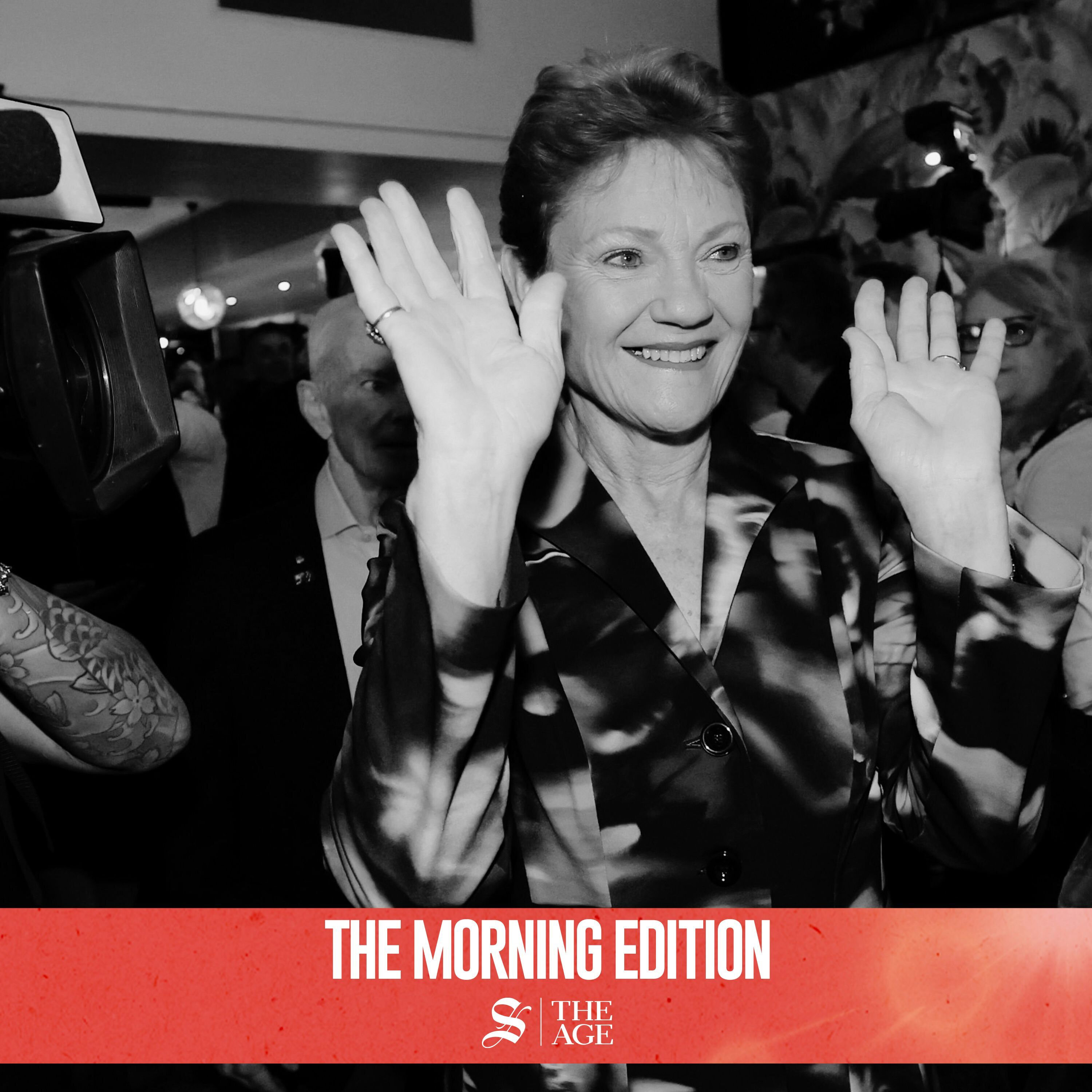
We're only hours away from the federal treasurer handing down the government's much anticipated budget. All eyes have been on Prime Minister Anthony Albanese's anticipated and controversial changes to taxes that benefit the wealthier members of our society. But there's an entirely different factor that will likely be swaying the government's thinking. I'm Samantha Sellinger Morris, and you're listening to the Morning Edition from the Age and the Sydney Morning Herald. Today, political columnist Sean Kelly on what one nation's historic win last weekend could mean for the changes to our society that the government implements or not. It's May 12th.
- [00:51]
Interviewer/Host
Sean, welcome back to the podcast.
- [00:54]
Sean Kelly
Thanks for having me back.
- [00:55]
Interviewer/Host
Okay. I'm very excited to ask you this because you have been embedded in politics for yonks. You advised former Prime Ministers Julia Gillard and Kevin Rudd. You've been writing about politics for more than a decade, so you're not easily shocked. And yet you just wrote that even though one nation's historic victory over the weekend was widely anticipated, it felt like an explosion. Why?
- [01:19]
Sean Kelly
Well, part of this comes down to a fundamental point, political rule, which is that you can anticipate things before they happen, but until they actually happen, it's, it's very difficult to tell how they will actually land. You know, the atmosphere really does shift when a significant political moment lands. It's, it's a real pain as somebody who writes a political column because you can kind of guess at what's going to happen, but actually it's very difficult to write properly ahead of time because everything really does change. This particular moment, I think, landed differently partly because of the scale of the victory. It was widely anticipated that one nation would win, but the victory was really shockingly decisive. And secondly, because I think with firsts, you know, and this is the first House of Representatives seat federally one nation has actually won at an election or by election, they, they send a signal, I think, that the world has changed. The day before, this wasn't possible. The day afterwards it is.
- [02:30]
Pauline Hanson
This is not only a win for Farah, it's a win for the rest of Australia. I'm seeing the sea of these proud Australians faces here in front of me, hundreds of you. But millions are watching me on MTVs now and I believe it's giving them hope. People here to represent you, the people to get our country back.
- [02:59]
Sean Kelly
And what this means is that we could see it happen again. And suddenly you have more one nation representatives in the parliament and that's a really big deal. You know, I find the prospect of one nation Gaining popularity in this country. Fairly frightening. Not. Not in terms of the protest vote, I can understand why people are protesting, but in terms of the. The way that they exploit race, the. The racist way they approach politics and have done for decades now, you know, I find that a really frightening fact, and it shifts the entire landscape. You know, as others have written, this creates this situation where it becomes very difficult at some point for the Liberal Party and the National Party to argue that they will hold government without the support of one nation. And you could already see senior Liberal figures tiptoeing towards that on the weekend, saying, well, you know, we'd have to be in coalition with whoever. Whoever's there to be in coalition with. And that puts the Liberal Party in particular, I think, in a really difficult position, because while that may well appease voters in regions like Farah or electorates like Farah, it will alienate voters in a whole bunch of other electorates it needs to win.
- [04:17]
Interviewer/Host
And so tell us, which senior figures, you know, have said that they would work with one nation?
- [04:23]
Sean Kelly
Well, there's actually been a bit of contradiction on this. I think Tim Wilson came out and said this first up, that you'd have to be in coalition with. With whoever it turned out you needed to be in coalition with. But then it seemed to me he slightly tried to walk those comments back a little bit later or at least place the emphasis somewhere a little bit differently and say, of course, you know, we want to be in government in our own right, but the coalition doesn't seem entirely clear on this, I think. And you can understand why. This is the fundamental division. This was the division you saw over the question of whether or not they should give their preferences to one nation. Much of their base is telling them, you have to work with one nation. We want you to work with one nation. We want you to give preferences to one nation. The problem for the Liberal Party right now is they've lost so many votes and they've lost so many seats that there are precious few people representing the types of electorates that they need to win back. So they're hearing from all of the voters that they already have, and they're not hearing enough, or they're certainly not listening enough to the voters that they need to win if they're going to win in their own right. Now, of course, it's possible that they're in the process of giving up on that possibility. And that, you know, that is another significant shift to the landscape.
- [05:36]
Interviewer/Host
Okay, and speaking of that political shift, you know, you've mentioned that this win shifts the entire landscape. And you also mentioned in your column, you know, that Pauline Hanson has frequently spoken of getting, quote, our country back, but that after this win, to those who aren't followers of one nation and Pauline Hanson, this suddenly sounds dangerous, closer to a threat. So is that, what do you mean when you say that? What is it about that phrase, getting our country back? What does that mean to you in a way that you, you think feels like a threat to those who don't follow her?
- [06:04]
Sean Kelly
Well, who. Who is our in that sentence? You know, getting our country back? Who. Who does that represent? Who is the we in that equation? And getting our country back, you know, back from whom, back to what time exactly are we talking? And I think we talked about this last time of a few months. This is one of the problems with nostalgia, is not everybody gets to be nostalgic. The past wasn't so great for, for many people and one nation, of course, when they say these things is a pretty clear implication that we're talking about white Australians, you know, maybe even more white blokes, but certainly white Australians, Anglo Australians, and they're taking it back from migrants. And I think to say that can sound like bluster and has for quite a long time sounded like bluster, but as one nation's numbers have risen, it has sounded more and more like something that could actually come true in some fundamental way, in the way that we've seen it happen in America. And, you know, when we actually see results delivered, as in Farah, it becomes possible for us all to imagine that possibility. Now, I don't think for many structural reasons that one nation in particular is about to become, you know, the governing party of this country, but I think they are opening a space in which far right movements can operate very successfully.
- [07:35]
Interviewer/Host
And tell us on the day that we're recording this. So we're recording this on Monday around lunchtime. By the time this airs, it'll be just hours before the federal budget is handed down. So how does this triumph and fairer, how does it change the atmosphere in which the government's budget's going to arrive in?
- [07:51]
Sean Kelly
Hugely, I think, you know, of course, we don't know what will be in the budget until Tuesday night, but all the talk is of changes to taxes on property investment around capital gains tax discount and negative gearing. And what they are directed towards, in the government's retelling or in the government's telling, is intergenerational inequality. So evening things up between the generations, realistically, they are targeted at equality more Generally, they are targeted at evening things up between people who have assets and can earn income from assets and most people in the world who have to earn from income from wages and salaries. And that is a huge gap. It is a growing gap. And that gap is part of the driver of the explosive rage that we are seeing take hold in large parts of the country. I think, and as demonstrated in Farah, and what Farah says to the political class, but I think to the country at large is if you are going to do something about this rage, you need to act now. And that is a message at a political level. If you're going to stop the rise of parties like One Nation, you need to do this. And it is a message to the supporters of parties Like One Nation, with the Labor Party saying, we are actually doing something about the problems you feel. We are doing something about the anger and frustration you feel. And, you know, labor has been trying to make the argument for the last few months, the Prime Minister has been trying to make the argument that one nation doesn't actually follow through on its support for workers. It pretends to be the friend of workers, but then votes against things like wage rises or increased bargaining power for unions. Those arguments obviously aren't cutting through. Rhetoric is not cutting through. So the government recognises it needs to do something. And I think that does make what is rumoured to be in the budget a much more persuasive proposition. After the break, part of the question will be how much of what is announced on Tuesday night survives the next few months and makes it into legislation.
- [10:13]
Interviewer/Host
And you wrote something that I find intriguing. You've said that depending on how significant this budget is, and I think you probably were pointing to changes that we do expect to see to capital gains tax and negative gearing, that it could mark a turning point for the federal government, a reminder that, quote, governments can reshape the country in significant ways, that the assumptions and conventions on which a nation operates do not have to be eternal. So. So tell me what you mean by this.
- [10:40]
Sean Kelly
Well, first, it goes towards the way that this government has operated for the last four years. The way that this government has operated for the last few years has been to work in an incredibly cautious manner, to work very incrementally towards change in general. I would say this was put to me by a former labor advisor to find where consensus already exists and then do what that consensus suggests they should do. So there's not been a lot of boldness or courage, open question about how much leadership I think there has been at times, this is a clear challenge to that. Now, it is true that the public has moved towards potentially embracing changes like these on property and making housing more affordable, especially for younger generations. But it also requires courage, because this has been taboo for so long, because it was seen as a major factor in the defeat of Bill shorten in 2019. Because we know a lot of people in the country do take advantage of these tax breaks. You know, there is a potential for a groundswell of rage. The government is going ahead anyway, and that that is a risk. And there is an element of courageousness there. And the element of courage comes not in it being the first absolute difficult thing that the government has done, because the government did break its promise on the stage three tax cuts in the second year of the last term. It comes about partly in the complexity of this change. By changing a number of elements of taxation in relation to housing and at the same time continuing to engage in other policy elements around housing, in terms of supply, building more homes, investing in infrastructure around homes. The government is dramatically intervening in the housing market. It is reshaping the housing market and most particularly it is reshaping the assumption in this country over the last 20 or 30 years that the right to invest in housing and make money from investing in housing is more important than the right to live in a house, the right to potentially own a house and have that element of security in your life. And I think Australians, you know, are waking up to the fact that that is a perversion of public policy and the government is grasping that. And what is interesting about that is partly in relation to the moment, but it's also interesting in terms of what it opens up for the government. Does this mean that the government now recognises that it has the potential and the ability to. To intervene in markets, to reshape markets? Because realistically, that is a significant way that governments can reshape the society in which we live. I think, you know, any analysis of the economic problems confronting the country at this point end up taking into account privatisation. They end up taking into account oligopolies, the existence of rent seeking, dominating businesses. And this move is the first sign that the government is potentially willing to take on really big questions like that. I'm not saying they will, but it's the first time you've thought, well, well,
- [13:54]
Interviewer/Host
maybe, and I'm just curious, you know, because you have been a Labour insider, you definitely have your finger in that pie, so to speak. So are you hearing conversations in terms of just how far Albo might go? In this regard, because we know that famously, Albo has been quite cautious. His treasurer, Jim Chalmers, has been very outspoken about, you know, having greater ambition. He told our mastheads just this week, I'm an impatient person. And I saw with great interest that journalist Samantha Maiden on Insiders a few weeks back about Chalmers. She said, they say nobody puts Baby in a corner, but Jim's been put in a corner. He's only been allowed to play with the big toys very rarely. He's sort of been chomping at the bit to make change. So I don't know. Do you think those factors together, in addition to whatever you might be hearing, could we be seeing even greater change ahead, do you think?
- [14:40]
Sean Kelly
Look, I have no sense of what will come after this, and I think, you know, fairly, the government is absolutely focused on the budget, and I think in a way, they'll be very frustrated with the fact that people, you know, like myself are already saying, well, what's. What's next? You know, they absolutely will not want people to bank these changes and just move on. And fair enough. You know, I do think this is a potentially really significant set of changes, and it could be a really significant beta head. You know, I spoke at the start about the way that you can't know what something will feel like until it actually happens. We can't know what this announcement will feel like until it actually happens. And that cuts in a couple of different directions. We can't know how big it will actually feel. The Stage three tax cuts felt like they were going to be controversial. The conservative wing of the press came out very hard against them, but people are behind them. And the controversy faded very quickly. And it really was. And it felt at the time like that would really encourage the government to go on and do more. And it didn't. You know, we've had to wait another two and a half years for something of this significance to happen. So we might all be getting excited about this and then, you know, nothing, nothing follows it. But the other point is that things could end up being much more difficult than they currently seem. You know, there's this kind of assumption that this has been talked about in political columns for quite some time now, and everybody knows it's coming, but the truth is, voters don't really know something is coming until it comes. And when this policy is announced, there will be ferocious opposition. There will be ferocious opposition from various lobby groups. There will be ferocious opposition from the opposition. The Prime Minister's broken promises will get a lot of airtime, and he's on the record on a lot of occasions saying he won't change these two taxes. So that debate could be very significant. So really, the challenge for the government is not just in the announcement, it is prosecuting the argument. And because they've been so cautious for the last few years, the truth is that this is a government very inexperienced in making significant arguments. It's a government that is incredibly inexperienced at making complex arguments, at announcing complex policies. So part of the question will be how much of what is announced on Tuesday night survives the next few months and makes it into legislation.
- [17:02]
Interviewer/Host
Interesting. Okay. Well, Sean, just to wrap up, I have a question I wanted to ask you because you also wrote that one nation's historic win in FAIR might signal
- [17:11]
Samantha Sellinger Morris
that labor is already too late.
- [17:14]
Interviewer/Host
Tell us about that.
- [17:15]
Sean Kelly
Well, look, this, this is the bleaker side of things. You could say this budget is going to represent a turning point and that labor will clearly be saying to voters, we hear you, we understand your frustrations, and voters will say, well, thank you. Ok, our trust in government is to some extent restored. Or it could be that this government, and perhaps the governments before it as well, have missed the moment that actually it was the last 10, 15 years that change really needed to happen and that the fact that one nation is securing the types of victory it is now securing suggests that that downward trend away from major parties, away from trust in government, is just on a slope that is speeding up and can't be slowed. But, you know, we will, we will get some sense of that over the next couple of years.
- [18:07]
Interviewer/Host
And just to be clear, when you say that if Labor's already too late, what you're talking about is too late to stem the tide of the far right fire that is, as you've written now raging.
- [18:17]
Sean Kelly
Exactly that. You know, it is possible that more measures to tackle, you know, the economic injustice in our society needed to happen under the previous liberal government. But it is also possible that there was, there was a final chance in the early years of this labor government. You know, the other thing to remember is that there was an inflationary crisis in the first term of this government, and now we're heading back into another period of inflation. And I think it is hard to overstate how angry that is likely to make people. Interest rates are rising again, you know, the first time frustrated people, the government really fell in the polls. This time, you know, people might just really throw their hands up in despair and that could lead to a very bleak electoral mood.
- [19:11]
Interviewer/Host
Well, Sean, it's always great to have you on and have your insights.
- [19:14]
Samantha Sellinger Morris
So thank you you so much for your time.
- [19:16]
Sean Kelly
Thank you.
- [19:27]
Samantha Sellinger Morris
In other news today, homeowners can no longer expect that their property is worth as much money as it was even a few months ago as the auction market weakens to levels last seen in the 2022 downturn. One Nation's thumping victory in fairer on Saturday has pollsters and politicians surveying seats across the nation, asking which other seats are most likely to fall to one nation. And there's a movie out with Talking Sheep and Hugh Jackman. While audiences are usually skeptical of this combination, the Sheep Detective, a family friendly murder mystery, is leaving adults sobbing. You can read more@the age.com au or smh. Today's episode was produced by Josh Towers. Our executive producer is Tammy Mills. And our podcasts are overseen by Lisa Muxworthy and Tom McKendrick. If you like our show, follow the MORNING EDITION and leave a review for us on Apple or Spotify. Thanks for listening.