← The MSing Link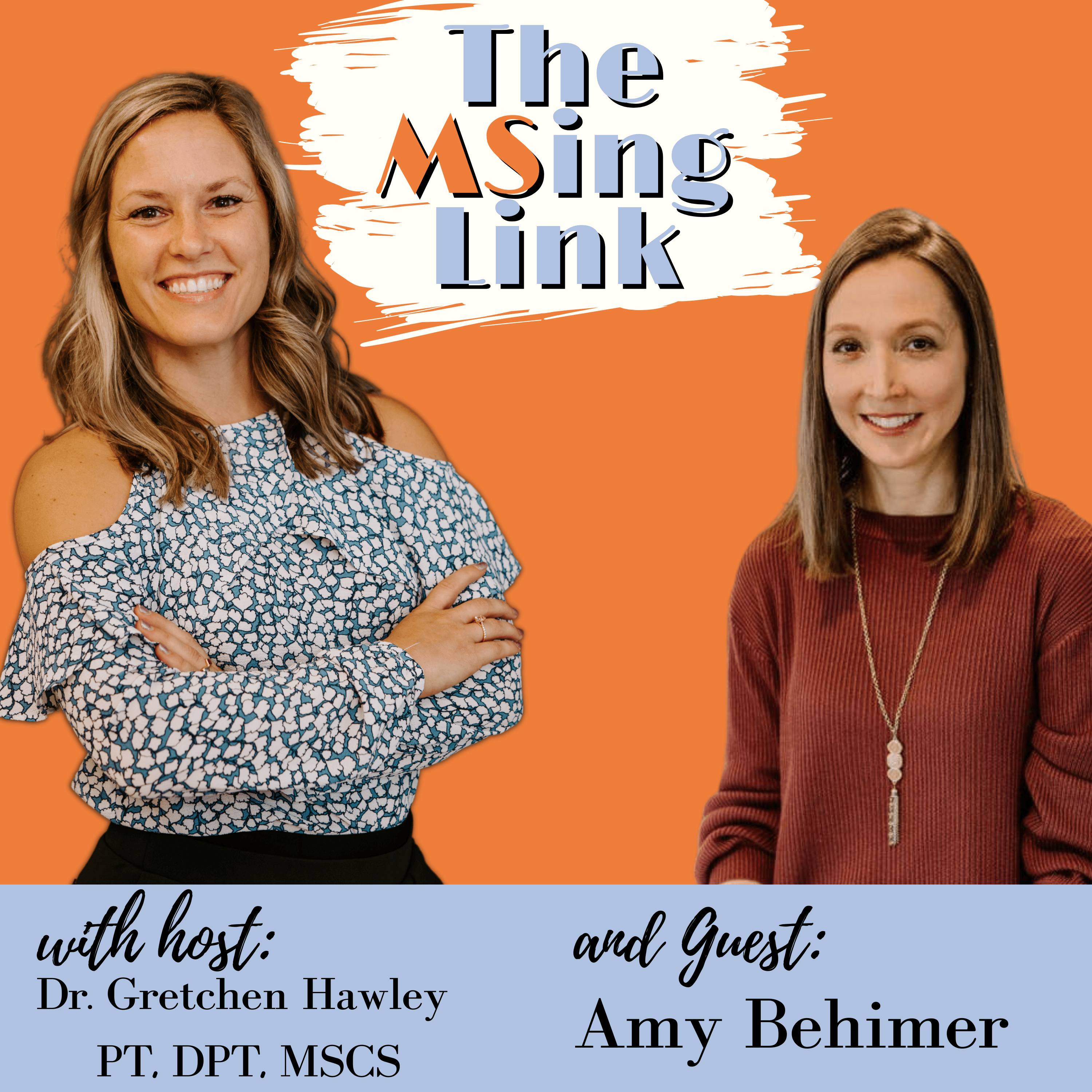
The MSing Link
263. Health Coaching for MS: Research Shows 85% Feel More Confident Managing Their Symptoms
00:44:47
Loading summary
Transcript58 lines
- [00:00]
A
Hello. Hello. Thank you so much for tuning in. Today I am joined by Amy Beheimer who brings a unique triple perspective to our conversation. She's a nationally board certified health and wellness coach specializing in autoimmune disease, a doctor of pharmacy, and someone who's been living with primary progressive Ms. For nearly 14 years. Amy has been a guest expert Inside the Missing Link twice now and and if you heard the Missing Link podcast episode number 204 about staying consistent with habits, you already know how valuable her insights are. On today's episode we talk about what health coaching actually is and why it matters for people with chronic illness. The research backed results from National Ms. Society studies showing how coaching improves self efficacy and quality of life, and how to find the right coach. If you're ready to stop struggling with consistency on your own, let's dive in.
- [01:08]
B
The big question is how does someone with Ms. Actually improve their mobility, strength, energy independence? The list goes on. My name is Dr. Gretchen Holley, physical therapist and multiple sclerosis specialist. Welcome to the Missing Link podcast. Tune in as I share the top strategies and exercises to help you gain control over your life with Ms. Using research driven insights and advice from top industry experts. Whether you're newly diagnosed or have had Ms. For over 30 years, whether you have relapsing Ms. Or progressive MS, this podcast is for you. You're sure to feel empowered and inspired after each episode.
- [01:58]
A
Ready?
- [01:59]
B
Let's dive in.
- [02:07]
A
Amy, thank you so much for being here with us today.
- [02:10]
C
Thank you so much for having me again. I love it. I love spending time with you.
- [02:13]
A
Of course. I know. I feel like we've become such good friends behind the scenes now. But you've been on the podcast before. You've been a guest speaker Inside the Missing Link twice now. So my Missing Link members know and love you as well. But we're going to be talking today about coaching and also sharing something that I'm super passionate about, which is the research behind it and what does it actually show us and prove. But before we get into any of that, in case people haven't heard our previous podcast episode or aren't a Missing Link member, can you share a bit about who you are and what you do?
- [02:49]
C
Yes. I love that we're having this conversation because our last episode was all about how to stay consistent. And so today is really about a tool to do just that. And so as you mentioned, I'm Amy Beheimer. I look at the world and health through a few lenses that are worth sharing. Coaching specific. I am a nationally board Certified health and wellness coach who works with people with autoimmune disease. I am also a doctor of pharmacy. So that is another part of my life that really, again, like you, values evidence based medicine. And what does the research show that we can go off of, as well as what's going on with our human bodies and what goes wrong? And then my third lens really is just living with multiple sclerosis. So I am coming up on 14 years with a primary progressive type of picture, and it is just impossible to take that perspective out of it. And so I'm doing this work with everybody listening. And we're all human and we have a lot of similarities. Absolutely, yes.
- [03:52]
A
And I'm so excited to dive into this. And for those that are curious, if you heard Amy just say our last episode was all about how to stay consistent with habits, especially when you have Ms. Or really any chronic illness, listen to the Missing Link podcast, episode number 204. That is the one where she spills the beans on all of that. Now, my first question for you is, if someone listening is completely brand new to the concept of coaching, can you share with us why it's important that we have this conversation and why we should care about coaching?
- [04:31]
C
Yeah, I think a metaphor that really lands that may help everybody is, you know, if you think about wanting to go somewhere amazing. So for me right now, top of mind is Hawaii. For some reason, it's been on my mind for a long time and I haven't been there. It's a big trip, but I think we can all agree, you know, it's beautiful. I picture the beaches, the sunsets, the palm trees. You know, that's the destination that we're talking about. So for us with ms, the dreamy destination equivalent, I would say in health that I hear all the time is we want to feel better, we want to feel good, we want to have more energy, we want to function better, we want to move better and just overall have a better experience of health that's not driven by this diagnosis. And so back to our Hawaii incident. How do we get there? We take a plane. And most people don't get excited about the plane. You know, they don't think about their seat. Maybe. Maybe some people do, but not usually. It's more like, oh, I got to get on this plane and I have to travel and get through the airport and. But it gets us where we want to go. So it really does matter a lot in the picture, in that destination. And so what I think is super helpful is to think sometimes of Health coaching or coaching in general as the plane. And not one that we should overlook, not one that we should resist, but maybe even get excited about because it really is one of the most effective, which we'll talk about with the research. Underutilized. If you ask people, do you have a coach, very few people do right now. So it's really underutilized and it can actually help us get to Hawaii in some really cool, proven ways, I would say, in addition to a sports coach. You know, people very readily understand that if they want to get better at something, then a coach can definitely help and practice with them and get them ready for game time. So that applies too. I mean, if you want to get good at changing habits or improving your lifestyle in any way, a coach can definitely help you get there.
- [06:33]
A
That's such a good metaphor. And I do feel like, at least in the business world, so obviously I own my own business and in that world a coach is also very, very much the norm. I the majority of business owners that I know have a coach of some kind and there's so many different types of coaches. You can have a coach that will help you build your podcast or help you with marketing or messaging. You know, there's so many different things, but regardless, it's normal to have someone help you get to where you want to go. As you were just saying. I think as it relates to our personal lives, though, that's where it becomes a little, I don't know, almost like wishy washy or something that it's definitely not the first thing we think of. We often think of some of those other habits that we talked about in our previous episode of Exercise and Nutrition, but coaching often just isn't thought of. So I'm really happy that we're having this conversation. Now, what about people who have heard of coaching, but they've heard of it in different contexts? You know, I personally constantly am seeing people refer to themselves as a life coach or a health coach or a health and wellness coach. So can you break down what what those mean? And is there a specific type when we're talking about that destination with Ms. Or with a chronic illness? Is there a better type or what should we know about those? Can you break all that down for us?
- [08:05]
C
Well, that is a huge call out. That's so true. You hear the word coach being flown around quite a bit. I would say the main ones we hear and you know, you can tell me if you hear any that I'm not mentioning. But life coach and health coach, I've even seen autoimmune coach, health and wellness coach, and there are some, some key differences. So to start, if you hear the term health and wellness coach, it's important to realize that that is a label that is now available after passing a National Board certification. So this is starting to model what other health professionals look like. So the National Board of Health and Wellness Coaching, they are on their mission for it to become a profession. So just like you said, it's just not the norm right now. That is going to change as the research starts to stack up. Their vision is that every single physician's office will have coaches within it. So that without a doubt, if you're seeing your physician and they are, whether they're prescribing it or mentioning it, that these lifestyle changes, these healthier habits can impact your future health, then you're going to be able to have access to a board certified coach in that moment, which is so exciting. We're just a little bit ahead of the curve. And so that's why I so appreciate you inviting me and letting me come on to talk about it. Because in the pharmacy world, we know that from the time research shows that a medication works in clinical trials, the lag time for it to make it to the guidelines and become the standard of care is about 17 years.
- [09:54]
A
Oh my goodness, it's wild.
- [09:56]
C
And so there's a lag. And so my mission to jump and shout about is we're in that middle ground where people are still telling themselves over and over, I should be able to do this on my own. I shouldn't need help with this. And really that's one of the biggest misconceptions and barriers to coaching is that something has gone wrong if we ask for support to help us make these healthy changes that we want to make. And so I got off a little bit of a tangent. But yeah, so we're shortening that gap. So that is the first type that you'll hear is health coach or health and wellness coach specifically because eventually the aim of this board of Health and Wellness Coaching is that you won't be able to say that you're a health and wellness coach unless you hold the credentials. Now, other types of coaching, life coaching, like for example, I'm certified as a life coach. There are, I did not look up this number, but there's probably hundreds of organizations that are selling life coaching certifications. I'm not saying one is better or worse. Some could take a day for people to get certified, some can take a year. So there's different rigor but there's no regulation whatsoever. So you can ask what, you know, what license or not licensing, but what, where the certification is through. But at this point, it's a good thing. A lot of therapists are actually becoming life coaches because there's less regulation, there's less dictating what can be discussed and what can be worked on. And again, I also will sometimes refer to myself as a life coach because I think they're. They're one in the same. I do have a certification, but the life coaching skills of not just looking at what are we doing or not doing, but how are we thinking how are we feeling? That is such a huge part of it. And honestly, our health is our life, right?
- [11:51]
A
Absolutely. I feel like you have a real knack, too. And maybe this is just because, again, you've been inside the missing link twice, sharing your expertise, and one of them was an actual coaching session, which was super cool. But I feel like you have a real knack for helping us understand how to stay consistent or how to make habits, how to implement them into our lives. I feel like we all know, like, if someone says, well, what habits should I be doing? We all would say exercise, better sleep, better nutrition. But actually implementing them into our lives is, I think, the hardest part is that what a coach is for. And I guess another way for me to ask this question is how would someone know if this coaching that we're talking about would be something that they should be thinking about? Is it if they're, like, falling off the wagon with their exercises or, you know, how would someone know that this is something I should look into?
- [12:51]
C
That's a really good question. I always say that because we get really granular, you know, like in my group coaching programs, and we're really going for habit goals, let's call them habit goal is like, how do we do it today? We can have a goal to be healthier, but that is an outcome. That's an identity goal, that's bigger. And so we have to look at the things that we can do not do, check off that add up and get us to that bigger picture. And so the goal of these habits is not to just do the habits, but it's for the habits that we want to make, to become who we are, to become our identity, to become a healthy eater, to become somebody who moves in a way that feels good. And so I think that to answer your question more directly, a coach won't necessarily tell you these are the exact exercises that you should be doing. That's what we have you for or this is exactly how we should eat to feel this way because we are all so unique. And yes, there is science on which habits lead to a healthier brain and body. So we start there. But coaching really helps you uncover yourself as an expert to learn how to become aware of maybe things very unique to you where you're stuck, what makes this thing feel hard, why do I set these goals, but I can't seem to reach them? And so again, there is some teaching and there is some information that almost anybody who implements some habits are going to feel better because we know these things. But there's so much of really discovering what is inside you that you already know. And how are we going to make this work with your life? And how do you become the person you want to be as it relates to health? Does that answer your question? It does.
- [14:49]
A
And it sounds like therapy actually. Like, I've been to therapy a few times, love therapy. And every time I walk away from a session, I'm like, wow, I learned something about myself that I didn't know. And it directly relates to why I respond in this way or why I have a hard time, you know, doing xyz. And it sounds like maybe you're kind of the guide in that conversation that can help us have those realizations which will then help us reach our goals.
- [15:19]
C
That's actually a really good call out to also discuss is the difference between coaching and therapy. Because a lot of people wonder that. And the best analogy that I have thought of is, and I haven't, this is out there. So it's not new to me. But what makes sense to me is therapy can often be think. Be thought of as almost a looking back or to get back to a level of functioning versus coaching is a lot of looking forward, a lot of where am I going? And a lot of things are good, but how could they be better? Or how do I keep the progress going? Because I'm with you. I've been to a good amount of therapy. And as a coachee who also gets coaching and has gotten therapy, they can feel different. You know, I have many therapists in my group that I coach and. And it's such a as I have physical therapists and physicians and pharmacists and even other health coaches. Because with all of these, the cool thing about coaching, like you just said, it's not information, it's insight that is really hard to get on your own, that is really hard to get without an outsider perspective. So again, that ties back to what we talked about earlier. Nothing has gone wrong. If you decide I want to learn from and work with a coach to do this because you, we all, we need it, we're human. We can't, you know, see what we can't see.
- [16:43]
A
Yeah, I love that. The first time that I went to therapy, actually, I didn't have any goals, which I felt so weird saying because I'm sure most people who work with a coach or go to a therapist want to work through something. But my goal was I just want to learn more about myself, which I'm sure made it harder for them because there wasn't a specific thing, but it was so eye opening. But that's a really unique perspective of how therapy differs from coaching. I like that.
- [17:07]
C
Yeah, absolutely. And it's, yeah, all about awareness. Awareness is so awesome. And if a coach also happens to have an expertise or a knowledge on the process of something specific that you're going through in your health, that's just icing on the cake because there is some, some learning and it's not just about uncovering what's inside of you. There absolutely can be some learning and putting that into action.
- [17:33]
A
Yeah, absolutely. So let's dive into what the research is showing. And this really excites me. Just the fact that there is research is super exciting. Can you share with us what research has been done? I know that one, at least in particular was through the National Ms. Society, so it directly relates to people with ms, but I know that it also applies to people with chronic illness. Can you share what this study was and then what the outcomes and insights were?
- [18:02]
C
Yeah, absolutely. And this one I was actually a part of as one of the coaches for it. So I'm going to talk about that one and then I'm going to mention one other one specifically in patients with Ms. And the cool thing is the results were similar between the two. There are themes and so that reproducibility is when we're going to start to see traction. But the one that you alluded to, there was a grant given to the National Ms. Society and they decided to do a trial for health coaching in patients newly diagnosed. And that ranged, it could be anywhere from freshly diagnosed to, I think they were targeting around the two year mark, but people that had ms, five years, eight years, even more, ended up getting to participate. And so it looked at six months time, one on one coaching sessions and measuring how the coaching recipients did on some predetermined endpoints, which I can go over the results right now if that makes sense. But what it showed was that and it is worth noting there were several of us coaches and we all got to coach in our own style, in our own way. So there was some variability. But, but the commonality between us coaches were we were certified, we were nationally board certified by the health and wellness coaching. So that does provide that layer of continuity to be able to help with the evidence based nature of it in research. And so what it showed was that 85% of the participants at the end of the six months and then we actually repeated it for another six months exactly the same. So we had two cohorts spanning a year total. But 85% of people who went through the coaching agreed or strongly agreed that they felt more confident in managing their challenges of their Ms. There also was an improved self efficacy which I would love to just take a minute to talk about what that is and why it matters. So self efficacy is the a belief, someone's belief, your belief, my belief that in our ability to do something or in our ability to impact our future or have control of our future. And so how we believe we are able to impact our future determines how we feel about it and ultimately what we do or don't do. And so I like to think of it this way. Imagine walking around all day with a little inner voice that's telling you you can do this and what you do matters. Like that is what it's like to have high self efficacy. So going back to those results, when we see a boost in self efficacy, the downstream effects of that are huge.
- [20:52]
A
That is so important, especially for people with Ms. And chronic illness, because the majority of statements around self efficacy that I hear are the complete opposite of that. Because you have this disease and it can feel like it's controlling you so that you don't have that control anymore of how you're going to feel tomorrow or a year from now. So that's really cool that with coaching.
- [21:19]
C
That improved, it boosts it and it's not just fluff. So that is, you know, sometimes we can be like, okay, it must be nice to feel better, but that function better that we, we talked about. Having Higher levels of self efficacy are also linked to lowering inflammation and improving immune system function. So that just supports how, how we're thinking and feeling absolutely cascades out to our bodies and our bodies and our cells are listening to how we're talking to ourselves and how we are feeling most of the day. So if we spend a lot of our days thinking and feeling in those patterns that potentially need to be interrupted and rerouted, then when we can do that. We actually can see physical benefits as well.
- [22:08]
A
Wow. So you said for this specific study for the National Ms. Society, the three outcomes were the improved self efficacy, improved quality of life, and then what was the third one?
- [22:18]
C
Feeling more confident to manage challenges. And again, you may think like, okay, feeling this way. But there is a habit expert researcher named BJ Fogg and most people have heard of James Clear and Atomic Habits. I would say second, most people have heard of Tiny Habits, which was written by BJ Fogg. And he says that if he could boil down his decades of research, he would boil it down to three words. Emotions create habit. And so that really plays a role in changing habits is how we're feeling. And so I love to call out that these results and others when they mention that participants were able to feel certain ways more consistently. That translates into what we do, that translates into our ability to make changes. And so it is the opposite of fluff. And I think that it is really behind what can make life feel better.
- [23:17]
A
That is so inspiring to know because, yeah, you're right. If you don't think of the effects of how you feel, then it does kind of just seem like, oh cool, well, I'll feel better. First a day, but then the next day not so much. But when you put it together with your actions, it can yield some pretty amazing and consistent progress. And I know you said you were going to mention another study, but before we do that. So did I hear you say that that study was for a year? So were they receiving a year of coaching or was it just a few months and then followed up by a year? What did that look like?
- [23:54]
C
Good question. It was actually two cohorts and each group got six months. So it was a year for me as a coach, you know, with two separate six month periods. But each group received six months of coaching.
- [24:06]
A
Gotcha. And so by the end of those six months, that's when those results came in.
- [24:10]
C
Yeah, we measured at the beginning, in the middle and then at the end.
- [24:15]
A
Do you remember what the middle results were like? Were things already trending upward? I imagine if so, was it like super remarkable or. I don't know, do you remember what that like three month mark was like?
- [24:29]
C
I wish I could say I had access to the middle ground, but I didn't. So. So that was the being collected by the society. But I imagine, I mean there I have clients who it's in a couple days, it's, you can feel better. I have people like when I say we've got this, you've got this. That can be enough for some people. I always like to say, if you're doubtful that this is gonna work or that you can feel better, borrow my confidence. That it can borrow my confidence in what I see in you, what I see in all these other people that I've gotten to work with, that we have figured out a thing or two about the human brain. And really the only thing stopping is you stopping there. You know, when you take this different, fresh approach to really becoming aware and looking at how do we work with our human brain and not against it and not try to beat ourself up into a healthier lifestyle, then those kind of feelings that can erupt can start really, really fast. So if I had to guess, people can leave the first call just with that almost relief that, gosh, I'm not doing this alone anymore.
- [25:40]
A
Yeah. And I know I keep mentioning this, but if you're a Missing Link member, I'd highly encourage you to go into our program and search Amy's name. Because our most recent session, which, gosh, I don't. It was several months ago now, it was an actual coaching session. And it was really cool because there was one person in particular who mentioned a goal that she was working towards. And I don't even think you spend 20 minutes. Like, it was a pretty quick bout of coaching. But she. You could just see, because we were all live on the call, felt like she had so much more clarity after that conversation. And all of us watching also were like, oh, okay, I can see how that pertains to me and this goal that I'm working on. So it was really cool in that moment to see, like, I am sure right after that session she felt better and more clear. So that was cool to witness.
- [26:33]
C
Yes. The wonder and awe of that coaching really can do that. And it's. Even to this day, I will. I will sometimes get off a call and just feel that same wonder and awe that I felt the first time that I had a personal breakthrough of, whoa. Like, I was thinking that and that was holding me back. And, you know, it really can be exciting. And yeah, it's. It's. That was really fun to do that in the Missing Link to. To do it as something different because, again, there's so much information out there. But I remember saying, why don't we just go off exactly what people are thinking because you want to apply any information you're learning to your life. And that's the cool thing about also doing it in a group, is that you, even if you don't ask the question. Someone else is going to ask a question. And you're like, are they in my brain? Because that's the question I had. And so it really is about applying what you're hearing to your specific scenario. And the best questions, the best teaching, the best information is always based off of what you are thinking and living through in the moment time and time again.
- [27:40]
A
I love that. Yeah, it was cool to witnessed that exact situation. Okay, so let's go into. You mentioned there was another study as well. Can you share more about that?
- [27:49]
C
Sure. I was just going to touch on it briefly in the Journal of Multiple Sclerosis and Related Disorders. And this was just in 2024 and I've seen that it's gotten some buzz, so I thought it was worth mentioning. But it looked at lifestyle intervention improves cognition and quality of life in persons with multiple sclerosis. I think actually in this one it was also an early diagnosis. And so again, we see that improvement in quality of life and the. There are tools that they can measure that. But this one specifically was physical and physical health and mental clarity. So exactly what you just said. That feeling that we can get with our mental clarity. They also had a cognitive performance significantly improved. So thinking speed and processing, that's huge. Fatigue was decreased, fitness levels improved. And again, patients reported feeling more confident, more capable, and less anxious about managing their Ms. And so these themes start to come about. And this one actually looked at food and movement. But the key here is the title is, oh, it's these lifestyle interventions that did all this. But in this study, the participants were receiving coaching through it. And so we can look at, yes, what do the interventions and the habits actually do. But we need to look at the nitty gritty and see, but how do we actually make those happen? And again, just shining a light on the power of a coach to help us get there. Help us get to Hawaii.
- [29:19]
A
Yes, yes. So if someone's listening and they're like, yes, I want that, I want those results that, that we just talked about. Can they work with any coach or is it safe to assume you already told us the benefits of specifically the certification of the health and well, this coach, is that who they should be looking for? And then also tied to this question, I know that the research, at least for the first one, was for six months of coaching. Should they at least in their mind commit to six months or what? Like, what timeline should they have in their mind to commit to to get results that are similar to these?
- [29:58]
C
These are really good questions. I, I Maybe I'll run through a handful of things to consider because there'll be some gray. I think you've all you've often maybe heard that if you try one therapist, you know, it may not be the best fit. I would say probably the first. The same thing goes for a coach. You know, if you have worked with a coach or work with one and you're like oh, I don't know if that's the best fit. Maybe don't throw out the entire profession or the entire ideology. So give it a go. But credentials are a piece of it. So it doesn't have to be everything. But credentials I think can be a piece of it. The NBC HWC is what I mentioned, that National Board Certification, they do have a directory. I think other credentials could play in. So if there are is other expertise, you know, for example my PharmD I'm not serving as anybody's pharmacist but there can be a little bit of trust in terms of knowledge that comes with that. So credentials would be one piece of it. Again, back to how important feelings are. I call it a vibe check. A coach check. You know, is there a way for you to spend some time with this coach before deciding? It could be listening to a podcast. It could be having a consult call that they offer to get your specific questions answered on if it's best for you. It could be attending a class or a presentation that they offer. I think that spending time with them and really going with your gut checking in. How do I feel before and after? Like if you I was able to do a cando Ms. Webinar in January and I used AI to take the very long chat which was wildly long and would never have time to look through it all because there were so many people on the webinar. And I just asked chat GPT how are people feeling when they're leaving here? You know, only use verbatim and it was words like excited, empowered, hopeful. And I'm calling that out not to praise myself but to call out that. Just imagine if you spend time and you're in spaces where those are the emotions that you're finding yourself in. Then the again the ripple effect, the magic that can happen because emotions create habit. So vibe check is one. Do they have experience going through with what you are going through? Again, I have a diagnosis that you don't have to have a diagnosis but have they worked with people that that are going through what you're going through? I think that that's a fair question to ask. Do they have some results that they can share. What have other clients who have worked with them said? I'm a, I'm an Amazon review reader before doing anything. So I try to share a lot of what's it like on the inside because that gives us something that's really valuable. And then is it personalized support? So there may be some that are not as personalized, but you want to make sure that, you know, in the world of AI, you know, we're missing connection that is personalized and really getting that sense of belonging. Maybe it's being in community. Maybe there's a group that is a part of the coaching that can really help take advantage of again, a whole nother rabbit hole of science and how beneficial it can be. And the last thing I know, I'm getting long winded, but is, you know, does. Is what they're saying, their process. Does it make sense to you? So I think that the test of that would be like, I would never want someone to go and tell their family, you know, they get off a coaching call and they're like, well, this is what Amy said to do. I would really want them to say, oh, this is happening and this is why. And so this is what I'm going to do. And so does their process make sense to you so that you can really live it and embody it and not just have one more thing to do that some expert is telling you you should do?
- [33:54]
A
Right?
- [33:55]
C
Yeah.
- [33:55]
A
I think I'm glad that you went through all of those because those are really important when trying to find the right person, especially if you, I mean, of course you might have some trial and error with a few that didn't work out, but you want to try to minimize that as much as possible so you get to a good one for you as soon as. So those are helpful.
- [34:15]
C
Yeah. And the other things that come up are I actually polled my audience once of what is the biggest barrier to working with a coach. And a lot of people, I think it was the majority said, I don't want to pay for a coach. And, you know, that's very real. I also would love to just again, go back to we're not paying for the coach, we're paying for that destination. We're paying for where we're getting. And coming back to the research, coaching has shown to improve outcomes, improve health outcomes with chronic conditions and save money. So it is. I know it's sometimes hard to give up something in the present for something in the future, but it can save money time and time again. And The American Medical association has even issued a statement in support of coaching and the benefit of those two things that I just mentioned. So again, we're seeing the momentum and I would say just really asking what, what is my brain telling me as, as to why this isn't for me and really questioning it and saying, wait, is that true? You know, do I want to let that keep me from Hawaii or keep me from that definition or am I will willing to maybe try something new?
- [35:29]
A
Right, Absolutely. I love that you mentioned the cost as one of the barriers. I imagine that there's lots of barriers and even misconceptions. Are there any common ones that you here that you think are important for our listeners to just be aware of?
- [35:46]
C
Another one that we haven't mentioned. So the first one, I'm going to repeat it because I think it's worth it, is this idea that we shouldn't need a coach or, or that something has gone wrong. And that one I just, I want to dispel left and right. I mean, that might be another question to ask someone you're considering hiring as a coach is, do they pay for coaching? Because I pay for coaching. It's impossible for a coach to, you know, I, I can do a lot of self coaching. I can teach you a lot of self coaching, which is a piece of it. But sometimes just having that outsider perspective is huge. Um, so there's that one. There is the cost, which, you know, we've provided some amazing evidence that even that one we can kind of start to break down. The other one I would say is time. So I think that a lot of times people want to wait until this or that. And the truth is, coaching that I think you should lean into is incorporated into your life. So you're not sitting on the computer for hours a day learning more, but it's more, you know, you're learning a little bit to then get out and implement in your life, to then come back and say, how did that go? And so I like to say some of the, my clients that have the most success, they've said yes. In the midst of a busy life, because then you stay healthy. In the midst of a busy life, you know, you learn how to do it without pausing. Carpool and grandkids and travel and really about incorporating it into your life. You know, to keep with the coaching analogy, it's like we come together, let's say for an hour a week for a coaching call. That's practice, you know, that's where you have me guiding you, the coach helping with form and you know all those things, but then get out into the game and that's where you're really going to put it into practice. And again, you bring it back, oh, this happened or this didn't go how I thought, okay, what do we do? How do we debrief and then get back out there? Because you got to get back out there living it. And the coolest thing is the impact that you have, the ripple that you cause when you just start to have this approach of, hey, I get to ask for support and I get to do it kind of messy.
- [38:06]
A
That's such a good point about timing too, because I hear that a lot and probably do it myself too. Of I'm just going to wait until after the holidays or after all of this travel. But at least when it comes to coaching, that is the, when you're busy like that, you're going to be in situations that will allow you to practice the tools that you're learning. So that is kind of the ideal time, even though it might be busier, more hectic than usual.
- [38:32]
C
Absolutely. Yeah. Yeah.
- [38:34]
A
And so you mentioned the cost is one of the barriers now that there is research, are some insurance companies starting to cover the cost or is there something else that might cover partially or fully that people should be aware of?
- [38:51]
C
In the insurance world, there's codes that insurances pay for, certain codes. And so the first step of that is to assign something, a code to start to gather data and gather research. So the, to the best of my understanding, coaching has a code where they're in those preliminary stages where they're gathering information. But the cool part is if you are fortunate enough to have a, it's either called an HSA account or an FSA account, which is that pre tax dollars that a lot of employers allow you to accumulate, those can usually be used for somebody who holds the credential of a national board certified health and wellness coach. Oh, that's cool. Yeah. So I have people join my club using that and it's pre tax dollars and it's set aside for medical expenses and that is really exciting if it happens to be something that you have and have access to.
- [39:51]
A
Yeah, that's very cool. Can you let us know where can people find you? And especially if someone listening is like, hey, you hit all those markers that I'm looking for in a coach, I want to work with you. Can you share how you work with other people?
- [40:07]
C
Sure. That's super sweet. And anybody listening, I would, I would love to. I love welcoming people in. But for the Most part, I work with people with my group coaching program. You'll hear me call it the club or club habit hub. Of course, I am obsessed in love habits, so the rhyming helps. But it is again group coaching program that is built on a few pillars. There's the coaching, so that happens live and also it happens some in the community. There's some overlap. There's a community of other people setting their own goals and going after similar things and. And then the third pillar is curriculum. So like I said, there is some things to learn. But I promise I will always pair learning with action. Again to how do we implement this today to go put it into act. So yeah, I would love to talk with anybody who wants to consider joining the club. We have. I sometimes will send you messages of just the fun of knowing that, you know, we're in our movement month, we kind of tackle different areas by the month and we're in our movement month. So there's lots of people, their goals are their missing link exercises and I just love seeing that. And yeah, so that is what we do there. And it really was designed, I had a insider view at the research on that self efficacy, tying it back. So there are certain habits that boost self efficacy. You know, we all want that voice. I can do this and this matters. So what I did was I took those things that are proven to boost self efficacy and I designed the club around it. So, you know, everything is very strategically put in there because it works. Because this is the science behind how we again boost that self efficacy and start to build, you know, healthier brains and bodies and enjoy the process along the way. That's the biggest key. And probably if anybody's out there and they've fallen off a goal, it's because it didn't feel good. And we got to solve for that. We have to find a way that we enjoy the day to day because health is an infinite game. Like we're not playing to win, we're playing to get, to keep playing. So all of that to say I can share a link, it's my name amybeheimercoaching.com join that has all the written information about the club. But I can share a link. I also have a podcast. I have free resources to get started. There's a free quiz to identify your number one habit. And yeah, there's no reason not to get in touch in some way that makes sense for you.
- [42:37]
A
Awesome. And we'll include that link in the show notes as well. And I believe you said your social media is also on. There it is. Okay.
- [42:45]
C
Yep. Amybeheimercoaching on Instagram.
- [42:48]
A
Perfect. Yeah. So we'll put that in the show notes. Thank you so much for, for sharing this with us again. I think it's so important to have this discussion that is also backed by research, which excitingly is now possible because research is happening. So thank you for bringing light to this topic and for sharing it with all of us.
- [43:08]
C
You're so welcome. Thank you for everything you do. I am such a. I'm a friend, but I'm also such a fan. And everything you do for those of us living with Ms. Is huge and hopeful and inspiring, and I'm just so grateful to you.
- [43:23]
A
Thank you. I truly feel like what we do is such a good fit together because one of the habits and things that we try to prioritize is exercise, but actually sticking to it is a whole different ball game. So it's always fun when we get to collaborate.
- [43:39]
C
Peanut butter and Jelly.
- [43:49]
A
Thank you for listening to today's show. I am so grateful to have you as a listener.
- [43:54]
B
If you'd like extra resources such as a video of one of my seated exercise classes, my favorite core exercises, and the opportunity to ask me your questions, head to missinglink.com insider. That link will be shared in the show notes along with links to my social media handles. If you love this episode and think a friend or family member with Ms. Would benefit from listening, please go ahead and text or email this podcast to them right now. Sharing this podcast will help me educate and empower as many Ms. Warriors as possible. Thanks again for joining and be sure to tune in next week for another episode of the Missing Link podcast.