← The MSing Link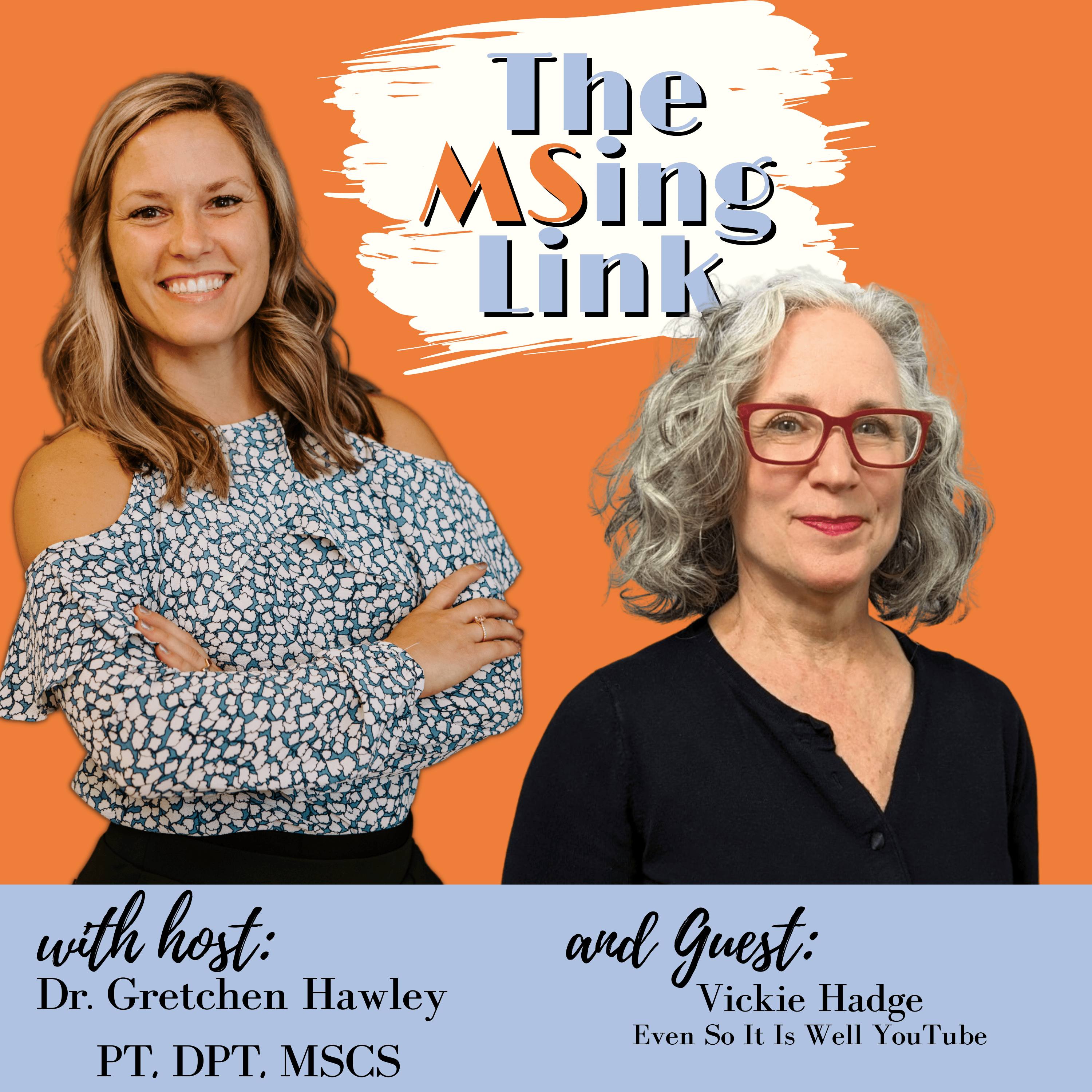
Loading summary
Transcript76 lines
- [00:00]
A
Welcome. Thank you so much for tuning in today. In this episode of the Missing Link, I am joined by Vicki Haj, who has been managing her multiple sclerosis through diet and lifestyle changes for nearly two decades. After her first Ms. Relapse in 2006 resulted in foot drop, Vicki began implementing evidence based lifestyle modifications and went 10 years without another relapse. Since her official diagnosis in 2017, she's combined a disease modifying therapy with a whole food plant based diet, daily exercise, quality sleep and mindfulness practices. It sounds like a lot, but Vicki makes it sound and gives tips to make it super manageable and attainable. Today, Vicki shares her expertise through her YouTube channel and Facebook page called Even so It Is well where she helps others with Ms. Live their healthiest lives. In today's episode we talk about the four key pillars of her approach using the acronym desk, how to start making diet changes even when you live with people who eat differently, and practical tips for better sleep and stress reduction when you have Ms. Let's dive in.
- [01:26]
B
The big question is how does someone with Ms. Actually improve their mobility, strength, energy independence? The list goes on. My name is Dr. Gretchen Holley, physical therapist and multiple sclerosis specialist. Welcome to the Missing Link podcast. Tune in as I share the top story, strategies and exercises to help you gain control over your life with Ms. Using research driven insights and advice from top industry experts. Whether you're newly diagnosed or have had Ms. For over 30 years, whether you have relapsing Ms. Or progressive MS, this podcast is for you. You're sure to feel empowered and inspired after each episode.
- [02:16]
A
Ready?
- [02:16]
B
Let's dive in.
- [02:24]
A
Vicki, thank you so much for being here with us today.
- [02:27]
C
Thanks so much for having me. I'm so glad to be here.
- [02:30]
A
Yes, I'm so glad too. I've got so many questions for you. I feel like you're the perfect person to be talking to about a lot of this stuff because you have ms, you've had Ms. For a while and you've been. I don't know if managing it is the right word, but managing it using holistic lifestyle approaches that seem to be working really well. And I personally get those questions all the time from people of what would you recommend? So I feel like this is going to be such a helpful conversation for everyone.
- [03:01]
C
Thanks.
- [03:02]
A
Yeah. Before we dive in, is it okay if I ask you a question from my interview deck? Of course. Awesome shuffle. Your question is what is something in life you really have an appreciation for that Most people don't.
- [03:20]
C
Oh, excellent question. I'm going to go with the four seasons. I live in New England, and when people ask me what my favorite season is, I say this one. I love all four seasons, and I particularly love the change of seasons. The there's something optimistic and hopeful about moving into something new four times a year. So the four seasons.
- [03:45]
A
Wow. And I love that it's each of the four seasons that's such a positive and optimistic outlook. I love that. So at the time of this recording, it's kind of like late fall. And just the other day I was looking outside and at least where I live, there's a lot of like, fuzzies blowing around. There's a bunch of like, cat towels behind where I live. And so I think it's that. And just like trees that are turning into fall and it almost looked like snow. Part of me got super excited for like, that first snowfall, but it was immediately followed by remembering that that also means really cold temperatures. And I'm not excited for that.
- [04:27]
C
I love all the temperatures. I don't even really mind the snow. I'm not a big fan of ice, but I don't mind the cold temperatures and I don't mind the hot temperatures. I just love all four seasons.
- [04:37]
A
Okay, so since you have ms, I know that one thing that can be pretty common is heat intolerance, or people don't know that this one exists as frequently. But heat, it's not even heat intolerance. It's intolerance to seasonal changes. So even if someone does better in the cooler weather when it's changing from hot to cold, or vice versa, cold to hot, that can make things worse. Have you ever experienced either of those symptoms?
- [05:06]
C
I do. I have some heat intolerance, but I manage it well. My home, luckily is air conditioned. And when I am going to the gym in the summertime, I use a cooling vest and I have a neck wrap that helps keep me cool, and I have a neck fan that I can use and I sip ice cold water when I'm at the gym. And I'm very aware of, of the temperature. So I take steps to help mitigate the change in the temperatures that.
- [05:33]
A
See, we talked about the word managing earlier. You. You're managing it. Awesome. Okay, so I've got a lot of questions for you. I'm just going to go ahead and dive right in. So you, for those that don't know, you and I have known each other for many years now, which is crazy to think that time is flying by that quickly. But I. I think of you as an expert on implementing Evidence based diet and lifestyle changes to help yourself as well as others living with Ms. To feel their best. So I guess my first question for you would be how has changing your lifestyle helped just kind of broadly and then of course we'll get into the specifics. But how is changing specifically your lifestyle helped you on your journey with ms?
- [06:25]
C
Yeah, good question. So I'll give you a little bit of background. I had my first discernible relapse in 2006, but in hindsight I've had subtle symptoms prior to that. But in 2006 it really got my attention. It was a pretty significant event. It resulted in foot drop and I was losing my ability to walk. And I ended up in the hospital over the weekend getting high dose steroids and lumbar punctures and MRIs, but they weren't able to diagnose me at that time. I did not meet all the criteria at that time, but it really was a wake up call for me. And like many people, I thought, oh, I'm, I'm healthy, I'm living a healthy life. I, I eat well and I exercise. But when I took a hard look at it, I knew there were improvements that I could make and I was really motivated to stay well as long as I could. So I started implementing diet lifestyle changes and it really made a big difference. The steroids did help me get past that relapse, but I had residual foot drop after that and improving my exercise was really important. And you know, this, you know, one of the things that was off was my balance. So I started doing yoga and I was very, very consistent with it. And I couldn't do all the poses, but I kept trying over and over and over and that neuroplasticity really went to work. And over a of, I would say about six months, my foot drop all but resolved. And so I was really aware of how making lifestyle changes could help. And you know, I changed my diet to mostly vegetarian at that time and I lost a little bit of weight and I started feeling better and like, wow, okay, so there is something to this diet lifestyle thing. And I didn't have another relapse for 10 years and then I got diagnosed.
- [08:19]
A
So you got diagnosed after the 10 years. So you had the relapse in 2006, you made these changes. 10 years goes by and then you were diagnosed?
- [08:29]
C
Yeah, I had a second relapse in 2016.
- [08:32]
A
And I know that we're kind of in a time period right now where we are getting away from specific types of ms, but just for the sake of our listeners. Do you still currently have relapsing ms? Has it changed to secondary progressive or where are you at with a diagnosis?
- [08:48]
C
So I am still relapsing Ms. They classify me as having two relapses. I did just have my annual appointment and my MRI scans came back great. No new lesions, which is awesome. Good news. But I do have a little bit of pura, which is a progression independent of relapse activity. And I am postmenopausal now and hate to admit it, but I'm getting older and my brain is shrinking. All of our brains are shrinking and my brain is shrinking and I'm experiencing a little bit more symptoms. They're not new, they're just my standard symptoms, but maybe a little bit more. So I'm more motivated than ever for my diet and lifestyle changes. And just to let your viewers know, I do take a disease modifying treatment as well. I started that in 2017 after my diagnosis.
- [09:38]
A
Have you been on the same one this whole time?
- [09:40]
C
I have, yep.
- [09:42]
A
Do you mind sharing which obviously everyone.
- [09:44]
C
Not at all. I don't mind sharing at all. So I'll, I'll preface it with. Choosing a DMT is an intensely personal decision and we all need to weigh the risks and the benefits and look at the side effects and choose the one that we're most comfortable with. And in 2017 I was most comfortable with copaxone and I'm on the generic of copaxone now and I'm still doing really well, so I'm going to stick with it.
- [10:10]
A
That's great. And I love that you shared that because I do feel like some people want to do both. They want to do the lifestyle and diet and exercise, but then also a disease modifying therapy or some type of even just symptom management medication of that sort. Okay. So one question I'm excited to ask you is there's so much when it comes to diet and lifestyle like that, I feel like we could talk for a full weekend on all the different things that are categorized under lifestyle changes or even just all the different types of diet. So I'm curious, I guess this would be back near 2006, when you very first started, how did you pick what to focus on first? Was it diet first and then lifestyle and even just can we break down lifestyle? Like what do you mean by that and what did you do and how did you choose what to do first? Sorry, super loaded.
- [11:07]
C
Sure, sure, no problem. I think I did diet first because back then I didn't know a about lifestyle I just that said to myself, oh, I've got to get healthy. And I think the number one thing that people think about when they get healthy is diet. How can I improve my diet? How can I feed myself the, the most nutritious foods possible? So I started there and I didn't look specifically for Ms. Related, I just started eating healthier because they didn't diagnose me. There was a little bit of denial going on like, oh, I don't have ms, no, something happened, but I don't have Ms. So I started with diet and because I had the foot drop, I was looking for a way to improve physically and I wanted to be stronger and get my balance back. And so that's where the yoga came in. And with the yoga, my yoga studio offered a mindfulness class at lunchtime and so I started going to that and there was really something to that too. It's like, oh, stress reduction really does work. And it helped me in so many ways. Not just with symptom management. I felt I was more able to do my work after lunch, after I took the 30 minutes of the mindfulness class. So that was the beginning. When I got diagnosed, I got really serious and I started researching. I started looking at all the Ms. Diets and all the programs and reading all the books.
- [12:42]
A
There's a lot. Yeah.
- [12:44]
C
And I really, I, I am a geek at heart. I have a degree in computer science and I love reading research and data and so I started researching what, what would be the best. And if you look at all the Ms. Diets out there, they have more in common than they do different. They all focus on whole real foods and they focus on fruits and vegetables and things that are nourishing to our bodies and getting rid of the highly processed foods. So that was my journey. Starting researching and reading the research. I try to follow large, long term, peer reviewed studies and researchers who are well respected and published and so that's where I do my research.
- [13:28]
A
That's great. I'm a huge fan of research based, evidence based things, especially for Ms. So love that. From that research as well as from your experience implementing that research and what you found, what would you say are the key pillars that you've implemented that have helped you the most?
- [13:49]
C
Yeah, there's four of them. Diet, exercise, sleep and kindness in the forms of compassion and mindfulness. And it's an acronym that spells out Desk D E S K. So it, it's easier to remember that way, you know, everything we consume has the ability to either help us or harm us. So diet is super, super important. You know how important exercise is. We need to keep moving so we can keep moving. I try to move my body purposefully every single day. And sleep is when our brains clean house and that's where we rest and repair from the day. So it's really important to me to have really good sleep, hygiene habits and kindness in the forms of compassion and mindfulness. I wanted to include the compassion because many times we are not compassionate with ourselves and I think that's really important that we let go of guilt and we let go of anger and we have compassion towards ourselves and towards others. And the mindfulness is just really great to help with the stress hormones and get rid of, you know, the fight or flight and calm down our nervous system. So all really helpful for me.
- [15:03]
A
Those are great. I haven't heard that kindness one before. So that's really unique. I like that a lot. When it comes to lifestyle changes, how much would you say you focus on? I guess maybe they're considered more complimentary therapies. Things like red light therapy I feel like is getting a lot of discussion these days or even just things like acupuncture, massage, like there's so many lifestyles things we can do or complementary things we can do. Is your approach to still do those things but these are your main four or do you really. Is that too much to think about? So you only focus on the four. How do you like when you hear that something's helpful like red light therapy? Are you the type of person that goes and tries it or do you stay tried and true? You know this works. What's your thoughts?
- [15:54]
C
Yeah, when I hear something new initially I try to approach it with curiosity. Oh, what's this about red light therapy? This sounds very interesting. And then I will dive into the research. I will go to PubMed. There is an AI tool out there called Consensus AI which searches just research based papers. So it's a little bit more refined than like ChatGPT or I use Google Scholar instead of just Google. And so this will get me research papers so I can look into it. Sometimes there's good research and sometimes there's not. If it's something that's new and I do try things, you know, and if they feel good and I know they're not causing any harm, absolutely. I give them a try.
- [16:37]
A
Gotcha. Okay. And then you've been mentioning diet as one of the, the key pillars and something that you started first and I know that people have so many questions around diet. What would you say is A whole food plant based diet, just in general, like you mentioned, whole foods is something that's pretty common amongst a lot of diets that are helpful for Ms. Can you give us an idea of what that might look like and how it can help? Sure, sure.
- [17:08]
C
So I chose to go down the road of whole food plant based. So I am exclusively plant based. I don't think everybody has to be 100% plant based. For me it means eating foods as close to their natural form as possible. So as little processing as possible. As soon as you pick the apple off the apple tree, that's kind of a processing and washing it or, you know, transporting it or packaging it, but trying to eat foods as close to their natural state as possible. And this gives us the fiber, the nutrients, all the good that's, that is part of that food. Many of the foods that are being marketed as health foods, they've been really highly processed. I'll mention that something that's in the news this week is protein powders have, have hit the, the news and there's, they're high in lead. They're high in lead. It's, it's a highly processed food. I don't think the, the lead warnings are that dire because they're, they're so below where it would cause harm to people. They use some levels from Proposition 25, I think out of the state of Cal, California. But again, protein powders, highly processed, you're, you're stripping away all the natural goodness of the food. Like if it's pea protein powder, you're, you're getting rid of all the fiber from the pea and those are really good for you and the polyphenols and all the, the, the vitamins. So I think whole foods are the way to get the best nutrients, the best fiber. I, I think we are all chronically fiber deficient. And there's so much research saying that your gut health is to your Ms. And your Ms. Symptoms. So I think one of the things that we all could do is eat more fiber.
- [18:53]
A
Yeah. This past year I worked with a nurse practitioner on gut things and she was saying the same thing, how like the average American is severely deficient in fiber and the best way to get fiber is through food, not necessarily a supplement. So exactly what you were saying. So I'm curious, does your husband eat the same way since obviously you guys live together or do you follow, does he kind of do his own thing or how does that work?
- [19:20]
C
It's kind of a funny story. So when we got married, he was already vegetarian. And I was Omnivore and then many years later I started eating vegetarian, he started eating vegan and then he went whole food plant based and I was vegan. And then I caught up. So he's always a couple steps ahead of me and he's such a good role model for me. I'll just briefly explain the difference between vegan and whole food plant based. Vegan is more of a lifestyle. You don't want to do any harm to any animals and you don't use any animal products. No leather, no, no animal products at all. But some foods that are vegan are Oreos and Coca Cola and they're not health foods. The whole food plant based is a little bit different.
- [20:08]
A
So confused when I have a few friends who are vegan specifically for the main point of being healthy, not for some of the other reasons that a lot of people are vegan, but they'll eat like corn chips. And that always just boggles my mind. Like, well, yeah, technically you can eat that, but it's not healthy.
- [20:29]
C
Right, Right. Yeah. It's funny. I try to live by being 90% good and 10%. I give myself grace. I like corn chips, I like french fries, I like salty crunchy things. But I try to keep it to under 10% of my diet. And our bodies are amazing. They really, really want to be healthy. And if we primarily give them the fuel and the rest and the sleep that they need and keep the stress low, they're going to try to be healthy. So, you know, I allow myself the grace of the 10%. But to back to your question about living with people who aren't eating the same, my children did not eat vegan diets and they chose not to. And that's fine. It's not really as hard as people think. Oh, you have to make two separate meals. I really never made two separate meals. I made a very healthy meal and then I would cook them a piece of chicken or I would put a burger on the grill so the main part of the meal was all very healthy. And then I would add a piece of meat based protein for them.
- [21:35]
A
That's, that's really great to hear that, that, that it's doable that you just, you know, add one thing instead of a completely different meal. Also, I do just want to give a shout out to your social media. Frequently you have posts that call out like, here's what I'm eating this week or here's what I'm eating today. And it looks so delicious.
- [21:54]
C
Oh, thank you.
- [21:55]
A
Those are so helpful too to, to. Because we all have the mindset of, oh, that's a really hard way to eat, certainly, but your posts make it sound otherwise. And it's.
- [22:05]
C
Yeah, it's really, you know, don't, don't overcomplicate it. Kaiser Permanente came out with a brochure years ago and for those who are not in the US it's one of our big insurance companies and healthcare systems and they were suggesting a plant based diet and they said, fill half your plate with non starchy vegetables, a quarter of your plate with starchy vegetables, and a quarter of your plate with plant based protein. And it can be so simple and so easy. You know, peppers and onions and zucchini on half your plate and then some brown rice and then some seasoned tofu. It's just, it's that simple. I don't do complicated. I do very simple and nutritious meals. And a lot of times I just throw them together without thinking.
- [22:52]
A
In the beginning or even now, did you have a list of like what is considered a starchy vegetable versus what is not considered that versus what is considered protein and you just kind of pick things from that?
- [23:05]
C
Yeah, so at the beginning I was much more focused on, oh, I need this from this category and this from this category. Now it's second nature. I've been doing this for a long, long time. But yeah, at the beginning I would keep lists handy. And there's so many wonderful people out there on social media. They have Instagram and Facebook and YouTube channels. So there's a lot of plant based people out there to get inspiration from and there's a lot of organizations. One of my favorite organizations is the Overcoming Ms. Organization and they have tons of recipes on their websites. So I get inspiration from those.
- [23:44]
A
Are you the type of person or rather, does your Ms. Affect you in a way where if you don't eat in this way, you know it because a symptom flares or something worsens? Because I know I have a lot of patients who can tell when they start to eat differently. Or I remember one of my previous patients, she could tell if she had too much sodium because her feet would swell and she'd have that symptom and she'd know 100% she didn't realize that food had sodium. Now she does. Does your body tell you when you went off course?
- [24:17]
C
You know, sometimes it's not a one meal or a one ingredient thing. For me, I don't have any food sensitivities that I know of. I know some people have food sensitivities and they know right off, oh, I ate a meal with this in it and I don't feel good. I don't have any of those. I. That said, when I go off track for days at a time, like when I go on vacation or if I'm visiting friends over a weekend and I'm not eating my standard diet, my fatigue does flare quite a bit. And I do notice more tightness and more spasticity when I'm not fueling my body properly for a few days at a time. Gotcha.
- [24:57]
A
Okay, so we've talked a bit about diet. I'm super curious about that. Just because it's just so different for everyone. There's so many different options. But I feel like you've given us a good idea of what you do and what's worked for you and it seems pretty simple when it comes to exercise, so. Desk. Second one. So exercise for you. Why do you think that moving purposefully every day is so important?
- [25:24]
C
Yeah, you know, I think you and I have talked in the past about neuroplasticity and keeping those signals going. A lot of times when we have symptoms, it's hard to move. We don't feel like moving. And the less we move, the less we feel like moving. And it gets harder and harder and harder. And I think for me, when I exercise daily, when I purposefully move my body, not just counting steps, moving around every day, but you know, I go on a purposeful walk or I go to the gym or I go to a class, my body feels better, I am more limber, I'm stronger, I have better balance. So for me, it's really key that I purposefully do it. Not accidental or like, oh, I'm going to do it, you know, next week. It is one of my non negotiables. And I think that's just part of my daily routine. You know, I. I get up, I have my coffee, I meditate, I take my walk, I drink my water. These are all part of my non negotiables every day.
- [26:27]
A
I love that. And I think a lot of people too, don't, don't realize how light exercise or movement can be. I think a lot of us grow up just hearing our gym teachers and maybe even parents and coaches go big or go home and exercise means running or the StairMaster and these things that, especially with MS, but even without MS, can be really challenging.
- [26:53]
C
Yeah.
- [26:53]
A
And so if you can't do those things, it makes you feel like you can't exercise. Right. But there's lots of things can you give some examples around. So you mentioned your walk on days where your symptoms might be flaring, more fatigue. What are some examples of some lighter, purposeful movements that you might recommend?
- [27:14]
C
Yeah, when I'm having a high fatigue day, I try to be gentle with myself. I often encourage my viewers to take exquisite care of themselves. And I will do maybe some yoga on those days, or I'll do a stretching routine on YouTube or something. Something that's purposeful but a little bit lighter and a little bit more gentle.
- [27:38]
A
I like that you use that word purposeful, because I feel like it gives you power back, even if it is something that's lighter than what you're used to doing. You're the one choosing to do that, and I feel like that's really powerful.
- [27:49]
C
Yeah, I love that.
- [27:51]
A
So, okay, got exercise and then sleep and stress reduction. This can be really challenging for a lot of people. How do you feel that it helps you? And do you have any tips for sleep and. Or stress reduction?
- [28:06]
C
Yeah. Yeah. So shortly after my diagnosis, I was. I was talking with my neurologist at one of my appointments, and she asked me how my sleep was, and I said, oh, I toss and turn a lot.
- [28:17]
A
And.
- [28:17]
C
And she said, tell me more about that. And I'm like, I just feel like I can't get comfortable. And we talked and we got down to it. I was having tightness in my leg, and it feels like I'm wearing a compression sock sometimes. So I get restless leg, and I wasn't sleeping, and then I would get more fatigue, and then I would get more spasticity. And so my sleep hygiene is really, really, really important to me. So I do take a muscle relaxer at bedtime to help that leg settle down so I can sleep. But I've also learned that, you know, there are things that I needed to change in my sleep routine. There are no screens in my bedroom. My bedroom is for sleep. So I've trained my body. When I get there, it's time for sleep. In the evenings, after dinner, we try to dim the lights in the house to another signal to the body that it's almost time for sleep. I do mindful breathing every morning and every night in bed. So in the morning, five mindful breaths before I get out of bed. And in the evening, five mindful breaths when I get into bed. And that, again, it's another signal to help my body. I keep my room as dark as possible, and I also keep it the temperature down a little bit at night, and this helps me to sleep better. And it's just, it's really important. Like I said, our brains clean house at night. They get rid of plaques and. And that's when our bodies rest and repair. You know, we do that purposeful movement. And so we need to give our bodies a chance to rest and repair. Absolutely.
- [29:51]
A
And do you feel like. I feel like these two go hand in hand. But when you get better sleep, does that automatically reduce stress or do you do other things to reduce stress? How does that work for you?
- [30:02]
C
Yeah, it does. It is part of my stress reduction routine. Like I said, I do mindfulness, breathing, morning and evening. It's just part of my routine. And every morning after my coffee, I do a guided meditation. And there's lots and lots of apps out there and I sometimes switch from one app to another. Right now I'm currently using Deepak Chopra's 21 day guided meditation. And it's just 20 minutes every day. Just 20 minutes. Sometimes just 10 minutes. But that really helps with my stress reduction. I have a dog and I encourage anyone who has stress to have a pet of some sort. They're really good stress reduction tools. And I also get out in nature. When we get out in nature and we get natural daylight, it really affects our moods as well. And if we can get out and get somewhere in the dirt. There are compounds in the dirt if you're in the forest, like from the decomposing leaves and things that help naturally reduce the stress hormones in our body.
- [31:02]
A
I love that I've. I've researched a decent bit about grounding and, and the power of even just having your bare feet on grass or dirt, as you mentioned. And it is. It's crazy how beneficial that can actually be. It sounds so simple, but it's again, really powerful. Your K. So I love desk. That's so easy to remember. K was kindness and compassion. Are those things like I imagine, of course, like taking care of yourself. But it. Does it also include things like affirmations or how do you implement the K, the kindness and compassion just throughout the day?
- [31:40]
C
Yeah. So the. The name of my YouTube channel and my Facebook page is even so it as well. And it is a line from one of my favorite hymns. And the hymn is about going through terrible, terrible times in our lives. But even so, having the belief that things are going to be okay. And I think practicing that and saying, okay, I'm having a tough day, but things are going to be okay. Even so it is. Well, I also, like I said, encourage people to take exquisite care of themselves. It is so easy for us to feel guilty. Feel guilty about not being a good enough partner, Feel guilty about not being a good enough mother. Feel guilty if we have to ask for help or time off. Letting go of guilt, accepting help and being gracious about it is really important. When I was first diagnosed, that first year or two are really tough. Were going through a grieving and an acceptance process. And I remember I would get so frustrated with people who were offering me advice. They would come up to me and say, have you. Have you read this article? This woman in Europe cured her Ms. Have you taken this herb? This herb will get rid of all your symptoms. And I would get so frustrated and say, they just don't get it. They just don't understand. And through learning to be compassionate and kind, I've really come to realize that the thing that all these people have in common is they like me and they care about me. And they were offering this to me to try to be helpful, and they weren't trying to be dismissive. And I think once I came to that realization, I was able to say thank you. You know, occasionally I do do get people who come to me still, and they're challenging. They may not offer the advice in a great way. And my therapist gave me a great tool to help me deal with people like that. She said, if someone tries to engage you in a conversation you don't want to be in, or they say something challenging, just say, huh. It acknowledges that you heard them, but it neither agrees nor disagrees. You can just say, huh. And then change the subject and you get out of that and you don't get upset and you don't get frustrated, and it's a compassionate way to deal with a hard situation.
- [34:12]
A
Yeah, I like that. It's so simple. Yeah, that's really great. And you did mention your YouTube channel. Your YouTube channel is so great. I refer it to my clients all the time.
- [34:22]
C
Oh, thank you.
- [34:23]
A
Yeah, it's so helpful. I will be sure to put that in the show notes as well for anyone listening who's interested. And I'm just curious because based on the amount of questions that I get about some of these things that we've talked about, whether it's, you know, hey, what's the best diet or exercise or whatnot? How frequently do you have people coming to you looking for guidance? Whether it's just to, like, pick your brain or give recommendations, I imagine it's quite frequent. I do.
- [34:51]
C
I get a lot of questions from my viewers and my followers, and I love them all.
- [34:55]
A
We've.
- [34:56]
C
We're developing this great community of support and I am currently right now doing research and collecting information from my followers to develop a course to help them to live well with their Ms. So that hopefully will be coming out in the next few months and I'm currently doing research. If anyone wants to reach out to me and share their experience, I would love to hear from you. Check the the show notes for my contact information.
- [35:22]
A
Yeah, absolutely. Let us know and we'll for sure update the show notes with that so people can find out about it. With that said, so you mentioned your YouTube channel. Where else can people find you? You know, even if they just want to follow along or if they want to ask you questions, sure.
- [35:37]
C
So you can find me on YouTube. You can look for Vicki Haj or follow Even soitaswell. That's the name of my channel and you can find me on Facebook again under Even so it is. Well on Facebook I post a lot of what I'm eating and the things that I'm doing for exercise and some of inspiration and compassion and things that I'm learning along the way to to live well with my Ms. Yeah.
- [36:01]
A
And again, everything that you post seems so attainable and manageable, doable for anyone, while also being inspiring and makes you feel like, oh, I can do that. Which is such a good feeling because so often when it comes to diet or lifestyle, we feel like, oh, that'd be great, but I can't do that or it's not for me. So I love, I love the vibe of everything that you share.
- [36:23]
C
Oh, thank you so much.
- [36:24]
A
Of course. Thanks so much for being here and sharing your expertise and your journey and what's working for you. I think it's so helpful for others to hear that and see how it's been affecting you. So thank you so much.
- [36:37]
C
Thanks Gretchen.
- [36:44]
A
Thank you for listening to today's show.
- [36:46]
B
I am so grateful to have you as a listener. If you'd like extra resources, such as a video of one of my seated exercise classes, my favorite core exercises, and the opportunity to ask me your questions, head to missinglink.com insider. That link will be shared in the show notes along with links to my social media handles. If you loved this episode and think a friend or family member with Ms. Would benefit from listening, please go ahead and text or email this podcast to them right now. Sharing this podcast will help me educate and empower as many Ms. Warriors as possible. Thanks again for joining and be sure to tune in next week for another episode of the Missing Link podcast.