← The MSing Link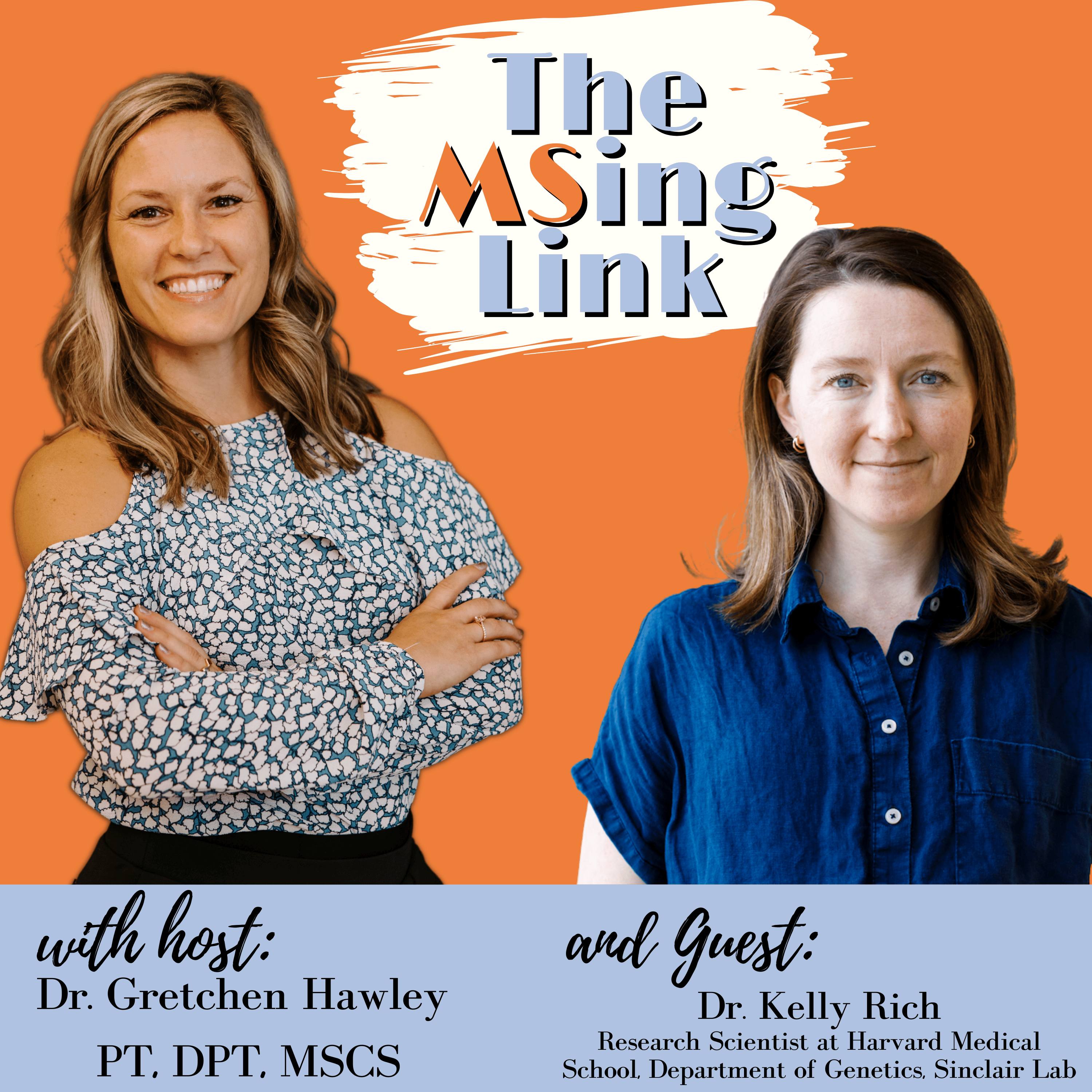
Loading summary
Transcript62 lines
- [00:00]
A
Welcome back. Thank you so much for tuning in Today. I am excited to introduce Dr. Kelly Rich, a neuroscientist at Harvard Medical School who works in Dr. David Sinclair's lab studying how aging affects our nervous system at the cellular level. And this is why this topic matters for Ms. The processes that Kelly studies, including how neurons lose their ability to repair damage, manage energy, and handle inflammation as we age, are the same processes involved in multiple sclerosis. There's even evidence that Ms. Involves accelerated biological aging in certain cells. So understanding how to support neuronal health and resilience could reshape how we approach treatment. On today's episode, we talk about aging and the nervous system disease as accelerated aging, cellular reprogramming, and how it could help neurons stay healthier longer, and what this challenging year has been like for scientists doing the research we depend on. Let's dive in.
- [01:16]
B
The big question is, how does someone with Ms. Actually improve their mobility, strength, energy independence? The list goes on. My name is Dr. Gretchen Holley, physical therapist and multiple sclerosis specialist. Welcome to the Missing Link podcast. Tune in as I share the top strategies and exercises to help you gain control over your life with ms, using research driven insights and advice from top industry experts. Whether you're newly diagnosed or have had Ms. For over 30 years, whether you have relapsing Ms. Or progressive MS, this podcast is for you. You're sure to feel empowered and inspired after each episode.
- [02:06]
A
Ready?
- [02:06]
B
Let's dive.
- [02:15]
A
Doctor Kelly Rich, thank you so much for being here with us today.
- [02:19]
C
Happy to be here. Please call me Kelly.
- [02:21]
A
Awesome. So we've got so many questions to dive into, and I'm so excited. I've been following you for quite a while now, as well as the Sinclair lab, and I'm so excited to just pick your brain and see what's in there. But before we do, is it okay if I ask you a question from my interview deck?
- [02:38]
C
Shoot. Okay. All right. I'm shuffling. Shuffling.
- [02:42]
A
All right. Ooh. Your question is, have you ever been kicked out of anything? And if so, what?
- [02:48]
C
Oh, no, I, I, I don't think so. Hopefully. I don't think so. Oh, my goodness. I know. Sorry. Maybe not a good first question.
- [03:01]
A
I don't think I've ever been kicked out. I've never thought about that before. I don't think I have either. We'll ask you another one too, though. Okay, your second question. What brand or product do you buy because you feel it's trustworthy?
- [03:18]
C
Okay, so I am a mother of two small children, so I take my coffee very seriously. And we've gone to the pod based system and I will only pick some of the pods because I believe they just make better coffee and I don't have time for not great coffee.
- [03:35]
A
Interesting. Does that have to do with like the flavor and ingredients or the packaging? Like what makes you choose one brand over the other?
- [03:43]
C
Probably the, yeah, just the flavor. But I, I don't know, maybe it's like a psychosomatic thing. I'm like, I'm feeling more awake when I have this particular brand. So yeah, I guess that's, that's how I feel.
- [03:55]
A
I like that. I'm not a coffee drinker and you know, actually I don't think caffeine really affects me. I can have like the strongest tea or even like pre workout and then a nap right after. It just doesn't. I, I wish it did. Sometimes I tell myself I feel a boost, but I, I really don't think I do.
- [04:15]
C
I am the opposite. I feel it. I need it.
- [04:18]
A
That's nice. That's nice. Well, and for that first question, hopefully that just means we're good people, we follow the rules, you know, we, we stay in, in things. Awesome. Okay, so let's go ahead and dive in. So for people who don't know who you are, can you just first explain, explain who you are, what you do, what your life is like as it relates to our topic today.
- [04:41]
C
So my name is Kelly Rich. I am currently a scientist. I work in the department of Genetics at Harvard Medical School in a lab that is run by Dr. David Sinclair. As you mentioned, my background is in clinical genetic counseling. I have a master's and a board certification in that, that's a clinical degree. And then I went on and got my PhD in neuroscience where I started to focus in on neurodegenerative diseases, particularly age related diseases. And so what I study now in the lab, the Sinclair lab, has traditionally been thought of as more of an aging focused lab and we certainly do that, but it's a pretty wide ranging topic. Set of topics that we're interested in. But my little corner is studying how aging changes the nervous system at a cellular level and how targeting aging biology might help treat, you know, neurological diseases, one or many. So my day to day life in the lab looks, you know, different every day, but those are the core questions that I'm interested in.
- [05:43]
A
That's so great. And this might be a really possibly in depth question for my first question, but when it comes to multiple sclerosis, it often kind of feels like, okay, well, we've got regular aging and now also multiple sclerosis. Almost like it's kind of like two different things, maybe related, maybe not. As it comes to aging, what would you say for people with ms, does that affect our aging at all? Does it change our cellular chemistry biology in a way where we will age differently because of ms?
- [06:17]
C
So it's a great question. I think you can kind of break it down to say, you know, what happens to our nervous system as we age? Because we are always aging and our bodies. And I think I'm going to kind of focus this on our, our brains and our nervous system encounters a lot throughout our lives. And so we are not only accumulating the damage of that those encounters, but the capacity changes of our nervous system. So neurons, which are a, one of the cell types in the brain that I'm sure your audience is familiar with, as we age, we make less efficient use of energy. These are metabolic and energetically expensive cells. These cells accumulate more stress and more molecular junk. They repair themselves more slowly, and they become less flexible in how they respond to change. So aging ultimately reduces, you know, your neuron, your nervous system's ability to cope. And so that's why the same hit in, say, a 25 year old's brain and a 75 year old's brain will have really different outcomes. So when we think about a disease like ms, what we're talking about are biological processes that overlap with traditional, you know, how we, how we've defined aging. And this means things like chronic inflammation, this means, you know, less efficient ability to repair damage. Like, say, for example, your oligodendrocytes can't remyelinate those neurons as well as they. They used to. So, you know, I think we should consider this as being. It's. It's not really fair to say they are two separate processes. Obviously, everything is completely intertwined. But disease and aging, we're starting to think of them as a little bit more of overlapping processes. And that certainly applies to a disease like Ms.
- [07:59]
A
Interesting. And when we're thinking of it in that way as intertwined, are we focusing more on like, the very specifics, like the demyelination or more so broader of infl. Inflammation like you mentioned?
- [08:16]
C
Yeah. So what you're describing are some like, specific pathologies to Ms. Right. Demyelination, chronic inflammation. But I think that, like, if you back up a little bit and say, like, why does aging raise the risk for so many neurological diseases like ms? Aging ultimately lowers the brain's margin for error. So so it's not necessarily that you're seeing demyelination. It's not necessarily that you're seeing chronic inflammation. It's that as we age, these, these weak points, like, show up across diseases. So we're seeing problems with energy production, protein cleanup, inflammation repair, and all of those systems start to get worse as we age. So essentially it just takes less and less damage to tip the system into a disease state. And when I say, you know, damage, what I mean is things like an autoimmune attack. Right. But we also think about like genetic mutations or infections. And so in other wor, aging ultimately lowers the threshold for damage.
- [09:14]
A
This is kind of refreshing. So instead of focusing more specifically on like, okay, we have ms, therefore there's demyelination and inflammation and all these things. How can we treat that? It's more, as you said, like taking that step back and looking at the bigger process of aging and what, what things can we do to improve the that. And it will have an effect on Ms. Potentially. Yeah.
- [09:40]
C
I mean, I think that, you know, I and others have, have started to consider disease as just being like cell specific premature aging. And we know from, you know, published research in diseases like Ms. That there is evidence that there is accelerated biological age in people with Ms. And you're nodding your head. I think you may be familiar with this data, but I'll just kind of explain what that means. So we have our, our chronological age, which is like the number of years that we've been here, and then we have our biological age. And our biological age doesn't always line up with our chronological age. But what we're learning more and more is that as we look into disease states and we actually look at biological aging, if you have a disease or even if you have a mutation that predisposes you to a disease, because again, I'm a genetic counselor, I think about genetic mutations a lot. Oftentimes you are aging prematurely. And of course that is how we've defined disease and how we've defined aging. But like, what does it mean then therapeutically, Right, to treat diseases as accelerated aging? You know, it means that in, in these diseases, these cells, you know, that are implicated start to behave like they're older than the rest of the body. So we know from conditions like conditions like progeria that you can speed up aging biology in a specific way. So progeria is a set of conditions where the primary pathology is premature aging. Right. That is like the thing that is causing the problem. And in ms, for example, you know, Some cells in the brain and spinal cord and ultimately the blood show aging like features. So that's problems with energy and repair and inflammation. And they show up at a kind of more intensely than you'd expect just from someone's calendar age. So the idea here is that instead of treating the obvious symptoms downstream, we also ask, you know, what would it take to take those cells and put them back into a more youthful and resilient state. So that might mean restoring healthier patterns of like, energy use and stress responses and repair so that they can ultimately just handle better what's getting thrown at it. In the case of ms, this is a state of chronic inflammation. So it means that we're not really just chasing symptoms here. We're trying to slow down or reset more upstream the way the cells can handle the affected tissue.
- [12:04]
A
I love that approach. It definitely feels more like the whole body approach versus just kind of as physical therapists, one thing you're taught very early on is don't just chase symptoms. That's one of the worst things that you can do. What's the actual cause and how can we work with that? So, so when it comes to aging, I'm just curious, so in your lab, are you guys studying, like, what aging does to the brain as well as different possible treatments? And are those treatments more holistic things like stress reduction, but also medications? Like, what do you guys tend to be looking at?
- [12:39]
C
Sure, absolutely. So, you know, we study a lot of things, and I think that, you know, we have to understand the biology before we can try to fix the problem. Right. So stepping to the side, though, one of our, our main interests in the lab and what has kind of put. Put the lab on the map in the last decade or so is this concept of cellular reprogramming. Is that a term you're familiar with? Yeah.
- [13:03]
A
Okay.
- [13:03]
C
All right, so I'll just kind of explain. Explain the basics of it. But basically, it's this technique that leverages the fact that cells in our bodies, whether they are brain cells or skin cells or kidney cells or what have you, they all work off of the same instruction manual, the same DNA. And the only reason that they are different is because, you know, stick with the instruction manual reference for a second. It's because each of those cells are reading a different chapter of the same manual. And so for a long time, we thought that once a cell went through development from a stem cell, where it started and then were differentiated into a brain, a skin, a kidney cell, and once it ultimately figured out what its job was, at maturation, and that that was a permanent state. But based on some really incredible research in the early 2000s, we learned that by turning on a series of genes, we could change what chapters of the instruction manual that cell was reading and ultimately change its identity. And so this is the core of the type of cellular reprogramming that we do in our lab. You can kind of think of it as there's full reprogramming, which means we turn on a set of genes and we can move the cell from its current state back up to a stem cell, which is a type of cell that can become lots of other types of cells, and you can erase its identity. You turn them all the way back into kind of an original cell. And then, you know, thinking about that, that doesn't really make sense therapeutically because we want our neurons to remember their neurons, we want our skin cells to remember their skin cells. So we use something called partial reprogramming. And that is where we turn on the same set of genes, but we do it transiently, we just do it for a little bit. And the goal here is damage that's brought on by aging or disease without changing the cell's identity. And there's a lot of examples of success using these set of genes, which are called Yamanaka factors in eye diseases like glaucoma, or a disease called nyon, which stands for non arterial ischemic optic neuropathy. There's examples in dementia, in wound healing. You know, we are, we are really moving on this. And, you know, whenever I explain cellular reprogramming to people, I always try to give the analogy of, I like to think of it as like a software update on your computer rather than doing a, like a full factory reset on your computer. So you're trying to fix the damage without deleting everything.
- [15:23]
A
I like that. And so are these ways to do that, ways that are accessible right now, are they still in research? Is it more a medication that would do that or something that you need to participate in? What are, what's that looking like now for that landscape?
- [15:41]
C
Great question. So in some ways, we've been on this road for a long time and, you know, the clinical picture is in sight. And in other ways, it's still early days. So our Lab published in 2020 a paper where we were applying this technology to, you know, diseases of the eye, glaucoma, and nyon, as I mentioned, and those have, you know, really elegantly made. Made. Made their way through, you know, animal studies and are, you know, moving towards Clinic. That process, as you know, to get any drug to clinic, cannot be a one size fit all thing. We have to go through every single disease and make sure we, we meet the, you know, important safety standards that are, you know, really critical to say that what we're doing is safe and effective. So in some ways we are very close in certain conditions. But you know, when we think about applying this to other conditions, there, there is a long road ahead. But that's exciting, right? Like when, when we see success in, in one disease category, it increases the likelihood we'll see in another. But to your question about how, how we actually do this, the actual like nuts and bolts of it, there's a few different ways, you know, in the lab setting we can turn on these genes using something called a transgenic, which is where we basically engineer cells or animals so that in their DNA we are able to turn on these genes, right? So that is just a part of their genetic makeup. And those can be good for like proof of concept or just kind of starting to understand biology, but it's not really applicable because you can't make a human a transgenic. You have to alter their DNA in a different way. So you can do that using viral vectors or something called gene therapy. Gene therapy is something that we do, you know, in the clinic often for rare diseases. And there are, you know, really incredible, you know, stories out there of gene therapy, drugs that have totally changed the natural history of a disease. Gene therapy was so interesting to me. It was truly the reason I got a PhD. Like, I've always been enamored by gene therapy. But, you know, there are drawbacks of gene therapy. Gene therapies rely on viruses. You have to kind of engineer and leverage the endogenous properties of virus, which is to go infect cells in order to deliver genetic content. That is an expensive process. That is a process that is, you know, it can often lead to, you know, immune responses from people. We know that from past and present examples. And it, it really can, can just be a really burdensome thing. So it, it's an amazing technology, but it's also one that has its own set of problems. And so we have started in the lab to move towards trying to not necessarily use gene therapy, but to recapitulate the downstream processes of transferring genetic material with something like a chemical, like a pill, basically. And so that is how we're moving. We think that that is the way to make this a more accessible, more easy to deliver treatment. Obviously there are lots of caveats and lots of things to consider, you know, how does your body handle something if you're swallowing it as a pill versus, you know, injecting into your bloodstream? But this is how we envision this reprogramming process moving forward.
- [19:05]
A
That is so exciting. And I just feel like I gained 10 more questions to ask you while you were saying that. But one thing that was coming through for me is how, how cool that you have the perspective. Since you are also in the lab, you're not just the one hearing about. I hear about research all the time. And when something gets passed, it's super exciting when it doesn't. Super discouraging. But you are also the one in the lab seeing that it does work at a cellular level in a different way. Not necessarily like with active living patients, but it is working. And so for you, it's more a matter of, okay, how can we get this to work in people? And that, I feel like that just brings a whole new level of hope because, you know, it can work. It's there. It's possible. I feel similarly about the fact that I'm a physical therapist. I work with so many people in person and virtually who have Ms. And so I am seeing on a daily, weekly, monthly basis, people with Ms. Walking better. But for someone with ms, they don't see that daily or weekly, month even, maybe ever. So they just kind of have to hope while they say it's possible. So, I don't know, I just feel like you're in such an awesome and unique position where you do get that further insight of hope because you see that back end of the process. Do you feel that way or am I. Am I just talking crazy?
- [20:29]
C
No, I mean, I, you know, I love my job. I. I think that I have the opportunity to ask and answer really cool, big, fundamental biological questions. And yeah, I mean, I, I have clinical experience, but I'm not built for the clinic. You know, Like, I, I think that my, My talents are better utilized trying to move the needle on the research world. Like, you know, you think about you in clinic as a physical therapist, me in clinical as a genetic counselor. Like, we can only do what's known, we can only do what's proven, we can only work off of guidelines, and that's the responsible thing to do. But let's expand the knowledge base was always kind of a motivation I had, and that really brought me to research. And. Yeah, no, I mean, to your point, one of the coolest things about being in the lab is when you're the first person to know something new, even if it's this new idea and it might, it might break down next week and it just kind of like wiggles its way into your brain, you're thinking about it all the time and it's just like this fresh thing that you're trying to protect and build a little bit at a time. And that's, that's a really beautiful feeling for me.
- [21:42]
A
Yeah, that's awesome. So kind of going back to the cellular reprogramming or partial reprogramming. So in theory, or maybe we actually know this, would that help with, or I guess I should ask, how does that help with our nervous system and with Ms. In particular? It sounds to me like if we're able to even partially reprogram, could that help with a process like remyelination?
- [22:12]
C
Yeah, you know, I think it's plausible that when we think about something like cellular reprogramming particular to ms, there actually is, you know, a recent paper where a team that I'm, I'm not a co author, but, you know, David, my, my PI was a, a co author on, tried to use cellular reprogramming in a mouse model of Ms. And it did show some promising results. Basically it, it showed that if you take this well established model where you create chronic central nervous system inflammation in a mouse, that's a pretty established model, and then you apply these Yamanaka factors, these genes that I was talking about, you can see improved survival, kind of tipping cells away from a senescence phenotype and increased, you know, improved function. So, you know, what that served up as was a proof of concept of, you know, supporting the resilience of these neurons that exist in these chronically inflamed environments. But you know, when I think about an approach like cellular reprogramming that is a disease agnostic therapy, meaning it doesn't, it's not specific to ms, you know, just like it's not really specific to any one disease. I think it's plausible that some forms of age targeted therapies like that could be a part of Ms. Care. We're certainly not there yet for all the reasons I talked about. But what I can imagine, not so much is, you know, this idea of making a whole person younger, like this magical thing, but the use of those kind of targeted treatments to, you know, boost the ability of oligodendrocytes to remyelinate a neuron or support neuronal energy metabolism or improve how the brain handles chronic inflammation. And you have to think about that in Ms. Because, you know, while we have in the last 15 or 20 years, you know, seen a lot of improvements, I think, in handling the inflammatory state. It's still there. Right. And so reprogramming approaches like the one I'm talking about might become one tool in that toolkit to be used alongside, say, for example, existing therapies, but they will have to pass very high safety bars. And in the near term, I think we'll continue to see these kind of indirect approaches that target other things. But my hope is that you're not having. It's not like a one tool thing, but we have a more robust toolkit for diseases like Ms. Yeah, I feel.
- [24:37]
A
That makes perfect sense too. So we're not necessarily in this case with what we're talking about. It's not that we're trying to find something to remyelinate or affect specific nerves, but we're trying to slow the aging process or even reverse, in some cases, the aging process, if it was accelerated aging for whatever reason. Because when our brains and nervous system are younger, they work better. So in theory, maybe even medications that you are taking might work better. If we reduce that aging, would that be an appropriate association or still pretty out there?
- [25:14]
C
I think that's exactly right. I mean, truly, like, our neurons, you know, work, you know, they. To, you know, for most people, they are working fine when we are younger. And, you know, in the case of, say, a genetic mutation, like, what's the difference between a person who is asymptomatic at 25 and a person who's symptomatic at 75? And we say that is because of mutation. It's probably because of the environment. You know, we have aged in that time. And so your idea, your thought about, like, the trajectory here, I think is, is the important one, right? Like, we're thinking about this in terms of, like, moving from a mindset of this, like, inevitable decline to a modifiable trajectory here. So we're starting to see that we can mobilize these cells that are working fine as, as we're younger to kind of regain those skills, you know, to, to become tougher and, you know, rejuvenate a few aspects of cellular biology in order to protect neurons. And ultimately, you know, there's obviously caveats of when we do that, how we do that. But because aging pathways are shared and, you know, single, single interventions may help many others, there's this possibility of slowing or even partially reversing aspects of decline because we're mobilizing the endogenous strengths of our neurons.
- [26:33]
A
Right. And how much do the typical things that you'll hear like stay hydrated, exercise, like, like typical brain health things. How much of an impact do those things that it's not a pill, just things that we can do on our own. How much does it actually impact, if at all, the aging process specific to our brain and our neurons?
- [26:58]
C
That's a great question. You know, I, one thing I want to be really clear about is I'm a lab scientist, so I'm not giving medical advice. But what I can tell you is what the biology and the large population studies are broadly pointing to. And that is to your point, from an aging biology perspective, the boring basics are really what matter the most for brain health. And what I'm talking about is cardiovascular health. You know, keeping your blood pressure and your cholesterol in check and not, not smoking. Because ultimately what's good for blood vessels is good for neurons and things like, you know, your pt, it's movement, it is regular aerobic exercise and strength training that seems to be good for blood flow and metabolism and neuroplasticity, sleep and keeping your stress, you know, maintaining low as best you can, managing chronic stress tends to help with waste clearance and, you know, giving the brain time to rest and reset. And then of course, like the things that we always hear about is social and cognitive engagement too, that seems to build up these cognitive reserves and backup pathways to help when things go wrong. But I do have to say that I do often get asked about how to support brain health. And in my world, we study things like NAD metabolism and products like NR and nmn, and we do these things in cells and animals. And mechanistically, they're certainly very interesting for supporting energy and helping with damage and things like that. But I'd say in the context of brain aging, especially long term brain aging, the data are certainly still evolving. So my blanket stance on this tends to be these supplements. These things are promising research tools and maybe future therapies. But right now, the most reliable levers that we have for brain health are still those like unglamorous basics. And often what we in the lab see, you know, if we see interventions that are working, they're often biological memetics of the downstream effects of those boring basics.
- [29:08]
A
So yeah, I like that this is what I'm about to say is, feels very vain, but I'm going to share it anyways. I think most of us, when we think of aging, think of like the visible signs and the wrinkles and I have a twin sister and, and she is so good about drinking water and just Staying hydrated. And I am, I'm better now than I used to be. But I was so bad at it, and I, that was my motivation to drink more water was I don't want to look older than my twin sister. I'm only one minute younger technically. But like, I don't want to age faster than her.
- [29:42]
C
May we all have a twin for that reason.
- [29:44]
A
I know, right? Comparison.
- [29:47]
C
I'm, I'm classically terrible at drinking water. And the fact that I work in a lab and we can't have water next to us makes harder. So, yeah, I feel like every, every year I buy myself a new water bottle, thinking that it's going to be the difference maker. It just never is.
- [30:01]
A
I've also been down that road. You did mention NAD is one of the mechanisms in your last mention that you said. And that's something that for a while, I would say for a few months recently, I was seeing articles on that everywhere and just people asking is, you know, is this for ms? You know, have you. There were lots of excitement around it. Can you explain what that is and any information, you know, of why people in the Ms. Community were so excited about it?
- [30:33]
C
Sure, yeah. So NAD is a, you know, a part of all of our cells and it is a, a component that's really important for creating and using energy and then repairing damage. And so what we know is that in disease and aging states, NAD tends to decline. And so there is this. You know, why I think everyone got really excited about it was because we can supplement precursors of nad, nr, nmn, those kind of things that will, you know, hopefully boost nad. And so there is. That's probably why this conversation started was because perhaps in Ms. You are seeing declining nid. But that's the idea is, you know, can we, can we try to change and supplement something that we know is declining in aging? And that theme is pretty prevalent in aging research. Right. We know something is changing. Let's try to restore it. And especially in, in a way that is not that invasive, like just with a pill. That's. That's kind of where that comes from.
- [31:37]
A
Yeah. And so you were also just mentioning, you know, these boring basics. You know, they really do have a time and place, and they're probably the best thing that we can be doing right now. But in the lab, there is work towards possibly a pill or, you know, the cellular reprogramming. This is such a hard question. I apologize in advance for asking it, but are there any timelines where we might be able to expect seeing even Just some results on results or availability for this type of treatment that is focused more on aging and cellular health and neuronal health, not specifically Ms. Sure.
- [32:21]
C
So, I mean, I am, I'm not involved with the company that is taking this public, but it did spin out of the lab. There is, you know, the, the treatment for glaucoma and Nyon that has moved through, you know, cells, mice and monkeys is now, you know, kind of in the regulatory element, moving towards clinical trials. So I don't want to put an exact timeline on it, but I, I can certainly imagine it will be in humans within the next two or three years.
- [32:47]
A
That's exciting. Wow. It, it's so exciting knowing just like what's up and coming and what's being researched and what the science is actually saying about it. So I just get very excited anytime I hear things like that. So in two to three years is, I mean, in the grand scheme of things, it's not that long. If you're the person living with something where this could drastically affect, then that probably feels like a lifetime. But two to three years, especially for clinical research, seems pretty nice, you know.
- [33:17]
C
Sure. And it may be shorter than that. I just don't really want to commit to it.
- [33:21]
A
Oh yeah, for sure. For sure. Okay. So I feel like I could honestly ask you questions for the rest of the day, but I really want to get your perspective on what life has been like as an academic scientist for you recently, even just throughout 2025. But I feel like it's been such a crazy time for research in general. And I'm curious how these times have affected you as a scientist and your day to day life or what you're working on and how it's really impacted you and everyone else that you work with.
- [33:57]
C
Sure. So, you know, this has been a really interesting year to be a scientist, frankly, especially a scientist at the institution that I work at. And this past year has, you know, made a lot of people think about how, how visible and sometimes politicized science has become. You know, I am an academic scientist and for me, I think for a lot of people it's really reinforced the value of academic science here. And you know, what is my life like as an, as an academic scientist? What do I actually do? Most of what I, and we in the lab do is slow and careful and pretty invisible. And we ask questions and we test hypotheses and we change our minds when the data tells us to. And academic science exists to do that work without a predetermined outcome and without like the commercial pressure of saying, having to maximize profits for shareholders. And this independence is really critical. And it's not always fast and it's not always neat, but it's how we end up building knowledge that lasts. And one thing that I've tried to do more and more this year as much as I can, is to talk about that process. Part of the reason I'm here today and what that looks like, because I think when people understand how science works, it's easier to trust it, even when the answers are complicated or, you know, uncomfortable. And, you know, science often becomes more visible and more simplified in public conversations, which can make the process look uncertain and controversial. But uncertainty is actually a really normal and healthy part of science. And so, you know, it's, it's been an interesting year. I certainly know of a lot of people who, you know, have, have changed their minds about this career, frankly. But I feel now more than ever that my job is really important and not only my day to day you know, work on the biology, but also explaining, you know, what being a scientist is like, what we do and why it's important. Absolutely.
- [36:03]
A
And it's, it's so important. There was recently a medication that is a BTK inhibitor that I believe it's approved for other conditions and it was being tested in multiple sclerosis and it did show improvements in certain areas, but it didn't show the improvement that they were looking at in the clinical trial. So it failed. And this happens quite frequently, as you know. But the Ms. Community at large was super bummed and discouraged for a good reason. But I feel like from the researcher side of things, of course it's disappointing. It'd be great if it was worked and readily available now. But it does show us what did work and other answers that can you share from your standpoint and your line of work. What, when that happens, what does that mean for you and is that motivating? Is it discouraging? What's your thoughts on that?
- [37:00]
C
Yeah, first of all, you know, I, I grew up in the world of ALS research. You know, I still work in ALS research today. And, you know, that is a community that has, you know, had push, have pushed a lot similar to Ms. Community, I'm sure, for, for therapies to move through trials quicker. And, you know, there's all this disappointment, there's all this public pressure, and it can be totally demoralizing when you have, you know, yourself diagnosed or a family member diagnosed and you're just hoping that you have the opportunity to take it, access to a drug. And that is completely understandable. You know, from. From the research side and from the regulatory side, we have to make sure that we are not working on emotion, and we are just letting the data tell us what we need to tell us. And often what that means is we are seeking meaningful outcomes, not necessarily just like statistically significant ones. And so that's why sometimes these phase one, phase two trials fail, because they fail to meet these primary endpoints that have been set. And of course, it can be totally deflating for a field, but we use these opportunities to learn, right? Like in science, we ask questions that can only lead to more questions. So we have to learn from these failures. And the idea here is that even if this wasn't the drug, even if this may not be the right one, we would not want to cause damage or invite any risk if the benefit is not there. And we would also want to build off of this like it's all. It's on us as scientists to stand on the shoulders of the scientists who came before us and the studies that came before us to. To create the best. The best medications as possible. And I think what you're also talking about is, like, public trust, right? So, like, public trust is so critical for us, and we have to be good stewards of. Of public trust. But science can be really messy. And, you know, in the lab and, you know, everywhere in science, a lot of. There's a lot of failed experience experiments, there's a lot of nuance, there's a lot of caveats, and there's very. There's never any miracle cures. But I think that slowly and surely in the field of longevity and, you know, kind of across the board, we're seeing ideas move from basic mechanisms to real interventions much, much faster. And that's because our technology is so much better. So that's really exciting. And, you know, I think people also appreciate, you know, clarity about where things are on that path. You know, like, what are the end points you're supposed to be meeting? Was this study done in cells or mice or humans? So I think it's really important on us as science communicators to frame the work that way, right? Like, when you see something in the news, like taking a beat and saying, what is this really? You know, what's the headline versus what's the actual biology? You know, is it discovery stage? Is it proof of concept? You know, is it in clinical trials? So for me, I think it's important to manage, like, not dampening excitement and not, like, placating disappointment, but channeling the interest in a realistic and useful way. We have to be transparent and it keeps people excited and engaged over the long haul as the field moves forward to hopefully, you know, eventually the best treatment we can come up with. Yeah, absolutely.
- [40:13]
A
I love that mindset too, because it is, at the end of the day, it's filled with hope rather than disappointment, which, I mean, both can go hand in hand as well. But that's such a good outlook on that.
- [40:25]
C
Yeah, I have never been more hopeful. Even though this has been a very tough year for science, I've never been more hopeful about the state of science.
- [40:32]
A
So one final question. If there's listeners like me who just really loved and appreciated this conversation and they want to stay up to date with what you guys are doing in the lab, is there a best place that they can follow along and see what you guys are up to?
- [40:47]
C
Yes, we as a lab, the Sinclair Lab, have an Instagram account where we are regularly posting things about what's going on in the lab, who's in the lab, you know, every lab member's interests, projects, backgrounds, things like that. So people can just kind of get to know more about what the day to day life is like in there. I have an Instagram as well. Kelly Richphd this might be a good motivator for me to actually start posting. So that's great. And then finally I would encourage people to think about, you know, listening to David's podcast called Lifespan. That is where he dives into some of these topics and talks to experts. And that's a really great way to get a better understanding of the field and kind of where things stand from a preeminent expert.
- [41:28]
A
Awesome. Thank you so much for sharing those. And we'll make sure to link the podcast as well as both of the Instagram channels in the show notes. So if anyone is a hard yes, they want to find out immediately what's going on, you can just click there and head right over. Thank you for listening to today's show. I am so grateful to have you as a listener.
- [41:53]
B
If you'd like extra resources such as a video of one of my seated exercise classes, my favorite core exercises, and the opportunity to ask me your questions, head to missinglink.com.
- [42:10]
A
That link will be.
- [42:11]
B
Shared in the show notes along with links to my social media handles. If you loved this episode and think a friend or family member with Ms. Would benefit from listening, please go ahead and text or email this podcast to them right now. Sharing this podcast will help me educate and empower as many Ms. Warriors as possible.
- [42:32]
A
Thanks for.
- [42:33]
B
Thanks again for joining. And be sure to tune in next week for another episode of the Missing Link podcast.