← The MSing Link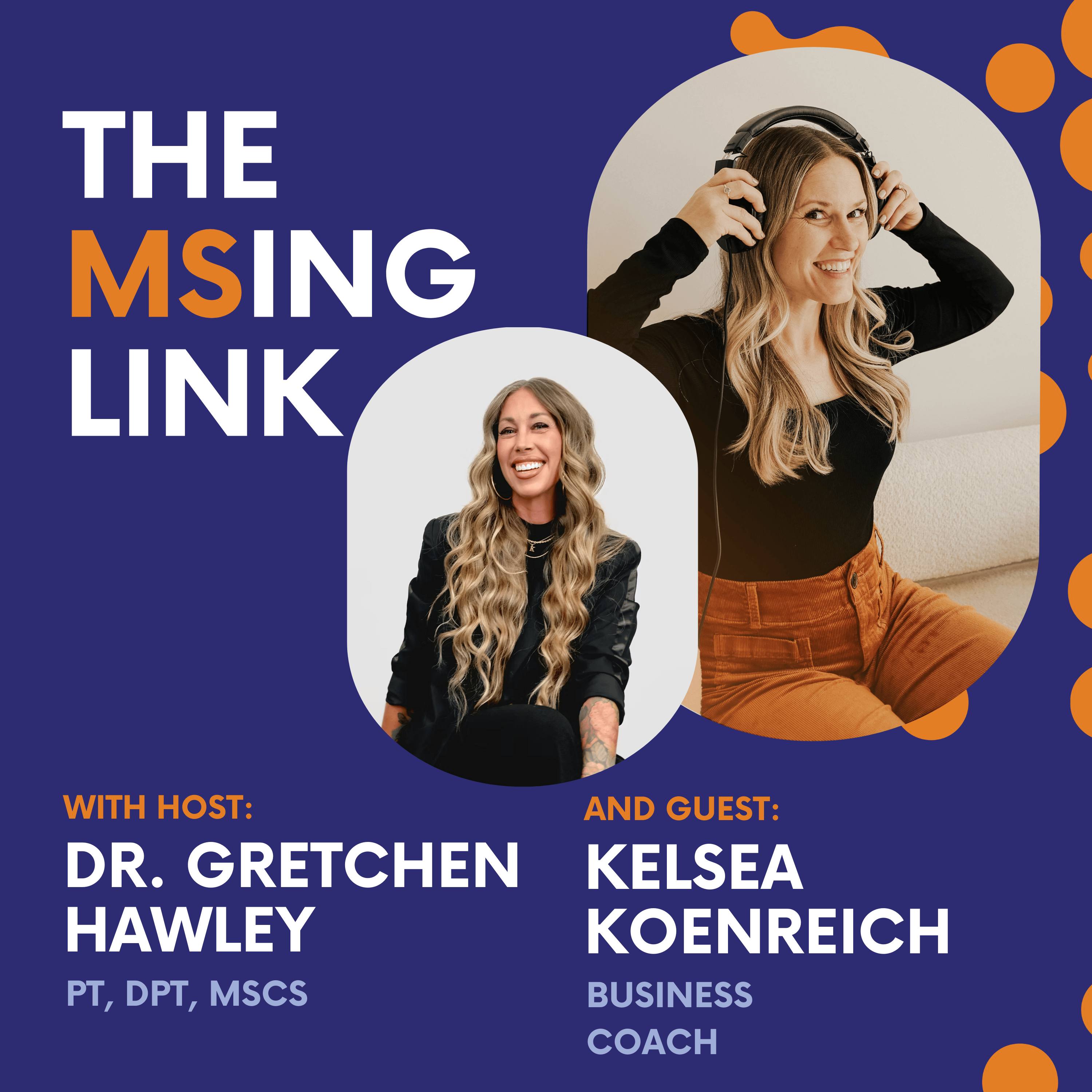
The MSing Link
276. Neuroplasticity for Mindset: How to Respond Differently When Life Feels Hard with Kelsea Koenreich
00:46:11
Loading summary
Transcript52 lines
- [00:00]
A
Welcome back to the Missing Link podcast. Thank you, as always, for tuning in Today. I am talking with someone that you likely do not know yet, but I've been working with this person behind the scenes for over three years. Her name is Kelsey Kenright and she is my business coach. And you are probably wondering why I'm having a business coach on a podcast about multiple sclerosis and chronic illness. And here's why. One of the things that Kelsey specializes in is neuroplasticity for mindset. So things like how we can literally rewire our brains through the thoughts that we choose, the questions that we ask ourselves, and the actions that we take. And while my focus is neuroplasticity for movement and strength and mobility, hers is neuroplasticity for how we respond to life's challenges. So whether you're navigating a chronic illness or dealing with physical limitations or just feeling stuck in negative thought patterns, the work that Kelsey does applies to all of us because at the core, we are all humans facing change and loss and the need to adapt. On today's episode, we talk about what neuroplasticity really means for mindset. The difference between toxic positivity and actual brain change, how to challenge the thoughts that keep us stuck, and why asking for help is a necessary part of rewiring our brains. Let's dive in.
- [01:47]
B
The big question is, how does someone with Ms. Actually improve their mobility, strength, energy independence? The list goes on. My name is Dr. Gretchen Holley, physical therapist and multiple sclerosis specialist. Welcome to the Missing Link podcast. Tune in as I share the top strategies and exercises to help you gain control over your life with ms, using research driven insights and advice from top industry experts. Whether you're newly diagnosed or have had Ms. For over 30 years, whether you have relapsing Ms. Or progressive MS, this podcast is for you. You're sure to feel empowered and inspired after each episode.
- [02:37]
A
Ready?
- [02:38]
B
Let's dive in.
- [02:46]
A
Kelsey, thank you so much for being here with us today.
- [02:49]
C
Yeah, of course. Thank you for having me.
- [02:51]
A
Yeah, I'm super excited because what our audience doesn't know is that you and I have been working together for, I believe it's over three years now. Is that right?
- [03:01]
C
Yeah. October 2022. We started together.
- [03:06]
A
It's so funny because I can. I'm such a visual person and I can literally picture exactly where I was when I made the decision to work with you. I was downstairs working out in the morning, and I was like, I'm gonna do this, but I'm. Yeah, I'm excited for our talk today because so I work with Kelsey because she is my business coach. So we work on a lot of things related to business, but a lot of it does also apply to our brains and our mindset and the choices that we make in communication and how to feel better in life, not just in business. And so I wanted to have Kelsey on to share her approach and her perspective because there's a lot of overlap in what we do, especially as it relates to neuroplasticity. But my primary focus for neuroplasticity is movement and exercise, and yours is more mindset and choices and asking for help and things like that. So before we dive into my questions, can you share a bit about who. Who you are and what you do?
- [04:10]
C
Yeah, of course. So my name is Kelsey Kenray. I am a business coach for female founders. My intersection really lies at the professional and personal development, meaning that, as Gretchen knows, we look at the person first. So in the business, I'm primarily focused on your infrastructure, meaning your people, your processes, and your pricing to make sure that you can scale and have a highly profitable business. But in order to do that, you need to be able to hold that infrastructure. You need to be the leader who can have the hard conversations. You need to believe in yourself and have the confidence to have hard conversations and basically just navigate through that. And that's where the mindset piece comes in, because we can have the best strategy in the world. But if we do not believe that we can execute that strategy, if we do not believe, if we're afraid to have the conversations we need need to have, if we're afraid to invest, if we're afraid to ask for help, then those things are always going to be hard stops for us. So I really found that in my own story that I had to work actually on my mind first in order to get the results that I wanted tactically. And so that has always been a huge part of how I teach and the conversations that I have with clients.
- [05:35]
A
It's also crazy because a lot of what we work on, as you said, is like the business but also personal life. And just thinking back three and a half or so years ago, I didn't have Nora. I wasn't pregnant. Like, we work a lot on mindset and actions that we can take through different life changes. And I think that's also someone or something that someone with Ms. Can relate to, because Ms. In itself, every single day or even hour could be different. And having tools and strategies to work through that, I think can Be really important.
- [06:12]
C
Mm. I think that's what people don't realize is that regardless of if you're running a business, if you're a mom, you know, the relationship you're in, if you have ms, any of that kind of stuff, you're still a human at the core. And as people, we are going to face really hard times. We're going to go through, you know, relationships. We're going to have loss, we're going to have grief, we're going to have growth, we're going to have change, like, is really what it comes down to. And I think that in order to really enjoy your life, that you have to be able to learn how to navigate change and how to make sure that, like, you really can. You're the creator of your life. And knowing that and just empowering my clients or anybody that I talk to to remember that of, like, your choices, your habits, your patterns are really going to dictate the kind of life that you have. And I think when you teach people that perspective, it shifts things, because I think that a lot of times we can feel like a victim to our circumstances, and the reality of the situation is that we aren't. It feels like things are happening to us. Right. In my history, when I was arrested and arrested again and arrested again, I was like, why does this keep happening? Why do I keep getting in trouble? And it wasn't until I was like, you know what? I'm putting myself here. I'm making the choices to get myself here. And I took that responsibility that I realized when I take that responsibility and I shift my mindset from this is happening to me or this is bad, to okay, what is this teaching me? What is this showing me? And what are my ways through? And. And what can I turn this into? And that's the platform that I built everything off of.
- [07:55]
A
So how would you say. I just know from working with you that a lot of the reason behind the strategies that you teach is neuroplasticity. How do you define neuroplasticity? In the way that you work with neuroplasticity?
- [08:12]
C
Yeah. So for me, I mean, neuroplasticity, the coolest thing about, like, brain research, right, is it tells us that we can change our brains, right? And this is like, the cool intersection that you and I both have is that, like, you are the creator once again. Like, you can make choices, you can do these exercises right, which is. Is your method, or you can change your thoughts and change the actions that you're taking and the words that you're saying to truly change the wiring of your brain. And so for me, a lot of the neuroplastic related work that I'm doing with clients is found in the small moments. It's how we're responding in conversations. It's the feelings, you know, when there is turmoil or something's not going, like how we're responding to that. The learning to think about our thoughts is a huge part of it, because whether we're talking about changes with a team member or changes in your personal life or just something pops up and then, you know, anxiety starts and stress starts and we spiral and we create these assumptions and these stories and really it's just learning to like, think about those thoughts. What are we thinking? And starting to question and challenge those things. Is that true? And so what I found is that we can change the results that we're getting in our life by changing how we're responding to the different stimulus that is coming in. What a lot of people don't understand is that there is space, space between stimulus and response. So finding that space to say, this thing just happened. Okay, I can get mad, I can yell, I can blame somebody else. Okay. Or I could recognize, validate the feeling. I could choose a different thought that is more conducive, that is going to get me through this, that is solution focused. And so a lot of it is just building that, like, solution focused mindset. So it's found in the small conversations almost between things and the conversations where my clients are being vulnerable and sharing like this is happening and this is what I'm feeling around it, and me asking the right questions to get them to recognize their thoughts, to get them to challenge their thoughts, to get them to choose new thoughts, to get them to choose an action that is actually related with or to what they want to have is the end result. And so for me, it's. That's really what it's found in, is like what we're, we're just letting this run on autopilot up here and it doesn't have to.
- [10:41]
A
Yeah. And I think with ms, that is even more amplified because it also has physical challenges. Whereas if you don't have ms, you could still have physical challenges for any other reason, but it might just be more of the situations that you're in, whereas with MS, it likely is both. And so I think it's really easy to not consciously choose that. This sucks. And, well, I can't lift my legs, so I can't walk and really just fall into a downward spiral because your Physical body has changed and now that has led you to feel negatively emotionally and maybe you aren't asking for help or don't know how. So is the first step then to start feeling better, just awareness that change is possible? Or like, if someone's listening right now and they're like, oh, I want to feel better, but I don't know how, or I want to feel more positive or not, like I'm the victim, is that the first step? And then what would be the immediate next step?
- [11:54]
C
Yeah, awareness is always going to be your first step because like I said, I think a lot of the issues that people just our world has is that we don't think about our thoughts. And so I think the second that we're like, I know that I have Ms. I know that it's going to physically manifest in these ways. And also. Right, because it's not. But. Because. But is invalidating. And also I can choose how I respond to this pain or this hurt or what it prevents me from doing in this moment. And so it really is about committing to awareness around if the physical piece comes first. Like if they are going to climb a flight of stairs and realize they can't. Right. If that, if that is a, that is a moment that, in that moment, if you can just become aware of, like, what are you telling yourself because of that? What is the spiral that you're entering after that? Are you saying, are you being mean to yourself? Are you telling yourself that you're less than because you're not able to do that? Are you letting that touch the next moment of your life? Right. Because that's the piece of like just that awareness. Once you have that and you say, you know, if you're standing at the bottom of those stairs and your thought is, I can't climb these stairs and so essentially I'm not good enough or I'll never be happy or whatever the thoughts are, you have the opportunity to say, that's not true. Right? So the second step after awareness is actually challenging. It's actually giving yourself the opportunity to stop that. Because all of us have been in an anxiety spiral before, right? When you're like, it's like 2am and you're like, oh my God, this happened. And they probably think this about me and this happened and this happened, this happened. And you're just pinging, right? Like, we've all been there. And so the, the goal is to stop. Like, oh, is that true? Right. So you can challenge and you can question. Question would be the immediate next steps. So what Is the what is the thought that you're connecting with the moment or the thing or the physical piece that you're feeling and then start to question, start to challenge, like whatever thoughts that you're having.
- [14:21]
A
And would you say this works at any phase or stage? Like if someone's been diagnosed with Ms. Or, or any chronic illness and been in a certain mindset for 30 years, is this still something that they can retrain and work on? Does it take longer because they're older than 30 years prior? How long does it take? And I want to get more into the how as well. But like, for those right now who are thinking, like, well, I've had Ms. For too long or this chronic illness and I've been worried for too long, this is now who I am. Is that true? And how, how does this apply to someone in that boat?
- [15:05]
C
Yeah. No. You can change it any. It doesn't matter how long since your diagnosis. It doesn't matter how long you've had the same thoughts. It doesn't matter what physical limitations that you have. Your brain can change at any age. The amount of time that it takes is going to vary. So oftentimes the best way that I compare it as somebody who is very committed to health and fitness, is I think about training in the gym, right? Like the first time. And this also aligns with your philosophy. Like the first time that you go into the gym, you're not going to lift the same amount of weight or be able to do the same exercises that you'll be able to do if you go for a year, right? There's progression. And I think, honestly, if you can be, if you can have realistic expectations and be committed to the process, it happens quicker. Because a lot of the times when we want a quick fix, we want something to happen instantly. That's what gets us in trouble, right? Because then we try something for two days and we're like, oh, it didn't work, so we give up. Where, Realistically, what if you gave yourself the same amount of time to practice this as you've been practicing the poor behaviors or the poor thoughts, that's more realistic. And like, that's the, that's the truth that people don't want to hear, right? It's the same thing with like anything fitness related. When people are like, oh, you know, everything that's lose this amount of weight in four days or whatever it is, like, that's the stuff that's appealing to people. But I have just found that this stuff is that the stuff that is the most Worth it is the stuff that requires a little bit of grit and resilience and commitment, like consistency or even a better way to say it.
- [16:55]
A
Yeah. One thing that I've experienced, and I'm trying to think of an example off the top of my head, but one is not coming. But one thing I've experienced is that I will be working with you through something. You point out, like you helped me become aware of what this spiral is or why it's happening or what I can do. Like, if it's asking for help or just challenging. Is this true? And then it works so well over time that I do get better at it, and that thing no longer causes that feeling or I feel more confident or whatever it is. But then enough time passes where I forget that I was feeling that way and I fall into the same trap. Something else happens that makes me feel back to however long ago it was, and. And so it. Almost like it repeats itself. Is that part of the process as well? And. Cause I feel like most of the times I don't even recognize, like, oh, right, I used to feel this way. I forgot that I worked to not feel this way until you pointed out to me, is it normal to have that recurrence? And is it because I stopped practicing the thing because it was no longer an issue at the time, or, like, what's the reasoning behind that?
- [18:14]
C
Yeah, I mean, if you're trying to get stronger and you stop showing up to the gym, you're probably not going to get stronger. So I think the practice overall is a practice that is forever. But again, if you put things in perspective, I think, number one, we have to recognize, like, we have to give ourselves more grace and compassion because we're human and we're going to have human error. Which means everything that I teach, whether it's a tactic in business, whether it's a communication skill, whether it's, you know, how to handle something in a new way, whether it's responding to a thought. Any of the things that I teach, I will absolutely not do sometimes because I'm still human. Because sometimes we just have those, like, almost irrational just moments. And like, as women, we also have our cycle, which plays a role as well. So there's hormones at play. There's a lot of things at play, which is why we have to have, like, compassion for ourselves of, like, you're still going to mess up sometimes. You're still going to have days to where you could be the happiest person in the world that you're not. Right. And it's the expectation that just because you. Yes. Because you know better, you can do better. But also it's the expectation that because you know better, you should always do better that I think kills us because then we're actually making things worse when we respond in a way and beat ourselves up of like, oh, I used to do this and now I don't do it anymore. And I should have done this because then you're in a different. You're in a different spiral where you're beating yourself up. You know what I mean?
- [19:48]
A
Yeah, absolutely. And I. I feel like we just fall into these traps. I love what you said earlier about just becoming aware of what our thoughts are. Like, we are on Autopilot. I don't 99% of the day, probably especially mentally. So it's just so eye opening to even just that alone. Just a takeaway of just try to not be so on autopilot, I think would allow us to step out of that and see what are we thinking, what are we feeling. I feel like with, and I keep saying ms, but it can be any chronic illness or, or really any injury or anything like that. But specifically with ms, it's very normal to grieve the life or the abilities or even friendships, the things that you used to be able to do prior to your diagnosis or prior to any physical limitations that you now have from the diagnosis. So as we're talking about neuroplasticity for mindset, how does neuroplasticity work when the thoughts aren't just like negative thinking, but they're based in real loss and even trauma of something that you have experienced? And also because it's a progressive disease you will continue to have. It's. It's going to continue to be there, maybe even continue to show up in different ways. How does it apply in that situation versus, oh, I'm just a Debbie Downer or I. I tend to think the worst in things.
- [21:23]
C
It's a great question. And my response is. Is actually the same because the hardest things for us to do as people is find acceptance. And I think when you get a. When you have a chronic illness or you have a diagnosis that dictates things that are out of your control. Our typical response is resistance. Our typical response is to fight against what is. And the more that we fight, the more we find ourself in resistance. Where our focus goes is where our energy flows, which means we're going to create more of that. Right. Because I personally believe, and many people would probably not believe this, but I think that we can make ourselves physically more sick with our thoughts and with our. With our beliefs. And I also think that we can make ourselves physically better with our thoughts. I don't think that we can necessarily heal ourselves. Maybe we can. I mean, there's some. There's some crazy stuff out there, but I do think that you could put two people side by side that are delivered the same diagnosis. Maybe it's a terminal diagnosis. I mean, there's many stories out there like this, right? Two people, terminal diagnosis, one lives and one doesn't. What's the difference, Right? So you. It's about. It's about finding what is my choice, right? So when you are in this situation where it's like, this is something that I'm going to have for the rest of my life, so I can either be really mad that I have this and blame everything on anybody and just look for and essentially have a lot of negativity around it, or I can accept. Doesn't mean that we like it. That's two different things. And I think that's the thing, that's the piece of acceptance that most people don't understand is like, it's not about saying, this is great, actually, this is fine. You know, I love that I have this chronic illness. It's not that. That's not acceptance. Acceptance is saying, these are the facts and what do I want to do with them? Right? Like when I was in the medical unit at the county jail, these are the facts. Like, you've now been to jail three times, you have two DUIs, you have a problem. These are the facts. What would you like to do with it? There is a part of me that could have gone on to make the same choices and ended up back there. There is a part of me that could have held a lot of shame around my story and never told it, but I've actually built what I built because I chose to tell my story and to say, okay, if I lived through this, there's a reason for that. So I think that's. It's the same answer. It's. How do you want to respond to it? Like, what kind of life do you want to have? Because while you may be physically restricted, while you have ailments and things that are very real, that doesn't have to dictate what you can do with your life, who you can become, who you can impact. And that's the. I think the most important part, right, is that we. We remember we have choice.
- [24:45]
A
Yeah, I love that. How would you say that this work based in Neuroplasticity and, like, actually making changes to our brain. How is that different from toxic positivity or just like, if someone's right now thinking, okay, I'll just be more positive. You know, when I'm at the bottom of the stairs and I can't get up, I'll just tell myself I'm great anyways, you know, what's. What's the difference? And is there a difference between like, just. Just be positive versus making these changes through neuroplasticity, or is it partially the fake it till you make it method where you do have to be positive even if you don't believe it right away?
- [25:26]
C
Yeah, I'd say it's a combination of both. I mean, I think. I think, like, positive thinking, they're all in the same arena, right? They all play on each other because you have, like, psychological research on positive thinking. And like, the true change that can come. Come from that and, and the effects on. On leadership and everything else that come from just, like, having a more positive tone or using more positive language. So there is something to that. And that's where I would say a little bit it might be fake till you make it. You might not fully believe yet the things that you challenge yourself with or the. You might. You might be like, I feel like I'm, like, bullshitting a little bit, but it's like, do it anyways. You know what I mean? Like, nobody feels like an athlete the first time they show up in the gym. Like, nobody. You just kind of. You just. You gotta wing it a little bit. But with that, there is a drastic difference. That's the undertone. And the undertone is belief. If you don't actually believe that, like, you can live a life that you love and have a chronic illness, if you don't actually believe that you can be happy and also have a chronic, like, then you won't. Right? Because everything stems from the belief system. And that's where, you know, our circumstances and our brain are so intertwined because the pathways that we have in our brain right now are formed from repetition, right? And repeating the patterns, behaviors, habits, and those things that are taught to us are from our circumstances, usually from our surrounding environments, right? So there's a lot of undoing that has to be done. But if we know that our beliefs create our thoughts and our thoughts create our actions, then we can intersect at any of those points. Which is why I say think about your thoughts, challenge them, question them. But also, before you take action on something, ask yourself, is that action aligned with the person I'm becoming. Right. Is that action aligned with the leader that I want to be? Is that action aligned with, you know, what my goals are? Because those are two places where we do have the time to think and choose.
- [27:34]
A
I love that because I think so many people don't believe that it's possible for lots of different reasons. Is that where you would work first? Why don't you believe? Would you go deeper there? Or do you feel like if you truly don't believe improvement, whatever that means for you, is possible, then it's not going to be possible?
- [27:57]
C
Yeah, I typically, the way that I kind of section things is like, therapy is looking back to understand root cause. And so I think everybody should go to therapy. I think that understanding why we are the way that we are, just to validate ourselves, to be like, that's why I'm like this or that's why I do that. I think that's so freeing. And then I think forward motion is. That's coaching. Everything is forward oriented. Or in my opinion, I think they're connected. Right. To be able to say, like, you and I have had plenty of conversations about, like, well, that makes sense because that's what you were shown. And this is, you know, it connects it, like, again, that's the validation. And so I think we, number one, everybody should go to therapy once again. But number two, then I would say, like, if you are somebody, like, find a really great, reputable life coach. Like, that's where I was in fitness coaching. Then I got my life coaching certification and then, you know, grew that into business strategy. And that's why I have the combined approach now. But I think if you can find yourself a really good life coach that specializes in behavioral change habits patterns, like, that's going to be the level of accountability that really fills the gap in what you were just talking about. About, like, okay, if you don't believe and you're kind of struggling, you're going back and forth that accountability plays a big role because you're not just showing up for yourself and making change for yourself, but now you're, like, paying somebody where, like, now I have to, you know.
- [29:39]
A
Right, right. I have one last big question for you, but before I ask you that, I just have to share. So you were talking earlier about, like, the power of our thoughts. Have you ever heard of what I believe is called the Rice experiment?
- [29:54]
C
I haven't. What is it?
- [29:56]
A
Okay, so this was wild. So one of my patients, gosh, I don't know, 10, 10 years or so ago, one of my patients was telling me about this. And it's when you make rice. Like you actually cook rice, just regular rice, and you put some in one jar, some in another jar, wait for it to cool. Like you keep them under the same environment. Once it's cooled, you put the top on, you put a post it note, or you write on one love and on the other hate. And it sounds so woo woo. But I believe it was for 30 days, maybe it was 14, but around 1 of those time frames. And every single day you go up to the love rice and you pick it up and you say loving thoughts to it and you can hug it. And you know, this rice makes me feel nourished and healthy and it's filling and then you put it back, you go to the hate rice, which is being stored right next to the other, and you say hateful thoughts. This rice makes me feel awful. I feel fat, it's unhealthy, it's disgusting looking, blah, blah, blah. So eventually what's supposed to happen is the hate rice grows mold much, much faster than the love rice. And I've actually done this experience or experiment twice now, and that did actually happen. And I took photos every single day. And it was wild. Both times. The hate rice jar got super moldy and black and just awful looking. And the. In one one of the experiments, the love rice didn't have any mold. In the other one, it did get some, but it was extremely minimal and light versus the other one being dark. And so the whole concept is if we can change rice with our thoughts, imagine what we're doing to our bodies.
- [31:48]
C
Yeah, it's. I, I haven't heard of that one, but there are like tons of things with like, same thing with plants. You do too. Like, there's been a ton of experiments like that. And it's really interesting because like something that not a lot of people know about me is I'm also a Reiki master. So that's like the ultimate woo. Because it's literally energy healing. And so like I am a big believer in all of that as well. Because the energy is power right to where it. And that's why I'm so like, when anybody, any of my clients say something that is like negative, I'm like, let's say that in a different way because I'm like, they're putting that energy out into the world. That's so cool. I didn't know that you had done that experiment. I'm surprised we never talked about it. But I have heard that done in different ways. And it's just so true of, like, Reiki is all about intention. And so you're sending intention of, like, good and healing, whether that's emotional or physical. And that's the thing is, like, it has worked for a lot of people. Right. And you're not even physically touching, like, in Reiki. You're just like, going over the body. And it is pretty. Pretty remarkable. But I love. There's like, I don't know if you've read any of Joe Dispenza's work. Yeah. So he. I love him because he sits right at that intersection of science and woo. And I think for a lot of people, because his work has grown so much now, it's like, not as woo that, like, now. Now we're seeing like, okay, well, maybe I can do a little energy intention here. So what's it going to hurt? You know? So I think, yeah, it's. It is really cool that, that it exists and that there is more potential for change and more options for people to just really feel better and live better.
- [33:37]
A
Yeah. I got. Side note, I got Reiki once where, when my twin sister was pregnant, which was years before I was. I don't. I wasn't even dating anyone at the time, and I got Reiki and the person, as she was hovering over my belly and hips area, mentioned something about how, like, there's so much energy here and there seems to be like some. I forgot what words she used, but she eventually led her to say, like, are you not telling me something? Like, do you have news to share that, like, that you might be expecting? And I was like, no, I'm not, but my twin sister is.
- [34:13]
C
And, well, you guys are so connected.
- [34:15]
A
Yeah, we're very close. So that was also wild.
- [34:19]
C
Oh, my gosh. Yeah, it is crazy.
- [34:22]
A
So my final question, and I feel like this is kind of a big one, but I feel like a lot of people might be wondering is, can you give us some examples? And you've given us some already, but of the how. So let's say we're listening to this episode. We are aware of our current mindset and thought process processes, and we're challenging ourselves of is that true? And if our answer is no, that's not true, what are some things that we can do to start making that change so that we're creating those new neural pathways and feeling better and taking different actions?
- [34:57]
C
Yes. So this goes back to beliefs, thoughts, actions. Right. So we have three different points that are all connected. And so I would say one of the really Cool things that you can do and I know that you've done this is like you can put pen to paper on your current beliefs about whether that's, you know, for a lot of my clients, it's rewriting their beliefs around success. So if you put pen to paper and you say, what do I believe about success? Or what do I believe about happiness? Or what do I believe about ms, right? And it's like you write down without judgment, just kind of. These are the things, you know, it. It makes me less of a person, or I'm not able to have a happy life or whatever the things are that naturally come to you. Then you look at that and like those. That belief around word, situation, thing, whatever it is, then you can write underneath that piece of paper, write a set of new beliefs, right? So if you're writing about ms, right?
- [35:59]
A
What are.
- [36:00]
C
What do you want to believe? You want to believe that, like, you are unstoppable. You want to believe that this doesn't hinder you from living your life. This doesn't hinder you from happiness or love or being social or any of those things, right? That's what you want to believe. And so then if we know that that's the belief that we're trying to adapt, then we need to think, okay, so what thoughts do I need to have? So a person who believes that Ms. Does not hinder their ability to have a relationship with somebody, the thoughts that they would have would be that they're worthy, that they, you know, it would have to be individualized to. To you. It has to be your voice, but starting to put together, like when you're somebody who believes that, right? So like, for my clients, if we do this with success, it's like, you might write down that previously, okay, based upon your life experience, what you've seen, what you've gone through, you believe that success is about, like, material things or how much money you have or being featured in magazines or whatever. And you're like, okay, well, fun, like, functioning from that current belief has caused me to overwork and push myself past capacity and disconnect from my family and be unhappy. So success to me now, what do I want to believe about success? Success for me is financial freedom without sacrificing my health or. And so then from that, then you go into the thoughts, right? And so then it's like, okay, so a person that believes that their thoughts are. They don't skip a workout for a meeting, right? Or they're. They. They believe they're worthy of having a block in their schedule for a meeting and then the action would replicate that, right. It those compound together. So then you don't skip or you don't eat lunch at your desk or you don't skip that workout. So if you can thread those things together, then you kind of. What it is, is it's developing a roadmap for change, right? So if you can look at, this is my current belief around this situation. This is the belief that I want to have. These are the thoughts that I need to support that belief. And because I have these thoughts, these are the actions that I take, right? So like when I wake up in the morning, I believe that health is part of being wealthy. So when I wake up in the morning and my thoughts are, I'm tired, I don't necessarily feel like working out, but I'm worthy of feeling good in my body. And because I'm worthy of feeling good in my body, I'm going to make the choice to go out and work out. And so you have all of those things in support of each other. But. And the cool thing is, is that the new belief can actually, it works back and forth, right? So like, we can use the actions and the thoughts to build the new belief, which is why you want to identify all three.
- [38:54]
A
And how important would you say is including other people or asking for support or help? Is that a necessary part of the process? Is it not always needed? Because you can do a lot of this on your own. How does that integrate with this type of work as we're rewiring?
- [39:13]
C
Yeah, it's 100% a necessity, I would say, to expect yourself to create change by yourself. When we know that our brains are built to stay the same anytime we try to change, even if it's for the better, our brains are like uncertainty. Don't know what that is. Please stop. Revert back. Yeah, do undo, control, alt, delete, please. And so knowing that it's like that, accountability for a lot of people, again, this is why coaches exist, this is why personal trainers exist, this is why people exist. To simply hold people accountable because it works.
- [40:03]
A
Yeah. And could it be a spouse or a friend or family member or do you feel like for this type of work because we are not just thinking positive, but actually focusing on making true change. Should it be someone who has some type of qualifications like the ones you just listed?
- [40:23]
C
I would say it depends. I think the more accountability and support, the better. The more we ask for help, the better. I don't think there's any. Nobody. Like when we, when we die. Nobody's like, you know what? She was great. Cause she never asked for help. Like, and especially women. Like, we're the worst at this. Figure it out by myself. I'll be drowning over here, but it'll be fine. Like, so I think the more help that you can ask for, the better. I think when it comes to asking for accountability from personal relationships, one of the things that I see is in the communication flaws there of, like, if you're going to do that, you need to ask for that from a person who is comfortable calling you on your shit. Like, that's. That's the thing is, like, all of my clients know, like, you know that I'll be like, yeah, no, like, you also. I hear what you're telling me. You're really excited about this idea. And also, we said we weren't going to work 400 hours. So I think that that's. It's. If you're going to go that route of it being a personal connection, you need to have the communication between you two where there is comfortability to actually hold each other accountable, which not a lot of people have. I also think if we're speaking about energetically, there is something that when you invest, like, when somebody is paying for the Missing Link program, right? Because they're paying for that program every single month, they know that they're working to make that money to be able to do that, or it's coming from, you know, whatever money source it's coming from, they're investing into that program with you. So they need to show up and do it. So I think there's different levels of accountability. But I do think that if we're really talking about being committed and serious to change, I would say outside accountability from somebody that, like, that is their actual job. Because we also consider of, like, if we put that on a spouse, number one, we have the communication, and number two, it's like, is that fair to them if we're now adding to their mental load of, like, can you, like, check in with me to make sure I did this? Most people will say yes. But, like, is it also going to fall off after a couple weeks? You know?
- [42:34]
A
Yeah. And maybe they can help in other ways. Like, can you put breakfast together so that I have time to exercise this morning?
- [42:43]
C
Yes, exactly. Find your support network and utilize it. And like, I tell my kids this all the time. I say, you will never, ever get anything that you don't ask for. Like, you just don't know. So it's worth. It's worth asking the worst case scenario is somebody says no, but then you're in the same boat that you're in right now.
- [43:06]
A
Right. Which isn't so bad because you're living there. You got it.
- [43:12]
C
Yeah.
- [43:13]
A
This has been so helpful and I feel like there's been so many just like one liners and like I gotta go back and listen to this and just write it down and keep it next to me all day, every day. But if anyone, I know you mostly are working with entrepreneurs, but if anyone loved this conversation and they want to find you, at least like stay in your world so that they can get this type of knowledge and education more consistently. Where can they do that?
- [43:39]
C
Yeah, so you can find me. I'm mostly on Instagram. I also have a podcast which is called the Mom Founders Table. My Instagram is just my name, so that's pretty easy to find. And then you can look on my website as well. If there are any entrepreneurs out there that are, you know, really interested in being able to have this cross section of like, I really want to build something successful. Successful that's not drowning me in the process. I'm happy to help and support in any way that I can. And I just think that it's important to mention knowing you and having worked with you for so many years, like the heart and the soul that you put into the Missing Link program. So I hope that everybody who is listening is a part of the program because I know the behind the scenes of everything that goes into the creation and everything that just the ways that you're impacting all the people in there. So I hope that people, I hope that everybody does join the Missing Link because there's nothing like it.
- [44:37]
A
Well, thank you. And yeah, as you mentioned, you know, if there are entrepreneurs out there who want this intersection, it's even more true when you have a chronic illness because with chronic illness you're dealing with external factors like likely more fatigue than the average person or flare days. So working less even in your own business is likely something that could even help your symptoms. So if there are, I'd highly recommend. Kelsey,
- [45:13]
B
Thank you for listening to today's show.
- [45:15]
A
I am so grateful to have you as a listener.
- [45:18]
B
If you'd like to extra resources, such as a video of one of my seated exercise classes, my favorite core exercises, and the opportunity to ask me your questions, head to missinglink.com insider. That link will be shared in the show notes along with links to my social media handles. If you loved this episode and think a friend or family member with Ms. Would benefit from listening, please go ahead and text or email this podcast to them right now. Sharing this podcast will help me educate and empower as many Ms. Warriors as possible. Thanks again for joining and be sure to tune in next week for another episode of the Missing Link podcast.