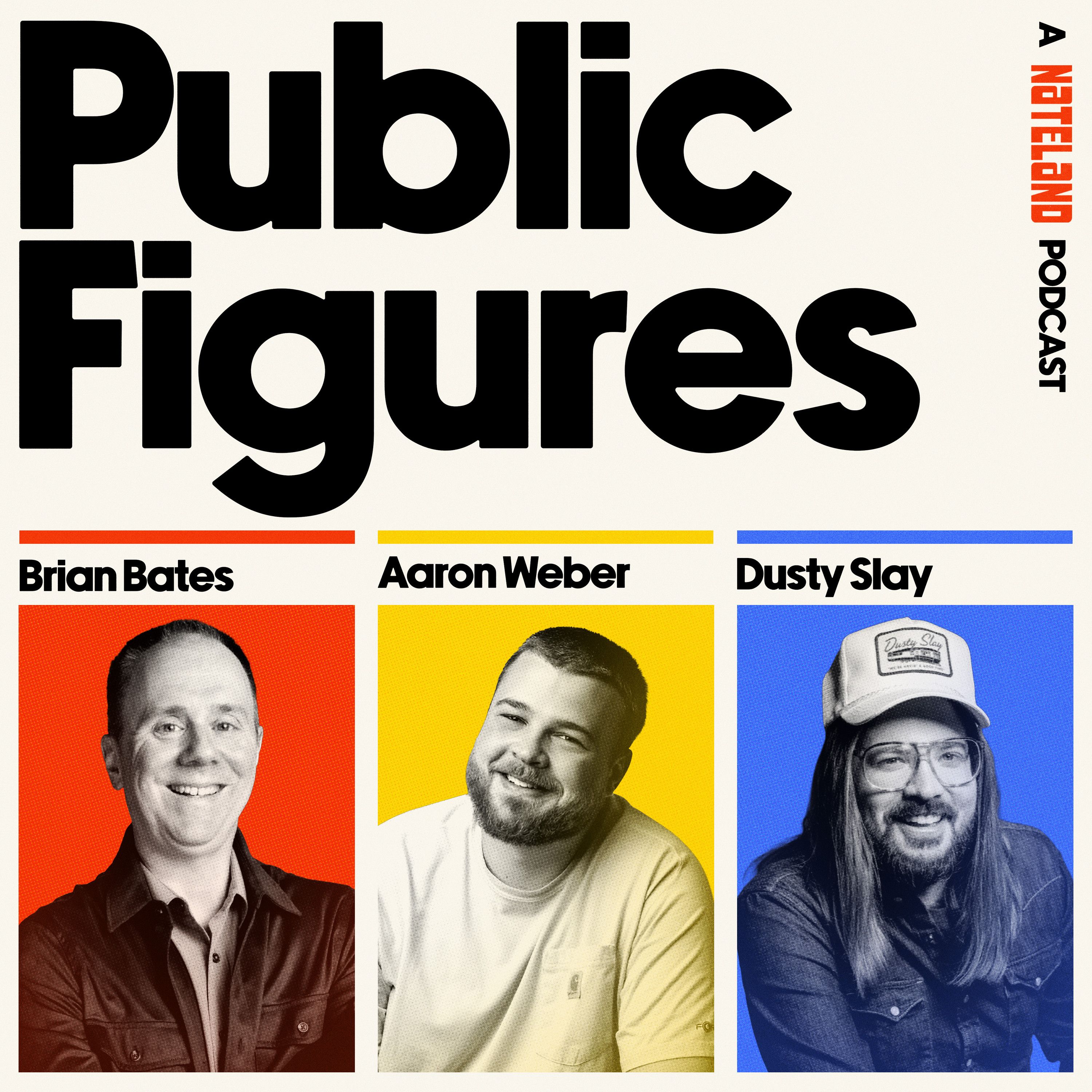
Loading summary
Transcript1,708 lines
- [00:00]
Rocket Money Advertiser
Want to feel more confident with your finances this year? If you have 60 seconds, I can show you how quick and easy it is to start building healthy money habits that could last you the entire year just by using Rocket Money. Step one, download Rocket Money. Step two, link all your accounts and see your entire spending picture. Your subscriptions, your upcoming bills, your due dates, everything. Step three, tap a subscription you don't use and cancel it. Boom. That's money back every single month. Step four, create a financial goal for something you want to save for. Whether it be a vacation, a retirement account, or a pet's birthday, we don't judge. Now, let the app automatically move small amounts of cash towards your goal. In a month, you'll see real dollars piling up. In a year, you'll be shocked at how much money you saved, similar to the over 10 million members on the app that have saved up to $740 a year. When using all of the app's premium features, use the Savings Challenge as one step closer to feeling better about your finances. Today at RocketMoney.com, cancel. That's RocketMoney.com/Cancel one more time. It's RocketMoney.com cancel.
- [01:06]
Brian Bates
Public figure.
- [01:07]
Aaron Weber
You are going to allow the public. Some people know who I am.
- [01:10]
Brian Bates
Public figures. Public figure. Public figures. Public figures. I think it's America.
- [01:13]
Dusty Slay
It's the public figures of America. Yeah. When you're a public figure, this is what happens.
- [01:18]
Brian Bates
Hello, folks. And. Hey, wait. All right.
- [01:20]
Aaron Weber
Yeah, none of that anymore, man.
- [01:22]
Brian Bates
Just go.
- [01:23]
Dusty Slay
Hey, you know.
- [01:25]
Brian Bates
No, no, no. We've already started. What's up? Figurines. How about that? That's pretty good, right?
- [01:32]
Dusty Slay
Figurines. I don't know. I'm not into.
- [01:34]
Brian Bates
All right, we got to figure out what to call it.
- [01:36]
Aaron Weber
Ready, set, action figures.
- [01:38]
Brian Bates
Welcome, folks.
- [01:39]
Aaron Weber
Let's start.
- [01:40]
Brian Bates
Welcome.
- [01:40]
Dusty Slay
I like. I'm a big fan of a. Welcome, ladies and gentlemen.
- [01:43]
Brian Bates
Welcome, ladies and gentlemen.
- [01:44]
Aaron Weber
Cats and kittens, grab your mittens.
- [01:46]
Brian Bates
Public figures podcast. But we'll have to figure out some catchphrases and some stuff to call it. Welcome to the first ever public figures podcast. As always, I'm Brian Bates, along with my co host, Aaron Weber, Dusty Slay.
- [02:00]
Dusty Slay
Okay, we got a new set here.
- [02:03]
Brian Bates
It's. You guys did great.
- [02:05]
Dusty Slay
For the record, though, if you guys are new, this is your first. Yeah, I know. It's your first public figures. By the first time seeing you, I want you guys to know that I do all right. All right is what I do. Brian started stealing it for me, and Aaron's making fun of Brian stealing it.
- [02:20]
Brian Bates
Oh, I thought you meant you're already highlighting your career.
- [02:23]
Aaron Weber
I thought you're going, I'm doing well.
- [02:24]
Dusty Slay
I do.
- [02:25]
Aaron Weber
I know I look like. Like they pulled me off the street.
- [02:28]
Dusty Slay
I mean, all right. That's a thing that I do. And they. These guys have stolen it from me.
- [02:34]
Brian Bates
Yeah, well, Aaron stole it from me just then.
- [02:36]
Dusty Slay
Yeah, I know.
- [02:37]
Brian Bates
Yeah. Well, anyway, we're on here on a new set.
- [02:41]
Dusty Slay
I started doing okay. Because it kept getting stolen from me.
- [02:45]
Brian Bates
Okay.
- [02:45]
Aaron Weber
Where do you go from there? I don't. I can't even think of a third.
- [02:47]
Dusty Slay
I don't know.
- [02:48]
Aaron Weber
How about it?
- [02:49]
Brian Bates
Something like that. Anyway, welcome. We got this new set. It's. It's very. It's nice.
- [02:58]
Dusty Slay
It's very good. It's bright.
- [02:59]
Brian Bates
It reminded me a little bit of the Seinfeld episode where Kenny Rogers roasters open in the red because there's some yellow reflecting off. You guys love that chicken. Yeah.
- [03:10]
Aaron Weber
I think the plan is we're going to fill in this wall.
- [03:12]
Brian Bates
Yeah.
- [03:13]
Aaron Weber
With some fun stuff. So I guess the door is open. If you. If you want. If. I mean, give us some stuff. Some fan art in here. Fan art.
- [03:21]
Brian Bates
Especially if.
- [03:22]
Aaron Weber
Doesn't have to be art.
- [03:24]
Dusty Slay
But this is what we're going to do. If you send it in, I don't.
- [03:26]
Aaron Weber
Know, like a toy or something.
- [03:29]
Dusty Slay
If you send it in, we'll show it and then, you know, publicly ridicule it and. And then hang it on the wall.
- [03:37]
Aaron Weber
Because that's what it's like being a public figure. You got to be open to. To criticism.
- [03:41]
Brian Bates
Well, we can't promise everyone's gonna get hung on the wall. We could ridicule all.
- [03:45]
Dusty Slay
Yeah, yeah.
- [03:46]
Brian Bates
We're not gonna put them on the wall. We need to get to these. Come on, Aaron. That's so 2025. We got to get that off the wall.
- [03:53]
Dusty Slay
Yeah. Yeah. My. My Working Man's not even on Netflix anymore. Don't. Why?
- [03:59]
Brian Bates
Don't.
- [03:59]
Dusty Slay
Don't. Don't do that to it.
- [04:01]
Aaron Weber
He took it off.
- [04:02]
Dusty Slay
It'll be somewhere.
- [04:03]
Brian Bates
Well, and then we'll put it back.
- [04:05]
Dusty Slay
But you got pretty aggressive with it.
- [04:08]
Aaron Weber
He's been looking for an excuse.
- [04:10]
Brian Bates
Yeah.
- [04:10]
Dusty Slay
Yeah. Well, I'll just. I'll just put it here. Just for now.
- [04:14]
Aaron Weber
Yeah. Right over Brian's picture.
- [04:17]
Dusty Slay
Just for now.
- [04:19]
Aaron Weber
I'd say a lot more vis. So, the old podcast. You really got to watch this.
- [04:23]
Brian Bates
If you're listening. You have no idea what's all kinds.
- [04:25]
Aaron Weber
Of hilarity happening here. In Living Color, but excited to get things going Brian?
- [04:30]
Brian Bates
Yeah, so we missed last week. We were going to get started last week, but weather kind of dictated things.
- [04:38]
Aaron Weber
Well, we had a storm, and you'll be able to tell us. Dusty and I weren't here in 1994, but everyone's saying that this reminds them of the great ice storm of 1994 in Nashville. Do you remember that?
- [04:48]
Brian Bates
I do remember it. I was living in Murfreesboro, just graduated college. I was about to graduate College.
- [04:54]
Aaron Weber
I was 3.
- [04:56]
Dusty Slay
I was 12.
- [04:57]
Brian Bates
I graduated. Well, we don't have to get specifics there. It has nothing to do with the storm. But I was in college, about to graduate, and it didn't affect me greatly. My power did not go out. I lived in an apartment. And I remember, obviously hearing about it, but it did not greatly affect my life then.
- [05:14]
Dusty Slay
So you're being, in a way, you're being paid back now for what you didn't suffer during that storm.
- [05:20]
Aaron Weber
I guess karma catches up with you, man.
- [05:22]
Brian Bates
I guess so.
- [05:23]
Aaron Weber
But this deserve what's happening to you, Brian. That's what we're saying.
- [05:27]
Brian Bates
Well, it doesn't affect you guys this time. So I guess some karma is coming your way.
- [05:32]
Aaron Weber
That's right. Yeah.
- [05:34]
Brian Bates
So last, well, last Saturday, I guess two Saturdays ago now, we had snow on Saturday. You guys were both out of town. You were in San Diego.
- [05:44]
Dusty Slay
I was in Pittsburgh on my way to Cleveland, Ohio.
- [05:47]
Brian Bates
Yeah. And it snowed and, you know, it was a little fun. We got and played in the snow, whatever. Went to bed. Sunday morning about 6am My wife woke me up. She said our power's been out about an hour and there are trees falling left and right.
- [06:02]
Aaron Weber
Well, hold up. I got a question about that. How did you not know immediately that the power was out?
- [06:07]
Brian Bates
When I'm asleep?
- [06:08]
Aaron Weber
Yeah. When you got a CPAP plugged in.
- [06:10]
Brian Bates
Oh, I don't.
- [06:12]
Aaron Weber
Are you running it off a battery or something? Because I'll tell you what. Power goes out of my house, I'm the first to know because I'll stop breathing.
- [06:19]
Dusty Slay
You guys sleep all night with that thing?
- [06:22]
Aaron Weber
No, I take it in shifts. Yeah, I do the whole. That's the whole point of it. What are you talking about?
- [06:27]
Brian Bates
I'm gonna be honest.
- [06:28]
Aaron Weber
I don't wake up at 3am let me get a couple hits and then go back to sleep. Like, the idea is you sleep with it on.
- [06:34]
Dusty Slay
Oh, man.
- [06:34]
Brian Bates
Yeah, I, I. Well, all right. We'll get off a side tangent. I don't wear my CPAP on the road. I don't take it with me. I really See? No difference.
- [06:44]
Aaron Weber
Oh, you were gone.
- [06:45]
Brian Bates
No, no, no. I'm just telling you.
- [06:47]
Aaron Weber
Okay, so you weren't using the cpap.
- [06:50]
Brian Bates
I may have been. The only reason I wear it when I'm at home is because it cuts. It does keep me from snoring.
- [06:54]
Aaron Weber
Right.
- [06:54]
Brian Bates
The snoring keeps her awake, so she wants me to wear it. Sometimes I'll pull it off during the night, not realizing it, and she'll pat me. Like, put it back on. Yeah, but I don't know if I'd already taken it off or what.
- [07:05]
Aaron Weber
Okay.
- [07:06]
Brian Bates
What?
- [07:06]
Dusty Slay
That's just bizarre to me. I mean, I'm sorry you guys have to go through that.
- [07:10]
Aaron Weber
Oh, I love it.
- [07:10]
Brian Bates
It's great.
- [07:11]
Aaron Weber
I get good sleep.
- [07:12]
Dusty Slay
You don't see any difference?
- [07:13]
Brian Bates
I. I feel no difference.
- [07:15]
Dusty Slay
What, does it go in your nose?
- [07:17]
Brian Bates
Mine does It.
- [07:18]
Aaron Weber
It depends on the. The model that you have. I have an N20 mask. It just covers mine. Just covers the nose. He's got the full stormtrooper now. I thought you had the full cover, the mouth and nose. No, mine's just the nose.
- [07:33]
Brian Bates
All right. Yeah.
- [07:34]
Aaron Weber
How about that?
- [07:35]
Brian Bates
Yep.
- [07:36]
Dusty Slay
Anyway, so in 20 is what you have, and then when it gets up to an N95, you can't breathe at all.
- [07:46]
Brian Bates
I tried the nose pillows. That's what you're talking about. And that hurt. Like, that was very uncomfortable.
- [07:51]
Dusty Slay
Yeah.
- [07:53]
Brian Bates
Anyway, she woke me up. She's like, probably spend about our trees are falling everywhere, and I think maybe we should go to a hotel. I thought she was overreacting at first. And then I start hearing while we're lying in bed, trees falling. I've never been to war zone, but it sounded like some were far off, some were close, and. And me. Every few minutes you're hearing a tree fall, so.
- [08:14]
Aaron Weber
And in the darkness, it's a little spooky, right?
- [08:16]
Brian Bates
Yeah. Because at that time, the sun hadn't even come up yet. So it's just. You don't even know what's going on out there. So then we get up, she books a hotel, and we, you know, we start assessing what's going on out there. A tree had partially fallen on her car, and a tree, while we're up, fell in our house.
- [08:35]
Dusty Slay
And while you were up, what?
- [08:38]
Brian Bates
While we were up, a tree fell in our house.
- [08:39]
Dusty Slay
Oh. Oh, okay.
- [08:41]
Brian Bates
And I was talking about the storm. Dusty's already.
- [08:44]
Dusty Slay
Well, I just didn't know. I don't know.
- [08:47]
Brian Bates
He wants to plug his dates.
- [08:48]
Dusty Slay
No, I feel like you.
- [08:49]
Aaron Weber
You pay attention the way you think. We use a CPAP just Every few.
- [08:53]
Dusty Slay
Minutes it felt like I just didn't understand the word.
- [08:56]
Brian Bates
I may have said it wrong.
- [08:57]
Dusty Slay
Yeah, yeah.
- [08:57]
Brian Bates
I said it weird.
- [08:58]
Dusty Slay
Yeah. This is a in audio form too. So I just want to make sure our words.
- [09:03]
Brian Bates
Yeah, I appreciate that. So it took us a few hours to get our stuff together and me to get her car out from underneath this falling tree.
- [09:13]
Dusty Slay
And what'd you do to get it out from under there?
- [09:16]
Brian Bates
Sure. Muscle Man.
- [09:17]
Dusty Slay
Yeah.
- [09:18]
Aaron Weber
Love that.
- [09:19]
Brian Bates
It was, you know, it was only partially on it so I could get enough branches off to get her car out.
- [09:24]
Dusty Slay
Yeah, it felt good though. No, no matter what, it did feel good. Yeah.
- [09:27]
Brian Bates
I feel like I did one thing.
- [09:29]
Dusty Slay
You were able to get your wife's car out. I mean that feels good. Even last night I opened a, you know, a jar of marinara for my wife and.
- [09:38]
Brian Bates
I can barely do that.
- [09:39]
Aaron Weber
And that's like three jars.
- [09:41]
Brian Bates
Yeah, exactly. Yeah, exactly. Driving is like the only thing I feel like I contribute. My wife doesn't like to drive, especially in bad weather. But I don't mind it. So that's the one thing I can contribute.
- [09:50]
Dusty Slay
Yeah. Because we're real road dogs.
- [09:52]
Aaron Weber
You do more than that. Well, I'm not going to let you just say that the one thing I do is drive.
- [09:59]
Brian Bates
I do a lot of nice things. But as far as a man that she, you know.
- [10:03]
Aaron Weber
Manly stuff.
- [10:04]
Brian Bates
Yeah, manly stuff I ain't going to be fixing.
- [10:06]
Dusty Slay
But we're road dogs out here. I mean, you're a real road warrior out here.
- [10:10]
Brian Bates
So we finally get stuff packed up.
- [10:12]
Dusty Slay
You don't do an easier to drive tour if you can't work the road.
- [10:16]
Brian Bates
That's right.
- [10:17]
Dusty Slay
I drove this weekend. I like driving. Yeah, these, my shows were easier to drive to.
- [10:25]
Brian Bates
Well, we'll get to those. Yeah, we'll get to those. I'm still on day one.
- [10:29]
Aaron Weber
Yeah.
- [10:29]
Brian Bates
And we finally start leaving. We load up our 3 year old daughter and our little dog and we're headed to a hotel. And there's a tree down in the road. Can't go that way. We turn around.
- [10:42]
Dusty Slay
You got out and moved it.
- [10:43]
Brian Bates
No, I didn't do that. Turned around, went back. Fire department stops us, power lines down. Can't go this way. So now we're trapped in our neighborhood. Wow. So we have to go back to our house. Go back in, wait a while. They eventually get the tree cut up, we get out of there.
- [10:58]
Dusty Slay
I just love, I love this whole exit, this whole, this whole load. Everybody up, get in the car. And then you drive two ways and they go just Go home.
- [11:07]
Brian Bates
Yeah, yeah, yeah. We get to a hotel, and while I'm in line to check in, power.
- [11:18]
Aaron Weber
Goes out at the hotel.
- [11:20]
Brian Bates
Yeah. And they're. They don't even act like there's any in their, like, naming reservation. I'm like, well, is the power gonna come back on? And they're like, well, to be honest, it just came on an hour ago, and I guess it's back off. And I said, see, I don't have a generator. And they're like, no. So I go back out the car. I'm like, but they don't have power, so what's the point? And she had booked two different hotels. So we went to the other hotel and stayed there for two days. And I'll skip ahead. The story's gonna take the whole episode, but eventually, the bargazzies, Nate and Laura, invited us to come stay at their house.
- [11:57]
Dusty Slay
All right, all right. Very nice of them.
- [11:59]
Brian Bates
We checked out of the hotel, and. Man, staying in a hotel with.
- [12:06]
Aaron Weber
Young child dog.
- [12:08]
Brian Bates
It's not ideal.
- [12:09]
Aaron Weber
Yeah.
- [12:09]
Brian Bates
So then we went to the Bargazis, and we've been there ever since. And we're still.
- [12:14]
Dusty Slay
How long is that?
- [12:17]
Brian Bates
Well, the storm happened over a week ago, and we've been there since. Was it two, six days, I guess. And they're now estimating that It'll be.
- [12:26]
Dusty Slay
The 8th before everybody.
- [12:28]
Brian Bates
Now it's the 9th.
- [12:28]
Dusty Slay
For.
- [12:29]
Brian Bates
For us. They push.
- [12:30]
Dusty Slay
The power company has really collapsed. The power company, everything is really collapsed.
- [12:37]
Brian Bates
And while this is all going on and we're dodging trees and everything, I tell my wife, check, see what's going online. She's like, well, Dusty's in a fight with Nashville, severe weather, because his power's been off for 30 minutes.
- [12:49]
Dusty Slay
Well, I. I reached out because, you know, this. I had to fly to Atlanta, sent my family to Alabama because I didn't know what was going to happen. So I flew from Cleveland, Ohio, to Alabama, and I, you know, I can't sleep because I'm like, what's going on with this power? Is the power back on? And I asked Nashville severe weather about it, and they go, you're asking us? And I. They go, we don't have any inside information. I go, well, you know, you are the weather people. You are the. I would think you would have a bit better resources than I do.
- [13:19]
Aaron Weber
I'll play devil's advocate, though. They're not. They don't work for the power company. No, they're meteorologists.
- [13:24]
Brian Bates
I used to work in tv, the news station, and people would call when's my power coming back on? I say 4:15.
- [13:30]
Dusty Slay
Well, just. I didn't go away. Well, that's not what I asked, though. I didn't ask, when's the power coming back on? I go, do you have any updates on what's going on with power in Nashville? And that's. I thought that's a fair question because they should have better resources than me. But they said, we don't have any inside information. And I said, oh, okay. So you know what I know then? Well, I'm the weather app now. Now I. Now, if we know the same things, just come to me.
- [14:01]
Brian Bates
Yeah.
- [14:01]
Dusty Slay
Ask me. I'll tell you what they'll tell you, and I'll go, I don't know. I don't have any inside info. Nashville, severe weather. X used to be the best. Now it's kind of trash.
- [14:13]
Aaron Weber
I still like them. I still.
- [14:14]
Dusty Slay
No, they're kind of trash. Yeah, but they're getting worse.
- [14:18]
Brian Bates
Is there anything in your life that's not getting worse?
- [14:21]
Dusty Slay
Well, no, my. My family's getting better all the time. But. But, yeah, I mean, everything in the world gets a little worse all the time, I think.
- [14:33]
Aaron Weber
Okay.
- [14:35]
Brian Bates
You also tweeted Governor Lee asking what time the powers.
- [14:37]
Dusty Slay
Yeah. And then last night, like, it's a.
- [14:39]
Brian Bates
Christmas, lights, let's all flip the switch at 220,000 homes coming back on.
- [14:45]
Dusty Slay
Well, that's what people think asking a question is. Yes, people think it. You're going, well, this is easy. Just turn it back on. What I'm asking for is updates. All you would get. You go to Twitter, where all these people have accounts. They have direct access to their constituents.
- [15:04]
Aaron Weber
Yeah.
- [15:05]
Dusty Slay
And they're. They're doing nothing. They're doing nothing. And I'm like, give us some updates.
- [15:10]
Aaron Weber
Right.
- [15:10]
Dusty Slay
Let us know what's happening. And, you know, you go to nes, they got no updates. You go to the mayor, the mayor hasn't tweeted in two years, and nobody's giving you any updates. And so I'm out here as a public figure being like, can we get some info, guys?
- [15:32]
Aaron Weber
You got a little heat, you can.
- [15:33]
Dusty Slay
Get the ball rolling. And people try to, you know, people make everything political. And I'm like, hey, I'm tweeting at both sides here. I'm like, give us some answers.
- [15:41]
Brian Bates
I think everyone. I know, I was certainly stressed. It was a stressful.
- [15:45]
Dusty Slay
And I'm trying to get you some answers.
- [15:46]
Brian Bates
Frustrating time. And I'm still stressed and frustrated. But, you know, it was. It was crazy. Our street looks like a tornado came through it.
- [15:53]
Aaron Weber
It does, yeah.
- [15:54]
Brian Bates
With a layer of ice after the tornado.
- [15:57]
Dusty Slay
Well, the storm's very frustrating. Right. And it's like, obviously. Well, I mean, nobody has anything to do with the storm, allegedly. But, I mean, there's some debate about that.
- [16:06]
Brian Bates
But let's don't make it.
- [16:08]
Aaron Weber
There's a fierce debate going on, right?
- [16:10]
Dusty Slay
Yeah, in some places.
- [16:11]
Brian Bates
Yeah.
- [16:12]
Dusty Slay
But, you know, so the storm's frustrating, but as far as we all know, this is, you know, good old mother nature. This is a natural disaster.
- [16:23]
Aaron Weber
Right.
- [16:24]
Dusty Slay
But, you know, the. The numbers coming out about our power company is pretty.
- [16:30]
Aaron Weber
It is upsetting.
- [16:31]
Dusty Slay
Like, I heard today on the way here that Atlanta, which is bigger than us, but they had 5,000 people ready to. To help with the power, and we had, like, 150 linemen just ready to go.
- [16:45]
Brian Bates
Yeah.
- [16:47]
Dusty Slay
So it's like, come on, guys.
- [16:49]
Brian Bates
Yeah. Yeah. You know, so anyway, I feel very blessed to be staying at Nate and Laura's house. So a lot of people are not so fortunate.
- [17:00]
Aaron Weber
Yep.
- [17:00]
Brian Bates
They're either, you know, he's still at a hotel, which is not ideal, or.
- [17:05]
Dusty Slay
I saw videos today where people had drip their faucets, and now that drip is frozen.
- [17:12]
Brian Bates
Well, we're dripping ours, and we were there today. It's 40 degrees in our house, so it's still dripping.
- [17:17]
Dusty Slay
Okay, good.
- [17:17]
Brian Bates
It's not. Not frozen. Anyway, I did do a little trip to Texas to. I was at the riot comedy club this past weekend. All right. Conroe and Conroe. And it was great, great shows, folks came out, and it was a lot of fun. So I felt bad leaving my family for a short time, but at the same time, I left them about as good a situation as you could leave them. And then I'm about to leave them again. I was hoping that we would be back in our house before. Before the cruise, but it doesn't look like it's going to happen.
- [17:47]
Dusty Slay
Well, there is nothing like leaving your family with no power to go on a cruise.
- [17:56]
Brian Bates
Yeah, that's about as bad as you get.
- [17:57]
Aaron Weber
You're working. You're going to work.
- [17:59]
Brian Bates
They're not going to be in the house with no power.
- [18:01]
Dusty Slay
Right, right.
- [18:02]
Brian Bates
But, you know, if it comes back on Thursday, the day the cruise leaves, then she's probably going to be moving back into the house without me. But anyway, it is what it is. So what about you?
- [18:15]
Aaron Weber
Happy to have you here, man. I was.
- [18:16]
Brian Bates
Thank you.
- [18:16]
Aaron Weber
San Diego. While all this was going down, San Diego in. I mean, in the running for most beautiful city in America. The weather's perfect.
- [18:26]
Dusty Slay
I Don't even know if it's. I think it's right on the ocean.
- [18:29]
Aaron Weber
My hotel was a block from the ocean. I watched the sun rise over the Pacific while my wife and baby are huddled up dealing with the storm. Got stranded for extra day.
- [18:43]
Dusty Slay
But your power never went out at your house.
- [18:45]
Aaron Weber
We got really lucky, man. Yeah, Pretty close to us. It went out for a while, but we just. We. I don't know. We caught the right little.
- [18:51]
Brian Bates
Trees are so overrated, by the way. I hate trees.
- [18:53]
Aaron Weber
I. I'm thinking about cutting.
- [18:56]
Dusty Slay
You're in Mount Julian, which is a different power company.
- [18:58]
Aaron Weber
It is a different power company and they handled things great.
- [19:01]
Dusty Slay
Connor, his power never went out. I'm so close to you guys, but I'm in Davidson County. My power was only out for 12 hours, so I'm very fortunate. But it still went out, you know.
- [19:12]
Aaron Weber
But I had a great weekend out there at La Jolla, at the Comedy Store. It is very cool to see. See your name on the Comedy Store marquee. It's not. It's not the LA Comedy Store, but it's the same. It's the same. It's Comedy Store. It's in La Jolla. The shows were so great. Three of them sold out. It was just.
- [19:33]
Brian Bates
Wow, that's great.
- [19:33]
Aaron Weber
Just a Great Weekend.
- [19:35]
Dusty Slay
Did 10 shows, but.
- [19:39]
Brian Bates
But combined have been sold out.
- [19:44]
Aaron Weber
Yeah. Great weekend. And then this past weekend, I had one show. I popped up to Chicago. I did the Chicago theater with Kathleen Madigan. She sold out that theater, 3,500 people.
- [19:56]
Dusty Slay
Wow, that's awesome.
- [19:57]
Aaron Weber
Great show. That might have the best. The coolest looking marquee of any. Of any theater I've ever seen. Like, it's just huge. And it's all. I'm trying to pull it up here, as you can see it, but it's just very cool to. To be able to perform there. So that was my last couple weekends. Dusty, anything good happen?
- [20:20]
Dusty Slay
Well, this past weekend, I went to Charleston, West Virginia, to a theater, and then I went to.
- [20:28]
Brian Bates
You drove?
- [20:29]
Dusty Slay
I did drove, yeah. Drive, Drive. I drove. I did drove.
- [20:34]
Aaron Weber
You did drive.
- [20:34]
Brian Bates
Why did you choose to drive?
- [20:36]
Dusty Slay
Well, it was six hours and I couldn't find a direct flight. So I figured by the time I take two flights and then I would either rent a car from Charleston to Dayton, Ohio, or flew, which there was no direct flight there. And then home from Dayton, there was no direct flight.
- [20:55]
Brian Bates
So that makes sense.
- [20:56]
Dusty Slay
I rented a truck. I didn't want to drive my own car. Rented a truck. And me and Connor drew both Shows were sold out.
- [21:02]
Aaron Weber
Awesome.
- [21:04]
Dusty Slay
Charleston, West Virginia. Dayton, Ohio. Great shows, very fun. And now I'm back.
- [21:10]
Brian Bates
Both theaters sold out.
- [21:11]
Aaron Weber
Yeah.
- [21:11]
Brian Bates
That's awesome.
- [21:12]
Dusty Slay
Yeah.
- [21:12]
Aaron Weber
Did you go to the Air and Space Museum in Dayton?
- [21:14]
Dusty Slay
No, I've been there before.
- [21:15]
Aaron Weber
It is cool.
- [21:16]
Dusty Slay
Made a little video about it, and.
- [21:18]
Brian Bates
He and Nate both did.
- [21:20]
Dusty Slay
Mine was first, for the record. Yeah, mine was first.
- [21:24]
Brian Bates
Yeah.
- [21:25]
Dusty Slay
And.
- [21:25]
Brian Bates
But it's very funny. They make some of the same jokes.
- [21:28]
Aaron Weber
Oh, do they?
- [21:29]
Brian Bates
They walk around and. And neither one had seen the other one, but, yeah.
- [21:33]
Dusty Slay
Well, that's debatable.
- [21:34]
Brian Bates
But.
- [21:37]
Aaron Weber
Good.
- [21:38]
Brian Bates
Check them both out.
- [21:39]
Dusty Slay
Yeah. But, yeah, it was fun. I love Dayton. I love Charleston, West Virginia. They're. I always sell well there. They're. It's great. I love those places.
- [21:50]
Brian Bates
I thought museum.
- [21:53]
Dusty Slay
No, I don't even know who that is. And I also, you know, a couple weeks ago, I was in Cleveland, Ohio, and Pittsburgh. Love those cities, too. And I feel like in the snow, it's very cold, very snow. And I don't know, maybe the cities just look better in general, but, man, in the snow was great. They're like, Cleveland. There was, like, no aggressive panhandling going on. It was just, like, nice and fun.
- [22:19]
Aaron Weber
They're all huddled up at a shelter, I guess.
- [22:22]
Dusty Slay
But I was like, oh, it's really nice. Yeah. All the city. All the downtowns were really great. And I mean. Yeah. I mean, I just. I thought it was fun. I loved it. I went to a really nice cigar bar. Downtown Pittsburgh. Very nice. It's great. Great ventilation. I went to one in Cleveland. Not good ventilation. Really bad. It's still fun.
- [22:43]
Aaron Weber
It's like, you know those. They still got a few. I remember Bobby's, where they do open mics here in Nashville. They would have the little. They look like tires on the ceiling, you know, I'm talking about.
- [22:55]
Dusty Slay
Yeah.
- [22:55]
Aaron Weber
And that was for when you could smoke indoors.
- [22:58]
Dusty Slay
Yeah.
- [22:58]
Aaron Weber
They were supposed to do something with.
- [23:01]
Brian Bates
The smoke, absorb it somehow.
- [23:02]
Aaron Weber
I don't think they worked.
- [23:03]
Brian Bates
Yeah.
- [23:03]
Dusty Slay
When I moved here. You could still smoke in Bobby's.
- [23:06]
Aaron Weber
When I'm. I could, too. And then they stopped it recently.
- [23:10]
Dusty Slay
And then the. What was the other one?
- [23:11]
Aaron Weber
The Spring Water.
- [23:13]
Dusty Slay
Spring Water?
- [23:13]
Aaron Weber
Spring Water Supper Club and Lounge, the oldest dive bar in the state of Tennessee.
- [23:17]
Dusty Slay
That was rough with the smoke in there.
- [23:19]
Aaron Weber
It's always good to be a little on edge.
- [23:21]
Dusty Slay
Yeah.
- [23:22]
Aaron Weber
Be a little scared the whole time you're there.
- [23:24]
Dusty Slay
And they had the. In the bathroom, they had, like, the hand dryer, which is the towel on a thing that just comes through.
- [23:30]
Aaron Weber
Yeah, yeah. I remember.
- [23:31]
Dusty Slay
Yeah. It was disgusting. Good thing I don't wash my hands.
- [23:34]
Aaron Weber
Had some. Had some good shows there. Shout out to supper club.
- [23:38]
Dusty Slay
No, it was very. I. Yeah, I love both of those places. Okay. How are you holding up in the colder seasons?
- [23:46]
Aaron Weber
Oh, not that well.
- [23:47]
Dusty Slay
We tend to spend more time indoors, so why not stay comfortable inside with your Helix mattress?
- [23:54]
Brian Bates
We've been doing that.
- [23:55]
Dusty Slay
We all know how important good sleep is, but this ice storm here in Nashville made my mattress the most important thing we had. I mean, aside from electricity, food, and water.
- [24:07]
Brian Bates
Is this a shot at me?
- [24:09]
Aaron Weber
No.
- [24:11]
Dusty Slay
Don't get caught on a terrible mattress, because a terrible mattress can be bad. I mean, I know. You know, one time I had a mattress. I have a bit about it on YouTube where I this bad, but I don't think I included this part. My mattress was so bad. I had it for so long. My sister used to have it before me. Her and her husb it to me and I abused it. And I ran over it one time with a car, flew out of the back of my truck as I was driving. And then I kept it for, you know, about eight years after that. And then when I finally got rid of it, I. I sobered up and I decided it was time to get rid of this mattress. I took it outside of my apartment, I drug it out by myself, queen size mattress. And I threw it in a dumpster and it folded over.
- [24:58]
Aaron Weber
Wow.
- [24:58]
Dusty Slay
If you've seen a new mattress, how firm they are. This thing folded over. I jumped in there, crushed it down in there. Yeah. And you know, now that I got a Helix mattress, I sleep good. No more of that. I would never dare throw a Helix mattress out. And the Helix sleep quiz is so easy. It helps you pick the perfect mattress for you. Helix is the most awarded mattress brand.
- [25:25]
Brian Bates
Whoa.
- [25:26]
Dusty Slay
I didn't even know they got awards. And this has the most tested and reviewed by experts like Forbes and Wired. Plus Helix delivers your mattress right to your door. I don't. There's no risk that it'll fly out of the back of the truck because they're going to bring it to me with free shipping in the US I really do love my Helix mattress. I've had it about three years now. It's going strong and I really do get better sleep on my Helix than anywhere else. Go to helixsleep.com nate for their President's day sale. Best of the web to get 27 off site wide. This is exclusive for listeners of the Nateland podcast. That's helix sleep.com Nate for 27 off site wide. Make sure you enter our show name after checkout so they know we sent you helix sleep.com Nate.
- [26:21]
Brian Bates
Oh, I thought to mention staying with the Bargaz last night, sitting on the couch. And the Grammys are on. And we. Nate turns it on. The very next category, best comedy album. And Nate wins a Grammy award winning.
- [26:37]
Dusty Slay
Amazing.
- [26:38]
Aaron Weber
So Brian's first prediction for 2026 coming true already.
- [26:42]
Brian Bates
I'm nailing it.
- [26:42]
Dusty Slay
And what did you say about me? That. Because I want to know if that comes true or not.
- [26:47]
Aaron Weber
Or said you're going to continue to do bigger and bigger theaters and start to sell out.
- [26:50]
Brian Bates
Yeah, theaters. Yeah.
- [26:51]
Dusty Slay
Okay.
- [26:52]
Brian Bates
And look there. It's already coming true.
- [26:53]
Dusty Slay
Okay. Yeah, yeah.
- [26:55]
Brian Bates
You seem disappointed.
- [26:56]
Dusty Slay
No, no, I. No, I just was making sure because I know you can. You know, I can do. You can make people die sometimes too.
- [27:04]
Brian Bates
Yeah. These stupid 98 year olds dying on me.
- [27:08]
Dusty Slay
Yeah.
- [27:08]
Aaron Weber
My prediction is you're going to go hang out with Jackie Robinson's wife and that'll happen.
- [27:14]
Dusty Slay
So the Grammys I saw Post Malone is now, you know, doing Ozzy Osbourne, and it's like, I just can't. I cannot understand the. The appeal of this guy, no matter what genre he's doing. I don't get it.
- [27:28]
Brian Bates
That's the only thing I saw besides Nate winning of the Grammys, and I immediately thought of you.
- [27:33]
Dusty Slay
I do not get it. I'm sure he's a nice guy, but I do not get why we're letting Post Malone do it all.
- [27:40]
Aaron Weber
We're letting. It's such a funny way to think about it.
- [27:44]
Dusty Slay
Yeah.
- [27:45]
Aaron Weber
Why are we letting him do this?
- [27:47]
Dusty Slay
Yeah, please.
- [27:48]
Aaron Weber
Oh, please let me do an Ozzy Osbourne cover. Please. And you go, all right, we'll let you do it.
- [27:53]
Dusty Slay
Yeah.
- [27:53]
Aaron Weber
That's how the conversations go.
- [27:55]
Brian Bates
What does he sing? What's his original language? I don't even know.
- [27:58]
Aaron Weber
Original language.
- [28:00]
Brian Bates
English, Jokey music genre.
- [28:04]
Aaron Weber
Rap. First it was. Rap was the first.
- [28:07]
Brian Bates
And then he went to country White.
- [28:08]
Aaron Weber
Iverson, which is a great song.
- [28:09]
Dusty Slay
Chase knows I've never found a good Post Malone song.
- [28:12]
Aaron Weber
Oh, he's got. I mean, his rap stuff's great. White. I have a son I was in my ball and I was young. It's just good stuff.
- [28:21]
Dusty Slay
It sounds really good.
- [28:22]
Aaron Weber
It's just kind of thoughtless. Well, you know, it's not from the 90s and about a hat. But some people like it.
- [28:33]
Dusty Slay
Well, you know, apparently a lot of people like it, but like I've already said, everything in the country gets worse.
- [28:40]
Brian Bates
All the time and what's it called again? I'm sorry, but why?
- [28:42]
Aaron Weber
This isn't even. He's not even doing country.
- [28:44]
Dusty Slay
No, in the country.
- [28:45]
Aaron Weber
I know, but he's not even doing country music. I know you care. I just went on to other genres.
- [28:49]
Dusty Slay
But that's what I'm saying. Even now, I, I, I cannot find a genre where I go, oh, this guy's good. Even Hardy. When I heard some Hardy doing rock, I was like, okay, this works out. But post Malone, I don't get it. Any genre. And then jelly rolls. Still yelling. Yeah, I saw that. He's yelling about every award he wins, thinking, jesus. Yeah, but just yelling, though.
- [29:13]
Brian Bates
Yeah. Have you seen Hardy lately? He's getting more hearty.
- [29:18]
Aaron Weber
Oh, yeah.
- [29:19]
Dusty Slay
He is getting Hardy.
- [29:21]
Brian Bates
Yeah.
- [29:21]
Aaron Weber
Good for him.
- [29:22]
Brian Bates
Yeah. So this week, we're all going on the Nateland Cruise. We. Are you excited?
- [29:28]
Aaron Weber
Kind of forgot about it until right now.
- [29:30]
Dusty Slay
I am pumped about the idea of being in warmer weather, and I think it'll be fun to do the shows, but I, you know, I'm concerned about myself on a boat. I'll be honest with you.
- [29:40]
Aaron Weber
In what way?
- [29:41]
Dusty Slay
I don't, you know, I don't do a lot.
- [29:42]
Aaron Weber
I got the patch, dude.
- [29:43]
Dusty Slay
I got the patch. Where do you get the patch from?
- [29:45]
Aaron Weber
You got to get it prescribed. But I did a little telehealth. I zoomed with a guy and he goes, all right, I got you picked it up at Walgreens an hour later.
- [29:53]
Dusty Slay
Why you guys not been sharing this info with me?
- [29:56]
Aaron Weber
Well, I just assume you had all this down.
- [29:59]
Brian Bates
You're not going to go to mainstream medicine anyway.
- [30:02]
Dusty Slay
Well, sometimes you have to. If you're doing, you know, if you're doing the mainstream world, it's not too.
- [30:07]
Aaron Weber
Late to do it. You can get it.
- [30:09]
Brian Bates
I can hook you up.
- [30:10]
Aaron Weber
You got some patches?
- [30:11]
Brian Bates
Yeah.
- [30:11]
Aaron Weber
All right. And you just put them behind your ear and you're good for three days.
- [30:14]
Brian Bates
Are you gonna preemptively do it?
- [30:16]
Aaron Weber
I'm gonna do it probably the night before. I'll put it on.
- [30:19]
Brian Bates
I was. That's probably what I should do. I was thinking, let me just get on and see how it goes.
- [30:24]
Aaron Weber
Yeah. I don't want to get sick first and then have to fix it. Like, I want to nip it in the bud, you know?
- [30:28]
Brian Bates
Okay. Yeah, I can hook you up, Dusty. I got a little extra.
- [30:32]
Dusty Slay
What do you got? I mean, can I just. I mean, I have a doctor that.
- [30:35]
Brian Bates
My doctor prescribed it for me.
- [30:37]
Dusty Slay
Yeah.
- [30:38]
Brian Bates
And he even told me you can cut it like he's like, my wife wears like a quarter of one, so I could cut it in half. And for some reason, they sent me two prescriptions.
- [30:48]
Dusty Slay
Okay.
- [30:49]
Aaron Weber
So I got Blue Cross. You go in there, you go. You want to zoom with a doctor. It's free. Did it. He popped up, some old guy, the camera way too close to his face.
- [30:58]
Dusty Slay
Yeah.
- [30:59]
Aaron Weber
And I go, I'm on a cruise. And he goes, I got you wrote me the prescription.
- [31:03]
Dusty Slay
Oh, that sounds like a good use of the doctor's time. It's like, if it's that easy, just give us the patches. What do you think we're doing with the patches?
- [31:11]
Aaron Weber
Yeah, I don't know why you have to get a prescription. I mean, you can just get Dramamine, like just.
- [31:18]
Dusty Slay
Yeah, just keep doing the patches. I just need a couple more patches.
- [31:23]
Brian Bates
Yeah, well, you got to get prescription for a cpap.
- [31:26]
Aaron Weber
You do have to get a prescription for that.
- [31:28]
Brian Bates
Yeah.
- [31:29]
Aaron Weber
Or you can buy one off Marketplace.
- [31:30]
Dusty Slay
Yeah, I like a used cpap.
- [31:34]
Brian Bates
Alex, as a joke about that getting a use. His doctor told him that he did the test and came back. He didn't have sleep apnea. And his doctor said, I still think you have it, but he wouldn't prescribe. And so he told him to go buy a used one off like Craigslist.
- [31:50]
Aaron Weber
You know the sad thing about if you're buying a ucpap, it probably means the guy died.
- [31:54]
Brian Bates
That's what Alex's joke is.
- [31:55]
Aaron Weber
Oh, really?
- [31:56]
Brian Bates
Yeah.
- [31:56]
Aaron Weber
Oh, okay.
- [31:57]
Dusty Slay
I also like the idea that the doctor runs the test, the test says he doesn't have it, and the doctor says, I still think you have it.
- [32:04]
Aaron Weber
But he just eyeballs it.
- [32:05]
Dusty Slay
But I'm not going to give you what you need to get it.
- [32:08]
Brian Bates
It. Yeah.
- [32:09]
Dusty Slay
So it's like, what? Why are we even doing the test? You don't believe that.
- [32:13]
Brian Bates
That's how the story goes. Or at least the joke.
- [32:14]
Dusty Slay
You don't believe the test. It's like, why are we doing the test? Yeah, why don't you tell me? You just tell me.
- [32:21]
Brian Bates
He might have fudged it a little bit for humor sake.
- [32:23]
Dusty Slay
Yeah, but no one does. No one does that.
- [32:26]
Aaron Weber
No, it's 100 honesty up there on stage.
- [32:29]
Brian Bates
Well, I'm excited. I'm. I feel the same way as you, Dusty. I hope I don't get sick, but.
- [32:34]
Aaron Weber
But it'll be fun.
- [32:35]
Brian Bates
Yeah.
- [32:35]
Aaron Weber
Looking forward to hanging out. Got a lot of good shows.
- [32:38]
Brian Bates
Doing a little bingo.
- [32:39]
Aaron Weber
A little bingo with Brian.
- [32:40]
Dusty Slay
I saw that.
- [32:41]
Brian Bates
Now Lachlan Patterson is my co host.
- [32:43]
Aaron Weber
All right, that'll be Fun.
- [32:44]
Brian Bates
Yeah. Could you have two more? It's like a buddy cop where two guys are. One guy's got too much hair and one guy doesn't have enough.
- [32:51]
Dusty Slay
What do you think happened there? They thought bingo.
- [32:54]
Brian Bates
I think Adrian thinks Bates can't handle bingo. So he's like, I think they're the.
- [32:58]
Aaron Weber
Two oldest guys in the lineup, too.
- [33:03]
Brian Bates
Lachlan's not that old, is he?
- [33:05]
Aaron Weber
He. I think Lachlan's in his 50s.
- [33:07]
Brian Bates
Is he? I think, man, he looks good.
- [33:08]
Aaron Weber
I think he's just in great shape and just like, wow. Yeah. Lives a much different life than we did.
- [33:13]
Dusty Slay
Wow. Everybody always talks about how good this guy looks.
- [33:17]
Aaron Weber
People do. I don't talk. Just for the record. We don't talk about it.
- [33:20]
Brian Bates
Yeah.
- [33:20]
Dusty Slay
Everybody's always like, lachlan looks so good. And I'm like, he's all right.
- [33:25]
Brian Bates
What's.
- [33:26]
Aaron Weber
Usually women say, he's got better hair.
- [33:27]
Dusty Slay
No, there's a lot of.
- [33:29]
Aaron Weber
That's what upsets you.
- [33:29]
Dusty Slay
No, he doesn't. You know, there's a lot of. There's a lot of dudes that are always saying it.
- [33:35]
Aaron Weber
I don't think we're hanging around different dudes.
- [33:37]
Brian Bates
You know, the first. The first cruise poster that came out, I was right up there near the top. Second one, nobody moves. I go to the bottom, and I'm like, who did this? And everyone's like, adrian. I'm like, well, Adrian, he can. This is a clean podcast, so I.
- [33:52]
Dusty Slay
Can'T say what I said, but I know.
- [33:54]
Brian Bates
I'll tell y' all afterwards.
- [33:55]
Aaron Weber
You think you have better hair than this guy, man?
- [33:57]
Dusty Slay
Well, his hair is curly, but, yeah. But, yeah, I do. If I want to get a perm. You know what I mean?
- [34:05]
Aaron Weber
I got a perm, but that's all natural. Yeah, that's how it comes out.
- [34:08]
Dusty Slay
Well, I don't know why people think curly's better.
- [34:11]
Aaron Weber
It's just interesting.
- [34:12]
Dusty Slay
I opened for Lachlan right after Last comic standing here.
- [34:16]
Brian Bates
Yeah, I think I might have been.
- [34:18]
Dusty Slay
And there was a lot of dudes talking about how good looking.
- [34:21]
Aaron Weber
Really?
- [34:21]
Brian Bates
And then he had short hair.
- [34:23]
Dusty Slay
Yeah.
- [34:23]
Aaron Weber
And you have short hair back then, too, right?
- [34:25]
Dusty Slay
Yeah.
- [34:25]
Aaron Weber
Okay.
- [34:26]
Dusty Slay
Still better looking back then.
- [34:31]
Brian Bates
Well, he's a great guy. I think we can all agree he's the man.
- [34:34]
Dusty Slay
He's very, very attractive.
- [34:35]
Brian Bates
He's super nice.
- [34:41]
Aaron Weber
Yeah. I'm judging the spelling bee on the.
- [34:43]
Brian Bates
Oh, you are?
- [34:44]
Aaron Weber
Southern spelling bee.
- [34:45]
Brian Bates
Yeah. Kind of nailed that, too. What. What's Southern spelling? But you have to spell it a little wrong. Yeah, it's just I mean, is that what it's implying?
- [34:55]
Aaron Weber
I think it's just special words. I think the words are just like.
- [34:59]
Dusty Slay
You don't too.
- [35:00]
Brian Bates
Yeah. I thought it was gonna be like mayonnaise.
- [35:02]
Dusty Slay
Yeah, Mayonnaise.
- [35:03]
Aaron Weber
A lot of people out here, mayonnaise.
- [35:05]
Dusty Slay
That's one of my favorite jokes.
- [35:06]
Brian Bates
Yeah.
- [35:06]
Dusty Slay
Witch of. Did you. I like that one too. You didn't bring your truck with you, did you? That was one of my favorite. Jeff the Jet Fox were the words.
- [35:14]
Aaron Weber
Redneck dictionary. Yeah, man.
- [35:16]
Dusty Slay
It was blowing us away in the trailer park back in the day because we were like, we're saying that. Get on out here. Get on out of here. I used to say that to dogs all the time.
- [35:23]
Brian Bates
Yep.
- [35:24]
Aaron Weber
How do you say it? What is it?
- [35:25]
Dusty Slay
Get on out of here.
- [35:29]
Brian Bates
Yeah.
- [35:30]
Dusty Slay
When he said it on the thing, I go, how does he know that's what I'm saying?
- [35:35]
Brian Bates
I know. It just proves that he really.
- [35:37]
Dusty Slay
How were you saying it in Lebanon, Tennessee, and I'm saying it in Opalike, Alabama. How's that happen? I know we're both running out on the porch going, get on out of here.
- [35:48]
Brian Bates
Yeah.
- [35:48]
Aaron Weber
A custom. Them kids kept swearing around Maw Maw, so a custom mountain. Okay, that's.
- [35:57]
Brian Bates
Yeah, yeah.
- [35:58]
Dusty Slay
These are good.
- [35:58]
Aaron Weber
That's good. I need to get that book.
- [36:00]
Dusty Slay
There was what was sensuous since she was up. Get me a beer.
- [36:10]
Aaron Weber
That's what we'll be doing.
- [36:11]
Brian Bates
Yeah, we should just read that everywhere.
- [36:12]
Aaron Weber
Spelling bee. Yeah.
- [36:13]
Brian Bates
Well, let me share a little bit Nateland news with you guys.
- [36:16]
Aaron Weber
Love to hear it.
- [36:17]
Brian Bates
February 22nd, 23rd, 24th. That's coming up. Nateland presents the showcase season four here at the Lab at Zany Man. We've had some great comics that have been on those previous seasons. A lot of them have been on guest on the Na Land podcast. And we got another great lineup, so come and join us. Tickets available for that and Nateland presents Brad Upton. Brad's filming his hour special March 29 at the Franklin Theater here in Middle Tennessee. Tickets are on sale for that. He was on season two of the showcase.
- [36:48]
Aaron Weber
Okay.
- [36:48]
Brian Bates
I first learned of Brad through a lot of people did through Dry Bark.
- [36:51]
Aaron Weber
I saw the clips from Dry Bar. But he's been doing it forever, right?
- [36:54]
Brian Bates
He has been doing it forever. He's so funny, and Dry Bar kind of let a lot of people learn.
- [36:59]
Dusty Slay
About him, but very funny. And he's also pretty anti dogs in public like me, and so I like that about him.
- [37:06]
Brian Bates
Yeah, yeah, yeah. So it's important for you. That's right. To have someone that can share in your complaints. Yeah.
- [37:13]
Dusty Slay
Just to have normal people. I just like other. Yeah. Will o'. Donnell. Yeah. Me and Will complain about a lot of stuff.
- [37:20]
Brian Bates
Yeah. Yeah.
- [37:21]
Dusty Slay
And we have a good time doing it.
- [37:22]
Brian Bates
Yeah.
- [37:23]
Dusty Slay
We're not mad about it.
- [37:25]
Brian Bates
Yeah.
- [37:25]
Dusty Slay
We go, why is the music so loud in here?
- [37:29]
Aaron Weber
That I get there is a real problem in this country, except in bathrooms.
- [37:33]
Brian Bates
Where it should be.
- [37:34]
Aaron Weber
I mean, it's like you should be blasting music in the bathroom room.
- [37:38]
Dusty Slay
Yeah.
- [37:38]
Aaron Weber
And then if I want to sit, I'm at an Irish pub and they're playing music.
- [37:44]
Dusty Slay
Yeah, sorry, that's next.
- [37:49]
Aaron Weber
All right, I'll move on.
- [37:52]
Brian Bates
Yeah. You guys want to get in these comments?
- [37:54]
Aaron Weber
Let's do it.
- [37:55]
Brian Bates
As always, we start with you guys. Comments.
- [37:59]
Aaron Weber
Where do comments come from now? I guess we had to set up an email, huh?
- [38:02]
Brian Bates
Yeah, I guess we do. But for now, well, they'll come from Twitter, Instagram, YouTube, Apple, podcast reviews. We all. We already have all those.
- [38:10]
Dusty Slay
Yeah.
- [38:11]
Brian Bates
But as of now, I guess the email still. Is this what it used to be? Mail.
- [38:17]
Dusty Slay
Mail@natelandpodcast.com M A I L. That's right.
- [38:21]
Aaron Weber
M A L E. If you want to talk about Lachlan some more.
- [38:26]
Brian Bates
Aaron, do you want to read them? I mean, I can or.
- [38:29]
Aaron Weber
Dusty, you're passing it off. Maybe we can. We can switch halfway through if my voice gets.
- [38:32]
Brian Bates
Gets tired. Okay.
- [38:33]
Aaron Weber
We'll do like, popcorn reading.
- [38:35]
Brian Bates
You expect your voice.
- [38:36]
Aaron Weber
Do you ever do popcorn reading back in the day?
- [38:38]
Brian Bates
No.
- [38:38]
Aaron Weber
If I would go, like, episode one of Public Popcorn Dusty. And then you have to pick up right where I Look.
- [38:44]
Dusty Slay
He's 10 years behind me, so by the time he was coming up in education, they had to do fun things to keep people interested.
- [38:51]
Aaron Weber
You probably call it Jiffy Pop reading or something.
- [38:53]
Brian Bates
We just got it corn. Because it hadn't popped yet.
- [38:56]
Aaron Weber
Corn reading.
- [38:59]
Brian Bates
Yeah. It was still maturing. Go ahead.
- [39:02]
Aaron Weber
First comment comes from Matthew Pate.
- [39:05]
Dusty Slay
Very close to Matthew Tate in Huntsville.
- [39:08]
Aaron Weber
Yeah, it was a comment.
- [39:09]
Dusty Slay
Yeah.
- [39:09]
Aaron Weber
Hopefully they remove the comment segment from the new podcast. Sorry, Matthew, we're doubling down.
- [39:16]
Brian Bates
Actually, you're our first comment.
- [39:18]
Aaron Weber
We're doing twice as many comments every episode.
- [39:20]
Dusty Slay
I love.
- [39:20]
Aaron Weber
That's true.
- [39:21]
Dusty Slay
I love that he comments to say, I hope they remove the comments. I had said, I hope Matthew Pate would not comment.
- [39:31]
Aaron Weber
Thanks for listening, Matthew. You can fast forward. Next comment comes from Pride Rock 92. You think that means they were born in 1992?
- [39:40]
Brian Bates
I do.
- [39:41]
Dusty Slay
Or maybe they just love. They really have a lot of pride in Rock that comes from 1992.
- [39:47]
Brian Bates
That's right when grunge was starting.
- [39:48]
Dusty Slay
Yeah.
- [39:48]
Aaron Weber
Well, yeah, they're really proud of it. That was like peak Nirvana that time, right?
- [39:53]
Dusty Slay
Really proud of that.
- [39:54]
Aaron Weber
Goo Goo Dolls were just getting cooking. I mean, what a time.
- [39:57]
Brian Bates
Yeah.
- [39:57]
Dusty Slay
Pearl Jam, probably.
- [39:58]
Brian Bates
Yeah.
- [39:59]
Dusty Slay
You don't like Pearl.
- [40:00]
Aaron Weber
I'm kidding. I like Eddie Vedder a lot. Actually did the soundtrack for into the Wild. You should go check that out.
- [40:06]
Dusty Slay
I've seen the movie.
- [40:07]
Aaron Weber
Yeah, he did the whole soundtrack, wrote all the songs. Pride Rock 92. I give this pod about six months.
- [40:13]
Brian Bates
Three more months than me.
- [40:15]
Aaron Weber
Having said that, I would love an Aaron Led podcast with his friends. Stop hanging out with these old heads. Professionally, at least. I like that.
- [40:24]
Dusty Slay
Well, I don't know who he started. Old heads.
- [40:27]
Brian Bates
No, I think. I think I know.
- [40:29]
Dusty Slay
I think he is born in 92. I take that back.
- [40:32]
Brian Bates
Yeah. So he said you're younger than you, right?
- [40:34]
Aaron Weber
Yeah.
- [40:34]
Dusty Slay
Old heads.
- [40:36]
Aaron Weber
He's too old.
- [40:37]
Dusty Slay
But, you know, that's fine. We hope that he does, too.
- [40:44]
Brian Bates
That's why I put the comment in, because I want to, you know, make it happen.
- [40:48]
Aaron Weber
I give this spot about six months. Let's bookmark that. We'll come back.
- [40:52]
Brian Bates
Yep.
- [40:52]
Aaron Weber
Maybe Trish S. I get the feeling Brian does not like Dusty.
- [40:59]
Dusty Slay
Oh, well.
- [41:00]
Brian Bates
Well, that is true.
- [41:01]
Aaron Weber
This is an opportunity. Let's hash it out, right?
- [41:03]
Dusty Slay
Yeah, I've always said that.
- [41:04]
Brian Bates
Let's move on. The next.
- [41:04]
Aaron Weber
I'll be Judge Joe Brown right here. Let's figure it out. I'll be Steve Wilkos.
- [41:08]
Brian Bates
Guys, let's just move on. Can we just go to the next.
- [41:10]
Dusty Slay
Okay.
- [41:11]
Brian Bates
All right.
- [41:11]
Dusty Slay
You think this is Trish, sir?
- [41:12]
Brian Bates
I just thought that too, in the comic, as soon as I saw that, like, I wonder if that is Trish. No, I. I wish Dusty and I live closer to each other because I would love to get together. I'm always trying to get our kids together to play. Yeah.
- [41:25]
Aaron Weber
And you're on opposite sides of the city.
- [41:27]
Dusty Slay
We live very far away from each other.
- [41:29]
Aaron Weber
About as far as you could live while both saying you're from Nashville.
- [41:33]
Dusty Slay
Yeah.
- [41:33]
Brian Bates
Yeah, that's pretty true. But, yeah. I have a joke where I say every time my wife goes out of town, I immediately call my friends and say, we should get the kids together to play. And I based it on. I mean, every time Bruce gone, I'm hitting you up. Hey, you're around. You know, we should get the kids together because to me, it's easier to play a zone than a man to man.
- [41:51]
Dusty Slay
Yeah. And I always go, I'm out of town. But Hannah would love that.
- [41:59]
Brian Bates
I did that a few weeks ago. We had a mom's night out. Not mom's, not night out. But we both went to the park.
- [42:04]
Dusty Slay
Yeah.
- [42:05]
Brian Bates
Charlie.
- [42:05]
Dusty Slay
Charlie Daniels bar. We love that bar.
- [42:07]
Brian Bates
We had a great time.
- [42:08]
Dusty Slay
It's not even that close for us.
- [42:10]
Brian Bates
Pretty close to me, but no, I, I, I don't, I don't Just like Dusty. I love Dusty. Not in a Lachlan Patterson kind of way.
- [42:18]
Dusty Slay
Yeah.
- [42:18]
Brian Bates
But just in a friend kind of. Yeah, he does frustrate me at times, but you know what? I frustrate myself at times.
- [42:25]
Dusty Slay
Yeah. I mean, we all reserve the right to get frustrated.
- [42:28]
Brian Bates
Yeah.
- [42:28]
Dusty Slay
Just a couple of old heads. Yeah.
- [42:31]
Aaron Weber
Two old men. Yeah, I get it. Ryan Forsman. An interesting way to spell Ryan Ryun. R, Y, U, N. Ryan Forsman. The three of them made a great podcast with the dynamic of being 3/4 of the panel of Nate podcast. This is not going to be the dynamic any longer. It's possible the change could cause them to, quote, try too hard to be funny. With Nate officially gone, will Dusty try to plant his flag as the new leader? People tend to act differently when group dynamics change.
- [43:03]
Dusty Slay
Oh, goodness. I didn't even bring a flag.
- [43:06]
Brian Bates
It's important. Wide. Well, that's a good point, Ryan.
- [43:11]
Aaron Weber
You might be the first person to worry that we're going to try too hard to be funny.
- [43:15]
Dusty Slay
Yeah. I don't know if you've listened.
- [43:18]
Aaron Weber
There's a lot of people going. I wish they would step it up a little bit.
- [43:21]
Dusty Slay
Yeah. It's like, Ryan, I don't know if you've listened to the podcast that I do alone, but very fun. Very few funny moments. I think it's a. I'm going to.
- [43:29]
Aaron Weber
Push back on the premise of this content. I understand the first episode where it was just the three of us. The idea was like, oh, like there he's not there, but there's about a year later. I don't think people are still thinking that, you know, an hour and a half into an episode, I think people get it.
- [43:45]
Dusty Slay
And, you know, we are all professional comedians, as I've said before. And, you know, there's a lot of people that do podcast. You know, half the battle with a podcast, in my opinion, is the equipment. Right. You need good microphones, you need good video. We have a whole crew that handles that.
- [44:04]
Aaron Weber
Right.
- [44:05]
Dusty Slay
Same crew. So that's half the battle. I've seen very funny people with bad equipment, and I go, this is not a good podcast.
- [44:14]
Brian Bates
Yeah.
- [44:15]
Dusty Slay
And then all you need is good equipment.
- [44:17]
Aaron Weber
It's. It's very funny. He's like, I'm worried about the. The new dynamic on the new podcast. And you go, guys, the audio quality is going to be great.
- [44:27]
Dusty Slay
I mean, it is half the battle.
- [44:29]
Aaron Weber
It's. Dude, it's more than half for most.
- [44:31]
Dusty Slay
Comedians because, I mean, you've all heard, like, there's all. There's been people that I go, oh, I didn't know they had a podcast. And you start listening, you go, oh, the audio's awful.
- [44:42]
Aaron Weber
You record this on a patio with your phone. Like, yeah, it sounds terrible.
- [44:46]
Dusty Slay
Now, these are mainly conspiracy people I'm talking about.
- [44:49]
Brian Bates
But it is funny, though. Hey, you listen to that new public figures podcast? Is it funny, man? The audio. Oh, unbelievable.
- [44:56]
Dusty Slay
Chris.
- [44:56]
Brian Bates
It is.
- [44:57]
Aaron Weber
Chris gonna win a Webby for best audio.
- [44:59]
Dusty Slay
Yeah.
- [45:00]
Aaron Weber
Christine Jaeger. Potentially. Chuck Yeager's granddaughter.
- [45:04]
Brian Bates
Spelled differently.
- [45:06]
Aaron Weber
Wow. You can change.
- [45:07]
Dusty Slay
Disguised it for the.
- [45:08]
Aaron Weber
Yeah, that'd be the worst disguise. Took it he out. Since we were called folks with Nateland, what should our new name be? The civilians. The regulars. I'm excited to see Brian, Dusty, and Aaron make the podcast their own. Your fans are here to support you. Now y' all decide what to call us.
- [45:29]
Brian Bates
I said figurines off the top.
- [45:30]
Aaron Weber
I think let this come organically. We don't need to jump out of the gate.
- [45:34]
Dusty Slay
All right.
- [45:35]
Brian Bates
That's right.
- [45:35]
Dusty Slay
I've been public about this for a long time. I never liked the word folks. I, I.
- [45:41]
Aaron Weber
That happened before you were there.
- [45:42]
Dusty Slay
I know. So I had no choice in it. And I always felt like when other guys would say, hey, Bear, to me, it felt like how we talked about Lachlan Patterson.
- [45:54]
Brian Bates
Yeah.
- [45:54]
Dusty Slay
Yeah. And a bit.
- [45:56]
Aaron Weber
It's odd.
- [45:57]
Dusty Slay
And so. And if a girl said it, which they didn't, but if they did, it feels like we're flirting, you know?
- [46:05]
Aaron Weber
Yeah, sure.
- [46:06]
Brian Bates
So I leaned into it more, but partially because Nate attributed that to me.
- [46:10]
Aaron Weber
Yeah, it was. It was a riff on something you did.
- [46:13]
Dusty Slay
Well, you do look like a guy that says, folks.
- [46:15]
Brian Bates
Yeah. And even though I don't think I was doing it the way Nate said it, once he said it and it became our thing, then I leaned into it. So, yeah. This past weekend, I like to know when I go up there, how many Nateland fans are there? So I'll say, hello, folks, and they'll yell, hey, Bear. And now I'm gonna have to start doing something different.
- [46:32]
Dusty Slay
But I don't know. I. You know, I don't know why the people have to change what they Are they could still be folks.
- [46:39]
Brian Bates
Yeah, yeah, yeah. But if something like you said comes organically, we may eventually.
- [46:43]
Aaron Weber
Yeah.
- [46:43]
Brian Bates
Change.
- [46:44]
Aaron Weber
Do whatever you want.
- [46:45]
Brian Bates
Yeah. But those are some good suggestions.
- [46:47]
Dusty Slay
Christine, you're really golden up here today. You got this gold shirt on your beard. It makes your beard look.
- [46:53]
Brian Bates
I think some of it's reflection.
- [46:55]
Dusty Slay
You got the Notre Dame, and you're right.
- [46:58]
Brian Bates
Yeah.
- [46:59]
Dusty Slay
You really build it up.
- [47:00]
Brian Bates
Did you play in that golf tournament?
- [47:02]
Aaron Weber
No. Nate's dad gave this to me.
- [47:03]
Brian Bates
Okay. He's like, I can't wear this.
- [47:05]
Aaron Weber
Roger Maris celebrity golf tournament.
- [47:08]
Brian Bates
Yeah.
- [47:09]
Aaron Weber
Support for today's show comes from Square. The system powering, like half the places I go. Have you ever tapped a pagan thought? Boy, howdy, that was fast. It was probably square. Whether you're selling lattes, cutting hair, detailing cars, or selling merch like us, Square helps you run your business without running yourself into the ground. And right now, listeners can get up to $200 off Square hardware when you sign up at square.com. go/nate. That's sq U-A-R-E.com go/nate. Visit Square to get started. Because the right tools make all the difference. Dusty I was telling you about, there's a small coffee spot near my house, and they use square. And I love it. I can get in and out of there so quick. Nothing takes. I mean, it's not a complicated process. It makes me feel like they just have it together as a business. Square isn't just fast. It's smart, transparent, Built for the way people actually run their businesses. No contracts, no hidden fees, no complicated installs.
- [48:12]
Dusty Slay
I've used square a lot myself.
- [48:14]
Brian Bates
Yeah.
- [48:17]
Aaron Weber
It'S the easiest.
- [48:18]
Dusty Slay
It's so easy. Let me tell you. I used to do this. I would go when I sold my own merch. I would go over, I would sell the merch, swipe the card.
- [48:25]
Aaron Weber
Yeah.
- [48:25]
Dusty Slay
Pop over, take a pic, Boom. I was like, moving like that. Squares.
- [48:29]
Aaron Weber
And you can curious now, too.
- [48:30]
Dusty Slay
Yeah. I was using old square technology. Still good?
- [48:34]
Aaron Weber
Yeah, still works. If you're starting a business or running one that deserves better tools, Square helps you sell, manage, and grow with without slowing down. Right now, you can get up to 200 off square hardware@square.com. go, Nate. That's S Q U-A-R-E.com, nate. Run your business better and smarter with Square. Get started today. Just rocking it. Is it just me, or is Aaron starting to look like Brad Pitt?
- [49:05]
Dusty Slay
All right, well, as I didn't know this comment was coming up, as I was giving you all these compliments as.
- [49:10]
Aaron Weber
He was telling his weekend experiences, he kind of lowered forehead and looked up with his eyes at the same time. And I got a little flutter in my. All right, I don't need to finish. It gets.
- [49:20]
Dusty Slay
I'll finish it. I got a little flutter in my chest. Hubba hubba. Aaron, whatever you're doing, keep it up. Oh, man, you have always been adorable, but, man, you're really coming into your season.
- [49:34]
Brian Bates
All right, I looked up.
- [49:35]
Dusty Slay
I think Brian wrote this one.
- [49:37]
Brian Bates
No, I looked up. Just rocking it. Seems like a very nice guy.
- [49:40]
Aaron Weber
Yeah.
- [49:43]
Brian Bates
And he's a big fan of Aaron's.
- [49:44]
Aaron Weber
All right, thank you.
- [49:46]
Dusty Slay
Just rocking it.
- [49:48]
Aaron Weber
Yeah, it's very nice. Cheryl Carner. Dusty is my spirit animal, but I'm not sure I believe in spirit animals. I'm open to it, but I need more proof.
- [49:58]
Dusty Slay
You know what, Cheryl? You're right. Because what is a spirit animal? Well, the way. The way she framed it, which I like. She's like, I'm just using the words of the times. This guy is my spirit animal. Even though I'm not sure I believe in this them. That's the way I like to phrase things. I'm just trying to let you know we relate. We're tight. Okay, but do I believe in that? Probably not.
- [50:22]
Aaron Weber
What. What does she mean? What does a spirit animal mean? I hear people use it.
- [50:26]
Dusty Slay
We're like. We're. We're similar.
- [50:28]
Aaron Weber
We're like, oh, that's how people use it. But is there, like a deeper. If somebody. Can somebody mean that literally? Probably is literally a spirit animal.
- [50:35]
Brian Bates
I thought it was like a Native.
- [50:36]
Aaron Weber
American potentially term or something.
- [50:39]
Dusty Slay
It's probably demonic, though.
- [50:41]
Brian Bates
Okay. Yeah. Yeah.
- [50:44]
Aaron Weber
Rachel Woolston. I wonder if Brian is irritated at Nate, probably for leaving him to keep this podcast on track. Love Dusty and Aaron shenanigans. Such fun chemistry with those two.
- [50:59]
Brian Bates
With these three.
- [51:07]
Dusty Slay
Brian, keep it together.
- [51:09]
Aaron Weber
You're gonna be all right, man.
- [51:10]
Brian Bates
You should talk about it.
- [51:11]
Dusty Slay
You should probably sit in between us just to keep us apart. Especially now that he's looking more like Brad Pitt. I don't know what I'll do.
- [51:19]
Brian Bates
Yeah. So many people comment. Brian's like the teacher. Yeah, well, thank you, Rachel. Yes, I am irritated, but what are you going to do?
- [51:26]
Aaron Weber
Yeah. Trace and Lewis. I love that Dusty is either all in or all out with everything. You know what? That is true. I like to play a game where anytime a topic or idea or whatever is brought up, I like to guess if Dusty fully supports it, it or is fully against it. I'm usually pretty accurate but still get stumped from time to time. Keep up the great work and the strong opinions.
- [51:51]
Dusty Slay
Thank you, Tracen. I. I think it's easy, though. It's like you go, you ask yourself, is this topic demonic? And if you decide that it is, then I'm against it.
- [52:03]
Aaron Weber
There are some inconsistencies that I think could make this game difficult.
- [52:08]
Dusty Slay
Okay, do you have one example?
- [52:11]
Aaron Weber
Yeah. You think Harry Potter's terrible, but you watch all the superhero movies and you like all the superhero movies. Well, it's essentially magic and whatever supernatural power is the same.
- [52:23]
Dusty Slay
I'll give you that. I'll give you that. And I don't think Harry Potter's necessarily terrible as a story. I think the difference is the superhero movies have always been around. I mean, the superheroes, they've always been around. So now we're just bringing them to the. To the screen. Right. Okay, so maybe it's just something that's been. With me.
- [52:43]
Brian Bates
Grew up with Harry Potter.
- [52:44]
Aaron Weber
Yeah. Grandfathered into that.
- [52:45]
Dusty Slay
Yeah.
- [52:45]
Aaron Weber
It's already part of your world.
- [52:47]
Dusty Slay
But I. I watch it and then I go, well, that's not right. You know where I. Where I watch the superhero movies, and I go, now you're trying to be like God? I don't like that.
- [52:56]
Aaron Weber
Oh, okay.
- [52:57]
Dusty Slay
So I try to watch it with that. Like, who's that guy? The guy that has a little thing vision. When he go, he says, I'm not Jarvis. I'm not. Okay, Ultron, I am. And I'm like, well, that's who God is. So don't. Don't do that, buddy. You're gonna get killed in a few movies, and then you will cease to exist. And that will show that you're not God.
- [53:23]
Brian Bates
Yeah, yeah, yeah. So are you gonna see the new in there? A new he man coming out?
- [53:30]
Dusty Slay
I've already heard it's looking bad, but I, you know, I was a big fan of he man as a kid. I like the Dolph Lundgren, Masters of the Universe. So I probably will see it, even though I think it will be. Nothing made now is good. It Sometimes.
- [53:44]
Aaron Weber
Sometimes everything's getting worse.
- [53:46]
Dusty Slay
Sometimes there's something that you go, oh, well, that wasn't completely terrible.
- [53:51]
Brian Bates
You don't think TV is at its all time best?
- [53:55]
Dusty Slay
I don't watch it, but no, I don't, because this is what happens. They every. Everything. I don't watch any of the shows.
- [54:00]
Aaron Weber
Okay.
- [54:01]
Dusty Slay
But every time I go, I watch people talk about it online and they go, oh, season two is already terrible. Or, oh, season 10 has been a real dumpster fire.
- [54:11]
Aaron Weber
Yeah.
- [54:12]
Dusty Slay
And it's like, so you've invested all of this of your life into this.
- [54:15]
Aaron Weber
Yeah.
- [54:16]
Dusty Slay
Only to be dropped off. Like, I watch.
- [54:20]
Aaron Weber
It's a funny way of thinking about it, but you enjoy the, like, it's not like you're putting in the time in hopes of some payout. You're enjoying it as you go.
- [54:28]
Dusty Slay
See, I don't know, when I watch TV shows, this is what they do to me. They. You watch it and you go, oh, this is fun. And then you get to the end, they go, it's a little cliffhanger. And you go, oh, gosh, now I gotta watch the next one. And then before you know it, you've watched the whole season and then you get to the end and there's a little cliffhanger at the end of the season. So there's never a real wrap up. Yeah, I go wrap it up.
- [54:49]
Brian Bates
Yeah.
- [54:49]
Dusty Slay
That's what I like about Endgame. Of. Of the superhero movie. Sure took 10 years to get there, but in the end there was a full on.
- [54:57]
Aaron Weber
Yeah.
- [54:58]
Dusty Slay
Full on rap.
- [54:59]
Aaron Weber
And then they made seven more movies.
- [55:00]
Dusty Slay
And they're bad and kept going. Yeah, and they're bad. But the, the. You know, I watch this AP Bio with one of the guys from Always Sunny. I love the show. Season one, I loved it. I had not seen a show in a long time and I go, gosh, this is really funny. This is really good. Season two, complete trash.
- [55:19]
Brian Bates
Immediately, it's Always Sunny.
- [55:21]
Dusty Slay
No, no. Of AP Bio.
- [55:23]
Brian Bates
I don't even know what AP Bio is.
- [55:24]
Dusty Slay
I don't think.
- [55:25]
Aaron Weber
No dance placement biology.
- [55:29]
Brian Bates
Okay, you're right. I guess I do know what it is.
- [55:32]
Dusty Slay
I mean, it's a, you know, it's a. Content wise, it's a bad show. I mean, it's pretty filthy, but it's very funny.
- [55:38]
Brian Bates
Yeah. Yeah. I mean, I, I think I'm gonna. Next week's episode, I'm gonna mention Game of Thrones, but that's one that. Once they got caught up to where the guy had written the books, George R.R. martin, I think is his name, then the writers of the show had to finish it out and then things just. It went downhill.
- [55:57]
Aaron Weber
Yeah.
- [55:58]
Brian Bates
So it did not end well, but I still didn't like, regret the seasons that were good. Like, what was I doing with my life? I didn't retroactively think that was a huge mistake.
- [56:08]
Aaron Weber
I'm watching the Pit right now. Great show. You watch the Pit?
- [56:12]
Brian Bates
No, I mean, I know it's great, but so good.
- [56:15]
Dusty Slay
I just can't get into it.
- [56:16]
Aaron Weber
I like.
- [56:16]
Dusty Slay
I like any shows. I'm not even. I never heard of the Pit.
- [56:19]
Aaron Weber
The Pit. It's about an er. It's about a. An ER in Pittsburgh. You were just there.
- [56:25]
Dusty Slay
Yeah.
- [56:25]
Aaron Weber
You could have checked it out. But the whole season is one shift and each episode is an hour of that shift. So you're like following this. This ER crew through one shift a whole day throughout the season. I just like competency. I know it's weird. It's the same reason I like a lot of Aaron Sorkin stuff. I like. I don't know any of the medical terminology they're using, but it's all these very smart people. People just being very competent and good at people say.
- [56:52]
Dusty Slay
I've heard this, that people like medical shows because they like to live in the fantasy that people in the medical industry care about them.
- [57:05]
Brian Bates
I like competency. I can't even say the word shows too. That's why any space NASA type movie.
- [57:12]
Aaron Weber
Yes.
- [57:13]
Brian Bates
Everyone's usually really smart. They're all working together. They're not. There's not like these differences. There's some law movies like that. Yeah, yeah.
- [57:23]
Dusty Slay
More. I love a fantasy movie too. That's why, you know.
- [57:28]
Brian Bates
But I just want to say one more point.
- [57:30]
Aaron Weber
Yeah.
- [57:30]
Brian Bates
I mean, I'm older than you guys, so some of the shows that I love from the 80s, they don't hold up now. I mean, and I. Some of it's just time, but some of it's the storyline. Whereas I really feel like there's been shows for the last couple of decades that will hold up years from now that will still be considered good.
- [57:48]
Aaron Weber
I agree.
- [57:48]
Brian Bates
Shows.
- [57:49]
Aaron Weber
I agree.
- [57:49]
Brian Bates
More realistic.
- [57:51]
Aaron Weber
Totally.
- [57:52]
Brian Bates
All right, go ahead.
- [57:53]
Aaron Weber
Nima Katabai. My wife and I are really excited for the cruise in a few months. I was looking at the events and I wanted to throw an idea out there. Cigars and conspiracies with Dusty Slay. Everybody who shows up with a cigar can tell Dusty and the other attendees their favorite conspiracy theory. I think the kids key is to not actually tell anyone when the event is so it doesn't get to be too mainstream. Those who belong will find their way to the smoking deck at the right time.
- [58:22]
Dusty Slay
Yeah, I mean, I think that'll likely.
- [58:23]
Brian Bates
Spirit animal.
- [58:24]
Dusty Slay
That'll likely be going on Nima. I mean, you know, I mean, that's why cigars are the best, because it's real. Conversation goes on with cigars.
- [58:34]
Aaron Weber
Yeah. It's a little more frantic over a cigarette. Conspiracy over a cigarette.
- [58:38]
Dusty Slay
Yeah.
- [58:38]
Aaron Weber
There's an urgency to it.
- [58:40]
Dusty Slay
That can be off putting, but cigars are relaxing and fun and. Yeah, I look forward to talking some conspiracy. I like. I want to hear some. I want to hear some because, you know, there's YouTube's not as fun as it used to be, so there's some that I'm missing.
- [58:56]
Aaron Weber
Erica W. Y' all keep mentioning seasickness on the cruise, but it would behoove me to mention you can also get land sickness after the. You can get land sickness after the trip. I am able to acclimate pretty well to the motion of the boat whilst sailing, but afterwards, it feels like the ground is swaying beneath me. Well, thanks, Eric. I'll be thinking about that the whole time.
- [59:20]
Dusty Slay
Yeah. Sailing problems.
- [59:22]
Aaron Weber
Yeah, I got land sickness.
- [59:25]
Dusty Slay
Been sailing too much. Yeah.
- [59:28]
Brian Bates
That Kevin Costner movie, was it Water World? I remember that movie. Tanked so badly, but I remember that was a.
- [59:35]
Aaron Weber
They talked about it in the movie.
- [59:37]
Brian Bates
Yeah. Because the whole world was covered with water. And then they finally found some land and they couldn't adjust.
- [59:42]
Dusty Slay
I thought that was a great movie, actually. Pretty stupid premise with the web feed and the gills behind his ears that he was. He's evolving right before our eyes.
- [59:51]
Brian Bates
Yeah.
- [59:52]
Dusty Slay
But the movie itself was pretty fun.
- [59:54]
Aaron Weber
Okay. I was just watching a girl on Instagram who wrote a paddle boat across the Atlantic.
- [60:03]
Dusty Slay
Oh, yeah.
- [60:04]
Aaron Weber
She's doing videos every day.
- [60:06]
Dusty Slay
Wow.
- [60:06]
Aaron Weber
Day 46 of paddling across the Atlantic. I mean, it looked terrifying. She just landed, like, two days ago.
- [60:13]
Dusty Slay
Wow.
- [60:15]
Aaron Weber
Took her, like, 60 days.
- [60:16]
Brian Bates
She went from where to where?
- [60:17]
Aaron Weber
46 days. She went from England to somewhere in the Caribbean, I think.
- [60:24]
Brian Bates
Oh, that's crazy. I thought, what if she showed up, like, a dangerous.
- [60:27]
Aaron Weber
Maybe in the U.S. i don't know, maybe gets robbed. It was like a whole turns around.
- [60:30]
Brian Bates
I'm going back.
- [60:31]
Aaron Weber
There was like a whole thing there when she landed, people ready to see her. It was pretty wild.
- [60:36]
Brian Bates
That is crazy.
- [60:37]
Aaron Weber
She was just out there.
- [60:37]
Dusty Slay
Is it Erica?
- [60:38]
Aaron Weber
Was it Erica W. It might have been Erica.
- [60:42]
Dusty Slay
I mean, that would be. I bet if you did something like that, you get land sickness, but. Or if you're sailing to, like, if you just have too much money and you don't know what to do with it, so you just sail all the time. By the time you get back to land with the rest of the poor people, you're sick.
- [60:57]
Aaron Weber
Alyssa Jacobs. I work as a provider in sleep medicine in a sleep medicine clinic. And last week, we had a patient come in needing a replacement CPAP app. Apparently, they are quite the commodity.
- [61:11]
Dusty Slay
Hot commodity.
- [61:11]
Aaron Weber
The hot commodity. And his Was stolen from the X ray machine while boarding his cruise. He subsequently received notifications to his phone all week about how good the thief was sleeping. That's hilarious.
- [61:24]
Dusty Slay
I know.
- [61:24]
Aaron Weber
We'll have several CPAP users cruising and just wanted to give you all a heads up.
- [61:30]
Brian Bates
Wow.
- [61:30]
Aaron Weber
It's like, hey, pretty safe bet there's gonna be a ton of people with CPAPs on that there might be a power outage.
- [61:36]
Brian Bates
Exactly. Just me, you, Stephen Bargetzi. Just trying to think. Who else?
- [61:41]
Aaron Weber
Yeah.
- [61:42]
Dusty Slay
I've always said I think you should just start smoking. I think that would solve a lot of his problems.
- [61:48]
Brian Bates
Well, that's about the coughing, right?
- [61:50]
Aaron Weber
Yeah, I don't think that that would help.
- [61:52]
Brian Bates
I got a lot of problems, but I don't know that. Yeah, yeah.
- [61:59]
Aaron Weber
There it is. Those are all the comments.
- [62:01]
Brian Bates
All right.
- [62:02]
Dusty Slay
I say that about my wife too. I mean, she's pregnant now, so obviously I'm not pushing for it, but once.
- [62:06]
Aaron Weber
That kick comes out. Yeah, let's get her smoking.
- [62:08]
Dusty Slay
Yeah.
- [62:09]
Brian Bates
For what reasons?
- [62:10]
Dusty Slay
She just is, you know, just so she's cooler. Yeah, yeah, yeah.
- [62:15]
Aaron Weber
She's just kind of lame as it's cool.
- [62:17]
Dusty Slay
Yeah. She doesn't harass me about smoking. We're chilling out on the back porch.
- [62:22]
Aaron Weber
Spend more time outside.
- [62:23]
Dusty Slay
Yeah.
- [62:24]
Brian Bates
All right. A well built wardrobe is about pieces that work together and hold up over time. That's what Quince does best. Premium materials, thoughtful design, and everyday staples that that feel easy to wear and easy to rely on even as the weather shifts. Quint has the everyday essentials I love with quality that lasts. Organic cotton sweaters, polos for every occasion, Lighter jackets that keep you warm in changing seasons. The list goes on. Quint works directly with top factories and cuts out the middleman. So you're not paying for brand markup, just quality clothing. Everything is built to hold up to daily wear and still looks good season after season. Plus, they only partner with factories that meet rigorous standards for craftsmanship and ethical production. I just got the Mongolian cashmere quarter zip sweater. Fill that, Aaron. Wow, that's cashmere.
- [63:13]
Dusty Slay
It looks good.
- [63:14]
Aaron Weber
Oh, my goodness. Yeah, that does feel good.
- [63:16]
Brian Bates
It's crazy how soft, how amazing the quality is. Didn't cost a fortune either. So refresh your wardrobe with quints.
- [63:22]
Dusty Slay
You look jacked in it too.
- [63:24]
Brian Bates
Well, I've been working out. Go to Quince.com Nate for free shipping on your order and 365 day return. Now available in Canada too. That's Q-U-I-N-C-E.com Nate free shipping and 365 day returns. Quince.com Nate what you got there, Aaron?
- [63:45]
Aaron Weber
It's a basketball.
- [63:47]
Dusty Slay
It's kind of a phone.
- [63:48]
Aaron Weber
I'm the ball guy. It's a silent basketball. And this is not me trying to plug another brand on here. This is brandless. I don't even. There's no writing on this, but I saw it at a. At a sporting goods store, and it's a silent basketball. You can dribble it. You don't hear a thing. You just heard it a little bit just now.
- [64:04]
Dusty Slay
But it's very quiet because these mics are so good.
- [64:07]
Aaron Weber
The mics are really crisp. So, you know, it's a good podcast because you can hear it. Yeah, but I got a little basketball here.
- [64:13]
Brian Bates
All right, this week we got a topic, I think. Do I say it or do we. I think we all know this week.
- [64:20]
Aaron Weber
Here's the good part, Brian. It's up to you, man. Do whatever you want. Well, we don't got to run it up. I know, but it's no red tape anymore, brother.
- [64:27]
Brian Bates
It's more important that these guys do their job.
- [64:30]
Aaron Weber
Oh, that's true.
- [64:31]
Dusty Slay
We're doing, you know, we're doing a couple of different things. We want the podcast to, you know, mostly remain similar to what you're used to, but we got a couple of different.
- [64:40]
Brian Bates
So far, I think mission accomplished.
- [64:41]
Dusty Slay
Yeah, but we got a couple of different things, right? We got a thing that we're doing here.
- [64:45]
Aaron Weber
Should we go ahead?
- [64:46]
Brian Bates
So this week's topic is public Figures. I mean, the show is called Public Figures, so we said, let's start with public figures. And each week we're going to. Or at least we'll see. We're going to unbox something and try to figure out what it is related to the topic.
- [65:00]
Aaron Weber
Okay.
- [65:00]
Brian Bates
This week we have. I don't know if they'll always have three, but this week we have three, So. I don't know. Dusty, take which one ever you want. I do not know what these are. I have no idea.
- [65:10]
Aaron Weber
Now, these are. These are ebay packages. This one says fragile. Fragile must be Italian. Remember that?
- [65:17]
Dusty Slay
Oh, yeah.
- [65:18]
Aaron Weber
If you're listening, we're all opening these boxes.
- [65:22]
Dusty Slay
Well, Adrian, I. I will take the knife, but I think I will, too. Oh, that's a nice knife.
- [65:31]
Aaron Weber
Could rip it like a. Just like an animal.
- [65:35]
Dusty Slay
Yeah, do it. Rip it like an animal. Get that thing. All right, all right.
- [65:43]
Aaron Weber
Got newspaper. It's fun to see an old newspaper.
- [65:45]
Brian Bates
It's fun.
- [65:46]
Aaron Weber
You don't see a newspaper too often. Awesome. I Know you do.
- [65:49]
Brian Bates
Yeah, I still get one.
- [65:52]
Dusty Slay
I got some stuff here. Looks like a bunch of pins. I got. Oh, Teddy Roosevelt or.
- [65:59]
Aaron Weber
Oh, some old political buttons. Campaign buttons there. Yeah, I see some Rose. Fdr. I like Ike. Well, Dwight Eisenhower. Oh, that's very cool. That's Pete Rose. Gold Star Chili. Look at that glass.
- [66:17]
Brian Bates
I want to keep that.
- [66:18]
Aaron Weber
Yeah, that's really cool.
- [66:19]
Dusty Slay
I'd like to keep these pins.
- [66:20]
Aaron Weber
That's really cool.
- [66:21]
Brian Bates
And I have a license plate that says California and then it's says Sully.
- [66:27]
Aaron Weber
It's a Monsters, Inc.
- [66:30]
Brian Bates
Is that one of the characters? Monsters Inc. Sully. And Dusty's got a bunch of what, political buttons?
- [66:36]
Aaron Weber
Yeah, yeah. Reagan.
- [66:41]
Dusty Slay
Yeah, just a bunch.
- [66:42]
Aaron Weber
A bunch of them.
- [66:42]
Dusty Slay
There's a bunch.
- [66:43]
Aaron Weber
Truman.
- [66:44]
Dusty Slay
Public figures here.
- [66:45]
Aaron Weber
Just a bunch of public figures.
- [66:47]
Brian Bates
Okay.
- [66:48]
Aaron Weber
Fulmer for governor. This is old Alabama, right?
- [66:52]
Brian Bates
Wow, that's cool.
- [66:55]
Aaron Weber
Fulmer for governor. He's the governor.
- [66:57]
Brian Bates
I was born. What's that blue one, Dusty?
- [66:59]
Dusty Slay
Oh, it says Reagan.
- [67:00]
Brian Bates
Oh, wow. Some vintage buttons here. And I love this Pete Rose.
- [67:05]
Aaron Weber
That's really cool.
- [67:05]
Brian Bates
He's sliding back, sliding into the base there. Like I did slide into first base. All right, I think I know what these mean because I did research on the show.
- [67:15]
Aaron Weber
Okay.
- [67:15]
Brian Bates
But do you guys want to take a gander how these three relate to public figures?
- [67:20]
Aaron Weber
Well, they're. They're all public figures on them.
- [67:23]
Dusty Slay
Yeah. I mean, Sully was a.
- [67:24]
Brian Bates
You know, why would there be three different.
- [67:27]
Aaron Weber
You'll never get this, but I don't even know what you're asking. So just.
- [67:30]
Dusty Slay
Why would sports. Why wouldn't we have three different politicians? Sports. And just like here, actors.
- [67:38]
Brian Bates
You're pretty close. Pretty close. Public figures are broken down into three major groups, okay? Public officials, which is what Dusty has.
- [67:47]
Aaron Weber
That's what Dusty is.
- [67:49]
Brian Bates
Yeah. That's obviously presidents. Well, you guys all know what a politician is? A public figure. What do you got there?
- [67:56]
Dusty Slay
This is Kennedy. It says progress for all, Progress for all.
- [68:01]
Brian Bates
Yeah. First Catholic president.
- [68:03]
Aaron Weber
Yeah. There you go. That's why Dusty likes him. How about it? Okay, so we got politicians.
- [68:10]
Brian Bates
Yeah. And then there's a more broader public figures, which is just like the all purpose public figures, which is kind of what we think of. It's what we are. Celebrities, actors, athletes.
- [68:23]
Aaron Weber
Entertainers.
- [68:24]
Brian Bates
Entertainers, not politicians.
- [68:27]
Dusty Slay
But that's what I am as an entertainer.
- [68:31]
Brian Bates
Yeah.
- [68:31]
Dusty Slay
Not a celebrity.
- [68:33]
Brian Bates
Okay.
- [68:33]
Dusty Slay
I'm an entertainer.
- [68:34]
Brian Bates
All right? I'm a celebrity.
- [68:35]
Aaron Weber
I was worried.
- [68:36]
Brian Bates
So, Pete, I just want to make.
- [68:38]
Dusty Slay
It clear where I stand here.
- [68:39]
Brian Bates
Pete Rose would be an example of. He's an athlete, but he's a public figure.
- [68:44]
Dusty Slay
Was.
- [68:45]
Brian Bates
Yeah. Was. Was a public figure. And then there is a category called limited purpose public figure, and that is famous for a specific issue or controversy. Okay, so Sully, Captain Sully, I assume that's what that's referencing.
- [69:01]
Aaron Weber
Yeah.
- [69:01]
Brian Bates
Obviously did one thing that made him famous.
- [69:04]
Dusty Slay
The Dito Sully, he landed a plane.
- [69:06]
Brian Bates
Okay.
- [69:11]
Dusty Slay
He's a pilot.
- [69:11]
Brian Bates
Shouldn't even mention. I mean, Miracle on the Hudson's what some people call it.
- [69:15]
Dusty Slay
Yeah, he's a pilot. Landed a plane. Yeah.
- [69:18]
Aaron Weber
Guy's famous for doing his job.
- [69:22]
Brian Bates
Finally got somewhere on time, and they give him a plaque.
- [69:24]
Dusty Slay
Yeah.
- [69:27]
Brian Bates
Yeah.
- [69:27]
Aaron Weber
Well, he didn't land upside down. Was that the movie Flight?
- [69:30]
Brian Bates
Yes.
- [69:31]
Aaron Weber
Okay, so Sully didn't do it. I know I didn't, but I didn't know if he also landed upside down.
- [69:37]
Brian Bates
That would be bad in the water. Yeah.
- [69:39]
Aaron Weber
Yeah, you're right. Yeah, you're right. So what did he do? He just landed it in the water. And nobody died.
- [69:44]
Brian Bates
Yeah. Okay.
- [69:46]
Dusty Slay
They were all paralyzed.
- [69:47]
Aaron Weber
I'm not trying to be reductive of it. I'm sorry.
- [69:49]
Dusty Slay
No, it is very impressive and it's exciting. I just. Tom Hanks just does every movie like that, and it gets annoying after a while.
- [69:57]
Aaron Weber
Yeah. He's Captain Phillips.
- [69:58]
Dusty Slay
Yeah.
- [69:59]
Aaron Weber
He's an astronaut.
- [70:00]
Dusty Slay
Yeah.
- [70:00]
Aaron Weber
He's been everything.
- [70:01]
Dusty Slay
I mean, I liked. I met Tom Hanks one time.
- [70:03]
Brian Bates
Yeah. And he liked you.
- [70:04]
Dusty Slay
But I just. It's like every. He's Mr. Rogers. He's like Post Malone of the movie. Yeah.
- [70:10]
Brian Bates
Here's what I think happened. Dust, he met Dusty. Dusty did his show. Tom Hanks was not there afterwards.
- [70:17]
Dusty Slay
Nobody was there. I wasn't after to tell me.
- [70:20]
Brian Bates
He didn't. He wasn't there afterwards to tell him how great he did. Dusty hasn't liked him since.
- [70:24]
Aaron Weber
If you would have said, great set. I really like your comedy.
- [70:27]
Dusty Slay
You think that it's a possibility that that would have improved things? I don't think of it like that, but, yeah. I'll be honest with you. If he were there to say, hey, great. Said, I appreciate you doing that Forrest Gump joke.
- [70:38]
Aaron Weber
Yeah.
- [70:39]
Dusty Slay
I would go, you know, I did it for you. And I love Gen Sully.
- [70:43]
Aaron Weber
I realize that's all. It's. I had a comic that I privately did not like very much, and then I did a thing with this comic, and afterwards they came up and were like, good set. And I was like, I love that person. That's all it took.
- [70:57]
Dusty Slay
There was a comic that I didn't like. Like that, too. And he. I don't even think he remembered. No, but I don't think he remembered that I opened for him years ago.
- [71:06]
Aaron Weber
Okay.
- [71:07]
Dusty Slay
But I did a set in la.
- [71:08]
Brian Bates
Lachlan Patterson.
- [71:09]
Dusty Slay
No, but I. I did a set in la and he was on the show and he came up, he goes, hey, really good stuff. Stuff, man. And I go. And I just said, you know, thank you. And it. It changed my whole opinion.
- [71:19]
Aaron Weber
That's all it'll take.
- [71:20]
Dusty Slay
Yeah.
- [71:20]
Aaron Weber
Yeah.
- [71:22]
Brian Bates
Ryan Clark, who is on espn.
- [71:26]
Aaron Weber
Son, plays for Notre Dame.
- [71:27]
Brian Bates
Is that right? He's a former. Ryan's a former NFL player. Yeah, he's on espn. He's. He's a lot of sports media. He gets criticized for some of the stuff he does online and stuff like that. And I really didn't know, but probably had a negative opinion of him. But a few weeks ago, he posted something about music discrimination in his Uber, and I posted my joke where I had a joke like that, and he re. Shared it and said, oh, this is. This guy gets it or whatever. And now I think Ryan Clark is the greatest.
- [72:00]
Aaron Weber
I'll defend that guy for the rest of my life.
- [72:02]
Brian Bates
That's cool. He's awesome.
- [72:03]
Dusty Slay
I like that you jumped on that like that, too. Yeah, it's very smart. Yeah.
- [72:07]
Aaron Weber
Jump in. Oh, yeah.
- [72:08]
Brian Bates
We're just all out here trying to work.
- [72:10]
Aaron Weber
You know what?
- [72:11]
Dusty Slay
One time during a tornado warning, I tweeted my tornado joke at Nashville severe weather X and they did not retweet. And that's when I started going downhill. Made some reference to it being bad advice. And so. Yeah, I mean, it's. They've been trash since then.
- [72:30]
Brian Bates
Yeah. It goes both ways.
- [72:31]
Dusty Slay
Yeah.
- [72:34]
Aaron Weber
It's a lay down in the ditch.
- [72:36]
Dusty Slay
Yeah.
- [72:36]
Aaron Weber
Thing. Did I tell people not to do that anymore?
- [72:38]
Dusty Slay
Well, they. They just, you know, I was like, we were all having a good time. I felt like this. They were being a little jokey, and I sent a thing in, and then, you know, I'm not saying at that point I started to hate them, but had they just been cool and played along, I might at this point, have a little better opinion.
- [72:57]
Aaron Weber
Planted the seed. Yeah, I hear you.
- [73:00]
Dusty Slay
Because it's like, you guys want to be jokey all the time. It's like, don't be jokey. Give me the weather.
- [73:04]
Aaron Weber
Right.
- [73:09]
Dusty Slay
Do the weather.
- [73:10]
Brian Bates
Maybe it was a sunny, pleasant day. They just needed some content.
- [73:14]
Dusty Slay
Yeah.
- [73:16]
Aaron Weber
They reposted a video. I found them once.
- [73:18]
Dusty Slay
Did they.
- [73:18]
Aaron Weber
Yeah.
- [73:18]
Dusty Slay
Yeah. So they're garbage.
- [73:21]
Brian Bates
They don't have good taste, at least.
- [73:23]
Dusty Slay
Yeah. What Was your video.
- [73:25]
Aaron Weber
Everybody was saying, make sure to salt your driveways before the ice. So I went out with like my table salt.
- [73:30]
Brian Bates
Oh, that's funny.
- [73:31]
Aaron Weber
And just took a video of me putting table saw in my driveway. And they shared that.
- [73:35]
Dusty Slay
Okay.
- [73:35]
Aaron Weber
And they didn't say that's bad advice. They recognize it as a joke.
- [73:38]
Dusty Slay
Yeah.
- [73:39]
Aaron Weber
And tweet.
- [73:39]
Dusty Slay
Yeah.
- [73:43]
Brian Bates
They get it.
- [73:44]
Dusty Slay
Yeah. That's weatherman jokes.
- [73:46]
Brian Bates
Yeah. I looked up the definition of a public figure.
- [73:52]
Aaron Weber
Okay.
- [73:53]
Brian Bates
We kind of. It's a well known person who has achieved prominence in society, such as a politician, celebrity, or business insider or business leader, often by choice or through widespread fame, making their lives and actions subject to greater public scrutiny and a higher legal standard in defamation cases.
- [74:14]
Dusty Slay
This feels like old definitions of public figures. Because what I wanted. I was going to say, it's like prior to the Internet.
- [74:21]
Aaron Weber
Okay.
- [74:22]
Dusty Slay
And social media, to be a public figure, you really would have to do something.
- [74:27]
Aaron Weber
You'd have to create something or. Yeah.
- [74:30]
Dusty Slay
But it's like now you can become essentially a public figure by some video popping off.
- [74:37]
Aaron Weber
Who do you think is the most famous person that does not want to be famous? That did not. Okay, I'll let you know.
- [74:44]
Brian Bates
It's okay. We can go ahead and go there.
- [74:45]
Aaron Weber
It just. Who did not seek this out.
- [74:47]
Dusty Slay
Oh.
- [74:48]
Aaron Weber
Because you know, anytime a celebrity or a public figure takes any kind of criticism, people go, I've got, look, you signed up for this, right? You threw your hat in the ring in the arena of public opinion. Right?
- [75:01]
Dusty Slay
Yeah.
- [75:02]
Aaron Weber
But a lot of people don't do that. So you got some.
- [75:05]
Dusty Slay
I got somebody.
- [75:06]
Aaron Weber
I want to hear who you think I got somebody.
- [75:08]
Brian Bates
Now, I had a little time think about it, but I don't. Steve Bartman.
- [75:12]
Aaron Weber
Yeah.
- [75:13]
Dusty Slay
Oh, is that the guy who caught the ball?
- [75:15]
Aaron Weber
The guy who caught the ball. The whole city of Chicago blamed him.
- [75:18]
Dusty Slay
For losing the game.
- [75:19]
Brian Bates
It became an overnight. Everybody knew he was.
- [75:21]
Aaron Weber
Hated him.
- [75:22]
Brian Bates
Hated him. And you know, he didn't ask for it.
- [75:25]
Aaron Weber
And then he went into hiding. People still don't know where he is.
- [75:27]
Dusty Slay
I got a different one. Like even a different kind of. Because I feel like once they got it, they ran with it, but I don't think they intended. And there would be the hawk to a girl.
- [75:42]
Aaron Weber
I was going to say that as a joke.
- [75:44]
Dusty Slay
Yeah. Because, well, I don't think she intended to become famous. Right.
- [75:49]
Aaron Weber
She just did a little video on.
- [75:50]
Dusty Slay
The street, but then when it took off, I think she didn't have any money and thought, well, let's capitalize on this.
- [75:56]
Aaron Weber
Right.
- [75:57]
Dusty Slay
And probably other People approached her and said, we can make money off this.
- [76:01]
Aaron Weber
Yeah, let's get a meme coin going.
- [76:02]
Dusty Slay
Yeah, yeah, yeah. And then they took it too far, obviously. But I think I. I don't feel like she set out to be a public figure.
- [76:11]
Aaron Weber
That's a good one. I get that.
- [76:12]
Brian Bates
Yeah. And if you don't know who that is, just don't worry about it.
- [76:16]
Aaron Weber
Haley Welch.
- [76:18]
Brian Bates
I was gonna.
- [76:19]
Dusty Slay
If I knew her name, I would have said that. Sorry.
- [76:22]
Brian Bates
I was gonna say similar. Any of these Karens that got video doing something in public that, you know, like the Philly Karen we mentioned a few months ago at the baseball game. Yeah. Somebody that got caught in public doing something, they may or may not should have been acting. And now everybody knows who they are, but I do.
- [76:41]
Aaron Weber
People know who that. Like, that woman could go anywhere, and people aren't going to recognize her anymore. Right. So if she's not wearing a Phillies.
- [76:48]
Dusty Slay
Jersey, she come in here, changes her hair, and immediately.
- [76:52]
Aaron Weber
Well, even just puts on a different shirt or something. And you're seeing her outside of the context of a baseball field, I feel like you're not going to.
- [76:59]
Brian Bates
I remember. Was it AJ McCarron's girlfriend?
- [77:02]
Aaron Weber
Yeah.
- [77:03]
Brian Bates
That Brent Musgrave made such a big deal.
- [77:05]
Dusty Slay
Oh, yeah.
- [77:06]
Brian Bates
And she became, like, well known over.
- [77:09]
Aaron Weber
Well, she was like a beauty pageant.
- [77:11]
Brian Bates
She was essential.
- [77:11]
Aaron Weber
So she was already.
- [77:13]
Brian Bates
But I remember her social media, they said, just skyrocketed.
- [77:17]
Aaron Weber
Yeah.
- [77:17]
Brian Bates
Overnight.
- [77:17]
Aaron Weber
Brent Musburger. Oh, my goodness. What a beautiful woman.
- [77:24]
Dusty Slay
We probably saw AJ's tattoos and thought, how is this possible?
- [77:27]
Aaron Weber
He had some wild. Yeah, wild tattoos.
- [77:30]
Brian Bates
Did you have another example?
- [77:31]
Aaron Weber
No, I couldn't think. I remember there was a. Do you remember? I don't know if y'. All. There was, like, a kid that was working at Target that some girl took a picture of, and it went super. You remember? I'm talking about the Target kid.
- [77:44]
Brian Bates
For what reason?
- [77:45]
Aaron Weber
She, like, just thought he was handsome. Oh, this kid. Alex from Target.
- [77:52]
Brian Bates
I kind of remember this.
- [77:53]
Aaron Weber
You remember this? Yeah.
- [77:55]
Brian Bates
And that's young Lachlan Patterson.
- [77:58]
Aaron Weber
Well, this dude was just everywhere, and he literally was just like a kid at work, and a picture was taken without his consent, and it goes viral, and then he's like this big thing. But again, I don't know if that's a good example, because y' all don't know who he is, and I feel like most people wouldn't recognize him.
- [78:13]
Dusty Slay
Now, there's a couple of mug shots of people that I've seen where, like, the. There was a guy that Everybody was saying was super hot. And then there's some girls that get arrested. Everybody says they're super hot.
- [78:23]
Aaron Weber
And they follow. Mug shoddies. On.
- [78:25]
Dusty Slay
No, no.
- [78:28]
Aaron Weber
On X.
- [78:31]
Dusty Slay
Mug shoddies. I like that. I will check it out.
- [78:34]
Aaron Weber
I'll send these.
- [78:35]
Brian Bates
I got a historical figure that certainly didn't set out to be famous.
- [78:39]
Aaron Weber
Okay.
- [78:40]
Brian Bates
Helen Keller.
- [78:42]
Dusty Slay
I've heard Helen Keller doesn't even exist.
- [78:45]
Brian Bates
All right, well, I'm out.
- [78:47]
Aaron Weber
You can't talk about any. Nobody really existed.
- [78:52]
Brian Bates
All right. How about some public figures after they died? I don't know if that would really be a public figure, but.
- [78:59]
Aaron Weber
Oh, somebody that got famous after they died.
- [79:02]
Dusty Slay
Okay.
- [79:02]
Aaron Weber
Van Gogh.
- [79:03]
Brian Bates
Van Gogh would be the first one. I'd think.
- [79:04]
Aaron Weber
Van Gogh was a nobody when he was alive.
- [79:07]
Dusty Slay
Was he a nobody or.
- [79:08]
Aaron Weber
I don't know.
- [79:09]
Brian Bates
So one painting.
- [79:10]
Aaron Weber
Supposedly one painting.
- [79:12]
Dusty Slay
Okay.
- [79:12]
Aaron Weber
Imagine doing one show your whole life as a comedian that you got paid for. Yeah, we got paid.
- [79:17]
Brian Bates
One of paintings.
- [79:18]
Aaron Weber
And then you die. And then your album goes triple platinum.
- [79:21]
Dusty Slay
Platinum. Wow.
- [79:22]
Brian Bates
You're the most famous comic ever.
- [79:24]
Aaron Weber
Yeah. It'd be crazy.
- [79:26]
Brian Bates
So that's the most.
- [79:27]
Dusty Slay
Kind of like Mitch Hedberg, in a way. Right? Like, was Mitch Hedberg or even Bill Hicks for that matter, Were they really.
- [79:33]
Aaron Weber
That popular before Mitch was a theater act?
- [79:36]
Dusty Slay
Okay. Okay.
- [79:37]
Aaron Weber
So he was doing well. And he.
- [79:38]
Dusty Slay
Yeah, but I wasn't aware of him, really, when he was alive. I remember somebody telling me, like. Because I had done a little comedy and they told it to me like I was gonna know who it was.
- [79:49]
Aaron Weber
Yeah.
- [79:50]
Dusty Slay
And I never listened to his album until he had died. But anyway, that's just because I'm out of touch.
- [79:57]
Aaron Weber
No, you're in touch, man.
- [79:59]
Brian Bates
And Frank.
- [80:01]
Aaron Weber
That's right. I mean, I'm sure one fits for sure. I mean, she never even. I mean. Yeah. It was her diary that we're all reading.
- [80:10]
Brian Bates
Yeah. Which we shouldn't be reading. Her diary.
- [80:12]
Aaron Weber
No, no. It's odd when you think about it. It gotta recommend. It's a good. It's a good diary.
- [80:19]
Brian Bates
A little bit more skirt. Nikola Tesla.
- [80:22]
Aaron Weber
Oh, okay. Is that. What do you mean?
- [80:26]
Dusty Slay
They stole all his inventions while his.
- [80:30]
Brian Bates
Invention shaped the modern world. He died penniless. Penniless. In a New York hotel room.
- [80:34]
Dusty Slay
Yeah. A lot of people say that all of his inventions were stolen.
- [80:37]
Aaron Weber
From whom?
- [80:38]
Dusty Slay
From him.
- [80:38]
Aaron Weber
Oh, okay.
- [80:39]
Brian Bates
By Edison. Yeah.
- [80:41]
Dusty Slay
A lot of them by him. Yeah.
- [80:42]
Aaron Weber
But he was well known at the time. Right.
- [80:46]
Brian Bates
I guess he just didn't have the wealth.
- [80:49]
Aaron Weber
Okay. I think he, like, went insane at the end. And that's what led to that, because I think he died thinking he had a romantic relationship with, like, a pigeon in his windowsill. I think there's something like that with Tesla. I think Tesla was in love with the bird at the end.
- [81:03]
Dusty Slay
But I. Yeah, I mean, I think if everybody's stealing your inventions, you probably go a little crazy.
- [81:09]
Brian Bates
I'm going to keep trying to find one that both you guys are on board with.
- [81:11]
Aaron Weber
And Nikola Tesla developed a profound emotional and somewhat eccentric love for a specific white pigeon stating he loved her as. As a man loves a woman. He claimed she brought purpose to his life.
- [81:24]
Brian Bates
He'd fit in now.
- [81:26]
Dusty Slay
Yeah.
- [81:27]
Aaron Weber
Spent over $2,000 on her care. So he loved the pigeon, all right.
- [81:34]
Brian Bates
Edgar Allan Poe. He struggled with poverty and recognition. His life became a literary giant after he died.
- [81:42]
Aaron Weber
Really? Did he die young, according to this?
- [81:46]
Brian Bates
Yeah, I think he died. Didn't you say? On a park bench in Baltimore.
- [81:48]
Dusty Slay
I think now everybody claims he used to drink at their bar and write books. I feel like a lot of people do that.
- [81:54]
Aaron Weber
Yeah, he was 40. Yeah, he's only 40. And he wrote a lot. A lot of books and stuff.
- [82:01]
Dusty Slay
A lot of stuff. Yeah. But he didn't have the Internet back then, so it's like, what do you do?
- [82:04]
Aaron Weber
Yeah, there's nothing.
- [82:04]
Dusty Slay
What do you do?
- [82:06]
Aaron Weber
You just drink yourself to death and write stories?
- [82:08]
Dusty Slay
Yeah, I used to write a lot more when the Internet didn't exist.
- [82:12]
Brian Bates
Okay. There's a very famous.
- [82:16]
Aaron Weber
So you're writing poems back then?
- [82:18]
Dusty Slay
Yeah, I got a lot of poems.
- [82:20]
Brian Bates
Poems.
- [82:21]
Dusty Slay
Yeah, I wrote. I've wrote quite a bit of poem. I'll bring one on one day.
- [82:25]
Brian Bates
Real Charles Bubowski.
- [82:27]
Dusty Slay
Bukowski, yeah. He kind of ruined my type of poem, though, because I really got into Charles Bukowski name. And he's not a rhyming poet guy.
- [82:37]
Brian Bates
Yeah.
- [82:38]
Dusty Slay
And I was. I was into the rhyming poetry. I wrote a rap song.
- [82:41]
Brian Bates
I found. That's what I say.
- [82:42]
Dusty Slay
I found the whole rap song on a home video.
- [82:45]
Aaron Weber
Oh, really?
- [82:45]
Dusty Slay
Yeah.
- [82:46]
Aaron Weber
I'm gonna put it together like a music video, too.
- [82:48]
Dusty Slay
Well, it's just me in a car, but I think they were just filming me singing the song.
- [82:52]
Aaron Weber
All right.
- [82:52]
Dusty Slay
Yeah, but I'm gonna.
- [82:53]
Brian Bates
But Post Malone should just keep.
- [82:55]
Dusty Slay
Well, yeah, if I put that out, the next thing I know, he'll be covering it and.
- [83:03]
Brian Bates
All right. There's a famous Supreme Court case I remember in college. I majored in mass communications, broadcast journalism, and I took a media law class. I vaguely remember us talking about this. New York Times versus Sullivan and that was the first case where they ruled that if you're a public figure in this case, it's a public official. You don't have the same rights to file for defamation as a everyday citizen. And the reason is. Is because. Zoned out over there, Dusty.
- [83:32]
Dusty Slay
I'm with you. Yeah, I mean, I zoned out, but.
- [83:34]
Brian Bates
I said, your eyes are so big.
- [83:37]
Aaron Weber
I'm in the room.
- [83:38]
Brian Bates
What more do you want if you're a public official? The media, I guess, needs to have a right to, you know, not worry about if they make one mistake, that you're going to sue them. If you got to prove that they willfully wrote there was intent. Intent to be.
- [83:53]
Aaron Weber
To.
- [83:53]
Brian Bates
To distort the facts. Right. Not just mistakes made. So that was the first case.
- [83:57]
Aaron Weber
Otherwise, you know, you could sue every news company if they, you know, got a fact wrong about senators.
- [84:04]
Brian Bates
Right.
- [84:05]
Aaron Weber
You could sue them every day of the week.
- [84:07]
Brian Bates
Yeah. And that might encourage the media. Let's just don't cover this guy because, you know, whatever. And then 1976, Carol Burnett, I think we all know Carol Burnett, she sued the National Enquirer.
- [84:19]
Aaron Weber
Her.
- [84:21]
Brian Bates
They read a story that said she had been drunk and boisterous in a nightclub encounter with US Secretary of State Henry Kissinger. She was a passionate campaigner against alcoholism. So she sued the National Enquirer for libel. And because she was judged to be a public figure, she was required to prove actual malice and to the point where the defendant knew what they were publishing was false. And she won. She sought 10 million. Her attorney sued in California courts for 1.6 million. She got a lot less that in that when it was all said and done, but she still won. And the case was widely regarded as a watershed event in tabloid journalism.
- [85:05]
Aaron Weber
It's interesting. I feel like there's. Now there's such an understanding with social media. Could they argue, like, dude, nobody thinks what we write in our thing is real.
- [85:15]
Brian Bates
That's true.
- [85:15]
Aaron Weber
You could go like, dude, we wrote. Wrote that we found Noah's Ark on Mars.
- [85:19]
Brian Bates
Right.
- [85:19]
Aaron Weber
Last week.
- [85:20]
Brian Bates
Right.
- [85:20]
Aaron Weber
So, yeah.
- [85:21]
Dusty Slay
Did they say that?
- [85:22]
Aaron Weber
I remember seeing that on checkout line of the Winn Dixie. I remember seeing Noah's Ark on Mars.
- [85:28]
Brian Bates
Is National Choir still a thing?
- [85:30]
Aaron Weber
And I was like, why are we not talking about it Flooded the whole universe.
- [85:34]
Brian Bates
Yeah. Is it still a thing?
- [85:36]
Aaron Weber
National Enquirer. Oh, yeah.
- [85:38]
Brian Bates
They still in newsstands.
- [85:40]
Aaron Weber
I mean, I don't think they're a new stand.
- [85:41]
Dusty Slay
I mean, I don't think anybody.
- [85:42]
Brian Bates
Not new stands, but like the checkout lines where I Always see it.
- [85:44]
Aaron Weber
Yeah. I would get that, and then I wouldn't get it, but I'd see that and then I'd get the Archie and Jughead comics.
- [85:50]
Dusty Slay
I like Mad. Mad magazine. I like that one back in the day.
- [85:53]
Brian Bates
Yeah.
- [85:53]
Aaron Weber
Alfred E. Newman. Or is that the. That's Cracked. Anyway, that's mad.
- [86:00]
Brian Bates
All right.
- [86:02]
Dusty Slay
Yeah.
- [86:03]
Brian Bates
So there's all purpose.
- [86:11]
Aaron Weber
Funny headline at the National Enquirer.
- [86:16]
Brian Bates
There's all purpose public figure and Limited purpose public figure. One of the examples that went to court was Richard Jewell. Richard Jewel, you know.
- [86:25]
Aaron Weber
Yeah.
- [86:25]
Brian Bates
One very specific case. The. The media said he was Jewel.
- [86:30]
Aaron Weber
Do you remember this? The Atlanta Olympics?
- [86:33]
Dusty Slay
No.
- [86:34]
Brian Bates
Did my saying it wrong?
- [86:35]
Dusty Slay
No, I just.
- [86:36]
Aaron Weber
No, given abridged. He doesn't know who we're talking about.
- [86:38]
Brian Bates
Oh. So during the.
- [86:41]
Dusty Slay
I just was Jewel.
- [86:43]
Brian Bates
Jewel.
- [86:43]
Dusty Slay
Yeah. Okay, okay.
- [86:44]
Brian Bates
Sorry. The 96 Olympics were in Atlanta.
- [86:47]
Dusty Slay
Yeah, I remember that. The. The gymnastics girls. The girl had the dance. Dominique. Yeah. Had a crush on. Yeah, all of them, but specifically one, I think it was Dominique Muchiano. And she did the. She did the freestyle dance to Devil Went down to Georgia. Oh, yeah, that's like.
- [87:05]
Aaron Weber
That's for you, dude.
- [87:07]
Brian Bates
Yeah.
- [87:07]
Dusty Slay
We were about the same age at the time. I mean, it was a big deal. I wanted to meet her. I had a Wheaties box with all those gymnastics girls on the COVID And.
- [87:16]
Brian Bates
Gosh, I went to that Olympics.
- [87:18]
Dusty Slay
I loved them.
- [87:19]
Brian Bates
And got home, drove home late that night. And then the next morning, got out and turned on the news and that bomb had went off. So the pipe bomb went off at the Olympics. Richard Jewel, I believe, found it and maybe was a hero. Considered a hero.
- [87:36]
Dusty Slay
Okay.
- [87:37]
Brian Bates
Getting some people out of the way. But then later he became a suspect, or at least the Atlantic Journal Constitution identified him as a possible. The guy who did it.
- [87:48]
Aaron Weber
The media started saying this guy did it. 88 Days of Intense public scrutiny before he was officially cleared as a suspect. Wow. 2005, a guy, Eric Rudolph, confessed and pleaded guilty to that bombing and other attacks. Wow. The guy's life was just.
- [88:04]
Brian Bates
And he had. He died by then.
- [88:07]
Aaron Weber
He died in 2007. He died two years later.
- [88:09]
Brian Bates
So at least he knew.
- [88:10]
Aaron Weber
He had two years of people knowing. At least.
- [88:13]
Dusty Slay
Oh, he was a security guard, police officer, and deputy sheriff.
- [88:16]
Aaron Weber
Yeah.
- [88:17]
Brian Bates
There's a movie about him. I haven't seen it, but Clint Eastwood did a movie.
- [88:21]
Dusty Slay
Wow, that's a shame. But in court, that's why you never try to do something good.
- [88:30]
Brian Bates
If you take away anything from this podcast, folks, keep to yourself.
- [88:33]
Dusty Slay
Yeah. Well, if you see A pipe bomb. Let it be.
- [88:37]
Aaron Weber
If you see somebody in trouble, don't help.
- [88:39]
Brian Bates
Yeah.
- [88:40]
Aaron Weber
Turn your back to them.
- [88:41]
Brian Bates
This world's getting worse by the day.
- [88:43]
Dusty Slay
Anyway, so let it go.
- [88:46]
Brian Bates
The court determined that once Jewel voluntarily entered a public controversy by talking to the press about the bombing, he could expect scrutiny regarding his background. So they ruled in favor of the newspaper. As far as interesting coming after him.
- [89:00]
Dusty Slay
Well, that is what happens nowadays. They go, oh, well, I don't know what they say, but, you know, you understand the sentiment.
- [89:10]
Brian Bates
I did.
- [89:11]
Aaron Weber
Right.
- [89:14]
Brian Bates
What about this is a reluctant public figure.
- [89:17]
Aaron Weber
All right.
- [89:18]
Brian Bates
Sia. She always covers her face.
- [89:21]
Aaron Weber
Does cover her face.
- [89:22]
Brian Bates
So she can't be identified.
- [89:24]
Aaron Weber
Well, yeah, you know, Dead Mouse. You ever heard of Dead Mouse? The.
- [89:28]
Dusty Slay
The DJ Bucket Head.
- [89:31]
Aaron Weber
Bucket Head's the same thing. This is Dead Mouse right here. Or I mean, I guess. I guess we do see his face here, but I think that took a while. He would just wear this big. Looks like Mouse.
- [89:41]
Dusty Slay
Mickey.
- [89:42]
Aaron Weber
Yeah.
- [89:43]
Dusty Slay
So who's Seal?
- [89:45]
Brian Bates
Yeah. I barely.
- [89:48]
Aaron Weber
Chandelier. She got. I guess we got some pictures of her face.
- [89:51]
Dusty Slay
Okay.
- [89:51]
Aaron Weber
So pretty pop, but for the most.
- [89:55]
Dusty Slay
All right.
- [89:55]
Aaron Weber
But for the longest time, if you saw Sia, it was. Her face was just completely covered by her hair.
- [90:01]
Dusty Slay
Oh, there was a country singer like that too, for a little while who had his whole face covered.
- [90:06]
Brian Bates
There was.
- [90:06]
Dusty Slay
Yeah.
- [90:07]
Brian Bates
Huh. I remember she saying on Saturday Night Live, and she was covered. And for a while, Kristen Wiig would either be in videos with her or they had some weird relationship.
- [90:21]
Aaron Weber
Friendship.
- [90:21]
Brian Bates
Friendship, yeah. Some people think they're a public figure when they're really not. Not us, but others. There's something called the spotlight effect. It's a psychological term. But when people tend to believe they are being noticed more than they really are being that one is constantly in the center of their own world.
- [90:40]
Dusty Slay
Oh, they call that main character syndrome.
- [90:43]
Aaron Weber
Main character syndrome or the Truman show syndrome.
- [90:47]
Dusty Slay
Okay.
- [90:48]
Aaron Weber
There are a lot of people that. After that movie came out, a lot of people were showing up going, I think this is happening to me.
- [90:54]
Dusty Slay
Yeah. That's how I've always felt.
- [90:56]
Aaron Weber
How do you think if. If. If there were. If this were all a show called the Dusty Show.
- [91:04]
Dusty Slay
Yeah.
- [91:04]
Aaron Weber
And your whole life has been broadcast 24. 7 on TV. Do you think it's been a good show?
- [91:11]
Dusty Slay
There's been some embarrassing parts for me.
- [91:13]
Brian Bates
I would say I think it's probably been the best show ever.
- [91:15]
Aaron Weber
Yeah. I think it's better than a Brian Baker Aaron Weber show.
- [91:18]
Brian Bates
Absolutely.
- [91:19]
Aaron Weber
Yeah.
- [91:19]
Brian Bates
Yeah. We would already been canceled, but yours. Yeah, it's gonna be a big hit.
- [91:23]
Aaron Weber
Yeah.
- [91:24]
Dusty Slay
There's some embarrassing parts and there was a good 10 years of people wondering if I was gonna get it together.
- [91:29]
Aaron Weber
It's about 10 seasons ago. The show might be over soon. Yeah.
- [91:33]
Brian Bates
You ever think about the office? If that was really documentary group tell me that that would be the most unbelievable thing ever. Like, if all that really happened. Yeah, yeah, yeah, yeah. You would be. If they coming to pitch a show, you would definitely be the one they would choose to. To follow around.
- [91:50]
Dusty Slay
Well, I don't know. You know, they would go, he might.
- [91:53]
Aaron Weber
Be the guy that's gonna most suspect this.
- [91:56]
Dusty Slay
There was a.
- [91:57]
Aaron Weber
You know what I mean?
- [91:58]
Dusty Slay
I. I shared this comment with you guys.
- [91:59]
Aaron Weber
Like, he looks for cameras in his room and.
- [92:01]
Dusty Slay
And a guy said there was a comment going around in the public figures Facebook group. And I said, if you were to take a road trip with one of the three of us, who would you choose? And one guy said, you, because. Yeah. Aaron Weber, because he wants to cuss and he couldn't handle riding with holy rollers like me and Brian.
- [92:26]
Brian Bates
He said, he said, I'd want to drop a couple folks bombs. I said, what's a nef bomb?
- [92:32]
Dusty Slay
Yeah. And I said, good. I don't, you know, I didn't say it, but I thought, good. You know, I don't want people cussing in my car.
- [92:39]
Aaron Weber
Yeah.
- [92:40]
Brian Bates
Yeah. I mean, that's more of a problem with you, Aaron. The moral decline of our society.
- [92:44]
Aaron Weber
I guess so. I guess I'm.
- [92:46]
Dusty Slay
Yeah, I mean, guess I'm that guy. I mean, I got a. I'm the real bad boy. I can't have all these F bombs I got. I'm trying to smoke in my car.
- [92:56]
Rocket Money Advertiser
Let's do the 60 Second Savings Challenge. Step one, download Rocket Money. Step two, link your accounts and see every subscription you're paying for. Tap one you don't use and cancel it. That's money back every month. Step three, create a financial goal. $50 every paycheck. Or let the app automatically move small amounts of cash. When you can afford it in a week, you'll forget you set it up. In a month, you'll see real dollars piling up. In a year, you'll be shocked at how much money you've saved. Bonus challenge. Upload an Internet or phone bill and let Rocket Money try to lower it. You only pay if they find you savings. On average, Rocket Money members can save up to $740 a year when using all of the app's premium features. Users love the app with over 186,000 five star ratings make saving money the resolution you actually keep. Start the 60 second savings challenge at RocketMoney.com cancel that's RocketMoney.com cancel RocketMoney.com cancel.
- [93:56]
Capital One Advertiser
This message is brought to you by the Capital One Venture X Card. Venture X offers the premium benefits you expect, like a $300 annual Capital One travel credit for less than you expect. Elevate your earn with unlimited double miles on every purchase, bringing you one step closer to your next dream destination. Plus, enjoy access to over 1,000 airport lounges worldwide. The Capital One Venture X Card what's in your wallet Terms apply. Lounge access is subject to change. See capital1.com for details.
- [94:27]
Brian Bates
All right, what what do you guys give me an example or more than one of out in public an embarrassing moment where you wish people didn't did not recognize you?
- [94:39]
Aaron Weber
H.
- [94:42]
Brian Bates
Or one where you're really glad they did?
- [94:43]
Dusty Slay
Well, I can say this. Back when I used to do comedy in Charleston, I would get recognized a bit around town because I was always doing comedy. And then I was also drinking a lot. So a lot of days I'd be real hungover and I live downtown, but I would need to, you know, go out, run to the store real quick. In any of those mornings when people go, hey, Dusty, I was like, ah, nah, I don't want to, I don't want to be seen because I'm, you know, my, I've killed all my endorphin receptors and I'm feeling a lot of sadness and I look terrible and I just smell bad. Yeah, I just want to slip in here and get a little fro yo real quick and get back to my apartment.
- [95:24]
Aaron Weber
They know you from comedy or just being a drunk guy the night before?
- [95:27]
Dusty Slay
A little of both. But if they knew me as a drunk guy from the night before, I was, I could, you know, just be like, ah, you saw me last night.
- [95:34]
Brian Bates
But you bound to have a customer service interaction where you felt bad about how you acted once they recognize you or you toned it down after you.
- [95:44]
Dusty Slay
Realize somebody, oh, well, here's a, you know this I was driving and I this Greyhound bus kept being in my way and I was upset with him. I didn't do anything, ran him off the road. But I remember complaining about him. And then I pulled into a Buc EE's. And then a few after I come out of the bathroom, a Greyhound driver comes up. He goes, hey, are you a comedian? And we took a picture to come together and he had a Greyhound outfit.
- [96:10]
Aaron Weber
On that was Him.
- [96:10]
Dusty Slay
He was the bus driver. Wow.
- [96:12]
Aaron Weber
Did you tell him I've been fighting with you for.
- [96:14]
Dusty Slay
No, no. Was embarrassed. A lot of times at the red light out here outside of Zanies, I'll honk at people, and then I go. And then I'll go, oh, they might be coming to the show. And I'll take my hat off in the car.
- [96:30]
Brian Bates
I think you've shared stories of me, customer service where you're. You were about to lay into them, but then they recognize you, and you're like, I better not.
- [96:37]
Dusty Slay
Yeah, I mean, I'm. I got into. I got into a thing today, matter of fact, the guy. I don't. He didn't recognize me, but I was driving down a. A street in Mount Juliet trying to get home, and then there was a guy, like, stopping traffic and talking to people, and he had let one truck by and through, and then he was waving. Appeared to be waving everyone else belts through. But then a guy stopped to talk to him, and I go, what are you doing?
- [97:06]
Aaron Weber
Can't give him a call later?
- [97:07]
Dusty Slay
Yeah. So I drove around all the other cars, and the guy screamed, and then the other car almost hit me. And then the guy that stopping traffic screamed at me, and I kept going. And then he jumped in his car and ran and sped around me, and then got next to the other truck, and they both stopped, and he blocked me in.
- [97:29]
Aaron Weber
Wow.
- [97:30]
Dusty Slay
And then he got out, and he goes, I'm an officer. He didn't say what he was an officer of, but he's like, I'm an officer. And, you know, I. What are you doing driving around? I go, well, you waved everybody around. Yeah, I didn't wave everybody around. I go, well, you did.
- [97:43]
Aaron Weber
Yeah, yeah.
- [97:44]
Dusty Slay
And he goes, well, there's a down power line down here, and I only let that guy through because he lives on this street. And I go, well, how was I.
- [97:50]
Aaron Weber
Supposed to know that?
- [97:50]
Dusty Slay
Yeah, you waved everybody through.
- [97:52]
Aaron Weber
Yeah, I'm an officer.
- [97:53]
Dusty Slay
He goes, you need to turn around. I go, all right, whatever. But I don't know that that's even embarrassing. I just did want to tell you guys.
- [98:02]
Aaron Weber
Yeah, yeah, I had a thing. I had a customer service thing. Go ahead with AT T. Okay. You know, I moved. Summer of 2024, we moved out to Mount Juliet. I had AT&T home Internet at my old house. They don't have AT&T. I hate. I never had good experience with them, but they don't have AT&T be out in Mount Juliet, so I got to get rid of them. So I call Them. And I go, I'd like to cancel. And I don't. I don't remember what happened. I think I got annoyed with. I just hung up and go, I'll handle this later. Never did. I have inadvertently been paying ATT106amonth for a year and a half.
- [98:42]
Dusty Slay
Oh, no.
- [98:44]
Aaron Weber
And haven't used it once. But I'm paying them all. I gotta. Finally got a note. I was like. Like, you need to update your credit card. I go, I haven't used ATT in forever. I'm paying them $100. So I call and I explain the situation, and the woman goes, well, what's your new address? And I go, I don't want to give you my new address. I want this to be over and we're just done. And she goes, well, we have to know where to send. If there are any future bills, we have to know where to send it. I got future bills. You can see I haven't used your Internet since June of 2024. What future bill would there be? Just, Sir, I'm just using the language. I'm just using the. So we're kind of like. That's the tone. She goes, sir, this is just like. It's just a saying. I go, I don't. There aren't going to be any bills. Like, I'm gonna get a refund. She goes, well, let me see me. She refunded the last two months, which is so generous of them, you know, 18 months. And then she gives me the last two back. And then she goes, well, you got to go turn that equipment in. I go, I haven't lived at the house in a year. I don't know where it is. She goes, you got to turn it in. So they're subtracting that from the refund. Isn't that crazy? I. I said to the woman, I go, I know it's my fault for not canceling this, but come on now. You see, I haven't used it.
- [100:04]
Brian Bates
Oh, she didn't recognize you. I kept waiting for her to be like, oh, Aaron Weber.
- [100:08]
Aaron Weber
No, I thought we were just. Oh, just events.
- [100:10]
Brian Bates
Yeah. Okay.
- [100:11]
Dusty Slay
Yeah.
- [100:11]
Aaron Weber
No, thank God she didn't recogn. Yeah, we might edit that whole story out. I don't know. I thought I'd get.
- [100:18]
Dusty Slay
No, I like it.
- [100:19]
Brian Bates
I just kept waiting for. No, you gave it your name.
- [100:22]
Dusty Slay
This is where you want to get recognized. You want the guy to go, oh, the Aaron Weber. Oh, yeah, I'll wipe your credit clean here.
- [100:29]
Aaron Weber
Yeah, yeah.
- [100:30]
Dusty Slay
That's why I use a public figure.
- [100:32]
Brian Bates
Moment a couple months ago on this podcast when I got put in an ambulance to go to the hospital and the paramedic recognized me. So that was not my best moment.
- [100:41]
Aaron Weber
But that's good, though. The guy's gonna take care of you.
- [100:44]
Brian Bates
Yeah. Yeah, you would hope so. Yeah.
- [100:47]
Dusty Slay
Unless you're his least favorite part of.
- [100:48]
Brian Bates
The podcast, which could very well be true.
- [100:52]
Aaron Weber
It's the guy who's got. Oh, he's one of the old heads.
- [100:54]
Dusty Slay
Yeah.
- [100:55]
Aaron Weber
Need to get air in his own.
- [100:59]
Brian Bates
I. I was on this. The subway, the train in Chicago, and I was waiting there to go to the White Sox game, and there was a group of guys there on the platform. And, you know, I know some of. I bet it's a bachelor party, whatever. It's like six dudes, and then we all get on the train, and it's very packed because everybody's going to the White Sox game. So we're all standing very close, and the guy right in front of me, kind of face to face, goes, hey, man, love you on the podcast.
- [101:26]
Aaron Weber
Cool.
- [101:27]
Dusty Slay
And now give me your wallet.
- [101:31]
Brian Bates
And he was a fan of the Nateland podcast, and his buddies were like, what are you doing? He's like, this guy's. You know. And he shared the story. But that was 15 seconds into us getting on the train. So now the rest of the ride, I'm just standing face to face with the guy.
- [101:45]
Dusty Slay
Nose whistle.
- [101:46]
Brian Bates
Yeah.
- [101:47]
Aaron Weber
He's getting the full experience.
- [101:49]
Brian Bates
I'm, like, trying to think of stuff to talk about. So, you know, it's almost. I don't know what it'd be equivalent to. Like being on a plane, I guess, and someone recognizes you.
- [101:57]
Aaron Weber
Right. And sits right next to you.
- [101:59]
Brian Bates
Yeah. And then the rest of the flight, you feel like, do I have to talk to this person?
- [102:02]
Aaron Weber
But anyway, just put your headphones on.
- [102:04]
Brian Bates
Yeah.
- [102:06]
Dusty Slay
I've had a few incidents at the airport where I'm irritated, and people come up and I. You know, it's all fine. I'm not irritated with them. But it's like, you go, all right, we're having a good time. You know?
- [102:17]
Aaron Weber
Don't you think if somebody's a real fan of you, that's what they want to see you, probably. They want to see you fuming about.
- [102:22]
Brian Bates
They want to see you in your natural habit.
- [102:24]
Aaron Weber
Yeah. They want to see. It's like when I go to the zoo, I want to see a bear eat. Eat salmon out of the water.
- [102:30]
Dusty Slay
Yeah.
- [102:31]
Aaron Weber
So.
- [102:32]
Dusty Slay
Yeah, exactly.
- [102:34]
Aaron Weber
Yelling at a tsa.
- [102:35]
Dusty Slay
Yeah.
- [102:36]
Brian Bates
What zoo would you see a bear eating salmon?
- [102:39]
Dusty Slay
I don't know, he's saying, that's what I want to say.
- [102:43]
Aaron Weber
That's what I want to see. Instead, they're just laying there.
- [102:45]
Dusty Slay
Yeah. And they go, you see that one that the, the some got Politician in Memphis tweeted out about a polar bear at the Memphis zoo. He was like, oh, because there was snow and the polar bear was rolling around in it. And he's like, oh, nice to see someone enjoying the, the snow in Memphis. I tweeted that. I go, this is a sad post.
- [103:07]
Brian Bates
Why?
- [103:08]
Dusty Slay
Because you have a polar bear down in Tennessee and he finally gets to enjoy some snow. Yeah, that's sad.
- [103:16]
Aaron Weber
Well, was he born in the zoo, in captivity, or was he plucked out of the. The Arctic?
- [103:23]
Dusty Slay
I don't know. But look how happy he is. Put that bear back in some snow. No need to be down here.
- [103:31]
Brian Bates
Yeah, I think I might agree with you on that.
- [103:32]
Dusty Slay
That's a sad post.
- [103:34]
Aaron Weber
I'm trying to think of a funny.
- [103:35]
Brian Bates
I'm so happy for him.
- [103:37]
Aaron Weber
Yeah, I mean, I agree with you.
- [103:38]
Brian Bates
Yeah.
- [103:38]
Dusty Slay
In this brief moment.
- [103:40]
Brian Bates
But he's getting fed every day. He knows where his food's coming from.
- [103:43]
Dusty Slay
So are people in jail.
- [103:50]
Brian Bates
But if somebody in jail said, we're gonna release you, it's almost guaranteed you're gonna starve to death.
- [103:54]
Aaron Weber
Death.
- [103:54]
Brian Bates
They might be like, let me just stay here then.
- [103:58]
Dusty Slay
I don't know. It's a tough guarantee, though.
- [104:01]
Aaron Weber
Yeah, you tell me. No polar bear dies of old age.
- [104:05]
Brian Bates
I don't know.
- [104:05]
Dusty Slay
I'm being pro zoo here, but I'm not anti zoo. But I'm just like, put that bear in a zoo in North Dakota.
- [104:15]
Aaron Weber
Yeah, okay.
- [104:16]
Brian Bates
You know, I agree with that too. I always think it's weird when you visit other states or even other countries and you go to their zoo because it's not like the animals are from that area.
- [104:25]
Aaron Weber
Yeah.
- [104:25]
Brian Bates
Like they're from all over the world, so what's the difference?
- [104:28]
Dusty Slay
That's why I like the Chattanooga Aquarium. They have that fresh water river aquarium where it's like you're really seeing, you know, animals from the area.
- [104:42]
Brian Bates
All right, so let's, let's come up with, if you'll indulge me, our Mount Rushmore of public figures.
- [104:49]
Aaron Weber
Okay.
- [104:50]
Brian Bates
The four people basically in the world that are the most public figures either living now or in our life.
- [104:57]
Aaron Weber
I almost think for this to even be a conversation, we have to remove all politicians from the equation. Otherwise it's just four presidents.
- [105:06]
Brian Bates
You know what I mean?
- [105:07]
Dusty Slay
I think it has to be living now.
- [105:09]
Brian Bates
Okay.
- [105:10]
Dusty Slay
Living now, still alive.
- [105:11]
Brian Bates
All Right. Living now. All right, that's.
- [105:13]
Aaron Weber
So it's Trump. Obama.
- [105:16]
Brian Bates
You think they would still be.
- [105:18]
Aaron Weber
I don't think those two. Yeah. In the world.
- [105:21]
Brian Bates
Yeah, I would, definitely.
- [105:22]
Aaron Weber
Versus who? Like Trey Young? Like, who are we talking about?
- [105:26]
Dusty Slay
Kim Kardashian? Just doing America is very popular. Right? I mean, she has Taylor Swift, I.
- [105:32]
Aaron Weber
Would think more than Obama.
- [105:36]
Brian Bates
I would say Taylor Swift now would be more famous than Obama.
- [105:41]
Dusty Slay
Dude.
- [105:41]
Aaron Weber
I don't know. Am I crazy?
- [105:43]
Brian Bates
You might. I don't know. But the first people came to mind to me were, like, soccer players, like Ronaldo and Messi, but.
- [105:48]
Aaron Weber
Oh, this is the whole world.
- [105:50]
Brian Bates
The world. Yeah.
- [105:51]
Aaron Weber
Okay. All right, I'll shut up.
- [105:53]
Dusty Slay
Well, I don't know anything about the world. Let's go.
- [105:55]
Brian Bates
Okay, let's.
- [105:56]
Dusty Slay
Maybe we go the country.
- [105:57]
Brian Bates
Yeah, okay. We'll go to country.
- [106:00]
Dusty Slay
When you start talking about soccer players. I don't know. I know that Ronaldo guy's very famous.
- [106:05]
Brian Bates
Okay, we'll do.
- [106:06]
Dusty Slay
I never. I don't.
- [106:07]
Brian Bates
We'll do Nashville then.
- [106:10]
Dusty Slay
Let me ask you this.
- [106:11]
Aaron Weber
Do Mount Juliet.
- [106:13]
Brian Bates
All right, Let me ask you this.
- [106:14]
Dusty Slay
Charlie Daniels.
- [106:15]
Brian Bates
I wish. I wish Nate was here for this question, because I don't. I'm just kidding, because I think he could chime in a little bit better than YouTube bozos. All right, who do you think's the more well known sleigh in Nashville, Dusty Slay or Ryan Slay?
- [106:30]
Dusty Slay
Well, I am Dusty Slay.
- [106:32]
Aaron Weber
I don't know who the other guy is.
- [106:33]
Dusty Slay
I know Ron Slay.
- [106:34]
Aaron Weber
Who's Ron Slay?
- [106:36]
Brian Bates
Okay. He is a basketball legend here in Nashville. Played at Pearl Cone High School, went to University of Tennessee, was, I think, SEC player of the year.
- [106:47]
Dusty Slay
Me and Ron Slay ran into each other the other day.
- [106:49]
Aaron Weber
Did you really?
- [106:50]
Dusty Slay
Yeah, we know each other.
- [106:50]
Brian Bates
And now he's on the radio. He's. He does sports. He does.
- [106:53]
Aaron Weber
Oh, I've met Ron Slay, then.
- [106:55]
Brian Bates
Okay.
- [106:56]
Aaron Weber
All right. I'm sorry.
- [106:56]
Dusty Slay
We know each other.
- [106:58]
Brian Bates
So I would say nationwide, Dusty.
- [107:03]
Aaron Weber
How many Netflix specials does Ron Slay?
- [107:05]
Brian Bates
Nashville? Ron, might. Have you been beat? I don't know.
- [107:09]
Dusty Slay
I don't know, guys. I mean, I. You know, I like Ron, so I'm not gonna. Yeah, I'm not gonna slam Ron.
- [107:14]
Brian Bates
He's on the radio every day here.
- [107:16]
Dusty Slay
Gigantic man.
- [107:17]
Aaron Weber
Yeah, he's 6 foot 8.
- [107:18]
Dusty Slay
I don't want to get into a fight with him.
- [107:20]
Brian Bates
There's also a NFL player, Darius Slay.
- [107:23]
Aaron Weber
Right.
- [107:24]
Brian Bates
So who would nationwide, Dusty or Darius?
- [107:28]
Dusty Slay
Well, I'm. Yeah, I mean, Dusty for sure on both of those.
- [107:31]
Brian Bates
Yeah. Okay, okay. All right. I got off.
- [107:34]
Aaron Weber
Big Play Sleigh.
- [107:36]
Dusty Slay
That's what they call me.
- [107:37]
Aaron Weber
That's a fun nickname. They call you Big Place.
- [107:39]
Dusty Slay
Yeah.
- [107:40]
Brian Bates
Are there any Webers that are better known than you?
- [107:43]
Dusty Slay
The Grill.
- [107:43]
Aaron Weber
The Grill.
- [107:45]
Brian Bates
Do you know that?
- [107:45]
Capital One Advertiser
Who?
- [107:46]
Aaron Weber
Chris Weber.
- [107:47]
Brian Bates
Oh, yeah, Chris Weber.
- [107:48]
Aaron Weber
Chris Weber. But he spells it differently. He spells with two Bs.
- [107:50]
Brian Bates
Okay, so for basketball.
- [107:53]
Aaron Weber
For basketball.
- [107:53]
Brian Bates
Is the Weber Grill person alive?
- [107:56]
Aaron Weber
I don't know. I think they're like the Rothchilds. Like, they're just around.
- [107:59]
Brian Bates
Okay, okay. I know who the Roth Childs are.
- [108:02]
Aaron Weber
Dusty does.
- [108:03]
Dusty Slay
You don't know the Roth Childs?
- [108:06]
Brian Bates
Who is that?
- [108:07]
Aaron Weber
You know, the guy who invented. Wait, that'd be another podcast. Okay, the guy who invented Sonic the Hedgehog, his name is Aaron Weber. Wow.
- [108:17]
Dusty Slay
Wow.
- [108:17]
Brian Bates
Oh, I. You know, I just told you other day in a text that I. Some thing I was signing up for, and the guy who ran it, his name was Aaron Weber.
- [108:24]
Dusty Slay
What?
- [108:25]
Aaron Weber
What did he do?
- [108:26]
Brian Bates
It was. It was some agency here in Nashville. But anyway.
- [108:34]
Dusty Slay
Okay, so let's do one for the nation. Okay, let's do. Yeah, we can do it.
- [108:38]
Brian Bates
Yeah. And we'll take out politicians, then.
- [108:40]
Dusty Slay
All right, we'll take out politicians.
- [108:42]
Brian Bates
So the four biggest living public figures.
- [108:45]
Dusty Slay
In United States, LeBron James, I think, would be on there.
- [108:50]
Brian Bates
We'll have to just make a list and whittle it down. LeBron would definitely be in the conversation. I mean, Michael Jordan might still be.
- [108:58]
Aaron Weber
Yeah, yeah.
- [109:00]
Brian Bates
Taylor Swift.
- [109:01]
Aaron Weber
Taylor Swift.
- [109:03]
Dusty Slay
Michael Jackson. He's dead, though.
- [109:04]
Aaron Weber
Yeah, yeah.
- [109:05]
Dusty Slay
Allegedly.
- [109:08]
Brian Bates
For the purpose of this. Even if they're allegedly, we'll still leave them off.
- [109:12]
Aaron Weber
Would you put, like, Madonna, she's still up there. Am I crazy?
- [109:16]
Dusty Slay
I don't think so. I think she's gone. I mean, she's alive, but I think she's gone out of the.
- [109:21]
Aaron Weber
I think she's left us.
- [109:23]
Brian Bates
I guess that would leave Paul McCartney.
- [109:25]
Aaron Weber
Off if he's British, too.
- [109:26]
Brian Bates
Okay, we'll leave him off.
- [109:27]
Aaron Weber
Yep.
- [109:29]
Dusty Slay
And I think Paul McCartney for younger people. I don't think people know who that is.
- [109:33]
Brian Bates
Okay, that's probably true.
- [109:34]
Aaron Weber
What about the Rock?
- [109:35]
Brian Bates
Yeah, the Rock, that's for sure. That's a good one.
- [109:38]
Aaron Weber
The Rizzler.
- [109:41]
Dusty Slay
Oh, he's. He was on the Theon podcast everywhere, man.
- [109:45]
Brian Bates
I don't know.
- [109:45]
Aaron Weber
It's not going away.
- [109:46]
Dusty Slay
He did the episode before mine, and I. I remember. Remember being like, ah, that dropped before mine dropped. And that's going to be so huge.
- [109:53]
Aaron Weber
Yeah, it was big.
- [109:54]
Dusty Slay
Yeah.
- [109:55]
Brian Bates
So that shows an age difference in us, because I Don't know who that is.
- [109:57]
Aaron Weber
He's. That. There's that kid that does this.
- [110:01]
Dusty Slay
I don't know, it's like a little guy.
- [110:02]
Aaron Weber
He seems like a sweet kid.
- [110:04]
Brian Bates
Okay, so we got a few cannons here.
- [110:11]
Dusty Slay
So many people, you know, I don't know anyone. I don't think Theo Vaughn. I mean, now, what a big. That guy's.
- [110:17]
Brian Bates
Well, who has the most shut down? Madonna.
- [110:20]
Aaron Weber
I mean, I know.
- [110:20]
Dusty Slay
I mean, I think for the younger generation though, I think he's very well known.
- [110:25]
Aaron Weber
He is very well known.
- [110:28]
Brian Bates
I'm thinking about athletes. I guess show A doesn't count because he's Japanese.
- [110:32]
Aaron Weber
Japanese, yeah.
- [110:33]
Brian Bates
So even if he plays in the U.S. doesn't count. Okay. Tom Brady might still be on there.
- [110:41]
Aaron Weber
Tim Brady might. You know, I went to Fanatics Fest last year to film something. I saw all these guys in the same room, and I gotta tell you, the biggest reaction to anybody, and it wasn't even really close, was still LeBron.
- [110:58]
Dusty Slay
That's what I'm saying. People. Very well.
- [111:01]
Aaron Weber
He's just. He's in another echelon of, you know, arguably greatest of all time. And. And he's been around forever. So he's been like multiple generations have just. He's just been a constant their whole life. Dave Chappelle, my whole entire life of watching sports. It's LeBron's in the background. He's been there the whole time.
- [111:24]
Dusty Slay
Yeah. It's like. I feel like I'm like maybe the same age as him. I don't know how old he is, but he's 41. I feel like he was like 41. Yeah, he was like in. Talked about going into pro when I was in high school, and so my entire adult life. He's been a professional basketball player the whole time.
- [111:45]
Aaron Weber
Think about all that you've been through in your life since high school.
- [111:49]
Brian Bates
You've never had a time in your life that you've not known him to be playing professionally, right?
- [111:53]
Aaron Weber
Yeah. I mean, d. He was 12. I was 12 when he went to the NBA. So I. I remember hearing about him on Sports center and stuff. Like this kid who's like a freak high school player.
- [112:03]
Brian Bates
I don't. I don't think I put Dave Chappelle, Mount Rushmore.
- [112:07]
Dusty Slay
I mean, anytime I see Netflix numbers, his number. His numbers are always like way up there, like Top Dog. I mean, like, people are.
- [112:18]
Brian Bates
Tom Cruise. Tom Hanks.
- [112:21]
Dusty Slay
Tom Cruise, for sure. I think Tom Hanks is enough of a character actor to where you get into the role he's playing.
- [112:29]
Brian Bates
But we're naming just.
- [112:30]
Aaron Weber
But if he had said, good set.
- [112:32]
Dusty Slay
Your answer, your answer would be, oh.
- [112:34]
Aaron Weber
Yeah, he might be the greatest of all.
- [112:35]
Brian Bates
We're not. We're not trying to determine the greatest artist, the best at their thing.
- [112:39]
Aaron Weber
Yeah. We're moving the goalpost.
- [112:40]
Brian Bates
It's the foremost public figure.
- [112:42]
Dusty Slay
Well, what I'm saying, though, is like, he, He. He almost gets into these roles in a way to where? Do you know Tom Hanks or do you know Forrest Gump?
- [112:50]
Brian Bates
You know, I would argue that more with Tom Cruise.
- [112:53]
Aaron Weber
Who do you think? Okay, we have a show here later tonight.
- [112:57]
Brian Bates
Yeah.
- [112:58]
Aaron Weber
Who by walking into the room, causes the biggest ruckus of us.
- [113:05]
Dusty Slay
Of.
- [113:05]
Aaron Weber
No, no, of anybody. Of all these people that we're talking about.
- [113:10]
Brian Bates
Oh, okay. I didn't know you were going.
- [113:12]
Aaron Weber
Like, if I were on stage and I go, I do have a frame. Come on out the rock.
- [113:15]
Brian Bates
Oh, I see.
- [113:16]
Aaron Weber
And then he comes out. Who do you think generates the craziest reaction? I think, because that might be a good way to frame it to. To get it. What we're going here. Right.
- [113:28]
Brian Bates
What we're talking. They're all going to get a crazy reaction.
- [113:31]
Aaron Weber
Taylor Swift would be crazy. People would go nuts.
- [113:34]
Brian Bates
Yeah.
- [113:36]
Dusty Slay
You know, Obama, Kanye West.
- [113:39]
Aaron Weber
Kanye. I mean, people will have a reaction.
- [113:41]
Dusty Slay
Yeah.
- [113:42]
Brian Bates
Yeah.
- [113:46]
Dusty Slay
What we've determined is there are too many famous people and it's why everything's getting worse all the time. Maybe that's just a conclusion I've come to.
- [113:57]
Rocket Money Advertiser
Okay.
- [114:00]
Aaron Weber
Well, speak for yourself and then we'll maybe join you.
- [114:03]
Brian Bates
I mean, we're trying to trick people into think we're Republic figures, we're public figures.
- [114:07]
Dusty Slay
But I think the problem is we're. We're like, who's the biggest celebrity?
- [114:12]
Aaron Weber
It's almost like you could have had this conversation much more easily in 1990. 95.
- [114:17]
Brian Bates
Totally.
- [114:17]
Dusty Slay
Yes.
- [114:18]
Aaron Weber
Because there wasn't all. I mean, like, could say, like, Drewski or something like that because there's just people from all over.
- [114:28]
Dusty Slay
There's a.
- [114:29]
Aaron Weber
You've seen him.
- [114:29]
Dusty Slay
A thousand people. That would cause a huge explosion of applause if we brought them in.
- [114:36]
Brian Bates
Sure. We forget anybody obvious?
- [114:39]
Aaron Weber
Andy Milanakis. Yeah, There's. There's Drew.
- [114:42]
Brian Bates
I've seen him, but I couldn't tell you anything about him.
- [114:44]
Aaron Weber
Okay.
- [114:45]
Brian Bates
Okay.
- [114:46]
Aaron Weber
I know nothing about him, but I've seen a lot of his.
- [114:48]
Brian Bates
Yeah. Is there anybody obvious that we're forgetting? Yeah, but they're not alive.
- [114:54]
Aaron Weber
If you could walk in and nobody would know who he is.
- [114:58]
Brian Bates
I'm glad you brought that up, though, because the end of this week, I think they're supposed to launch a trip around the moon. NASA is. First time in over 50 years we're going around the moon. Nobody knows who these astronauts are. It's barely even been talked about. About.
- [115:12]
Dusty Slay
But probably part of some kind of secret society.
- [115:15]
Brian Bates
Probably Skull and Bones. In the next year or two, we're supposed to go back to the moon, like land. I gotta think those astronauts are gonna become pretty well known.
- [115:25]
Dusty Slay
What do you think we're gonna try to do there and then drill in there? Let's drill into the moon.
- [115:31]
Aaron Weber
Let's not. Let's not do that.
- [115:32]
Dusty Slay
Maybe there's oil.
- [115:33]
Aaron Weber
That would be bad.
- [115:34]
Brian Bates
Yeah. And then in our lifetime, maybe not mine, but yours supposed to go to Mars.
- [115:42]
Dusty Slay
This is what I think. Let me finish my thought.
- [115:43]
Aaron Weber
Yeah.
- [115:45]
Brian Bates
I mean, he's interrupted me like 10 times.
- [115:47]
Aaron Weber
No, that's what I was. I love this.
- [115:48]
Dusty Slay
Well, that's what everybody says. Is that all? That's all I did.
- [115:51]
Aaron Weber
Why you. Stop yelling at us.
- [115:52]
Dusty Slay
That's all I do.
- [115:54]
Brian Bates
The first person to go to Mars, I got to think is going to be the most famous person in the world ever. Even though they won't be on this world, but when they come back, they'll be Neil Armstrong times 10.
- [116:04]
Aaron Weber
Yeah. So that's. It's going to be like, very carefully selected it. Who that person is.
- [116:09]
Brian Bates
Yeah.
- [116:09]
Aaron Weber
And even among the crew, which is the person that's going to step first.
- [116:14]
Brian Bates
Yeah.
- [116:15]
Aaron Weber
On the. Yeah. Excited to see it. You'll be around for that.
- [116:19]
Brian Bates
Elon Musk, like it's going to be in the next few years.
- [116:21]
Dusty Slay
Yeah.
- [116:22]
Aaron Weber
I'm saying you'll be around.
- [116:22]
Brian Bates
I hope so.
- [116:24]
Dusty Slay
I think if we go to the Moon, we should get some sand off of it because it's. It's incredibly reflective material. It's really amazing how it reflects the sun so well that it actually shines light onto the Earth. I don't think we've ever seen any reflective material quite that good. And I don't know why we're not getting that dirt and trying to do something with it.
- [116:48]
Aaron Weber
We did take some. We did take all kinds of stuff back.
- [116:51]
Brian Bates
Look at some moon dust.
- [116:52]
Dusty Slay
I think the moon rocks that we gave to other countries ended up. They ended up deciding, finding out that they were actually just petrified wood. So I don't know that we.
- [117:03]
Brian Bates
I remember some stories about some people accepted moon rocks as gifts, like foreign leaders, and they didn't know what to do with it. I think some of them just threw them away. They're like. I don't know what this is. Yeah.
- [117:14]
Dusty Slay
And they knew. They knew it wasn't from the moon.
- [117:17]
Aaron Weber
Yeah.
- [117:18]
Brian Bates
Yeah.
- [117:19]
Dusty Slay
So that's. That's my theory. I think we should get some dirt, bring it back.
- [117:23]
Brian Bates
Who do you think's the most public figure in Nashville? Nashville. Us excluded, of course. I mean, Nate's getting on up there.
- [117:34]
Aaron Weber
Who actually is or who are they pushing on Nate for sure.
- [117:37]
Dusty Slay
Taylor Swift. I mean, Nashville's such a country music place that it's like Jelly Roll.
- [117:42]
Aaron Weber
Taylor's kind of transcended Nashville.
- [117:44]
Brian Bates
Yeah.
- [117:44]
Dusty Slay
Jelly Roll.
- [117:45]
Aaron Weber
Jelly Rolls. In the conversation.
- [117:47]
Brian Bates
Yeah.
- [117:48]
Aaron Weber
Of. He's everywhere, dude. John Rich, he always represents the. John Rich is from a different time.
- [117:56]
Brian Bates
Yeah.
- [117:56]
Aaron Weber
It's like, who's popping right now? Yeah. Morgan Wallen.
- [118:02]
Dusty Slay
Yeah.
- [118:03]
Aaron Weber
Jelly Roll. I don't think there's an athlete that, like, stands out as hopefully Cam Ward.
- [118:10]
Brian Bates
Becomes certainly when the Titans first came here, Steve McNair, it was.
- [118:14]
Aaron Weber
McNair was like the. The biggest guy in the city.
- [118:16]
Dusty Slay
Freddie OConnell's getting pretty popular right now.
- [118:19]
Brian Bates
Yeah. Yeah.
- [118:20]
Dusty Slay
CEO of NES. He's gotten pretty popular.
- [118:23]
Brian Bates
Yeah. I didn't know who that was till this week, that's for sure.
- [118:26]
Dusty Slay
I saw someone tweet out, people finally know who their electric company is.
- [118:30]
Aaron Weber
Yeah.
- [118:30]
Dusty Slay
And I go, you mean the people you pay every month?
- [118:34]
Aaron Weber
If you set up auto pay, you can forget about it.
- [118:36]
Dusty Slay
I guess you're right. Yes. You're right.
- [118:40]
Brian Bates
So do we do a Mount Rush? I think Taylor Swift's definitely on there. Probably LeBron. Yep. So a lot of good. The Rock. We'll say the Rock and let's do one more.
- [118:53]
Dusty Slay
I mean, I. I mean, I'm not a fan, but Kim Kardashian is one of the most popular people.
- [118:58]
Brian Bates
Yeah. Kim Kardashian. I could see that.
- [119:00]
Aaron Weber
Yeah.
- [119:01]
Dusty Slay
I mean, that's.
- [119:02]
Aaron Weber
That's up there.
- [119:03]
Dusty Slay
Yeah.
- [119:03]
Brian Bates
I'm trying to think of athletes that we haven't. That's four covered, but yeah.
- [119:07]
Dusty Slay
Patrick Mahomes.
- [119:10]
Aaron Weber
No, no, he never really.
- [119:13]
Brian Bates
He's up there for sure. But.
- [119:14]
Aaron Weber
Yeah.
- [119:15]
Brian Bates
Yeah.
- [119:15]
Aaron Weber
All right. Not in the. Anyway.
- [119:16]
Brian Bates
Yeah. All right. Well, if you have a. I'm talking about the people out there now, let's say, folks. But whatever we're going to feature. Call you the listeners for now, the people. If you have a. What a story about an encounter with a public figure. Is that what we say? Something you want to share with us? Send us a one minute video or less. You got to keep it short. You got to keep it tight or we're not going to be able to share It. But send it to the link in our show description and we'll pick one. Is that right? We're going to pick one to share a story about a public figure encounter and comment.
- [119:55]
Dusty Slay
Comment on the video on YouTube. Let us know what you thought about the first episode and also share the podcast with one friend of yours. Just one friend. Yeah, they'll. Hey, have you heard about this podcast? Just share it with one friend and.
- [120:08]
Aaron Weber
Come see me next week at Hilarities in Cleveland.
- [120:11]
Brian Bates
I was about to get to that.
- [120:12]
Aaron Weber
Those are the three call to actions for this share with a friend. Come see Aaron at Hilarities.
- [120:18]
Brian Bates
Well, I'm going to be at the Arlington Drafthouse in Arlington, Virginia, February 22, so come see me there. Last time I was there, I pulled a dusty sleigh.
- [120:27]
Aaron Weber
Oh, what happened? That can mean a lot of things.
- [120:29]
Brian Bates
Yeah. Well, in this case, the host.
- [120:32]
Aaron Weber
You did an hour and a half on stage.
- [120:34]
Brian Bates
The host only did 10 minutes and it was just a two man show. And then he bolted.
- [120:40]
Aaron Weber
He left.
- [120:40]
Brian Bates
Yeah. Like they, they got somebody last minute.
- [120:43]
Aaron Weber
Okay.
- [120:43]
Brian Bates
He ran over there. He was late. And then I. And then he just didn't want to be there. And he's like, I'm gonna do 10 minutes and then jet.
- [120:50]
Aaron Weber
Wow.
- [120:50]
Brian Bates
And he got out of there and I wanted him to have a full hour and a half show. So I did an hour 20.
- [120:54]
Dusty Slay
That's what I'm talking about.
- [120:56]
Brian Bates
Yeah.
- [120:56]
Aaron Weber
How'd it feel?
- [120:57]
Brian Bates
Which is by far the longest I've ever done. I mean, it felt great at the end because I, I did it. I pulled it off. I sure wouldn't want to do that every time.
- [121:02]
Dusty Slay
But I did an hour 27 on Saturday.
- [121:04]
Brian Bates
Yeah, but you should, you enjoy it. Yeah, I'm not there yet.
- [121:10]
Dusty Slay
I love it.
- [121:11]
Brian Bates
I. I'm more in the pocket closer than I were. But anyway, I hope I don't do an hour 20 this time in Arlington, Virginia, but come see me at the arlington drafthouse.
- [121:18]
Aaron Weber
Awesome.
- [121:19]
Dusty Slay
February 4th. Oh, I thought you had already did yours.
- [121:21]
Aaron Weber
No, I'm going to plug a lot more. Cleveland, Ohio, Valentine's Day weekend, February 12th through the 14th at Hilarities, the 4th Street Theater. Come out and see me headline in the big room all weekend.
- [121:33]
Dusty Slay
All right.
- [121:33]
Aaron Weber
Last time I did that, last time.
- [121:35]
Dusty Slay
I did the small room might get you that back.
- [121:37]
Aaron Weber
And I hopefully if I saw the Valentine's Day shows are going fast.
- [121:40]
Dusty Slay
Yeah.
- [121:41]
Aaron Weber
So spend the night out with your. With your person and come on out to Hilarities. And then I want to plug one more. I'm Blanking on what it is right now. Now. Edmonton, Alberta.
- [121:52]
Dusty Slay
Oh, I love that place. Going to the Comic Strip restaurant called Meat. I went to Meat. That's good.
- [121:58]
Aaron Weber
I mean, it's crazy to say that out loud.
- [122:01]
Dusty Slay
Yeah.
- [122:01]
Aaron Weber
But I went.
- [122:03]
Brian Bates
Just. I'm going. Sorry. Go ahead.
- [122:06]
Aaron Weber
Go to Edmonton. Come see me at the Comic Strip. That's like the first week of March, so come on.
- [122:12]
Dusty Slay
Okay. February 14th, I'll be in Sioux City, Iowa, at a casino Valentine's Capital.
- [122:18]
Brian Bates
Yeah.
- [122:18]
Dusty Slay
So come see me.
- [122:19]
Brian Bates
Me. All right. And come see us on the cruise. I guess if you're on the cruise, you will see us, but.
- [122:25]
Aaron Weber
Yeah, get your tickets. Get your tickets.
- [122:27]
Dusty Slay
It's sold out. So hard. But come see us.
- [122:30]
Brian Bates
It's gonna be so fun. And come up and say hello.
- [122:33]
Dusty Slay
I'll be doing shows with lan Patterson.
- [122:37]
Brian Bates
I'm doing bingo with lan, and you're doing shows with him.
- [122:39]
Aaron Weber
Who else is on that show?
- [122:41]
Dusty Slay
I don't know. Paula, maybe.
- [122:43]
Aaron Weber
That's three great sets of hair.
- [122:44]
Dusty Slay
Yeah.
- [122:45]
Brian Bates
Yeah, that's true.
- [122:46]
Aaron Weber
It's the Long Hair Hour.
- [122:48]
Brian Bates
That's true.
- [122:49]
Dusty Slay
Yeah, it's a hot show.
- [122:53]
Brian Bates
I'm doing shows with Gary Veder. So we have hair in.
- [122:55]
Aaron Weber
That'll be good.
- [122:56]
Brian Bates
Yeah. All right. So was there anything else? I was supposed to plug that I forgot. All right, well, thank you so much, everybody, for the first of many episodes of the Public Figures Podcast.
- [123:09]
Dusty Slay
At least six months.
- [123:14]
Brian Bates
As always, we love you. None of this is lost on us. Have a good day.
- [123:19]
Dusty Slay
Thank you.
- [123:20]
Aaron Weber
Have a good day.
- [123:25]
Brian Bates
Remember, thanks, folks.
- [123:26]
Aaron Weber
Cat, Spade or Neuter?
- [123:39]
Capital One Advertiser
This message is brought to you by the Capital One Venture X Card. Venture X offers the premium benefits you expect, like a $300 annual capital one travel Credit for less than you expect. Elevate your earn with unlimited double miles on every purchase, bringing you one step closer to your next dream destination. Plus, enjoy access to over 1,000 airport lounges worldwide. The Capital One Venture X card. What's in your wallet? Terms apply. Lounge access is subject to change. See capitalone.com for details.