← The Nathan Barry Show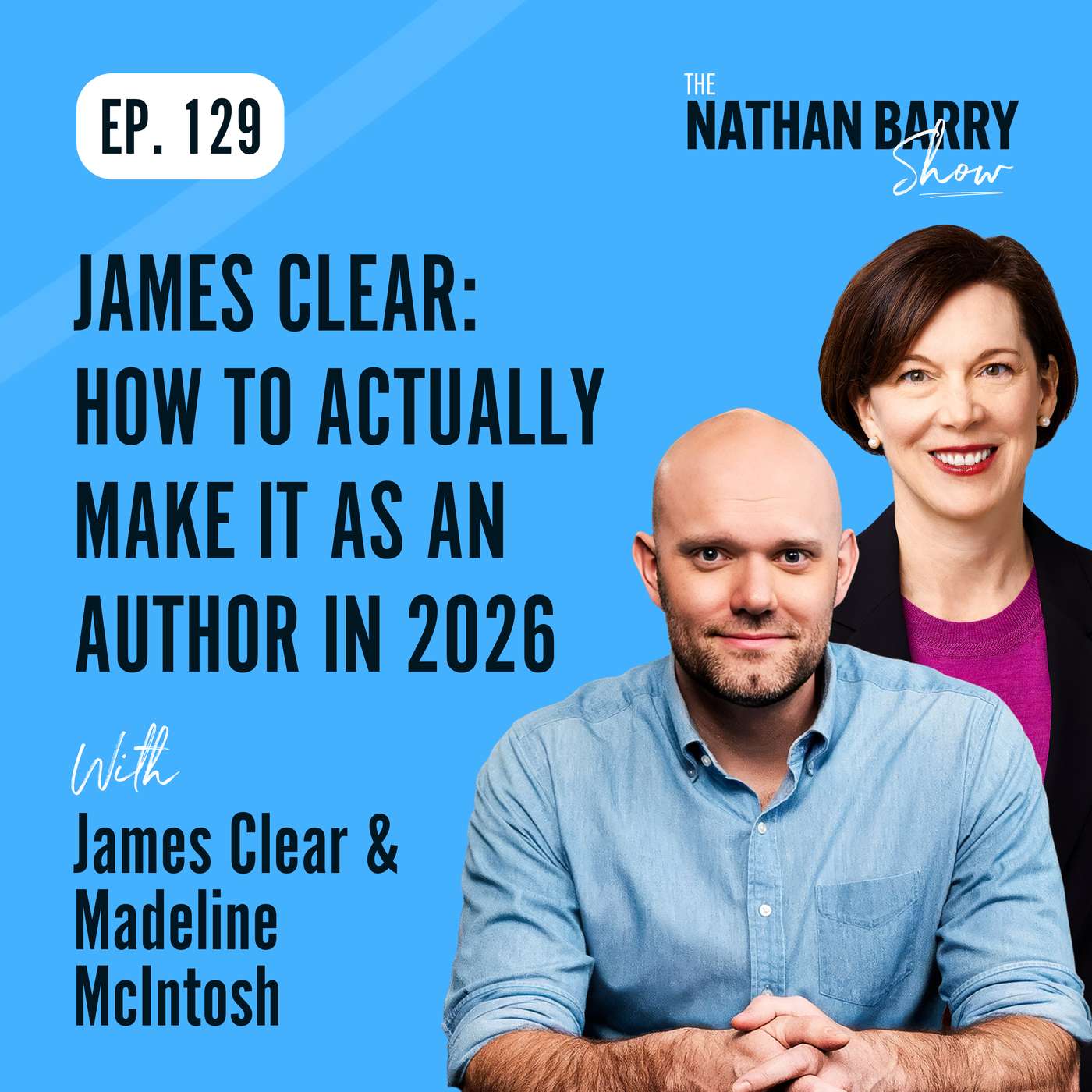
Loading summary
Transcript119 lines
- [00:00]
A
Today I have two legends of the publishing industry. We've got James Clear, who wrote Atomic Habits, which is the best selling book of the last Decade. It sold 30 million copies.
- [00:09]
B
There are four things that you want as an author. You want to have the best earnings possible. You want to have the widest distribution possible. You want to have creative control and then you want to have.
- [00:19]
A
And Madeline McIntosh, who is the CEO of Penguin Random House US where she's published over 1,000 books.
- [00:25]
C
The author and the publisher's job is to sell the first copy. Then the book has to start selling itself.
- [00:30]
A
What are some of the things that make the biggest difference for authors for these books to keep selling?
- [00:34]
C
One of the answers is the probably the most frustrating one, which is that it's amazing.
- [00:40]
A
Now James and Madeline have co founded
- [00:42]
B
Authors Equity, ACX and Audible, kind of screws self published authors and so we can improve your royalty there. On the print side, it's basically the same.
- [00:50]
A
The traditional model gives authors between 15 and 20% of what their book earns. Author's Equity inverts that. James and Madeline walk through exactly who this model is right for, how they select books and what the publishing industry has refused to fix for 30 years.
- [01:04]
C
All of the choices that are out there. How do you break through with this book to find your set of readers?
- [01:10]
B
You don't want to like bury the best stuff. You want them to read the first 5,000 words and be like, damn, this is so good. I have to tell somebody about it. And the thing that has surprised me the most is.
- [01:25]
A
All right, I'm so excited for this conversation because I've got two legends in the publishing space. So Madeline, you've been in publishing for three decades, seen so many major transformations, been the CEO of Penguin Random House us you've on the board of another major publisher, you've done so much now, founded a publishing company. James, we're just now celebrating 30 million copies of Atomic Habits, which is pretty legendary. Come a long ways since, you know, we were planning out the book and I had a cabin in McCall, Idaho.
- [01:56]
B
Yeah, yeah, you were there at the beginning.
- [01:58]
A
It's been but a lot of fun, but I want to dive in. Madeline, for you, what are some of the biggest inflection points that you've seen in publishing over the last few decades?
- [02:07]
C
So just to give a sense of when I started in publishing, it was 1992. There was no really there wasn't Internet, there wasn't email and mainly the two formats that you talked about a lot were hardcover and paperback and Mass market paperback was the biggest deal. Obviously that's not the world that we live in now. In about the mid-90s, I was still an editorial assistant, but I got curious about what was happening with technology. Ended up moving to a company then called Bantam Doubleday Dell, which is now part of what is the very much larger Penguin Random House. And I worked in quote unquote, new media. So that was initially figuring out what's a website and how could a publisher show up on the web. And then soon enough I got to move to the sales department because retailers were starting to also think about the web. So that meant sitting in a, in a conference room with, with Jeff Bezos and his first eight employees figuring out exactly what kind of a beast were they and how to set them up so that we could sell books to them. From there I sort of kind of rode that E commerce wave. Then. Then at a certain point I moved in to be the audio pub.
- [03:32]
A
Yeah.
- [03:32]
C
And that was really before the big audio boom. So people thought it was kind of nuts to do that. And then I really made the nuts move because I moved my family, my husband who's a novelist and our two young children. We moved to Luxembourg so that I could work for Amazon on taking the Kindle International. Did that for a couple of years before then moving back to Random House. And that was before we then merged with Penguin and became Penguin Random House. That was a large, a very broad span of time, but also just very significant transformations where there were these points where people were really panicking about what will ebooks mean to publishing, what will audio mean to publishing? At a certain point, I think this is before my time, but I think people panicked about mass market paperbacks too. It turns out that that format changes don't really matter that much. That you can take the book and make it, put it out in any different kind of format that the consumer wants. And actually that's not that big a deal. That has generally been additive to the business. What is a much bigger deal is the transformation of sales channels. And so really the advent of the Internet and then obviously social media and the complete atomization of attention span, those are much bigger challenges and those are really the ones that the publishers and authors have to think about today.
- [05:13]
A
Yes. You've seen all of these transformations throughout the industry and everyone thinking you're crazy as you're jumping on the very beginning of each one of those. Right. Going to audiobooks when everyone's like, I don't know what this is. It probably won't turn into anything. Now, for many authors, it's 50% of their sales or more. Now, or at least a couple years ago, people thought you were crazy again, as you left one of the largest publishing companies in the world, you're like, I'm going to go start my own.
- [05:39]
C
Yeah, they really thought. I thought my family thought I was a little crazy, too. Everybody thought I was crazy. Yeah.
- [05:44]
A
Yeah. What was the thing that prompted that? Like, what made you say, I'm going to go do this? Yeah.
- [05:48]
C
I mean, really, in one way, it was an accumulation of insights over time where, particularly for. One of our co founders is Nina von Molke. And the two of us were often the people who were faced with. She was also Penguin Random House. And we were often the ones faced with trying to figure out, okay, as each of these major transformations is happening, what does that mean for the contract between publisher and author? What does it mean in terms of some of these? What are the strategic implications for how publishers and authors work together? We had shared many of those insights over time. And finally, I just got to the point where I said, I no longer really believe in what I'm selling to authors and to agents. I feel that I'm really more sharing their perspective in this negotiation than I am theoretically what mine is. And so I. I sat in a coffee shop one, One particular morning, I remember, and sort of sketched out what, what a different model would look like. And luckily, between Nina and Don Weisberg, who was a longtime mentor in the industry, he also was leaving his job at Macmillan. And the three of us said, let's, let's do this. We don't really know how to do this, but let's figure out how you start a company and how, how that would. Would work. And then at a certain point after that, we got to present that idea to James.
- [07:22]
A
Yeah. So, James, I want to hear how you came into this, this picture and because you started in a small role and then said, let's go.
- [07:29]
B
You know, I was one of the early meetings that Madeline and Donna, Nina had, and I think I came across, you know, your radar because I was asking for a lot of things that you were trying to solve for. You know, like, I was one of those authors who wanted this. And, you know, traditional publishing, it's a setup that I think worked well for a long time, but that was like pre Internet, and we're very obviously post Internet now. And the enormous shift that everyone has seen and felt for the last 10 or 15 years is that the author owns the audience now. They have a Direct connection with them. And the author's power has grown basically every year since then. And if you talk to people who have been in publishing for a long time, they'll kind of lament the fact that in the 80s or the 90s, we could sort of make a book a bestseller. We could influence which books, you know, going to be hitting the list and doing really well because we had such strong relationships with where the audience was, which at that time was through all the retailers. And then they'll say, you know, we can't really make books a hit now like we could before. And I was pushed back and say, well, it's not totally true. You can make a book a hit. It's just the author that does it now. You know, it's having a million followers on social media. It's having a big email newsletter. It's, you know, it's the people that have the platforms are now the ones that drive the sales. And everyone has known this to be true, but the industry has kind of resisted it. Right. Like, all the incentives. If you're the publisher and you're keeping most of the money, you're not just going to overnight be like, well, you know what? You're right. Why don't you go ahead and keep most of the money now? And so it took a startup to come in and change things. And I kind of debated how. I mean, you know, you and I have like these similar entrepreneurial brains, right? You start to see a problem and feel it, and then you're like, all right, how can I fix this? And so I debated, should I launch an imprint or spin out some kind of partnership or whatever? And then once I met with Madeline, it was, it was very obvious, oh, this is a much better version of what I have in my head. And it just kind of became this fortuitous circumstance where I hope that in 30 years I'll look back and just think, man, I was so lucky to just be the hot book at this time. And it was just this kind of perfect confluence of things coming together.
- [09:38]
A
Yeah. So let's dive into the model because it's fundamentally different. You know, everyone says, do you want to traditionally publish or do you want to self publish? And I've self published three books. I have not yet traditionally published a book. And so I, you know, I was thinking, okay, the next one that I do, I want the reach, you know, and I, I'm okay giving up some of the earnings. And then in talking to James, you know, he's like, you know, you don't like that's a false, false dichotomy.
- [10:04]
B
Well, that is what you just described is the tension that authors have felt for the last decade, which is, okay, do I want to keep most of the money and I self publish, but then I give up the distribution, or do I want to go traditional and I get my book to be everywhere, but they are going to make most of the money. And finally, for the first time ever, I think now that author's equity exists, authors no longer have to choose. And, you know, Madeline can speak to that more and probably unpack the traditional model too, a little bit.
- [10:31]
C
The thing to understand about how the traditional just business model works is that there are a series of really pretty low royalty rates. Those royalty rates depend on was this book sold in which format it was sold in which channel, which country? It's very. It's very convoluted.
- [10:51]
B
It can even depend on the price, right? If the book is discounted significantly, the royalty changes. It's absolutely. It's a lot of complicated.
- [10:58]
C
And it's so complicated that really, that this is why I've realized a lot of people in the industry are just not that. That good at understanding really the math of it all. And the very rational response that agents and authors who have leverage in a negotiation, their response to the fact that the royalty rates are too low is that they push for as high a guarantee as possible so that those unit royalty rates essentially don't matter. Don't matter. The problem with that is then, say you theoretically win the jackpot, publisher agrees to spend an extraordinarily high advance on you. Obviously, in many ways, your interests are aligned. You have somebody who's clearly excited enough about the book that they're willing to invest that much. They want the book to sell a lot of copies. But then when it actually comes to the process of making decisions on the. The march towards the market and moving forward, for example, figuring out how. How to spend marketing money, anything that involves spending money that is just coming completely out of the publisher's pocket. And since they've already now spent a lot of money on the advance, you're the author, and the publisher's interests are not necessarily going to be that well aligned.
- [12:24]
B
Like, if they've already spent a million dollars on the advance, and then you're like, hey, we want to do a $400,000 marketing campaign. That's on the one hand they want their investment to pay off, but on the other hand, they're kind of like, we've already put a lot of money into this Book. There's this tension of, do we want to do that?
- [12:37]
C
Exactly. And the. And, you know, it can come down to what paper we use, what, you know, any. Any of the many decisions that are involved. You end up with authors and publishers who are not really aligned financially and also not really aligned in terms of transparency when it comes to making decisions. The contrast with that is that what we do is we in one way approach it very traditionally. We assume this book, this author should absolutely have a fantastic editor. They absolutely should have a fantastic designer. Absolutely. The physical specs of this book should be attractive enough to be able to grab attention when it's on the bookstore table. But. So we believe in those very theoretically traditional levers. But. And we do the funding of it. So the difference is that I will consult with you as the author, Nathan, and say, okay, here is a candidate for your. For your editor. Here's a candidate for your designer. Here's what it's going to cost us to hire these people. Let's now talk about do we want to hire a publicist or not? And you can share what that conversation was like.
- [13:58]
A
Yeah, yeah. So I want to dive into the publicist thing in a second. But the key thing is that the royalties are just inverted.
- [14:05]
C
Yes, sorry. Very, very important detail.
- [14:08]
A
So in this case, instead of making maybe 30% as the author and the publisher is making 70%, it's flipped. And so then I'm not having to choose. And then the other key thing. And so I'm saying this as an author, going through the author's equity process and publishing with you, all right now is exactly as you said. We're totally aligned. So the expenses come out at the top, and we split that. That's before anybody gets paid. And so the discussion that we had two weeks ago was, okay, do we spend $40,000 on a publicist to try to get press and more reach for this book with the goal of selling some number of copies? We don't know. We've got to abstract a few times to be like, okay, what press can we get? How will that reach? How will that convert? We don't know. Or do we want to spend it directly on advertising? And I have never heard of an author make paid advertising direct to a book successful until talking to you all. Yeah. And the problem is, because it's always done by the author with their 30%,
- [15:11]
B
if you pay it out of your share, you don't have enough money. It doesn't profitable.
- [15:14]
A
But you have. These authors end up doing this whole funnel on the Back end where they're selling some other product, and it's about everything but the book.
- [15:21]
B
What you're really getting at is you're. We're trying to create a model where everything is aligned.
- [15:25]
A
Yeah.
- [15:25]
B
Right. And I think just a couple comments on that. So, first, under the traditional advanced model, it's totally backwards. Like you. The way to make the most possible money under a traditional deal is you get a huge advance, they pay you $1 million, and then you sell one book, and that's how you maximize your earnings. Earnings per. Earnings per copy.
- [15:43]
C
Yeah.
- [15:43]
B
The better you do, the more books you sell, the more your earnings per copy go down. So you're actually. The more. I think the way you've put it before is the better the book does, the more the publisher is rewarded. And that's disincentivizing to the author. Right. Like in most industries, the higher your performance gets, the more your rewards increase.
- [16:03]
C
Right.
- [16:04]
B
If you. If you win the super bowl, you get a bonus. If you get voted to the All Star team, you get a bonus. And so, like, we should be incentivizing high performance, not, you know, discouraging it. So I think that's. That's the first inversion of the model. And then the second thing is, if you're going to go with an advanced model, then you're kind of incentivized to place a lot of bets. People sometimes equate it to a venture capital portfolio or something like that, and that is the game that publishers are often playing. But if you place lots of bets, then that means you're playing a game of scale. And it's just hard a lot of the time for scale and quality to go hand in hand. And when you're publishing 500 books or 1000 books a year is just going to be parts of it that feel like manufacturing, you know, And a lot of authors say that. I feel like I was kind of, you know, put through the processor or, you know, like, I got attention from my launch, and then they moved on to the next thing. And that's a very common refrain. And it's just. I don't. I'm not saying there's, like, bad people in publishing or anything, but it's just kind of the reality of we're making a lot of books and we got to move on to the next one. And so you want this model as an author, you want a model where everything is aligned, the incentives are aligned, everybody wants to win together, and we can all grow the pie together. And you get this. The best possible process for making the best possible book. There is nothing in publishing that will beat making a better book. That is the single highest thing that delivers the most value to everybody involved, including the reader, by the way, which should be the person who's getting the most value, is what can we do to make the best possible book? And if you're not going to try to make the best book in your industry or your category, I, in my view, it's not worth it. It's not worth the time it takes two, three, four years to make a book. You should only do it if you have the best possible standard. And so the author's equity model is to try to align all of those stars, you know, to say, okay, let's reward people based on the value they're providing. If the author is genuinely the one providing the majority of the value now, which I would argue they are, they should get the majority of the profit. And let's also find a way for all of us to win together. And at the root of it, let's try to design something where it's the best possible process for making the best possible book, because that's what's going to serve people and help people the most.
- [18:22]
A
Yeah, I love that. So there's some very specific additional pain points that you've encountered in publishing that you wanted solved. And thankfully author's equity is like, yeah, we can solve many of those. What are a few of those?
- [18:34]
B
Yeah, we're trying to, I basically look at, you know, I'm no different than a lot of other authors, right. You look around and you're like, this kind of feels a little bit broken. And I think we're looking at all the things that feel a little bit broken and just try to check off each one of those. You know, like in traditional publishing you get paid, you get your royalties every six months and that's paid on a three month delay usually. So you get paid very late for the sales that you make. And author's equity pays every 30 days. Or in our businesses, a lot of the decisions that we make are around social media campaigns or I'm going to mention the book of my newsletter this week like you want. You're used to posting on social media and getting feedback instantly. How many likes to get, how many impressions did it get to wait one
- [19:14]
A
hour for the day? Right, right.
- [19:15]
B
Yeah, I want to, I want to see live updates. But in publishing they're like, you'll see numbers in 6 months with your royalty statement. They're like, I can't, I can't make business decisions like that. So you know we can get you numbers much faster so that, you know that's another big win. So there are just all these little things about publishing. International royalties is another interesting one. You know, like I, my audience is worldwide, I write in English and I have people read my newsletters and my books in English all around the world. So why is my English book going through another English speaking publisher in the UK or Australia or some of these other territories who then is taking their cut and then it goes through the US publisher and then I get my cut after that it gets watered down. And so Author's Equity has said, yeah, that we're not going to do it that way. We're going to distribute directly in those territories and the resulting earnings for our authors internationally are significant improvement over what you would normally see.
- [20:11]
C
And I would just slight nuance to that, which is that in some cases we will talk to, if we have world rights, we'll talk to a publisher in the UK or in another country and they're so aligned with us and so excited and so passionate about really hustling at a local level that it does make sense to license the rights to them. But in many other cases it just makes sense for us to sell directly to retailers on a worldwide basis.
- [20:45]
B
And there are a number of things like that, you know, I just named two or three. But there's, there are lots of little pain points like that that could be better. And then there also of course are the really big pain points like who is keeping the majority of the profit and is the team aligned and how do you get the best editor? That's okay. So this is another pain point. Now you have me going, sorry, so now I'm on a roll. Usually what happens is you have a book idea and you come up with a proposal and then you and your agent shop it around and you get offers from 7 or 10 different publishers or whatever. And then you look at those offers and you say, okay, who offered the most money? And then you convince yourself, well, that's the team I really wanted to work with all along. And you get whoever the editor is at that imprint and that's fine. There are lots of good editors out there and it can work out well. It worked out well for Atomic Habits. But that doesn't necessarily mean that this person specializes in that kind of book or is the right person for that type of book or for you, you know, like you want to. Your editor is an important relationship. Like you want to feel connected to them. And so Authors Equity has kind of flipped that model and said, we're going to select, hand select custom teams for each book. So based on the topic and the author that comes to us, we will hand select an editor for you, A cover designer, a publicist, if you want that. And it's a collaborative process, right? Like the author is, it's an author centric, an author driven business. And so, you know, if you have something you're looking for in an editor, we can help you find that. If you have a particular design that you want on the COVID We even have authors who, they have their own design teams and they wanted to design their own cover like that, that's fine. So I think the kind of at the root of it is we really want to trust the authors and we have opinions, right? Like we have our, our expertise and our best practices on ways that you can sell the most copies possible. But at the end of the day, it's the author's choice. And I think many authors have really appreciated having that level of control. I thought that I was going to be pitching most authors on, hey, come with us, you'll make twice the money. But really what a lot of people like is the fact that they can drive the process.
- [22:51]
C
It's also what I'm picking up on also is that when you think about pain points in the, in the industry. So pain points for any author, any publisher, and for any retailer, frankly, it's how with all of the choices that are out there, how do you break through with this book to find your set of readers and get them to go into the bookstore and buy this book, given all the choices they have? And we are very clear we don't have the answers to this. We would love it if all of our authors had the answers to that. They don't necessarily. But what our approach to the partnership means is that we really are both coming together and putting all of our ideas on the table, hashing them out, trying to think about, is there a different way we could try to do this? Have you tried this? Have you tried this? What gets us really excited sometimes in a conversation with a prospective author is realizing, wow, there's stuff we can learn from them. Yes, we can share all of our expertise based on decades of being in this business. But there's something this one really understands. TikTok. This one really understands newsletters. This one really has a really interesting thing that they're doing at a local level in real life, that's a kind of electricity that usually doesn't get to happen because as James said, if you're at a big place, even if you have a team that is completely populated by geniuses, they've got a lot of books they've got to turn through. And so I feel very strongly that in a market that is all about scale, that focus and boutique can really be extraordinarily powerful.
- [24:45]
B
Just something to add to that. I think that our willingness are the authors equities team's willingness to learn from authors and our desire to create situations where there can be knowledge transfer. You know, we host dinners for authors, we host retreats for authors, and there's lots of sharing around the table of what's going well for your book launch or how did you write your title or things like that. I think that's a testament to the team and the type of people that we have. You know, we just have people who are very. They're excited, they want to learn, and, you know, they're very competent. They're really good at what they do. And you put that mix together and it leads to really good things. This is how I've been describing it to authors. You can tell me if you like this or not, but what I've been saying is, you know, Madeline was in a very unique position as CEO of the largest publisher. And publishing often gets critiqued as like a business that's run by English majors or, you know, whatever. And that's fine. Like, the stereotypes exist for a reason. But the truth is, in any large organization where there are thousands of employees, like, like there are some all stars in there, and sometimes you just kind of feel like you're stuck like a cog in the machine, you know, or you're, you're. You have a lot of energy, you're really creative, but then the ideas get squashed down by a committee or it just kind of gets voted out in some portion of the process. And there are really talented people in publishing who just haven't been able to realize their full potential yet. And by virtue of your career and your position, you kind of know who, who they were. So I just tell the authors, like, Madeline knew who all the straight killers were. And then she just went into them and like tapped him on the shoulder, like, hey, do you want to deal with this and just come over to us and we can like, let you run? You know, Like I, I just say, like, unleash the all stars, you know, like, this is true for authors. You know, you get these authors that are like a force of nature and great, like, let's let them run and do their thing. But it's also true on the publishing side. Like we have some really talented people on the team and now they can, you know, be fully unleashed.
- [26:35]
A
Yeah. And that's been the experience as an author. We, you know, we're, it's having the acquiring editor be different from the person doing the like, you can put the best people on it and then if one role isn't working out, we can say, hey, let's actually get someone else in for this next stage of the book or whatever it is. Right. We used a different editor for the very first development draft of the book. Got to a stage that we were like, okay, this is pretty good, but I think it needs something else. And then brought in a different editor to say, okay, let's actually rework it from there. And I loved having that flexibility to find the exact right person to work with.
- [27:10]
C
Yeah. The role of the in house editor in corporate publishing is really tough because they, you know, really what they are expected to do is both be a star at acquiring books, star at managing their relationships with agents, a star at being an in house cheerleader and project manager. And if you do all of those things, you probably don't have much time left to actually work with the author.
- [27:40]
B
It's really like three different jobs at least.
- [27:43]
C
And so that's where part of what I could see is that a lot of the people who were most skilled at working with authors on the page were the ones who are no longer actually operating inside, inside houses and so they're available to work on the pages.
- [27:57]
B
I want to make just one more point. We've talked a lot about the traditional model, how authors equity inverts that. So the summary is traditional model, you get the advance but publisher keeps most of the money. Author's equity, no advance, but you're going to keep, keep most of the upside and the issues with scale and alignment and the author being in more control of the process. I think those are all very strong reasons for why a top author in particular would choose author's equity over a traditional deal. But I also want to make a comment about self published authors because a lot of our friends are entrepreneurs and self published authors. And so I thought about self publishing atomic habits for like a year. I debated whether to do it or not. And the story in my head was, well, I'll only be on Amazon and Audible, but how much am I giving up really? You know, like, isn't that 90% of sales? Like what? And now actually we've had some very interesting transitions of books that were self published and were successful on their own and then have since moved to Author's Equity. And now we have real data for what you're giving up and what the difference can be. So like books like Don't Believe Everything youg Think, the Simple Path to Wealth, the Almanac and Naval Ravikant, all three of those books already had sold hundreds of thousands of copies on their own and then chose to come to Author's Equity. I always feel like that's a very interesting signal because none of those guys, Eric Joseph, JL they didn't need us, they were already doing fine. But what you're able to see, like if you take the Simple Path to Wealth, for example, we've essentially doubled his weekly sales and it's because it is now in retail outlets. You know, he's selling in Barnes and Noble, he's selling in retail outlets throughout the country. And as a book goes omnichannel and it's available everywhere, it's kind of like each little book is a billboard. And the online sales have also lifted. So the Amazon Audible sales also went up after it was available elsewhere. Yeah, there are lots of things about that and some of these self published to authors equity published transitions. There's. I won't get into the weeds too much, but there's a lot to cover there. But we have seen a lot of success with that. And the thing that has surprised me the most is that most of these authors are basically making the same per copy as they were before on their own. Maybe it's a little bit less, but it's. They're coming out way ahead with the increase in volume. And I did not think that was possible. I thought that surely they would have to at least give up earnings. But in fact in audio you'll definitely make more with us, your audio deal. It's notably better. ACX and Audible kind of screw self published authors and so you know, we can improve your royalty there. On the print side it's basically the same. You know, most self published books are making 5 to 5:50 on the, the print side from Amazon. That's what they're taking home per copy. Depends on factors like pricing and all that, but that's a good estimate. And like we're right there. And so if you blend the average take home, a lot of the self published authors are basically making the same and they just get this extra volume with us. So that's been, that's been interesting to see too I think. I'm obviously very excited about the model. Right. I Think there's good reasons for self published authors to move over. I think there's good reasons for traditional published authors to move over. I have learned that people make this decision for many different reasons and you know, it's not going to be a perfect fit for everybody. And it is a highly selective model too. We can't, you know, we're not going to be publishing hundreds of books every day.
- [31:27]
A
How many books are you Publishing in 2026?
- [31:30]
C
About 20 under the Author's Equity imprint. And then we have two different romance programs, one called 831 Stories, the other called Lux. And those are both run in a slightly different way, but the Author's Equity titles are about 20 a year.
- [31:47]
B
I think my feeling is there's good reasons for traditional. I'm very excited about it. There's good reasons for self published authors to move over. There's good reasons for traditional published authors to move over. But it's also a very personal decision. You know, it's not going to be different. People prioritize different things. But there are, there are a lot of exciting things about the process. And I think I kind of summarize it as like there are four things that you really want as an author. And I think Author's Equity is the first time that you can simultaneously get all four in one place. You know, you want to have the best earnings possible, you want to have the widest distribution possible. So usually you have to give up the earnings on the traditional side, you have to give up the distribution on the self published side side. You want to have creative control. So whether that's better rights or just, you know, the ability to control your work and how it's, how it's made and then you want to have the best possible process for creating an amazing book. And I think this is, this is the first. I'm so excited about the model because I think it's the first time you get all four in the same place.
- [32:48]
A
So we were talking about this at the mastermind that we're hosting, right? This is why we're, we're all hanging out in Franklin, Tennessee and there's a category of author that should not publish with Author's Equity because you are giving up the advance. And so as I understand it, it's the person who doesn't know how well this idea will sell. So can you talk about that of the person who either could really use the advance so they can then go spend two years writing the book or they're working on something that's maybe a Cultural moment in time or whatever else where you're like, who knows if this is going to be a hit and take off or sell a few thousand copies and that's it.
- [33:27]
C
Well, and speaking first, in terms of, from our perspective of what are we considering in making our own decisions about whether to offer a deal to an author, one of our key questions is, is this a book that we believe it's at least possible that we could sell more copies in year two than in year one. So as a small company, as a startup, we do have to think about avoiding cases where it's just like, wow, it's a two week opportunity. This author is going to be on all the morning shows. It's going to be like a rocket ship for a couple of weeks and then it's going to come back down to earth and nobody's going to care. That's a really terrible scenario for us as a company. We also have to think about is this an author who's going to be a good partner to us? So we are really, we're not providing, we're not a service provider. We are really business partners together. And so is this somebody who we're leaning in because not only are we excited about the book that they're going to do, and not only do we think there's a market opportunity for that book, but also we really feel like this is somebody we want to work with. This is somebody who knows something about the market out there that we feel like we can learn from. We're going to enjoy teaching them what we know and, and that together we're going to be able to make good, rational decisions related to how the money's spent, where we invest, et cetera.
- [35:02]
B
We only win if they win, right? We win together. And that's been one of the most fun parts, is we have a lot of really great authors and it's amazing to learn from them, but it's also just fun to be a team together. And everybody needs to be excited about coming together to make it happen. I mean, if the, if you got friction and the personalities are abrasive or whatever, like it's not, that's not fun for anybody. You know who. I had someone tell me once that there are four types of relationships in life. There's win, lose, lose, win, lose, lose, and win, win. And the only one of those four that is sustainable is win, win. And this is why I look at, you know, traditional publishing deals and things like that. And it kind of feels like you're almost the publisher's trying to get as much of the pie as they can. And then you figure it out after you're a first time author and you're just happy to get a deal. And then you're like, but this doesn't feel like a win anymore. And so of course the relationship doesn't persist. And I'm kind of at the point in my career where I'm like, why would we want to do anything but create relationships that are win win, you know, like, let's all come together and rise together. And I think this model does that really well.
- [36:05]
A
I think that's a good point to jump into the books themselves, right? We have a lot of authors listening who are like, okay, how do I make a great book that's going to sell more in year two than year one? And so you have this position from watching thousands of books, from coaching all of your author friends, everybody who comes to you with questions and all of this. And so what are those things that you're most looking for that are the signs that say, okay, yes, this book has a good shot of accelerating over time?
- [36:34]
C
I mean, it's the easy to say but hard to achieve stuff. But it's. And this in my mind applies whether it's nonfiction or fiction. Is there a unique problem that exists in the world that this book is extremely good at solving? So the reason that can apply to fiction is I'm bored or I need inspiration or I need to be entertained. Does this novel do a really, really good job of doing that better than the other options that this consumer might have, either from other novels or watching Netflix? So the, you can look at a lot in the nonfiction space. You can look at a lot of different categories that yes, maybe there's a universal need. Like a lot of people are interested in making more money or being healthier or managing the relationships better, but there also are a lot of books in those categories and a lot of words spilled. And so we're looking really taking the perspective of the reader when we're, when we're looking at a book to do I perk up? Does this get my heart racing or am I kind of already bored and not, you know, I'm ready to move on? And this is just a proposal. So it's a lot of that. The answer I've just given you, it's the same kind of answers that any traditional book publisher is also going to say. We're all looking for the same kind of books that are going to, that we believe are going to be able to stand out in a crowded Marketplace. What's different for us is then the idea of, okay, do I also want to grab hold of this author? And together we figure out how to then bring it to life.
- [38:28]
A
Life.
- [38:29]
B
I have a couple things I would add. I feel like first, this is focused mostly on nonfiction authors, right? Like, I don't know anything about writing romance or novels or whatever, but as a nonfiction author, I think you really want to be building an audience of some sort. And that is for two primary reasons. The first is, yeah, of course, it makes you more attractive to the publisher, and it makes the launch much easier if you can email 100,000 people or a million people. Like, yeah, obvious. That's obvious to everybody. But the real reason that I think it matters is because you force yourself to run your content through a filter by. By growing the audience, whether that's making a podcast each week or posting on social media or putting out a newsletter or writing articles, whatever it is, you're. You're forcing yourself to put a certain number of reps in. And, you know, like, in my case, I wrote 120, 150 articles about habits on my blog for three years before I got a book to deal. And, you know, it turns out not many people write 100 articles about habits. And you'll learn a lot along the way. And if you try your best a hundred times, well, you're going to. Not every time you're going to hit the mark, but you're going to have 10 or 15 pieces of content where you say, this is my best stuff, like, this is what really resonates. And I was able to take those 10 or 15 or 20 things and help make them the backbone of the book. At the time, I thought I had written about half the book. It turns out I had only written about 10%. And a lot of it needed to be reworked and massaged and extended and holes needed to be filled in. But it was a very strong starting point point, because I knew what ideas resonated. So I think building an audience, the primary reason is not just because the numbers and the reach. The primary reason is because it forces you to make your ideas better. And so I really like it when content has been run through a filter first and you can trust what your best ideas are. So I think that's step one. Then after, you know, the topic that you're going to write about, maybe you have a blog about finance or, you know, money, maybe you have, you know, a blog about habits like me or a podcast on, you know, self help or whatever it is, whatever the topic is for you. You have some category that you're pretty sure, okay, this is what the book is going to be about. You know, this is, this is my thing. Like, I always knew that it was going to be a habits book. I didn't know what the title was or what shape was going to take, but I knew that was my, my content. I think the biggest piece that the hardest thing to find is if you've been making content for a long time, you probably have lots of ideas, and that means you can fill out the chapter. But do you have the vessel that is going to carry the book? Do you have the, the. What we often call the packaging or the. What do you see on the COVID the title, the subtitle, et cetera? You can take lots of examples. So, like take Mel Robbins book, Let Them Theory is super hot right now. Right? So let's use that as an example. Really, a lot of the core principles of Let Them are things that the Stoics wrote about. They've been around for a thousand years. You know, don't focus on what other people are doing. Focus on yourself, yourself. Focus on what you can control. Like, you know, if somebody misunderstands, you let them, and so on. But the unique vessel that carries the book is this concept of, you know, if somebody misunderstands, you let them. And then also, rather than focusing on what they're doing, let me do something else. And that is a very compelling little memeable package for this timeless idea that's been around for a long time. And so I would say that what you really want is a universal problem that you have a unique angle on. You know, I feel like there's a chapter in Atomic Habits where I talk about deliberate practice. It could have been a book about deliberate practice where I mention habits, but instead it's a book about habits where I mentioned deliberate practice. And I think the difference in how those two books would sell is like, enormous. Because if you don't know what deliberate practice is, I gotta take 30 seconds and unpack it for you and explain it. But just by virtue of growing up in society, you know that having good habits is favorable and having bad habits is unfavorable. Like, I don't need to explain any of that. All I need to convince you of is, hey, if you're only going to read one book about habits, atomic Habits is the one to read, and that is a totally different cell. And so I think I would could boil that down by just saying you want to find what is the timeless Desire that is always going to be there, that you're tapping into, but you need a new unique vessel for delivering the information around that timeless desire.
- [42:46]
A
So taking this and making it very practical because I've had this conversation with you about my own book where, what, a year, year and a half ago, I brought you a book called the Audience Shortcut. And it was all about how to achieve what you want in life through having the right people paying attention. It worked on the packaging of it. All of this stuff had maybe written half or a third of the it. And we sat down in Las Vegas, of all places, and I was like, here you go, what do you think? You ran through it and then you came back. We talked through it a bunch, how to improve it and we were making all of the tweaks and making that better. And then you came back the next day or a couple days later with a 20 minute loom video and said, don't write that book, Write this book instead. Talk about what went into that. And you can be as specific as you want or, or as high level.
- [43:36]
B
I. Well, this other book, the book that you're working on now, the Ladders of Wealth, is a timeless topic. You know, people. I mean, I feel like one good filter that people can use for their books when they're working on something is can you find three to five books that have already sold over a million copies that are adjacent to what you want to do? Like, you know, in my case, I would have said seven Habits of Highly Effective People, the Power of Habit. You know, books like this that you look at and you're like, okay, they're already a success. I got my own version that I'm putting out. I'm, you know, doing it my own way. But it's nice to have a couple examples of that where you can say, yeah, people really want to hear about this topic. And now you're going to add your unique lens or your unique angle to it. I can't really name any books about audience.
- [44:20]
A
Right.
- [44:20]
B
That have sold a million copies. I don't. Maybe we can try to come up with some, some version of it, but I can't really name any. I can name a lot of books about one wealth that have sold a million copies. And so, you know, psychology, money, Rich dad, poor dad, total money makeover. Like, you just go through the list, you're like, okay, this is a category people really care about.
- [44:36]
A
People buy this.
- [44:36]
B
Yeah. And you had something unique, which is the Ladders of Wealth concept. Also, isn't that one of your Most popular articles.
- [44:44]
A
It's my most popular.
- [44:45]
B
The most popular.
- [44:45]
A
The most popular thing I've ever written.
- [44:47]
B
Like this.
- [44:47]
A
You had this moment where you're like, what are you doing?
- [44:49]
B
Well, Mark. Mark Manson had the same thing happen when he worked on Subtle Art. He was, like, kind of struggling, struggling with the title. And then he told his agent, like, this is the most popular article on my website. And she was like, what are you doing? Like, make this the title. You know, like, this is. Don't. Don't overthink it too much. Like, this is what people want to hear from you on. So usually the big categories are pretty obvious. Habits, money, you know, whatever, things like that. But the hard part is not identifying the category or the desire. The hard part is coming up with a nice, unique angle that makes sense for addressing that category. And I really liked the Ladders of Wealth concept. And I felt like, all right, timeless category. Bunch of examples of books that have sold millions of copies. I really like the concept. And you had a lot to say about it. Also. A lot of what you say about the audience book can feed directly into this. Like, it fits fine in this chapter. Just let it live there. And so that's kind of one of the secrets of writing these books is you. You can sort of say whatever you want on the inside. You can find ways to, like, work your best material in. In. And that was. That was a big portion of the process for me with Atomic Habits. The first year of working on the book was just me figuring out how do I get my best ideas stacked up front in the book. You know, how do I get 1% better every day? You don't rise to the level of your goals. You fall to the level of your systems, and every action you take is a vote for the type of person you wish to become. I knew those are three of my most popular articles of all time. And I had all three of those ideas in the first, like, 26 pages. And the idea is, it takes so many hurdles for somebody to buy a book. It's so hard to sell one book. Like, you got to be on a podcast, and they see you there, and they see it in the bookstore and they see at the airport, and they're reminded of it on Facebook, and then they click, and they finally buy, and it comes to their house, and it sits on their desk for six months, and then they crack it open and they read, you know, 14 pages, and then their kids crying and they got to put it down. And you don't want to, like, bury the best Stuff, you know, like you want them to read the first 5,000 words and be like, damn, this is so good. I have to tell somebody about it. And so I was trying to figure out, how do you, you know, how do you do that? So anyway, a lot of, lot of ideas there, but I think those are some of the things to consider if you're trying to frame your book up in a way to make it successful.
- [47:03]
C
And one thing I would say also that is different about what I think of as good publishing versus a sort of more of a service model or of what an author is going to get if they're going on their own, is, is you want there to be a push and pull of ideas. And no matter how brilliant the author is, no matter how perfect they are in the page, there is value in just chewing through it together to really hash out like, is, who do you think the readers are for this book? I just read this manuscript and here's who I think I think it is. Do you agree with me? Don't you agree with me? Okay, is it. If there's a gap there, then what do we need to address better, either in terms of the content or the positioning or the title or the subtitle or whatever it is. And know that's where there is real value in having a team of people who are coming together to work on a book as opposed to just kind of going your own online or going into a system where you're not going to really get that much feedback because people don't have time for you.
- [48:15]
A
Yeah, I think that's so good. And James, something that you had said to me was in. In your, like, here's why you should write about this because I had everything tied to audience related to Kit and things that I'm known for. But you did it. You went on X on my account and searched minimum favorites from. From my username, you know, to find. Okay, what are the.
- [48:36]
B
What were your most popular tweets?
- [48:38]
A
Yeah, and they were.
- [48:39]
B
Your.
- [48:39]
A
Your point was they were all about money or like nine out of ten. You know, basically we're all about money. And so seeing what resonates, something that I've seen you do, Sahil has done really well is take these ideas that, you know, resonate and you know are going to go viral. Maybe like in Sahil's case, the graph of time that you are going to spend with your kids by age. Right. You know, that's going to resonate.
- [49:01]
B
He had already posted on social media five times and it went viral every time.
- [49:04]
A
Right.
- [49:05]
B
And so, yeah, like, I. In my opinion, that graph is probably too late in his life book. It should be. It should be earlier. You know, like, you take your list of most popular tweets that would. Let's say that eight of the top ten are about money. You know, those lines resonate. Now, I'm not saying you got to fit all eight into the first 15 pages, but some of those soundbites should be early. That also is really good content for when you do interviews. Like I. The first time that I was on CBS this Morning, I'm prepping for this morning show and I'm like, kind of nervous. And the way that I decided to script it out or try to figure out what am I going to say in this short four minute interview was I took my top tweets and I started dropping them into the questions and thinking about, all right, if I don't say anything else, let me try to get this sound biting. I think I had like three things that I really wanted to make sure I said on air, and I got those in and it ended up being a really good segment. And, you know, if you can. This is the point I was making earlier about it's a great reason to build an audience is you force yourself to run the content through a filter. You can trust that stuff, you know? You know, okay, this clicks with people. So let's lead with some of the best stuff.
- [50:08]
A
Yeah, that makes sense. What are some of the things that make the biggest difference for authors in year two and beyond for these books to keep selling?
- [50:16]
C
One of the answers is the probably the most frustrating one, which is that the book has to be good. Yep, that's the.
- [50:23]
B
That is the answer.
- [50:24]
C
That's the answer.
- [50:25]
B
There are strategic things you can do, which we'll talk about, but that is.
- [50:28]
A
And as we've been working on the letters of wealth, that's the thing that both of you have said is like, here's the date. Here's what we're working on towards and what matters most. This date doesn't matter at all. What matters is the book.
- [50:39]
B
Tim Urban. Tim Urban told me one time that online the difference between A plus work and A minus work is like enormous. It's not like, you know, an A plus is like a 99 out of 100 and A minus is like a 93. That's not how it works online. An A plus is like a 9,000 and an A minus is like a 93. And so taking the time to really get it right to true, you're only Going to write the book once, make it the best it can possibly be. Now you know, of course that's tricky. Like you don't want to use it as a crutch to just endlessly edit and kind of over knead dough and work it too hard and all of that. But my little rule is as long as I'm working, as long as I'm working on it, I should be patient. If I'm not working on it, then I'm just waiting. Right now you're just like you're just researching and spinning your wheels and whatever. But as long as it's moving forward, let's stick with it until we hit the highest standard we can.
- [51:26]
C
Yeah, there's a. Seth Godin puts it same idea, but he says the author and the publisher's job is to sell the first copy. Then the book has to start selling itself. And so that plays out in lots of different ways. Part of it is that you really, you want booksellers to want to keep that book on tables over the long term. And booksellers don't operate non profits. Those bookstores, whatever their size is the inventory cost them money. They are going to buy the books that they believe they can continue to sell. And so that matters obviously in terms of when you're selling the book in at the time of publication. But the real win is if you have these thousands of different booksellers around the country, whether that's an Independent or a Target or a Barnes and Noble or whoever, that they are continuing to give you visibility that goes on. Another way to think about it is, and it's particularly helpful doing this with the nonfiction. It's over the course of the year there are different retail promotional opportunities. They're all pretty obvious, but there's Mother's Day, Father's Day, there's summer reading, there's, there's graduation, there's holiday giving at the end of the year and then there's New Year, new you. And so you can think about those as different pulse points that will little ways that you can keep creating or reboosting momentum for the book. James, you've done this really well for years and years and years. So do you want to talk a little bit about how you've approached this for Atomic Calendar?
- [53:15]
B
I think tapping into that, I would say the two things are pretty related, but tapping into that seasonal buying energy when you know, in late November, early December, people are buying gifts anyway, so the conversation changes from hey buy this book to I need to buy something. What should I get Them, oh, I'll get this book for them. And that's, you know, such a different psychology in the buyer's mind. And also these giftable holidays that you mentioned. So I think if you can combine those two things, you can start to stack your promotional efforts to coincide with, like, these tailwind, these natural tailwinds that you get. So, like, I really. I only do I. For a long time. For the first couple years after Atomic Habits came out, I would do two interview blocks a year. I would do interviews in early April, and then those would all come out, like, April, May, right around graduation season. And so that would give Atomic Habits a lift as a graduation gift. At the same time, I would mention it, you know, at the top of my newsletter. Hey, if you're looking for a gift for a graduate in your life, you know, here, Atomic Habits is on sale here. And you start to stack these things together. You could do a little social push. All the energy is kind of happening in this concentrated window. And then I would do a second interview block at, like, the end of November, early December. And obviously, January is a very big time for Habits. And so all those interviews come out right around the new year. You get this natural spike and you kind of add to that. So it's sort of like, when is the rhythm of this book going to rise anyway? And can you just add things?
- [54:39]
A
Fuel.
- [54:40]
B
Add fuel to the fire. And, you know, I think this is something you do for Ladders of Wealth. We look at that and you're like, okay, you know, it's often kind of hard to choose what do you buy for your dad? Or something? And great. All right, Father's Day is coming up. And you could mention in your newsletter on social media that week. Here are three testimonials from dads who really love this book.
- [54:58]
A
Right.
- [54:58]
B
You know, like, you can specifically pull those people from your audience or put one person in there, and, you know, you start to shape the way that people think about your book. And if you do that for a couple of years, over and over again, then people are like, oh, yeah, this is a good Father's Day gift. You know, and then you can start pinging the gift guide people on substack or the, you know, whoever's putting together that, and you're like, hey, this is, you know, can you include it there? Or whatever.
- [55:21]
A
Yeah, I love that. Okay. The topic that I want to wrap up on is a hot topic for a lot of authors, and that is the New York Times list. So as you're planning a launch, I feel like our friends writing books are in two camps. One where they're like, this is my identity. I have to hit the list. Otherwise I'm going to have a meltdown.
- [55:43]
C
I failed.
- [55:43]
A
I failed. This will change my speaking career. I'm charging X amount now. If I have these words after my name in my bio, I can charge 2 or X or more.
- [55:55]
B
And I think even if most people know that, that's maybe not true in the extreme sense. If you don't hit the list, there's a feeling of disappointment for sure.
- [56:02]
A
And then there's the other side where people say, like, I can't control it. I'm only going to focus on what I can control. And you end up with very different.
- [56:08]
B
Which also sounds good and is more rational. But if those people hit the list, they're going to tell everybody they know about it 100%.
- [56:14]
A
So, like, what's the advice that you give? And I mean, you get to see all these books. You two are thrilled when the books that you publish hit the list. And so it obviously matters, but how would you advise that?
- [56:25]
C
The question is, if it's. It, does it really matter commercially or does it just matter psychologically? And I think absolutely psychologically. There's just. Because there are not that many different Boy Scout badges you can get. And this is like the ultimate cool Boy Scout badge, but just for anybody in the audience who's not that clear on how the Bestseller list works. And we're talking about the Bestseller List because it's the New York Times list. And that is essentially the main one that exists in the market now. It is very quirky. It is not scientific. There is an industry weekly report of how many units sold. Those are reported by all retailers to an organization that creates a report called Bookscan that's scientific. That Sundays you sold 10,000 copies or you sold two copies. And there's no guesswork, there's no algorithm, it's just a tabulation. That is not what the New York Times list is. The New York Times has a self selected, sort of like the formula for Coke. It's a mystery. They have a subset of retailers across the country that report the sales into them. They are. They give different weight to the channels of sales. So if a book does really well in the independence, that's going to be weighted differently than the number that comes in from Amazon. They are trying to avoid any chance that somebody's trying to game the list by buying up a bunch of copies themselves. So they're looking for, for anything that might look like a Bulk sale. Sometimes that means that they misinterpret things that are genuinely organic. Demand. The most perhaps absurd and frustrating experience that I had with this was we published a fabulous book in partnership with the New York Times. It's with New York Times games called Puzzlemania. It's a beautiful four color hardcover, very giftable book. And we have a weekly meeting with the creative team at the Times that we've worked with on these books. And it happened to be that the weekly meeting that we had with them was when the list got reported. And definitely we knew based on the numbers there were no games going on and we were not trying to game the system. It's just that the organic demand for this book for its first week and week after week after week was just crazy good. So really, by all rights it should have been number one or number two on the advice how to list on the New York Times that week we're on a zoom call with the New York Times. When Craig, my colleague, who's the first one who gets the list, I see it in his face, he gets the email and he's just like, sorry, I have to interrupt and say we didn't make the list list. And the expletives that came out of our creative partners at the Times who were very frustrated that this book was not in list. And if you look, which we all then did at the fine print in the bestseller section, it says that all books that are games or puzzles do not get to count towards the list. So it's just, I mean, that's silly. And it's a little bit like the royalty rates. These are things that are rules that get built up over time. And it's great. If you hit the New York Times list, it's like a wonderful thing that then you can say forever, but it is really not something you can control. And so putting all of your hopes and dreams on something that can't be controlled is a little silly. And it also can, can sort of take your eye off the ball of what is really the most important thing, which is just how do we reach the greatest number of readers, full stop.
- [60:36]
B
Yeah, I think what I would add to that is you kind of, I think about it as you sell enough copies to be in the conversation. You know, if you sell, you sell 10 or 15,000 copies, then it's like, okay, great, you're in the mix, maybe you're going to be on the list, maybe not. It's their decision on, you know, where they put you and whether that you make it. But you're just trying to give yourself the opportunity to make it. And it's frustrating if they don't pick you. But that's, you know, that's kind of how it goes. I think the most accurate list in the industry is the Amazon Most Sold chart, because all of these lists, the New York Times list or whatever, it's Bookscan, they're usually divided out by format, so they're only looking at like, hardcover sales. So they're only looking at ebook sales or audio sales. Well, I'm selling in all three formats. Like I want to know who's selling the most units over overall. And the Amazon Most Sold chart is the most accurate representation of that because it's all print sales, all Kindle sales, and all Audible sales bundled into one number. And then just whoever sold the most units over the last week. That's where your ranking is on the, on the chart. Now, not all audiobooks are sold on Audible, not all ebooks are sold on Kindle, not all hardcovers are sold on Amazon. But. But it's a big enough aggregated number that I think it's the most accurate representation. There's no other single source that is combining all those into one number. And so if we actually want to see who's selling the most books, I think look at the Amazon Most Sold chart. If you want the highest status marker and to be able to brag about it, then it's like, who's number one in the New York Times?
- [62:04]
A
Yeah, that makes sense. There is so much more that we could dive into. But this has been a fantastic conversation. And I just want to say, for anyone considering publishing with author's equity, you have a very limited number of books that you can take on. It has to be ones that you really, really believe in. But you want authors who want to bet on themselves and who have these books and content to invest in it long term, that you want them to reach out to you. Where would you like them to reach out?
- [62:31]
C
The easiest thing is infoauthorsequity.com we do
- [62:36]
B
actually read the emails.
- [62:37]
C
We do read the emails.
- [62:38]
B
I was saying we should put a counter on the website site at the beginning of each year and be like, we have 25 slots left. And then each time we sign an author, it's like 24, 23, 22.
- [62:46]
C
But yeah, exactly.
- [62:48]
B
It's. People publish books for many different reasons and different things make sense for different people. But I think if you are a top author and you have a large audience and you can look at the numbers and say I'm pretty confident, like I'm going to be selling tens of thousands or hundreds of thousands of copies. And especially if it's a book that has a long lifespan, you know, once you start to stretch, if you only look at things with like a three year lens, then you're like, okay, maybe the advance is better, maybe I'm going to sell more copies, I don't know. But if you have a book that you think this is a pretty timeless topic and like, people are probably going to be interested this in 10 years or 15 years if you stretch it out 20, 30. I mean, it just, the numbers become. You end up giving up an insane amount under a traditional structure. And you know, like I said, people make the choice for different reasons. It's not a great fit for everybody and I don't want anyone to feel pressure about it. But I'm really excited about the model because I think it's right now, I think it's a one of one option. Hopefully we'll put enough pressure on other publishers that there will be more like us. But it's a unique opportunity right now and I think it's, I think it's a good thing for the industry.
- [63:54]
A
That's amazing. Thank you both so much for coming on.
- [63:56]
C
Thanks for having us.
- [63:57]
B
Thank you.
- [63:58]
A
If you enjoyed this episode, go to YouTube and search the Nathan Barry Show. Then hit subscribe and make sure to like the video and drop a comment. I'd love to hear what some of your favorite parts of the video were and also just who else you think we should have on the show. Thank you so much for listening.