
Podcast
The Neon Show
Hosted by Siddhartha Ahluwalia · EN
Hi, I am your host Siddhartha! I have been an entrepreneur from 2012-2017 building two products AddoDoc and Babygogo. After selling my company to SHEROES, I and my partner Nansi decided to start up again. But we felt unequipped in our skillset in 2018 to build a large company. We had known 0-1 journey from our startups but lacked the experience of building 1-10 journeys.
Hence was born the Neon Show (Earlier 100x Entrepreneur) to learn from founders and investors, the mindset to scale yourself and your company. This quest still keeps us excited even after 5 years and doing 200+ episodes.
We welcome you to our journey to understand what goes behind building a super successful company. Every episode is done with a very selfish motive, that I and Nansi should come out as a better entrepreneur and professional after absorbing the learnings.
51episodes
Episodes
Newest firstAll episodes

The Al Lab Founder Who Sees The Future First | Karan Goel, Founder & CEO of Cartesia
5d ago00:58:53Tap to summarizeKaran is the co-founder and CEO of Cartesia, an AI model lab building the next generation of real-time voice intelligence.In this episode, Karan explains what all goes into building an AI Lab company; from massive datasets to pre-training to post-training to inference engines, plus a heavy dose of relentless evaluation, and obsession with every layer of the stack. We also discuss why existing AI benchmarks are not very helpful, why latency is voice AI’s biggest enemy, and why maintaining context across long conversations is one of the hardest unsolved problems.Apart from the cutting edge tech, this conversation explores Karan’s journey from researcher to founder, building Cartesia with a five-person founding team, raising capital, and realizing why first-time founders waste years focusing on things that ultimately don’t matter.If you want a glimpse into the future of AI, watch this episode.00:00 Trailer01:35 From DPS to Stanford to Cartesia02:35 From Counter-Strike to AI04:28 Another Research Paper Wasn’t Enough06:48 The Story Behind “Cartesia”07:17 Building a Company With Five Technical Founders09:55 From Research Project to Startup13:54 Cartesia’s Audacious Vision for 203515:07 What It Takes to Build an AI Model Company18:55 Why Faster AI Doesn’t Have to Be Worse24:12 AI Still Has a Memory Problem27:14 Why Context Builds Trust27:50 Will AI Replace Entire Account Teams?29:16 Hold Music Is Now a Salesman30:30 Designing AI That Feels Personal31:31 Building With Cartesia34:48 Voice AI’s Enemy #1: Latency38:50 Why AI Labs See the Future First41:32 Finding Product Market Fit45:34 Great Products Don’t Need Much Marketing48:12 Very Few Things Matter52:26 How Big Can Voice AI Get55:53 Fundraising And Mission58:15 What Cartesia Is Ultimately Building-------------India’s talent has built the world’s tech—now it’s time to lead it.This mission goes beyond startups. It’s about shifting the centre of gravity in global tech to include the brilliance rising from India.What is Neon Fund?We invest in seed and early-stage founders from India and the diaspora building world-class enterprise AI companies. We bring capital, conviction, and a community that’s done it before.Subscribe for real founder stories, investor perspectives, economist breakdowns, and a behind-the-scenes look at how we’re doing it all at Neon.-------------Check us out on:Website: https://neon.fund/Instagram: https://www.instagram.com/theneonshoww/LinkedIn: https://www.linkedin.com/company/beneon/Twitter: https://x.com/TheNeonShowwConnect with Siddhartha on:LinkedIn: https://www.linkedin.com/in/siddharthaahluwalia/Twitter: https://x.com/siddharthaa7-------------This video is for informational purposes only. The views expressed are those of the individuals quoted and do not constitute professional advice.Send us Fan Mail
Transcribe →
Is Your Startup Model Proof? Vijay Krishnan Turing Founder & CTO On What Startups Should Build to Win
2w ago01:18:41Tap to summarizeWhat if the company quietly making OpenAI, Google, Anthropic, and Meta's models smarter was founded in India?Turing is one of the companies shaping how AI is advancing. It started in 2018 as a talent platform that found the top 1% of the world's engineers, became a unicorn in 2021, and then made a bet almost nobody understood at the time. In early 2022, long before ChatGPT existed, Turing began helping OpenAI improve its models by feeding human expertise directly into training. Today its network of more than four million vetted engineers and domain experts powers the post-training and evaluation work behind the frontier labs, and the company crossed roughly 300 million dollars in revenue while staying profitable, at a 2.2 billion dollar valuation.Vijay Krishnan is the co-founder and CTO. He was an NLP researcher at Stanford back when almost no one believed that predicting the next word could ever turn into reasoning, and he explains why running a modern model company without human-in-the-loop data is like entering a race with three tyres instead of four. He walks through how a model is actually taught to use software like Salesforce, why coding became the beachhead for every lab, and what changed for Turing the moment Scale AI was absorbed into Meta.The conversation then turns to the question every founder is now asked in the room. What is your moat against Claude? Vijay's answer is to go deeper than the frontier labs can reach, into the outcome you own and the context that lives inside an enterprise.If you are excited about how AI actually gets built, who really trains the models, and how to build a company that survives the labs, this episode is for you.00:00 - Trailer02:20 - The Indian company quietly behind OpenAI, Google, and Anthropic04:50 - How Turing went from a talent platform to a unicorn to an AI research partner08:20 - The bet nobody understood11:50 - Why a model company without human data is "racing on three tyres"15:50 - Why coding became the beachhead for every frontier lab19:50 - What changed for Turing the day Meta bought Scale AI23:50 - "What is your moat against Claude?"29:50 - Will AI create more lawyers, not fewer?34:50 - The teams where engineers haven't written code in six months39:50 - 16% of the Philippines' GDP is under threat from AI?43:50 - How you actually teach a model to use Salesforce49:50 - How robots are taught real-world work54:50 - Why million-dollar researcher packages are breaking startup hiring59:50 - The one kind of AI company that gets stronger as the models improve1:04:50 - Product vs. services, and the trap that quietly kills AI startups-------------India’s talent has built the world’s tech—now it’s time to lead it.This mission goes beyond startups. It’s about shifting the centre of gravity in global tech to include the brilliance rising from India.What is Neon Fund?We invest in seed and early-stage founders from India and the diaspora building world-class enterprise AI companies. We bring capital, conviction, and a community that’s done it before.Subscribe for real founder stories, investor perspectives, economist breakdowns, and a behind-the-scenes look at how we’re doing it all at Neon.-------------Check us out on:Website: https://neon.fund/Instagram: https://www.instagram.com/theneonshoww/LinkedIn: https://www.linkedin.com/company/beneon/Twitter: https://x.com/TheNeonShowwConnect with Siddhartha on:LinkedIn: https://www.linkedin.com/in/siddharthaahluwalia/Twitter: https://x.com/siddharthaa7-------------This video is for informational purposes only. The views expressed are those of the individuals quoted and do not constitute professional advice.Send us Fan Mail
Transcribe →
How 1% Stay Rich - What India's Richest Families Do With Their Money That 99% Don't | Rohit Sarin, Client Associates
2w ago00:54:20Tap to summarizeHow do India's wealthiest families actually manage their money, and why does the man who looks after roughly ₹50,000 crore of it own zero stocks himself?Rohit Sarin is the co-founder of Client Associates, which he started in 2002 as India's first multi-family office and has grown into the largest in the country, managing around ₹50,000 crore for more than 1,100 wealthy families. The firm acts as a personal CFO for a family's entire wealth, doing for a household what a finance chief does for a company.He built it the hard way. He left a senior banking career at Deutsche Bank and Kotak, walked away from a full salary into a negative net worth, and took no salary in the first year so every rupee could go into building revenue. The firm's first working machine was an old computer he won at a Deutsche Bank auction.His most contrarian view is about how ordinary Indians treat the markets. He believes trading is a zero-sum game, and the data backs him. A SEBI study found that 93 per cent of individual F&O traders lost money over three years, worth more than ₹1.8 lakh crore, with only about one per cent earning a meaningful profit. Rohit made money on seven of ten trades and still ended underwater because the three losses wiped out all seven gains, so he closed his demat account entirely. He reads the AI boom the same way, as a bubble much like the dot-com era where a rare Amazon survives, and points to Byju's as a reminder of what happens when growth runs ahead of discipline.What the rich do differently is stay patient. They spend on their needs and rarely on their wants, and their real goal is to stay rich across generations rather than to get rich quickly. His own line for it is that wealth is a gift given by the impatient to the patient. He is equally clear that this is India's century, that the country has just crossed the income level where consumption compounds, and that the next ten years may be its best for anyone who starts investing early. He lays it all out in his book, Unlocking Wealth: Secrets to Getting Rich at Any Age.If you are excited about how India's richest families think about money and where India's next decade is headed, this episode is for you.00:00 - Trailer01:50 - The personal CFO for India's richest families03:50 - Quitting a full salary for a negative net worth05:20 - The old computer he won at a Deutsche Bank auction06:50 - The first clients and the two crore bar he borrowed from Merrill09:20 - How many dollar-millionaires India really has11:50 - The income level where a country's wealth suddenly compounds14:20 - What is really driving India's wealth creation16:50 - How old-money families decide who controls the wealth19:50 - The tech gap that changed who leads a family office22:50 - Is the AI boom just the dotcom bubble again26:50 - Why he is telling family offices to sit out AI for now30:50 - The asset classes the ultra-rich actually hold33:50 - Why the rich are moving money beyond India37:50 - The one thing the ultra-rich do that the 99% do not41:50 - His relationship with wealth, and needs versus wants44:50 - Advice to first-generation founders who just got rich48:50 - Why this is India's century and its best decade52:50 - 93% lose money trading, and the demat account he closed55:50 - The book he wrote for every young Indian57:50 - Rapid fire: the best investment he has ever made-------------India’s talent has built the world’s tech—now it’s time to lead it.This mission goes beyond startups. It’s about shifting the centre of gravity in global tech to include the brilliance rising from India.What is Neon Fund?We invest in seed and early-stage founders from India and the diaspora building world-class enterprise AI companies. We bring capital, conviction, and a community that’s done it before.Subscribe for real founder stories, investor perspectives, economist breakdowns, and a behind-the-scenes look at how we’re doing it all at Neon.-------------Check us out on:Website: https://neon.fund/Instagram: https://www.instagram.com/theneonshoww/LinkedIn: https://www.linkedin.com/company/beneon/Twitter: https://x.com/TheNeonShowwConnect with Siddhartha on:LinkedIn: https://www.linkedin.com/in/siddharthaahluwalia/Twitter: https://x.com/siddharthaa7-------------This video is for informational purposes only. The views expressed are those of the individuals quoted and do not constitute professional advice.Send us Fan Mail
Transcribe →
Why Even With Great Products AI Startups Lose with 3x Founder Mahesh Ram, ex-Zoom AI
3w ago01:11:32Tap to summarizeWhat does a founder learn from watching the CEO of a 32 billion dollar company make his biggest AI bets from the inside?Mahesh Ram has built and sold three companies. Thomson Reuters acquired his first, GlobalEnglish went to Pearson after teaching English to more than ten million people at companies like IBM and HP, and Solvvy, one of the first conversational AI companies, was bought by Zoom in 2022. He then spent two and a half years heading AI products at Zoom, sitting beside founder Eric Yuan as the company raced Microsoft into the AI era.In this conversation, Mahesh takes apart the three decisions that put Zoom ahead. Eric refused to charge for AI Companion because he believed everyone in the world should have AI, he publicly promised to never train models on customer data; and he built a model-agnostic layer instead of betting the company on any single lab. Zoom shipped weeks before Microsoft Copilot. Mahesh also shares the operating habits that made it possible, from the five-part rule Eric demands on every decision to the radical transparency that turned his own team into owners.He is just as direct about the question every founder now asks: whether OpenAI or Anthropic will simply take their market. He answers that the model companies cannot see the hundreds of custom applications running quietly inside every enterprise, so the durable business is the one that owns the messy, multi-party workflows they will never touch. On the wider fear that AI will kill SaaS, he thinks the shift is real but that Silicon Valley badly overestimates how fast it arrives, which leaves a huge opening for founders willing to go out and become the educators their market trusts.He closes on what he has learned selling three companies, why the best ones are bought and never sold, and the community of Indian origin founders he now runs that grew from three hundred people to more than two thousand in a single year.If you are excited about building enduring AI and software companies, this episode is for you.00:00 - Trailer01:27 - The three time founder who keeps destroying complexity03:08 - Two billion people learning English with no teacher04:45 - Building conversational AI before anyone knew what AI was07:21 - How Zoom came to acquire Solvvy11:08 - Working with Eric Yuan, a true force of nature13:43 - The three bold AI bets that beat Microsoft to market15:09 - Why Eric made Zoom's AI free and refused to touch your data17:29 - The five part rule Eric demands on every decision21:25 - Radical transparency: share everything except one thing23:32 - What Mahesh would build differently today29:05 - The moat question: how do you survive OpenAI and Anthropic35:33 - What Claude and OpenAI can never see inside a company41:01 - Will AI kill SaaS? And why Silicon Valley is too early42:25 - Become the educator: the biggest opening for founders45:39 - The Indian founder community that 10x'd in a year52:43 - Where the founder DNA actually came from1:00:42 - Why he has no regrets building Solvvy too early1:01:57 - What actually gets a startup acquired1:05:14 - Why you keep the acquisition circle very tight1:07:47 - The real job in enterprise sales: get your buyer promoted-------------India’s talent has built the world’s tech—now it’s time to lead it.This mission goes beyond startups. It’s about shifting the centre of gravity in global tech to include the brilliance rising from India.What is Neon Fund?We invest in seed and early-stage founders from India and the diaspora building world-class enterprise AI companies. We bring capital, conviction, and a community that’s done it before.Subscribe for real founder stories, investor perspectives, economist breakdowns, and a behind-the-scenes look at how we’re doing it all at Neon.-------------Check us out on:Website: https://neon.fund/Instagram: https://www.instagram.com/theneonshoww/LinkedIn: https://www.linkedin.com/company/beneon/Twitter: https://x.com/TheNeonShowwConnect with Siddhartha on:LinkedIn: https://www.linkedin.com/in/siddharthaahluwalia/Twitter: https://x.com/siddharthaa7-------------This video is for informational purposes only. The views expressed are those of the individuals quoted and do not constitute professional advice.Send us Fan Mail
Transcribe →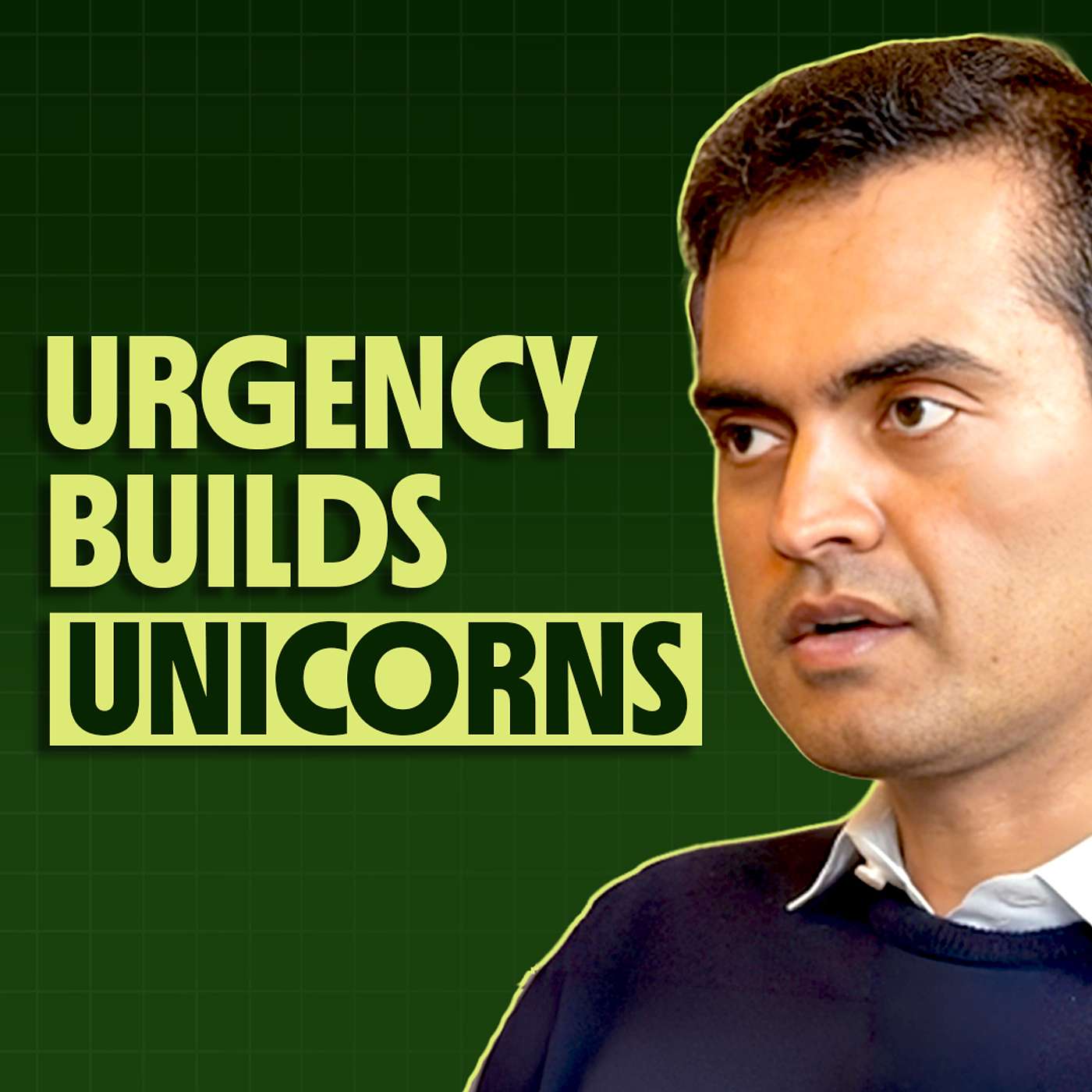
The #1 Mistake Killing B2B Startups | Arun Penmetsa, Storm Ventures
3w ago01:16:57Tap to summarizeCan the biggest AI labs simply walk into any market and replace the software companies already sitting there?Storm Ventures has spent 26 years building an answer for B2B founders. The firm has made close to 200 investments, backed 11 unicorns, and produced some of the cleanest enterprise exits in Silicon Valley, from AirGap Networks selling to Zscaler to earlier winners like Marketo and MobileIron. Its portfolio today runs from Tekion in automotive retail to Atomicwork in IT service management, Krisp in voice AI, and Synthpop in healthcare.Arun Penmetsa is a Partner at the firm. He built enterprise software at Oracle and Google before moving into venture, and he now leads Storm's work in AI, security, and digital health. In this conversation, he is unusually specific about how the decisions actually get made. He meets ten to twelve founders every week; the entire partnership makes only six to eight investments a year, and the single filter he trusts most is urgency. If a buyer can comfortably wait six to twelve months, the pain is not real, and the company is already in trouble.Arun is direct about the question every AI founder now gets asked, which is whether OpenAI or Anthropic will simply take their market. He answers that the foundation model companies will own a handful of core verticals and leave the rest, so the durable business is the one that owns the full stack between the model and the interface and delivers a real outcome inside law, healthcare, construction, or a market as unglamorous as convenience retail. He also lays out where he is placing his next bets, from physical AI and humanoid robots that can retool an assembly line on the fly to vertical companies like Tote that rebuild the software running gas stations and corner stores, where a single day of downtime can cost an owner tens of thousands of dollars. If you are excited about building enduring B2B and AI companies, this episode is for you.00:00 - Trailer01:21 - The 26-year-old B2B fund behind AirGapp, Marketo and Tekion02:47 - The patterns Storm has seen repeat across 200 investments05:37 - What actually drove seven clean exits06:37 - The airgap story: the agentless bet that Zscaler bought13:10 - The one signal Arun trusts more than pedigree14:37 - Where the moats survive once the models get this good18:01 - Why Storm backed Atomicwork against ServiceNow20:00 - Two weeks to decide: how the fastest deals happen25:27 - The cold email that gets a venture partner to reply28:52 - The funnel: 500 founders a year, 6 to 8 checks35:31 - Why Stanford on the resume buys you nothing here38:13 - The pattern behind every 4 billion dollar outcome40:44 - The question every AI founder gets: can OpenAI replace you46:16 - The mistakes that killed companies Arun believed in50:14 - The million-dollar wall every B2B founder hits53:30 - Why buyers have already decided before they call you58:12 - AI agents that stay on a one-hour insurance call1:08:33 - Physical AI: assembly lines that rebuild themselves1:12:39 - Tote: the fuel pump they built to win gas stations-------------India’s talent has built the world’s tech—now it’s time to lead it.This mission goes beyond startups. It’s about shifting the centre of gravity in global tech to include the brilliance rising from India.What is Neon Fund?We invest in seed and early-stage founders from India and the diaspora building world-class enterprise AI companies. We bring capital, conviction, and a community that’s done it before.Subscribe for real founder stories, investor perspectives, economist breakdowns, and a behind-the-scenes look at how we’re doing it all at Neon.-------------Check us out on:Website: https://neon.fund/Instagram: https://www.instagram.com/theneonshoww/LinkedIn: https://www.linkedin.com/company/beneon/Twitter: https://x.com/TheNeonShowwConnect with Siddhartha on:LinkedIn: https://www.linkedin.com/in/siddharthaahluwalia/Twitter: https://x.com/siddharthaa7-------------This video is for informational purposes only. The views expressed are those of the individuals quoted and do not constitute professional advice.Send us Fan Mail
Transcribe →
Gaurav Jain on Building $500M Fund, Missing Ramp and Backing Irrational Founders
4w ago00:58:43Tap to summarizeGaurav Jain has seen more than 10,000 startups, built the world's largest pre-seed fund, backed startups like Gamma, Hightouch and Goldcast and has missed Ramp(you can't be a great investor without having a great anti-portfolio :))A decade ago, when Gaurav started Afore Capital, pre-seed wasn't even a recognized category. Today, pre-seed is what some of the world's most ambitious startups raise as their very first institutional capital.When Gaurav Jain and Anamitra Banerji started the firm ten years ago, "pre-seed" was almost a slight, a label for founders who couldn't raise a proper seed round. They set out to build the world's largest pre-seed fund anyway, closing $47 million on a $40 million target, and every fund since has closed above plan. Afore now runs more than $500 million across four funds. In this conversation Gaurav shares his journey from Dehradun to Silicon Valley and every lesson learned about backing great startups. Like how being in the very best companies matters more than anything else. He is also convinced that the genuine bottleneck is talent. There is a great deal of money in the world and very few people who can build something truly large, which is why at the earliest stage founders tend to choose their investors as much as investors choose them.If you want to understand how the earliest checks actually get written, and what it really costs to say no, this episode is worth your time.00:00 - Trailer01:00 - From Dehradun to Google to starting Afore02:08 - The Waterloo co-op that talked him out of every job03:18 - Back when "pre-seed" was an insult05:44 - When Sequoia said "I guess we're pre-seed investors too"07:26 - Afore's three products, and the experiments that failed09:01 - Hightouch was a travel company when they invested11:02 - Goldcast: no visa, no money, funded anyway12:07 - The through line is always the team14:44 - The Ramp miss17:24 - "Founders pick us more than we pick them"18:45 - The constraint isn't capital, it's talent22:24 - The Solana miss, when it was still Loom Protocol24:46 - Ramp's Super Bowl ad, the buses, his wife's business25:32 - What he looks for in founders28:50 - Coachability, happy ears, and the Mom Test31:28 - The biggest mistake: falling in love with the idea35:04 - The three things that matter, and "50% of zero is still zero"39:25 - "100% storytelling, 0% data"41:25 - Investing in India, and the fear of being dumb capital44:41 - "Sign the deal before Monday"47:26 - One engineer now does the job of 2051:43 - Raising from LPs, the undiscussed part of VC-------------India’s talent has built the world’s tech—now it’s time to lead it.This mission goes beyond startups. It’s about shifting the center of gravity in global tech to include the brilliance rising from India.What is Neon Fund?We invest in seed and early-stage founders from India and the diaspora building world-class Enterprise AI companies. We bring capital, conviction, and a community that’s done it before.Subscribe for real founder stories, investor perspectives, economist breakdowns, and a behind-the-scenes look at how we’re doing it all at Neon.-------------Check us out on:Website: https://neon.fund/Instagram: https://www.instagram.com/theneonshoww/LinkedIn: https://www.linkedin.com/company/beneon/Twitter: https://x.com/TheNeonShowwConnect with Siddhartha on:LinkedIn: https://www.linkedin.com/in/siddharthaahluwalia/Twitter: https://x.com/siddharthaa7-------------This video is for informational purposes only. The views expressed are those of the individuals quoted and do not constitute professional advice.Send us Fan Mail
Transcribe →
And How Matic Sold 6000 Robots with Zero Marketing | Navneet Dalal & Mehul Nariyawala
4w ago01:07:04Tap to summarizeWhat does it actually take to build a robot that cleans your home when everyone before has failed?Matic is a home robot that sweeps and mops your floors, navigating entirely with cameras, no LIDAR. It shipped its first unit in 2024 and has since sold 6,000 units at ~2,000 a month, almost entirely by word of mouth. And is now the largest consumer robotics company shipping in the United States.Navneet Dalal (a computer-vision pioneer who co-invented HOG) and Mehul Nariyawala met building Flutter, a gesture-recognition app that became #1 in 72 countries and was acquired by Google, where they then worked on Nest cameras and shipped one of the first deep learning algorithms in the wild. Matic is the company they decided would be their last: they wrote "Not For Sale" on the wall on day one and built it to last 20 to 30 years.Their bet was deliberately contrarian. They chose the "unsexy" floor-cleaning market, a category with a net promoter score of -1 that people keep buying anyway (21 million robot vacuums sold in 2024), because entering an existing market beats creating a new one and because it's the foundation for true indoor autonomy. Then they put roughly $35 million of their own money in, about 70% of their net worth, with no plan B.Along the way they lay out a full worldview: why robotics is 100x harder than software (the demo is only the first 20% of the work); why humanoids doing your chores are still 5 to 20 years away (the data problem), why no consumer hardware sells above $2,000; and the skin-in-the-game philosophy captured by his late father's advice: "Sell your home if you have to, but keep the company alive."If you're excited about how home robots actually get built and what it really takes to bet everything on hard tech, this episode is for you.00:00 - Trailer01:08 - When they quit Google to start Matic03:30 - Solving home cleaning with cameras only — no LIDAR04:46 - The $35M bet: funding Matic themselves07:36 - What a "level 5" robot in your home really means08:00 - Why they started with floor cleaning — on purpose09:45 - The rule: never create a new market with your first product10:02 - iPod, iPhone, Tesla — all entered existing markets11:38 - Why new hardware gives you only one shot13:02 - "Make something people NEED, not want"16:25 - Why the demo is only 20% of robotics18:50 - Teaching a robot like raising a child21:30 - How far are humanoids from real homes?22:22 - The data problem: "500 years of driving data a day"22:56 - 90% in the lab, 60% in the real world26:49 - Why no consumer device sells above $2,00027:38 - Would you buy a $10,000 humanoid — for what?28:47 - "History rhymes": General Magic to the iPhone29:38 - Earning trust after 20 years of broken robot promises30:31 - Shipping the first robot30:45 - 6,000 units, all word of mouth, zero marketing31:10 - Why they're US-only for now 31:50 - The investors: Sutter Hill to the Collison brothers33:20 - Two companies, both acquired by Google35:00 - The Flutter story: #1 app in 72 countries35:25 - Why nobody believed machine learning worked in 201138:40 - Microsoft Kinect: 8 million units in 60 days40:30 - The Google acquisition — and the $35M number44:40 - The near-death moment: switching to NVIDIA53:10 - iRobot's bankruptcy and what it means for Matic53:55 - The real scale of robotics: 21M robot vacuums a year57:45 - Putting 70% of their net worth on the line58:40 - His father's advice: "sell your home, keep the company"-------------India’s talent has built the world’s tech—now it’s time to lead it.This mission goes beyond startups. It’s about shifting the center of gravity in global tech to include the brilliance rising from India.What is Neon Fund?We invest in seed and early-stage founders from India and the diaspora building world-class Enterprise AI companies. We bring capital, conviction, and a community that’s done it before.Subscribe for real founder stories, investor perspectives, economist breakdowns, and a behind-the-scenes look at how we’re doing it all at Neon.-------------Check us out on:Website: https://neon.fund/Instagram: / theneonshoww LinkedIn: / beneon Twitter: https://x.com/TheNeonShowwConnect with Siddhartha on:LinkedIn: / siddharthaahluwalia Twitter: https://x.com/siddharthaa7-------------This video is for informational purposes only. The views expressed are those of the individuals quoted and do not constitute professional advice.Send us Fan Mail
Transcribe →How to Solve AI's Biggest Problem | Atin Sanyal, Galileo
Jul 901:09:52Tap to summarizeHow do you know whether an AI agent is doing its job or quietly failing in production?Galileo is building the trust layer for AI. Its evaluation and observability platform is how enterprises measure whether the output of an LLM or an agent is good or bad.Galileo started before "LLM" was even a word. When Atin showed his prototype to Stanford's Chris Ré, his own first question was "what is a language model?" Today its customers include Reddit, Airbnb, P&G, Comcast, and six of the Fortune 50. Atin spent a decade in big tech before co-founding Galileo with Vikram Chatterji in early 2021. He worked on the knowledge graphs behind Siri at Apple, then became one of the leads and architects of Michelangelo, Uber's AI platform, that hosts thousands of models across pricing, ETA, and demand.That Uber experience taught him the lesson the whole company is built on; that in AI, observability and evaluation are the real bottleneck, and bad data is catastrophic.As ChatGPT turned every AI output into something a user sees directly, the measurement problem went from academic to mission-critical. So Atin made a contrarian bet: instead of using giant LLMs to judge other LLMs, Galileo built Luna, small 1-3B parameter models that run evals at breakthrough latencies of 100 milliseconds and below.If you are excited about how AI actually gets shipped, trusted, and controlled inside real enterprises, this episode is for you.00:00 - Trailer01:14 - From India to Apple, Uber, and Galileo01:34 - Where the name "Galileo" came from02:38 - Building Siri's early knowledge graphs at Apple03:29 - Becoming an architect of Uber's Michelangelo05:15 - Why every AI output is now mission-critical06:45 - How Atin and Vikram zeroed in on Galileo07:42 - "What is a language model?"09:38 - Building the world's first feature store at Uber11:27 - Language models and tokens, explained simply14:19 - Where the observability insight came from15:53 - Quantifying uncertainty and hallucinations16:36 - The first customers and first use case19:15 - How the product evolved from a data scientist tool23:18 - Why ChatGPT changed everything for Galileo23:57 - The enterprise AI adoption curve, 2021 to 202626:35 - Why they built the Luna model28:32 - Turning LLM "writers" into "calculators"28:51 - Attacking the latency problem31:48 - Luna: the modeling and infrastructure innovation33:09 - What evals are, and why they blew up34:26 - The case for small language models36:58 - What "general reasoning" really means40:39 - AI usage is exploding — and why that matters43:08 - Online vs offline: the "it worked on my machine" problem44:33 - The evals flywheel and evals-driven development46:56 - Galileo in a nutshell47:39 - What real agents in production look like today49:30 - A sales intelligence platform, powered by Galileo50:47 - The agent control product52:12 - Building GTM as a hardcore engineer from India54:43 - Garbage in, garbage out: nailing the ICP55:42 - How the pitch changed from customer 1 to 2057:27 - Why Atin switched from CTO to CPO-------------India’s talent has built the world’s tech—now it’s time to lead it.This mission goes beyond startups. It’s about shifting the center of gravity in global tech to include the brilliance rising from India.What is Neon Fund?We invest in seed and early-stage founders from India and the diaspora building world-class Enterprise AI companies. We bring capital, conviction, and a community that’s done it before.Subscribe for real founder stories, investor perspectives, economist breakdowns, and a behind-the-scenes look at how we’re doing it all at Neon.-------------Check us out on:Website: https://neon.fund/Instagram: https://www.instagram.com/theneonshoww/LinkedIn: https://www.linkedin.com/company/beneon/Twitter: https://x.com/TheNeonShowwConnect with Siddhartha on:LinkedIn: https://www.linkedin.com/in/siddharthaahluwalia/Twitter: https://x.com/siddharthaa7-------------This video is for informational purposes only. The views expressed are those of the individuals quoted and do not constitute professional advice.Send us Fan Mail
Transcribe →
Beating SBI, 1% NPAs & India's Massive Loan Gap I Victor Senpaty Co-Founder Propelld
Jul 700:55:03Tap to summarizeWho is funding the students that India's banks won't touch?Propelld is one of India's largest education-focused lenders, giving loans to roughly 1.5 lakh students every year — matching SBI — with a team a fraction of the size and no branch network. In a single financial year it now disburses more education loans than SBI did in six years of its history.Victor started Propelld in 2016 with a thesis born out of a Milton Friedman paper: a good student should never have to walk away from a good opportunity just because they don't have the money. Propelld hit its stride by going exactly where traditional lenders refuse to — 70% of its borrowers come from tier-3 cities, a segment banks treat as too risky.Instead of chasing the safe 1% of students at IITs and IIMs, Victor made a bet most lenders never make. He built the ability to underwrite the end-use itself — a "Crystal score" for institutes and courses that measures employability and real ROI. The result: NPAs held at ~1%, roughly one-tenth of what banks see the moment they step outside tier-1.Victor has a clear view of where lending goes next. In a post-LLM world, risk, distribution, and fulfillment get radically more efficient — one person already drives ₹50 crore of disbursal a year, and OPEX is projected to fall toward 2% at ₹6,000 crore AUM. His ranking never changes: NPAs first, unit economics second, growth third.If you are excited about how AI is rebuilding lending — and who gets to dream bigger because of it — this episode is for you.00:00 - Trailer00:50 - The two numbers that tell Propelld's story01:55 - Why 70% of borrowers come from tier-3 cities02:21 - How NPAs stay at 1%02:52 - Why education is a great asset class04:04 - Building a "Crystal score" for institutes and courses05:31 - End-use control: why an education loan isn't a personal loan06:27 - Why banks only lend to IITs and IIMs08:36 - Measuring employability to underwrite the end-use10:23 - 10 years at the intersection of fintech and edtech11:46 - Why education financing is only ~5% penetrated17:53 - Do India's graduate really not get a job?21:12 - The 8% data point, and quantifying ROI22:24 - The social mobility no one can price25:39 - From IIT Madras and a global bank to building Propelld27:41 - How the post-LLM world rewires lending30:26 - How fast an institute gets onboarded and a loan disbursed32:12 - Profitable at a ₹1 lakh ticket size34:13 - The financials: doubling revenue, holding costs flat to FY3037:19 - Lending as an ecosystem enabler, not just a loan39:33 - The most valuable courses in a post-LLM world41:40 - The bet on arts graduates as coding gets commoditized43:32 - The Milton Friedman paper that started it all46:53 - 100 investors, and the few who said yes48:33 - Co-founding with school friends since class 650:24 - Settling disagreements over food and Hampi trips51:31 - The most common mistake fintech founders make52:51 - The one metric that ranks above everything: NPAs-------------India’s talent has built the world’s tech—now it’s time to lead it.This mission goes beyond startups. It’s about shifting the center of gravity in global tech to include the brilliance rising from India.What is Neon Fund?We invest in seed and early-stage founders from India and the diaspora building world-class Enterprise AI companies. We bring capital, conviction, and a community that’s done it before.Subscribe for real founder stories, investor perspectives, economist breakdowns, and a behind-the-scenes look at how we’re doing it all at Neon.-------------Check us out on:Website: https://neon.fund/Instagram: https://www.instagram.com/theneonshoww/LinkedIn: https://www.linkedin.com/company/beneon/Twitter: https://x.com/TheNeonShowwConnect with Siddhartha on:LinkedIn: https://www.linkedin.com/in/siddharthaahluwalia/Twitter: https://x.com/siddharthaa7-------------This video is for informational purposes only. The views expressed are those of the individuals quoted and do not constitute professional advice.Send us Fan Mail
Transcribe →
Lessons From India's First Unicorn Founder on Building Large Businesses | Naveen Tewari
Jul 301:02:53Tap to summarizeMost founders build one unicorn. Naveen Tewari built two.InMobi started with a simple bet: mobile would become the world's most important computing platform, and advertising could make it free for everyone. Every Indian VC said no. Naveen flew to San Francisco on a maxed-out credit card and returned with a $7 million round from Kleiner Perkins and Ram Shriram. Later came a $200 million investment from Masayoshi Son. Overnight, InMobi became India's first unicorn. Then he did it again.Glance, built quietly inside InMobi over three years, is now one of the fastest-growing consumer apps in the US, with more than 10 million monthly active users in the US.The thesis behind both companies is the same. The world's most powerful technologies, first mobile and now AI, only reach masses when someone figures out how to pay for them. Naveen believes advertising is that mechanism, and that InMobi is uniquely positioned to subsidise AI access at population scale, just as it helped subsidise mobile a decade ago.If you want to understand how one founder from India has quietly helped shape two technology eras, this episode is for you.00:00 - Trailer00:57 - Why Naveen became a founder03:26 - How co-founders met and came together11:33 - The pivot from mKhoj to InMobi15:02 - Can AI be subsidised for mass consumption?16:12 - Expanding globally before the US18:29 - Which industries can delay entry to US market?20:53 - What is Glance?23:55 - Incubated within InMobi for 2 years25:17 - What changes when you face failure in public?29:10 - How the SoftBank round changed InMobi32:53 - Maxing out credit cards to pay bills38:18 - $7Million Kleiner Perkins & Ram Shriram round43:07 - Hypergrowth journey: Series A to Series C45:41 - $200 million funding from Masa53:31 - Change of VC ecosystem in India54:34 - How building for B2B differs from B2C58:50 - How AI is changing InMobi and Glance-------------India’s talent has built the world’s tech—now it’s time to lead it.This mission goes beyond startups. It’s about shifting the center of gravity in global tech to include the brilliance rising from India.What is Neon Fund?We invest in seed and early-stage founders from India and the diaspora building world-class Enterprise AI companies. We bring capital, conviction, and a community that’s done it before.Subscribe for real founder stories, investor perspectives, economist breakdowns, and a behind-the-scenes look at how we’re doing it all at Neon.-------------Check us out on:Website: https://neon.fund/Instagram: https://www.instagram.com/theneonshoww/LinkedIn: https://www.linkedin.com/company/beneon/Twitter: https://x.com/TheNeonShowwConnect with Siddhartha on:LinkedIn: https://www.linkedin.com/in/siddharthaahluwalia/Twitter: https://x.com/siddharthaa7-------------This video is for informational purposes only. The views expressed are those of the individuals quoted and do not constitute professional advice.Send us Fan Mail
Transcribe →