Podcast
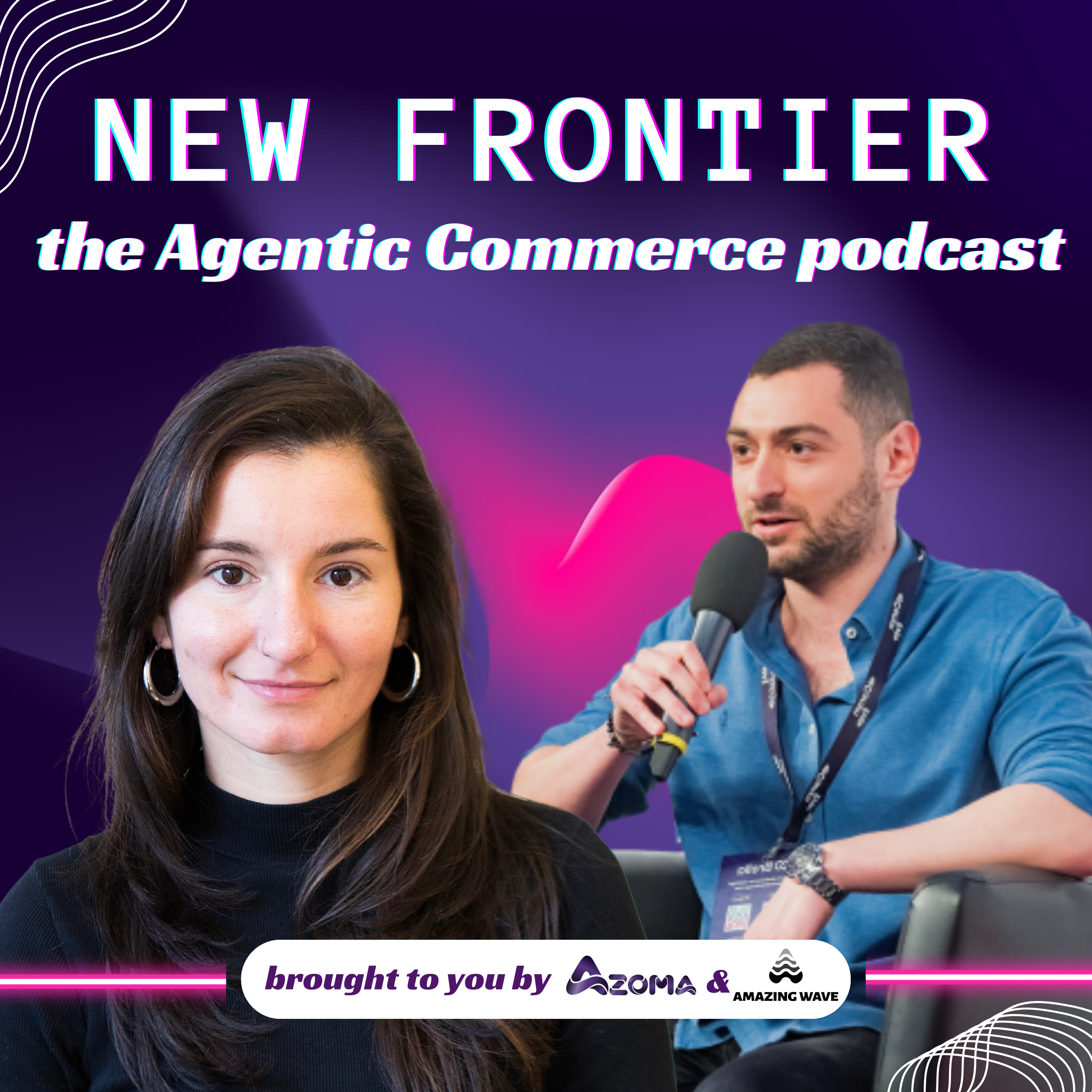
The New Frontier: The Agentic Commerce & Answer Engine Optimization podcast
Hosted by Jo and Max · EN
This podcast explores the fast-moving world of AI for leaders and owners of ecommerce businesses. We discuss topics such as AI Answer Engine Optimization - getting your brand mentioned by Amazon Rufus/Alexa for Shopping, Walmart Sparky, ChatGPT, and Gemini. It's hosted by Jo Lambadjieva, Founder of Amazing Wave and AI Educator; and Max Sinclair, Founder of Azoma & ex-Amazonian. It is brought to you by www.azoma.ai and amazingwave.digital
Connect with us:
https://ecommerce-ai.beehiiv.com/
https://www.linkedin.com/in/max-sinclair-ai/
https://www.linkedin.com/in/joannalambadjieva/
13episodes
Episodes
Newest firstAll episodes

How Grüns Is Winning by Updating Product Content Weekly with Emma Lifer, Marketplace, SEO/AEO and Merchandising Manager
5d ago00:32:15Tap to summarizeWelcome to the first episode of Agentic Commerce Architects. Max Sinclair sits down with Emma Lifer, Marketplace SEO and Merchandising Manager at Grüns, one of the fastest growing supplement brands on Amazon, to unpack how a real practitioner is winning visibility across Alexa for Shopping, Walmart Sparky, ChatGPT, Gemini and beyond.Emma leads SEO, AEO, affiliates and marketplace sales at Gruns, and previously spent three years leading SEO at Front Row Group. In this conversation she shares exactly how she manages agentic commerce day to day, including why she treats AI shopping as another aisle, how she balances writing for humans and agents, and why she makes content changes weekly without fear of tanking her rankings.In this episode:Why the old wives' tale that changing your Amazon content destroys your rank is deadHow AI agents treat the Buy Box, stock status and pricing differently to human shoppersWhether agentic checkout will quietly erode Subscribe and Save economicsCompliance risk for supplement brands when Alexa hallucinates health claims, and how to correct it through backend attributes, reviews and Q&AsCounterfeits and copycats in an agentic worldHow Emma drives cross-functional alignment across PR, PPC, legal and brand without a formal task forceThe three practical first steps any brand can take on agentic commerce optimisation, starting with backend attributesDo AI agents help challenger brands differentiate, or flatten everything into cheapest and best rated?Whether you manage five SKUs or five thousand, this is a tactical, in-the-weeds look at what actually works right now.Hosted by Max Sinclair, Co-founder and CEO of Azoma, the Agentic Commerce Optimisation platform. Learn more at azoma.ai.
Transcribe →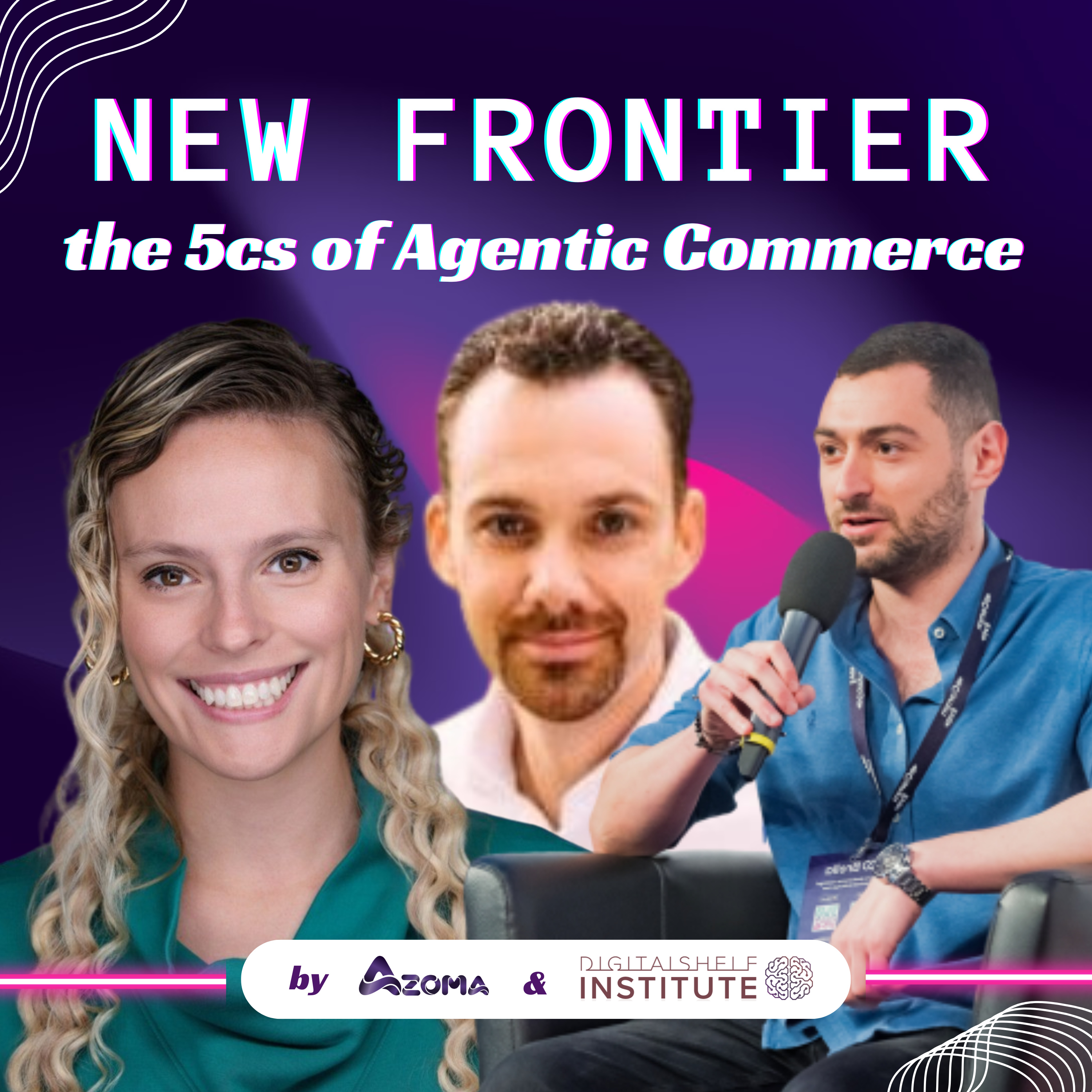
The 5Cs of Agentic Commerce: A framework that actually makes sense for the era of Shopping Agents with Lauren Livak of the Digital Shelf Institute, Aaron Conant of BWG Connect, & Max Sinclair of Azoma
3w ago00:30:05Tap to summarizeAgentic commerce is moving from buzzword to boardroom priority - but what should brands actually do next? In this episode of Digital Deep Dive, Aaron Conant is joined by Lauren Liv Gilbert of the Digital Shelf Institute and Max, founder and CEO of Azoma, to translate a fast-changing landscape into a clear, practical strategy for brand and ecommerce leaders.Together, they unpack the 5 Cs of Agentic Commerce: Completeness, Context, Citations, Correctness, and Customer Acquisition. (Download the full whitepaper).The conversation explores how structured product data makes products eligible for AI recommendations, why listings must answer real shopper questions, where platforms such as ChatGPT, Gemini, Amazon’s shopping assistant, and Walmart’s Sparky source their information, and how brands can identify and correct inaccurate AI-generated claims. The framework is designed as a compounding flywheel, connecting digital-shelf fundamentals with measurable commercial growth.From building contextual product content and earning trusted citations to navigating Reddit, brand.com, earned media, AI personalisation, and emerging measurement challenges, this episode offers an actionable roadmap for competing on the agentic shelf.
Transcribe →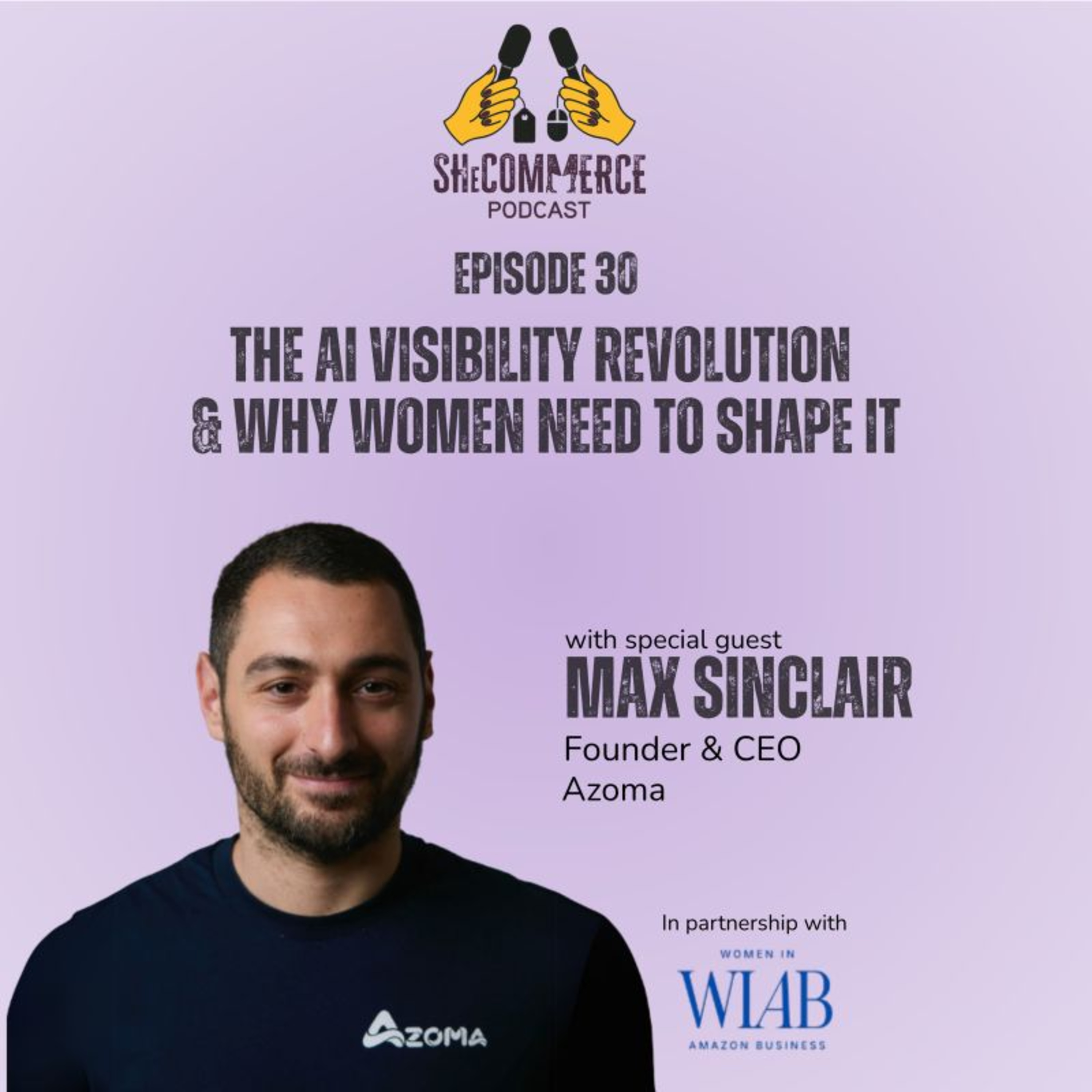
The Agentic Commerce Revolution: Max Sinclair on the SheCommerce Podcast live at Women in Amazon Business Summit
4w ago00:24:18Tap to summarizeAI isn’t coming for commerce—it’s already deciding what gets discovered, recommended, and purchased.In this special episode created in partnership with WIAB—Women in Amazon Business, Cristina and Jacqui sit down with Max Sinclair, founder and CEO of Azoma, to unpack the AI visibility revolution and what it means for brands, retailers, founders, and women shaping the future of commerce.Max spent six years at Amazon, including helping establish its search operations in Singapore. Now, he’s helping brands understand a very different kind of discovery landscape—one where shoppers may no longer scroll through pages of products because AI assistants are narrowing the options for them.Think fewer search results. More personalized recommendations. And eventually? An AI agent choosing the product before the shopper ever sees the alternatives.Convenient? Absolutely.A little terrifying for brands still relying on yesterday’s SEO playbook? Also yes.Max introduces Azoma’s Five C’s of agentic commerce optimization—completeness, context, citations, correctness, and customer acquisition—and explains why brands need to start thinking beyond keywords and product-page rankings.The conversation also gets into the “SHe” in SHeCOMMERCE: why women cannot afford to sit politely on the sidelines while AI systems are being built, trained, and deployed.Women influence enormous portions of household and consumer spending. They understand the customers, categories, and real-life decisions these systems will shape. Their voices, experiences, and leadership need to be embedded in the technology—not added as an afterthought.Inside the episode:• Why traditional search strategies are no longer enough• How AI shopping agents are changing product discovery• What brands need to know about AI visibility and accuracy• Why curiosity—not technical expertise—is the first step into AI• Max’s framework for finding your founder edge and spotting the next inflection point• Why more women need to test, challenge, build, and lead in this spaceThe message? You don’t need to become an AI engineer overnight.But you do need to lean in.Because when algorithms influence what the world buys, representation isn’t a nice-to-have—it shapes who gets discovered, which products get recommended, and whose needs become the default.🎧 Press play and join the AI visibility revolution.Bold Brands. Fierce Women. One Sisterhood.And a few very evolved men helping us build it.SHeCOMMERCE: Website: https://shecommercepodcast.com/LinkedIN: https://www.linkedin.com/company/shecommercepodcast/YouTube: www.youtube.com/@SHeCOMMERCEPodcast
Transcribe →The State of Play in Agentic Commerce, by Max Sinclair (CEO & Founder of Azoma)
Jun 700:13:37Tap to summarizeIn this episode, Max Sinclair, founder of Azoma and ex-Amazonian, breaks down how AI shopping agents—like ChatGPT, Gemini, Amazon Rufus, and Walmart’s Sparky—are completely rewriting the rules of how consumers discover and buy products online. From monumental algorithmic shifts to the collapse of traditional keyword SEO, discover why optimizing for Agentic Commerce is the mandatory new frontier for brands and retailers.The Agentic Discovery Shift: Why we are currently at an early-2000s inflection point resembling Google’s massive takeover of Yahoo search.The Shrinking Digital Shelf: Moving away from Page 1 on Amazon to surviving a world where AI agents only recommend the top 5 highly personalized products.Keywords vs. LLM World Knowledge: Why Amazon's Cosmo algorithm underlines a permanent shift away from traditional keyword stack-ranking.The Science of Query Fanout: Breaking down why the average AI commerce query performs 10 internal subqueries and cites 15 different sources before answering.The Big Tech Breakdown: Analyzing the direct bottom-line impact of Amazon’s Rufus, Alexa for Shopping, Google Gemini Spark, and Universal Cart.Walmart’s Sparky & Meta’s Ecosystem: What happens when a retail app becomes fully "AI-native" and average order sizes instantly jump by 35%.The Netscape Trap: The existential hurdle facing ChatGPT and why custom retailer apps (like Target and Sephora) are stepping in.Action Plan: Max introduces Azoma's groundbreaking 5C Framework for Generative Engine Optimization (GEO).The Black Friday Boom: AI chatbots and agents drove $14 Billion in sales on Black Friday alone, influencing 20% of total purchases.The Rufus Effect: Rufus drove $12 Billion in incremental revenue for Amazon, making users who interact with it up to 60% more likely to purchase.The Sparky Surge: Walmart shoppers using Sparky place orders that are, on average, 35% larger, with weekly active users doubling quarter-over-quarter.To stay visible in the age of conversational search, your brand needs a completely new playbook. Max introduces Azoma's 5C Framework—the ultimate guide to mastering agentic commerce optimization and protecting your AI share of voice.👉 [Download Azoma's Official 5C Framework White Paper Here ]Website: https://www.azoma.ai/LinkedIn: https://www.linkedin.com/in/max-sinclair-ai/Subscribe to the Podcast: Hit follow on Spotify to never miss an episode on the fast-moving AI retail landscape!Keywords: Agentic Commerce, Generative Engine Optimization, GEO, Amazon Rufus, Walmart Sparky, Google Gemini, Max Sinclair, Azoma, AI Ecommerce Strategy, Answer Engine Optimization
Transcribe →Amazon Rufus Adoption is highest amongst Women, the Highly Educated, and Baby Boomers with Artiom Enkov of Gener8
May 900:42:39Tap to summarizeIn this episode of The New Frontier, Jo and Max are joined by Artiom Enkov , VP of Insights at Gener8 to unpack one of the first detailed UK and US data studies on Amazon Rufus usage. Drawing on a fully consented metered panel of more than 50,000 Android users, Generate reveals a surprising demographic twist: Rufus is indexing highest among older shoppers, especially Baby Boomers, Gen X, and retired users, rather than the AI-native younger generations many would expect.The conversation dives into how shoppers are actually using Rufus inside Amazon. In the US, where Rufus has more advanced functionality and account memory, users lean heavily on comparison, product evaluation, post-purchase questions, and more complex prompts. In the UK, where Rufus is still more limited, usage is more focused on quick factual answers about products. The team explores why Rufus appears to be less about top-of-funnel discovery and more about helping shoppers navigate the “messy middle” of purchase decisions.The episode also looks ahead to the future of AI-powered commerce, including sponsored Rufus prompts, advertising inside AI shopping journeys, trust in AI recommendations, and Amazon’s move toward scheduled actions and agentic purchasing. From comparison tables to automated replenishment, the discussion highlights how Rufus could reshape not only search and advertising on Amazon, but the way brands think about optimization in an AI-first shopping environment.This podcast is brought to you by Azoma and Amazing Wave. Connect with us:https://twitter.com/maxsinclair4https://www.linkedin.com/in/max-sinclair-ai/https://www.linkedin.com/in/joannalambadjieva/
Transcribe →60% of Amazon Shoppers Use Rufus, and Those Who Do Purchase 2.74x More: Ian Simpson of Sensor Tower on Tracking 60,000 Shoppers
Apr 2500:35:31Tap to summarizeIn this episode of The New Frontier, Max sits down with Ian Simpson, SVP of Innovation at Sensor Tower, to unpack new data on how Amazon shoppers are using Rufus, Amazon’s AI shopping assistant. Based on a panel of 60,000 real U.S. shoppers tracked over 18 months, Sensor Tower found that heavy Amazon users now include Rufus in around 60% of shopping sessions—and shoppers who use Rufus are up to 2.74x more likely to purchase than those who don’t.Ian explains why the headline is less about Rufus magically creating demand, and more about high-intent shoppers adopting AI to help them find exactly what they already want to buy. The discussion dives into Sensor Tower’s methodology, the difference between web and app behavior, Black Friday and Q1 shopping patterns, and why Rufus usage drops during deal-led browsing events like Amazon’s Big Spring Sale.Max and Ian also explore what this means for brands selling on Amazon. As AI shopping assistants become embedded in the customer journey, product discovery is changing fast—and brands need to understand how to show up when shoppers ask Rufus for help. From agentic commerce to AI-driven product search, this episode offers a data-backed look at where Amazon shopping is heading next.This podcast is brought to you by Azoma and Amazing Wave. Connect with us:https://twitter.com/maxsinclair4https://www.linkedin.com/in/max-sinclair-ai/https://www.linkedin.com/in/joannalambadjieva/
Transcribe →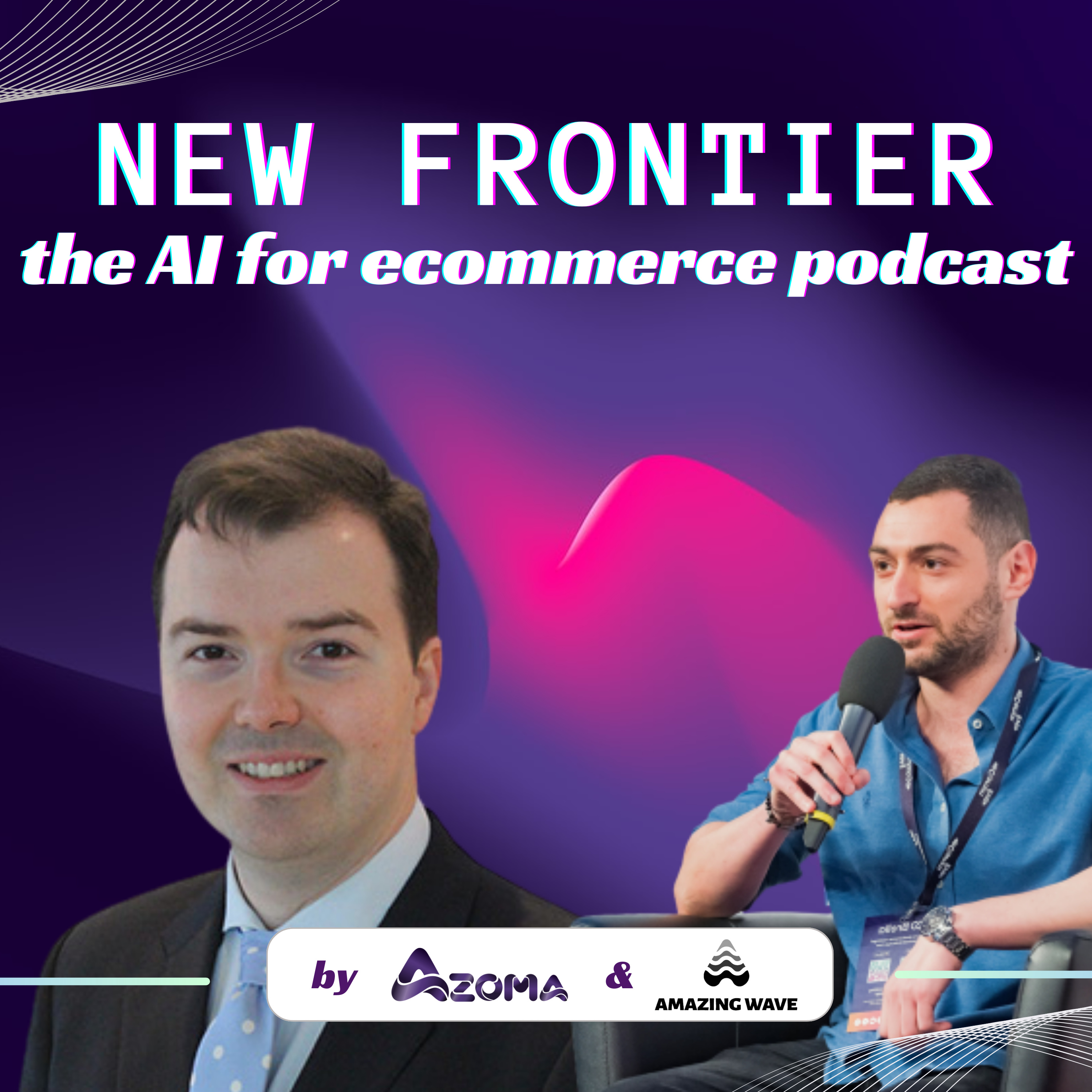
New Frontier: The Agent Economy: Business Model Disruption in the Age of AI
Jan 1500:42:36Tap to summarizeIn this episode of The New Frontier, Max is joined by Martin Schwartzman, Partner and Global AI Lead at OC&C Strategy Consultants, to unpack how agentic AI is reshaping business models and commerce. The conversation starts with the week’s biggest news around agent commerce protocols from Google and OpenAI, exploring what “agentic commerce” really means for consumers. Martin paints a vivid picture of an AI-powered shopping journey where personal agents understand intent, preferences, size, availability, price, and quality—removing friction and shifting personalization from retailers to the consumer’s own AI.From there, the discussion dives into the implications for e-commerce platforms, brands, and marketplaces. Martin argues that agentic commerce is more of an evolution than a revolution for e-commerce overall, but one that significantly shifts power from the “shop window” to the decision layer controlled by AI. Winners will be brands and retailers with strong products, consistent availability, differentiated data, and superior end-to-end experiences, while those reliant on gaming search algorithms or paid traffic may lose their edge. The episode also explores how Amazon, Walmart, and Target may be affected, including the knock-on disruption to retailer media, loyalty models, and customer lifetime value in a world where AI intermediates the journey.The conversation then broadens to other industries under pressure from AI, including publishing, data owners, law, and consulting. Martin shares insights on the emerging “gold rush” for proprietary data, the risks of one-off licensing deals, the rise of synthetic data, and what publishers should consider when selling to AI labs. The episode closes with a thoughtful debate on whether consultants and lawyers are ultimately doomed, or simply forced to reinvent themselves, as AI moves toward weak and eventually full artificial general intelligence. A wide-ranging, practical, and forward-looking discussion on how AI is re-wiring the modern economy.This podcast is brought to you by Azoma and Amazing Wave. Connect with us:https://twitter.com/maxsinclair4https://www.linkedin.com/in/max-sinclair-ai/https://www.linkedin.com/in/joannalambadjieva/
Transcribe →2026 AI & Ecommerce Predictions with Jo & Max (Agentic Commerce, AI Wearables, The Death of Prompting and more)
Jan 300:45:10Tap to summarizeIn the first 2026 episode of The New Frontier, as is tradition, Max and Jo dive into their annual predictions. They start with a quick look back at their 2025 predictions, many of which, from the AI infrastructure boom to Google’s dip in dominance, proved accurate.Looking ahead, they forecast a sharp rise in synthetic content, predicting that 30–40% of social media posts will be AI-generated or enhanced by year’s end. This tidal wave of “AI slop” will trigger a backlash, sparking renewed interest in human-made content, premium communities, and slower, more intentional creation. Hyper-personalization will define digital experiences across health, education, and commerce—driven by memory-enabled AI agents that tailor everything to the individual. At the same time, they predict a resurgence in digital PR as brands chase visibility in AI-powered search engines, which increasingly prioritize reputable media over slop-saturated platforms like Reddit and Wikipedia.The episode also explores the future of agentic commerce, where shopping journeys will shift from passive browsing to active AI assistance. Max predicts Amazon’s Rufus will evolve from a sidebar tool to the primary interface—replacing search entirely for many users. This, paired with the rise of AI wearables, proactive voice interfaces, and ambient agents, will blur the lines between consumer intent and algorithmic anticipation. They round out the conversation with bold takes on world models, long-form AI video, and fully autonomous scientific discovery—framing 2026 as the year AI stops assisting and starts acting.This podcast is brought to you by Azoma and Amazing Wave. Connect with us:https://twitter.com/maxsinclair4https://www.linkedin.com/in/max-sinclair-ai/https://www.linkedin.com/in/joannalambadjieva/
Transcribe →Sponsored Prompts: Amazon Ads' new format for the era of AI Search [Recorded Live from the Amazon Ads Educators' Summit]
Dec 1800:13:53Tap to summarizeThis special Episode of the New Frontier recorded live from the Amazon Ad Summit in Milan, to mark a landmark announcement: the launch of Sponsored Prompts groundbreaking new Ads format. Host Max Sinclair was joined by Oana Padurariu to discuss their workshop with Amazon’s Lead Global AI Advertising Product Manager, who explained how these AI-powered follow-up questions are reshaping shopper engagement. Unlike traditional ads, Sponsored Prompts appear as follow-up queries beneath Rufus responses, offering a more native, customer-friendly experience that blends seamlessly with the evolving landscape of answer engines.Currently in its free rollout phase, Sponsored Prompts are automatically generated based on a brand’s existing ad targeting and listing content. While advertisers can't yet edit the questions or responses, they can influence them through smart campaign structuring and listing optimization. The hosts emphasize the growing importance of clean campaign design, noting that Amazon’s system leverages product data and performance to craft the prompts and inferred answers. This backend differs from Rufus itself, even though they appear connected—highlighting Amazon’s layered approach to search and advertising technologies.The discussion turns to future predictions on how Amazon will quickly allow more customization as monetization kicks in and brands demand more control; and how this model will be copied by other platforms like OpenAI and Perplexity, as it offers a better path to monetizing answer engines. With Rufus users converting 60% more often and already adding $10 billion in revenue, Amazon’s new Sponsored Prompts could very well define the next generation of digital advertising.This podcast is brought to you by Azoma, Amazing Wave, and Ecomtent.Connect with us:https://twitter.com/maxsinclair4https://www.linkedin.com/in/max-sinclair-ai/https://www.linkedin.com/in/joannalambadjieva/
Transcribe →
Alibaba’s AI Sourcing Agent Accio, and the Future of Agentic Commerce, with Ziwei Chen
Dec 1500:37:21Tap to summarizeIn this episode of The New Frontier, hosts Max and Jo welcome Ziwei Chen, Product Lead for Accio by Alibaba, for a deep dive into the intersection of AI, procurement, and global manufacturing. The conversation kicks off with Ziwei reflecting on her recent return to China after four years living in Silicon Valley, sharing insights on how the country has rapidly transformed technologically, including widespread adoption of facial recognition and group chat commerce. Comparing this with the U.S. tech ecosystem, she highlights how foundational innovation thrives in the West, while China leads in scaled application and user adoption.The discussion then shifts to how Accio is reshaping global sourcing with AI. Ziwei introduces a simple but powerful framework: AI can either “do it for me” or “teach me more.” Accio leans into both, automating repetitive sourcing tasks while also guiding users with data-driven insights. From entrepreneurs launching new product lines to procurement teams at large retailers, Accio streamlines supplier discovery, market research, and even product design using integrated tools like multimodal search and high-quality image generation—transforming how products are sourced and validated.Looking ahead, Zue discusses the next frontier of AI in manufacturing. She shares how factories, especially in China, are adopting AI for everything from automated defect detection to collaborative product innovation. With AI helping manufacturers reduce costs, iterate faster, and tap into emerging trends, Accio aims to bridge the gap between innovative ideas and real-world production. The episode wraps with reflections on the future of agent-based systems in procurement and how tools like Axio are getting remarkably close to true multi-step reasoning—bringing us closer to a fully AI-powered supply chain.This podcast is brought to you by Azoma, Amazing Wave, and Ecomtent.Connect with us:https://twitter.com/maxsinclair4https://www.linkedin.com/in/max-sinclair-ai/https://www.linkedin.com/in/joannalambadjieva/
Transcribe →