
Podcast
The Nietzsche Podcast
Hosted by Untimely Reflections · EN
A podcast about Nietzsche's ideas, his influences, and those he influenced. Philosophy and cultural commentary through a Nietzschean lens.
Support the show at Patreon: https://www.patreon.com/untimelyreflections
A few collected essays and thoughts: https://untimely-reflections.blogspot.com/
16episodes
Episodes
Newest firstAll episodes
The Gay Science #24 (V.364-371)
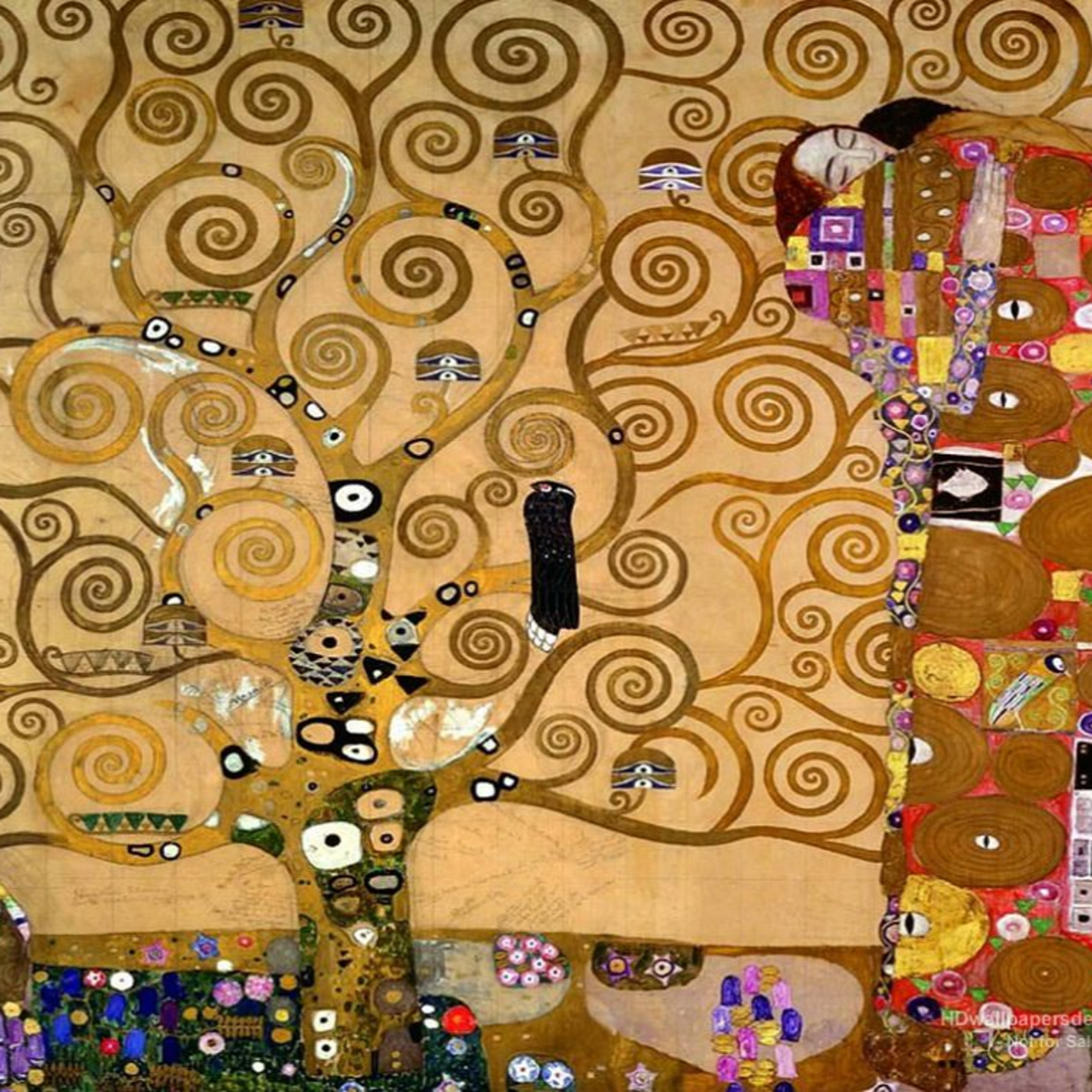
2w ago01:37:17Tap to summarizeWe incomprehensible ones - how our thought branches in every direction, how willing we are to shed our bark, to grow, to change! In this episode, we discuss, among many other sections, important passages such as "What is Romanticism" - in which Nietzsche explains how he departed from the romantic pessimism of Wagner and Schopenhauer. He opposes the theater to music, fully breaking with his earlier views in Birth of Tragedy. Nietzsche also flips the script on some of his previous views regarding academics, and suggests that the scholarly specialist is a type of higher value than the so-called "man of letters", the master of nothing who represents himself as everything. Here, the hermit and the cynic speak, and Nietzsche spares no one his criticism. Episode art: The Tree of Life by Gustav Klimt
Transcribe →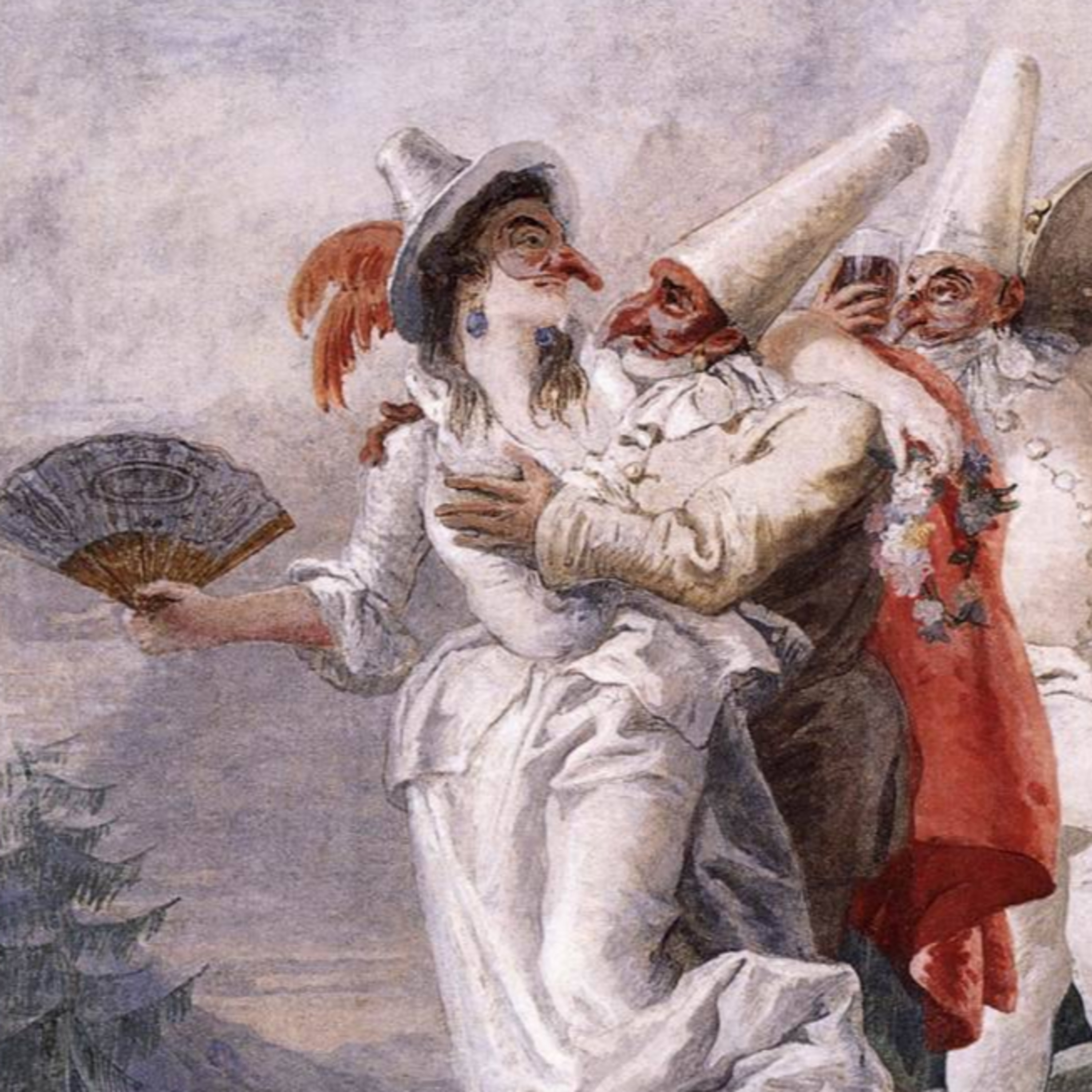
The Gay Science #23 (V.356-363)
3w ago02:21:37Tap to summarizeIn this chapter of our readthrough, we confront "the problem of the actor". Nietzsche predicts that things shall become ever more "artistic" in Europe, as the actor's talent self-falsification becomes developed in all members of society. Whereas in the Middle Ages, the individual was bound to his role as an unchangeable identity, the modern person picks up and discards roles: he gives the appearance of being a given type, but is often obliged to change roles. Nietzsche continues to increasingly offer reversals of perspective, at times even differing with previous assertions in this very same work. Episode art: Giandomenico Tiepolo, Pulcinella in Love, 1797 (A depiction of the masked actors of the Commedia dell'arte).
Transcribe →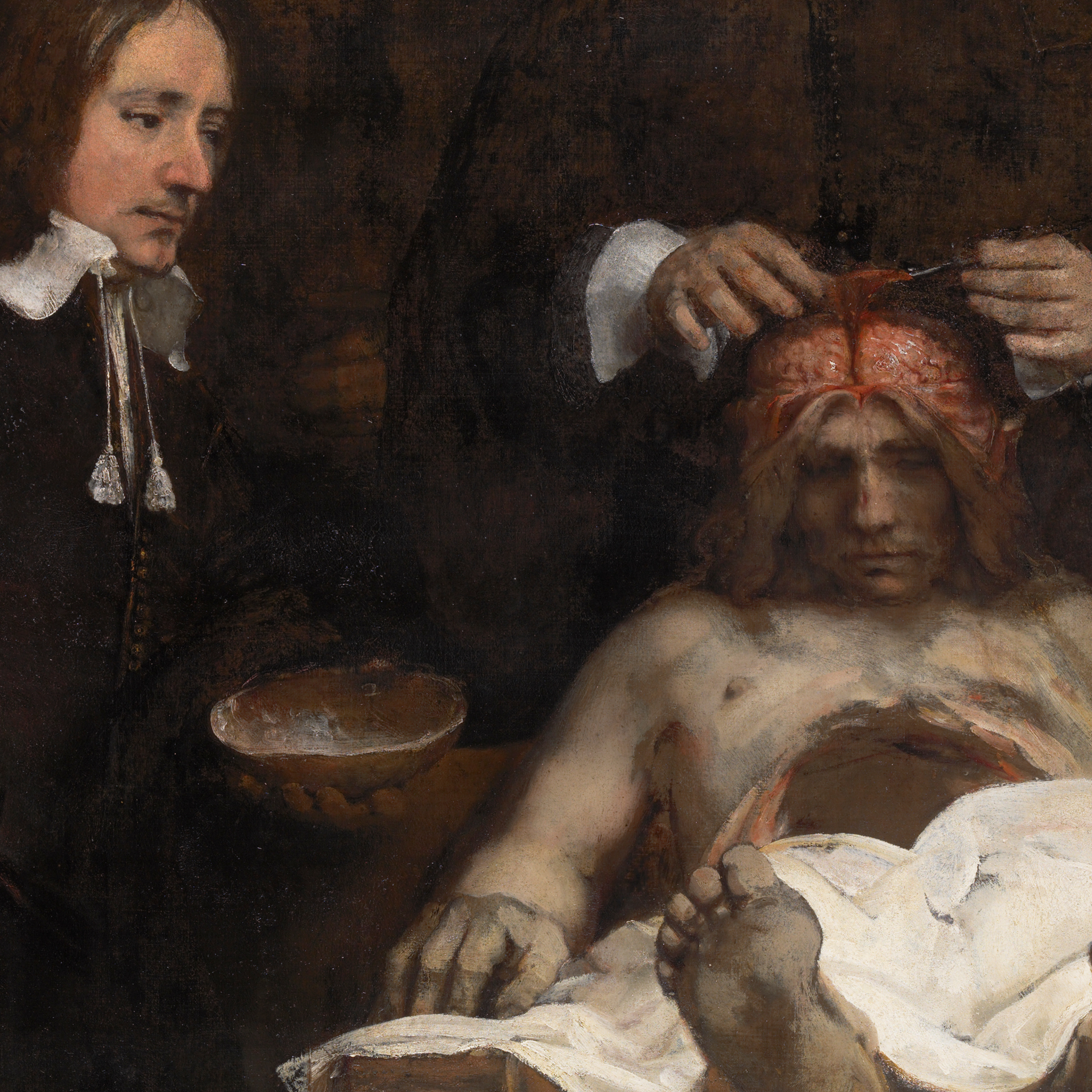
The Gay Science #22 (V.348-355)
4w ago01:54:33Tap to summarizeThe grand experiment continues with a series of naturalistic explanations for the origins of ideas or modes of life. The scholar's intellectual habits are inherited "in blood and instinct"; Spinoza's philosophy is sourced to his sickliness; Darwinian theories of evolution are a product of the "musty air" of English overpopulation; religious and moralistic perspectives are the post hoc rationalizations of the weak and the tame. In this episode we'll also discuss the very important section, "On the Genius of the Species", which treats consciousness as an organ of communication. Episode art: The Anatomy Lesson of Dr. Deijman by Rembrandt
Transcribe →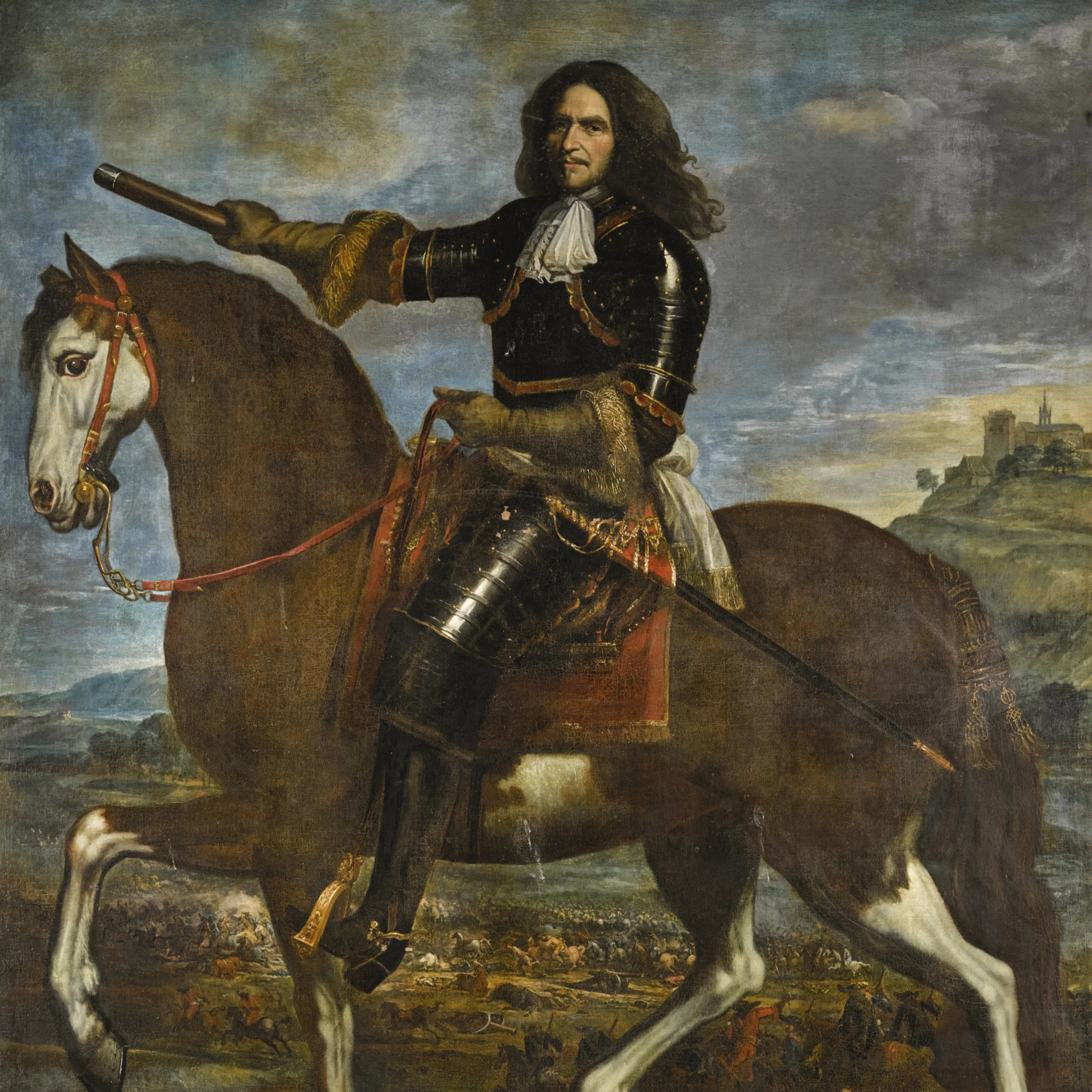
The Gay Science #21 (V.343-347)
Jul 702:05:55Tap to summarize"You tremble, carcass?" After a long hiatus, we shall now fearlessly embark upon book V of The Gay Science, added to the text in 1887. In this final division of the text, we'll see Nietzsche's attempt to incorporate his late philosophy, as the conclusion of his middle period meditations. Some of the hardest-hitting sections in the book appear here. Join me on this quixotic journey for the truth... after all, we, too, are still pious!Episode art: Portrait of Henri de la Tour d'Auvergne, Vicomte de Turenne (1611–1675), as Marshall of France on horseback, by Charles le Brun
Transcribe →Q&A #15
Jun 3002:49:52Tap to summarizeYou know what it is. Questions get answered. The Gay Science readthrough begins in a week's time.
Transcribe →
144: Georges Bataille, part 2 - 1944 Diaries
Jun 2301:44:22Tap to summarize"You, whoever you are, reading me - take your own chance. Just as, at the moment of writing, I gamble with you." The much-awaited conclusion to season six is here! The year is 1944, and we follow Georges Bataille through the months of February to August as he recounts the end of the Nazi occupation of France, while writing of his daily encounters, his inner experiences, first-hand accounts of the war, mad ramblings and poems - and astute, if sometimes confusing, commentary on the work of Nietzsche. In this episode we will explore the will to chance, immanence vs. transcendence, desire as "time-being", and the possibility of affirming desire in itself and for itself, having fully seen through the lie of every "end" or "goal" presented to us by the mad pursuit of passion. The Gay Science readthrough episodes coming soon!
Transcribe →
143: Georges Bataille, part 1 - On Nietzsche
Jun 1601:54:09Tap to summarizeThe two-part conclusion of season six begins. We're delving into the work of Georges Bataille, with a focus on his book, "On Nietzsche". Bataille is one of the most interesting intellectual nodes of 20th century philosophy. For a long time, his work was obscure in the English-speaking world, often eclipsed by those he influenced, such as Derrida and Foucault. However, among the postmodernists, Bataille takes Nietzsche as his closest companion, and struggles most fiercely with him. On Nietzsche is written during the war years, and is a very strange book that defies categorization. We'll talk about the background of the text, Bataille's life, the secret society Acephale, and the main ideas in Summit and Decline. In the next episode, we'll discuss 1944 diaries with a focus on the philosophical ideas therein.
Transcribe →
Untimely Reflections #46: Stuart Kendall - On Georges Bataille
Jun 901:20:10Tap to summarizeToday, I'm speaking with independent scholar, translator, and lecturer, Stuart Kendall. Stuart is responsible for helping to bring new translations of Georges Bataille's work into English, and he joined me for a conversation about Georges Bataille and his influence from Friedrich Nietzsche. We discussed the notion of expenditure, the metaphor of the potlach, the will to chance, war as an object of meditation, and the enigmatic work, On Nietzsche. Future episode's on Bataille's On Nietzsche will soon arrive as regular episodes of the podcast (in fact, as the two-part conclusion to season six), but here I was interested in introducing Bataille and the background of this text, which will hopefully be of help to any prospective reader who opens its pages and wonders just what the hell is going on. This conversation was intended to be accessible to all those who have never read Bataille or encountered his ideas, and thus to provide an entrypoint for the listeners before we tackle the book in earnest. Enjoy, and may your hearts overflow with generosity.
Transcribe →
142: Commands, Symbols & Games - Nietzsche, Cassirer & Wittgenstein on Language
Jun 201:37:07Tap to summarizeIn this episode we're going to explore three very different thinkers who nonetheless converge on their theories of language. We're going to see if we can't extract an intelligible whole out of the ideas generated by this trio: the Nietzschean theory of language as command, the view of Cassirer that man is a symbolic animal, and Wittgenstein's concept of the language-game.
Transcribe →
141: Ernst Cassirer - Language & Myth
May 2601:40:03Tap to summarizeIn this episode, we're venturing into the life and thought of Ernst Cassirer, the last humanist of the Enlightenment tradition. Cassirer is widely known today for his debate with Heidegger at Davos, in which Cassirer appeared as the old style philosopher against the new world signified by Heidegger's radical existentialism. And yet, the very fact that this debate was taking as symbolic of the broader trends in philosophy is in some sense a vindication of Cassirer, who believed that mankind was properly undertsood as animale symbolicum: the animal who symbolizes. Thinking in the Neo-Kantian tradition, Cassirer doesn't seem the symbolic world as approximating a "ready-made" world of objects, but as the conceptual organ for experiencing and thinking about the world at all. From this framework, Cassirer advances a remarkable notion: that language and myth are two shoots from the same stem, and if we want to understand language, we should look to the phases of mythic thinking. The central mystery we shall explore is how the "metaphorical transference" can take place, in which a sound comes to stand for an image, and the specific for the general category. At the root of all this, Cassirer raises an intriguing possibility: perhaps all of language originates in magical thinking and spiritual excitement.
Transcribe →