Loading summary
Transcript96 lines
- [00:00]
A
This message comes from Schwab. With the new Schwab Teen Investor Account, teens can gain hands on investing experience and build positive money habits. It's an account co owned by you and your teen so you can monitor and engage with the account while your teen learns how to invest and manage money. Learn more@schwab.com.
- [00:23]
B
Hey there. It's the NPR Politics podcast. I'm Tamara Keith. I cover politics.
- [00:27]
C
I'm Eric McDaniel, I cover Congress.
- [00:28]
D
And I'm Domenico Montanaro, senior political editor and correspondent.
- [00:31]
B
And a happy Friday to us all. Let's start the roundup of this week's news on Capitol Hill, where lawmakers were set to vote on a budget package. But, Eric, that didn't happen and now they've all gone home. What went on?
- [00:46]
C
Yeah, I mean, they took a week off. Basically, they're going home and they're going to raise money and they're going to talk to constituents and hold town halls and all that stuff. But essentially, President Trump had set a June 1 deadline for this budget bill. It's immigration enforcement funding, and it's supposed to be for three years so that this doesn't get turned into a political football like we saw earlier this year. And the senate had until June 1st, but since they're off next week, they needed to do it this week and they just didn't. I mean, they were mad about two things, one of which was the president is asking for a billion dollars in Secret Service funding to secure his ballroom project. But that's proved a tough ask because the president has long said that what was supposed to be just a $400 million project would be funded entirely through private donations. The bigger one was a $1.776 billion anti weaponization fund out of the Department of Justice that the president said was going to be used to pay reparations to people who had been somehow targeted unjustly by the government for persecution. The thing with the anti weaponization fund is sure, there are some Republican lawmakers who, who support this. It even could be, in a hypothetical world, the majority of them. But when majorities are so small in both the House and the Senate, you only need one, two, maybe three people opposing something to make it a non starter. And there are way more than that right now.
- [02:11]
B
We should be clear, though, the Justice Department was not asking permission of Congress to create this fund. They created this fund using an existing process, and then that became a problem anyway.
- [02:26]
C
So, yeah, I would say there's the political problem and then there's the constitutional problem the political problem is that Acting Attorney General Todd Blanch testified before Congress this week and suggested that this money could, in fact, be used to make payments to January 6th. Capitol rioters and lawmakers were threatened by Capitol rioters. Some of them attacked police. This is not a very popular proposition on the Hill, I would say, from conversations that I have had. Then there's the constitutional problem, which is Basically that Article 1, Section 9 of the US Constitution gives Congress the power to decide how taxpayer money is spent. That power does not rest with the president. Congress did not appropriate this money. The president unilaterally decided how to do it, which, according to constitutional scholars I've talked to, including Gerard Malioka of Indiana University, makes this unconstitutional of a thing to do.
- [03:18]
D
Yeah, I think that one word sort of defines this week and what's going on both with President Trump and some of the lawmakers who are defying him. Yolo, and it's not even a word, but we talked about it earlier this week. You only live once might be thought of. As Stephen Fowler said earlier this week, you only lose once because there are people who Trump has targeted who are now essentially fine with going against him. Republicans, people like Bill Cassidy, the senator from Louisiana who lost his primary race, didn't make the runoff, and now voted with Democrats on a resolution that would limit Trump's ability to wage war with Iran. Thomas Massie, representative from Kentucky, who really has been a thorn in Trump's side on many issues, including on Iran, but also on the Epstein files. And he pledged that he's got seven months left and he's gonna continue to press on what he wants to press forward on. And you're seeing also Republicans in districts that are, you know, swing districts that are saying that they don't like this anti weaponization. And then when you have Trump yoloing it and going and endorsing someone like Ken Paxton, the conservative, very MAGA fire brand in Texas, who's the attorney general in the state running against incumbent Senator John Cornyn. Senators don't happen to like it when you endorse people who are challengers to sitting senators. And then you have, of course, what's happening with the anti weaponization fund, which could see payouts for people who rioted at the Capitol on January 6th. So you want people to now say, we are going to give money to people who were convicted of trying to attack us. And also you want to attack our sitting senators and get them out politically. We, I think we've seen a line here from Senate Republicans.
- [05:11]
B
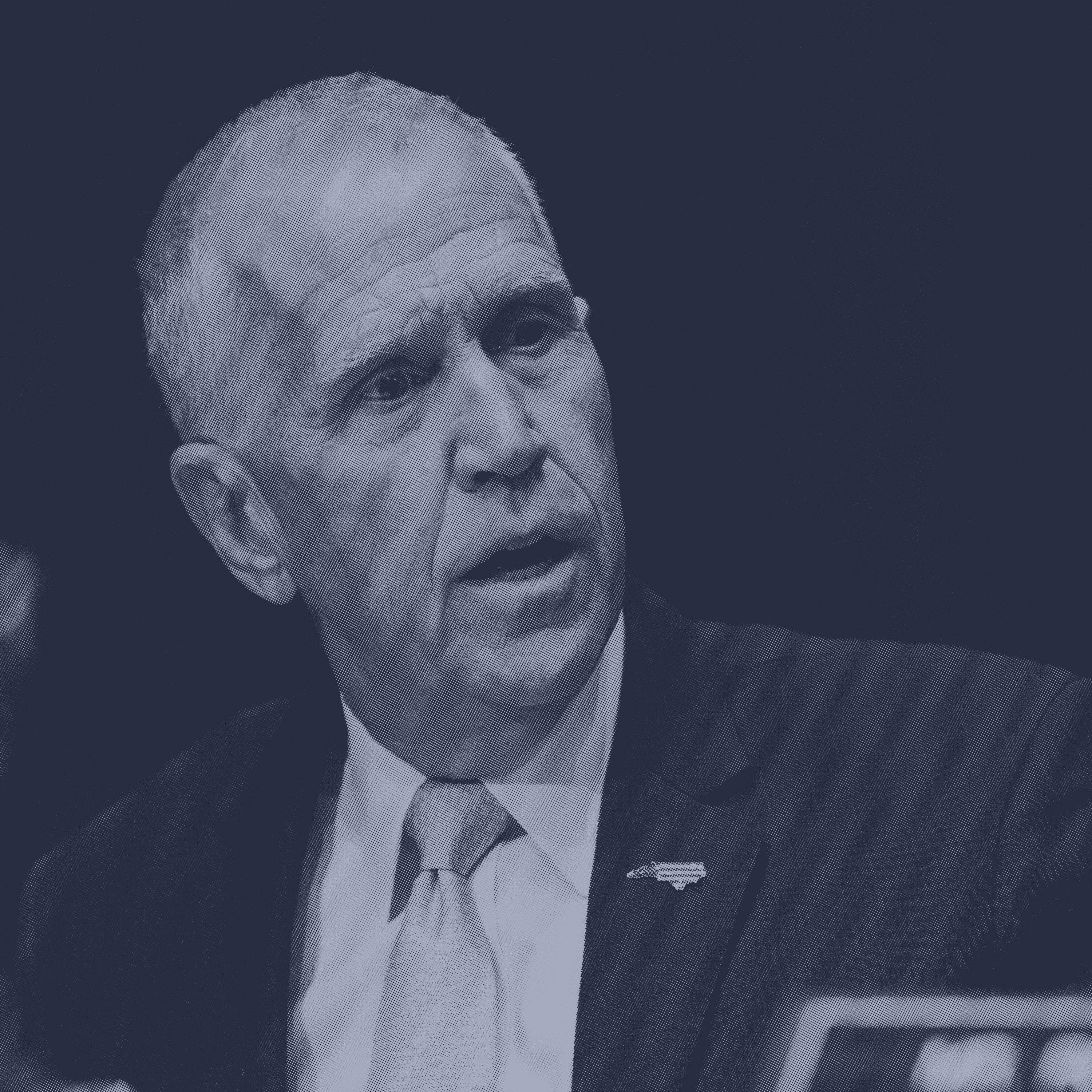
I think that the Feeling coming out of the White House earlier this week was like, Trump is winning. He is firing on all cylinders. He is vanquishing his enemies. And then there's the other side of that, which is that he's making people mad, people who he actually needs in order to enact his agenda. I'll add one other person to this YOLO caucus. This is North Carolina Republican Senator Thom Tillis. He is retiring this year. You know, I think that had he run, Trump probably would have challenged him, but he opted not to run, and he has been speaking freely. He was interviewed by reporters in the hallways in the Capitol yesterday. This. This clip was aired by CNN, and he went off on that $1.8 billion weaponization fund. He said, these people don't deserve restitution. Many of them deserve to be in prison. And he called it stupid on stilts.
- [06:08]
E
I mean, this is beyond the pale.
- [06:09]
D
This is not good for my colleagues. There's no one positive thing that could
- [06:13]
E
be spun out of this between now and November.
- [06:15]
C
And I will say it's not just people who are somehow on Trump's enemies list. It's also folks like Senate Republican Majority Leader John Thune. This is a man who, when asked on Thursday what he thought of this fund, what Congress was going to do about it, he said, I think that the administration has a lot of questions to answer about it. And so it's. That's not a ringing endorsement from the man who's whipping votes to make sure your agenda gets passed in the Senate.
- [06:40]
D
I think the fact is, Trump misread the room. He thought that his grievances were the Republican Party's grievances writ large. When a lot of what Republican members of Congress have been doing is kind of ducking from Trump and saying they didn't read the Truth Social post or they want to avoid his ire. And I think that the White House thought that this would be something that they would go along with, and clearly they were not willing to go along with this. And Trump went on Truth Social and talked about how this is him trying to help people. And he gave up a lot of money potentially because there was gonna be a possible settlement between him and the Justice Department. But instead, he wanted to make this charitable and help people who had been weaponized against like he had been. And I just think that that has fallen on totally deaf ears. And it's also hurt his agenda because Republicans journeying and going home for the Memorial Day weekend instead of voting on, you know, what would have been funding for deportation action is something that really, you know, hurts what Trump has been trying to do from a policy standpoint.
- [07:46]
C
And I'll say two things on that. Part of the reason they can't vote on this immigration agenda is in the Senate. Part of this reconciliation process means that anyone can introduce amendments and get them voted on. So Democrats were going to put up a thing targeting the anti weaponization fund. And I've heard that could have gotten like 30 plus Republican votes to knock down this thing that the President says is important.
- [08:05]
D
And that would have been a huge embarrassment.
- [08:07]
B
Right. So instead of being embarrassed, they are disappearing for 10 days. But it's not clear to me what happens when they get back. And Eric, on the House side, they also adjourn to avoid embarrassment.
- [08:20]
C
That's right. And so we've seen folks like Representative Brian Fitzpatrick, he's a independent leaning Republican, I'd say, from a very swingy district in Pennsylvania. He partnered with Tom Suozzi, they're both heads of this bipartisan Problem solvers Caucus, to introduce a bill to say we're getting rid of this anti weaponization fund. And, you know, they, they couldn't take a difficult vote on Immigration and Customs Enforcement, only made difficult because of these unrelated things the President was trying to put in.
- [08:48]
D
I think it really highlights that primaries are not general elections. And these are people who are looking toward November and they're saying the President doesn't have our back and that they've got to be able to sell these things to their constituents.
- [09:00]
B
Yeah, I mean, I think the theme of much of the action of this week was President Trump doing things that were good for President Trump or that made President Trump feel good. Things that President Trump wanted, like this anti weaponization fund, like you know, owning these people who dared to cross him. But in the end, it, it just sort of exposed that it was less about the party and more about him.
- [09:29]
C
And if I can put a button on this, I don't think it gets easier after they come back in the beginning of June. Like, they're going to go home, they're going to attend parades for Memorial Day, they're going to do teletown halls or in person meeting with constituents, or they're going to raise money from donors and they're going to hear about trouble finding a new job. They're going to hear about unpopular spending on the war in Iran, they're going to hear about the high cost of gas. And none of those things have to do with the anti weaponization fund. Right. Like, this is a thing that is important to the President. That doesn't seem to be important to Americans as a whole. And when they come back, unless Trump has a change of heart about these things, the same problems are going to be there.
- [10:09]
B
Eric, can we just talk about the War Powers Resolution? It appears to have enough support in the Senate thanks to people like Bill Cassidy, YOLO caucus joining with Democrats. And, and in the House, a resolution was coming up and then they went home.
- [10:30]
C
So there are a few things that are going on here. The first is that the president has to come to Congress to authorize military conflict under the War Powers act. He has 60 days to do that. We're now well past that threshold for the Iran war. And so as Congress takes these votes to try and rein in the war in Iran, lawmakers, Republican lawmakers have started to defect from the president and say something needs to change. There needs to be a clear plan or there needs to be some sort of, of acknowledgement that this can't go on forever.
- [10:57]
B
Well, and certainly the president wouldn't want that.
- [10:59]
C
Certainly the president wouldn't want it. And so it's, it's another one of these things that the president can't appear to manifest his will in the Congress without making some concessions.
- [11:09]
B
Okay. Well, Eric, thank you so much for joining us.
- [11:11]
C
Always happy to be here.
- [11:13]
B
And we're gonna take a quick break and we'll have more in a moment.
- [11:16]
A
This message comes from NPR sponsor Carvana. Carvana believes selling your car should be refreshingly simple. Enter your license plate or vin, get a real offer down to the penny and schedule a pickup on your time. No surprises. Sell your car today@carvana.com pickup fees may apply. New shows, new music, new movies. Keeping up with pop culture sometimes feels like a full time job. Thankfully, over at Pop Culture Happy Hour, it's literally our job. We break down what's actually worth watching, listening to and pretending you already knew about. So the next time someone says, did you see that? You, you can say, yeah, obviously. Follow NPR's Pop Culture Happy Hour wherever you get your podcasts.
- [12:00]
F
This message comes from Jerry. Are you tired of your car insurance rate going up even with a clean driving record? That's why there's Jerry, your proactive insurance assistant. Jerry compares rates side by side from over 50 top insurers and helps you switch with ease. Jerry even tracks market rates and alerts you when it's best to shop. No spam calls, no hidden fees. Drivers who save with Jerry could save over $1,300 a year. Switch with confidence, download the Jeri app or visit Jerry AI npr. Today, support for NPR and the following message come from the Walton Family foundation, working to create access to opportunity for people and communities by tackling tough social and environmental problems. More information is@waltonfamilyfoundation.org and we're back and
- [12:51]
B
White House correspondent Franco Ordonez is here. Hey, Franco.
- [12:55]
E
Hey, guys.
- [12:56]
B
So, Franco, the Department of justice announced an indictment this week of Raul Castro. He is the brother of Fidel Castro, widely seen as being the leader of Cuba, even though he's not technically still in office. And he's turning 95 in a couple of weeks. What is the indictment for?
- [13:16]
E
Yeah, the charges date back to the shooting down of two small airplanes 30 years ago, back in 1996. The planes were operated by an exile group, Brothers to the Rescue, which had been dropping these leaflets across Havana urging Cubans to rise up against the government. Castro was the defense minister at the time, and he's accused, along with his brother, of authorizing the use of deadly force to down those planes. Two planes were shot down, killing four people aboard, including three US Citizens. A third plane got away.
- [13:54]
B
So sometimes things happen and you're like, is this what this is really about? So I guess that's what I'm asking. Is that what this is really about, a 30 year old crime?
- [14:05]
E
In many ways this is a symbolic move, but it's also a huge, huge move in kind of the Trump administration's very rapidly escalating pressure campaign against the Axis. I mean, the US has already been increasing surveillance of the island. Top officials have been there, including the CIA director who visited last week and this week, actually an aircraft carrier arrived in the southern part of the Caribbean Sea.
- [14:33]
B
I feel like I've seen this movie before and it involved Nicolas Maduro of Venezuela in a tracksuit.
- [14:40]
E
Yeah, it's drawing big, big comparisons to the moves that were done before. Nicolas Maduro, then president of Venezuela, before he was captured by US Forces. I will say you can't discount also some of the politics involved. I've spoken with several analysts who see Trump kind of looking for a foreign policy win after a really tough go, an ongoing tough go in Iran. Trump also lives in Florida. He's surrounded by aides who care a lot about this issue, particularly Secretary of State Marco Rubio, who really has spent much of his career focused on overthrowing the Castro regime. And, you know, Trump this week was talking about how he wants to give something back to the Cuban Americans who've been some of his most staunch supporters.
- [15:29]
D
It really strikes me, though, if you step back and Think about what's going on with Trump and why he's engaging in so many foreign interventions when he really had promised to stay out of wars, he promised to bring prices down. And what we're seeing is an inverse in, in this administration and in his governance. Cuz the war in Iran has directly led to higher gas prices. His tariffs also have led to higher prices on a lot of things for a lot of products that are made in other places, especially in China. And you have to think, if you're approaching 80 years old, which Trump is, you think about your legacy and your life. He's talked outwardly about being able to do things that presidents haven't been able to do, that he's doing and no one else had the courage to do. And you wonder how much of this is about Trump thinking about his legacy and what kind of president he would be or how he would be viewed in the history books.
- [16:23]
E
You know, I find it fascinating, you know, kind of building on that point about, you know, Trump campaigning on not getting into more foreign interventions, most of these other kind of pursuits, these adventures. You know, Trump has argued and his team has argued that they've been, you know, four American goals. The trade war, kind of balance, trade and deficits. Iran, stopping a nuclear weapon. Cuba has been kind of a harder thing to justify. Even in Venezuela, you have Venezuelan oil. There's obvious interest. So in Cuba, you don't have the oil and you don't have a nuclear weapon to stop. So I think the Trump administration is going to have a hard time kind of explaining what, what are kind of the US Interests here for kind of taking action, if they do take action. You know, the Secretary of State has talked about a national security threat, but I think there are big questions about that.
- [17:20]
B
Yeah. And I think we should say that it's not just Secretary of State Marco Rubio, he's also the national security advisor, which means that there isn't sort of a internal oppositional conflict or process really when it comes to making foreign policy decisions. He has a direct line to the president. And this is very clearly a reflection of Rubio's policy goals.
- [17:45]
E
He's been working on this for decades. I mean, he's the son of Cuban immigrants. He's from Miami, grew up in Miami. Really, even from back in his days in the state legislature, he has been pushing for this issue, and it was the support of Cuban Americans. And this cause has really kind of shaped much of his career through the state legislature to the Senate and beyond. And since. And I mean, this is A real, real big moment for Rubio and Domenico.
- [18:17]
B
It stood out to me that the Justice Department press conference announcing this indictment really had the feel of a rally, of a campaign rally or something. They were in a room full of people in Miami who were cheering at every word. I mean, I think the politics of this are undeniable.
- [18:37]
C
Yeah.
- [18:38]
D
And Trump's even talking about putting his library in a skyscraper in Miami.
- [18:42]
E
Right.
- [18:42]
D
So I think his move to Florida from New York has really made him kind of recast and recenter his worldview. And I'm also kind of, you know, it kind of takes me back to Trump's Apprentice days, where, you know, you were never quite sure what he was gonna do on that show, and you're never quite sure what he's gonna do as president. You know, you think things are lining up to where he says he's gonna fire this person or hire that one, and then he's like, I don't like how you looked at me. You're fired. And that's kind of, in many respects what we've seen with this presidency.
- [19:15]
B
He goes with his gut.
- [19:16]
D
Yeah.
- [19:17]
B
Domenico, I wanna totally shift gears now to talk about something that is getting a lot of inside the Beltway attention, which is the Democratic National Committee's autopsy, the so called autopsy of what went wrong in the 2024 election. The DNC was not going to release it, and then they were pressured into releasing it, and then when they did, they said, we definitely can't endorse this.
- [19:45]
D
You know what strikes me about this autopsy and almost every other autopsy and their usefulness, which is limited, is you could have written something very similar to this after George W. Bush won reelection in 2004, because Democrats then were seen as, you know, in the potential wilderness for all of eternity. You've got a president now who'd won two consecutive terms. He was able to fire up a group of voters that weren't exactly always showing up to the polls, if that sounds familiar. What happened a couple years later? Barack Obama bursts on the scene and he wins. And then all of a sudden, Republicans are talking about how they're gonna be in the wilderness for all of these years. And you had a 2013 autopsy and of the 2012 Republican campaign that said that Republicans need to embrace comprehensive immigration reform, otherwise they're never gonna win over Latinos. Trump has taken the complete opposite approach and in 2024 wound up winning a record share of Latinos for a Republican nominee. So these things never quite stay the way they are. And looking back, it doesn't always necessarily mean that's gonna be the path forward. And, you know, this autopsy, I think, reflects more on the chaotic nature within the Democratic Party structure and is a reminder that parties have really become hobbled now, whether it's the Republican National Committee or the Democratic National Committee. And so much of the strength is really centered in presidential nominee campaigns and that personality. And that's what's going to happen in 2028.
- [21:21]
B
The author did have thoughts about what Democrats should be doing or could learn. What did you notice?
- [21:29]
E
Yeah, I mean, I think what it really did was it pointed out some of the things that Democrats had been kind of talking about behind the scenes a little bit more, and it brought it out more publicly. Things like Democrats losing sway with working class voters, clearly underperforming with Latino men, some younger voters, and also kind of becoming too dependent on suburban voters, at least affluent suburban voters. Not to mention the challenges that they had of delivering a compelling economic message.
- [22:00]
B
I mean, I think that this document is a pretty stellar metaphor, though. It didn't have a conclusion, it just had a heading for a conclusion, and then there was no conclusion. You know, I think it just is a metaphor for a party that is really struggling to figure out what the lessons were from Trump's ability to win not just once, but twice.
- [22:25]
D
Yeah, the party didn't even say that this was their report. It was essentially writt by somebody who had been close to the party chairman and then never completed it. And there are notes that say, well, this isn't backed up by evidence, so we don't know. Or they'll say things like, you know, identity politics is something that Democrats shouldn't focus on as strongly and then ignore things like Gaza. And it got no mention, you know, got no mention in that at all. And, you know, there are a lot of different things. All of these things are things that had been mentioned. It was very notable that the party was nervous enough about this that they didn't even wanna say that they endorsed it.
- [23:07]
E
Democrats have no person who is carrying a message that anyone can get behind, and they don't even have a message that they can agree upon. And, you know, going into the midterms and particularly going into 2028, I think that bodes, you know, big challenges for them.
- [23:25]
B
At this point in 2014, it was still a year away from Donald Trump coming down that escalator in Trump Tower and bursting onto the scene.
- [23:34]
D
Yeah, you just never know. The fact is, candidates matter a whole lot more than parties in this era, as partisan as people have become, in voting for either the red or blue side.
- [23:44]
B
All right, we're gonna take one more break, and when we return, can't let it go.
- [23:50]
F
This message comes from Jerry. Many people are overpaying on car insurance. Why? Switching providers can be a pain. Jerry helps make the process painless. Jerry is the only app that compares rates from over 50 insurers in minutes and helps you switch fast with no spam calls or hidden fees. Drivers who save with Jeri could save over $1,300 a year. Before you renew your car insurance policy, download the Jerry app or head to Jerry AI npr. Support for npr and the following message come from the Walton Family foundation. Working to create access to opportunity for people and communities by tackling tough social and environmental problems. More information is@waltonfamilyfoundation.org and we're back, and
- [24:38]
B
it's time for Can't Let It Go, the part of the pod where we talk about the things from the week that we just can't stop thinking about politics or otherwise. Domenico, why don't you go first?
- [24:48]
D
One thing that I found really fascinating this week was that Harvard decided that it's not gonna give out as many as anymore. They've looked at the data. The professors are upset because the percentage of A's has gone up rapidly to the point where 60% of kids in their classes are getting A's. They say, wow, now, which is much higher than it had been. I wonder what you guys think, because I can see arguments on both sides of this, because kids who get into Harvard, first of all, not me, are very smart. And they're the ones who get A's all throughout high school. And I don't think that those are all, like, unearned A's. Right. They get those because they do well in the class. And what are you gonna do if a kid does all the work, gets the right grades? You say, well, you get an A. We have a cap of 20% A's in our classes. I just think it's an odd kind of arbitrary line, especially when you're saying, well, we want our degree to count more. But it's like, toward what? If you seeing somebody with Harvard on their resume, it doesn't really matter what their GPA was, in my view.
- [25:52]
B
I mean, other than applying to grad school, I don't think anybody has ever asked what my GPA was. And thank goodness for that.
- [25:58]
E
It's all about the Rolodex is what I hear.
- [26:00]
D
That's true. I mean, I've said going to A Grad school where it was pass fail.
- [26:05]
B
Yeah.
- [26:05]
D
I felt better about pursuing my education and actually like making mistakes and doing the work and learning the craft and than I did in trying to argue with a professor over whether or not I should get an A.
- [26:18]
B
Well, talk about that time. I got a really bad grade because I thought a class was pass fail and. Well, it wasn't. Whoops. Whoopsie. Franco, what can't you let go of?
- [26:28]
E
What I can't let go. This week is another soccer story, but I'm happy to report to Domenico that this is not going to be about American soccer. It's not about the mls. I'm actually going to bring up European soccer this time. The playoffs in England. Second league teams are kind of fighting to get promoted to the top league, the Premier League. Well, one of the teams that was in the playoffs has been kicked out of the playoffs, Southampton, after admitting to filming other clubs trainings. They did say the sanctions were, you know, not proportional. But this is a really, really, really huge deal in soccer because if they had won the playoffs and if they had been promoted, you know, they would have been guaranteed hundreds of millions of dollars worth of money and broadcast money and other payments that would have gone far. So this is. This is a huge deal. And, you know, it's hard to, you know, there's been some similar spygate and things in the US but it's just. It's just so compelling.
- [27:26]
B
Franco, you cannot let go of this. And yet it seems as though the world can let go of the World cup this year. Oh, man, that ticket sales, hotel, it's awful.
- [27:36]
D
It's expensive. It's ridiculous.
- [27:37]
E
Yeah, just wait a couple weeks. This is a. This is a nice narrative that the media likes to pursue that people are not interested in the World Cup. It'll come around.
- [27:47]
D
Have you bought your tickets, Franco?
- [27:49]
E
I did spend a lot of money on bought some tickets. Oh, I'm going and I'm bringing my son. We're gonna have a blast.
- [27:56]
B
I look forward to hearing about it.
- [27:57]
D
I think ticket prices are another one of those things that a lot of us who like to go to sporting events cannot let go of because it's really annoying.
- [28:04]
B
It is ridiculous.
- [28:05]
E
It is ridiculous.
- [28:06]
B
Swag is expensive. Everything is expensive. Travel, hotel, all of it. It's just.
- [28:11]
E
I hundred percent agree. The ticket prices are totally not should be let go.
- [28:16]
D
We need someone who can bring prices down.
- [28:18]
B
Somebody asked me what I can't let go of.
- [28:20]
D
What can't you let go of, Tam?
- [28:21]
B
So I am gonna say that I can't let go of Stephen Colbert and the Late Show.
- [28:26]
D
CBS can let go.
- [28:27]
B
CBS totally was able to let go. And I just think that Colbert has handled the wind down, the arguably premature wind down of his show with a lot of class and brought in a lot of celebrity friends to help sing him off. And perhaps as a sign though, of the challenges in the market, I haven't actually watched the final episode yet. I saved it on my DVR or whatever and I will be watching it this weekend. I fell asleep. Lot of celebs.
- [29:01]
D
I think people, the thing I can't let go of in part of the story is I think people are gonna think, oh, there's not gonna be any late night anything on CBS after. No. There's actually a comedian named Byron Allen who is a billionaire and has the syndicated comedy talk show Comics Unleashed is gonna be replacing him, but not because CBS is hiring him, but because he's paying for the time slot a lot of money and then is gonna sell ads on his own. So I'm gonna be very curious to see how that works out. And he says there's not gonna be any politics.
- [29:33]
B
By the way, I saw a promo for it and I didn't think it looked funny.
- [29:39]
D
Well, okay. You know, comedy's in the eye of the ear of the beholder. I don't know.
- [29:46]
B
I guess I will give it a chance.
- [29:47]
E
I'll tune in.
- [29:49]
B
I will not be awake. But you know, I was never going to be awake. Okay, that's all for today. Before we go, if you love the Politics podcast, then you need to hang out with us on the NPR app. It is the best way to catch every episode. And if you turn on notifications, will let you know the second a new conversation drops. Download the NPR app today. Our executive producer is Mathani Muturi. Our producers are Casey Morel and Bria Suggs. Our editor is Rachel Bay. Special thanks to Krishnadev Kalamer. I'm Tamara Keith. I cover politics.
- [30:22]
E
I'm Frank Ordonez. I cover the White House.
- [30:25]
D
And I'm Domenico Montanaro, senior political editor and correspondent.
- [30:28]
B
And thank you for listening to the NPR Politics podcast.