
Podcast
The Numlock Podcast
Hosted by Walter Hickey · EN
Numlock News is a daily morning newsletter that pops out fascinating numbers buried in the news, highlighting awesome stories you're missing out on. Every Sunday, Walt Hickey interviews someone cool. Sometimes he records it in quality befitting a podcast.
www.numlock.com
www.numlock.com
14episodes
Episodes
Newest firstAll episodes
Numlock Sunday: Justin McElroy, Chicken Sandwich War correspondent
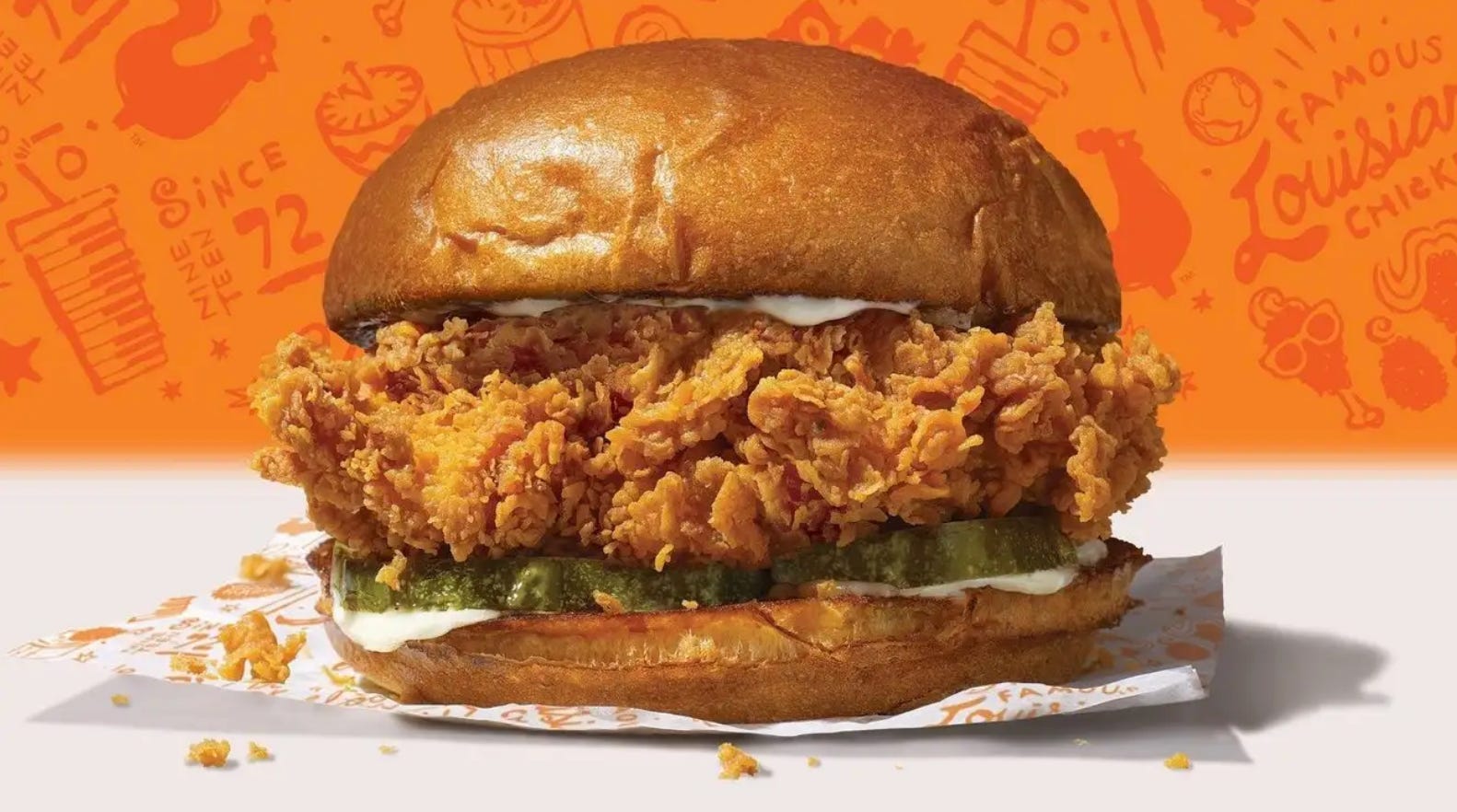
Sep 10, 202300:32:10Tap to summarizeWelcome to the Numlock Sunday edition.This week, I spoke to Justin McElroy, who you might know from his work on the podcast My Brother, My Brother and Me or The Adventure Zone.Wednesday will mark a shocking milestone: As of September 13, the Chicken Sandwich Wars will have gone on longer than the armed conflict of the American Civil War. Yes, the conflict between quick-service restaurants over who has produced a desirable chicken sandwich offering began in August 2019, what feels like a lifetime ago, and nobody has covered this more persistently than McElroy on his Munch Squad podcast within a podcast.I’m a big fan of his work, and in addition to this devastating conflict we also chatted about increasingly unhinged limited time offerings, his multiple bestselling comic books, and the current “Steeplechase” season of The Adventure Zone.All this can be found at TheMcElroy.family.This interview has been condensed and edited.Justin McElroy, thank you so much for coming on.Thank you for having me in this important journalistic endeavor.This is a critical moment. We find ourselves at the week the Chicken Sandwich Wars will have gone on longer than the American Civil War. You have been on the ground covering this day by day, hour after hour.At what point do we just recognize that this is the second American Civil War? I mean it's all the bad blood, brother versus brother versus colonel. It's got everything.Why don't you take us back to the beginning? Munch Squad, a podcast within a podcast on My Brother, My Brother and Me, has been dedicated to covering the latest and greatest in food offerings, as you'll go on to explain. Chicken Sandwich Wars have been dominating this for years now at this point. How did this start?I have always been, and I think I got this from my dad, I've always been sort of a sucker for— I mean, I don't know how to say it other than just marketing. I'm like an absolute sucker. A lot of that is me being willing to just sort of go with it, and finding that I'm happier if I'm not fighting the thousands of advertising messages that are being sent to me on a daily basis. I just kind of go with it. I love to try new consumer products, and I know that's goofy, but whenever you would go to Columbus, Ohio, it's a popular test market for new products so you'll see drinks you hadn't heard of before, whatever. Dad would always do that when we were kids. Any new drink, he would come home with a 12-pack like, "All right, guys, this is the new Crystal Pepsi, they're calling it, so you guys have got to try this."Yeah, anytime I see new stuff like this, it comes from a genuine place. I genuinely think it's fascinating. What I love, though, is when I find out that these companies have to put out press releases for these dumb products. No matter how dumb the thing is, they’ve got to let people know about it and someone is tasked with the job of writing the press release for something that is a sentence.I mean it's always a sentence, right? "We now have a chicken sandwich." "We are Dunkin' and we put beer in coffee, and you can buy it at the store. Please go buy it." I did one a few weeks ago that was like, "Extra gum has a new pink lemonade flavor. Here's the press release." It's like, how would anybody know that's even a new product? If I saw that, I’d assume they’ve sold it for 20 years. It's just wild and I think that that's really funny.The first one I did was Taco Bell doing the naked chicken taco, which is when they made a taco shell out of a chicken breast, and it's so vulgar.Everything about it is vulgar! It makes me want to be a vegetarian. It's a vulgar exercise, and I was like, "This is too great. I’ve got to share this with people." That was back, I don't know, 2016, around there or something like that, and we just kept going with it because the press releases just kept getting wilder.It slows down sometimes. But there's always new stuff to make fun of, and I just think that it's great. It feels like when you're somebody who cares about doing comedy that doesn't specifically target people, especially marginalized groups or just anybody specific, anybody individually; we really try to be upbeat. I feel like making fun of not just corporations, but marketing for specific consumer products is as near to a victimless crime as you can get. Even the people writing these things know like, "Yeah, this isn't going to get me my Pulitzer. It's all in good fun." But yeah, that is the Munch Squad.Yeah. Limited time offerings, they've always existed, right? There's always been the McRib, there have always been things like that. They are increasingly unhinged and I don't think anybody's been following that quite like you.Yeah, I do. I have exposed myself to a wide variety. Sometimes, the product will be wild, but there's just nothing. They don't have the press release. I’ve got to have the press release. I’ve got to have the news. I have to have someone reporting it journalistically who is also paid by Pepsi or Taco Bell or whatever, and it was the same company, but you know what I mean. Yeah, I have followed the space very closely.Yeah, it's been just genuinely a pleasure to listen to. Again, you've developed this form of taste, I think, among these sorts of products. You've been able to clock if they're only in one restaurant for one hour in Anchorage, Alaska.I'm glad you're bringing that up. Thank you. That does make me very angry and that is something that has happened in later Munch Squad and almost kind of put me off of it, is you start to see these companies that are just doing it for the bit. If they're doing it for the bit, it's a lot harder for me to do jokes about it because they already know that it's dumb. Pepsi did Peeps-flavored Pepsis and you had to get them from a contest or whatever, and it drives me crazy.Just have the strength of your convictions to make your dumb soda and let the market sort it out.I don't even think this is on Munch Squad; it's something we talked about on my cereal podcast, the Empty Bowl, but Carvel, the ice cream cake people, they made a "cereal" that was just the crunchy chocolate bits that go in the middle of the ice cream cake with the fudge sauce. You know what I mean? They made a cereal out of that, but they're in little tiny boxes and they only sold them for one day at their stores.It's like, just make it or don't. You know what I mean? Cowards, everybody. I don't like that stuff. Make a product, put it out there for everybody. Don't do like the CurderBurger where you only do it for one day. I did talk about the CurderBurger because it was a burger with a loaf of cheese curd on it in Wisconsin. That was pretty good. But by and large, wide release or nothing. That's what I say.You can't not talk about a CurderBurger.Yeah, and people could go buy that. You could go buy it in the store. It's usually my cutoff. I prefer a wide release, but still.You've been covering this for a while. Again, I can't imagine the amount of time that you spend on QSR magazine.A lot.A lot?Paper and digital.Oh, you get the print? You get the dead tree edition?Some fun-time jokesters signed my P.O. box up for a subscription to that. I get lots of them. Someone signed us up for horse magazines. Thank you. That's great for recycling. Someone signed us up for the gas station mag — they have a publication for new gas station convenience offerings — so I try to track the sources wherever they are.That's incredible. Again, your history is journalism. You founded Polygon. I've always enjoyed that element of Munch Squad where it's like, "Clearly, this is something that's going on." And I'm glad that you alluded to, again, your father has roots of journalism as well, that this is a trade that you've been applying for quite some time.Yes, that was my first job outside of retail. It was in my mid-20s. I got hired to be the news editor at a small paper in Ohio, and I was desperately underqualified, but I just sort of kept scamming my way up and pivoted over to video game coverage, mainly. I know enough journalism to know how to pretend I'm doing journalism in the Munch Squad, so that's about where my skillset is at this moment.Do you have any favorites that come to mind? Any specific limited time offerings or press releases that just really kind of made a dent in you?Let me think. Taco Bell did a naked egg taco. You know when they did the chicken, but this was a gigantic fried egg that they folded up into a taco shell and made a breakfast offering? That's unacceptable. That's simply not a product that anybody should be consuming.Burger King, the Nightmare Burger where it was black for Halloween, remember that? It gave everybody black poops. That was a fun time to be in the business. Ye...
Transcribe →
Numlock Sunday: Ashley Carman talks tumultuous times for the audio business
Aug 13, 202300:22:01Tap to summarizeBy Walt HickeyWelcome to the Numlock Sunday edition.This week, I spoke to Bloomberg’s Ashley Carman, who writes the Soundbite newsletter. Here's a recent thing what I wrote about it: The hottest thing in music touring right now is selling affluent 30-somethings their old eye shadow and tight pants back for a considerable markup, with alt-rock bands making a killing on the road. The forthcoming When We Were Young festival in Vegas has sold 160,000 tickets, Blink-182’s North American tour just wrapped with $85.3 million gross on 564,000 tickets, which follows a 2021 outing by Weezer, Green Day and Fall Out Boy that grossed $67.3 million on 659,062 and an $88 million My Chemical Romance tour. Anyway, if any bookers want to take a look at my high school iPod Mini, I have absolutely categorically figured out exactly what the next three years of successful concert tours are going to be.Right now the podcast industry is in utter chaos, the music industry is beseiged by an enigmatic TikTok and the rise of AI, and the main things that appear to be working in the record business are unexpected niches, like country music and Mexican regional music. Ashley’s covered it all, so I wanted to have her back on to chat about it, in audio no less!Carman can be found at Bloomberg.This interview has been condensed and edited. Ashley, thank you so much for coming back on, it's a pleasure to have you.Yeah, happy to be here.You cover audio; it's a big beat, it has a lot going on, and it's been a really dynamic couple of months it seems, in your field. What's been going on?Basically my beat, I started out covering the podcast industry over at The Verge for a number of years, then came over to Bloomberg, still with that intention to cover the podcast world, but also add in some of the music industry, really getting both sides. Obviously, audio can also include audiobooks, all the various genres of audio that exist in this world, but primarily focused on the podcast space and music industry. What's been going on? Podcasting has been having a little bit of a market correction reckoning. The music world is pushing for a whole new streaming model and wringing their hands over generative AI. So, busy dynamic moments on both sides of the industry.I recall reading a little while ago that the audio slice of the pie, so to speak, is increasing, but the individual groups within it are rising and falling pretty dynamically. I guess let's talk a little bit about what hasn't really been working super well lately. You've written a lot about the podcast industry and the consolidation that we've seen in that. What's been going on in the past six months; it seems like there's been a serious contraction?Yeah. So, essentially the very sped up version of the podcast world up until now is, starting around 2019, you had Spotify enter the space, spending a ton of money, which basically set off this huge gold rush around podcasts. Amazon entered the world with Wondery, adding it onto Amazon Music, Spotify obviously making its acquisitions, SiriusXM, iHeart, which of course has been in audio, and SiriusXM having been in audio, but really in earnest signing big lucrative podcast deals. And that goes on for a few years. You have the live audio craze of Clubhouse, and then this past year, really what's happened is this moment of, okay, we spent a lot of money on these podcast deals and locking up some of these big names in exclusive partnerships, but are we actually making our money back on those deals?I think that's what we're starting to see now is this correction of, hey, what were these deals really worth?Was this just a super frothy, hyped ecosystem that got us into some financial troubles? So, now, with that in the rearview mirror, some more awareness around the smart deals that could be made, you're seeing some consolidation in the space, even on the smaller network side, who were maybe benefiting from that frothy environment. Now they're like, okay, we need to figure out how we're going to survive in this ecosystem, especially when there's a broader ad pullback in the market. So, they're starting to consolidate, the bigger companies are laying folks off because they just got over their skis, as far as the investment, and yeah, it's just been a rough time, honestly, but I'm hoping that it turns a corner soon.Yeah, it seems like frothy is a good word. What companies, what kind of podcasts and what industrial organization structure has been the most durable? It seems like the big guys who put a ton of money into recruiting maybe a lot of talent from movie and television, those haven't necessarily done as well, because they were very ad sensitive, but that's not everything. There are still a lot of things that are working in podcasts, it seems.Yeah, and I guess the important caveat here is that podcasting is growing. Audio companies’ revenue is growing in the podcast world. It's not the type of downturn we're seeing where all of a sudden it's like we lost 7 billion listeners this month. It's not like that. The space itself is actually growing, it's just when it's in relation to the deals themselves and how much was spent for the return, it was maybe just a little too early for that moment. So what's working is people do enjoy listening to podcasts. I personally, I see it in my friends, which granted, I have the bias of being a media reporter, and my friends are also media people, but they buy stuff from podcasts. They enjoy engaging with it.So from that perspective, I actually think podcasts have a lot of might, and there's been a lot of stuff written recently, not from me, but other great reporters, who have covered just how important podcasts are in the political landscape, as well. You can really see the impact and the amount of conversation they can drive and really bring people to make certain decisions. So I think that actually the spotlight is on them; it's just the business has been a little tricky.Yeah, it's weird, I've seen a lot of podcasts that had been very ad supported for a while often start pivoting toward live events and whatnot, which is what music acts do historically as well. You don't always need to make all your money off of the physical sales, it can also just be actual events.The podcast touring definitely still exists. I don't know if it's the biggest slice of the pie, but there's of course Patreon and subscriptions, which have been a success story for the podcasters that can make it work. So, there are alternate avenues for success.What else isn't really doing all that swell when it comes to audio right now? I know that podcasts have had a hiccup, but you've also run a couple of times about how Spotify is looking to raise prices, potentially, and you're looking at some of these larger companies that have tried to really control a lot of the audio pie that might not be doing as well.Yeah. So, I think what you're hinting at maybe is just the streaming environment for music. Really what we're seeing there is, it's really obviously reversed the trend of piracy, back in the day, and we're streaming now, companies are doing great, the music companies are growing, they're public, all of that. But what we're seeing in that world is a little bit of concern over the potential future, which is how do they continue growing? How do they maximize the dollar from the streaming services? You've seen price increases. And then also, even more somewhat forward facing, just how do you deal with generative AI when maybe that would lead to an influx of content out there?How do you actually allow artists who do this for a living and maybe aren't necessarily totally financially motivated by it to actually have their music be heard and make money off of it? And then of course, in the music world, you also have the struggle that TikTok runs so much of this now in the conversation, so what do you do? How do you break artists? How do you make superstars when a lot of this is at the whim of an algorithm?Yeah, I don't have it in front of me, but I feel like you wrote something a little while ago about how some of the major music companies are even starting to invest in some of these streams, whether they're the lo-fi or high-pitched streams, to capitalize on some of that social. Am I remembering that correctly?Yes, and I also need to put myself back in that story. The piece that I wrote was about sped up songs, which is a TikTok trend; it's like chipmunk singing, it's just sped up tracks. And what the major labels have covertly done is run Spotify accounts that have all those tracks on there. So, it kind of gives off this veneer of, oh, this is some low-key TikTok DJ who put this up here, and I stumbled upon this big secret, when actually it's totally blessed by the labels and ensures that when you're listening to that song, they get paid the proper royalties. Because obviously if some random person uploaded a song, I guess we would say illegally, without the proper rights, and they don't properly tag the rights holders, the rights holders don't get paid. So you could see the incentive to be like, here's your cool thing, but we're actually going to make our money off of it.How widespread is that? That's wild.I wrote about, I believe it was a Universal account that I wrote about, and I think I wrote about a Warner account as well. So, in those two cases, there were two different accounts. And then, gosh, I would need to check, but one of th...
Transcribe →
Numlock Sunday: Neil Paine on the rise and fall of NASCAR
Apr 23, 202300:33:19Tap to summarizeBy Walt HickeyWelcome to the Numlock Sunday edition.This week, I spoke to my friend Neil Paine, a sportswriter at FiveThirtyEight who can also be found at Neil’s Substack. I’ve been following some recent spat going on in NASCAR between ownership and the different charters; here’s a recent thing I covered about it: NASCAR team owners collectively boycotted a quarterly meeting with NASCAR leadership over a kerfuffle over the sport’s business model, which they argue pays track owners considerably more than it pays the racing team owners. The $8.2 billion media rights deal inked prior to the 2015 season splits the money 65 percent to the racetracks, 25 percent to the teams, and 10 percent to NASCAR itself, though there are just two track operators: Speedway Motorsports and, well, NASCAR, which owns most of the tracks on the Cup Series. Team owners don’t like this arrangement, and argue that they have to spend a great deal of time trying to recruit sponsors in order to make their money, saying that sponsorships are 60 percent to 80 percent of the budgets of the 16 chartered teams.Fascinating! It’s a corporate battle with billions on the line! What’s not to love here! I knew Neil was into NASCAR and I wanted to talk to him about how the sport got into this mess and what the heck happened to it.Neil can be found at FiveThirtyEight and Neil’s Substack. Incidentally we can also be found out our hockey-related friend podcast A Couple of Goons.This interview has been condensed and edited. All right. Hey Neil, how's it going?Hey, Walt. Good to be here.People know you from many different places, primarily FiveThirtyEight, where you're a sports writer. But I wanted to talk to you today about a thing that I think is going to be very off-topic for a lot of readers in my newsletter and maybe even some reviews in your work, which is some extremely fascinating stuff that's happening in NASCAR, a league that has long existed but has diminished in notoriety.You and I have been talking a little bit about this on the side and I am just endlessly fascinated by some of the machinations going on in it. I just wanted to have you on to talk all about it. Do you want to talk a little bit about your experience with NASCAR and what drew your attention to it?Yeah, so I'm from the South. I'm from Atlanta and grew up watching the races and following the sport as a child. I think that that was something that was a lot more common at that time. We're talking about the '90s and the early 2000s being the heyday of not just my fan interest but also a lot of people's fan interest in the sport.I've recently gotten back into it over the past couple seasons, I don't really know why. I've definitely gotten more into motor sports in general with Formula One also coming back on my radar. That has actually been very popular among American audiences, I think, since you saw the Netflix series Drive To Survive and just people getting into the dramatic aspects of that, not necessarily maybe the on-track drama, but the personalities and the soap opera between the drivers and the teams, and all of the different backstabbing. Machinations is a good word for it that you used earlier.You see that in pretty much every motor sport though. I think that people, if they wanted to expand their horizons to a sport like NASCAR, there are so many beefs between drivers in NASCAR. The great thing about NASCAR is in Formula One, you do see sometimes drivers, they will wreck each other in the sense that they won't give someone space around a turn or something and they might touch wheels, or they might run into someone. But when you run into someone, it's the end of their day because the open wheel cars are pretty fragile, comparatively speaking.Whereas in NASCAR, these are big freaking tanks of vehicles that can hit each other. Often, there’s this term, "rubbing is racing," where basically if you're not bumping people while you're out on the track, you're not really fighting for position. You can hit someone and as long as you don't put them into the wall, you can keep going.I think that that is unique in the way that it feeds into the aspect of rivalry and aspect of animosity between drivers, because you can get back at someone later in a race if they did you dirty earlier in a race, in a way that in Formula One, if you hit and mess up your front wing or whatever, you're both done for the race.Neil, I'm exhausted at the fact that you found another sport that is basically just hockey.Yeah, I know the checking aspect, definitely, the full contact aspect bleeds over between the two, I think.That's cool. I didn't know that you followed it when you were a kid, that's nice. I guess you got on my radar recently because there's beef on the track obviously, but there's also lately a lot of beef between NASCAR itself and the people who own the franchises. It's got this really interesting structure. Do you want to talk a little bit about that?Yeah, so starting in 2016, they put into place what's called the charter system, which for people that don't know, basically there are like 40 cars on the track for every NASCAR race. And in the past, you showed up for the race weekend and it didn't matter if you were a low tier team or one of the best; you still had to qualify and make a certain lap time and be among the top 40 or so qualifying cars to make it into the race on Sunday and, therefore, to get paid for the weekend.At the peak of NASCAR, if you go back and watch some of the old broadcasts, you'll see they list out a dozen or more teams that didn't qualify. So, cars that tried, they made the effort, they came out to the track, they got everything ready and they just didn't go fast enough to make the cut and they didn't end up making any money from that.Starting in 2016, they put into place these charters, which guaranteed that 36 cars would at least be able to have entry into the race. So, it only left four chances for teams that weren't part of the charter system to scratch and claw their way into the field for any given race. For those 36 teams, it offered a lot of cost certainty and also income certainty and it made things a lot easier for their dealings with sponsors, which, we'll probably go into as well, is a huge deal for NASCAR teams, more so than maybe any other sport.And so this charter system, it was put into place to make it more attractive to invest in a NASCAR team. I think since you've seen those go in, you've seen that Michael Jordan owns a team now, or co-owns it, the 2311 racing team, and you're seeing people because they can now latch onto these franchises, it's essentially the same ideas like the New England Patriots and the Atlanta Falcons. The teams that go into the charter is a car and the car number that goes with it. Sometimes the same owner can own multiple charters. So, Joe Gibbs Racing — Joe Gibbs is a former NFL coach who also runs a super successful NASCAR team — he has four charters, so he has four different cars on the track. But some teams only have one charter and these charters can be bought and sold between the different team owners as well. They can transfer the rights to the charter and that has allowed the value of those charters to go up.But the problem is that the charter system, when it was put into place, it has to be renewed. It's not like a permanent fixture in the way the sport is structured. So, there's some opposition at the top of the NASCAR food chain, because NASCAR itself is just the governing organization that oversees all of the races.It has said, "We're not really sure if we're going to renew the charters." And the teams are like, "You better renew the charters because this is the one thing that's driving our value in investing in your sport and making it more attractive for people to come in as owners and know that they can have that secured spot." That's a big part of this battleground, like you mentioned, between NASCAR, the organizing body, and the teams themselves.There are also the racetracks in the mix as well. The way that the money is split for a television contract, for instance, they have a big TV deal coming up I think after this season, maybe the NBC rights are up or whatever. They have to figure out a new TV contract and then figure out how that pie gets divided up among the teams, NASCAR itself, and the racetracks.The teams have complained that pretty much all of the money, or the overwhelming share of the money, goes to NASCAR itself and the tracks, and that they're not really getting that much, and it's much less equitable than you see in other sports, where in the NFL or Major League Baseball, you see roughly a 50/50 split between the teams and the players.In their mind, they're thinking of themselves as franchises that then supply the talent, the players, or in this case the drivers to the league, which would be NASCAR. NASCAR sees it differently. They see the drivers or the teams and drivers as independent contractors, and just part of this mix that also includes the racetracks that they have to coordinate with to stage the actual race events themselves.Combine that with the fact that advertising makes up a huge share of the revenue for any of the teams and teams are starting to lose really high profile advertisers. We’re talking about the early to mid-2000s, the heyday of NASCAR, you had a lot of companies that just seemed like it made a ton of sense for them to be ...
Transcribe →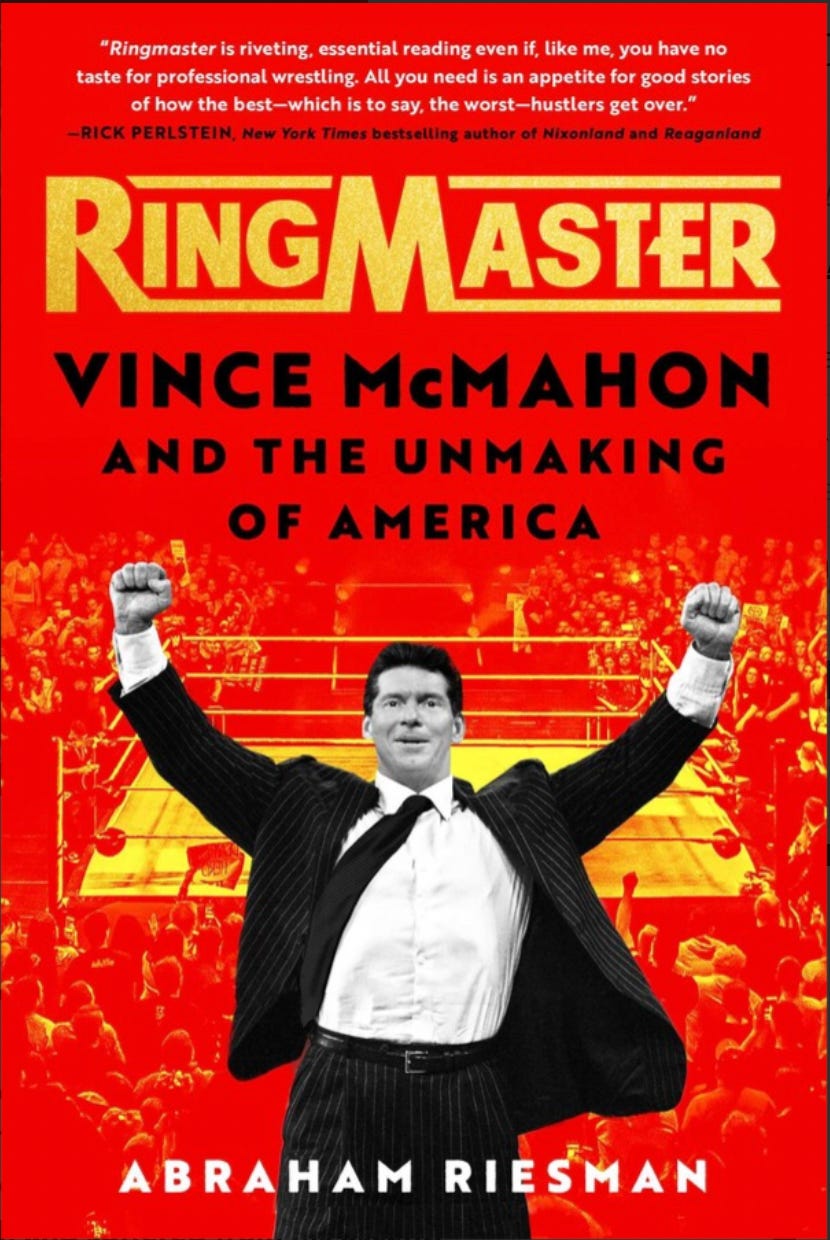
Numlock Sunday: Abraham Josephine Riesman on Ringmaster
Mar 26, 202300:29:47Tap to summarizeBy Walt HickeyWelcome to the Numlock Sunday edition.This week, I spoke to Abraham Josephine Riesman who wrote the explosive new book out this week Ringmaster: Vince McMahon and the Unmaking of America. I have been looking to this one for a while, I was a massive fan of her 2021 book True Believer: The Rise and Fall of Stan Lee.The subject matter of this one will be of interest not just to wrestling fans but among anyone who has felt the reverberations across pop culture, sports and politics of one extremely complicated family and their very influential “sports entertainment” business.The book is out this week and can be found wherever books are sold. Riesman can be found at her website and on Twitter. This interview has been condensed and edited.Josie, thank you so much for coming on.Hey, I'm so glad to be back. Fire away.You are out with the new book Ringmaster this week. I have been looking forward to this all year, honestly, since I heard you announced it. Folks might know you from your Stan Lee biography. Both of these stories are about complicated men who worked in the entertainment industry and how it kind of destroyed them, I guess. What drew you to Vince McMahon?I was a teenage wrestling fan from the ages of about 13 to 16. I was very obsessively involved in Vince McMahon's product, the World Wrestling Federation, as it was known then. And three years isn't all that long a period of time in adult human years, but in teenager years, those are a century each. It was a time when I was very impressionable, and wrestling made a big impression on me. And after I gave up on it around 2001, I stopped watching for like 20 years. And then when I was done with my biography of Stan Lee, True Believer, I had to come up with something else to write. And I was having a conversation with my wonderful spouse, who ended up being my frontline editor on this, but was not at the time, S.I. Rosenbaum, and we were just chatting about what could the next book be.And one of us said, what about a biography of Vince McMahon? Now, she'd reported on wrestling in the past as a local news reporter. Not on the WWF, but on the wrestling world, so she was familiar with him. And I obviously was familiar with him, had a lot of distinctive memories of him, had some knowledge of his real life. But it was, as is true of most people's knowledge of Vince McMahon's real life, ill-informed, because he's very good at deliberately altering your perception of him. So it just seemed like a natural idea. He is this amazing individual whose story had not really been told in the particular way that I wanted to tell it.It's a fascinating business story, it's a fascinating cultural story, and we'll kind of touch on each of those elements in a bit. I guess to give folks a little perspective who might not be totally familiar with wrestling, what role does Vince McMahon play in the evolution of it, and what it's become today versus what it was maybe 50 years ago?Sure, yeah. Vince is the singular man of professional wrestling right now. There's no one more powerful or influential than him, both in the present and also in the recent past. Of the living people in wrestling, no one has had more of an influence than Vince McMahon. He took over the company from his father, who was a wrestling promoter, like his father before him, in 1982 and 1983. He, over the course of that year, purchased the company from his father and some minority shareholders.And after that, Vince sort of went on a war of conquest. Up until then, wrestling had been this largely regional phenomenon. You had regional territories where local bosses, who operated not unlike mob bosses, would dictate what pro wrestling was in that geographic territory. And it was an oligarchy. It wasn't a democracy, but it was an oligarchy. It was not unlike the English nobility circa Magna Carta, where it's like it could have been the beginnings of democracy, but democracy it wasn't. But the fact was that power was more diffuse than it is now. Because Vince went on this little mission to take over wrestling in America and Canada, and he did entirely.It's not exactly a monopoly because there are small other promotions, there have been. Now there's a pretty big rival promotion AEW, but for about 20 years there, from 2001 until 2020 or so, Vince was essentially unopposed in the world of professional wrestling. And the whole art form has been changed by that fact, by the fact that this one person has so much outsized influence on how it has evolved in the past for decades.And it really was a conquest. Again, he cajoled and destroyed and won over and allied with—And bought, don't forget bought. The big thing was he would flood the zone with money and tell the top talent at any given territory, come over to my shop and you'll get paid more. And it's a very punishing industry financially, so unsurprisingly, a lot of people said yes. And similarly, he would just buy TV slots in rival territories and start broadcasting his show in syndication. One of the WWF's employees spoke to a reporter in the early ‘80s or mid-‘80s and said that Vince was executing manifest destiny. Used that actual phrase. It was an apt comparison, let's say that.Yeah, and I think that I would love to hear your view on how he changed wrestling to reflect him, because we're going to get in a second to how wrestling kind of changed a lot of the world around it; but whether it was the body building league that he backed for a bit, or whether it was the distinct styles in wrestling, I suppose I'd love your view on, what does the Vince McMahon wrestling world look like that's different than perhaps what came before?The Vince McMahon world of wrestling for one thing, this is perhaps the most important thing, it no longer claims to be a real sport. This was perhaps, I mean, there's a lot that Vince reshaped, but a lot of it's sort of technical. It'll be like, oh, well he started doing this kind of camera thing. It's a vast accumulation of little things that result in an altered tapestry. But the big historic, world historic break, was Vince in the mid-‘80s started pushing to get his business deregulated so he didn't have to have state athletic committees overlooking health and safety and levying taxes. And his big strategy for that was not in public, but behind the scenes in legislation sessions and in lawsuits. He and Linda, his wife, and their underlings would say, ‘Don't worry, this is all fake. You don't need to regulate this like a sport, because it ain't a sport. It's just like the Harlem Globe Trotters or the circus.’ That was the comparison they always made.And it's unclear whether Vince ever intended to make that all that public. Perhaps it was inevitable that it would've been, but he was kind of caught off guard in 1989 when, after four or five years of this deregulation effort and after some lawsuits that he or Linda had testified in in which they'd said all that, it finally got reported.The New York Times ran a big story called, "Now It Can Be Told, All These Wrestlers Are All Just Having Fun." And it was about how the WWF's deregulation campaign, especially in New Jersey, had resulted in them going on the record and saying in legislation and in legal proceedings that wrestling was fake. And Vince was kind of caught off guard, because he was not intending that to be a big public New York Times story, but he'd already laid the groundwork, whether or not it was his intention. That effort also combined with something that was very public, which is that he started referring to his product in the mid-‘80s as sports entertainment, not wrestling. It was sports entertainment. And that change, that shift toward acknowledging wrestling's fakeness in a grand way, was just a sea change. It resulted in a lot of enormous upheaval.Yeah. I suppose I'm interested in, then, how that deregulation and that upheaval affected not just folks who worked for him, but the product as well as the human beings who worked for him. So much of your book is about the relationships between Vince and various different wrestlers. If he's the only game in town and if the state's not paying attention, that lead to some significant negative impacts for a lot of people, and a couple significant positive impacts for another group. Do you want to talk a little bit about that?Yeah. In the absence of anybody telling Vince what to do in a meaningful way, he was able to execute a lot of very abusive business tactics towards his workers. Wrestlers are not employees, they are independent contractors, they don't have health insurance provided by WWE, as it's known now, and they are in this very low-paying profession compared to other athletic events of similar spectacle and notability.Like, you have these people who are every bit the athletes that a basketball player or a football player might be, but they get paid vastly less, and have so few job protections and no voice, because again, there's no collective bargaining. And so that has manifested itself in a lot of death and destruction. Not to put it too bluntly, but I could go on all day about all the people who've been affected in that way....
Transcribe →