← The OCD Whisperer Podcast with Kristina Orlova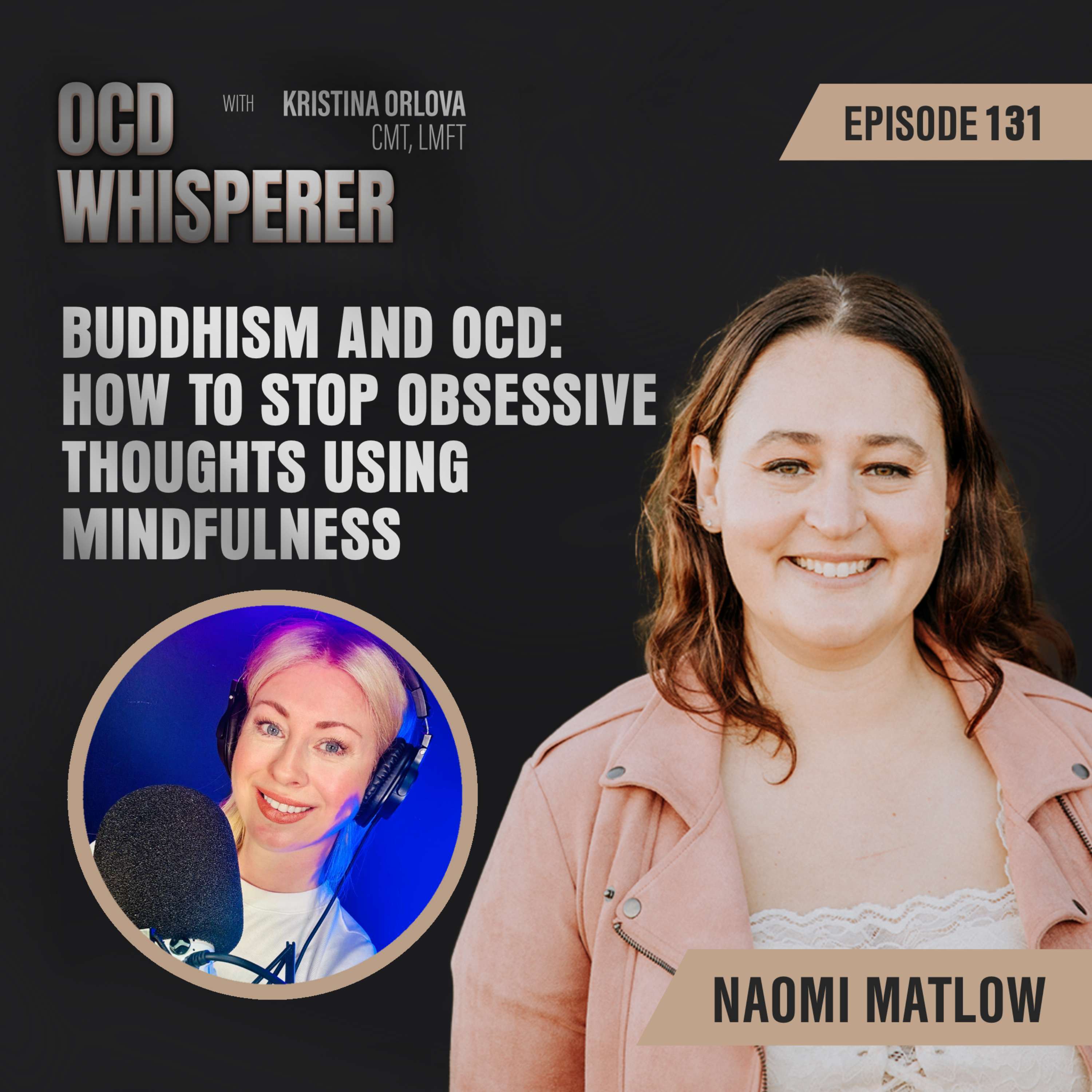
The OCD Whisperer Podcast with Kristina Orlova
131. Buddhism and OCD: How to Stop Obsessive Thoughts Using Mindfulness
00:26:32
Loading summary
Transcript35 lines
- [00:02]
A
Hi, I'm Christina Orlova, host of the OCD Whisperer podcast. As someone who lives with ocd, I understand the struggles firsthand. If you're here, you're not alone. Before we start, grab your free OCD survival kit at www.corresults.com to help you take control. That's K O R results dot com. Now let's dive into today's episode. Welcome to OCD Whisperer Podcast. Today with me, I have a guest, Naomi Matlow, who's a writer, educator, and OCD advocate based in Southern California. In 2024, she published her creative thesis from Lesley University's Mindfulness Studies Master's program. It's a handbook for individuals that struggle with an OCD inclined mind and are interested in developing a relationship with Buddhist psychology as a vehicle for deeper insight. Welcome to the show.
- [00:57]
B
Thank you so much for having me.
- [00:59]
A
Yeah, Naomi, thank you. So I know that you and I connected because you actually wrote, you know, a thought is just a thought, a Buddhist guide to ocd. And I just would love to hear more about that if we can just kind of more globally talk about it. What, what it's about. Kind of what drove you to write it.
- [01:16]
B
Yeah, absolutely. So in 2023, I completed my Master's in Mindfulness Studies, which is a two year master's program based in the original teachings of the Buddha 2600 years ago and the origins of mindfulness and meditation practice. And I came to that course with an interest in meditation primarily, and also a desire to understand where this all came from. And, and I studied philosophy in my undergrad and found that I didn't experience a lot of Eastern philosophy, it was a lot of Western European continental philosophy. So that was also something that intrigued me. And as someone who was diagnosed with OCD at this point now, 20 years ago, when I was 15 years old, I wouldn't at this point in my life fall under the diagnostic criteria. But as you know, and I'm sure a lot of your listeners know, like it's a part of your life. Like, just the way that our. Our minds tend to operate, just really deep grooves and habit and conditioning, that kind of requires a lot of. A lot of maintenance and inquiry into ourselves. So I found that Buddhist psychology, as I was going through my master's coursework, I. We talked a lot about what Buddhism says about the creation of thought and how when you're meditating, it's not so much clearing your mind of thoughts, but kind of focusing on the space between thoughts as opposed to the content of the thoughts. And that just spoke so clearly about my years of experience with CBT and ERP and learning more about act acceptance, commitment, therapy, the idea that it's the thoughts themselves that don't cause suffering, but our reactions to them. And that was just so much. What. What I need to remind myself daily in my own maintenance of the way my OCD and kind mind works, but how that's also helpful to anybody because we all struggle with intrusive thoughts and just unhelpful information that goes through our mind that isn't serving us. So that is, like, as you're talking.
- [03:55]
A
I kind of like, want to jump in because I really like one of the things I know that people struggle with and. And I don't. I hope I didn't cut you off and I pulled. No, I did. But. But you know, like, when I hear that, right? And I know, I know because I have people sending me DMs, you know, through emails, clients. I see earlier on myself, certainly, but we talk about Buddhist approach, but. But also you're talking about acceptance, commitment, therapy, and this whole notion of accepting that we have thoughts, right? And it's really our response to them and the nature of thought. And if we can kind of dive into that a little bit. Because there's. There's two things that come to mind, and one that I often hear is, well, how the heck do you accept these thoughts, right? Especially when they are, whether they're really taboo or violent or morally just, you know, really repulsive to us, things we know, to ourselves, or even in the world that we would just say, oh, my gosh, no. Like, that's, ugh. Right? And, and. And this is something that, you know, people historically are like, well, I mean, I have a mind and I have thoughts. I mean, it's to use it, right? It's to analyze. It's to understand things. And now we're saying, well, if you have ocd, it's maybe not exactly that process, but even if you don't have ocd, we all have some random intrusive thoughts that can pop in, even images and other things. So how do you, from the Buddhist perspective, accept or allow or make space for.
- [05:22]
B
Yeah, that's a really good question. So from my understanding of the teachings that there is, there's six, like, sense doors or like gateways of perception, being like, like seeing, hearing, smelling, tasting, feeling, like tactile in the mind. So, like, that the mind is just another way of experiencing or perceiving reality. So let's say, like, for example, we like smell things or hear things that aren't true all the time. Like, it can be like, oh, why is there an ambulance coming? I'm like, oh, no, it's just a garbage truck or something. Like, we're our. And that would be no different than a thought. It could be random or just our perception of it is not indicative of our values or our. What we care about or who we are. Like, it's just another way that we're trying to make sense of reality. Or it's just a matter of just being in a. A human body and in a nervous system. Like with a nervous system and with doors of perception. So that would be a way. And perhaps hopefully a little bit of like a gateway or another way of. Instead of asking how can we accept kind of the, oh, I just had a thought like, I want to kill my dog or something like that. That is a thought possibly no different than I smell something bad in my refrigerator and I don't. I don't like it. I think the kind of Western predisposition to view thoughts as reality more so than. Or kind of deeming thoughts to be true as can. Can get people with kind of a OCD attachment to thoughts in a lot of pain and suffering because we put a lot of weight on the content of our thoughts. And that's definitely something that. That I relate to. There is. When we kind of think of the mind as. As just another gate for life to pass through, we kind of can become a little bit less attached to what. To what goes on. It goes on in there, especially when we don't like it.
- [08:02]
A
Yeah. And like, when you're talking, I guess part of what stands out is, you know, we're. We're talking about from a Buddhist lens. Right. Because, you know, of course, people have so many different ways through which they experience and can view things, whether it's religiosity, spirituality or. Or none of it, or just realists, absurdists, whatever it is. Right. But I think it's. It is important, I guess, to say if we're looking at. From the lens of, you know, this Buddhist mindfulness approach, from what I'm hearing you say, really, it's that even just the whole way that we're perceiving a human experience, it's not to get attached to our senses even. That includes our mind is what I'm hearing. It's like, yes, we have our senses that we're using obviously, to know, like, if I'm, I don't know, eating a piece of cake, I know it's Cake. I'm not. I'm not thinking it's cheese.
- [08:51]
B
Right, Right.
- [08:52]
A
Like, we do. We do use it for information, but it's more to what you're saying. I think if. If I'm understanding correctly, it's also that we're recognizing that our mind serves that kind of function as well. And at times it can be a useful source to understand something, and at other times to understand that we may not perceive something accurately and that. So that we're just not overly, like, identifying and kind of falling into it as if this is it. Like, this is the thing that's going to now define my entire being and existence of who I am a hundred percent.
- [09:28]
B
And you just touched on, like, exactly. One of the core teachings of the Buddhist path is that, like, clinging and wanting things to either stay the same or being repulsed by things that are happening and wanting it to. To go away. Like, that's the root of suffering. Not accepting what is. And often what is. Is so. So painful and upsetting. That is reality. And having, like, the. The root of suffering comes from our desire for things to be different than they are. That. And that doesn't mean, like, let's not work hard to make things better or seek support or improve that. That acceptance is so key. And you don't have to accept the content of the thoughts, but accept that, like, yes, this thought is driving me crazy, but I'm gonna do something that I value, which is just the. Like, the tenants of acceptance. Commitment therapy.
- [10:34]
A
Yeah. So let's talk a little bit about acceptance then, because again, and I know I asked it kind of a little more broadly, but, you know, more concretely, because I do like to have my listeners have at least one concept or something they can actually, you know, either implement or really kind of grasp. So how do you practice acceptance? Right. Like, at the core, it's a concept, Right. The concept is, hey, let's become. Well, I would think aware, because without awareness, I'm like, what are we working on?
- [11:01]
B
Right?
- [11:01]
A
So you have to be somewhat aware that, like, something is happening right now. I'm having some thoughts or feelings or something that I just don't like or I find gross or somehow I feel it's just horrible, and I don't want to have that experience. So I'm doing. I'm responding to it. Right. Which a lot of repetitive behaviors in OCD would mean we're compulsing, but we're doing stuff to try to avoid or get rid of it. So what are we saying here? That one is we would want to accept, kind of slow down, notice that we're having this experience that we do not want on any level, but here it is anyway, showed up at our doorstep and kind of like mentally recognize that and say, okay, here it is. Or is there another way to practice acceptance that maybe you could share with us?
- [11:50]
B
Yeah. One of my favorite things that I read is by the psychiatrist Dr. Chad Lejeune, who's also based in San Francisco, I believe. And he said that an OCD thought is a thought you're not willing to have. And to me, that is kind of the most realistic way that I see as acceptance, just the willingness to have to have it. And so for exactly what you said, needing to be aware, like, okay, I'm having this sensory experience, whether it's in my mind and then it's in my heartbeat and my palms are sweaty, I don't like this. But I'm willing to let. Allow this experience to pass through my human body. Because if you can only feel something for so long, like it will never last forever, and then either saying to yourself or signaling to yourself, like, I'm willing to. To experience this and not try to go into the rabbit hole of a quest for. For certainty or getting rid of it or trying to alleviate this discomfort, I. Leaning into a compulsive. Be com. A compulsion or compulsive behavior. Yeah. Kind of letting it. Letting it ride. As. As long as it's not dangerous, of course. But if it's something that you believe.
- [13:17]
A
Well, well, hold on a second there.
- [13:18]
B
Yeah.
- [13:19]
A
You know, you know what you just said, right? Yeah. People with LCD listening right now be like, oh, wait a minute. But I think mine is dangerous. Right? Or God know, like, well, wait. And I'm like. And you could hear there's a fighting like, no, no, no. But I don't want to have, like, what are you saying? That I have to allow myself to have this thought that something sexually like that I find maybe totally gross or unappealing or horrible to be there or question even myself at the core that I could be right. So how. What would you say to that? Or what would be the Buddhist, I guess, perspective on that, right? When. Because I think that's where a lot of the struggle comes in, right. It's when things are really up, when they're really activated and triggered. That's when it's like game time. Right. And it's really. It could be really hard to have a little bit of space or just a breath to kind of have a little separation between you and that experience. And so quite often people get, all of us get really engulfed in it until, you know, you practice and I think grow these skills enough that you get better. But let's, let's talk about if you're at that place where you're not quite there yet. Right. And so you are getting engulfed in all this stuff is happening and, and you're not able to like, you understand the concept, but you don't know. How do I, but how do I put this into practice? Like when it's right in that moment and it's all happening?
- [14:39]
B
Yeah. I totally, like empathize with that experience. And I think I would remind myself of like the ego dystonic nature of ocd. And, and then from a Buddhist perspective that the, the mind isn't the self or like that these are just things that are happening to me, but it's not me. Like I'm the witness as opposed to the, the experience. Like my sense of being is, is the watch or like, as they say, like you're the sky and not the clouds. You're like the canvas for this really uncomfortable thought and visceral experience happening. But you're not that reprehensible thought or urge. Yeah. And kind of feel into, if you can, leaning on the other like sense faculties, like, this is what I'm thinking, but like, what else is happening? What am I tasting? What am I smelling? What am I feeling? Like I'm. This is. I'm just the witness, as opposed to the event, which I think is helpful from my experience with ego dystonic thoughts where, where you're like, oh, I, I often OCD thoughts are so challenging because they're exactly the opposite of how we see ourselves or imagine ourselves to be. So I'm a therapist once said, like, it, if you were that murderer or that evil person, then it wouldn't bother you so much that you were having that these, this thought was coming through, through your mind.
- [16:31]
A
And can I ask you, because your book is, you know, a Buddhist guide to ocd. So can you tell us a little bit about like, what is. Like what is. What's something that would be included in there, something that people can see that could help them through this process?
- [16:43]
B
Yeah. Something that I think is helpful is kind of a rundown of the four Noble Truths, which is the four tenets or is thought to be the first teaching that the Buddha taught his followers. And it's about the nature of suffering kind of. I alluded to a little bit that. And the first novel truth being suffering exists and there's like inherent, an uninherent unsatisfactoriness to the human experience because good things don't last and bad things happen, just kind of an acceptance of that reality of just existing on this earth. There will be suffering. And it gets a little bit more hopeful that the second Noble Truth is the origination of suffering. So, and I talked about this a little bit, but being that desire and the disequilibrium between like what we want to happen and what actually happens and our disappointment in that it prolongs suffering. And the, the third Noble Truth is that when we kind of eliminate desire, which sounds like a very lofty goal, but that is thousands of years worth of, of teachings and lifetimes potentially depending on what you believe that suffering can seize or un, unwant or self imposed suffering can seize once we eliminate desire. So when we resist having, or sorry, end resistance to having unpleasant experiences and stop clinging to positive experiences and not accepting that they will change. And the fourth one is the Noble Eightfold Path, which I talk a little bit about in the book from an OCD framework, which is how the Buddha outlined to his disciples. Like this is how these are eight steps or eight concepts or teachings, some of them being like wise livelihood, wise action to outline the life where you can walk the path to, towards the end of personal suffering. So in the book I talk about this, these four Noble Truths based on my experience with OCD and how this, these teachings have kind of reframed how I understand my OCD experience. Because for me, when I have an OCD thought, like the idea of clinging and grasping and then wanting to put a magnifying glass up to it and being like, is this true? Is this me? Is this real? Like, what do I have to do about it? Like then I, I immediately start, start suffering and kind of lose my bearings and forget who I am and what I believe I stand for. Yeah, that's just one thing in the handbook. And then it has some, some questions for deeper inquiry and a lot of quotes by Buddhist philosophers and psychiatrists that have way more experience than I do. But kind of things that I found in my studies that I felt really spoke directly to rumination and obsessive thinking.
- [20:10]
A
I love that. Thank you so much. I think that's actually, that's great. Right, because you have to have some sort of a framework to understand kind of what, what you're facing or dealing with. And I, and I love that. I think that's true for even if you're not a Buddhist. I think it's just true in life, period. Because you know, you. We're all going to face situations and I mean if you're in front of something, there it is, right. So we can complain and say I don't want it or whatever else, but if it's in front of us, it's in front of us. So it's more like, okay, what do I do with this? Right. And to your point, right. I can either remember that, okay, this is unpleasant. Here it is. But I also don't have to over identify with this and kind of remember, like you said, my values and what I stand for and who I am really. Right. And I think kind of been saying it lately, but it's kind of like in the name ego dystonic. Right. It's kind of gives you a clue, right. This, this really is. Isn't in alignment with us and, and who we know ourselves to be. Yeah. Thanks for sharing that. And you know, before we kind of end, I wanted to ask, is there any kind of like meditation you love or something you could kind of leave out here for folks?
- [21:18]
B
Yeah, sure. I have in the book some written meditations I'm going to work on. I recorded one on my personal substack. I'm going to try to record more. But yeah, I guess something that's helpful to go back to the senses is even kind of focusing on as an active meditation what information outside of your mind is like, is coming into your awareness kind of whether it's your feet on the ground or your seat in the chair or a smell from the garden or a taste of your lunch still in your mouth. Like there are other. That has kind of calming properties because often, at least for me, the mind rarely provides me with that sense of calm that I'm looking for. So it's kind of give it. Giving your other sense. Sense stores a, an opportunity to shine because they're equally as valuable and are providing information like the mind is not always correct but has the capacity to ground into the body. Because as we know, the body has wisdom like the mind and sometimes the body is out of whack like the.
- [22:39]
A
Mind, would you say, just because now I find this interesting. Would you say even though sometimes the body can be a little out of sorts, but generally would you say we trust our sensory information? Like if I'm feeling cold or if I'm feeling hot or you know, like I could see that there's like my floor is not flooded right now, so I don't have to do anything. Right. Like generally we would Say we, We do rely on. On that. Right. For just information, like I know I can cross the street now or.
- [23:02]
B
Absolutely. Yeah, that's a great point. Like, give, Give our senso.
- [23:07]
A
The.
- [23:07]
B
The benefit. The benefit of the doubt, which I think we, we do give our. Our. Our minds for the most part. But that doesn't mean that everything that comes through our mind or our senses is like, helps, is. Is helpful or like. But yeah, I think the, the. The like trust muscle too. Like we can lean on our. Our other sensory experiences potentially more to help us feel more. More calm and grounded. Is a mindfulness practice.
- [23:39]
A
Yeah, I love that. I mean, I think you're right. Right. Like we have that with us. Oh, so you can be anywhere at any time, you know. Interesting. I had actually had a client who once said, you know, if I focus on the breathing or internal focus, it actually does something opposite because that's a common one. You hear people say, yes, yeah. And this person's like, actually for me, it's more focusing outward, like hearing what sounds I'm hearing. I was like, oh, that's pretty cool. Which, you know, it's true. Right? It's as we get to know ourselves and like what you're saying, right. Practice and bring a little bit more awareness and start to notice and then see, you know, what is it for you and you know what. And I love that, like, what other information do you have available now? And you know, how can you also kind of become a little more present and come back into the moment essentially? Right. Because we kind of in some ways disconnect. Really.
- [24:32]
B
Yes. And I had a meditation teacher who said, like, we focus on the body because the body is always in the present moment, where the mind is often in the past or in the future.
- [24:42]
A
Very well said.
- [24:43]
B
Yeah, yeah, exactly. So, yeah, I think that that would be something I would love meaningful if your listeners took away too. Like when in experiencing an OCD intrusion, being like, am I in my body right now? Like, oh yeah, I have a body. Like other things happening here.
- [25:03]
A
I love that. Thank you so much for coming on the show and talking about this. I mean, there's, I think so much more in here than we can cover for today. But I do want folks who are listening to know, you know, if they'd like to find you. Follow you get the book. Where can I do that?
- [25:18]
B
Yeah, my website, naomimatlow.com n a o m I m a t l o-w.com and yes, I have like PDFs available on my website for $5 and on Amazon you could get a hard copy but also like feel free to send me an email on my website and I just yeah, I love talking about about this stuff and anyone that's intrigued or interested I would be honored to help if you think I would be helpful.
- [25:49]
A
That's awesome. Thank you so much for coming on the show.
- [25:51]
B
Thank you, thank you.
- [25:52]
A
Christina, thanks for listening to the OCD Whisperer podcast. Remember, freedom from OCD is a journey and you're not alone. Visit www.coraresults.com to explore self help masterclasses like Sneaky Rituals with Jenna Overbaugh or ICBT Masterclass with Christina Inabe. Don't forget to grab your OCD CBT journal tracker and planner while you're there. If you found this episode helpful, please subscribe, subscribe, share and leave a five star review to help others find the podcast. Together we can make a difference. Keep going and I'll see you in the next episode.