← The OCD Whisperer Podcast with Kristina Orlova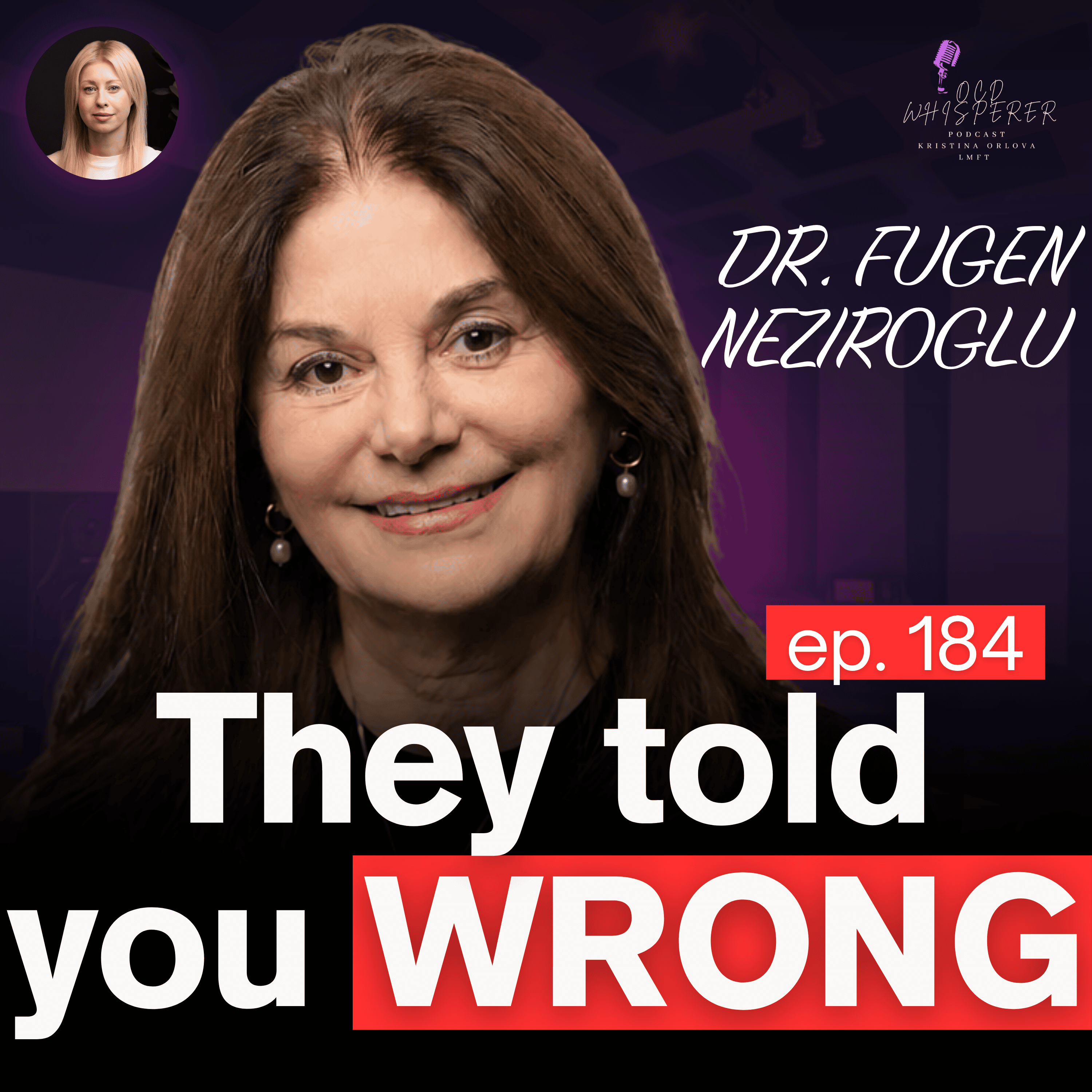
The OCD Whisperer Podcast with Kristina Orlova
184. A 50-Year OCD Expert Explains Why Recovery Feels So Hard
00:19:46
Loading summary
Transcript47 lines
- [00:00]
Dr. Afugen Nezreglu
Foreign.
- [00:07]
Podbean Announcer
Need a moment to breathe with Podbean's ambient relaxation. Enjoy ocean waves, calming rain, and peaceful nature sounds anytime, anywhere. Whether you're working, studying, meditating, or winding down, your perfect calm is just one tap away. Download the Podbean app today on Google Play and the Apple App Store. Relax with Podbean. P O D B E A N.
- [00:35]
Christina Orlova
Welcome to OCD Whisperer podcast, where we talk about ocd, anxiety and mental health conditions. And if you like these episodes and find them useful, don't forget to subscribe and hit that notification bell on guys today. With me, I have somebody very special, Dr. Afugen Nezreglu. And we're going to be talking about OCD treatment. And one thing I want to throw out there because I think this is pretty exciting, is she's been doing this work for like 50 years. And it's pretty incredible because we have a wealth of information and wisdom here with us today. Welcome to the show.
- [01:07]
Dr. Afugen Nezreglu
Thank you for having me.
- [01:10]
Christina Orlova
Can you please tell us a little bit more other than, of course, what I said about yourself and. And so the folks can get to know you a little bit?
- [01:16]
Dr. Afugen Nezreglu
Sure. I am the founder and currently executive director of B Behavioral Institute in Great Neck, New York. As you've just pointed out, I've been doing this for many, many years and I would say seen over 4,000 patients and probably had the first foundation for OCD prior to even the International Abscessive Compulsive Foundation. It's called the OCD Society.
- [01:51]
Christina Orlova
Wow.
- [01:52]
Dr. Afugen Nezreglu
Yeah.
- [01:53]
Christina Orlova
Hi, I'm Christina Orlova, host of the OCD Whisperer podcast. As someone who lives with ocd, I understand the struggles firsthand. If you're here, you're not alone. Before we start, grab your free OCD survival kit at www.corresults.com to help you take control. That's K O R results dot com. Now let's dive into today's episode.
- [02:23]
That's pretty amazing. So, I mean, I mean, what I think is really pretty incredible about this is, I mean, I know maybe not all people know, but OCD has not been kind of known or established as maybe it is more so now, but for a long time it really wasn't and it really wasn't even understood. I know you and I were just chatting a little bit before we even started recording, and I thought this would be so fun to. For folks to hear, kind of just a little snippet of how this came about a little bit for you doing this work?
- [02:54]
Dr. Afugen Nezreglu
Sure. I mean, in the 1970s, there was really no treatment for OCD. The primary books on psychiatry psychology devoted two and a half pages. And there was no medications and there was no ERP or any kind of cbt. Actually, behavior therapy was probably just coming about. So my husband, who was from Argentina, wanted to bring this medication called Anafranil Clomipramine into the United States and start using it for OCD patients. Currently no Bardis, but at that time, Siba Gigi said, hey, there's just not enough OCD people out there. It's just not worth doing any studies on it. And we said, that's not true. You're just not asking the right questions. And so to prove our point, we had to go out and talk at various libraries, do grassroot efforts to bring awareness to ocd. Eventually, as time passed, they said, okay, you know, we'll do the first double blind placebo study. And so we did that in 1974. That was the first medication for OCD. And then in 77, my husband put forth the hypothesis of serotonin and that its involvement in ocd. And we started measuring serotonin levels in OCD and non OCD patients. And in 70, 70 foot forward, pivotal paper on the serotonergic hypothesis of OCD. And from there all the SSRI' came to being. We've had every SSRI for about 20 years before they were ever FDA approved. And at the same time, I went to study with Edna Foa in Temple University and started to do cognitive behavioral therapy, exposure response prevention, and started the first outpatient treatment for OCD in the United States.
- [05:12]
Christina Orlova
That's incredible. I love hearing that kind of history and where things were starting to move forward. And so now let's bridge this and talk about fasting forward to today. You mentioned treating over 4,000 patients. That's a lot of folks. So there's a lot of data you have just from your direct experience. So let's dive into that. Let's talk a little bit about what does it look like today in terms of people getting help or seeing some of the challenges or different things that people can be thinking about when they're trying to get help for ocd.
- [05:47]
Dr. Afugen Nezreglu
Well, I think that people have learned buzzwords like cbt, erp. It doesn't mean that people are necessarily doing it or doing it right. So unfortunately, what I see is that a lot of people are thinking they're getting the correct treatment, when in reality they're not. So when people come to me, I ask them, well, what kind of therapy did you get? Because they'll say, my symptoms are still there. I'm really bothered, I'm struggling. And you ask them what they did in treatment and what they'll describe is, well, we talked about my week. Okay, did you do any exposures? Well, the therapist, if they're somewhat good with, may say, go out and do X, Y and Z. Well, not every patient can take that instruction and do it right. A lot of them really need the hand holding at the beginning to make that possible, you know, to be able to go and to expose themselves to the various different situations that evoke anxiety. So a lot of them are not doing out of office exposures. So most of it, unfortunately, after the pandemic, it's more telehealth and very little going out of the office with the patient to where the problem is, be it in their home, be it at a restaurant, be it at a store, be it just walking down the street, wherever the problem is. And as you're doing the activity, you're really observing the patient and the difficulties they run into and what they report, I find and what really happens in the situation can be drastically different. So you may notice they might tell you they have difficulty touching something and then you go tell them to touch it. But what you're not aware is that in order for them to even expose themselves, they might have had to do five different other steps before they even got to the point. But when you're out there doing things with them there, you know, you're observing and you're intervening on the spot.
- [08:06]
Christina Orlova
Right. So you're able to write right then and there, kind of help guide the treatment, shape it, show them, model it, explain it, and then make it easier for them to take that and say, okay, now let me practice that at home or just on my own.
- [08:19]
Dr. Afugen Nezreglu
Exactly, exactly. And then a lot of them are doing talk therapy. They're not really doing cognitive therapy. They're not really teaching in a formal way, structured cognitive restructuring. So patients think that they're getting cognitive therapy, but in reality they're getting a form of just what used to be like talk therapy. It also is very interesting that patients really don't know who they're seeing, what the qualifications are, what their experience is. And that's really important as well. In terms of outcome. There are also prognostic indicators that people need to look at, like overvalued ideation. What is your conviction in your belief? Are you depressed? You know, do you have comorbid conditions? What are the issues at home? A lot of other factors that interfere with treatment outcome. And you need to deal with all those issues. And ultimately it should be the quality of life, not only symptom reduction that you're aiming for, but quality of life.
- [09:30]
Christina Orlova
Yeah, I mean, I, I agree, I, I, I cannot say enough how much that all resonates. And I agree with, Right, because so many people, I mean, we get a lot of DMS and you know, comments, but also even in my practice, in terms of folks really talking about how they're struggling quite a bit and quite often we'll say things like, oh, I, I've thought I was doing therapy, but it turns out we're just really talking, which really kind of turns out to be like a co compulsion that you're doing with that person and not realizing and, and kind of spinning out. You mentioned also, you know, with challenges, some of the ways that, you know, what people would want to look at in terms of being able to actually overcome them and maybe what are some different tiers of therapy that, that they can look at? So what would you say are some of those?
- [10:19]
Dr. Afugen Nezreglu
So I think if someone is not improving, the first thing is obviously to assess whether they're getting the proper treatment or not. And then the next is, are they getting sufficient amount of that treatment, assuming that it's the appropriate treatment. So are they being seen once a week? Can they be seen more frequently? Can they be doing out of office visits? And then some people need different levels of iop. IOP stands for intensive outpatient. So we started our intensive outpatient, which is several hours a day, every single day, or several times a week at least, as I said, the first in the nation, where we started with originally two weeks and now we're up to several months because we realize that you need a long time really to get individuals not to have only symptom reduction, but to change their quality of life. When you have ocd, you're missing out on a lot of developmental years, whether it's dating, going to school, working, having a resume, all those things. So you first obviously have to do symptom reduction and then go on to teaching how to readjust, how to learn and make up for all those years that have been lost. So the intensive outpatient programs are very, very helpful. If that doesn't work, then you have residential programs throughout the United States. So you try a residential program. The advantages to a residential versus both have pros and cons. But the advantage of a residential program is that you have support 24, 7 and you other individuals who have OCD, so you have a support system rather than Being home with your family or alone. The advantage of doing it outpatient is you're in your own environment and you're not going somewhere. But we have people who come for actually who don't want to go into a residential, who don't want to be staying overnight somewhere else with other people. They don't feel that it's going to add anything to them. So we have people who just come and stay at local motels and, you know, stay for a month at an Airbnb and go through the program and then just go home and work through with us whatever is going on at home.
- [12:59]
Christina Orlova
So I have to ask this question because I know people listening and I know, I know my audience. You know, finances are always top of mind, I'm sure. So I'm gonna ask this, which is, you know, how does that get handled? Because not everybody takes insurance or like, staying for a month at an Airbnb can also be a bit of a sure expense. Right. So how do you, how does BI Behavioral Institute handle this?
- [13:23]
Dr. Afugen Nezreglu
Okay, so if you're under the age of 25, the Ronald McDonald House, you can stay there. It's like luxuries, you know, five star hotel for $25 a day and with meals included, they sometimes even have service to bring you back and forth. The other is we have arrangements with local motels and hotels so you could get discounted rates to stay. We have scholarships at different periods depending on donations that we may get for treatment. Currently there's not through us, but we are collaborating. I'm also the president of OCD New York, which is a charity organization that's an affiliate of the iocdf and we have a grant that's being offered for Medicaid children who are basically homebound. It'll cost them nothing to get home visits and at home. So there are many different options and different levels of intensive that you can apply for. And also insurance does reimburse those that are able to go out of network.
- [14:44]
Christina Orlova
Okay, that's great to hear. And I know that for some people it really does require a little bit of legwork in terms of contacting their insurance, kind of figuring out what, what that percentage is or what they can help. Okay, so you guys do help with that process.
- [14:57]
Dr. Afugen Nezreglu
We'll help them. We'll do everything possible to get them the help they need.
- [15:02]
Christina Orlova
Yeah, I love that. That's really great to hear because, I mean, again, right. That, that's always one of those kind of biggest pieces that gets in the way for, for folks. I, I, I have one more Question for you that I'd love to hear because we've talked about some of the challenges, we've talked about some of the processes and kind of the different things that you can do. What, what would you say when you think about success? Can you. Can you leave us with that? Like, what would success look like if somebody comes to you with, you know, kind of severe ocd? They've been struggling for a long time. What would you. What would you see?
- [15:36]
Dr. Afugen Nezreglu
Basically, they're able to do the things that they are not able to do. So when they come in, we have a list of situations, a hierarchy, we call it situations that they're not able to handle currently. So by the end of treatment, they're able to handle those situations and they either go back to school or they get a job, or they're for their, you know, or assume their household responsibilities. They're able to take care of their kids. They're able to travel if they weren't able to. Recently, we had someone who wanted to go to a game in Madison Square Garden, and we just did that on Wednesday, day evening. And he's thrilled. Hadn't done that in probably many, many, many, many years. So, yeah, there's. That would be getting back to life and leading the life that you value and you want.
- [16:35]
Christina Orlova
And how long would you say, on average? Because I understand everybody's different, but on average, how long would you say take somebody if they're coming with pretty severe
- [16:46]
Dr. Afugen Nezreglu
ocd, if they're going through an intensive program, it's one to three months, generally during the intensive, and then to change their quality of life on a weekly basis, it might take up to a year.
- [16:59]
Christina Orlova
Got it. Got it. Yeah. Well, I love hearing. And, And I. And I hope that people. What you're taking away from this when you're listening to this is that it's doable, it's possible, but like everything in life, it's not where I just sit back and somehow magically, it all just happens. It's, you know, I gotta. I need to show up and do a little bit of the work and meet with my clinician and together kind of side by side work on all this stuff so we can break this. Break that cycle that really keeps people paralyzed.
- [17:29]
Dr. Afugen Nezreglu
You just said it side by side. You do it together and you have the support. Because if they could just do it, they would have done it.
- [17:41]
Christina Orlova
Right. That's exactly it.
- [17:44]
Dr. Afugen Nezreglu
To tell them to go ahead and do this. They know that.
- [17:49]
Christina Orlova
Yeah. No, it's. And, and that's what you said earlier, too. Right, exactly. Because if it was as simple as okay here, I'm gonna just tell you, go do this exercise and go for it. I mean, I don't think any of us will be sitting here. We certainly wouldn't be having the show. So I think it does speak to a point, to the fact that, you know, there's more going on here and it really does take, you know, somebody else who really understands it and can help, like you said earlier, hand holding. Right. Break it down for you. Kind of help you walk through it one step at a time. Because that's how also humans learn. We're not. We're not robots.
- [18:23]
Dr. Afugen Nezreglu
Right, Exactly.
- [18:25]
Christina Orlova
Yeah. I want to thank you so much for coming on the show. And if there's anything that you'd like to leave us with, maybe a message of hope or anything else, please, please share with us.
- [18:38]
Dr. Afugen Nezreglu
Absolutely. I mean, based on my experience of so many years and so many patients. Patients get better. You can get better a hundred percent. You will get better. Just do the right treatment at the right level and you will be able to go back to your life and lead it the way you want to.
- [18:59]
Christina Orlova
I love that. If people would like to find you, how can they find you?
- [19:04]
Dr. Afugen Nezreglu
They could go to biobehavioralinstitute.com Biobehavioral Institute. I know it's a handful, but that's okay.
- [19:14]
Christina Orlova
We're gonna also have it in the show notes. Yeah.
- [19:17]
Dr. Afugen Nezreglu
So they can.
- [19:18]
Christina Orlova
Thank you so much.
- [19:20]
Dr. Afugen Nezreglu
I could give a number to call if they want to call, but it's just fine.
- [19:25]
Christina Orlova
If you want to give it now, why not?
- [19:26]
Dr. Afugen Nezreglu
Sure. The number is 516-487-7116.
- [19:34]
Christina Orlova
Beautiful. Thank you so much for coming on the show.
- [19:36]
Dr. Afugen Nezreglu
Thank you for having me. It was a pleasure.
- [19:42]
Christina Orlova
Thanks for listening to the OCD Whisperer podcast. Remember, freedom from OCD is a journey
- [19:48]
and you're not alone.
- [19:49]
Visit www.coraresults.com to explore self help masterclasses like Sneaky Rituals with Jenna Overbaugh or ICBT Masterclass with Christina and Abe. Don't forget to grab your OCD CBT journal tracker and planner while you're there. If you found this episode helpful, please subscribe, share and leave a five star review to help others find the podcast. Together we can make a difference. Keep going and I'll see you in the next episode.
- [20:29]
Podbean Announcer
Need a moment to breathe with Podbean's ambient relaxation. Enjoy ocean waves, calming rain and peaceful nature sounds anytime, anywhere. Whether you're working, studying, meditating, or winding down, your perfect calm is just one tap away. Download the Podbean app today on Google Play in the Apple App Store. Relax with Podbean. P O D B E a N.