
Podcast
The Pen Is...
Hosted by Ana & Hana · EN
Amusing, introspective, and vulnerable conversations about writing as a creative outlet. Join hosts Ana and Hana as they discuss personal stories, practice writing exercises, and explore everyday life challenges through the art of writing. New episodes are released every Wednesday and are available on Spotify, Apple Podcasts, and Stitcher. Also, we love hearing from listeners about their own experiences with writing! Please feel free to email us at anahanapodcast@gmail.com.
10episodes
Episodes
Newest firstAll episodes

...Feeling the Holiday Blues
Oct 13, 202100:51:32Tap to summarizeAna and Hana say goodbye to 2020 and ring in the ever so hopeful 2021. 2021 is greeted with further isolation due to the continuation of the pandemic which is not lost on Ana who is experiencing acute isolation and loneliness during the holidays. Not only is it the very first "pandemic holiday", it is also Ana's first holidays living alone and divorced. In a vulnerable reading, Ana shares a story she wrote on the evening of Christmas night while allowing the depths of grief to take hold. Hana discusses with Ana the importance of Ana's spiritual practice during the holiday season and how she may pass on her own traditions to her son.Originally recorded on January 17, 2021.The Loneliest Christmas I have never been alone on Christmas. Until today. Christmas has always been an occasion where I allowed myself to experience joy, joy in the moment, joy in sensations and experiences, joy in the belief of magic. As a nonreligious but heavily spiritual person, Christmas has become a baffling holiday. My tree, the first one I ever cut and put up on my own, sits resplendent in green, white, and red lights, with hastily tucked presents in various stages of unwrap spilling from beneath. Yet I sit alone watching the cheerful electric glow feeling wave upon wave of nostalgia. What is it that drew me to this holiday as a child? There were no passionate stories of baby Jesus told by my family other than the ones told in media, school, or books. My childhood holidays were plentiful but never glorified presents and getting. Instead, I searched for a certain resonance which I ached to find each year. I began to liken that ‘feeling’ to the heavy softness of a pink glowing snowy night. The kind I can stand in and feel every beat of my heart. With each passing year however, I grew older and began to lose my ability to feel that quality of awe and magic - like a relationship growing stale with disillusionment. When I held my newborn son in my arms, I fantasized of Christmas’ to come, of allowing him to experience that same joy and excitement that I once felt. And it is true, at nearly 6 years old he has found that wonder. He still believes in magic and the unknown, still freshly innocent from the skepticism of our modern society that is hell bent on cutting us off from that vital connection of flow and spirit. However, just as important as finding that intangible joy of holiday spirit, is experiencing that joy with others. How I dreamed of hosting Christmas at my home so I could perhaps hold that space of love and excitement for my loved ones. Children excitedly run about the house preparing for the arrival of a strange man. Telling stories to my family, sharing in laughter, food, and memories of Christmas past. And for a time, I had a glimpse of that. I played host. Filled stockings. Laid long tables in my living room for multitudes of guests and family. Tonight is different. This year is different. More people than ever are experiencing a lonely Christmas for perhaps the first time. Many more are coping with past and recent losses of loved ones, of lost lives, of people too faraway to share in the collective joy. I am not a victim. I do not pity myself or think I am in any way special in my solitude. I feel a deep, cavernous sorrow. A grief so heartbreaking it threatens to burst from the pain in my chest. The grief is not just my own and it is not just about this moment in time of lost and far away memories. I am living alone for the first time in my life - I chose to break away from what no longer held me, supported me, and nourished me. And I grieve, as much as if it wasn’t my own choice. As I allow the flood of emotions to rise and fall with my breath, I choose to explore questions I have - before tonight - never considered. How do I experience that purity of innocence, joy, and wonder every day - not just during an intentional holiday? How have I never connected what I experienced as a child with a spiritual connection - a total and utter presence? And why have I perceived this experience to only be allowed in connection to a certain time and a certain age? And of course the answers are within. I created that space as a child through passion, envisioning, and unwavering faith - I did it - no one else. And I can do it again and again, if I choose to, even tonight, on my loneliest Christmas.
Transcribe →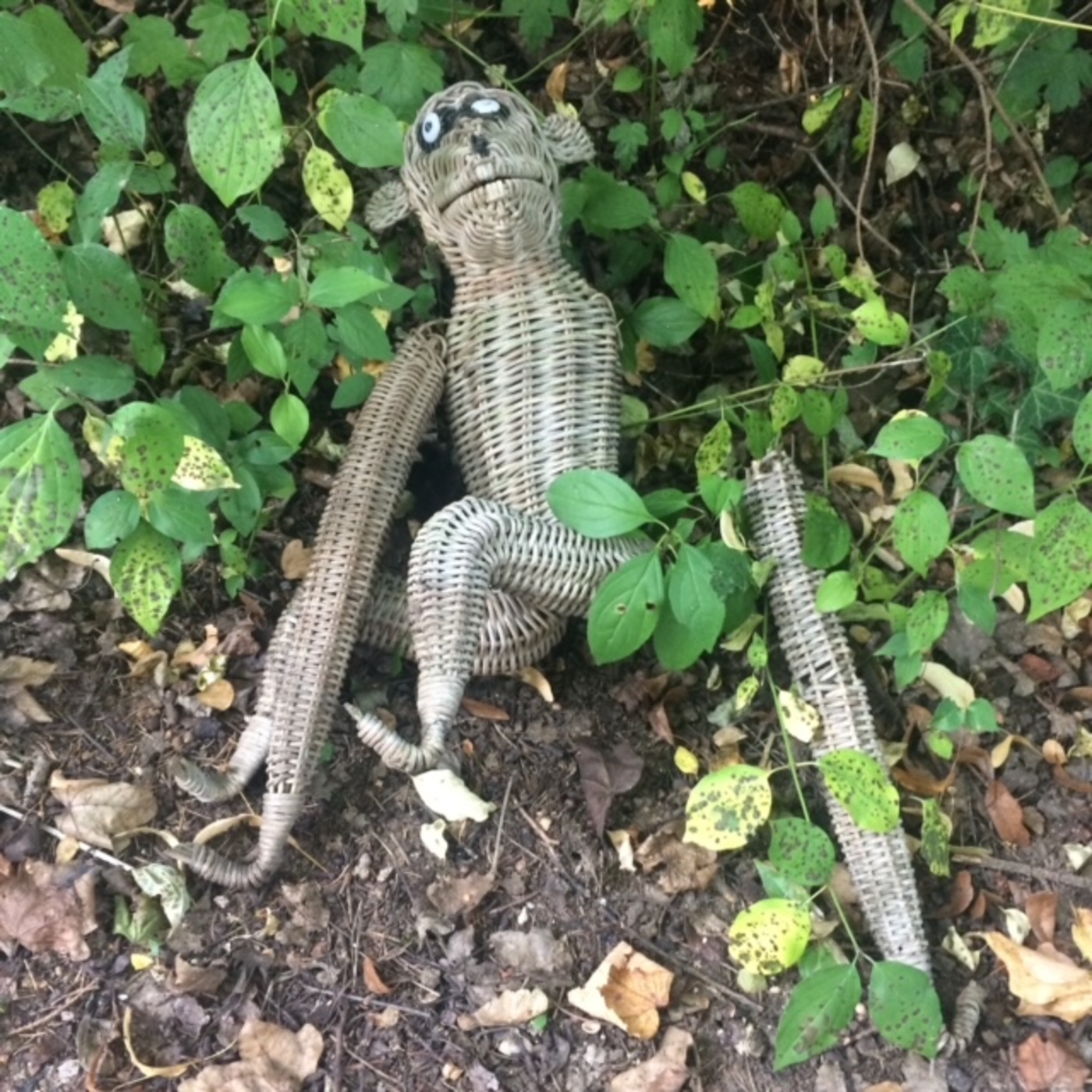
…Putting a Story to Bed
Sep 1, 202100:34:12Tap to summarizeHana brings her story of a potentially haunted toy to a close and feels the satisfaction and relief of resolving an open task, while treating her character with respect. She discusses the pitfalls of perfectionism with Ana, the experience of falling prey to the allure of procrastination, and the repeated lesson that putting things off never feels as good as finishing them. Finding methods to encourage accountability, breaking projects down into more-manageable pieces, reaching out to colleagues/podcast co-hosts for help - these are just some of the tools that Hana and Ana have developed and are still working on to make the work of writing achievable in their daily lives.Originally recorded December 13, 2020. A Discarded ToyThe day was waning, shadows from the trees long against the grass as the girl walked her dog down the lane. Though the leaves had barely begun to lose their green, there was a crispness to the air that hinted at harvest time, morning frost, and the need for sweaters. The dog ran slightly ahead, trotting toward the field in anticipation of the long expanse of grass to run through. Occasionally, she would stop to sniff at a plant here or a pile of dirt there, responding to cues that were invisible to the human senses. They approached the overgrown walkway leading to the field where the dog hesitated, waiting until her companion was with her before stepping into the shade cast by the trees overhead.“You always stop at the same spot,” the girl said to the dog, reaching down to give a comforting scratch between her ears as she wondered out loud to herself, “Is there something you can sense here that I can’t?”They continued down the path, the dog wandering from side to side until they reached the field, where the girl unclipped the leash and immediately the compact, furry body went flying across the terrain in an ecstasy of joy and freedom. As she watched her faithful shadow run in widening circles around her, she felt a slight chill in the air, though no breeze ruffled the tall grasses around her. For a moment, everything seemed to pause slightly, as though the world were holding its breath. The sky darkened for a split second and all sound stopped, then everything started again, so quickly the girl thought she must have imagined it.The dog came bounding over from where she had been investigating a shrub beloved by all the dogs of the neighborhood. Panting, she sat down expectantly and cocked her head to the side, waiting for the treat she knew was coming. The girl looked closely at her to see if she had noticed the same odd moment of stillness, but she seemed unaffected or, at least, wasn’t dwelling on it. Shaking her head to clear the fog, she reached into her pocket and held out her open palm to the waiting dog, who eagerly scarfed down the small knot of dried beef before turning around to head home.The girl was walking down the tree-lined path behind the dog, lost in thought, when she felt the hairs on the back of her neck rise in response to being watched by someone. At the same moment, the dog stopped, dropped her head down, and began to growl softly, until the girl tugged on her harness to get her moving again. She looked around, but saw no one on the path in front or behind, nor were there any noises of people in the fields and yards hidden by the trees. Once they reached the end of the path where the pavement began, the feeling began to fade until just a faint sense of heaviness remained, echoed by the clouds that had rolled in during their walk back home. The dog relaxed out of the hunting position she had adopted, trotting cheerfully back to the house.Walking to the field the next day, late in the afternoon, the girl had forgotten entirely about any strange occurrences from the previous day. The sun was hidden behind a veil of clouds and the air felt thick with cool humidity, the moment of calm before the torrent of rain. Sensing the impending deluge, the girl walked faster than usual, coaxing the dog along with ear scratches and calls. As she walked, she thought she caught something moving out of the corner of her eye, but all was still when she turned her head in that direction. Walking closer, she saw a light-colored object poking out through the brush at the edge of the path. A pair of wide eyes stared at her between leaves and then she was standing in front of it. She vaguely registered the dog giving the spot a wide berth as she tried to hurry past it to the field.The monkey was neither small nor large, about the size of a teddy bear. Its wicker straw was tightly woven and appeared to have been painted white at some point, but exposure to the elements had worn the color down to a dirty grey. It lay on a bed of leaves, one of its legs partially torn and hanging at an angle from the body. It seemed like a toy from an earlier era, too stiff and uncomfortable to hug like a plush animal, but too delicate to toss around like the plastic and rubber toys children left lying in their yards throughout the neighborhood.Gazing down at it, the girl felt a shiver go through her body. It seemed innocuous enough, lying there in the muck, clearly thrown out by its previous owner. But who would own something like this and why would they rid themselves of it here? The silvery white eyes were flat and shiny, with no depth to them but their stare was unnerving, the stare of a dead animal and yet somehow it felt like the monkey was observing her in turn.At once, a breeze blew through the trees, rousing her from her staring contest with a broken toy. The girl gave herself a shake and turned to the dog waiting at the end of the path and together they walked to the field. She told herself she was imagining it, but there seemed to be a faint imprint of the monkey’s white button eyes burned onto her vision, like the aftermath of looking directly at a bright light. As she chased the dog around the open expanse of grass, the memory and image of eyes faded away.Walking back to the house, she became very aware of the spot where the monkey lay as they neared it. Telling herself that she was being silly, she still concentrated very closely on looking straight ahead, not wanting to catch a glimpse of those shiny, creepy eyes staring at her through the deepening twilight. It was easy to concentrate on the dog trying to stretch herself to the end of her leash, avoiding the spot where the monkey lay. As she and the dog moved out of the trees and into the neighborhood, the girl found herself breathing a little more easily.Later that evening, at the dinner table, she brought up happening upon the monkey toy as a strange anecdote from her day and joined in her family’s laughter at such an odd item appearing in an unexpected place. The feeling of relief and embarrassment that swept through her made her realize how unsettling the experience had been until she shared it with others who reassured her of its absurdity by their amused reaction.The days passed, growing shorter and the girl and her dog continued their afternoon routine. Each time they would approach the spot where the monkey lay, the girl would quickly glance at it before hurrying past. The dog never got any closer to the toy than she had to, hugging the other edge of the path as she ran by. The girl noticed the monkey showing signs of its exposure to the outdoor elements - the leg separating more from the body until it was barely hanging on by a few straws, the paint fading even more so that it blended into its surroundings and became harder to spot. Everything aged and changed except for the eyes, which remained a stark, staring, shiny white.One day, as they were walking to the field, the girl noticed that the toy wasn’t in its customary spot. Thinking she must have just missed seeing it as she walked along, she put it from her mind, not wishing to dwell too long on something that made her so uneasy. However, when she walked back home with her tired companion, the girl saw that it was truly gone. Indeed, the dog showed no unease in that spot, trotting past with confidence. Although she felt somewhat embarrassed by her strong reaction to a discarded plaything, the girl felt a sense of relief.In the days that followed, she went on with life as normal and didn’t give the mysterious toy with the staring eyes any more thought. Walking to and from the field went smoothly, with the dog occasionally stopping at random spots to bark at unseen or imagined threats. Every so often, the hairs on the back of her neck would rise and she would look around to see if anyone was watching her, but the moments never lasted long and were infrequent enough that she didn’t make a connection between them at first. Even as the disturbances became more frequent and the girl’s rising anxiety cast a pall on her daily life, she didn’t mention anything to her family. She told herself that her hesitation to give voice to her unease was to avoid being laughed at.Standing by her bedroom window one night, the girl was getting ready for bed when she glanced outside at the ring of light cast by the streetlamp across the street. As she turned back to her wardrobe, something flashed just out of the corner of her eye, at the edge of the light’s circle. She turned back to the window to see what was out there, but saw nothing within the lit space. All the same, she felt that sensation of someone watching her and tried to peer through the darkness beyond to detect any eyes that might be watching her. She moved from the window and continued with her nighttime routine, trying to push the event out of her mind. Had she seen a small, greyish body with a pair of bright eyes in that brief movement or had she just imagined it?As the girl’s fears grew, she still couldn’t bring herself to tell anyone the true cause of her stress. She gave noncommitt...
Transcribe →
...Finding Its Confidence
Aug 18, 202100:37:02Tap to summarizeAna gets a confidence boost at work and Hana gives her high praise as Ana learns what her writing "jam" is - writing about nature connection and mentoring. Through Hana's praise and curiosity about the piece, Ana comes to the realization that she can easily and smoothly write clear and concise instructions about how to teach activities. Ana attributes this ease to her many years of teaching children in the method of "Coyote Mentoring" through her nonprofit she co-founded. Ana's writing mentor and colleague helps Ana discover her writing "blocks" by purchasing a book that is designed to help people with ADD type brains to write in logical and concise ways. Ana is floored by how simple it is to reroute and rewire her outline processes by following the simple steps outlined in the book. Originally recorded December 13, 2020.
Transcribe →…Learning to Blog
Aug 4, 202100:23:42Tap to summarizeHana continues to offer support and guidance for Ana's professional writing within her new position. In Episode 10 ...Finding its Voice, Ana speaks about her struggles with writing her first blog piece. Now, a month later, Ana realizes that many of her writing fears and struggles from college are rearing its ugly head. With the help of Ana's co-worker and team's editor, the two embark on a promising journey to help Ana overcome her inexperience with writing concise, informative pieces. While speaking with Hana, Ana reveals certain aspects of her brain and learning challenges that has come to light during this process. Originally recorded November 8, 2020.
Transcribe →
...Stuck
Jul 28, 202100:30:31Tap to summarizeHana asks Ana for assistance after getting stuck halfway through her second scary story. Ana reads the excerpt aloud and the discussion goes into an exploration of anxiety, gaslighting, what it means to have mental health challenges, and how to write those aspects of a story responsibly. Ana helps Hana brainstorm some potential paths to end the story that hopefully avoid caricature, stereotyping, and other lazy but common tropes.Originally recorded on November 8, 2020.Written piece to follow in Episode 14, The Pen Is...Putting a Story to Bed
Transcribe →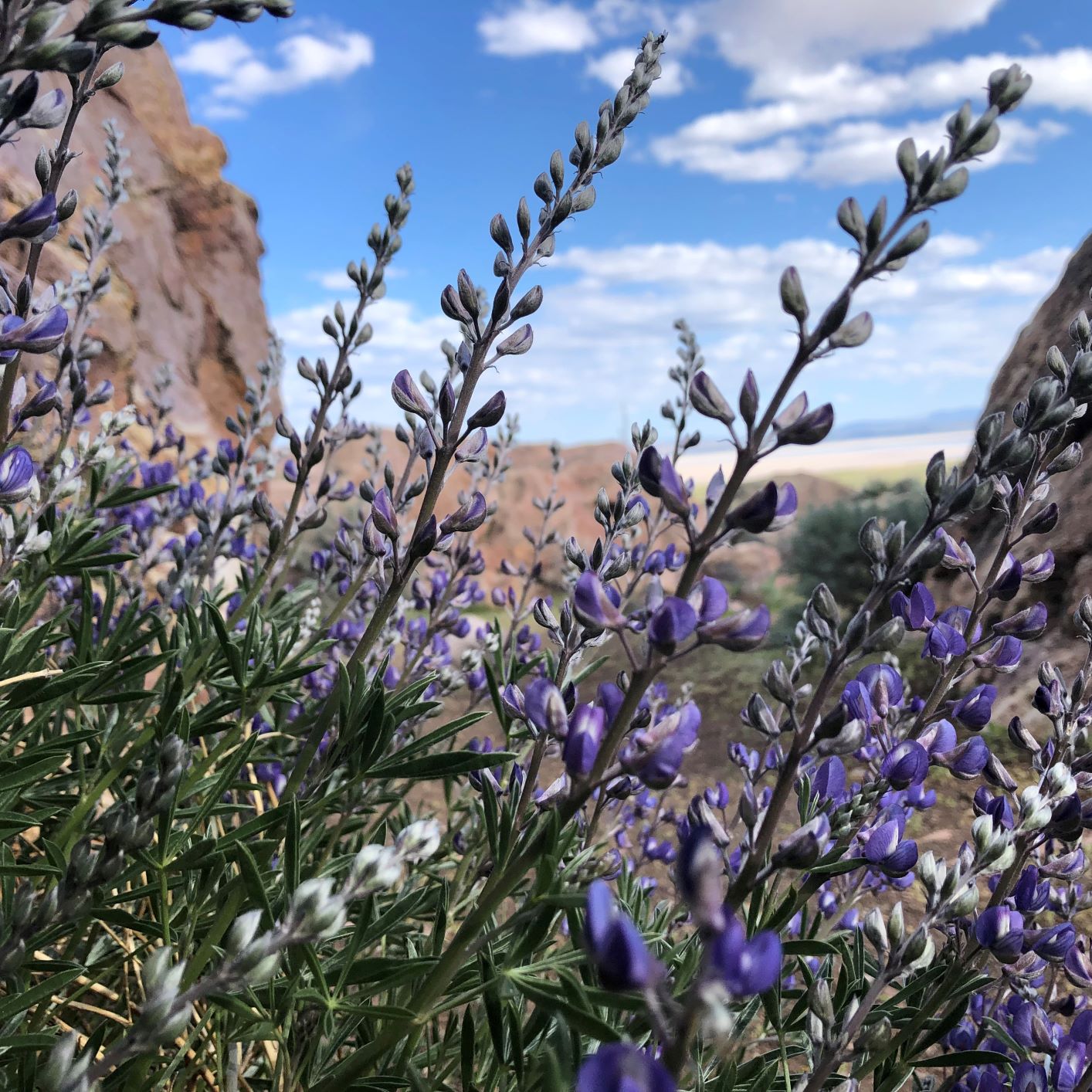
...Finding Its Voice
Jul 21, 202100:40:11Tap to summarizeAna has been gifted the opportunity to push her writing chops at her new job and is excited to share the process of writing her first professionally published piece. Ana's co-workers help her to work through some of her writing challenges around structure and concise language by guiding her to use her strengths in writing to showcase her passion for the Earth and sustainability. A personal triumph, Ana shares a real story that weaves her vision for connecting people to nature and boosts her writing confidence.Originally recorded on October 11, 2020.I sat tucked beneath the tree, my head resting on the pillow of her fibrous bark. Absently, my fingers had been twisting and wrapping the aromatic leaves of the sagebrush, each crush igniting fragrant oils into the air. My eyes gazed out across the vast stark white lakebed of the Alvord Desert. The air had begun to cool as the sun migrated closer to the mountains edge preparing for the freezing starlit night. It was here on my very first solo camping trip that I began to contemplate what it mean to ‘belong’ and to question why I felt so inextricably disconnected and foreign sitting upon the Earth. In times of trouble I am drawn to the plants. Over the past decade I had spent my life dedicating myself to the study, immersion, and teaching of plants and nature connection. I was attempting to bring some passion and interest back to children and adults who had grown up entirely disconnected from the deeper teachings of the natural world. The world however, didn’t seem to be ready for humans to remember this connection. I felt anger and frustration living in this society where collectively and routinely we are separate from our environment. A world that is fast paced, virtual, padded, and insulated from the natural processes and forces. A world where species are going extinct every minute and no one seems to be able to stop it. I abruptly got up and faltered, my body reminding me I had been sitting in one position for the better part of an hour. I looked around me to the company I kept in that moment, the sagebrush community. Silver grey shrubs littered the landscape punctuated by the brilliant purple of the various lupines blooming in the late April evening. These plants, this community belonged to one another and they needed each other to keep the delicate balance of life in this harsh ecosystem. An emotion bubbled up, envy! How could I possibly be envious of these plants? I stood there as witness, a European transplant high on my existential crisis in a land where the ancient Burns Paiute people lived (and the Burns Paiute Tribe live today) as an integral part of this ecosystem. I didn’t feel integral. I felt alien, removed, invasive, caustic. I wanted to cry and scream, throw my hands in the air and give up. It was in that moment that a sound had been penetrating my awareness, a screeching and calling. I stopped moving, instincts telling me to pay attention and look. My ears perked and noted the location of the calling birds. I crouched down all my senses alert, my feelings of despair forgotten. Pay attention! To the south the calling came from two black and white birds, long tailed and clearly agitated. The magpies were extremely unhappy about something and I was bound to find out what. I watched as they took turns flying up into a willow shrub then swooped down over sagebrush on the eastern side of the hill. Over and over they repeated the process but each time they flew over the sagebrush they moved further and further up the hill, as if following something. I quietly stalked closer, heart beating but breathing steady, moving at a pace that wouldn’t attract the alarming birds to my presence. Suddenly my peripheral vision caught movement, I focused in and noticed tan, brown, and white, moving quickly along the hill. As the creature came into view it showed itself as a large tailless mammal. A bobcat! She slinked quickly away from the birds, no longer able to hunt now that the magpies told everyone for at least a mile out of her presence. I stood in awe. Gratitude welled up inside of me as I began to feel less separate, less of an invader. I felt the familiar tension in my abdomen as an epiphany began to take shape and as the tension released into an awakening, I understood how I belonged and how I and others could make a positive difference. The solution was so obvious it was nearly invisible. I began to feel embarrassed that I was so caught up in my own head that I nearly missed an incredible opportunity - to see a bobcat in the wild. The magpies unbeknownst to them had alerted me to my awakening. They woke me from my reverie and made me sit up and pay attention. To become awakened simply means coming into awareness. These awakenings can be as incredible as seeing a wild animal up close or more subdued such as identifying a plant for the first time. Either way the results are the same; I saw something I never saw before and I am forever changed. For me awareness is a form of love. Author John Muir Laws describes love as: sustained compassionate attention. My love of plants, working with them, studying, harvesting, writing, being, eating, using medicine, are all ways that I connect to an individual plant in a sustained and compassionate way. However, I never would have taken that path if I had not had an initial awakening that led me to an awareness of something outside myself. My awakening to the plant world further led me to continuous awakenings of the natural world. I began to see plants, animals, rocks, bugs, the sky, all in a new way in a way one might look upon a lover or your child. In my own experience, and hearing the countless experiences of my students over the years, I have found the more I allow myself to be aware of my environment, the more I feel a sense of belonging. And the more I belong, the more investment I have to protect, love, interact with, and be sustained by the natural world. Perhaps you have noticed this as well, that as we deepen our relationships with plants, whether we garden, wildcraft, identify, make medicine, or enjoy the scent of a flower, we also deepen our connection to place and in turn our own sense of belonging. It was this awakening that the magpies and bobcat gave me - an invaluable gift. Each moment we are allowed the gift of being awakened and we as humans are given the opportunity to see, connect with, and love our environment. And not just the environment as a whole, but the small intimate connections we make at any given moment. Imagine if we stopped and listened more often to the messages floating on the wind. If we are to have meaningful conservation for our Earth then it must be in relation with the land and all the inhabitants. I walked back to my campsite next to the creek lined with newly leafing cottonwoods and willows. My heart was alight, the heavy despair from minutes before now gone. As the sun disappeared behind the Steen Mountain range a thud of a hoof caught my attention. There on the same hill that the bobcat slinked away stood three deer. The two males in front kept walking ignoring my presence, the female in behind however stood still and quiet watching me. She didn’t appear or feel afraid of me, instead I felt acknowledged and allowed as we held each other’s gaze with sustained compassionate attention. We belong.
Transcribe →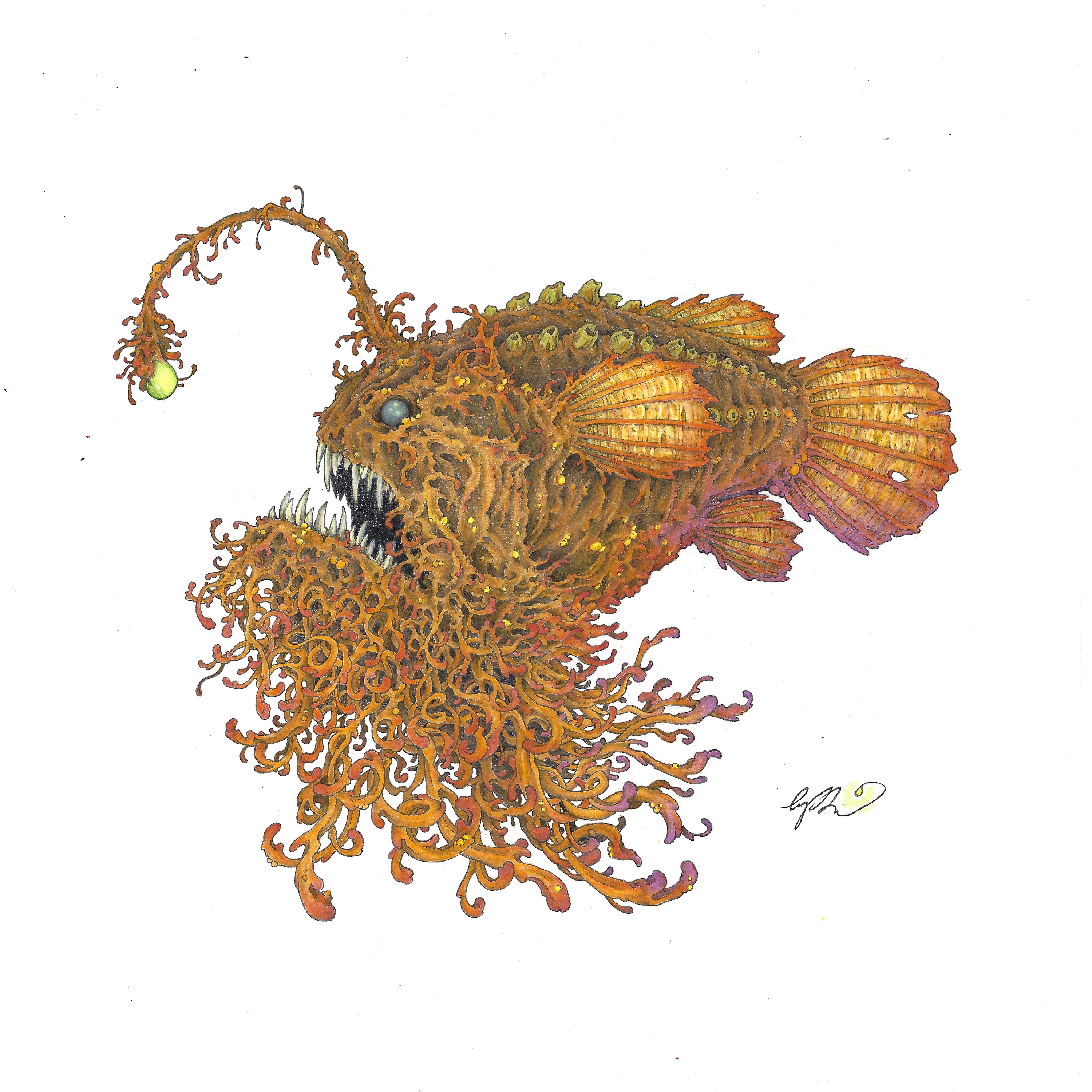
...Exploring the Eerie
Jul 14, 202100:26:47Tap to summarizeFirst up, a correction: This episode talks about a fish with a light on its head that it uses to lure unsuspecting victims, but that fish is called a lanternfish here when it is in fact an anglerfish *facepalm*. Many sincere thanks to Hana's brother-in-law Cody for the correction AND the incredible artwork for this episode. (Check out @cpburke.nvartwork on Instagram for more of his artwork.) Hana shares a scary story she wrote based on her fear of the deepest, darkest recesses of the ocean. She and Ana discuss her writing process, beginning with the initial inspiration that shaped her tale and moving into how she refined the tone and why she made particular stylistic choices. Plus, the scary story author's ultimate fear: is my story scary enough?Originally recorded on October 11, 2020.The LanternfishOlivia wasn’t sure what first drew her eye to the girl on the veranda, but once she glanced over, the scarf drew her in. It was a beautiful goldenrod with a pattern of ruby-colored fish on it and it hugged the girl’s neck like a glowing, silky living thing. Olivia smiled slightly, the universal sign for opening a conversation with a stranger and the girl waved her in through the gate.It was her first week in this new town and she was enjoying the solitude of her nightly walks, getting to know her neighbors at a distance, through brightly lit windows, before she’d start greeting them in person as a new librarian. As much as she enjoyed wandering through the stacks of books, breathing in the smell of paper and binding glue, she tolerated the need to interact with the public as a necessary part of her job, but not an attractive one.She hesitated a moment with her hand on the gate knob, then turned it and walked into the long garden that led to the small house set back from the road in the embrace of a sea of weeping willows. Normally, approaching a stranger to strike up a conversation was something Olivia would do only under duress, but the girl looked so friendly and unthreatening. And there was something about her outfit that was magnetic. The jewel-toned scarf was the crowning piece, but her buttery yellow dress and crimson sweater were somehow both soft yet impeccably tailored, and her green pumps showed off her dainty feet.“Good evening, it appears that you’re enjoying our uncommonly fine autumn weather as much as I.” The girl’s voice was bright and musical, none of the annoyingly chipper tones of the busybody mothers one found in a town this size, nor the wistful sighs of the other spinsters Olivia was lumped in with at community potlucks and town hall meetings. Yet it also sounded a bit...old-fashioned was the only word she could think of. Indeed, her style seemed a bit outdated, yet somehow timeless and classic. From a distance, Olivia had thought she was young, but from closer, she had almost an ageless appearance. A woman, not a girl.“Yes, I always like to go for a stroll in the evenings as long as the weather permits. I’m Olivia, I’m new to town,” she said as she continued up the garden walk. A thought skittered across the back of her mind that the house itself was surprisingly shabby, especially in contrast to the vision of color and elegance the woman presents, but it all faded into the background, the house and the thought. Nearer the house, a refreshing whiff of sweet but salty air chased the mustiness of the evening away, reminding Olivia of her childhood summers by the sea. “Lovely to meet you, Olivia, I don’t receive many visits from neighbors so this is an undeniable treat! My name is Marina.” The woman stepped back to where she had been sitting and gestured to Olivia to join her. “May I get you something to drink? I’ve been savoring my nightly mug of tea now that the heat of summer has passed us by.”When Olivia said that she would very much like some hot tea, she expected that Marina would go into the house to get it, but instead she reached for a teapot on the side table, wrapped in a cozy to keep its contents hot, and poured the steaming amber liquid into a fresh mug.The two of them sat there, companionably enjoying the sunset and the sounds and smells of the earth as night approached. Marina was effortlessly charming and warm, the type of person who you feel you’ve known forever. Olivia felt herself drawn out of her customary shell bit by bit as they talked. Or rather, she talked. As she was walking back home in the remnants of twilight, Olivia realized that she had hardly learned anything about Marina beyond her name. Instead, she had found herself telling her own little life story, eager to entertain this woman who made her feel equally funny and charming. It was a bit intoxicating, having such an attentive and eager listener. Strange that someone with an effervescent personality lived in a small, rundown cottage that was so set apart from her neighbors, like some beautifully colored fish hiding alone in the dark crevices of dead coral. Olivia tried to remember if she’d even noticed the house when she first moved to the neighborhood, but it all became a bit of a blur as she fell asleep, grateful to have made a friend.The next few days were a whirlwind of activity, meeting the head librarian, filling out paperwork, learning the layout of the library and the idiosyncrasies of some of the town regulars. Every evening, she was too worn out from the events of the day to take her walks, falling into bed as soon as she had changed into her nightgown and brushed her teeth. She had almost forgotten about her enjoyable evening with Marina, especially as her introverted nature asserted itself outside of work.After two exhausting weeks, Olivia found one evening that she still had some energy after a day of reshelving books and reminding schoolchildren to pay their late fines. The sun was still shining through the wavy haze of autumn and she was enjoying the crunch of a few dried leaves under her shoes when she walked past the silvery-grey wood fence. She hadn’t consciously walked this way, in fact she’d almost forgotten about Marina entirely, but there she was again, wearing the same beautiful goldenrod and crimson outfit with the beautiful silk scarf shining softly at her neck, drinking her tea and waving Olivia in to join her. Olivia opened the silvery grey gate and walked down the winding path to the porch, with its paint peeling off the rails and worn wooden floorboards. As they began to talk, she was grateful for the warmth of her tea. Sitting in the shade of the willows and feeling the cold begin to pool around her, she realized she had left her own sweater behind, lured by the warmth of the sun.“Oh that’s no problem dear, I have quite the collection of cardigans. It won’t take but a moment,” Marina said, cutting off any protest Olivia might have. Indeed, faster than she would have thought possible, Marina was back with a beautifully soft sweater, this one a sunny lemon color. It fit perfectly and bathed her in warmth and softness, with none of the scratchiness of wool.Again, as before, they sat and enjoyed the onset of twilight. Olivia had first thought to ask Marina about the town, their neighbors, to get an insider’s perspective on things she couldn’t ask her supervisor. And yet, somehow she found herself again talking about her passion for writing, her love of solitary activities like reading, knitting, and gardening. For the first time, she didn’t feel judged for her reclusiveness and desire to escape from the expectations of society. In fact, Marina seemed pleased by this, her wide eyes shining when Olivia told her that she had no close immediate family or friends and preferred the company of her books to most people.As she rose to go home, Olivia began to take the cardigan off to give back to Marina, but the woman waved her hand and shook her head, saying, “Please, consider it a gift. I would be honored if you’d take it. You can consider it your veranda sweater, something to keep you warm for our evening chats!”Olivia thanked her profusely for the lovely gift and made her way home through the murky evening air. As she was drifting off to sleep, she had a fleeting thought that none of her neighbors or library patrons had mentioned Marina to her in their gossip of townspeople. It was almost as if she existed in a different world, but the thought dissipated like a bit of seafoam tossed among waves.As the weeks passed and fall turned trees gradually into plumes of rust, pumpkin, and honey-colored leaves, Olivia developed a routine of stopping by to visit with Marina. At first once or twice a week, she found that she enjoyed Marina’s companionship so much that she began to spend four, then five evenings on the veranda, surrounded by the gently waving tendrils of weeping willow. There was something captivating about the woman and Olivia felt flattered that she seemed always happy to see her and interested in her life. And she was so generous - one evening Olivia walked up to see that there was a dress laying across the wicker chair she normally sat in.“Try it on,” Marina said, excitedly. “I was going through old outfits and found this one that I think would fit you just right and the color suits you so well!” Indeed, the garnet color was lovely, as vibrant as Marina’s own, ever-present crimson cardigan and the silk scarf that almost seemed lit from within with its golden glow. Despite Olivia protesting that she couldn’t take such an obviously well-made dress, Marina made her promise to at least take it home and try it on. “Wear it to our next veranda chat,” she said, with a gracious air, “It would make me so happy to see it on you, you have the perfect fig...
Transcribe →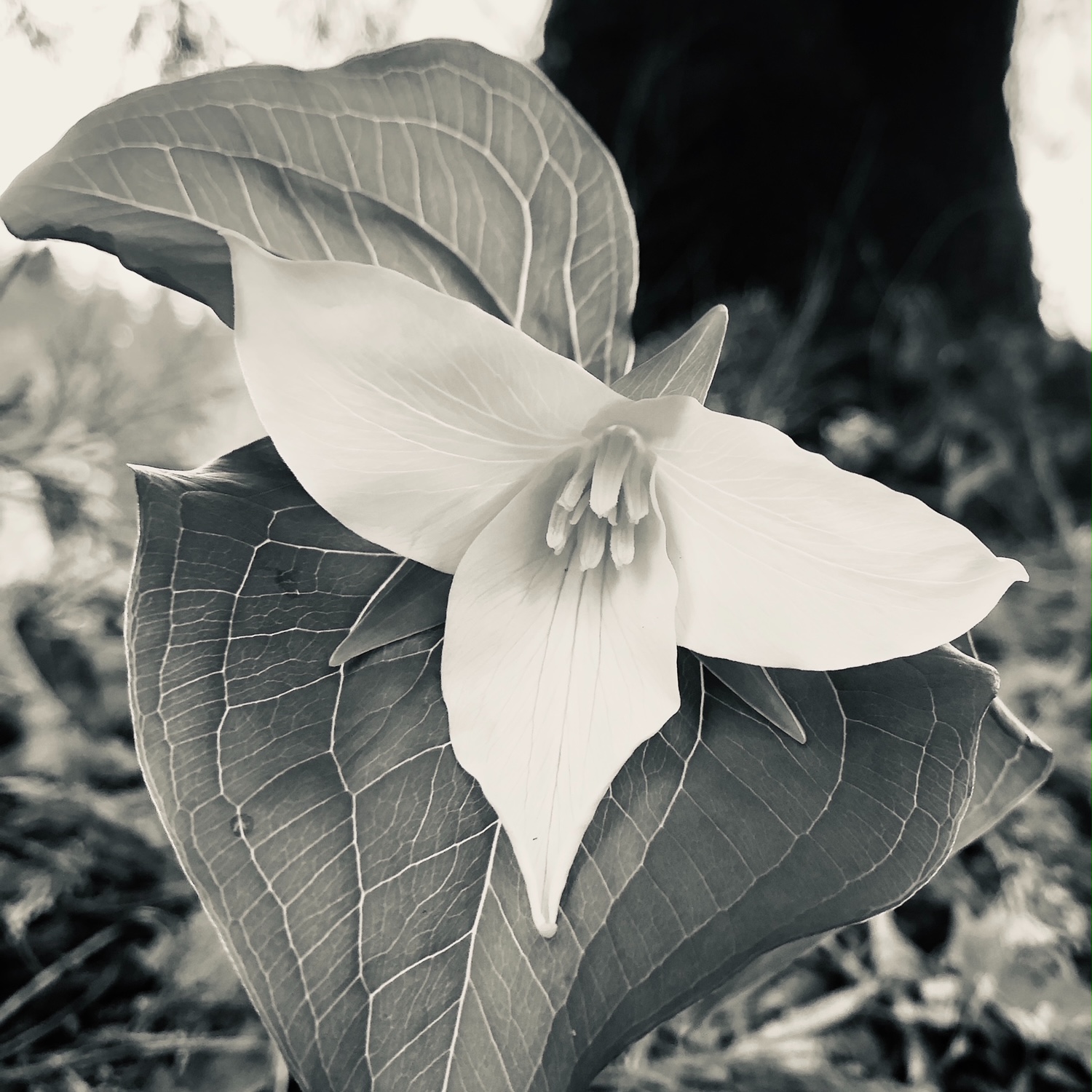
...Allowing Emotional Acceptance
Jul 7, 202100:44:49Tap to summarizeAfter exploring writing a piece that uses only dialogue in Episode 5, Hana pushes Ana even further by challenging her to write a fiction piece that mixes dialogue and expository text. Ana - ever ready for the challenge, finds herself writing an emotionally laden conversation between two people working through a tense exchange. Ana surprises herself with how easily she was able to work in some of her own experiences with allowing emotional acceptance and finds that dialogue doesn't have to be spoken to be heard. Originally recorded on September 20, 2020She sat down. It was an intentional sit. Slowly lowering herself to the cushioned chair, prim, poised, and ready. Her heart kept beat. A waltz. 1-2-3, 1-2-3. The steady rhythm calmed her. In her mind she imagined conductor’s hands, baton flying through the air holding pace, keeping steady, leading with ease while orchestrating the conversation at hand. Firmly seated, she raised her eyes across the room to him. There he sat eyes aglow. Waiting. For what? For the baton to drop? For the still air in the stifling room to suddenly shift, a ghost of a breeze wafting as if on cue to begin the inevitable? Her heart ached. Still pounding with the dance, counting, pulsing, whooshing blood in and out, up and down. He seemed so far away even if it was only several feet, it felt like miles. Miles of distance, untouchable. “I’m not afraid.” She stated. Only her lips moved, her eyes locked into his. He didn’t move or react. In his silence there seemed to be a placid allowing, as if he knew exactly what she was about to say and he agreed. He breathed in deeply, letting the breath expand his chest, his eyes not moving from hers. He spoke now after with the last few beats of exhale. “I might be.” She was not surprised by this response. His body posture gave the false impression of utter calm, yet his eyes shone with such intensity it seemed as if the emotion might burst forth in a flash of light and fear. Instinctively she wanted to reach out and touch his cheek as if to comfort a child. Her hand didn’t move. Nor did her body. The space between them had become far too great, far too expansive for such a singular journey. Sensing her inner conflict he offered reassurance. “I can hold this. I can bear it.”“What if I can’t?” She asked, eyes near to tears. Her barely held back grief had begun to leak out, tearing at the seams with the pressure of holding in it. Holding it down. Keeping it close. “I’m scared I’m losing. Losing this game of pretending it’s all ok. I’m wavering.”At this he smiled slightly. The smile spoke of understanding and immense love. He knew only too well that sense of slipping and of losing. It was his turn to feel the urge of bridging the echoing distance between them. To take her in and bring her gently to his heart so she could hear the waltz beating consistently within his own chest. The same rhythm. The same song. The same desire. After several measures he finally spoke. It came out in a heartbreaking whisper and floated towards her with fierce tenderness. Yet no words actually escaped his lips. It was the very essence of his meaning and emotion that transmitted instantly into her core and she knew without knowing the message he needed to send. A mutual acceptance filled their void and held the space within.
Transcribe →
...Pondering Motherhood in Detail
Jun 23, 202100:31:12Tap to summarizeAfter her last piece kept things deliberately vague, Hana committed to writing a piece that was heavy on the detail and specifics. This week's piece is written from the perspective of a young woman unsure of her life's path and wavering on a momentous decision: to have children or not. Hana blends her own experiences and thoughts with those of friends to develop a story that is familiar, while being careful to double check her facts.Originally recorded September 20, 2020.Bethany takes a breath and starts to read, “Once upon a time, there was a little girl who-”“No! I said I wanted the other story, the one from the Today Times, not a Back-Then story,” Eleanor crosses her arms and pouts up at the older girl. It’s getting toward the end of their bedtime ritual, but Eleanor has been in a fussy mood all evening, demanding more hugs and treats than her usual happy-go-lucky demeanor suggests. Her parents have been preparing for the upcoming trip to the hospital, packing a bag for her mom and putting the final touches on the bedroom next to hers. Clearly, though she has no idea how much her life will change shortly, Eleanor feels the excitement and tension in the air. She wavers back and forth between gloriously happy anticipation and a frantic desire for everything to remain the same. Being a four year old on the cusp of sisterhood isn’t easy.Bethany pulls out the picture book with a sprightly redheaded girl on its cover and begins to read the well-worn story yet again. As she recites lines memorized from repeated performances, she steals covert glaces at the little girl lying in her parents’ big double bed. Whenever they’re out for the night, Eleanor insists on sleeping in their bed so that she’ll “greet” them when they get home, though she almost never wakes up while being carried back to her own bed down the hall.As if on cue, Eleanor’s eyes start to drift shut on the fifth page. Bethany wonders if there’s a Pavlovian response at work, given how often they read the Pippi Longstocking story and the fact that Eleanor falls asleep at exactly the same point in the story every time. She makes a mental note to bring the topic up in her History of Behavior Therapy class next week.Once Eleanor is soundly asleep, Bethany stands up, careful not to shake the bed, and leaves the room, closing it until just a crack remains. She walks down the stairs of the darkened house, guided by familiarity and the glimmer of light coming from a lamp in the family room. Her feet avoid the various scattered toys by instinct.Grabbing a Coke from the refrigerator (Paul and Marion keep their kitchen well stocked, knowing how much a college student appreciates free food), Bethany makes her way to the couch in the family room, where a pile of textbooks, handouts, and notepads sits. She sighs inwardly, thinking that she’d love to just enjoy the peace and quiet until the Camford-Strahofskis get home from their weekly date. When Bethany decided that she wanted to attend a huge state university two days’ drive from home, her parents immediately started calling around to friends to find a surrogate family for her. That’s how the nannying job with Eleanor came about and she’s grateful for the stability and spending money it provides. Plus, with Paul and Marion being on the faculty at the university, she knows they understand the college student perspective more than most - though their positions in Economics and Sports Marketing bear no relation to her chosen major, Psychology. Not only does she have a second home outside the dorms at the Camhofski residence, she also appreciates getting an up-close and personal look at the life of two hard-working professionals juggling family and career demands. Now that she’s in her fourth year of college, choices of job and family seem to be more consequential and concrete than ever before. If only the correct choices were as easy and clear to figure out as the answers on her multiple-choice midterm exams.Coming from a small town with more churches than bars, Bethany has several childhood friends who are already married and expecting their first child. Before leaving home, she had never considered the multitude of options out there, but moving to a city has opened her eyes to family structures and choices she didn’t know existed. At first, it was exhilarating, realizing that she didn’t have to make her mind up right away and could pick from seemingly unending choices. Lately, though, it’s been a bit exhausting to think about it. If she could just focus on her classes, her friends, nannying, and enjoying the last bit of college, when the ultimate combination of great freedom and little responsibility is at its headiest heights, she’d feel ready to take on the debate again in a few months. But she encounters reminders every day, from friends who ask if she’s dating someone serious (no) to her 22nd birthday card from her mom (enclosing a photo of her mom at 22, with Bethany’s older sister on her lap and Bethany in her womb), to the struggles and highlights she witnesses in a household with two working parents and one energetic child, sooned to be joined by a newborn.As she settles down for a night of studying for midterm exams, Bethany tries to imagine her future, 10 years from now. She’s applied to several master’s programs and is anxiously awaiting acceptance letters, but she already pictures herself in an elegantly appointed, calming office where she sees patients for therapy sessions. Some of the details are fuzzy - who her clients are, if she’s in private practice or part of a larger organization, what city the office is located in, how she treats them. Luckily, those can be gradually filled over the next few years. What she can never figure out, but feels increasingly pressured to do, is what that life looks like outside the office. When she finishes her sessions and the last client goes home, does she go home to her own family? If she works with high-needs clients, how does she balance after-hours emergencies with being a parent who goes to all the dance recitals and reads bedtime stories?Being present in Eleanor’s life from almost her first days, Bethany has witnessed the struggles of Paul and Marion raising their little girl far away from family. While Paul has done an admirable job of shouldering his share of parenting, Bethany never sees him confronted by his inability to flawlessly “have it all,” something reserved for Marion. The preschool has Marion listed as the first contact, she’s the one who keeps track of all doctor’s appointments, and Eleanor runs to her first to have wounds kissed. Bethany’s afternoons and evenings with Eleanor give both parents some necessary time for themselves, but she sees traces of the sacrifices Marion has had to make it her tenure-track career, delaying a study publication or turning down a conference speaking opportunity. She obviously adores her child, but her life path forces her to make difficult decisions, often without the time to truly weigh the options. Bethany wonders if any of her past choices ever come back to haunt her.“You’re so good with kids! Of course you’ll be a great mother.” If Bethany could get a dollar for every time she heard that when she was out with Eleanor, she’d pay off her school loans in no time. Each time she hears it, she feels a slight increase of that invisible weight, the expectation of her impending motherhood. Even Marion said it once, surprising Bethany because she’s never discussed her uncertainty or feelings around having a family with her. But how can she discuss it openly with someone who has already made her decision? With whom can she be honest about her ambivalence and questions? There’s no Questioning Women of Childbearing Age Club at her university.Bethany reads through her lecture notes from this term’s statistics class, dutifully writing down key concepts on the notecard she’s allowed to take into the midterm. If only all life processes were as easy as this, learning the material, studying it, and demonstrating that she understands it, with a simple grade at the end of the semester to prove that she’s mastered the topic. No one is pressuring her to take this particular psychology course or write her final paper on that particular subject matter. And, most importantly, if she signs up for a course that is not what she expected or just doesn’t work for her, she can always drop it. Nothing about children is that cut and dried and REVERSIBLE.Bethany hears the car pull into the driveway and starts putting her schoolwork away in her bag. When the Camhofskis come in, she’ll ask them what they ordered for dinner and which movie they ended up seeing at the theater. They’ll start getting ready for bed and Paul will carry Eleanor back to her bed while Marion rubs her swollen feet. Bethany will head back to her dorm room, a little sad to say good-bye temporarily to such a heartwarming and cozy scene, but also happy to return to her own sanctuary, with no dried food crusting on her desk or stuffed animals tripping her. No small, scared voice in the middle of night waking her up with stories of a nightmare, no tiny body crawling into bed with her.Is that what she wants? The answer remains unclear.
Transcribe →
...Sitting at a Window
Jun 16, 202100:26:48Tap to summarizeIn response to Ana's prompt to write a fiction piece on an older person living out of the end of their life and how they’re addressing trauma they experienced earlier in life, Hana reads aloud her short description of a moment in time for Alva, her protagonist. Ana pushes Hana to continue working on the aspects of writing she finds uncomfortable, including vulnerability and emotion. Originally recorded September 16, 2020.Hana: write a fiction piece on an older person living out of the end of their life and how they’re addressing trauma they experienced earlier in life.Alva sits at the window and watches the clouds moving across the sky. Quietly humming to herself, she tracks the movements of sunlight and shadow on the ground and trees with her eyes and sometimes a half-raised finger, pointing at a particularly bright or dark spot. Most days, she doesn’t want to wear her glasses because the nose-pieces bite into the delicate skin on her nose, so most of the patterns outside are blurred. It was worse when they lived in the house near the airport, the sound of planes taking off and landing always throwing her back into days when loud noises meant fear and possible death, but the tasteful and deliberately calming environment of the retirement community doesn’t allow for such disruptions, so she can watch the clouds at her leisure.Once upon a time, just sitting at the window would have been a rare luxury, time spent alone with nothing else to do, no existential worries wearing on her mind if she tried to relax. The days of children asking her unending questions and ever-present piles of laundry and dishes waiting to be cleaned are long past, with those children tending to their own families’ needs. But lately, she’s been thinking more often back to the days before she was a housewife with a comfortable middle-class life, when the stresses of daily living were a threat to her survival.“Honey, can I get you anything?” the soft voice of the nursing assistant floats into the room, disturbing her reverie. She likes the earnest young woman who is so eager to please and will talk about her dreams of becoming a nurse one day, but the slight condescension of a woman calling her “sweetie,” “dear,” and “honey” when she’s never known true hardship is grating at times. She feels more kinship with the nurses, CNAs, and therapy assistants who have come to the US fleeing political upheaval in their own countries.“Thank you, Heather, but I’m fine.” Alva turns back to the window and resumes her train of thought.She finds conversations with others tiring these days. She’d rather continue the discussions in her head with people long gone. Full of excruciating memories and deep loss, these conversations feel like home to her in a way that inane small talk with chipper young people never will.A therapist she saw many years ago once said, “Processing your past experiences will help you put their traumatic effects to bed.” For someone supposedly so aware of the human condition, Dr. Feelgood (she doesn’t remember his actual name) was supremely unaware of the comfort of anguish. It may not feel pleasant, reliving these memories over and over, but it feels familiar. Why would she want to say goodbye to dear faces that are long gone, even with the sharp pain she feels at the sight of them in her mind’s eye?Alva realizes that the nursing assistant is still waiting expectantly in her doorway. She stops mid-thought and looks questioningly at her.“Mrs. Thompson…,” she hesitates, reluctant to bring up something upsetting, but Alva is braced for the inevitable question. It comes out in a rush, she wants to get on with the rest of her day, “I didn’t see your name on the list for this week’s shuttle, which stops by the cemetery, should I add you to the group?”Alva lets out a breath she didn’t realize she was holding as she thinks of a response. It’s no use telling this optimistic, naive girl that the bodies buried there are not the ones that make her cry out in the night or occasionally weep silent tears. Yes, it’s almost the anniversary of her husband’s death, but their relationship was a long, mostly happy one. She feels gratitude and closure when she thinks of him. She’ll go to visit him and tell him she misses him while she lays a bunch of sunflowers on his grave, but he is not one of the ghosts who haunts her.“Yes Hazel, thank you for reminding me. You’re such a good girl to ask,” she says, again turning her head back to the window. As she hears the girl’s footsteps fade away down the hall, she starts to hum a tune that reminds her that everything she experienced so many years wasn’t simply a nightmare, that she is still the broken survivor who built a family and life from the ashes. A tear slides down her cheek and she smiles wryly, at home with her pain.
Transcribe →