← The Person Who Believed In Me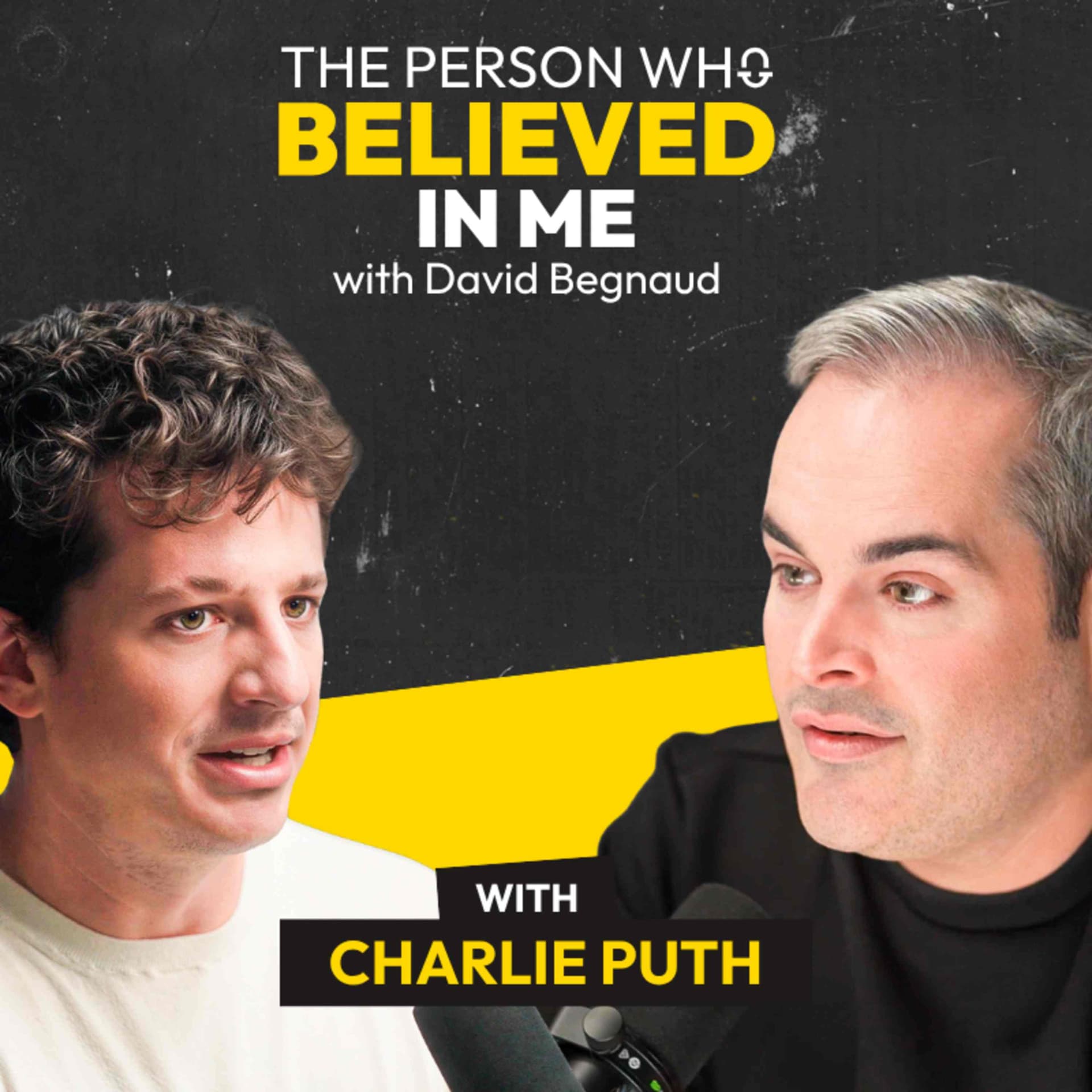
Loading summary
Transcript370 lines
- [00:00]
A
There is a reason why I am the way that I am.
- [00:04]
B
Hi, I'm Charlie Puth, the musical prodigy at age 6.
- [00:07]
A
Is it all around musical genius Charlie Puth.
- [00:11]
B
Have you ever done an interview this open?
- [00:13]
A
No. I'm actually a little frightened.
- [00:16]
B
Why are you afraid to let people know?
- [00:17]
A
Because I'm afraid to be judged. It took me 18 years to sing in front of people. Kind of just started with my parents, and then it trickled down from there.
- [00:27]
B
I came to understand how pivotal they were at the time. When the world yet believe in you.
- [00:33]
A
I had this confidence that it was all gonna work out.
- [00:38]
B
What would you write to that younger kid, that younger you, if you had to write him a note?
- [00:45]
A
I would say hello. Hello. Hello. Welcome, Professor Puth. Hello.
- [00:54]
B
So nice to meet you. Nice to meet you. Welcome. Come in. In this podcast, we sit down with some of the world's most successful people who reveal a person that believed in them before the world did. The conversations are deep, raw, and relatable. Special thanks to our friends at Canva for believing in us. Canva has a two part mission. Build one of the world's most valuable companies and then do the most good you can with it. They give their product free of charge to schools and nonprofits because they are on a mission to create equal opportunities that empower people all over the world. And finally, please like and subscribe this video. And if you're listening, please consider rating our podcast. Welcome to the person who Believed in Me. I'm David Begnaud. My guest today is Charlie Puth, a singer, songwriter, and producer with an ear that can turn a single sound into a feeling, then a feeling into a song. But this is not going to be a conversation about the hits. It's about what came before them. It's about belief. The kind that shows up before there's proof. The kind that keeps showing up when. When a kid is talented but scared. You see, for Charlie, that belief came early and it came consistently. As he tells his story, you will begin to understand this wasn't encouragement from a distance. It was presence, sacrifice, and a willingness to keep putting him in rooms where courage was required. Please welcome to the show Charlie Puth.
- [02:18]
A
Thank you for having me.
- [02:19]
B
Great to have you.
- [02:20]
A
You have a very, very calming voice.
- [02:23]
B
Do I?
- [02:24]
A
I was very. It's. It's rare for a voice to draw me in that was. I kind of forgot where I was for a second.
- [02:31]
B
Well, since you have such perfect pitch. Right? Is that what it is? Perfect pitch? Is that what it's called? Okay. And you asked to light incense to start the interview.
- [02:42]
A
Right.
- [02:42]
B
It got me into the vibe.
- [02:43]
A
I do that because I'm usually pretty uptight in interviews. It's it. But, but past the 20 minute mark. Twice. Once I'm like 30 minutes, I'll be like, kind of slumped back in my chair. I'll be. So the, the smells kind of calm me down a little bit.
- [03:01]
B
Talk to me about the nervous with the interview.
- [03:03]
A
Is it.
- [03:05]
B
What brings that about?
- [03:06]
A
I think, I think I'm naturally a nervous person. Diagnose ocd, which is probably why I know how to make music. Because I, I, I, I fixate on every sound. And I always believe that with one nudge here or take something out here, subtract this, add this, that it, it can make, it can transform the song even better. I just. But, but, but with that comes a lot of overthinking at times. And I can hear. And it's fine. I can, I can hear the air conditioner. I can hear the, the bell letting the school children out. Because I guess there's a school over there. I would assume that that's. Yeah, that's, that's why that's happening. But once I'm settled in and I'm familiar with my environment, and luckily you already have a very calming environment. I'm. I'm good. So I guess the smell is like something that I can't hear. It's the only thing that I can't hear. So maybe that provides some comfort for me.
- [04:12]
B
In my research about you, one of the things I loved was picking up on the detail that you sweat the small stuff.
- [04:18]
A
Oh, yeah, Always. I, I'm trying at 34. I'm getting better at it, but I still, I still do, but I don't.
- [04:27]
B
No, no, no. But I don't mean to present it as a criticism. I'm saying when I look at somebody like you who is as successful as you are, I realize that maybe we condemn people for sweating the small stuff when that can be a positive too.
- [04:43]
A
How so?
- [04:44]
B
Well, so usually, like, when I just said sweat the small stuff, I think you received it as a potential negative. Right. And you were like, well, I'm trying to work on it to get better.
- [04:51]
A
That is true.
- [04:52]
B
What if it's a positive? What if it's a good thing? What if it's part of the reason you're Charlie Puth?
- [04:57]
A
Well, how could it be a good thing if I. It seems like. It seems like it's attached to a negative connotation. Like there was a whole book because
- [05:08]
B
the world has done that. Yeah. The world has told us that sweating the small stuff is probably a waste of time, but I just wonder if sweating the small stuff is actually what people who are great in their field would say they do, too.
- [05:27]
A
I think it is the reason why I'm here with you at this granite table. I. I've sweat the small stuff even. I've been so hard on myself. Oh, this is going to be a good interview. I've been. I've been so hard on myself for as long as I. For as long as I remember. And maybe that has to do with, like, school upbringing. I. I have no idea. But it's just naturally how I've always been. At 10 years old, I'd learn how to sequence a song on a little beat pad or sequence a little keyboard progression on a music sequencer. And I'd, in the early days of the Internet, hear someone else do it better than me. And I'd be like, I'm just not good enough and I need to get better at it. I still feel in ways I'm not good enough. And that's sad. I'm not even saying that for fishing for compliments. I actually believe that.
- [06:21]
B
I don't think it's sad, because what I think it is for you is actually your fuel. I think if you didn't have that, you didn't have that insecurity, I don't know that we'd be here today.
- [06:36]
A
No, we wouldn't. I am. And I also have a fear of talking about myself too much. But I have to remind myself that we're in an interview and it's okay to talk about myself, but I, I. Yeah, I never feel like I'm good enough.
- [06:48]
B
So let me say this to you. I can't relate to your singing. Can't relate to the music engineering. Right. I love these Professor Puth episodes that you do. And I remember thinking, how the hell does this guy know all this? Like, I know he can sing, but, like, what is he? And then I realized, oh, you have a degree in literal music engineering. I was like, oh, that's why he knows all this stuff I do.
- [07:08]
A
But I don't know if that's the reason why.
- [07:10]
B
Where does that knowledge come from? Just incessant studying, Just.
- [07:16]
A
Just actually taking the scholastics out of it and realizing that most people who enjoy music aren't really focused on the music theory. I felt like if I leaned in too heavy into the music theory element, I would lose 90% of people.
- [07:33]
B
Right.
- [07:33]
A
But if I leaned into the human element, Everybody can understand. Like there's. There's a lot of people that have babies and they can hear their baby's heartbeat for the first time. And I had the pleasure of hearing my baby's heartbeat for the first time just a couple of months ago. And on the ride home, I thought to myself, well, that. That feel, that feels like a drumbeat. Everybody has a heartbeat. So everybody can relate to that. Rather than the unhuman or rather non human way of doing that would be. Let's talk about BPMs to the average, you know, Internet watcher. What's a BPM? But they know what a heartbeat is. So I kind of take the theory out of it.
- [08:15]
B
That's fascinating. To finish the point I was going to make a moment ago, I can't relate to your singing, but I can relate to your struggle.
- [08:24]
A
How so?
- [08:25]
B
Because of your obsession with the little things. I can relate to your sense of insecurity. I can relate to the nerves that you feel even though you're super successful. Right. Like that's where everybody watching is going to be able. And we're gonna. This is gonna be a long, wandering interview. But when I listen to your song, I used to be cringe.
- [08:43]
A
Yeah.
- [08:45]
B
Like, it was such an honest song and such a relatable song. Like that song, I feel like, is a gift to your audience. We can't have this conversation, by the way, without something like this.
- [08:57]
A
Now the interview's about to get better.
- [08:59]
B
There you go.
- [08:59]
A
There you go. Even better than it already was.
- [09:01]
B
The power button. Yep. Perfect.
- [09:03]
A
Oh, I know. Oh, and it sounds good too, that song. And there's a lot of people that haven't heard it yet, but it's. It's one of the lovely times where it's just appeared in my head like it was already written. That's how every song that I've ever written has sounded. Like it's been written already in my head.
- [09:27]
B
Because I think it was written. You just weren't ready to sing it or tell it yet.
- [09:30]
A
Correct. I heard the whole chord progression. This one. Kind of like you. You mentioned before, you went to Catholic school there. There a lot of. A lot of the music in Roman Catholic.
- [09:47]
B
What was the holy, Holy song you were singing?
- [09:49]
A
The. God
- [10:00]
B
Church.
- [10:04]
A
Roman Catholicism.
- [10:05]
B
Yes. Yes.
- [10:05]
A
But they don't play that music anymore. And I felt like a fool when I went recently and I didn't hear the same music. I'm like, why would you get rid of such great sounding music? They replaced it with nice sounding music. But I guess the standard isn't that anymore.
- [10:21]
B
I like the old stuff. I like the old stuff. We usually start every interview this way and I'd like to, even though we started a little traditionally present you with.
- [10:32]
A
Oh man. That the most. 2013. Do I show the camera can see this?
- [10:38]
B
No, no, no. We'll pop up the picture but tell the audience listening who's not watching what we're looking at?
- [10:42]
A
We are. Okay. This is a picture that I'm looking at of my parents and I in the year 2013. I have a beanie. I got a gray beanie I got from Urban Outfitters. I am wearing a necklace that I got from the store in Malibu back in the day called Barrel. I remember that because first time I went to Malibu was in 2012 and I came back looking like a, a surfer even though I can't surf. And these Ray Bans I bought in 2009 at the Luxottica shop in the Mammoth Mall, which I don't even know if it's still standing in the Monmouth Mall in Eatontown, New Jersey.
- [11:25]
B
The fact that you remember all this
- [11:27]
A
and this scarf that my mom is wearing I bought outside at, at a store called Essence outside the Gansevoort in the meat pack in the meatpacking district. After spending 400 on a hotel suite, they gave me a discount and I felt like I was like the most important. Like it made me like want to work really hard. Like this is, this is me.
- [11:51]
B
What's going on in that kid's life when that picture is taken?
- [11:54]
A
YouTube Reaching out to YouTubers independently and making their theme theme music. Like little. I'm just coming up with little diddies for them before their vlogging show. Because vlogging and Tumblr were really like a really, a really big thing at the time. I kind of look like I was on Tumblr.
- [12:13]
B
You, you kind of look like a Tumblr. What was going on in that kid's
- [12:17]
A
head at that time that I had this confidence that it was all gonna, it was all going to work out. I think I had just finished my time at Berklee College of Music in Massachusetts. And the, the thing about going to a performance arts school, it's not like you're studying to be a doctor and then you went to this school. So now you have all these options of work to go to. You, you get your degree and then it's kind of up to you to figure out creatively, artistically, work wise, where you're going to end up. And I ended up back at my parents house and which is fine. I actually really enjoyed those eight months in January of. Yeah. Of January 2014 and. And on until like July and when I went out to Los Angeles. But I kind of. I would get discouraged sometimes because I was back home. But I also loved being home. I was very. I was. I was very comfortable. And I just told myself that it was all going to work out eventually. I was going to go back to L. A and something was going to happen.
- [13:32]
B
And the dream was.
- [13:34]
A
The dream was to be a producer, to make hits for other artists like Stargate, who was a McKellen tour, and Benny Blanco, and be. Be like them, make records for other artists and be the go to producer. And that's kind of how it started. When I went out to la, I made See youe Again for another, you know, for. As a pitch song. But I just sang the demo in the back of my mind. I wanted to be an artist, but it was really all about, oh, Charlie has cool beats. If you want a hit, go to Charlie. That's what I. That's what I was obsessed with.
- [14:13]
B
Did the Charlie kid think he could sing?
- [14:16]
A
Well, that Charlie thought he needed a lot of processing on his voice because even though I could hear the notes in my head, I couldn't physically nail them all. So I would kind of deviate sometimes. So I would spend a lot of time fixing my voice and learning how to make it sound as natural as I could.
- [14:40]
B
So the person who believed in you. Usually I don't like when guests come up with spouses or sisters or parents because it seems predictable, but I listen to the pre interview.
- [14:49]
A
I could feel that in the pre
- [14:51]
B
interview too, because that's what my producing team knows. And the person who heads up this show for us did a great interview and I listened to it and I could tell that you put in some thought to picking your person.
- [15:05]
A
Yeah.
- [15:05]
B
And the people you picked are your parents.
- [15:09]
A
My parents, which on. For an interview for a show called the Person who Believed In Me is maybe a boring answer, but the reason why I picked that answer is because it's spiderwebs out.
- [15:23]
B
Yeah.
- [15:23]
A
To a slew of different people. It wasn't just one particular person. It kind of just started with my parents and then it trickled down from there.
- [15:34]
B
Well, and for me, I came to understand how pivotal your parents were at times when other people were saying, no, you're either not enough or you're not doing it the right way.
- [15:47]
A
Correct.
- [15:48]
B
In fact, I want to jump right in.
- [15:49]
A
You.
- [15:49]
B
You tell a story about being in the swimming pool.
- [15:52]
A
Yeah.
- [15:53]
B
And your mother coming ripping you out.
- [15:55]
A
Because my dad wanted me to do sports and school I went to said I needed to do sports and everybody was small town in New Jersey. Everybody did sports except me. I did them, but I just didn't enjoy them. I would kick the dirt in the baseball field, competitive swimming. I just get nervous around people. I still get nervous around people. You're one of the exceptions. I feel immediately comfortable. So that's good on you.
- [16:21]
B
Thank you.
- [16:22]
A
But my teammates, my classmates, I always felt like I felt a bit heightened and like I could kind of describe that. I can hear everything they're saying, even talking to Ellen in the pre. Ellen Rockamore, you're wonderful. Producer. Producer, yeah, producer. She's wonderful. Even I know her. So when I spoke to her in the pre interview, I could tell she was saying, oh, maybe give a better answer than.
- [16:53]
B
Because we're always thinking of the non predictable, right?
- [16:56]
A
Yeah.
- [16:57]
B
But when I listened to the rest of the pre interview, I came to understand how your parents and their names
- [17:02]
A
are Chuck and Deb.
- [17:03]
B
Chuck and Deb. I came to understand how pivotal they were to you at the time when the world didn't yet believe in you.
- [17:11]
A
And she understood it too. But to my point, I could feel energetically what she was feeling before it was felt before she said it. And that applies to everybody I meet or have known in a long time. It's almost like it's kind of psychic. And I don't want the headline to be Charlie says he's psychic. Because I am not psychic. But I can just. I'm sensitive to sound and sound comes out of people. So the splash of the, the pool, the, the, the, the laughter, the, the, the cheering, the air horn that the annoying drunk dad would bring to playing. If you can hear it at 100, I'm hearing it at 200. And I'm not the only one who experiences this. It's just everything is so loud.
- [17:59]
B
I can imagine somebody listening to that and being like, oh, wow, that is psychic. Or whatever they might think. But I also wonder if it's also terrible and awful and agonizing.
- [18:08]
A
It is. I have a nausea patch on my stomach right now because it goes. If I feel terrible, it goes right to my gut. And I feel sick. And sound, if I don't, if I don't like the way things sound, it'll make me feel sick. Woe is me. I'm very fortunate. I've had a lot of success. I'm talking to you here. I've worked through this. It's still not a highlight of my life that I just. It. I'm so effect. I. I have to circle the block before entering a hotel sometimes because if there's going to be a lot of people in the lobby, it's not that they're. Oh, there's Charlie. Sometimes they don't even know me. It's just the sounds. I need to go when it's quiet.
- [18:55]
B
This is fascinating.
- [18:56]
A
Is it? Oh, it's agonizing to me.
- [18:59]
B
So, so agonizing. I understand. Fascinating because I guarantee you, you're not alone.
- [19:03]
A
No.
- [19:04]
B
And also fascinating because I don't guess any of this. When I see you, I see like this guy with great hair with this $10 million smile, who's living out in Santa Barbara and has a beautiful wife and is like going on tour. And like, then you talk about what you just did and I'm like, oh, so he's like the rest of us.
- [19:25]
A
No, it's like music is. See, I'm gonna get like. It's. Music is the only thing that can. Oh my God. It's the only thing. I can play it in my head right now and it can make me feel better. And that's the only. Other than my wife, that's the only thing that can do that. And it's. It's like. It's like scary that like sometimes that like, I don't have access to it. Which is why I love having my piano.
- [19:52]
B
Would you play something now just to give yourself some comfort?
- [19:55]
A
Mm.
- [19:55]
B
Bring you something.
- [19:57]
A
I just get like overwhelmed. It's a lot even that. I just. There was a. Do you remember a show called Jimmy Neutron?
- [20:06]
B
Of course.
- [20:07]
A
At the end there was like. There was a, I guess a production studio called. I don't remember what it was called, but it was a monkey that said, haha, I'm Paul. And it's not that. That sound just reminded me of that outro and it reminded me of being a kid just watching Nickelodeon and like, haha, I'm Paul. Nickelodeon logo.
- [20:32]
B
That's it.
- [20:33]
A
So now I feel better. I'm insane. I just. But I. I'm so afraid to let people in and know this because, like, I'm just. It's just so weird and it's rare that someone I just meet can bring that out of me.
- [20:46]
B
Why are you afraid to let people in?
- [20:48]
A
I've always been afraid to let people in because I'm afraid to be judged. It took me 18 years to sing in front of people. Not that I was singing in front of anybody as a baby. But you would think I travel the world and my job is to sing for people and I wouldn't do it. At 18 years old, I was terrified.
- [21:08]
B
Well, there's this great story of your dad worked in the construction business.
- [21:12]
A
Yeah.
- [21:12]
B
Took a day off. Spent 12 to 14 hours sitting with you in line for a competition.
- [21:19]
A
Yeah. Are we allowed to say what that competition was?
- [21:21]
B
Yeah.
- [21:21]
A
America's Got Talent. I know sometimes they don't like it,
- [21:24]
B
but you, and you get up there and you say, I can't do it.
- [21:29]
A
I'll. I'll beatbox. Promiscuous. I'll beatbox. Drop it like, it's like hot. But I, I need music behind me. I can't just sing Acappella for you right now. Judges, three judges. I, I, I need something behind me and I can play piano. I can play a nice Quincy Jones sounding chord. But I can't sing a cappella to you right now. I'm not gonna sing, you know, Torn by. I can't. I need something behind me.
- [22:06]
B
So that was gonna be one of my questions because in the pre interview, I heard you say to the team that melody is where you find comfort in expressing yourself.
- [22:14]
A
Oh, yeah.
- [22:15]
B
And so my question that I thought was, do you like to sing a cappella? And you're saying, no.
- [22:19]
A
No, I still, I can do it. I still don't love it. Even not being in front of the piano, I still have. And it's just the microphone I still have. I'm not as comfortable as I am behind the piano as I am. I sang the other night. Jeff Goldblum invited me to the Troubadour to accompanying him on stage and he plays piano and I wasn't going to get behind the piano and just have Jeff Goldblum stand on stage. He plays the piano and I'm going to sing Bewitch Bothered and bewildered. And I was really nervous at the first 30, 45 seconds, but luckily the audience was, was there for me and they, they liked the song and I kind of warmed up into it. But it's interesting that I still, at this stage of my career, I'm not cocky and comfortable right away. I'll never walk out on stage and be like, the rock star's here, because I don't feel like a rock star.
- [23:18]
B
Have people ever misread your insecurity as cockiness?
- [23:23]
A
Yes, they've. I think on the Internet, I, A lot of people may think that I'm arrogant and they don't know that. They don't know the whole situation about the sounds being Loud and everything I explained before and. But I watch it back and I understand why they think it may come off as arrogant. Like, I don't want to hear this right now. I. It's because it's. It's weird. Like, I'm strange.
- [23:55]
B
What do you watch back? Give me an example.
- [23:59]
A
Like, if someone's at a show and they're filming me because they want to watch the concert back and someone plays an off note or I asked the crowd. Here's a good example. I asked the crowd to sing along and someone goes slightly off pitch. I wince like this. And that's very rude. Obviously, that's very rude. And I try. And I've gotten a lot better at not letting it affect me. But it's almost like this. I think to anybody else watching it who doesn't have the correct context, they're looking at that, thinking, oh, we're not worthy of being musical in front of the music guy. Has nothing to do with that. It's just. It's like. It's a literal, like, gut punch to me when something is rubbing the wrong way. It has nothing to do with that person singing. I want them to come sing on pitch and off pitch at my shows. I. I just want them to do it together because it just. I don't know, even I feel like this sounds rude right now. I want everybody to come to my show and as themselves. It's just. It's just who I am. It doesn't matter where, when it is, if something's off key or sounds weird to me or even smells weird like I'm going to. I wear my emotions on my face. I don't know. What do you make of that? I feel like it might come off as pretty elitist.
- [25:29]
B
I need to take a moment just to thank Canva for backing this podcast. Their support is what makes these conversations possible. Canva is guided by a clear idea. Build something incredibly valuable and then use it to do real good in the world. That's why they provide their tools free of charge to schools and nonprofits, helping to create equal access and opportunity for people all over the world. So when I. Because I only knew you from social media until right now, you came off as a master of your craft. But I didn't see any vulnerability until I started to read the pre interview. And then I realized, oh, this dude really is in his head about a lot of crap, of course. And I suddenly was able to relate. And I went back and actually I was watching my resume tape from when I was 18 years old. In television because I got hired right out of high school anchoring the news. And it was so cringe for me to watch it that I, like, I couldn't, like, it was so cringe. But I remember in that moment, Charlie thinking, I'm cringe watching it. But, like, I know where that kid was back then. He was trying to do the best he thought he could to impress people in the best way. And it kind of sounds like a little bit of what you're talking about right over the course of your life being what you now perceive to be as cringe, you were showing up the best way you knew how. Is that not right?
- [26:55]
A
Absolutely. I was trying to be the pop star. I was trying to be what people. What I thought people wanted me to be. That's the. The male pop star singing about a breakup that. Did he just say what. What did he just like? But that's also because I was told to in the early days of me being signed to kind of stir the pot a little bit. I was also being advised incorrectly.
- [27:26]
B
What do you mean? What do you mean?
- [27:28]
A
Meaning, like, make up fake controversy about people you don't know, and that's the way people will be curious and want to listen to your music. Did nothing for me. And it actually, I. I believe I delayed people getting to know me. Like you said, you. You watch all of my videos and listen to my music. You don't really know me. There are certain artists who put all of themselves into their music, and at times it's heartbreaking, but they're understood by their fans because they put 100% of it into the art. I've put 45, 46% into the art. And I was afraid to let everybody else know about everything else.
- [28:21]
B
But with this new album, you go there.
- [28:23]
A
I do.
- [28:24]
B
I mean, this song I used to be cringe you thought was too stupid to sing?
- [28:28]
A
Initially, yeah, it sounded stupid to me. For a year, it sounded. It sounded like a. A jalopy going up and down like a San Francisco road. Like, that's what it sounded like in my head. And the lyric, I used to be cringe, but when I sung it, a bit more delicate. It. Everybody. I remember my engineer, Ben, was like, are you still putting that cringe song on the album? I'm like, no, it sounds like a jalopy going down a San Francisco street. And he looked at me like, what are you talking about? That. Like, I. I relate heavily to that song. I feel like a lot of people will relate to that song. I'm talking about it's it's hard to get there.
- [29:15]
B
Have you experienced the benefit of vulnerability yet to where you lock in on understanding that it actually is now going to be a key part of your success?
- [29:26]
A
I feel like I will. I don't feel like I've experienced it commercially okay. Yet.
- [29:32]
B
So then it might happen with this album.
- [29:34]
A
I think it could happen with this album. I would like for it to happen with this album. Not just because I want commercial success, but I want to feel understood. I want people to understand me because it's kind of hard. It's been hard in the past to go on radio shows where you have 10 minutes and try and talk about your life. It just doesn't exist. It doesn't happen on most TV shows. It happens here.
- [30:01]
B
So what do you want people to. In addition to what we've already said, what do you want people to understand?
- [30:06]
A
I want people to know that I want to. I just want to take care of them. I just want to make everybody happy with sound. I don't know why I get like this because it's just. I can hear it. I can hear it in my head before. Before it happens. Like I. The. The tour we just put up is somehow. Not somehow I should see. That's me like downplaying it again. It's the. Our best selling tour so far. We've sold the most amount of tickets and there is no hit right now out of what we put out. Doesn't mean that there's not going to be. But we've sold the most amount of table. We're going to sell out Madison Square Garden in like three days. It's. That's never happened to me. I've had a number one song and I couldn't sell 3,000 tickets which.
- [30:59]
B
So what do you attribute that to?
- [31:01]
A
Just me starting to let people into my life. Finally music and non musical.
- [31:11]
B
I think this interview is going to be big for you because we have the time and the space to really open up. But I would love to see more of this on your social because I watch your social. But it's perfect. Yeah, it's the prettiest. It's the most perfect explanations. It's edited. So Quaffly. I'd love to see some of this.
- [31:34]
A
I don't know how to do this without someone bringing it out of me. And I'm really happy that you're bringing it out of me. I didn't expect it to happen on a Tuesday morning here. I just. I don't. I'm still learning how to. I mean I.
- [31:49]
B
Do you feel like you surround yourself with people who bring it out of you?
- [31:54]
A
Um. Hmm. No.
- [31:59]
B
Okay.
- [32:00]
A
I don't. Sometimes I. I mean, but I. I do with my parents. Of course my parents bring it out. My family brings it out of me. But I don't always want to. Like, I can't get with this. Like, this with them. Like, I can't, like.
- [32:20]
B
Understood, understood. Understood. And. And. And I think moments like these are not meant to happen every second of every day, and maybe not every day, but I think a key question would be how can I put somebody in my life that leads to moments like this?
- [32:36]
A
Well, wait, I. My wife does.
- [32:38]
B
Of course. I would imagine. Yeah.
- [32:40]
A
Sorry. I'm still just like my wife. Absolutely does. Yeah. Pregnant wife, by the way, my pregnant wife does.
- [32:47]
B
Do we know if it's a boy or a girl?
- [32:48]
A
We do. I've been instructed not to tell.
- [32:50]
B
Okay, well, I'm not pushing that.
- [32:51]
A
You would be the person I would tell.
- [32:53]
B
Not. Got it. Have you picked a name?
- [32:55]
A
We haven't picked the name. And I've also been instructed.
- [32:57]
B
No, no, I understand that. Yeah. But. Okay, so you've got the name, you know, the sex.
- [33:00]
A
Okay, I do.
- [33:01]
B
Have you played beats for the baby?
- [33:03]
A
Yeah, yeah.
- [33:03]
B
Mama's belly.
- [33:04]
A
I sing to baby.
- [33:05]
B
Good.
- [33:08]
A
Mom explains to baby what I do for a living. I'm still fixated on that question of why do I. I don't. I don't surround myself with people who are bringing it out of me.
- [33:22]
B
Well, let's unpack. Let's unpack that. Why?
- [33:25]
A
Because that's frightening to me, and I'm worried about coming off is. Remember when you would watch. Do you ever watch Full House?
- [33:33]
B
Of course. Yeah.
- [33:34]
A
And do you remember when? I remember there was this episode where Stephanie or one of the. One of the girls was going to the gym and really wanted to be skinny. This was the 90s, and this is what the episode was based around. I don't know if you could get away with this nowadays. And she was working out at the gym, and she falls, and Danny Tanner goes up to her and says, what's wrong? She was like, I. And she breaks down and says, I want to be like one of those girls on the magazines. And then you hear this. You know, this music on this. This, not that. Where's the piano? So what's wrong? You know, you can talk to me like. It's so corny. It felt so corny to me, and it was such a nice sentiment. But then when the music came in with the violence and, like, there's something wrong with sounds beautiful.
- [34:37]
B
Then
- [34:39]
A
it just. If I.
- [34:41]
B
So the music didn't make it more palatable?
- [34:43]
A
No, it made it corny to me. And. And that music plays. If I can you, like, I can't. I can't even, like, go up to, like. Like, I can say it to my wife, but, like, I can't go up to my brother and be like, I can't even say it now. Like, you know what, Stephen? You and I have been through.
- [35:04]
B
Sure. But you sing it. You put it in song.
- [35:05]
A
I sing it.
- [35:06]
B
You sing it. And on this album, you've got the song about your brother.
- [35:09]
A
Yes.
- [35:10]
B
Which. It. It's the song hey Brother.
- [35:11]
A
I think it's track number eight.
- [35:13]
B
Hey Brother.
- [35:14]
A
That's because. Similar to the America's Got Talent audition.
- [35:18]
B
Yeah.
- [35:18]
A
I have music behind me, so I can. I can put. Everything is woven and correlated to each other in my life.
- [35:24]
B
So vulnerability is easier for you when there's a melody behind it.
- [35:28]
A
Sound in general. And if I didn't have sound, I'm. I. I'm like, nothing. It's just. It's. It's. I lay. I can't sleep sometimes because if I didn't have my music, I don't know if I'd even be living. I don't know what. I wouldn't even be here.
- [35:45]
B
I have never sat with someone who literally was. It's beautiful. Literally was emotional thinking about the benefits of music.
- [35:57]
A
It's amazing. It's. And it's only because I can hear it in my head so vividly. I remember sitting with Quincy Jones right before he died, and he's. He turned to me and said, isn't music amazing? It's just like that. How. How did I. I was living at home in 2013, and now I'm sitting with Quincy Jones at this very nice piano. Boysendorfer. It was the most amazing piano I had ever heard. It was so rich and perfect and in sound. And he turns to me. He had always had a popsicle, and he just. He had the popsicle in his mouth. He was. We were sat next to each other on a piano bench. He was like, isn't music am? And it's just like. If you say that, what. Yeah, music's great. Whatever.
- [36:46]
B
Because I know the way you feel about music, it's gonna completely change the way I listen to your music. Honestly. I mean that. The first time I heard Changes right on the album, which I love. I love that song changes. The first time I heard it, I got into it. But now Knowing how emotional you are about music, it's going to expand my experience of listening to your music. Do you understand now what I mean when I say when you open up like this?
- [37:13]
A
Yeah.
- [37:14]
B
It is game changing for you and the consumer.
- [37:18]
A
Absolutely. I just now. I'm. Now might see the OCD's kicking in in the back of my head when I leave this interview. How am I going to do what he says? Like, how. How am I. Like, I start to overthink.
- [37:28]
B
No, no, no. But let's talk about that. You just find one person, potentially someone already in your life who becomes an accountability partner for you. And the accountability partner request is, hey, can we carve out some time, twice a week to kind of sit down and talk through some of that vulnerability? That's what you do. Some people go to therapy. Some people do it, like, you know, for me, it's easier to do it. It's easier for me to do it with strangers than it is with people I love.
- [37:59]
A
It's always been easier for me to do it with strangers for some reason, but my mom and my dad and my wife, I guess my family are. Are the exception.
- [38:08]
B
You can do it with them.
- [38:09]
A
I can do it with them. Not as immediate, but with strangers, it's immediate.
- [38:14]
B
What do you think they will think when they watch this interview?
- [38:17]
A
The After School music is gonna. They're. I. I thought. I feel like they'll eventually think it's nice, but I know that my sister would watch this and like, oh, that's the noise. We joke around. Like, when things get too After School Special sounding. The full house music. Michaela and I look each other, like, cringe. Yeah.
- [38:36]
B
What did Donnie Glover say that you heard? That was a quote that stuck with you.
- [38:41]
A
I'm paraphrasing, but it. I believe it was something to the rounds of. No one's ever gonna look back and say that they weren't cringe enough.
- [38:51]
B
Donald Glover said that?
- [38:52]
A
Yeah.
- [38:52]
B
And that hit you, right?
- [38:54]
A
That hit me because I've seen Donald Glover at the Greenwich Hotel working out with just his underwear on. He doesn't like that's. He's unapologetically an artist. He just. He does what he wants and he shows up when he shows up. I have a lot of respect for him musically as well.
- [39:11]
B
What happens if Baby Puth gets the musical talent but also picks up all of this? Yeah. What don't you want to do the work to be able to help?
- [39:22]
A
Yeah. And now is the time to start.
- [39:24]
B
Exactly. And you're doing it with this album.
- [39:26]
A
Yes. I had to do it with this album. I had to. I. I have to have it figured out because I. I can't be in my mind, I can't be sitting here crying when my child is 8 years old looking for advice. I have to rise to the occasion and. And give the correct advice. But maybe that's, again, me being hard on myself.
- [39:47]
B
Take me back to the parents childhood. Right? I want to. I want to really dig in to exploring how they believed in you. What did the musical teachers when you were a kid think?
- [40:01]
A
They thought that if I go to classical conservatory, that I should be primarily and only focusing on classical music. I went to Manhattan School of Music, which was the old Juilliard up in Harlem, and there was a jazz program and there was a classical program. And I don't know if it's like this today, but the jazz kids didn't talk to the classical kids and vice versa. I got into both programs. I wasn't as proficient at classical piano as I was at jazz at the time, but I was relentless. And I really wanted to prove that I could be in the classical program and the jazz program. And it was my parents who were championing that. And I'll never forget when my mom came up and I was on YouTube looking at music videos, and she said, she. She came up with the letter and said that, I'm trying. Sorry, I'm trying not to. It's just.
- [41:01]
B
Take your time. Take your time.
- [41:02]
A
She came up and I think she cries like this too. And this is why I am. My wife says that I am a spitting image of my mother. And she was so proud when she held the acceptance letter. This is when people would still mail things to your mailbox. And she held up the signed acceptance letter into the classical program. And now I've forgotten why I'm talking about this. But they. They were. They were the ones championing that. From the very start, you were talking about classical.
- [41:35]
B
The teachers thought you should stick in that genre.
- [41:37]
A
Oh, right. Yeah. So there was always this, like, weird, like, energy. Like, I would finish my classical lesson and the teacher would ask where I'm going next. I'm like, I'm going to my jazz piano lesson now. And she or he would be like, make sure you make sure you read the music. Don't use your ear. It's like. But I always wondered, and I didn't really have a lot of credibility back then, and I wasn't even as good of a pianist as my teachers. But I would say to them things like, are there any recordings of Wolfgang Amadeus Mozart. And they're like, no. Like, so how do we even know if this is the way that it was intended to be played? And they would say, well, it's. It's written on the paper. And I was like, but yeah, but we don't have a recording of it. Like, how do we know? Like one of someone. What if somebody messed up the manuscript? Like, how do we even. If. How do we even know if C is a c? Like441 only became a thing. And after World War II, like, this could sound completely different than. Like, if the. If Mozart were here, would he be happy that this is the way that we're playing Sonatina and C major? Like, we have recordings of jazz. We. We have ornette Coleman playing St. Thomas and we have Bill Evans playing an Oscar Peterson song. We have Miles Davis. Etc, Etc, We. So we have proof of that. And she. And she would say, well, we have recordings of Rachmaninoff because that was a 19th century recording. I'm like, okay, so we know how to play Nocturne in C sharp minor because there's a recording of that. And then it would have them thinking. And then. And then I'm sure by the end they'd be. This kid is so annoying.
- [43:21]
B
So they. I mean, you. You like. You talk about wanting to listen to Eminem.
- [43:25]
A
Yeah.
- [43:25]
B
What'd they think that about?
- [43:27]
A
That they were pissed. And in Catholic school they weren't happy with that either.
- [43:31]
B
Oh yeah, What'd your mom think about you listening?
- [43:33]
A
She loved it. We used to. There was this. There was this song with D12 called Remember Me. And my parents would be listening to it in our 1999 GMC Suburban. And we listened to There's a. It's. It's right before. That's why they call me Slim Shady. Time back, I'm back. It's a song right before it and it's just like the nastiest 2001 distortion talking about X, Y and Z. It's just like Eminem just like at his lyrical best. And my parents would be in the front seats and remember me, Remember back. Like, we had the edited version. And I remember it so vividly. My parents loved the fact that I was listening to Limp Bizkit and Eminem.
- [44:21]
B
Just.
- [44:21]
A
They just asked if I would get the clean version so they didn't have to listen to all the curse words.
- [44:27]
B
I feel the need to tell you this right now. Nothing great is done in a straight line.
- [44:32]
A
Nothing great is done in a straight line.
- [44:34]
B
What you're Telling me is that you were at odds with yourself and what people thought over the course of your life.
- [44:41]
A
Right.
- [44:41]
B
You were doing classical. You wanted Eminem. Right. Somebody wanted you in the pool. They were the you. Like you, you've always beat to your own damn drum.
- [44:51]
A
Yes, and my mom and dad, especially my mom encouraged me to be to my own drum because that's what she did as well. She was on her own for most of her life. Oh, 18 and on.
- [45:02]
B
Oh.
- [45:04]
A
She knows what it's like to have everything and then suddenly have nothing.
- [45:08]
B
Okay.
- [45:10]
A
I mean, yeah. I mean, I don't know if I want to get into that, but, like.
- [45:16]
B
And you don't need to, but there's some history here.
- [45:18]
A
Yeah.
- [45:19]
B
That runs in the family.
- [45:20]
A
Yeah. There is a reason why I am the way that I am.
- [45:24]
B
So do you think the reason your mother was so f them when people wanted to put you in a box was because she was acting on her own experience?
- [45:37]
A
Yeah, absolutely. Sorry.
- [45:42]
B
But that's kind of beautiful though, Charlie. Like now, now, now it helps me understand your mom's drive to be so adamant that people not define you.
- [45:55]
A
Yeah. That's why my mom being the answer to this is a less boring answer now.
- [46:02]
B
Yes, Now I get it. But you didn't share this in the pre interview.
- [46:06]
A
No, I knew I was going to, but again, it's hard for me. We only had 30 minutes.
- [46:10]
B
Of course. Of course. Of course.
- [46:12]
A
I was pacing around my driveway.
- [46:14]
B
What more do you maybe want to share about mom's experience and how it impacted yours?
- [46:18]
A
I just think. I think growing up, I saw a lot of people misunderstand my mom. My mom is a Jewish lady who would teach in a Catholic school. And I remember. People in the school saying mean things about her because. Because she was Jewish. But I. I just always just saw her just do things for the love of music. It was never about anything else. It was about just teaching and imparting wisdom in school. And right when she. When she would roll her cart in with the piano, she, like, all of, like, the chatter would go away because she had a way of bringing people in with music. We wouldn't listen to all the Catholic hymns and whatnot. She'd bring in the Beatles and. And. And I need a piano sound. Here she would be. If I fell in love with you Would you promise to be true? Would you promise to be true and help me? And she was. She was like, that's chromatic. That those are chromatic notes in that melody. You can hear chromatic notes next to each other. That means the notes are closer to each other. I mean, I just realized that's probably why I teach on the Internet. It probably comes from my mom.
- [47:44]
B
Oh yeah. She was your first music teacher.
- [47:46]
A
She was my first music teacher. I never even realized that. Sometimes I'm not even honest with myself. But I just, I, you know, I don't, I, I've had a very fortunate life and I don't want like, I, I, I don't want to. I, I have such a fear of over an over saying things and, and acting like the victim because I don't even know why I'm saying that right now.
- [48:14]
B
But, but let's just come back to. You constantly feel that sharing is cringe.
- [48:22]
A
Yeah.
- [48:23]
B
So I think what's going to happen is as you get up on stage around the world and you start to sing that cringe song and it becomes an anthem for people like you, it's going to go from being the thing that is the most difficult thing for you to sing to the thing that makes you relate the most to your audience.
- [48:42]
A
Yeah. I always thought that that song should come out soon. Even though I resisted finish writing, finishing writing it. For such a long time. I always thought that, that I can. It's an F major. It's a key for everybody. I can hear everyone around the world screaming that.
- [49:00]
B
So when you found the F major.
- [49:03]
A
Yeah.
- [49:03]
B
That's when you felt the permission to then go do the song.
- [49:07]
A
It just, I, I was on my way to a restaurant in Studio City or Sherman Oaks called Anna Jack Thai.
- [49:14]
B
I love that place. Great.
- [49:15]
A
Oh my God, it's so, so good. I was on my, it was my wife's birthday and I, I, I had, Taylor Swift had just released a song with my name in it. So I was like, I was kind of excited. I was like, wow, this is such a great compliment. And I got a rush of musical ideas and the idea that stuck out was I used to be cringe. It was because she's very honest in her music. So I thought, well, with what would that, what would my version of that be if I were as honest?
- [49:43]
B
What did Taylor say in the song about you?
- [49:45]
A
That I should be a bigger artist. Which I agree with that. That would be nice. But I think a bigger artist needs to becomes a bigger artist when they open up. And I feel like, bingo. Not where I'm at because I haven't opened up.
- [50:00]
B
Okay, but, but you're on the journey to open up. Have you ever done an interview this open?
- [50:07]
A
No.
- [50:08]
B
Yeah.
- [50:08]
A
I'm actually a little frightened no, no. I. I get, for some reason, talking about my mom, like, I just. I get, like, a little scared sometimes because I'm a pretty private person. But, like, I don't. I don't want to air everybody's business out.
- [50:22]
B
No, no, no. What. What it helped me understand was why your mom is someone who you think believed in you. Because when you said it initially in the pre interview, I was like, she's your mom, guy. Of course she's gonna show up for you like that. But then when you started to unpack all of that again, I guarantee you some people watching are gonna have a mom who went through a similar experience and are going to understand why you would say your mom is the person who believed in you. I misstated earlier. What you said was you don't like feeling like the victim.
- [50:48]
A
Yeah, because I'm successful and. And I've had. I. I tour around the world.
- [50:59]
B
It's not victimhood, Charlie. It's vulnerability.
- [51:01]
A
But I feel like someone's gonna put a video, a clip of this up on Twitter or something.
- [51:07]
B
Okay, let. Okay, okay, okay. But let's say they do. At the end of the day, what we know is you can't control what people are going to do. So the music is out there.
- [51:18]
A
Yeah.
- [51:18]
B
Has it felt vindicating for you to sing it?
- [51:22]
A
I haven't really. I don't feel like I've really experienced it yet because I haven't gotten. I haven't really performed other than a few small performances. I haven't really played Changes. I haven't really played Beat yourself Up.
- [51:32]
B
Well, you played it. You played it on New Year's Eve.
- [51:35]
A
I played an audience I played on New Year's Eve, but they loved it. Everyone's partying. I don't know if they're really listening, like, intense. I haven't done my own show where people drove two, three hours, maybe even flew there to hear me sing. And I haven't delivered the message yet. So I've just. In my mind and I tell my team this, I've. I've put two songs out. They've done well. I know things take longer now, but I just want to be understood.
- [52:01]
B
I think what's cool is you're also wanting to open up at a time when the world is at a place where conversations like this have never been more accepted. Right. When you and I were growing up, you know, we're relatively the same age, minus eight or 10 years.
- [52:16]
A
Yeah.
- [52:17]
B
But when we were growing up, there weren't these kind of vulnerability conversations, like they are now.
- [52:22]
A
No. Up until 2020.
- [52:25]
B
Right.
- [52:26]
A
It was all about things being face tuned and pristine and perfect and.
- [52:29]
B
Right, Right. But your Instagram is pretty Face is pretty perfect. That's what I'm saying.
- [52:35]
A
Right.
- [52:35]
B
I'd like some imperfect Charlie on there.
- [52:37]
A
I just. I don't. Yeah, you just.
- [52:40]
B
You don't know how to do it.
- [52:41]
A
But now I. But now I'm gonna figure it out. Good. It's kind of like when someone told. Like my mom always told me to write a song that everybody will sing. And then a month later, I wrote see you again. Yeah, I'll figure it out now that you told me to do it.
- [52:56]
B
It's such a big year because you've got the album and you've got the baby.
- [53:01]
A
It's a lot. And we're building a house and we're.
- [53:05]
B
We're.
- [53:06]
A
I'm the. Get this. The baby is due the day the album comes out.
- [53:11]
B
Okay.
- [53:11]
A
I don't know how that happened, but I just, like. It's gonna be a lot. Like, I will just had a baby and I'm gonna be on the road. Like, I haven't really even, like, come to terms with that yet. I'm really excited to see my fans, but I. I want my. I want my kid to know who I am.
- [53:31]
B
If your wife were here, what would she tell me about why she loves you the most? If.
- [53:37]
A
If my wife were here right now,
- [53:40]
B
what would she say?
- [53:43]
A
She would probably, like, make me feel a lot better, and maybe I'd. I probably do an equal amount of crying, but what would she say about me? Well, I think about what she said about me in our vows when we said them and we ended up saying the same thing at the end, that it's. We always knew that we were meant for each other. That's how we ended our vows. And she would probably just echo in on the theme of that. She'd probably just echo everything that I'm saying about myself, that I'm really hard on myself, that I don't. That I do sweat the small stuff.
- [54:20]
B
That. And we know that that's not a bad.
- [54:22]
A
Not necessarily a bad thing, which she would agree with.
- [54:25]
B
Right.
- [54:25]
A
I didn't understand that at first when you said it, but she would have understood that right away. I just. I feel like you would be. If she were here, it would just be like another version of me, but maybe a version that spoke a little bit more eloquently. I feel like I kind of trip over my words sometimes. She doesn't listen to music like, she she. Her car radio is off all the time. Like, I need to crank music.
- [54:55]
B
Does she like you singing in the house?
- [54:59]
A
You know something funny? She. She said, why do you never sing to yourself in the house? She asked Charlie, why do you never sing to yourself in the house? And. And I said, well, because I sing in my head. She was like, well, why don't you just, like, you know, when you're making a smoothie or something, you never hum or anything. And I realized I. I guess it's because my job, I never hum to myself. And maybe it feels kind of silly, so I purposely will try and hum and sing a song. But then I remind myself. I remind myself, well, that's. Now you forcing it.
- [55:34]
B
Are you a people pleaser?
- [55:36]
A
Absolutely.
- [55:38]
B
Have you ever felt depressed based on all these feelings that you've described?
- [55:42]
A
Yeah, absolutely. But I come out of it, I have a very. It's a very interesting thing where I can come out of it immediately. No matter how low, no matter how bad it is. If I hear you put a Move On My Heart by Tamia or how much I. That's how much I feel. Or a James Taylor song. If I hear, like, a song that I love or the real Slim Shady, it's like I'm a completely different person.
- [56:13]
B
What song on your album makes you feel the best?
- [56:17]
A
There's a song called Cry, Track Number three, which I just. I. I love the sonic richness of it. That song makes me feel really like. Like a confident musician because I made it.
- [56:34]
B
Do you think you've made it professionally?
- [56:39]
A
Professionally? I feel like I'm on my way up. I feel. I do feel like I've made it in a sense of, like, how much I've accomplished, but I feel like there's a lot more to go for me.
- [56:55]
B
How about.
- [56:55]
A
Personally, I feel like I change. I'm. Every year I look at myself doing an interview at 25 years old, speaking with a weird accent, trying to be a cool guy. And I. I don't. I try not to criticize myself, but I just. Look at that. I'm like, oh, that's just a young man with his frontal lobe not fully developed yet.
- [57:18]
B
What would you. You got to give yourself a break. What would you write to that younger kid, that younger you, if you had to write him a note?
- [57:27]
A
Oh, I thought you'd like a song. Like, write myself a song.
- [57:30]
B
Well, what would you do if you wrote it? Because you would probably put it into a song. What would you want to say?
- [57:36]
A
I would say something. I would say to myself, Today. And that's just not. It's. It's just not that serious. Don't. It's. It's. It's all gonna work out. It's. Doesn't have to be so immaculately perfect. People gravitate towards imperfections because the imperfections make it human. In the.
- [58:03]
B
This day and age, the imperfections make it human.
- [58:07]
A
Absolutely.
- [58:08]
B
And the human is where the success comes.
- [58:10]
A
Absolutely. But sometimes it's. It's hard for me to remember that even though I preach it, I have to practice what I preach. They. But like Carole King, one of the best songwriters of all time, wrote It's Too Late There. It's Too late, Baby, now it's Too Late. In the backgrounds. I remember a teacher at Berkeley showing me. He. He reversed the phase of the song and you could hear the backgrounds, Carol's backgrounds, really prominently. And there was one track where. In the days where we couldn't fix your vocals right away, there was a track that was a little off tune. And I took it and nudged it and it felt like a completely different song. It didn't sound good anymore because that note was now perfect. You listen to Landslide by Stevie Nicks. They're certainly. It's one of the most amazing songs ever written. And she deviates from the key sometimes. It's not a perfect vocal, but it's perfect because she sang it. I think I. Going back to the OCD and the per. You know, the obsess. Obsessing over things being perfect. I think people didn't get a lot out of me in the past musically, because it was so squeaky clean. And I would say that this album is the opposite.
- [59:28]
B
So well said. When I listen to Taylor's music, you mentioned her mentioning you. Like, what's great about her music is the she writes about. It's the stories she tells.
- [59:42]
A
Yeah.
- [59:43]
B
And the best stories are not the ones you make up. The best stories are the ones you feel comfortable sharing because they're true and they're authentic. And the great thing about your life after being able to sit with you, and this has been such a great conversation, is that I actually feel like I can relate to you. I've been listening to your music for years, but I didn't feel a connection to you in any way. In a way that would make me go buy a ticket. I didn't feel a connection in a way that made me download all your stuff. There were a few hits and it was great. And if you'd have stopped me on the street and you'd have Been like, what do you think of Charlie Puth?
- [60:18]
A
I'd be like, he's great. Yes.
- [60:20]
B
And that's about it.
- [60:21]
A
Yes. You and a million other people.
- [60:22]
B
I wouldn't have had a whole lot to say.
- [60:24]
A
Yeah.
- [60:25]
B
But after this, I got a lot to say and a lot to relate to. Like, have you ever felt overly earnest?
- [60:34]
A
Meaning like.
- [60:35]
B
Like earnest. Like, you take it so seriously and that's part. Right. Yeah, of course you do. Right.
- [60:40]
A
Absolutely.
- [60:40]
B
I have been. Right. A perfectionist in a way that has made it difficult for you to have relationships with people.
- [60:48]
A
Absolutely.
- [60:48]
B
Yes. Me, too. So, like, again, I can't sing. I don't know about the music Professor Puth talks about, but, like, dude, that's the human that connects us. This is what makes me want to go to a concert now.
- [61:06]
A
My mind. This is. I'm just. This is where my mind's at. I see a huge checklist, and you're at the top of the checklist. And I have a green pen, and I just made one check. But then I said, it's like Santa's list. I have a million other green checks because.
- [61:25]
B
And you'll continue to keep adding boxes to check, but I think this album is going to open up conversations with people who wouldn't have bought a ticket but will now.
- [61:37]
A
I hope so, because it's not enough to just put a song out now. It's just you need to attach your personality to it, which is something I've
- [61:47]
B
resisted, but your pain, too. Don't leave. Don't leave pain out. Personality is great. You gotta attach your pain to it.
- [61:54]
A
Yeah.
- [61:55]
B
We all have pain.
- [61:56]
A
I guess I wanted people to think that I had everything figured out for a long time.
- [62:00]
B
Yeah. Yeah. And at a certain age, that makes complete sense. But at 34.
- [62:05]
A
Yeah.
- [62:06]
B
You now realize that one of the cool ways to connect with somebody you didn't know until today, like me, is through a conversation about struggle, not about success.
- [62:15]
A
You're right.
- [62:16]
B
You're going to do a lot of interviews with people who are going to fall on and fall all over you and talk about hits and all that. And I didn't want to do that.
- [62:23]
A
Yeah. And I really appreciate that, too, because that makes me feel like I'm not God. I just love what I do. And I hope I can make someone's day better with a couple beats.
- [62:37]
B
I think you're going to be a little better understood after this conversation airs
- [62:41]
A
from your mouth to God's ears. I would love that.
- [62:44]
B
How do you feel about this?
- [62:45]
A
How do you feel today when really, really great. And I actually. I actually do think a lot of people will watch this and understand me more. I'm not just saying that as like, a, like, nice bookend to the interview. I actually do believe that.
- [63:00]
B
Well, it wasn't an interview. It was a conversation.
- [63:03]
A
Yeah, it was. It was a conversation.
- [63:06]
B
And my hope for you is that you're open to having more conversations with more strangers, because that is where you're gonna connect. And I think your success is, like, you're gonna be like, I didn't know it could go that much further, that much higher.
- [63:23]
A
I want to experience that.
- [63:25]
B
Yeah.
- [63:26]
A
This is how you do it.
- [63:27]
B
It's on the horizon.
- [63:28]
A
Thank you.
- [63:29]
B
Thank you for this.
- [63:30]
A
Thank you a million times over.
- [63:42]
B
I thought you might want to know, but this podcast is at the heart of a company I founded called Do Good Crew. I've spent 25 years telling stories. It used to be the bad news, and now I want to focus on the good news. The everyday heroes who are doing extraordinary things. You can join us. We do live events, but we also have a newsletter. It's free. You can sign up for it by going to www.thedogood. this show was created by me, David Begno. Our executive producers are Ellen Rockamora and Olivier Delfoss. Our booker is Sully Block. Director of photography is Foster Parks. Our theme music was created by Slipstream, post production and edit done by Long Wave Digital. This podcast was brought to you by our friends at Canva. If you're interested in more stories about people doing good in this world world, go sign up for our free newsletter at www.thedogoodcrew.com.