← The Peter McCormack Show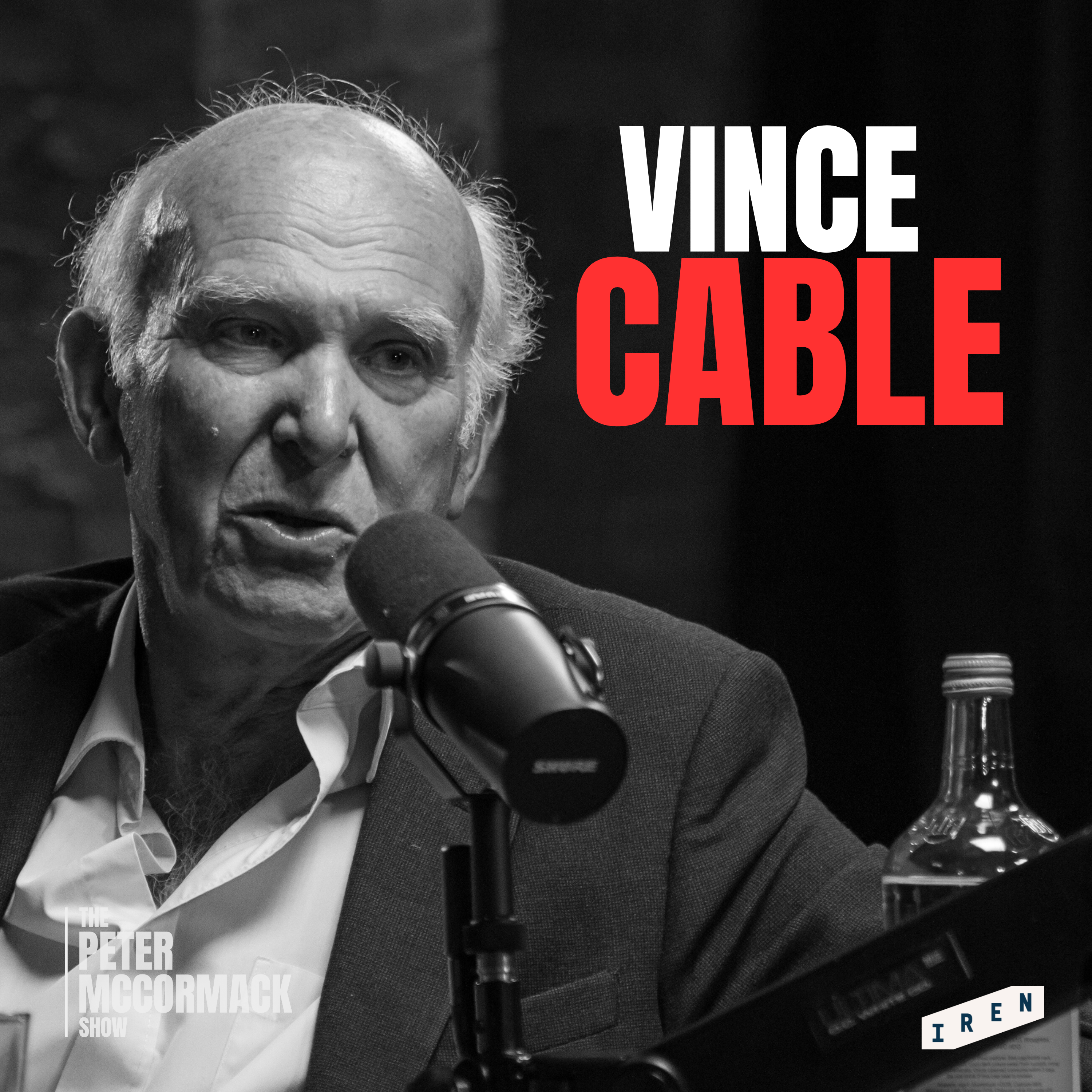
The Peter McCormack Show
#114 - Vince Cable - Reform v Lib Dems - The UKs Political Future
01:09:49
Sir Vince Cable served as Secretary of State for Business in the coalition government and later became leader of the Liberal Democrats. We discuss: – Why the UK economy is fundamentally broken – The failures of the Conservatives & Labour –...
Loading summary
Transcript200 lines
- [00:00]
Vince Cable
We're probably at one of those big historical turning points. I mean, I look back to, you know, 19, 23, 24 after the First World War, the country was very unsettled and all kind of issues arising from the war and the Liberal Party just disappeared, more or less in the space of a couple of elections. It had been the, you know, dominant party for a century and they just went, they'd come back in as part of the Lib Dems, but actually the party died really and was replaced by the Labour Party. And I think we're maybe at that kind of time turning point again. I think it's very plausible to imagine that Reform are one of the two parties that will emerge from all this. I would like to think the lipped hems of the other. But yeah, I take the basic point that I think we're in a state of potential upheaval.
- [00:48]
Peter McCormack
This episode is brought to you by our lead sponsor and massive legends iron, the largest Nasdaq listed Bitcoin miner using 100% renewable energy. Now, they're not just powering the bitcoin network, they're also providing cutting edge computer resources for AI, all backed by renewable energy. Now, my boy Danny and I have been working with their founders, Dan and Will for quite some time now and we've always been super impressed with their values, especially their commitment to local communities and sustainable computing power. So if you're interested in mining bitcoin or harnessing AI compute power, Iron is setting the standard. And so you can find out more@iron.com, which is Irene.com that is Iron.com We've.
- [01:32]
Peter's Co-host
Really enjoyed being involved in non league football and I don't know, I find.
- [01:37]
Peter McCormack
Myself watching the Premier League less.
- [01:39]
Vince Cable
Yeah, well, I occasionally get to the Emirates.
- [01:42]
Peter's Co-host
Okay.
- [01:43]
Vince Cable
I've got a friend who, a season ticket who gets me in from time to time. But most of my recent football, I was the MP for Twickenham for 20 years. I used to go around and watch Hampton and Richmond Rangers. I think they were six tier. Now 50, I think. No, they are seven to six. They went from seven to six.
- [02:04]
Peter's Co-host
We played them pre season. Ah, we did and we, we won gate 250.
- [02:09]
Vince Cable
I mean not great but you know, good community side.
- [02:12]
Peter's Co-host
I think we get about 400 now. We've, we've had the team for three years, we get about 400 now. But it's because we were, we were driving the other day and Connor said to me, said, correct me if I'm wrong here, Con, you said, isn't football weird that you just go along for this couple of hours and you focus so intently on this team winning. And we started talking about what does it actually mean to win a football match? Does it actually mean anything afterwards?
- [02:43]
Vince Cable
Well, it's two hours, but it's a day, isn't it? You're working up, you go to the pub before with your mates, you have a post mortem afterwards. It's then you watch stuff on the telly. I mean, it is a way of life if you take it seriously.
- [02:57]
Peter's Co-host
I think it's escape as well. Yeah, possibly it escapes that people need right now.
- [03:02]
Vince Cable
Yes. Yeah.
- [03:04]
Peter's Co-host
It's great to meet you, Vince. I was really excited about this interview. I was explaining to kind of you're a politician. A bit from my younger years, but we had Anne Widdakeham in here recently. She said something very interesting. She said the trajectory she thinks of this country is that in the not too distant future, the two main political parties will be Reform and the Lib Dems. And that she thinks there's essentially an existential crisis for both Labour and Conservatives.
- [03:37]
Vince Cable
Yeah.
- [03:39]
Peter's Co-host
How do you feel about.
- [03:40]
Vince Cable
Well, I think there's an element. I think she's right to say that we're probably at one of those big historical turning points. I mean, I look back to, you know, 19, 23, 24 after the First World War, the country was very unsettled and all kind of issues arising from the war and the Liberal Party just disappeared, more or less in the space of a couple of elections. It had been the dominant party for a century and they just went. They'd come back in as part of the Lib Dems, but actually the party died, really, and was replaced by the Labour Party. And I think we're maybe at that kind of turning point again. I think it's very plausible to imagine that Reform are one of the two parties that will emerge from all this. I would like to think the lipped hems of the other. But yeah, I take the basic point that I think we're in a state of potential upheaval.
- [04:35]
Peter's Co-host
And why do you think that is? What do you think? What are your observations of what's happening right now?
- [04:40]
Vince Cable
Well, I think a mixture of things. It's very easy and I'm now a retired politician. I can say things more freely than I did when I was speaking to a party message. But I think we've been hit by a whole series of big shocks and I think underestimated actually how serious they were. I mean, the first was the financial crisis, which actually knocked the stuffing out of the country 2008. Yeah. And it meant that five years I was in the Cabinet, we were having to do very, very painful things to try and get the country's finances sorted and people didn't like it. You were just beginning to recover from that, that you had Brexit, which was a big shock. I mean, given my politics, it was a bad shock, but people have a different view about that. But it was certainly a big shock and it meant that the country was completely preoccupied for five years with an issue that didn't really help us in terms of the country getting back on its feet. Then we had the pandemic and then after that the Ukraine war, the impact on oil prices. So we've been. It's like somebody in middle age, late middle age, hit by a succession of heart attacks. I think that's basically what's happened. And so the sort of country is sort of weary, disillusioned, doesn't quite know where to go and doesn't have any real sense of direction.
- [06:04]
Peter's Co-host
Do you feel like the public have. Have a right to be upset at the establishment?
- [06:14]
Vince Cable
Well, I think in a democracy, you know, the public is always right by definition. But I think it's not just political failures. There have been. But as I of the shocks I mentioned, three of them weren't really driven by the political class, they were beyond the control of government. I think where the politicians have failed and failed very badly is over promising. I mean it's part of my party's sad history that we made this ridiculous promise on university fees and I was the minister who had to put an end to it because it just wasn't deliverable and. And you then massive loss of trust problem which kept going for several years. Brexit was sold on a false prospectus. People I think now angry about that. We had very worthy efforts, I think, to protect the public from the worst of COVID and basically paying people not to work. And of course that powers up debt and that debt's got now be paid for and serviced, but it wasn't explained at the time. So people have been promised stuff, you know, the Tories with 100,000 net immigration. I mean we've had a succession of elections where people, the winning party's gone in with wild promises that they couldn't possibly deliver. And so at the end of it, people are pretty sickened by the whole thing. And one of the big difficulties with this government, it's not that they've made enormous mistakes and they have, but they went in this election knowing perfectly Well, I think that the public finances were in a very bad way because essentially we'd been financing the COVID and the rest of it. But they made this ridiculous promise that they were never going to raise taxes on income tax, value added tax and so on, which they were going to have to do. So they cornered themselves by making a promise that couldn't be delivered. So to get back to your basic question, if the politicians have failed, it's by making promises that they can't deliver. And I think that you can't criticize the public, but the public have believed them and perhaps shouldn't have.
- [08:42]
Peter's Co-host
I mean, you've been involved in politics for a long time. Has the character and makeup of the type of people that we have as politicians changed a lot?
- [08:52]
Vince Cable
It's changed somewhat. First, women. When I first went into Parliament, there were quite a small number of women and they were considered characters, you know, like Margaret Thatcher. They were strong and very distinctive, or they emphasized femininity, but there were very few women. Now, it hasn't quite got up to 50, 50, but it's much more balanced. There were hardly any representatives of ethnic minorities, black or Asian. Now it's commonplace. We've had an Asian prime minister, black leader of the opposition. So this is fundamentally different. And professionally, I think what has happened, you've got more and more professional politicians who've been to university, done a few years working as a researcher to an MP or in a trade union or some charity or lobby group, and then they get a seat in Parliament. And then after a few years, they expect to be in the cabinet. There aren't many people who have been out there working for a few decades, whether in a factory or a coal mine or in the professions. It hasn't happened. I mean, I got into parliament age 54. I mean, I was regarded as an old man by the time I'd actually started my political career. And so in that sense, there's been quite a big change.
- [10:17]
Peter's Co-host
What were you doing up until then?
- [10:20]
Vince Cable
Well, I did lots of stuff.
- [10:22]
Peter's Co-host
I'm really asking what's the experience? Because you're saying we have career politicians.
- [10:27]
Vince Cable
I worked and traveled in different parts of the world. Africa, Latin America, India. I got a flavor of what the world was like. I worked in government. I worked in one of these think tanks. I worked for the last seven years, five, seven years before I got into Parliament with Shell, the international oil company, and went around the world doing scenario planning, giving economic advice. So, you know, I had a good sense of what was happening in the big wild World and in the private sector as well as the public sector. And yeah, I knew a fair amount about certain things. And the challenge for me actually going to politics was getting embedded in my local community because I was one of these dreadful globalists, as they're called and I was having to learn how to be a grassroots guy. That was the hard bit for me.
- [11:22]
Peter's Co-host
I guess what I was getting at is what is it about your time in business that shaped you politically that we possibly miss by people being career politicians? What is it? What happened for you personally?
- [11:36]
Vince Cable
Well, I think actually certainly the company I work for was present exceptional. Shell is one of these multinational companies that's been around fore but highly professional. You know, the sense that you're in a competitive world and that actually it may seem strange but actually working in the private sector I was having to think long term the whole time. You know, we make a big decision on investing in a big oil field, it's got implications 20 years ahead, whereas politics is, it's about tomorrow, 24 hour news cycles, Very, very difficult to get people to think about the future and how you shape it.
- [12:23]
Peter's Co-host
And that probably points to the issue that you identified whereby politicians aren't maybe giving us the truth because they're thinking about the next election and the next cycle and what is it we have to do to get power.
- [12:36]
Vince Cable
Yes, I think that's exactly right. I'm not sure I want to frame it as a kind of an attack on politicians because in democr that is the nature of the beast and the reality of life. And the reality of life. I mean I've just come from quite a lot visit to China where I was doing a few talks in universities and so on in China and they've got a highly competent autocracy where things work. You have brilliant infrastructure. But would I really want to live there? No. I think in all our sort of messiness and short termism, obviously I'd much prefer to live here.
- [13:22]
Peter McCormack
This show is sponsored by Gemini.
- [13:24]
Peter's Co-host
We live in a really strange time with governments driving inflation with their reckless spending and endless money printing.
- [13:32]
Peter McCormack
There is a way out of this. There is a way to protect your money and that is by stacking bitcoin.
- [13:37]
Peter's Co-host
I've made loads of shows about bitcoin.
- [13:39]
Peter McCormack
You can go and research this, you can go and read the books, but the truth is it is the hardest money ever created. If you are interested in protecting your.
- [13:46]
Peter's Co-host
Financial future, it's time for you to get on the bitcoin train.
- [13:49]
Peter McCormack
I have, I've been stacking bitcoin Personally and through my businesses since 2017, it's protected me, it's secured my family's future, and it also strengthens all of my businesses. So if you want to start stacking.
- [14:01]
Peter's Co-host
Bitcoin, where do you do it?
- [14:02]
Peter McCormack
Well, for me, it's with Gemini. They're a fully licensed, full reserve exchange and custodian. So they give you a secure way for you to buy and own your bitcoin. There's no risks and no funny business. So if you're serious about stacking bitcoin the right way, head over to gemini.com, which is g-e m I n I dot com.
- [14:19]
Peter's Co-host
So when you look at what's happening in the country right now, because for me, I mean, I'm 46, Vince, this feels the most fractured that I've known now. Perhaps in the early 80s it was.
- [14:31]
Vince Cable
And I was too young to recognize it. I would have cited the early 80s.
- [14:34]
Peter's Co-host
Yeah. And I was probably too young to recognize it because I remember the tail end of Margaret Thatcher. I remember her as a prime minister and I remember early John Major. But the first real prime minister that I remember and caring about politics was Tony Blair. And the country felt alive at the time. I didn't vote for him, but it did feel alive at the time. My son's 21, and I mean, he should answer for himself. But it does feel like we're very fractured at the moment. I mean, con, how do things feel for you?
- [15:09]
Connor
I mean, so last election would have been the first election I could have actually voted in, and I had no intention to whatsoever. Just because of the mess and complete. I guess feels like a bit of a circus going on at the minute. And I actually don't think anyone deserves my vote. And right now I continue to feel that way. It doesn't really feel like anyone's got.
- [15:38]
Peter's Co-host
But beyond that, when you talk, you know, when you talk about how life.
- [15:41]
Connor
Feels for, oh, there's not much future right now.
- [15:44]
Peter's Co-host
That's. That's how he feels. This is the conversation we have most days.
- [15:47]
Connor
Any of my mates, I would suggest, like, you are best off. Not in this country. If you want some sort of future.
- [15:56]
Vince Cable
Yeah, but no, I'm not criticizing you, but I just wonder if your expectations are too high. I don't think so. If you looked at the parties, not in terms of giving you a future or a great vision, but, you know, we've got problems. Who can deal with this a bit better than somebody else in a more practical way. Will that help?
- [16:19]
Connor
Yes, maybe. I think it's just the general feeling of the country. It's like. And I don't really think anyone's bold enough to do what actually needs to be done.
- [16:29]
Vince Cable
Yeah, but that's the problem, because I hear this all the time, we've got to be bold, we've got to be decisive, we need vision. But then you actually. Well, what is it you want then? People are saying exactly opposite things and there isn't a clear, obvious way of changing things fundamentally for the better. I mean, there's a basic problem at the moment that the British economy isn't growing, right? So government tax revenue isn't coming in, so there isn't more to spend. So if you spend more on something, you've got to take it from somewhere else. It's a zero sum country. And the only way you change that fundamentally is by making the economy grow a bit bigger. But being realistic, we were growing at about 2.5% until the financial crisis. Two, 2.5% and we're now about 1%. Right. So changing gear isn't going to make an enormous difference. It makes some difference. We're never going like China or Korea or India even. I mean, we're no longer a developing economy. We can no longer have those kind of dramatic shifts of gear which make a difference in emerging economies. We're in a mature, developed, you might say, relatively declining country. And it's not necessarily an awful thing. And there's a sort of basic choice. Do we become more like Denmark or Finland and have a bit more tax in order to have good public services? On the other hand, do we want to be more like, I don't know, the us, which is more freewheeling, less tax, you know, that's the kind of choice you have to make. But when people say there is a way forward and I know what it is, they don't, because people are pulling in these two opposite directions.
- [18:24]
Peter's Co-host
It's kind of what we said this morning, isn't it? The battle line appears to be one side wants more government, one side wants less government. To the battle line at the moment.
- [18:37]
Vince Cable
Yeah, but we're fighting over tiny little bits of territory, right? I mean, there's all this hullabaloo last year about the winter fuel allowed.
- [18:45]
Peter's Co-host
Right.
- [18:46]
Vince Cable
It's just as an example, it's not very much money in terms of the bigger thing. It was obviously needed reforming because there's no way people like me should be getting it. So the only practical question was whether you abolish it altogether, which is sort of what they did, or whether you Tax it. It's a kind of technical, civil service type argument. But it became a kind of massive storm about good and bad government. I couldn't get my head around why people were getting so worked up about it.
- [19:18]
Peter's Co-host
Is it because perhaps there is an anger and a disappointment, but people don't know where to direct it?
- [19:25]
Vince Cable
Yes.
- [19:25]
Peter's Co-host
They don't understand the basics of what they're frustrated about.
- [19:30]
Vince Cable
Yes. I think you're hitting on a deep theme here and I don't think either of us can quite express it with deep understanding. And, you know, there are people who are, you know, jumping very effectively onto that bandwagon of discontent. You know, Nigel Faragio I've known for 30 odd years, very skillful, articulate politician, is currently reaping the benefits of it. But somebody else may come along and do the same. This new guy from the Greens, or, you know, my party leader. Yes, that Polanski, I think his name is. No, there is, as you say, a kind of simmering unhappiness, discontent, lack of direction, but there isn't any obvious solution.
- [20:24]
Peter's Co-host
Is that a lack of leadership, then? We're lacking a uniting force within the country?
- [20:30]
Vince Cable
Yes, there is, in one sense, and it goes back to the answer I gave earlier. My idea of leadership in the last election would be if party leader X came out and said, look, we have a whole lot of really difficult problems. We've inherited all this government debt because of the financial crisis. Covid, whatever. It's difficult. I can't promise you anything except Churchill's blood, sweat and tears. It's going to be hard. We're going to have to make some difficult choices. We will do our best. But nobody said that bit of honesty. What was needed, what is needed is somebody to be just basically honest about the limited range of things that can be accomplished without kind of rapid economic growth.
- [21:24]
Peter's Co-host
Rather than pointing at a specific group.
- [21:27]
Vince Cable
Yeah, well, without pointing a particular group, for that matter. Pointing with particular parties. I mean, I mean, I'm not a Tory. I mean, I've been fighting the Tories all my life. But I thought the whole idea that the last Conservative government was just utter complete rubbish. Right. The economy was an absolute mess because of what they did. It was nonsense. I mean, they didn't create Covid and they didn't create the Ukraine war and they spent pots of money trying to protect people's income while it was happening. And that piled up a big debt problem, which is what we're now struggling with. So there was a black hole, an enormous black hole. It wasn't entirely because of bad political leadership. And similarly, people are, I mean, Rachel Reeves, I think is perfectly smart woman, intelligent woman, made a few mistakes, but somehow or other this woman is ruining the country. It just makes complete nonsense to me, this sort of excessive reaction against people who in many ways, whether they're Tory or Labor, were doing their best.
- [22:37]
Peter's Co-host
Yeah, I'm not so sure on Rachel Reeves in that she's made some, I think she's made some mistakes that she was warned that about the kind of what would happen if she raised the taxes. And I, and I know people whose businesses have failed during this period. It's not entirely on her. As you said, this is, this comes downstream from a tough economic situation that they inherited. If anything, one of the things I think about with the Labour Party, I think they've come into power at the wrong time for the kind of policies they want.
- [23:11]
Vince Cable
That's fair.
- [23:11]
Peter's Co-host
Yeah, we kind of need the.
- [23:14]
Vince Cable
But I think what you're hinting at is that the employment levy, the employers NICs was a bad decision.
- [23:19]
Peter's Co-host
Yes.
- [23:20]
Vince Cable
It's affected employers and it's affecting employment. And I agree with you. And it goes back, I think, to the point I made earlier that they went into the election with this ridiculous promise that we're not going to increase the basic taxes. So if you've landed yourself with an obligation that you can't increase the taxes, which make up 80% of government revenue, you're then forced to do all kind of other things, which is one of the few things they hadn't promised was the employer's neck. So they did that regardless of the economic fallout. So, yeah, it was a bad decision, but because of something that had happened beforehand. I mean, the point I keep making, and it's not a popular message even in my own party, that if you want to make Britain more like Denmark, which I guess is what if you're a center left politician, you want to do basically value added tax is 25%, income tax is substantially higher and they pay it because they're confident that the end of it, this money is going to be used to provide decent education, health, social care and other things. So there's this kind of, of social contract. Whereas in this country, what we seem to be saying is that we want European levels of services, but we want American levels of tax. And you know, two plus two doesn't equal five.
- [24:43]
Peter's Co-host
They don't work together. Yeah. I wonder if culture. Because I've spent. I mean, you probably have as well. I've spent a bit of time in Scandinavia, culturally I think it feels a bit different. I don't think culturally we're set up in that way.
- [24:56]
Vince Cable
Well, I spent part of the summer in Scotland. I felt there much that we were part of really the political culture was much more Scandinavian.
- [25:07]
Peter's Co-host
Interesting. In what way? How did you.
- [25:10]
Vince Cable
Well, it's the idea that people actually value. Sounds a pompous phrase. But the public realm, they want decent services and they're willing to pay for them. And more of a sense of big community.
- [25:27]
Peter's Co-host
Yeah.
- [25:28]
Peter McCormack
So.
- [25:28]
Peter's Co-host
So if, if you. When you're diagnosing what's happening in the country now and you consider your position, obviously previous leader of the Lib Dems and where it's now an opportunity for the Lib Dems, how. How do you think they capitalize on that?
- [25:46]
Vince Cable
Well, at the last election Ed Davy I think was very skillful. Didn't try to overstate, didn't try to make grandiose promises. Just concentrate on a couple of niche issues. Well, care isn't niche, but it's not top level water pollution. And then used all kind of quite clever gimmicks to highlight it. So he got attention. People were many, kind of what you might call one nation Tories. Liberal Tories were looking for an alternative to the Conservative Party and we offered it. And almost all of our seats that we won were in relatively prosperous parts of the country and with a combination of labor tactical voters who wanted the Conservatives out and disillusioned Tories who thought that the Lib Dems were not too far from their basic philosophy of life. And the fact that we'd been in the coalition, we'd worked with the Tories for five years actually I thought quite productively in the national interest probably bought us goodwill with that group of voters. So we've got to a certain point we've now got as many MPs as our share of the national votes would justify. About 11 12% at the time of the year.
- [27:15]
Peter's Co-host
72 MPs is it?
- [27:16]
Vince Cable
It's 72, yeah. Yeah. And the question is where you go next? And you know, there is a couple of options really which is one, you know, steady as you go. We become a party that increasingly represents the what you could broadly call the sensible center and brings in a lot of people who were normally regarded as center right type people, middle of the road Tories as well as the people who currently vote for liberal minded people. The other alternative, which is sort of what happened in the mid noughties before the coalition era, is going for the big cities competing with reform. Jeremy Corbyn the Greens in that kind of turf. And I would very strongly advise against that because I think it would make us completely incoherent. There's too much competition there anyway. So I think where we are at the moment, expanding on it, is probably the best way forward.
- [28:28]
Peter McCormack
I want to talk to you about.
- [28:29]
Peter's Co-host
One of my sponsors, Incogni.
- [28:32]
Peter McCormack
And that means we're going to talk.
- [28:33]
Peter's Co-host
About the weird world of spam.
- [28:34]
Peter McCormack
And I don't just mean those spam emails that you get day after day from companies you never heard of and companies you've never signed up to. I'm also talking about those spam phone.
- [28:44]
Peter's Co-host
Calls you get from those people who.
- [28:45]
Peter McCormack
Seem to know a little bit too much about you, trying to get your bank details. It's all a bit creepy right now. This all comes from the world of data brokerage. There are companies out there collecting your data, building profiles and sending that data to anyone who wants it, which is why when one of those scammers phones.
- [29:02]
Peter's Co-host
You up, they seem to know everything about you.
- [29:05]
Peter McCormack
Now, I've tried, I've tried myself to.
- [29:07]
Peter's Co-host
Get off these lists, try to get.
- [29:08]
Peter McCormack
Off the phone list, try to get off the email list. I unsubscribe from every one of these.
- [29:12]
Peter's Co-host
Emails that comes in, but it's Game of Whack a Mole.
- [29:15]
Peter McCormack
It just never ends. And so this is where Incogni comes in.
- [29:18]
Peter's Co-host
They do all the hard work for you.
- [29:20]
Peter McCormack
They reach out to these companies and they will get you legally removed from these lists. And I know because last time they.
- [29:26]
Peter's Co-host
Sponsored my show, I signed up and.
- [29:27]
Peter McCormack
I didn't take the free option that they offered me. I wanted to pay for it.
- [29:31]
Peter's Co-host
I wanted to see if you get value for money.
- [29:33]
Peter McCormack
And they removed me from 79 data broker lists. And so I've stayed on, I've stayed a subscriber and I have seen a massive decrease in the number of emails.
- [29:42]
Peter's Co-host
And phone calls I've been getting.
- [29:43]
Peter McCormack
So it's a great service. I recommend you check it out. If you're sick of this like I was, please head over to incogni.com Peter and sign up. If you use the code, Peter, you will get a lovely 60% discount. So that's incogni.com Peter.
- [29:58]
Peter's Co-host
It's interesting how many options there are now for voters, because tradition, like when I were, when I was a kid, I first was voting, it was a choice of Conservatives or Labor predominantly. And then for some of my friends who were disillusioned with the both those parties, they would vote Lib Dems. It was the kind of like you say, the sensible middle road option. And then there was a, a little alarm and then there were a handful of people who would vote for the Greens. But now there's Conservatives, there's reform, there is labor, there is going to be Jeremy Corbyn's party, your party, Lib Dems. Greens have grown a lot. There's a lot of options now. There's a lot of options for voters. Do you think that's a reflection of some of the disillusionment, this kind of shift?
- [30:52]
Vince Cable
Well, clearly there is disillusionment with both the Tories because of their period in government and with the Labour Party now. And it is resulting in fragmentation. And the problem I think we have as a country is that the political, the voting system doesn't reflect that reality. It assumes that there is a two party system, maybe with a smaller party is to provide an option in certain circumstances. So the system doesn't fit the public mood. And I think that's why we may, I think after the next election, probably not before it, there will be irresistible pressure to change the way that the voting system operates. You can imagine a situation in which Nigel Farage's Reform party get, I don't, 20 to 23% of the public vote and get no seats in Parliament or they could get 30 and get all of them. You know, it's a crazy voting system that doesn't reflect people's choices. So if, if you're really going to make the public angry, is that the recipes keep the current voting system because it doesn't, it ensures that Parliament doesn't represent the country. So we're going to have to change it.
- [32:15]
Peter's Co-host
Well, you believe in proportional representation?
- [32:17]
Vince Cable
Well, yes. I mean there are perfectly good models of how this can work. During the Blair period, he asked Roy Jenkins to set up a commission to look at the different options and came up with a version that was very like the Scottish parliamentary election or the German system or a slightly different where you have plenty of space within the system to have four or five different options. And the consequence of that then is that to form governments you will have to get parties working together in coalition. That's not totally straightforward, as I know because I was part of one. But it probably is a better way of reflecting a public that is more fragmented, where people are wanting a wide variety of choice.
- [33:13]
Peter's Co-host
Yeah, I guess the argument against it is that a government with a majority can get more done, it's easier to get things done, whereas with a coalition there's probably more trade offs. Is it better to have trade offs.
- [33:29]
Vince Cable
I just simply don't think that's true. I mean, I don't know your views about the coalition years, but.
- [33:37]
Peter McCormack
Well, let me hear yours first and.
- [33:39]
Peter's Co-host
I'll tell you mine.
- [33:41]
Vince Cable
Many of the people I talk to, whether it's on the doorstep or civil servants so on, who are part of government, thought that it was probably one of the best governments of modern time. Not that they like what we did, which is a different question, but in terms of actually functioning, making decisions and following through and delivering them, we were very good at that. And there were a lot of arguments internally, of course, and some of them spilled out into the public. And I was one of the worst offenders in letting my disagreements spill out into the public. But I said to my team, I mean, I had, in my department, I think, seven or eight ministers, of whom there were two Lib Dems and the others were Tories. I said, look, we may fundamentally disagree about a whole lot of things, but we leave the weapons at the door. And when you're in their office, we have to work together and make sure we deliver things that we've undertaken to do. And as a result, we got a hell of a lot done. Whereas what's happening now is there's a lot of posturing and people making promises and it's just not happening. So my only experience of coalition government, the one I was in, so I can't generalize, but certainly the one I was in was actually, I thought, a very good advertisement for that approach to politics.
- [34:59]
Peter's Co-host
So I don't. I don't remember too much about it, but I do, I do remember at the time thinking what a great opportunity for the Lib Dems to be in government. And I felt sorry for the party because of the compromise that had to be made on Free University places. I know a lot of voters felt like that was a betrayal.
- [35:20]
Vince Cable
Well, you can blame me for that. I feel like.
- [35:23]
Peter's Co-host
Well, I was in the last year that got Free University, the final year they got it. But I know that a lot of voters felt that that was a betrayal.
- [35:32]
Vince Cable
And.
- [35:35]
Peter's Co-host
It felt like at the time, whilst it was good for the Lib Dems to be in Parliament, it felt like you took a little bit of damage from that period.
- [35:43]
Vince Cable
Oh, yeah, enormous damage. It was almost fatal. But on the university thing, I mean, I had sleepless nights about this at the time and ever after because I had to make the big decisions or was mainly responsible as the Secretary of State. But the fact is we made a stupid promise which couldn't be delivered, should never have made the promise. But having made a promise that couldn't be delivered once in government, we had to do the right thing and we did do the right thing. It was very unpopular at the time, though, I think actually no longer. And it saved the university sector from bankruptcy, basically, which is where they were drifting. Make sure universities had plenty of money. There was no austerity in the university sector. The big expansion of numbers, quality, rest of it. Britain has world class universities still, at least because of the decisions that were made then. And the students, because they tend to have relatively high iq, quickly sussed on that we weren't actually charging them fees. We were introducing a kind of income tax on graduates because they have to pay when they leave university not to go. So in general, it was terrible politics for the Lib Dems is exactly the reason you suggested. But it was good policy, it was the right thing to do.
- [37:18]
Peter's Co-host
And I guess that's what makes the job so difficult then, is that you're having to weigh up what you know is good policy versus what the public wants.
- [37:31]
Vince Cable
Exactly.
- [37:34]
Peter's Co-host
How difficult is that? As. Because we don't. I as a voter might have my personal opinions and what I think politicians should do and have my criticisms, but I've not walked in those shoes. How hard is it?
- [37:47]
Vince Cable
Well, it is very hard. I mean it, you know, my own experience bears that out. I mean, I, I got into government, I had to make a lot of compromises. I was actually much less happy than Nick Clegg and other people in the party going into power with the tourists, but actually that's what the numbers dictated. So I had to swallow my objections and go along with it. And we had five years of what I felt good but very difficult government. And at the end of it, I was punished by losing my seat in Parliament, which was, as NEP will tell you, is very painful and humiliating and all the rest of it. But rather than go off and tour the world or go to the House of Lords or something like that, I thought I wanted to win it back again, which I did with a big majority and two years later, thanks to Theresa May calling an election when she didn't need to, and then within a few weeks I'd become the party leader and I was able to eventually leave of my own choice. Right. So, yeah, politics can be very painful and you do get punished if you become seriously unpopular.
- [39:05]
Peter's Co-host
Can it be enjoyable?
- [39:09]
Vince Cable
Well, not enjoyable in the sense of funny, ha ha, you know, I think you get deep satisfaction when you do something good and you get Something Right. And I think, you know, there are lots of things I started when I was in government which are still there and are doing good, doing good work. And you can also, I think, do good with individuals. I mean, some of the satisfaction that I now get from Having been an MP for 20 years is I walk down to. I still live in Twickenham and I walk down to the town center and people come up to me in the street and say, we came to you 15 years ago with our problem of homelessness or whatever it happened to be, and you helped us and we're now on our feet. And, you know, I don't know what you did or didn't do, but it worked. Thank you. And, you know, that is a really, really heartwarming feeling and probably the best satisfaction you can get out of being a politician.
- [40:10]
Peter's Co-host
Would you. Do you recommend it as a.
- [40:14]
Vince Cable
Yes, I do recommend it with the tongue in cheek because I have written a book I've written since I left Parliament, which is called how to Be a Politician. And my opening lines is a conversation with a teenage school kid who says, I want to be a politician. To which my answer is, really. And then I knock down all. I explain how difficult it is and how you can be despised by everybody and you finish up being humiliated and thrown out on the streets. But at the end of it, on balance, when you take everything into account, this is something you can do where you can genuinely make a difference and you can improve people's lives and make decisions that do actually change things fundamentally.
- [41:10]
Peter's Co-host
So does that mean you have to come in with the right intentions? Like, should you come in with a sense of duty rather than a sense of duty?
- [41:17]
Vince Cable
Yes, I think it has to be an element. I mean, none of us are Mahatma Gandhi. Right. We all have ambitions, we all like to be comfortably off and so on. So motives are never totally pure. But I think you do have to have a sense somewhere of public, I would say public service rather than duty. The feeling you're not just doing this as a way of advancing your career or making money. I mean, there are better ways of making money than going to Parliament, after all.
- [41:50]
Peter's Co-host
Yeah. I look at the pressure, especially now that politicians are under the extreme pressure, the. The social media side of things. The media side of things. It feels like a very, very hard job to do because whatever decision you make, whilst you. You may believe in it, you still may upset a lot of people. And I think. I mean, we've seen some of the pressure politicians have put under.
- [42:19]
Vince Cable
Yeah. I think in a Way you, you tell you can get the mettle of political figures by how they react when they finally go. I mean, one person who was roundly attacked when he was Prime Minister and you know, it was my job to attack him, was Gordon Brown. But since he left, he's done good stuff. I mean, he does a lot of very important work in development also as a sort of thought leader in constitutional matters. And I contrast that with Tony Blair who, when he left Parliament, left politics, wanted to cash in on it. Cameron did the same. Theresa May was looked down on. You know, everybody made fun of Theresa May very unfairly, I thought, but you know, she was somebody who had a real sense of duty who misbehaved with impeccable dignity since she left. I think the worst, unfortunately, was one of your recent interviewees, Les Trust, who, you know, like everybody made mistakes, occasionally may have done something right, but feels she has to go around the world telling everybody that she was right and everybody else was wrong. I mean, that's not a way to deal with politics when you leave it.
- [43:42]
Peter's Co-host
So we had Liz here yesterday and I feel a little bit sorry for Liz in that she got the top job, but she didn't have it for long and came under intense pressure and scrutiny. But since then there has been some admissions that the cause of the market to change was out of her control and that the bank of England was working against her. And so I, I can understand somebody who wants to defend their position when they feel maybe they were right and things were conspiring against them.
- [44:18]
Vince Cable
I don't buy that for a minute.
- [44:19]
Peter's Co-host
You don't?
- [44:20]
Vince Cable
Absolutely not. I think, you know, she, she had some good qualities. I mean, I, I, I, I don't know her well, but she was in the Cabinet when I was there. She had some good qualities as a person and some talents. Right. But when you've had such a calamitous end, the thing to do is to step back a little and reflect and be self aware and acknowledge that you may have made mistakes here, you may have done something right. But her instincts have been to spend the last three years rushing around the world telling everybody that she was right, that the markets and the bank of England were wrong, and that it was all a vast conspiracy. And I mean, people are just laughing at her and that is why it's sad. And I think why I also feel rather sorry for her. She's done herself down by blaming everybody else. I mean, the simple truth of the matter is that she was in exactly the same position as Gordon Brown was in 20089 as we were in the coalition government, as Sunak was Jeremy Hunt, we all had this problem that you're heavily dependent on the advice of officials and your contacts in the markets about what people will, what our lenders are willing to put up with the so called kindness of strangers problem. Britain is heavily dependent on external capital in that way. And you have to listen to advice. I mean it's just basic common sense. We could in the coalition government have made ourselves very popular by just not doing all that difficult stuff around cutting public spending. But we realized you just had to do it and get through the pain and then get to a position where you could be more constructive and do positive things. That she just wasn't willing to do that she just assumed against advice, good advice, that all you need to do is to cut taxes and the economy will suddenly start growing. I mean that was just. Nobody believed that. And I just don't understand why Kitschy just can't step back and reflect a little and agree that that wasn't a very clever thing to do.
- [46:51]
Peter McCormack
This episode is brought to you by Ledger, the most trusted Bitcoin hardware wallet. Now, if you're serious about protecting your bitcoin, Ledger has the solution you need. Their hardware wallet gives you complete control over your private keys, ensuring that your Bitcoin stays safe from hacks, phishing and malware. And I've been a customer of that since 2017. Love the product. Use it for my bitcoin. I use it with my Castle multisig for protecting the football club's bitcoin too. Now, with Ledger's sleek, easy to use devices and the Ledger Live app, managing your bitcoin has never been more secure or convenient. And whether you're a longtime holder or new to the world of bitcoin, Ledger makes it simple to keep your assets protected. So if you want to find out more, please do head over to Ledger.com and secure your Bitcoin today. That is Ledger.com which is L E D G-E-R.com that is Ledger.com but, but.
- [47:44]
Peter's Co-host
There have been people, there's been plenty of voices recently coming out in defense of her. There are people saying that actually Liz, she did rightly identify the problems in the economy. And I think both the FT and the New Statesman this week have both come out. They kind of backhand apologies but said I think the FT said she would be right to be angry at what happened with the LDIs, that the bank of England were essentially working against her. And I understand you don't think it's a conspiracy. But if we do look at, I mean our 30 year guilts are now higher than when they spiked under her. So she did, I believe she identified a problem. And I, I'm not sure if she's trying to prove she was right or she's trying to say the problem still exists. We need to deal with this.
- [48:33]
Vince Cable
Yes, well, you'll hear the same arguments of people on the far left who say that all this stuff about balancing budgets and fiscal discipline, it's all crap. It's all capitalists and bureaucrats working together and frustrating socialism and it's all a vast conspiracy. And in a strange way you have people on the right and people on the left saying the same thing, that you can ignore advice and that they're all working against you. And I've forgotten Michael Gove had a phrase for it about the blob, wasn't it the blob?
- [49:11]
Peter's Co-host
I think Liv uses the blob as well.
- [49:13]
Vince Cable
Yeah. Whenever a minister blames civil servants, I'm afraid I always take the view that that's a problem with the minister. I worked with civil servants for five years. You get good people, bad people in any walk of life, but actually the collective spirit of those people is actually working in a wider national interest. I just do not buy the idea that they're people in the treasury in particular back which are. So, yeah, they do have their biases and they make mistakes. But I think in general people in the bank of England, economic advisors, the Civil Service, they good people, intelligent people and we should start from that premise.
- [50:22]
Peter's Co-host
It's interesting because again, this feels like another political divide because people I speak to on the more conservative side think the Civil service is too big and has a collective kind of left leaning attitude. And then people I speak to more from the left think the civil service is very good and sometimes is a bit too conservative.
- [50:42]
Vince Cable
People on the left I talk to always complain that they're right wing.
- [50:48]
Peter's Co-host
That's so funny that everyone sees them differently. So you don't believe there's any reforms need for the civil services? That's not the problem.
- [50:56]
Vince Cable
Oh yes, you should always be reforming and trying to improve professional standards, but.
- [51:01]
Peter's Co-host
It'S not where the problems align.
- [51:02]
Vince Cable
No, I don't think so. No, absolutely not.
- [51:05]
Peter's Co-host
So Vince, how do you be a politician?
- [51:08]
Vince Cable
Sorry?
- [51:08]
Peter's Co-host
How do you be a politician then?
- [51:10]
Vince Cable
How do you politician? Well, what I described in my book are the various steps that you have to get through and the somewhat, you might think rather banal conclusion is that probably the most important factor is lucky, because the first stage is the one that is rarely discussed in the media, which is actually getting adopted by your party for a winnable seat.
- [51:40]
Peter's Co-host
Okay.
- [51:41]
Vince Cable
There is one journalist, I think, Michael Crick, who you may have come across, who runs a website describing who is being adopted where and in what circumstances. But that is. Obviously, that's the crucial step. You can spend half your life going around the country standing in seats where you've no hope of winning and where you never win. People who are far, far cleverer than me, I've met on the ladder, climbing up the first stage, and they were in the wrong place at the wrong time. And, I mean, I was in the wrong place at the wrong time over a period of 30 years. And eventually, because I'm quite resilient, and I kept going and I had a lovely wife who kept supporting me. I was still there after 30 years standing. Right. So I did eventually get in. But a lot of that's the crucial stage in politics, which is actually getting the backing of your party to stand in a seat that you can win. And so little of that is actually discussed in the public.
- [52:51]
Peter's Co-host
Ian Dunt covers it in his book. He talks about this process. So. And I assume that means that you have. Because the parties will be putting people in seats they can't win. So they can't. If you're putting a seat you can't win, they don't really think you're a particularly strong candidate.
- [53:08]
Vince Cable
Yes, but it's not most of these things. Well, certainly I can speak from Lib Dem experience, but these things are not centrally driven, mostly in some cases. Yeah. The Labour Party particularly has a habit of telling somebody in Red Car or Rotherham, you know, you've got to take X. But in my party, you never get away with that. It's sort of. The local people are very. The local party in every village, you know, has a very strong view about who they want their candidates to be. And they're often a strong preference for somebody local, with local roots, who's been in local government.
- [53:49]
Peter's Co-host
Yeah, because we see that, say with Nigel Farage, who took Clacton, a seat that he had a good chance of winning. But there's often complaints he's not there enough. He doesn't really understand the local issues. Whereas our local MP is Yaseen Mohammed, who is a local person who's known. Well, we also have Richard Fuller. I think he's North Beds again. He's local and locally known. I'm quite interested in local politics. I actually think we focus a little too much on central governor and not enough local. I don't think we have enough local autonomy. I don't know if you.
- [54:22]
Vince Cable
Well, I strongly agree with you.
- [54:23]
Peter's Co-host
You strongly agree?
- [54:25]
Vince Cable
Yeah. I mean there are many things that could be improved in the UK and I think one of the most important is the lack of meaningful decentralization in England. In Scotland, which is different, but.
- [54:43]
Peter's Co-host
Over.
- [54:43]
Vince Cable
The generations more and more power has been sucked out of local government by right and left wing governments. I mean, I don't think it's a party issue. And as a result local councillors, well, I use the word infantilized. They've been left in a position where they're not allowed to do anything without government approval and heavily monitored and overseen. So local government has had the guts torn out of it. I mean, I started my political life as a counselor in Glasgow in my 20s. And you know, there are a lot of bad things. I mean, inevitably there was a kind of Tammany hall culture. There was quite a bit of corruption, you know, real corruption. You know, it was a labor machine. There was a strong belief that all you had to do was knock down slums and build multi story blocks. It wasn't a terribly sensitive approach to housing. So the mistakes made. But on balance they knew their city. And actually Glasgow emerged from its the depths of depression, which probably the poorest city in Britain at that time and is now in many ways quite a vibrant place. And partly because of the drive from the bottom from good local people, not from people sitting in Edinburgh and London. So the one big thing I would do if I was called back into government and put in charge is very improbable would be to massively decentralize local government, given the more freedom to tax and spend and to borrow, because that's what real devolution means.
- [56:39]
Peter's Co-host
Okay, so in some ways similar ish to the US model.
- [56:46]
Vince Cable
Well, the US has, yeah, the US is more decentralized. Bizarrely, the country that is very good at decentralization is China. I've just come from and I'm obviously.
- [57:01]
Peter's Co-host
Surprised to hear you say that.
- [57:02]
Vince Cable
Yeah, well everybody's surprised when I say that. And of course the Communist party runs the country and the man at the top is immensely powerful and the party has a strong grip on the politics of China. But economic decision making is highly decentralized. Local mayors, local counties, they're constantly innovating, experimenting. That's partly why China's done so well economically and that they have this saying that the emperor lies over the hill and far away. And people, once you get away from the big political decisions, there's an enormous amount of active, locally driven economic policy, which is one of their great strengths and one of Britain's weaknesses.
- [57:56]
Peter's Co-host
Well, I was looking at the Swiss model.
- [57:59]
Vince Cable
Yes, well, that is another very good model.
- [58:02]
Peter's Co-host
Yeah. So I noticed with their model, with my research, and I probably have the numbers wrong, but something like 40% of their taxation and distribution is local.
- [58:12]
Vince Cable
Yeah.
- [58:13]
Peter's Co-host
Whereas I think it's only. Only something like 4% in the UK.
- [58:17]
Vince Cable
The UK is the most centralized European country, apart from, I think, Malta, a small island. Yeah, that's right. And even France, you know, which we've traditionally thought of as Napoleonic and so on, has quite a lot of. Of decentralized economic decision making. Denmark. Yes, even a small country like Denmark has quite a lot of decentralization. Germany is probably a very good example.
- [58:45]
Peter's Co-host
Would those kind of reforms to give more power locally, would they be tough to make?
- [58:50]
Vince Cable
Well, it's difficult to make politically because, of course, it means you're cutting off your party activists. You know, you're letting them off the leash. And governments are very reluctant to let go once they've got to hold on power. And even I think Scotland's an interesting case where Scotland is only a partial success story. There is more powerful Scottish government, and so there is a strong element of decentralization. But Scottish local government has been stripped of many of its powers, and key decisions about universities, colleges, even the police, you know, are made by the. In Edinburgh, by the chief minister or whatever they call them. So it's a complex story, but I think the general mantra I would have is, when in doubt, decentralized.
- [59:53]
Peter's Co-host
Yeah, I like that idea. My friend Balaji, he talks about, in the US There being two votes. He talks about, you have the ballot vote, but you have the vote with your feet. And if you don't like the local laws or the taxation of the state you're in, you can move. And that creates a competition between states, which is something we don't really have here.
- [60:14]
Vince Cable
Yeah. And I think it's healthy, fundamentally healthy. And that's one of the good things about the United States. I mean, Trump is destroying a lot of that. Now, the idea that you just override some city government and send in the National Guard because you don't like what they're doing is completely destroying that American tradition. But the genuine American tradition of allowing states to go their own way and compete on tax or whatever it is they want is a good one.
- [60:45]
Peter's Co-host
You're not a fan of Trump?
- [60:47]
Vince Cable
Definitely not, no. I think he's doing terrible damage. I mean it's not, not just relation with the uk, I mean, one can argue about that, but the fact that he's destroying the brand of Western democracy and also in the long run, and this goes back to my visit to China. We now have two superpowers in competition. Chinese are brilliant at pouring money into science, technology, innovation. And Trump is destroying his own country's capacity, slashing their defense budget, overriding scientists and so on. It's a terrible signal to the world actually.
- [61:28]
Peter's Co-host
But he's, at the same time, he's very popular in America at the moment. How do you square that?
- [61:34]
Vince Cable
Well, I don't. He has a very strong base. I mean that is the problem. There's a very strong base. It may be, I don't know, 30, 40% of the public. It's a big base. It's not a majority, but it's a very big base. And he serves them well and he delivers on their what they want. Yeah.
- [61:54]
Peter's Co-host
Just, just to finish off because this has been great, it's so good to, just to listen somebody with a bit more experience in, in government. If you were to come back into government and you were to focus on specific reforms, looking at the, the general state of the country, what, what would you focus on now?
- [62:14]
Vince Cable
Well, you've got to, I think probably start with the thing which is the source of everybody's frustration with the fact that the economy isn't growing and that lies behind all the difficulties about spending decisions and taxation. Government can't do miraculous things, but they can do a few sensible things. And I suppose what I would do was first of all I would set expectations at realistic level and I wouldn't over promise. I would say, look, I'm here to do the best I can and we may get the results in five years or 10 years. But forget the idea that I can deliver miracles tomorrow. I can't. Secondly, I would put a lot of emphasis on what I did myself in government. And this government has started but not really followed through on it, which is the industrial strategy. Concentrate on fairly, you may think boring issues like training and research and development and supporting the key industries of the future. There aren't many votes in it, but actually that's what's very important in the long run. So I would want to concentrate on that stuff and I would probably overturn the promises that the labor government made about taxation and say, look, I'm here, you've just elected me as a kind of center left leader. You had other choices and that means I want this country to be a little bit more like Scandinavia and a bit less like the United States. And so I'm going to commit to raising more money through tax A and tax B. And we're going to use it to make sure that you have really. And I would concentrate on education rather than health because that's for young people. But I would make sure that we then have decent services that are properly and honestly financed so people know that they're having to pay for it. We're not taxing five people in the Caribbean to believing that somehow you can fund British public services like the Corbynites and even Nigel Farage. I mean, you've just got to be honest, right? We want decent services, we've got to damn well pay for it.
- [64:35]
Peter McCormack
For those of you out there who want to protect your bitcoin, I want to tell you about casa, the lead in Bitcoin security solution and a solution that I use for my bitcoin and my football club's bitcoin treasury. Now if you're serious about protecting your bitcoin, you will need a rock solid security plan. And CASA gives you just that. With their multi signature security and key management services, KASA makes it easier than ever to take control of your bitcoin without ever having the risk of a.
- [65:04]
Peter's Co-host
Single point of failure.
- [65:05]
Peter McCormack
Now they offer multiple levels of protection, all designed with simplicity and ease of use in mind and that works even if you're not a tech expert. So don't leave your bitcoin security to chance. Go to Castle IO and check out the services that I am using today to protect my bitcoin so you can protect your stack and sleep easily. You can find out more at Casa Ioo which is C A S A Ioo that is Casa Ioo.
- [65:32]
Peter's Co-host
Just touching on that education piece. It's interesting you say that. I think we vastly underfund the education system, but did you agree with VAT on school fees?
- [65:46]
Vince Cable
No, I don't actually. I thought it was. I can understand in terms of the motives, right. It is galling, I guess if you're a, a teacher in a state school to have some of your more talented pupils just opting out and going private. But actually I think it is a free choice. It is a reasonable choice to make. People are going to choose it anyway. Even if you abolish private schools, people would pay for their kids to have tuition, piano lessons, dance lessons, maths and so on. You're not gonna stop it. And I'm not even whether I think the Labour government were dishonest about it is they were somehow trying to pretend it's gonna save money. Well, actually no, because quite a few of the less well off parents, you know, the taxi drivers who saved up to send their kids to some competitive private school in London, they're gonna drop out and going back into the state sector and somebody's gonna have to pay for them. So it's not actually saving money. So I think, both on practical grounds and on principle, I thought that the tax on private school was a bad idea and opposed it. My party did also actually, to give them credit. Yeah.
- [67:05]
Peter's Co-host
Is there anything you wish I'd asked you about that I haven't?
- [67:08]
Vince Cable
Well, you didn't ask me what I'm doing now.
- [67:10]
Peter McCormack
Yes, let's talk about that.
- [67:11]
Vince Cable
That's not interesting. No, there it is.
- [67:13]
Peter's Co-host
Let's talk about what you're doing now.
- [67:15]
Vince Cable
Well, I basically decided to leave parliament and retire from politics. So I'm probably being a bit of a hypocrite. I shouldn't be here talking to you, I should be getting on with my non political life. But I do two things basically. One is I write, I think, four books. The latest one is about the rise of the new superpowers, China and India, and what it means for the world system. I've written about how to be a politician. I've written about great politicians who change the economic weather, you know, which include Margaret Thatcher, amongst other things that I personally agree with.
- [67:55]
Peter's Co-host
What's the title of that book?
- [67:56]
Vince Cable
It's called Money and Power. And so I've been a writer and I'm attached to various universities, lse, Cambridge, Nottingham, where I pursue that and the other half of my life I'm trying to be a businessman and having been Secretary of State for Business and lectured business on what they should be doing, I'm now trying to do it.
- [68:19]
Peter's Co-host
How are you finding that?
- [68:20]
Vince Cable
Very difficult, very difficult. Trying to raise money for a startup in Britain is not easy.
- [68:27]
Peter's Co-host
And what's the startup?
- [68:28]
Vince Cable
Well, one company I chair is a hydrogen infrastructure company. It's a new technology. Obviously it's a high risk area. So I do spend my time going around with a begging bowl trying to get funds and rich individuals to invest. So far we're surviving and I chair a group of other companies who are introducing batteries into lorries. Eventually diesel will be phased out and we will need other fuels and that's going reasonably well, but slowly.
- [69:04]
Peter's Co-host
Yeah, Raising money is a very time consuming process. Vince, great to meet you. Like I say, you're somebody who was a big part of a lot of my earlier years. Not too early, but earlier years. And yeah, when I had the opportunity to meet you and interview, obviously I couldn't wait. So thank you so much. And look, good luck with your business career. And I think Money and Power is going to go straight on my reading list. Is there, is there an audio version? I tend to prefer the audio version.
- [69:33]
Vince Cable
Maybe it was Atlantic Press.
- [69:35]
Peter McCormack
Yeah, I'll check it out.
- [69:36]
Peter's Co-host
But thank you so much and good luck with your business career.
- [69:39]
Vince Cable
Good.
- [69:39]
Peter's Co-host
And thank you, everyone.
- [69:40]
Peter McCormack
See you soon.