← The Peter McCormack Show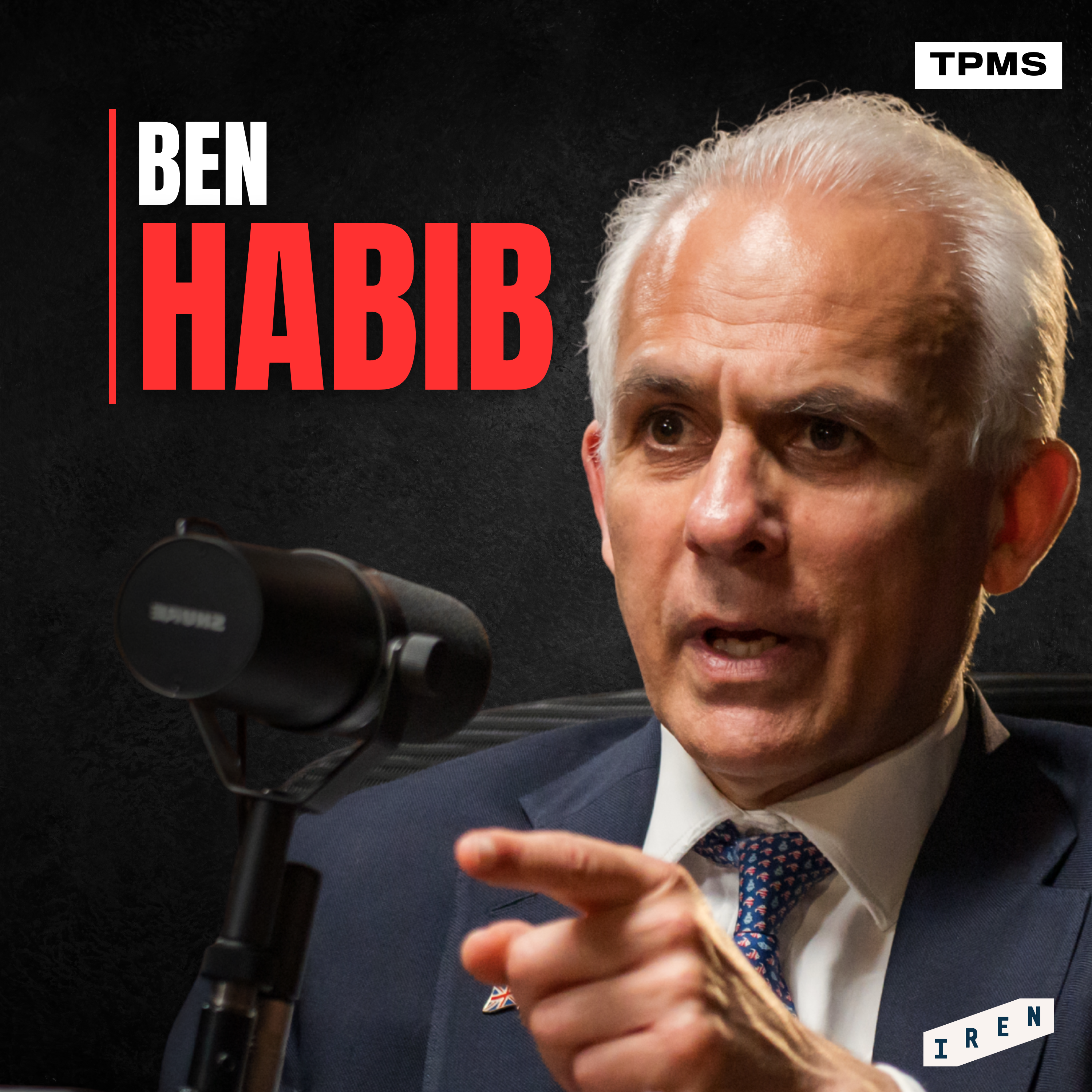
Loading summary
Transcript166 lines
- [00:00]
A
Reform is built on a house of cards. Farage doesn't want people who are going to challenge him. He wants people who are going to do what they are told by him. Look, Farage loves money. He loves money and it's not good to love money. I mean, everyone loves money. But it's not good to be the slave of money when you're running for Prime Minister.
- [00:20]
B
We are likely to have an election in 2029. Who do you think would be the ideal Prime Minister to leave this country after that?
- [00:31]
A
If I'm to choose a parliamentarian.
- [00:36]
B
This show is brought to you by my lead sponsor, Aaron the AI Cloud for the Next Big Thing. Iron builds and operates next generation data centers and delivers cutting edge GPU infrastructure, all powered by renewable energy. Now, if you need access to scalable GPU clusters or are simply curious about who is powering the future of AI generation, check out iren.com to learn more, which is Irene.com. all right. Good afternoon, Ben.
- [01:02]
A
Good afternoon.
- [01:03]
B
We don't have many people back for a third time.
- [01:06]
A
Really?
- [01:06]
B
Yeah, I think some people don't want to come back. Right. I've got a big question for you. I think we are likely to have an election in 2029. Who do you think would be the ideal Prime Minister to lead this country after that?
- [01:24]
A
Well, I can knock off a few who shouldn't be Prime Minister.
- [01:27]
B
Yes.
- [01:27]
A
Which is an easier way to perhaps start. But I mean, there's not a single leader of a political party at the moment in my mind that's worthy of being Prime Minister. And I've said many times, and I'm sure I've said it to you, if I haven't, I'll say it now. We need a new political force in the United Kingdom. We need a political force of people who are capable, who believe in this country, who are prepared and able to identify the root causes of the problems that we face, to do it bravely. And having revealed the root causes of the problems, which I think so often takes you three quarters of the way to finding a solution. Because if you really understand the problem, you know the solution, then revealing the solutions. And you know, we used to have an abundance of politicians like that in the past, but somehow our parliamentarians have been dumbed down over the last 30 or 40 years, which I've got a theory on that. But anyway, they're dumbed down and we need a new political force that reintroduces proper people into Parliament and then from amongst those proper people, a Prime Minister, I'm sure would Emerge. There are a number of people, I think, in and around politics at the moment, but not sitting in main parties that could pick up that, that, that chalice, if you like. Hopefully not a poisoned one, but can pick up that chalice and, you know, could, I think, do wonders for this country.
- [02:57]
B
You haven't answered though.
- [02:59]
A
Well, I think you want me to.
- [03:00]
B
Name people who do you think would make a good prize.
- [03:02]
A
You know what's really interesting? I think we need a surge of good people coming forward to see who emerges. But if I'm to choose a parliamentarian, then Rupert Lowe undoubtedly would be right up there. There are young parliamentarians. Katie Lamb, I think is superb.
- [03:21]
B
Big fan.
- [03:22]
A
You know, she speaks a lot of sense. Nick Timothy didn't in my mind cover himself in glory when he was advising Theresa May, but he's spoken very bravely and capably recently. I actually thought Robert Jenrick's conversion to being a proper pro British politician had been a genuine conversion, but that's been put paid to by him joining reform. I have a lot of time for Suella Braverman. She obviously had a tricky time as Home Secretary and presided over part of the Boris wave. So issues there, but she understands the problems and she's brave enough to speak about them. So there are a number of people who could come forward.
- [04:05]
B
Um, you've just picked off the entire list of politicians I respect. That's.
- [04:10]
A
That's them, yeah.
- [04:11]
B
And I wouldn't put Jenrick in that list yet.
- [04:14]
A
No. Well, I'm very suspicious. I'm. I had come to. I was suspicious initially because he was a Cameroonian, voted remain. You know, he was. He looked sort of floppy haired and like a little cherub who just left public school and all of that. Without wishing to sound discriminatory, all of that didn't add up to the kind of right wing figure then he reinvented himself into. But joining Reform two days after, three days after Zahawi joined Reform tells me he's not really solid. He should have looked at reform at that point and well, God, look, you know, you've got Nadine Dorres, who's the architect of the Online Safety act, stands against free speech. You've got Jake Berry who's pro net zero, was in favor of lockdowns and all of that. Now you've got Zahawi, who was the champion of all the things against which we should be standing, including of course having slightly dicky tax affairs. None of that is good for reform. And I think Genrick should have stood his ground in the Conservative Party. He should have stood there and tried to convert the Conservative Party into a proper machine, apart from anything else. Without wishing to become too generic centered in this conversation, he's shown really bad judgment because leaving the Conservative Party inevitably meant he. He was burning political capital. He's now in Reform, from which, if he is sacked, and remember, there's quite a history of sacking people if they get too uppity for their own boots, too big for their own boots. If he's sacked from Reform, that's the end of his political career. He's got nowhere else to go. Advance certainly wouldn't take him because he's shopped around. He's got to be a man of principle. So I think he's very, very vulnerable to the Farage firing and he's out of political road at that point. So he's got bad judgment. And I think the fact that he joined Reform undermines the principle that he's had a genuine conversion.
- [06:06]
B
Well, Reform was meant to be that political force. It was meant to be that anti establishment vote. And it's looking more and more like the establishment and the defections appear that it's absorbing the worst parts of government. And so I wonder what the future is for Reform, because I don't think people really want to vote for more of the same establishment that has got us where we are.
- [06:39]
A
No, exactly. I mean, you know, some of the weaker arguments made in favor of what Reform is doing is that, well, everyone was a Tory, but not everyone was part of the government that created and embedded the problems that the people that have joined Reform. Are you with me? You know, I've got nothing against Conservatives, I've got nothing against members of the public who voted differently in the past. Obviously, they weren't part of creating the problem. But I've got a real issue with ministers and secretaries of state who were in positions of power and delivered this country to the precipice. They must be questioned more rigorously, more rigorously than the average individual who may wish to stand for, you know, borough council seat or a town council seat and so on. You've got to really look carefully at the big wigs that reform is taking on. And it's not a good mixture, it's a really bad mixture.
- [07:37]
B
Do you think the voting public truly understands the nature of what is required within this country? Because I look at the fast rise of reform, but also the rapid rise of Zach Polanski in the Green Party. And I see a voting public that is desperate for change, but not really knowing what that change is there's a new narrative here in turquoise and a new narrative here in green, but without truly understanding the structural problems of this country.
- [08:06]
A
So I think the voting public are much brighter than we, we may think.
- [08:12]
B
But is that instinctive?
- [08:13]
A
I think collectively our democracy works. And the reason I say that, there are two reasons I say that. The first is I happen to serve on a jury, which is like the smallest form of democracy that can take place. There were 12 of us on the jury. And when I went on the jury, I looked at the other members of the jury and I thought, we're never going to get to a decent decision because none of them looked to me, no way was I snobby, but they didn't look to me capable of really understanding the very detail requirements of the particular case that we were judging or passing judgment on. But through the course of that trial and the debates that took place in the private room with my fellow jurors, I discovered actually the collective wisdom of those 12 people was phenomenal. It's also a very good reason why we must never get rid of jury trial. And in my mind I went into that case thinking the guy was guilty as charged. And when I emerged after these debates in the room, I found myself to initially have been at fault. And it was the collective wisdom of the cross questioning that went on in the room that yielded the right result. And I was wrong at the beginning. And so that was a real wake up call to me about democracy. And the second reason I say democracy does, I think ultimately work at the electorate level is voting to leave the European Union. And I know that's nine years or ten years ago now nearly, and that was a kind of binary choice and it was very this or that. But the British people knew, instinctively or otherwise, they knew this system is not serving the United Kingdom and we need out of that system. It was the first kick of Western civilization against globalism, against the anti democratic forces against that infuse globalism, mass migration and all the rest of it. Now it might be that they don't have a detailed understanding of the legislative framework and everything else that got us into that horrible position that we found ourselves in with the eu, which we're still in by the way, but they got it, they understand it. And then it's up to people who are prepared to sit down and read all the legislation that binds the uk, the so called international law and all the rest of it, to find a mechanism to, to deliver for what the British people want.
- [10:33]
B
So the British public instinctively knows that there's something wrong and is instinctively moving towards other parties. But I don't know if they recognize that. I mean, certainly I think any idea that Zach Polanski could be the prime minister of this country is catastrophic. But I also. But I do wonder if enough understand that reform aren't currently projecting a set of policies that says they are going to fix these structural issues. It feels to me all that the voter public is getting is an ability to vote for a change of the pace of decay and who the decay is pointed at rather than these structural fixes.
- [11:18]
A
Well, I completely agree with you. I don't think reform. One of my central issues with Nigel Farage is that he doesn't actually have a political philosophy. Now, that might sound peculiar to some of your viewers. You may think that's peculiar because, you know the Persona of Farage is pro British. He wears union flag socks. He's been fighting to leave the EU for 20 years. But actually I, in my own mind, having examined the way he behaves and what he's done, is that he alighted on the desire of a significant minority in this country to leave the eu. And he coupled that with the proportional voting representation that the EU Parliament offers up and realized that if he played his cards right, he could deliver himself into the EU parliament on a very cushy basis for 20 years, which is where he sat. And when we eventually left the EU, technically left the EU or when we voted to leave the EU in 2016, a true believer in the cause of a pro British agenda at that point would have set out his political philosophy, would have said, right, the British people have voted to leave. I've been a proponent of leaving. This is what I think Theresa May needs to do. These are all the things she needs to do. I've examined this for 20 years. This is the solution. But instead of offering up any solution, he disappeared from the political scene completely, re emerging only to challenge Theresa May after she'd made a mess of it when it was too late. And then Boris Johnson carried the hopes and aspirations of the British people. And again Farage challenged Boris Johnson, but then disappeared when Boris Johnson came up with his absolutely awful withdrawal agreement. That doesn't deliver Brexit. And even now Farage doesn't challenge it. So I learned very early on in my dealings with Farage that actually he is a phenomenal campaigner. He's cunning as hell, but he doesn't have a belief system that underpins his politics well.
- [13:16]
B
So does that signal somebody who's focused more on Political ambition, personal ambition over ambition for the country.
- [13:25]
A
Absolutely. And when he entered Parliament, I think he did a little video in which he threw back the curtains of his office in Westminster and he said, I've arrived now, or words to that effect. And that's a very peculiar message because if you're the insurgent, if you're the populist, you're the anti establishment guy, you go into Parliament and you say, I'm here to kick backside. I'm not here because I've arrived, I'm here to kick backside. It's a very small point, but I think it illustrates it. And we've seen this now in spades in the way that he's pivoted this way and that way, taking people from the left. He had a Green councilor defect to reform. He's got labor councillors defecting to reform, ostensibly people who are a member of the Fabian Society, and he's got sort of, you know, Liberal Democrat Tories defecting to reform. So for him, it's all political expediency in the pursuit of power. And that will not save this country. We need someone, we need a body of people who have a joined up political philosophy that puts this country's sovereignty at its heart. That's what really needs to be at the heart of the next government, sovereignty.
- [14:39]
B
So is that how you would outline your own political philosophy?
- [14:43]
A
Yeah. So if I were to allow, when I want to give my vision in three words, I say, a proud, sovereign, prosperous United Kingdom. These are the three things that are critical that we have to deliver on. I know it's very easy to say them, and there's a lot else I can say that backs it up, but that is the aim. A proud, sovereign, prosperous and sovereign. I mean, for the people of this country.
- [15:08]
B
This episode is brought to you by Ledger, the most trusted bitcoin hardware wallet. Now, if you're serious about protecting your Bitcoin, Ledger has the solution you need. Their hardware wallet gives you complete control over your private keys, ensuring that your bitcoin stays safe from hacks, phishing and malware. And I've been a customer of theirs since 2017. Love the product. Use it for my bitcoin. I use it with my Castle multisig for protecting the football club's bitcoin, too. Now, with Ledger's sleek, easy to use devices and the Ledger Live app, managing your bitcoin has never been more secure or convenient. And whether you're a longtime holder or new to the world of bitcoin, Ledger makes it simple to keep Your assets protected. So if you want to find out more, please do head over to Ledger.com and secure your Bitcoin today. That is Ledger.com which is L, E D G-E-R.com, that is Ledger.com. so what has gone so wrong? If the collective wisdom of the country works as a voter base, what goes wrong with the collective wisdom of the 650 people in Westminster?
- [16:13]
A
So before we came on air, you read the opening paragraph of an essay I think you're writing. An article you're writing in which you speak cited the dumbing down of parliamentarians significantly for the problems we're in.
- [16:27]
B
Should I give you the background to that? I was thinking about how we select for corporations. We have loads of successful companies that generate numerous jobs for the country and tax revenues for the Treasury. And I was thinking about the selection process for your. Your top execs. If you lose an exec, you might hire from within, but there is a interview process. And if they're not right, you would go out to a headhunting agency and say, find me the best person. I need a CEO of this company, or I need a finance director to join our board. And they will go out and find the best candidates and give you a selection. And you would look at their credentials and their experience and you would maybe interview them and you would find what you think is the best person.
- [17:16]
A
Yeah.
- [17:16]
B
And the market allows you to test for those people. And if they succeed, they're compensated. And if they failed, there's accountability there. And then. So I try to compare that to the selection process for the most important decisions in our country, because I'm kind of with Curtis Yarvin a little bit. And I believe parts of this country should be run like a company. And we have ministers for health, education, defense, et cetera. And these are some of the most unimpressive people I've ever met. And their selection process is a debate around narrative in their constituency to which they might win just because they tick the right colored box. And when a parliament is formed, the ministers are selected and they're shuffled into their departments, of which they may have no experience at all, but they want to prove that they are going to be successful. And they're making the most important decisions that affect everybody in this country. And they could be entirely wrong. And then when they make mistakes, these people are shuffled around. There's no accountability.
- [18:19]
A
There's no accountability.
- [18:20]
B
There's no punishment, really. I mean, you've got to do something pretty serious to be punished.
- [18:25]
A
It's a misdemeanor as opposed to a gross dereliction of duty.
- [18:28]
B
Exactly. So I think we are selecting the most unimpressive people in the country to make the most important decisions. And I just look at this and say, well, what else would we expect to happen? We will get the country we deserve. If we are essentially taking people on a career which is student, often not everyone, but student, politician to politician to running, I don't know, the health department or running the defense. And so of course things are going to fail, of course. So that, so that was my background to that. I was thinking about somebody who has employed people who knows how the recruitment process works. I said, oh well, we've got this entirely backwards.
- [19:10]
A
Well, you're spot on. And I think it's a function of two things we've got here. Partly because of our EU membership, our parliament ceased to be a real decision making body of people who themselves would be held accountable for what was going on because they just became mouthpieces for the eu. And that's still the case to some extent because laws are made abroad which we're still applying in the United Kingdom as if there are laws. And then the other bit of hijacking that's taken place of our representatives in Parliament are the quangos and regulatory bodies and so on that unaccountable nebulous bodies of people who cannot be held to account whom the parliamentarians can blame. They can blame the bank of England if they get the monetary policy wrong, they can blame the obr. And actually the OBR is going to be given legislative say in fiscal policy under this government which is absolutely balmy. But they'll blame the OBR for fiscal mistakes, they'll blame Ofcom for not having got social media right or whatever it is, but they never blame themselves. So I think they've become voice boxes for other people. They've become marketing executives rather than decision makers in the corporate sense. And then the other thing I think that's taken place at the same time is that parties don't want bright, capable people. They want people who will toe the line. They want compliers. They want. And reform is like this in spades. Farage doesn't want people who's going to challenge him, he wants people who are going to do what they are told by him. And so you're never going to get a team of Samsons emerging. A team of Samsons. For me, a team of Samsons are people who have had real life experience who go into politics because they really care about the country, who Are brave people prepared to speak their minds, but at the same time recognizing that when they're behind closed doors, they can have the most violent, most verbally violent debates they like, but when they emerge from that room as a cabinet, then they have to have a settled position on something and that they stand by each other through thick and thin to make sure that that decision is implemented and rigorously applied so that you don't get weakness. In our team of Samsons, they have to work like a team and they've all got to be absolute superheroes in their own right. That's the kind of body of people we need now running the country. Nothing less is going to save the country.
- [21:39]
B
What would you say are the biggest problems that need addressing?
- [21:45]
A
So there's a multiplicity of problems, but at the heart of it is reestablishing what it means to be the United Kingdom. And there are a number of acts of Parliament and a number of things that we've done as a country that has undermined our understanding of our own existence. All the so called international law, the obsession of abiding by international conventions, being members of supranational bodies and taking guidances from organizations of which we are a member, like the un, as if they are settled law in this country. These are things that have really very badly gone wrong. The global order which emerged after World War II to prevent muscular Western countries, effectively perhaps include Japan in that mix, Western countries in Japan from ever having another world war. That good aim from those multilateral institutions that were created has now gone too far. Those multilateral institutions have become organisms in their own right. They're not there to act as a platform for proud nation states to cooperate. They are themselves becoming the they replacing nation states. And that's not acceptable. It's gone too far. Then of course, the other thing that's taken place is the body of law that has followed this belief system that we've put on our own statute books, which begins in significant, fundamentally begins with the Human Rights act, which elevates, of course, people have to have human rights. But what we did through the Human Rights act was elevate all foreigners to the same level as British citizenry and make it impossible to distinguish what it means to be a British citizen because everyone gets the same protections, the same privileges, the same rights in this country. And then we made things even worse with the Equalities act, which effectively was the beginning of progressive discrimination in favor of ethnic minorities, minority religious beliefs and so on. So that it wasn't just that we didn't understand what it meant to be a British citizen. We actually then started putting foreigners interests over and above into our own detriment. So we've literally set the country aside. That's where we're at. And one thing that I find horrific, I don't know if you've heard me say this, Peter, but if you go to the government website and perhaps you could inter splice this into the interview later. But if you go to the government website and you look at the definition of far right terrorism, it says, is it me? You're not quite a terrorist, but you will be defined as far right. Because it defines far right terrorism as people who are prepared to use violence to give effect to far right ideologies. And then it defines far right ideologies as one of three things. White supremacy, which is far right. White nationalism, which is the same as white supremacy, which is far right. But it also then goes on to say cultural nationalism. So anyone who believes in a culture for our nation basically is far right.
- [25:00]
B
Hold on, here we go.
- [25:01]
A
You find it already.
- [25:02]
B
Extreme right wing terrorism describes those involved in extreme right wing activity who use violence in furtherance of their ideology. These ideologies can be broadly characterized as cultural nationalism, white nationalism and white supremacism. Individuals and groups may subscribe to ideological tenets and ideas from more than one category. Well, I think I'm. I believe in cultural nationalism.
- [25:25]
A
I absolutely believe in cultural nationalism. To be a nation you have to have a culture. To be a society, you have to have a shared language, a shared history, a shared value system. You have to share things with each other. We have to recognize each other to be of the same tribe. Are you with me? And so to put cultural nationalism up there means that our own government stands against this country.
- [25:51]
B
It doesn't want us to have a.
- [25:53]
A
Culture, it doesn't want us to have a culture.
- [25:55]
B
Why? Why?
- [25:55]
A
Because it believes in mass migration. It's gone. This, this idea of globalism, global prosperity will raise all ships. We don't need to worry about being British. Everyone will be better off, which is fundamentally anti democratic and fundamentally anti British. It's gone too far.
- [26:14]
B
Hold on. Are we committing an act of terrorism discussing this?
- [26:17]
A
Well, we're certainly far right discussing it under that definition, interestingly.
- [26:22]
B
Just bring that back a second, Conor. I think white supremacism is dumb, but there are offshoots now of white nationalism being discussed in this country because there are people who are fearful of white people becoming a minority in the country. And I saw a really interesting debate where one guy had outlined that in this country, young white men are performing particularly bad in schools. But if they are currently the majority of this is a net negative for everybody in the country because it signals that we are dumbing down the whole country 100%.
- [26:59]
A
Absolutely in the pursuit. We are absolutely practicing the opposite of what we need to do to put this country forward. This progressive discrimination, which has put meritocracy to one side and champions your immutable characteristics or your belief systems, is the opposite of what the country should be doing. Even Martin Luther King said, it's not the color of your skin that matters, it's the content of your character. We've lost the understanding of that very basic tenet. And so progressive discrimination coupled with mass migration coupled with multiculturalism, not understanding what it means to be a nation state or understanding what it means to be a nation state and willfully setting it aside, which I think is where Starmer's mind is, is destroying this country. So any government that wishes for a proud, sovereign United Kingdom has to begin with ditching this definition.
- [27:58]
B
And there is a challenge because there is a large voter public who believe that you or I are dangerous far right fascists. When we sit here thinking, hold on, this is just normal. This is normal beliefs and behavior. So we have to defeat the arguments as well.
- [28:21]
A
We have to win the argument. Absolutely. We have to win the argument. But I think the British people are there. We can.
- [28:27]
B
Enough of them are there.
- [28:28]
A
Enough of them are there. The British people are with us. The majority of the British people are with us. And what I find so distressing is the political parties haven't woken up to it. When the British people voted to leave the eu, they were voting for cultural nationalism. They were saying, we want our culture, we want our nation. We don't want to be eu. We're not German, we're not French, we're not Italian. Are you with me? I'm with you where we want to be British, which doesn't mean that we want to go to war with anyone. It just means. It actually means the opposite. We want to be just slightly more insular for a moment, please, can we just look internally and look after ourselves before we start being expansive on the international stage? But our leaders don't get it. They still talk about the need for development aid. They're still giving money to projects on the international stage for their little pet net zero projects and other things. They still love to interfere in other people's war zones, but they won't protect our own country through strengthening our military and our criminal justice system and so on, and so all of that needs to be ejected.
- [29:35]
B
With regards to immigration, how do you tackle such a difficult subject and what is advances, policies or ideas with regards to REImmigration? Because the US has been trying to execute a strategy of reimmigration and it is tearing parts of the country apart.
- [29:54]
A
But it's working for every one person that's deported for a leaving voluntarily.
- [29:58]
B
Is that true?
- [29:59]
A
Yeah, this is what I have read and that is phenomenal because that suggests that simply declaring a direction of travel will get the job done very significantly.
- [30:12]
B
So it's just a very. Unfortunately, it is a very tough to do.
- [30:17]
A
I want to debug that, if I may.
- [30:19]
B
Yeah, please. Yeah.
- [30:20]
A
The language around it has not been written by people who would wish to enact remigration or, you know, the word deportation is a very aggressive word, but actually, we have to remember what we're doing is sending people home. It's not an extreme policy. It may be radical compared to the way we've been running this country, but there's nothing extreme in saying to someone, please go home to repatriate them rather than re migrate them. Or are you with me?
- [30:50]
B
I am, but the point I was trying to make is that I was listening to an AI read of a Curtis Yarvin essay that he's just. Which, if you haven't read, I'll send it over to you. But he was talking about how in America, this has happened alongside Trump having made quite a few, having quite a few failures, and if he loses the public and loses the midterm and loses the next election, all this can be undone, the floodgates can be reopened. And so I think there's a way of doing this, but there needs to be some delicacy to ensure you're protecting.
- [31:29]
A
For the long term, 100%. It has to be done delicately and that's why I think language is so important. If we let the left, the sort of anti British, pro globalist lot, set the language, it'll come across as aggressive and uncaring and, you know, makes it much more challenging to implement. What we've got to do is say, look, we've got over a million people, well over a million people in this country illegally. That is not a sustainable position. They need to go home. These are the steps we're going to take to send them home. We've got 10,000 people in British jails, foreign criminals who've not just broken into this country, but once they've. People who are here who've broken a domestic law. They must go and serve their sentences at home. We've got one and a half million foreigners on benefits in this country not contributing to the British economy. I'm sorry, if you're not contributing to the British economy, please go home.
- [32:30]
B
Or you're taking from the British, you're.
- [32:32]
A
Taking from the British economy. You're not contributing, you're taking. Please go home. Just those three steps would be a phenomenal change of direction for this country. Just those three steps.
- [32:44]
B
What are your views on the economic position of the country? This is an area we've spent a lot of time. How do you think we fix our economy? Because at the moment it feels like it's from stagnation to terminal decline.
- [32:59]
A
Yeah. So I think if I may say so, before we can fix the economy, we do need to get our sovereignty back because we won't be able to fix the economy if we're still marching to the socialist global world order with mass migration and all the rest of it. So it is a multi pronged approach. And the fundamental nature of that, of the economic recovery, I think turns on first establishing, re establishing the United Kingdom, who we are putting our borders up, making sure all the freeloaders, if I can call them that, taking our benefits and so on, they, they go home, foreign criminals, et cetera, they go home, which is a massive reduction in cost. That's an important step. It's very, very important to make sure that jobs are not given out on actually often below minimum wage illegally. Because we've got lots of people in this country who are prepared to work on virtually slave labor basis because they are here and shouldn't be here. And we've got to also remove the welfare state from people who are habitually avoiding work. There are now 8 million people in this country, half of whom, 8 million people in this country in universal credit, half of whom are not even looking for a job. 4 million people not even looking for a job. They don't show up in the unemployment stats. Unemployment stats only reflect people who are unemployed and looking for a job.
- [34:27]
B
But they show up in the welfare bill.
- [34:28]
A
But they show up in the welfare bill pretty large. And we've got to be hard on welfare. And the money we save on welfare, we have to then give tax cuts to the working and middle classes so that they can see that by working they will make money, that welfare's gone, get back into the workforce. Apart from anything else that obviates the need for mass unskilled migration because you've got the British Workforce being pushed, pushed and incentivized through tax cuts to go back into work. And I think those are some fundamental building blocks. But the other key thing is we've got to get rid of this idea that the state is there for everyone when anything goes wrong. We have to develop a sense of personal agency aspiration needs to replace dependency. Wealth creation needs to become the aim rather than wealth redistribution. And that'll take a long, long time. That'll take a long time. In part also because we are so indebted as a country that we're so concerned about interest rates going up because of our debt level that we can't pursue aggressively a pro growth agenda because if to do that risks interest rates going up. So we have to make our way back to wealth creation and growth carefully by cutting our bills, cutting welfare, cutting foreign aid, cutting all that stuff that we're. All the wastage has to be cut out. And I can get to on the back of an envelope. And by the way, you've got a ditch net zero which is.
- [36:10]
B
Yeah, I think we all agree.
- [36:11]
A
Yeah, yeah. You know, which would save hundreds of billions of pounds. I don't care what people say. No, no, Ben, that's not. We can reinvent the economy on a net zero agenda. That's all rubbish. There's so much money we could save by deregulating this country, which wouldn't even affect the Exchequer. You wouldn't get any of the OBR members getting upset by deregulation. Deregulate the employment market. Deregulate the fossil fuel market. Deregulate housing. Deregulate, Deregulate, deregulate. Free up the organism of the British workers. Free up small and medium sized businesses. Get rid of inheritance tax. Now people might say, ben, why do you want to get rid of inheritance tax? That's got nothing to do with. That's got nothing to do with. You've got my vote.
- [36:56]
B
What? You've got my vote. But it's a really important point. One of Conor's decisions whether to stay in this country or not is inheritance tech.
- [37:03]
A
Yeah, it's critical. Yes, it's critical and it challenges if Connor leaves the country. Basically what's happened is the connection of the British people with this country has been broken. Inheritance tax is an attack on the state of the. Is an attack on the United Kingdom. I used to have a book, I have said this on other podcasts. I think I've mentioned this to you, Peter, but I used to have a book on my dressing on the coffee table in our sitting room, which was all the great houses in this country that were burnt down after World War I when inheritance tax was introduced for the first time. And it's a book that thick, full of absolutely magnificent buildings that were burnt which were torched to avoid inheritance tax. That is how damaging inheritance tax is. Obviously we've, we've seen it applied to the farmers. People have been committing suicide on the back of the prospect of that. That is so damaging to the economy. So damaging. And the amount of tax it raises is nothing. 7 billion a year. It's an ideologically motivated tax brought in by a Labor government that wants to attack our understanding of who we are as a people, to break our connection with the land in the case of farmers, to break our connection with our historical, proprietarial, patrician businesses. Connor Leaving this country means all the businesses you've set up, Peter. They've got no inheritor, they've got no one to take them forward.
- [38:37]
B
Envy based taxation policy.
- [38:39]
A
Yeah, envy based, but designed to attack the country, designed to undermine the country. What they want to repeatedly do is break our understanding of who we are. I know that sounds conspiracy theory. It's not. That's what they're doing.
- [38:53]
B
It's Fabian.
- [38:54]
A
It's Fabian. That's what they're doing. That's why they say our forefathers are slave traders. They want to make us ashamed. That's why our national heroes are denigrated. Inheritance tax is the same thing. It's just done economically. So we've got to get the entire legislative framework, constitution and cultural setup changed if we want our economy to recover.
- [39:15]
B
Will the people who control the money flows around the world allow this?
- [39:22]
A
So this goes back to the very good point, pertinent point you were making about needing Trump to succeed. We need the next British government, which I'm sure by the way will be a pro British government. I'm not sure about the hue of its pro Britishness, whether it'll be one that pretends to be pro British or real pro British government. But the next government ain't going to be extreme left wing like this Dharma government. That next government I very much hope has the umbrella of a supportive American administration, a Rubio or a Vance presidency, so that the Trump agenda continues and we have that cover to do it here too. We will get the support of the United States against Europe, the European Union, if we go for a pro British approach. And we've got a post Trump Trumpian president, if you know what I'm saying.
- [40:21]
B
So looking ahead to 2029 as we currently Are it looks like reform would win as we are and could win a super majority. Do you have any confidence that they could restore this country to prosperity or you completely written them off?
- [40:43]
A
I've completely written reform off. In fact, I think, though they would ostensibly look like a pro British government, my real fear with reform, real fear, is not only that they'll fail, but they will trash the narrative in their failure so that the Labour Party, the Liberal Democrats and even the British people will say, well, we tried that kind of pro British approach to running the country and it failed. So let's go back to the eu, let's go back to globalism, let's go back to the comfort zone of all the things that brought this country into the trouble that it's in. The next government, if it is pro British, has to succeed because in the same way that you said Trump has to succeed, the next government, if it's pro British, has to succeed. And Farage, the way he's going about his business, will trash the narrative.
- [41:32]
B
Do you believe the party has been captured?
- [41:36]
A
Farage is absolutely. Look, Farage loves money. He loves money. And it's not good to love money, particularly. I mean, everyone loves money, but it's not good to be the slave of money when you're running for Prime Minister.
- [41:55]
B
Okay, well, I. My current position is that I would not vote in the next election. I haven't voted in the last three. I always say I refuse to vote for decay. I refuse to vote for a different pace of decay or different group people to point it out. I desperate to see this country restored to prosperity and greatness. Myself, I'm highly baked into the economic side of things. I'm a free market guy. I, like many other voters who maybe are feeling disillusioned with reform, are looking for an alternative, is why you're here. Advance have done very well. I mean, 40,000 members now.
- [42:35]
A
40,000 members. But what you're not seeing, by the way, is the grassroots of reform, former reformers that we're taking on. Reform is built on a house of cards. And the traditional support base of reform loathes what's going on. And they are joining us.
- [42:50]
B
Well, we're seeing it when we're seeing it quite publicly with every defection is announced. Like at first with the generic one, I was like, okay, well, this is kind of promising. This is like a senior guy. This is terminal for the Conservatives, so they won't have to discuss some kind of coalition. But I watched his press conference and I was very glad he spoke about the Economics. But there was something very inauthentic about it. There was something I just didn't trust and I've kind of. I've become even more skeptical of reform now. But for someone like me as a voter, I need an alternative. How can an alternative be built in the next three years that can not only command enough seats but actually command enough power that is required to actually deliver these things? Because what we're essentially saying is that there's a requirement for a party that can eviscerate reform who have performed very well up until now. I think they. Yeah. And they're looking like they peaked. And some of the elections that happen in local councils, they're not doing as well as predicted. But how can a party be established to actually get a super majority and govern the country in three years?
- [44:13]
A
So the two. First of all, the two party system is broken. Yes, that was critical. For this country to save itself, we had to break the two party system. And reform did that, Reform did that. It's gone two party system. The electorate's very febrile. The electorate is looking, as you've said a couple of times, I think in this interview, the electorate's looking. Who do we vote for? And what we've got to do is win the argument, which is also something you've said. And we've then got to assemble the body of people capable of being on a front bench and doing everything that's needed. The approach that Advance UK is taking is that we, I believe, we understand. I've got a college of great minds who I've assembled to make policies for the party and we understand that you can't make policies in isolation. An immigration policy has implications for economics and economics has implications for immigration. Constitutional and cultural changes have impacts on economics and immigration and vice versa. Energy policy has knock on effects into other areas and so on. You need. Yeah, that's. They're some of the members of our college and you need a holistic, coherent, integrated approach to policy making. This is going to be a bit dull. Forgive me.
- [45:36]
B
No, it's fine. I actually like this stuff.
- [45:37]
A
Yeah. You need a coherent, integrated approach to policy making. I think one of the problems that governments have had in the past is they look at each policy as a silo and go, well, this is what we'll do for immigration. And they don't think about what the knock on effects are in other areas. So, for example, I know you like economics, for example, pensions. The government knows everyone should be saving for a pension. But then in order to benefit other parts of the economy. It keeps taxing those who want to save for their pension. They're at sixes and sevens. They've always been at sixes and sevens over pensions and they don't get it right because they haven't got a coherent, holistic approach. So our policies are going to hang together. We are going to look at every policy in isolation and then we're going to look at every policy and the impact it has on every other policy area so that we draw it all together. And then the other thing we're going to do, which is remarkable and never been done before in British politics, is before the next general election, having got our body of policies together, we will draft the legislation required to give effect to the major policies, the major changes of direction, so that we attach those to the manifesto. And the British people know precisely what it is we're going to do when we get into office. So we have a democratic mandate that is vital. It's vital the British people give us what we need, the authority to do what we need to do. It's also particularly vital because then the Lords and the Civil Service can't challenge you under the Salisbury Convention. The Lords can't interfere with a manifesto pledge. So if our manifesto goes as detailed as draft legislation, the Lords won't be able to interfere. We'll have one God Almighty Ra with the Lords and pass legislation, if necessary, to force our agenda through, if the Lords stand against what the British people have endorsed. So we will have draft legislation and the aim is to go into the Commons and slap that down on day one. And I got the idea from Donald Trump, slap down our legislation at day one and say, this is what we're doing. These are manifesto pledges. We have the support of the British people. We're not entertaining any alterations to this draft legislation and force it through day one.
- [47:51]
B
And the first hundred days will be shock and awe.
- [47:54]
A
Yeah, it'll be shock and awe.
- [47:56]
B
Have you considered building a parallel government in advance? And what I. This is the crux of the essay I'm working on, is that there seems to be this fader whereby we elect a party, they form a government and they position people as ministers for departments. They have this no experience in doing. I think the best people in this country are not MPs, and we have to attract them to be MPs.
- [48:22]
A
Yeah.
- [48:23]
B
And I believe you could build a parallel government in advance of an election and you could find the best person in energy. It might be someone like Catherine Porter, who would run rings around an ed Miller Band. And that could be your energy minister. And you could pick a health minister, somebody who's worked in the nhs, understands all the problems, has been vocal about it. Education, you could find somebody who's worked in the education sector, understands all the problems. Same with defense. And you could publicly build your government before it put them before the people, show their expertise. And so you create, you have to do that. You create expertise and you turn experts into MPs rather than MPs, rather taking MPs who can't become experts.
- [49:08]
A
Yeah, I agree.
- [49:09]
B
And then I think the country could look at that and go, oh, that's my team. That's Ben Habib's Avengers. Fixing this country.
- [49:17]
A
We have to do it. The cabinet, this team of Samsons that I mentioned earlier, they have to be assembled. The Avengers have to be assembled. And I think it's called, the film's called Avengers Assemble or something. And so the Avengers have to assemble and the nation needs to see them just as much as they need to see the policies. They need to see the people. And actually, funny enough, just this morning we had a senior leadership meeting. And this morning we decided that we're now going to start recruiting four parliamentary candidates three and a half years out from an election. Most parties, including the Conservatives and certainly the Brexit party and reform, when I was part of it, didn't turn their mind to it really until the last kind of minute. We're doing it now. I want every. I mean, the general election could come in 2028, so I don't think it's going to come any earlier than that. It's wishful thinking to think that Starmer's going to call an election. The Labour Party simply. Turkeys don't vote for Christmas.
- [50:13]
B
Yeah, they're finished as a party.
- [50:14]
A
They're finished as a party. So they're going to delay it as much as they can, but they might just call it a little earlier than 2029 to wrong foot the opposition. So by the beginning of 2028, this team of Avengers, together with all the other parliamentary seats that we're really fighting, though we intend to field six hundred and fifty candidates right across the United Kingdom, including Northern Ireland. There hasn't been a pan union political force at a general election. Northern Ireland has always done its own kind of thing, but we will be everywhere, obviously concentrating on some seats more than others because we know where we're likely to win. That team of people has to be ready and in place six months at the beginning of 2028.
- [51:05]
B
So on this podcast, you are definitely hearing me talk about bitcoin a lot. Well, why? We live in a really strange time with governments driving inflation with their reckless spending and endless money printing. There is a way out of this. There is a way to protect your money, and that is by stacking bitcoin. I've made loads of shows about bitcoin. You can go and research this, you can go and read the books, but the truth is, it is the hardest money ever created. If you are interested in protecting your financial future, it's time for you to get on the bitcoin train. I have. I've been stacking bitcoin personally and through my businesses since 2017. It's protected me, it's secured my family's future, and it also strengthens all of my businesses. So if you want to start stacking bitcoin, where do you do it? Well, for me it's with Gemini. They're a fully licensed, full reserve exchange and custodian and so they give you a secure way for you to buy and own your bitcoin. There's no risks and no funny business. So if you're serious about stacking bitcoin the right way, head over to gemini.com, which is g e m I n I dot com. How do you find these people? Because what I don't want to see, again, I speak in personally here, but I hope I speak rather. I don't want to see student politicians, career politicians. I want to see new blood experts. Yeah, new blood, but experts who there's a bit like. Did you see Cummings interview with Gove?
- [52:23]
A
Yeah, I did, yeah.
- [52:24]
B
And I thought it was very interesting, the point where he made about reform. Should have been out there doing a public recruitment process and finding people in the country who want to fix it, who are willing to take one for the team, willing to give up whatever career ambitions they have or personal ambitions to go. We understand this country needs fixing. Almost like wartime, you know, that wartime mentality. Okay, I'm going to join the government, I'm going to do my four or five year stint and I'm going. And I come with this expertise that I can help. Two questions on this. One, how do you find them? And also, should we be just paying these people a lot more money? Because if £90,000 isn't very. I mean, if I did it, I don't need the salary, but. But if you're paying half a million pound for an mp, you're going to get some very serious people who are going to weigh that up. Versus working in the city or working, working as a consultant who is an expert, who isn't a politician.
- [53:19]
A
So I think it's going to be very difficult to change the salary of an MP or to run on a ticket where we're going to treble the salary of MPs. People will see through that. I mean, I completely agree with you. Singapore I think pays its MPs an average of the top. I can't remember the exact statistic but it takes an average of CEOs salaries and they're doing okay and they're doing really well. But I'm just trying to think through the political optics of me saying we're standing for election and we're going to travel our salaries when we get into.
- [53:45]
B
Power because it's the, it's the right thing.
- [53:47]
A
It's the right thing to do, I think. So the way we're doing it is 200,000 USD. How much in Singapore?
- [53:54]
B
200,000 USD.
- [53:56]
A
Yeah. Okay. So not massively more than us actually.
- [53:59]
B
Yeah, well, but £90,000 isn't great. I mean if you have three kids and don't work, you get nearly that now.
- [54:05]
A
Yeah, so, but, but how do you find these? Yeah, so we, we're going to go out and advertise and then we're going to just have an interview process in the normal way, including people doing a one minute piece to camera selling themselves. I want to see, I want, you've got to have people who can sell themselves. You know, you can have all the great brains but if you can't actually articulate it, there's no point. You can't be frontline, you can be, you can be in the support. You're going to be in a sport. But we got to just start now. We've got to recruit the way, the way you suggested.
- [54:38]
B
We must recruit headhunt people.
- [54:40]
A
I think that's very difficult to use a professional headhunter. That's difficult.
- [54:45]
B
But you must see people yourself, you think you should be doing.
- [54:48]
A
Yeah, and I'm looking at one right now.
- [54:50]
B
I know I've honestly, you know, but.
- [54:53]
A
That'S the issue, Peter. Well, no, people like you to say, right, we're just going to bloom and do it.
- [54:57]
B
No, look, we talk about this a lot and I weighed up going through reforms, vetting and considering running for reform and, and decided it wasn't right for me because I don't believe in what the party stands for as it is. I just, I think it'd be a waste of time and I'm pretty confident I could win one of the Bedford seats because I know the area well and it's not a no. But I would happily do a job in the background working on supporting people on certain parts of strategy. I also think I'm useful in media, so I'm not opposed to something like that. At some point, if the right party with the right leadership and the right policies come forward, because I feel like how can I expect it of people if I'm not willing to do it myself?
- [55:40]
A
Then that's the thing. And that's why, I mean I, I'm not quite like you. I mean I kind of blundered into politics. I blundered into it because I just wanted to get Brexit done. Yeah, I was sick and tired of watching Theresa May failing and I thought, right, Brexit party's being set up, I'm going to go and do something. And then I. Once you're in politics and once you become responsible for advocating certain positions when those positions haven't been delivered and Brexit still has not been delivered, I think if you're a half decent human being, you don't leave until you've delivered. Millions of people put their hopes in us doing the job and I think we need to see the job through. But, and I think this is what's happening as well in the nation. Great people are waking up to the plight of the nation. The fact that it is facing its existence, is facing threat that your son for example, is thinking of leaving so many people. I was doing a deal, literally I was doing a deal with another young guy, 30 year old chap who's, you know, I'm in property. And he was, he introduced a property to me a few weeks ago and then he texted me, said, you know, I said, where are you, Charlie? And he said, oh, I've left the country. I've gone to Abu Dhabi for a couple of years. I said, well, you know, I said, probably the right move but you know, shame to lose you, Charlie. So we've got to get to people who understand the existential threat we face. Love this country, remember their adolescence and youth with fondness probably. It is a slightly older person who has seen what it was like, you know, when we were proud of ourselves and so on and wants to just their parting wish. Their bucket list is one item which is to restore the United Kingdom.
- [57:31]
B
Currently you are a leader, but in a world where Ben Khabib is not a leader, where do you see yourself amongst the avengers? Where is your expertise utilized?
- [57:41]
A
I'm happy to do Any role. I think I would naturally be a finance director in a cabinet. But without wishing to pat myself on the back, if I had to be Prime Minister, I'd bloody do Prime Minister. If I had to be. I'm not going to say no, I can do it. You know, there may be better people better suited for it, but I could do it. But finance director or Chancellor of the.
- [58:07]
B
Exchequer, you know, do a better job than Rachel.
- [58:09]
A
Yeah, certainly do a better. And I go and I slowly move the country to growth. Cut taxes, cut welfare. You know, I'd move the country to growth. Aspiration, wealth creation.
- [58:20]
B
Do you think realistically, we. We have to go through a. A small period of pain for this?
- [58:26]
A
Yes.
- [58:27]
B
Yeah. Do you think there is an aversion to that pain?
- [58:29]
A
There is, yeah. But there is no option. We, and we. And as politicians, we've got to be honest about it, that we've got to take welfare away. We've got to take it away. We can't have this dependency. We're going to go bust.
- [58:45]
B
I'm very fearful of the economic situation. It does terrify me, but I. I'm not. I, you know, I mean, I maybe have the luxury of saying I'm okay with a bit of pain, but I just feel like we are living on our credit cards now. We need to rein it in a bit.
- [59:00]
A
But. So if you cut the welfare bill and you cut taxes, the economic machines leave aside migration and so on for a second, the economic machine starts balancing itself straight away. Instead of getting 15,000 a year on benefits or more, you start paying maybe five or six thousand pounds a year in tax. So the net benefit is 20 grand for the Exchequer.
- [59:25]
B
I don't understand why they don't understand this, but unless it is all planned destruction, knowing they want to create a dependent state, which it does feel like that.
- [59:37]
A
Well, as I say, you know, they define cultural nationalism as far right, which tells you that they don't believe in the country. They don't actually believe in being British. This is a problem, you know, for a government, that's a problem.
- [59:52]
B
It's so frustrating that these. This seems just normal, sensible ideas that are cla. Like, I am classed and you are classed by some people as being crazy, radical, far right. They've. They've turned conservatism into a pejorative.
- [60:08]
A
Absolutely.
- [60:09]
B
And I think the job of conservatism is to conserve. And that's not what we're doing.
- [60:13]
A
No, no. We're splashing it up against a wall. There's a more impolite Way to put that. But you know what I'm saying.
- [60:22]
B
Yeah. Do you enjoy it?
- [60:26]
A
It's burdensome, is the frank answer. It's burdensome, but I'm in the fight. I'm a small business guy. I think you're a small business guy initially, at least. And when you've been running a small business all your life, you're used to fighting because the big boys are your combatants, your opposite numbers. So I feel like I'm a boxer who's been in a ring for the last 30, 40 years of my life anyway, so I'll spend the next 20 fighting as well. It's.
- [60:54]
B
But is there, like a weight to it, you feel.
- [60:56]
A
Yeah, there is a burden. You've got to get it right, Peter. Haven't we. You know, I fear that we may not get the right policies. I fear that we may not get the right people. I fear that we may not connect with the British electorate in the way that we need to connect in order to get the votes, that we will need to form a government. But I also fear that if we don't do it, the other thing I am. I used to box, so I understand the feeling of being in a ring, punching and being punched.
- [61:21]
B
Did you have any fights? What's your record?
- [61:24]
A
Well, my record's not brilliant. I was. I fought for Cambridge and both the varsity matches I lost to Oxford, I'm afraid. But. But, you know, be that as it may, the other sport that I love is fishing, okay? And there's so many fishermen I know who won't go down to the river when the rivers are too high or it's too dirty or it's raining or the sun's too bright because the fish can't see. When it's bright, they go, no, there's no point fishing at the moment because the water's impossible.
- [61:53]
B
Fair weather fishing.
- [61:55]
A
Most fishermen will analyze the conditions and say, it's not worth it. And I always fish when the other fishermen are not fishing because I take the view that, first of all, there are fewer flies in the river, and second of all, the fish may just take it. And if you don't fish, you certainly won't get a fish if you don't have your fly in the water. And that's partly the view I'm taking now. It's a much more serious business I'm in. But if we don't try, I will be on my deathbed in 20 years, 25 years or whatever, and I'll be thinking, I didn't try. If I try and fail. I tried.
- [62:33]
B
Yeah. You don't want that regret?
- [62:35]
A
I don't want that regret. I don't want that on my conscience.
- [62:38]
B
I feel that burden, Ben. I do. I really feel it. Wrestle with it daily. Just wanting something different for this country. I see just. I see a government of just really unimpressive people making such stupid decisions. And I. I've seen. I've lived through this decline in trajectory and most of all, I think about the younger people. Not just my son, but collectively the younger people. It's like, what. What are we handing over to them?
- [63:13]
A
Yeah.
- [63:14]
B
What is it? We've.
- [63:15]
A
Yeah. There's no legacy. Well, Connor wants to leave. Right.
- [63:18]
B
Lots of people want to leave. Or a despondent, nihilistic.
- [63:23]
A
My sister's left.
- [63:24]
B
Yeah, nihilistic. And. Or been sucked into socialist nonsense because they've been given another boogeyman to point their finger at when we know this is destructive. So. Yeah, well, look, you know, I hope the best. I want. I want change in this country. And I think we need Samson's like you said, and we need people with courage. Is there any part of this. I've not asked you things you wish I would have. Is there anything we didn't cover today?
- [63:54]
A
I think we've covered a lot of ground, I think. I mean, the challenge is huge, but it's not. It's not too late. You know, just the analogy I like using is Dunkirk, because the soldiers who were stranded on the beaches of Dunkirk must have been absolutely devoid of hope. They must have thought, this is it. And England must have looked across the Channel and thought, we're losing. But those little boats all went out and we rescued the troops. We gathered ourselves up and we fought and we won. And as you said, it's a bit like being at war at the moment. And it is, and it is a Dunkirk moment. So either we rise to the challenge. When I use these military metaphors, I'm not advocating violence. It's critical we do it peacefully through the political process, the ballot box, which is why political parties are important. But I'm not at all without hope. And my biggest comfort comes from the fact that the British people are with us. The majority of the British people are with us. The political class isn't, Farage isn't, but the British people are. And all I need to do is make sure Advance UK can connect with them.
- [65:06]
B
Yeah, I appreciate the analogy, because I do think of young men who went off in the 1940s not knowing if they're going to come back to fight for the country and what is required of people like myself and Connor and everyone else is tiny compared to that, but is consequential. So. I appreciate the analogy. Look, I wish you the best. I mean, phone's always on. You have my support. I'm desperate, like others, to see something different. And I hope someone is successful in restoring this country.
- [65:38]
A
Yeah, I think if we're, you know, typically in dire times, we've always found a hat out of which to pull a rabbit.
- [65:47]
B
Yeah.
- [65:47]
A
So let's hope we can do that.
- [65:49]
B
Well, look, all the best, Ben. Appreciate you coming in, and good luck with this. Stay in touch here.
- [65:54]
A
Thank you for having me on.
- [65:55]
B
And thank you, everyone, for listening. We will see you all soon.