← The Peter McCormack Show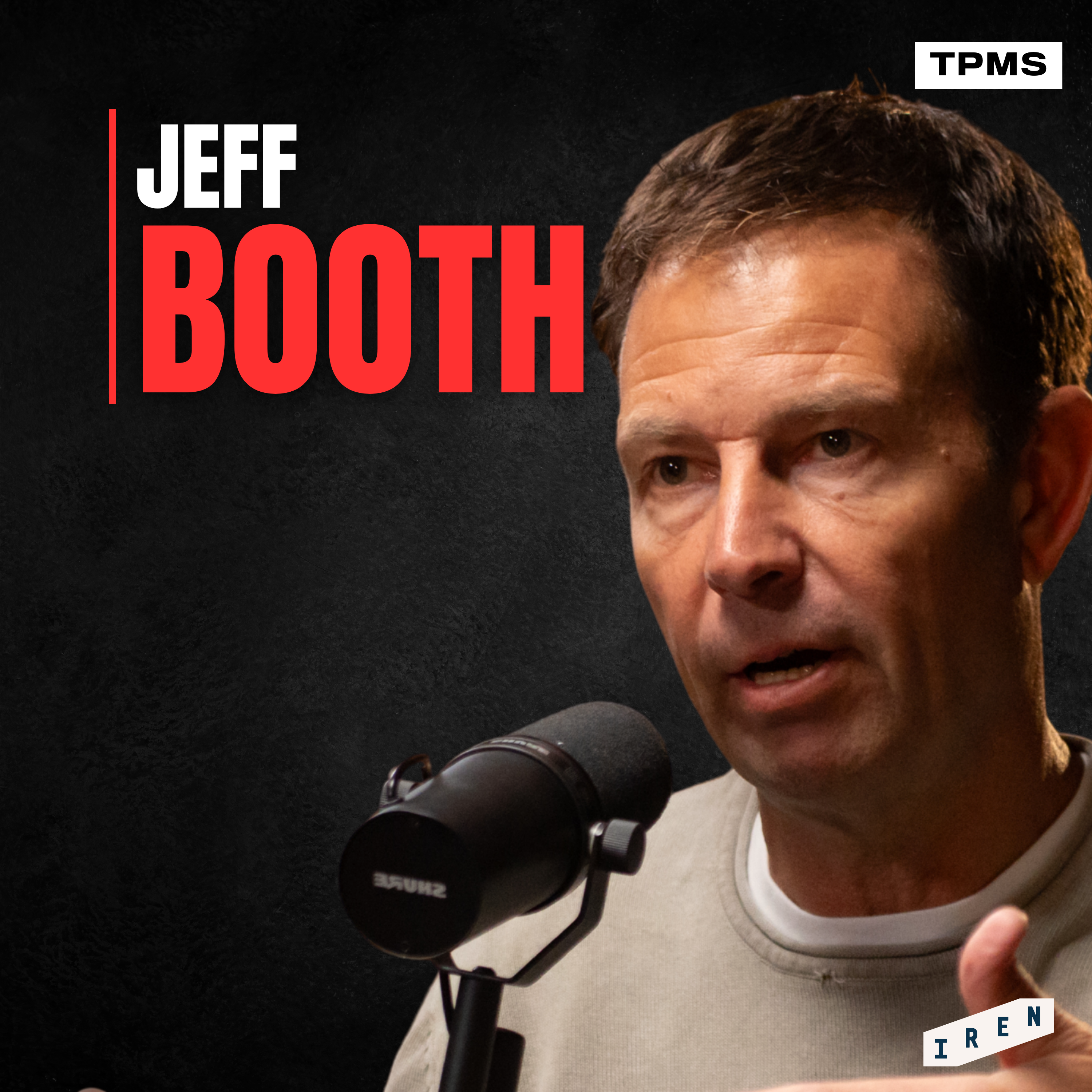
Loading summary
Transcript170 lines
- [00:00]
Peter McCormack
I saw an interview with Elon Musk recently where he talked about with AI and superintelligence that we may get to a point where we don't need money at all and money doesn't play a role in our world.
- [00:13]
Jeff Booth
The natural state of the free market is deflation. He must see the productivity gains around which those exponential productivity gains would lead to exponential deflation. If you had money that wasn't cheated, but because money's cheated, we live in that debt based system that has to essentially stop that productivity flowing to 8 billion people on the planet and concentrate that wealth into very few hands. And AI today is the slowest by far it will ever be. If you have a vote in a democracy, you're a liberal democracy, but you don't have a vote in your money that's stolen from you and it's way more than the taxes. And do you? Does your vote matter at all?
- [00:57]
Podcast Sponsor/Host
This show is brought to you by my lead sponsor, Aaron the AI Cloud.
- [01:01]
Peter McCormack
For the Next Big Thing.
- [01:02]
Podcast Sponsor/Host
Iron builds and operates next generation data centers and delivers cutting edge GPU infrastructure.
- [01:08]
Peter McCormack
All powered by renewable energy.
- [01:10]
Podcast Sponsor/Host
Now if you need access to scalable GPU clusters or are simply curious about who is powering the future of AI, check out iron.com to learn more, which is I R E N. Jeff. Hi, how are you?
- [01:23]
Jeff Booth
I'm great. Yourself?
- [01:24]
Peter McCormack
Welcome to London.
- [01:25]
Jeff Booth
Thank you.
- [01:26]
Peter McCormack
I saw an interview with Elon Musk recently where he talked about with AI and super intelligence that we may get to a point where we don't need money at all and money doesn't play a role in our world. I'm trying to understand the bridge between now and there. If we're going to have incredible levels of productivity, how is everything still going to be more expensive?
- [01:53]
Jeff Booth
Good question. Actually really good question. Because I think that's the thing that I haven't seen somebody in the existing system, including Elon Musk, talk about this in a cohesive way. He must know that the natural state of the free market is deflation. He must see the productivity gains around which those exponential productivity gains would lead to exponential deflation. Right. If you had money that wasn't cheated, but because money is cheated or said a different way, because we live in a debt based system. In a debt based system that lends money into existence with no cost of money, it has to create more and more money forever. So our perception of what money is, is broken because we live in that debt based system that has to essentially stop that productivity flowing to 8 billion people on the plan and concentrate that wealth into very few hands. And Elon is one of those very few hands.
- [02:56]
Peter McCormack
Well, some, some people listen to my new version of my show, might not have read your book. And I encourage people read Jeff's book. It's incredible. It's probably a good, good starting point to explain to them about this. The nature of money and why technology is deflationary and the debt based system breaks what should be a life where we work less and everything's cheaper, faster and better.
- [03:19]
Jeff Booth
Yeah. And this is gonna, for, if it's the first time you're hearing this, it's going to like you, Peter. Yeah, right. It's going to, it's going to challenge every mental model you've ever had. Because we can say if the natural state of the free market is deflation. Right? And that is true because entrepreneurs have to create more value than what was there before. And, and we only use the things that are more valuable so they fail in the market if they don't create more value. So the free market is a perfect system whereby it's an infinite game. Everybody wins, entrepreneur wins a little bit, you win, and the prices fall as a result. Now in that world, prices fall to the marginal cost of production. Economics 101. Prices fall to the marginal cost of production. So, so lines of code like your calculator app fall to zero because entrepreneurs compete more and more. You still gain value of your calculator app. Right. But it's free. Now you have to ask what is a line of code creating other lines of code, which is where AI is going.
- [04:24]
Peter McCormack
Right.
- [04:25]
Jeff Booth
That's free too. And it provides. And, and that's why you can see this exponential explosion of productivity driving things to free, conflicting with a debt based system that we've always lived in, where essentially since the 1600s, where money was lent into existence, a central bank lends money into existence with an interest rate. That system must expand money forever. And what can you say, quite simply from what I just said, and this is what I explored in the book the Price of Tomorrow, these two systems would clash into each other. We would believe in the system that we've always lived in and we would give it more strength through our actions. And that would divide the world. Right. Effectively. That's the. And, and you weren't going to slow down technology. Right? Technology was. Because technology is, is, when you say just technology, it's the things out of our brains that we try to solve to create more value. That's what the free market is. And it's exponential in nature. And the other Thing I explored in my book is if you folded a piece of paper once, twice, three times, four times, you can only fold it seven times. But if you could imagine if you could fold it 50 times, that piece of paper would reach from here to the sun. You know that. And it still blows your brain. It still blows my brain, yeah, it still blows your brain.
- [05:52]
Peter McCormack
I still want to do it.
- [05:52]
Jeff Booth
Yeah. You can only fold at seven. But, but why I use that as an analogy is everyone I talk to guesses 2 inches and I guess 2 inches. The first time I thought about that, what it would look like. But an exponential pattern is something we can't grasp. So if we have an exponential pattern driving the free market and productivity and deflation, that should be speeding abundance to all of us. And we can't understand an exponential pattern. It means we're in the thick folds today, right? Fold 36, moving to fold 37. Yai seems like nothing for a long time and then it seems like everything. We're in the steep steps of that paper folding and AI today is the slowest by far it will ever be. And that means that productivity driven from it should serve you. But in a debt based system, it can't in a debt based system. And there is nobody in that debt pay system that can solve that riddle, right? There's no politician, there's no single, there's no person. It's a system problem and we are the system. So that's what I explored in the book. And so you could read the book today and it was written seven years ago, you could see, it's like you had a, it's like you had a time machine because you could see the future. And it was a very, very simple premise about a structural change that was driving into humanity that most people would take aside in the old system and blame somebody else within the old system because they didn't want to take responsibility themselves.
- [07:39]
Peter McCormack
So in some ways is AI exposing this conflict even more in that we seem to be heading towards this kind of singularity. When Elon talks about robots being able to create robots built with superintelligence, we get to a point where there won't be enough work for the 8 billion people on the planet, yet we're still going to have the debt to service. So this kind of exponential growth of abundance versus exponential growth of debt and there's going to be a clash.
- [08:08]
Jeff Booth
I mean, it already is, there has been for a long time. We're living through that clash and people are measuring that clash through the old system is what's happening. So the debt's been insolvent for a long time. The debt's been insolvent for actually probably forever. Because if you allowed the free market to work productivity flowing to the people, the debt would have collapsed immediately because deflation cannot be allowed in a debt based system. So people conflate those two things. Economists conflate those two things. They say inflation, deflation's bad without saying from a system, why would productivity flowing to you naturally so you had to work less and gain more forever. Where you got more and more forever and ever by the competition of 8 billion people on the planet in service to you. How could that be bad? Right. It's bad from a system that won't allow that is bad for debt because the debt blows up. And so these two things are almost inverse images. Right. One's trying to drive pricing down. And a lot of the things that used to be in gdp, like your calculator app, like a whole, you still gain value from them. Now you have to price other things higher to make sure all prices go up from this other system. You have to create scarcity from a debt based system. And to, to and, and remember it's. There is no Such thing as 2% inflation or like this system should be deflationary. The system should be. So today's deflation rate, if you measured productivity without all of this nonsense, is probably between 5 and 10%. Meaning if you have inflation on top of that, that's how much is being stolen from you per year. Ask where does that, where does it, where does that stolen money go?
- [10:12]
Peter McCormack
Goes to the assets.
- [10:13]
Jeff Booth
Yeah. Not just to the assets. Why do you think Epstein looks like Epstein? Right? Why do you think the whole political class everywhere isn't and every, all the entire system is still look, looks like that. Where does that money come from? That system has to look like that because it's all that money is stolen from you. Right. It's stolen from 8 billion people on the planet and transferred into a bunch into a psyop that has to look increasingly like that. And when then that. In that psyop, you have to control people to hold them in that psyop.
- [10:50]
Peter McCormack
I don't think we've got to that level, you and I in these conversations before where now you're connecting something like Epstein to this.
- [10:59]
Jeff Booth
So we haven't. Because I always wanted to take the high road.
- [11:02]
Peter McCormack
Yeah.
- [11:03]
Jeff Booth
Right. And so I just.
- [11:05]
Peter McCormack
But they're not hiding it anymore.
- [11:07]
Jeff Booth
Well, so I'll bet you just about everybody that's watching your show Right now, this will feel really hard to understand, even though it's the most simple thing, right? Natural state of the free market is deflation. If you can't disprove that, if you look into that and go down to the sand and you know that's true, it means you've never lived in a free market, but you believe you do.
- [11:31]
Peter McCormack
If, if is it.
- [11:32]
Podcast Sponsor/Host
So is this a problem of having.
- [11:33]
Peter McCormack
Digital money controlled by governments? Digital, any money, free market for money, Would this happen?
- [11:42]
Jeff Booth
So. No, it would. It'd be messy on the way through. But, but, but any. So if you look at gold, right, gold centralizes and then, then governments change gold so that the derivative instrument on top can still, can still allow inflation, right? So, so gold has always done the same thing and then when it breaks, there's typically global conflict. Wars go back to say, we're never going to do that again and start it again, right? You just have to start the most simple thing in the world. If the natural state of the free market is deflation and spend some time with it, right, really spend some time with it, then, then you have to realize you've never lived in one. And all of these other things come into focus, they come into. It has to look like that. Not. And you, you. There's bad people. But I try to go thinking, if I'm, if I'm inside that fight, thinking it's this leader or this leader or this leader, and they're still on that same money, how could I solve it? How could anyone solve it?
- [12:47]
Podcast Sponsor/Host
This episode is brought to you by Ledger, the most trusted Bitcoin hardware wallet. Now, if you're serious about protecting your Bitcoin, Ledger has the solution you need. Their hardware wallet gives you complete control over your private keys, ensuring that your Bitcoin stays safe from hacks, phishing and malware. And I've been a customer of that since 2017. Love the product. Use it for my Bitcoin. Use it with my Castle multisig for.
- [13:12]
Peter McCormack
Protecting the football club's Bitcoin too.
- [13:14]
Podcast Sponsor/Host
Now, with Ledger's sleek, easy to use devices and the Ledger Live app, managing your Bitcoin has never been more secure or convenient.
- [13:22]
Peter McCormack
And whether you're a longtime holder or.
- [13:24]
Podcast Sponsor/Host
New to the world of Bitcoin, Ledger makes it simple to keep your assets protected. So if you want to find out more, please do, head over to Ledger.com and secure your Bitcoin today. That is Ledger.com, which is L E D G-E-R.com that is Ledger.com I was.
- [13:40]
Peter McCormack
Listening to the all in podcast yesterday and they were talking about some quite scary numbers. Social Security running out by, by 2032, the average increase in the debt of 2.5 trillion a year per year until 2030. And all of them, all four of them are talking about this is starting to break.
- [14:06]
Podcast Sponsor/Host
But it felt like that for a long time.
- [14:07]
Jeff Booth
Jeff. So if you look at, and we'll get into Bitcoin in a second, but if you look at Bitcoin just bounded by energy as decentralized secure protocol bounded by energy, then you can see it's measuring what I just described. As long as it stays decentralized and secure, it's measuring prices falling forever. Now it'll be volatile. But all of the people arguing from the other side, two and a half trillion, eight trillion. Covid response. It's just another. There has to be more things, more fear, coercion, control to keep you, more surveillance to keep you in that system. Because it's not natural. The natural state of the free market is deflation. We serve each other with that though.
- [14:56]
Peter McCormack
Do you think they always know or do you think their responses are natural responses to them trying to balance the books as best they can?
- [15:04]
Jeff Booth
So if you start again, start with the first principles of those two things. A debt based system can't allow deflation. Natural state of the free market is deflation. They're, they can ever go together. They're opposite systems. So this, that system can't balance the books.
- [15:21]
Podcast Sponsor/Host
No.
- [15:21]
Peter McCormack
But they try and keep that system going like as best they can.
- [15:24]
Jeff Booth
In other words, in other words, steal more from you.
- [15:27]
Peter McCormack
Yes.
- [15:29]
Jeff Booth
Hire more people, more things to steal more from you.
- [15:32]
Peter McCormack
Less, less rights, higher taxes.
- [15:36]
Jeff Booth
How do inflation, how do you, how do you make that palatable for a population? It's two sides of that equation. You have to create us versus them. This side has to be right against the other side. One side. One side moves to socialism because that side is looking at all of the people who don't have assets and they want a piece of the pie. So they vote for those people that will promise them free money for nothing. And it expands. One side moves to fascism to be able to pretend they were in a free market. Right. But it's not a free market and that divides society. And it's always happened. We replay the system, we go to war, and then we start again.
- [16:29]
Peter McCormack
But how much do you think it's organic and how much do you think it's planned?
- [16:32]
Jeff Booth
There is no they.
- [16:33]
Peter McCormack
Right.
- [16:34]
Jeff Booth
That's, that's why I start from a system System, system level. It's a. Now there are people will. Who will find. If you had a system based on theft, and we know that system is based on theft.
- [16:47]
Peter McCormack
Yeah, right.
- [16:48]
Jeff Booth
Now that's a hard, harsh word because most people don't know that. But if you had a system based on theft, how could you resolve the conflicts in the world from a system based on theft? That had to worse, that had to increasingly increase the amount of theft because the natural state of the free market is opposite. So, so it's un, it's unfixable from a system for. Or you could say it a different way. Where we are with technology. Where we are with how fast technology is moving. A debt based, debt based monetary system cannot work without concentrating all power in very few people who tell you what you get.
- [17:28]
Peter McCormack
Okay, and who are those? I had Simon Dixon in here and he, he told me that the asset managers run the world.
- [17:34]
Jeff Booth
Yeah. And, and I actually like Simon. I really like Simon's stuff. And, and so, but we look at it from different, different paths. I, that fear of creating another. They removes our own ability to do something about it.
- [17:50]
Peter McCormack
Okay.
- [17:51]
Jeff Booth
Right. And, and so, and that's what the system will want you to do. Here's a way to. I don't know. Let's go to your next question instead of Bitcoin.
- [18:03]
Peter McCormack
Well, so I mean you talk about there's an inevitability that this fiat system will collapse.
- [18:11]
Jeff Booth
It's not natural.
- [18:11]
Peter McCormack
It's not natural.
- [18:12]
Jeff Booth
But.
- [18:15]
Peter McCormack
When does it collapse and how will we know it?
- [18:17]
Podcast Sponsor/Host
We know it's collapsing.
- [18:19]
Peter McCormack
Is it always collapsing? Or is there a, is, is there a collapse? Is there a moment where you're like, okay, this is cooked, we're done.
- [18:26]
Jeff Booth
So, so again, it collapses when we stand up and make it collapse. Typically when we stand up and make it collapse is when we lose trust in that system because it extracts so much from us that we can't. And, and, and that's why it typically that system reverts back to the same system. And because we go to war thinking that there's a resolve resets. And then World War I, World War II, same thing resets through time. And then, and then we build nice monuments to say we'll never hurt people again. Build institutions that end up driving, essentially enshrining theft. And all of those institutions are part of the next thing that makes it collapse. And when people start to see it, they start to. There's probably no one watching your show right now that when, if they just looked at that from our first principles can't see it in them. They're mad, they're anxious, they're fearful. But what ends up happening is if you put in, it's not you, it's this person. You can get people to bite on anything because you want to believe it's somebody else. Just remember, would you. Would you allow a monetary system based on debt, which is this studio, all the restaurants downstairs, the entire world, every banking system, would you allow that from that system to allow deflation? And you wouldn't? Right, so we'll finish this podcast. You'll go spend money in that system and think it's somebody else. Right. And. And it's us inside that system that, that we have to opt out because there is no resolve from that system. But. But the more we're in this, the more mad we'll get, right? The more. The more I'm going to solve it. Right. A whole bunch of people. Well, yeah, you're the guy and the other person's about. Because they'll want to believe it's not them.
- [20:35]
Peter McCormack
So unless we have. I mean, at the moment, the UK is not in good shape.
- [20:43]
Jeff Booth
Where in the world is in good shape?
- [20:45]
Peter McCormack
Switzerland seems okay. And certain individuals are doing okay.
- [20:51]
Jeff Booth
Yeah.
- [20:51]
Peter McCormack
And certain companies are doing okay. I'm doing okay, Jeff, but I've kind of opted out like you. We're going to get into Bitcoin. But we see these constant fights. We move from election to election. It's existential crisis to existential crisis. If the Dems win the next election in the U.S. it's going to be an existential crisis for America. If JD Vance wins, is going to existential crisis here in the uk. I mean, the Labour Party are. They're going to go from having a parliamentary majority. They're predicted to get four seats in the next election. I mean, that is unprecedented. The Conservative Party are predicted to be the fourth biggest party. Reform have been leading the polls. They didn't exist a few years ago. Rupert Lowe announced yesterday that he's going to. Well, he's launched his party. He's already polling at 10%.
- [21:42]
Podcast Sponsor/Host
I think everyone knows something is wrong. They're looking for an answer, which is.
- [21:46]
Peter McCormack
Why these new parties appear and grow really quickly. But unless one of those comes out and says this is the problem and this is how we solve it, nothing gets solved.
- [21:57]
Jeff Booth
That's exactly it. So you should, every single voter should ask, should ask their politicians is the natural state of the free market deflation.
- [22:08]
Peter McCormack
It's the only question to ask.
- [22:09]
Jeff Booth
Only question. And if they can't Answer that. And if they say, or if they say yes, then ask them, how are you going to resolve this? What are you going to do to resolve this? Because if, if, if the people watching your show look backwards and backwards again, backwards again, as things have gotten worse and worse and worse, their lives, it's. And, and they're, they're leaning in and giving more strength to the system that's stealing their energy faster and faster. They'll realize that this election too won't make any difference. There has to be always a bigger crisis from a system based on theft to keep people in fear, to keep people locked in. And I'm not saying all of the party leaders or all the people aren't. There's not good people. But the foundational thing is a different question. The foundational question thing is that system cannot be resolved. A debt based system, you can't fix a system problem from the system creating the problem.
- [23:08]
Peter McCormack
No, none of the political parties are having this conversation. They're having conversations about debt. Yeah, yeah.
- [23:14]
Jeff Booth
The.
- [23:14]
Peter McCormack
Rupert Lowe put in a bill into Parliament to ban QE in the country.
- [23:18]
Jeff Booth
Okay.
- [23:19]
Peter McCormack
He wanted to ban that.
- [23:20]
Jeff Booth
So, so think what that would do. Now. A lot of people will vote for that. If you ban QE in the country, you will go into deflationary depression.
- [23:27]
Peter McCormack
Yes.
- [23:28]
Jeff Booth
Every bank will fail. Every, everything will fail. If you go into, if you now on the other side.
- [23:36]
Peter McCormack
Because it can't service the debt.
- [23:37]
Jeff Booth
Because it can't service the debt. The debts are the debt. The debt was insolvent from a. Again against the free market. The debt's insolvent by the time it's started. Now if you had exponential productivity, which means exponentially pricing falling prices, that debt gets more and more expensive until it fails.
- [23:55]
Peter McCormack
Right.
- [23:56]
Jeff Booth
So the debts, all of the money in the world, all of the money in the world, the make believe pieces of paper that people are pricing in and saying put more debt. It's all gone to money heaven already. I'm stealing from Larry Leppard his money heaven, but it's already gone to money heaven. Now it's only a perception that you allow it to be debased more and more and more without asking the question, if it was debased more and more, wouldn't that lead to greater surveillance? Wouldn't that lead to greater centralization? And why is nobody talking about the most simple thing, the most simple thing in the world? They're all talking about this nonsense above, above the first principle.
- [24:41]
Peter McCormack
Perhaps some don't know.
- [24:43]
Jeff Booth
Most don't know.
- [24:44]
Peter McCormack
Yeah, yeah. They don't they just don't actually know. They haven't read your book. They haven't studied money. They just are responding to the decision. The things that put in front of them every day as a politician or the decisions they've had to make. They haven't actually.
- [24:58]
Podcast Sponsor/Host
But if you, if you had that.
- [25:00]
Peter McCormack
Politician in front of you and you had them answer that question, is the natural state of the market deflationary? And maybe they didn't know, but you explained to them, they suddenly understood it. What do they do next?
- [25:13]
Jeff Booth
Would typically go back to. So. And that's why. So you know this. You. How many times have we talked about it? And it. And it. It takes a long time for it to click, right?
- [25:23]
Peter McCormack
Yeah, I think, I mean, I think it's. I understood it the first time I read your book, which was six, seven years ago, I think. I think when it pretty much first came out. And as I said, I went back and I text you, I went back and read it again because it clicked in a different way. Yeah, I think it clicked when I became more of a beneficiary from the system.
- [25:43]
Jeff Booth
I laughed and I laughed. Well, you and I traded some text laughing because. Because each time I've gone on your podcast, you've said, now I get it.
- [25:53]
Peter McCormack
Yeah.
- [25:54]
Jeff Booth
But again, it's such a deep concept. It's so the depth of it, because you have to realize, essentially, you're letting go of a lie one finger at a time, and you don't want to let go of that lie because it served you well from the other system. So we want to. Okay, yep, that's true. But it can also coexist with this other system. And we just go straight back to what we do all day long. We go straight back to the centralized media, centralized coercion, centralized everything else. And from that system, we're measuring everything from that system. We don't know we're stuck in that system. And the thing that's so easy, the free market is an infinite game. It says one thing. You must provide value to somebody else to be able to get paid. And the result of your actions of providing value or in service of everyone, because then those other people compete with you to provide more value and prices fall faster and faster.
- [26:57]
Peter McCormack
I think the reason it clicked this time, Jeff, and I'll probably tell you a couple of years, it's clicked again, but I think it really clicked this time is because I've got close to politics. I've got close to the levers of power to the point of considering do I run as an MP and then I'm trying to understand, well, if I do, based on what I know about money and economics, my limited understanding and like what, what are the things I could do to fix this. And all I've, I've seen the, the negative side, the, you know, the, the loss of our rights in this country. The infringement on our rights is, I mean it's embarrassing. We've got this real authoritarian streak at the moment.
- [27:33]
Jeff Booth
Y, I'm watching all over the world.
- [27:36]
Peter McCormack
But it's here, it's, it feels fast. Like the things they want to change, get rid of jury trials, digital ID infringements on our speech. So we've got all these infringements on our rights. We've got this massive increase in bureaucracy, but it's bureaucracy which is creating new industries, bureaucratic industries, hr, accounting, legal. We've got minimum wages going up and the problem with the minimum wages is that it's creating wage compression now in that the lowest amount of money you can say if you collect trolleys at a supermarket is very close to a lower middle class wage now. So I'm seeing that. And so I've been looking at all this and saying, how do you fix it? How do you fix it? What are the things you can do? And I often come back to oh, it can't be fixed, oh, I can't fix it.
- [28:21]
Jeff Booth
So you can. And you might be perfectly positioned to if you wanted to take leadership. But, and be honest, would people vote for you being honest in it? Maybe not this cycle because they're not ready for the honesty. That's what happened with pkeli. Right? And they were ready for honesty. Right? And they were ready for a bold leader who would drive bitcoin into their country. And if you look at that country, if I just went back again, the difference to watch the UK go one way and to watch El Salvador go the other way, it's remarkable. I've been there four times over the last four years and four years ago you were there too. It was a scary place, very scary place.
- [29:06]
Peter McCormack
Now it's safe.
- [29:09]
Jeff Booth
Not just safe of San Salvador is like it looks like a beautiful European city and people, kids are out playing in the streets, 11 o' clock at night, families are around. It's, it's stunning. It's absolutely stunning. And so, but again what ends up happening is he took a bold step because he couldn't do anything from that other system and he went really hard to try to rip it all out.
- [29:39]
Peter McCormack
So if somebody's listening to this and you're mentioning Bitcoin. And we still live in a world where the vast majority of these people, when you say to them about Bitcoin, they still think it's some kind of scam, some kind of online scam, some Internet currency. They don't understand. They don't understand how it's foundational to repairing the problem of debt and inflation in our country. What's the easiest way you could explain that to somebody?
- [30:03]
Jeff Booth
So, so ask, ask them to ask, what is money first? Right? And all money is, is an abstract concept of our trade. And so if money to you, if that abstract concept of our trade between humans can be manipulated, then what would happen to humans trade? Right. Everything coming from that, that trade would be manipulated. And we know for sure how we define money. Pieces of paper that can be infinitely printed is manipulation. So what would you expect if you saw technology which should, should provide abundance and you saw infinitely more pieces of paper which was manipulation of our time, and you were measuring from that, you would expect to see everything you see. So, so I typed, I, I type think about kind of four Personas in understanding this. And, and, and I know for me, you know too, because you went through the same thing and you go through this path and you also were in the other system and you, you move, you move systems and you see your life getting better.
- [31:13]
Peter McCormack
Exponentially.
- [31:14]
Jeff Booth
Exponentially better, which should be all humans on the planet.
- [31:17]
Peter McCormack
Yeah.
- [31:19]
Jeff Booth
So, so let's take four different Personas and a Persona, like there's almost a marketing word for a group of people who act like this, right? And so a Persona, Persona. You don't know that money is broken and you're measuring through that money to, to you, Bitcoin just looks like another scam, right? To the there's no use case. What is this thing? I can trust, institutions I can trust, the politicians I can trust. Because you have no idea that money is broken. And, and, and by, from that measure for you, what will come back, right? Your belief will feed right back. You'll be watching the same media believing that something's not. And you won't have no idea. It'll be true for you and your life. If you had assets, those assets will look like they're going up. If you didn't have assets, it'll look like you're losing faster and faster and faster. Both, both things, right. Even if you had assets, you will not be able to build walls high enough to fight what's coming. Right? So on both, both of those people within that cohort would believe that they were Right. And they would see Bitcoin as a, as just a distraction. Take another cohort of people or Persona. They, they see Bitcoin as a, is a technology. And technologies are typically winner take most until a new technology replaces it. And so from that viewpoint, you would be easily look at crypto, blockchain, everything else, and there would always be another better technology. And what you would be doing from that standpoint is you were trying to get out of this system, you knew something was wrong and you wanted to get rich really quickly with all of, with all the other, you saw other people get rich, you wanted to get rich really quickly too. So you take more and more risk in this. And what would the market serve you? This market would serve you a whole bunch of scams to be able to do that, right? And they would be promoting more and more scams. And from that viewpoint, and then from the other viewpoint, the person who didn't understand money, they would look at both of these and say the whole thing's a scam. Now you take another cohort of people or another Persona, it's an asset, right? It's the best asset. But money is still broken on top of that asset. And if you're, if it's just an asset to you and money is still broken, then that asset has to be centralized faster and faster and faster. And that would lead to the new kings of the world with the same model that we've always had. Then there's a fourth group, Persona, and those, those people who see it as a protocol. One thing about protocols is they're winner take all. They don't. And, and, and so there is no second Internet. And they come in layers and they add more, more and more functionality. And from that viewpoint, you would realize, okay, this, this thing, this thing is new. It's never existed before. And if you had a open, decentralized, secure protocol bounded by energy, and it stayed decentralized and secure, it wouldn't matter. All of the other noise, none of it would matter because it would be repricing the world over a long enough time frame. The only caveat is it stayed decentralized and secure. If you understood it was a protocol and protocols come in layers, you would move your time to the protocol and you would help build the layers. You would be constantly on the defense of what other nonsense is being said over here, right to be that's going to try to attack this because it destroys the entire foundation of everything we've ever known and replace us with something better. But you would move your time and, and for that person, too, they would see everything getting easier. They would see the relationships, that people understood that, too. And they'd see thousands of people that also were building on a protocol where it's not just an asset, where it's money, and they would start transacting in it. If you just take each of those four Personas, each one would be true to every person. If I tried to convince somebody right now that my version is true as protocol, and their version is they still believe in institutions and money, good luck. Right? But I can tell you that in my world and what I'm seeing and how fast this is exploding, how fast it's becoming money around the world, and it's removing this power, how much risk it faces, too, because this power wants to stop it. But you can actually just move your time.
- [36:21]
Peter McCormack
It's funny that point on time as well, because I think it's easy to look at Bitcoin from the outside and think, oh, you got an early. You got lucky. They value it based on the money itself, but what they miss is the time and how it allows you to make better decisions with how you use your time.
- [36:43]
Jeff Booth
Free market is deflation.
- [36:44]
Peter McCormack
Yes.
- [36:47]
Jeff Booth
We have exponential productivity gains. Yes. Meaning a system that can't be cheated will drive those exponential productivity gains to you and everybody in that network forever. Forever. As long as it stays decentralized and secure. So people are inside the jail cell yelling at their captors, giving more strength, giving more of their energy that's stolen from them for the same people, and they can just move.
- [37:16]
Peter McCormack
So those exponential gains are being transferred.
- [37:19]
Jeff Booth
To those who are part of a network on bitcoin.
- [37:21]
Peter McCormack
Part of a network on Bitcoin.
- [37:22]
Jeff Booth
And those. And those people are not just holding it. Those people are spending it. They're driving circular economies. This is what's happening in El Salvador. This is what's happening in many regions around the world that you visited. I visited. It's early still. It's so early still. If most of the people on your podcast haven't heard this, and they think they know about what money looks like, and they've never asked themselves, what is money? Imagine how early we are.
- [37:52]
Podcast Sponsor/Host
I want to talk to you about one of my sponsors, Incogni. And that means we're going to talk about the weird world of spam. And I don't just mean those spam emails that you get day after day from companies you never heard of and companies you've never signed up to. I'm also talking about those spam phone.
- [38:08]
Peter McCormack
Calls you get from those people who.
- [38:10]
Podcast Sponsor/Host
Seem to know a little bit too much about you, trying to get your bank details. It's all a bit creepy right now. This all comes from the world of data brokerage. There are companies out there collecting your data, building profiles and sending that data to anyone who wants it. Which is why when one of those scammers phones you up, they seem to know everything about you. Now, I've tried, I've tried myself to get off these lists, try to get off the phone lists, try to get off the email list. I unsubscribe from every one of these.
- [38:37]
Peter McCormack
Emails that comes in.
- [38:38]
Podcast Sponsor/Host
But this game of Whack a Mole, it just never ends. And so this is where Incogni comes in.
- [38:43]
Peter McCormack
They do all the hard work for you.
- [38:45]
Podcast Sponsor/Host
They reach out to these companies and they will get you legally removed from these lists. And I know because last time they sponsored my show, I signed up and I didn't take the free option that they offered me. I wanted to pay for it. I wanted to see if you get value for money. And they removed me from 79 data broker list. And so I've stayed on, I've stayed a subscriber, and I have seen a massive decrease in the number of emails and phone calls I've been getting. So it's a great service. I recommend you check it out. If you're sick of this like I was, please head over to incogni.com Peter and sign up. If you use the code Peter, you will get a lovely 60% discount. So that's incogni.com forward/peter.
- [39:23]
Peter McCormack
And with the exponential gains we're going to be getting from AI, which is coming now, I mean, I've seen. I mean, you must have seen everything that's happened with the SAS companies over the last few weeks. It almost feels like the last couple of weeks we've seen some kind of acceleration.
- [39:38]
Jeff Booth
So do you. Do you know that even so, if people went to my Twitter. I haven't been on Twitter.
- [39:44]
Peter McCormack
I know you do your Twitter.
- [39:45]
Jeff Booth
Yeah, yeah. You saw what I did.
- [39:46]
Peter McCormack
Yeah, yeah, okay, Jeff Bolt.
- [39:48]
Jeff Booth
Yeah, exactly. So I trained an AI agent that on all my content, took me less than a day on all my content, a thousand thousand podcasts, my book, a whole bunch of content that I wrote. And I trade an agent and just that agent is on Twitter. But for people who want to see what that looks like, read the post on why I did it. Because I don't think people realize that their time is inside these systems and they're fighting and yelling with just bots, Russian troll farms. This farm. This farm. And each person sees themselves through this thing and they're fighting more and more within the system that's extracting their time and energy. And so I, I did it as a as. And I wrote why. And I wrote why on my, my, my website. And, and I'm on Noster, on some social network built on top of bitcoin that I'm just spending time with people I love doing the things I love. Well, people are arguing with my bot and it's trending most days.
- [40:54]
Peter McCormack
But it's funny because, you know, I own a bar. Yeah, I sold it. Oh, wow. And the reason I sold it is because operating that bar, I have to do it from the old system. I cannot do it from the new system. If enough people came and spent bitcoin in there, maybe I could. And we do have some bitcoin people have, but not enough.
- [41:14]
Jeff Booth
Right.
- [41:15]
Peter McCormack
And so in that system, I am fighting inflation, Cost rises, raises in minimum wage, regulation, Regulation changes the cost of living crisis mean people are going out. It's. I'm, I'm trying to push water uphill to keep that thing going. And in doing that, it's taking my time and I'm not increasing any. There's no like, gains in prosperity or wealth for me. And I, you know, about three, four months ago I went, why am I doing this?
- [41:45]
Jeff Booth
Yeah. And so you're a rational actor. And so think about this from. A rational actor in the free market will do the best things to provide value, but if they can't, they fail or they close up and they. Because they couldn't provide enough value. Right. And so if government takes more and more and more, then what the businesses do is they automate faster. Right? Because if they don't automate faster to make prices come down, then us as users won't use the service or the bar or anything else. So now you have this conflict that everything turns into central government. Everything. And that central government and the manipulation around regulation and who is who. I don't think most people would know this on your show, but regulation favors a monopoly. There can't be a monopoly in a free market because the margin created creates the opportunity for people to attack the margin and create more value. So monopolies want regulation. They pretend they don't, but that's why it's one big club and you're not in it.
- [42:57]
Peter McCormack
Was his name George? What's the comedian who says that?
- [43:01]
Jeff Booth
George Carlin.
- [43:02]
Peter McCormack
Yes. One big club and you're not in it. But the bitcoin club is a small club and you can be in that.
- [43:08]
Jeff Booth
So you can be in one big club, one ever growing club that's going to move to 8 billion people on this planet.
- [43:16]
Peter McCormack
What is the intrinsic link then for you between AI and Bitcoin? Is this a marriage?
- [43:24]
Jeff Booth
So, so how I look at it is just AI is just an extension of productivity that was naturally like you go back to that. Paper folding, AI has been on the exact same trend for 75 years. It's just one of the first fold felt and everybody, the thought that if you fold that piece of paper once, it'll feel like nothing. If you fold it twice, it'll feel like nothing. And so there's this overhype and now we're in the bigger folds. And so AI technology, broadly our innovation comes from standing on the shoulders of great people who went before us and error correcting. And we're now error correcting at a rate that is so fast. And that's going to lead to faster and faster and exponential explosion of error correcting. And then the AIs are going to merge with robots and the robots are going to compete with robots and that's going to provide faster and faster, faster and faster. There's going to be things along the way. You'll hear people say, don't worry, we're going to tax the robots, right? You laugh, but wait till you hear it because you're going to hear people, you're going to hear Elon Musk say, don't worry, we're going to, we're going to give you universal high basic income. Where does that come from? It comes from the monopoly created by money. Where does a universal high basic income come from? Because the natural state is you don't need the money because prices keep falling forever. But you have to have something that can't be manipulated. You have to have Bitcoin to allow you to see that.
- [44:57]
Peter McCormack
But he's also talked about the age of abundance, where he thinks, money, we won't need money. And I struggle with that concept because money is a measuring stick.
- [45:07]
Jeff Booth
So at some point down 100 years from now, I would say we will still probably need something energy backed, right? The bitcoin, that resolves that too. But you sure won't need very much, right? That abundance will flow to you, right? But the energy prices will follow that trend, Oil prices will follow that trend. Actually, if you measure in Bitcoin over any long enough time period and you measure energy prices in Bitcoin, if you measure host prices In Bitcoin. If you measure anything in Bitcoin, you'll see the trend perfectly clear.
- [45:45]
Peter McCormack
So. But is AI creating an accelerated imperative to understand and adopt Bitcoin?
- [45:53]
Jeff Booth
Both sides? Yeah, both sides. It's creating accelerated insolvency of the debt. And not just insolvency of the debt, but an awareness that that was insolvent a long time ago and now it's just blatant lies.
- [46:09]
Peter McCormack
Yeah, right.
- [46:11]
Jeff Booth
And. And blatant control. Now it needs surveillance. So why?
- [46:14]
Peter McCormack
Why?
- [46:15]
Jeff Booth
It doesn't feel like a democracy anymore. It did feel like a democracy. Ask yourself this. If you have a vote in a democracy, you're a liberal democracy, but you don't have a vote in your money that's stolen from you and it's. It's way more than the taxes then do. Does your vote matter at all?
- [46:36]
Peter McCormack
All your. I keep the reference I keep pointing to is that all you're voting for now is the pace of change and who it's pointed at.
- [46:44]
Jeff Booth
Well, you're. Who gets to. Who gets to sit on top of the broken money.
- [46:48]
Peter McCormack
Yeah.
- [46:49]
Jeff Booth
That's what you're voting for. You're not voting for change, you're voting for. Your side gets more of the broken money than the other side.
- [46:55]
Peter McCormack
Yeah. A more socialist view or a more fascist view. So if people don't spend the time and go and understand Bitcoin and choose to join that system, they're going to.
- [47:08]
Jeff Booth
Get increasingly mad, squeezed go to. And it depends where they are. If you're. If you're at the top of that system, you're going to gain more and more control. You can see in Elon Musk, some people celebrate him. He's gaining more and more control out of essentially the technology today on the means of production. And the means of production are the things you use inside. Why I created that AI bot and I've been off Twitter for a long time because the means of production is farming me inside a system to, to essentially take my voice thinking it matters. That's the means of production. And the other system. So now you have a banking system and a technocrat system, both vying for control of 8 billion minds on the planet going through that system.
- [48:06]
Peter McCormack
So if we had, I don't know if we had a potential leader for the UK right now, somebody who could potentially win an election and you wanted to course correct them. So I know you think you need to operate in this whole system. You don't. You need to understand this. Like what. What are the things they would do? Is it kind of what Bukele's done. Or is it.
- [48:28]
Jeff Booth
Yeah, yeah. You have to start with. By the way, try to. If you were in a debate, you know, if you were running and you were in a debate with a bunch of talking heads, have them try to answer any of these questions, right? And realize that a system problem can't be resolved by the system problem. And you'll hear there is no. They'll move the needle to move it somewhere else. But how do you solve that problem from that system? And, and so, but, but if you realize how true that is, then you should stop giving it any time, right? And if you wanted to, if you wanted to run now that's the problem. The general awareness of what we're talking about is so shallow. And why is it shallow? Because they're looking through the media of the centralized system, trying to divide them so, so you don't. They have no idea that they're stuck in a system and they're being manipulated in that system.
- [49:35]
Peter McCormack
So even what Milei is doing is.
- [49:38]
Jeff Booth
Still the same system.
- [49:40]
Peter McCormack
Same system.
- [49:41]
Jeff Booth
The only leader today who stepped out of it is Bekele.
- [49:47]
Peter McCormack
That's fascinating. And so if somebody is listening and their minds are being blown right now and they're thinking, yeah, I don't want to be in this system anymore, my groceries are going up, my wages aren't keeping up, that I can't afford a holiday this year, I'm increasingly stressed, I'm shouting at the tv. The only real advice is you have to step out of the system.
- [50:12]
Jeff Booth
And what I would say is learn first. There's so many scams out there, there's so many charlatans and everything else. So learn first. Learn from people who have the proof of work. So bitcoin people say proof of work and proof of work. You can also see in people, have they been saying the same thing for a long time? What have they done and what does it look like? And so you could go look at your podcasts four years ago. One thing that makes you so easy to follow is because you're honest with your changes, right? And people love that about you. And you're just honest in watching that come through. And so some people aren't right flavor of the day today, they'll change a hundred times just to get a new vote and everything else. And so, so in bitcoin, watch for people who've been there a long time showing their proof of work and, and say, and, and have they been. Have. Is their integrity been the same the whole time?
- [51:11]
Peter McCormack
And read your book price tomorrow. Definitely go and read Jeff's book. I think some people are going to be terrified. I think some people are going to be terrified by this, Jeff. It's a frightening situation. If things do start to collapse because people have mortgages, car payments, it's very hard for some people to opt out of society. I think that creates an imperative for a political leader to understand this and explain it to people and make that decision for the collective.
- [51:44]
Jeff Booth
Yeah. And maybe just one of the things on Bitcoin, because it's an open, decentralized, secure protocol bounded by energy. You don't have to wait for anybody. You can just go, so. So a politician that really wants to create legacy, really wants to create value for their citizens. If they want to take the hold of that mantle and help their citizens understand faster. I think it's an incredibly powerful platform. But. But any single person, they don't have to wait. This is one thing you don't have to wait for. You could start right now.
- [52:22]
Peter McCormack
We've crammed a lot into 50, 55 minutes. A chance that you're in London. I couldn't miss up. But we will follow this up again.
- [52:30]
Podcast Sponsor/Host
Listen, people, go back.
- [52:31]
Peter McCormack
I've done four or five interviews with Jeff, maybe more, and his book Price of Tomorrow is amazing. Go and check it out. If you're terrified by the system, go look at Bitcoin. Love you all. Thank you, Jeff.
- [52:40]
Jeff Booth
Thanks, Ra.