← The Peter McCormack Show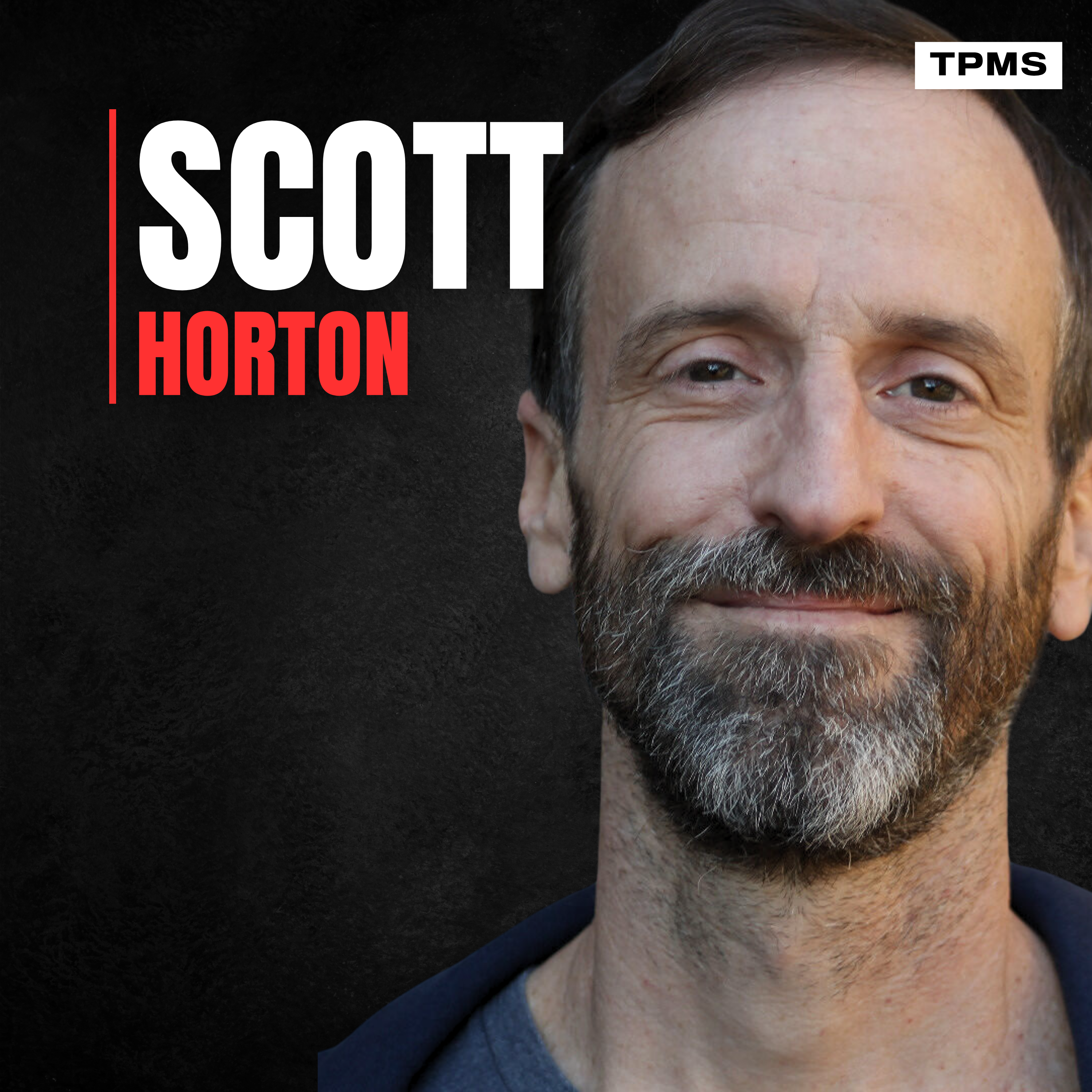
Loading summary
Transcript54 lines
- [00:00]
Scott Horton
You know, everyone should have been ironically forced by their government education to read 1984 in school. And by keeping the people in a state of perpetual war, we take all of their excess wealth and we put it in the form of a floating fortress and sink it into the ocean. Or we put it in the form of one of our new rocket ships and we blast their wealth off into space where they can't get at it, so that the people are always desperate and always easy to keep under control. You have all of the national debt, which if you count all the different unfunded liabilities, like God knows what the number really is. But the official $40 trillion national debt, as Senator Rand Paul said the other day, we're borrowing money to pay interest on the debt. We are. And if you look at the chart now, interest on the national debt is now a larger percentage of the annual national government's budget than even the world empire, the Iron Triangle. And it just means where you have the arms manufacturers, the Congress and the media and all they do is they just hype it all up. They got to sell their dish soap and the more eyeballs on the tv, the better. And when there's a big controversy, that's when they're making money. And they absolutely do increase their ad rates. And so they always have a huge interest in not just hyping up what's going on in the moment, but in helping to make sure that there's a violent conflict to cover for the next quarter. Hell yeah.
- [01:38]
Scott McCormack
This show is brought to you by my lead sponsor, Iron the AI Cloud for the next big thing. IRON builds and operates next generation data centers and delivers cutting edge GPU infrastructure, all powered by renewable energy. Now, if you need access to scalable GPU clusters or are simply curious about who is powering the future of AI, check out iren.com to learn more, which is Irene.com. scott. Hi. Good to see you. I think it's similar in the US to it is here. People are struggling financially and we're at a time when our governments are giving us unprecedented levels of debt, yet they seem to have been able to find billions of dollars for another war in the Middle East. Is the struggle of the working man, the financial struggle of the working man just a hidden tax to fund wars?
- [02:31]
Scott Horton
Yeah, to a great degree. I mean, there's a pretty viral clip of Trump from yesterday. I hate to invoke this clip. I'll beg your forgiveness and the patience. As I clarify, he's saying we don't have money for daycare and all this Medicare and Medicaid. We're a big country, we've got wars to fight. Now of course, I'm no socialist and I can't imagine any rational person in the world wanting the national government of the United States of America to take over the role of providing daycare for people who are too young to be even in kindergarten yet, like, no, this is insane what we're doing, the path that we're on. But whatever the point being is, he's saying we have to spend this money overseas on these other missions that have nothing to do with the interest of the American people. And so therefore we can't spend this money on the American people. Another way. Like that's a very kind of Democrat way of phrasing it. Someone on the right would say, like, hey, how about just stop taxing us and let us keep our money and invest it in our own lives? You know, anyone who leans right would say that instead of, oh, government, please give us better schools and more daycare and more government health care. We, we don't want that. We want to keep that money. But then, you know, it's baked into your question. Of course the cost of living is up because of monetary inflation and therefore massive price inflation that has just destroyed the co. The price of living for people, the, the quality of life for people. Because, you know, especially the lower you are on the wage earning ladder, the later you are to ever get a cost of living increase to keep up with the price of inflate, you know, with the rate of inflation. So, you know, never mind the exact number of the CPI because that's all rewritten to downplay everybody's real increased costs anyway. But just take whatever you think the real inflation rate, you know, has been and is and whatever the real wages of people who work on an hourly wage or even, you know, moderately based salary type income, those wages go up last after all the other prices adjust. It's the wages that go blast. And then what happens if you watch tv? They go, yeah, you know, what's happening is all this upward pressure on wages is causing inflation. And that's why you have to pay more for everything, is because the greedy employees everywhere keep demanding raises to try to keep up with the price of, you know, the price of everything else, which is getting it completely backwards and wrong and blaming the victims for the problem. And so then on top of that you have all of the national debt, which if you count all the different unfunded liabilities, like God knows what the number really is. But the official $40 trillion national debt. As Senator Rand Paul said the other day, we're borrowing money to pay interest on the debt. We are. And if you look at the chart now, interest on the national debt is now a larger percentage of the annual national government's budget than even the world empire. And in fact, even if you count the real cost of the world empire, which is about $1.7 trillion according to Winslow Wheeler, in the accurate accounting, if you include the nukes and the VA and other things like that, it's really $1.7 trillion a year we spend on the world empire. We spend even more than that on interest on the debt. In other words, like, you know, one way to look at it would be that for just one example, not limited to, but for one example, every single person in the state of Texas, every Texan who's worked and had to pay income taxes to the national government is going to pay them. In two weeks is the deadline for everyone to pay their income taxes. Virtually all of that money, all of it is going directly just to pay interest on the debt to sovereign national government, central bank bondholders in South Korea, in China and Australia and wherever has invested in US Government debt. And so that money is not even going to, you know, help a little lady or even kill a Palestinian or anything. It's just going. It's just getting pissed away. It's being destroyed. And, you know, everyone should have been ironically forced by their government education to read 1984 in school. And there's a part of that book where o', Brien, the Big Brother evil torturer from the machine, is pretending to be our protagonist Winston Smith's friend, and he gives them the booklet on how we screw them, how it works, how Big Brother maintains control. And in there he says, what we do is by keeping the people in a state of perpetual war, we take all of their excess wealth and we put it in the form of a floating fortress and sink it into the ocean, or he put it in the form of one of our new rocket ships and we blast their wealth off into space where they can't get at it, so that the people are always desperate and always easy to keep under control, which doesn't necessarily mean they'll always be easy to keep under control, but at least it, and, and I'm not saying that that's the purpose of it all, but I'm just saying if that's how Big Brother does it, to keep everybody helpless and, and in a state of emergency and off balance so that they can't control their Own destinies. Well, in 1984, then maybe that's one of the major lessons that we should take from that, that we should seek to limit wartime to absolute necessity and emergency only, self defense only, and abandon our world empire. Because clearly there, you know, all that, there's all this fear that if it wasn't us, it would be the Chinese or it would be the Russians, but they can't afford it either. Look at this. The national debt is $40 trillion. We pay more for, again, interest on the debt than even for the whole world empire. More than Medicare and Medicaid. Only Social Security beats it in the spending chart. And so Trump, yeah, so it's suicide. So in other words, there's no point in, in even fearing that China would replace our world empire because Chairman Xi, he might be the meanest son of a bitch since Mao, but that doesn't mean he wants to blow his own brains out. That doesn't mean that he's looking at George Bush and Barack Obama and Joe Biden and Donald Trump and saying, yeah, that's what I want to do to China is run it full speed, straight into the rocks. Why would he do that? You'd have to be apparently in power in Washington, D.C. to be so suicidal at this point. It's so obvious what they're doing and the consequences of it.
- [09:23]
Scott McCormack
Well, Trump promised no foreign interventions, and to the point where he even was appealing to some of the libertarians, actually felt like, at least we're going to have a politician who's not going to get involved in any more foreign wars. And here we are, the US Is involved in another foreign war. It's costing, I don't know, a billion dollars a day. Gas prices are up, inflation is up, People are struggling to put food on the tables. I had Mike Green in the other day, he's a macro analyst, and he said this war has eaten up all the excess capital that some people had in their savings, which was most people, less than $1,000. It's made him thoroughly unpopular. You've got midterms coming. What is it about Washington and what happens in Washington that has sucked Trump in just to being another warmonger?
- [10:05]
Scott Horton
Well, we all know the answer is in Tel Aviv, it's Zionism. And Trump is bought and sold and paid for and check cashed and they own his ass and therefore America. That's the answer. It's been like this, you know, W. Bush wanted to go to Iraq. Nobody tricked him into doing it or made him do it, but when he needed it done, who lied us into war. It was the vanguard of the Israel lobby, otherwise known as the neoconservative movement. Those were the guys who came up with all those lies about the weapons of mass destruction and the ties to Al Qaeda and all that stuff. The CIA, they lied some about the chemical weapons and they even tortured accusations of cooperation with Al Qaeda out of a couple of schmucks. But really, the volume of propaganda that got the American people into that war came from the neocons. And on top of that, it was the likes of David Wormser and Paul Wolfowitz and other of the leaders of the neocon movement at that time inside the government, who assured W. Bush that you're smart. This is right. This is going to work out great. This is absolutely in America's broad strategic interest. And so don't listen to the naysayers, boss. You sure do know exactly what you're doing. But they were representing the interests of Benjamin Netanyahu. And if you asked him at the time, they'd have admitted it, but not in those exact words, but they would just say, and some of them still do, that there's just no difference between America's interests and Israel's interest. They would act as though Israel is America's 51st state, just further away from here. But that everything that they do and everything that they have in mind is in our best interest, of course, or it wouldn't even be happening. It's supposed to be beyond question. And you hate Jews. If you even wonder whether their interests in ours have, as they put it, any daylight whatsoever between them. Joe Biden would say, for decades in a row, no daylight, which oftentimes meant whatever Israel wants, is the policy that America has to follow. And you know, man, I'm sure you can remember times where this has occurred to you as well, right? Where you hear people with real power and influence, not just like the most idiotic figurehead in Congress or whatever, but like people who, you know, have real Jews. And you hear them talk about this stuff and you can tell that they don't know what in the hell they're talking about. They have no idea. Oh, Islamic extremism. That's what they say when they don't know who or what or where the people are that they are describing. You know, I remember this journalist, I'm pretty sure it was the same journalist, asked these questions of the head of the FBI Counterterrorism Division in the United States. And then also, I can't remember the guy's name. I think I even have these sound bites somewhere. And he asked Sylvester Reyes, I'm pretty sure it was the same reporter asked them both. And Sylvester Reyes was the Democratic chair of the House Intelligence Committee. And this is in W. Bush years. Call it 2006 or seven, in the height of this fever, okay, rock war two at a fever pitch. 3,000 killed a month and including our guys getting suicide bombed to hell and back and just crazy right times. And he asked the head of the FBI Counterintelligence Division and the head of the House, the chair of the House Intelligence Committee, what's the difference between Al Qaeda and Hezbollah? And they went. And he said, well, like, where did I, I like, I think I like Hezbollah better. Where's Hezbollah live? Ah, they didn't even know. Okay, well, they're this Shiite militia in Southern Lebanon. Okay, like, that's not even an encyclopedia, man. That's just the dictionary definition of it. Right? That's two lines. They couldn't tell you that. The head of the FBI Counterterrorism Division couldn't tell you. What's the difference between Nasrallah and Osama bin Laden? Are these guys best buddies? Are they blood enemies? Does one work for one national government and the other work for a different national government? Do you even care enough to be curious? Enough to want to know? You're the chair of the House Intelligence Committee. You're telling me that in the age of the war on terrorism, you never read one book about terrorism? Not one. You're the head of the FBI Counterintelligence, divid. Counterterrorism. At five o', clock, you just go drinking and that's it. You don't give a shit about this at all. And then, so I think that's the same. This one example, a couple examples. But you hear the same thing. Like with Syria. No, we're back in the moderate rebels. No, they're not. They're suicide bombers. They are Al Qaeda in Iraq from the last war. They're building a caliphate. They said, quote, I'm building a caliphate, like, we should not be doing this. And then they just do it and do it and do it anyway and you can hear them justify it. Well, Assad is far worse. No, he's not. He's putting down an insurrection of suicide bombers, inexplicably bin Ladenites, backed by the us. You're the inexplicable part, not him. What in the world. They're you. And you can see how. Yes, of course they're lying, but also to a great degree, and depending on who inside the party we're talking about, they believe their own lies. So here's one you've heard a million times. Iran is the greatest state sponsor of terrorism. Well, you notice how I always explain everything? You notice how they never explain anything. What do they mean by that? They mean that Iran backs Hamas and Hezbollah, right? Or Hezbollah, I like Hezbollah. So what? Hezbollah didn't knock our towers down. That was Al Qaeda that did that. And Hamas are Sunni fundamentalist Islamists, but they're not bin Ladenite, radical, Leninist, you know, set the world on fire revolutionaries. They're just barely trying to hang on to their own ass in their own concentration camp where they're imprisoned. I mean, give me a break, man. And in fact, when bin Ladenites have popped their head up in the Gaza Strip over the years at all, Hamas has immediately just murdered them. Just straight up raided their mosque and put them up against the wall and shot him in the head. No bin Ladenites here. I'm in. Al Zawahiri routinely denounced them for being remaining part of the Muslim Brotherhood and for participating in George W. Bush and Condoleezza rice's election in 2006. Or was it. Yeah, in 2006. Are you crazy? Like, you know, so they were, you know, three clicks more reasonable than the bin Ladenites. But America supports the bin Ladenites. Israel supports the bin Ladenites in Syria as long as they're fighting against Hezbollah, which is supported by Iran, which is the Israelis problem. So you see right there, you know, W. Bush on the eve of Iraq War two, W. Bush said, what is all this stuff about Sunnis and Shiites? I thought they were all Muslims. And that's how they want the American people to understand this whole thing too. You know what there is, there's two kinds of Muslims in this world, regular ones and radical ones. And you're supposed to be worried about the radical ones. And the radical ones are whatever Israel is pointing at whoever they like or whoever they hate right now. And then whoever they like are just moderates. No matter how many suicide bombs they set off and how many heads they chop off, these are the people that, you know, we side with. And anybody ought to be able to see it again. And for, for people, young people just tuning in, I don't know. The, the people who suicide attack American civilians to death are the Bin Ladenites and they are the internationalist international and internationalist Sunni Salafi Wahhabi militia basically made up out of a group of Saudis, the former Azam group and Egyptian Islamic Jihad. That's the core of Al Qaeda, okay? And America, Britain and Saudi supported them in Afghanistan, supported them in Bosnia, supported them in Kosovo, supported them in Chechnya. And even after September 11th and after they were the vanguard of the Sunni insurgency that fought against our guys in Iraq War two, then what happened? W. Bush, before Obama ever came to town, W. Bush turned around, started backing them in Lebanon, in Syria and in Iran in order to spite the Shiites tilting back toward Israel, but also back toward the Sunni kings. Because in Iraq War two, on the advice and and with a lot of help from the Israelis and their agents, America got rid of secular Sunni Saddam and replaced him with a Shiite theocracy in a league with Iran. It was supposed to give American dominance over the Iraqi Shiites and then they would have dominance over Iran, which, well, that didn't work. Iran ended up inheriting Baghdad or their very best friends did. And so then to correct for that, they tilted right back toward the Bin Ladenites. So then, I mean, honestly man, I know you and a lot of people in your audience were just in the Obama years, just could not understand why has he taken the side of Al Qaeda in Syria? And they were brutal, absolute throat slit and monsters, man. They were. It was just Al Qaeda in Iraq in Syria. Al Qaeda in Iraq are our deadly enemies. But when they cross the line and it's Syria, their moderate rebels and heroes and he ended up support that was beginning of 2011. By summer of 2013, two and a half years, they had seized and announced the creation of a state in eastern Syria, the Islamic State of Iraq. And Syria they called it. It was because in fact Al Qaeda in Iraq had renamed itself the Islamic State of Iraq in 2006 after the killing of their leaders are cowie the new leaders renamed it the Islamic State of Iraq, which at one part was a joke because they didn't control a single county in the country at the time. But then secondly though it went to show what their aspirations were and what they really had in mind to do. And by after two and a half years of supporting them in Syria, they seized all of eastern Syria. And then one year later, in fact, I love telling this story because it just goes to show the mindset here. Six months later, they raised the black flag over Fallujah, Iraq, 20 miles west of Baghdad. And somebody asked a reporter from Vanity Fair, believe it or not, asked Barack Obama, I guess it was in an interview of him, asked him in the interview, well, hey, what do you make of this black flag of ISIS getting raised up over Fallujah it was like the city hall. And he said, listen, just because the junior varsity puts on a Kobe Bryant jersey doesn't make them an all star. Doesn't make them, you know, the real deal. What? I forgot. Exactly. But so the junior varsity, Al Qaeda in Iraq is the junior varsity. No, they were the next generation. Far worse, more advanced, far more deadly than bin Laden. Only not able to reach the United States. But as far as the chaos that they had caused in Iraq War two, for anyone to consider them the junior anything, and after all the damage they had done in Syria at that time, for him to dismiss their danger like that, it was crazy. And then later it was revealed it was. You might have thought that Mike Flynn was listening to my show because there's a DIA report from 2012 where he says, listen, all of western Iraq is wide open because the new Shiite regime that America put in power in Iraq War two, they never really tried to exercise that much influence over the Sunni west and northwest of the country. They just wanted Shia stand. They just wanted Baghdad, cleanse all the Sunnis out of Baghdad and then conquer all that land, you know, from there down to Kuwait and over to Iran. But they weren't so concerned about what happens to the Sunnis out West. They got all the oil and all the money and so screw them. Well, but that just meant it was no man's land out there. It was a stateless land of, you know, ruled by bandits and thugs and killers and terrorists at that time. So it was the most obvious thing. We talked about this on my show. I was obsessed with this entire topic. From this, in all the second half, especially the second half of 13 and the beginning of 14 that you see what's going to happen here is they're going to roll right into western Iraq, which is exactly what they did. And everyone listening to this has a great memory, a picture in your mind. You can't dismiss that long line of Toyota Helix pickup trucks with their headlights on and beds full of jihadis all dressed up like Ninjas with their AK47s on their way rolling into Mosul in 2014 was America directly on the side of the bin Ladenites. Now listen here. Nobody thinks that's because Obama was a secret Muslim terrorist from Kenya. That's not it, man. He's just George W. Bush. That's all he ever was. He's Hillary Clinton in drag. That's all he ever was. Dude, give me a break. So why would he do that? He did that because that's what Israel wanted. Because Israel had convinced W. Bush to get rid of secular Sunni Saddam and then regretted it. Oops, we just empowered Iran in the Shiite crescent even more. Hezbollah's friends in Tehran even more. So now we gotta take down Bashar Al Assad and the Alawites in Syria because even though they were Ba', Athists, the Alawites are sort of tied. They're like somewhat of a breakoff group of the Shiites and very closely tied to the Shiites and friends with Iran and assistance to Iran in backing Hezbollah. So, so that was what it was all about. So, you know, you talk about daylight in the broadest strokes. If America just sat back and watched Iran and their friends kill every last bin Ladenite in the region, that would be perfectly fine from the point of view of the average American citizen. That would be what's in our interest. Keep the bin Ladenites down. And if they're going to be anybody's problem, let them be Iran's problem. But yeah, for America to back them and support them just to spite Israel's enemies is treason. And it has been.
- [24:22]
Scott McCormack
I want to talk to you about one of my new sponsors, which is Monetary Metals. Now, if you're like me, you probably spend a lot of time thinking about sound money and how to protect yourself from currency debasement. Now, for some people, that's Bitcoin. For others, it's gold. For me, it is both. But here's the thing about gold. Most of it just sits in vaults doing absolutely nothing. Monetary Metals is changing that. They let you earn a return on your physical gold holdings, but they pay it in gold itself, not dollars. So instead of your gold just sitting there, it can generate more gold for you. So to put it simply, if you deposit 100 ounces and earn around 4% at the end of the year, you're going to have 104 ounces of gold, regardless of whatever happens to the price of gold in dollars. And in a world where fiat currencies are constantly losing value, earning a return in actual gold ounces is pretty cool. It's essentially making your gold productive instead of idle. Now if you hold gold and want to learn more, check them out at monetary-metals.com McCormack that is monetary metals.com forward/McCormack yes, Scott, but I've, I've lived with perpetual war my whole life. That's all I've known is war after war. It's all we've had. And I, again, I just think of all the people now who are struggling. I. It cost me £130 to fill up my car the other day. It was a hundred pound year ago. I know other people are struggling and I think if people really understood the cost we pay for war, we would never vote for it. We'd riot, we'd kick these people out. You've done the work, you've done the research. For anyone listening, can you explain what this revolving door politics, how it works where the senators end up leaving, getting the board seats and the million dollar board seats explain how that whole system works.
- [26:10]
Scott Horton
It's funny, when I was a boy, there was this concept called a conflict of interest. And I swear, like you could go many years in a row without even hearing that phrase anymore. It's just built in that this is the system, this is how it works. And you know, I'm extremely libertarian. To me there's completely free market economics. And then everybody else is a commie slash fascist who believes in centralized control of everything. And then implicit then of course is just corruption because when you're using political force to make things your way, you're cheating at the expense of the way things would have shaken out otherwise in a fair and free market type system. And so, you know, to me the entire regulatory state is. I mean, in hell, go read the Federalist Papers. Why did Hamilton help write this Constitution in the first place? The whole point of it was to create regulatory capture. That was what the purpose of the regulation was so that it could be captured. And as they said in the Federals, we want to make the wealthy, the permanent wealthy elite, have their interest completely intertwined with the interests of the national government and vice versa, so that they perpetuate each other over the long term. Well, that's all fine except that no, that's the definition of corruption and cheating at the expense of everybody else. When you know, if you read the rest of the Federalist Papers, supposedly this whole thing's for everybody and it's supposed to be a level playing field and this and that. But you know, ultimately, well, let me tell you, the US Constitution be a hell of a lot more free market than what we got now. But what we got now in especially the post Woodrow Wilson and post Franklin Roosevelt era is, you know, a quasi free market as they call it, which means that the national government is the economic center of the society and what they say goes. And so then it's just like I learned in school as a kid that like, well, in communism the government owns everything. In fascism there's still private property, but the government tells all the property owners what they have to do. And then of course, if you're like once you get into seventh grade, then they go, yeah, which is how big business wants it because they control the government telling them what to do. And that's the way it really is. You know what I mean? But then that's the same as us, just not with a single Dear Leader. It's the regime itself. You know, it's not every single point on the dictionary definition of fascism, but as Robert Higgs says, it's a participatory fascism. Right? It's a quasi free market, a mixed economy, and, and it's completely corrupt. So then in practice, how that works, you know, I, I really like. There's this great article by a guy named Richard Cummings called Lockheed Stock and Two Smoking Barrels. And it was about how all the neocons who were tied at the hip to the Likud and helped liaison to war with Iraq, they were also tied at the hip to Lockheed, which sort of rhymes with Likud. I bet it, I bet a rapper could make a thing out of that. But anyway, so Lockheed invested in these Lakhuniks and their think tanks, right? You know, they saw the interest in that. And in that article, Richard Cummings, I don't know if he coined the phrase or not, but I like where he dismisses the revolving door. He calls it the iron triangle. And it just means where you have the arms manufacturers, the Congress and the media and all they do is they just hype it all up. And you know, of course the think tanks are in there with the, with the media side of it, churning out all those studies about why we need wars that require these companies products. And so you had, you know, like Dick Cheney's wife was on the board of directors of Lockheed. And virtually all of the actual W. Bush administration neoconservatives had some tie, some direct tie or another to it. And virtually all their think tanks, if you look at the CSIS and, and the CSP and Winep and, and whatever, all of them CNAs and all of the major think tanks, they're all financed by major arms firms. I mean, they don't make any pretense of it. A lot of them, I don't know if they're even required to do this, but they will publish. Here are major donors on their major donors page and they'll list all of these firms and their, their conflict of interest is bare for all to see. And then you know what, like at that point, if that's the business you're in, if you're a lobbyist for Westinghouse, then like, you know, your job is getting rid of nukes or Honeywell or Lockheed, you know, Senator, let me put a new nuke in your driveway this afternoon. What color do you want it to be? You know, we got to get rid of these things. It's no different than any other salesman who's got to get rid of some inventory. What do I got to do to get you to get this stuff off of my hands? And then when you have companies, especially like Lockheed, who has no. They have no private vendor customers whatsoever, their only customer is Uncle Sam. Is completely captured by them. So then literally, the US Government spends hundreds of billions of dollars a year on Lockheed products, so they have to only recycle the barest percentage of that back into the system in order to get what they want. Right, to bribe the.
- [31:31]
Scott McCormack
Well, hold on.
- [31:32]
Scott Horton
Is that what made the senators and a senator can be bribed for a steak dinner, Right. A congressman for two bits. Right. It's nothing.
- [31:41]
Scott McCormack
Is that what makes what you want? Yeah. Is that what makes the Ukraine war useful then? That they could recycle out some of their old shitty military hardware and then invest in new hardware?
- [31:53]
Scott Horton
Yes, I'm afraid so. I, and in fact, I mean, in a stupid way, like, I get it, I'm not, yeah. Get me wrong. But like, Ukraine is kind of my fault, man. I wrote a book. It's just a little. But I wrote a book called Fool's Errand, Time to End the War in Afghanistan. And I think I made a slight marginal type difference in the debate at that time where I know that book got passed around in military officer circles. I know it got passed around, you know, at least some of those type think tanks. It was a little bit controversial and, and some people read it and I think to a small degree it may have had some effect on the decision overall that like, yeah, we should go ahead and quit and then. But I was afraid and I even wrote about it in the book. I'm pretty sure, definitely in enough already. But I'm pretty sure I wrote about this in, in Fool's Errand as well, that like, I'm not saying we should pivot out of Afghanistan to somewhere else, you know, and I, I'm not trying to, to. I do recognize that their interest in keeping something going somewhere and leaving Afghanistan could be dangerous. I mean, I would never argue ever that it's okay to sacrifice the life of these innocent Poshtoon peasants in Paktika province. Okay. But it could be that pivoting from there ends up meaning we get into a war with Russia because somebody has to empty these bomb inventories and refill them again one way or the other. You know, and I think there is, you know, really a lot to that and it's very unfortunate.
- [33:34]
Scott McCormack
So, so hold on. So Ukraine is essentially a garage sale of old military hardware?
- [33:40]
Scott Horton
Well, look, I mean, essentially, I don't know, but that's part of it.
- [33:44]
Scott McCormack
Yes, yes, because we keep hearing about this. Oh, you know, we're not just sending them money, we're sending them our old military hardware. But obviously the old hardware goes new stock needs to be replenished.
- [33:56]
Scott Horton
That's right. Look, it's a racket, man. It's a racket. Now here's the thing about it too, is I don't want to be like too reductively materialistic about this or whatever too, because the reality also is that Yankee Puritan, busy body types are never happy leaving people alone. And, you know, Southern Scots, Irish types like to get drunk and fight, man. And, and there's an entire cult of power in Washington D.C. outside the neoconservative movement as well that just they absolutely always imagine that they are Superman, the ultimate tough guy, but never the bully, always the hero, saving the world. And everyone that they come up against is evil. Or else why would they be coming up against him when they already know a priori that everything that they do is good? And so anyone who resists us is resisting us because of how evil they are. And all of this, you know, stuff baked in again, if you listen to the people talk about this, the people with power and influence, you could tell they're completely stupid. You know, Tucker Carlson in his, in his debate or is kind of was his interview with Mike Huckabee, he goes, well, you know, the Israelis pushed us into Iraq. And Mike Huckabee goes, what are you talking about? Israel had nothing to do with that. That was because Iraq did 9 11. And Tucker Carlson's like, no. And then I forgot exactly how the conversation went from there. But they didn't really like focus on that point. I think they did a little bit, but like, dude, do you really think that Saddam Hussein did 9 11? You're Mike Huckabee. You were a governor at the time, weren't you? You were like, you ran for President of the United States. Do you really think Saddam Hussein's mukbarat put Osama bin Laden up to that or whoever all helped him do it too? Like, you couldn't be more stupid and wrong. And he wasn't lying. Ray's literally that out of touch with what's going on. And I think, you know, you hear them make big mistakes like that. They push, you know, they're saying now that Iran did the USS Cole attack. Did not either, man. That was the bin Ladenites that did that. And we know who they are. I mean, all of that has been so thoroughly reported. Those people have been prosecuted. And they were not the Ayatollah's men. They were Osama bin Laden's men. And it's just, but, you know, probably a great percentage of the people repeating that lie, they're just hearing it for the first time now and repeating it. They don't know anything about it. If you, if you quiz them, they probably don't even know when the coal was bombed, but they just know that this is what we're supposed to say now. And yeah, it really sucks, man. The narrative can be so powerful. And as Alan box said, well, 23 years ago, he says people want to believe. You know, give them a good believe in and they'll do it. In fact, too much information kind of ruins it because then they know or don't know or know otherwise, just give them enough so they gotta have faith.
- [37:09]
Scott McCormack
Yeah, but like, also we want people to believe something else. I mean, look, we're lucky we have the Internet, the ability to distribute content. We're lucky we have you, Dave Smith, Tucker, people who are actually challenging this. This is a good thing because you do come up against these narratives. But I think it'd be really important for people to understand the role that the corporate media, the mainstream, the media has played in convincing people of these lies. Like, how much of that have you looked at?
- [37:38]
Scott Horton
Well, again, there's, there's multiple levels to look at it, right? I mean, you have, you have religious and political beliefs on the part of people who are in there. I'm, I, I left off religious. I was going to remark about that too, that that can be a huge part of the thinking that goes into this stuff. And I think looking in American media, it's pretty hard to watch cable TV news without hearing, you know, literally just Jewish Zionists, one after the other after the other, are the hosts of all of this, all of the shows, and just basically have a pretty narrow consensus about, you know, what's right and even what the right questions are about any of these things. There's very little. And, and they're certainly not all Jewish, but they're almost all Zionists or at least don't know anything about it and, and can't do much more than, you know, go along for the ride or whatever. But there's a, a point of view that's just built into that about, well, who's our friends and who's our enemies that, you know, other Americans might not really be able to relate to that at all. If you're not a dispensationalist Christian and you're not a Jewish Zionist from the coast somewhere, but you're just some regular guy from some regular town in the middle of nowhere, you might wonder what any of this has to do with us at all. Any more than, like, if they were trying to make a big deal about a fight between Bulgaria and Romania and why this is America's business. Like, I'm sorry, I hope everybody over there is okay, but I, it's not up to me to decide where that border is, man. And I'm certainly not willing to go to war about it. I'm certainly not willing to give $4 billion a year to Bulgaria to lord it over the Romanians and beat the crap out of them all the time, or vice versa. You know, we should not be doing this stuff. And so for people who don't already have a vested interest, might really wonder why. And then you turn on TV and you know, again, the consensus is just baked in. They virtually never explain it. Oh, Iran is the greatest state sponsor of terrorism. Iran is about to get a nuclear weapon. Oh, Ron, they just hate us and they would attack us if they could or whatever. Like these are all just slogans, right? These are all just like points of view without any real explanation of why they're true at all. Is everybody.
- [40:04]
Scott McCormack
Scott, we had it here. When Keir Starmer wouldn't get involved, we suddenly, two days later, three days later, we saw news articles saying Iran can now has an inter ballistic missile, intercontinental ballistic M missile that can hit London. Just appears in the press.
- [40:19]
Scott Horton
Yeah, Nate, it was funny because I guess it was NATO command refused to stand by the claim that that must have been an Iranian longer range intermediate range missile. I guess that was fired at Diego Garcia. A couple of them, they say they shot one down, they don't know what happened to the other. But then, yeah, the media went wild with that story for a few days and like, oh, there we go, you know, these are the reports and we have to believe them that Iran fired these longer range missiles than we ever knew they had before. And, and then they all claimed, oh, and I told a lie that they weren't doing that. But then no, you checked last October, he lifted the restriction on the range. It was not a, a engineering limitation, it was a political limitation on the range on those missiles which the Ayatollah had previously decreed. And he changed his, he changed his decree last October. So there was no secret about it that he had then, you know, authorized the development of longer range missiles as well. So, you know, they wanted to make a bunch of propaganda out of that. I'm sure it was very useful in scaring the people of Western Europe that, oh, geez, I guess it was a good thing that somehow America started this conflict that now allegedly has put you all at risk. You know, better finish them off now rather than wait that kind of deal. And as far as the media overall, I hate to say this because it sounds so stupid, but, like, they gotta sell their dish soap. And the more eyeballs on the tv, the better. And when there's a big controversy, that's when they're making money. And they absolutely do increase their ad rates depending on their, you know, minute by minute and quarter hour by quarter hour Nielsen ratings that tell them how many eyeballs they've got. And if things are exploding, people are tuning in. And so they always have a huge interest in not just hyping up what's going on in the moment, but in helping to make sure that there's a violent conflict to cover for the next quarter. Hell, yeah. It's, you know, totally in their interest to do it that way. And, you know, you see this a lot with, I'm sure you probably know more about this than me, but there's this whole libertarian theory and, you know, area of study called public choice theory about how all the public choices are made by private people and they have their own interests in doing things. They don't become selfless angels every time that they get a job in government employment and they end up doing what seems best for them at the time, no matter what it means for the overall policy or what it means for the people of the country. And so you definitely have a lot
- [42:46]
Scott McCormack
of that, a lot of incentives lining up between the media, politicians and the military. Should actually, should we even be calling it the military industrial complex? Shouldn't we just be calling it the war industrial complex because it needs war to survive.
- [43:02]
Scott Horton
Sure. You know, Nick Turs, the great journalist, wrote a book called the Complex where he says, you know, it's the military industrial media, academic, scientific, Silicon Valley, you know, tennis shoes and whatever you got. Like, you know, I don't know how hard they really lobby, but like yes, the companies that make the combat boots and the shoelaces and the. And even, you know, Colgate and Crest selling their toothpaste and whatever. You have all these massive corporations that have massive deals with the military as one of their most important customers. And if you're in the hardware business or you're in the toothpaste or business, tube sock business, and you're not doing everything you can to compete for Pentagon contracts, then you're just giving all that money away to your competitors. And so you gotta play that game, man. And, and so there's huge part of the economy is captured. This is David Stockman's great book. The great deformation is that's what it's about, is how much of the economy is just completely bent and twisted toward militarism and away from all the other proper incentives that people knew need to do good business and provide, you know, a good standard of living for people.
- [44:24]
Scott McCormack
Scott, how do you. How do you deal with this emotionally? Like, you run antiwar.com, you've written books, you do endless podcasts. You give up time to people like me to help make people more aware of what's going on. You see, you. You look at this evil right in the eye all the time. How do you. How do you emotionally deal with this?
- [44:42]
Scott Horton
I mean, I don't really have feelings, dude. I mean, I hate these people. I guess I. I get opportunity to spread my contempt around to other people and hopefully they'll agree and also hate these people. You know, I was thinking when I was younger, I was warned that when you're examining history, you got to be careful about how judgmental you are about everything. You know, examine as you will, but keep in mind that everybody is a man of their time and they can only see through their eyes and through, you know, as Tom woods would say, the 3 by 5 index card of allowable opinion at the time, that they're alive and looking at things. And so all that, but only more recently, it's occurred to me that that applies to me too, that I'm a man of my time, right? Like, I very much was a kid and a young man in the 80s and 90s and into the early 2000s, you know, I guess I turned 30 in 2006, for what that's worth, right? So, I mean, for me, When I was 16, Bill Clinton came in and replaced the Republicans, and he was exactly the same as them and then burnt all the Branch Davidians to death. So I already hated cops, and I already knew that Ronald Reagan was The biggest cocaine salesman in the history of the world and was the same guy who was also the biggest jailer of the consumers of cocaine in the history of the world. I knew those there couldn't be anything more cynical than a Republican in power. And then, and I saw their evil stupid war in Iraq as well, which I like the war just because I wanted to see explosions. And I was 15 at the time, but I knew that it was corrupt and cynical and they invoked the United nations authority to do it and all this crazy stuff. And then Bill Clinton came in the burnt all the Branch Davidians, lied his ass off about it and everything else through the end of the century. And so that's just how I am and who I am. I just hate government, dude. I hate them. I hate cops and I hate legislators, I hate executive branch employees and I hate judges. I hate them all. I can't stand them all. They're all. That's the conspiracy, that's the secret society. That's all, you know, plotting against you. It's the state and their job is protecting each other and extracting from regular people on behalf of the corrupt who've already made it and bought them off. There's your revolving door, your, your iron triangle. It's a quasi free market, so every part of it that's regulated is touched by the corruption and the power of the state. So I just want to see him rolled all the way back as much as absolutely possible. And I'll be damned. Can we believe in some idiot crusade to go invade some other country and kill people into compliance with the goals of the American empire and its alleged client Israel, which seems to be in the driver's seat so much of the time anyway.
- [47:46]
Scott McCormack
Can we beat them? Well, can we roll them back? How do we roll these people back?
- [47:52]
Scott Horton
Well, you know the fun part, right, is that the people are just more and more sick of it. But yeah, especially like specifically if we're talking about Zionism now where people are just really over it and yet the political parties at the top are completely pwned. And so you're having like right now, in the most immediate term this is a problem for the Democrats because on the right it's more like 50, 50. On the Democrat side it's literally like the owners and controllers of the party versus the entire voting population of the party. I mean from the center left shit libs all the way to every kind of leftist, they are all just unanimously, virtually all unanimously against Israel now. And on the right it's much more than ever before. It's like half. And with extremely prominent commentators like Tucker Carlson not just taking a principled stand against Israel, but also being right about everything as he does so and being proved so in real time over and over again, as Colonel McGregor says, that time wins more arguments than reason. It's still important to make the reasonable case so that people remember later when the times run out on their lie, that, like, yeah, that one guy was right after all. And so who could believe him again? And after all, like, it sucks because, yes, they. They got us into the war, but like Dave Smith said, we already won the argument. They just launched the war anyway. But the argument belongs to us. We all know they were not making nuclear weapons. Don't lie. I can debunk all that. Give me a moment. I'll give you all the details. They support Hamas and Hezbollah. That doesn't mean they support Al Qaeda. And Hezbollah kills Al Qaeda. So I don't want to hear a bunch of that crap. And what. Right. Go ahead and. And try to throw these slow balls right over the plate at us, and we'll all knock them right out of the park. And so then, like, overall, it leads to, like, the societal dissonance, right? Between the will of the people and the will of the regime captured by this foreign country. And in such a way that is so blatant and in such a way where their only excuse is you hate Jews, and they can't come up with a better argument than that.
- [50:06]
Scott McCormack
And we're anti Semitic.
- [50:07]
Scott Horton
Yeah. And the thing is, there's a couple things about that, I guess, and I was. I only really thought very hard about this or hard enough about this for this really to occur to me. Only, like, recently, because, you know, when people say that against me, I'm just like, f you. Right? I don't like being aggressively misunderstood. You know what I mean? Give me a break with this crap. You know, you're just, like, trying to throw a hurdle in front of me when I'm making a point, trying to bring up something like that. You know what I mean? But then here's the thing, because I'm defensive about it. I wasn't being thoughtful enough about it. So then I think I was probably flying around on an airplane or some mindless, stupid thing where I couldn't do anything. And so I was a prisoner of my own brain for a minute, and somewhere in there explained to me that, like, hey, guess what? You know what? People really believe that. So there are a lot of people who are falsely accusing you of that and falsely Accusing everybody of that. But you have to remember they were raised to believe. Hell I was. Everyone was. I went to government school in Texas. And maybe you just hear this on TV all the time or I don't know exactly like, who coined this, but it's like one of these really huge, important Israeli cliches, isn't it? The Zionist cliche. If you hear someone criticize Israel, it's really just because they hate Jews. And this is a way that they can get away with hating Jews, but also get away with it instead of getting in trouble. And the thing is about it, right, is that's a stupid lie. But no, the thing about it is that people believe that and people really internalize that lie. And then they hear you criticize Israel and they go, oh, my God, I can't believe how much that guy hates Jews. And then they hear people criticizing Israel all around them, and they go, oh, my God, I'm living, like, in a Nazi society where people are so anti Semitic, I can't believe it's. And even though you and I are scoffing and saying that's absurd, none of us said anything against Jews. We're talking about the government of Israel and the things that it did on our dime, et cetera, et cetera. In particular, all they heard was us getting away with anti Semitism by disguising it as criticism of Israel because they've already been inculcated in that they've already been inoculated against hearing this argument. And that's their escape hatch. And so I actually wish I had really thought harder about that previously, because it means then, like, maybe I can try a little better to explain myself to people who honestly misunderstand. Because, like, wouldn't that. Fuck, dude, what if you were Jewish and you were taught your whole life and you really believed. You just believed you. You had never seen any real reason to believe otherwise. You don't think, and you really believe that the only time anyone was criticizing Israel, what they're really saying is they hate you and they want to kill you and. And whatever, whatever. And then. And then you go online, you go outside, and people are really pissed off about this stuff. And that's the only lens that. Which you can interpret it. You might be really afraid and you might be really angry. You know, you see somebody like Mark Levin go, Nazi, Nazi, Nazi. Called me a Nazi last week. You're a Nazi. You're a Nazi. You're a Nazi. Look, he really believes that. He's not just trying to, like, hurt my reputation or other People's reputations. He is surrounded, he sees people criticizing Israel and he goes, oh my God, I'm surrounded by national socialists who want to exterminate me, even though nobody said that that's the only way that he can understand what he's seeing. Does that make sense?
- [53:37]
Scott McCormack
Yeah, it does. Well, I mean, I thought Tucker said it beautifully when I'll get the word him wrong, but he said something along the lines, he said, look, I don't hate Jew Jews and I'm not anti Semitic and I don't hate Palestinians, I'm a Christian. I, I love everybody, I love every man. I don't want, I just don't want death and war.
- [53:55]
Scott Horton
Look, if you believe the hype that Israel is in this existential fight for its survival against genocidal Shiite nuclear armed lunatics and, and you're saying, hey, give peace a chance, when you know good and well the Ayatollah is going to kill them all if we do give peace a chance, then you see what I mean, you get to skip ahead in your argument, make a bunch of assumptions on your side of the case and say, well, obviously Tucker just wants the worst thing to happen to the biggest collection of Jews you can find anywhere east of New York City. And so it's just, it is, it's a bunch of built in assumptions of what must be behind. And you know, by the way, this is not unique to Zionists, right? It seems like everywhere you go, you argue with anybody about anything and no one is willing to listen to any other, certainly anyone they disagree with for saying what they're saying in good faith. But just being stupid and blockheaded and wrong, it always has to be that you're trying to lie and trick and manipulate and deceive me because what your interest must be, right? So like, you know, like full deconstructionism of everything. So like for example, I'm a libertarian and I'm always railing against Israel because I'm still carrying a grudge from Iraq war too, and other things that I'm pissed off about. So, but then if you're a leftist and you're also good on Israel, Palestine and you hear evil right wing capitalists like me being good on it, you go, aha. See what's happening here is these upper middle class white guys are trying to steal our issue and they're trying to give us some watered down two state solution and the thing, and like they can only see like some kind of cynical motivation behind it, maybe that's not the best example. But like especially, you know, if, if you're a capitalist, then the presumption is that you are on the side of evil and war and exploitation and oppression to anyone on the left side. You know what I mean? And they have. It's almost impossible for them to take you as being sincere at all. And then the same thing on the right too. You know, I posted a thing. Oh no, this goes the other way. It's a great example. I posted a thing attacking Jack Kennedy because there's a speech that Jack Kennedy gave in April of 1961. It's called the President and the Press. And you can go read the whole thing. And the whole thing is about how. Listen up you newspaper publishers and reporters assembled here before me today at the Press Club. Let me tell you something. Shut your damn mouths. I require secrecy because we're in a cold war with the Soviet communists and I can't have you blabbing all my damn secrets. Capiche? Don't make me enforce this. That's what the speech is about. Okay, but then he says in the speech we're up against the evil ruthless conspiracy. He's talking about the Kremlin, he's talking about the ussr. He's not saying the skull and bones, Zionist, Freemason, you know, rosecution thing. No, no, no. He's talking about the Soviet Union. The evil conspiracy against us is the Soviet Communist. Which is why even though he says in America we don't like secret societies, I. And we don't like secrecy overall, I still demand your secrecy today. So people take the part about we don't like secret societies and the part about we're up against a conspiracy and they go, aha, Jack Kennedy was a secret member of the John Birch Society when. Wait, that can't be right. Do I know anything about the history of the 1960s or do I? But anyway, the, the John Birchers had wanted for treason posters of Jack Kennedy all over Dallas. That's why people thought right wingers had killed him. They hate him. They thought he was a one world communist. He was not a secret Bircher. That. And anyway, whenever people say, oh, Jack Kennedy was a hero, because here's two quotes of this speech completely 180 degrees out of context. I like to pick on them and say, that's not what's going on in this. And here's the link to the whole speech. Read it yourself and see what's happening. And then one of the first responses was about I forgot the what language they used, but that I clearly am a Donald Trump supporter. And if I think, oh, this is what it was, if I think that I can somehow save Donald Trump's reputation by trashing Jack Kennedy this way, well then I got another thing coming. But I didn't say anything about Trump. I had nothing to do with that whatsoever. I just don't like it when people like Jack Kennedy. Cuz I think he was nothing but Barack Obama. And I think that if no one had ever killed him, he would be remembered as just a Barack Obama. There was nothing great about him at all. He probably would have escalated the Vietnam War almost as bad as Johnson, if not exactly the same or what. So that's all I was saying. But this person leaning left could only see this as an attempt to save Trump at the expense of beating up an old Democrat. And then, anyway, whatever, that was a bad example for the other side. But it's the same thing with right wingers too. You say any kind of thing. A cop just outright murders a guy and they go, oh, when you love poor black left wing criminal welfare dependents and whatever it is against the heroic white cop protecting society. And it's like, yet no, like, this is clearly an unfair shoot here, man. You can't just give them all, oh, he was reaching for his waistband. I saw one yesterday. The guy clearly has a phone in his hand. He's in his car, he has a phone in his hand and they go, drop it, drop it. And then they kill him. But you're, you're a communist and, and I bet you love the CCP and you want, you know, Xi Jinping to conquer America if you think it was wrong for a cop to kill a guy. And, and, and now I know that that's what you're really about, is you're trying to destroy society to make us susceptible to the communist enemy. And where people just, they just assume whatever they want, they believe whatever they want. And it really sucks because it's supposed to be that kooks are only a marginal part of the society, but everybody else can have decent conversations without them. But then like, no, everybody's a kook. Everybody is just. I've had people who, I'm sure you're probably familiar with this. At Antiwar.com, we accept Bitcoin cash. Like there was a few guys, we're done, interview's over.
- [60:24]
Scott McCormack
Oh yeah, I'm joking.
- [60:26]
Scott Horton
So there were at least a few people who went on like bull jihad against us for that. Because they said, listen, argument in their own mind. Argument number one is bitcoin cash is an evil conspiracy against bitcoin. Premise two, bitcoin is the only way in the world to stop wars. And premise three, everyone who wants to stop wars already agrees about that. And so if anyone who claims they want to stop wars does anything that looks like it might interfere with the good health of bitcoin, then you are evil and you are on the side of the war party. And I see what you're doing. You're trying to cause more wars just so that you can have your little nonprofit anti war dot com. So you have wars to oppose. And that's why you're trying to sabotage our bitcoin by accepting bitcoin cash with your broke ass. Just trying to keep the lights on when bitcoin cash is worth like A$75 or whatever the fuck. But no, dude, yes, that's right. It's all a big conspiracy to keep the war machine going just so that we don't have to get real jobs over@antiwar.com. you got me, man. You got me. And then. But so like, when you live in a world where everybody is that far up their own ass, like, what are you going to do? Dude, I don't know.
- [61:42]
Scott McCormack
Yeah, but Scott, we have it here, man. Like, even if I try and talk, if I try and talk about free market capitalism, I try and talk about getting rid of the central bank, if I just talk about trying to make government smaller and stop debating our currency. I'm a right wing fascist.
- [61:56]
Scott Horton
Oh yeah?
- [61:57]
Scott McCormack
I'm a right wing fascist.
- [61:59]
Scott Horton
What are you going to do?
- [61:59]
Scott McCormack
I'm a far right fascist. Yeah, you make a good point over
- [62:03]
Scott Horton
there, over there in, in the uk, right? It's got to be worse.
- [62:06]
Scott McCormack
Yeah, yeah, but you make a good point on bitcoin. It. It probably would help if we could separate money and state.
- [62:13]
Scott Horton
Yeah. I mean, boy, far be it from me to oppose bitcoin. I just. I accept all digital currencies. Donate today@scott horton.org donate and libertarianinstitute.org donate your bitcoin this and your bitcoin that's.
- [62:32]
Scott McCormack
Oh, man. Scott, does anything give you hope?
- [62:36]
Scott Horton
Well, yeah, I'll tell you what. In fact, I was kind of tweeting about this this morning that I'm actually moving right now. As you can see, the bookshelves are empty behind me here. I'm in the slow motion process of trying to move from one house to the other here. And I recognize that it's fine. The world's going on without me, just fine. And Twitter and YouTube are absolutely full to the eyeballs with great anti war people making incredible anti war points all day long, right? Like, you got Max Blumenthal here, you got Sagar and Jetty there, and you got everybody in between. And like, who needs Scott Horton, dude? Y' all go ahead. Got Dave DeCamp and Kyle Ancelone from Antiwar.com holding it down, all our great writers at the Institute. I'm not quite on vacation. I'm trying. I'm doing like once a week on Thursdays. I do seven or ten shows like this. I let, you know, a bunch of people interview me and then I do a couple of interviews of my own. And then I do my show with Daryl at night. And then I'm trying to spend as much as the rest of the time as I can moving and then. But like, so what? Nobody misses me. It's fine because all the work's getting done anyway. Anti war.com hums along just fine without me. I got Hunter Derensis to be the editor of the Institute site for all our great articles there. You know, again, I'm doing these type of interviews and a couple scattered throughout the week, but mostly I'm trying to keep them all on Thursdays. So I'm like. I'm making myself available to hosts like yourself who want to hear about this stuff. But.
- [64:06]
Scott McCormack
But the hope, man.
- [64:07]
Scott Horton
So the hope is to see that I'm superfluous. It would be. It was. It was a much worse world when. When my voice was much more unique. You know what I mean? Like, I really am very happy to see so many people out there. And not that they're all like, parroting me or anything like that. There are Hortonians, they call themselves, but there are plenty of people who are just good on this stuff. They're not relying on me to get it at all. Maybe they're relying on antiwar.com a bit for. On Dave Decamp and the guys@antiwar.com but. But so many people are doing such a great job in opposing this thing that my. Whatever I contribute is really on the margin anyway to the thing. And so I'm. I'm very happy about that. You know what I mean? It's. I. I just put myself all the way out of business, quite frankly, and get a job, you know, I really want to do. I want to own a power washing company where I go and I take people's filthy driveways and then I make them less filthy. That's what I wanted. But I gotta end the world empire first.
- [65:07]
Scott McCormack
Dude, you're being. You're being too humble, Scott. All right, listen, look, I've taken up enough of your time. I really do appreciate it. I wish we could have done this in person. But anyway, just a final question. Yeah, yeah. Perhaps some people might stumble across this. Some people, they're not libertarians, but the people are a bit pissed off. But they're seeing everything that comes out in the media from the politicians, and they're being convinced that, oh, if you don't have this war, then China's going to do this, Russia is going to do that. You need America as the world police. There's a choke point there on the Strait of Hormuz, which is you, that needs dealing with. Otherwise it affects the global flow of capital. Blah, blah, blah. If they're, if they're hearing all that bullshit and believe in it, what would you say to them?
- [65:45]
Scott Horton
Them it shouldn't have started this war, man, and we can't go back, but we can just quit now. You know, we used to argue about this with Iraq. What's the best way to tie up these loose ends? What's the best way to leave Iraq? And the first answer is you don't have the right to kill anybody. How about we start with that? How about stop killing people right now? And then as far as the military empire, hey, our bluff has been called. I mean, I'll be the first to tell you that Trump called Iran's nuclear bluff last year when he bombed the crap out of their facilities in June. Well, they've now called our military empire in the region's bluff big time. They've hit every single base we've got from Earbull down to Muscat down there in Oman and a trillion dollars worth economic targets up and down the Gulf, refineries and ports and all of this stuff. As Justin Logan from Cato said, what good is a military base that you can't wage a war from? I read this thing about, laugh my head off, man, that the Iranians, they hit a couple of radars there, but otherwise they have not been hitting the Al Udid air base in Qatar because Qatar has forbid America from launching missions from there. So the base is spared, but we can't use it. So what we should do is just give it up. All that oil will be for sale anyway. America doesn't need to be the dominant force in the region. There's no reason to think that Iran is now going to, what, you know, essentially like do a coup and consolidate a regime in Baghdad and make Baghdad like a part of the Persian Empire. No they just have allies there. They're not going to invade Iraq and, and conquer and occupy Iraqi Shia stand. They don't need to do that. They're not going to march on Riyadh and then claim like a monopoly on Middle Eastern oil supplies and all that. That's, there's no reason to fear that. And they, they now have much more control over the Strait of Hormuz than before. But that's a direct consequence of the war and there's nothing that we can do to reverse that. You know, shorty dropping H bombs on them. So, you know, this is why we're in what Robert Pape calls the escalation trap where they keep hitting them harder and harder and it keeps not working. So they just keep hitting them harder and harder and, but it just keeps not working. So the thing is to just quit. You know, it's a stupid mistake to make in the first place. And you know, I'm not, I didn't go to college. I don't know all this like fancy textbook stuff. But like, you know, I know Gareth Porter wrote a book called the Perils of Dominance about Vietnam. And the premise of the book is basically that America at the time in the early 1960s, they knew how much more powerful they were compared to the Soviet Union where you know, the Americans had at that time hundreds of deliverable ICBM H bombs and the Russians had four and they were atom bomb, they weren't even H bombs I think. And, and it was like, and we could, we could take out all four of theirs with one nuke because they were being held that close together at the time, right? So they were just so overmatched. And they knew it and we knew it and they knew we knew that they knew we knew it and all of that. They were just pwned. So then the idea was no one can mess with us. We can do whatever we want. Cuz even the USSR is actually only as powerful as Italy or something at the end of the day. And so screw them. And of course, if the Soviet Union is no match for us, then Ho Chi Minh is barely a mouse and he sure as hell can't tell us no. And are you saying our big green machine is anything less than an unstoppable force of goodness that anyone in the world, especially some third world peasants, could stand in the way of our delivering their evil or whatever thing? And so they just jump headfirst into the Big Muddy, right? They got themselves in this absolute idiot war that no, they could not possibly win again without dropping H bombs on them. And so the peril of dominance was right, that the American regime would do this to itself and to the country, biting off way more than it can chew. And it's the same kind of thing here, especially with a guy like Donald Trump. And same thing happened with w. Bush in 2002 and three, let me tell you, the US military, it's the Jolly Green Giant, right? Like no one can stop it. It's the greatest juggernaut of all combined armed force in the history of the world. I know you're not saying that you don't believe in our army and its ability to kick the bad guys at. Right? So now you can see how that's totally beside the point. Yes, of course the 3rd Infantry Division is badass, right? The, the, the, the 82nd Airborne can drop out of planes and put firepower on things and all that. But what's your strategy? Whose side are you on? What difference does it make in the end what you do here and which direction you're taking this battle? And so might becomes like an illusion for control when tactics and operational art are one thing, but strategy is something else. Right. Like Clausewitz politics or war is politics by other means. Right. You're supposed, you're trying to accomplish something here, right? Not just make a big bang. But so for Donald Trump, I mean, what can you say, man? His analysis is only going to go as deep as, say, Mike Huckabee or W. Bush or Lindsey Graham or one of these guys. They all speak in cliches. They all, you know, Trump understands that, yes, he is probably the most powerful man who's ever lived who could question his ability. He quite literally can order an H bomb strike on any country in the world right now, and no one can stop him. That is absolutely within his power to do. And you can see where they didn't even really discuss stopping by Congress and trying to get authorization for this war at all. And Trump even says, well, I don't call it a war because then I'd need an authorization. So instead we call it a conflict instead. Like, oh, man, the, the, this is worse than live.
- [72:04]
Scott McCormack
Or.
- [72:04]
Scott Horton
Well, I guess it's what Obama did in Libya, basically starting a war without any kind of authorization or even asking precedent set there. But, but I'm sorry, I forgot where I was going with that. Oh, just that. That I think.
- [72:22]
Scott McCormack
Don't need to believe this.
- [72:24]
Scott Horton
Yeah. I'm sorry, you just.
- [72:26]
Scott McCormack
People don't need to believe this.
- [72:28]
Scott Horton
Well, yeah, that would certainly be part of it. Yeah. And I think, I guess I was going to say just something about how he was impressed by these arguments about how easy it would be. He believed in his strength and the army strength and he mistook that for the ability to remake the world the way we want it to be. And you know, it is. This is why this was such a big criticism of the neoconservatives of the W. Bush era is because, you know, Richard Pearl and David Frum wrote a book called An End to Evil. And this is what W. Bush would say too. We're on a crusade to end tyranny in our world. You know, in other words, like, we are forcefully integrating all 195 nation states into our union and we will guarantee to each of them a republican form of government along American lines and we will stop at nothing to overthrow them all until everybody's regime is just how we want it. Completely ignoring the fact, right, that we're again quoting Alan Bach from my very first interview 23 years ago. This, you know, next week, violent and destructive means determine violent and destructive ends. And you know, military power is not a, a bunch of magic wishes where you just get to make things exactly as so. And I think Trump got, you know, very badly sold a bill of goods about how easy this would be. And, and now he finds himself really stuck. And I guess like the worst thing, right, is it's very likely that he does not know a good way to end the war where he still looks good. So he ends up just stuck keeping it going.
- [74:14]
Scott McCormack
Well, listen, Scott, I appreciate you, man. I appreciate antiwar.com. anyone listening? Go check out antiwar.com and support it and go to Amazon and check out
- [74:21]
Scott Horton
Scott's books and check out the Scott Horton Academy. I guess my mic's not. Yes, the Scott Horton Academy of Foreign Policy and Freedom. And in fact we have a sort of a free sample of a sort of the Scott Horton Academy. If you go to the facts about Iran.com you get a good background briefing on America's relationship with Iran over the last 40 years. There. The facts about Iran.com.
- [74:44]
Scott McCormack
yeah, go check that out. Scott, I hope we could hang out in person sometime. If I'm back in Austin, I will let you know. But look, I appreciate you give me your time doing this work. Keep doing it. Your voice is important. And yeah, thank you to everyone listening. Peace out.