← The Peter McCormack Show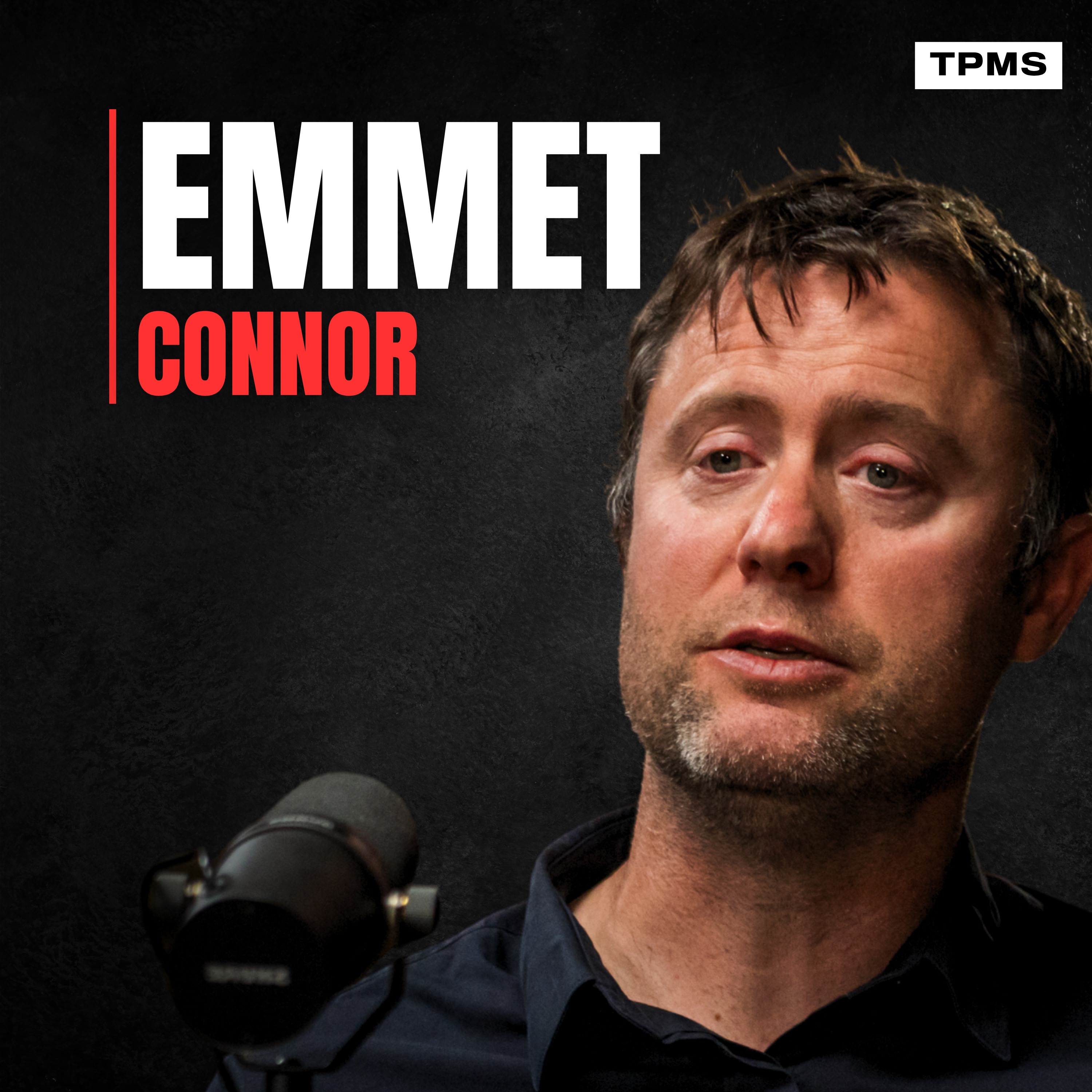
The Peter McCormack Show
#165 - Emmet Connor - The Ideology Slowly Destroying the West
02:11:37
It Is Infecting Everything
Loading summary
Transcript227 lines
- [00:00]
A
Marxism is like a buffet. There's so many different types of revolution. You can choose one.
- [00:05]
B
Is there a potential that some of us are using Marxism just to describe something we don't like?
- [00:11]
A
Well, that's an interesting question, but unfortunately, Peter, I think that this is one of these things that's going to really test people's intelligence, awareness, knowledge of the global picture. A person might not even know that they're talking like a Marxist. They could be apolitical. They don't have any interest at all in global affairs, politics, geopolitics, current affairs, not interested at all. But they're talking about stuff like we should have more compassion. So you see these alarm bells going off constantly and this is why this is an indoctrination issue. It spreads from person to person through a myriad of, a myriad of different ways.
- [00:47]
B
Could we be wrong? Could, could the goal of these Marxists be better in that they don't really want the communist revolution? What they want is social democracy. The Nordic countries seem pretty happy. Are they just trying to bring the Nordic model here and, and we're in the way of that?
- [01:04]
A
It's almost like people are brainwashed in Marxism by default, even though they don't even know what it is.
- [01:12]
B
Morning, Emmett, how are you?
- [01:13]
A
I'm doing good. How are you doing, man?
- [01:15]
B
I'm good, I'm good. Very, very excited to have this conversation with you because it's, it's a subject I think about a lot. So let's start with the core claim. Your belief is there is a large Marxist movement happening globally and certainly across the west today. But is there a potential that some of us are using Marxism just to describe something we don't like?
- [01:39]
A
Well, that's an interesting question, but unfortunately, Peter, I think that this is one of these things that's going to really test people's intelligence, awareness, knowledge of the global picture. And I'm very, I understand what you're trying to say. I'm very much like that. I've gone over it myself since 2012. I questioned my own beliefs and say, am I overreacting? Am I being alarmist? People throw terms at you like the Red Scare, stuff like that, which was used, you know, Cold War era propaganda. But basically when people, my argument is when people understand the core elements of this revolutionary movement and so on, it is indeed kind of influencing a lot of things that are happening in the world right now. People talk about globalism, but that's really just global communism repackaged. And I think it's fascinating that global control and so on. And I think it's fascinating that people can see this, but. But if people even spend a little bit of time absorbing the core elements, they'll realize that I'm definitely onto something for sure.
- [02:38]
B
The reason I ask you it is because as somebody who considers themselves small C conservative, but really mainly libertarian, I often get called a fascist. And I know I'm not a fascist. And I've got into the habit of calling everyone I disagree with, whether they're a leftist or somebody who just believes in the collective. I've been calling them communists quite openly. And I just wanted to make sure that when we focus today, it's not just on calling everything from the left we disagree with as Marxists.
- [03:09]
A
Yeah, great point. Well, speaking of call. And I think it's totally reasonable to do that. And that's one of the things that distinguishes us from what I would call Marxist cult members, people who are fanatically believing in the idea of global revolution. Interestingly, in the 1920s in America, not to knock you off track here, but back then, the Marxist infiltrators were calling people fascists. Back then, the 1920s in America, they were trying to cultivate this idea that anyone who stood in their way was going to be called names. Indeed, Vladimir Lenin talked about that in his writings. The man who was the main guy of the Bolshevik takeover Russia in 1917, that he said, we need to. I'm paraphrasing, we need to kind of use a language that creates suspicion and divisions in people and it makes other people seem like they are the extremists. That's why in Ireland people are getting sick of being called Nazis and fascists and far right now. And the same in the UK, I take it, and elsewhere in Western countries, it doesn't work anymore. It's a tactic they've tried by calling us names, saying we are the extremists. But everything from trans ideology to mass immigration, et cetera, et cetera, shows us that they are the extremists and are trying to call us names is like a deflection tactic, basically.
- [04:23]
B
Okay, so let's start with the definition. Explain what Marxism is and why is it we should fear it.
- [04:30]
A
Sure. Well, if you look at the official definitions of what this is, it usually focuses on economics. The state controls the means of production, distribution on behalf of the people. Usually people drift into the economic side of it. And that's fair enough, because in the early days, when you go back to, say, 1848 in the communist Manifesto with Karl Marx and Friedrich Engels, who plagiarized a lot of their ideas, by the way. They focused on the rich against the poor, the bourgeoisie against the proletariat, class struggle and so on. And these are kind of usually where the definitions come from. You've got few confusing terms, potentially Marxism, socialism and communism. But really the quickest way to define this and what it is is that it's an internationalist revolutionary movement that seeks to destroy the established order and rebuild it as a sort of utopia. And we look at what the leftist groups are doing, the globalist governments are doing, the wef, the un, the European Union, they're all based around this principle. They kind of believe in creating a better world, but in order to do that they have to trans how society functions. That's why no matter how much you try to reason with them, they don't listen to reason. They're convinced that they're creating a better world. That's the best way to encapsulate a kind of global revolutionary movement.
- [05:46]
B
So is Marxism the ideological bridge that takes us from capitalism to socialism?
- [05:52]
A
That's a great point. Vladimir Lenin said that socialism was the stage a society goes through between being capitalistic to full on communism, which would apparently be a good thing. So it's like a kind of a bridging ideology. And how I kind of explain it to people is the best way of looking at this is Marxism is the whole revolution, absolutely everything we're going to talk about today. Socialism is the application of Marxist ideas towards the economy, how the government is structured and so on. How much say the government has over private enterprise, et cetera, et cetera, the welfare state, the progressive income tax, etc. But communism is the, how shall we put it, the hypothetical distant future utopia that they're trying to bring us towards. That's why sometimes you talk to people who defend this movement, they'll say, well, communism has never been achieved. In a sense they're right, but it can never be achieved. So it's not really much of an argument. You look at the ussr, the Union of Soviet Socialist Republics, they knew very well they were working towards something like the revolution is global. So communism is something that you can't be really achieved. It's just the idea of an egalitarian, classless society where there's no religion, there's no money, there's no, apparently now, no genders, they kind of no races. They're removing the differences between different groups. Because whenever you have groups you tend to have a hierarchy. And when you have whether it's rich or Poor man against woman, black against white, whatever it is. Whenever you've got a hierarchy, the person in the superior position tends to oppress the one in the inferior position. And their solution to creating a better world is by removing the hierarchies. So that's where this future utopian idea is all about. They want to remove all the suffering by removing all the differences between peoples, apparently.
- [07:47]
B
But it cannot be achieved because a stateless society cannot be achieved because it requires a state to enforce it.
- [07:54]
A
Yeah, this is kind of one of the contradictions. And that's why I consider, for me it's a toss up. Who was the worst, one of the worst human beings of all time? Was Marx worse than Lenin in a way? Lenin arguably was kind of worse because Marx felt the revolution was going to be spontaneous thing where the workers rose up and overthrew the rich. Lenin came along and came up with the idea of a proletarian vanguard. Tying into your question the idea that people in society, they do want a communist revolution, they just don't really understand that yet. Going to step in as the revolutionaries, as a proletarian vanguard to do that. So you're right, they say they want a collective leadership, it's for the people, but you usually end up with a bunch of Marxist nutcases running the show. And that's happened all through its history where Marxism, Leninism they call it, but we're even seeing it nowadays as well. What people call globalism. If it's globalism repackaged, you end up with the same thing. A bunch of sociopathic control freak types were trying to push us towards this global collective, open borders and so on, so forth. So it is a contradiction in a
- [08:59]
B
sense, but in some ways, even without the writings of Marx, we still would have had revolutions. We had then. Revolutions predate Marx.
- [09:09]
A
Yes.
- [09:10]
B
Whenever there is a perceived unfairness in society, a growing wealth gap between the rich and the poor, you will have revolutions. So was he really just identifying a problem of a growing wealth divide?
- [09:25]
A
Yeah, that's a great point. And I'm not suggesting that people in power with wealth have not done negative things and there may be some good sentiment coming from. Well, I don't want to talk about Marx. That'll drag us into a tangent. He wasn't, I don't think he was a very benevolent individual. But there was a lot of great people with good intentions involved with this movement in the past who thought they were doing some good. And I don't mind have a problem with the idea of creating a better society. And Sorting out injustices if they're genuine. But the problem with their solutions is that they end up being destructive and they end up creating a society that's even worse than the one they were trying to fight against. So you notice that everything the communists talk about, slavery, oppression, injustice and so on is actually even more pronounced when they end up running the show in the extreme. And look at China with the ccp, the Chinese Communist Party. They oppress their own people, they've got a gulag system, they're very aggressive, they got global tendencies and so on. The list goes on and on. And they're just one example of what we're talking about here.
- [10:29]
B
Yeah, so one of the areas in prepping for the show that I was challenged with is where does leftism start? Where does Marxism start? Where does socialism start? There's kind of like a mixed bag here of people who are like genuinely good people who see injustices in the world. They're probably leftist, they maybe haven't read too much on history. They don't realize that they are being sucked into maybe kind of Marxist ideas. They think there is a political system and it could be better, it could be fairer. So what I've been trying to understand is what is just left wing ideas and what is itself Marxism. And do we have genuine Marxists, places of influence who believe in this ideology or is some of this just organic? Is it just like a be kind, organic nature of trying to change the political system?
- [11:23]
A
Yeah, it's an interesting stuff to contemplate. The nature of the individuals involved with this. I've no doubt some people involved with it, they have good intentions, they believe that they're reducing suffering. But as we know the way life works and we know ourselves and being individuals, sometimes you can do harm on purpose or you can do it by accident. And unfortunately, this movement we're up against, this global revolutionary movement, has a tendency to suck in people who've got good intentions, who want to help others, but unfortunately they don't realize that they're being dragged into a collective that ends up causing a lot of problems. Problems in the end and useful idiots. Yeah, yeah, so the term goes. But again, as I've kind of tried to emphasize in my work, Peter, the movement is so big, comprising of tens and tens of millions of people all across the world, that it caters to a lot of different persons, personality types. I think some people involved are more anarchistic. They just, you know, they have whatever personal reasons, they have a hatred for the country they live in. And we see that Coming out in kind of anti patriotic sentiments in the uk, Ireland and Western nations. And those people can get dragged into that movement because they just want to destroy. And this movement gives them, accommodates them. Other people are more ruled by their emotions, but don't really know what Marxism is. And they're talking about things like equality, believing that that's a good thing, but they don't realize that it can be quite destructive. So it's very complex. We're talking about individuals here and personalities as well, I think so.
- [12:55]
B
Is it really, is it an intellectual test?
- [12:59]
A
Yeah, I think so. Also emotional also. I mean it's a test of the ego, I've noticed because we all have to face up to our own ego in this life and we should never think, I'm on top of the mountain now I've got it. That's quite dangerous, that thinking. And unfortunately, as we've seen, the leftists control the education systems in Western countries. They're telling kids as young as 11, 12 years old that they should be revolutionaries and save the planet and stuff. You know, they're too young to be concerned about the course of humanity. And the ego thing is being stroked at them a little bit. I think that can be quite dangerous. So I would see it as a psychological challenge, a challenge of knowledge, of history, of our egos and of our conscience as well, I think.
- [13:46]
B
Yeah. Again, I'm still struggling with this idea of where is it left wing ideas? Because certainly people I would debate these ideas with maybe on Twitter occasionally and they would believe that they aren't Marxists. What they are is leftists. They believe in a fairer society by a larger distribution of the wealth. How do we, you know, I really want you to nail in on this. It's like how do we know when it's leftism and how do we know if it's Marxism?
- [14:18]
A
Great question. Well, I think, I think when you look at the causes, the causes that they push tell us whether or not we're dealing with Marxism because a lot of it's based on class struggle. So mass immigration, Western nation. When you look at that issue, Western nations are the oppressors, apparently historically, which isn't really true. And the third world nation are the
- [14:38]
B
oppressed, is it not really?
- [14:40]
A
Well, yeah, I mean, I can give
- [14:42]
B
you great examples of how the history, and I'm not here as shamed about the history of the uk, but we certainly oppressed the Irish at one point. And you're an Irishman. I'm half Irish. We've certainly went around the World and conquered nations. And I could make a really solid argument that the current financial system exports inflation from western nations to places like Africa, Egypt, other countries. So there is some oppression that goes there.
- [15:13]
A
Well, I think in any sort of controlling system, you're going to have things that are done which aren't ethical. But what I'm trying to zoom in on here is if you look at, take Africa for example, to zoom in, because you mentioned Africa there. Africa was under the control of colonial powers until, say, average, we'll say the 1940s, 1950s in general. So you had the British, the French, the Portuguese in there. And you had, obviously say in South Africa, you had the Africana people who are more of Dutch descendants. Interestingly, what happened is a lot of the official narrative from the more Marxist influence interpretation will tell us that colonial oppression destroyed Africa. But when you actually look at what happened, and I found this out researching my book, is that Marxism entered the picture in the early 20th century and introduced the idea into people's heads through the education system that they should have the freedom from the empires because that would be better. But they didn't realize that there was a catch that they were going to welcome in a new type of imperialism, which was international communism. And that's what happened to Africa. So a lot of black intellectuals in Africa who went to educational institutions came back to Africa with the ideas of liberating their countries. And the results were plain to see. The continent took a massive, massive downturn. So if we're going to talk about where oppression or harm was done, we have to apply it across the board. And what I'm trying to say is that communism is even worse as an imperial system than anything we've seen before. If you look at even the death toll between 1917 and the collapse of the burial wall circa 1989, it caused more oppression and killed more people than any other control system in the history of humanity. It's really quite extraordinary.
- [16:53]
B
Yeah, I won't find you on that one. Okay, so just back to the point. So how do we separate Marxism from kind of progressivism, liberalism, or can we not?
- [17:00]
A
Well, I think if people learn the elements of how the ideology works, like class struggle, oppressor and oppressed, you can see the fingerprints of that applied, you know, rich against the poor, man against woman. In feminism or in the trans ideology, trans people are being oppressed. So we need to change society to accommodate them. You know, the climate change movement, the planet's being oppressed and we need to save it, which is hilarious. Amount of Hubris involved here. We need to save the planet now. I think we need to save ourselves first. But you look at the class struggle thing as being kind of wheeled out again and again, and that's how, you know you're kind of dealing with Marxism, particularly as well. This idea of global revolution, the World Economic Forum, the United nations, they're all talking about the same stuff. Even the European Union, it's about open borders. It's clearly hostile to indigenous groups, to indigenous culture. It's hostile to patriotism. That's how you kind of know you're dealing with Marxism. I would urge people to kind of look into the elements. And that's where, say, my presentation would come in for that.
- [18:02]
B
Wouldn't you say, though? Traditional leftism was a class struggle. If you think about the role of unions, if you think about the role of the Labour Party, historically, it was really a class struggle, the battle between the Conservatives and the Labour Party. Whilst I think there's economic ideas in there, it is still a class struggle.
- [18:25]
A
Yeah. And I mean, well, we are not equal and that's how society tends to run. But we were told that in order to make things better for everyone, we had to dismantle the classes. So I'm saying the very concept itself comes from Marxism going right back. But, you know, even the Labour Party, it's interesting you should mention the Labour Party. I don't know how many British people have noticed, but the Fabian Society created the Labour Party and all the top Labour politicians, everyone from Clement Attlee after World War II, up until the present day. Tony Blair, Gordon Brown, Keir Starmer, Jeremy Corben, St Khan, they're all tied in with the Fabian Society. They're all part of this group who wants to play a big role in dismantling the British Empire, by the way, to destroy patriotism in the country, open the borders and so on, and you have people like this at the helm and people wonder why we have all these problems. These people are. They cause an awful lot of issues because of their ideology.
- [19:23]
B
I definitely want to come back to the Fabians. I've got questions on that. Okay, so would you say, therefore, the difference between, say, Marxism and, say, traditional leftism is that traditional leftism would accept different classes, would accept there are different differences within society, but would just try and make society a bit fairer, try and make life a bit better for the workers, try and rebalance wealth a little bit, whereas Marxism actually just wants to destroy the class structure itself.
- [19:52]
A
Yeah. So the problem with this ideology, Peter, is that it Snowballs. It starts with good intentions and it wants to try to make things more egalitarian. But in order to do that, if you're going to say, for example, take from the rich and give to the poor, are you going to ask them, like, in order to create equality, you need to use coercion because people may not want to participate. And when you look at the history of this ideology, that's exactly what they did. They believed they were doing the right thing so much. And though there might been some people involved who are a bit more placid, who are pushing this, you have more extreme types always come in. There's always another wave of more extremist Marxists coming in who will take it a step further and say, no, we're going to kill the rich and take their wealth. So in order to enforce equality, you hear this new term, equity as well, which is artificial equality. It's like, okay, the person in the disadvantaged or oppressed position, they love the idea of getting a leg up. Who wouldn't, in a way. But it's the ones who are doing a bit better. You're asking them to take a step down for the common good. And that's what we see in Ireland and the uk. You see, the more leftist camp are always trying to talk about confiscating private property. And they, you know, I'll add a Communist manifesto. You see them seeping these ideas into the discourse to try to try to create this utopia, but the results are not good.
- [21:09]
B
I've actually seen that change in the discourse recently, especially with the rise of the Green parties and the tax the billionaire sentiment that's been growing. And I may put out a tweet, say something like, taxing billionaires is not going to make your life better. Or billionaires solve a problem that the workers can't, which is coordination, just putting a sense out there. And it's like, billionaires don't create wealth. The workers create the wealth. So I certainly seen a growth in the Marxist rhetoric becoming more popularized.
- [21:44]
A
Yeah, that's why I think that, Peter. I think that politics are important and current affairs and so on, but I think this is more of an ideological problem. That's why when I started to. Or, sorry, it's more of a problem of mindset and attitude more than just politics. And that's where I think we've kind of gone wrong and why things are going so bad. And that's why when I started to put the book together in 2018, I thought, there's no point writing another book about Communism in the past or just the economics, just the woke stuff. What is really causing all of this? It's people who are going along with it is the enemy. Because often people ask, who's behind all this? Sorry, who's really got their hands in the reins of power? Well, if you look at the common thread through everything from the leftist governments or the globalist governments to the NGO complex, to the wef, un, European Union, so on, it's always people talking about the same kind of stuff. Global revolution, equality, multiculturalism, diversity, we need to make a better society. And you actually see it in their faces. They got the wide eyes and the smile on their face. They actually believe what they're saying, I think, and that's because of the indoctrination.
- [22:51]
B
I want to talk to you about one of my new sponsors, which is Monetary Metals. Now, if you're like me, you probably spend a lot of time thinking about sound money and how to protect yourself from currency debasement. Now for some people that's bitcoin. For others it's gold. For me it is both. But here's the thing about gold, most of it just sits in vaults doing absolutely nothing. Monetary Metals is changing that. They let you earn a return on your physical gold holdings, but they pay it in gold itself, not dollars. So instead of your gold just sitting there, it can generate more gold for you. So to put it simply, if you deposit 100 ounces and earn around 4%, at the end of the year, you're going to have 104 ounces of gold, regardless of whatever happens to the price of gold in dollars. And in a world where fiat currencies are constantly losing value, earning a return in actual gold ounces is pretty cool. It's essentially making your gold productive instead of idle. Now if you hold gold and want to learn more, check them out@monical-metals.com McCormack that is monetary-metals.com McCormack so it's the cultural Marxism that has grown which is essentially what kidnapped traditional leftism. And can you be a left wing politician without being a Marxist?
- [24:09]
A
Well, to be honest, I mean, I don't really put a lot of thought into myself because again, are they brainwashed? That's the only bit I focus in because I think left and right has almost lost quite a lot of meaning.
- [24:20]
B
I agree.
- [24:21]
A
Because if you look at Ireland, for example, you look at the major ruling parties in Ireland, Fianna, Fall, Fine Gael and Sinn Fein, who've kind of exposed themselves as being full on markets, Marxists, they all call Themselves patriots at one stage. So they call themselves center left or whatever. It doesn't really matter. They're all globalist. There is no patriotic nationalist representation in the Irish Parliament. They're all going along with globalism. They have their little bitchy little squabbles between themselves, but you look at what they're pushing, you know, it doesn't matter whether they call themselves left or right. They're all globalists, which is just Marxism repackaged.
- [24:54]
B
So globalism is Marxism. Yes.
- [24:56]
A
And this is what confuses people, because we spoke before about kind of definitions and so on. If people have a really outdated definition for what this is, they would say, well, it's about the rich against the poor. It's a workers movement. Therefore rich people can't be communists. That's been proven wrong a long, long time ago. Take George Soros, for example. People focus on the fact that he's a billionaire or that he's Jewish, but he came from. He was in the London School of Economics, which was created by the Fabian Society. So he's got that Marxist ID in the background and he supports antifa and so on. It's clear where he kind of stands. So globalism is basically a lot of rich people who've bought into the idea of global revolution, which is Marxist itself. And that's one of the points I try to get across to people. Everyone across Western countries, loads of people can see what's going on now. Nobody asked for mass immigration. We didn't ask for all the trans stuff or the climate change movement or any of that. We didn't ask for it. But yet it's being pushed. And it's not being supported just on the grassroots level or just by our governments. This is international. This is on a massive scale.
- [26:05]
B
But the interesting part of the international rich, wealthy billionaires pushing this is that ultimately it's destructive to the way of life they have, which is of a being a billionaire. So is it really that they want the end state of communism? Because if we have the end state of communism, that will break down the lifestyle they have. I know George Soros and his family live quite comfortable life.
- [26:30]
A
Yeah, it is a contradiction.
- [26:32]
B
Yeah. So that's what I find, kind of. That's where I find the challenge. And then I do wonder is, is how much of Marxism is like an organic brain fart of be kind to everybody. Because there are a lot of people who, I think, who are leftists who don't even know what Marxism is. They've heard the term, they don't understand what it is. They've not probably read the Communist Manifesto. They don't understand the history of it, they don't understand what Lenin did within Russia, they don't understand what's happened in Cuba. They don't really fully understand. And so perhaps they've organically become Marxist because they actually think they're being good people.
- [27:16]
A
Yeah, definitely. There's definitely an element of that and you can see it when you interact with them. And I think part of the problem tying into your question is that the education system has been captured by this ideology for going right back into history now. And the only way they would be exposed to stuff like that is in a benevolent light. So Karl Marx is regarded as being this great genius who we should base economic theory on and sociological issues as well, and all this stuff. But. But no, he doesn't deserve that much respect.
- [27:44]
B
Wasn't he a complete failure in life?
- [27:46]
A
He was, yeah.
- [27:47]
B
He's a bit of a loser.
- [27:48]
A
He was indeed. He's a very bitter, angry man, A tremendous ego. He couldn't manage his own family, he couldn't even manage his own hygiene. He never worked a day in his life. What a shocker. He was a spoiled brat, I'm sure. These things sound familiar when you look, when you're dealing with leftists, they're like little mini Marxists. They don't like the idea of working, they don't want to control their emotions, they have grandiose ideas about saving the planet, they're hostile to Christianity and religion in general and so on. And Marx themselves was someone. His work should have stayed when he, you know, it should be buried with him in Highgate Cemetery where he's. Where he's buried in 1883 or whenever, when he passed away. But unfortunately, and I agree with your sentiment before in our private correspondence about. Let's not get dragged into what anyone thought back in the 1800s because those people are dead, including Lenin. The problem is people carry their ideas into the present and the education system allows it to permeate into society. That's part of the problem.
- [28:44]
B
Well, this is why I wonder whether how much of this is like organic stupidity. People who don't understand incentives, they don't understand economics. I mean, I was having an argument with one on Twitter this morning just about a 50 pound charge for go to the doctors, which I actually believe that's what you have in Ireland, right? You have to pay €50 for a doctor's appointment, as I understand it. Whereas we don't have that here. And I just put out the idea to Wes Streeting that just charge £50 for an appointment. That will change a lot of things that maybe switch switched the incentives and immediately got hit with the well, what about people who can't afford it? And I was like, oh, she's no. No. What did she say? She said, no. What will happen to you when you suddenly get ill and you can't afford it? I was like, I have savings. She said, well, not everyone has savings. I was like, well, everyone can save. And she said, well, I would rather be poor than an asshole. So we got into one of those back and forth conversations whereby I don't think she thinks she's a Marxist. I think she just believes society should come together collectively to help others. And that's what I'm trying to get my head around. Are there actual Marxists out there? The Fabian Society? Are there people in there who understand what Karl Marx wrote about his observations of the structure of society, the class struggle? Are they aware of, of what was tried in Russia under Lenin? Do they understand what happened under Mao? Do they realize tens of millions of people still died and they still want to proceed with this? Is this what the Fabians are doing? Or is it that they, they think society can be fairer? We just haven't tried the right socialism.
- [30:26]
A
Yeah, well, like we're talking about people with good intentions. They see an issue and they think could this be better? But what they what. Unfortunately, the Marxist ideas have permeated through society like, you know, like socialist health care, state control and stuff and so on. And I think that they don't understand the consequences of if that was too much. Now I'm not suggesting, say in Ireland's case, that we just remove all elements of the welfare state and any sort of socialistic parts of the economy. I wouldn't say that's ethical. What I'm saying is because you're just pulling the rugs out from under people. I wouldn't agree with that. But I think we should move towards a more economic, prosperous society where people would be able, we could bring the costs of things down and people, things would be more affordable and maybe have some sort of a safety net economically for certain people.
- [31:13]
B
But if it's talking about trajectory.
- [31:15]
A
Yeah. Is that an economic term?
- [31:17]
B
Well, no. So like I consider myself a libertarian and people say, well, you've just got an utopian ideal. And I say, no, look, I'm a libertarian in terms of trajectory. I believe we should target trying to make the state continually smaller as we can. Agreed to try and make the people more Prosperous rather than saying here's my end state where we have the non aggression principle and there is either a minicus government or no government. Just say can we just have less debt next year, can we target having a balanced budget and then the following year can we pay off 5% of our debt and can we reduce the welfare barrier? Can we get more people into work and can we have less bureaucracy rather than going for end state utopia?
- [31:58]
A
Yeah, exactly. Yeah, I'm the same. And I think that like, okay, I have my beliefs, I am correct that Marxism is a massive problem. But if I was running the show, I wouldn't just try to change things overnight. It has to be a gradual process. But unfortunately a lot of people have to be on board with this. You know, they have to agree that it's a good direction to go in. And I think part of it is removing the Marxist indoctrination but then giving them an explanation about economics and that there is a better way for things to run. And as you know, speaking of economics, if you do things like, like take anyone brainwashed in Marxism out of positions of power, dismantle the NGO complex for example, would save quite a bit of money and stop the green agenda as well. And also what you're tying into as well, the libertarian idea, have a smaller government, not have such a big welfare state. All of this stuff could improve our quality of life and our economic standing for sure.
- [32:48]
B
Do we know the main people funding and pushing for this ideology? Who are the families?
- [32:54]
A
Well, my kind of approach is that there is, this movement is involving personality types and individuals at all levels. They could be, you know, high ranking politicians, Ursula von der Leyen, you know, Klaus Schwab types as well as your next door neighbor as well as the teacher in the local school. So there's, you know, tens and tens of millions of people involved in this. Yeah, and there are people that wouldn't, people wouldn't think. Like I was saying, just because somebody's rich doesn't mean they're not helping this ideology.
- [33:26]
B
But they could be funding a greater push to make it more mainstream. Right, the people in the higher places.
- [33:34]
A
Yeah, absolutely. Well, I think we're all a bit like that in a sense. If we had the power and influence and we think we're doing the right thing, we would try and reach more people.
- [33:42]
B
But do you think they do or is there this idea of these are very successful, clever people and, and they know that end state of communism is not possible so there is a good incentive for them to become one of the oligarchs.
- [33:57]
A
Yeah. Well, it's kind of tied in with the contradiction. I'm not really sure what their mindset is. I know for sure, though, they don't feel threatened by the ideology like we talked about. Say, you know, people who are billionaires. I don't think they're really worried about workers or the working class rising up to take their money away. I think they genuinely feel that this is where the totalitarian mindset comes in. We've always had sociopathic types who think they are here to rule the world. We've always had them in human history, but now they're actually pulling it off through organizations like the UN and the World Economic Forums, using money, using politics, using influence. And I think that they. They are here to save the world. They think they are here to save the world. Yeah.
- [34:37]
B
See, do you know, I think. I don't think many of these people genuinely want communism. I don't think if you had an election in the UK tomorrow and say the Green Party won, say they had 50% of the vote, and you went around and you surveyed these people and you could get a genuine, honest answer for them. Do they want the communist end state? I don't think they actually do. If you ask them if they wanted socialism, I think a lot of them would say they do, but they don't know that socialism is the step from capitalism to communism. I don't think they actually do want a complete breakdown of class structure. I think actually what they want is they want the Nordic model. Because they always say it. You say, you go onto Twitter and somebody's like, I'm a socialist. You say, socialism has never worked. Look at Cuba, look at what happened in Venezuela. Go back to look what happened under Mao in China. They say, no, no, no, I want the Nordic model. And so you can get into it with them and say, okay, so what you actually want is a social democracy. What you want is good redistribution programs. But actually you do realize to have that you need capitalism and you need property rights so you can get into them. I think a lot of them want that. Is there a chance that that is what people want? But the tactics they're using are Marxist tactics to get towards that.
- [35:54]
A
Yeah, exactly. And we talked about definitions earlier. This thing, this ideology has mutated so much that I almost feel like we should put aside the old definitions of what communism is and that it's the overthrow of the rich and the removal of classes. That's why I say it's better to describe it, have a bit more of A fluid definition where it's the idea of global control. And you look at the rhetoric coming out of the United nations, the World Economic Forum, these organizations are full of people in a club of Rome and European Union. These are exactly the kind of people we were just talking about. People call them elites, people call them globalists, but you look at the method they have for global control is all part of the same global revolution, basically.
- [36:35]
B
So do you think, therefore it is a global revolution for what they see as a fairer society? The only way they can achieve it is through control, censorship, authoritarianism in some ways. But really their end goal isn't to recreate what Pol Pot created, isn't to recreate what Mao created. It is, are they trying to achieve a global Nordic model?
- [37:00]
A
Yeah, possibly. And, yeah, and the thing is, as well with this movement, Peter, is that there's always a new extreme wave coming in on the previous wave with this movement. So, like, for example, who I explain like this or highlight it like this, who will be considered more dangerous? The CCP and the People's Liberation army or the bureaucrats in the wef, you know what I mean? One has a standing army of 2 million with nuclear weapons and the other is a bunch of people in suits. They all believe in global revolution, but if push comes to shove, the CCP is a bit more dangerous. And what I'm trying to say is that it's like this thing comes in waves and they're contributing in different waves to the global revolution, Pretty much.
- [37:43]
B
So how does Marxism itself spread? What are the tools that are being used?
- [37:49]
A
Well, the education system is a major, major part of this. And the 10th plank of the Communist Manifesto talks about free education in public schools. And that was authored in 1848. And the Fabian Society we mentioned was big on this, of pushing these ideas through the education system and the culture. Hence their first coat of arms was a wolf in sheep's clothing designed by the Irishman George Bernard Shaw. So it's malevolence disguised as benevolence. The education system is a massive part of this. And there's also, you know, other groups. We talked about labor union movements. I've noticed an ex girlfriend of mine, Dublin, years ago, went through a sociology course. She was like a community organizer, but she was quite indoctrinated with a lot of these ideas. So this ideology seeps through a lot of different parts of society. The mainstream media, how could we forget? It spreads from person to person through ideas. And the strange thing is, and we kind of alluded to this earlier, A person might not even know that they're talking like a Marxist. They could be apolitical. They don't have any interest at all in global affairs, politics, geopolitics, current affairs. Not interested at all. But they're talking about stuff like equality, we should have more compassion, you know. Or you ask them how they feel about mass immigration. Well, they're coming from war torn countries and we should really help them because they're poor and we are rich. So you see these alarm bells going off constantly and this is why this is an indoctrination issue. It spreads from person to person through a myriad of, a myriad of different ways.
- [39:27]
B
One of the areas where it kind of raises my tingles of suspicion is I've been to various different protests, just have a look, just to observe or even looked at them online. We went to the one in London, that was Tommy Robinson's march and that was, you know, group of people turning up who wanted more freedom, wanted possibly the idea of taking back their country. They had a bunch of flags, you had these homemade signs. Yeah, people had a good day. There were some idiots acting like mindless idiots, got drunk and were pissing up against walls which didn't do a good favor. The same day there was a anti fascist protest. And I've also seen the other day the lotus eaters had an event and there was a protest outside. But every time there's a protest which seems to come from the left, left, they seem to have a collection of ready made printed signs and it just seems very, very well organized. Yeah, and that's a difference I've noticed.
- [40:22]
A
Oh, it's a massive, massive, massive issue this. And this is until you look at, look at the way Ireland is going. This stuff's been going on for years. But the political right are struggling to get themselves organized and professional. That's for a myriad of reasons, but obviously they don't have the state behind them, they don't have money coming from elitist types and they're not supported by the United nations and so on, the internationalist group. So there's a massive difference here in professionalism and experience as well. The political left, this is what they do. Not only are they good at making themselves strong, they're fanatical. They believe they're making a better world like I described as a cult in my work, because that's what they're like. They're fanatical, they're very hostile to people who don't agree with them, them. And it's not just the hard left, anti Fat types. This is through many of the different Marxist groups. And you can call them crazy, misguided and all that, but you can't call them badly organized or unmotivated. And that's where unfortunately, it's the way the world works. Just because you might be ethically right and righteous and have a conscience and your opponent could be a sociopath, it doesn't mean you're going to win. You know, that's kind of the situation that we're in, I think.
- [41:35]
B
What would you say to a young person now who. Because it feels like for a young person that the opportunity to vote is a big deal. I remember when I had my first opportunity to vote, it did feel like a big deal. I mean, I don't vote anymore because I think it's all bollocks, but it did feel like a big deal. I got to go to the ballot box, I got to put down my vote for who's gonna run this country. And if you're a young person right now, you have have kind of two clear choices, two obvious choices at the moment, which is either you vote for the Green Party or kind you want to tax those mean billionaires or you can and you can vote for the. And they go to, by the way, and they have their events in Trafalgar where everyone's dancing, everyone's having a party, everyone's being nice, everyone's kind, or you can go to a reform event which is a bunch of guys in suits and ties who seem really mean and apparently they're all fascists. How's a young person meant to even navigate this shit?
- [42:30]
A
Yeah, it's a really difficult time for them to be alive because young people in general, they want to. They're ruled by their emotions. They don't have the life experience. A more mature person would, they want to kind of fit in and so on. And this is why we're in the middle of a. It's like a propaganda warfare. Sorry.
- [42:50]
B
I think it's a crisis this.
- [42:51]
A
Yes, yeah, yeah. And this is why the Marxists have been very clever in getting their tentacles into the education system. And this has been all through the history of this movement. I mean you look at say in the so called communist states of the past, like Red China, Soviet Union, it was kids at all ages. But in western nations it was kind of arguably more at the university level that they got their tentacles into the minds of the young. But now you've noticed, I'm sure you've noticed in the uk, in Ireland as well. Well now they were going after secondary schoolers or high schoolers. Now they're going after primary school kids and injecting their heads with these revolutionary ideas. You need to be more compassionate. You need to have a great purpose to your life to save the world and so on. And by the time they get to voting age, which way are they going to swing? Because they've already been told that watch out for the far right or it's important that women get equal pay in the workplace or you mustn't be racist or we're all part of the global community. All that stuff is Marxism from different angles and it makes them extremely biased. And it's no wonder in Ireland and other countries they're desperately trying to lower the voting age. Now why are they, why are they doing that? Like there's no points for getting the right answer.
- [43:58]
B
I'd be raising it. I think we should be raising it. But that's where I come back to the point is like where are the actual Marxists who know their Marxists and where are they? These people are from the left who believe they are just being good leftists and that we want compassionate politicians who care about a fair redistribution of income to make sure everyone can get health care. Like where is the difference? Is it coming? Is there a group of Marxists around the table? Are the Fabian Society sat there in a smoky room with their evil Marxist plan or. Because to me it seems like it is organic. A lot of it's organic and it just preys on the mind of the weak rather than. There are genuine Lenin type Marxists.
- [44:46]
A
Yeah, well I would say there's some, there's some of both because the movement is so big and as I talked about before, the ones who are a bit more extremist tend to take the lead. So say the issue of Islam. I know it's a slight tangent here, but the issue of Islam and Western nations is something, something people are concerned about. And they say wherever. A few, a few billion of them. And they said, I always say, well, they can't be all the same in terms of personality, but doesn't really matter because when you have a collective, the ones who are more extremists tend to take the lead. And that's how it may become potentially dangerous. I view it the same as Marxism. So I always say that if you compare, say a purple haired lesbian on the streets in Melbourne who's talking about trans rights, she's 18 years old, she went to the University of Melbourne or whatever it is, or University of Sydney and she's at some protests. I wouldn't say that she does. Has no concept of global control or the history of communism. She's just doing something. She thinks she's being benevolent, but she's helping to break down society.
- [45:47]
B
She's a useful idiot.
- [45:48]
A
Exactly. She's attacking the family unit. She doesn't realize it. She's creating conflict. She's pushing the whole trans idea. Theology doesn't realize she's doing that. I wouldn't say she's the same as Xi Jinping or Vladimir Putin. A lifelong Marxist, you know, I wouldn't. They're not the same. And certainly one's more dangerous than the other. And unfortunately, as I say, Peter, we have to get very good at judging people on a case by case basis. And we can't do that till we understand the indoctrination.
- [46:16]
B
There's a. There's a lady with a substack in the UK called Grace Blakely. She claims to be a Marxist. I really enjoy reading. I've talked to her about the podcast a lot because I really enjoy reading her writings. I've commented on them, I subscribe. And the reason I like reading her writings is I actually agree with her on certain issues. She points to some of the disparities in society, which I agree with. The rapid growth in the wealth of the richest in society, to me, is a problem. It's not a problem because they've got rich. It's the means by which they've got rich. In that inflation, if we all understand inflation, if you increase the money supply, the assets grow and the people who own the assets are the richest. So during COVID the richest got super rich because the assets increase. So their purchase and power's gone up, everyone else's purchasing power's gone down. So she identifies the problem, and I agree with her. Her solution is Marxism. Mine is to in the money printer. But in doing so, like even in this capitalist society, we do functionally have a form of socialism for the rich, which is the money printer. And so how do you deal with that? It's almost like a paradox itself.
- [47:29]
A
Yeah, well, Baikonna's solution. I've been trying to push this for a while, since 2012. I kind of realized myself, well, if globalism is the idea of making member states, and don't worry, I'm kind of going somewhere with this. If globalism is the idea of making countries member states of the world, and that's causing a lot of problems, including economic problems, then if we swing towards a healthy type of patriotism and put People in charge of the system who care about the country that they're governing and care about the people. I know it sounds hilarious because of the state of things, but if we could make that happen, then I believe that we could manage things better.
- [48:03]
B
Well, that was in your interview with James Lindsay. I thought you made a really astute point. He said what we need is patriotic chauvinism, not supremacy. And that idea that you go back to the idea of being patriotic about your country, which is yes, there's some nationalism there, but some people fear it. But the growth in this kind of socialism for the rich, the money printer, makes the rich richer and the poor poorer, has required a socialism for the poor. And so when I see the arguments, they're fascists and they're communists and they're socialists. I don't vote anymore. Anymore. What actually is the answer? Because it's very easy to identify problems. It's very easy to throw out labels. I can easily call a number of people communists because I think they are. And they can easily call me fascist. I don't think I am. But there's this constant battle for labeling people. But what is a good end goal solution? I know what I think. I think it's based in freedom and liberty. I think small state that doesn't interfere with people, allow the people the freedom to say and think what they want and build the businesses they want and get away from this cancerous political system which essentially puts psychopaths or narcissists in power and then use us against each other.
- [49:24]
A
Yeah, yeah. Well, I think that a lot of the problems we're dealing with could be fixed by having a more, more right leaning governments for sure, and be more nationalistic. And I know some people are afraid of the term. Sometimes I say patriotic or patriot. You know, interestingly, nationalism has gotten a bad rap because of what happened with World War II, but that was national socialism as a left and right wing. But that's a separate subject. But my point is that I don't think people should be afraid of the idea of calling themselves nationalists. Now the Marxists will shoot you down and call you fascist and call you all the names they would literally shoot. Exactly. Yeah, exactly. And they realize that because you're an opponent to them, you're getting in the way of global revolution. I think a lot of the problems you're talking about, economic problems, how we manage the economy, the size of the government, it was really a lot of it could be fixed in theory, hypothetically by putting patriots in charge and kind of having Diplomatic and economic relations with other countries, of course, but still keeping your sovereignty. Like you look at Ireland's. We joined Ireland, joined the European, the eec, the precursor to the European Union. We joined it in 1973 and apparently we've got massive fossil fuel, gas and oil deposits off the west coast of Ireland that just aren't really being used. And the European Union membership impacts on our fisheries, our agriculture, many other areas and you know, it seemed like, you know, the Celtic tiger and it helped us for a while but in the long run, I mean you got a
- [50:52]
B
lot of roads out of it.
- [50:53]
A
We did, yeah. But I can say to people, you know, the sovereignty of the nation and you know, the globalist agenda, mass immigration will destroy the country anyway. Even if you get some short term perceived benefits by being part of the European Union, in the long run it's kind of quite toxic. So back to my solution is I think a sovereign more right wing nationalistic government is the way to go.
- [51:15]
B
I, I'm finding what's happening in Ireland quite sad. Obviously I'm half Irish, spend a lot of time there, spend a lot of time in the west coast of Ireland. I know what the Irish are like. They are just good people, fair people, care about their neighbour, care about a good time, not overly greedy, just kind of want a simple life. And what I've seen is a very leftist, socialist takeover of the country and I find it really sad what's happening there. The only good thing that's come out of it is I've seen Catholics and Protestants stand side by side together to fight against this. I've seen a lot of what Conor McGregor's been saying. He's an angry man at the moment.
- [51:58]
A
Yeah, Conor, I think he's weighed back in again in the political debate and he was going to run for president. I think he backed out of that for some reason and people have welcomed his kind of contributions in general. But yeah, the situation in Ireland is getting a bit more intense. The farmers protest at the moment is over fuel costs and the green agenda kind of infringing on the quality of life. And there were protests across Europe with the farmers. Now they're happening in Ireland as well. But it's not just about that, obviously there's. The revolt has been kind of building in Ireland and it's unfortunate what's happened because we in Ireland, you know, the history with the British Empire and stuff like that, people often bring it up, up. It's amazing that we've gone from being under the control of the British Crown kind of getting our sovereignty on paper to then giving it away again with the European Union. And my argument is that unfortunately, we all were born into this struggle against this globalist agenda, and we didn't even know it, myself included. We live decades of our lives, you know, having our personal issues or making money or whatever it was. And while all our lives were at work, the years were ticking by. This globalist agenda was building in the background. And Irish people have kind of woken up a lot more recently when the water is now up around their necks with mass immigration and the totalitarian state. And people are wondering, where the hell did this come from? Well, that is arguably the whole Fabian socialist model of a creeping communism. And now things are kind of getting out of hand and it's really. Irish people are up against it now for sure.
- [53:26]
B
You said earlier when we were talking about Marx, you said that all his work, everything he does, should be buried and forgot about. But others will say that there's some useful points to Marx work in identifying class struggle, identifying that the rich can oppress the poor, and that Marx wasn't calling really for a revolution. He never really mapped out a path afterwards. It was really the likes of Lenin who decided what he wanted to do with Russia. It wasn't that. There was a roadmap within the Communist Manifesto. What do you say to that?
- [54:06]
A
Well, I understand the question, the sentiment, but like I said, Marx is not alive now. And we're left with. The problem with this ideology, Peter, is that it's mutated so much. So Marx's opinions are arguably, as time has gone on, his opinions or stances on things are less relevant because you had. Even soon as he died, the Fabians came in with their own interpretation, and Lenin came along later with his one. And then Antonio Gramsci came along with another one about colonizing the superstructure, the long march through the institutions controlling the education system and so on. With Marxism, you had people like Georgi Lukac, you had the Frankfurt school, you had the French postmodernist brigade, you know, the ones who come up with the idea that reality isn't real. You know, there's no such thing as objective truth. So if I identify as a woman right now, you all have to believe me and respect my opinion because I just created it, all this garbage, you know, so there's been these constant reinterpretations of this, of this movement, and they're all toxic right across the board. So Marx is. I understand the point, but his opinions are just one of many now at this stage.
- [55:14]
B
So how do you process all of this? Because I'm a bit like you. I look at the world and go, what the fuck is going on? I see a protest in London and it's a bunch of people I don't recognise and they're not people I hang out with. They seem to be lost or confused. I see the rapid rise of the Green Party under Zach Polanski, who I got no opposition to a political party being successful. But he is objectively a moron. His policy ideas have been proven not to work throughout all of history. He doesn't understand economics when he's been pushed on it. He has talked about. He likes Gary Stevenson, who's a socialist. He's talked about again, Grace Blakely, who's a Marxist. I look at what's happening in the schools, I look at what's happening, the indoctrination in universities. I speak to people who are studying economics, whether it's the LSE or down in Exeter, and they're just being taught Keynesian horseshit. So I look all around. Yet there are people I know who think I am radicalized, they think I'm mental, they think I'm some far right conspiracy theorist who's been radicalized and I. I think I'm normal. So how do you process this?
- [56:24]
A
Oh, well, this. I'm like anyone else, Peter. I've gone through my own different steps of evolution as a person. I've been wrong loads of times. I've had to reevaluate my beliefs. In 2012, like I said, I started to look into the more, you know, basic stuff about communism, the totalitarianism of the past, the economic stuff a little bit. But as the years rolled on, I said, this is huge and it's got so many different aspects to it. And I think that, like we talked about right at the start, this is going to be real intelligence test for people because everybody wants the quick 30 second video nowadays. They want the quick take. They're too busy. They don't have time to be nerds about this stuff and really delve into it. And I totally understand that. But this is the situation we're in. People are going to have to have a mixture of intelligence, patience, the right kind of knowledge and guts. And also they have to have their ego under control. And I tend to trigger this off from people all the time when I'm maybe criticizing different groups or highlighting these issues. People get offended. Nobody wants to be told that they're in their late 30s or 40s and their beliefs are. They're a little bit Away from the bullseye in terms of what's going on.
- [57:31]
B
They chowed it.
- [57:32]
A
Oh, yeah. There's a tremendous amount of that. And you know, okay, I had to eat humble pie myself many times. But we all have to face up to that challenge. And these people are actually, I argue, Peter, getting in the way. Because if I am right, and I am right that this is a major global problem, why are more people not talking about this? And not only that, why are they not. Why they're not helping people like us to talk about it and why are they not talking about themselves? I think ego is a massive problem here.
- [57:59]
B
Well, perhaps talking to people about the reality of this is not socially acceptable anymore. Perhaps that's what it is. Perhaps for some people, they've grown up in a world where, you know, we've lived through the best of times. The 80s and the 90s were amazing. There was huge economic growth. There was great progressive ideas pushed. We had the liberalization of gay marriage. I'm not sure what actually year we made that legal in this country, you know, and the world got closer. We got technology that enabled us to talk to people. We could travel the world cheaper and easier. We could see the world. Like a lot of nice things happened. There was really good periods. I think we're now at one of the worst times. I see decay everywhere. Things are breaking down, social structures breaking down. People aren't having kids, kids can't afford homes, can't get a job. The roads are collapsing. There's like shit on every single road when you drive along. Look at the size of the roads. There's rubbish everywhere. You know, I'm seeing the fracturing. But we lived through really good times. And I think perhaps for some people it's hard to accept that we had it too good and we just had it too good. And now everything. Like you say, they want the 30 second or the 10 second video. They want the inject themselves with the drug rather than going to the gym. They want. If they feel a bit sad, they obviously they're a victim. They've got depression, they need to take medication for that. We've, we've medicalized, pathologized everything.
- [59:28]
A
Yeah.
- [59:29]
B
And now, now we're stuck with the consequences. But making that move back to personal responsibility, wisdom and discipline, I think that's really hard for people. I mean, we know ourselves con. We. You know, I could tell you where I lack discipline. It's with my diet, I lack that discipline. And Conor will tell you where he lacks discipline. And you all have your own things, but we have a societal lack of discipline.
- [59:54]
A
Yeah, exactly. And unfortunately, I think we've been at war with this thing for quite a long time, including our whole lives, like
- [60:01]
B
I said, and we're losing that war.
- [60:04]
A
Absolutely. I totally agree. I think the amount of people in Ireland or the UK who are brainwashed with this ideology is increasing thanks to the education system. So this can't be just fixed. It's not going to go away, it's not going to fix without people making effort. But tying into what you said, we have been conditioned into this comfortable existence, interestingly, because of what arguably what capitalism has provided us with and the, the successes of the west has given us a great quality of life. We become accustomed to it. But we didn't realize there's an ideological warfare going on in the background our whole lives. And now it's getting out of hand because we've been so complacent. I always say that. So you look at, see I lived in Australia for years and I know what's happening in Canada. In my opinion, those countries save a miracle, are gone. They're in serious trouble because they're so relaxed and easygoing. It's part of their culture to be so easy going.
- [60:57]
B
Same with Ireland, arguably.
- [60:59]
A
So yeah, arguably. So I think, well, we've got that crazy Celtic genes in there, so that kind of fires in there a little bit. But this ideology is so sneaky and very good at repackaging itself and keeping itself hidden that you look at the Aussies, they've got a very hedonistic, easygoing lifestyle, you know, and a nice weather and so on. But a portion of their population was brainwashed with this stuff and now they're running the show. And the Fabians have a branch a lot of influence down, you know, with Judy Gillard and Gough Whitlam. All these Fabians run the show for years. The Aussies didn't even realize what they were dealing with and a half the country's brainwashed, you know, and you look at Canada, similar thing. I think that people being too comfortable, hedonistic, blase about the world has allowed this movement to come in and get control of everything. And now the water's up around our
- [61:47]
B
necks and that's taken decades. It's been a movement that's been a long time in the making. If you want to take control of the schooling system, you start with the universities and then the secondary schools and the primary schools. You're talking about a multi decade approach. Now if you're right that we need a more right Wing movement, I think more libertarian, but I think there is some serious crossover there and we can talk about that, whether it's, you know, economics or the size of the state or the bureaucracy or the legal system. Yeah, I think you and I could agree on a lot of things that need to be done. Do we. Does the right and to the freedom, love and libertarians have a branding issue? Because for me, I would say to my son or my daughter, it is far cooler to be pro freedom, pro liberty. It's far cooler for you to have discipline over your life, to earn your own money, to not rely on the state, to be well read, to studied history. That is the. How cool is that that you go to the gym and that you, you build strength and that you eat well and that you read books and you go for what that is a cool person. Like, do we have a branding issue? Because come on, bring that back up. That was a vote in intentions in the UK. So 18 to 24, 38% would vote Green, 10% Reform, 19% Lib Dems, 11% Conservatives, 18% Labor. So essentially under 24, what's the 4% other? So under 24, you've only got 21 voting to the right. And then if you go 24 to 29, what are you up to there? 10, 20, 29, 38? No. What's that, 38%? No. 36%. 50 to 64 you got, you're up to 50 and then 65 plus you got 60, 63%. So there's clearly a pattern here. As you get older, you become more conservative. Why is that? I don't think that's the pattern. Do you think the pattern's indoctrination over time? Yeah. And have we already lost the battle? Because what, give it six more years? What's that 18 to 24 range look like then? Yeah, you could be right. That's a really astute point, Conor. Yeah, so we. So the right and the more conservative and the more libertarian leaning people have failed. They failed to recognize what's happened and they now have a branding issue like
- [64:14]
A
I think and we're being bred out.
- [64:17]
B
We're being bred out. Yeah, that's also certainly true. I wish I'd had more children. But we have a branding problem. Not very many young people. I like Restore and the reason I like restore is they understand economics, they understand that we need low tax, high growth. And I think the economics is the foundation of any country. And the law, the economics and the law, you're not going to find many young people who are going to say, I vote restore. If they go to school, they're going to be laughed at. It's just not going to work. So do we need to really have a radical think about how we brand conservatism?
- [64:51]
A
Yeah, well, that's something that why we are in the mess we're in, and I kind of glad we're talking about this, is that they've made the idea. Tapping into people's egos and saying you are part of a great global revolution is a very attractive idea. And that's why they've been doing it for years. Like in Ireland, there was climate strikes. They organized climate strikes where kids of like 12, 13, 14 years of age were allowed to take the day off school to go into Dublin city and protest about saving the planet. Little kids hold them signs about carbon tax and our future is gone. You're stealing our future from us. You know, kids are really. It's like shooting fish in a barrel trying to convince young people that they're special. You're going to join a collective, a cult, essentially, where you are wonderful, you're a great person, you are the special one who understands what we're trying to do. And they get sucked into this movement. And obviously, I think Andrew Breitbart said it once, that politics is downstream of culture. And the Marxists have been very good at creating this revolutionary movement. The sentiment that's so attractive and exciting and the political right and the nationalistic, patriotic, libertarian side are way behind with this stuff. Way behind. And now the lefties control the education system. So I agree, if we don't turn this around now, we're going to literally be bred out. You're literally being outnumbered. Because as we're having this conversation right now, Peter, there are kids, kids in school on all levels in Western nations being fed little bits of Marxism. And they're going to grow up and be motivated to help the movement. They're going to get jobs in the media, they're going to become university professors, they're going to get into politics and then we're really in trouble then.
- [66:34]
B
Well, that requires an independent movement because there's no getting control of the BBC, there's no getting control of Sky News. I mean, the best we have is. And he's obviously the enemy of the Marxist is Elon Musk is at least allowed discussions happen openly and fairly freely, not entirely free, let's be honest, on X. And a lot of it's some wild shit, but at least that's happened there. But if you think strategically it's like, I don't want much. I want people to be able to get a job, buy a home, have kids, live a nice life. That's all I want. Yeah, but could we be wrong? Could, could the goal of these Marxists be better in that they don't really want the communist revolution? What they want is social democracy. What they want is Norway. Norwegian seem pretty happy. The Swedes seem pretty happy. The Finnish seem pretty happy. If you look at the, you get up the happiness index. The Nordic countries seem pretty happy. Are they just trying to bring the Nordic model here and, and we're in the way of that?
- [67:38]
A
Well, potentially, yeah. I mean we would have to look at them and see what their intentions are like in terms of what kind of society they want to produce. I don't really know, to be honest. I think that they think. But like as I've been arguing, they think that they're creating a better situation. And they will always tell you, like even Ireland now the nationalist movement or the right wing movement in Ireland is dealing with a lot of subverters, people who are lefties mingling in with the nationalist movement. You'll hear them throwing out talking points like life is great in Russia, life is great in China and so on. America is evil. It's trying to take over the world. They're always trying to sell us this idea that we're better off joining their movement. People saying that Taiwan should kind of, you know, try to make peace with China and the CCP and so on. They're always trying to make it seem like things would be better under their movement. But in the long run it never works out that way.
- [68:28]
B
Here we go. There's a world happiness index. The happiest place in the world is Finland and then Denmark, Iceland, Sweden, Netherlands, Costa Rica up there. That's kind of interesting. Cool place. Norway, Israel. Israel's an interesting one. I think that'd be quite a patriotic happiness. Where the are we? 23rd. 23rd, we're above the US and Belize, below the UAE and ship Czechs and Slovenians. Interesting because I, I do think most of, I think most people vote in what they do. You disagree with that con, that like a lot of these socialists aren't really socialists, they're social, social democrats. They want what they've got. And they look at Sweden and Norway, they aren't actual communists who want. No. And I don't think the people driving are actual communists. I think they've tapped into the tactics of presenting something as happiness to just, just gain more wealth and more Control and more power. Yeah. I don't think George Soros actually wants to spread his wealth amongst the people. Thinks he wants to be one of the oligarchs in Russia who has his businesses, is allowed to have his power and be a man at the table. Yeah. This is what I think. So I fear Marxism the way you fear it. And I fear Marxists themselves because they often appear to be violent and authoritarian and they will also destroy your life if they can. I do fear the Marxist. I don't. I fear the socialist because I already think we live under pseudo socialism. The state really already kind of controls the means of production because they control us through bureaucracy and taxation. Yeah, I, I don't fear the social democrat, the person who believes that they want us to have the lifestyle of the Finnish, the Danish. I don't. I don't fear them. What I fear is what's behind them and what comes afterwards. And I don't think we can achieve that in this country. I think we're culturally different. And so my fear isn't. No, my, My face. I still fear them winning elections because I think they make life worse. I mean, I think this country is fast becoming a shithole. I do. And I. I look at what's happening in Ireland and it breaks. Breaks my heart. It really breaks my heart. But I'm. Do you understand what I'm. What I'm saying?
- [70:58]
A
Yeah. Well, I just think that if, when in terms of we're talking about quality of life and what we should be worried about, I think that sounds a bit morbid. But I think that Western nations are going to continue to collapse unless they get on top of this problem. Because, say, for example, the UK has had Brexit, which knows different camps, whether or not that was a good thing and so on. But you would have thought that that would have improved the situation. Because we look at, say, most people in Western nations are concerned about mass immigration. It seems to be the big issue that's causing the most problems. Huge issue, yeah, because it leads to a whole bunch of things. Demographic replacement. Because the birth rates in Western nations have dropped, thanks to Marxism, thanks to the feminist movement, breakdown of family unit and so on, so forth. Trans movement, all of that, the normalization of abortion, all this has affected the birth rates plus mass immigration. Immigrants coming in tends to destroy countries demographically. You've also got breakdown of law and order. You've also got pressure on the services. In Ireland, you've got a housing crisis. And it usually brings kind of a crime wave, a clash of Cultures and so on. Marxist sentiment is the driver of that. So we were talking earlier about how we can, we can switch people onto this. We're talking about how we can, how can we hook people in at the start? Well, mass immigration, when you look at it, we all agree that's one example of the most toxic thing happening to Western nations. It's driven by the class struggle concept and Marxism that immigrants are oppressed, they've been oppressed by Western nations. We somehow owe them a debt of, a duty of care. And that drives the sentiment, it drives the sentiment of the NGOs, it drives the whole open borders. And then they come in and it's bad news for everybody. And a part of that as well is how historically the Marxists have said that the white race is the oppressor race. And if we've oppressed other races, and that's a distortion of the facts because all races have oppressed other races and themselves, but they've kind of spun it in a certain way. That's why we hear of white privilege and all this stuff on top of that, which allows the situation to happen. So mass immigration is just one of the. So we're talking about. How correct am I, how much of a problem is Marxism? Well, even just you look at just mass immigration, it's clearly fueled by Marxist sentiment. And that even on its own, would destroy Western nations. And that's just one of the things that they, they push.
- [73:13]
B
All right, let's talk to you about my sponsor, Leden. Now, if you're borrowing against your Bitcoin, there's one thing that matters more than anything else. Is it actually safe? Well, Leden have just dropped their lowest rates ever. But more importantly, they haven't changed the thing that matters most. Your Bitcoin is never lent out, so they're not chasing yield. There's no hidden risk and there's no rehypothecation. Just collateralized loans done properly. Now, they've done over $10 billion in loans. And they've done this through bull markets, through bear markets, and everything in between. And they've done it without ever losing any client assets. So now you get lower rates, which means the bigger the loan, the lower the rate and full transparency before you apply. There's no monthly payments or early repayment penalties. And they give you tools to stay in control, from auto top ups to LTV alerts. So you're not choosing between a good rate and safety anymore, because with Ledden, you get both. Now you can check out your rate using the calculator at LEDN IO, which is LEDN IO. What is actually driving the mass immigration itself? What is actually leading? Like there is the idea of open borders and, and allowing people to come to other countries, Western countries. But where's the push coming? People being pushed for or they just come in because they realize they can and it looks like an easier, better life.
- [74:32]
A
Well, I think both are correct because if you, if you have porous borders and you, you have people in Ireland, the uk encouraging movement of people like that, but through the NGO complex, through the organs of the state and so on, and you have an open door, people will come in through that door. Some of them are looking for a better quality of life or whatever it is. But as we've seen, the results are destructive. And you can't just have open borders without negative consequence, particularly when it comes to economics. So this is not a good idea. But the sentiment driving it is undoubtedly Marxist. So you're looking at the European Union. People will talk about Kalergi and the Kalergi plan and stuff. I know Kalergi's work. There was no plan really. He was just a guy with crazy ideas influenced by Marxism, of course. But the European Union, just to pick on that, for example, is an entity that's about member states, that's about open borders, that's about common travel area which has allowed this situation to happen. And now the people have seen the results of mass immigration as being destructive. The political right are saying we don't want this. And the left wing kicks in and says you're all a bunch of Nazi racists. So they create the situation in the first place and they stop any opposition to it. And I think part of that is the Marxist thing of they like the idea of destruction in order to build back better. They don't believe in the distance differences between races and cultures. They believe that first world nations owe third world nations and so on. So their whole ideology has allowed the situation to happen, perpetuates it and stops anyone from getting in the way.
- [76:05]
B
The Overton window has shifted on. On the Conversation. Ten, 15 years ago you could not have this conversation in public. You are a Nazi or a racist. Tommy Robinson tried to have the conversation. He was a Nazi. He was a racist. He was and still carries a lot of that reputation around with him, even with issues he's been correct on. So the Everton window has shifted because I think this is a loss for the Marxists. So the right haven't had too many wins. They've had the recent win on Trans, I think The Overton window has shifted on that. It's not politically popular. We've had the change in rules from the Olympic Committee. We haven't changed rules from the fa. We've had a movement to stop trans athletes, trans women competing against biological women. I think that is a win, but we haven't had too many wins. For the right, immigration is an issue the right can win, but it's how it's handled, it's the message of it. And I think this is the going to be the biggest clash over the next election in the uk. I think, I think economics should be there, but I think immigration is going to be the big issue that people are going to be voting on. And that presents a challenge. Do you think, think it's about winning arguments like that that will help us defeat Marxist ideas?
- [77:26]
A
Yeah. And unfortunately I think what, what doesn't help is there is a growing number of people in say Ireland, for example, who are against the idea of mass immigration. But there's still an awful lot of people who think that it's okay. And part of the problem is say in Dublin, for example, south of the city, there's areas like, are a bit more affluent, say east, middle, middle class. They don't tend to have to suffer the effects of mass immigration. Therefore there's no incentives.
- [77:54]
B
Campaign socialists.
- [77:54]
A
Exactly. They don't have any incentive to change their views because it doesn't affect them. And you can make the argument a lot of people in more working class areas are more impacted by this and that's what's activated them. But I think in order to stop this, you're dead right about the trans thing because it was just so crazy and off the wall. They couldn't keep getting away with that till the, there was a pushback. But the mass immigration thing, a little bit different and I think that, but it has gotten so bad that hopefully more and more people get activated against this and start to sway things. I mean, Ireland is a hilarious case because the government, the cabinet is like whatever, 15 members and you got the government and so on, but the population is 5.2 million. But they're so divided. You know, there's a lot of, there's so many people are brainwashed to Marxism. Then you've got people in the middle who are apathetic or apolitical and you've got the more right wing who can't seem to get themselves organized. So I've been arguing for years, Peter, the big issue in Ireland is the right wing needs to get itself organized and form into a Single group or a small coalition of groups. That's the only thing that's going to turn it around. You're not going to get control of the government or even get a look in unless you've got like a large powerful movement, basically.
- [79:03]
B
People have said a lot about the same in the UK because the right is certainly fracturing here. We do have the Conservatives reform and restore and they attack each other. And look, whilst the Greens attack Labour, I fully believe ahead of the next election, any party on the left, if they need to, they will form a coalition with another left wing party to win and they will do a better job of it than the right. And so there is going to be a real, I feel like we are hitting in an inflection point for nations to decide. Are we going to go long term left, long term socialists, long term Marxist or are we going to reverse all this horseshit? I think it's going to be a real inflection point.
- [79:47]
A
Yeah. I've been saying for quite a while that I think that if we raise more awareness about Marxism it has a few benefits. Number one, it brings more people over to the right. It destigmatizes the ideas of nationalism and patriotism. That's one of the benefits that it does. The second benefit is tied into what we were just talking about. The Marxist camp have over 170 years experience at derailing and subverting sabotaging nationalist movements. And in Ireland the lefties and the state have a big toolbox of tricks to use to derail nationalist movements. They haven't even had to use them all yet because the right wing devise itself. It's doing the job for them with, with the drama and the splits and the bad ideas and so on. So what I argue with my work is that if people are more aware of what they're up against, that they're dealing with a movement that's very good at infiltration, conspiracy, sabotage because they're getting their asses kicked. They're so naive, they don't even people. There's plenty of great people who I got a lot of love for in Ireland on the political right. Good people with talents, intelligence, knowledge and so on. But they're just a little bit ahead in the clouds about the Marxist thing and they actually interact with them and give them a platform. They will actually help people get involved in the discourse who are actually anti patriots. They will actually help them and they're wondering why the country's going to hell because of the naivete involved. So I think that this is really what it's all about. Clearly the solution, the antithesis to globalism, is a powerful patriotic, more right wing, nationalistic or libertarian movement. That's clearly the answer. But it needs to get itself organized and I don't think it can do that while being so ignorant of what Marxism is.
- [81:33]
B
So the left has done a really great job at calling everyone who disagrees with them a racist or a fascist. Okay. And it got to the point where it didn't work, but it has been effective for a while. It's still effective. They made the term right wing pejorative in schools. You don't want to be right wing or anything. Right wing is now far right. So there's no right wing anymore. You're with us or you're far right. It's like the friend enemy thing, right? Either one of us or you're far right. And so we have now march against the far right. Reform, I think. I'm not a fan of reform, but they're called far right now for wanting to have a sensible immigration policy and sensible economic policies. But that's not far right. Tactically it's been very good. Does the right need to be equally tactical or should it be more honest? And when I say equally tactical, should it be anybody who isn't should, should it have the same friend enemy? Anyone who isn't a conservative who respects the family is a Marxist and if they're a Marxist, they want you dead and they're dangerous. Like, should we be equally bold in shaming these people?
- [82:37]
A
That's a good, a good point. And I, you know, why not? You know, anything that exposes anyone who's being acting in an anti patriotic fashion or destructive fashion should be called out on their behavior. So anyone who calls anyone far right, I would love it if people knew straight away that's probably a Marxist. A person contaminated with Marxism thinking when they call someone a far right. Because like as we talked about that tactics over 100 years old because of what happened with Mussolini in Italy and so on, There was a bit of a struggle between the fascists, the Blackshirts and the overt communists like Gramsci and so on. So they learned back then. It's a great way to like a Maoist tactic in a way. You disable your opposition before it has a chance to even get off the ground. You create a social environment where people are afraid to go against you. By calling them far right, you're the extremists. So I would love it to capture, to tie into what you're saying. We need to be, yeah, we need to start not be afraid to hurt people's feelings and call them out on their language and how they label other people. There's usually people calling anyone far right is part of the problem. They need to be called out on this for sure.
- [83:48]
B
And therefore do we need to be a little bit more open and honest about what's actually happening? Because you mentioned Mussolini and I mean that was a corporatism version of fascism. But you're seeing the same corporatism happen in this country. You're seeing the lobbying, you're seeing the public private partnerships, you're seeing that relationship between the like. If you want to be successful in this company country, you have to be a large business. We saw it during COVID where lots of small and medium sized businesses are closing down. Yet McDonald's could stay open. All the big places that could operate and do the delivery can stay open. And I've seen at a level just with employment law, law, employment law is highly destructive to small to medium sized businesses because they can't keep up with it. If you're Starbucks, you can have a department that runs your HR across and scales across your whole business. If you're a single coffee shop or a single bar or a single restaurant, it's very difficult to keep up with that. Throw into that the taxation. What happens with taxation? Accounting is very difficult. Small to medium sized businesses cannot keep up with the regulatory environment and we've seen an absolute destruction of the restaurant and pub sector in this country. So are we really seeing a form of Mussolini's corporatism fascism in this country?
- [85:02]
A
Now that's a really important point. I'm glad you brought this up because sometimes you'll hear people describing say the COVID situation where you had, you know, governments working with private enterprise like Pfizer and so on. Is that not more fascism? And I would try to say, well it can confuse people because everything you accuse fascism of being communism has also become. And like I was saying, the definitions people have can cause confusion. So for example, look what China did after Mao's reign. You had, he was kind of regarded as kind of a brute compared to Deng Xiaoping, which is the guy who came in after him essentially who was more of a full on Marxist in terms of his ideas. But they evolved. They realized that if you go full on communist and like we were talking about, or if you're trying to destroy the class to take from the ritual, you're just going to ruin the economy and you can't have your global revolution anymore. So they adapted their theory and people would say, is that a little bit more fascist? It's quite interesting because they're allowing a certain amount of free market capitalism and private enterprise, but the state still watches you and you can't really step out of line. So nothing happens in China without the say so of the ccp. But at the same time, people would say, well, it's not really communist, is it? Because of how they interact with industry. It's a fascinating subject.
- [86:16]
B
Well, those blurred lines are really difficult. And fascism itself as a subject is really difficult in that it's easy to identify fascist states. Mussolini was a fascist, Hitler was a fascist. Right, but we've commonly agreed those were fascists. Some people say Franco was a little bit different. A little bit different, but maybe a little bit fascist. But when you ask. It's a really interesting question. When you ask someone to define fascism, there isn't like one commonly agreed term. There's a set of kind of like ideas or principles of that leadership. Right. So when somebody. But. But that's a problem. Yeah. If I get called a fascist, how do I defend that? How do I defend the fact that I'm not a fascist? I know I'm not a fascist, but how do I defend it? Because it's very like, socialism is easy. Own the means of production. That's it. State control. State control. But what is fascism? It's a strong leader. It's nationalism. It's the mobilization in the army. It's big rallies and campaigns. It's kind of like it's a bunch of ideas that get glued together and you go, well, Mussolini did it and Hitler did it, so that's fascist. You go, well, some of those ideas happen under Mao or in China now, or some of those ideas happen under, say, Bukele now in El Salvador. But he's not a fascist. And you can make solid arguments. He's fundamentally fixed the country, but at what cost? And so these overlaps between leftism, fascism, conservatism, authoritarianism, there's lots of blurred lines, which makes the debate itself quite difficult.
- [87:47]
A
Yeah, exactly. And some people feel that a more fascistic model is the solution to what we're dealing with. Other people will use it as a term to beat you over the head with if you disagree with the Marxist camp. And it causes a lot of confusion. Some people say, look at the COVID situation, like I said, they want to call that fascist from like, it was just as much communist. But when you look at the global picture, if we had to, this is How I deal with it. If you look at the global picture and you think of the United nations, the World Economic Forum, the ccp, the globalist government, the NGO complex, the indoctrination and the talk of equality, the class struggle concept, when you look at the whole picture, it's much more appropriate to call it global communism. It's much more of that than it is fascism. And so we're thinking, well, what's our goal here? Our goal here is to try to stop the chaos destroying Western nations and dragging us towards a totalitarian system. And I think anything that doesn't help us do that is a little bit extraneous to the discussion. So I don't mean this.
- [88:46]
B
Yeah.
- [88:47]
A
I mean the general public. So we're kind of working things out. But if you're talking the general public and people say, oh, well, I think what's happened in the world is fascism, that's not as accurate to say. I'd.
- [88:58]
B
Well, I think it's all about power, because I think we should discuss the right as well. But I think it's all about weaponizing people. Useful idiots for power. We know that every political party's number one objective is to win power. We know for a prime minister to. I mean, objectively, Keir Starmer is doing a terrible job. Rachel Rees is objectively doing a terrible job. The whole front bench is objectively doing a terrible job. They're not going to step down. They're going to look at what is every single tactic I can use to empower. I even retweeted something this morning. It was quite interesting in reference to what happened in Hungary. So this was quite interesting. Let me show it. Read it to you. So this was Zach Beaukamp boot camp. I don't even know he is. He is a senior correspondent at Vox covering the crisis of global democracy. And so his tweet thread started. I've seen a lot of takes that Orban's defeat means that he was never an authoritarian in the first place. This is completely wrong and in fact betrays a complete misunderstanding both of both Hungarian politics and modern authoritarianism. Here's why. But the tweet that really got me is he's talking about, this is competitive authoritarianism. It's like a new definition, competitive authoritarian. Authoritarian regimes do. Oh, yeah, here we go. Do repression differently. Instead of locking up critics or stuff in ballot boxes, use softer tools. Suppress your position, like buying up media. Read campaigns, finance rules and gerrymandering. Keep up my retweet. What did I say, Con? I said literally how all of democracy works is a scam. Like every party is using every tactic, both open and honest, and then shady tactics in the big background to win power. I can make the same argument because I saw it when Zoe Gardner tweeted it and she's obviously going to vote for the Greens because she's a Marxist. And Zach Polanski is going to use every tactic he can to win power. He's going to say, tax the rich, better public services, hope not hate. But when you actually ask him to break that down, tell us what happens when you tax the billionaires. What do you do if they leave? What's your new economic model for tax after that? If you want to improve public services, what are you going to do with that? He's had one, one slight discussion on economics, on the rest is propaganda and he fell apart. So he's not going to do that. He's not going to have an open debate because he'll get crushed. Okay, so this is competitive authoritarianism because he wants control of the country. So isn't all democracy competitive authoritarianism?
- [91:29]
A
Yeah. And isn't that not propaganda as well? If you're just pushing ideas out there, but you're not willing to engage in any debate in the political realm. So, yeah, about the power thing and grasp for power, like we've always had this problem and what I'm trying to argue with, the patriotism thing, is that when it comes to anyone who wants power in society, we have to look at their intentions and what's their ideology, you know, say Ireland. It wouldn't be fair to say everyone in, say, involved with the collapse of Ireland and helping globalism, the mass immigration, the trans in the schools, etc. Etc. Not all of them believe in the idea of a global revolution or Marxist. There's a lot of corrupt individuals as well. There's a lot of sociopaths. There's a lot of people involved who just want power. But again, what's the kind of magic bullet that would fix all of that? I believe it's getting people in there where traditionalist, patriotic views who believe in a more nationalistic all about sovereignty for Ireland or the UK or wherever.
- [92:27]
B
So what do you believe that ideological capture on the right would look like?
- [92:31]
A
Capture?
- [92:32]
B
Well, so we're talking about Marxism as being an ideological capture of the left. Is there an equivalent ideological capture on the right? I go back to your interview with James Lindsay. He talked about the woke right. Is there an ideological capture on the right that we want to miss? You know, for example, I was with Carl Benjamin recently on Lotus Eater podcast, and we talked about. I think I was talking about the. The branding of the right, and I said, I think it should be in freedom and liberty. And Carl talked about duty. But duty is also an idea that was adopted by the fascists, that you have a duty, you have a duty to the state. I'm not calling Carla fascist, by the way. Carl's a friend. But the state is the body, and then the industry is part of the body, and everybody works for the body. Everybody is part of the body. So you have a duty to the body is duty itself. We can sell it as a great idea, my son. You have duty. You have duty to your family, you have duty to yourself. You need discipline. But could duty itself start to sound like ideological capture?
- [93:35]
A
That's a good point. And. Well, I think that. And perhaps it is. And is that a bad thing? So if we take the idea of duty, not necessarily in the fascist model, but if you take it to, say, a duty towards your nation. So if we were to say, to counter what we were talking about, Marxist indoctrination, which tells children they have a duty to be revolutionaries and save the planet and be part of the global collective, to balance that out, we would have to teach them. Well, it'll be, you know, the idea of kind of positive indoctrination to say you have a duty towards your nation or your people, that would be a little bit different, wouldn't it be like, it'll be a nice foil for Marxist propaganda. I don't think, Judy, is a bad thing. Say we just take the family unit, you know, raising kids because it's important to try and teach them to look after their bodies, to have good manners, to have ambitions, to make something of themselves. You could kind of describe that as duty. So if we take. That's for the individual, but if we apply it to a nation, there can be positive connotations of that, for sure.
- [94:32]
B
But if it's always. Everything is about power, because to win, you need power. Where does nationalism itself become dangerous?
- [94:41]
A
Well, I think that a lot of that, even the fact, that fact that you mentioned it there, it comes from. Arguably, we've had to go through decades of propaganda that affects how we see it. And also what happened with World War II, maybe it could be if it turns into imperialism. So say we mentioned Mussolini. Mussolini was really, really popular as a leader. I know that makes some people uncomfortable. He's really popular as a leader. Not with the Marxists, of course, because he went after them, but he was very popular. Even on the world stage until he went into Ethiopia in 1933, I think it was, or 34. And they wanted to get in there and be imperial. So he got a bit excited about himself and he's a pretty dramatic.
- [95:19]
B
Well, they had a army.
- [95:20]
A
Yeah, well, they went in there to Ethiopia. It didn't quite work out. And a lot of people start to dislike him because, oh, one minute you're looking after your nation, now you're getting excited about yourself and you want to be imperialistic. And he's talking about reviving the Roman Empire and stuff all a sudden, arguably. So maybe it can be dangerous, but when you look at what's happened to the world, we should worry about that way further down tracks, should we?
- [95:43]
B
I mean, what's the analogy to that today? Right. Well, look at what's happened with Trump.
- [95:50]
A
Sure, Trump.
- [95:51]
B
Trump won an election on Make America Great Again. America first, Put America first, Protect the borders, get the economy going. And it was very popular, you know, won a landslide in the election. Won everything. Right. People were fed up. They were fed up with the Democrats, they were fed up with all the far left crazy shit. Trump won and it doesn't matter if. And you know, there'll be people listening now who still like hardcore MAGA and in the comments, and they'll be furious. I'm saying this, but there's certainly a split on the right, you know, in the world of the influences. Tucker has spoken out against Trump, Megyn Kelly has, Dave Smith has. Lots of people on the right have spoken out against him. He started another stupid war. I think it's obvious this Iranian war was fucking stupid. Everything suddenly got more expensive. We talk, we've. We've got threats that planes won't be able to fly in May because there's going to be no jet fuel. He the other day talked about obliterating the nation and taking it back, back to the Stone Ages. Now he's talking about a blockade on the Strait of Humes. And so that, to me, is a potential where nationalism goes dangerous because it's power cross. Absolute power corrupts absolutely. And now he's just another neocon.
- [97:10]
A
Yeah.
- [97:10]
B
And so can it be dangerous? This is where I see there's a danger from the right as well. And so is the danger itself politics. And is the danger itself political power?
- [97:22]
A
Yeah, well, I understand the concern, but obviously, besides America, can we think of any other examples of that happening? So, say, in Ireland's case, it'd be very hard to argue that Ireland could become a threat to any other nation. Because it can't even write its own ship. And, you know, we can't get control of the situation in Ireland. So anything could turn bad, potentially. And anyone who gets power can, depending on their decisions, do something that's problematic or destructive. But if we look at what's happened with Western nations in general, they do need to move towards a nationalistic approach to just sort things out. And then, you know, hopefully whoever we put in power is not going to have those kind of tendencies. But interesting you bring up. I don't know if you want to get into this end of it, but the struggle against communism is certainly geopolitical. And I find it quite interesting that there is a military component to this as well. And I find it interesting that what people call woke or cultural Marxism, which has been going on for decades and decades, has been weakening Western nations and causing divisions that brought in mass immigration, divided the sexes, the trans stuff, and all these racial tensions and economic problems. But also there's also the new communist alliance of Russia, China and North Korea, interestingly, are becoming much more belligerent and aggressive. And this is something, I think, that's been happening. People haven't noticed. And when they look at, say, Iran, a lot of the discussion, nobody seems to be taken on board the communism factor. Now, I'm not saying I'm necessarily on Trump's side. I don't worship anybody, but I do think. Think there's. I see this as almost as history repeating itself. I'm not even justifying the war, saying I support it, but I find it interesting that the struggle against communism is also military. And we saw that in Venezuela and when Iran as well. There's also the Israel, Palestine situation, which goes right back into history. You know, these are contentious subjects, of course, but. And there's an argument there that America has a role to play to, because it has the ability to do it to stop the communist movement from taking any more territory. So I'm not saying necessarily justify what's happening, but the American regime noticed that Canada is now really in serious trouble,
- [99:42]
B
very aligned with China.
- [99:44]
A
Yeah. And China now pretty much controls Canada, which kind of ties into the thing of, oh, it's history repeating itself again. And we look at the history of Marxism, they've always been very interested. America is the big baddie because it's, you know, built itself up with capitalism. It's a Western Christian, a traditionally nation and so on, and was also a big military opponent to communism on the global stage from after World War II, you know, for many decades. So there's that whole element as well, which nobody seems to be talking about, you know, And I'm not saying we. I don't want to steal, man, the
- [100:16]
B
argument, sorry, steel man, the argument, Steel man. Like, yeah, the argument for what Trump's doing.
- [100:22]
A
Okay, well, to try and justify what
- [100:25]
B
he's doing kind of.
- [100:26]
A
Well, I think that this is okay if I'm right about what I'm saying and communism is the big problem in the world and that the UN and WEF and the European Union, they're going to be swept away by full on communist regimes in the future. This is going to get really bad then. Unfortunately, when you're dealing with this movement, it always breaks down into fight. And that's one of the big pieces of truth that I have to try and get across to people. We are in a war, as Yuri Besmanov said years ago. The Soviet defector in an interview, he said that people don't realize they're actually at war with this thing. But we've been out like it. They think they're in a peace time. Is that that famous interview with G. Edward Griffin? Yes, yeah, he said that. And he was like almost prophetic with this stuff. And he was right because this thing never went away. And it was also the idea of, you know, a lot of the great Soviet defectors like Anatoly Gallitsyn I mentioned. Besman talked about how communism really never really died. It just repackaged itself. And it's no coincidence that Iran has connections with China, North Korea and Russia because there's an alliance forming. It's not just the BRICs, which is kind of the economic side of it, it's also military. So what I'm trying to say to people is, is it not a coincidence, the timing that after decades of Marxism breaking down Western nations over open borders on the patron. Look, look at what they're doing with the armies. All the woke dei, you know, in the armies. Look, look at what happened to, to Britain. Like it was a massive powerful empire. The early 20th century.
- [101:53]
B
Can't get a ship over there.
- [101:54]
A
Exactly. And the military is collapsing. Why is that interesting?
- [101:58]
B
Because Zach Polanski would probably, he would get rid of the nuclear deterrent. He would probably reduce funding for our military.
- [102:06]
A
What a shocker. Yeah. And who does that, Quay, Bono or who benefits?
- [102:11]
B
The Marxist countries who have a strong military.
- [102:13]
A
There you go. And look at what they're doing. They're all dictatorships, they all have communism, their DNA, they all share a border, they're all military allies, they're all military Active as well. And nobody's talking about it. It's really fascinating. I mean you look at the discourse to. Again, because as we talked about earlier, people don't know even the basic history of this thing and they can't see the patterns. And people say as well, they've fallen for a lot of communist propaganda. Like you'll see Putin saying, oh, the west is run by Satan pedophiles. They don't respect Christianity. Look at all the trans stuff. We wouldn't allow that in our countries. Of course they wouldn't because they know that it weakens them. So there's a differential being created. There's a communist alliance on the horizon who are very strong, very militaristic. They don't allow China. You're not even allowed access to the Internet, Western Internet. They have a social credit system. Well, I think there's something coming down the tracks that's extremely dangerous if the west doesn't make its own stronger again.
- [103:08]
B
So it's, it's, it's a strategic move. There is a sequence to this.
- [103:12]
A
Oh yeah.
- [103:13]
B
So you bring down the structures through destroying classes, destroying differences. Yeah. And then you, then you reverse it and bring an authoritarianism to maintain your Marxist.
- [103:27]
A
Yeah. And, and they, you look at how they operate in China if, if you, you know, they do crazy things. Like they, they say the Falun Gong, their crackdown on spirituality and religion. The Falun Gong are like a meditation group who don't hurt anybody. They just, you know, they walk around the streets and do their meditation, whatever. They crack down on that. They crack down on free speech. If you say something the ration doesn't like, they take away your rights or you might get thrown into prison. And they become extremely aggressive and belligerent. And the amazing thing is tying back into what we were saying, it's a classic comment communist tactic to deflect, so say you can't let America rule the world when they're actually encroaching on, on the rest of the world. It's fascinating.
- [104:08]
B
So why is it in this country the Marxists have been pro Islam and anti Christian?
- [104:13]
A
That's a great point. And people call this the Red Green Alliance. And they seem like strange bedfellows because Marxism ostensibly is this atheistic socio political revolutionary movement that, that's atheist. And Islam is supposed to be religious movement and so on. And with a political element to it. How can they work together? But they share a lot of common goals. So both them are distinctly anti Western. They both have a history of being hostile to Christianity. And they both have tendencies towards world domination as well. So in Marxism, they want the Socialist Federation of the world. They've been talking about this for decades. And in Islam, they want the world caliphate. That's how they work together. But the areas that they're different is fascinating. There is no woke in Islam. There's no feminism, there's no abortion. The women are just baby factories. That's the way they are. And in the west, we've had a massive drop in birth rates thanks to feminism. So this is really dangerous because they work together. The number of Muslims in Western countries is going to increase. They will demographically replace Westerners if this continues. So it's really weird how they're working together.
- [105:18]
B
The Trojan horse of you should useful idiots against.
- [105:21]
A
Yeah, yeah. And people have said, I think it's a mistake to say they're both equally dangerous. And some people would say that Islam is arguably more dangerous because they will compare like your average lefty protester and someone an Islamic extremist. And one looks more dangerous on the surface. But I'm like, well, who really has the bigger stick here? Because Russia, China, North Korea are all nuclear powers. Like I said, they've got massive military power. You look at what, what the Chinese regime is doing with the Muslims in the Uyghur, the Uyghur Muslims in the Xinjiang province, they use them as slaves. So I think what I'm trying to say here is that Islam is being used as part of the process of destroying the west. But it's not the head of the totem pole here.
- [106:03]
B
How do we know we're the good guys
- [106:07]
A
on a global stage, even domestically? Well, I.
- [106:11]
B
Let me give you the reason I'm asking it. Sure. I could play. It's like I said earlier, there's a bunch of people I know, friends, family, I can play this interview. And they think I'm nuts. They think I am radicalized. They think I'm far right, they think I'm a fascist. They think I'm a conspiracy theorist. I think I'm rational, normal, intelligent enough to know enough to see the risks. All I want is freedom and liberty and I want to be left alone by the state. Want to be as small as possible.
- [106:44]
A
Sure.
- [106:44]
B
I don't want influence from other nations. I don't want influence from activists. I want people to be left the alone. I want women to have safe spaces. I want my daughter to grow up in a safe country and my son to be able to get a job. And I want them to be able to buy a Home and have children. That's all I want. Reasonable stuff. Yeah, I think this is reasonable. And I think everything you've spoken about as a threat to that, and I think you can prove it. You know, we. In the Olympics, we saw a man beat up a woman in the ring. Yeah. We saw her talk about she'd never felt being punched like that in before could have killed her. Okay. We've seen across a variety of sports, men winning trophies and medals and places in universities of women. We've seen men encroach on women's spaces. We've seen mass immigration, and we've seen people, hardworking people, go to work to pay for other people. And anyone who's spoken against this has been demonized. They've been cancelled. I mean. I mean, it's just been an endless campaign. And so because of that, I feel like we're in the minority.
- [107:49]
A
Yeah.
- [107:50]
B
Yeah. But I feel like I'm like, how do you not see this? How do you not see what's happening? How do you not see the collapse of this country around us? You know, breakdown of law and order, our high streets have become. Yeah. People can't afford to keep their businesses going. Like, how do you not see this?
- [108:10]
A
Yeah.
- [108:11]
B
In their eyes, we're the bad guys.
- [108:13]
A
Yeah. Well, you kind of said what you said at the start. I always feel vindicated when I hear stuff like that. Because Marxism divides even amongst family, even amongst social groups. Classroom divides everywhere. And as I said, when people say. Sometimes they say it's the global elites pulling the strings. I prefer it. We're talking about who's the enemy. The. Anyone who goes along with the. The ideology are sympathetic to it as part of the problem because they won't even allow us to fix the issues. It's almost like people are brainwashed in Marxism by default, even though they don't even know what it is. So that's why I've been arguing for a while. This is a lot more central and well entrenched than people realize it is. It's actually all around us when we talk to people. But if they don't know what to look for, they're never going to really spot it. And I've noticed in myself certain social situations, I won't talk about my podcast or, you know, I won't express my views because I've done a little scan of the room. I think it's probably not the best place to do that. And unfortunately, that's part of the reach of this idea. Ideology has it control the, you know, control the social environment, you know, from the ground up. And that's how they managed to get so far because they, they control the discourse even among two neighbors talking over the garden fence.
- [109:28]
B
Sometimes in that scenario, excuse what I'm saying here, because I've done it myself, but you're not being a coward. And I say it, I say it because somebody, somebody I know, a friend of mine said to me once, he said this, he tried to encourage me to be an np and I, I didn't want to be, but he said, look, Pete, the thing about politics is in the end what matters is not what you say, it's what you think. When somebody gets to the ballot box and they vote. Yeah, the vote on what they think. And sometimes people are scared to say things and you have the ability to make if it okay for people to have ideas which society is saying they can't have at the moment. And if we are, there's no, I don't think there's a social situation where a market Marxist won't argue their point of view. Like if I was in a situation where I was discussing abortion, which I've done plenty of times with people, I've been shouted down. I've been made out like I'm the bad person. I. On economic issues where I'm like, welfare is destructive, yes, we should have some, but like, we also need to have a prosperous economy. Like all the issues that I think I care about. I don't think a Marxist or a leftist self censors. So if they're not self censoring, are we not handing them a victory by being in that, in that situation going, I'm going to self censor. Should, should we not get to the end of our life and go, do you know what? At least I, I think I did what was right. You know, I stood up in front of this and I said what? I think that, you know, there's that famous. I think it's like, Is it like a, a Nazi rally where everyone stood like this and there's one guy with his arms crossed? Should we not be that guy and suffer the consequences that may come with it? I may get canceled for this. I might be forced out of my football club. I may be ostracized in parts of the social community. Yeah, but I stood up for what was right, which is freedom and liberty and not this coercive power of Marxist ideas.
- [111:25]
A
Yeah, yeah. Well, we should add courage to our list like we talked about earlier. Intelligence, confidence, knowledge, so on. But the courage and we have to play situation by situation. So, you know, obviously use our heads. Okay, I've proven that I have the confidence to do that. And I actually would argue that, you know, the more people have the information, like they watch my presentation on YouTube or on X, it gives people the confidence to know what to look out for if they're dealing with someone who's indoctrinated and how to counter it with some of the knowledge it gives people confidence. So confidence and courage are quite closely related because sometimes people have loads of confidence, but they don't have the ability to hit the marks or counter the knowledge sometimes. But the courage is, it's unavoidable. And you're 100% correct about the way they act. And this is one of the benefits of being in an international cult movement. The confidence isn't an issue when you're brainwashed. That's what, like you said, they will never sit there and allow the evil far right to dominate a table conversation. You know, they'd be shouting, roaring. I've dealt with it loads of times myself. My own personal life. Even people who say they're on the political right can be contaminated with Marxist thinking as well. And they're not shy at all.
- [112:32]
B
Have you paid any professional or personal consequences for this?
- [112:37]
A
I'm trying to think now. No, I've been very careful with that generally because, well, in terms of jobs, I'm just. I've always been like a blue collar worker. It's never been really been an issue and I've moved around quite a bit with traveling, but I'm not one of those people. I've had plenty of conversations with people who've been through that for sure and have had been, you know, lost their jobs or whatever because they've gone against it.
- [113:00]
B
Are you feeling there is a movement building against this? And certainly like, obviously you've got your book, you should talk about your book and people should go and buy your book. Yeah, it's dense. There's a small amount of time between when we made contact and now. So I haven't read the whole thing.
- [113:15]
A
True, yeah.
- [113:16]
B
Might be for my holiday. But are you, Are people more people breaking cover and coming to you and saying, look, this, this get crazy. I don't know what's going on.
- [113:25]
A
Yeah, it's it. This is the bit where it gets. This work becomes an emotional challenge and very frustrating because you can put the information out there for people. Okay. Reading a book's not for everyone, particularly a large book, but the presentation is there, but the podcasts are there and you try you know, you, you take a horse to water but you can't make a drink. And looking at the Irish scene, for example, some people have come forwards and they say, oh, I've noticed with the green stuff and what they're doing with the farmers, it is very communistic and you get them talking about it. It's not happening as quick as I would like though. And I say when it comes to say, there's so many parts of this say, like the woke stuff people. An easy example is the trans stuff like we talked about. Anyone particularly parents can see that this is wrong, particularly what's being peddled in the schools. And that's one of the easier bits for people to grasp that. That they don't. Might not call it Marxism, but they're against. And it's going to switch them on and activate them. They might have a clue about the economic stuff or the geopolitical side to it, like we talked about what's happening in the world stage. But they can be activated against certain parts of it. But this awakening process is not happening as quick as I would like and we can only do our best.
- [114:35]
B
Is that because the Marxists have control of the majority of the media, culture, popular political discourse? I mean, if you work for the BBC, you're certainly going to be more to the left. There's certain things you're not going to say because you don't want to lose your job, you don't want to get canceled. You know, when anyone slightly breaks cover, there's like a wall of hate that comes.
- [115:00]
A
Yeah, well, I think that's a big factor. And I certainly say in Ireland, for example, the state broadcaster is rte. It's like Irish Gaelic. So radio television, rte. And no one hardly listens to them at all on the political right. But so there's another. So they're not really being hit with that kind of indoctrination, arguably. But why are they still not activated against Marxism? I think some of it is because of knowledge and because of laziness as well and people being distracted as well.
- [115:29]
B
So if we get back to the ultimately want solutions and we need some better organization on the right, I feel like there needs to. Or like I say more like me freedom libertarian. You know, when they talk about like safe spaces for the left. I read a thing today about a university in America that is having trigger warnings for talks that might mention chocolate for people who are overweight.
- [115:58]
A
The whole. Well, James Lindsay called it the. Something to do with the fat shaming stuff and fat oppression.
- [116:05]
B
I want to be More fat shamed. I want. Everywhere I go, people go, you ugly fat fuck, get your shit together. So I do, then I'll maybe have less Easter eggs, but I think some better organization around these ideas. I think it would be very good for there to be companies who come forward and say, we support free speech. You're not going to lose your job at our company. You're not going to be cancelled for advocating for free speech. A network of businesses that support freedom and liberty, support more conservative ideas so that people know there's more people like them. So they, people can work together, they can come together, they can talk. Because the great thing about the people on the ride that I know, or the more libertarian is that they'll happily sit with. Like I say, we had Zoe Gardner booked here. She's a leftist. You would probably say she's a Marxist if you read her stuff. We had a book to come in here and do an interview. She saw me advocate for some of restore's policies and she refused now to come in. She won't talk to me. I've offered Zach Polanski £15,000 to do an interview with, with me. I'd love to talk to Grace, but I cannot get leftists to come and talk to me. I'll talk to them. I, I disagree with them, yeah, but I'd happily talk to them. And so do we need to create a more open society that supports people and say, look, you're not on your own here, you know, so it's okay to think these things and if you want to have these opinions and you're worried about your company, well, your company can join this network. Said, we support free speech. Like, do we need to get better organized like that? Do we need to have better websites like that? Tell you, these are the schools that are indoctrinating people. These are schools that aren't indoctrinating people. Like, is that, Would that be a better kind of organization?
- [117:49]
A
Those are great ideas. Yeah. And I totally agree. This is because they are very good at what they do and getting control. And they often preemptively do things like say with the talking about the companies. You had a great idea, but they've already come up with ESG in environmental social governance. So it's very much coercion to force companies to be Marxist so they don't go along with the green agenda, which is no Marxist conspiracy theory that the world's going to end if we don't stop our industrial output and stop being such capitalistic. Pretty much look at what they've done. And look at Elon Musk. I mean he created Tesla, which is like green vehicles and electric vehicles, but he abused the Democrats in America, the Marxist candidates. And he all of a sudden had a low ESG score, even though Ford and all these diesel guzzling cars and so on got a better score than him. It's clearly political and it ties into the sustainable development United Nations, Agenda 2030, all that stuff. So they've already made their moves to keep the corporate world Marxist with the woke stuff. And what you're suggesting is a counter to that kind of in a way which is good. They, they are not shy of ideas and they're very good at getting their own way.
- [119:02]
B
Well, I always come back to freedom and liberty. Yeah, these are concepts that you can hide people because if you're like you either for freedom or you're not. And if you're against freedom, you're against liberty, then you're an authoritarian. And it's easy, much easier to class people classify people at that point. Like, do you support freedom or not? And so that's kind of like my, my guiding light. Man, this is fascinating. I think the whole subject is fascinating. I have this like slight trembling of fear when this is released that what people think about me. But I also like, I know I'm right, I know you're right. I know all this bullshit exists everywhere. I've seen it, I've seen what it's done to people. Have you had. No, let me word this differently. Imagine I was a young Marxist and I was sat going, you're evil, you're a fascist. Like, have you had any successes in trying to convince people, look, no, you're wrong.
- [120:05]
A
Well, funny enough, Peter, most people who've actually come at me actually come from the political right, not the lefties, I think because they know I'm like kryptonite to their ideology. And I just dismantled because I'm saying that Marxist brainwashing turns people into cult members. And I don't think they want to really put themselves at risk by coming at me because I've literally made myself a specialist at the brainwashing. So I think it's unwise for them to come at me. Most of the people who come at me are actually from the political right who think that I'm wrong sometimes. I've criticized, for example, National Socialism as a solution. I've criticized people who think that the Jews are behind everything and it's all about color, global Zionism. I think those things are in constructive, unconstructive and actually communist deflected deflection tactics. So most the attacks come from that side. I have dealt with some young people, like when I did the Dallas presentation. Actually, there's a few people upset and there's a Q A version where they're a little bit upset because I triggered off some of them. Some of them just got up and walked out.
- [121:03]
B
Love it. You warned them at the start. You said, I'm gonna upset a few people.
- [121:06]
A
Yeah.
- [121:06]
B
Also, didn't you say, Mark, Marxism is AIDS for countries?
- [121:10]
A
Yes. Yeah.
- [121:11]
B
Because.
- [121:11]
A
Well, this is exactly what's happened to the uk because you think what keeps a country safe is its traditions, its culture, it's protecting the nation, its history and so on. But Marxism eats those up. And that's what it's done to the uk. That's what it's done to Ireland. But it's very noticeable here.
- [121:28]
B
Yeah. How do you know we're not brainwashed?
- [121:30]
A
That's a good question. Well, we're in the matrix now, aren't we? Yeah, maybe I'm brainwashed.
- [121:35]
B
Well, no, you're brainwashing me.
- [121:38]
A
So now you're saying I'm the extremist. Well, no, this is like. Well, you look at what is more popular. So what I'm putting on the table is an idea that I think half the population of Western nations are actually contaminated with this stuff. I've dealt with people on the political right who are. Think they're patriots and think they're nationalistic, but they've been dragged into these unconstructive areas like. Like thinking they believe National Socialism is the way, and they won't listen to me anymore. Whereas my solution is better. It's actually more to the point, like I said, people obsessed with the Jews who think they're behind everything. They don't quite. I was in that camp too at one stage. I'll admit it. I bought into that. And we were talking about earlier about, you know, pride and evolving and so on. When you look at the majority of people in the world causing problems and participate in this revolutionary movement, they come from all walks of life. So that argument doesn't work either, particularly in Ireland. There's, like, less than 3,000 Jews in Ireland with population of 5.2 million. It's just. It becomes a scapegoat. And I've been saying the reason why things are going to hell is people's approach is wrong, their solutions are wrong. But back to what we were saying. When you upset people's belief systems, they don't like that.
- [122:48]
B
Well, there's a lot of anger and violence that comes with it. Yeah, yeah. Like this is one of the things I've noticed.
- [122:54]
A
Status.
- [122:54]
B
I will happily sit down and talk to somebody I disagree with. I'm. Most of the time. Connor, would you say most of the time, if I'm debating issues, I can keep control of my emotions and try and be rational all the time? No, sometimes majority. Majority of the times, when they're from the other side of me, I find they get angry very quickly. They get disgusted in me. They'll tell me they're disgusted. And we also know these people can be aggressive and violent. Antifa. We know as a Marxist organization, we're nice mobile phones, but we know they're particularly violent and they will try and solve their issues with violence and shutting people down. What's that all about?
- [123:38]
A
Well, I actually think, and that's why I said that we have to really broaden our minds here. This is a lot bigger than just politics. This is an international culture movement. And we have to be very good at psychology. I don't mean in an academic sense. I mean in every. I never spend five minutes learning anything in a university, so all my knowledge comes from other sources. But we have to be good at psychology here. And it's even, even in basic psychology, when someone has that reaction to you. Aggression, if you challenge the word that's. That's. Fear is actually the driver. So they can bare their teeth and get their hands up and act tough or aggressive or violent, but you really know deep down that it's fear. And I think part of the solution of what we're talking about. How can we derail this revolutionary movement? How can we move people away from Marxism? We have to understand that the people who are brainwashed are often beyond reason. And a lot of that comes from fear. These are people who don't have that inner courage. We talked about the courage to speak your views in front of a group. That's fine. But there's also inner courage, the courage to question your own beliefs. Am I wrong? Where did I get my ideas from? Are they constructive or deconstructive? Am I just going along with the crowd here? You know what I mean?
- [124:46]
B
Do you find this question yourself a lot? Because I do.
- [124:49]
A
Oh, I've done. Done that for years. And I think that's an important life skill to have. And anyone brainwashed into Marxism has clearly not missed that day in school. You know, if they've gotten themselves to the point where they're literally helping the worst thing to ever happen to this planet, this revolutionary ideology that destroys everything it touches, that's global and I think it's bringing us towards World War 3. Anyone who's buying into that is clearly not that bright or they're an anarchist or whatever it is, but they clearly haven't questioned their own beliefs. They think they're benevolent and are helping. A lot of them think they're making a better world where it's the complete opposite. How can they be so far off the mark?
- [125:29]
B
So if somebody is brainwashed, can they be deprogrammed, programmed?
- [125:32]
A
That's a great question. And this comes up a lot now. I think again we have to be masters at assessing people on a case by case basis. There's a big difference between some 17 year old female in college, she's got, or she's got an older sister who's a feminist and she's gone around talking rubbish about the patriarchy, the gender wage gap. She probably hasn't worked a day in her life, but she's talking about that stuff. She's repeating feminist propaganda. There's a big difference between her and some middle aged Irish socialist guy who's been talking about we need a 32 county socialist republic and, or whatever it is and you know, saying we need to take the money off the rich. You're probably wasting your time trying to snap them out of it. And I talk about this in the book. It's the thing of neuroplasticity that as we get older in life it's a bit harder for us to break our habits. And I've noticed this a lot with people depending on everyone's the same. Some people change a lot in their late 30s or early 40s. I changed a bit myself, you know, late 30s. But everyone's different. But some people we talked about courage is required, confidence, the right influence. But there's an argument to say that people who get a bit older are a little bit beyond. That's why Yuri Bezeloff, I mentioned him earlier, he said a lot of these people, these half baked intellectuals, college graduates and all the of the rest or infected in Marxism, they're contaminated. You're stuck with them.
- [126:55]
B
Well, Jordan Peterson called them man babies, right? You know, it's like I expect people, I mean I was empathetic when I was younger. I, you know, I thought we should give free to everybody and we'd all be kind to everybody. And I don't know, you just get out into the real world and you realize like earning money requires hard craft and you know, if you want to be in good shape. You got to get your shit together, go to the gym, you got to be disciplined. And you read books. You realize there's some great wisdom that's come before us. It's like, I just think that's part of growing up. I understand why young people are more likely to vote for the left, but I think we have a job to. My kids will not vote left. I've indoctrinated them into the world of the real world.
- [127:41]
A
That's good.
- [127:43]
B
I say indoctrinated though, but I think therefore we have a job to do. I mean, Connor showed us that chart. We have a job to do with, I don't know, deprogramming these youngsters before they become too brainwashed.
- [127:57]
A
Yeah. Or even, even, I would say even take a step further. And I talk about it in the book as well. Prevention is better than cure that parents have a massive. Because of the way the lefties control the education system, them to stay. And they're trying to get their tentacles into the kids at its youngest possible ages. Parents have an important role to play in this as well. Towards the end of the book, I talk about parenting that they parents have to now, in addition to everything else parents have to do to raise kids, like make sure they're fed and watered and they're safe and they've got a direction in life. You also have to keep them galvanized from Marx's brainwashing, as if you didn't have enough to do anyway. So that's just the way it is. Because they're so vulnerable to it. They're so vulnerable. And I always say Marxism is like a buffet. There's so many different types of revolution. You can choose one. I've met people who are. A two minute conversation with them. They're talking to me about, oh, I think I should get an electric car to save the planet. Oh, it's terrible. All the racism on social media and they start hitting all these markers of indoctrination. They don't even realize it. And they're just walking around society influencing other people. People to be just like them. It's a cult. And so kids are growing up in this environment where they're very prone to going down that road. And unfortunately, not to make anyone worry, this movement has a long history of even creating divisions within families.
- [129:13]
B
Of course it does. Yeah, of course it does.
- [129:15]
A
Kids turn against their parents.
- [129:17]
B
Yeah, of course it does.
- [129:18]
A
Even getting their parents lifted. It happened a lot of the communist regimes. The kids would report the parents to the state and they'd be carried off off in Ireland, you know, they're trying to reduce the age of consent for kids to transition.
- [129:31]
B
What? To what? To what?
- [129:33]
A
As in if they, if they.
- [129:34]
B
No, I know what you mean to what age.
- [129:36]
A
I think it was. I don't know if they got. Got it through, but they were trying about four years ago to bring the age down to like early teens or
- [129:43]
B
something like that to bring to medical transition.
- [129:46]
A
Yeah, they were trying their best. I'm not sure what the status is now, but they're trying to. The communist movement has a history of. History of doing that of the state wants to be the parent to make the kids good global citizens and they got to get the parents out of the way. They realized a long time ago the parents are the first line defense. As we just talked about, the parents job is to keep the kids safe from all dangers in the world, including toxic crazy ideologies. So the communists learned a long time ago that they got to get control of the education system and also get the kids out of the way. And we see that happening again and again. They're trying to get in between the parents and the kids.
- [130:20]
B
Oh man. Is there anything I've not asked you that you wish I had?
- [130:24]
A
I am, I don't know, I'm too burnt out and tired today to, to. To realize that. But I think we've hit a lot of the markers.
- [130:31]
B
We will. We will try and remember to share your presentation in Dallas and the link to your book in the show notes, but just tell people how to get your book.
- [130:42]
A
So the book is available on a bunch of different platforms. The publisher is Omnia Veritas, but they can get it on Amazon and many different retailers. So it's Red Pandemic, the Global Marxist Cult is the name of the book. I'd highly recommend the presentation first because again, people are just too busy nowadays. About 50 minutes long. There's the version on the YouTube channel. There's one on X as well. My profile on X is Resolvingr and it's a pinned tweet there. But the presentation would highly recommend it. I think once people get into this, they can see that this is actually causing a lot of the problems in the world. And we've been talking about Marxism for years without even realizing that it's there. So.
- [131:20]
B
Yeah. Oh man. Well, listen, great to meet you. Yeah, let's see what happens now. Thanks to everyone for listening. We'll see you soon.
- [131:29]
A
Thanks, Peter.