← The Peter McCormack Show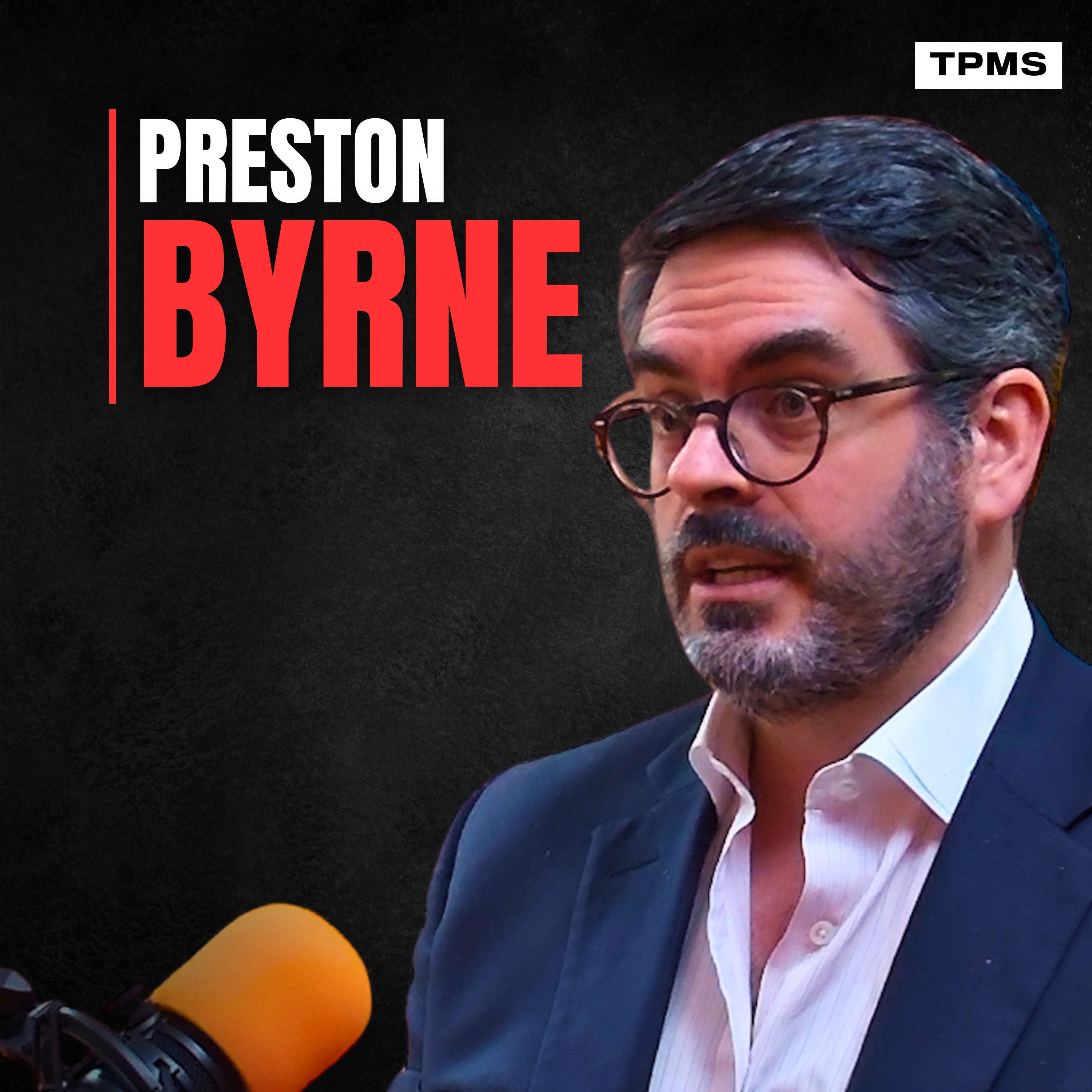
The Peter McCormack Show
#169 - Preston Bryne - Britain Isn't A Free Country Anymore
01:40:10
The only US lawyer fighting Britain's censorship of American companies
Loading summary
Transcript162 lines
- [00:00]
A
The principle that the United Kingdom was trying to prove was that they could enforce British censorship law on American soil. And I was not prepared to allow them to do that. He wound up getting a summons, a criminal summons from the City of London police. Because he was holding a sign, right? He wasn't doing anything. He was standing there holding a sign and the sign said, scientology is a dangerous cult. Seeing someone get cautioned for just holding a sign, I was stunned. I couldn't believe it. Do you want the British state to have the power to police the non violent expression of opinion under any circumstances?
- [00:33]
B
Throw us a bone for the uk. Are we a free country anymore?
- [00:37]
A
No. No. Period. It's. You can't. You're not a free country until you get your rights back.
- [00:45]
B
This show is brought to you by my lead sponsor, Aaron the AI Cloud for the next big thing. Iron builds and operates next generation data centers. Delivers cutting edge GPU infrastructure, all powered by renewable energy. Now, if you need access to scalable GPU clusters or are simply curious about who is powering the future of AI, check out iren.com to learn more, which is I r e n.com Preston hi. You have represented 4chan and you've represented Kiwi Farms, you've represented GAB and also sanctioned Suicide, a forum where people have reportedly died after using the forum. You're doing four tan pro bono. Nobody forced you to take any of these clients. Why are you taking them?
- [01:31]
A
It had to be done. It had to be done. These were the first targets of the United Kingdom's censorship scheme, the Online Safety Act. No other law firm or lawyer was willing to do it. These targets were unable to pay. And the principle that the United Kingdom was trying to prove was that they could enforce British censorship law on American soil. And I was not prepared to allow them to do that.
- [01:58]
B
Has this cost you anything personally in doing this?
- [02:01]
A
A lot of time, a lot of energy? Probably. I probably won't be able to work for a big law firm ever again after this. Not that I would want to, but, you know, whatever its cost is kind of irrelevant because this is what I do. I fight foreign censors. I've been doing it for 10 years and hopefully there will be a lot more of us fighting them very, very soon. But no, I don't think it's cost me anything. I wasn't willing to pay any judgment from people. Oh yeah, for sure. I think my colleagues in England told me that they thought I was insane for doing this. So my English lawyer colleagues said, initially, we thought you were Insane and maybe a little principled. Now the insanity piece is starting to recede and the principled is starting to move to the fore, which is a good. But at least initially, I think people thought I was crazy for representing these companies.
- [02:51]
B
I'm going to want to talk to you about the Granite act as well today. We'll come back to that. But can you just explain to me how you even got to this point? Because you didn't start out as a free speech lawyer.
- [03:01]
A
No, I started out as a banking lawyer in London back in 2009. I was a trainee solicitor with a very English law firm called Now Brian Cave, Leighton Paisner, then Berwin, Leighton Paisner. I then pivoted into crypto in 2014, did that for a while, then moved back to America, requalified as an American lawyer, and had my own law practice. And one thing that was happening at that time was a lot of web censorship. And so I started catching those cases because it was adjacent to my interest in crypto, which, you know, crypto is fundamentally a libertarian discipline. It's about financial freedom. So it makes sense that communications freedom is something that also would be. Would be interesting. And I was feeling a little. When I moved back to America in 2017, I was feeling a little bit repressed by the UK. I was very aware of the legal restrictions around freedom of speech there and other things. And bluntly, I just wanted to move back to America, buy a pickup truck and a couple of guns and just enjoy being American for a couple of years. And that is, in fact, exactly what I did. I got myself a Tacoma and a Glock, enrolled in law school, and then became a U.S. attorney at law. And then after getting that out of my system, started saying, okay, well, what else can I do here in America that I can't do in the uk? And one of those things was protecting free speech on the Internet in a really aggressive way. And so I started building a practice in 2017 or 2018, and it sort of snowballed from there until eventually this whole Online Safety act thing kind of revived it. Things had got quiet after Elon bought X, and after Elon bought X and free speech kind of was considered a settled issue, then the UK and the European Union said, not so fast, we want to regulate it some more. And then they started going after Americans. And then those practice kind of woke up from dormancy, and it turned out I was the only one willing to take the cases. So I took them.
- [04:55]
B
But why is this principle of free speech so important to you? We all understand it in the context of the First Amendment, but in terms of what's been happening, say, in the uk, which I'm obviously exposed to, and I see. Why is this principle so important?
- [05:11]
A
It's why. That's like asking someone, you know, why. You know, why do you like the color blue? Right. For me, free speech is just. It's something which I've always thought has been important, and it's something which I didn't really recognize as being as important as it was until I moved to the UK and saw what happened when it started to be taken away. And that was. It was kind of a slow slide. So I moved to the UK in 2003. I then was down in London in 2008, and there was actually a 4chan related incident, if you can believe it, which is what started me down. Everyone has, like, a moment when you become. When. When you can trace back, right, and you can say, this is the thing that started me down. My. My path to becoming whatever I wind up becoming as a human being. And so for me, it was this.
- [05:53]
B
It was.
- [05:53]
A
Do you remember the Project Chenology protests? So when a bunch of 4chan people, like, decided to leave their houses and go dance to Rick Astley in front of the Church of Scientology everywhere. Do you remember that?
- [06:05]
B
No.
- [06:05]
A
No. So. So there's this thing called Project Chenology, and I found it utterly, utterly fascinating. It was this thing where Tom Cruise at the time was going out and doing a lot of PR for the Church of Scientology. And there were people who found that problematic because of the certain, you know, practices of the Church of Scientology in terms of suppressing their critics. And so 4chan decided, in its infinite wisdom, or 4chan users decided that they were going to protest against it. And the manner in which they were going to protest was going to take the form of dancing while listening to Rick Astley and yelling Internet memes, wearing Guy Fawkes masks outside of Churches of Scientology around the world, right? And so they did this, and it was hilarious and it was extremely stupid. But at one of those protests where I was present an individual who's 16 years old, and he was wearing instead of a guy, he didn't quite get the memo. So he wasn't wearing a Guy Fawkes mask. He was wearing some big nose, like, Venetian costume ball mask. And we called him Epic Nose Guy. That was his. His Internet moniker. And so he wound up getting a summons, a criminal summons from the City of London police because he was holding a sign, right? He wasn't doing anything. He was standing there holding a sign. And the sign said, scientology is a dangerous cult. And which is like. It's a statement of opinion, right? It's one which, depending on who you talk to, they might say it's based in fact. Other people might disagree, but it was a nonviolent expression of opinion. And he received a criminal summons from the City of London Police. Right? And those. The City of London Police, like, they're the really, like, those guys are like six foot four. Like, they're the big bad mofos when it comes to London policing. And that was really scary. And I was standing five feet away from the kid when this happened. And as an American, right, 22, 23 years old, seeing someone get cautioned for just holding a sign, I was stunned. I couldn't believe it. And that started me down a path of figuring out, how could that possibly happen in a free society? What are the rules, right? What's the process? What's the history? How did this country, which was regarded at the time by most people in the UK and outside as a free country, how did they get to the point when holding up a sign was problematic? And so I understood it very, very early on. I said, this is a really big problem, and I think it's taken the better part of 20 years for the rest of the country to catch up to that understanding. And so, yeah, that's. That's what got me started. It was just seeing that one event and then going down a rabbit hole. Perhaps it's, you know, perhaps some. Perhaps it's weaponized autism. Right? As the expression goes.
- [08:34]
B
I'm going to reject your framing as, like, as to liking the color blue, because that's a preference. That's a taste. This is. There's a principle behind this.
- [08:43]
A
Well, I guess you get to choose what principles you believe in. Generally speaking, I've been oriented towards libertarian thinking for the better part of 20 or 30 years. And so as long as I can really remember. But, you know, the question is, why did you know? Why did this particular thing. Why did that grab me as a young man, and why has that stayed with me? I honestly don't know. But I know what my principles are, right? I know what I believe. But if you ask me, why do you believe it? I'm not sure. It's something about the structure of my character, I think, just compels me to believe that particular thing is the right idea.
- [09:15]
B
And this has become quite a common thing in the uk. We had an old lady who was arrested for praying outside an abortion clinic. There's a young conservative, a little bit like a young Charlie Kirk. Apologies, Montgomery, if I get this wrong, but I'm pretty sure he was wearing a sign at one point saying trans women aren't women, and he was arrested. There's been various incidents where he or this other guy, young Bob, go outside universities and they try and debate people in the way that's been done here in the us, and they're regularly on the other end of violence and threats and the police taking them away. So as you look at the uk, how would you try and explain to the people who think this is a good thing why they're wrong?
- [09:57]
A
I mean, if you think that that's a good thing, I'm not going to try to explain why you're wrong. I think my audience is really people who think that it is wrong and trying to teach them how it's wrong, how to think about it and how to oppose it, and principally what to replace it with. Right. So if you think that censorship's a good thing, then you're not a customer for me and my thinking. Right. You're not someone I want to really convince. But there is, I think, a growing movement of lawyers, of politicians, of grassroots activists in the United Kingdom who understand that censorship is bad, but they don't have the correct frameworks, intellectual frameworks, or legal frameworks for thinking about it, because the UK never developed those frameworks. So there's no domestic system, there's no way of systematically analyzing the censorship state in the UK in a manner which is systematic, which does make sense, where you can say, listen, here's an alternative to the way we currently do things, and this is a complete and coherent whole of an alternative. What you have is instead, people see individual instances of censorship, they see individual arrests, they see individual disciplinary actions at universities, they see individual dismissals of public servants for expressing opinions outside of the workplace. And each one of those things, they look at them and they say they know something in their character, something in their being says, this is wrong. I know it's wrong, but they don't have an ability to then zoom out and comparatively look at the UK's system compared to the US's system and say, okay, what is the systemic problem? And then how would we address that systemic problem with a solution that works within the British system and within British legal and constitutional traditions? So my objective is. So I've been doing a lot in the last 12 months on this subject. I've been defending American targets from British censors. I've been proposing Legislation in multiple states and providing that legislation to federal legislators with a view to protecting Americans from that censorship overreach. A couple weeks ago, we published a British free Speech bill which is designed to educate lawyers, right? This is a sort of map, a roadmap, a destination, right? This is where you need to be if you want something approximating a US Free speech. Right? And all of those efforts have been, of course, you know, they stand on their own merits as independent little pieces of work. But when you look at it all together, it's about showing the British, listen, there is an alternative right to the way you currently do things in the United States. We don't have to deal with ofcom, right? We can send them pictures of hamsters and there will be no consequences for that because that's protected expression and we have a right here to do that. But we have shield laws. We can propose shield laws. These shield laws reflect an existing legal position which exists in the United States which says that foreign censors can't touch us. And If Ofcom can't touch 4chan, it necessarily invites a follow on question, which is why is OFCOM given the power it has? What was the purpose of the Online Safety Act? Were the people who drafted the Online Safety act really competent to do so? And finally, with this British legislative piece, we can't just destroy, we also have to build. And the construction of the alternative is why don't we start thinking about ways that if all of this appeals to you, if you like the idea of Americans saying, listen, you're TV licensing guys who you send around your house and Ofcom and all that jazz, that whole infrastructure, if we can laugh at it because it's so ridiculous and you like the idea that maybe one day you could laugh at it too, how would you build something in your own country which allows you to enjoy the same freedoms we do, but not like as a line for line clone of what we have, but something which is tailored for you, which makes sense for you. So I think for the last year I've been very focused on this one problem. I'm not sure honestly what else really there is left for me to do.
- [13:50]
B
But yeah, you know, we refer to them as of communist.
- [13:54]
A
There are those. I, of course, representing a party in active litigation with Ofcom, so I wouldn't use that epithet, but I'm aware that they are referred to by that they
- [14:03]
B
don't touch us podcasters yet. But look, if we've got people listening in the US who don't know who OFCOM are, just Give them an idea of what we deal with in the uk.
- [14:11]
A
Yeah. So Ofcom is a content regulator. They censor television. If you ask them if they're a censor, they say, no, we're not. We're about balance and fairness and all this stuff. But they're a content regulator and they censor television and they censor the Internet. They have the power to send binding information demands to American companies under English law or UK law requiring them to do things which would be unconstitutional in the United States. They have the power to demand, right under, again, under UK law, that we turn over information to them without a warrant, which is obviously something that we don't have to do over here. They have the power to tell companies what content they can and can't host, which is unconstitutional here. And they say, well, it's illegal in the uk, right? There's lots of content which is illegal in the uk, which is legal and perfectly legal in the United States, which Ofcom purports to have the power to enforce in the United States. And so essentially they're a British Internet regulator, the first of its kind, really, anywhere in the world. And they were given a mandate to police the global Internet in order. It's one thing to say, listen, we're just going to control what people say in the uk, but if you read the pleadings that they filed, their public statements on the matter, they think that the power that they were given by Parliament gives them the power to tell Americans what we can say, what we can host, who we can talk to. And sorry, but even if there is a user in the uk, and there's an American website, fully hosted, based in the United States, who wants to talk to that English user, the First Amendment tells us Ofcom has no power to prevent us from doing so. Ofcom's power ends where the UK's power ends. And where the UK's power ends is 12 nautical miles off its coast. So that's what Ofcom is. It's a censorship agency exercising powers, vast censorship powers on the Internet, the first of its kind. And they wanted to set precedents with my clients by saying, listen, we're going to bully these tiny little defense senseless, highly, highly controversial American companies and websites. And we said, sorry, if you want that precedent, you're going to have to go get that precedent from somewhere else. You're not going to get it from us.
- [16:12]
B
All right, let's talk to you about my sponsor, Leden. Now, if you're borrowing against your Bitcoin, there's one thing that Matters more than anything else. Is it actually safe? Well, Leden have just dropped their lowest rates ever. But more importantly, they haven't changed the thing that matters most. Your Bitcoin is never lent out, so they're not chasing yield. There's no hidden risk and there's no rehypothecation. Just collateralized loans done properly. Now, they've done over $10 billion in loans. And they've done this through bull markets, through bear markets and everything in between. And they've done it without ever losing any client assets. So now you get lower rates, which means the bigger the loan, the lower the rate and full transparency before you apply. There's no monthly payments or early repayment penalties. And they give you tools to stay in control from auto top ups to LTV alerts. So you're not choosing between a good rate and safety anymore, because with Leaden, you get both. Now you can check out your rate using the calculator at Ledon IO. Peter, look, you've given a really good lawyer, lawyer answer, a good business answer. But I also know, I know you. And I know, I know, I know you're principled. I know you're a libertarian. And you said, if somebody doesn't understand why censorship is bad, I don't have to tell them because they're not my audience. But in the uk, we're more open to censorship, as you know. And that means within the electorate and the public and the voters, there are people open to censorship and that you can have a conversation, sometimes, explain to them why it's bad, why hate speech laws are bad, why non. Was it non violent, non crime hedge, non crime hate. Shoot. They're gone now. But you can explain these things, eventually get them around. But there may be people listening who don't know why censorship is bad, why free speech is important.
- [17:51]
A
Well, I think the conversation that I'd like them to have is not the conversation that the British establishment would want them to have. So you can go and look at any individual provision of English law or British law or Scottish law or Northern Irish law, and you can say, well, what about this, right? What about this particular rule in this particular context? And there's always, if you look at it from the British standpoint, they'll say, well, there's a balance to be struck if you look at this particular individual provision. And there's a balance to be struck with online safety, right? We're about protecting kids. Whatever else. I'd like to reframe that conversation, right, because free speech means something very different than Looking at individual legal provisions and then doing some horse trading around what you want to allow and what you don't want to allow. From the US Perspective, the question is, do you have a US style free speech right, or do you not have that right? And so that requires you to zoom out and say, let's look at the entire system in aggregate, right? And the question is, do you want the British state to have the power to police the nonviolent expression of opinion under any circumstances? That's the first question. And so if the answer to that question is yes, right, then fundamentally it's going to be a lot harder to turn around and say, okay, well I think we need to get this, these broad provisions in. But if the answer to that question is no, we don't want the British state to have that power, we do want a free speech right, like the United States, I think then it's like, okay, here's a roadmap, here's a pathway where you can build that. And then it's up to grassroots activists to make the case in terms that their fellow countrymen will understand. I'm not like the sound of my voice necessarily means I'm never going to have a successful career in British politics, nor do I want one. But really that back and forth has yet to happen. I think the terms of the debate for a very long time have been focused on piecemeal battles over individual tweaks to existing British law. Right, so let's talk about this particular code of practice in the Online Safety Act. Let's talk about the recording of non crime hate incidents and let's do some modification, some incremental modifications here, some incremental modifications there, and there's a lot of talking you can have about all those things. And I choose not to have that talking because I said, listen, those conversations are not for me. I'm much more interested in getting people to think bigger and saying, okay, well let's zoom out, right? Forget all of these debates and forget the conversation that the institutions want you to have. Let's talk about something completely different that has never happened before in British politics or in British constitutional history. Do you think the state should have this power at all? And if not, why not? Most people will actually say, you know what? Actually, probably not. I think that as a general rule, then maybe we shouldn't be policing nonviolent opinions. Okay, now next step is let's get into the granular detail. If that means so on the right and left. Let's look at, let's look at what Reform wants to police. So reform. By way of example, I think they're pretty in favor of throwing Palestine action protesters in jail. Right? So. And I think on the left, right, the Zara Sultana types, the greens, I think they're pretty okay with guys putting up Nazi stickers or Nazi propaganda or tweeting about that sort of stuff. I think they're pretty okay with them going to jail. Right? But they're not okay with their own people going to jail. I think the real opportunity to convince, you know, to win the argument is to convince both sides that in order to solve the problem for their team, they have to solve it for everybody else at the same time.
- [21:19]
B
Well, that's a challenge. I mean, we've had it today. Nigel Farage has come out and has been very critical of X and how some of their candidates for local mirror elections who are from minority groups have been harassed and abused. So he's been critical. And also we've had it from the left. Zach Polanski came out this week and talked about, I mean, they call anyone on the right file right now and wanted to build a society where essentially these opinions don't exist. So they're both flirting towards the idea of their own version of censorship.
- [21:52]
A
I think they need to learn to talk about. I mean, it's really easy in the uk One thing, if you ever word search Ofcom, right on X and you see what the content is, some of it is criticizing Ofcom, but a lot of it is people complaining to Ofcom, saying, why haven't you censored this? Why haven't you censored that? So because the existing pathways to go and call down the power of the state on your enemies in order to censor them exist, people fall back, and they're really comfortable using them. And I think that's true of the existing political parties as well. I mean, it's okay to turn around and say, Farage, the language he used was pretty specific. He didn't say, I think the people who are harassing my candidates should be arrested. He said, I think it's abhorrent and I think it's vile that people are insulting people who are running for my party. And that's okay, right? You're allowed to criticize insults. You're allowed to have opinions. I think the opportunity for reform is will they have the political wisdom to say, okay, we think that insults are bad. We think we can condemn insults. We think that we are the party of civil discourse. However, we're also willing, if we attain power, we're going to ensure that we don't have the power to censor our opponents, no matter how vile they get, as long as that speech is nonviolent. And so that's what we have dared them to do essentially with our free speech proposal for the UK is to adopt that particular position and assume leadership on that particular issue. Whether they'll do it or not is a question for them to decide. But you can certainly criticize speech without saying the core question is not should we criticize our philosophical opponents and their methods and the ways that they attack us? That's fine. The question is, should we also arrest them? And that's, I think reframing the debate around something like that. Should we arrest, should we penalize, should there be official state sanction for someone speaking their mind is where we need to refocus the debate in England and Wales. And I think when you focus on that question, the answer a lot of the time will in fact be no.
- [23:51]
B
And again with reform, they had journalists who were critical of them, who had their, I think they had their invites withdrawn to one of their events. Again, I guess they're within their right at that moment because they aren't the state, they are just a political party. But at the same time, without that kind of free speech protection that you have here, there's a different conditioning. And you said you put a proposal to the uk.
- [24:13]
A
Hmm.
- [24:14]
B
Can you kind of summarize your framing?
- [24:16]
A
Yeah.
- [24:17]
B
Say it with a smirk.
- [24:18]
A
Yeah, so. So we wrote a. I've been working on this proposal since 2019 and it's a UK free speech bill. Right. And if enacted, it would be a UK Free Speech Act. And the problem the UK has with free speech is, or rather with adopting an American style rule for free speech is that the American rule exists in a lot of different places. It's both an amendment to the constitution which was adopted in 1791 and then 235 years of history following it where it was amended by various judicial decisions. Right. Court decisions. And so if you wanted to transcribe that or transpose it into UK law, you have two problems. One of them is that you don't actually have a UK constitution. Right. So, or written constitution, which is the supreme law because you have parliamentary sovereignty. That is the grindorm. Right. That's the basic rule which governs how the British state is run. And the second one is you then have to gather up enough of the subsequent 250 years of history and you need to express them in UK legislative parliamentary format. And then you have to be very economical with how you do it. You can't just sit there and go, okay, we're going to record 250 years of cases, and you have to make sure that you protect enough speech that you've got something approximating a us, Right. While also leaving enough room at the margins for the judiciary to go out and fill in the blanks. Right, because you can't cover every single possible use case or every single possible edge case, excuse me, with a single piece of written legislation. So we tried to do that, right? We drave. Yeah, we tried. It's a hard task, but that's why it took six years of thinking about it. And a big part of it is just repealing inconsistent legislation. Part of it is then replacing the legislation you repealed with rules that approximately fill the gaps, because you can't just turn around and say, the Public Order act is gone and then replace it with nothing. So we tried to replace it with speech protective rules. And then what you do is you say, okay, here's what we think is the inner perimeter of the free speech. Right, which should exist. We're allowing the judiciary to go and make modifications at the outer edge of the perimeter. But what we really want to do is solve probably 80 to 85% of the problem. Right? The problem being that people are getting arrested for political opinions and political expression. And we want to do that so that it's effective on the day of enactment. And that's a really tough challenge. It took three people. I was working alone for the better part of the six years. One of my co authors, Michael, joined sort of about a year ago. He started grinding on these issues. And then the third one, Elijah, came in later in the day. But he was absolutely essential, and he's been thinking about this issue for a long time, too. So what you had is you had three drafters in total, probably about 10 to 12 years of aggregate sort of thinking time, then getting put together in one room and producing something that we think is a roadmap. And it was well received, which is great. But the idea there is to get people thinking in the terms I've just described, like, okay, if you really want a free speech, right, Here are the trade offs, here's the benefit, right? Is that this area of speech is going to be totally protected. Here are the trade offs, which is that people you hate are going to have that right, too, in addition to you having it. And so the bill was kind of a way of, instead of writing another paper, we just said, let's just cut out the middleman, cut out the intermediate step. This is the bill, right? And these are the repeals. And now you can think as you go through it, what happens? Take a piece of speech that you like, okay, let's feed that into it, run the process, run the algorithm, right? And then what's the result that it spits out on the other side? Okay, here's a piece of speech I don't like. Let's put that in, run it through the algorithm. It comes out with a result on the other side. And so we're really early in that process of getting people to think in American terms, but in British format. But hopefully, if that process gets run by academics or politicians or grassroots activists, let's say that gets run by 100,000 different times by people who are thinking about this problem, then we'll have created an awareness of what the American free speech right would look like in the UK and then people can start thinking about how to propose modifications because ultimately this thing needs to get enacted. Right. And that's going to be a horse trading game by whoever's in government after Labor's not going to do it. So we'd have to wait for another general election. And so the idea is to lay the groundwork for that eventual political process and hopefully get something approximating the outcome we proposed.
- [28:52]
B
What would the limitations be in the uk Is it similar limitations to the First Amendment that you have here?
- [28:57]
A
They're broadly similar limitations. So the limitations would be any criminal speech, like threatening imminent lawless action, direct incitement, encouragement to commit an offense still would be, you know, still would be covered, although the encouragement, you know, this section 44 of the serious, Serious Crime Act. So we're, we're trying to think about, we're trying to think about. There's some, there's some edge cases we didn't address. Some of the terrorism acts get repealed, so certain material support for terrorism would likely still be unlawful. But expressing support for terrorism or prescribed organizations, like what's happening on Trafalgar Square with Palestine Action bats out, there are some political affirmations which are permitted. We left in the Public Order Act 1936. So that's something we didn't touch. That's the ban on wearing political uniforms in public. And the reason that we left that in is because again, we're trying not to clone the First Amendment, but create a British First Amendment. And I think the question of whether you get people goose stepping down the streets of London in political uniforms was resolved by a war. And so that's not something which I think would be politically acceptable in the UK. And I think that for the UK's history, I think we get to. I think. I think that particular right is never going to exist, nor should it in the United Kingdom. So, you know, it's shaped to be roughly approximate to the First Amendment. There are parts where the UK does retain a higher degree of control. We didn't take out D notices. Right. Or things like that. That's still in. We did make some modifications to the Official Secrets Act D notices. So, like the power of the government to issue national security restrictions on reporting. So that's something we left alone. So it's not an exact clone of the First Amendment. There are some things we definitely left in place in our proposal. Right. And whether that survives a legislative drafting process by people who are actually competent to do that, legislators and have the power to make legislation, is another question. But it was designed really as a roadmap, right? Like, listen, this is the starting point so we don't have to wait for the next government to get elected and then the parties to try to figure it out on their own because they're thinking about this for the first time and they're going to screw it up because they don't know what they're doing, bluntly. So we said, we're just going to help you accelerate that process by three to five years. We're going to do this. And that's going to tell you. Right, okay, this is where. Approximately where you need to land. There's no need to go talk to the Law Commission about it or go talk to English academics about it who don't understand the First Amendment. We've done all the hard stuff right now it's over to you to think, okay, this is what these lawyers, this one lawyer who now everybody knows has been focused on this issue for 10 years, this is what he says we should do. Is this a good starting point or not? And then hopefully that will help them resolve a lot of their outstanding doctrinal questions and methodological questions into something which is a little more of an implementation
- [31:50]
B
question, I can imagine. In the uk, you've been building both friends and enemies now.
- [31:56]
A
Friends. I've made a lot of friends. I think there are definitely some people in the UK who wouldn't be happy to see me touchdown on British soil. But. The people who want to censor the British people, fine. They're going to have those opinions all they want. I'm sure they have their own motivations and they should feel free to express Them, They've been pretty quiet, though, to be honest. They really. There hasn't been a ton of public pushback to what we've been doing. And if anything. Actually, I think what we've seen is that our resistance to British censorship in the United States has really crystallized a resistance movement to domestic censorship in the uk, which was part of the intention of the exercise.
- [32:37]
B
No, they'll be secretly watching you, waiting for you to take a holiday to the UK and grab you as you get off a plane, like Graham Lineham with three guns and throw you in jail.
- [32:47]
A
Yeah, I believe that 100%. And that's why I'm not going back to the UK until labor is out.
- [32:52]
B
Okay, so you would not step. Well, actually, I know this because we've had the conversation privately, but you would not step foot in the UK right now.
- [32:58]
A
No, no, I had to go to Stockholm the other day and I flew through Amsterdam. So, yeah, I'm not setting foot in the uk. I mean, they're arresting Graham Linehan over a stupid tweet that he sent from the United States. Right. So, like, what. What do you think they would do if the guy who's been advising companies that they regard as the absolute worst websites on the planet, if he set foot in the UK and what do you think they would do to me? I'm sure I'd be detained for sure. I know people who have been detained for less on the speech front. And so, no, I'm minded not to set foot in the UK until this is all over.
- [33:34]
B
And I've experienced my own libel lawsuit relating to speech and speech. As you're fully aware, there's a. There's that famous quote that was attributed to Voltaire, actually, I found out isn't his. That I disapprove of what you say, but I will defend you. To defend to the death your right to say it. Is that something that lawyers like yourself actually believe, or is there, like, a limitation to.
- [34:03]
A
I mean, for my own practice. The good news is that I live in America, so I don't have to defend free speech to the death. I can do it in the courts. So there's a limited downside here, which is. But, like, in principle, no. I mean, sometimes you feel the need to take on a hard representation, and when you do that, there's a covenant with your client that you're going to fight. You're going to fight as hard as you can. You're going to fight to win.
- [34:27]
B
Yeah, but the cost might not be death these days, but the cost Might be career. Career opportunities. You've said in the UK you probably wouldn't get any work as a lawyer in the UK right now under certainly this labor government. And there are potential consequences for yourself here in the US There are still sometimes challenges to speech.
- [34:46]
A
Yeah, I mean, there are, but I think in the United States, there's kind of a general understanding that lawyers, I mean, certainly lawyers to the other side in litigation and things like that, it's a very civil affair. You know, you answer to the court, right. You're not answering. I'm not answering to anybody except the court and the Supreme Court. In any litigation in which I'm active, it's the court in which litigation is there, and the Supreme Court of the State of Connecticut, that's my regulator. And so, you know, if I stray outside of the boundaries of what's permitted, you know, as an ethical representation, then, yeah, I will answer to the court and it will be very unpleasant. But in terms of the rest of the world, if someone doesn't like what I'm doing or they don't like one of my clients, that's not something I really think about too much, because it's not my problem. My client's business, my clients matter, My clients fight, is my problem. And, you know, I've agreed, you know, all of these clients, I'm representing them pro bono, so totally free of charge, haven't charged a penny for it. And, you know, but that doesn't change the nature of the representation or the relationship, which is that my client's interests have to come first, even if. Right. It's going to result in hazard to the lawyer career or professional or otherwise. So that's something which. I think it's an old legal principle. It's not something which a lot of lawyers get to live. Right. Because you don't. If you're working for a big law law firm and you're representing banks or international conglomerates or things like that, it's not very often. Right. That you get to. That you get to rerun the defense of Queen Caroline and do something which is patriotically problematic or which causes you to involve another country in confusion for your client. And this is one of those cases. And I feel, honestly, I feel fortunate that I get to be in the middle of it and that I happen to have the skill set which was required for this particular dispute.
- [36:33]
B
We do also know there's a lot of nutters in the world. Preston, have you received any threats?
- [36:38]
A
Because.
- [36:38]
B
Yeah, I would assume you have.
- [36:40]
A
Plenty. Plenty. I've received threats I've received bar complaints, so death threats, all that jazz, and I don't give a shit.
- [36:49]
B
So you are, yeah, essentially defending to the death in some way because, you know, there's a risk there and.
- [36:56]
A
Yeah, well, I mean, the death threat came from some UK IPs, so fortunate. Fortunately, the, you know, the death threats generally come from UK IPs. Yes, we can, I can see where they come from. So I'm not generally too worried about it because there's an ocean in the way as a general rule. But, you know, it's not, it's, it's not the first death threat that I've gotten for representing a client, and I'm sure it won't be the last. And it just means that you're doing, you know, relevant and important work. That's fine by me.
- [37:23]
B
So you talked earlier about being a libertarian, and certainly something I'm become a lot more interested in. But libertarians traditionally don't trust the state. They see them as, I don't know, an obstacle to liberty at times, while at the same time you're using the courts to defend liberty. So as a libertarian, how do you see it? Do you see the state as an enemy or do you see defender of liberty?
- [37:49]
A
I mean, the state is a vehicle, right. And it's a vehicle which is usually used to restrict rights and exercise political control. So I'm very skeptical of the state on the free speech issue in particular. Even here in the United States, there are all kinds of free speech issues. I think one, you know what? Sometimes people just digressing a little bit, sometimes people on the Internet will say, why are you criticizing the UK's free speech position? Right. Surely you have enough issues in the United States with the Trump administration or with social media. You had to disclose your social media, right. When you came into the country, before you, before you crossed our border. Why don't you care about that? Why don't you care about the activists at Columbia who had their green cards revoked? Why don't you care about this one? The answer is I care about all of it, but I'm one guy working pro bono in my free time. And so I think the lesson is that a libertarian should take away from the UK experience, is that any time the state has the power to censor somebody, right, then it's going to use that power. And that's true everywhere, all the time, all forms of government, all legislators. We've seen here in the United States, we've seen age verification legislation very similar to what the UK has under The Online Safety act, but it's advancing in Republican states, it's advancing in places like Louisiana or Arkansas. Arkansas just had their third age verification law struck down in a row by NetChoice, which is an advocacy group here in the United States. So in the UK you tend to see the Internet censorship and the puritanical Internet censorship coming from the left and the center left. And in the United States you tend to see it coming from the right. It's the same impulse using the same vehicle to achieve the same outcome for the same reasons, with slightly different political orientations behind it. And so the free speech position doesn't really care where this is coming from. So we, we proposed the Granite act in Wyoming, right, which is the censorship shield law. And that was proposed by some very right of center legislators and we expect. And Wyoming is a very right of center state. Another state, Delaware, is working on one as we speak. And that's going to come from the left wing of the Democratic Party. Right. So that's that proposal. So free speech is not something which is a partisan issue. It's something that I think within or across the political spectrum there are individuals who recognize that free speech as a principle is something which is so important that it's worth fighting for regardless of whether your enemies get to speak or not as a consequence. And we've seen that with our efforts here in the United States. And I think we're going to start seeing it in the uk, hopefully, because the state is cracking down across the board. It doesn't matter what opinions you hold, the Palestine Action Protester or Lucy Connolly, they're in the same boat. It's the same problem that's operative in both cases. And so, you know, we're hoping that we get sort of a cross party understanding that free speech is something which just doesn't need to be a partisan issue. Even though usually in Europe at least, the right has been latching onto the free speech cause. But it's fundamentally, there's no reason why this couldn't be a cross party issue.
- [40:43]
B
But isn't there a fair argument to be had with regards to age verification, being that there are, there are some concerning things on the Internet one click away and like high levels of hardcore pornography, certain content you wouldn't want maybe a distressed youngster to see. And if it's coming from the left and the right, that is seen as a common problem. And we do have laws relating to the age of which someone can have sex, drive a car, drink alcohol. Why would we also not want to have that Protection with regards to access to certain things on the Internet.
- [41:18]
A
Yeah, because it's speech. It's speech. It's publication and expression. And we don't regulate. The American historical tradition says that speech, even the unpopular stuff, it's a public good. Right. It is a constitutional imperative that we protect it. So no matter what the justification is. Right. The policy decision this country made 234 years ago was that speech was to be protected at all costs. And that was something which is not to be interfered with. And I think ultimately when you say, okay, the child safety crowd in particular, they say, well, my kid's going to access. They've got infinite scroll on Instagram and they could potentially see some bad content or bad memes or terrorist memes or whatever else on the Internet. And that's why we need to censor the Internet. There's a much fine. It doesn't follow all of your gripes and problems about how the Internet works. It doesn't follow that you need to censor the Internet as a consequence of that. What you could do, lock down your kid's phone or get them a dumb phone and then the computer in your house is in a public place in your living room. Right. With parental controls applied, that is a total solution to your child seeing things on devices you control on the Internet. And it's something which is completely within your control, which doesn't affect the core publication. Right. So I think we like, there's an assumption that just because these things are problems, that censorship is also the answer. Just because it's linked to this thing that everyone agrees is a problem. I don't agree with that. I think that yes, all of that stuff is a problem, but the decision making power in relation to how to fix it is between a parent and child and that's the proper way to do it.
- [42:52]
B
And so the adoption of phones and social media has been more of a social and cultural misstep. We haven't really realized what we were giving to kids. And the answer isn't censorship, it's just revisiting the access we give our kids. A bit like, you know, with my kids, my daughter's 14, I'm not letting her out at midnight. You have certain things, you know, you shouldn't let your kids do. And, and if I would go back, I would not have let my kids have access to any of these things.
- [43:15]
A
I have no, I have no intention of letting my kid have access to social media under any circumstances that's not supervised. I regret that I had access to social media Right. I could have been very content living a very private life as a lawyer and other things. There's, there's a. Once you cross the threshold, right, from being a private person into a public person, there's really no winding it back. The Internet remembers everything forever. So I think when you're raising, when people are raising their kids, they have to teach them and tell them. Listen, if you start becoming a public figure on the Internet, you're a public figure on the Internet for the rest of your life, Right? Especially now with all these technologies and image, you know, image recognition and AI is doing lots of, of web scraping and things like that. You have to think long and hard before you decide, I'm going to become a public individual in this context, or everything is getting ingested and scraped and remembered. So my strategy is going to be make sure that Junior doesn't have broad, unsupervised access to the Internet at home. And make sure that he understands that once you become a public person, there's no one back the clock. So you got to think about that before you do it. But does that then justify. I mean, there are two things to think about there. The first one is, does it justify censorship as a philosophical principle? I think the answer is no. And the second one is, does censorship actually fix the problem and make anybody safer? And I think the answer to that question is also now, as we've seen in Australia, for example, they had an Internet censorship law. They banned social media for kids. And what happened? The parents helped them all circumvent it, got them VPNs, so they're accessing via the United States States. And that's not helpful for anybody because all of a sudden, if you're hitting a social media website with a vpn, suddenly law enforcement doesn't have visibility because instead of just going to the social media company with the subpoena, now they've got a bunch of intermediaries and they've got to go trace it back. It adds additional investigative steps. So it's a big problem that they're actually making people less safe, I think by doing this than its opposite. But I think that the tech companies don't want to talk about it in that context because it'll just justify more crackdowns. But in my professional experience, the idea that getting people to access the Internet via vpn, as they are doing by their millions in the UK, is somehow making anybody safer, I think that's foolhardy. I don't think that's right.
- [45:30]
B
Do you think there's More responsibility that should be laid at the door of the tech companies. Or is that censorship itself?
- [45:36]
A
That's censorship itself. I mean, there's a business case if you're a tech company to try to make sure that your services aren't used for bad things. And I think if you look at a company like Meta, there's a lot of noise going on outside here in New York City.
- [45:49]
B
Yeah.
- [45:50]
A
So that's America, huh? And so I think with Meta or
- [45:54]
B
something, you could tell them to shut up. We would be censoring them.
- [45:56]
A
Yeah, right, Exactly. It's free country. So I think with Meta or something like that, the activists say, well, it's terrible. It's this, it's that Meta has very advanced tools that it uses to moderate bad content off of its website. Some of the best in the business. And so I think they're going, it's crazy to me. When you get Liz Kendall and Keir Starmer telling Meta you have to do more, Meta bends over backwards to comply with all of these local rules. And I think what it boils down to is just that politicians don't like people using the Internet. Nope, exactly. I mean, I don't think. I think. Because if you think about it. Right, Think about it. Liz Kendall and Keir Starmer hauled all of the tech bosses into a meeting and Starmer read a script for seven minutes. Just like, you must do more, you must do this, you must do that. All the things he was asking them to do are not requirements under English law at all at the moment. So infinite scroll, things like that. They said, well, these are addictive features. That's the latest thing that I've seen from them, like it's heroin or something like that. And said, you've got to do more. Without specifying what more they must do. Right. Without specifying what studies they've conducted to determine that these things are harmful and without giving them a time frame for implementation. Right. It just seems they wanted to get hard on them before. Before going into an election season where labor, I think, is going to have some significant challenges. And when you look at a politician doing something like that, and it's not, it's this nonspecific criticism of just your business. You know, you Facebook, your business is non compliant with our expectations, right? Well, the expectations. If Facebook can't comply with your rules, if Facebook can't do what you want it to do, guess what? They spend billions a year. They have tens of thousands armies of people trying to moderate that platform. If they can't comply, guess what Then the system is not designed to be complied with. The system is designed to produce violations so that you can exercise political control over those platforms. And I think that's, I think that's basically where the UK has got to in terms of its regulation of social media.
- [47:56]
B
I want to talk to you about one of my new sponsors, which is Monetary Metals. Now, if you're like me, you probably spend a lot of time thinking about sound money and how to protect yourself from currency debasement. Now, for some people that's bitcoin. For others it's gold. For me it is both. But here's the thing about gold. Most of it just sits in vaults doing absolutely nothing. Monetary Metals is changing that. They let you earn a return on your physical gold holdings, but they pay it in gold itself, not dollars. So instead of your gold just sitting there, it can generate more gold for you. So to put it simply, if you deposit 100 ounces and earn around 4% at the end of the year, you're going to have 104 ounces of gold, regardless of whatever happens to the price of gold in dollars. And in a world where fiat currencies are constantly losing value, earning a return in actual gold ounces is pretty cool. It's essentially making your gold productive instead of idle. Now, if you hold gold and want to learn more, check them out at monetary-metals.com McCormack that is monetary metals.com McCormack I just want to go back a little bit to the question regarding the state because it, to me it's always been a natural monopoly. You will always have a state and therefore it's really upon the courts themselves to be able to defend your liberty. Here in the US you do have challenges around free speech. You mentioned it earlier. You do have free people who are free speech absolutists. I don't think anything should be criminalized. Where is the debate here at the moment in the U.S. or are there similar challenges?
- [49:31]
A
I think in the U.S. you have a couple of. There's obviously an age verification debate which is very much along similar lines to the uk but the debate here is very different. The debate is they want to push the legislation and the question is, does the First Amendment permit them to do what they're trying to do? And in most cases the answer is no. So I think there are of course always free speech absolutists who say that you should be able to say things which are unlawful in the United States and go beyond the First Amendment. You should be able to incite violence, you should be able to threaten people. I don't think that's consistent with history and tradition or the language of the First Amendment itself. And I think the First Amendment strikes the balance correctly, essentially. Now, of course, I'm a little biased because I'm American and a First Amendment lawyer. So I think you don't tend to get too many people who say that you should be able to engage in categories of speech which are criminal speech. The term free speech absolutist is one which is broadly misused across the world to criticize the First Amendment position by people who don't understand the First Amendment position, which is that the First Amendment, if you could summarize it in a line, and no court has really done this, it's that it broadly protects the nonviolent expression of ideas. Ideas, right. So ideas and opinions. And when you cross over out to an idea or an opinion into something like an instruction, that's when you might have a problem, right? So if you say, I don't know, let's come up with a criminal act, let's say, you know, I believe, you know, I agree. Let's. Marmots, right? Marmots are great. Marmots for your listeners are fuzzy, adorable rodents who live in the mountains. And they have long been repressed by their human overlords. And so the marmots have formed a resistance group, the Marmot Liberation Front. And the Marmot Liberation Front believes that they should go into people's gardens and raid their tomatoes for their marmot treasuries, right? And they think this is a good idea. Now if I turned around and said, I believe in the United States, and I said, I believe in the aims of the Marmot Liberation Front. I support the Marmot Liberation Front. I think what the Marmot Liberation Front is doing is right. Right. That's protected by the First Amendment. That's all protected. Ideas or opinions. If I then turned around and called up my friend who is a marmot and, and said, hey, marmot, I know a garden that has lots of tomatoes which you can go steal. It's here and the owner's gone at 10:00pm why don't you go there? Right? That's going to be a problem here in the United States because that's, that's procuring the commission of a crime. Or if, for example, the marmot says, I call up the marmot and I go, let's say there's a group of marmots in someone's garden. My friend Dave lives down the street, loves tomatoes Grows them all the time. And if there are a bunch of marmots there, let's say 20 of them, and I say, hey, marmots, why don't you go beat up Dave and take his tomatoes? Right. He's right over there. That's a great idea. And then they go beat him up and take his tomatoes. That's a problem. Right. So there are limited circumstances where speech, when you stray outside of that core protected area into criminal conduct or criminal expression or encouraging specific criminal conduct, you're going to have a problem no matter where you are in the world. You have it in England, you'll have it in the US And I think that those are good, sensible, insane restrictions. And I think if we look to what's happening in the UK right now. Right. It's really easy to see what happens when those restrictions aren't in place, which is that the state just runs hog wild and restricts people for ordinary pro marmot speech.
- [52:40]
B
Okay, I get it. I mean, some of that sounds like in the first one, you were describing swatting.
- [52:46]
A
Swatting is not. That's an interesting one. There's a case, Gersh vs. Anglin. Andrew Anglin was a guy who ran a Nazi web forum. I think it was called the Daily Stormer. I think that's what it was called. And so he directed users of the forum, allegedly to harass a woman in Montana named Tanya Gersh, and she sued him for harassment in a federal court in Montana and won. I think it was a default judgment, or perhaps not, but there were some First Amendment issues that were brought up. And harassing someone in that nature, telling a bunch of people, here's the phone number of a person who I want you to harass, and it'd be really good if you did it. And then having them do that, that's not protected speech in the United States. Now you're allowed to publish someone's name and address, right? That's allowed. That's permitted.
- [53:31]
B
Doxing is permitted.
- [53:32]
A
Doxing is permitted. But the question is, why did you dox and what are the full facts?
- [53:37]
B
And certain.
- [53:38]
A
It's one of those edge cases which is out there right on the perimeter because it's public information.
- [53:43]
B
That's why you need a court on lawyers to figure these things out.
- [53:46]
A
That's the example of a case which occurs on the edge. Right. And so for our proposal in the uk, we actually dealt with this because we amend the Protection from Harassment Act 1997. And what we tried to do was there are circumstances in the UK where Someone who's like a blogger, they'll write about the local police and then the police will get sent around to their house. There's a guy who just got I think a $45,000 judgment or a settlement with a local police force in the UK for doing this. And so the police will come around to your house and say, well, you're writing about us. And that's harassment. Right? That's not what harassment is. Harassment is when you intrude into someone else's life, not when you just published. They go and seek out your content and then as a consequence of what they see, they don't like it. So they say, you're harassing me. So we tried to rewrite the UK's rules to address that particular use case. And it's something which a lot of people in the UK just don't understand as a problem because they don't have the experience in both jurisdictions and they're not able to basically run the diff between them and say, okay, this is the way this case worked in the uk. We think this was the wrong outcome and we know that this is the way things work in the United States. But how do we translate between the two? And so I've been, you know, it takes a long time to figure all that out.
- [54:53]
B
Can we talk about some of these cases in the uk? And also can you tell me about the hamster email?
- [54:57]
A
Because the hamster, yeah, you want to deal with the cases of the hamster
- [55:00]
B
first tell me about Nigel and the hamster.
- [55:02]
A
Nigel and the hamster. So yeah, so I'll tell you about the hamster. So the hamster, the hamster was a, there's a picture of a hamster in a Godzilla costume and it's kind of a long running joke. So Ofcom, when they sent their initial fine to my client, a 20,000 pound fine back in September, we say which client? 4chan. Okay, yeah, so they sent a 20,000 pound fine to 4chan in September for not producing this risk assessment report that they wanted for the Online Safety act. Because my client doesn't have to do anything in the United States if a foreigner tells them to do it because they need to come over here and get a court order. So we tried to explain this to Ofcom and then we tried to explain it in our court filings with Ofcom and then Ofcom ignored all of that and sent us the fine anyway. And so I responded to them with a one line email because they sent like 130 page, or was it 30? 130 I think that might have been the second one. I think it was like a 50 or 60 page fine decision, right? Where they explain all of their powers and all the rest of it. And I looked at this and I was like, God, this is such horseshit like this. They know this isn't enforceable here. So I responded with a one line email which did the rounds in legal circles, but not more broadly. And I said, thanks, thanks very much for sending that pile of, in the United States, legally void and unenforceable documents, it will make excellent betting for my pet hamster. And said, and that got. There were some law firms that wrote client updates about it. I think they found it entertaining and somewhat unprofessional. So then, and that's it. Whatever, we'll see what happens. Fast forward to December, three months later, and Ofcom writes again and they say, well, you didn't pay your fine, so we're going to fine you again for not paying your fine and not producing your report. And moreover, we're going to fine you for not putting in place age verification, this additional requirement that we impose on you that is also not enforceable in the United States. And we're going to fine you more. We're going to fine you £500,000. And I said, thanks so much, but you know, just to let you know, if you send us a £500,000 fine, the fine documents will be so big, that fine is so huge that my hamster's enclosure isn't going to be big enough for it. So we may have to escalate with a larger hamster just letting you know. And sent that email to them. Two weeks later, they send the fine. I'm in, I'm in. It was March 19th. I was in the airport lounge at Schiphol. I was in Amsterdam again, avoiding the uk And I open my laptop, I sit down at the gate and I see an email from Ofcom. It's like, great, these guys again. And I open it up and it's 500,000. So I respond to them and I said, that's it, like they've escalated. We need to respond with a bigger hamster. And so I had a picture made by Grok of a hamster holding a giant peanut wearing a Godzilla onesie, an anime hamster hamster, right in the studio, Ghibli style, standing over the Tokyo skyline. And I responded to them, I said, listen, we're not really interested in having this conversation with you. As has been made abundantly clear to you on several previous occasions, your fine's too big. So we actually have to send it to Mr. Whiskers was the name of the first hamster. We need to send it to his cousin, Nigel J. Whiskerford, but he's not available this week because he's currently on tour in Japan. Here's a picture of him dressed as Godzilla and holding a giant peanut in Tokyo. Isn't he the cutest? Maybe. Right. You could, you know, thanks so much. We'll. We'll shred it and line his enclosure with it. But. Or maybe you could just stop sending American stupid letters and acknowledge the sovereignty of the United States. Send tweet, close laptop, get on my plane, right? Flying to New York, and when I blissful ignorance for several hours, and then I land in New York City and the tweets got a million and a half views on it. And it's been covered by the BBC and mlex and Roll On Friday and a bunch of others. And the BBC has put a question to Ofcom, asking them, you know, if you have comments on the hamster. And they haven't responded. So I didn't expect it to take off quite the way it did. But, like, it was. It was a humorous way of illustrating a serious point, which is that they keep sending us stupid letters, and in the United States, they're stupid letters. If they want to enforce their edicts here, right. The US has no understanding or cognizance of English law. They have to do something which complies with the First Amendment, which means they have to come to a US Court. They have to seek to enforce their fine here. They need to, you know, if they want to get international recognition, they have to use a mutual legal assistance treaty procedure. There's a bunch of stuff that they have to do. Otherwise they're just sending Americans to stupid threatening letters. And we're perfectly entitled to laugh at them because we want to encourage other Americans to laugh at them, too, because it's ridiculous. And so that's the story about the hamster.
- [59:37]
B
But if they hadn't had you, they maybe would have considered paying these fines.
- [59:43]
A
I mean, I'm not going to pry into the attorney client relationship there, but suffice it to say, I think my client's position's correct. I don't think they have to pay the fines. I don't think any American needs to pay the those fines because it's axiomatic that they have to domesticate them here first. So it's one of those things where my job for these companies is sort of. There are two Parts of it. The first part of the job is to make sure that my clients interests are defended. The second part of the job, part of the mandate is that they think that these foreign rules offend American sovereignty and that these foreign rules are a huge danger to free speech in the United States. And I was given the instructions to go out and fight them with everything that we had. And that's both in public relations, media, legislative proposals, the courts, anywhere else we can lawfully fight and in any other manner we can lawfully fight because ultimately it's a state on state fight between the UK and the US and the only way this is going to get resolved is if the US uses state power to end it. And in the meantime we have to hold the boundary, we have to hold the perimeter. So that's what we're doing.
- [60:45]
B
Well, look, I agree with you on free speech and I want this to be protected in the uk. I like the idea of something similar to a first amendment. Culturally we are different. So trying to get this across the line in the UK is a challenge. Let's go a little bit more extreme and show where a problem would be. So if you were working say on second amendment in the uk, the UK needs second amendment. You deserve the right to bear arms. It wouldn't be a popular idea in the country where it is now. I think if it went to referendum. I don't even know if you get 5% of people voting yes. We would like some kind of Second Amendment protection. Might not even get 1%. So if we flip it back to the free speech laws, some of the challenges that you might have here in the UK, so not here in the US are with more of your kind of educators. 4chan is where people have posted their manifestos before shootings and.
- [61:38]
A
Yeah, but like, but that's, it's just, that's, that's the kind of thing where when you look under the hood. Right. And you've actually worked with some of these companies before. Yeah. Someone does something bad on 4chan, what happens? Companies like this, they comply with law enforcement. Right. So what would you rather have? Would you rather have the data not exist and that you censor the Internet and control it so that when these things come out, they're complete surprises? Or would you rather have it so that these companies are sitting there and when law enforcement sees something they find objectionable. Right. Or criminal or that's a public safety issue, you have a cooperative client on the other or cooperative counterparty on the other side who's responding quickly? I mean, in Terms of the, you know, the second amendment thing. Obviously the UK outside of certain parts of London doesn't have a very robust gun culture. So they're definitely growing. I mean it's growing for sure. There are definitely lots of places, I mean one, there are lots of places in London where you can get guns for sure. One, including city cons front driveway. If it's, you know, security officers are having a nap. I think they left a bunch of Full Auto MP5s like on the sidewalk the other day and someone just like picked them up and walked them into a police station. It's like now I would have kept them because like a full auto mp5 is fucking sweet. But like, but and not very, not very legal for civilians to possess. But, but that's of course a joke to my bar regulator. I would not actually have kept the firearms when I was living in London.
- [62:58]
B
Five year jail sentence if you caught with it. Just owning one, I think, or any
- [63:01]
A
part and one or any part or any part thereof. I frequently have recurring nightmares of where I'm waking. I'm in my flat in London and I discover one of my guns is like in the safe in my flat in London. And I'm like, oh my God, what do I do? And then I wake up and realize I'm living in the United States again, because that's an issue. I mean with the second. The question of what law reform you can move and when you can move it is a very real and interesting question. Obviously I'm a big supporter of the second Amendment here in the United States, but you don't see me doing a lot of writing about the second Amendment in the UK because there's no political appetite or momentum for it. And on the free speech front, I wrote a paper on this in 2020 and most of my friends in England said, you're out of your mind. Of course we have free speech. That's ridiculous. So what's happened is the political environment and attitudes have shifted very significantly as censorship has ramped up in frequency and aggressiveness. So too has the political response. So you have a recognition now from broader British society that censorship is a problem. And so we've sort of inserted our legislative proposals into that environment. Right. We could have done it five or six years ago, nothing would have happened. No one would have paid attention. I think the engagement and the level of traction that we've gotten is a direct consequence of a change in thinking that maybe isn't so. The other problem is when you have a society that's very heavily Censored people are really afraid to break rank and speak their minds, right? So if part of the reason I was able to do this at all is because I wasn't working at a major law firm, I used to be a partner at a law firm with a London office. I am 100% certain that if I were still there, there is no way that they would have permitted me to do what I did.
- [64:41]
B
Because the edge cases are so edge.
- [64:43]
A
Well, I think because firstly, because as a, as a practicing lawyer, I never would have been allowed to take on 4chan pro bono. That just. They would have said it's reputational kryptonite for us, for our larger institutional clients. And so we're not going to let you do it. Never would have survived the committee. They would have said, go make money. That's, that's your job here. Secondly, on the legislative proposals, I mean, to just walk into a foreign country and just drop a fully baked statue and say, enact this as a private practice lawyer is kind of a ballsy thing to do. Because firstly, what happens if you get it wrong and you do a crap job? Because usually that job is done by full time paid parliamentary draftsmen working for the office of the parliamentary council, right? There are specialists who do that. The political arrangements which lead to that sort of an outcome are committees and papers and academics and it takes five years. So the idea that someone would just walk in and just drop it. If that came out a linklater, you get laughed out of town, right. If you were just some private practice lawyer doing it. So there are institutional pressures in London that prevented anyone in London from actually doing any of this. Because there's a huge pressure to conform among the legal profession. And I feel no such pressures because I want to win. And I know that playing by their rule books, not necessarily the ethical rule book, which of course you play by, but the sort of professional. Professional. How should we put it? Professional. Trying to find the word for it. What's the exact word I'm looking for here? Professional norms, right? Doing things like if you do things with the expectation that you're occasionally going to get invited to a dinner at Gray's Inn and you're going to be respectable and you're going to be able to appear at all the right events and go to your partner meetings and not get laughed at, you don't do what I did, right? But if you're a rebel and you're outside of the system, you don't owe those people anything, you can fight a lot harder and you can be much more creative in what you do. And so that's how we've chosen to do it.
- [66:35]
B
So it's kind of ironic that we have an American lead in the charge to liberate the British.
- [66:40]
A
I could be British. I could be British. I just have to get some papers. I can be British by descent. I just need to get my papers, walk down to the consulate and finally
- [66:47]
B
you're all British by descent, really. But it's like in some ways it's like a reverse 1776 coming back to liberate the Brits.
- [66:56]
A
And Tom Paine was English, right. So I mean, there's a long history of exchange of ideas on these issues between the United States and Europe. Ben Franklin obviously spent years all over the United Kingdom and in Paris. So, you know, these, our two countries are very closely linked. And I don't see, you know, a guy who's basically one filing at a consulate away from being a British citizen who's educated in England and became an English lawyer before he became an American lawyer. I like to think that I'm very sensitive to, you know, what that. And I love the country with all my heart. Right. It is the place I wish to return to. And I'm kind of in self imposed exile at the moment, but it'll be that much better when I finally do go back if we win.
- [67:39]
B
So when we win.
- [67:40]
A
When we win.
- [67:43]
B
Just back to the point though. When you are proposing changes to our laws and people do research the people that you have represented, some of the details around the cases are going to make certain people kind of shiver, maybe feel concerned because they will look up situations where people were harassed or maybe were swatted or did end up killing themselves. Felt harassed. How, when you're taking on these cases, obviously you consider these points like how do they make you feel at the time?
- [68:15]
A
I'm not defending what users on those clients, on those clients websites say. Right. I'm not defending anyone, you know, any single piece of post that's ever been posted. I'm defending the civil rights of my clients and I'm defending the civil rights of their users. And so from my perspective, you know, there are obviously some of my clients I find more personally problematic than others in terms of, you know, getting comfortable with the representation. Right. There's some, you know, I'm not going to say which ones, but certain of my clients, I'm very uncomfortable personally. Right. With doing it. But ultimately this is a civil rights issue. It's a civil rights issue for the website. It's a Civil rights issue for every single user of the website collectively. I mean, we're talking about tens of millions of people who are directly affected by the UK's attempt to. I mean, 4chan is a prime example. I mean, roughly 1 to 2% of every US state is a 4chan user. Right. So that is a huge, I mean, we're talking 20, 30 million people in the United States who would be affected by this. And so in aggregate, it is far, you know, when you look at the trade off there, it's far more important to me to make sure that those 30 million people, their free speech rights are unaffected by foreign laws. And yes, there are edge cases, but I think that the mitigation for that kind of stuff is law enforcement cooperation and content moderation within the scope of the voluntary moderation that these clients already perform. So, yes, it's definitely tricky, but the scale of the infringement is so huge, if we allowed it to get through, that it warrants a robust legal response.
- [69:51]
B
Is it really a mistake that the UK have made themselves when really they could have just had these sites blocked because they're trying to. Look, we can argue about the limits of free speech, what free speech is, but we are a different country and maybe we shouldn't be enforcing our different rules on each other's jurisdiction. And the way to protect your jurisdiction is just protect what's coming on. You could consider it perhaps a bit like border control, though we're not very good at that at the moment. But consider the Internet has its own border and it's like, well, these are our rules in this country. We can prevent, we should be preventing certain people coming in. We don't want to have terrorists coming into our country. Well, if we have a belief that certain content is not something we want in the uk, should it be treated like a border blocked at that point?
- [70:36]
A
Well, I think you got to keep in mind how the Online Safety act is drafted. And the reason it's drafted the way it is is because under the Tories, there was not a political mandate to give a unilateral power to Ofcom to block websites. What happens is afcom, you see, to go to a court, they need to demonstrate that the website, it's supposed to be a remedy that's used in extremists. And now if the political class is upset, Right. That their first enforcement action is being forced down that path. And I don't think they want to go down that path because I think it looks bad. I think it proves that the Online Safety act is a censorship Law. And according to Ofcom's numbers, at least, I'm not going to say what 4chan's numbers are, but according to Ofcom's numbers, there are 1.4 million 4chan users, the United Kingdom. Great. That's 1.4 million free speech activists if you block it. So go ahead, prove to 1.4 million people in a stroke that the Online Safety act is a draconian censorship law. Be my guest. And I don't think they want to, because they know. Because they know. They know what the reaction will be. And so. And that is, you know, they picked the wrong fight. They should, what they should have done and what they're starting to do now, right, they're going after the majors, the companies that have physical footprints in London, UK assets, UK employees. Very difficult for them to argue that they're not subject to the British jurisdiction. And they're starting like the tiktoks and the Metas and the Instagrams and the Snapchats. And so what they've done is they've got a deadline coming up on April 30th. They sent letters to all these big companies saying, you must do more. Tell us how you will do more. Right. Without necessarily specifying. It's unclear what exactly the nature of the regulatory failing is specifically, but they just said, you must do more. To all of the big boys who are within their reach, who they can actually touch. Their mistake was they bought. I think there was a lot of lobbying by some of the bigger tech companies to redirect Ofcom's attention and help them get their early enforcement wins against these little websites, so they could turn around and say, look at these wins we got. We're really effective. We're doing such a good job. The Internet's so much safer. And I think the big boys said it was. If we can get them doing that, then they won't come after us. The problem the big boys have is that all of the little companies fought back like hell, right? And they proved the principle that Ofcom can't touch them. And so Ofcom's in a very awkward position where now they've had these powers online for a year and a half. They haven't managed to enforce a single fine or collect. I think they've collected one fine from a company that was incorporated in the UK and immediately wound down and moved offshore. So £55,000 out of 3 million. So they've really just proven the principle that their reach is, in fact, territorially bounded to the United Kingdom. And guess what? The UK doesn't have a ton of controversial websites within its own borders, but what does it have? It has local establishments of large multinational conglomerates. So now Ofcom and the Eye of Sauron have turned right to all of the companies who are lobbying for it to go after the quote unquote high risk websites as well. 1, 1 Tech major referred to one of my clients and, and now, now it's like great. You never, I never thought the lion would eat my face. Right is the meme. Well now, now you've got that problem. So, so yeah, they, they, I think they didn't really understand what they were getting themselves into when they went after middle American companies.
- [73:42]
B
Can we talk about Sanctioned Suicide? Yeah, yeah, so I'm with you all the way. I mean I don't really use 4chan. I may get sent links occasionally. I've had a look on it. I just got swamped in stuff. I didn't even understand how to use the website. I didn't understand why people did. But it feels to me like sanctioned suicide is a real edge case. It can be one that could lead to people giving the instruction.
- [74:11]
A
Sanctioned Suicide is a web forum which allows people to discuss mental health issues of a broad range. The thing that distinguishes it from other websites in my professional assessment is that it allows people to freely discuss the topic of self harm and suicide specifically including how they plan to go about it. And so that there is, you know, some, there are allegations that people have browsed the site and subsequently killed themselves. But I think, and there is an argument, right, that the site caused those things. I don't think that that argument holds up or withstand scrutiny. But so that it is, it is very uncomfortable to represent them. Now Sanctioned Suicide has in fact done compliance measures with the Online Safety Act. They have geoblocked the uk. After they geoblocked the UK that Ofcom announced in October that they were going to deprioritize their investigation into them and put it into a long term monitoring platform that then so enraged a group of activist groups in the uk, the Molly Rose foundation, the nspcc, that Ofcom reopened the investigation. So they requested a geoblock. Ofcom, they got a geoblock. People complained about the geoblock, they reopened the investigation of the geoblock. They threatened to find my client. I then reviewed the provisional fine decision and it turns out that what was the basis for reopening the investigation and threatening to fine the client a million pounds and potential prison terms and other things? Well, they used a VPN to access the website. In other words, they circumvented the geoblock that they requested be implemented. And moreover, they worked with the activist groups who are. They're not supposed to be taking marching orders from activist groups. They're certainly not supposed to be gathering evidence from these activist groups. But what happened was these activist groups also used VPNs to circumvent the geoblock. So my client responded to that by tightening up the geoblock even more. And we haven't heard anything from Ofcom. But in terms of that website, what is going on there? Yes, the content is extraordinarily controversial, but what you've seen is Ofcom working hand in glove with activist groups to try to get a penalty despite all efforts. There's nothing apart from shutting down completely and ceasing to exist. There's not really a whole lot you can do other than geoblocking the United Kingdom to try to keep UK users out. So you have this strange situation where the regulator said, we want you to implement the geoblock. The client then did it, and then the regulator is threatening to punish the client for doing what it asked. And so because political pressure won't permit the regulator to reach that conclusion or that determination, they want to punish the company for speech and conduct which. Which for the record, is perfectly lawful in the United States. They violate no law. So it's a very different case from 4chan, which I think is 4chan's. It's a shitposting forum. It's where people in Kiwi farms, it's a discussion board you don't tend to get. And they have their own moderation policies and they work with law enforcement, all the rest of it. And there's not really a concrete argument to be made that there's any harm that's going to happen to anyone from browsing 4chan or KiwiFarm. But in Sassu's case, that is a very controversial website, but they bent over backwards to try to block off the uk and the UK keeps coming. Why? Because the domestic political considerations in the UK require punishment. And that, to be blunt, is exactly the kind of evil that the First Amendment was designed to prevent, which is the government being hijacked by activist groups to bring down the power on the state of the state, on groups and organizations and people who they disagree with. So it's a complicated, you know, it's a controversial representation. But ultimately I made the determination that if we were going to prevent Ofcom from bossing around Americans, any American who wanted to fight had to be represented.
- [78:04]
B
I think Sassu could be similar to second amendment in the uk, that there would be people out there who would agree with you on the principles of having protection of free speech in the uk, but that specific example they would want to carve out for, I don't believe, and I'm answering collectively here for the whole of the uk, so I don't know the answer, but I think topics such as that, certain anorexia formulas with the fear that there would be encouragement, there's guidance in the uk, even on just making the show, by the way, there's guidance that whilst we're discussing the subject, because we're mentioning suicide, there's certain warnings I should be bringing up on screen. I don't think it's mandatory, I'd have to check, but there's certain guidance and I think it's based on something called the weather principle. But anyway, that I should be bringing up warnings and helpful phone numbers for people, because if they find the content, if they're considering suicide, what it would do for them, would they hear this? Would they hear this and then go to sanctioned suicide? Would that be more likely to lead them to a scenario where they could commit suicide? Could there be ideas they weren't aware of before, or could they even be encouraged? And so that is a thing in the uk, I think.
- [79:12]
A
Well, remember, in the uk, if you want to commit suicide, the current government's position is that you need to go to the NHS for that. So I think when they're on their high horse talking about this, and at the same time, the Starmer government's been pushing an assisted dying bill.
- [79:28]
B
I'm talking about the public, though.
- [79:30]
A
And the public.
- [79:30]
B
Yeah.
- [79:31]
A
But even as a political issue, this website was the bet noir, Right. It was the reason, it was the whipping boy for which the whole Online Safety act was designed to deal with this one website. Right. And so when Keir Starmer was meeting with Donald Trump at Turnberry in July of this year, he referenced this website as a justification for the Online Safety Act's existence. Right. From our perspective, it's very similar. Simple. It is. It's an American company, it's not. It's an American website, it's not violating any laws in the United States. Therefore, if the UK wants to push it around, they've got to come over here and. And they've got to deal with within the confines of the First Amendment and the mutual legal assistance treaties, if that's something they want to address. And it's. We're. We are holding the line on that principle. Not because. Right. We agree with the content on the site, but we agree with the content of their civil rights. And so that is it. It's. It's a. It's a very. And it's a really. This. That was a tricky. It continues to be a very tricky representation, personally. But at the end of the day, you know, this, this particular website, they have. And. And its users. Right. They have free speech rights. The First Amendment defines what those rights are, and the UK wants to take those rights away. And so when you think about it in those terms, despite the controversial nature of the. It becomes very straightforward for me as a practitioner to say, okay, this is the correct outcome here. And the correct outcome is that their rights are protected from foreign interference.
- [80:57]
B
And is there no arguments being made in the US that even with this website that it is going beyond the limits of free speech?
- [81:04]
A
I believe there was a congressman who wanted to introduce legislation on this topic a couple years ago, and it didn't go anywhere, I suspect out of First Amendment concerns. And the First Amendment's broad. It protects some really, really nasty stuff. It protects the rights of the Nazis. Right. The famous case is the Nazis at Skokie being represented by the aclu. It protects the worst opinions you can imagine, as long as they are opinions nonviolently expressed.
- [81:31]
B
You mentioned Trump a moment ago. You've had some support from the administration.
- [81:36]
A
Not direct, not directly, but we have had some noises from Sarah Rogers, who's the undersecretary for Public Diplomacy. She has mentioned the 4chan case in, of course, apparently she mentioned. On a GB News conversation. She mentioned it with Liz Truss on a podcast. We're reliably, you know, reliably informed from public reporting that there was a $40 billion trade deal with the UK which was canceled. I'm not going to say it was because of our case. Right. But I think our case is emblematic of the kinds of problems that the United States has with the Online Safety Act. If the rollout of the Online Safety act continues as it has done. Right. Which is that highly aggressive. They've sent 197 notices into the United States, Section 100 orders into the United States to Americans and American companies. So I think that we are certainly raising awareness about it. But, yeah, this is an issue.
- [82:30]
B
Jim Jordan pressured Ofcom.
- [82:32]
A
I know they went for a visit. They certainly haven't done anything at my request. Right. I've just been.
- [82:38]
B
No, but it must feel good that you have some back in there.
- [82:41]
A
I mean, we, we, we.
- [82:42]
B
Even if it's not direct.
- [82:43]
A
I mean, we're I make the noise, right? And then I watch and see what they do is basically there's not a lot of two way communication. It's mostly just me sending them documents and then waiting for them to introduce a federal shield bill, which I've been screaming for them to do for a year. Right. So. But they work on Congress time, I work on press time in time. And those are very different timescales.
- [83:02]
B
Okay, let's revisit Granite act. Something you did you author on your own.
- [83:07]
A
So I did the V01 on my own. And then. So the Granite act is a censorship shield law. It stands for guaranteeing rights against novel international tyranny and extortion.
- [83:18]
B
Did you come up with that first or would the word granite make it work?
- [83:21]
A
I came up with granite.
- [83:22]
B
Granite is great.
- [83:23]
A
Well, we hatched the idea at a bitcoin conference in, at Bruce Fenton's place up in Portsmouth, New Hampshire. And so I was asked by Keith Ammon, who's the number three Republican in the New Hampshire state House, he's like, hey, is there anything we can do here? And Calvin Beaulieu, who's also a state rep, and they said, is there anything we can do? I said, actually, I think so. So I came up with the Granite act because granite is the Granite State. So granite, it was a backronym for sure, and then gave it to them. But three weeks later, I get an email from a guy who, he's a mutual on X. He also happens to be the Deputy Secretary of State for the state of Wyoming and his name is Colin Crossman. And so I published this bill on my blog. Three weeks later, Colin writes back and he has turned it into a complete ready to introduce legislative proposal. And so he's like, hey, I did this and I've got a state rep who's willing to introduce it. And it's 36 pages long and it's unbelievable. And I was like, okay, cool. So we went through it, we made some amendments. Representative Daniel Singh in Wyoming introduces it on January 30th. And it was a lightning run. We got it through the House of Representatives. So what? Let me talk about what it does. So what it does is it creates a sword and a shield against foreign censorship. The shield says that Wyoming courts won't enforce foreign censorship orders. The sword says that if a foreign government tries to enforce a foreign censorship order, you can sue the foreign government in an American court for statutory damages equal to the amount of the threatened fine. So if the UK rocks up and they say 18 million pound fine, well, okay, that's 25 million bucks. We just walk down the street to the local federal court, file a lawsuit. Yeah, just file it and say, okay, cool. Now people say, well, how will you enforce that judgment against the uk? UK is over there, you're over here. Surely this is the same problem they have getting their rules enforced here. The answer to that is no, no, because I'm a bitcoiner and Colin is also a bitcoiner. We understand that the US Is the great financial center of the fiat world, where all of the countries of the world have to keep their assets in order to have US Dollar exchange. And in the case of the United Kingdom, that is approximately the tune of £46 billion worth of assets, custody with the Federal Reserve bank of New York. And so if you can get through sovereign immunity, then you can touch those assets, which is a significant deterrent to the United Kingdom trying to enforce its censorship laws on American soil. So we, we wrote that bill. We got it through the House of Representatives, 46 to 12. It would have passed the Senate, but there were some legislative procedural shenanigans that meant it didn't get through. Didn't get through in time, but we were. It's now being taken up as a committee bill and it's going to be introduced in due course in early 2027 as a committee bill. We're working with members of the House and Senate. We've got three months instead of, you know, four weeks because it's a proper legislative session in Wyoming. In Wyoming. So we will have a shield law on the books In Wyoming, approximately 10, I'm guessing, within 10 months.
- [86:13]
B
Is that a step towards having it as a federal law?
- [86:16]
A
Not. I mean, it's a parallel effort to having it as a federal law.
- [86:19]
B
Okay.
- [86:20]
A
And I think the, the vote, getting it through the house, 4612 and 4612 in principle, it was only because it was introduced like a week and a half before the House actually sat or days before the House actually sat. So people are like, this is a huge bill. We need more time to think about it before we actually enact this thing. So we're going to do all of the legislative horse trading in the next year. And so by the time it gets introduced again, everyone's going to know in the Wyoming House and Senate where they stand on it, and we'll be able to usher it through legislative procedure appropriately.
- [86:51]
B
And hold on. Could this be like a Delaware moment for Wyoming in that if you're 4chan. If you put your head office there, you Protect it.
- [86:57]
A
Correct, Correct. It could be a Delaware moment for Wyoming, but I'm not really at liberty to go into details, but I'm reliably informed that Delaware would like to have a Delaware moment for Delaware.
- [87:08]
B
Yeah.
- [87:09]
A
So on this particular issue, so. So there, there may be some updates on that point in the near future. Also, the feds are considering something similar, so Senator Eric Schmidt has said. So actually, we'll start with Jim Jordan. Jim Jordan was point blank asked by Mike Shellenberger if he'd seen the Granted act and if he was proposing to do something like it. And he said, it's under consideration. I think they're wondering about the enforceability of having a legal cause of action in the United States. But, you know, we said, listen, this is something you can do. Trust us. And their lawyers don't just trust random Twitter lawyers who say, please enact this. So I think they're doing the research to see whether a federal sword provision in particular would be effective. Senator Eric Scholars Schmidt has said that he's going to be introducing a shield bill. Sarah Rogers, again, the undersecretary, has said that both houses are working on a shield bill and they don't tell me very much. So I've, you know, I can only read the tea leaves, but, you know, we wrote granite. We sent it to them. Hopefully we accelerated their process by a couple weeks or a couple months by doing a lot of the heavy lifting on that and also by feeding them the data that they need on foreign censorship, at least vis a vis the uk because they've got lots of data on the EU and Brazil. Brazil for them to make an informed decision about whether they want to enact these rules. So granite started on my blog, I think about a week before I published on the blog, I got a contact from a federal legislative aide in the Senate saying, hey, we're thinking about doing something. Could you tell us what's what? And I gave them a list of three bullet points. It's shield, sword and the fine quantum. And then we just said, you know what, fuck it, we're not going to wait for them to do this. Let's just do it ourselves. And then what we can do is if they want to follow along, that's, you know, that that's on them. We just, it was too urgent to wait and leave that to politicians, so we decided to just usher it along. So I think we'll probably have a granite shield on a state books. On state books, within 12 months, probably 11.
- [88:56]
B
Wow.
- [88:56]
A
And we will have. We were this close In Wyoming, we just fell short. But it was, it was like turbo fast. Like you October 18th blog post. Right. Then November 18th bill draft bill not introduced. January 31st to 30th we introduced it and then we got it through the state House a week and a half later and then fell short of the Senate because it was something called the budget session, which is really compressed and there's not a lot of legislative time. So that was four months right from blog post to through a state house by an 80% super majority. And so there's a lot of, there's clearly legislative appetite for this. And what we've done is we've used that result to then go to think tanks and others and say, listen, you know, the R Street Institute has written about this and said to them, listen, if you want this to roll out in other states, why not next year? We're going have lots of new, but not lots of new legislative sessions. There's time now to do this properly and make sure you get the proper legislative buy in. So, and I'm getting there's. And it's coming, we're seeing it both on from Republicans and from Democrats who are interested in this. The Wyoming bill was bipartisan. You know, future state efforts, I'm aware of those will be bipartisan. In some cases they'll be introduced by Democrats and not by Republicans. So I think we've hit on a legislative idea that can pass federally and if it can't pass federally, we'll get it done in the states.
- [90:09]
B
Amazing. Okay, throw us a bone for the uk. Are we a free country anymore?
- [90:15]
A
No, no. Period. It's. You can't, you're not a free country until you get your rights back and until you can criticize the government and criticize the its policies and do so freely without fear of arrest, as long as you're not violent. So no, I don't consider the UK a free country. I haven't considered a free country for a long time. It's getting less free by the day. But at the same time, the awareness of that unfreedom is also rising. And so as that happens, I think it took in 2020, if you told someone in the UK you don't have free speech, 99% of people on the other end of that conversation would have disappointed disagreed with you. I think now it's closer to 50, right. And soon it'll be closer to 30 or 40%. So there's a growing awareness that this problem is there. And I think once we address free speech and people can really say what they think again, then you might have a better environment for public debate to solve some of the country's other more serious problems. In addition to free speech.
- [91:13]
B
Yeah, it's not just speech at the moment. I mean, the UK is in a. I think in a desperate state. A lot of people I know want to leave or have left.
- [91:20]
A
A lot of people I know have left.
- [91:21]
B
Yeah.
- [91:21]
A
Well, like you can live in Dubai and not have free speech and keep all your money and not. Not pay 60% of your income in taxes.
- [91:28]
B
Or you have to lock your car
- [91:29]
A
and not have to lock your car. Or you can live in London, you can pay in taxes your life, you know, your lifestyle is huge amounts of taxes. Your lifestyle is greatly reduced. And frankly, to speak on issues of public importance in the uk, you have less freedom in the UK than you have in Dubai. In Dubai, just like, don't criticize the Dubai state. Right. But for people who are just passing through as tax refugees, I think they're pretty happy with the state in Dubai anyway.
- [91:55]
B
They're happy with that social contract.
- [91:57]
A
That social contract works for them. It wouldn't work for me. Right. But it works for them. And so if you say, okay, well, I have the civil liberties position, let's say it just comes out roughly equally. And. And then, you know, in the uk, I have all of these other terrible externalities that I have to deal with. Why would I stay? And so that's the math that a lot of. A lot of people I know have made. That's. They've run it and they said the answer is clearly not to stay. I want desperately to move back. I'm willing to pay that price. Right. The taxes don't bother me. I'm here in the us The Delta is not so bad. But, you know, I would move back in a heartbeat. Right. But for the civil liberties problems. So.
- [92:33]
B
And it's just not. It's not just the free speech, like you as a observer, like some of my American friends, I think they see things on Twitter and think it's worse than it is in certain areas. But you're fully aware of what it's like in the uk. What is your broad concern about the direction we're headed?
- [92:52]
A
It's that my major concern, it's that I have a lot of friends there and they don't deserve to live in a country that's going down the tubes. And it's that the UK is seeking to extend export, its dysfunction to the United States. And that's something where, when it happened, I was Expecting more. I mean, there's literally, in terms of the direct fight back against the UK's censorship scheme, I've been doing it alone for a year. You would think that at some point at least one law firm, right, at least one major US law firm would have joined the fight and gotten involved. I'm still the only one, apart from a handful of other lawyers, Ron Coleman, Colin Crossman and others.
- [93:28]
B
Must not be enough money on it.
- [93:29]
A
Well, there is no money in it whatsoever. But, like, you'd hope, right, that in the land of Atticus Finch, there'd be some principled lawyers, willingness, willing to step up and mix it up, and some principled companies who'd say, you know what this game of Calvin Ball the UK wants to play with. Internet censorship is not one we're minded to play, but everyone's playing a cautious game of defense, right? They're waiting to see what the outcome of the Online Safety act regime is going to be. Because if reform gets in, I think it's gone right, frankly. Or if there's a shield law here in the United States, it's going to be a lot less relevant to a lot of American companies and they won't have to stick their head above the parapet. But it's weird. Like, after a year of this, still being basically one of the only guys out there on the field fighting out in the open, and I'm sure they're,
- [94:14]
B
by the way,
- [94:17]
A
it's fine. This is what I do for fun. Like, no need to that I enjoy it. So it's been weird that we haven't seen more of that, but essentially, yes. And maybe it's that, you know, my sort of dual qualification, you know, with heavy British influence, means that I recognize the problem in ways that American lawyers don't. And so just because I'm sort of. I speak the language, the legal language, natively over there, because it was the first one I learned, right? The us, for me is the new legal system. This is the. This is the foreign one for me, the of my legal brain. The UK is my home jurisdiction. It's where I trained, it's where I went to law school. So I can still rattle off all my cases right from. I can see my notes from my GDL exams. Like, I can see them sitting in front of me. I remember them exactly like my bar review, in one ear and out the other, right here in the United States. So the UK for me is very much home for my legal self. And maybe it's because I understand it so well and I'm in exile. Right. Effectively that, that I was the one to step up and it doesn't make sense for an American lawyer to do it. But. Yeah, I don't know.
- [95:20]
B
You're trying to create the country you want to return to.
- [95:22]
A
Yeah, I mean, essentially I left for a lot of reasons. Free speech was a big one and the political and the deteriorating. It was free speech and actually privacy. So mass surveillance, things like that, snooper's charter, all that jazz. But the free speech privacy stuff, eventually maybe we'll get to it that there's a whole lot of fixes that could happen there to a UK fourth Amendment right.
- [95:46]
B
But I think search and seizure.
- [95:48]
A
What's that? Search and seizure, privacy rights, Article 8. The UK doesn't really have much. I mean it's CCTV land. Right. It's. That's, you know, I mean you notice that when you're there and then you come back to America, there are no cameras anywhere here. Right. Compared to the uk. So I think when, you know, I'd like to create. Exactly right. I'd like to create a country I want to go back to. But I think the good thing is that the rest of the country now wants me to create that country too.
- [96:13]
B
Dude. Yes, please. Look, I've wanted to do this with you for a while. I mean, you said earlier I'm not going to the uk. People don't realize I've been trying to get you over to try and have this conversation and you're like not fucking coming. So coming to New York, I was very happy to talk to you and I really appreciate everything you're doing.
- [96:31]
A
Thank you.
- [96:33]
B
And I appreciate you answering some quite sensitive questions. I mean, they're not. There are difficult things and for the UK to advance a more free speech based country, we have to have to deal with these uncomfortable questions. But if people are listening and they are wanting to do something, how do people in the UK just support what you're doing or even just support the idea of improving the free speech rules in the uk?
- [96:58]
A
Yeah, I think it's in your hands. It's in the grassroots activist hands, I don't think. The Tories are not a free speech party right now. Reform is on the fence. They included a manifesto commitment to free speech in their 2024 general election manifesto. But whether they follow that up with adopting a bill and making a party policy for the next election is an open question. RESTORE is an interesting party that I think probably a good chunk of your listeners will be quite sympathetic to. They're not going to win an election, to be blunt. So it'd be nice to see them adopt it. But I don't see that as being a, you know, they're running 12 candidates in great Yarmouth, stranger things have happened. But it'd be great to see them adopt it. But I think, as my current estimation of the playing field is that they're very unlikely to form the next government. So you have to get your political parties to make free speech an issue. You have to scream about it to the individuals and institutions that are going to decide what the policy is for the next government after labor is out. And that includes in the Greens, that includes in the Lib Dems. If you think that free speech is a big enough problem for the speech that you've seen censored and you're prepared to say, I'm going to do that, not only do I want to protect the speech that I like, but I want to make sure that everybody has that right, because that's really the only way that your rights are safe. Then maybe the Free Speech Bill is for you, right? Maybe the Free Speech unions for you. I know the Free Speech Union tends to be a little right leaning, so maybe it's not for everybody, but ultimately it's.
- [98:28]
B
Free speech is seen as a right
- [98:29]
A
wing, it was a left wing thing until like 15 years ago.
- [98:33]
B
It just flipped, right?
- [98:34]
A
Totally flipped. So I think get involved because ultimately I can't. I've done everything I can, right? I've, I've worked on the cases, I've drafted, drafted model legislation. I've done it. You know, it's. For me, though, I think the, the intense period of effort is now over. You know, the objective was to provide tooling to activists so that they could go and agitate for change that has now been provided. And I don't, you know, I'm trying to figure out what's next, but I think I'm going to be in a kind of a lower intensity mode for the next year or so. Doesn't mean I'm going to switch off or go move to Tahiti or anything like that. But I think, I think really the next phase of this fight is about getting British political parties to adopt free speech. And that is something which an American who won't set foot on British soil and isn't even a voter in the UK is very poorly equipped. That's a task that an American in that position is very poorly equipped to address.
- [99:24]
B
Well, like I say, I fear what's happening in the uk. Ofcom, don't regulate podcasts. At the moment. I'm pretty sure they're going to come after.
- [99:32]
A
Come over here.
- [99:33]
B
Well, maybe at some point, but I think they'll come after us because we are the ones saying the things that the BBC can't say or won't say and Sky News can't and won't say. We're having the honest conversations and we are probably. I mean, if we were regulated by Ofcom, I would have had a knock at the door by now. And so that's a positive. But it's something for them to come after. But look, appreciate everything you're doing, Preston. Really do. This is really important work. And keep up the good fight.
- [99:57]
A
I'll do my best.
- [99:58]
B
Thanks, man. Thank you to everyone for listening. Support free speech. That.