← The Peter McCormack Show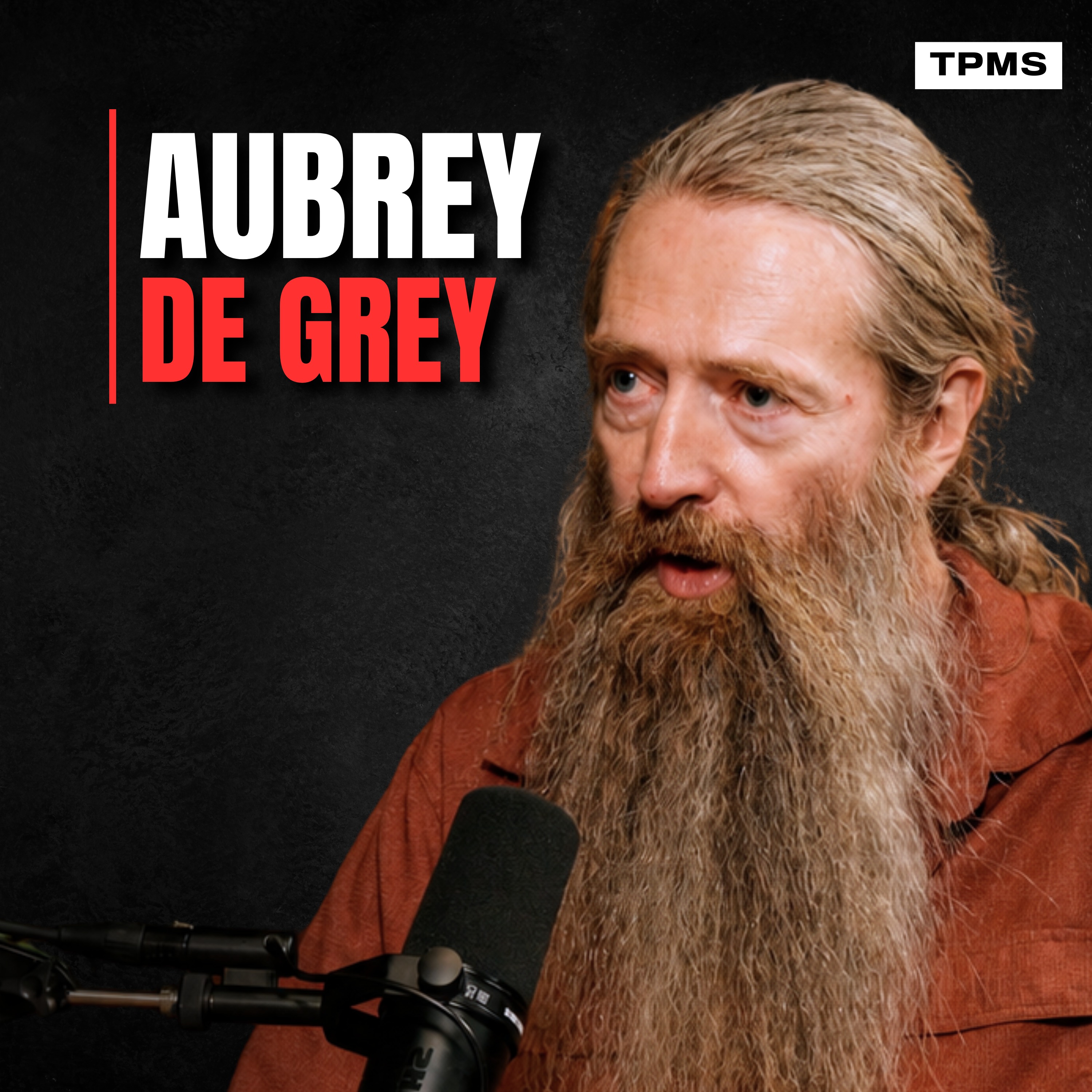
Loading summary
Transcript208 lines
- [00:00]
Aubrey de Grey
I always say we have a 50, 50 chance of getting to a point that is for practical purposes, having defeated aging at the moment. What I say is the next 12 to 15 years from now, we will without doubt come to the point where medicine is good enough that we can keep people biologically young, however long ago they were born, save 110,000 lives a day, which is how many people die of aging worldwide.
- [00:25]
Peter Attia
Not everyone will want it, though.
- [00:27]
Aubrey de Grey
Wait, wait, wait, wait, wait, wait, wait. Who wants to be sick?
- [00:30]
Peter Attia
Oh, people don't want to be sick, but I just think there won't be people who want to live forever.
- [00:33]
Aubrey de Grey
But if you don't want to be sick, there is this side effect that you tend to wake up tomorrow.
- [00:37]
Peter Attia
Well, tell me what day is the day you want to die on?
- [00:40]
Aubrey de Grey
I don't think about it. I genuinely don't.
- [00:43]
Peter Attia
This show is brought to you by my lead sponsor, Iron the AI Cloud for the Next Big Thing. IRON builds and operates next generation data centers and delivers cutting edge GPU infrastructure, all powered by renewable energy. Now, if you need access to scalable GPU clusters or, or are simply curious about who is powering the future of AI, check out iren.com to learn more, which is I r e n dot com. We're good, right? Aubrey, how are you, man? Good to see you.
- [01:10]
Aubrey de Grey
I'm well, thank you. Thanks for having me.
- [01:12]
Peter Attia
Is it inevitable that we will cure death?
- [01:16]
Aubrey de Grey
No. One of the most frustrating things about my interactions with the media is that they constantly conflate the word aging and the word death. Okay, it's painful. And the reason it's painful is because death is quite clearly something that cannot be completely eliminated by technology.
- [01:39]
Peter Attia
Yes.
- [01:40]
Aubrey de Grey
Because, you know, there's quite a lot of ways to die, whereas aging is something that absolutely can be eliminated by medicine in the future.
- [01:47]
Peter Attia
I mean, that's kind of what I meant in terms of what you meant.
- [01:49]
Aubrey de Grey
But don't say that.
- [01:50]
Peter Attia
Okay.
- [01:50]
Aubrey de Grey
But yeah, I mean, I mean, the reason it's important is because there is this terror in society of thinking rationally about aging. Because even though it is something that will be overcome by medicine in the fullness of time, we don't know how much time. And people find that very uncomfortable to think about. So they like to try to keep their kind of emotional distance from the question.
- [02:17]
Peter Attia
Well, they want to know if it was solved in their lifetime.
- [02:20]
Aubrey de Grey
That's right. And they can't tell them whether or not it will. And that's not good enough. So people make up these fantasies that tell them that they can put it out of their minds and get up with their miserably short lives. And some of those fantasies are about desirability, you know, trying to pretend that aging is some kind of blessing in disguise. But also there's the idea that aging is somehow not like diseases at all, in some profound way, such that it is, in some, you know, permanent manner, off limits to medicine. Right. And, you know, the media like to pander to, you know, what sells. Right. So in other words, they like to kind of perpetuate these ridiculous fantasies, whether it's the desirability one or the immutability one. And they do it in subliminal ways. And using death, when they mean aging, is one of the worst. So that's why I picked you up on it at once.
- [03:18]
Peter Attia
Right. Okay. So let's start with aging. Is aging ultimately something we will inevitably have control over?
- [03:26]
Aubrey de Grey
Yes.
- [03:26]
Peter Attia
Yeah.
- [03:27]
Aubrey de Grey
Okay, we will. At the moment. At the moment, we've got basically almost no control over aging. We can just very slightly slow it down. But, yes, we will without doubt come to the point where medicine is good enough that we can keep people biologically young, however long ago they were born.
- [03:45]
Peter Attia
Wow. But we don't know when that's right. Not maybe in my lifetime.
- [03:50]
Aubrey de Grey
Well, so actually, let me say a little more about that, because one thing that results from this terrible irrationality of society about aging is that most experts in the field feel unable to give even probabilistic timeframe predictions for how long, how soon this is going to happen. And that's a huge problem. Essentially, it results from. Basically, they feel they're in danger of being accused of saying irresponsible things, and it'll hurt their next grant application or whatever.
- [04:23]
Peter Attia
But it's not useful. If you're looking for investments, investors would want to know.
- [04:28]
Aubrey de Grey
Well, that's also true. Yes. But of course, if you're running a company, then you can address something that's not really aging or it's a bit of aging, but you can call it a disease or something like that. So that's not really the same problem. But yeah. So the point is, hardly any of my colleagues are willing to give any kind of timeframe predictions. And this is enormously problematic because if people are not willing to give any kind of timeframe predictions, even probabilistic ones, then the rest of the world just says, well, however optimistic people sound about. However much noise they make about this or that breakthrough that's been made, it doesn't really mean anything. We're never going to get there. And so they don't really feel that it's worth funding with taxpayers money. So this is basically a complete foot shooting exercise, not giving these timeframe predictions, but yet the kind of prisoner's dilemma thing. The individual experts feel that they're going to hurt their own funding if they talk about timeframes. So I've never had that problem. I've always given timeframes and my timeframes are not necessarily correct and they have slipped a little bit over the years. But I always say we have a 50, 50 chance of getting to a point that is for practical purposes, having defeated aging. Something that I call longevity, escape velocity within. At the moment, what I say is the next 12 to 15 years from now, 20 years ago, I was saying 25 years. So it's a Tibet, but not much.
- [06:01]
Peter Attia
12 to 15 years. Okay. Do you prefer to talk about the science of this or the social impact of this?
- [06:09]
Aubrey de Grey
Oh, I talk about both of those things all the time. You're welcome to ask me what you like.
- [06:13]
Peter Attia
Well, I think a lot about the social impact, but I think we should probably do the science first. I don't know anything about this. As far as I know, aging was something that the beauty industry cared about most of all. I don't even understand the science of aging. I don't know why we age. I don't know why my hair, my beard's gone gray. I don't know why I'm starting to feel old and things don't work anymore. I don't know any of it. So where's a good place to start?
- [06:37]
Aubrey de Grey
The way I tend to start is I start by emphasizing that we can start out with one fact that we all know, but that is often kind of glossed over, which is that the body is a machine. It's a really, really, really complicated machine. And of course it's one that we don't have the blueprints of or anything like that. But the fact is it's a machine, which means that it's function is determined by its structure, by what it's made of. Right. So we have a pretty thorough understanding these days of what the body's made of, you know, cells and stuff between cells. And we know what cells are made of, you know, DNA and proteins and stuff. But they all go together in this complicated way that we have a very poor understanding of and the body functions. Now, any machine, you know, with moving parts anyway, does itself damage as a consequence of its normal operation. This is not a fact of biology, it's a fact of physics. So the aging Of a living organism is actually pretty much no different from the aging of a car or an airplane. Once you understand that, it becomes a non question. You know, why do we age? We age because cars age. You know, it's like entropy. Okay, now the reason that this is not obvious to people is because a large part of the complexity of the body consists of very sophisticated arsenal of automatic built in damage repair machinery, self maintenance machinery, if you like. And this self maintenance Machinery is not 100% comprehensive. If it were, then we wouldn't age at all. But that would require basically perpetual motion. So there are some gaps in what we have built into us, but for the most part, this is what happens. And that means that we don't see any real consequences of the gaps of the things that the body can't repair on its own until late in life. The confusion then comes. It looks like somehow the body was repairing itself perfectly for a long time and then it stopped doing so. But that's nonsense, because you know, who blows the whistle to say, okay, now start aging, please. That doesn't happen. So the reason why is because we have been aging throughout our lives, even starting before we're born. It's just that there's no macroscopic, if you like, consequences of that until middle age or later.
- [09:11]
Peter Attia
What is the biological reason for aging? Do we know this? Do we know evolutionary why?
- [09:15]
Aubrey de Grey
Well, sure. So coming back to the fact that the body's a machine and that it would be a case of perpetual motion, which is against the laws of physics, not to age at all, then we can put it this way. We can say that all organisms are going to age, or multicellular organisms with a fixed body size anyway. So we can leave out plants which age in a very different way, and they go like that, but they all age. But they age at different rates because they have different degrees of comprehensiveness of that self maintenance machinery I was talking about. So the real question is not why has evolution created aging. The real question is why has evolution tried harder with some species than with other species not to age, to get close to non aging, in other words, to slow down aging. And we understand that from an evolutionary perspective very well indeed. It's simply because the cause evolution happens in the wild, where there are lots of causes of death that have nothing to do with how long ago you were born. Things like predation and starvation and hypothermia and so on. And there's no point in having machinery to make you age really, really slowly so that you'll live as long as a Human being, if you're rather low down the food chain and every individual in the species is going to be gone by the age of five because of predation or whatever. And for that reason, mutations. Well, evolution select natural selection gravitates to a point where there is some aging in the time window, the average age that your typical member of a species gets to despite predation and starvation and so on, but not much. So that basically some minority, but not zero and not a majority of any species will age before they get eaten.
- [11:27]
Peter Attia
Huh, Never knew that. That's wild.
- [11:30]
Aubrey de Grey
This was all worked out in the 50s and 60s, a long, long time ago.
- [11:34]
Peter Attia
Okay, so there is an evolutionary process with aging, but also a woman can birth a child. It can create new life inside of her and create new fresh cells that, you know, start the aging process. Is there any reason why the body cannot just pause aging? Is there any biological reason that our system could not just pause aging?
- [12:00]
Aubrey de Grey
Well, I mean some species do have various systems for manipulating the rate of aging, essentially for trying harder in certain circumstances than in other circumst to slow down aging, essentially activating more anti aging machinery. But that comes at a cost of for example, rate of growth. So a fine example of this is the phenomenon of life extension by calorie restriction. It was discovered maybe a century ago that if you feed mice or rats less than they would like, then they live longer than if you feed them as much as they would like. Why would that be? Well again, we can explain that from an evolutionary perspective pretty easily. We can say, well if you're in a famine, then it's pretty pointless having offspring because those offspring are going to die of starvation before they get old enough to have their own offspring. So there's no evolutionary selective advantage to doing so. It's better to hunker down and do your best to outlive the famine so that you can have your offspring when there's food again. Conversely, however, if you're low down the food chain like a mouse or a rat, and there's plenty of food around, then the best thing to do is to grow as quickly as possible, to eat as much as you can and grow as quickly as possible so that you can have offspring as quickly as possible before you get eaten, right? So that's the kind of trade off. Depending on the circumstances, depending on the environmental vagaries, there will be different priorities for how much of one's energy resources and so on to allocate to this self maintenance process versus allocating it to growth and reproduction.
- [13:49]
Peter Attia
So the Kind of average age of any kind of species of creature, animal or us. That is an evolutionary mutation.
- [13:59]
Aubrey de Grey
Well, I mean, mutations happen all the time from one generation to the next. And that's how, that's why individuals within a species have differences, and it's also why species themselves have differences.
- [14:10]
Peter Attia
Yes, but it's still part of the mutating process. The age.
- [14:16]
Aubrey de Grey
Yeah, I mean, basically we've got our genomes which encode a whole bunch of genes, a lot of which are involved in making sure that we age as slowly as we do. So genes. In a mouse, for example, there's not the same level of sophistication of that part of the genome, those parts of the genome as there is in humans. And that's why they age more quickly.
- [14:40]
Peter Attia
And does the age the way our body ages, is it different in different parts of the body? Is it different systems?
- [14:48]
Aubrey de Grey
Well, I mean, yes and no. There are plenty of differences between different organs in terms of how regularly they regenerate, things like, like that. But at the same time, everything's talking to everything else, you know, so there is a great deal of crosstalk between different organs, different tissues with regard to rate of accumulation of molecular and cellular damage and consequent loss of function.
- [15:13]
Peter Attia
Okay, so you guys know that I'm not just an equities guy, I'm a bitcoin guy too. And for people like me, just holding bitcoin has been the winning strategy. But for others, they like a little diversification. Whatever the strategy, each cycle, I'm always like, I wish I knew how to trade this. I just never try because I'm not a trader and I don't know what the hell I'm doing. So this is where Arch Public comes in. They can help you implement a custom strategy that works for you. Because if you've held Bitcoin or Salesforce stock over the last year, man, you have taken every drawdown on the chin. But you can make that volatility work for you. They built a platform that automates layer trading strategies across stocks, ETFs, Bitcoin and commodities handling, buying, selling, profit taking and accumulation, all directly in your own exchange account. So when they asked to sponsor the pod, I said, I have to see this first. And they introduced me to their Marketway product where you can customize buyers and sells based on the triggers, risk profile and timescales that work for you. And that is what I've done. Now listen, I'm not telling you to go and blindly ape in, but if you're looking to protect your Downside and make volatility work for you, give them a call, ask to see every trade and make them prove the math. So if you're trying to accumulate smarter, take profits, use volatility or tax loss, harvest alongside your cpa. Take a look at Arch Public by heading over to archpublic.com Peter. That's archpublic.com Peter. I've got to ask, how did you get into this?
- [16:39]
Aubrey de Grey
So I was originally a computer scientist. When I was 15, I started programming. Found I was good at it, thought I'm going to work. I had already decided by that age that I wanted to change the world, that I wanted to do stuff that was of major humanitarian benefit. And so I thought, well, I'm a good programmer, so what I'll do, I'll work on artificial intelligence, because that's the way to solve one of the biggest problems for humanity, the problem of work. The fact that we have to spend so much of our time doing stuff that we would not do unless we were being paid for it. And that went okay. I did my undergraduate degree in the early 80s in computer science, and I did for, I think, seven years, pretty effective, pretty successful research in AI. That was when AI was nothing recognizably like what it is today. It's a completely different way of doing things. I was writing programs that would prove mathematical theorems, things like that. But then during that period, I met and married a biologist who was a lot older than me. She was a senior professor at University of California, San Diego, and she was in England on sabbatical. And so over the next couple of years, we're Talking the early 90s now, I, you know, learned a lot of biology by accident over the dinner table. And gradually it began to dawn on me that we were never talking about aging. I had always known since my earliest childhood that aging was certainly by far the world's biggest problem. Considerably bigger than the problem of work.
- [18:13]
Peter Attia
It kills the most people.
- [18:14]
Aubrey de Grey
Well, yeah. And it causes the most suffering and so on. So. So basically, you know, I had completely assumed that everybody else thought the same and that biologists would be working on this. And of course, you didn't hear anything much, but, you know, it was a hard problem. So there you go. And that never dawned on me until my first wife and I were talking about this, and I said I was. We would have conversations that went like, you don't seem to be interested in aging. And she would say, no, and I would say, why not? And she would say, well, it's just Decay, isn't it? You know, what fundamental truths about the universe are you going to understand by studying decay? And I would say, well, but yeah, sure, but it's bad for you. And she would say, well, that's not my problem. She would actually say that. And I would say, well, it kind of is. And that would be as far as we would get. And, you know, quite quickly I began to find that other biologists that I was meeting through my wife had the same view. And it was like a complete bombshell to me. Took me a couple of years to come to terms with it to the extent of realizing that I had to switch fields. But that's eventually what happened around 94. So yeah, so I happened at that point to be in a rather convenient job situation. I had a job at the University of Cambridge working on a bioinformatics project and the job was very undemanding. So, you know, I had plenty of spare time. I'd taken the job specifically because of that, so that I could essentially do my AI research in my spare time because I'd run out of other funding for that. So really I was just repurposing my spare time and I was earning enough to be able to pay my way to go to conferences and so on, because of course I wasn't being invited back then. And yeah, so that's where it started. I started having ideas that were well received and here we are.
- [20:02]
Peter Attia
It's interesting because I mean, well, it's a good time probably to raise money on this because a lot of rich people out there probably don't want to die who want to extend their lives as much as possible. But I was chatting to my, my wife on the way up. I gave her a call and she said, oh, who are you interviewing today? And I explained I was interviewing you, Aubrey. And she said, you know, what's it about? And I said, well, it's basically about longevity, you know, you know, defeating aging, you know, potentially in our lifetime, we, we might defeat Agent. And she said, yeah, but you didn't want to. I don't want to live forever. And I said, well, tell me what day is the day you want to die on? And she was like, yeah, I don't have an answer for that. Quite an interesting. Because I was thinking about the. So many questions came through my head from that one thing. What, what does it mean to be a 300 year old person? Are you, are you what, are you much wiser? Are you, are you traumatized? What does it mean to have essentially a accelerating growth curve? Of people do we get to the point where there's too many. There's so many parts of the social side that I'm fascinated by. Another one I was thinking about is that if you could essentially, essentially kind of live forever, how does that change your risk profile in life? Because an accident becomes really catastrophic.
- [21:29]
Aubrey de Grey
All right, so let me deal with a few of those.
- [21:30]
Peter Attia
Yeah. Where should we start?
- [21:32]
Aubrey de Grey
Let's do that last one. Because I read a book in 2007, a general audience book called Ending Aging. And when you write a book, you often get on tv. And in particular, Stephen Colbert had me on his show, awesome. And he asked me this exact question. He said, right. I mean, if we all gonna live to like a thousand, you know, I mean, won't that kill people's ability to take risks? I mean, you're not going to want to cross the street because you can't cure being hit by a truck. He said. And I said, it'll be fine. Your grandmother will be able to help you across the street because she'll still be healthy. And I feel quite proud that I think to this day I am the only scientist who has managed to get Colbert out of character and get him to actually spontaneously burst out laughing on her. So yeah, that's that then. The population thing.
- [22:23]
Peter Attia
Well, just on that one though. Just to. Yes. I mean, look, I'm not gonna not get on planes and I'm not gonna not do things, but perhaps as a society death will become even more traumatic as it's rarer.
- [22:35]
Aubrey de Grey
Well, right, exactly. I mean, but the thing is, I mean, yes, I think we will be more risk averse, but there are two ways to lower one's risk of this or that. One is not to do the risky thing and the other is to use technology to make the thing less risky. Yes, right. And, and of course that's exactly what we're doing. We're building self driving cars that will very greatly reduce the risk of the major cause of accident, the thing that kills more people than any other type of accident added together.
- [23:02]
Peter Attia
I had my first trip in a Waymo yesterday, hadn't done it before. I thought it was a really weird experience. But it is good driver, very safe.
- [23:10]
Aubrey de Grey
Yeah, well, yeah, so, I mean, so that's a big thing. And generally the answers, the rebuttals of these various concerns that people have about a post aging world do often come down to the fact that there are obvious technological solutions. So for example, let's look at population. People say, oh dear, if hardly anyone's dying because no One's dying of aging. Then when people are going to carry on being born, then population growth is going to be bad, and we've already got too many people. But if we ask, in what sense do we currently have too many people? The answer is we haven't got too many people. We've got only 8 billion people. And if you count the number of acres on the planet, right, even excluding all the places where it's not terribly pleasant to live, it's more than 8 billion. So everyone could have their own acre at the moment, right? So the actual problem is simply pollution. It's the fact that we're releasing too much carbon and we are making plastics and putting them in the ocean and so on. But technology is coming fast to solve these things with even an X prize for carbon capture that was funded by Elon Musk. Removing carbon from the atmosphere, not just slowing down how much we put into it. And similarly, people are getting bacteria that eat plastics that can't be eaten otherwise. And, you know, cheap desalination, things like that. These are all easy technological things compared to the stuff that I'm working on. So by the start, by the time we get any kind of demographic consequences for, you know, of bringing aging under control, all of these things are going to be completely done. And of course one can say, well, in the distant future we will have too many people unless we go to other planets or whatever. And in theory that's true. But if you do the numbers, even in pessimistic assumptions about fertility rates and so on, it's going to be many hundreds of years before we get to a point where there's any kind of difficulty finding enough space for people. And, you know, I think it's really not intelligent to make decisions today on the basis of one's assumption about how the world's going to be many hundreds of years in the future. It just makes no sense. We have no idea of whether kids are gonna go out of fashion in a hundred years, things like that.
- [25:40]
Peter Attia
Will we be able to choose the age we want to look?
- [25:44]
Aubrey de Grey
Oh, sure. I mean, in the same way that you can choose the age you want your car to look. You can, you know, it depends on how thoroughly and how frequently you do the preventative maintenance.
- [25:53]
Peter Attia
I quite liked how I looked at about 35. I could choose 35, go back to 35.
- [25:57]
Aubrey de Grey
Totally insane.
- [25:58]
Peter Attia
But that has its own weird consequences for it as well. Because you could be a 300 year old man, you want to look like a 25 year old and you're out There trying to date girls who are 25, who are actually 25 and there's. They. How would they know you're 300?
- [26:13]
Aubrey de Grey
Why would they care?
- [26:17]
Peter Attia
Well, I mean I've got a. I guess I've got a 16 year old daughter. When she's 20, I wouldn't want her dating a 40 year old. So I certainly want, I want her dating a 300 year old.
- [26:27]
Aubrey de Grey
Wait a minute, wait a minute. So my first wife that we talked about a moment ago was 18 years older than me. I was 26, she was 45 when we were.
- [26:35]
Peter Attia
I think it works that way. Okay.
- [26:37]
Aubrey de Grey
My current wife is 18 years younger than me.
- [26:40]
Peter Attia
Okay, you've gone both ends.
- [26:44]
Aubrey de Grey
That's right, yeah, yeah. And I've had friends who are more extreme than that. So in fact my current wife's first husband was 40 years older than her. They got married when she was 25 and he was 65. He was also a prominent gerontologist actually.
- [27:03]
Peter Attia
You're dating in your world of dating is strongly aligned to your line of work. Kinda.
- [27:10]
Aubrey de Grey
Some people might say that, I suppose.
- [27:12]
Peter Attia
Yeah, but. But I don't know, I still don't think I want a 300 year old dating my 20 year old daughter.
- [27:17]
Aubrey de Grey
Well, look at it this way. Yeah, we won't have any 300 year old people for another 200 years, whatever happens.
- [27:23]
Peter Attia
Yeah.
- [27:24]
Aubrey de Grey
No, no, no, seriously, seriously think about this. Because people will only get older at one year per year. Society will adapt at anyway. The rate at which society will need to adapt to this kind of novelty is really slow. Really a lot slower than the rate at which humanity constantly adapts to new technologies and so on.
- [27:46]
Peter Attia
It'll be a vastly different world though. I mean you could be having.
- [27:51]
Aubrey de Grey
I'll tell you how it'll be vastly different. There won't be any sick people. That's the only big difference. I mean other differences will exist, but they will be the result of other technologies like AI and so on.
- [28:01]
Peter Attia
We'll have injured people, not sick people.
- [28:03]
Aubrey de Grey
Even injured people won't stay injured for very long any more than they do now. When someone young gets injured, they might. Footballer ruptures his ACL maybe out for six or eight months, but that's about it.
- [28:18]
Peter Attia
So will this be able to I guess, extend fertility?
- [28:22]
Aubrey de Grey
Oh yeah, yeah, totally. Which paradoxically will probably lower fertility rates
- [28:28]
Peter Attia
because you can wait longer.
- [28:30]
Aubrey de Grey
That's right.
- [28:30]
Peter Attia
I'll wait till I'm 85, get my career together first.
- [28:33]
Aubrey de Grey
That's right. If there is any careers we have of course seen this in every Single country in the world, with the single exception of Israel, that has reached some certain level of female emancipation and education and prosperity. You have this thing called the demographic transition, this plummeting of fertility rates. But at the same time as women choosing to have fewer children, they also have them later and only have them a little bit later, because currently there's a deadline. But when there isn't, you'd imagine that for the same reasons that they have for having them a little bit later today, they will have them a lot later.
- [29:04]
Peter Attia
Yeah, that's really.
- [29:06]
Aubrey de Grey
Yeah.
- [29:08]
Peter Attia
What are the. So what are the social consequences that you think about? Are there negative social consequences that you consider? No, it's all positive. Yeah, right. So what are the other positive ones that I've not mentioned here?
- [29:22]
Aubrey de Grey
Oh, well, I mean, lots more prosperity. I mean, at the moment, we spend the vast majority of the medical budget of the Western world on the health problems of late life, which won't happen. Of course. The medicine to maintain people in youth will cost money, but it will cost a small fraction of what we're spending today. You know, prevention is always better than cure in medicine, is in everything else. So that's really, to me, one of the big ones.
- [29:49]
Peter Attia
Well, actually, we have a big conversation in the UK at the moment about social care, the provision of social care. We have an aging population, we have a lower in birth rate, and how are we going to pay for social care? But I guess social care for age won't be a thing.
- [30:04]
Aubrey de Grey
Well, that's right. And you know, people say, oh, how will we pay the pensions? You know, if people are retired, they kind of forget that we've got this thing called AI coming along, which is going to basically eliminate almost all jobs anyway. And so the idea of having, you know, the idea that we would have to make people work longer because they can, makes no sense whatsoever.
- [30:22]
Peter Attia
Isn't it interesting that we get to live in a time where every one of these technologies seems to be reached? Like all the stuff we saw in the films, all the stuff we were promised about the future, all seems to be coming at the same time. Like abundant, cheap energy, AI, longevity, it's all happening in our lifetime.
- [30:39]
Aubrey de Grey
Well, I mean, that's one way of looking at it. I mean, I think it's easy to look at it that way from an outsider's perspective. When you're in any particular field, you see the stuff that is too technical to explain to the wider world. So you can see that this exponential rate of progress in the technology that started a long time before you Got the dramatic breakthroughs that get the experts on television as well.
- [31:07]
Peter Attia
Yeah, but we're still getting to live it. We're still getting to see it ourselves.
- [31:11]
Aubrey de Grey
That's a theory.
- [31:13]
Peter Attia
It's a wild time to go through. Okay, so talk to me then about what is the science. I know when I've interviewed the guys in the world of AI, they talk about the breakthroughs that are required or the breakthroughs they've had to have reached. And at the moment, they're looking for the recursive breakthrough with AI, different conversations. What are the breakthroughs in longevity that are required?
- [31:37]
Aubrey de Grey
Because the body is this insanely complicated machine. It accumulates, inflicts upon itself a large number of different types of damage. The first big time, when I started to become known as a bit of a heretic in the field.
- [31:55]
Peter Attia
Okay, you're a heretic.
- [31:56]
Aubrey de Grey
Oh, yeah.
- [31:57]
Peter Attia
Come on.
- [31:57]
Aubrey de Grey
Well, I'm not nearly so much of a heretic now, because I basically won the arguments, but I certainly was 20 years ago. And the main thing that I said back then was, well, there's all these types of damage, but they can actually be classified into a rather manageable number of categories. I identify just seven categories of damage. Molecular and cellular changes that happen that eventually contribute to functional decline, mental and physical. And so we've got to solve all of those things. So the breakthroughs that we need are in developing ways to repair these various types of damage. So some of the categories are quite simple to describe. For example, everyone's heard of stem cells and stem cell therapy. Okay, what is stem cell therapy? What you're doing is you're putting cells into the body that are of a particular type so that they can divide and transform into replacements for cells that are needed. Now, why would cells be needed? Answer is, because cells sometimes die. And in some tissues, they are not automatically replaced by the division of the cells that are already in the body. So we put cells in that know how to do that dividing thing and restore the number of that kind of cell, and we're back where we started. That's one type of rejuvenation, of damage repair. There are other ones which are much more complicated to describe, but some of them are pretty simple in basics. So waste products, the cell does a lot of cells do a lot of different chemical reactions all the time. And those chemical reactions have, of course, functions like, you know, replicating DNA and things like that. But they also, in many cases, produce waste products. Now, those waste products accumulate unless they are either destroyed or excreted. Right. And all waste Products that are created at a respectable rate are either destroyed or excreted. Because if they weren't, then they would just accumulate in the cell and cell would die pretty quickly and we wouldn't live long enough to reproduce. But it turns out that there are some waste products that are only generated very, very slowly so that they can accumulate in the cell. And it takes decades and decades before they get to a level of abundance that the cell really notices. And for that reason, evolution has not taken the trouble to invent machinery to excrete or to destroy those things. But it's just waste products. Same as not taking out the garbage in your kitchen for a month, right?
- [34:23]
Peter Attia
How does it exist? Is it just dead cells or.
- [34:26]
Aubrey de Grey
Oh, no, these are molecules I'm talking about. So molecules that are just so. For example, let's talk about vision. Okay. The way that vision works is that there is, well, vitamin A, basically, vitamin A in the back of your eye in the retina that is able to absorb a photon, right? Absorb light. And when it does so, it changes its molecular shape in a certain way. So there's this thing called the visual cycle where the vitamin A molecule goes through actually four different shape changes and goes back to where it started. And one of those changes is where the light is absorbed. And in otherwise, where the signal from the absorption is pumped into the optic nerve so that the brain knows that a photon has been absorbed. Right? That's sight at the molecular level without any details. Now, it just so happens that very occasionally one of those four reactions that makes this cycle goes a bit wrong, goes a bit squiffy, and you create a different product, something that's not one of the four molecules that are supposed to be made. And that new molecule is indigestible. It can't take part in the visual cycle anymore. But it also the cell that this all happens in, the photoreceptor cells, the rods and cones, they don't know how to do anything about this stuff, so it accumulates. Now, actually, the eye is a little interesting in this way. It's got a rather sophisticated structure. What happens is that the cell is kind of rejuvenated by the garbage being transferred into another cell behind the photoreceptor cell called a retinal pigmented epithelial cell. And when it's in there, the photoreceptor cell no longer has the garbage. So it can carry on working. And that's what happens. Unfortunately, that's the end of the story. The RPE cells, the retropigment acid Epithelial cells now have the garbage and they too are unable to break it down. So they eventually end up being chock full of this stuff and eventually they die. And the result is macular degeneration, which is of course the number one cause of blindness in the elderly. We'd like that not to happen, really.
- [36:34]
Peter Attia
Is this why my eyesight's going well?
- [36:36]
Aubrey de Grey
There are various other reasons why eyesight goes downhill, but this is a very important one. So, yeah, so this stuff accumulates. So we'd like it not to happen. And the way that I thought of to do this, and this was nearly 30 years ago now, was to identify enzymes in other species that are able to break this thing down, this stuff, and to inject basically the genes for those enzymes into the eye so that these cells, the RPE cells, would be able to break this stuff down after all. And after a lot of work, many, many, many years of work, this has been trying to succeed. And so this has been received by a company, now it's about to be bought by big Pharma. You know, it's quite a nice thing, but the concept is very straightforward. Garbage accumulates just the way it does in your kitchen. And one needs a way to extract the garbage or to break it down. And so that's what we do. Another case is atherosclerosis. That's the number one killer in the Western world. That's caused by the accumulation of another molecule, different molecule. It's an oxidation derivative of cholesterol, if you really want to know. And this accumulates inside a type of white blood cell in the artery wall and poisons it and so on. And again, we've been able to find ways to extract this stuff, in this case, to actually extract rather than break down. And that's in clinical trials in Australia right now. That's actually. I'm quite proud of that one because it's. Well, actually, both of these are spinouts, spin out companies from my foundation, from the nonprofit that I've led over the years.
- [38:11]
Peter Attia
So, okay, so I want to then jump forward in the future. Are we going to have a series of injections and pills we take? How will this work?
- [38:21]
Aubrey de Grey
Mostly injections now. I mean, there's going to be a lot of details, right? Some of it may be available with pills, but mostly it's going to be injections because a lot of what's going to be needed is gene therapies and cell therapies. And you can't, you can't eat those get broken down in the stomach. So that's part of it. Now in the early stages, there may be things that we have to do with surgery like, you know, replacing organs with lab grown organs. But I don't know whether that's going to be necessary. And even if it is, it won't be necessary for long because of course that's very invasive and people don't like it. And so there will be a lot of pressure to, you know, refine the treatments so that they can be done by injections after all. But as I said, there's a lot of different things to fix. So there's a lot of injections or will there be not necessarily one master injection? Well, kind of, yeah. I mean, the example I tend to use is mmr, which is a well known thing that people get when they're young. MMR is not a vaccine. It's three vaccines in one. One for measles, one for mumps and one for rubella. And they stress that you get them all in the center inch. So I can totally envisage a time in which we get 300 things all in one syringe.
- [39:32]
Peter Attia
And so how would it work in terms of, I mean, look, you and I are, we aren't the youngest people in the world and you start to solve this and I, you know, choose. I don't know what age you would choose. You want to be. You might be happy at the current age, but I want to say be 35. How will it reverse my, reverse my aging?
- [39:52]
Aubrey de Grey
Well, that's what damage repair is. You know, this is what, this is what rejuvenation is. You mentioned right at the beginning you were talking about how, you know, most people think in terms of aging at a cosmetic level. You know, the word rejuvenation was pretty much owned by the cosmetics industry and I kind of reclaimed it. 20 odd years ago I was asked to edit a journal and I named the journal Rejuvenation Research because rejuvenation means reversal reduction of biological age.
- [40:20]
Peter Attia
So would it be like a percentage rejuvenation we'd be choosing?
- [40:23]
Aubrey de Grey
Well, if you like, yeah. That's, that's a fun way to put it.
- [40:25]
Peter Attia
Yeah, yeah. And so like I don't want to, I don't mind having a great beard, but I don't want gray hair. That would just be a certain injection I would have.
- [40:33]
Aubrey de Grey
Sure.
- [40:34]
Peter Attia
Huh. And then help me understand a little bit more about then the, the aging of the cells because, you know, there's a number of things that are happening as I get older. Like I said, the grayness is Obvious. I'm getting a few wrinkles starting to happen around here. I mean, what is causing the wrinkles? Why does that happen in aging?
- [40:53]
Aubrey de Grey
Well, one of the main reasons why we get wrinkles, why the skin becomes less elastic, if it comes down to, is another type of chemical reaction that I haven't mentioned yet, which rather than just creating something, some garbage that we need to destroy or excrete, in this case, it damages molecules that are just long lived. So the body is made not only of cells, but also of a kind of lattice of proteins secreted by some cells. This lattice is called the extracellular matrix. And it is laid down in a very regular way that gives that tissue elasticity. Elasticity matters quite a lot. It certainly matters in terms of the skin for wrinkles, but it also matters in life threatening context. So I mentioned atherosclerosis already, the completely different process that happens in the arteries called arteriosclerosis, which is basically stiffening of the arteries. And that's the major reason why we have high blood pressure in the elderly. So turns out that the chemical reactions that cause these things are the same, just different places in the body. The chemical reactions are between these proteins and sugar molecules that in the circulation. And they cause new chemical bonds between proteins that would not normally be joined together. So that stiffens the stuff, the material. Now in proteins inside the cell, this basically doesn't matter because proteins inside the cells, some of them have a half life of an hour and some of them have a half life of a decade. But none of them have a half life. That's a comparable to a human lifetime. So, you know, when a protein gets destroyed and replaced by this, by resynthesis, then you know, the damage of this kind, this kind of extra chemical bonds don't matter very much. Well, they don't matter at all because the stuff just gets thrown away. But the extracellular matrix is not like that. It lives for a long, long time. And in particular the proteins that are responsible for the elasticity, the main way is a protein called elastin. In fact, you know, these proteins are basically not turned over at all. They live for the lifetime of us. And so they accumulate this damage and that's why they get stiffer. So what we'd like to do is either find a way to cause resynthesis, turnover of this stuff that's not normally turned over. It turns out that's really hard, but it might be possible. The other alternative is just to break these chemical bonds that have spontaneously accumulated. And that's not obviously impossible. Because it turns out that those bonds have a different chemical structure than any of the bonds that are supposed to be around. Right. So one could theoretically find ways to break them that would not have side effects. Turns out that another spin out from my foundation has actually just very recently published a huge breakthrough in this area. They haven't solved the problem completely, but they've taken a step towards that which was way which everybody thought was impossible. So I'm pretty happy about that.
- [44:09]
Peter Attia
All right, let's talk to you about my sponsor, Leden. Now, if you're borrowing against your Bitcoin, there's one thing that matters more than anything else. Is it actually safe? Well, Leden have just dropped their lowest rates ever. But more importantly, they haven't changed the thing that matters most. Your Bitcoin is never lent out. So they're not chasing yield. There's no hidden risk and there's no rehypothecation. Just collateralized loans done properly. Now, they've done over $10 billion in loans. And they've done this through bull markets, through bear markets, and everything in between. And they've done it without ever losing any client assets. So now you get lower rates, which means the bigger the loan, the lower the rate and full transparency before you apply. There's no monthly payments or early repayment penalties. And they give you tools to stay in control from auto top ups to LTV alerts. So you're not choosing between a good rate and safety anymore because with Ledden, you get both. Now you can check out your rate using the calculator at Leddon IO Peter, is there a peak age we have? Obviously when we're born, we're a baby, but we're hopefully a healthy baby. And then we grow, mature, and our body does. Is it like a peak age where our body is in the best shape? Is it.
- [45:19]
Aubrey de Grey
Oh, sure. I mean, you know, sometimes you have to take a little care in order to measure that. You know, obviously athletes start going downhill after a while though. If you've noticed, the peak performance of athletes in a lot of sports has the age at which people win world records and so on has gone up a bit over the years. And so that, you know, there are reasons why that. There are many reasons why that might be. And they're not necessarily to do with aging. They may just be to do with improved training and so on. But one can reach a peak and stay within close to that peak for a while, and then eventually one goes downhill at an accelerating rate. So, yeah, I mean, I wouldn't say really, for people who are not exerting themselves, like athletes, like elite athletes, that it really matters very much whether one is at peak or 20% below and one doesn't get to be 20% below until middle age.
- [46:26]
Peter Attia
Yeah, yeah. It's so fascinating, like the consequences of this. Would it be expensive?
- [46:35]
Aubrey de Grey
So basically, no. But of course, I should answer that in two different ways.
- [46:40]
Peter Attia
Yeah.
- [46:40]
Aubrey de Grey
The first question is, would it be expensive to deliver with the actual process of manufacturing the stem cells or the gene therapies or whatever, Would that be expensive? And it would be moderately expensive because any technology is, of course, it would go down, as all technologies do. But. Yeah, moderately so. But as I was mentioning earlier, vastly less expensive than the alternative of letting people get sick and then trying to keep them alive in a poor state of health, which is what we do today. And for that reason, the other answer I wanted to give to expense is it'll be free. Even in this crazy country, the usa, which doesn't like taxes and thinks it's okay to provide healthcare through insurance and so on, it will be free simply because it will pay for itself at the level of national prosperity so many times over so quickly. It will just be economically suicidal not to make sure that everybody who is old enough to need these treatments can get them, irrespective of their ability to pay.
- [47:48]
Peter Attia
Yeah, I think, I imagine, though, to begin with, it will be a luxury.
- [47:53]
Aubrey de Grey
Well, no, not at all. Think about it. Once we achieve this, I mean, the achievement of it is. It's a big, big project. It's like the Apollo program, but much more so than that, much bigger than that. And it'll be going on for a decade or so once humanity finally sorts itself out and starts to care about aging. So what I work on right now is the aging of mice. And I believe that once we make sufficiently dramatic breakthroughs in making mice live longer, live healthy for longer, and therefore, as a side effect of health, live total longer. Once we do that, that will wake the world up. It'll wake the world up, basically, because it'll wake up people like you, influencers, people who people listen to. You know, people don't listen to scientists and people don't care about mice, but they do, for whatever reason, care what Joe Rogan says or Oprah Winfrey or Kim Kardashian. And so, yeah, there will be a point in which the world's leading influences will come out and say, right, Well, I mean, the experts have said we're in a different universe now. We have made enough progress that we have A fighting chance of bringing aging in humans under medical control fairly soon. Let's make it a little bit Sooner and save 110,000 lives a day, which is how many people die of aging worldwide?
- [49:12]
Peter Attia
110,000 a day.
- [49:13]
Aubrey de Grey
That's right. So I believe that there will be this massive. I mean, it'll dwarf the reaction that there was to Covid. My favorite slogan these days is I want to make aging the new Covid.
- [49:29]
Peter Attia
So everyone will want it, though.
- [49:31]
Aubrey de Grey
Well, wait, wait, wait, wait, wait, wait, wait. So what this means is that by the time these treatments actually arrive, governments are going to, are going to have sorted all this out, you know, they're going to have understood what the economic benefits are and so on, and they're going to have been able to front load the investment in, you know, infrastructure and training of personnel and so on so that it will be possible to give absolutely everybody these things pretty much as soon as they become available. So, no, to answer your original question, it will not be a luxury even for a year. So when you talk about people not necessarily wanting it, well, think about that. You know, who wants to be sick?
- [50:12]
Peter Attia
Oh, people don't want to be sick, But I just think there won't be people who want to live forever. Some people come, I've had enough.
- [50:17]
Aubrey de Grey
Right, right, right. But if you don't want to be sick, there is this side effect that you tend to wake up tomorrow. Right, yeah.
- [50:23]
Peter Attia
No, I know. Yeah. Oh, so you won't have a choice because the choice will be sick, not sick.
- [50:28]
Aubrey de Grey
Well, of course, you could always kill yourself, but we have an opinion about that. In society, we have these organizations like the Samaritans that, you know, we're fairly pleased that they exist. And, you know, I'm fairly. I've never rung a suicide hotline, but I'm fairly sure that if you do, then the first question they ask you is not your date of birth so that they can put the phone down if you're over 80, you know. So I'm fairly sure that if people do actually decide they want to not live any longer, even though they are mentally and physically healthy, we will continue to try to change their minds however long ago they were born.
- [50:58]
Peter Attia
Yeah. But I wonder if we will have a shifted attitude to it in that, you know, we consider life so precious because death is so final. Right. We consider it this most precious thing for somebody to just not want to live anymore. Yeah. We have to deal with the emotions and the trauma of death in a different way. But if death is less regular and we have this option to live together. Some people might just go, I've done 600 years. I'm done. Actually. I mean, there may be people who are against this for religious reasons.
- [51:34]
Aubrey de Grey
I'll come to that in a moment. But first of all, people just getting bored, which is essentially what you were saying a moment ago. So of course that's possible. But, you know, what do people do today when they get bored? If they are in peak condition.
- [51:48]
Peter Attia
Yeah. They're not like, oh, I'm bored. I'm gonna go and kill myself. Right.
- [51:50]
Aubrey de Grey
They go and find something new to do. Right. It seems perfectly reasonable to me that that will continue to happen. However, you know, as I say, this is about the distant future. Crazy to have opinions about it. Crazy to even think about it, because we just have no idea what context the world is going to be in. If people end up wanting to. Wanting to commit suicide, you know, maybe we should just let them. And maybe society will take a different view of that, but I doubt it, personally.
- [52:20]
Peter Attia
Yeah, but it might have a religious consequence.
- [52:23]
Aubrey de Grey
Okay, so let's talk about that.
- [52:24]
Peter Attia
The Tibetans. The role of the Tibetan monk is to spend their whole life prepared for death.
- [52:30]
Aubrey de Grey
Yeah, but hang on. You see, the thing is, this comes back to what I was lambasting you for at the beginning of our chat. The difference between aging and death. You know, last I checked, in every religion, God is supposed to be omnipotent, which means he's perfectly capable of striking you down with a thunderbolt, however healthy you are. And also, in every religion, in every holy scripture, it is very clear that you're not supposed to make the choice yourself. You're supposed to, like, you know, let's God decide when. When he wants you upstairs and not to. Not to hasten the whole thing any more than you're supposed to kill other people.
- [53:12]
Peter Attia
Fair? Fair? Yeah. Okay. Okay. I. It was like. Like the conversation had on the way up. I was like, pick the day you want to die. But it is a. It is a. It is a question that people do ask. It's like, oh, they do say, I don't think I want to live forever.
- [53:30]
Aubrey de Grey
Well, right, exactly. And so do you want to live forever? I don't think about it. I genuinely don't. I just want to.
- [53:35]
Peter Attia
You just want to be here tomorrow?
- [53:37]
Aubrey de Grey
Yeah. Well, I mean, I think. I think further ahead than one day, but I certainly don't think further ahead than 10 years. It's, like, pointless because things are going to be so different 10 years from now.
- [53:50]
Peter Attia
Okay, so look, if the media has been a bit on this, asking that crappy question I started with, what are the areas that people don't ask you about that you wish they did?
- [54:02]
Aubrey de Grey
Where do I send the check?
- [54:05]
Peter Attia
So how expensive is this work?
- [54:06]
Aubrey de Grey
Well, this is the craziest thing. So in medical research in general, not just for aging, there's obviously a long process. Starts in a petri dish, goes through laboratory animals, eventually clinical trials. Right. And there are various stages of clinical trials, first of all testing for safety, then testing for efficacy. And each step is considerably more expensive than the last. But the curious thing is that the later steps are easier to fund, to obtain money for. And this is just because of de risking. Every step shows that you might get to the actual finish line. You have a higher probability of doing so. So that means that the work I do, which is at the very early stage in the Pete tradition in mice, is actually the hardest to find, even though it's not very expensive. We do big experiments with a couple of thousand mice, but, you know, the price is far less than even an early stage clinical trial. We're talking like, you know, 5 or 10 million.
- [55:08]
Peter Attia
Well, okay, okay. I mean, there's a lot. Like I said, there's a lot of rich people out there who want to live forever.
- [55:12]
Aubrey de Grey
Well, this is Right. And I talk to a lot of them all the time. And every billionaire has a different reason for not writing me a check. You know, I mean, of course, some of them have written me checks over the years, and that's how I've been able to do as much as I have, but not very many. And, yeah, I mean, you know, some of them, it's because their spouses won't let them because they think they don't want to. They think it's evil or whatever. Some of them, it's because people think this is evil sometimes. Yeah. I mean, well, you were talking about religion a moment ago. Right. You know, some people will say, oh, I'm too old. It won't be in time for me, so I don't care. I mean, that one really blows my mind because last time I checked, I thought it was quite fashionable to care about your kids. You know, I mean, but this is what this happens. People say I'm too old or people say I'm too young. This is going to come along in time for me anyway. You know, in both of these cases, you just caring about yourself. I don't think about myself at all when I. When I. What gets me out of bed in the morning is that number I Gave you a moment ago. 110,000 a day. Yeah, you know, I, you know, I'm doing as much as more or less anybody in the world to hasten the defeat of aging. And so every day that I bring forward the defeat of aging, which I probably do about once a month, is, you know, it's 110, 000 lives. That's 30 World Trade Centers. You know, it's quite easy to get out of bed for that.
- [56:29]
Peter Attia
I think my son, because my son's my producer on the show, he'll be editing this, he's gonna listen to this and go, does that, does that mean I don't get an inheritance? I'm like, yeah, and be around forever, dude, you're not, you're not going to get that. He will. Yeah, he will. Sorry, Khan. I'm only joking. Okay. All right. So how are the mice getting on? What are the breakthroughs You've had? The big ones.
- [56:53]
Aubrey de Grey
So I'm going to have to give a slightly complicated answer.
- [56:56]
Peter Attia
I'm ready.
- [56:57]
Aubrey de Grey
So, as I said, the fact that aging is such a complicated phenomenon with so many different types of damage accumulating, means that the way in which we're going to bring it under control is by addressing a lot of different things at the same time. So basically giving a lot of different damage repair treatments to the same individual at the same time. And that's true in mice, same as it is in humans. However, it's perhaps a little less true in mice. Mice, because they don't live very long in the first place. Somehow, you know, you can play, you can.
- [57:30]
Peter Attia
How long does a mice live for?
- [57:32]
Aubrey de Grey
2 and a half years. Basically, you can get away with repairing only a subset of the damage. And there's enough, like, if you like, crosstalk between the various damage accumulation systems that you still get an effect. So we're putting. We did a study starting, let me see now, three years ago, three and a bit, ending about one and a bit years ago, which involved four different interventions. And what we wanted to show was this additivity. We wanted to show that you got more benefit in terms of lifespan if you did all these things together than if you did any one of them individually. And that is what happened pretty much. We only used interventions which other people had already reported to have some life extension benefit individually. And we put them together and we got an additive effect. But the magnitude that we got was not enough to be earth shattering for the expert community, which is where we're starting. Of course. We wanna convince the expert community that this Is the way. Why wasn't it earth shattering? Well, basically because there's a way that you can make mice live quite a bit longer than they normally do. And it's very simple. It was discovered about a century ago. All you need to do is feed them less than they would like. If you feed them 30, 40% less than they would like, then they'll live 30, 40% longer than otherwise.
- [58:59]
Peter Attia
Does that translate to humans?
- [59:00]
Aubrey de Grey
Well, this is the thing. Unfortunately, it does not. And again, this is easy to explain from an evolutionary perspective. Remember I talked about famines earlier. Essentially, long famines don't happen as often as short famines. So the selective pressure, evolutionary selection pressure that exists to optimize your metabolism in response to short famines does not exist for long famines. So that means that basically, if you. Well, to a good approximation anyway, the amount of life extension that you can get by starving an animal to just the right degree in just the right part of their lifespan ends up being about the same number of years, like roughly one year, rather than like proportion to the natural lifespan. So, yeah, we get hardly anything from calorie restriction. And this goes right through the animal kingdom. It's kind of thing that's been done on little worms that live about three weeks on average. And you can multiply their lives by at least a factor of five doing this kind of trickery. But with mice, as I say, it's 30, 40%, maybe 50 if you're lucky. With dogs it's like 10%. A couple of very, very expensive, very long experiments were done on monkeys some time back and you got a couple of percent if you're lucky, you know, so not the answer. There is also, of course, the issue that people like eating, but that issue has been more or less solved because drugs have been found and we actually used one of them in our study that essentially trick the body into thinking it's in a famine when it isn't. So the cell, what the cells do is altered in the same way that it's altered in a natural famine. But as I say, yeah, you can't get more benefit using these drugs, which are called calorie restriction mimetics, than what you can with calorie restriction itself. So it doesn't help.
- [61:09]
Peter Attia
So what is the most important breakthrough that you need to make? What is the one that you think about the most? Is there one that you think about?
- [61:15]
Aubrey de Grey
Well, really, this is what I want to do. I want to do a lot better than calorie restriction in mice. If we can find a cocktail of interventions, of damage repair, rejuvenation intervention that we can put together in mice that will give maybe twice as much as calorie restriction does, then that's going to completely change the world. Every expert is going to agree that we are in a different universe. They're going to say this really shows that animals with legs and fur and stuff, not like fruit flies, can actually be made to live a lot longer healthily with things that we have at our disposal today at the moment, what that means in round numbers. I told you, these mice typically live two and a half years. What we care about is to be able to treat people who are in our kind of age, right. And so we want to treat mice that are that kind of thing. So we start at 1 1/2 years of age when they're already in middle age. And if you start calorie restriction at that age, you can get about four months life extension. Right. So what we want to get is like eight months or even 12 months. And if we can, then, yeah, I can retire. Basically my job will be done.
- [62:26]
Peter Attia
This, because this leads us towards the escape velocity.
- [62:28]
Aubrey de Grey
That's right.
- [62:29]
Peter Attia
Interesting. I wonder what it does to the meaning of life, like, because in some ways death gives life a lot of meaning.
- [62:37]
Aubrey de Grey
Bollocks.
- [62:38]
Peter Attia
No, it does.
- [62:39]
Aubrey de Grey
Absolute bollocks.
- [62:42]
Peter Attia
I don't know. I think it does. I think because I think.
- [62:45]
Aubrey de Grey
Go on then, persuade me. Give me an argument for why death gives meaning to life.
- [62:49]
Peter Attia
So, I mean, I only speak personally, but there's two parts of death that I think about. One is, are you religious at all yourself?
- [63:01]
Aubrey de Grey
No, but keep going.
- [63:02]
Peter Attia
Okay, so I'm partly religious, right. I'm kind of. I was born. I was born as a Christian, my raised as a Christian, actually raised as a Catholic. And I've come back and forth with religion, but I definitely feel a spirituality. It's just part of me. And I think a lot about the morality that comes with the religion and the potential judgment that comes with death. But if there's a chance I don't die, I don't have to think about it.
- [63:34]
Aubrey de Grey
Well, there is no chance you won't die.
- [63:35]
Peter Attia
There's a chance, but there's a chance I could effectively live forever. I think about that differently.
- [63:42]
Aubrey de Grey
Effectively is a weasel word. What do you actually mean? I mean, if you die at age 100 or a thousand or a million, you still die. And that's up to God.
- [63:50]
Peter Attia
Well, yeah, and eventually the sun will become a big ball.
- [63:54]
Aubrey de Grey
Well, we might be able to get away before then, but heat death of the universe, things like that.
- [63:57]
Peter Attia
But I guess there are things that you put off in life as well, because you think when you're young, you think you're going to live forever, and then you get older, life changes and, you know, have I lived a good life? You know, I've got a hundred years, hopefully, probably maybe 70 of which I've got now maybe, I don't know, 25 good years left. Like, what am I going to do in that period? Like, how am I going to be around my kids? And there's, you know, like, have I lived a good life?
- [64:28]
Aubrey de Grey
So, I mean, I think about what I have done in life as well, but it doesn't slow me down. It doesn't. I'm not tempted to, you know, rest on my laurel.
- [64:35]
Peter Attia
It's unwinding as I try and talk about it.
- [64:37]
Aubrey de Grey
I should hope so. I mean, the point is. Yeah, what do kids do when they don't have. Don't see death? You know, they think they're going to be living functionally forever. What do they do? They still have priorities. They still make decisions about what to do and what not to do, just the same as older people do. And I don't think there's anything somehow inferior about the decision making that youngsters make relative to the decision making that people in middle age make.
- [65:07]
Peter Attia
H, I think this whole thing's wild. I just. 10 to 12 years, man.
- [65:14]
Aubrey de Grey
I said 12 to 15.
- [65:15]
Peter Attia
Oh, 12 to 15, yeah. There's a lot of people working on this as well. I know Brian. Brian Armstrong, who built Coinbase. He's now working on this. And then we obviously have. Mr. What do you make of Brian Armstrong? Sorry, Brian Johnson.
- [65:29]
Aubrey de Grey
I know Brian Johnson quite well. Yeah, he's an acquired taste, of course, you know, he has chosen to be extremely outspoken in a rather unusual way about his desire not to die. I think he would do better by writing me a last cheque, and I've told him so numerous times. But, you know, everyone's got their reasons to think the way they think. Brian Johnson thinks that AI is going to be everybody's salvation fairly soon, really. The only big issue is not to die of anything stupid anytime before then. And of course, he may be right, but he may be wrong, and I'd prefer not to take the risk.
- [66:12]
Peter Attia
But is AI helping you with your work?
- [66:15]
Aubrey de Grey
It helps the field quite a lot, yes. I myself, in my foundation, we don't use AI to speak of, but plenty of the people we work with do. Yeah. So many of the ways in which AI is being leveraged to help medical research are way outside of longevity. They cover everything. So the most conspicuous example of that is of course, Alphafold, which tells you what shape a protein is going to be if you give it the amino acid sequence. And people in aging use alphafold all the time. This breakthrough I mentioned in restoring the stiffening of the extracellular matrix that was made with heavy use of alpha fault, it would be very much harder otherwise.
- [67:01]
Peter Attia
So why aren't you using it in your foundation?
- [67:03]
Aubrey de Grey
Oh, well, different areas of research need AI and other ones don't. You don't need AI to tell you whether a mouse is alive or dead. Things like that.
- [67:14]
Peter Attia
So what's Brian Johnson's thesis then? That AI?
- [67:17]
Aubrey de Grey
Well, I mean, basically he just thinks the singularity is coming and AI will solve everything and you just got to not die before then.
- [67:24]
Peter Attia
Do you think it's coming?
- [67:25]
Aubrey de Grey
I have no idea. I mean, you know, the debate about whether AI will get out of control and whether it will kill us all before we can stop it. You know, that debate has been around a long time. I've been friends with many of the people who have led that debate. Nate Soares, I don't know him, but Jan Talin, Nick Bostrom, Anders Sandberg, people like that. And of course it's an important question. But at the end of the day, the critical thing is that the expert community is well aware of the possibility and is doing better than I could do to stay on top of that question and make it not happen. So then the question is, what will AI do if it doesn't get out of control and kill us all? And it's pretty reasonable to suppose that AI will do a great deal in every walk of life to improve the human condition. Now, in aging, the difficulty is that we've got so little data. We've got plenty of biological data on genomics and proteomics and so on, but there are other types of data we don't have about what works and what doesn't work. And we just have to do the boring lab experiments, just give mice this or that and see what happens. Or otherwise the AI doesn't have anywhere to start from. So, yeah, people who say, oh, there's no point in writing Aubrey a check because AI is going to do it all for us. I think that's misguided.
- [69:00]
Peter Attia
Being someone who worked in AI, you said quite early on, was it in the 80s? Yeah. What do you make of the last three years?
- [69:10]
Aubrey de Grey
Well, I've been following the growth of AI as we know it today from pretty much the time it began, which is about 15 years ago, what happened basically was that, well, it all started with what, honestly, the field is rather ashamed of now, which was one academic paper that came out by a couple of very prominent researchers showing a mathematical result that showed that a certain type of system was incapable of doing a certain type of function. And basically that paper was over interpreted. It would assume that because this type of thing, this type of system could not do this function, then other types of system, even if they were a bit more sophisticated, but they were broadly the same kind of system, would also not be able to do interesting things. And so everyone basically completely gave up on this approach and went in the general direction that I was pursuing when I was working in AI, which was often called good old fashioned AI, but basically what it meant was it was all very formal. As I say, you were writing programs that would prove mathematical theorems, stuff like that. Now, the thing is that the previous system, which was basically called neural Networks, was not 100% abandoned by absolutely everybody. There were just a few professors around the world who, you know, doggedly kept going and eventually it worked. One of them, a guy named Geoffrey Hinton, who of course got the Nobel Prize a year or two ago, he was working at Stanford. He decided to do basically a Hail Mary experiment with very large amounts of data, essentially by hiring a postdoctoral fellow who knew how to program GPUs. And it worked. And it worked far better than anyone had expected. And people started trying variations on that theme. And very rapidly you got the fundamentals of what you see today. Someone else in his lab invented this thing called Generative Adversarial Network, which is one of the real mainstays of how AI works now. But yeah, so what's happened as time's gone on has been more or less no surprise since then, since the fundamental breakthrough. A bit like what happened with aviation starting in 1905 or whatever, right? I mean, you know, people had been saying for a long time that they thought anyhow to fly probably. Leonardo da Vinci didn't think it was going to take 400 years from when he was around, but eventually they got there. But once they got the fundamental breakthrough, then the refinements of that breakthrough that happened thereafter were, you know, happened at a very rapid and very steady pace. You know, so we had, you know, perfectly respectable aircraft flying in World War I. And it's been the same with AI over the past 15 years. You know, it's gone pretty much what I would have expected. The way that technologies tend to do when no additional fundamental breakthroughs are needed and you just basically need to carry on refining.
- [72:23]
Peter Attia
Is there anything that's been unexpected for you? Have you been surprised or wowed?
- [72:32]
Aubrey de Grey
Well, I guess the main things that are surprising are when that curve of incremental refinements, when there's a deviation from the curve, when there's more of a step function and that's more in the eye of the beholder. So let's go back to AlphaFold again. So AlphaFold, the problem it was trying to solve, the shape of a protein. There had been a competition for that particular thing for decades run. Every two years, people would submit their program, say, okay, you know, what is the shape of these proteins? And there was basically no progress at all for decades. Then AlphaFold came along, its first iteration, and it won the competition, but it didn't win it, like in a completely earth shattering way. It just like was marginally better than what had been done before. And then two years later, the version of Alpha Fold came back and it wiped the floor with everybody. So that was very sudden. I guess the sudden things are the surprising ones.
- [73:36]
Peter Attia
What about AGI? Do you think that will be achieved? What does it even mean? I still even don't actually know exactly what it means.
- [73:43]
Aubrey de Grey
Well, that's right. I mean, we've now got a situation where the terminology is being refined a bit. So now people talk about ASI and AGI. AGI, artificial General Intelligence. Asi, artificial superintelligence. You know, basically defining distinguished in terms of how generally things are better than humans, better at things than humans. So in practice there may be not all that much distinction between these various definitions, because in terms of timing, because everything's moving so fast, but we will just have to see. You know, I think, I certainly think that for all practical purposes we will get to a point where everything that we would ever have thought that we wanted a machine to do, a robot or anything they will be able to do.
- [74:33]
Peter Attia
And do you think it will kill us all?
- [74:35]
Aubrey de Grey
Hope not. You know, I mean, you know, you
- [74:39]
Peter Attia
do all this work, you get us living forever and then the robots come and kill us.
- [74:43]
Aubrey de Grey
Yeah, I mean, all one can say is, you know, there's a lot of very knowledgeable and very, you know, dedicated people who are working to stop that from happening. And I don't know whether those people are going to succeed. But I have no better way to decide what I should do other than just sit back and trust them and get on with what I'm good at. Raise some money and raise some money to do something.
- [75:06]
Peter Attia
Is it that hard?
- [75:07]
Aubrey de Grey
Oh, it's insane. I mean, you know, we have a lot of small donors, and we're very grateful to them, but the fact is, this is still a minority pursuit, and therefore, the occasional big diner that comes along makes most of the difference. So 20 years ago, Peter Thiel, I guess you've heard of him, he became my first big diner. He was hooked on this, saw my TED Talk, or met me at ted, actually, and took it from there. And then it was another four years before the next big diner came along, and it was another six years before the one after that. So it's very, very stochastic and hit and miss. But I'm constantly trying, you know, I'm always out there. The reason I do so many podcasts and so many talks, so many talks at conferences and so on, is precisely to get the word out, you know, to educate people to understand that we are within striking distance of doing this, and therefore, the sooner we do it, the better. And that's actually quite a good way to spend one's money.
- [76:08]
Peter Attia
Well, I hope you do, man. Is there anything I've not asked you to wish I had?
- [76:14]
Aubrey de Grey
I don't think so. You've been fairly wide ranging.
- [76:16]
Peter Attia
Yeah, look. Loved it, man. Well, look, I hope you do it and we sit down and do this again in another 300 years. Good luck with it. Where do you want people to go?
- [76:27]
Aubrey de Grey
I want people to go to levf.org, which is our website. So you'll put it in the show notes?
- [76:31]
Peter Attia
Yes, we'll put it in the show notes.
- [76:33]
Aubrey de Grey
Yeah. There is a nice, friendly donate button, but there's also, of course, all the information about what we do, what we plan to do, why we do it, you know, all that.
- [76:41]
Peter Attia
Well, I. Again, I hope I live to a thousand. And we're back here and we do it again. Let's do that. If we make it to a thousand, I'll celebrate my thousandth birthday with you doing this. All right, Cheers. Thank you to everyone for listening. And thank you to everyone in San Francisco. Beautiful San Francisco. Yeah. Thank you, man. Good luck. Go crush it.