← The Peter Schiff Show Podcast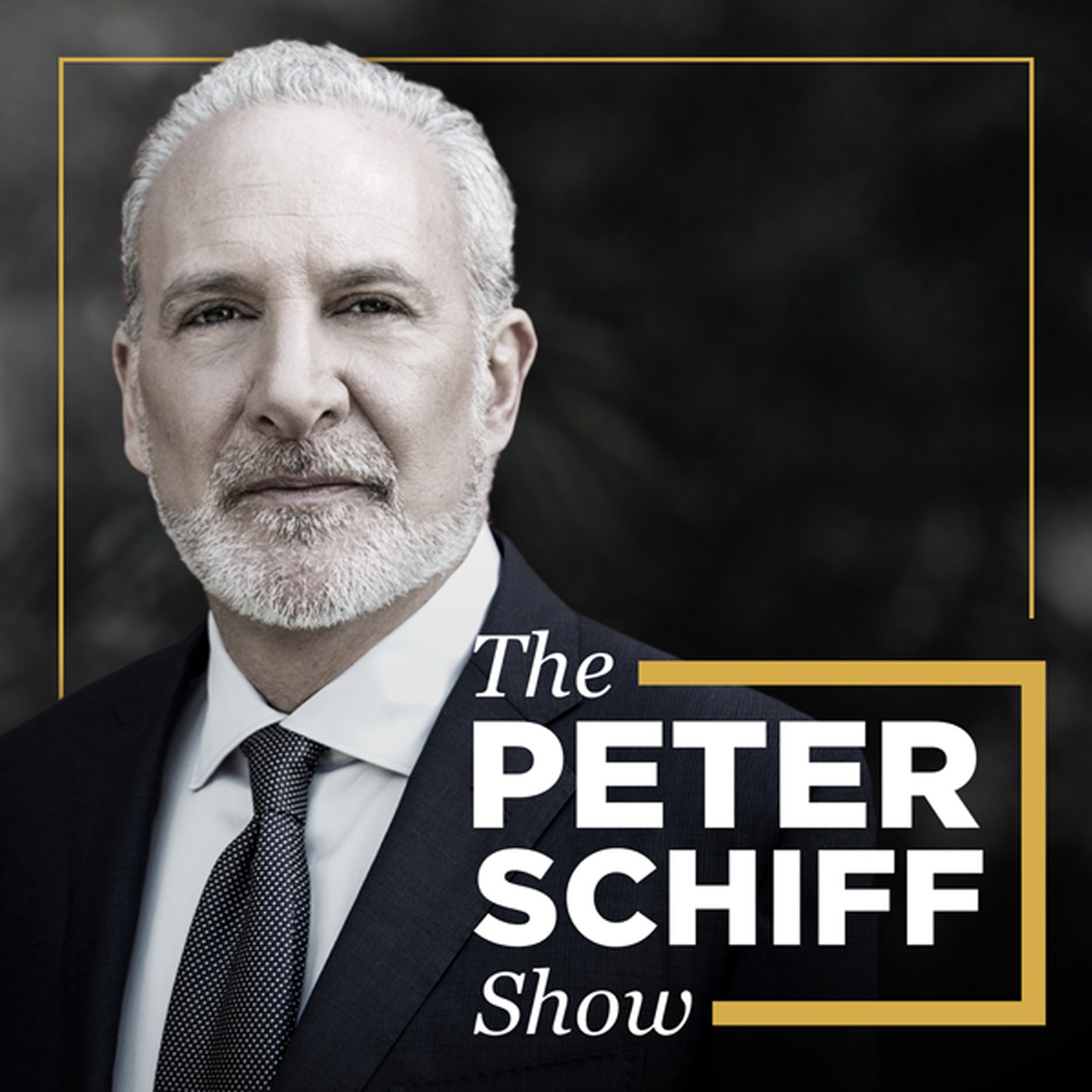
Loading summary
Transcript16 lines
- [00:03]
Peter Schiff
You make no friends in the pits and you take no prisoners. One minute you're up half a million in soybeans and the next, boom. Your kids don't go to college and
- [00:08]
Commercial/Advertisement Voice
they've repossessed your Bentley.
- [00:09]
Peter Schiff
Are you with me? The revolution starts now. Starts now. We have to pass the bill so that you can find out what is in it. Turn those machines back on. You are about to enter the Peter Schiff show me the money. If we lose freedom here, there's no place to escape to. This is the last stand on earth. The Peter Schiff show is on. I don't know when they decided that
- [00:34]
Commercial/Advertisement Voice
they wanted to make a virtue out of selfishness.
- [00:36]
Peter Schiff
Your money, your stories, your freedom. The Peter Schiff Show. Hi, everybody. Welcome to the Peter Schiff Show. I hope you all enjoyed your three day holiday weekend. Of course, most people who were celebrating the three day weekend don't realize that Monday is supposed to be George Washington's birthday. And that's because most people still refer to the holiday as President's Day. But legally it's not President's Day. It is George Washington's birthday. And I really wish that is how everybody referred to the holiday as opposed to President's Day. You know, George Washington was born on February 22, which hasn't happened yet. It's going to be 22nd later in the week. But the reason that we celebrated it on Monday was that back in 1968, they passed this Uniform Holiday act or something like that. And it took a lot of holidays. We had, I think it was Labor Day, Memorial Day and Washington's birthday and moved them all to a Monday. And that was so federal workers could have a three day weekend. That was the idea. And so instead of celebrating George Washington's birthday On his birthday, February 22, the holiday was observed on the third Monday of February. So it would fall somewhere near the 22nd of February. But around that time, I think it started in 1971, so they passed it in 1968, but it didn't go into effect until 1971. And what happened was a lot of the stores, right, they wanted to have sales for the holiday and they started calling them President's Day sales because Lincoln's birthday fell on February 12th, which we just had actually Lincoln's birthday. We celebrated Washington's birthday, I think closer to Lincoln's birthday this year than Washington's. And there were a lot of states, I don't know if it was a lot, but there were a number of states, maybe a half dozen or so that had state holidays for Lincoln's birthday. Obviously, none of the southern states were honoring Lincoln, but you had northern states. My state, like Connecticut, you know, it was a state holiday for Lincoln's birthday. So now you had Washington's birthday, which kind of fell in between Lincoln's birthday and Washington's birthday. So they started calling it the President's day sale, President's day. And so then the whole holiday became President's day, and it lost all significance to Washington, because George Washington was a great man. He was a father of our country. I mean, without George Washington, there probably wouldn't be a country. We should have a day to honor the father of our country. In fact, today we only really honor one person, and that's Martin Luther King. Right. His birthday became a holiday in 1983, I think. But other than Martin Luther King, the only person who has a holiday is George Washington. And nobody even knows because we call it President's day. And when we call it President's day, most people don't even think, oh, we're celebrating Lincoln's birthday and Washington's birthday. They think we're just celebrating all the presidents, like Joe Biden or all of them. Richard Nixon, Lyndon Johnson, Barack Obama. Right. They're all the same. Let's just honor all these presidents. No, I don't want to honor all those presidents. I want to honor George Washington. I think he's the only person who should have a federal holiday. I don't even think Martin Luther King, even if you could argue he's a great civil rights leader, well, so what? He's not the father of our country. I think you diminish George Washington by having any other holiday after any other person, because nobody could replace George Washington when it comes to America, because there would be no United States of America, I don't think, without George Washington. Washington. Now, if you don't know a little bit about general George Washington, because a lot of people don't even know too much about the father of our country. So I'll give you a little bit of a background on Washington, because he was a towering figure. I mean, actually literally, too. He was 6 foot 3, which today is not all that tall. It's still pretty tall. I mean, six foot three is a nice height. But back in 1770s, you know, 1750s, that was really tall. I mean, I was probably like, maybe six, eight now. I mean, you know, you're six' three. You were pretty much. You're pretty much a giant. But he was a war hero before he became a president. He was an officer in the French and Indian wars. And that was. So the United States and the British fought the Indians, right? Native Americans and the French. And he was an officer in that war when he was young man, you know, early 20s, he was an officer, he wasn't the general. And so he actually became like a folk hero of that war because early in the war he was there as a young officer. And the troops, right, were marching down and they were ambushed by the French and the Indians. And it was a large troop of infantry and officers. They outnumbered the French and the Indians, but they were ambushed. They weren't expecting it. And the English, they wear these red coats. They're pretty big targets. And they were getting slaughtered. The Indians were just picking them off. And they had rifles back then. They weren't using bows and arrows because they also. They were fighting with the French, so they were pretty well armed. And anyway, their goal was to kill all the officers first, right? You shoot the officers and then the infantry is just going to scatter, right? You cut off the head. And then the rest of the, you know, the troops don't know what to do. So they're targeting the officers. And they're easy to spot, the officers, because they're the ones on the horses, right? They're, you know, they're tall, sitting in a saddle. And so the Indians are shooting at all the officers, which includes George Washington. Every single officer on a horse gets shot. They're all killed except Washington. He's the only one. Now, it's not like they weren't shooting at him. They shot two of his horses out from under him. So he had to get off the horse that got shot and get on another horse that got shot and get on another horse, but they still didn't get him. And when he is the last officer still on a horse, he led the troops to safety. So, you know, so they all didn't get killed. And when he gets back and he looks at his coat that he's wearing, he's got four bullet holes in his coat. So he got shot by four bullets inside his coat, but not a single bullet actually hit him. And then he was like. He had bullet fragments in his hair. Just a complete miracle that he didn't get killed. And, you know, the word spread. He became like a folk hero of this battle, like the invincible George Washington. It wasn't just, you know, the colonists, the Indians. The Indians who fought against him, knew about it, respected him. He was a guy that they couldn't be shot. I think there was one Indian that Told the story that he like, he shot at him like a dozen times. And eventually he just figured he was being protected by the spirits and he just stopped shooting because he said, this is ridiculous, I'm not gonna try to kill this guy. Because you know, the war gods are, are protecting him. And I think Washington thought it was divine providence that somehow spared him. But anyway, so he's got this big reputation. So then when the Revolutionary War is breaking out, he goes to Washington and he volunteers, right? He wasn't drafted. He volunteers, hey, I want to, you know, I want to fight. And they, they made him the general, General Washington, because he had, he had a big reputation. But, but anyway, so he was the general of the colonial army, except we didn't really have an army. There was just militia. All the various colonies had their own militia. So it's kind of like a ragtag group of guys that he has to hobble together to fight the British. The British, right. The British back then was like the American army today. They were the most powerful army in the world. The best trained, the best armed. Right? King George, he's got this huge army, right? So we're gonna lose for sure. I mean, we're just a massive underdogs. I mean all the founding fathers who signed a declaration of independence expected to get hung, who thought, I mean, how are we gonna win this war? And of course Washington would have been killed if they, you know, if they would have lost the war. There's no way they wouldn't have chopped his head off or hung him, you know, for treason. Right? Cuz you're treason to the crown you're fighting against, you're king. So you know, we have this long shot battle and somehow we, we outlasted the British. I mean it was like a six or seven year war and we won it. I mean we basically, it was war of attrition. I mean, we somehow survived, we won a couple of key battles, but it was mostly just, you know, surviving, you know, and getting. The British eventually got tired of fighting us and they, and they gave up. But we won, we won that war. Miracle of miracles. I don't know if any other general could have done what Washington was able to do with these troops. But then when he wins the war and he's in command of the army, he doesn't like, okay, this is my country now, I'm in charge. He just said, okay, we won the war, I'm going home, I'm going back to my farm. And obviously it wasn't a modest farm. I mean, he Was very wealthy. Martha, his wife, came from money. In fact, he was the richest president adjusted for inflation. I think his net worth was not quite a billion in today's terms, but 7,800 million, something like that. But he was the richest person to be president until John F. Kennedy became president. And today he's number three. Obviously, Donald Trump is the richest person to be president and he's even richer now because he's president. But I don't want to go there right now. But. So he's the third wealthiest person who's been president. But so he didn't go, he went back to his civilian life. Now after that there was a movement, a movement, a serious movement to make George Washington King of America. And if Washington wanted to be king of America, he'd have been the king. He had so much support, he was so popular that if he wanted to be king, he'd have been king. He turned it down. He did not want to be king. He didn't believe in monarchy. He wanted America to be a republic, to be self governed. So he turned down the throne. Who would do something like that, you know, and, and so he became the first President of the United States almost by default. Right. You know, and of course, even after he was reelected, he could have been elected a third time. I mean nobody, I mean he could have, he could have stayed president until he died. But he set the precedent. After two terms, he said, you know, that's enough, I'm gone, I'm leaving, I'm stepping down. And every president who followed Washington honored that tradition until Franklin Delano Roosevelt. And because he didn't, that's what prompted the constitutional amendment that limited the presidential term to two terms. But Washington didn't need that. He did it himself. Cuz that's the kind of guy that he was. He believed in the cause that he fought for. He believed in America and the concept of self government. And also just to give you an idea, the kind of guy, the heroic person that he was. So when he's President of the United States, right, The first like rebellion. So the government imposes a tax on whiskey. And there are a lot of people didn't want to pay the tax, right. You know, Americans, you know, we don't like paying taxes, right. The whole country was formed by a bunch of tax protesters, right? I mean, they didn't want to pay taxes to the king, to King George. Now in hindsight, the taxes, I mean, I would love to live in America under King George compared to what we got now. I mean, if you look at the taxes that King was imposing, I mean, they're nothing. I mean, I pay those in a heartbeat. You know, taxes on tea or stamp taxes. I mean, do you think King George would have tried to impose an income tax? You think he would have set up an IRS in the colonies and tried to take 20, 30, 40% of people's income? No, there's no way he would have done anything like that. No king would have done something that bad. Of course, everybody would revolt if a king tried to impose that kind of a tax. Now, these were small little taxes that, that, that England tried to impose, and the Americans still didn't want to pay them. And it wasn't just, oh, we want representation. No taxation without representation. They didn't want to pay the taxes either because they didn't think the king had any right to that money. And so when we have a new country and now we have this whiskey tax, there's no income tax, there's no Social Security tax, there's none of that. Just tax on whiskey, right? And so people don't want to pay us. So there's a big rebellion out in Pennsylvania to pay this as though the Whiskey Rebellion. So George Washington is the president. Well, I got to put this rebellion down. So what does he do? He puts on his uniform, gets on his horse, and he leads what we got of an army, which is really, again, calling up the militia. But he gets some troops together, gets on his horse, and leads the charge himself in the battle to put down the this rebellion. I mean, how many presidents, right? It's very easy for a president to have a war. How many presidents are going to lead the charge in that war? No, I mean, they're all a bunch of chicken hawks, right? It's easy to send somebody's kids into battle. It's one thing to go into battle yourself. And that's what he did. And he didn't just like, he wasn't in the back, he didn't, like, have a bunch of troops. And he went, you know, and he was hiding in the back. He was way out in the front, like he was going to be the first one to get shot. So, look, he was a heroic American hero. There'll never be another George Washington, obviously, there'll never be another father of our country, because the country is only fathered once. And so above all other Americans who have lived, if you're going to have a holiday, he's the man that we have to honor. And I don't care if somebody wants to say, oh, well, he owned slave who cares? Everybody owned slaves back then. I mean, it wasn't, you know, it was a different time. But if you look at what this man did for this country, the sacrifices he made, the heroism in battle, both before we became a country to make us a country and then after. That's why we need to have Washington's birthday. We don't need to celebrate anybody else's birthday. None of these other presidents can hold a candle. Yeah, I still like some of the presidents Adams and Jefferson. Yeah, a lot of those guys were great presidents. And there are even some presidents that came later that I like. Grover Cleveland, one of my favorite presidents. And until Donald Trump, Grover Cleveland was the only president who to serve two non consecutive terms. But still, I wouldn't put any other president on the same level as George Washington. So think about that next year when President's Day comes along. Celebrate Washington's birthday. We got a quick commercial break. We're coming back. I got more to talk about, so don't go away. True or false? Incognito mode makes you invisible on the Internet. False. A lot of people think that opening a private window means no one can see what they're doing. That's just not how it works. Your Internet provider can still see it. Your mobile carrier can still see it. Even the administrator of the WI fi network you're on can see it. Incognito doesn't mean invisible. That's why I use ExpressVPN. Without a VPN, your browsing activity is exposed to third parties. ExpressVPN reroutes 100% of your traffic through secure encrypted servers so those third parties can't see your browsing history. It also hides your IP address, which makes it extremely difficult to track what you're doing online. You open the app, tap one button, and you're protected. It works across all my devices. Laptop, phone, tablet. I don't like the idea of my browsing data being logged or sold. And Express VPN gives me peace of mind that it's not. Now, at the lowest price ever, plans start at just $3.49 a month. That's only 12 cents a day. Secure your online data today by visiting expressvpn.com gold. That's E X P R E S s v p n.com gold to find out how you can get up to four extra months, expressvpn.com gold all right, well, I want to talk about a story that really didn't get the proper coverage, but we highlighted it in our newsletter. Shift, Sovereign and Again, if you're not currently reading your subscriptions or your free subscriptions to Shift Sovereign, make sure and go to Shift Sovereign website and sign up. So you're getting, you're getting the free letter. But the news did report that Pepsi cut prices by 15% on a number of its snack items. You know, lays Doritos, Cheetos, stuff like that. 15%. Now, of course, you know, maybe the Trump administration is pointing to this. See, I'm bringing prices down, right? It's, you know, that we don't have to worry about inflation. And I think most of the media coverage of it was, you know, consumers are pushing back against high prices. And so, you know, Pepsi is responding by lowering prices, right? Because, you know, it's getting some pushback. But that's not really what happened. You know, as Paul Harvey used to say, the rest of the story what happened is JFK was kind of not jfk, rfk. I got the Kennedys wrong, but Kennedy was pushing to have states no longer allow your SNAP benefits used to be called food stamps, but to make it so that you can't spend your SNAP benefits on junk food. And that's the kind of stuff that Pepsi is selling. And that's where they, where they cut their prices. So I think about 15 or so states went along with it. And so now people who get these SNAP benefits can't use that money to buy, you know, chips. And so what does that mean? Well, it means demand goes down for those foods because the government was subsidizing poor consumers to buy junk food. And I think they're more likely. I mean, I don't eat any of that crap. I mean, rarely. I mean, I try to eat healthy, but I think lower income people who are getting these benefits are less likely to have a healthy diet and more likely to eat a bunch of crap. And the government was subsidizing that taxpayers with the SNAP benefits. And so what happens is all of a sudden people who were able to spend government money on junk food, now they can't spend the money on junk food. So demand goes down. And so what does Pepsi do in response to a decline in demand for its products? It lowers prices. That's how the free market works. But the lesson is the government subsidized consumers to buy junk food by giving them money to pay for it. And so that allowed the companies that sell that type of food to charge higher prices. When the government reduces the subsidy that it provides, now the companies have to cut their prices. Well, if it works with junk food, it works the same way with everything. Everything the government subsidizes cost more as a direct result of the subsidy. That's what I've been saying on my podcast. Why is education so expensive, particularly colleges? Because the government subsidizes students to go to college. The government gives out grants so people have money to buy college degrees. The government arranges for guaranteed loans or directly finances low interest rate loans to make it easy for people to borrow money to pay for college. Right. So what does that mean? That means that colleges could charge more because their customers are getting money from the government to buy their product. What would happen if the government stopped doing that? The government stopped giving out grants and loans? Well, just what Pepsi did. They'd have to cut their prices because demand would go down. How many people would go to college today if they had to pay for it themselves? At these prices, they couldn't get any loans, they couldn't get any grants. No, the colleges would barely have any customers. So what do you think they would do? Would they just go out of business? Oh, shoot, we can't sell any spots to our class. All of our lecture halls are empty. Are they just going to shut down? No, they're going to figure out a way to cut costs so they can lower their prices to the point where there's demand for their product and they can make money. Right, because colleges, they got to make money, Right? They got to pay all their overhead and stuff, so that's what would happen. Same thing happens with housing. What does the government do? Gives people money to pay rent. Rent subsidies, subsidizes people to buy homes. Government guarantees mortgages. FHA gives out money to buy homes. What does that mean? Well, that means real estate prices are higher because of these government subsidies. The government took the subsidies away, real estate prices would come down. Now, yes, that would hurt the people who already own real estate, but it doesn't hurt the people who want to buy it because it means the prices are gonna go down. Anything the government gets involved in, if they subsidize it, price goes up. Same thing with healthcare. Look at all the government money that goes into healthcare. Look at how much money the government gives people to pay for healthcare to go to the doctor. Right. Medicare, Medicaid, Affordable Care Act. Right. The government is throwing all this money at people to buy health insurance, to buy medical care. So obviously it costs a lot more. You know, the irony of it is they say, oh, housing is expensive, or college is expensive or health care is expensive. So the government needs to give people money to help them Pay for it? Well, because the government gives everybody money to pay for stuff. That is the reason that it's so expensive. It's not the other way around. It's not expensive. So the government should help you pay for it. It's expensive because the government is helping you pay for it. Because a lot of this stuff was very affordable before the government got involved. And the irony is, when Donald Trump was asked about this, and I mentioned it on a podcast before, very recently, about the affordability problem in housing, he specifically said, yeah, I know, but I don't want housing prices to become more affordable. I don't want house prices to go down because there are people who own homes who believe that they're rich. And I don't want to pierce that bubble. I want them to continue to believe they're rich. And so we have to maintain the high price of their homes, even if nobody could actually afford to buy them, which means they can't even sell them. I mean, what is a house worth that you can't sell? Is it really worth what you're pretending? No. But Donald Trump doesn't want to burst that bubble. He wants everybody to go around thinking they're rich. And so he doesn't care that people can't afford to buy homes because he'd rather preserve that delusion. But what he is trying to do is figure out how to extend more credit into the housing market so that more people can afford to. To overpay for these homes. In fact, I just read, I think, that the Federal Reserve is looking at. Now, maybe, I don't know if the Trump administration is leaning on them or they're just looking where the political wind is blowing, but they're proposing some type of relaxation of capital requirements for banks to make it more lucrative for banks to write mortgages and not only originate mortgages, but hold the mortgages on their books, service the mortgages. So they're trying to reduce some capital requirements to try to increase credit availability to make it easier for people to borrow money from banks to buy houses, maybe to lower the interest rate that people might pay on loans. So all of this is designed to increase housing demand. Now, if the problem is high prices, right, because if we have an affordability problem, the solution isn't to increase demand. That's the last thing you'd want to do. You want demand to go down, right? And then price will come down, or you want supply to go up. Now, of course, if supply goes up, if they really increase the supply of homes, the value of the existing homes would come down. Right. If we actually had a building spree, if developers actually started, you know, building a lot of new homes to increase the supply of homes, what would happen to the price of homes? The price would come down, which is good from an affordability standpoint. Right. Because now we have more supply at lower prices. But what does that mean for existing homeowners? Well, now their home is not worth as much because there's all these brand new homes that were just built that are newer than theirs that don't need as much maintenance as theirs. So when a lot of new houses are constructed, that reduces the value of the existing housing stock. So they don't even want that. They don't want to solve the problem. They want to make the problem worse. But all boils, you know, swings back to what happened with these food stamps or the SNAP benefits. Did you know? Fast Growing Trees is America's largest and most trusted online nursery with thousands of trees and plants and more than 2 million happy customers. They have all the plants your yard or home needs, including fruit trees, privacy trees, flowering trees, shrubs, and houseplants, all grown with care and guaranteed to arrive healthy. It's like your local nursery, but anywhere you live with more plants than you'll find anywhere else. Whatever you're looking for, Fast Growing Trees helps you find options that actually work for your climate, space and lifestyle. Fast Growing Trees makes it easy to get your dream yard. Just click, order, grow and get healthy, thriving plants delivered to your door. Their alive and thrive guarantee promises that your plants arrive happy and healthy. No green thumb required, just quality plants you can count on. Plus, get ongoing support from trained plant experts who can help you plan your landscape, choose the right plants, and learn how to care for them every step of the way. Shopping for plants the traditional way can be a hassle. You drive around to multiple nurseries, try to figure out what actually works in your climate, and then you're loading dirt and plants into your car, hoping they survive the trip home. Fast Growing Trees makes the whole process a lot easier. Fast Growing Trees is a company we've been using for my home in Connecticut for several years. My wife loves shopping their website and choosing the plants for our yard. And now with spring on its way, she's already planning to order more plants and trees for our our property. Right now they have great deals on spring planting essentials, up to half off on select plants and listeners to our show get 25% off their first purchase when using the code gold at checkout. That's an additional 25% off better plants and better growing@fast growingtrees.com using the code Gold at checkout Fast Growing Trees Code Gold Now's the perfect time to plant. Let's grow together. Use Gold to save today. Offer is valid for a limited time. Terms and conditions may apply. Most of us are trying to get healthier better diet, better habits, maybe a few supplements. But let's be honest, half the time we're just guessing. What if you could measure how your body is actually aging and get a clear plan based on real data? That's what True Diagnostic does. They test your biological age plus key health markers like vitamins, inflammation and nutrient levels, then give you a personalized 90 day plan showing what your body needs. No guesswork, just science. Order online and the kit ships right to your door. I recently took the test myself. It was easy. A simple at home finger prick. Drop it in the prepaid envelope and that's it. Now I'm waiting on the results and I'm genuinely curious to see where I stand. Especially when it comes to things like inflammation and nutrient absorption. It'll be good to know what's actually worth changing and what's just noise. They offer two core options. True Age, which measures your biological age versus your real age and includes organ level aging and Tru Health, which tests over 100 markers focused on your metabolism, energy and immune health. Or get the Combo Kit for the full picture, your long term trajectory and your current baseline, your only job. Follow the three most important actions you can take for 90 days, then retest to see progress trusted by top longevity clinics and health professionals, not just consumers at home. Right now my listeners can get 20% off at truediagnostic.com using code GOLD20 at checkout that's truediagnostic.com and use code GOLD20 for 20% off today. Choose True Age, True Health or the Combo Kit as a one time purchase or subscription.
- [33:44]
Commercial/Advertisement Voice
Safeway and Albertsons have made saving easier than ever with great savings on family
- [33:48]
Peter Schiff
favorites this week at Safeway and Albertsons. USDA Choice Beef, boneless, tri tip, whole or flank and style ribs bone in are $6.99 per pound member price and asparagus or $1.99 per pound member price plus 16 ounce strawberries, 6 ounce raspberries or blackberries or 197 each.
- [34:04]
Commercial/Advertisement Voice
Limit three member price with digital coupon.
- [34:07]
Peter Schiff
Hurry in. These deals won't last.
- [34:09]
Commercial/Advertisement Voice
Visit safewayoralbertsons.com for more deals and ways to save.
- [34:14]
Peter Schiff
But of course the whole idea. And I've always said this, the Whole concept of food stamps or SNAP benefits is wrong. As far as I'm concerned, all of this SNAP money should be counted in the money supply because I don't care that you say, well, it can only be used for food. It doesn't matter if it can only be used for food. The fact that it can be spent on anything means it's money and it's contributing to the inflation problem. I'll explain it. So let's say I'm a family or whatever, I'm getting 200. I don't even know what the amount you get, but let's say I get $200 a week in SNAP benefits. And yeah, let's say I can only buy food with it. And they say, well, so you can only buy food, okay, but now I don't have to spend $200 on food that I would have spent on food if I didn't get the SNAP benefits, because I got SNAP benefits. So I can take the $200 that I would have spent on food. Now I can spend it on whatever I want. So the fact that I have the SNAP benefits means I can buy clothes that I might not have had money for. I could do all sorts of things. So it's still generating demand outside of groceries, you know, and even when they say, oh, you know, you can't use your food stamps for liquor or you can't use it for cigarettes, well, sure you can. Because now that I don't have to buy food, I have extra cash to buy liquor that I might not have been able to buy, right? If I had to spend my own money on food, maybe I would have had to cut back on my liquor because I need the food more. But once the government has my food covered, well, now I have extra money to buy liquor, buy cigarettes, buy whatever the hell I want, you know, and of course, this, this is eventually going to happen. Even these states, you know, that are saying you can't use your SNAP benefits for junk food, people are going to use it for junk food anyway, right? I mean, it's just, you know, what will happen is, and it's harder now than when it was food stamps. It was real easy because the food stamps were just bills, right? And, you know, you could just give them to anybody, right? You know, but the SNAP cards, at least you have to have this card. And I think you have to have some kind of ID so that you can't just sell your card to somebody and have them use it. But let's say I go shopping with a buddy of mine Maybe my buddy doesn't have SNAP benefits, right? He's paying cash. And I got SNAP benefits. I can say, hey, you know, I'll buy your vegetables and your meat and your dairy, and I'll cover that with my SNAP benefits. You buy all my chips and soda and liquor, whatever isn't covered. And then, you know, I'll pay for your stuff and you pay for my stuff, right? So that, that's how it works. I mean, people can get around it because you have the purchasing power, no matter what restrictions they want to place on it to make it sound good there, it's really money stamps. SNAP benefits ultimately can be used to buy anything by anybody because it's just going to work its way through the economy one way or the other. The best thing, of course, is not to have these programs at all. But, you know, the crazy part about it is it's all part of the agriculture. That's where it all got started. But what the reason. And this shows you the incredible, you know, not just hypocrisy, idiocy of government. So the government subsidizes farmers not to keep farm prices low, but to keep them high. See, the goal of our agricultural programs is higher food prices. That is the stated purpose of all the programs is to make sure that food is more expensive than it otherwise would be in a free market. I mean, the government pays farmers not to farm. Farmers get paid to idle land that otherwise could be productive, right? And in the history of the American agricultural program, we've actually paid farmers to destroy their crops. And the government comes in and buys up stuff, cheese or different things, and takes it off the market and just warehouses it. The goal of all of this is higher food prices. Why is that the goal? People need to eat. Why do we want higher food prices? What kind of asinine policy? In fact, even during the Great Depression, right, when people are supposedly starving, we were destroying our food. We were doing everything we could to keep farm prices high. So one of the reasons that people needed food stamps was to pay the high prices for food that were the creation deliberately of the government farm programs aimed at high food prices. So on the one hand, the government is taxing Americans to make sure that food is more expensive than it otherwise would be. After these programs, then the same Americans get taxed, so the poor people now have more money to buy the expensive food. But if the government wasn't involved, the food would be a lot cheaper. And so the poor people wouldn't need the extra money because they could buy the food, because the food would be cheap. So this is what the government does. They do something with the right hand that causes a problem, and then instead of recognizing the problem and stopping it, they just do something else with their left hand to try to throw more money at solving the problem that they created. And the taxpayer always gets screwed. I know one of the reasons they've justified these agriculture subsidies, they say, well, farming is a tough business. You gotta deal with the weather. You could have a good crop and a bad crop, and farmers shouldn't have to deal with the market like that. The government has to help them so that when there's a bad harvest or they make money. Bullshit. I mean, farmers are pretty rugged, right? I mean, I think they can handle the market. And, you know, there's that old saying, right? You can't stand the heat, get out of the kitchen. You know, if you don't want to be a farmer, if you want a more, you know, consistent, reliable income, then do something else. But meanwhile, all of these farm subsidies have ended up destroying most farms. Now you have all these huge conglomerates, big corporate farms. I mean, the government with the agricultural programs actually screwed over all the farmers, you know, and that's the problem, right? You know, you never get into bed with the government because they're always going to screw you over. And then another way, of course, they screw the small farmers have been with the estate tax, the inheritance tax, because you have a big farm and you die and now your kids, how are you going to pay the estate tax? You got to sell the farm out to one of these big companies that can afford to pay cash for it. So the children can afford to pay the tax on what they inherited from their father or so. I mean, the tax system, the agricultural subs, we don't need any of this. If we just had a free market in agriculture. And you know, the irony, too. We subsidize tobacco farmers, and at the same time, we spend all this money trying to discourage people from smoking. Try to figure that out, right? The government is spending all this money trying to convince people not to smoke, yet we have all these subsidies to tobacco farmers. How does that make any sense? It doesn't, but that's. The government doesn't matter. They just spend money on everything. The solution to every problem is, let's spend more money. That's why the government is spending all this money now. And we have so much inflation. The government creates it. The government just constantly fuels demand, not supply. If anything, it restricts supply with its regulations, and it just fuels inflation. And to the extent that it doesn't collect enough money in taxes to cover what it spends, the Fed prints it. And, you know, the world is getting wise to this con, and that's why they're selling dollars. That's why they're buying gold. Right? Gold, by the way, took a drop over the last couple days. I know. I thought it would rise when I did my Friday podcast. Instead, it's dropped. So gold's now just below 4900. It's 4887. When I did my Friday podcast, gold ended up closing later that day at around 5030 or 5040, something like that. So it sold off over the last couple of days, and so now it's a little bit below 4900. I think this is the support. I think anytime you get gold below 5,000, you're buying at the lows. I don't expect there to be much distance between the price of gold and 5,000. Again, I think it's similar to 4,000 or 3,000. We're just at a new plateau and we're headed higher. Silver is also down in the low 70s. Again, $73 or so. Again, I think. I don't know if you'll get a chance to buy it below 70, but I think that's around the support. I don't think it goes anywhere near 50. As I said, you know, when it was at 50, you know, last chance to buy it at 50, you won't be able to do it again. And I believe that's the case. So you should be buying gold and silver. Go to Shift Gold and pick up some gold and silver. If you got any bitcoin, sell that.
- [44:36]
Commercial/Advertisement Voice
It's a strange shift, isn't it? The parent who raised you needs some help and you want to be there. With care.com, you don't have to do it alone. Whether you're clear on the kind of care your aging loved one needs or still figuring it out, we've got support. Find background. Checked in home senior caregivers for anything from companionship to dementia care. Or browse senior living communities. Read reviews, even schedule a tour, plus access to safety checks to help with your peace of mind. Still not sure what's best. Our senior care advisors, who are all master's level social workers, can help you build a plan for a limited time. Use the code podcast20 for 20% off your initial care.com subscription. That's podcast20. All one word, good for 20% off. Start your senior care journey with confidence. Did you know you can save up to 70% on the best brands just by shopping at from rebel.com we're talking about strollers, car seats, high chairs, espresso machines, cookware, everything you need for way less. Here's how it works. Every single day, REBBL drops thousands of new products on the site for up to 70% off. It is a constant stream of endless deals from top brands like Uppababy, Nuna, Baby bjorn, Breville, Nespresso, KitchenAid, Le Creuset, and more. But you have to act fast because every deal is one of a kind. So if you see something you love, make sure you add to cart fast. So stop paying full price when you don't have to. Whether it's baby gear, kitchen upgrades or a treasure for your home you didn't know you needed, Rebel has it for way less. Up to 70% less. Shop from rebel.com and save big.
- [46:21]
During winter, homes are closed up to stay warm, keeping out the cold but trapping everything else inside. Dust settles into carpets. Moisture hides in corners. For people living with asthma, COPD or other lung diseases, those trapped pollutants can worsen symptoms, cause flare ups, and sometimes even lead to hospital visits. That's why the American Lung association created the Oregon Clean Air at Home program. Participants can receive free clean air supplies valued up to $300, such as kitchen and bathroom cleaners, mattress and pillow covers, and fire safety items. Some households may qualify for an air cleaner, vacuum or dehumidifier. And select homes may receive free home repair services such as mold removal, pest management or H Vac maintenance repairs that help reduce indoor air pollution at the source. If someone in your home lives with a lung disease and your household income is below average for your area, you may be eligible. Learn more and enroll@lung.org or home-visit Again, that's lung.org or home-visit.
- [47:20]
Peter Schiff
In fact, you know, I was watching on today on Fox Business, my friend Liz Clayman interviewed Michael Saylor. And you got to see some of the interviews that he does now. I mean, it's pathetic. And anybody with, you know, an ounce of intelligence should be able to see through this shyster at this point. But you know, he's on there and she, and she points out, she says, you know, Michael, you know, your average cost for your Bitcoin is 76,000. And right now Bitcoin's at 67,000, right? So you're down what, 12%, whatever, 13%. Been buying Bitcoin for five years. Five years you're down all this money like you know, ask. And he goes, well, it doesn't matter. It's no big deal. It doesn't matter what happens to Bitcoin. And the one thing he said is like, look, you know, we just sold stock to buy it, right? We sold all this stock and then we bought the bitcoin and we sold the stock at a premium. So who cares? Because. Right, because, you know, they didn't pay for it with debt. They didn't use cash. They just made shares up out of thin air, right? And they sold those shares and they bought bitcoin. So he's saying it doesn't matter because we didn't really spend any real money. We just issued stock, which basically is true, but obviously the people who bought that stock were a bunch of idiots, right? Because now it's down about 70% and it's going to keep falling. And. And she asked him about, you know, the security stretch where, you know, they pay 11, 11 and a quarter percent dividend. Like, how the hell are you going to pay this dividend? You know, where's the money coming from? And he said, well, you know, we got about 2 billion in cash, right, which they raised by selling stock. But what happens when they exhaust all that cash, right, because they're not earning any money. And so she asked them, well, you know, where does the money to pay the dividends come from? It comes from the appreciation in the bitcoin. But what if bitcoin doesn't appreciate? What if it keeps falling? Then where does the money come from? You're just basically slowly bleeding the common shareholders dry until you've run out of equity. And then once the common stockholders are busted, well, then the preferreds are busted too, because there's nothing left, you know. Now, of course, Saylor could just cancel the dividends at any time, in which case, the minute he does that, then those shares are worthless. But as long as he's willing to sacrifice the common, he could keep paying off the preferreds. I mean, this whole thing is like a legal Ponzi scheme. And, you know, when he was talking to Liz about it, he said, well, you know, it's like owning Manhattan real estate. I mean, no, it's not. If you own Manhattan real estate, you'd be collecting a lot of rental income. You don't get any rental income on your bitcoin. Bitcoin is nothing like being a landlord and having an income stream. There's no income stream associated with the bitcoin that Saylor has. So how is it anything like owning all this Manhattan Real estate, you know, he just said, well, it's scarce. Yeah, but Manhattan real estate, at least, I don't know, we know now you got Mandami in there. But I mean, in general, it's scarce and valuable. Why is Manhattan real estate valuable? Because of the rents that you could get. What makes the real estate in Manhattan valuable is you could collect a lot of rent because a lot of people want to live there, a lot of people want to work there. And so if you own this scarce real estate, you can make a lot of money. What do you get owning the scarce bitcoin? Nothing. So there's no similarity between the two. Yet this is what he evokes to try to justify just holding bitcoin like you're holding Manhattan real estate. But when she asked him to explain, like, well, where does this, where does this yield come from? How do you get this 11% yield? And I'm not making this up, this is what he said. Just go watch it on the Fox Business website. He said, well, you know, if you own an asset that you expect to go up 20 or 30% a year, you can just give away the first 11% to the preferred. So the preferreds, they get the first 11%, and then the common shareholders, they get everything above that. But wait a minute, what if there is nothing above that? What if it doesn't go up 11% a year? What if it goes up? Well, what if it goes down? And she kind of implied that. And he said, well, we don't have to worry about that. Because he said that bitcoin is outperforming the S and P by a factor of two to three. No, it's not. Over the last five years, it's way underperformed. He's down. He's down like 12%. Bitcoin is underperforming a checking account, right? Even a checking account would pay you maybe 25 basis points a year in interest. Bitcoin has lost. Think about all the inflation over the last five years, right? He goes, oh, you gotta buy it as an inflation hedge. There's been no hedge because it's gone down. It hasn't kept pace with inflation. It hasn't kept pace with a bank account, let alone money market or the S and P or gold or silver. No, he has to go back to years and years before strategy even owned any bitcoin to say that it's doing 2-3x the S& P. But in the recent experience, the last five years, that's not the case. So what's more Likely a repeat of the next five years, or bitcoin is going to go back and behave like it did when it was $100 or thousand dollars. No, the recent history is far more likely to be repeated than the history of way back then when it was just a novelty and it was, you know, it was. Had a tiny market cap. So this is all a bunch of nonsense. I don't know. Eventually this guy, I mean, Trump doesn't pardon him. I assume he'll get, you know, prosecuted at some point for some kind of security fraud. I don't know. But get out of your microstrategy or your strategy stock. Get out of it right now. Get out of your Bitcoin. You know, he admitted, Saylor admitted that we're in a bitcoin winter, but he said, don't worry, it's gonna be a short winter and then we're gonna have a glorious summer. Like, how the hell does he know that? What if this is an ice age and there's never another summer? Right? That's it. There's no more summers for bitcoin. It's just permanent winter. And so I would get the hell out. Buy some gold and silver, buy some foreign stocks, go to europack.com and talk to our representatives. One interesting little tidbit that I'm going to end the podcast. I noticed that, you know, so down in Palm beach, and I was just in Palm beach at Mar a Lago. I didn't. Hadn't been to Mar a Lago, and I went to a function, Latino Wall street had a function there. And so I've been doing some stuff with them. So I went to their event in Palm beach and I was, I stayed at the breakers, beautiful hotel and went to Mar a Lago. So Donald Trump, you know, has a lot of connections in Palm beach. And so they're thinking about, or maybe they are renaming the Palm beach airport, which I flew in and out of, they want to rename it the Trump Airport. And it's common a lot of times when you're the president, they end up naming stuff after you. Schools, airports, stuff like that. They normally don't do it while you're still president. They normally wait a while, maybe you're no longer president. They name things like battleships after presidents or stuff like that. So Trump realizes they may go out and name the airport after him. So the Trump family runs out and files for like a copyright on his name, specifically for airports. And like anything like, you know, like the trucks that drive around. Like, if you put Trump on It or like the umbrellas, if they have, like, you know, I mean, he wanted to make sure that he had the patent, the copyright to the use of his name so, like, so he could get paid. If they decide to name the airport now, I think somebody, when they caught him, I think they released. They said, oh, we're not gonna charge them for it. Well, maybe not initially, but if they own the rights legally to the name, then they have the ability at any point in the future to start saying, you're calling that the Trump Airport. You gotta pay me. You can't use my brand, you can't use my name unless you cough up some money. I mean, look, the president. I said, he's the richest guy to ever be president. It's an honor. As far as I'm concerned, if an airport is named after you, it's an honor, right? You shouldn't be expecting the town to pay you to name the airport after you. I mean, what if they name a street Donald Trump Boulevard? Is he going to like, oh, I want to. No, you got to pay me if you're going to put my name. My brand is so unpopular. If you're going to name Donald Trump Drive, I want money from the. I mean, come on. I mean, he's making so much money as the president, I think he could leave a little bit on the table and not do that. But I thought it was very telling because, you know, George Washington would have never done that. He would have not demanded compensation for stuff that was named after Washington. In fact, Washington D.C. the Capitol is named after Washington. I mean, his family doesn't get any royalties on that. It's unfortunate that we don't have presidents anymore that are cut from the same timber as George Washington. Anyway, that's it for today's podcast again. Don't forget, go to Shift Gold. Buy yourself some gold. Go to Eurospiffic Asset Management. Sign up for our free newsletter at Shift Sovereign. Subscribe to the YouTube channel. We're finally starting to move up. I'm well north now of 600,000 subscribers, so subscribe. If you're not currently a subscriber, share the podcast with your friends especially so they can learn a little bit about our nation's heritage and our great founding father, father of our country, George Washington. And give me a comment on the video too, if you like it and if I have time, I'll respond. Bye for now.
- [58:15]
Commercial/Advertisement Voice
If someone in your home has asthma, COPD or another lung disease, improving your indoor air quality can make a real difference. And the American lung Association is here to help. Through the Oregon Clean Air at Home program, eligible households can receive free cleaning supplies up to $300 worth designed to reduce and or air pollutants. That includes kitchen and bathroom cleaning products, mattress and pillow covers, fire safety supplies and more. Some participants may also also qualify for an air cleaner, vacuum or dehumidifier to help remove dust, pollen, moisture and more. And select homes may receive free home repair services such as mold removal, pest management or H Vac maintenance repairs that can help reduce indoor air pollution at the source. Poor indoor air quality can make lung disease symptoms worse, lead to more flare ups and even hospital visits. If someone in your household has a lung disease like asthma or COPD and your income level is below average for your area, you may be eligible to participate, learn more and enroll@lung.org or home visit. That's lung.org or home visit.
- [59:16]
Peter Schiff
Support is available 24. 7 with VRBoCare. We're here day or night, ready whenever you need help because a great trip starts with the right support.