
Podcast
The Politics Guys
Hosted by Michael Baranowski · EN
The Politics Guys is an independent, ideologically diverse American politics and policy podcast hosted by experts: political scientists, law professors, and practicing attorneys with government experience. Our mission is to give listeners a much-needed break from conservative and liberal echo chambers through civil, rational, and evidence-based discussion of American politics and policy from multiple perspectives.
58episodes
Episodes
Newest firstAll episodes

Trump’s War, Trump’s Settlement, Trump’s Shadow
Jun 601:02:34Tap to summarizeMike and Jay open with the increasingly strange U.S. war with Iran, where a still-closed Strait of Hormuz, murky ceasefire claims, stalled negotiations, and a House war powers vote have raised major questions about Trump’s strategy. Jay argues that Iran remains a serious long-term threat and that Trump may be right to exhaust negotiations before escalating, while admitting that much of the battlefield reality is impossible to judge from public reporting. Mike is far more skeptical, arguing that Trump’s shifting claims, high economic costs, and apparent lack of clear war aims suggest a war of choice that may leave the U.S. worse off than before. Next, they turn to the Trump administration’s abandoned “anti-weaponization” fund, the IRS settlement with Trump, and the Senate’s immigration funding bill. Jay sees the proposed fund as politically toxic and potentially slush-fund-like, and says claims of government wrongdoing should be handled through ordinary legal channels such as the Federal Tort Claims Act. Mike focuses on the deeper institutional problem: Trump effectively settling with his own administration, ending presidential IRS scrutiny, and putting Senate Republicans in the position of defending a deal that looks collusive even if it may be legally hard to stop. After that, they discuss the reconciliation bill’s move to fund ICE and Border Patrol through mandatory spending for the next three years. Jay says he would normally dislike bypassing annual appropriations, but thinks the current politics of immigration funding make the maneuver understandable. Mike worries that removing such consequential enforcement funding from regular congressional scrutiny is a bad precedent, even if it is constitutionally permissible. The guys close with the recent California and Iowa primaries and what they suggest about 2026. Jay argues that Steve Hilton’s strong showing in California highlights the democratic weakness of top-two primaries when a large minority party can be shut out of the general election, while Mike sees Hilton’s vote share as mostly a reflection of California’s existing Republican floor rather than a sign of GOP momentum. On Iowa and the Senate map, Mike thinks Democrats may have more plausible paths but are still unlikely to flip control, while Jay sees Trump’s influence as powerful but potentially less transferable once he is no longer on the ballot. Check out the Future of Our Former Democracy podcast The Politics Guys on Facebook | X Listener support helps make The Politics Guys possible. You can support us or change your level of support at patreon.com/politicsguys or politicsguys.com/support. On Venmo, we’re @PoliticsGuys. The Politics Guys is part of The Democracy Group, a network of podcasts that examines what's broken in our democracy and how we can work together to fix it. Learn more about your ad choices. Visit megaphone.fm/adchoices
Transcribe →
The Politics Guys Present: The U.S. Constitution, Article II, Section 2
Jun 400:55:13Tap to summarizeThis episode explores the constitutional powers of the U.S. President as outlined in Article II, Section 2, including the roles of Commander-in-Chief, treaty-making, appointments, and removal of officials. Topics covered include: Explicit presidential powers The role of the Commander-in-Chief Treaty-making process and Senate advice and consent Appointments and the Senate confirmation process Recess appointments and the Noel Canning case Removal of federal officials and impeachment Read Trey's Substack for a deep dive into the Federalist Papers The Politics Guys on Facebook | X Check out the excellent Sustainable Planet podcast. Listener support helps make The Politics Guys possible. You can support us or change your level of support atpatreon.com/politicsguys or politicsguys.com/support. On Venmo, we’re @PoliticsGuys. The Politics Guys is part of The Democracy Group, a network of podcasts that examines what's broken in our democracy and how we can work together to fix it. Learn more about your ad choices. Visit megaphone.fm/adchoices
Transcribe →
Founders’ Fire: From 1776 to the Age of Trump
Jun 301:01:28Tap to summarizeMike is joined by historian Arthur Herman to discuss his new book Founders’ Fire, which argues that America’s recurring strength comes from founders: risk-takers with the vision and drive to remake institutions, industries, and politics. The conversation ranges from the Founding Fathers, Lincoln, and Martin Luther King Jr. to World War II mobilization, Silicon Valley, Donald Trump, Charlie Kirk, AI, China, and the tension between creative disruption and institutional stability. Arthur Herman on X The Politics Guys on Facebook | X Listener support helps make The Politics Guys possible. You can support us or change your level of support at patreon.com/politicsguys or politicsguys.com/support. On Venmo, we’re @PoliticsGuys. The Politics Guys is part ofThe Democracy Group, a network of podcasts that examines what's broken in our democracy and how we can work together to fix it. Learn more about your ad choices. Visit megaphone.fm/adchoices
Transcribe →
Pope Leo on AI, the DNC Autopsy, and Democratic Decline
Jun 200:18:48Tap to summarizeThis supporters’ exclusive midweek episode opens with Mike, Michael, and Russ discussing Pope Leo XIV’s first encyclical, Magnifica Humanitas, which uses artificial intelligence as a lens for broader questions about human dignity, labor, power, and technological change. The conversation focuses on the document’s connection to Catholic social teaching, its warning against autonomous lethal decision-making, and its broader critique of systems that reduce people to instruments of power. The guys also consider the presence of an Anthropic co-founder at the encyclical’s rollout, as well as the deeper question of whether AI is already reshaping human agency, work, and judgment. Then they turn to the Democratic National Committee’s long-delayed 2024 election autopsy. The report argues that Kamala Harris failed to give voters a clear affirmative case for her candidacy, that Democrats’ problem was message rather than money, and that the party’s erosion among male and working-class voters was not inevitable. But the hosts are sharply critical of what the report omits: Biden’s decision to stay in the race, the handoff to Harris, Gaza, and deeper institutional failures inside the party. The discussion broadens into the Democratic Party’s decline since its 2009 high point, when Obama entered office with unified Democratic control and large congressional majorities. Mike, Michael, and Russ examine the party’s loss of rural and working-class voters, the diploma divide, the hollowing out of party institutions, the right’s alternative media ecosystem, and the difficulty Democrats face in balancing institutionalism, rule-of-law commitments, and the temptation to fight harder against Republican norm-breaking. Get 20% off ProTek watches with code Mikeb here. Check out the Future of Our Former Democracy podcast The Politics Guys on Facebook | X Listener support helps make The Politics Guys possible. You can support us or change your level of support at patreon.com/politicsguys or politicsguys.com/support. On Venmo, we’re @PoliticsGuys. The Politics Guys is part of The Democracy Group, a network of podcasts that examines what's broken in our democracy and how we can work together to fix it. Learn more about your ad choices. Visit megaphone.fm/adchoices
Transcribe →
Iran Deal, Paxton’s Texas Win, and the Redistricting Arms Race
May 2900:58:36Tap to summarizeMike, Michael, and Russ open with the tentative U.S.-Iran memorandum of understanding and whether it amounts to a real end to the war or just a pause. Michael argues that the deal mostly returns the conflict to where it began while leaving the hardest nuclear questions unresolved. Russ is skeptical that either side is treating the deal with the seriousness it deserves, seeing mostly clashing egos and weak incentives. Mike argues the deal may be worse than the old Iran nuclear agreement because Iran now has stronger reasons to pursue a weapon and fewer reasons to trust U.S. guarantees. Next, the guys turn to Texas, where Ken Paxton’s decisive runoff win over John Cornyn raises questions about Republican Senate prospects and Democratic opportunities. Russ sees Paxton’s win less as pure Trump power than as a sign that Cornyn’s voters lacked enthusiasm while Paxton’s stayed engaged. Mike argues Trump likely endorsed the probable winner to preserve his image of party control, even if Paxton is a weaker general-election candidate. Michael says Paxton may force Republicans to spend heavily in Texas, which could indirectly help Democrats elsewhere even if Texas itself remains a long shot. The guys close with the escalating redistricting fight after new developments in Louisiana, Alabama, South Carolina, Florida, and Tennessee. Mike argues Republican gains from mid-decade redistricting probably will not be enough to save the House if the national environment stays hostile to Trump. Russ says Democrats remain too attached to moral restraint while Republicans are pressing every institutional advantage available. Michael warns that the country is entering a destabilizing race to the bottom, where both parties may keep redrawing maps whenever power shifts. Get 20% off ProTek watches with code Mikeb here. Check out the Future of Our Former Democracy podcast The Politics Guys on Facebook | X Listener support helps make The Politics Guys possible. You can support us or change your level of support at patreon.com/politicsguys or politicsguys.com/support. On Venmo, we’re @PoliticsGuys. The Politics Guys is part of The Democracy Group, a network of podcasts that examines what's broken in our democracy and how we can work together to fix it. The guys close with the escalating redistricting fight after new developments in Louisiana, Alabama, South Carolina, Florida, and Tennessee. Mike argues Republican gains from mid-decade redistricting probably will not be enough to save the House if the national environment stays hostile to Trump. Russ says Democrats remain too attached to moral restraint while Republicans are pressing every institutional advantage available. Michael warns that the country is entering a destabilizing race to the bottom, where both parties may keep redrawing maps whenever power shifts. Learn more about your ad choices. Visit megaphone.fm/adchoices
Transcribe →
The Politics Guys Present: The U.S. Constitution, Article II
May 2800:53:54Tap to summarizeThis episode explores the intricacies of Article 2 of the U.S. Constitution, focusing on the presidency, electoral processes, and historical debates that shaped the office. Topics covered include: Vesting clause and inherent executive powers Electoral College origins and evolution The 12th Amendment and its impact Presidential qualifications and natural-born citizen requirement Succession and the 25th Amendment Read Trey's Substack for a deep dive into the Federalist Papers The Politics Guys on Facebook | X Check out the excellent Sustainable Planet podcast. Listener support helps make The Politics Guys possible. You can support us or change your level of support atpatreon.com/politicsguys or politicsguys.com/support. On Venmo, we’re @PoliticsGuys. The Politics Guys is part of The Democracy Group, a network of podcasts that examines what's broken in our democracy and how we can work together to fix it. Learn more about your ad choices. Visit megaphone.fm/adchoices
Transcribe →
Originalism, Executive Power, and the Roberts Court
May 2701:02:29Tap to summarizeMike talks with Thomas Berry, director of the Cato Institute’s Robert A. Levy Center for Constitutional Studies and editor in chief of the Cato Supreme Court Review, about how to understand the Supreme Court beyond simple liberal/conservative scorekeeping. They discuss originalism, precedent, executive power, independent agencies, and the emergency docket. Berry defends a text-and-history approach to judging, criticizes presidents of both parties for stretching old statutes to justify new policies, and argues that Congress’s weakness has pushed too much power into the executive branch. The Cato Institute on X Check out the Future of Our Former Democracy podcast The Politics Guys on Facebook | X Listener support helps make The Politics Guys possible. You can support us or change your level of support at patreon.com/politicsguys or politicsguys.com/support. On Venmo, we’re @PoliticsGuys. The Politics Guys is part of The Democracy Group, a network of podcasts that examines what's broken in our democracy and how we can work together to fix it. Learn more about your ad choices. Visit megaphone.fm/adchoices
Transcribe →
Political Ideologies: Environmentalism
May 2600:16:30Tap to summarizeIn this supporter-exclusive midweek episode, Trey is joined by Justin, and begin their discussion of modern ideologies with a deep dive into Environmentalism. On this week’s show, Trey and Justin discuss: Core principles of environmentalism (ecocentrism, holism, limits to growth, multi-generation ethics) The relationship between environmentalism and American political culture The limited appeal of true ideological environmentalism The expression of environmentalism in other political ideologies Christianity and Environmentalism The Politics Guys on Facebook | X Trey’s Substack on the Federalist Papers Listener support helps make The Politics Guys possible. You can support us or change your level of support atpatreon.com/politicsguys or politicsguys.com/support. On Venmo, we’re @PoliticsGuys. The Politics Guys is part of The Democracy Group, a network of podcasts that examines what’s broken in our democracy and how we can work together to fix it. Learn more about your ad choices. Visit megaphone.fm/adchoices
Transcribe →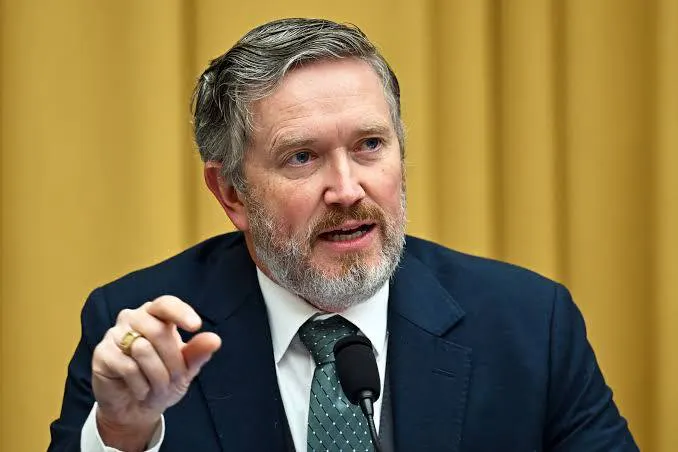
Incumbent Purge, Anti-Weaponization Fund, Senate War Powers Breakthrough Vote, Raúl Castro
May 2201:04:47Tap to summarizeTrey and Justin kick off this week’s episode by examining the shifts in this week’s primary elections. Trey argues the GOP has firmly solidified into a MAGA populist party. They highlight the historic and incredibly expensive defeat of long-time incumbent Representative Thomas Massie in Kentucky to a Trump-backed challenger, alongside Louisiana Senator Bill Cassidy placing a distant third in his own state's primary race. The pair also discuss the increase in party-line voting. Next, the pair dive into a staggering one-page settlement published by the DOJ which permanently bars the government from ever auditing or pursuing tax claims against Donald Trump or his family. Arising from a lawsuit over leaked tax data, Trump bypassed a cash payout to establish a $1.776 billion taxpayer-funded "anti-weaponization fund" that Acting Attorney General Todd Blanche testified features no limitations, potentially directing funds to individuals convicted in the January 6th Capitol riots. While Justin details the profound corruption and the constitutional objections raised under the 14th Amendment’s insurrection clause, Trey emphasizes that the fund will likely prove highly popular among a dedicated third of the American electorate. After that, they move to the Senate where the Trump administration suffered a symbolic 50 to 47 loss on a War Powers Resolution aimed at forcing a halt to all unauthorized military operations in Iran. Fresh off his primary defeat, Senator Cassidy joined a handful of Republicans to cross party lines, though House leadership subsequently denied a vote on the measure to stall it until after the Memorial Day recess. Both hosts agree the measure is ultimately a toothless piece of political theater destined for a presidential veto, reflecting less of a seismic shift in congressional backbone and more of an electoral panic among marginal swing-district Republicans facing $4.50 gas prices and a multi-billion dollar war toll. Finally, the duo analyzes the newly unsealed federal criminal indictment charging 94-year-old former Cuban President Raúl Castro with murder and conspiracy stemming from the 1996 attack on two civilian aircraft. Trey and Justin question whether this legal maneuver provides genuine justice or functions merely as a ham-fisted pretense for military intervention to topple a new regime. Check out the Future of Our Former Democracy podcast Read Trey's Substack for a deep dive into the Federalist Papers The Politics Guys on Facebook | X Listener support helps make The Politics Guys possible. You can support us or change your level of support at patreon.com/politicsguys or politicsguys.com/support. On Venmo, we’re @PoliticsGuys. The Politics Guys is part of The Democracy Group, a network of podcasts that examines what's broken in our democracy and how we can work together to fix it. Learn more about your ad choices. Visit megaphone.fm/adchoices
Transcribe →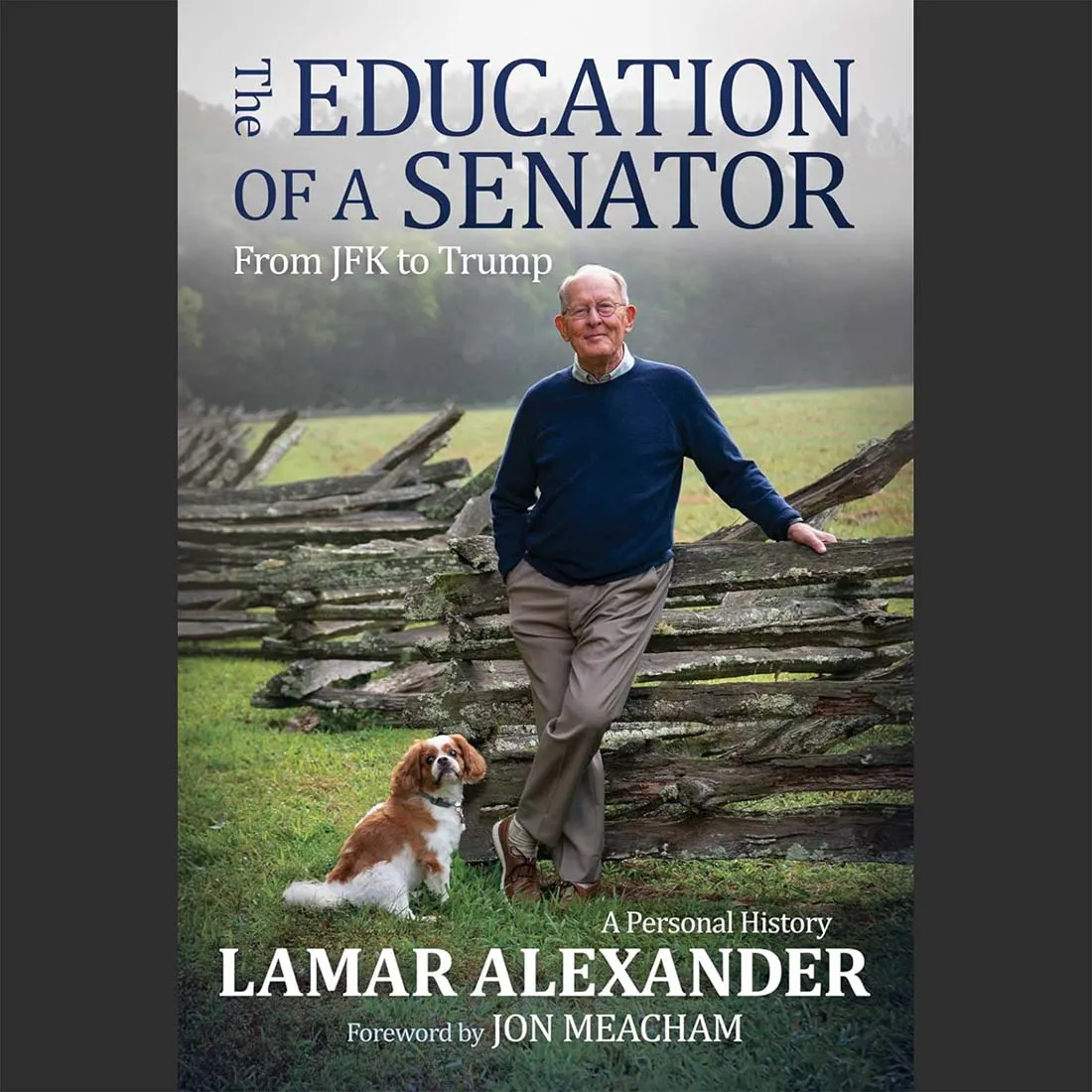
Lamar Alexander: The Education of a Senator
May 2100:56:31Tap to summarizeMike talks with former Tennessee governor, U.S. senator, education secretary, and presidential candidate Lamar Alexander about his new book, The Education of a Senator, and what his long career reveals about how American politics actually works. Alexander argues that while Washington’s “dysfunction screen” gets most of the attention, the Senate can still produce major bipartisan accomplishments when members build trust, respect institutional roles, and accept the slow work of compromise. The conversation covers the difference between executive and legislative leadership, the decline of social relationships in Congress, the rise of social media incentives, the erosion of Article I congressional power, the filibuster, federalism, impeachment, presidential relationships, and why Alexander still believes “the republic will survive” if more people choose to be builders rather than performers. Senator Alexander on X. The Politics Guys on Facebook | X Listener support helps make The Politics Guys possible. You can support us or change your level of support at patreon.com/politicsguys or politicsguys.com/support. On Venmo, we’re @PoliticsGuys. The Politics Guys is part of The Democracy Group, a network of podcasts that examines what's broken in our democracy and how we can work together to fix it. Learn more about your ad choices. Visit megaphone.fm/adchoices
Transcribe →