Loading summary
Transcript44 lines
- [00:00]
Rebel.com Advertiser
Did you know you can save up to 70% on your favorite brands every single day? From rebel.com sells strollers, car seats, espresso machines, skincare, cookware, everything you need for your home, your family and your life. All for way less. Here's how it works. Every day Rebel drops thousands of new products for up to 70% off. It's a non stop feed of deals from brands like Uppababy, Nuna, Baby Bjorn, Nespresso, Breville, Wilson, Dyson, Caraway and more. But listing is one of a kind. So if you see something you love, you have to move fast. Why pay full price when you don't have to? From baby gear to tech to self care staples, Rebel helps you save big on brands you know and love. Shop now@from rebel.com
- [00:49]
Workday Advertiser
could AI help you do more of what you love? Workday is the next gen ERP powered by AI that actually knows your business. We help you handle the have to dos so you can focus on the can't wait to dos. It's a new workday.
- [01:03]
Main Speaker / Pastor
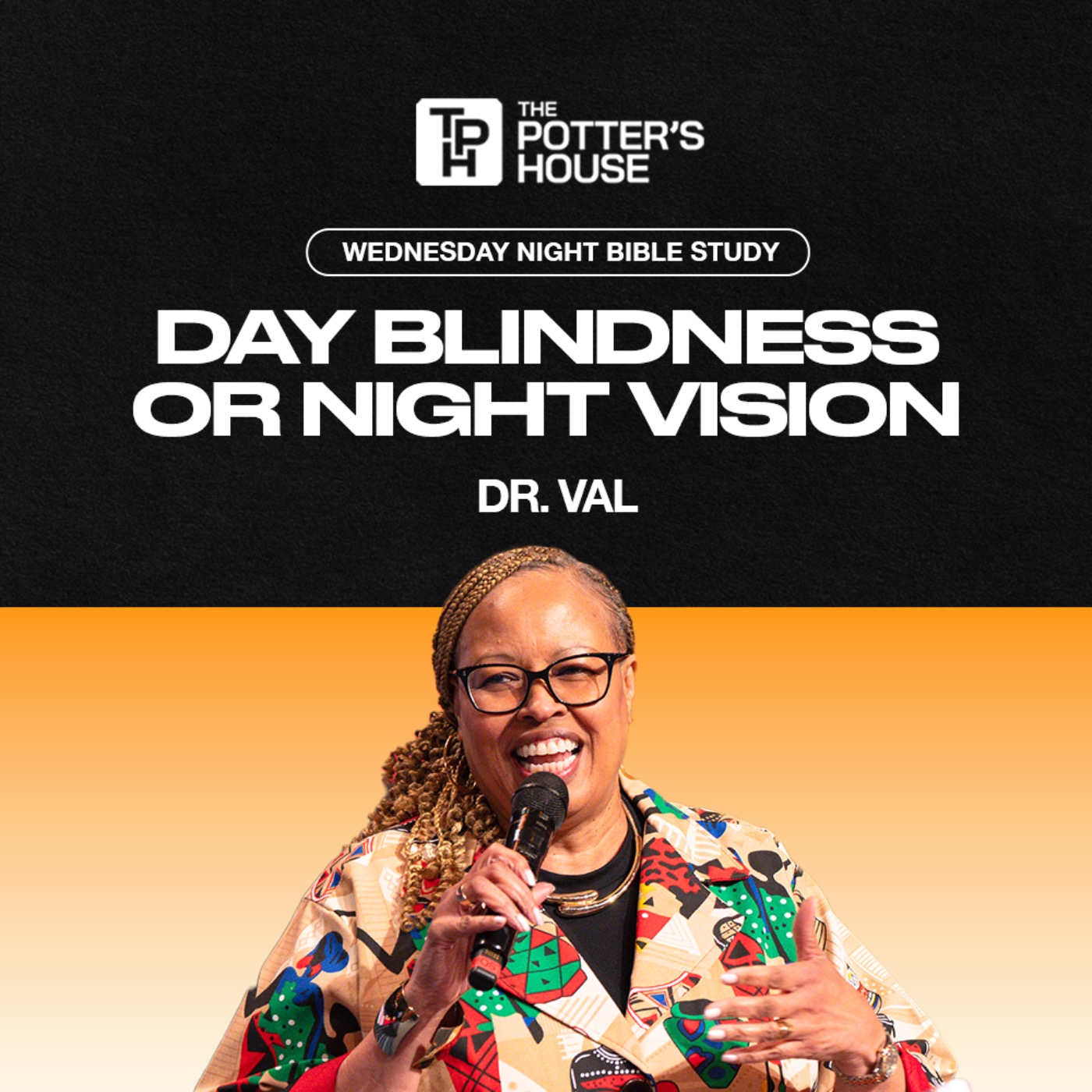
Most all in one HR systems are a patchwork of disconnected and manual tools. Rippling is totally automated. If you promote an employee, Rippling can automatically handle necessary updates from payroll taxes and provisioning new app permissions to assigning required manager training. That's why Rippling is the 1 rated human capital management suite on G2, TrustRadius and Gartner. If you're ready to run the backbone of your business on one unified platform, head to rippling.com acastbiz and sign up today. That's R-I P P L-I-N-G.com acastbiz to sign up. Welcome to the Potter's House Podcast. You are home away from home. Stay a while as the word of God restores your hope and transforms your life. Tonight as we go into this Walk it Out Wednesday, I won't be walking out Bishop's message. I can't do that by myself. But I'm gonna walk out some. Just hang with me. Sometimes visual messages are hidden in plain sight and we miss those messages because we're looking so intently for the message that's on the surface. But my objective tonight is for you to just see what you need to see and to hear what you need to hear. And then when you leave here tonight, whatever hidden message there is, it will come to light and your eyes will be open, your heart will be receptive, and your mind will be transformed. Is that all right? All right. I'm going to give you my title First. No, let's read the Scripture first. Go to Psalms 23. We got two passages tonight. Psalms 23, verses 1 through 4. And then Mark. Put your finger in there. As the old people say, put your finger in Psalms. And then skedaddle over to mark the 10th chapter, verses 46 through 52. When you have Psalms 23, say Amen. Amen. Read it together, just verses one through four. The Lord is my shepherd, I shall not want. He maketh me to lie down in green pastures. He leadeth me beside the still waters. He restoreth my soul. He leadeth me in the paths of righteousness for his name's sake. Yea, though I walk through the valley of the shadow of death, I will fear no evil, for thou art with me. Thy rod and thy staff, they comfort me. Now go with me to mark the 10th chapter. I'll be reading from the ESV version, English Standard Version. And you can just follow along. It's on the screen as well. And they came to Jericho. And as he was leaving Jericho with his disciples and a great crowd, Bartimaeus, a blind beggar, the son of Timaeus, was sitting by the roadside. And when he heard that it was Jesus of Nazareth, he began to cry out and say, jesus, son of David, have mercy on me. And many rebuked him, telling him to be silent. But he cried out all the more, son of David, have mercy on me. And Jesus stopped and said, call them. And they called the blind man, saying to him, take heart, get up, he's calling you. And throwing off his cloak, he sprang up and came to Jesus. And Jesus said to him, what do you want me to do for you? The blind man said to him, rabbi, let me recover my sight. And Jesus said to him, go your way. Your faith has made you well. And immediately he recovered his sight and followed him on the way. And the church say, my topic tonight might be a little confusing because I really didn't know what to name it, but it's day blindness and night vision. And my subtopic is standing between images. Standing between images. Lord, do it. I give it to you in Jesus name. Amen. You may be seated. Now, I want to start with making some comparisons and contrast of the two Scriptures so that we can see why we're using the two of them. In Psalms 23, we see David opening with, the Lord is my shepherd. I shall not want or I shall not lack. In Mark 10, we see that there is a blind man begging. In Psalms 23, we see the language. He makes me, and he leads me but in Mark 10 we see where Jesus called him and he got up and went. In Psalms 23 we see walking through darkness. But in Mark 10 we see the blind man asking to end this darkness and restore the sight. In Psalms 23 we see, you're always with me and the sheep following the Shepherd. In Mark 10 we see Jesus telling him, go your way. But he ended up following Jesus. In Psalms 23, we see the imperfect man, David. In Mark 10, we see a blind
- [08:49]
Congregation / Choir / Worship Leader
man
- [08:51]
Main Speaker / Pastor
by his condition. In Psalms 23, we see a shepherd looking up to the Shepherd. In Mark 10, we see the son of Timaeus looking up to the Son of David. I don't want to make any assumptions, so I'm going to lay out some assumptions so that you can find yourself in the patterns. I'm going to assume that everybody knows that Scripture talks about sheep, whether physically or metaphorically or spiritually. Going to assume that you know that the Scripture talks about sheep. I'm going to assume that you know that the Scripture talks about blindness. Whether physical, metaphoric or spiritual, the scriptures talk about blindness. I'm going to assume that this is not your first time reading Psalms 23, that you've least heard it once in your life. So as we go through, you can find yourself somewhere in the scripture. In Psalms 23, David was a king. But in Mark 10, Jesus was the king of the Jews. In Psalms 23, kings were considered healers. In Mark 10, Jesus was the healer. In Psalms 23 it deals with the realities of life. But in Mark 10 we see a real life occurrence. In Psalms 23, the setting is somewhere near Jericho. And in Mark 10 the setting is outside of Jericho. In Psalms 23, Kings were considered in place of bishops. In Mark 10 they called Jesus the son of David because they knew he was a king. Both passages refer to David of the Old Testament. Both passages speak to types of blindness. Both passages we see where the characters show some dependency on something other than themselves. Both passages are bookends that surround the prophecies of Jesus, death, burial and resurrection. And both passages speak about men that possessed a knowing about the Lord. Now there are a glossary of terms. If you're taking notes. I appreciate it. Write some of these down. Type some of these down because I want you to. When you go in your own time and do your own study, these are some of the words that you might want to pay attention to. One is in Psalms 23, when he called him the Lord, he was talking about Yahweh, the self existent one. When he Called him my shepherd. He was talking about the personal relationship that he had with the self existent one. You see the word maketh and the words maketh and leadeth. They both imply some level of intensity or reliance on something other than themselves. In both passages, you see the word restore or recover, which means to bring back or return or revive something that was lost, damaged or stolen. And then in Psalms 23, you see the words shadow of death. We're going to talk about that in a minute. But it's really death's shadow. You see the word rod, thy rod and thy staff. The word rod right there means a measuring stick. You see the word staff there. The staff there represents a scepter, like a king's scepter. Then you see the cloak in the New Testament that the blind man had. It represented a way of life. And then you'll see son of David. Son of David was a political term that identified Jesus as the king of the Jews, which made the Roman leaders mad when they heard them call him son of David. Y' all with me, y'? All? Tracking blindness is mentioned about 90 times in Old Testament scripture and over 70 times in the New Testament. It is the most devastating condition mentioned when compared to all other physical conditions. And it was the most predominant miracle performed in scripture. Blindness was considered a blemish and it would disqualify a priest from serving. Although there were laws protecting the blind and people with disabilities, society rejected them and treated them as marginalized second class citizens. They were forced into a category because of something they could not control. And unlike the New Testament, the Old Testament retains no records of the healings or miracles around blindness. There are two types. I told you my topic was day blindness and night vision. So let me just talk about day blindness for a moment. Day blindness is a rare condition where vision is significantly reduced. In bright daylight conditions. Your eyes prefer dim light. Let me just stop because I just had a flashback. When we were kids and we were asleep, my mama used to turn on the top light and she say, the top light is the light in the ceiling. And she say, get up. It's time to get ready for school. Well, you coming out of a deep sleep, right? Eyes closed in the dark, she switches on this bright. You know, they don't make them as bright as they used to. The bright light and tell you to get up. Well, my eyes couldn't regulate to the bright light. That is kind of what it looks like when you have this rare condition. Day blindness says that your eyes are deficient of something and cannot Regulate to the light. Where there is no cure for is managed when you see people with dark glasses so they can function in bright light. Let me talk about night vision. Years and years ago, far, far away in a time before, I used to work in the neurology lab of a hospital in another state. And I was training to be an EEG tech. Eeg? You know what that is? Well, you may not. Electroencephalogram. And it was a test that measured a person's brain activity. It detected what was going on in the person's neurological makeup as we measured and observed that person's brainwaves. There is a small element in a human's anatomical makeup called the rod. Rods are one of the most important parts of our sense of vision. Rods detect shades of gray and are vital for our night vision and our peripheral vision. I got some doctors and nurses in here. You understand? Rods are connected to the brain. Rods send signals to the brain. Without rods, the brain would not have the signals it needs to build what we see. The rod is so that we can see at night and detect what's around us. You know those eye exams we have to take? Look straight ahead while the doctor's finger is moving slowly across from side to side. The doctor is trying to determine how far you can see around you. Because the rod is. Is a measuring stick. Old folk used to say, I don't like to drive at night because it's hard for me to see. It's because their rod is not as strong as it used to be. And so they can't see as far as they used to see because the rod is their measuring stick. David's frequent reference to eyes stands to reason. When we read Psalms 23, it stands to reason that David had a way of assigning human characteristics to God. He said, the eyes of the Lord are on the righteous, and his ears are attentive to his cry. He said, the eyes of the Lord are on them who fear him and on those who hope is in his unfailing love. He will not let your foot be taken. He watches over you all night and day, and he watches over Israel. And he never slumbers or sleeps. The rod or the eye is so important that David pleaded with God and said, lord, keep me as the apple of your eye. The apple is the pupil, the most protected part of the body. And while God kept his eyes on David, David kept his eyes on God. He said, I will look to the hills from whence cometh my help. My help comes from the Lord. And so I read the Scripture in verse four where it reads, thy rod and thy staff, they comfort me. And it dawned on me as I was reading that the rod was not just a physical instrument that the shepherd carried in the hand. It was the shepherd's ability to see at night. Not only see at night, but know the path and the terrain that the sheep would experience in the night season. Shepherds worked night. Can I prove it to you? Luke 2 says, now there were in the same country shepherds living in the field keeping watch over their flock by night. And when they were there by night, the angel of the Lord stood before him and the glory of the Lord showed. And you know the rest of the story. Now, sheep have great night vision. I think I gave y' all a picture of a. There it is. Sheep have very good night vision and they can see in the dark,
- [23:03]
Factor Meals Advertiser
which
- [23:03]
Main Speaker / Pastor
helps them to detect their predators. They possess a reflective layer. You can keep it up there. Yeah, yeah, yeah. Behind the retina, which amplifies light in low light conditions. While they can navigate and graze at night, they are not completely nocturnal and they prefer light and are often reluctant to move from bright to darkness. Although they see well at night, they struggle with transitioning between high and low light and cannot see the color red. Sheep are known to graze in the dark, relying on their superperior night vision. However, despite their good night vision, they hesitate to enter dark, preferring a well lit area. Now, I told you I didn't want to assume, but I want to assume that you know, that sheep are all through the Bible, whether it's a real sheep or we are the sheep. While humans can see around 155 degrees, sheep can see around 270 to 320 degrees. In fact, they can see behind themselves without even turning their heads. Put that picture back up of my sheep. They have a little blind spot. It's directly behind and in front. And because of that blind spot, they can be easily startled. Sheep have rectangular pupils and this aids their peripheral range of vision. However, it affects their depth perception. Depth perception helps us to see in three dimensions and determine how close or how far something or someone is from us. And because of the sheep's limited depth perception, they cannot accurately judge or gauge their surroundings, which means to them that the world is flat. Because their vision is impaired, this form of ocular disability causes them to have to depend on the night vision of the shepherd.
- [26:13]
Factor Meals Advertiser
Was January supposed to be your big fresh start? Well, sometimes the pressure to fix everything at once just can leave you feeling stuck. Grow therapy makes it easier to reset at your own pace. With therapy that's covered by insurance and built around your life, you can search by what matters like insurance, specialty, identity or availability and get started in as little as two days. And if something comes up, you can Cancel up to 24 hours in advance at no cost. Whatever challenges you're facing, Grow Therapy is here to help. Grow accepts over 100 insurance plans, including Medicaid in some states. Sessions average about $21 with insurance, and some pay as little as $0 depending on their plan. Visit growththerapy.com acast to get started. That's growththerapy.com acast growtherapy.com acast availability and coverage vary by state and insurance plan.
- [27:16]
Workday Advertiser
Could AI help you do more of what you love? Workday is the next gen ERP powered by AI that actually knows your business. We help you handle the have to dos so you can focus on the can't wait to dos. It's a new workday.
- [27:35]
Main Speaker / Pastor
Now back to King David. It's gonna all come together. Just a minute. I feel it in my spirit There are different accounts. Hold all of that about the sheep in your head. There are different accounts of how and where the setting of this psalm takes place. David could have been running from his son Absalom, who was trying to kill him, or he could have been just reflecting over his life, as some commentators say, first as a shepherd and then as a king. Either way, we find ourselves in the wilderness of Judah between Jerusalem and Jericho, where David tended to the sheep. And since David knows the function of a shepherd and the behavior and character of the sheep, he writes as one who stands between two images. He's standing in the wilderness between Jerusalem and Jericho. On one side of the mountain he sees Jerusalem, the house of the Lord, and on the other side he sees Jericho, the place of pagan worship. And between them was the valley of the shadow of death. Now, the valley implies that it was a low place. Above the valleys were the hills and the mountains. But in the valley there was a dangerous cliff and roads that separated the valley from the hills and the mountains, which also says that there was something lower than the valley. If you weren't familiar with the terrain of the valley, you could fall off of a cliff. The valley was not the lowest place. Who would have imagined that there was a place lower than the valley? Can I stop and encourage somebody? When you think you're at your lowest point, let me assure you that there is something lower than that and that it can be worse off than what it is right now. I said that was encouragement. The Valley of the Shadow of Death was a literal place and was considered one of the most dangerous places, not only for the sheep, but for the shepherd. It was known as the Dark Valley experience. There were dangerous cliffs and wild animals and crooked paths. Only a good skilled shepherd could lead the sheep safely through. Only a skilled, well trained shepherd who was familiar with the terrain could maneuver the cliffs, maneuver the paths, maneuver the crooked places, and maneuver the dangerous predators that lurked in the valley. Only a professional shepherd could navigate through with his rod or his staff and get the sheep safely to green pastures and still waters. Can I just throw something in there right quick? Women were shepherds too. In fact, there were more female shepherds than there were male. The Bible says that Rachel was a shepherdess and she was the only one named a shepherdess in the Bible. But the women that went to get water were considered shepherds. I just thought I'd throw that in there for you, my cash app and my zell. But there is something more to know about the valley. The shadow of death. As I talked about a few minutes ago, the shadow of death were three words that made up one Hebrew term. And that Hebrew term is death shadow. Death shadow in Hebrew means image. It is the same Hebrew term used in Genesis 1:26 and 27 as the word image. When God said, let us make man in our image after our likeness, and let them have dominion over the fish of the sea and over the birds of the heavens and yada, yada, yada. So God created man in his own image. So in the original text, the valley of the Shadow of Death was known as the Valley of Images. So whether in a moment of reflection or in a literal running away from the danger of his own son, David is postured between two images, the house of the Lord in Jerusalem and the place of man made idols in Jericho. And he declares his position and he says, the Lord is my shepherd. Make no mistake about it. I may be walking through strange places, but I know who my God is. I may be between Jerusalem and Jericho, but I'm not confused. The Lord is my shepherd and everything I need is in him. Even in the valley, my sister and my brother. Right now we are walking through strange places in the earth. Dark times, unfamiliar territory. Not that it hasn't happened before because there is nothing new under the sun, but we haven't experienced it in our lifetime. We are literally standing between images. One that is trying to take on the image of Nebuchadnezzar in opposition to the image of the true and living God. We are walking through the valley of images. You must know in these times, when they are trying men's souls. You must know who you know, who you know and what you know. That the Lord is your shepherd. I told you earlier about the terms in Psalms 23 that refer to blindness. He maketh me, he leadeth me, he restores the rod, the shadow of death. It wasn't that the sheep couldn't see, it was that their vision was impaired, their sight was distorted, their depth perception kept them from mobilizing. The 23rd Psalms is a part of a messianic trilogy. In other words, it sits between or in the middle of two other psalms that prophesy the work of of the coming Messiah. In Psalms 22, the focus is on the cross. In Psalms 24, the focus is on the crown. But Psalms 23, we see what it took to get from the cross to the crown. This takes us over into Mark 10. So let's talk about Jericho. For somehow we've ended up Jericho. Jericho was a wealthy place. It was a main thoroughfare and it was under Roman control. It was still the hub for idol worship. It catered to the rich while its streets were lined up with poor outcasts, beggars and sick. The political and social dynamic of that day was such that Jesus Christ challenged and disrupted the order. Jesus goes to Jericho just to upset the balance of power. He goes to Zacchaeus House, the tax collector, and he had dinner with the man. Jesus actions upset the public because Zacchaeus was known as a traitor. He took from the poor to give to the rich and the public thought Jesus was honoring their oppressor. Jesus then went directly to the Pharisees and Sadducees and he directly challenged them because he said they were turning a religious obligation into a profit driven system. Then he became the non violent Martin Luther King when he went to the masses and began to preach the message of the kingdom which challenged Rome's authority. And all of this accelerated the tensions that got him to the cross. But he had one more thing to do. Hang with me because I'm almost finished. Oh, it's early. Jesus and his disciples and a large crowd are leaving Jericho on their way to Jerusalem. Now this occurs just before Jesus final week. Luke says that he's entering Jericho, but Mark, who we're dealing with tonight, says he's leaving Jericho. And we're right back here where David was centuries before. And we see Bartimaeus, a blind beggar, the son of Timaeus was sitting by the roadside. Now we call him Bartimaeus, but that's not his name. It is his condition and his social status. Just like the woman with the issue of blood and the woman that has been over for 18 years and the Samaritan woman and the Syrophoenician Simon Peter's mother in law. Like them, this blind man was marginalized by his condition. But like these women, his testimony was a pivotal point in history. Jesus mission was to the marginalized, the outcast and the sick. He said, the spirit of the Lord is upon me because he has anointed me to preach to the poor. He has sent me to heal the brokenhearted, to preach deliverance to the captive and the recovering of sight to the blind, to set at liberty them that are bruised, and to preach the acceptable year of the law. So Jesus is completing his mission
- [39:49]
Congregation / Choir / Worship Leader
and
- [39:49]
Main Speaker / Pastor
here is a blind man sitting on the side of the road. Now his name, or the name Bartimaeus son of Timaeus is actually redundant because Bartimaeus comma means son of Timaeus. Bar is son. And Timaeus has two definitions. The two definitions are it could either be son of the honored or son of the impure. It could be son of fame or son of shame. It could be son of honor or son of rebuke. It was a time of hopelessness for the Jewish community where people were powerless to change what was happening to them. The Roman Empire did not regard their laws, neither their standards of living. These marginalized people were second class citizens who were forced to depend on charity because they were considered unclean and had to rely on begging to survive. So given this man's situation, his location and his condition, society labeled him as the son of impurity, the son of shame and the Son of rebuke. Or had they seen him for who he was, he could have been the son of honor or the Son of fame, but he was standing between images. Y' all better help me, help me out right here. This is the imago DEI Latin for the image of God. The doctrine of the Judeo Christianity is hinged on Genesis 1 and 27. All humanity is created in the image and likeness of God. We are all valuable to God and we are all designed to reflect God on earth. When you challenge my image, you challenge my worth. You want me to think that my situation, my condition, my status makes me
- [42:23]
Congregation / Choir / Worship Leader
less than who I am.
- [42:25]
Main Speaker / Pastor
You want me to lose respect for, for myself because I don't look like you act like you have what you have. Do what you do like you do it. But the devil is a lie. I might be standing between images, but I know whose I am. Take my history away. Shut down all the things that stand for who I am as a person. But you can never take away who I am, because I'm made in the image of a God that cannot fail. And when he heard that it was Jesus of Nazareth, he began to cry out and say, jesus, son of David, have mercy on me. And the crowd rebuked him. Because the crowd knew when you say son of David, it was a political term that would make the Romans mad because they thought they were being challenged by another king. But at the other side, at the same time, when they said, son of David, have mercy on me, they were calling for healing, they were calling for restoration, they were calling for deliverance. They were calling for God to come to their rescue. And so he said, satan, Jesus, sorry, son of David, have mercy on me. Critics challenge the blind man's ethnicity, but I believe he was a Jew because he called on Jesus like he knew him. And he called on him so well that Jesus stopped in his tracks and said, tell him to come here. Now this is the crazy part, because he's a blind man. They said, get up, he's calling you. He got up, threw off his cloak, threw off his way of life, threw off what he used to to be, threw off what they said he was, threw off who they knew him to be. And he got up and he went to Jesus. Now wait a minute, he blind. He ran to Jesus in his blindness. This implies that the blind man was not totally blind.
- [45:13]
Workday Advertiser
Could AI help you do more of what you love? Workday is the next gen ERP powered by AI that actually knows your business. We help you handle the have to dos so you can focus on the can't wait to dos. It's a new workday.
- [45:27]
Factor Meals Advertiser
Exhausted from spending half your night cooking. Factor eliminates the stress with chef crafted fully prepared meals delivered to your door fresh, never frozen, ready in two minutes. Factor delivers zero cooking, zero stress. Just heat and eat over 100 dietitian approved options weekly with no refined sugars, artificial sweeteners or refined seed oils. Right now go to FactorMeals.com easy50off and use code easy50OFF for 50% off and free breakfast for a year. That's FactorMeals.com easy50OFF and use code easy50OFF.
- [46:10]
Main Speaker / Pastor
It is believed that his blindness was an onset and not a birth defect. The fact that he came to Jesus means he could see at least an image. Y' all better work with me Right up in here. Right here. He can at least see an image. And Jesus said to him, what do you want me to do for you? The blind man said to him, rabbi, teacher, let me recover my sight. This means that he was able to see clearly before. We don't know the severity of his condition. But we do know he didn't have to be led or made to go. He got up and he went. And Jesus said, go your way. Your faith has made you well. He didn't say whole, which implies that he had a relationship with the God of the Jews. And that relationship said he called on him. Cause he knew him. And all he needed to be was made physically well. Cause it had to be well with his soul. I don't care what your condition is. I don't care what your situation is. I don't care what your location may be. If you have a well with your soul, your physical can be made well too. If the eye is well, then the whole body is well. I'm stopping right here. Cause the Lord told me to pray for somebody that has blind situations going on. There's somebody with a physical blindness. Whoever you are, it may not be complete blindness, but you're dealing with something on a blind level. I want you to come to the altar. Don't be afraid if you're dealing with it. God said, come to the altar. My, my, my. Hallelujah. Y' all can give it up for the people that are coming for healing. Go with me now. And it also speaks to blindness, meaning you can't see who you are. Good. You're standing between images. You don't know if you're fame or shame. You don't know who you are. And you don't know who God thinks you are. You're standing between images. And when you know who you are, then you will leave the images behind. So if you are struggling with who you are, come on up to this altar. Play me something.
- [49:34]
Congregation / Choir / Worship Leader
Open the eyes of my heart, Lord Something. Open the eyes of my heart so I can see you yeah, yeah so I can see you oh, open the eyes of my heart, Lord Open the eyes of my heart so I can
- [50:07]
Main Speaker / Pastor
see you I'm ask the church to
- [50:10]
Congregation / Choir / Worship Leader
stand so I can see you oh, open the eyes of my my heart, Lord Open the eyes of my heart so I can see you I want to see you I see you high and lifted up Shining in the light of your glory
- [50:49]
Main Speaker / Pastor
Pour out your power
- [50:51]
Congregation / Choir / Worship Leader
and love and we sing Holy, holy, holy Open, open the eyes of my heart, Lord
- [51:06]
Main Speaker / Pastor
Open the eyes of My elders and ministers. Come and get behind somebody.
- [51:15]
Congregation / Choir / Worship Leader
Yeah.
- [51:18]
Main Speaker / Pastor
Hallelujah. Father, you knew they would be struggling with blindness tonight. And, Father, I came to do what you told me to do. Hallelujah. You said you came to open the eyes of the blind. And tonight, whoever is standing around this altar, we believe you for healing. In the name of Jesus. Come on and sing.
- [51:52]
Congregation / Choir / Worship Leader
Open the eyes of my heart I want to see you I want to see you, you Open the eyes the eyes of my heart Open the eyes of my heart I want to see you I, I want to see you Open the. Shining in Shining in the light of your glory Pour out, Pour out your power in love as we sing Holy, holy, holy to see you high and lift it up. Glory. Holy, holy, holy. I want to see you oh, I want to see you I want, I want I want to see you I want to see you. See you. The eyes of my heart, Lord Open the eyes of my heart I want to see you I wanna see you oh, to see you I lift it up Shine. Me. Holy, holy, holy I want to see
- [55:42]
Main Speaker / Pastor
you
- [55:45]
Congregation / Choir / Worship Leader
I want to see you I need to see you I want to see you I want, I need to see I want to see Open my eyes to see you, Lord I want to see you I want to see you I want, I want, I want, I want I want to see you oh, nobody but you, Lord Nobody but you, Lord Nobody but you, Lord Nobody but you, Lord Nobody but I want to see you Nobody but Nobody but you, Lord Nobody but you, Lord I want to walk like you I want to talk like you I want to live like you I want to be like you I want to see you Nobody but you, Lord I want to see you oh, I want to say. See you I need to see you I need you, God I need to see you I need to see you I need to see See you in your fullness of glory I need to see See you in your power
- [57:37]
Main Speaker / Pastor
here
- [57:38]
Congregation / Choir / Worship Leader
oh, I need to see I know when I see the Lord I need to see he's going to make it all right I need to see oh, he's going to make it all right I need to see he's going to make it all right I need to see See I know it's already all right. I need to see. See you More of you More of you More of you More of.
- [58:39]
Main Speaker / Pastor
I know you're standing there. Would you please, please pray with us up here? Don't just stay, but just pray. Come on.
- [58:47]
Congregation / Choir / Worship Leader
I need to see you Hallelujah. I need to to see I need, I need to see
- [58:59]
Main Speaker / Pastor
I need to
- [59:00]
Congregation / Choir / Worship Leader
see I need to see I need, I need, I need I need to see you I need, I need, I need to see I need to see see you Wow I need to see you I need to see you I'm looking for you Jesus I'm looking for you Jesus I need, I need I see you I need to opened up
- [59:45]
Main Speaker / Pastor
that she might
- [59:48]
Congregation / Choir / Worship Leader
I need to see I need to see I need to see I need it I need, I need, I need to see Open my eyes to see. I need to see you I need, I need, I need, I need to see see you
- [60:40]
Main Speaker / Pastor
I pray that you walk away seeing something different tonight. That the visible message that was hidden in plain sight help you to see better tonight. God bless you.
- [61:05]
Event Host / Announcer
Come on, let's give God glory. Come on, can we give him praise? Come on, let's give God glory for that word. My God. Day blindness and night vision Standing between images. Oh, if you were blessed Just lift up your hands if you were blessed Put fire emojis in the chat if you are blessed. Come on, be honest. Look at somebody say I was blessed. I was blessed, I was blessed and I was blessed. Listen, I don't know about you, but I've already sown my seed. I want to invite you to partner with me in this ministry. Come on, can we sow a seed in this tonight she gave us the kind of message that cleared up all doubt that our redeemer lives. All doubt that we're going to recover from any type of blindness. I don't know about you, but I've had some blind spots. Spots. I don't know about you, but there's some things that I could not see. But tonight the Lord blessed me to be able to have discernment. Somebody shout glory. I am getting ready to see some things that I have not seen before. Listen, I'm going to check my 401k. Listen, 8am Tomorrow. I want to see it. I'm going to check some investments. I want to see it. I'm going to text some people. I want to see it. I'm going to call if you want to see it, Shout glory. God is heightening our sense of visibility. And then God sent the woman of God not to just teach and preach with power and authority, but she came in divine demonstration. Anybody sense the presence of God? There is such a sweet spirit in this place. If you need an offering envelope, if you're sowing with what we call old school Holy Ghost cash, just lift up your hand. Our Professional ministry technicians, we call them PMTs, will make sure that you have an envelope. You can sow as much as you want to sow. You can put as many zeros as you want to put. Listen, this is a believe God type of offering. I don't know about you, but I need some things done in my house. I need some things done in real estate. I need some things done in family. I need some things done for trust. I need some things done in business. Am I the only one? I need some things done for ministry, organization, business, job promotion. Come on. The Bible says that Jacob sold and received a hundredfold in the same year. And then the Bible said God blessed him. Lord have mercy. If we're going to get a hundredfold, what does the blessing look like? The Bible says in Deuteronomy 1:11, God will bless you a thousand times. So many more as you are. The giving information is on the screen. I want to tell you that one day over 2,000 years ago, God sold his own son and he reaped you. What would happen if you sowed your very best seed tonight? I don't know who I'm talking to, but somebody's about to have a turnaround blessing. Somebody's about to have a blessing where your day vision and your night vision is about to increase. God is about to give you witty inventions, concepts, ideas that you've not even seen before because you were obedient and tapping into this world, into this word tonight. If you're ready to sow, shout. I'm ready. Glory to God. Would you lift your seeds in the air? Father, we thank you for those who are sowing online and sowing in this amazing church. Thank you for using the woman of God tonight to stare up our day vision. To stare up our night, oh God. To stare upon, oh God. She stared up our vision spiritually and naturally. Thank you that sometimes it seems like we're standing between images. But God, you're going to be our rod and our staff. You're going to comfort us and lead us in a plain path. Now, Father, we ask that you would pour back into the woman of God all that she poured out, restore her virtue and her strength. Thank you for her wisdom, her wit. Thank you Lord, for her intention, intelligence and power and authority. May that same blessing hit our home tonight. We believe you before we get home, things are going to turn around. We believe you before we get home. Vision is about to expand. We believe you and we shout glory Hallelujah. In Jesus name. Hallelujah. If you got an offering Envelope. Pass it all the way down to your left. Pass it all the way down to the left. To the left, to the left. And the person on the end, nudge them and make sure that they're praising God. Come on, let's sow it with the praise. Let's sow it with the thank you, Jesus. Let's sow it with the hallelujah. Come on. Come on. Pmts. Serve the people of God. Glory to God. I've got one announcement for you. Just one simple announcement. Most of you are watching us via YouTube right now. Some are watching via Facebook. On March 1st, our Facebook Live will end. You can still tap in, but we will no longer be doing Facebook Live. Everything will be tapped into YouTube. Somebody shout YouTube. And you too can go to YouTube. Somebody shout YouTube. Listen, I also want to articulate that tonight we've got a living museum in ballroom, baby. Can we give it up for Black History Month? Come on. The late James Brown says say it loud. I'm black and I'm. Oh, y' all been listening to James Brown, too, huh? Say it loud. I'm black and I'm proud. Listen, there is nothing wrong with celebrating heritage. Can we give it up for some black history leaders called Bishop T.D. jakes, First Lady Serita Jakes. Come on. And I believe that a black woman tonight made history. Called Dr. Valerie Compton. When she started talking about Rebecca, who was a shepherd. Come on. Come on.
- [67:04]
Congregation / Choir / Worship Leader
Here.
- [67:04]
Event Host / Announcer
Genesis 24. I loved it. I loved it. Would you stand to your feet? Grab your neighbor's hands? Leave no one untouched. I'm loving this music. We need to take this on the road somewhere. I'm loving this flow. I'm loving it. I'm loving it. Glory to God. Look at somebody just smile and then say, I'm gonna see you on. Am I gonna see you on Sunday? You coming early on Sunday? You gonna bring a friend with you? Bring a cousin, a boyfriend, a girlfriend? Father, we thank you that you drop your daughter down into the depths of your wisdom. But you brought her up with supernatural clarity, divine understanding and truth. Thank you. That as she mesmerizes because she has spent time in your presence. That from here and the rest of the days of our life, that we get to spend time in your presence. Thank you for anointing our vision, God. Thank you for allowing us to bifurcate and to discern between images. We glorify you. We magnify you and we trust you. In the invincible name of Jesus. Together this friend, we're going to shout Amen. Amen. We will see you on Sunday. God bless you. We love you.
- [68:23]
Main Speaker / Pastor
Thank you for joining us on the Potter's House Podcast. Remember, there's always a space in the house for you. Subscribe and never miss a word.
- [68:38]
Workday Advertiser
Could AI help you do more of what you love? Workday is the next gen ERP powered by AI that actually knows your business. We help you handle that. Have to DOS so you can focus on the can't wait to do's. It's a new work day.
- [68:52]
Rebel.com Advertiser
Did you know you can save up to 70% on your favorite brands every single day? From rebel.com sells strollers, car seats, espresso machines, skincare, cookware. Everything you need for your home, your family and your life. All for way less. Here's how it works. Every day Rebel drops thousands of new products for up to 70% off. It's a non stop feed of deals from brands like UPPAbaby, Nuna, BabyBjorn, Nespresso, Breville, Wilson, Dyson, Caraway and more. But every listing is one of a kind, so if you see something you love, you have to move fast. Why pay full price when you don't have to? From baby gear to tech to self care staples, REBBL helps you save big on brands you know and love.
- [69:36]
Factor Meals Advertiser
Shop now@fromrebel.com exhausted from spending half your night cooking? Factor eliminates the stress with chef crafted fully prepared meals delivered to your door. Fresh, never frozen, ready in two minutes. Factor delivers zero cooking, zero stress. Just heat and eat over 100 dietitian approved options weekly with no refined sugars, artificial sweeteners or refined seed oils. Right now go to FactorMeals.com Easy50OFF and use code Easy50OFF for 50% off and free breakfast for a year. That's Factor Me Meals. Com Easy50OFF and use code Easy 50OFF.