← The Power and The Punchline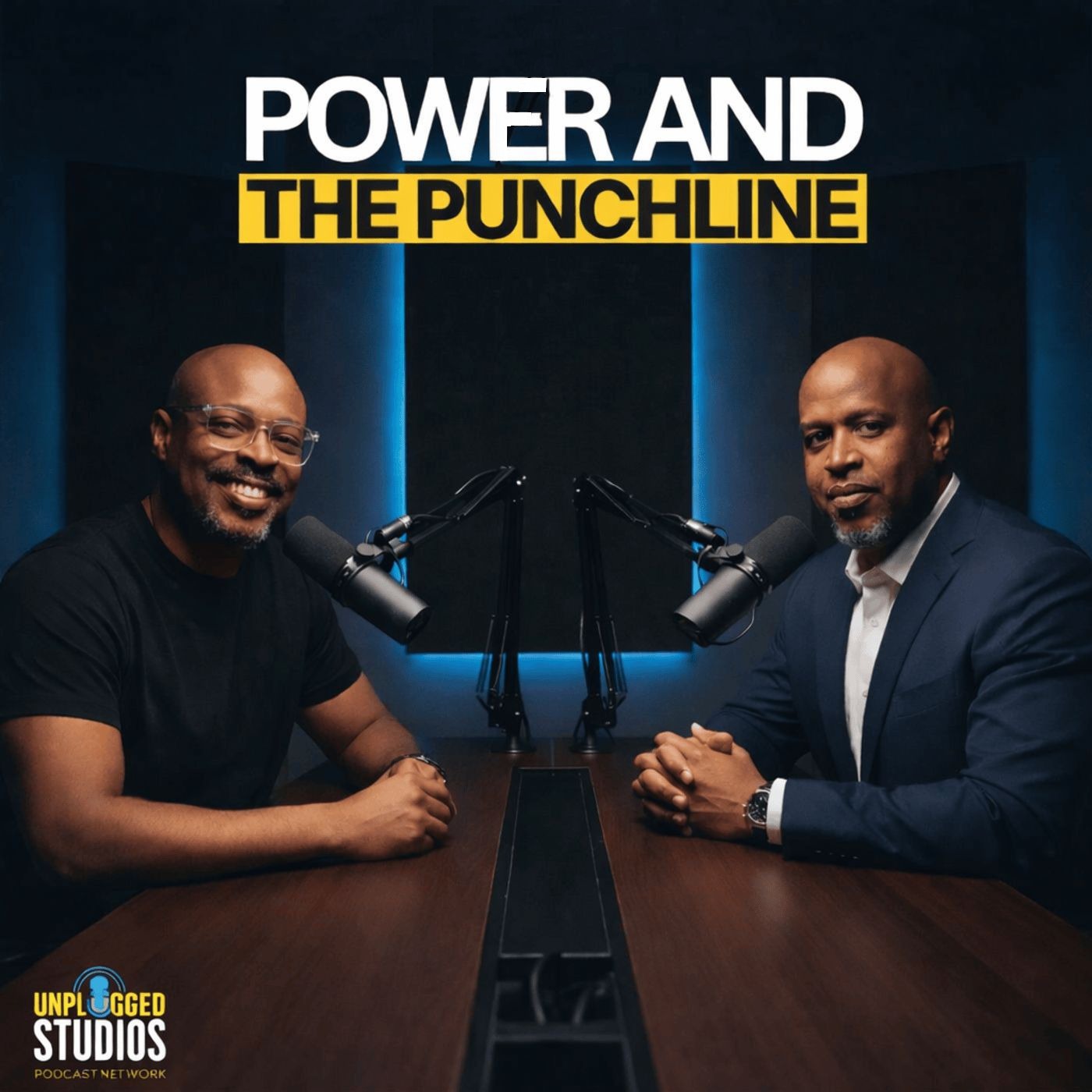
Loading summary
Transcript241 lines
- [00:00]
A
Hey, what's up? Welcome to the Power and the Punchline. This is where the power gets honest and the punchline actually means something. We talk leadership, culture, influence, and real life. No fluff, no filters. I'm Rudy Rush. Let's get powerful.
- [00:17]
B
Ladies and gentlemen, we are here live and in person together.
- [00:21]
A
Yeah, yeah, yeah.
- [00:22]
B
Punchline.
- [00:23]
A
He thought we were the same person.
- [00:25]
B
No, somebody did say that, though. Somebody.
- [00:27]
A
Somebody said Instagram.
- [00:28]
B
I was like, I thought it was you.
- [00:32]
A
Yo. You know what? I would love to be mistaken for you when you get that star treatment. You know what I mean?
- [00:37]
B
You ain't ready for that, though.
- [00:38]
A
Todd hit him like that all day.
- [00:40]
B
Every day, every day. So today's episode is going to be different. It's going to be special. Today's episode, we're going to talk about a prodigy. I'm talking about before social media, even right before the Internet. Someone rose to stardom. Someone had a story to tell. I'm talking about from Def Jam to the red carpet Showtime and get Paula. We're going to talk about the journey of my guy, my co host, Mr. Rudy Rush.
- [01:05]
A
When he said prodigy, I thought you was talking about, like, Kobe or Kevin Garnett or something like that. LeBron's too young. He was. He was here during social media. But no, definitely, man. It's. It's been an interesting 30 years plus in entertainment, and, you know, I'm excited about talking about it a little bit. This is the first time I've actually kind of, you know, opened up here and there about some things. But, you know, being on this show with you and, you know, I feel like I'm at home so I can kind of stretch out a little bit, talk about some things that maybe bothered me or I don't know, because I don't know what you're gonna ask me.
- [01:40]
B
So this was like therapy.
- [01:41]
A
Yeah. Yo, you know what? And I've been so. Yeah, I like that.
- [01:45]
B
Yeah, yeah.
- [01:46]
A
Without the. Without the bill afterwards, so.
- [01:48]
B
So the first thing I'm gonna correct you on, though, you talk about 30. I mean, let's let the people know you're 75, 41 and a half.
- [01:57]
A
You know what I mean? But no, like, a lot of people think I'm a lot older than.
- [02:00]
B
So let's start the therapy session, man.
- [02:02]
A
Yeah, yeah.
- [02:03]
B
You came up when comedy was a different game. It was, you know, I'm not talking about the Internet, comedians who I'm not bashing. I'm just saying it was a different game. Right. You came up when Def Jam was a Proving ground, bro. Yeah, like. Like, we all know some of the stories behind the scenes of some people that didn't make it on the HBO version. Yeah, we know some people that had to go before Bernie Mac.
- [02:29]
A
We know some people that had to.
- [02:30]
B
Come after Rudy Rush. I know. I heard that story, too. Talk to us, man. The prodigy. Talk to us about doing it first in New York City before you could even get the Def Jam. Like, talk to us about. Yeah, first stage. Rudy Rush. Mmo.
- [02:45]
A
So it was crazy because I worked at a law firm right outta high school. I got a job in midtown Manhattan at this place called Le Buff. It's a longer name than that, but. And it was cool. I started out in the mailroom, you know what I mean? And quickly, like, within three months, I got a promotion to the reproduction department. So I was kind of, like, on a fast track, kind of like making my name in the building just, you know, enough to where people were like, hey, they're hiring upstairs. Let's do this. So by the time I left, I'll just, you know, backtrack from that. I was in the purchasing department, you know, and they were trying to get me into a paralegal program and things like that. So I thought maybe law would be. Because I had all of the connections that, you know, I needed to kind of go there. I didn't want to be a lawyer, but I felt like, hey, this is a little comfortable and safe, because I had some connections. But what happened? A young lady named Diana Lisi, and she's a big entertainment fan, Jewish lady that lived in New York. And she was. Just to give you an idea, Stanley just became an actor, like, just became. Just got on the scene, and she was like, stanley Tucci's gonna be this big actor, and I feel like you have the same type of makeup. And so she sent me on an audition, and the audition surprised me, was for the In Living Color, Jim Carrey, Jamie Foxx. Those guys were leaving, going off and doing major television and film projects. And what happened was, you know, they wanted to keep it going. Fox wanted to keep it going. And you have to hear Marlon tell the story about how they were kind of taking the show away from the Waynes and kind of, you know, still trying to do it, and everybody kind of quit. So I was part of that group of people that were auditioning for those slots. I got about three or four callbacks, you know, which went very well. They had you bring, like, three. You know, you had to do, like, three or four different characters. Original and they kept calling me back then. They would say, we're not gonna do the show anymore. So a guy from the job was like, hey, you should do comedy. My buddy, Reggie Simmons, older guy, about maybe eight years older than me. So like I said, I was always the youngest in the circles that I've been in. And so he signed me up. New York Comedy Club, May 12, 1993.
- [04:55]
B
I know the date, yo.
- [04:56]
A
I know the date. That's my anniversary. It's so funny. Like, you know, you had to bring three paying customers to the New York Comedy Club, and. And, you know, my family's fairly small, but about 10 people showed up. And for every person you bring, you get $2 back as an incentive. I was like, I can bring 10 people. I can get something. You know, I can find out if I'm funny, get 20 bucks, take myself back on, you know, the train to Brooklyn. I'm from Harlem, but I was living in Brooklyn when I got out of high school. And not only did 10 people show up for my family, about 80 plus, like 90 something people total came the first night. Some people from the job brought their friends in, like, this guy's funny. So it was so amazing that that many people, you know, really wanted to see me on stage for the first time. And the funny thing was, it's an amateur show, so you already know everybody's either bad or okay. So my confidence after every person is growing. This dude named Billy, who still remains nameless in the. In the annals of standup comedy, he comes by the club. You know how comics just, like, not doing anything. One, by the time he's like, what's going on? They're like, this kid is in there, he's got this great audience they're loving, but he was like, man, I gotta get on that stage. Just like, I. If I came somewhere and was like, yo, can I get five minutes? Because this is nice. And they were like, you gotta ask the kid. Cause they were saving me for last. And let me tell you something, this guy comes to me, he's like, hey, you mind if I get. He looked like a bum off the street. He had the big. The mustache, the head comes up and up under the lip. He had that. And you know what I'm saying, his teeth wasn't the greatest. I mean, but Billy was a great dude. But listen, I looked him up and down, I said, yo, knock yourself out. And, you know, at that time, I didn't know who he was. Coming to find out. Billy was the headliner for Friday nights. Killed it I mean, turned the place upside down. My mother's taking her glasses off, wiping her face, everybody. And so, you know, let me end the story by saying the night was the biggest success of my career up until the point where things started happening, of course, on a national and a higher level. But at that time, my career could have been over, because who's going to follow that?
- [06:58]
B
Got it.
- [06:59]
A
I mean, in this day and age, the comments, who 20, 40 years under their belt couldn't follow that. It was that good. But what I did was I got my first lesson in comedy. I read the room. I felt what I was feeling in my heart, honestly. And I came up there to use the language that, you know, this is a clean show. But at the same time, I said, this is my first time on stage. Y' all put me on a mf. And the room exploded. You got this young kid saying that and then laughed. I swear, for at least it felt like 10 minutes because of the fact that that's what they were feeling, too. So, yeah, so that was the beginning of Rudy rush. Actually, Rudy McCallum is my real name. So Rudy Rush, a month later, became the name.
- [07:42]
B
So let's go there, man. Let's talk about the name, because, you know, Jamie Foxx. Shout out to Fox.
- [07:48]
A
Yes.
- [07:48]
B
Is Eric Bishop. And he said in order to get booked consistently, he needed a neutral name because Jamie Foxx was guaranteed to get on the roster list. And Eric Bishop sometimes wouldn't make it. Sometimes wouldn't. So was that Rudy Rush or was it the hype like you were starting to make it?
- [08:11]
A
I was feeling it, like, you know, like the first month I was good, you know, I was really good with the club. About 40 people each week would come and check me out because the word was buzzing around the. And in my, you know, social circles. And so people would come see me, but it was like, give it up for Rudy. Meg Callum, that. It just wasn't even as I was coming to the stage, I just wasn't feeling it. But I was younger. I played basketball in the city of New York, and I was very popular for a young guy. Was one of the top 14 and under players when I played and went to high school in Charleston, South Carolina, after that. So I had the year, so I had to leave for that. But before then, I was one of the top players in the city. When I was younger, the older guys used to call me. They was like, hey, little guy. I used to play with them and they'd be like, what's your name? I'm Like Rudy. They're like, Rudy Rush. Rudy Rush. I write it in my notebook. That was a little tag name I had when I was scribbling my notebooks at school. And when I started, you know, doing comedy, after a while, when I was, like, hearing that Rudy McAllen name, which I love, but I just. It wasn't dancing for me. And I was like, I want you to be. This is Woody Rush step. It. It was almost like a superhero story. Like, I always had the cape, and I didn't know what it was for. And then I put that on, and then we would just. You know, anytime you would go somewhere you could. Oh, man. My Lawrence was there. He Fonts of Rudy Rush, they be like, oh, man. Sound familiar? He just rolled off the tub, and I became Rudy Rush that day.
- [09:31]
B
That's amazing, man. So did mom and dad change name? Are they Rush? No.
- [09:35]
A
So, no, my mother actually likes the name. Cause one of my friends, in fact, called her Mama Rush. She likes that. It sounded kind of cool. My father had an issue with it, actually, because, you know, as a man who has children, of course that's your lineage. That's, you know, that's your legacy. And he was like, well. And he, you know, he gave me a. A couple of examples of what else I can do. The name I would have had, if they didn't have the name already would have been Rudy Mac. Then, of course, you know, who would have had him. So I was like, pop, he's not burning. And so I can't do Rudy Mac, so it's gotta be Rudy Rush. And he was like. And, you know, my initials are ram, So I tried to do something with that, but Rudy Rush was the stick.
- [10:15]
B
And that's who you are.
- [10:16]
A
Yeah, that's who I am.
- [10:18]
B
Olden Child himself.
- [10:21]
A
Yeah, man.
- [10:22]
B
Everybody thought it was an Eddie Murphy movie, but it was him. You know, one of the things I've always wanted to ask you, and I have some comedian friends who were in that era, Right. Spears. I asked him this question.
- [10:33]
A
Yeah.
- [10:33]
B
You know, you get. We all know, barbecue cookout, old uncle. That's just fun.
- [10:39]
A
Yeah, yeah.
- [10:40]
B
That's not the same as walking on the stage, though. Like, when people and I, you know, I love comedy shows, right. Like, I feel like I'm a comedy connoisseur. And it never fails. You go to comedy shows, comedy clubs, and you see a group of people that's just their arms folded, like, you gotta work for the laugh. And it's like, you make money to be here, to be upset. So when you walk on stage, it's not cookout funny, right? Like, cookout funny, you can make everybody laugh. You can hit some one liners, you can hold court for a couple of minutes. And it's silly, it's funny. But on stage, man, when you got 10, 15, 30, 45, and you gotta keep it rolling. Talk to us about that difference of cookout funny. Yeah, putting in the work.
- [11:23]
A
And I tell young comics. Cause like, you know, I teach some young comics, you know the ropes about stand up. And you know, people who are interested, even if you're older and you want to get into it. I'm like, you know, everything that you have done around your friends, all the inside jokes and all those other good things, it's funny, but it's not for the stage. I mean, there's. Every once in a while you can kind of make something translate. But like you said, there's a million different people from a million different places with a million different personalities. And you want to make them all kind of be on. So it's very tough. So a lot of this stuff like. Okay, I'll tell you, Ron Hilly, this one's for you. My high school buddy, we used to be in French class and a few other classes. And we had this little thing, this character I created called pumpernickel bread. And it was like, we could have made a cartoon and made some money off it nowadays, but he was like, hey, pumpernick. It was the funniest thing to us, and we let it be crying. But if I came on stage and said pumpernickel bread, people would be like, get your pumpernickle outta here. You know what I mean? So, you know, it's like things like that, you cannot bring those things on the stage. So there's a lot of things that I had fun with my cousin who's once best friend. Like, we had a lot of inside jokes or jokes that we created that just couldn't translate to the stage. So to your point, you cannot be funny. Well, let me take that back. Because there are some artists that come and they bring that. You know what I'm saying? I think Tracy Morgan's someone who comes the closest to being as raw and, you know, and animated on stage, you know. Cause you give that vibe like he's just talking off the top of his dome, you know. There was another one, a gentleman who passed away when he was in the accident with Tracy. Uncle Jimmy Mack. Getting my first rogue. And he got the name really fit him because he was Uncle Jimmy Mack. He was Everybody's uncle. So you had some comics, but, you know, the closest I've seen is maybe Robin Harris and Bernie Mac, because they had that. I don't give a. You know, I'm an authority figure in the family as a matriarch, you know what I mean? They had those essences. But for the most part, you're right, it's a different ballgame from the barbecue to big stage.
- [13:24]
B
Yes, sir. So let's talk about Def Comedy. I think for everybody that is watching, if you're listening to this, we don't connect. If you ain't watch Def Jam. Like, if you didn't sneak and watch the Def Jam show, I'm like 13, 14, and hearing that in the south, he'd say, I gotta go to church tomorrow. We'll talk about what it was like, one to audition. If it was an audition, you were the golden child. So Russell probably asked me like, hey, Rudy, come on through. You probably. You probably just got there. Talk to us about what that's like behind the scenes for people to deal with us.
- [14:00]
A
So first of all, people need to know this Def Jam before the Chappelle show, before Fringe, before any show, Seinfeld, any show that you think is important. Def Jam. I don't believe since Def Jam, there's been an appointment set show where people would wait till after Def Jam to go have a nightlife on Friday evening, defcom and Jam to come on. And they would go out after that and be up in the club, talk about, did you see? Did you see? So that's the big impact that the Def Jam machine made. So getting there, though, for me was quite different. My mom went to a guy at a barbecue and she bragging on her son, who's done this little stint at this comedy club in New York, and he's like, well, let me see how good he is. I live out in Jersey. I'm going to take them to the Peppermint Lounge, which when you say Peppermint, you think sweet little candy. And people like, you know, and I'm killing. I'm killing the New York comedy club, son. Take me to the Peppermint Lounge. We go to the Peppermint Lounge. It's about maybe 400 people in Newark, New Jersey. I think it was East Orange, New Jersey, which is worse than Brick City. Tell was packed. And I'm telling about every thug, gangster, girl in that city and town. Queen Latifah was in there. Now, she was famous, too, at the time, that she wasn't the Queen Latifah. That she ascended to. She was rapping Queen Latifah, famous dial. And let me tell you something, it wasn't a good night. This guy brought me out to, you know, picked me up from the train station in Jersey. I was supposed to stay at his place. You know what I'm saying? And let me tell you something, I bombed terribly. But I got saved because Queen Latifah came over and she saw something in me to make her come over and say, and I mean this. I actually worked for her later on on her talk show, the first one. But she was like, you know what? You know what? You gotta attack me differently. You were so good. And you just a baby. Like, she just touched me on my face. Yeah, I could sue you for that. No, she touched me on that.
- [15:54]
B
He said, you could sue him.
- [15:56]
A
No, no, she was really sweet. She touched me on my face like she was my baby sister. Something like that. And honestly, at the time, I was hurt, and the dude left me there. The dude who brought me there, like, he. Like, he just was like, oh, he ain't gonna make it. You know what I mean? But anyway, long story short, I suffered through that night. But just to show you, I started comedy when I was 19, and I made Def Jam when I was on Def Jam when I was 21. And in between that, I had an opportunity to do it when I was 20. But shout out to Bob Sumner, who is one of the producers of the show, very pivotal in picking who is the next to ascend to the throne. So everybody who had a chance to be on Def Jam pretty much have bothered to thank for it. And also, they have the Peppermint Lounge. Cause that was the audition spot. He and Tina Graham would kind of, like, get together and, you know, say, hey, these comics are good and they're gonna be on the next season. So the first time that I did it, the year before I was able to do it, I felt I was ready. But he said, nah, you know what? I don't think you're ready. I was disappointed. But he gave me a laminate, a moral access laminate that everyone did receive.
- [17:05]
B
You were the golden child, right?
- [17:07]
A
He gave it to me. He said, walk around. Get in there. Like, go. And I knew a few comics like Monique and a few others, because I've been doing comedy for a little while. So I took it in. And I'm telling you, man, it was unreal experience. Much like, you know, you going from high school to college and the shift between high school football and college football, it really was Kind of like that. Like I was playing in the majors, but not on the level where Bernie's there, Cedric's there. Steve just walked out on stage.
- [17:36]
B
Everybody on scholarship Everybody, Everybody on scholarship.
- [17:39]
A
Everybody, everybody knows the floss yeah, yeah. Your two brothers in stereos, yo. All that and I'm telling you, I was just like, I wasn't ready. But I'm in here. I'm in the mix. So it made me prepared for the following year. And yes, the following year, boom. Sky was 11. I was there. Myself and a few other younger comics, they were there. First time. And we just took the world by storm. It was a great time.
- [18:03]
B
The young gun.
- [18:04]
A
Yeah.
- [18:05]
B
Young guns.
- [18:05]
A
Yeah. Yeah. It was cool. It was cool.
- [18:09]
B
What was your favorite moment of Def Jam? Right. Like, I gotta. Gotta imagine just the hype. You got Kid Capri up there. You get a Reggie?
- [18:20]
A
I just sold my car online.
- [18:22]
B
Let's go, Grandpa. Wait, you did?
- [18:24]
A
Yep. On Carvana. Just put in the license plate, answered a few questions, got an offer in minutes. Easier than setting up that new digital picture frame.
- [18:33]
B
You don't say.
- [18:34]
A
Yeah, they're even picking it up tomorrow. Talk about fast.
- [18:37]
B
Wow. Way to go. So about that picture frame.
- [18:40]
A
Ah, forget about it. Until Carvana makes one, I'm not interested.
- [18:44]
C
Car selling made easy on Carvana. Pickup fees may apply.
- [18:49]
B
Jaduce, you come out. You can't rehearse that. You can't rehearse that. Adrenaline.
- [18:55]
A
Yeah. No, you can't.
- [18:56]
B
Oh, crap. Can I remember my. Like, he probably remembered the first one.
- [18:59]
A
Yeah.
- [19:00]
B
What's the second joke? And what is that like?
- [19:02]
A
So I had a conversation once again with Bob Son in not too long. And I'm gonna tell everybody this. Like, what people don't understand. Energy is energy. It's almost like the JV in the varsity game. And I use it. A lot of sports analogies, so you gotta excuse. But the JV game, you know, it's a little light in the stance. You know, the energy's a little low. Then you got the girls basketball game, the varsity girls, and then you got varsity boys. You know, it's like JV girls, JV boys. It's a buildup. And so for us, with Def Jam, it was the same thing because you had afternoon shows. So the first taping was at like 2 or 3 o' clock in the afternoo, then you have the 7 o', clock, then you have the 10. So, yeah, so just think about this on a Thursday afternoon or Wednesday afternoon, 3 o', clock, sun still shining, people still walking in Manhattan like, it's the busiest day time of the day, and people are walking in there to see Def Comedy Jam and it's not nighttime. You know what I'm saying? There's no drinks being served. So I give that backstory to say I did Def comedy jam at 3 o' clock in the afternoon. And it wasn't until later in my career that I got a few other spots just like that. Because you have to be elite to get that hour. You know what I mean? People that needed, you know, that were good comments, but they needed that 10 o' clock raw disc crab. They needed that energy from 7 o'. Clock. But people like, yeah, but, you know, 3 o'. Clock. Oh, yeah, I love the ticket. Yeah, I'll go see the Def Comedy. Yeah. You know what I'm saying? It was people who weren't working or people who just didn't have, you know, just really were night people. Night people give it to you. You know what I mean? And so it was just different. But I always excelled. And so that night was my night. Cause I stepped up. And unfortunately, that was the night that comedian Chucky Ducky and Chris Rock, there was a thing that happened and it kind of didn't fall favorable for Chucky Ducky propelled me to be in the headliner of that show when it came out. So that was an excellent night for me. So that was the best part of it. And then ll, we was at the after party, and me, I'm hanging out next to ll, he was like, yo, I remember you, K. He was funny. I was like, okay, take my shirt off too. Okay. No, it was, it was. It was an excellent moment, man. I was hyped. It was like, I've arrived. And that was. That wasn't my first television credit. I did Apollo Comedy Hour, which wasn't a popular show, but Def Jam, man, it just took me. It was out of the stratosphere. And I had a hairline, too, so that was the best part, too. Like, that was the last time you probably.
- [21:28]
B
It was.
- [21:31]
A
It was a long time, bro. No, it was excellent, though. It was excellent.
- [21:36]
B
We're gonna go inside information story time with Triple OG Rudy Rush. You just kind of glanced over this Chucky Ducky, quack, quack, by the way, and Chris Rock story. So this is our show. Yeah, we can talk about it.
- [21:52]
A
Ain't nobody coming.
- [21:53]
B
Of course.
- [21:54]
A
I mean, ain't nobody gonna come out here and smack me and say, keep on name my wife and my name out your mouth.
- [21:58]
B
No. We gonna tell the truth.
- [22:00]
A
No, no.
- [22:00]
B
No. So for those that don't know this story, and there are a lot of people that remember Chucky Dutch, quack, quack, let's talk about it.
- [22:10]
A
So basically, what happens with Def Jam, and a lot of people don't know this, so you always see the show and you see the host and you see three comics. But in actuality, when we take the show, it's a host and it's four comics. And everybody's told ahead of time that someone is not going to make. So that pressure's put on your plate before you even get on stage. Not after they tell you before that. So you don't get that comfort of like, oh, I made it. And they're like, oh, guess what? Nah, you gotta step up and show out. So there was Dominique, if you don't heard from Don Joyner, and Chappelle Show. And there was also another guy from Philly named Ronnie Long, who I'm not sure if he's still doing it, but I hadn't seen him in a long time. But Ronnie Long was on it. It was his first time taping. And we. And every show, the year that I did it, every show had a guest host. Martin was no longer there. They had Ricky Harris, Joe Torrey and Adele the year before. And then after Martin, Joe Torre. But this year they had special guests. And our special guest is Chris Rock, which was a big, big, big deal for us. Yes, absolutely. Because Chris was the goat of comedy at that time. There was no Kevin Hart, there was no Dave Chappelle. You know, it was really Chris by himself, no one there. And so him as the host really, really gave our show some energy that it needed at 3 o', clock, like I said. But what happened was, you know, we all killed it. And then I think that in my honest opinion, Chucky Ducky definitely was one of the people that was happy with Chris Gossamen. Because I'm gonna tell you, it's the.
- [23:45]
B
Words of Rudy Brushing.
- [23:46]
A
Yeah, no, no, I say that. And Chris got. Chris is a friend of mine, and so is Chucky Ducky. And the reason why I say that, not to hark on the incident that happened with Will, but I'm gonna say this as a comic, and I think Chris would agree. You always try as the host to set your fellow comic up to win. Well, before Shucky Ducky hit the stage, Chris Rock was, you know, in Chris Rock mode. And he started to kind of drift away from that support. And he was like, well, coming to the stage, you got Chucky Ducky. I Hope he got some jokey wokies. You know, that coming from an iconic figure like Chris to an audience that is really, like, you know, second to the Apollo of, like, we're kind of wrong. And, you know, I felt like Chucky came out there and he didn't have the support that he needed from Chris. You know what I'm saying? It was a joke. When you locked in that gate and you come out and you stumble out the gate, it's like being an Olympic athlete. When you stumble out the gate, your chances of winning is almost close to none. And so he got out the gate and he stumbled and he made it through. And like I said, second to the Apollo because, you know, Def Jam audiences didn't really boo you. They did worse. They just looked at you and they were just looking at Chuck. He'd do his thing and he was kind of, you know, stammering through his. It wasn't a set at all that was worthy of making the cut. And to make matters worse, once he was done, Chris Rock went up there and said an iconic line which was a mockery of what Chucky, Ducky, quack, quack. Cause if anybody knows, Chucky, Ducky is Chucky Ducky quack, quack. That was his moniker. He had little dolls and everything. And. And Chris Rock did say something that was funny, but, you know, it was just a career killer. He was like, shucky, Ducky, whack, whack. And the crowd exploded. It was like he almost made the cut just so they could show that, you know, because if you go back and look, none of that's on tape. It's all. If you were there, you could tell a story. I'm telling you.
- [25:41]
B
So could it also be. And I'm not speaking for Chris at all, if you gotta bring him, you gotta bring him.
- [25:48]
A
No, you gotta bring. Yeah, no, absolutely. I think he could have done all that afterwards and would have been justified. I just feel like if I'm coming to the stage and I work hard to get there. We went through, you know, everything from wardrobe to rehearsal. You know, there's a pressure that goes along with being great. I'm sorry. Like, you know, even if you in Game seven and you're Michael Jordan, there's something that goes in you that says, I gotta be on it. You know what I mean? So you prepare. And so, you know, just imagine Michael Jordan coming out and somebody saying, Michael Morgan. Like, even though he's still gonna kick your butt, he gonna probably do it worse because he said his name wrong. But it does something to you. So basically I'm saying that Chris shouldn't have said. I'll say it. And I'll say that Keith should not have said Shucky Ducky. I hope he got some jokey wokeys because I felt like it was a pre. Premeditated. I'm gonna make fun of your little comedy style, as in what you say, because he could have bigged him up and if he failed, then he. You're absolutely right. You're at the mercy of the host because the host has to identify the elephant in the room. So. Yeah, but when you set me up to fail and I do just that, and then you come behind and compound it. I don't know. You know what I mean? It would have been much better served if it came with a good introduction.
- [27:04]
B
Understand? Understand? I mean, you do want to create the energy.
- [27:07]
A
Yeah.
- [27:08]
B
As the host. To bring the energy where you can, because we all need it.
- [27:14]
A
Yeah, no, absolutely.
- [27:15]
B
Michael Jordan is a Tar Heel like myself. We take the person so you can do whatever. You want to introduce me.
- [27:22]
A
Chucky should have took the person.
- [27:24]
B
I am coming with the fight. I don't care what you say. I'm coming out doing my thing. But I'm not Chucky. I'm not Chris. I wasn't there, but I understand the energy. This.
- [27:34]
A
Yeah. So I think, honestly, like, the more I think about it, then you just think about the perfect ending of that was the Shucky Ducky Whack. Whack. Well, how can we get there? If I bring him out, right? And he does. Well, I can't say Shucking Ducky whack. It goes that deep. Like, you know what I mean?
- [27:51]
B
If he killed it anyway, then maybe that intro gets redone. Suckey Ducky did have some jokey jokeys.
- [28:00]
A
No, no, no, Absolutely. But for Chris, and this is the spirit, like, I'm saying, like, you know, like comedians, you know, especially when you're hosted, you have to take that. I gotta serve the village. And like I said, Chucky Ducky Wack Wack was probably like, the biggest response that night. And in order to get there, he had to fail. So I'm not saying that Chris thought about that and was premeditated, but, man. But nobody in the history of Def Comic Jam has ever been brought up to disrespect. Now, now that I'm thinking about it, like, I'm, you know, like, yeah, that's. I hope he. That's what Joey's woke. He's like, nah, that's a. That's A veteran. He's. He's, you know, one of our best, you know, Def Jam alum. And so, yeah, it was tough because after that, you know, Chucky, Ducky still, I'm sure, deals with it.
- [28:47]
B
I heard him on Vlad tv or someone talking on Vlad tv. Oh, yeah.
- [28:51]
A
I'm not surprised.
- [28:52]
B
So, for sure. So from Def Jam. Yeah. The golden child of New York, Mom's finest.
- [28:58]
A
Yeah.
- [28:58]
B
So what they used to call you. That's what I used to say. Two girls called you only had two girls.
- [29:02]
A
That's it.
- [29:03]
B
That's it.
- [29:03]
A
Just two at the same time, though.
- [29:05]
B
Tamika. What was the other girl's name? So you also, if you're from New York, if you're from Harlem, if you're from the culture, you know what Showtime and the Apollo meets. And you talked about it, right? You know, the host, you know, you got Sandman back there doing his thing. Somebody that's over here right now was also the host. Showtime of the Apollo.
- [29:28]
A
Yeah, yeah.
- [29:29]
B
Right after Mr. Steve Harvey. Talk about getting the call to do Showtime at the Apollo.
- [29:36]
A
Yeah, man, it was crazy because, you know, honestly. And, you know, I think a lot of people notice now, if you see my bio, I'm the youngest host ever at the age of 26. You know, you gotta take that into consideration. Cause I think Steve, at the time that he was doing it, was in his late 30s, into his 40s. You know what I mean? This is a grown man hosting the show. You know, just so everybody is clear, I think Steve was probably the best host that show has had. There's people who say that I'm their favorite. But in my personal opinion, man, there was Sinbad, there was Mark Curry, there was Kim Coles did it. I love for a taste. Rick Giles was the first host. He did a stint, and Tony Rock came back and did, like, the reboot and myself. But I really feel like it's not about the success for Steve Harvey, really. Because I worked hand in hand, and that's how I got the gig. I was supposed to come and watch a couple of veteran comics do the warmups for, you know, the Apollo. And anybody who doesn't know what warmup is, when Steve is in the back getting his wardrobe together, getting ready to come out to the stage. There's a comic who gets the crowd lathered up, you know what I mean? Keeping everybody busy. So I was supposed to come watch a couple guys who canceled for whatever reason, whether it was shows or some other family situation. So instead of me watching them the Friday and Saturday night and I do Sunday. They were like, hey, kid, we gotta use you for Friday. We'll tell you exactly what to do and you'll be all right. And I was better than all right. I was so good that they were like, can you come back tomorrow? The job is just yours. And, you know, I'm sure Steve had a say in it. The producers had a larger say, you know what I mean? But I became just a soul and a soul warm up guy. And Steve would tell me what to do, like, hey, don't razz the crowd. I don't want you getting into it. People like. So I couldn't make fun of people, which I never did anyway. So I would just play along with the ban, do other things, bring people on stage to sing or up to the front of the stage. I was just so into the job. I mean, just imagine 23 years old. I got all the energy in the world, you know what I mean? So I can go like an energizing buddy. So it just kind of worked me into that. Which shortly became a situation where they had the McDonald's Apollo Kids tour, where we discovered the likes of Jasmine Sullivan and others. And Steve didn't want to do the tour. And as a young person, I couldn't understand it. I was like, you don't want to go and stay at the house right here for free. You don't want $300 for. You don't want $300 a weekend for per diem, bruh. You know what I'm saying? You know? But I got almost. I was like, you know, thank you, God, for Steve not wanting to do everything, because honestly, that was the gig that showed people that I had the capability to really come in and step in after Steve left the show.
- [32:18]
B
Yeah.
- [32:19]
A
So that's how it all came to be. But it was a very rough and tumultuous three years with Steve. It was pretty. It was pretty bad, to say the least.
- [32:27]
B
It was bad?
- [32:28]
A
Oh, yeah, it was bad because we never. And I hate to say that we never got along. And, you know, Steve probably sees stuff like this or whatever, but, like, I know that there's still tension. We did Netflix 25 Big Reunion and all of us. And I'm talking about Se who called me from across the room. Yo, Rudy, Big DL, same thing. Young fella called me young boo. We hung it out. When I see Steve, I gotta go up to him like, hey, Steve. And he looks at me like, yeah, you still healing, man. You still alive? Like, you know, it was that kind of situation. Steve and I didn't have the greatest situation. Never, you know, like I said, I did everything he asked me to do. I bought two suits that I couldn't afford, but I bought some shirts to go Mitch magic, whatever. Until they start thinking I was security with the black suit. They were, sir, I don't know. I said, I'm like, no, I work there like that. They just seen me on stage like Steve Harvey Part 2.1.8, whatever. But I did it. And Steve never once, you know, there were some times and I'm going to talk about that, but Steve was mostly like to himself and his crew. Never ate afterwards, never said, hey, I'm doing this and want you or let me help you with this and that. And I mean I was kicking butt like to be as the. You know. And plus, like I said on the Bringing the kids there from the tour. So there's rave reviews. McDonald's is like, I'm number one on their board. But there was something that he and I just, we just didn't click. But I found out later or I realized later what it was and you know, honestly, like, even, even up until recently, like I was on some Steve Harvey. Like when people realize. And I wouldn't publicly bash anybody, but you know, Steve is somebody. When people would bring stuff up, I would be like, he a bit of a. A hole and blah, blah, blah, blah, blah. I wasn't going in depth, I felt. But honestly, I would agree. But now I've changed, I'm older. And I realized this. Steve really loved that Apollo job. It was. He really made that show what it really.
- [34:23]
B
The popularity. I can go sit back and say it was Steve Hart there absolutely skyrocketed.
- [34:31]
A
And it brought a lot of revenue and a lot of eyes to the show. And he was very proud of that. And he took a lot of pride in it. And people don't know this. Steve didn't leave the show. Steve was let go from the show. He was actually exited from the show. And not because of his talent, of course. He was taken out for a different reason. And the reason I had to find out later the hard way, you know, a lot of things wind up. You know, there's a trail and the trail is money. And so they were trying to move him out because they couldn't get to the revenue. So, you know, he's taking up a lot of that budget. He's Steve Harvey though, and he deserved every bit of it. But what the producers was like, they were like, hey, let's get him out of There. Let's move this kid in here and give him something he's never seen before, which is $10 coming from, you know, empires hauling back around. You know what I'm saying? So I had yet to see that kind of money. You know, I say this. Steve saw me as a part of them, and so he treated me like them. You know what I mean? And only. Yeah.
- [35:36]
B
So here's the therapy. I'm a huge fan of Steve Harvey because his foundation, the Steve Harvey foundation, what he does for youth, you know, my leadership deal.
- [35:45]
A
Yes.
- [35:45]
B
Like, I applaud all of that. I'm a huge fan of that. I've even done some donations to that. People don't see that side of Steve because he's not the person that's gonna talk about everything he's doing. No, right. Like, he's private. He cares about his circle. I mean, I am his circle. I'm not saying that at all. But, like, you see it right? When you wanna see it, it's there to be seen. So here's the theory. Steve was watching. Tell Steve what you really wanna say now that you've matured too.
- [36:13]
A
Yeah.
- [36:14]
B
Cause Steve was my guy.
- [36:15]
A
No, no, no. Let me tell you something. I used to have it because I felt a lot of different things, honestly. So, you know, like, me going through my own journey, you know, I never had anybody, like, really, like, you know, other than the other comics. I had some great comics to kind of, like, you know, be mentors to me and stuff like that. But just like, you know, my dad wasn't into comedy. I mean, but my father was a basketball player. Wasn't into that too. He never came to my games like that and stuff like that. So, you know, I'm looking for this. You know, I was always looking for that figure to kind of, you know. Yeah. And working with Steve was a great opportunity. But not only that, I was trying to be in that space where I could be like, hey, Mr. Harvey, I'm Rudy. I'm good and I'm on it, you know. But I did realize when I was older, I said these producers who are managing me, so I wasn't in there on my own personal ticket or somebody else got me in there. And we both have the same struggles, Steve and I, so it was different. It was like, hey, Steve felt the move. And I'm sitting there like, you know, a dumb block. I have no idea what's going on. I'm just going. Because these people are like, yeah, you're doing this, you're doing that, you Understand? And so, you know, Steve and I had a lot of times where we, if you want to call it, bump heads. There was one time in particular, and I know he's upset with that too. Like, you know, I was upset. How long did he quit? Cause he was being mean and they made him apologize. And to make a grown man apologize just for, you know, just. I think that was another thing, another nail in the coffin in our relationship. But I will say this too. Steve, yo, your brother, I get it now. You know what I think you hired somebody on your team, and they're very talented, but I think your crew was already tight already. And the opportunity you gave him, I kind of felt like that was God speaking through Steve. Like, you gotta make what happened with that young man. Right. He couldn't come and get me, but he did something really good. He changed someone's life. Like he could have changed mine. And it wasn't his responsibility. Let me get that straight out. You know, it wasn't for him to be like, oh, this kid's good, I gotta take them. No, but he did something for somebody who I know is a good kid. And like I said, like, he has a great program. Steve can have anybody on his show, but he chose this young man. I just saw a lot of me in somebody who's on his show. And I was like, he did that for me. Not whether he thought he was doing it for me or not. I think the way the universe moves.
- [38:42]
B
You'Re still not talking to Steve. You saying he.
- [38:45]
A
Yeah, yeah, yeah. It's hard because, you know what I'm saying, I still have those feelings sometimes because. And I tried to reach out to Steve through people and it didn't work or whatever. And I always felt like I said, like, I came up to him. The last time I came up to you, he didn't speak to me. And I felt like we had a problem, bro. And, you know, I need to let you know I'm grown now. I was a boy. I'm 23 years old. I know, like, your brain don't develop till you're 25. But I wasn't a cut up. But at the same time, I couldn't understand. I couldn't see what you saw. They stole a lot of money from me, which you probably know, because they was trying to take it from you and they got it from me. And it didn't end good for me in that respect as far as being able to build my legacy and do things like that. So you know what? I apologize. But I never Said anything negative that you would have came back to you, but I definitely would. Would sign off. If somebody says something bad about you in a room, I wouldn't defend it. So maybe that's the guilt. But I'm telling you now, like, I get a lot of the stuff that when I had to encounter. But, you know, I'm happy for you and your family. I'm proud of you, bro. And that's what's up.
- [39:51]
B
Look at that. How much you didn't know it was therapy.
- [39:55]
A
Yeah. You made me do that, bro.
- [39:57]
B
I feel good about that, man, because I also think sometimes we carry things that we don't have to.
- [40:05]
A
Yeah.
- [40:05]
B
And I think, like, I know Steve was gonna see this, and I think I'm not predicting anything, but I think maybe he wanted to hear that too. So, Steve, just so you know, like I said, I've always been a huge fan. Rudy's always looked up to you. He's been that mentor from afar. And I want to give a shout out to what you're doing with the Steve Harper foundation, because I know personally the great work you're doing. Yeah.
- [40:26]
A
And I want to say this last. This last piece, Steve, definitely, because there were times that, you know, everything. You know, people talk about how bad things are. There was some good times. You know what I mean? You'd be laughing jokes outside of makeup and all that other stuff. He gave me something that made me a bad comedian. I came off stage, and he was like, you know what you want to do? Take that. A joke. You got the one that you end with. Most comics end with their best joke. He said, take that joke and make that your first. Come out the gate with that one. That'll make you have to take the B and C and D joke and turn them into eight jokes, because now what are you going to end with? Rush can end and start with any joke at any time in any arena. And I'll credit Steve Hawk. He made me a bad boy. Now. I thought he was setting me up at first. No, no, no, no, no, Steve. I am a bad mo Joe, because I listened, because that's all I did was listen, and I didn't take it and let it go on one end out the other. I'm bad because you gave me that little recipe, and I use it to this day. I can start with anything on anything for that.
- [41:30]
B
Yeah, it is. So I think this is a perfect transition to go to the top five. Rudy's Top, our most popular segment. Hey, let's Rudy's Top Five.
- [41:43]
A
We're looking for a tnt. We're looking for a sponsor for this segment. This segment is sponsored by nobody right now. But listen, top five things I wish I did during my 30 year accounting when I was young. Like, top five things I wish I did when I was young. All right, first thing I wish I did when I was young was realize I was being raw. Before that, I wish my, you know, I knew. But, you know, what had I known? You know, there were some benefits to being raw. You know, I got a lot of exposure, so a lot of the things I got to do was because I was a good talent. And then people saw and then I wanted to be in pain, but still, it did a lot. I wish I knew that before then. Second thing was number two. I wish I would have gave a little bit more conversation to Beyonce when she was at the Apollo, you know, to support Kelly Romans. Kelly had her solo project and she wasn't with Jay Z yet. And she was looking at me and I didn't realize it at the time. She was just like, you were so nice. And I should have been like, you know what? Willing to do whatever it takes because I could have been like that couple. I'm not Jay Z.
- [42:47]
B
So how far away was she from.
- [42:48]
A
You when she was like, oh, God, bro. She was a little. Not as close as we are, but closer.
- [42:53]
B
You wear glasses, right?
- [42:54]
A
Yeah.
- [42:54]
B
You know, Jay Z was behind you. She was right. She was right talking to you, bro.
- [42:59]
A
She was on.
- [43:00]
B
She's right.
- [43:00]
A
I was handsome that day too.
- [43:02]
B
She was 40ft away. Beyonce, you know, you 2080 now my.
- [43:06]
A
Man Kaizo cut me. I might have a little goatee going. My God. So listen, number three, man. You know what number three is? I should have started having kids in my 20s. Even though my 20s was great. My kids would be like in, you know, in their teens and twenties. Now I got a nine year old and a nineteen year old. I'm telling you, it hurts to pick up the nine year old. Okay, So I wish I had my.
- [43:27]
B
Kids, but I thought two and three were tied together. My father.
- [43:32]
A
No, but Beyonce. I wish so too. Oh, man. I'm a four. I'm gonna put this on the arm bench. I'll come back to that. You know what? Now this is gonna be controversial. I really wish that I didn't lick the spit off with my hand.
- [43:49]
B
Oh, okay, okay.
- [43:50]
A
The spit off my hand from the candy that fell out of Tamiya's mouth. While we were at rehearsal, we were talking, her band members and I, we were all laughing and Joking. And she had one of them blue Grandmama peppermints, and it popped out her mouth. And before it hit the floor, it hit me in the hand. I don't know what made me do it in front of everybody. I just licked my hand and I was like, that's all of Grant Hill. He just kissed his wife, and I probably just licked that, and my throat was hurting. Working for three weeks. I'm a hypochondriac.
- [44:21]
B
Mess with you right now.
- [44:23]
A
Now. Last thing I wish I would have done in my 30s is tell Dave Chappelle to give me a cast position. When I offered to help him out with the Chappelle Show. A lot of people don't know I helped the Chappelle show. That wasn't doing too well at the time. I know the great Chappelle show. Historic. But you know what? Dave called me and he actually came onto the Apollo and came out and shouted me out in front of everybody. Was a great thing. He's an awesome friend. Charlie Murphy's a good friend down there. Rollins. It was an excellent experience to be a part of history. Me and Quest love out there for hours entertaining the crowd while I had the seat as the king of comedy at the time, honestly, because Steve was the king, and I took his seat for the moment. And so, yeah, that was great. I should have asked for a cast position. Cause everybody from that show is killing it now.
- [45:08]
B
You're about to be low, but I'm.
- [45:09]
A
Killing it now with my man Nick, so I'm good.
- [45:11]
B
Come on.
- [45:12]
A
Let me shout out now. The honorable mention was. I wish I never wore no sweatpants on stage in 97. My bad.
- [45:19]
B
See?
- [45:20]
A
Yeah, yeah, yeah. Dog comics. You thought it would be a sweatpants on this thing?
- [45:24]
B
That's a dope top five.
- [45:26]
A
Thank you, bro. Thank you.
- [45:27]
B
Y' all say, Penny. She was looking.
- [45:29]
A
She was right here, bro. And she was like, no. She was like, how long you been hosting? I was like, how long?
- [45:33]
B
Yeah. She was not.
- [45:37]
A
She was fine. She should have had your glasses on. She didn't have her makeup on, and she still looked good. I was like, come on to.
- [45:41]
B
You should have had the glasses on that day.
- [45:43]
A
I should have. Jay Z. I said, he wants no family. He was nowhere.
- [45:48]
B
Dope top five.
- [45:49]
A
Thank you.
- [45:49]
B
The Mount Rushmore today.
- [45:51]
A
Oh, yeah.
- [45:52]
B
By Mount Rushmore of comics.
- [45:55]
A
Let me get my shows ready for my award.
- [45:57]
B
Yeah, let me go ahead and slide over.
- [46:01]
A
No, no, you know what? You don't have to put me on this.
- [46:04]
B
This is my top five, but not my top Five. My Mount Rushmore. My four. And I'm also going to have a heel because I think there's actually eight red comics.
- [46:13]
A
Okay. Okay.
- [46:13]
B
But the Mountain Rushmore. No order. Just my Mountain Rushmore.
- [46:17]
A
Okay. Richard Pryor. Oh, yeah. Most definitely.
- [46:20]
B
No explanation either. I mean, nobody on my list needs to explain it. But.
- [46:23]
A
But that's. Yeah. For sure. It's. Yeah. He's everybody's.
- [46:27]
B
No explanation. George Carton.
- [46:29]
A
George Carlin. The game. Absolutely.
- [46:32]
B
Dave Chappelle. Dave Chappelle, man. Because you gotta look at the. You gotta look at the total story. The comedic story.
- [46:41]
A
Yes.
- [46:42]
B
Of Dave Chappelle.
- [46:43]
A
I don't disagree. But that's. That's a bonus.
- [46:45]
B
It's my list.
- [46:46]
A
Because there's a lot of you. No, no, no. That's a bold choice. He might be on mine. I never. I never discussed mod Mount Rushmore in my head, but he could very well be on there. Especially after his last special.
- [46:57]
B
That was Fire that one. And Sticks and Stones, bro. Those should go down in comedic legend number four, DL Hughley.
- [47:06]
A
Whoa.
- [47:06]
B
DL. Here's why, man. Like, I have seen. I have seen DL in person seven, eight times. I had the honor. DL Came here in Greenville. I had the honor of going backstage. You know, DL calls everybody baby boy. At the time I was on, we were on the same network for the podcast.
- [47:26]
A
Yeah.
- [47:27]
B
Backstage you get. You know this right? When you go into improv and the comedy clubs, you go on 7 o' clock show.
- [47:35]
A
Yeah.
- [47:36]
B
And then you got the 9 o' clock show.
- [47:37]
A
Yeah.
- [47:38]
B
I was backstage with DL after the 7 o' clock show. Till the moment they announced the 9 o' clock show and give it up for your head of honor, D.L. hughley. And he just walked out. Like, we just gave me so much wisdom backstage. We talked about life backstage. Like, we were. I mean, he was a mentor of mentors backstage. And I'm not a comedian, like. But DL Is one of the brightest, sharpest minds I know. And we were just talking about life and business and strategy. He gave me so much advice, and then he goes on stage and kills the. Like. You know, backstage, people need their downside.
- [48:14]
A
Oh, yeah. You need your moments to kind of get up.
- [48:16]
B
But he was growing. Wow. He was growing.
- [48:20]
A
You know what? I do yell bro all day long, Rush wall. And I'll say this real quick. Before I went to Def Jam, people were coming home that went to Def Jam. This is when Martin was actually the host. They was like, man, there's a guy who's funny. Cause Dion used to do the warmups and he was killing it. So big shout out to. To where he's come, how far he's come and where he's gone. Not only in film, television, but radio. He's done everything.
- [48:44]
B
And I will say he is, in my mind, the most relevant. The most relevant comic because Something could happen 10 minutes ago and he is talking through and breaking it down. Oh. Making you laugh and making you think all at the same time.
- [48:59]
A
Yeah.
- [48:59]
B
I've never seen anybody do it like my guy. DL. All right, so now my Mini four, my next year.
- [49:05]
A
Yeah.
- [49:05]
B
On here on the hill. Bernie Mac.
- [49:08]
A
Okay.
- [49:08]
B
I ain't Katie. Bernie Mac.
- [49:13]
A
Yeah.
- [49:13]
B
I'm gonna give you one. I need everybody to go, look this. This lady up. She is one of my favorite comedians of all time, Cameron Castatelli.
- [49:22]
A
Okay. I know who she is.
- [49:23]
B
Standing legend. One of. Wow. I think one of the greatest.
- [49:28]
A
Wait a minute. Did you ever meet her in person?
- [49:30]
B
Not yet. Okay.
- [49:30]
A
Cause I was gonna say you like to be a people that you just met, they was nice to you.
- [49:38]
B
That's one of Yardiopolis. That's my question. I'm gonna give you Eddie Murphy.
- [49:42]
A
Oh, yes. Oh, Eddie Murphy. Okay. Yeah, yeah. Okay.
- [49:46]
B
I forgot.
- [49:46]
A
Eddie Murphy.
- [49:47]
B
Yeah.
- [49:47]
A
Eddie.
- [49:51]
B
I know.
- [49:56]
A
Kill him. No more. I'm saying come apart.
- [50:03]
B
But there's so many people, though. Honorable mention, Booty Rush. Honorable mention. Said the entertainer. There's so many people, man. But that's it.
- [50:13]
A
That's what's up. That's a dope list. I like that. Mount Rushmore.
- [50:16]
B
Thank you.
- [50:16]
A
Now, that was good. And it was. It was thought out. So, yeah, I need credit for that. And like you said, it's yours. But there were some people on that hill that I would move up on there. And some people I would put down on the hill. And there's some people I would put in a call on the way to the pizza shop.
- [50:30]
B
When we get a sponsor for Rudy's Mount Rushmore in five years, you can give me yours, too.
- [50:35]
A
Are you leaving me, Nick? What are you going on? You gonna have Beyonce on the show with you, man?
- [50:38]
B
No. We got a sponsor for your top five.
- [50:40]
A
Okay.
- [50:41]
B
I didn't give my top five.
- [50:43]
A
Thank you. Thank you.
- [50:43]
B
You know, of moments I wish I could do over. Yeah, right. Journey part two. Cause we stopped it. Cause I really wanted that Steve moment to my Nick Isms for the day. Yeah.
- [50:56]
A
Yes. Mick.
- [50:57]
B
Is a while you have time.
- [50:59]
A
Yes.
- [51:00]
B
Have the conversations. While you have time. Have the conversations. Because you never want those what ifs. You never want those, man. If I could have just had one. While you have time, make time. Have the conversations. Problem, bro. So thank you, but we will do Rudy's Journey Part 2.
- [51:17]
A
Yeah, there's a lot of.
- [51:17]
B
We gotta go to radio. Starting there. The mentorship from Doug Baines.
- [51:22]
A
Yeah.
- [51:22]
B
That, you know, Covid to some other stories to joke stealing. Like we going.
- [51:28]
A
I'm bringing everything out like I am.
- [51:30]
B
There's no whole part.
- [51:33]
A
Y' all hitting it right now for.
- [51:36]
B
Rudy Rush hard too, because we're just gonna go film it right now. So we're just gonna do a back to back. Rudy's part two. Get ready. It's coming. I know you want to hear it, sir.
- [51:48]
A
Appreciate you. That's the power and the punchline. If this episode hit, do me a favor, rate it, review it, subscribe. That's how we keep these conversations coming. Power moves the room. The punchline makes it stick. I'm Rudy Rush. See you next time.
- [52:05]
C
If you're a podcast host, listen up. This one's for you. My name is Allie Jackson. I'm the host of Finding Mr. Height, a dating and relationship podcast that I've been doing for four years now, sharing my positive and practical approach to dating. That's pretty built on my own life experience. And I wanted to share another experience that I've had. My secret behind monetizing my show. It's called Red Circle. And I was just telling my colleague about how much I love their platform. With Red Circle, not only am I getting a seamless hosting experience, but I also love the support I receive in ad sales. It's not just typical ad sales either. It's targeted opportunities based on my show and my life. And the platform is super simple. You just set your preferences and Red Circle matches you with sponsors that align with your show. Go. You can vet every opportunity, and their platform gives you great analytics. More recently, too, my Redcircle team has brought me opportunities outside of my podcast on social media to really augment the podcast partnerships, bring them full circle. I just can't recommend them enough. If you want to give it a try, go to redcircle.com to get your free trial. That's redcircle.com for a free trial.