Loading summary
Transcript139 lines
- [00:00]
A
Hey, what's up? Welcome to the Power and the Punchline. This is where the power gets honest and the punchline actually means something. We talk leadership, culture, influence, and real life. No fluff, no filters. I'm Rudy Rush. Let's get powerful.
- [00:17]
B
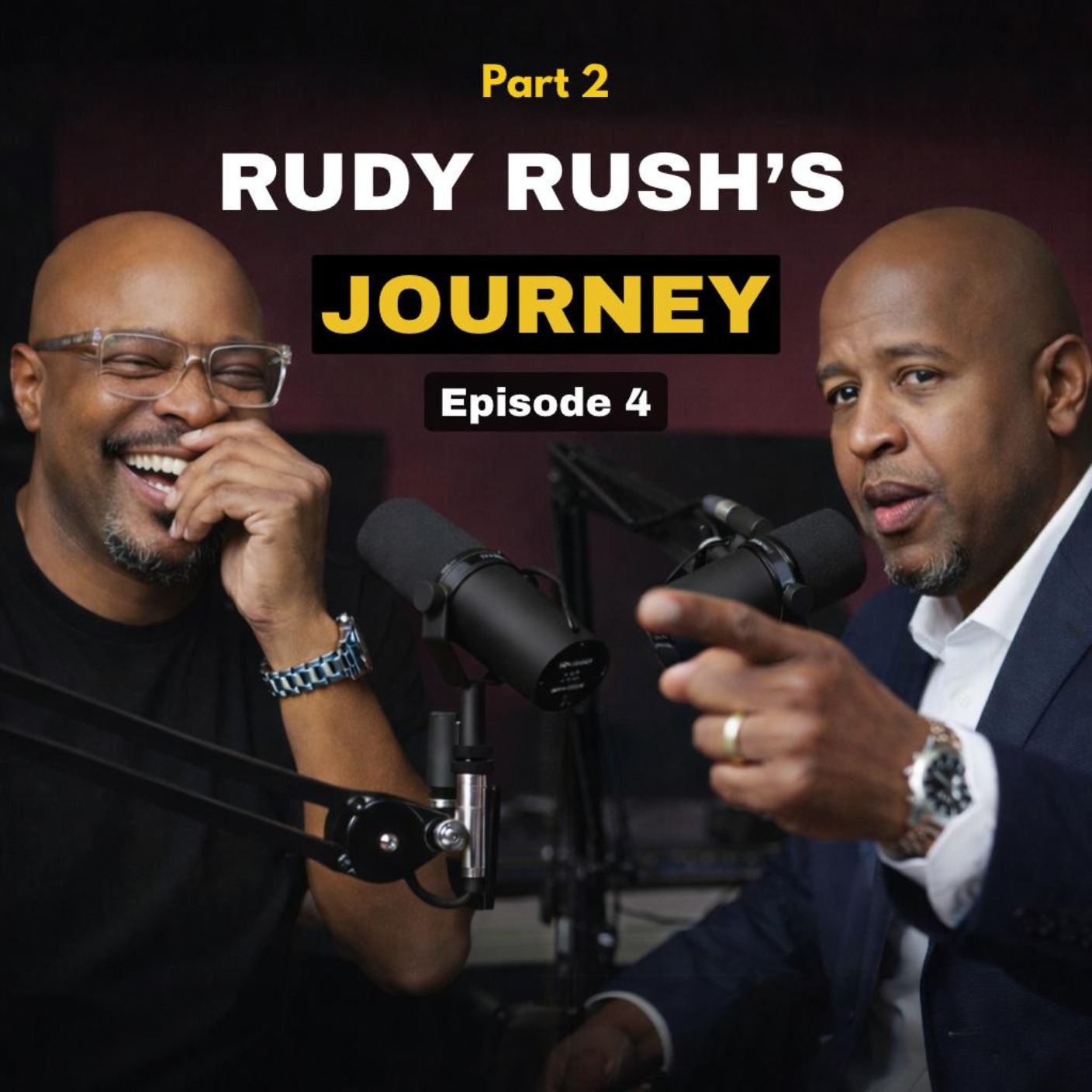
All right, so this is part two of the journey, the story of the Promise Queens. No, Harlem's Finest. Harlem's Finest. That's right. Is what he called himself.
- [00:30]
A
Yes.
- [00:31]
B
So you just listen to or just watch part one of these, and we're releasing these same day, so it's not like you had to wait.
- [00:39]
A
We doing it to him one day.
- [00:40]
B
Yeah.
- [00:41]
A
Oh, nice.
- [00:41]
B
Because your story's too deep.
- [00:43]
A
That's nice.
- [00:44]
B
That's too deep of a story.
- [00:46]
A
I'm telling the truth, Steve. Steve called and cursed me out.
- [00:49]
B
I mean, there might have been a.
- [00:50]
A
Phone call, you know.
- [00:52]
B
No, but I think that's a great segue into part two.
- [00:56]
A
Oh, yeah.
- [00:57]
B
And we're doing this authentic. You know, we do a ton of research on everything we do. But episode or part one of that episode was so strong that I was like, hey, we need to finish the story. So, you know, that journey we just left off with Showtime and the Apollo, and for a lot of people, bro, like, that would have been the peak. That would have been.
- [01:17]
A
Yeah, that's what career. Yeah. I mean, you know, even if they did nothing else after that, I think some people would say that was a great. You had a great run, you know, but there's more to it.
- [01:28]
B
It's more to it. So then what happened? What happened next? I know. You know, you said you kind of were seeking mentorship and you were looking for that, as in people. And did you think you were gonna find it in radio?
- [01:39]
A
No, I had no idea that I would. And it just came out of nowhere. Actually, you know, after the Apollo run, which was, you know, like, filled with all types of feelings and uncomfortableness, and, you know, it was just. It was the best and the worst of times, honestly. You know, I'm on TV every week, so I'm being noticed, and I'm getting access to things that I wouldn't before. And one of the things that I did get access to, traveling around the country with the McDonald's Kids Tour that's affiliated with the Apollo, is being on radio and interviewing and doing things like that and television. You know, I got a chance to do a small couple of stints in radio in Dallas, and then I got a big opportunity, because if you're familiar with Doug Banks, the late, great Doug Banks out of Chicago. He's not from Chicago. He's from Detroit area. But he made his bones in Chicago. Really close and good friends with Tom Joyner. Kind of came up in that crew. And he had a morning show, and it was him, Ricky smiley, Dee Dee McGuire, who's doing really great in radio, right? So it was the three of them and a few other cast members and stuff like that. And then Ricky Smiley actually left the team to go off and do his own thing, which he's still doing right now. Shout out to him. So he knew. He knew it was his time was, you know, to leave the show. How it started before I got on the show as the host of the Apollo. Every year, Dee Dee and Doug will come to New York to do a taping at the Apollo. They would do, like, you know, a day or two, and everybody would come out. And I'm always listed because I'd be on Tulum. So I'd be like, man, that's my favorite show. You know, I can't believe I'm saying that right now, but I actually had a favorite radio show I just always wanted. They were on the radio in New York City as well. They were nationally known. And I was like, man. And then I happened to meet Doug at a real men's cook. You know, I guess it was an event for real men cook. And he was there and I was there, and we kind of hit it off. But, you know, no major fireworks. No come work for me. It was just like, hey, man, I'm glad, you know, you're doing what you're doing. Listen to you guys. I'm sorry. I miss y' all at the Apollo. It was that kind of an exchange, you know, we move on. But then I ran into Dede in Las Vegas, hosted a McDonald's kids tour. And sure enough, you know, just the conversations from that and just them watching me, you know, like, from afar and up close. Cause I did some radio. When they lost Ricky, they were like, well, you know, this guy's pretty good. And, you know, he was with Joe Soto. Big shout out to Joe Soto. That was my first radio gig. And then I also had a stint on the air with Cheryl Underwood. That was hell on wheels, basically. And I'm glad Cheryl and I are super cool friends now, because it was just like. It got real ugly real quick. But then we got over, and, you know, she has many blessings with the CBS gig, and we see each other in New York, and we kind of kiss and made up. So I was happy about that. But, yeah, Doug was Really my first big opportunity in radio. And they gave me a call. And people don't know this. At the same time that Doug offered a gig with ABC Radio, Doug was let go, or at least they were taken off in New York. You know how syndication goes. So they move in different directions. And Vinnie Brown, shout out to Bay Brown. Cause Vinnie Brown, who was the director, the program director at the time, who had people like Doug, Wendy Williams, he had a really big roster over there. And they approached my agency and they wanted me to take over for Doug in New York because I had sat in and I'd done so well that they were very, you know, and they offered a lot. I said, at the same time, Doug and those guys were offering, you know, a little less. But for me, it was like, I'm going to learn from the best, sit in with them. They're naturally known. I'm a comedian. I can benefit from that. Do my shows on the, you know, instead of being in New York and can't promote in Kansas City. Can't promote in, you know, in Chicago. Well, with Doug, I can't. So what I was going to do is I was like, take that opportunity. So anyway, I started working with them and it was like instant chemistry. I mean, it was the best time, especially initially. And like we said before, in the last episode, Doug represented that one older, you know, brother, like uncle, like father, like figure that was like, you know, he would do interviews and I mean, it still, you know, sits with me now that he would be like, Rudy knows how. He knows how to get in and get out. He knows the timing of it. And I really felt like I did. You know what I mean? It gave me all the confidence just to be exactly what I wanted to be. And I thought I took full advantage of it. And it was great.
- [06:16]
B
That's amazing. Everything in radio ain't always fun.
- [06:20]
A
No, no.
- [06:21]
B
And let me, let me say that different. The business of radio and sometimes the human resources, the HR of radio aren't always what is cracked up to me. Yeah, so let's talk about that for, for people. And I think it's twofold. I think. I think we. We start with the business of radio before we actually go in time into the HR radio.
- [06:45]
A
So.
- [06:45]
B
So for people that are watching, and I know a lot of times now we're streaming more, right. Like, some people will say that radio is a dying media breed, but then there's others that will tell you it is still the king of media, especially when you talk about advertisers and sponsors. So talk about the business of radio.
- [07:02]
A
Yeah, the business for radio. For me, it was very interesting. And people, you know, if you ever get a chance to be in radio, which a lot of people don't get, but it's really like, you know, it's a lot of things that go along with it. You know, proper management, sales, this, you know, relationships are very big in radio. And, you know, I had a great time working with Doug, but, you know, it didn't go without its fair share of controversy or headaches and stuff. Especially as close as we were, you know, just imagine, you know, I was with them more than I was with my family. You know what I mean? I'm there every morning with them. And, you know, I mean, I don't know how many people. Some of us were, some of us weren't. You know what I mean? So you had to deal with that aspect, traveling with each other. You know, somebody has an attitude or somebody's getting more money. Like there's all types of things that can bring, you know, uncomfortableness. But we had some of the best times, too. But some of the things that I kind of, you know, got from radio early on, even working with Doug and abc, it was just like some characters there that if people are not, you know, responsible for your success or, you know, or they just have something that they want to control, they can. I remember getting paid very well to start with Doug, but I told you, I took a huge pay cut to come work with him because I wanted to learn under the best, and it was working for me. But, man, you know, I was still living off of some of my Apollo fame and money and stuff like that. So I was fine. And, you know, the checks I was getting, I appreciated them. It just added to just being able to do whatever I wanted to. And like I said at the time, I still had no kids, but, you know, I was expecting a child and my first. And I'm building this house. And let me tell you, people from the hood always tell you, I got two cars. I got the one I drive to work, and then I got my car. Cause I don't want them seeing me at work with this, because then they gonna start acting funny. You know, you think that's, you know, goes in one end, out the other. But, you know, honestly, in a lot of cases, I don't care if you black, white, Hispanic, like, you know, what the haters gonna hate. And I, you know, I was such a nice guy at work. I wanted everybody to have a good time and love each other and Stuff like that. I was like, you know what I'm gonna do? It's my first year in this big old house. I'm gonna have a Fourth of July barbecue. My mom is here. She gonna cook. And let me tell you, one of those directors or executives came by the house with his family. And the first thing he said when he stepped out of the car was like, yeah, we paid you too much. And, you know, I was quick to let him know, like, this ain't ABC money. This is. Oh, I'm Rudy Rush. I'm Apollo. I'm Def Comedy Jam. I'm here on Reddit. You guys are just, you know, paying for the paper plates. Whether. Whether. Whether it was the house or just my performance, which I doubt, man, very seriously. We were like, number one. You know, I didn't get. You know, my contract was just. I was just at a stalemate with them for a long time until, you know, things kind of fizzled and Doug had the leader and you see, and we went along with him. So I was with Doug for eight and a half years. Like I said, it was full of fun and things like that. And unfortunately, you know, the reason why Doug, you know, and I parted ways because Michael Bazin, if you remember, he left and there was an opportunity for Doug to get more markets, meaning taking some of the markets that were left over by Michael Bazin. So somebody convinced him, didn't know who they are, that Doug should let me go and take on George Wilbourne, which was a big mistake, but they thought it would work because George is from Chicago. Worst mistake they made. And, you know, I'm talking freely now like that because, you know what? You know, it's one thing to do things, and I'm. And I thought Doug did the right thing for. To make the money and move in a direction where, you know what, even some teams in sports, you gotta let Herschel Walker go so you can get Michael Irvin in the boys in the Owens of championships, you know what I mean? And so that's how I took it. As much as I didn't like it. Eight and a half years, that's my family. That's all I know. There was some trepidation, there was some fear, but at the same time, I wasn't mad and done. I was just kind of. I was kind of funky on how they did it, you know, I really was. But anyway, moving forward, you know, I got an opportunity right. Right away. Not right away, honestly. I left him in April. And during the year, I was working with ESPN and they Were trying to develop a show on the sports network that didn't go through. So I fly to California and I'm in Cali on my buddy's couch, going to different. Sitting on the set with Kevin Hart and those guys in Paramount when they're shooting the Husbands of Hollywood and all this other stuff. And this is early. This is late mid to late 2013. Then I get the phone call, man, Doc Winter calls me and he's like, yo, we starting up a new station in Houston. I loved you on Doug's show. I think you're great. I think you could do this by yourself. So I'm off to Houston, and I'm in Houston afternoons, number one for five years. That was a great time. But it was a lonely time because I was out there. And I started, you know, dating again and then starting another, you know, family, you know, subtracting the one I had, which is my daughter, but her mother. Now we're no longer together. So, you know, having another baby coming in my second after 10 years. My oldest is turning 10. But I'm out here by myself because even the young lady I was dating was in Dallas. So I'm driving back and forth. I'm just doing all these things and just kind of keep everybody happy. It was a tough time, even though I was doing really well in radio, so that was cool. But then again, here comes that monster again. Program directors, many managers, and I know they have a job to do, but it was sometimes the worst thing. And like I said, I got my list of quotes from these brothers and sisters that unlike. It's much like the comment, you know, we paying you too much. Yeah, I got a program director that comes in after two years, me being number one from the. I'm making historic numbers. Okay, you can go back and check that if you think I'm playing. But instead of him coming in saying, and you don't have to come in and say, oh, man, you really rush and blah, blah, blah, but, you know, recognize what I'm doing, and obviously I'm doing it well. And if you feel me and you know me now well enough to know, like, if there's something I need to learn, there's something I need to do, I'm going to do it. So come in with that attitude like, yo, I'm going to. Yo, I heard you. I feel we could get better with this and this and that to really take you. And maybe we can, you know, sell me a dream. We can go national. We can. We can bring a TV show, something that Makes it, you know, good for you and I to kind of get along. First thing this brother says, man, yeah, I was downstairs in sales. Them ladies like me ran down there. I'm going to have to keep you from down there. I'm like, what does that have to do with me? There's nobody saying, oh, he flirts with this one. They all see my lady when they come into town and my kids and all. So I felt like, you know, that got us off on the wrong foot. Had a bad situation with Iheart, actually. And, you know, it's all people's perspective. Doug passed away. I'm going to Dallas, not only for the funeral, but to also bring my youngest into the world. You know, she's being born in Dallas. So I asked not the guy who said that, because everything was. No, everything was. You don't understand. You know, this is. Mr. No. I was going home. I just needed to help Doug's crew stay afloat. They had lost Chicago. And then I jumped on just for a couple of weeks. They were trying on George Wilbourne, Sinbad. It just wasn't a correct fit. Those guys are super talented. But it just made me money wise. I don't know what it was, but I came in and I sat in. And what they realized is that during my time in Houston, I gained not only the comedic skills that I already had, but I got some broadcasting skills. Now I know how to turn the mic. All the things that Doug taught me and directly Mr. Miyadi me, you know, and it was crazy. But then, you know, after some time after Doug passing, they were like, yo, Rudy needs to be that guy. So they offered me the gig. They offered me Doug's show and Rick Doug's show. The craziest thing about it was that I told him, I said, I'm loyal to Houston.
- [15:06]
B
James Harden told us about Houston.
- [15:08]
A
Oh, Onyx, though. Let me tell you something about Onyx.
- [15:10]
B
What were you loyal to, man?
- [15:12]
A
Yeah, man, that 1200 I was getting tornado. 1200 a week? Well, no, not 1200 a week. 1200amonth. I was getting from Onyx to broadcast live from there. I got free wings drinks. And I had been telling young ladies, I'm making money, too. I can't be out. But you can sit here. You can talk to me, you know, so, yo, man. So Houston was a blast, but I really didn't dive in like I could have, you know, you know, if I was a little more single. And I'm just not saying just for the lady, just for me to be able to Be out, because when I was there, I was just, you know, in my place and just whatever. Anyway, I tell these guys, listen, I can't do Doug's show because, you know, I'm. I'm loyal to you. You don't have to leave there. You can stay there. I said, well, Doug, show comes on from 2 to 6. My show's from 2 to 6.
- [16:01]
B
Oh, you could. You.
- [16:02]
A
You could record at 12. 12 to 2. So what I did was I gave her, which I was. My contract was up. I could have walked. I said, no, you know what? Give me the same base you gave me before, which I know you and your. You know, your regime wouldn't allow that. You know, we would go get some more money. But I said, let me use the studios, you know, studios to do the other show. You let me use the ISDN lines and you do the other show. So I said, you know, because. And this is another thing that goes back to the Apollo days. I'm repping myself because I feel everybody's gonna steal from me. Like, I'm handling my own. I'm saying yes and no, and that's not the way to go, you know? And even though they tell you they don't want you to have an agent, a lawyer and all, you have to, because somebody needs to be the bad guy. You can't. So it was a big to do. Two guys started talking across the table, and they brothers. I'm sorry, but they did that. And they said, how much y' all paid him? And then they ran it up the poll to the higher ups, and they found out how much was just. It was a substantial amount, over half a million between the two shows. And life changing for my family, back where I'm accustomed to being even more so, you know, they were trying to keep me from doing both of them. And I got a lawyer. I was livid that I got a lawyer. I said, nobody's speaking on my behalf. And I'm trying to tell y' all what I'm trying to do. You guys are telling me I can't have. I had a young lady in there intern in front of me. Oh, you can't have somebody in the studio that's not an employee. Meanwhile, the show's down the hallway. One guy's got his wife working on the board, and she's not employee. It's his show. So there was all kinds of things of that nature. So it was a lot of bad blood. Some conversations that should have had been had with my manager and the higher ups I had to have it. So there was some feelings, though. You're not being honest. Some people don't want to be called a liar. That's what it was. You know what I mean? So. And I felt bad about it because the one person that I did kind of go at it with, I really liked it. You know, it wasn't about that. Was just handling the business in the way. You know, I'm, like, looking at everybody like I'm being attacked. So anyway, that's what happened with that situation. But then shortly after that, I get called to come and replace. Who else? They're taking Steve Harvey off in Dallas. Not this again. Not the Steve Harvey thing again.
- [18:23]
B
You've already made up, though.
- [18:24]
A
No, we already made up. But no, this is something that was. That was in the air with Steve. And station wanted to go in a different direction at the time. So they got me to come from Houston and I broke my contract. And in Houston, like I said, the blood was so bad that they were like, okay, yeah, go ahead. And it wasn't like the show was failing on that ambit. They were just. It was just so much residual from that time. They were like. And they didn't give me five years. I was there, no going away. And he was like, oh, it felt bad. I still got some feelings about that because I did a lot there. Kids events, incineras, volleyball games, donation for people who had eye surgery because they pinned the foot like, we're all family. It's a nice place. Anyway, so all of that happened. I'm gonna tell you. I'm gonna tell you how I got out of Houston. Really. It was the town hall meeting. I'm put this out there. The president had one of the ladies who brings her kids around and watching kids grow up. They always come in the studio. He pulls a little girl up on stage and ask her. He was like, hey, you like to hear? I love to hear. I love everybody here. He said, who's the coolest guy here? And she thought she was gonna see him. And she said in front of him, like, pretty much. I was like, I'm out. I was like, I'm gone. And, you know, he can say, oh, I don't even remember that. He's going crazy. That's kind of what happened. So anyway, I come to Dallas on a situation of a lifetime. Harvey is down, the staple in Urban AC morning show, and he's being taken off. And the domino effect may start with the show that I am a part of, which is called the Morning Rush. Now my Colleague, my one person, my co host, who I and all about women empowerment because I work with Dee Dee. So I know how. Well it could be the dynamic between a man and a woman on the air going back and forth or, you know, just speaking from the perspective. But they hired Claudia Jordan and you know, I didn't have a problem with Claudia. Claudia, I really didn't know. I knew who she was, but I didn't. I'm not a, you know, histories and the messiness because she's a reality based person. So, you know, that, that reality based. It's just started to simmer down before back then it was like the wild, wild West. People throwing, you know, drinks in each other's face and fighting all this other stuff. But. And she, you know, I should have knew something was going on because one of her requirements was like, well, don't call me no hoe on the air. I was like, well, why would I do that?
- [20:43]
B
Right?
- [20:43]
A
You know what I mean? But she had some baggage and she was being told things which she didn't realize. She being told things, honest things about the show, that it would be more hers. But I was there for the meeting. I'm the one that said it should be the morning rush, you know, your time to speak and operate in the sense of as soon as we got there, we were in trouble out of the gate. She was upset because, you know, she found out some financial things. She thought we should be paid the same. I'm like, I worked really hard. It's not about a male or female. If you worked in radio for 20, you know, all these years and you were number one, then I can only, you know, step to the side and say, yeah, you know, either we get equal billing because I did the same thing, or I got to come in and be your co host, you know. And so it was a problem which turned into an HR situation. And we talked about that briefly. You know, there were some pictures being shown which is, you know, people say the word sexual harassment, use the term excuse me, and they think that it's somebody trying to like sexually giggle you physically or whatever. But sometimes it boils down to, you know, crossing barriers that you shouldn't cross. And, you know, women sometimes, and ladies, you know, if you're a social media public figure, women get some of the most dirty pictures, you know, and some of them say they have a choice to open it. But anyway, she was showing male body parts in the studio and I didn't like it. And finally after the third time she did it, I had to go to hr, which I found out about HR the hard way. HR is not. They're there to help, but they're there to help the best interests of the company. They'll make you feel like they're taking care of you. They moved me from that show. Took me off a show with my name, and I moved it from 33, where Steve was before he left, and put us to 18, and we were climbing and went to Dede's where she was 3, 4. They were doing well, they were doing good. I bought them the number one, and I got all of the checks to prove it when we got our bonuses.
- [22:35]
B
So how does it show goats number one? When you say those numbers, what does that mean?
- [22:39]
A
So, you know, and the ratings. So, you know, when they do all the urban shows, whether it's urban AC or if it's hip hop shows, but basically all of those shows in that demographic. And the other morning shows, the Spanish shows, the other. The pop shows, you know, like, what's the cum? And what's the numbers for the show? And we went to number one. We were number one. Number two, the time I was there.
- [23:01]
B
And so it's measuring listener track.
- [23:03]
A
Absolutely.
- [23:04]
B
Listener traffic. Yes.
- [23:05]
A
And so we did that. And so not to say I'm the king of that, but I ain't never been out of the. I've never been out of the top five. Forget top ten. And so, you know, with that, I just assume, honestly, that when my contract was up for renegotiation, or just not even a renegotiation to pick up the extension, this is during COVID and we gave back 20% of our pay or whatever. Long story short, they didn't take the option. And the funny thing about it is. Okay, I'm Rudy Rush.
- [23:34]
B
Yeah.
- [23:34]
A
I'm gonna be honest with you. I was like, oh, I could jump on the tour. I'll call somebody, get on the stage, whatever. That's what it said. September 10, 2020. The world is shut down. There's nothing open. There's nobody flying, nothing. So now I'm in trouble. Long story short, a year later, not even a year later, in June, my oldest daughter mother passes away. So my father passed in 2019. These things happen at work. My relationship is going down to two. See, now my oldest daughter mother passes, and, like, now I'm in trouble. And so it took me a year. I spiral. You know, I used my savings, all the things that I could do to keep everything, fought for my oldest daughter to come. She didn't want to come. She Wound up coming, like, two years later. But I started working with Bill Bellamy. And, you know, the funny part is, you know, he called me. He was like, yo, you need to borrow some money. I was like, nah, but if you could take me on the road, maybe I can. I'll earn my space. I'm all about earning it. You know what I'm saying? And so now we're here. I mean, funny. Like, you know, those years and, you know, working with Bill was cool, but it's just like, you know, being a headliner myself, it was very hard because the pay is not well for features and stuff like that, and that money was doing nothing more than buying toothpaste for me, honestly, you know, compared to, you know, when you're making half a million dollars a year or you make it 250, whatever you need.
- [24:51]
B
You're not saying Bill was cheap? No.
- [24:53]
A
At all. No, no, no.
- [24:56]
B
You're saying, Lee K. The pay is cheap.
- [24:59]
A
He. You know, if he has something to do with it, I'm sure he would give me ample cheap. He has a family, too. I guess he got to feed his family.
- [25:08]
B
So there you go. There you go. So this is the story of Rudy Rush.
- [25:13]
A
Yeah, yeah, yeah. You know, the funny thing about it is, like, there's a lot of excitement in it, but it's a lot of, you know, one thing I did through all this, I had to learn, you know what I mean? And it goes to boundaries and things like that. Like, you know, I have to shout out my therapist, who was actually my couples therapist. Yeah, well, you too. My couples therapist did my job. She called me after a couple years, and she was like, my husband and I, we were wondering about you and wanted to call and see if you was all right. And in my mind, I'm like, I'm thinking, like, oh, she knew I was right. You know, whatever, because you think you always want to be the right person. But let me tell you, this woman and her husband became my support team. I told her, like, hey, I can pay you, but can't eat this week. That's where I'm at with it. And she was like, no, we're going to do this. As you know, it's free, and you just give us a love offering when you get back on your feet. And one thing that they did, which kind of really choked me up, I was performing with Bill, and it was the second show I did Baltimore, and I did really well. So he was like, oh, man, we had a really good one, two punch. I mean, super, right? I didn't lose a step. And so we go to Houston, and in Houston, they took a bus from Dallas to Houston. And anybody ride the bus. 4 hour bus ride is a bus ride.
- [26:31]
B
Yeah, that's some.
- [26:32]
A
You, you, you know, Dr. King and Rosa Parks, you do that. You know, you don't do that just in case, you know.
- [26:39]
B
You know.
- [26:40]
A
Yeah, it was every time. Yes. And so a long bus ride just to come to the, to the improv. And they, you know, they're older couples, so they don't get on the Internet like that. So they knew I was a comedian, but not to what extent. And I performed my butt off that night. Like I said, I'm on a mission. So, you know, and it was just a beautiful thing to see the people online for the second show, see me see them. And like I said before, I'm looking for this thing my whole life for support and family. Like, it felt like my aunt and my uncle came. I was choked. They was choked people. My mom was crying. They waited for the. After the second show to be like, we was outside and we saw her. You are good. If they love her, you are good. I was like, oh, my gosh, man. Made me cry again. I was like, so, you know, even with working with Bill, like, you know, I wrote a book and I met a gentleman who helped me write it. And it's all about, you know, just the perseverance because, you know, there's a lot of men taking themselves out. And I was in that place, not suicidal, but I have to be honest, for the first time, I felt so uncomfortable with the fact that I understood suicide more than I ever could before. You know, I always used to be somewhat of a hypocrite. Why would you check out all your kids? You know, boom, boom, boom. But I didn't. I never knew the dynamics of you could be lied on or taken and misused, or your kids kind of, you know, go to one side and believe someone else's story and that, you know, they saw you every day. How can they come up? And so it helped me in a lot of ways, which even helped me to meet you to say, hey, man, you know, this young dude is like, I didn't even. It was an energy thing. I was like, man, he could show me something, that the space that I'm in around the people that I'm around right now, to come back and have my own. Not come back and be back in the circus, but come back and have my own circle. He'll. He'll show me how to find that And I appreciate that. And that's why we're here now.
- [28:39]
B
Nah, man, I appreciate you, man. You know, we go back to that story. We talked about it in episode one a little. Just. You were someone I looked up to. Right. Like, you spent some time in the Carolinas. Right. Like, you. You were proud to talk about being in the Carolinas sometimes.
- [28:55]
A
Low country player of the week. All right. I scored 60 points in two games. They still. Yeah, still in the books.
- [29:01]
B
Like, what are you telling you? So he's 13, playing 12 and 13. But you're in the record moves, though. I am in there and shout out to athlete. Athlete for sure. But, you know, I was so just touched by your humility, because, again, you are the prodigy. Right? Like, this episode, part one and two, is all about the Rudy Rush story that's been written so far. Because the story's not complete. Right. But we're always writing our story. Just how humble you were. Because again, that night, man, I was like, wait, is that the Rudy Rush?
- [29:34]
A
Yeah.
- [29:34]
B
Cause, you know when you put the. In front of somebody's name, right?
- [29:37]
A
I was like, is that the Rudy.
- [29:38]
B
Rush jumping up on stage like, okay, yeah. As the host.
- [29:42]
A
Yeah. Okay. Yeah.
- [29:44]
B
This show is about to be fired live.
- [29:46]
A
And I made sure that's the one thing I did right. I went out with a bang because I said they gonna get two headliners on this show. They don't even know it. And now they added one. Yeah, yeah. So we have a. You know, Bill had a great situation going on, and we got along super well, and things started happening, and I was like, you know, I gotta go in a different direction. It had to end at some point. So I'm glad to be able to just rock with him and now, you know, doing some other stuff.
- [30:11]
B
Y' all cool, right?
- [30:12]
A
Yeah, yeah, we good.
- [30:13]
B
We ain't gotta have therapy, like, part one.
- [30:16]
A
Nah, I'm gonna let him step. I'm let him step on the couch. We good, we good. Ain't no furniture being moved. We good.
- [30:23]
B
Everybody good? So speaking of being good, is there anyone else that we need to say, Ruth?
- [30:29]
A
Oh, no. You know, there's a few people who say my name and don't say it to my face. And I would never confront them, because unless you say it to me, I don't know that you really do have a problem with me. But, you know, there's a gentleman who works with Bill, and, you know they gonna get on me this again. Cause I said something on. You know, Godfrey has a podcast. I went on Godfrey's podcast. And he was talking about joke thiefs and all this other stuff. And this gentleman was stealing my jokes. And I'm saying that joke stealing, real. It's a thing. Because, you know, no di on the.
- [30:58]
B
Stage before you, hey, I just borrowed it. You can't still use it.
- [31:02]
A
So this is the thing for me. Let me explain my position, because I'm not the aficionado. Like, I'm not the police. The joke stealing. And I'm never. 30 years I've confronted. This is the second time. The first time I was maybe 22 when I said something to somebody, you know, and I hurt my feelings, too.
- [31:19]
B
I didn't steal your joke, man. It was a family reunion. And I wanted to just say out there, I was like, first episode.
- [31:27]
A
You stole one of my lines on the first episode. If you bringing that up, I ain't saying nothing. But you must have watched the tape. Goes like, he said that. No, but no, this guy, Skeet Carter, man, I'm gonna say his name because it's just, you know, I have a lot of. Or I had a lot of respect for him. And this is just the thing, because D.L. hughley said it. He said he doesn't know one comedian who hasn't stolen. I have similar jokes to a few comics. And even when we're on the show together, we understand that there's a code. You don't use it or you talk about it if you need to use it. You know what I'm saying?
- [32:01]
B
That's really the key honor amongst comedians.
- [32:03]
A
Yes, absolutely. Like, yo, Rudy's got a dog joke. I got a dog joke. Let me ask him if he's going to use it. Or I'm just not going to use mine, so I don't have to ask him if he uses it. He uses it. So that was the thing. But my whole thing was this. We was on tour with Bill for, like, maybe together, maybe. We'd done about 12 shows. You can't tell me after the six show that we have David in comm. Like, you can't. I'm sorry, I didn't see it. 1 through 5 now, show 6 through 12, you know what I'm saying? Now we're doing similar on the same show. And I approached it the proper way, but then billing those guys, oh, you should go on social media or platform. I'm like, I sold to him already. You guys just want me to amp up the ante and then come harder. Now we're fighting them and establishing that I'm not going to be Able to come back to. You know what I mean? Oh, Rudy likes to. Because that's only. That's the only place like to call him out or be on stage. Now, you saw the night you were there, that was the guy that I brought on stage. And they didn't talk to me that night, which was funny, but I didn't expect him to be happy after that saying that. But there's a professional aspect that you have to have. You come into a building, you speak or whatever. I said, what's up? They walk past me. So I should go up on stage and be like, hey, come into the stage. This next dude. You might hear a few of my jokes and everybody else's. You know, I'm like. But I don't do that.
- [33:18]
B
Right? I always double scare you. Did not. You did not.
- [33:21]
A
No, I brought him up and you guys could. You gave him his accomplishments and gave us a love. Told everybody what he was doing. You know, like, you got to be able to shift gears. Even if you feel somebody's done wrong being. I don't feel like I did wrong. I felt like I spoke in defense of my integrity and what I've built for over 30 years. And like I said, the problem I had with Bill was Bill was co signing on them. You telling me what side of the fence you on. That's what's up, man. And you know, I ain't got no love lost, but at the same time, that's what's up. So I had to exit and take myself out of that situation and get out that.
- [33:53]
B
Sir can time Hewitt.
- [33:55]
A
No, it's already healed. Like, I'm already.
- [33:57]
B
You want Skeet? Good.
- [33:58]
A
If I see Skeeter and Skeet wants to have a conversation or say what's up? I could do that. But probably. We'd probably never be friends because of. Because of, you know, the fact that he feels. And even after watching this, they're going to feel some type of way. And you can't stop people from feeling some type of way, especially if they not in the right. And I don't care what anybody says. I feel like I'm in the right.
- [34:18]
B
Nomar and Joe Thievery.
- [34:20]
A
Yep, I see.
- [34:21]
B
You're right. Like, you can have respect and I have to be friends. No, you have respect and have circle. So I'm going to say this because, you know, that's what I think. That's what I mean. Ski Rudy. Respect.
- [34:33]
A
Nah, listen, I was mad too, because we were joaning back and forth all the time and stuff like that. And I took a picture of his shoes. I wanted to put it online and say something funny, but that had happened. So I was like, I can't do that because then it's a fight, you know what I'm saying? Talk about me. But no, I wish him all the best and I just can't be a part of that. I can't work with you anymore. If it's up to me, I won't. And if somebody paying me enough, I'll get on the show with anybody, you know what I mean? But at the same time, if someone asks me and my opinion matters, then I'm not working with the dude.
- [35:05]
B
There it is. So I want to go into, before we get to this top five, I want to go into the art of joke telling, storytelling. Because I do, I mean, anyone that has seen Rudy live, when he brings it, which is all the time, you hurt, your jaws hurt, your stomach hurts, your neck hurt, you probably sitting beside somebody slapping, I'm sorry your shoulders hurt. But there's an art, man, like, you know, I do a lot of speaking and I tell people that are speaking or want to be speakers, man, speaking is nothing but stories and points. Les Brown taught me, never tell a story without making a point and never make a point without telling a story. And I think that's also some of the art to joke tell, storytelling on that side. Because one of the things that I know as a speaker, I've seen you do this with different bits that you have. You've got to know how to tell a bit a story in 60 seconds, maybe the three minute version of that story. And if the energy is good, maybe the five minute or how to, how to make that and keep coming back to it. You do that, man, like better than anyone that I know. Talk to us about just the art of comedy, man.
- [36:24]
A
The art of comedy. I had to learn through the fire in New York City, one of the hotbeds of comedy and a time where it was the Def Jam era, so everything was on a high level. I mean, any night you can be on stage with Chris Tucker, Dave Chappelle, anybody could be walking through that club, Monet's days, Tracy Morgan, just to name a few. And so I learned by just watching, you know, I always still have the habit. I watch every show. Like I, you know, even when I'm the headliner, I watch at least if we're doing a weekend, I gotta watch the first couple of shows just to get the rhythm, see what the crowd, how they're breathing in and out, you know, What I'm saying, that's a real important thing to me. That's why I'm so successful. Because I watch the crowd and I'm like, okay, they like that. Oh, they don't like that or I would have done this that way. Even though you've got a thousand personalities, there's some common thing that makes them move together. And I know I sound a little crazy saying that, but that's really what it is. It's like a quarterback who could slow down the field while all of these 400 pound guys running at 100 miles an hour trying to knock your block off. And you take a breath and you breathe. You know what I mean? I never learned how to breathe. Being an actor, I always felt uncomfortable in that space, you know. But as a comedian on that stage, I am grandmaster. I know what I'm doing.
- [37:43]
B
Yeah.
- [37:44]
A
Yeah.
- [37:45]
B
So what's Rudy's top five today? So where are we going?
- [37:50]
A
You know, we talked about working with Claudia Joy and I'm gonna do the top five women who I approached to work with me and they said no. Work?
- [37:59]
B
Yeah, work, work, work.
- [38:00]
A
To be my co host. Oh, yeah, yeah, yeah. At the time I was in a relationship, so I couldn't. Yeah. These are the top five. Number one. I don't know if you remember, she used to work on Ricky Smiley's show, Ebony Steele. She was great on the air, she was very funny and we were friends, so it would have been a great time. But you know, there were some people trying to hate on her. So it really wasn't much her saying no. But at the same time, I wish things didn't happen in her life that prevented her from working with me because people was hating big time. Number two on the list, Latoya Luckett. Now, I was really high on Latoya. Cause Latoya, I saw her on a couple of BET programs and she was just on fire. And I kind of knew her through traveling with the Apollo and doing stuff, you know. She wasn't with Destiny Shaolin. I was the host. But I seen them when they came to the Apollo. So I was always familiar with her, always with Shalin Rob. I think we even followed each other on Instagram. But guess what? She was in love with a dude that lived right up the street in Dallas. It didn't work out, unfortunately, but it would have been a great pairing. And I think they would have probably let me get that choice because Latoya was that much better than the, you know, the general manager would have had to choose her, uh, number three was Dede McGuire herself. We had an opportunity to team back up, and we. It just didn't work out. That was. That was my buddy. We fought like, Martin and Pam, and we. We made a big impact on Doug's career. As far as, you know, having that team, we were the best team, I have to say that. And I. I think that was actually super dope. The last two, like, you know, Swain is a young lady out of Louisiana, but by way of Chicago. And we bumped heads as soon as we worked together on the dub show. They had her come over, and I was like, man, I'm sorry, Lonnie, because I know some people are in your ear. That's how radio is sometimes you become the enemy of someone else's words, and you kind of doing what somebody's telling you to do. And it just didn't work for us. So I hope. I wish the best for her, but she was definitely. And she's my inspiration right now. I always get mocktails. Cause I don't drink no more.
- [40:11]
B
There you go.
- [40:12]
A
She was always telling my mocktails, and we would tease her, but now I'm the one being teased. So thank you for that. Last but not least, there's a young lady in Columbia, South Carolina. She goes by the name of Dee Dee as well. Dee Dee Renee. And she actually replaced Dee Dee one time with Doug. And she's awesome. She gave me some information that's very helpful to me, like, she's a true friend. She cares about my oldest daughter, watched her grow up, actually help raise her with her twins. So she. I thought even though she was a little older, we could have played that cougarish funny thing. So, yeah, shout out to her and let's do my top five.
- [40:47]
B
Rudy's top five. Brought to you by the joke gorilla who. So they did that.
- [40:53]
A
I'm sponsoring myself right now. Yeah, Gorilla, absolutely. Yeah.
- [40:58]
B
So now you've had a good career, I think. Part one, my Mount Rushmore was on comedy. You know, you were honorable mentioned on that list.
- [41:08]
A
Thank you.
- [41:09]
B
I think now my Mount Rushmore should be media personalities slash shows. Wow. My Mount Rushmore for media personalities slash shows. And I'm going to go radio and podcast this. Podcast.
- [41:26]
A
Yeah, yeah, that counts.
- [41:27]
B
No order. But I am going to start with my crib. Someone who has been an inspiration for me, and that is Charlamagne. Tha God.
- [41:35]
A
Okay. Yeah.
- [41:36]
B
South Carolina. Stand up. I mean, just. Just what he has met, what he has done, and the consistency, the longevity is hard.
- [41:46]
A
Yeah, no, absolutely. And you know, I know not intimately, but I was very close to some of the people he worked with, like Wende, and I was really friends with her. But then, you know, my oldest daughter's mother who passed away, they were so close. He paid for a funeral. Like, I mean, I didn't have to lift a finger to try to help nothing. They were really close. And so, you know, I even called him afterwards, and we've seen each other out and about and stuff like that. But, yeah, he's worked really hard to get to where he's at, and he's, like, at the top right now.
- [42:16]
B
Totally agree, man.
- [42:18]
A
I'll go with that. Yeah, I'll go with that.
- [42:21]
B
Number two, go with my guy, Ricky Smiley.
- [42:23]
A
Okay, Rip.
- [42:24]
B
I. So I'm gonna be honest, man. Like, I don't. I don't listen to a lot of radio anymore, so I will definitely. I'm a SiriusXM guy. Always find time so that Ricky Smiley. More so.
- [42:36]
A
Ricky's.
- [42:37]
B
I can promise you. And Ricky got me through college sometimes, man. I needed Ricky in college.
- [42:43]
A
Ricky with those prank phone calls and stuff like that. Cash and sweet milk.
- [42:47]
B
Hey, does the chicken belong to the church? Y'? All, don't throw that out. Church's chicken wing, man. Just. Again, just another person, you know? Ricky's good from a human being standpoint.
- [42:56]
A
Yeah, good, dude.
- [42:57]
B
Gotta lock it out. Yeah, gotta lock. Three and four are tough, man. Like, there's so many places I can go. Three, because we are in this podcast era, and the way that that game has changed, man. I think Joe Rogan kind of set the bar for what everybody is doing. Another comedian as well, too. I don't think he gets. Well, he gets a lot of love. But I think there's a generation of people that don't understand the comedy that Joe Rogan had and all the other things.
- [43:20]
A
No, Joe Rogan was funny. Well, to say it was. He is funny. I did a festival in Aspen, and I was blown away. I was like. Cause I thought he was just an actor on the sitcom. That dude's funny.
- [43:31]
B
Yeah, yeah. Joe Rogan, all the Mount Rushmore media, we talked about radio, podcasting. And number four on this list, man. I know somebody personally who's done a lot of radio, a lot of media. They told me when the numbers come out, they ain't never any worse than three. You can give them any geography. It don't even have to be urban, yo. He said, give me country western. We gonna be 1, 2, or 3, yo.
- [44:04]
A
And the only time I was up to 3 was this.
- [44:07]
B
Oh, Wait, wait, I haven't said this first.
- [44:08]
A
It's big. No, Martin K. Love that. Love that. No, Martha.
- [44:15]
B
Rudy Rush.
- [44:16]
A
I'm sorry, man.
- [44:16]
B
I jumped Radio Mountain Rushmore, because nobody's. Talk wide.
- [44:22]
A
Any results person, send them in. I wish you would, because I got the receipts.
- [44:27]
B
I almost like the young kids.
- [44:28]
A
But no, man, it's been. It was. It was fantastic doing it. I look forward to doing it here with you with this podcast. You know, we just getting started, you know what I'm saying? So we're going to have some great moments. We may have a bump here and there in the road, you know what I'm saying? But we try to keep everybody's attention and teach you something because that leadership that you have, that punchline that I can come with. And, you know, y' all didn't know that Mick had punchlines, so now we got a whole nother. Come on. Yeah, no, you great, bro. And so we're gonna have some fun, man. Yeah, we on location right now.
- [44:59]
B
Yeah, yeah, yeah, yeah. So the Mickism for part two.
- [45:04]
A
Yeah.
- [45:06]
B
My mechanism is this. Give people their flowers.
- [45:08]
A
Yes.
- [45:09]
B
This dude right here is the goat. And that's why I love them. So give people their flowers now. We always talk about, again, the things we wish we could say, the moments we wish we could take back. I'm celebrating you because not only do I know where you've been, where you're going, but I know the character that you have. And I have this saying, right? Your character is like a shadow. It's seen before you walk. Your character speaks for itself.
- [45:36]
A
I appreciate you, brother. Yeah, man. Love you, too, brother. Mean that, man. Thank you very much. Yeah, yeah, yeah. I'm glad we got together to do this and we had the time to do it. You know, that's another thing that people don't understand. Like, sometimes you can be prepared to do something and someone else is not right. And our lives actually just got to the point where we both are able to do something like this. And it's fun, you know, Like I said, I can't wait to do more.
- [46:00]
B
Yes, sir. All right, y' all get ready for the next episode. Make sure. Do us a favor, Tell us what you like, what you don't like. If you have a topic you want us to talk about in a segment of a show, hit us up. If you want to sponsor a segment, we wear swag, too. Just letting you know we out here.
- [46:15]
A
And if you want to help me create some beef for Mick instead of me all the time, I gotta fight Steve. I gotta fight Bill. I gotta fight Steve. I gotta fight home. Okay, so we do that then. All right, that's what's up.
- [46:29]
B
See, I just knock people out. I'll have me, bro. I'm a vegan.
- [46:33]
A
That's that tar hair. Yes, sir.
- [46:35]
B
I take everything. We'll see y' all on the other side.
- [46:37]
A
All right, y', all, that's the power and the punchline. If this episode hit, do me a favor. Rate it, review it, subscribe. That's how we keep these conversations coming. Power moves the room. The punchline makes it stick. I'm Rudy Rush. See you next time.