← The Prof G Pod with Scott Galloway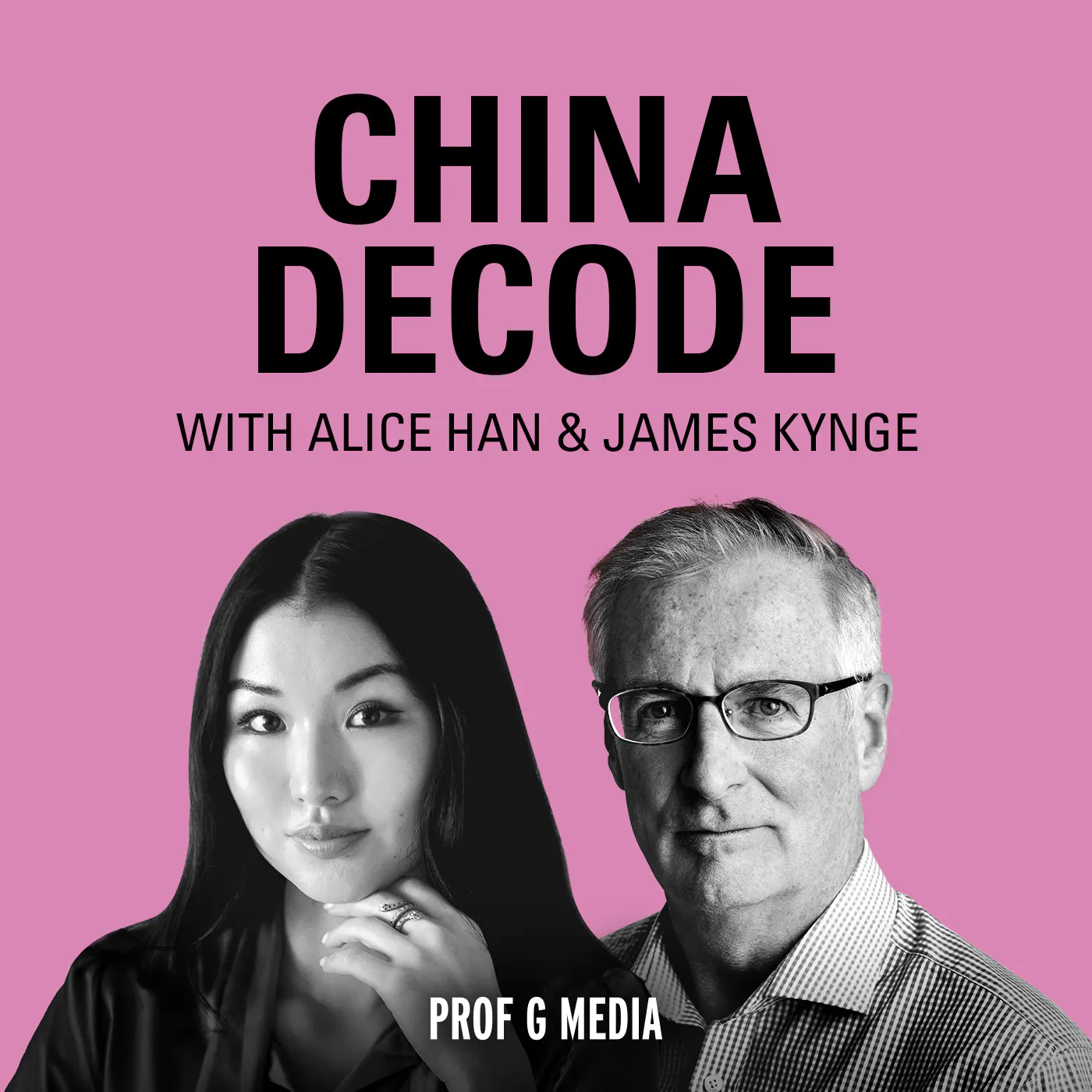
The Prof G Pod with Scott Galloway
China Decode: Trump Promised to Be Tough on China. Xi Outplayed Him.
00:39:37
Loading summary
Transcript42 lines
- [00:00]
Adobe Advertiser
Why send your ducks and hope they land? Share a PDF space for microbet. They'll understand. A custom intro that's so clear. An audio summary that says what they need to hear. An AI assistant that makes it all click so they'll understand it real good real quick. Ain't just some files on the screen, it's exactly what your clients need to see. You can do that. Do that. Do that with Acrobat. Learn more@adobe.com do that with Acrobat
- [00:32]
Amazon Advertiser
Support for the show comes from Amazon. There are the things you can plan for a first birthday party, a movie marathon, a renter friendly bathroom reno. And then there are the things you can never plan for. A surprise rainstorm, A Blu Ray player calling it quits. Stick on tiles that looked way better on the package for all things planned and unplanned, Amazon has you covered. You'll find low prices on everyday essentials and last minute lifesavers. Shop Amazon and save on essentials. Save the everyday
- [01:09]
Starbucks Advertiser
morning decisions. How about a creamy mocha Frappuccino drink? Or a sweet vanilla smooth caramel maybe? Or white chocolate mocha? Whichever you choose, delicious coffee awaits. Find Starbucks Frappuccino drinks wherever you buy your groceries.
- [01:24]
James King
For the first time ever, the Chinese leader had the upper hand in this summit and the potentially game changing outcome was that the US And China are now trying to work together to put into place what China calls a constructive China US Relationship of strategic stability.
- [01:51]
Alice Hannah
Welcome to China Decode. I'm Alice Hannah.
- [01:53]
James King
And I'm James King.
- [01:54]
Alice Hannah
In today's episode of China Decode, we're discussing the post game analysis of the Trump XI Summit, what Apple, Tesla and Nvidia stand to gain after the trip and the infusion of technology and creativity that Chinese companies are bringing to this year's Cannes Film Festival in France. That's all coming up, but first let's do a quick check in with how the Chinese markets are starting the week. On Monday, the Shanghai Composite index ticked up 0.2%. Standout stocks including NARA Technology, a semiconductor equipment firm, up 4.9% and Huagong Tech up 10% with positive signals through the AI and semiconductor sectors. The Shenzhen component rose 0.3%. Retail sales sharply eased to 0.2% year on year growth in April, marking the weakest growth since December 2022. Industrial output also slowed to 4.1% year on year, the softest pace since July 2023. Alright, let's get into it. We're still decompressing from last week's big summit between US President Donald Trump and Chinese President Xi Jinping. Both leaders left the event after trading praise and touting massive progress in stabilizing what they agreed is the world's most important bilateral relationship. Trump hailed fantastic trade deals and said a lot of different problems, quote, unquote, were settled. Although no major agreements or breakthroughs were announced before he departed Beijing, Taiwan and Iran loomed large over the talks, but much of the trip seemed centered around economic and business related progress between the two nations. James, we have been talking about this at length. We had a substack live video about this as well. How do you perceive, what are the main takeaways and what do you think we should expect after this main summit?
- [03:48]
James King
Yeah, I find myself slightly at odds with, I think, conventional wisdom on this. A lot of the news reporting has called this things like the stalemate summit. Others have called it a nothing burger. But I think those are very much missing the mark. To me, this summit was important. There was one, what I would call historic aspect and there was one potentially game changing outcome. I think the historic aspect was that from my perspective, for the first time ever, the Chinese leader had the upper hand in this summit. And the potentially game changing outcome was that the US and China are now trying to work together to put into place what China calls a constructive China US relationship of strategic stability. I know that's a bit of a mouthful, but to me that means they're trying to climb down from a situation in which China and the US are constantly adversarial in their relationship and moving towards a much more stable relationship. And I think one of the pointers towards this is that Trump invited Xi Jinping to visit the US In September this year and Xi Jinping has agreed to go. So there's a measure of continuity there. I think quite a lot of people will be wondering whether or not this really was a historic summit. And in the sense that I reckon China had the upper hand, I think you can see that from the fact that Trump was trying to be as friendly as possible. He said to Xi Jinping, you are a great leader. He said, it's an honor to be with you. It's an honor to be your friend. The relationship between China and the US Is gonna be better than ever before. And I think one piece of essential background has changed a lot in the way these two countries see each other. And that is China's enduring chokehold over rare earth and critical mineral supplies. These rare earths and these critical minerals are essential to make U.S. weapons. The Pentagon needs them. U.S. arms manufacturers need them, and so do all the big US Tech companies, many of which were on the plane with Trump. The other thing is, of course, that the US Needs China to some extent to help resolve the war in Iran. We don't know whether China, China will play ball in that regard, but it seems clear that Washington thinks it might need China. So that's why I come to the conclusion that this was the first US China summit ever where China appeared to have the upper hand. The second point about stability, I guess we can discuss, Alice, but how did you see it? I mean, how did you see the interplay? Did you think it was important or did you think it was a nothing burger, as some people say?
- [06:52]
Alice Hannah
Well, just very, very quickly, I've been watching all the videos in terms of their interaction, and I think President Xi knew how to play that relationship very, very well. He was speaking to the right audience when in his banquet speech, the state banquet speech over dinner, he said that the great rejuvenation of the nation, which is a big slogan of his, can go hand in hand with make America great again. And I thought it was very smart and apt of him to link these two narratives that these countries have about their greatness together to say that effectively he and Trump are, you know, singing from the same choir sheet. And effectively, I think it is reviving this G2 relationship that China wants to see on the global stage. But to bring it slightly away from the personal, I want to sort of talk, talk a little bit about what has happened in the last few days since the summit, since Trump has left. And it's always very helpful to compare notes in terms of the two sides of readouts. Washington versus Beijing. Washington's White House readout made it very clear that China had agreed to a number of things which still the Chinese haven't confirmed. So just to run through them very, very quickly, the Chinese, according to the White House, have agreed to purchase 200 Boeing aircraft now that it's slightly down from the 500 that what is originally speculated. China has also agreed, according to the White House, to purchase at least 17 US billion dollars per year in ag products in 2026, 2027 and 2028. And that's on top of the soybean bean deal that it agreed to late last October. And China is going to renew the expired licenses for the 400 or so USB facilities. They're going to work with regulators to import more American beef and similarly American poultry, and that the Chinese will help the US Address its concerns with regards to critical minerals and rare earth supply Shortages. So some of these rare earths like scandium neodymium, which do have relevance for defense related applications. From the Chinese side, and I think this is interesting, there is an acknowledgment of the U.S. purchases, the purchases of U.S. boeing aircraft. There is an acknowledgment in terms of a resumption of some level of beef imports as well as ag imports, but no specification as to the size and the scale. And then I thought this was interesting. The Chinese readout suggested that the two sides had agreed that they would expand two way trade, including in agricultural products, and that they would cut tariffs in mutually sensitive areas. It suggests to me, as is often the case, that the two sides have very different interpretations or takeaways from the meeting. The American side is very keen to help American business, in particular American ag, American Aviation Company in the form of Boeing, and to help plug the holes in the supply chains when it comes to critical minerals. On the Chinese side, I feel as if they're more interested in, in the two boards, the Board of Investment and Board of Trade and renewing and expanding those two dialogues in terms of A reducing tariffs, which obviously didn't come out of the summit, and B, expanding the opportunity set for Chinese companies to set up a shop and invest in American manufacturing. What is also interesting is what is missing from the two readouts. So there's no discussion about chip export back bans being wound down and similarly no discussion about the tariff levels. Right. So that's what's happened in the last few days. Keen to get your take on it, but I think we can, at least from my vantage point, Trump got some of the business deals that he wanted. The Chinese got further summitry and an expansion of discussion around some of the more strategic areas like tariffs, like investment and maybe in the future chips.
- [10:52]
James King
I completely agree, Alice. I think, you know, after these summits, it's always really rewarding to look at the contrast of the two communiques. And these two communiques contrast quite a bit, as you've just mentioned. I think the key contrast is something that you've already mentioned a little bit and that is the rare earths. The Chinese did not mention rare earths or critical minerals at all. And yet the US put this pretty much, you know, at the top of the, of one of the leading sections in the White House fact sheet. This to me means that first of all, as we mentioned, the US really wants these rare earths. They are essential for the production of American weapons. But it also means, I think that the Chinese are holding back. They are. I'm not saying the Chinese will not supply these rare earths, but they're gonna use them as leverage. They're gonna use them as bargaining chips to ensure that the US does more on China's big ask, which Xi Jinping was very clear about right at the beginning of the summit, and that is Taiwan. Exactly. What China wants from the US On Taiwan, we don't really know. But if past is prologue, then certainly China will be hoping that the US either reduce sharply or scrap or postpone some of the big US Arms sales to Taiwan. Or maybe in the future, the US Works towards coming up with a form of words that more closely reflects China's view of its disagreements with Taiwan, particularly on the issue of sovereignty. So I think that China is using the rare earth chokehold to try to, you know, put pressure on the US to get something on its most important topic. Now, on the issue, as you've mentioned on the trade and investment councils, I do think that this is quite key. As I said at the top, there is this Chinese phrase of putting the relationship onto a new footing, that of a constructive relationship of strategic stability. And I think these two councils, as China called them, or as the US Is calling them, the US China Board of Trade and the US China Board of Investment, I think these are crucial to this initiative of trying to reduce some of the differences, reduce some of the tension that we see between the US And China on trade and investment issues. And some people are pooh, poohing this. Some people are saying, this is not important. It's just a form of words. There's no sincerity behind it. I completely disagree. I think this is important, and I think both sides want to do this because both sides need something from the other. In the case of the US it's rare earth to make weapons. And in the case of China, it's some movement from the US On Taiwan, aside from other issues, of course. So I think that there is impetus for the two to try to work together to reduce their differences.
- [14:05]
Alice Hannah
Really interesting. And just to add one final word on some of these geopolitical issues, Taiwan and Iran, there wasn't, apart from the Chinese statement about their red line when it comes to Taiwan, there wasn't any major readout about the Taiwan issue. Similarly, there has been no indication as of yet as to whether or not Trump and the American administration will go ahead with the $11 billion arms sales agreed to last December to Taiwan. And similarly, on the Iran issue, we heard a China that was very mum and reluctant to say anything about Iran, but the US Was keen to document the fact that China and the US Agree that peace in the Middle east and a resolution to the Strait of Hormuz is in each other's best interests. But I come away from this summit feeling like a nothing burger on the geopolitical issues. Right?
- [14:56]
James King
Yeah. I think on Iran it was the dog that didn't bark. The US Was pretty clear. Trump even said in front of Xi Jinping in televised remarks that the US Was determined that Iran would not develop a nuclear weapon. The Chinese side was completely silent about that, both in that meeting between Xi and Trump, but also in the following statements after the summit. So I think we can take that as a point of disagreement, or at least China is not willing to say anything about Iran and nuclear weapons at this point. So it doesn't sound to me like there was a great meeting of minds on Iran. It could also be the case that China is holding this in reserve to use it again as leverage in the future.
- [15:44]
Alice Hannah
Yeah, so it seems like they've agreed to disagree, but put those two issues in the back burner if you missed it. We did our first Substack livestream last week breaking down all things Trump XI Summit, joined by Kevin Xu, author of the Interconnected Substack, to check out all the insights on the meeting, Robotics, Taiwan and more. Watch the replay on Substack now and we're going to be doing more of these exclusive live streams for our subscribers, so make sure you get signed up to Prof. G+@china decode.prof.gmedia.com we'll be back with more on the CEO presence at the summit after a quick break. Stay with us.
- [16:28]
LinkedIn Advertiser
Support for the show comes from LinkedIn. If you're a small business owner, you don't need me to tell you how much hiring great people matters, but the time and resources you have to spend to get it right are precious commodities. Sourcing, connecting with and screening candidates can quickly eat into time better spent on your customers. That's where LinkedIn Hiring Pro comes in. It's designed to be your hiring partner, helping you source the right candidates faster. That way you can hire with confidence without making it feel like a full time job. LinkedIn hiring pro simplifies the entire process all the way from writing your job post to shortlisting candidates and running AI powered initial interviews. Plus it does it all through a conversation interface where you can just describe what you're looking for in plain language. LinkedIn says nearly 60% of hires find someone to interview within a week with hiring pro, you spend less time searching and more time connecting with the right talent. So instead of sifting through piles of resumes, you get a tight, high quality shortlist that actually moves things forward. Join the 2.7 million small businesses using LinkedIn to hire get started by posting your job for free@LinkedIn.com profile. Terms and conditions apply.
- [17:36]
ProtonVPN Advertiser
Support for the show comes from ProtonVPN. Have you ever noticed that the second you Google something, suddenly every ad you see is about that thing? Or you try to watch your favorite TV show while traveling and it just blocked? That's all because the Internet isn't as open as we think. So if you want the same access that you get at your home as you do on the road, you might want to check out ProtonVPN. ProtonVPN is a secure VPN service designed for people who want to prioritize their digital privacy and security. It keeps what you do online private and lets you access the Internet like it should work open, secure and on your terms. Unlike most VPNs, Proton is backed by strong European privacy laws and years of expertise, creating a safer, faster and more open Internet for everyone. Plus, ProtonVPN has a strict no logs policy that's independently verified, it's open source so anyone can expect how it works, and it's backed by a foundation focused on protecting user rights, not selling your data behind the scenes. It's easy to get started. Right now ProtonVPN is offering our listeners 70% off a two year plan. When you go to protonvpn.com profg that's P-R-O-T-O-N-V-P N.com profg for for 70% off your two year plan, that's protonvpn.com propg.
- [18:59]
Amazon Advertiser
Support for the show comes from Amazon. There are the things you can plan for a first birthday party, a movie marathon, a renter friendly bathroom reno. And then there are the things you can never plan for. A surprise rainstorm, a Blu Ray player calling it quits. Stick on tiles that looked way better on the package. For all things planned and unplanned, Amazon has you covered. You'll find low prices on everyday essentials and last minute lifesavers. Shop Amazon and save on essentials. Save the everyday.
- [19:37]
Alice Hannah
Welcome back. We haven't touched much yet on the economic and commercial aspects of the Trump Xi Summit, but it was notable that over a dozen US Executives were part of the delegation to China, including Tesla CEO Elon Musk and Nvidia CEO Jensen Huang. Who both traveled with the US President on Air Force One. The CEOs became a bit of the main story themselves. Here's Jensen Huang enjoying himself around town in Beijing after the official meeting concluded. James, I actually have to say that I've been doom scrolling a lot of the videos of Jensen Huang going on his little food foodie journey throughout Beijing. He's eating a lot of things like Mi Xue Bintong which is a type of, you know, bubbled iced tea. He's also eating Zha Jiamian, which is a type of Chinese noodle. And I see him eating some squid tentacles, having some fermented soybean milk. And what was actually interesting to me is to see just the level of affection that he has amongst everyday Chinese on the street. You could see that in the way they interact with him and even in the way that the stores immediately after he's come, almost as if to bless each store, they have a photo of him or some new drink or some product that is named after him that I think suggests to me that Jensen Huang's charm offensive has worked out. He's probably been the most effective CEO in the delegation in terms of charming the Chinese. And some netizens have been commenting on the fact that he's been the hardest working of the delegation to because he's been here the longest and doing his homework on China, which I thought was pretty apropos. But it speaks to, I think, a broader insight which is that Jensen really needs to get the Chinese on board. They're the holdup when it comes to the import of H200s. The US has just announced that 10 Chinese suppliers can get access to H200s from Nvidia, including Alibaba and ByteDance Lenovo. But the real bottleneck is Beijing. Right. So I wanted to ask you a broader question as to who were the winners and losers, but in particular the winners that you think at the CEO delegation. And what does that say about American business interests in China?
- [21:51]
James King
I really like your descriptions of Jensen Huang going around Beijing eating all kinds of Chinese food. I think he looked like he was enjoying himself. And did you see that clip of him when he was walking around Shi Shanghai in central Beijing, which is a beautiful scenic lake area. I was there about a month and a half ago myself and a Chinese reporter rushed up to him and said, how do you like China? And he said, I love China. I thought, I mean it was just a, it was just a one liner, but it, it really said a lot to me. He is the $5 trillion man I'm talking, of course, about the Nvidia, well, market capitalization of Nvidia shares hovering around 5 trillion right now. So he is the US's biggest businessman and he's actually, well, he runs the world's most valuable company. So it is a big barometer of US China relations as to what's happening with Nvidia chip sales to China. And I thought, you know, he came out with a phrase in an interview recently, he said, you know, Nvidia had a 90 some odd percent of the world's market share, but today in China we have dropped to zero. And this is obviously because of the US bans on Nvidia selling advanced chips to China. You've just mentioned the fact that as we Understand it, about 10 Chinese companies have received US Commerce Department authorization to buy Nvidia's H200 artificial intelligence chips. But so far we haven't seen any shipments to China. And it's not clear whether or not the Chinese are allowing their companies to buy these chips. It's possible that China will hold out on this and just not allow Chinese companies to buy Nvidia chips. Or maybe China's holding out for the even more advanced Blackwell chips, also made by Nvidia, holding out for them to be exported to China. So we just don't know the situation at the moment. But one thing is very clear, that is that Nvidia, the world's most valuable company, is having a really rough time trying to sell its advanced chips to China. And, and that's why Jensen Huang was on such a charm offensive and as you said, certainly an effective charm offensive when it comes to popular opinions of him in China. I would say it seems to me vitally important for Nvidia's prospects as a company as to whether or not it can actually start selling its advanced chips again to China.
- [24:38]
Alice Hannah
You say he's a 5 trillion man. And just to get a sense of how important the Chinese market is, you know, by some estimates we'll have a $5 trillion market for robotics worldw by 2030. China dominates. Well over half of all robotics is done by China. So if you just think about what that could mean for Nvidia, I mean, it could be at least another trillion dollar that he could add to his name if he can get the Chinese market. Because, you know, as we discussed previously, James, China's going all in on robotics and there's a lot in terms of chip technology that Nvidia can bring to bear for, for that robotics rollout completely.
- [25:18]
James King
So, you know, whatever time and effort Jensen Huang is spending on his charm offensive could be repaid massively depending on what the Chinese government decides to do. I mean, the important thing about this now is that I don't think the ball is in America's court. I think the ball is now in the court of the Chinese regulators, whether they allow Nvidia chips to come in, because China in the meantime has had all kinds of workarounds. The main ones are Huawei's Ascend series of chips being put onto super clusters, these massive racks of 15,000 chips, or half a million chips, or next year, we're told a million chips, to try to work around the need that China currently has for very advanced chips such as the ones that Nvidia makes. So that's really something to watch. You mentioned Elon Musk as well. Again, Elon Musk, obviously a massively powerful businessman in the US and with an extraordinary global stature, but in China, he needs China very much indeed. At the moment, he's seeking clearance from Chinese regulators to expand the adoption of Tesla's full self driving assistant. So that's one thing he needs. He's also hoping to buy apparently about US$2.9 billion worth of equipment for manufacturing solar panels from Chinese suppliers. So he needs China for that too. You know, I thought it was interesting. I'm sure you've seen the videos of Elon Musk and his young son going through. I think it was the Great hall of the People in Beijing that was kind of touching on his behalf. I guess that was a bit of a charm offensive too, would you say?
- [27:08]
Alice Hannah
Well, I'm not sure if Elon was intending that to be a charm offensive. I don't think he's as deliberate as Jensen Huang. But my funny observation was when he was at the state banquet and Lei Jun, the CEO and founder of Xiaomi, which is a major smartphone company, but now they're expanding into cars and elsewhere. He wanted to take a selfie with Elon. And Elon Musk obviously wasn't keen. You can see that on his face. And then the other thing that I thought was really interesting was that the only woman sat at that table, which was the main table where the leaders were at, was Zhou Chunfei, who is the CEO and founder of Lens Technology. And she was the only woman there. She's a powerhouse and really built this company from scratch. And they build the advanced screens that are used in all iPhones, tablets, but also in Tesla dashboards as well. So, you know, I thought that that was super interesting that she was there because remember, it's not just these US CEOs that are trying to sell into the Chinese market. They're also using China for production. Right. So as we discussed previously, China's share in global iPhone production is around 74%. That's still pretty, pretty significant. It means three out of every four on average iPhones are still made in China. And Tesla still requires a lot of Chinese manufacturing inputs. I saw and toured a place near Hangzhou where they specialize in these advanced light but also durable tires that are used in Teslas. And apparently Tesla in its newest models is unable to find anything comparable to this kind of special alloy wheel that is manufactured in Hangzhou. So you know, I think that's worth mentioning is that for a lot of these CEOs, they, they don't just want to sell to the market, they also want to be able to ensure that they can still get access to Chinese inputs, intermediate inputs.
- [29:09]
James King
Yeah. I really like the way you've highlighted Zhou Chunfei. I think that is such an important example. It shows first of all, you know, the supremacy of, of the Chinese supply chain, the fact that China can make pretty much anything of very high quality, cheaper and faster than anywhere else in the world. But also I like the Zhou Chun Fei story because she built herself up from nothing. She started life as a migrant worker working on the production line. She had almost no formal education. She was, when she was a worker, she studied at night, became self taught, teach herself enough technology to become, you know, in the technology industry as she is now. I mean, it's amazing. She is really the embodiment of the American dream as well as the Chinese dream. You know, she made it from nothing. And I think that's such an important example of what China's all about. Right. At the other end of the spectrum, just to round it out, I was interested by Goldman Sachs. Goldman Sachs is a different case. I'd say in the case of Jensen Huang and Elon Musk. They both need a lot from China. Goldman Sachs also needs a lot from China, but it's playing another charm offensive game. It recently issued a dim sum bond. These are China's offshore bonds. It's borrowed about 47 billion renminbi in renminbi debt so far in 2026. This is going to ingratiate it to the Chinese government quite a bit. And as far as we understand, Goldman needs access to the Chinese market. It wants access to the retail and institutional investors to manage their wealth and assets. And of course, given China's rise and its Yearly GDP growth, the number of investors are growing sharply. So Goldman has also got its eyes on the prize. It's trying to do the right thing by the Chinese government, do the right thing by the Chinese regulators so that it gets the approval it needs to appeal to more and more Chinese investors.
- [31:27]
Alice Hannah
Yeah, and probably on the other side of this is Meta. Right? Meta tried to buy Manus, which was this agentic AI platform, originally domicile in China, now domiciled in Singapore. But that has been canceled effectively by the Chinese regulators because they do not approve the sale of a Chinese originated AI company to Silicon Valley. So I thought it was interesting that Meta went anyway because I remember the heyday over 10 years ago when Mark was going to China and he was very keen on the Chinese market. Since then they've taken another attack which is to see China as the enemy somewhat especially the Chinese applications like ByteDance. So I thought it was interesting that they were there. Not clear to me what they were trying to do. Maybe they were trying to ingratiate themselves to the regulators again or try to improve their profile in mainland China. But I thought that that was super interesting. Okay, let's take one last quick break. Stay with us.
- [32:36]
Disney Advertiser
Zootopia 2 has come home to Disney. Let's go get ready for a new case.
- [32:41]
Starbucks Advertiser
We're gonna crack this case and prove
- [32:42]
Botox Advertiser
we're the greatest partners of all time.
- [32:44]
Alice Hannah
New friends, you are Gary Desnake and your last name. Desnake.
- [32:50]
James King
Dream Team Hidden New habitats Zootopia has
- [32:53]
Alice Hannah
a secret reptile population.
- [32:56]
Disney Advertiser
You can watch the record breaking phenomenon at home.
- [32:58]
Botox Advertiser
You're clearly barking at.
- [33:01]
Disney Advertiser
Zootopia 2, now available on Disney plus, rated PG. Get the most out of your vehicle with GM Genuine Parts and AC Delco Original Equipment. The only parts designed, engineered, tested and backed by General Motors. You can find your part perfect fit for most makes and models and choose from three tiers of parts including GMOE or Gold and Silver aftermarket parts. Visit gmparts.com for more information.
- [33:32]
Botox Advertiser
Chronic migraine 15 or more headache days a month, each lasting four hours or more can make me feel like a spectator in my own life. Botox Anabotulinum toxin A prevents headaches in adults with chronic migraine. It's not for those with 14 or fewer headache days a month. It's the number one prescribed branded chronic
- [33:48]
migraine preventive treatment prescription Botox is injected by your doctor. Effects of Botox may spread hours to weeks after injection causing serious symptoms. Alert your doctor right away as difficulty swallowing, speaking, breathing, eye problems or muscle weakness can be signs of a life threatening condition. Patients with these conditions before injection are at highest risk. Side effects may include allergic reactions, neck and injection site pain, fatigue and headache. Allergic reactions can include rash, welts, asthma symptoms and dizziness. Don't receive Botox if there's a skin infection. Tell your doctor your medical history, muscle or nerve conditions including als, Lou Gehrig's disease, Myasthenia gravis or Lambert Eaton syndrome, and medications including botulinum toxins, as these may increase the risk of serious side effects.
- [34:26]
Why wait? Ask your doctor, visit botoxchronicmigraine.com or call 1-844botox to learn more.
- [34:33]
Alice Hannah
Welcome back. We'll head now to France, another place where China is increasing its influence, this time at this year's Cannes Film Festival, arguably the most prestigious film festival in the world. The China Pavilion is in its fifth year at Cannes and China Night was a gala evening hosted last week at the start of the festival. Meant to celebrate Chinese cinema and culture, the event featured previews of upcoming Chinese films, celebrations of the country's artistic traditions, and perhaps most importantly, demonstrations of new technology that are changing how Chinese creators make content and how audiences absorb that content. It's coming at a time where you've got a lot of consternation and excitement about Chinese video platform AI capabilities. FT just ran a piece that was super interesting, looking at how the Chinese video AI models are far outpacing the American ones. So Sea Dance and Happy Horse, for instance, are doing just better across number of metrics than what you see out of Twitter or Google or even Facebook. And at the same time there is a new TV show called Pursuit of Jade in Chinese. That was the first time in history that a Chinese TV show has reached the level of being in the top 10 of global non English content on Netflix. I sense that after Covid and we've had to wait a couple of years, we are going back to aspects of really, I feel like the early 2000 and tens where there was a lot of global enthusiasm about Chinese culture, you know, in terms of film, in terms of music, in terms of art and you know, from COVID And then a couple years after that it was really, I would say, cloistered away. The west wasn't as interested in China, wasn't as interested in showing its culture and but I sense a big shift that's happening whereby Chinese creators and the government supporting the creators are super keen to show the richness of Chinese culture, be it from the traditional Chinese kung fu films to new animated films to AI generated content and at the same time, the rest of the world is more keen to see it, to appreciate it and to share it. And this, I think fits in with some of the previous discussions we've had about China Maxing. Are you a big Chinese film buff and what do you think about this turn towards China?
- [37:05]
James King
Well, I am a Chinese film buff, but I have to say I'm a film buff of yesteryear, probably. I like the old Jang Yi Mo films. I was delighted to see that Gong Li, who starred in many of those Jang Yimo films, opened the Cannes Film Festival this year along with Jane Fonda. I mean, to me that just showed how much China has arrived when it comes to global box office and China's growing global influence in film.
- [37:34]
Alice Hannah
The interesting thing to me is the vibrancy of the ecosystem. So the film industry is apparently starting to rebound after the pandemic. And, you know, box office receipts are already exceeding $1.89 billion this May. This fits into what I think was once described to me as a B2 consumerism in China. But what I mean by B2 is sort of in China, that's the basement, so two levels down below the ground floor. And that's where you get your bubble tea and your, your cheap products, dollar stores and whatnot. And. And you know, in a time in which people are more cost conscious, going to the cinema can be relatively cheaper than say, you know, traveling or going overseas. So I think people are going towards that kind of entertainment that is more affordable. And the government has been pushing it too. So the government is apparently claiming initiatives like turning film sets into tourist destinations that will apparently, according to the government, generate around $26 billion in revenue this year. The other thing that I thought was interesting can was there was this lady, Tina Ja, I believe, who's the head of Wingsight, which produces AI generated film content. And she was saying that the Chinese AI film market could grow to 15, around US$15 billion. And you know, we haven't gotten to the minutiae of this, but in China they're advancing way beyond just film and TV shows. There's a lot of short form content that basically people watch completely on the equivalent of TikTok. So Douyin. And there's also now increasingly more AI generated content with China really pulling ahead because a place like TikTok can command and have a database of so much more content, you know, video content, than even Instagram does, just because of its user base and the user generated content scale. So I think it's an exciting time to be in film, you know, after a long hiatus. All right, James, you know what time it is? It is prediction time. As you peer into the future this week, what do you see?
- [39:43]
James King
Okay, I'm sticking with the film topic. As I was researching for this piece on film, I thought, when are we going to see the highest grossing actor in the world as Chinese? I'm gonna stick my neck out, Alice, and say that within five years we're gonna see the highest grossing actor in the world will be Chinese. So what I'm really saying here is the Chinese film market, which is currently second biggest in the world, is. Is going to become the biggest, and therefore a Chinese actor is going to become the highest grossing actor. I know this isn't out there an out there prediction. I'm really just trying to dramatize a trend which I think is on its way, which is China's going to be the world's biggest film market.
- [40:29]
Alice Hannah
Really interesting. All right, so mine is more germane to the summit, and I may have mentioned this previously, but I. Even though a lot of people may disagree with me, I have a strong feeling that China is going to start to approve H2 hundreds at some point in the coming months. I think that Jensen Huang is playing his cards right politically. He's getting a lot of support domestically from everyday Chinese people. You see that across social media, microblogs. He's a popular guy in China, and I think I'm long Jensen Huang. I think he knows how to play the game between the US And China, and I think he's one of the last standing chimericans that will benefit from both sides. So I'm Team Jensen. I think the H2 hundreds get approved by Beijing because also Beijing doesn't have enough capacity via Huawei and SMIC to meet the demands of compute that AI will increasingly generate.
- [41:26]
James King
Good call.
- [41:27]
Alice Hannah
All right, that's all for this episode. Thank you for listening to China Decode. This is a production of Prof. G Media. Make sure to follow us wherever you get your podcasts so you don't miss an episode. Talk to you again next week.