← The Prof G Pod with Scott Galloway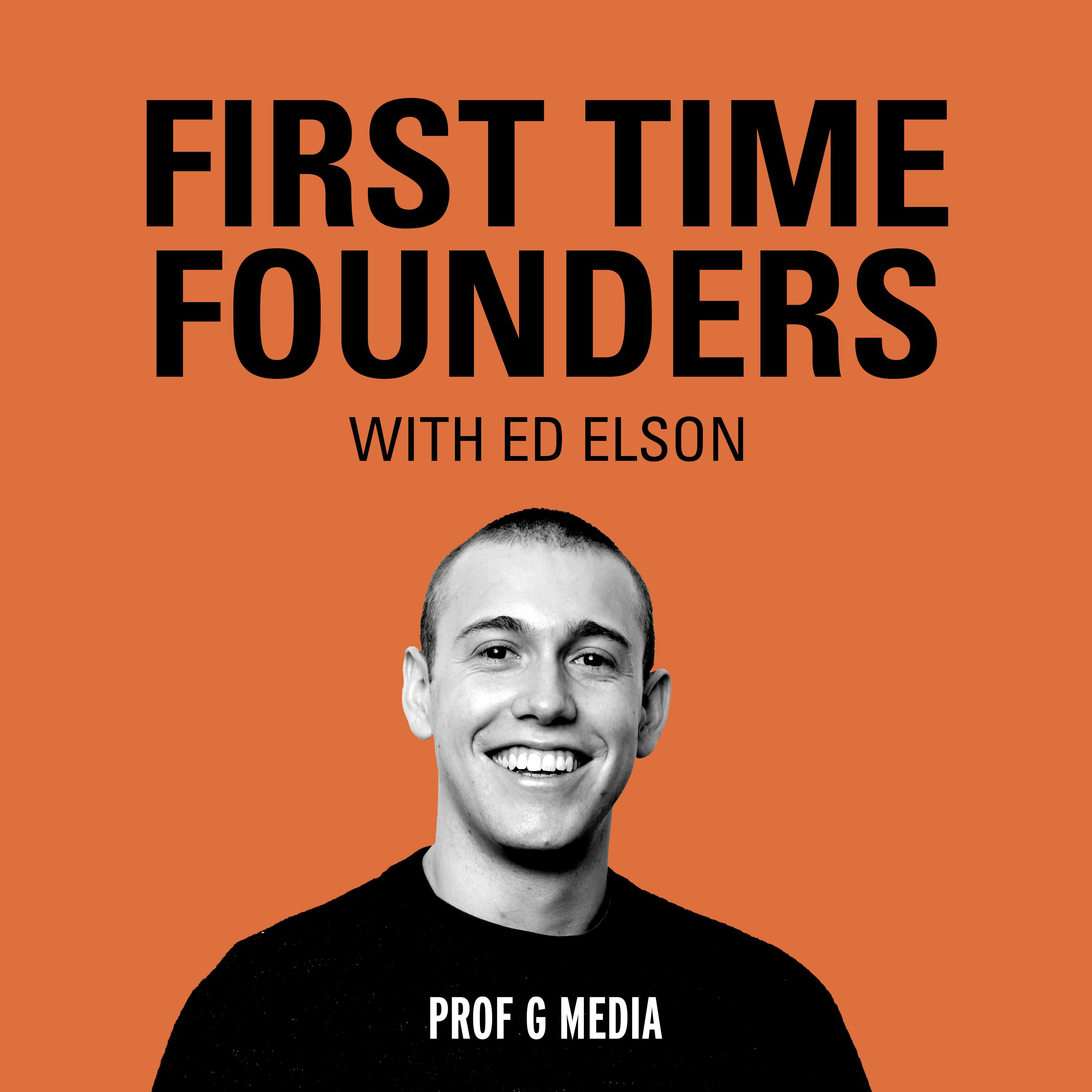
The Prof G Pod with Scott Galloway
First Time Founders with Ed Elson – How Anthony Scaramucci Became The Mooch
01:08:23
Loading summary
Transcript74 lines
- [00:01]
Silicon Valley Bank Announcer
Support for the show comes from Silicon Valley Bank. Silicon Valley bank is deeply embedded in the company's products and services that form the innovation economy. They are a proactive partner that helps bring their clients vision to life. And they fuel high growth companies with tailored solutions and the hands on support that turn potential into performance. And now SVB is a division of First Citizens Bank. First Citizens bank has always been dedicated to highly personalized service and supporting emerging sectors. And that's why buying SVB made sense for First Citizens bank and for you. SVB clients can help benefit from this combined commitment to tailored solutions, incredible service and deep expertise from a top 20 bank with a national footprint. So if you're serious about being a part of the innovation economy, there's really only one bank for you. Silicon Valley Bank. Yes, SVB. Learn more@svb.com Vox and this is not in the script, but we have been a client of SVP at propg media and my company before L2 for better part of a decade.
- [01:09]
Ed Elson
Welcome to First Time Founders. I'm Ed Elson. My next guest rose to fame in 2017 as Donald Trump's White House Communications director, a role he famously left after just 11 days. His blunt, unfiltered style made him a household name, but long before Washington, he was making work waves on Wall street. And in 2005, he founded SkyBridge Capital, a new York based alternative investment firm with several billion dollars in assets under management. Four years later, he launched the SALT Conference, now a global stage for leaders in business, finance and politics that hosts thousands of attendees every year. And today, he's an outspoken voice at the intersection of media markets and policy. Here is my conversation with Anthony Scaramucci, founder and managing partner of SkyBridge Capital. Anthony Scaramucci, thank you for joining me on First Time Founders.
- [02:06]
Anthony Scaramucci
Hey, that means I'm very flattered to be on it. Thank you. I like the. I need swag. I need swag. Okay, First Time Founders, I want to wear a shirt, a hat.
- [02:15]
Ed Elson
Well, you're wearing your Batman shirt and that's pretty swaggy, I'd say.
- [02:19]
Anthony Scaramucci
Well, okay. So you see, I'm going to date myself the the 60th anniversary of Adam west as Batman, January 12, 1966. So I'm preparing myself for the 60th anniversary. Cause I'm still a small child.
- [02:33]
Ed Elson
But I also know that you're a big Superman fan. That's your ultimate superhero, right?
- [02:38]
Anthony Scaramucci
Yeah. I don't know if you can see behind me though. See, I had that made. That's Superman fighting Muhammad Ali Actually, and if you look closely, I'll take a picture. My wife and I are sitting next to Batman and Sonny Bono. I had us drawn into the picture. See, you gotta stay young, El. Okay.
- [02:57]
Ed Elson
First time I met with Anthony in person, we went to Skybridge, which we're going to talk about. But in the front of the Skybridge lobby there is a giant Superman statue. This guy loves Superman more than anyone else. It's pretty incredible.
- [03:12]
Anthony Scaramucci
Think about the story. Think about the mythological lore of Superman. He grows up in a small town, he's obviously adopted. So there's some little bit of loneliness and need for achievement. And he's now got to make his way in the big cities. Aspirational American dream. And of course, he's trying to do the right thing. Remember, Ed, Superman is who we want to be. But Batman, Batman is who we are. We're dark, we're disjointed. You know, we got lightness and darkness.
- [03:42]
Ed Elson
And we're not endowed with supernatural powers.
- [03:45]
Anthony Scaramucci
Exactly. Superman is all about the light. Batman, a little bit dark like us, you know.
- [03:50]
Ed Elson
Well, I'm, I'm really glad to have you on. I wanted to have you on this program. We've talked with you before. We've talked with you on property markets, you've talked with Scott on Lost Boys. You have a lot of political experience. I think many people know you for your time in the White House. But the way I think about you and the reason I wanted to have you on this program is you are kind of the ultimate entrepreneur. You are the ultimate self starter. I mean, grew up Long island, blue collar background, worked your way onto Wall Street. You were a scrappy guy on Wall street, made your connections. You're, I mean, one of the greatest networkers I know. That's something I've learned about you started your own investment firm, then started another investment firm, started a global conference which has become extremely popular. That's the SALT conference. You might be a public figure and you might have a background in politics, but you are really an entrepreneur. And so I wanted to have you on this program to hear about your entrepreneurial background. What drives you, what led to Skybridge, what led to the SALT conference. And I guess where we should start is probably just your background growing up in Long Island. Tell us a little bit about your upbringing in your childhood.
- [05:17]
Anthony Scaramucci
Well, first of all, you're being very generous and I appreciate that and I'm a huge fan of yours. And you are also an entrepreneur. So you have to go from zero to one. And that's a hard thing for people when they really think about it. Because I can remember when I started skybridge, it was 2005, my daughter was nine years old, and I was printing out this PowerPoint. It was a very antiquated PowerPoint presentation. And she says, dad, aren't you at Lehman Brothers? I said, yeah. She goes, well, all my friends here in this neighborhood work at Lehman Brothers. What the hell are you doing? Why are you. This is just a piece of paper, this Skybridge thing. I remember looking at her laughing. I said, yeah, but I'm gonna turn it into something. So you've gotta go from zero to one. You get that? Scott Galloway gets that. And with that, there's a journey, there's an adrenaline rush, there's desperation, there's moments of despair, and there's a lot of anxiety that goes into that because you don't know if you can make it or not. And so my journey actually started at 11. And what happened to me was I was home from school. My dad got home early from work because he was a construction worker. Lunch pail went into the refrigerator at 10pm he woke up at actually 3:45am, got himself ready by 4:15, he was out the door. He was on the job site by 5am and he came home at around 3, 3:30. So I was home from school. My dad was getting home roughly at the same time. And there was a lot of commotion and screaming and anxiety in the house. I guess he had gotten his hours cut back and, you know, he was an hourly worker and he was subjected to the whims of the economy and his foreman and so on and so forth. Very hard worker. And we lived in the middle class. I would never even want to try to even dishonor my dad's work effort, to suggest we grew up poor, but we had financial anxiety. So there I was, 11 years old. I said, okay, I'll get myself a paper route. So I got my work papers, I went to Long Island Newsday. Mr. Fusco, may his soul rest in peace, he gave me 15 houses. And after school I would ride around on my 10 speed bicycle and I would deliver the papers and I'd collect. And then I said to Mr. Fusco, Listen, I have a great idea. I want you to give me 30 papers on Wednesday. And I went into the local apartment buildings. They're all blue collar Irish and Italian ladies, Ed. And I dropped the newspaper off at every door and I rang the doorbell and I said, oh, Mrs. Sheridan, how are you? Mrs. Ellson, how are you? I mean, this is a free paper from Long Island Newsday. And then the next day I showed up and I rang the bell And I said, Mrs. Elson, would you be willing to subscribe? I'm trying to build my account base, I'm trying to build my network. And, and I built the biggest paper route in that town. I was making like $60 a week. I was given 45 of it to my parents. Again, this is like 1975, 1976. And so I got the hustle in me very, very early. And then when you have the hustle in you, and this is a first time founders podcast, so people should listen up. When you get the hustle going, you build your self confidence, you know? Yes. Did some women say no? I'm sorry, Anthony, I don't want to subscribe to Long Island Newsday. Sure. Could I have had a re rate of 30, 40%? Yes. But I was converting accounts and I was building a little bit of a largess for myself and I was hustling those papers and it got me into the mode of thinking like that. So then I went to work at the local supermarket, I worked in my uncle's motorcycle shop. And by the time I was in high school, I had three jobs. I was working because I needed the money. I needed the money for potentially going to school, and I needed the money to help my parents. And, and, and I got that mindset. So the first thing I would say to people, you have to believe you can do something, and then you have to put a foot forward with imperfection. You know, if you're waiting for your business plan to be perfect, if you're waiting for the idea to be scintillating the website to look pristine, you're waiting too long. You got to get your ass going. You got to get up and go. And you, then you have to adapt yourself when things are going wrong. And when things are going right, you don't get too cocky, you know, and so that's really my origin story. And you know, I owe a lot to my mom and dad, but really my dad's work ethic, he was a hardworking, he was a tough guy. He's hard on us in the house, but he was a very hard worker and he played things straight. That was the other thing. You know, my dad, if my dad had a parking ticket on Main street in the town I grew up in, he would walk to the post office to get a money order to pay the parking ticket. He wouldn't even wait to go home to write a check. That was my Old man. That's how he thought about things. And so I always tell the people at Skybridge that my dad gave me my last name. Clean Ed, paid his taxes, paid his bills, worked super hard. So we're never gonna do anything wrong at Skybridge. We can't do anything to dishonor that. I don't need the money, okay? But what I do need is for people to think that we're ethical and that people think that we have high integrity. And so you've gotta fuse those things together. You gotta fuse the work ethic, the ambition, the willingness to go on that arc, that journey which has all that trepidation and adrenaline and fiascos happening. But then at the same time, you gotta make sure you maintain your integrity in all circumstances. Because I've had some really bad things happen to me. I went into business with Sam Bankman. Fried was spending 25 years in jail. If I didn't do everything right, block and tackle and watch my P's and Q's during that business, business transaction, I could have been embroiled in something. And you know your colleague and partner, Scott Galloway, and I always talk about this. If you have integrity, you will always have opportunity.
- [11:17]
Ed Elson
I think one of the interesting things about you describing your childhood there is clearly you have the hustle in you. You're working hard, but it also sounds like you have a talent in you. It sounds like you are a pretty remarkable salesman from quite a young age. You're going around door to door, you're charming people, you're setting up these accounts. It sounds like you had sort of a knack for this. Do you think that that is something that you recognized in yourself? Did you feel confident in your abilities?
- [11:51]
Anthony Scaramucci
I mean, you probably don't want me to go full on existential, but I do believe that we're coming into the world with an operating system. You know, there's some of us that are musical and some of us can sing beautifully, and some of us are great mathematical minds or some of us can see things differently from a physical perspective. And I think I came in with some emotional intelligence. Thank God. I think I got raised pretty well. I mean, not with you. Find me the family is perfectly functional. I'll find you. The family's lying. Our family motto was let's keep the word fun and the word dysfunctional. So I'm not trying to say it was pristine or anything like that, but. But we, we got raised right, we got raised with a good set of values and things like that. But I do think you come in, you know, my brother's very mathematically inclined. I'm not, I'm more historically informed. You know, I can read things and assimilate information pretty quickly, but I'm not probably the best family member in math, you know, so. So you have to pick and choose what you are and then also be self aware, you know, so I, you know, and again, if you're self, aware, then you have the self confidence to delegate. So if, if you and I, you and I are working together, I can figure out what your skillset is relative to mine. And then here's all the work relative.
- [13:10]
Ed Elson
To your skillset, which is, by the way, one of the, one of our biggest recommendations on, on all of our podcasts is if you want to be successful, you need to identify what your talent is and then you need to invest heavily into that. But that first step is actually quite difficult when you're 11 and you're selling these papers and it's working. Do you have a moment where you're like, I'm pretty good at this, I should keep doing this?
- [13:34]
Anthony Scaramucci
Yeah, I think you do. I think you have a moment, as I was trying to say, where you start to build self confidence. You're like, okay, Mrs. Sheridan said yes, Mrs. Smith said no, but let me keep digging here. Every time I get a no, there's gotta be a yes around the corner and you start to develop some level of self confidence. But I think the thing I'm getting at, you have to start. I think what happens to us, we get anxiety about starting and we also have to relax the shame gene in our personality. So we have to say to ourselves, okay, it may not work. And then can I live with myself? I call it the cocktail party test. Can you walk into the cocktail party and be the rugged startup person when the other person's working at Goldman Sachs and their career is moving gradually but diagonally positive, and yours is going like a cardiac ekg. Can you be comfortable with that? You know, I worked at Goldman. I spent seven years there. It was in a phenomenal place. Had a great career there. I left Goldman to start my own business. So I went from making big money in my 30s to no money to start my own business. And I remember, I remember that anxiety. And then when it started to work, I'm going to tell you this story because you'll get a kick out of it. A couple of my friends from Goldman said, wow, your business is doing great, you're making your own way. I'm going to go start my own business and I Remember one of my buddies coming into my office and saying, okay, I'm going to leave Goldman. I'll go start my own business. And I said to him, okay, can I show you my summer house? Do you mind? I would like to show you my summer house. And the guy looked at me. He said, what do you mean? I said, well, come down the hallway. Let me show you my summer house. And I opened the door to a closet, and it was a server farm. And there were $700,000. That was a lot of money back in the late 90s. Okay? There was $700,000 of servers, network switches in the closet. And I looked at them. I said, this is my summer house in the Hamptons, okay? Because I had to put all of my money into this tech to run the trading desk. I said, so if you're willing to put your summer house in the closet here in the office at 900 Third Avenue, which was this nondescript commercial office building I started my company in, if you're willing to do that, then you should do it. But you're not going to be at that cocktail party with your pinky up in the air in the Hamptons or showing off your artwork and the habit, because you're gonna be putting the money back into your business.
- [16:10]
Ed Elson
Yes, exactly.
- [16:12]
Anthony Scaramucci
So to me, it's a methodology. It's a way of thinking. And you have to not care it. You have to not care. And if it's not going well, I've had. At least. As I'm a public figure, as you pointed out, I've had at least three, possibly four financial obituaries. Three or four. This is a. This is. You put this on YouTube. Right? All right, let me show you something. This is because we got clowns in my office, okay? And so for people listening, this is a bobblehead of me sinking in a dinghy called the SS Mooch. You see it? And so the New York Post in 2022 said, Scaramucci's a loser. He bought bitcoin. Bitcoin's going to zero. And they had this caricature. I looked like Tyrion Lannister, like a little tiny guy sinking in the bitcoin boat. And the comedians at Skybridge, they made a bobblehead for me, okay? Now, you could be upset about that, or you could own it. I took a picture of it. I blew it up. I framed it, put it in my office. Because my attitude is, if I'm going down, I want to go down gloriously.
- [17:18]
Ed Elson
Yes.
- [17:19]
Anthony Scaramucci
But if I'm not going down, I want to remind people that they may have bet the wrong horse thinking that I am going down.
- [17:26]
Ed Elson
Yes, right.
- [17:27]
Anthony Scaramucci
But here, here you go. What do you think?
- [17:28]
Ed Elson
It's beautiful.
- [17:29]
Anthony Scaramucci
Not bad, right? I think the hair looks great on this.
- [17:31]
Ed Elson
I think the hair looks great.
- [17:32]
Anthony Scaramucci
But it's a five or a six head. Actually it's not really a forehead. That's one of the problems what I'm making. You gotta stay in things and you gotta, you gotta. And by the way, that doesn't mean you stay in things if they're not working. You know, the beauty of what I'm saying is you stay in things. But when someone says never give up, that's right. You never give up on a business or the business. But you may have to shut down a fund, you may have shut down a product line. You may have to say, oh, that's not going in the right direction. I gotta go this way. Right. You know, Amazon starts with the retail operation and they figure out, wait a minute, we've got the technology, we can go into web services. It turns out the web services is as valuable, if not more so than the retail operation. And then it makes it easier for them to develop a streaming business. You see, there's an adaptation said differently. SkyBridge Capital is not the firm that I started. If you looked at that PowerPoint that I was showing my nine year old daughter that's now 29. It's not the firm that I started. I innovated, I moved, I shifted the business from hedge fund management fund of funds into crypto and private equity. It's moved as our society has moved and we've made these adaptations.
- [18:45]
Ed Elson
Yeah. You seem to have a belief in yourself and I think that is why you've been able to go up and down the roller coaster so many times. You've had extremely high highs and you had extremely low lows, which I think is what it means to be an entrepreneur and a founder. And as you say, that is what you're signing up for. That's the thing that a lot of people seem to not really understand. I think they see the glitz and the glamour of being a success. But you gotta realize you're, you're, you're basically signing up for going through the trenches. And that requires a level of resolve and a level of self confidence and belief in yourself to not be so discouraged in when you'. I want to figure out how you, how the mooch got there. So you're, you graduate from high school, you go to Tufts where I believe you actually studied Classics, right?
- [19:38]
Anthony Scaramucci
I was an economics major and a classics minor.
- [19:40]
Ed Elson
Yeah, I had that in common. And then you go on to law school. Why did you. And by the way, you, you, you, you get into Harvard Law. Tell us about that transition, going to Harvard Law School, why you wanted to be a lawyer and how that experience played out.
- [19:57]
Anthony Scaramucci
This is really not a great answer, so I'm gonna tell you the real answer. So I had no clue what I was doing. My parents wanted me to go to college. I had very high test scores and I had a terrific guidance counselor. Again, may his soul recipes. John Zanetti, Italian American. He's my guidance counselor. And he came to my parents house and he was smoking cigarillos like my parents and Ed. You gotta see the scene. I had a little tiny house, a little tiny kitchen. My mother's making espresso out of this cast iron pot that my grandparents brought from Italy in the 1920s. And the espresso's coming out like motor oil. I don't know how these people didn't. Hearts didn't blow up, okay? They're smoking cigarillos and they're drinking motor oil. Espresso at the table. And Zanetti tells my parents in Italian, I had gotten into Binghamton, which was our state school. And then there's a private college called Tufts that I got into. My father thought that Tufts was spelled T O U G H S. He had no clue. I mean, he had no idea what it was. Right?
- [20:58]
Ed Elson
That's better, I think.
- [21:00]
Anthony Scaramucci
He's sitting there smoking cigarellos and they're talking in Italian and Zanetti says, you gotta send a kid to the private school. And my dad was like, hey man, I don't have the money. You know, I mean, the private school's 24,000. I mean these are 70 or 80,000 now, but I'm talking about in the 80s, right? And so Zane said, now that he'll figure it out, he's an industrious kid, he'll get a job, he'll get some work study, he'll get a loan from the school, blah, blah, a Pell Grant. And so my father was like, all right, if you think that's the right thing to do, we're going to do that. And so my father, In April of 1982, Ed, he handed me a check and I was a senior in high school. I accepted the admissions at Tufts and he handed me a check for $10,000. When I looked at it, I said, pop, where is this from? He said, well, I cashed in my union life Insurance because it took the cash value of his life insurance, Ed. And he gave it to me in a check. He said, I don't have a lot of money for you to go to school, but this will get you started. And that was an explosion for me. That was like an epiphany for me. I was like, oh, my God, my dad is cashing his life insurance. I gotta make sure I don't disappoint these people. So I went to Tufts. I did very well there. Not bragging, just tell you the fact. I graduated summa cum laude. I was Phi Beta Kappa, and I was trying to figure out what to do. And I read a newspaper article, I think it was in Time magazine, actually. It said that Wall street lawyers were making $65,000 a year. Okay? And this is like 1985. And I'm like, wow, that's like double what my dad makes. And so that's why I went to law school. I would love to tell you. It was some kind of intellectual odyssey and all this stuff. I just looked at that and said, well, my dad's making 32,000 a year. We're doing okay. I can come out of law school and be double what he's making. I mean, that's more money than I even want or need. This was the superficiality of my decision making back then. And it's important for the first time founders podcast because now I got to adapt and pivot. Because if you want to be a first time founder, guess what? You got to adapt and pivot. So I go to law school. I hate every minute of it. I'm coming home for Thanksgiving. I tell my mom I want to drop out of law school and maybe apply to business school or do something different. She's an old school Italian. She basically tells me she's going to kill myself. I mean, you know, you know what they're like these dramatic Italians, right? I'm going to kill myself. You're going to kill yourself. I just don't like being in law school, okay? But this is the best part of it, Ed. Okay? So I finished law school, but I get a job at Goldman Sachs. My mother feels bad for me. This is terrible. She says to me, you're not working as a lawyer. This is terrible. This is terrible. So I'm in Rosano's Deli on Long Island. I'm getting myself like an Italian, like, hoagie or Italian submarine sandwich, right? And Mrs. Cazenza's behind me, and she looks at me, she says, how you doing at that law Firm Goldman and Sachs. I said, why? Excuse me? She said, yeah, the law firm. Your mother tells me you're working at a law firm. And I looked at her, I'm like, yeah, I'm doing great, Mrs. Gazenza. Mrs. C. I'm doing great. I called my mother, I'm like, ma, I'm not working at a law firm. I told her you were working at a law firm. I'm embarrassed for you. This is my parents. This is how my parents were, okay? So, you know, to me, I went to law school for these very superficial reasons, but I'm very happy I did it because that was a phenomenal education. Of course, I got the experience. Harvard, which was a real culture shock for me because I didn't go to a boarding school. I didn't have any legacies there. I showed up in my Levi's jeans and a motorcycle leather jacket. And I had to get myself adjusted from a blue collar world into a white collar world. And Harvard was great. Great to me and great for me for that.
- [24:58]
Ed Elson
So when you go to. Then you go to Goldman, and you're working on Goldman, you're working on Wall street, presumably making a lot of money at that point. You describe this cocktail party dynamic where you gotta go in there no matter how you're feeling, and you gotta go make friends with people. And you describe your blue collar background, and you're going into this white coll, and then you're on Wall street and you're rubbing elbows with these masters of the universe. How do you approach that? How do you walk into a meeting and.
- [25:31]
Anthony Scaramucci
Well, first of all, I didn't have the right clothing. I didn't have the right style of dress. You know, I remember my first interview at Goldman. The guy said to me, dude, I can't bring you down. You look like a undertaker from Brooklyn. You're, like, in 100% poly. Okay? You're gonna. You're, like, fully flammable for the job interview. You're a very smart guy, but you gotta go buy natural fiber clothing. And I remember being humiliated by that. And I went and got a credit card and I bought the clothing. So I was always awkward in the beginning. I think it's very important to tell people the truth. Okay, I was awkward. I was making mistakes.
- [26:04]
Ed Elson
I think these are the things that people don't really talk about. It's like, yeah, you can be smart and you can have a hard work ethic and all these things, but it's like something like clothes in these environments can be. It can. It changes the Whole game, but also your background.
- [26:20]
Anthony Scaramucci
A lot of people from my background weren't on Wall Street. And so, you know, there were some, but not many. And I was a little bit of a fish out of water. I wasn't really in the club, if you would call it that. This is another thing I would say about first time founders. Are you a comfortable or uncomfortable outsider? So if you're an uncomfortable outsider, that's somebody like Trump. He's an uncomfortable outsider. He doesn't like the fact that he can't get into your golf club. He doesn't like the fact that you won't invite him to that Upper east side salon dinner. So that pisses him off. So he goes and builds golf courses or he goes and runs for president to shove himself up your ass, okay? Because that's sin, okay? But that's an uncomfortable outsider. I'm a comfortable outsider. I grew up on Long Island. I didn't grow up in the hoi polloi, none of my parents. There's no legacy. So I'm a comfortable outsider. Why that's important is if you're a comfortable outsider, you can be comfortable with yourself and you could acknowledge your shortcomings in certain situations. I think it helps you. And so for me, I looked around in the room, I said, okay, I don't fit in with these guys. I'm making good money for them. I'm not gonna get into their golf courses, I'm not gonna be invited to their supper clubs. So what I'm going to do is I'm going to start my own business. There was an Italian American money manager. His name is Mario Gabelli. He's 85 today. He's one of my dear friends and mentors. When I was 30 years old, so this is like 31 years ago, I had breakfast with him. He turned to me, he said, Anthony, you're a young guy, you're 30, but in 10 minutes you're going to be 50. If you stay at Goldman Sachs, you don't fit in. You're going to have to like shave the points off your personality. You're gonna have to put yourself in this corporate box that you're not comfortable with. So go, leave, start your own business. Because someday you're gonna be 50. And guess what you're gonna wanna do when you're 50? You're gonna wanna work. Okay? You're gonna wanna work. And if you have your own business, guess what? People can't fire you if the business is successful. And I took his words to heart and I wrote down I'm gonna start the business the minute I pay. And so I paid off my school loans Ed In May of 1996, about seven years after I graduated from law school. So I had loans from Tufts, I had loans from Harvard. And In December of 1996, at the end of Goldman's fiscal year, I left to start my first company and I took a big hit in pay. I moved into a small house. By the way, I wasn't trying to play the game of social status. That's another big thing. You don't need it, you know, if you're an entrepreneur, what you need is the journey. You don't need to prove to somebody that you have more money than them. You don't need to be driving a fancier car than them. What you need to be doing is putting your money into your business, your time and your energy. See if you can make that business work.
- [29:20]
Ed Elson
We'll be right back.
- [29:31]
Silicon Valley Bank Announcer
Support for the show comes from Silicon Valley Bank. Silicon Valley bank is deeply embedded in the company's products and services that form the innovation economy. They are a proactive partner that helps bring their clients vision to life. And they fuel high growth companies with tailored solutions and the hands on support that turn potential into performance. And now SVB is a division of First Citizens Bank. First Citizens bank has always been dedicated to highly personalized service and supporting emerging sectors. That's why buying SVB made sense for First Citizens bank and for you. SVB clients can help benefit from this combined commitment to tailored solutions, incredible service and deep expertise from a top 20 bank with a national footprint. So if you're serious about being a part of the innovation economy, there's really only one bank for you. Silicon Valley Bank. Yes, SVB. Learn more@svb.com Vox and this is not in the script, but we have been a client of SVG, VP at Propg Media and my company before L2 for better part of a decade.
- [30:39]
Ed Elson
We're back with first time founders. So you, you leave, you start Oscar Capital Management, you sell Oscar Capital Management in 2001 and then you go and you start another one. You start Skybridge. Tell us a little bit about those few years.
- [30:56]
Anthony Scaramucci
So I left in 96. I had a partner by the name of Andy Bozard who's a phenomenal guy, he's now also retired. And we started the business, it was sort of a registered investment advisor and then we had a small hedge fund attached to it. We won an advisor contract with Fidelity back in the year 2000 and so we were starting to get referrals from Fidelity for our registered investment advisor. It was really growing our assets. And Neuberger Berman wanted that. It was almost like a. Like buying an FCC license, you know. So they came to me and said, listen, we want to get into that advisor referral program. We'd like to own your business. We met with the Neuberger Berman management team and we did the deal. This is sort of a little bit of lore here. We had the meeting with Neuberger Berman on the 5th of September, 2001, and we did the deal. We shook hands on the deal. And then of course, 9, 11 happened. And so those guys said to me, okay, we gotta come back to you. And I said, okay, this deal's not happening. We were in total tragedy mode in New York. And then on the 23rd of September, the CEO of the company called me and said, hey, we wanna do the deal. Stock market's down 8%. The numbers that we promised you on the deal, we'd like to bring them down 8%. And so my partner and I caucused. And then our investment banker came up with a great idea. Said, yeah, accept the deal, but get stock options in Neuberger. So, meaning if the markets rallied back, we would pick up the, you know, the. The economics in the stock. And so we, we took the deal with the stock options. We moved over to Neuberger on December 1st, and it was great. I enjoyed that. Two years later, Neuberger got bought by Lehman. I got an opportunity to work at Lehman for a little while. I really got on with Dick Fold, the CEO there. And I went to Dick and said, listen, I'm an entrepreneur. You have an awesome firm, but I would really like to start my own company. And Dick said to me, okay, if you can stay with me until the end of 2004, I'll put some money up and help you get started. And so my company in March of 2005, was started with money from Dick Fold, the CEO of Lehman Merrill lynch, my old investment banker that helped me sell the business. They each gave me $10 million. The computer entrepreneur Michael Dell, who's a friend of mine, gave me 25 million. And I put my own money in there. And we rolled it all together. I went out and raised some money, and we launched our fund with about $300 million. And that was our first fund, but it was a hedge fund seeding business. That's not the business we're in today. Some of those worked, some of those didn't. We had the financial crisis, and during the financial crisis, we made A decision to buy Citibanks fund of funds business and their asset advisory. And I had to find money for that. So I got the money from all places. I got the money from Australia. I went down to Australia, I met with Challenger Financial and I don't know if you know who James Packer is, but he's a very large influential entrepreneur down there. His father was a big entrepreneur, multibillionaire family. He owned Challenger Financial, he became a personal friend and he bought 10% of Skybridge which gave me the equity ed to buy the Citibank business because they were forced to sell their business because of the TARP money that was coming into them from the federal government. So there I was in that business and co temporaneous to that because we were having a hard time raising assets during the crisis. I started a conference business which ultimately became salt. So all these things are accidental. I would love to sit there and tell you I had these brilliant visions and these brilliant strategies. I didn't. It was one foot in front of the other as we were trying to find our way to do things that we thought were creative and commercial to make the business a success. So now we sit here today, very nice, stable business, thousands of clients, some of it in crypto, some of it in hedge funds, some of it in private equity. And we've got this wonderful conference business that's been with us now for 16 years. And it's a fun business. And look, I get to do my podcast, I get to write books, I get to do some public speeches and I don't get censored. There's no one looking at the first time founders with Ed Elson and looking at the transcript and then calling you and say, oh, I gotta take that out of the transcript. Okay, I'm the censor. You see what I mean? And that's one of the benefits of being a founder.
- [35:30]
Ed Elson
One thing that stands out to me when you're starting Skybridge and raising the money, it's your relationships with people. I mean, a lot of getting started is about going to people, having established relationships with people. They have trust in you, they like you, and they're willing to say, yeah, we'll back you on this. And that sounds like that's really what got you there. So I'd be interested to hear about your early relationship building. How do you view relationships with people? How much has it played into your success as an entrepreneur?
- [36:08]
Anthony Scaramucci
I think for me, I think authenticity. I think if you think about the success of podcasters, like what makes a Galloway or An Elson or what makes a Joe Rogan, it's authenticity. Ultimately, people are tuning in to hear the raw version of the person. They want to hear that intimate conversation. And so a podcast is like a radio show, while there's, you know, the corporation may be tied to it and it's getting beamed out to millions of people, but a podcast, it feels dialed in and it feels very intimate. And the reason I'm using that as an example, I think you have to be that way with your customers. You have to be that way with your clients and your friends. And so for me, I've always had in my head that I want to have non linear relationships with people, meaning I don't want to be a transactionalist. So if you called me and asked me for a favor, God bless, happy to do it. Okay? The flip side is I'm not looking for something to build the relationship. You've got to think in a non linear way and you got to be out there. You got to, you gotta be a guy where somebody's willing to call you to ask you for a favor. You know, Ben Franklin had a great line. He said that if you want to make a friend ask a person for a favor, it's sort of counterintuitive. But what happens in human life, we have this reciprocity system. And what we know from influence around the world, that doesn't matter what the culture is, it doesn't matter what the language is. We do have this reciprocity embedded in us as social organisms. So if you call me and you ask me for a favor and I do it for you, well, you feel good about it and so do I. And all of a sudden now we're engendering a relationship with each other. So you have to think about that from a sales perspective. I would call people and ask them for a favor, you know, and by the way, but I would also be open on the buy side to accept those solicitations from others asking me for favors. Do you see what I mean? It sounds very basic, but it's hard to do because if you're self conscious, like, oh shit, I'm not going to call Ed today and ask him for a favor. He may say no to me and then I'll be embarrassed. Right? But you can't be embarrassed. You got to assume that you're going to get a lot of no's in life. But, but you gotta, you gotta work through that in your own brain. You gotta say, okay, the person said no, I'm not gonna take it that personally, it could be a reason why they're saying no. That isn't really directly related to me.
- [38:39]
Ed Elson
I also think it's an expression of vulnerability, which goes back to what you say about intimacy, authenticity. You're saying, look, I kind of don't need your help, but I would really appreciate your help, which is a vulnerable thing to do at this time. You're building your business. You're also starting to get into tv. You're doing TV appearances, you're writing books, you're building this conference. You're doing a lot of stuff at once. I mean, by the way, writing books is its own entrepreneurial activity. That's a whole other business in and of itself. How are you juggling all of this at the same time? And I think it still applies today. You've got one of the top podcasts, Rest is Politics Us. You're again, you're doing speaking engagements, you're doing a lot of stuff. How do you do it all?
- [39:30]
Anthony Scaramucci
This is very counterintuitive, but if you want power, if you want to gain power and increase your power, you have to give it away. I'm going to say it again because it's very important for people to listen. You want be powerful, you want to do a lot of things, give your power away. So John d' Arcy runs the conference business. He's the CEO of it. He's in charge of our business development. He has the decision making authority to book the location, get the sponsors, bring in the delegates. Brett Messing, my law school classmate, is the chief investment officer. He's empowered to put the portfolio together. My compliance person, Marie Noble, is empowered to interface with the sec. Again, not that I'm not talking to them regularly, not that I'm not helping them in different ways, but you've got to put yourself as a founder in the position of servant leader. What is a servant leader? I'm serving the people that are working. Ready, Ed? Not for me, they're working with me. Watch your pronouns. It's not my company, it's our company. It's not me, it's us. You see what I'm saying? And so I have dedicated my life to delegation. I've dedicated my life to empowerment and autonomy for the people that are working with me. But on the flip side, I'll take the responsibility. So I'll go to somebody like John Dorsey. I'll say, okay, look, you got the ball. If something goes wrong, call me. We can blame it on me, no problem. Okay. I want to encourage you to be the risk Taker. You know, we had a situation. It was a really big amateur mistake by us. We didn't understand the holiday schedule in Singapore, and we booked the hotel to do a conference in Singapore. It turned out it was on, like, the Festival of lights for 45% of the population, and they were gonna have most of the restaurants, and most of the stuff was gonna be closed. It'd be like you and me said, okay, we're gonna do a salt conference. We're gonna do it on Christmas Day, though. Let's see if we can make it happen, right? I mean, it was really asinine. It was really amateur hour. And my team came to me, and they're like, I don't know, man. We screwed up. We didn't check the holiday schedule and sort of, you know, the hotel should have told us, probably, but we booked this, and I said, all right, well, how much is it going to cost us to get out of it? Well, it's going to cost us about $650,000. I gulped. I said, all right, let's see if we can negotiate it at least down to 500, I think. We ended up paying 600,000 to get out of the contract. But I didn't blame them. I didn't do this like the scarecrow in the wizard of Oz and start blaming everybody. I said, okay, I'm accountable, put you guys in charge. You made a mistake. Not a big deal. Let's rock and roll. Let's. Let's go forward.
- [42:31]
Ed Elson
And how does that lead to success and to attaining power? I agree with you. It's the upstanding thing to do because it empowers people.
- [42:41]
Anthony Scaramucci
It makes them think, this guy has my back. I did make a mistake. He knows I made a mistake. I know I made a mist mistake, but he's not pillaring me for it. If anything, he's trying to boost me up to make me more accountable. To be an entrepreneur, you have to train entrepreneurs. You have to be in an entrepreneurial mindset with the people that are working with you. Oh, you want to run something someday? Okay, run it now. Take this piece of our business. You run it, report to me. Oh, you need me to make a call for you to secure a sponsor? No problem. Oh, you need to get a speaker. You need Scott Galloway to come and give a keynote. I know Scott. Let me give him a call. Oh, you're trying to make that investment in Xai. I know two of the board members. Let's see if we can get the board to find us some stock for our Private equity fund. You follow what I'm saying? But now I'm in a seat of service. And what you don't want to be is a bottleneck. You don't want to be is everyone's got to come to you to make every decision in the company, then you can't do all the things that I'm doing. Reagan had a plaque on his desk in the Oval Office, and I showed it to you when you came to my office. There's a little tiny plaque. It says, you can get anywhere you want in life as long as you don't care who gets the credit. And the point is, you got to empower people. If you empower people, you become more powerful. And I think that's something. Is a very big lesson for me that I've learned over the years of managing a company.
- [44:13]
Ed Elson
And I'm sure it also helps with just retainment, employee retainment. I mean, you win people's trust.
- [44:20]
Anthony Scaramucci
Remember, you want people to feel a purpose, and when you give them that kind of responsibility where they're doing the decision making, guess what? They feel quite purposeful. Purposeful people tend not to leave companies.
- [44:31]
Ed Elson
How do you think about this when it comes to hiring talent? I mean, you have a lot of young, smart people, analysts, working at Skybridge. How do you pitch the company? How do you bring people onto your team?
- [44:43]
Anthony Scaramucci
Well, I have a big summer program, so I sort of stole that idea from Goldman and some of the big investment banks. I always have 20 people in the summer program. We bring them in from great schools, or we may have a personal connection to them somehow. And so we get a lot of our talent, actually from our summer program. I like training people from day one. We don't really have a lot of lateral hires into a place like Skybridge. It's sort of. I can't give it a British football comparison, but I can give it an American baseball one. We have, like, a minor league system, and we're trying to grow the talent from in. We're not really trying to pick off.
- [45:15]
Ed Elson
Youth academy in football terms.
- [45:18]
Anthony Scaramucci
Yeah, exactly. We're not trying to pick off free agents, you know, and so that's one way we do it. I think the second thing that we do, which I think is super important, is I want to hear ideas, I want to hear pitches. So I've had people come to me and say, here's my idea. And if we not like them and we know them, we may seed them with some money, may put them on the desk somewhere and see if they can, you know, Figure out a way to grow a business inside of our business. That's an idea that we do. I have an open door policy, meaning if you called me and said, hey, I've got xyz, he's interested in working at Skybridge. I will invariably see the person because my attitude is that's where the opportunities are. I can't tell you the number of times I didn't want to take a meeting, but I took the meeting and it turns out it was a great idea for Skybridge. It was a great idea or it was a great idea for somebody else. And I was able to pass it off to one of my friends. So my wife gets mad at me, my assistant gets mad at me. I take way more meetings than I probably should. But I also have this attitude where I like paying things forward. So I went to the London School of Economics, where I spent a semester in college, and I spoke. I don't know, it was last spring, maybe it was April or May. I was at the London School of Economics off the Strand there, and I spoke for an hour and then I probably was there for two additional hours. And you say, well, what the hell was I doing in the two additional hours? I was talking to the people that lined up to speak to me after the event. So what the hell are you doing that you could have had a body man or something like that get you out of there? But that's what I had to do at. I had to go to events like that with my electronic typewriter written resume, and I had to wait for the guy to get done speaking and hopefully I could get my resume to him and say, hey, blah, blah, blah, could I come see you? Could I meet you at Goldman? Could I do this? Could I do that? Could I buy a cup of coffee? Can I drive you to the airport? How about that one? Can I drive you to the airport? I had a little Honda Civic. Can I drive you to the airport instead of you taking a cab? I'm ahead of all the tricks, but I had to do that to get to where I am. So when I'm there now, I want to pay it forward so I'll hang out with the people. I've invited some of these people to go see us at the Indigo arena at 02. Or I said, okay, come next time you're in New York or do a zoom call with my sales team. I just think it's important because then what happens is positive, positive karma. And people say, hey, the guy's approachable, he's willing to be Open. And by the way, I needed people to be open with me and I always tell these young kids if I do them a big favor like oh, what can I do for you? Nothing but 10 or 15 years from now, pay it forward.
- [48:17]
Ed Elson
We'll be right back.
- [48:29]
Silicon Valley Bank Announcer
Support for the show comes from Silicon Valley Bank. Silicon Valley bank is deeply embedded in the company's products and services that form the innovation economy. They are a proactive partner that helps bring their clients vision to life and they fuel high growth companies to with tailored solutions and the hands on support that turn potential into performance. And now SVB is a division of First Citizens Bank. First Citizens bank has always been dedicated to highly personalized service and supporting emerging sectors. That's why buying SVB made sense for First Citizens bank and for you. SVB clients can now benefit from this combined commitment to tailored solutions, incredible service and deep expertise from a top 20 bank with a national footprint. So if you're serious about being a part of in the innovation economy, there's really only one bank for you. Silicon Valley Bank. Yes, SVB. Learn more@svb.com Vox and this is not in the script but we have been a client of SVP at propg media and my company before L2 for better part of a decade.
- [49:34]
Ed Elson
We're back with first time founders. So you're building a business and then you of course go into the White House. You have your 11 days, your unceremonious firing. The reason I bring this up, you've been through some of the greatest ups and the greatest downs ever.
- [49:59]
Anthony Scaramucci
I'm glad you brought it up. I think it's an important part of my life story. I don't shirk from or run away from that. I think it's important people to understand is I'm not a politician, I'm a business person. I was having a very hard time breaking into the high net worth circles in New York or frankly the country. I can't play golf, I don't know how to. I can't hit a tennis ball, I don't know how to. Never, never learned it as a kid. And so how was I going to meet these people? And it dawned on me that I could meet them through politics. And so I wrote my first check to Rudy Giuliani when I was, I guess 28 or 29 years old. He was running for mayor. He won, which was very helpful to me. And the fact he was Italian American was also helpful. He started introducing me to a whole waterfront of people. He introduced me to George Pataki who became the Governor of New York. And then I met George W. Bush. And then I had a series of things where I became a, a pretty well known Republican fundraiser. How did I become a Republican? My dad's union, which is sort of bizarre. Most of these unions in America, Ed, are controlled by the Democrats. My dad's union here on Long island was controlled by the Republican Party. And so when I registered for the draft and I signed up for the to register to vote, I asked my dad, am I a Democrat or Republican? No, no, you're a Republican. So I became a Republican, you know, and be like, yeah, you're either a man city or Manchester United. I'm a Republican. I mean, stay loyal to your team. Right? And so I was working for Republican candidates and successfully and unsuccessfully. And I was with Jeb Bush in 2016 and Trump called me. I knew Trump from the city. I'd worked with Trump on a couple of charities. I'd gone a few Yankee games with Trump. I had a good relationship with him. And his wife, for that matter, wasn't friends. You can't say that you're friends with somebody like Donald Trump because you're not. You just don't understand the relationship if you think that or you're. You're overly name dropping. And so he called me and said he wanted me to work for him on the campaign. I see you on tv. You're good on tv. I want you part of my campaign. I said, well, I'm with Jeb Bush. I can't too loyal. I can't leave him. He said, well, if I knock Jeb Bush out of the race, I want you to come work for me. And so I did, and that was a mistake. I didn't see Trump for who he actually is. Again, I don't want to make the podcast political because it's very entrepreneurial, but I'm a balls and strikes person, lifelong Republican. He's going to be the nominee. I'm going to go work for him. And then he wins, Ed, he wins. And then he puts me on the transition team. And then I get intoxicated with the winning. And then I do something that is a real cautionary tale for everybody listening in. I put my pride and I put my ego into my decision making. And so now I grew up in this blue collar family. I'm with the Tufts in Harvard. I built two successful businesses. I can go work in the White House for the American President. And my wife is like, please don't do that. I mean, she hates Trump almost as much as Melania Hates him. So that's like way, way up here. And she's like, please don't do that. And I say, no, I gotta do that. Cause I gotta fit this into my self narrative. I've got to aggrandize my ego and my pride and all this silly stuff. And so I go to work for him. My wife said something that turned out to be completely true. What did she say? She said if you go work for him, it's different. When you're in the campaign and you're a volunteer, if you go work for him, you're antithetical to him. You don't think the same way. You don't carry the same cultural ideas about how to manage something. And he's really, he's the opposite of giving power away. You know, he wants all the credit for himself. You're gonna have a hard time. Eleven days in, we were fighting about different things and I got fired. I knew I was getting fired on the Friday before I got fired on a Monday, but I knew I was getting fired on that Friday because I was fighting with him about something. And I was like, all right, this is not gonna end well. I thought I was gonna get fired over the weekend, but I guess they dropped the anvil on me on the Monday and I took it. You know, it is what it is. You know, I got excoriated in the press, I got beat up by late night comedians. I got ripped by a woman named Kara Swisher. I don't know if you ever heard about her, if you ever ran into her. And then ironically, the poor lady, she had to sit with me side by side on a panel in San Francisco. Which of course we ended up building a great friendship after that, right? I mean, you know, it's just the irony of life, right? And you know, hurt my business, hurt my reputation. But what did I do? I went into it, Ed. I didn't go away from it. You know, I went on Jimmy Kimmel, I went on Bill Maher, I went on Stephen Colbert. I didn't walk away from it. And I wasn't going to let it in its one incident define me. Sure, it'll end up in my obituary, that's fine. But I think it was very important for me to get my voice back out there so that I could three dimensionalize who I am as opposed to just being a caricature the way your political adversaries want to frame you. Right? I mean, remember, negative campaigning is prolific for one reason. Ed Elson. It works, okay? And so you want to frame People with a caricature so that you can demean their arguments, right? One of the things you learn in trial advocacy at Harvard, if you're wrong on the facts, which you can be oftentimes, if you're wrong on the facts, do the ad hominem attack. Attack the person, okay? And that's what they do in politics. So I was getting lit up and attacked, but I took it. And then eventually, you know, I didn't break from Trump right away. After I was fired, I thought that would be, you know, I thought I'd be a weenie if I did that. And so I waited. Two years later, when he was really. I thought off the rails, I said, look, I can't be a part of this. I can't support this type of behavior. And then the fight started with me and him, and then the fight got. It actually got fun for me, you know, I mean, he was like tweeting at me, and I started hitting him super hard. And then he stopped tweeting at me. I think he figured out, he was like, I was getting like 100,000 Twitter followers every time him and I were fighting. He's like, it's not worth it.
- [56:16]
Ed Elson
You know, you mentioned that you view it as a mistake to join the campaign and that you let your pride and your ego get in the way of clear thinking. I guess. But I just, I kind of want to push back on that for a moment because at the same time, I get it in the sense that you're going after greatness and you're going after, as you say, the self narrative, which you could say is, oh, I'm, you know, letting my ego get the better of me. But at the same time, that ego is a positive and powerful force that can drive you to go on and achieve great things. And you, you've, you know, established yourself in the Republican Party. You went for. You were supporting Jeb Bush, and then through no fault of your own, Jeb Bush gets kicked out. And then Trump's the guy, and then the next President of the United States, potentially the next president, says, do you want to come be on my team? To which, for me, if I'm you even knowing what happened after, I'm saying yes.
- [57:17]
Anthony Scaramucci
Here's the biggest lesson for first time founders. When shit goes down and you don't like it and you've made a bad decision, or you think you may have made a bad decision, forgive yourself, okay? Don't carry the millstone of regret around. You know, I've made so many bad decisions in business and Missed an investment. I could have bought into Uber at a really early valuation. I didn't understand the business. You know, I don't kick myself in the pants. I don't wake up in the morning and say, you know, got fired from the White House eight years ago. Let me kick myself in the pants this morning and regret the things that went on in that decision making. You can't do that. And so I don't regret it, but I want to explain it to people so that there's a cautionary tale in there for themselves. And I think the lesson is, get your pride and get your ego out of your decision making. If you're an investor, hiring somebody, taking a job, get your pride and ego out of the decision making. I made a decision to live in a way smaller house than I could afford. Why did I do that? I didn't want to have the financial insecurity if things went wrong in my business. I took my pride down and said, this is comfortable. It's bigger than the house I grew up in. You follow what I'm saying? And I'm trying to give you some philosophical tenets to think about as an entrepreneur, which will increase the likelihood of you doing well as an entrepreneur.
- [58:47]
Ed Elson
The ups and downs. I mean, you've picked yourself up so many times. And one thing that you mentioned there that I so agree with and I think is so important is you said you need to not care, or at least you need to not care too much. And there's this quote from Trump way back in the day that I would like to read to you that I think with all of his vices, I think this explains a lot of his success, and I'd like to get your reaction. So someone asked him, this is long before he's president. Someone asked him, I'd like to know how you handle your stress. Trump responds, I try and tell myself it doesn't matter. Nothing matters. If you tell yourself it doesn't matter, like you do shows, you do this, you do that, and then you have earthquakes in India where people get killed. Honestly, it doesn't matter. Not the most eloquent individual, but I think he's hitting on something quite interesting there, which is through those ups and through those downs, you do need to take a step back and say, you know what? Doesn't matter.
- [59:54]
Anthony Scaramucci
I don't often tell this story, but I'll share it with you. So it's 2012. I'm working on the Romney campaign. Trump and I have done two fundraisers together for Mitt Romney. And so I've been. You know, if you go to Trump's triplex apartment at Trump Tower, it looks like Louis XIV smoked crystal meth, and then decorated the place, right? It's like a. You can't even believe this place. But we bought together a table for a charity, and it was tied to, I guess, Lupus. And it was downtown at Cipriani's. And I got to the table late. I had half the table. He had half the table. And when I got there, I was very discouraged. And Trump looked over me, said, what the hell is the matter with you? And I said, oh, this XYZ reporter just wrote terrible shit about me. I had bad performance in my fund, and he's lighting me up. And the fucking guy calls me a popinjay. I don't even know what that fucking means, okay? Have to look it up, even. It's a fucking terrible thing to be called. And Trump looks at me and he said, what are you, a big baby? What, did you just get your cherry popped? Are you a big baby? He said, and he's still looking at me. He says, hey, listen to me. Grow a set of balls and shut the fuck up. It's literally how he's talking to me. Shit written about me every day. Do you think I give a shit? Learn not to give a shit. And it's literally what he says to me at the table while we're getting ready for the charity. And I walked out of there and I said, he's right. Listen, he's popular for a reason. I don't want to be president, okay? Because I. I just think the way he's handling himself is not appropriate for that job. But he's popular for a reason, because he's smart, he's intuitive. He does identify kernels of truth in things, whether it's immigration or the lack of manufacturing prowess for the United States. I could take you through the things that he does that are smart. I'm not in love with the way he handles himself, because I think it's not a great reflection on the country. And also, also, We've built over 80 years, this architecture around the world that we represent something to the rest of the world. And I'd like to maintain that. I'd like to maintain that beacon of hope, that candle of optimism, and I just don't think he's handling himself right. But there were kernels of wisdom in what you just quoted. And there I was at this Lupus fundraiser where Trump was telling me, get over yourself, okay? It's not that big. Of a deal that people are writing negative stuff about you.
- [62:21]
Ed Elson
Exactly. And it seems like you have done a good job throughout your career.
- [62:26]
Anthony Scaramucci
But I haven't done a perfect job. And again, here's the thing. You know, your grandmother may have told you, Ed, what other people think of you is none of your business. And you gotta try to live by that. But if you're being brutally honest, there are days where you're impacted by what other people think of you. And you have to work on that every day. You gotta say, okay, forget that, let me shut those notifications off, or okay, wow, that was a real nasty article about me. Who cares? Let's move on.
- [62:51]
Ed Elson
How do you do that? Just practically speaking? I mean, you're a public person. You've had people write things about you. You've had failures in business. I mean, you mentioned buying into ftx and then that blows up and then that's a problem. And you've had these moments where you know things can get to you. And again, why I think you have incredible insight is the amount of times that you've come back and with so much energy and with so much agility, what do you do?
- [63:25]
Anthony Scaramucci
I think the number one thing, and it's a simplistic thing to say to you, but the number one thing is get up. The number one thing is no self pity, okay? The number one thing is manage your expectations to zero. Okay? You're young enough to be one of my kids. So if you were one of my kids, I would tell you, curse all you want, but there are two words you can't use in my presence. I will flip out. You want to hear the two words should and ought. I don't want to hear those words. I should have gotten into that college. I ought to get a 36 on my ACT or whatever it is. Should and ought are normative words. And ultimately, when you get down to it, they express some level of victimization. Okay, I should not have been fired from the White House. Well, you know what? I was fired from the White House. The world is based on is and was, not should and ought. And so if you want to train yourself to get over things, deal with it. Don't be, you know, also recognize there's a requisite package of things that you're coming into life with. You're going to have trials and tribulations. If I took you to an ancient Greek theater and it was 2200 BC, there would be two masks on the wall. One is a happy mask expressing comedy. One is a sad mask expressing tragedy. And what the ancient Greeks would have told you, Ed, is that you're going to get both of those things in your life. There'll be moments where. Of levity, where you're laughing, and there's moments where people are dying around you that you're going to be saying goodbye to people that you love. And that is, unfortunately, the human condition. Both sides of that story are with you. And every person, rich or poor, is going to, unfortunately, have to deal with that. And so get your mind set on the fact that that's going to be part of your life no matter what. And if you're an entrepreneur, you're going to have ups and downs, and they're going to be higher oscillations than someone that takes a corporate job or somebody that works in a law firm. But you know what? That's the choices that you took. So don't be a baby. If I put you. If I put a helmet on you right now, I said, you're going into the NFL, you're gonna be a wide receiver. Guess what's gonna happen? You're gonna get a concussion. It's like 100% guaranteed. Are you gonna be a bitch and whine about the concussion? Okay. I went into American politics at the highest level, and I got my ass kicked. What did you think was gonna happen? You weren't gonna get your ass kicked. You're gonna play the victim. Don't play the victim. You with me? And I think that's the mindset. I think that's the way you gotta think about these things.
- [66:09]
Ed Elson
For any young people who are building their business, building their brand, what would be your number one piece of advice to those people?
- [66:18]
Anthony Scaramucci
I mean, it's a simplistic piece of advice, but you should really listen to this and take it to heart. Read for three hours a day. Okay? Get yourself an Audible app. Get yourself a Kindle. Put it on your phone. If you're walking to work, put your earbuds in and listen to a book and find things that interest you and read for three hours a day. Now, Buffett, Warren Buffett, reads for six hours a day. So you're not gonna do that. I know that, but you should read for three hours a day. Because if you read for three hours a day, you're gonna learn stuff. You're gonna learn stuff about management, stress management, history, health. The reason why I do a podcast called Open Book where I interview authors, because I find authors have to work hard to develop a book before inflation. Ed, I used to say, for $10 and 10 hours of reading. You can get 10 years of an author's experience. It's $35 now. But you get the point that I'm making. And so I've got books here that I read and I learn from these books. It could be a history book, it could be a business book, it could be a health management book, it could be a book about quantum physics. But let me tell you something, if you are reading three hours a day and you say, oh, that's impossible, it isn't because you can probably work out at least an hour. Put the earbud in while you're working out. Okay, you're commuting. You're probably commuting to your job. You're flying on a plane. Once in a while, put the earbud in or bring a Kindle or bring a, you know, bring your iPad and download the book. And if you do that, you're going to be a lot more interesting to people and you're going to be a lot smarter and you're going to be ahead of the game because most people are not doing that.
- [67:56]
Ed Elson
Love that advice. Anthony Scaramucci is the founder and Managing partner of Skybridge Capital. Anthony, love having you on the podcast. So much wisdom. I really appreciate it.
- [68:06]
Anthony Scaramucci
I appreciate you having me on. We got to do a home on the way. You got to come on my podcast.
- [68:10]
Ed Elson
All right, brother, I would love to.
- [68:11]
Anthony Scaramucci
All right, man, good to see you.
- [68:13]
Ed Elson
Thank you, Anthony. This episode was produced by Claire Miller and Alison Weiss and engineered by Benjamin Spencer. Our associate producer is Dan Shalon. Thank you for listening to first time founders from the Vox Media podcast network. We'll see you next month with another founder story.
- [68:39]
Anthony Scaramucci
Foreign.
- [68:45]
Silicon Valley Bank Announcer
Silicon Valley Bank Silicon Valley bank is deeply embedded in the company's products and services that form the innovation economy. They are a proactive partner that helps bring their clients vision to life. And they fuel high growth companies with tailored solutions and the hands on support that turn potential into performance. And now SVB is a division of First Citizens Bank. First Citizens bank has always been dedicated to to highly personalized service and supporting emerging sectors. That's why buying SVB made sense for First Citizens bank and for you. SVB clients can help benefit from this combined commitment to tailored solutions, incredible service and deep expertise from a top 20 bank with a national footprint. So if you're serious about being a part of the innovation economy, there's really only one bank for you. Silicon Valley Bank. Yes, SVB. Learn more@svb.com Vox and and this is not in the script but we have been a client of SVP at propg media and my company before L2 for better part of a decade.