← The Promised Podcast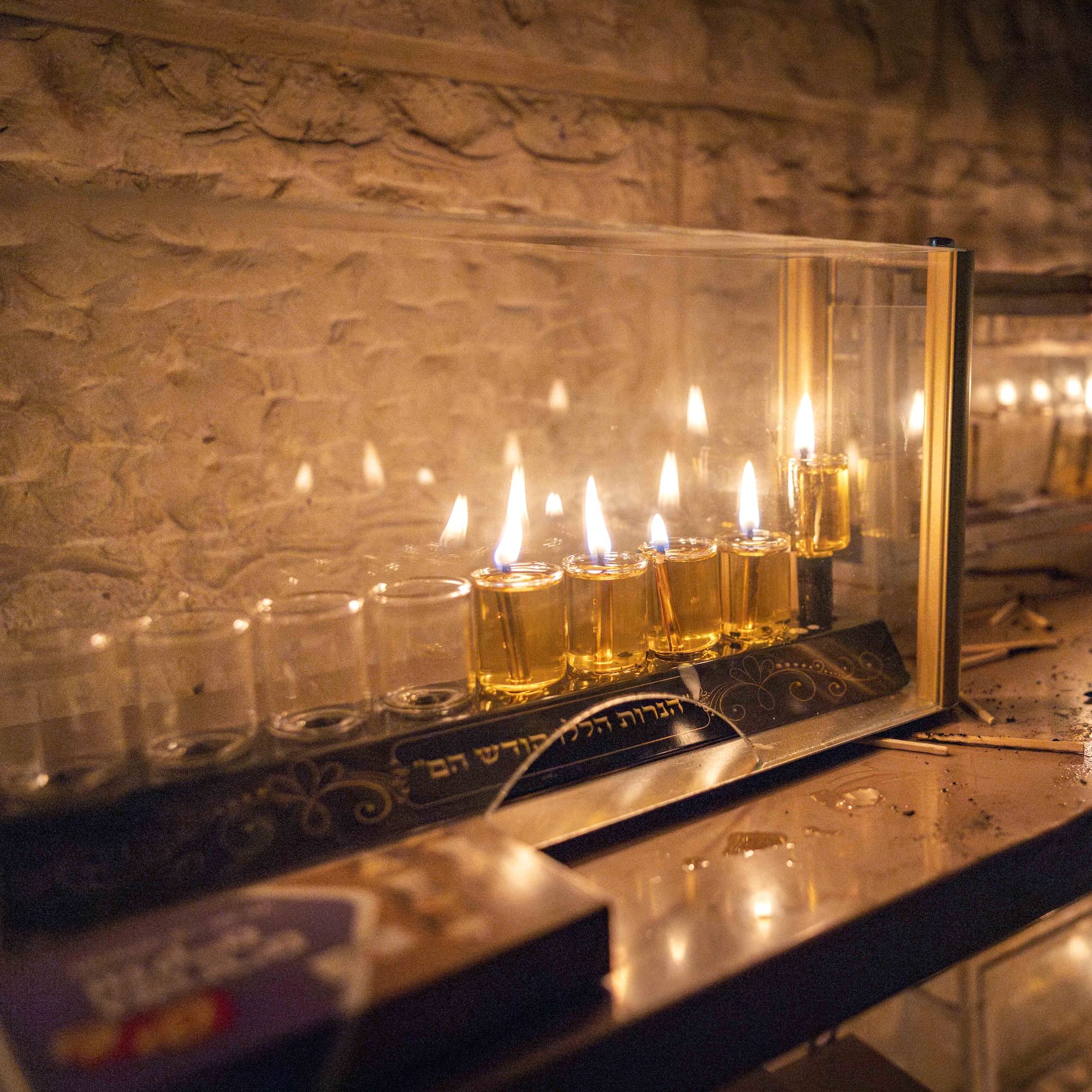
Loading summary
Transcript45 lines
- [00:02]
A
A reminder that the body of Ron Gvili is still held in Gaza today, 803 days after he was taken on October 7th. We hope that by the time you hear this, he will have returned for burial to his loved ones and to all of us. This is TLV1. This episode may contain explicit language foreign. Welcome to the Promise Podcast brought to you on TLV1, the voice of the city where last week a crowd of dozens gathered on the sunny boardwalk to watch as five strapping young Santa Clauses, man Santas and lady Santas because it's 2025 and women can be Santa too, frolick in the waves and then waded out and made their way back in astride surfboards, displaying great skill. One of the Santas did a headstand on his graveler shortboard. Yes, Virginia, Santa Claus shreds. Santa Claus is a sick shredder. He or she can be epic gnarly and the Foreign Ministry reposted the video made by the Tel Aviv Municipality showing all these Santa's sick hijinks with the caption season's greetings from Tel Aviv, where the sun shines and even Santa surf. And this is the voice of the city where this week on Sunday night, a crowd of Hundreds gathered at 10 at night on the same boardwalk, many holding candles around a large Star of David on the ground fashioned out of tea candles or perhaps yurtzite candles in a vigil hastily organized, as one person who came, Thomas, an immigrant from Brazil, put it, to quote, remember the victims of the attack on Bondi beach in Sydney. Honor them and just be here tonight. End quote. Elon Levy, the British born Israeli government spokesperson for the first six months of the war until he lost his job for tweets that rankled the UK government who organized the vigil, said, quote, we are here in solidarity with them because we are them. And arguably nothing captures the emotional and spiritual antipodes of this most yin and yangish city we love so well. This city ever and always alive to the opposing registers of joy and grief, exuberance and melancholy, frivolity and gravity, profanity and sanctity. Better than the boardwalk where some go to frolic and others go to cast off their sins on Rosh Hashanah or to purify themselves in a Mediterranean mikveh, filling one day with people come to see Santa and the next day with people come to share sadness and tragedy. In all cases people coming in solidarity with this or that them because we are them with us Today, speaking from TLV1's flagship satellite studio in Jerusalem is a woman who, when I think you'll agree, is herself all about the duality, capturing always at one and the same time, the pure joy of being alive with people she loves in places she loves, and the spiritual and moral seriousness of what these people do in these places. Obviously, that woman could only be Linda Gradstein. Linda Gradstein has long covered Israel, first for NPR and most recently for the Voice of America. Of blessed memory. Linda is also a lecturer in journalism at NYU Tel Aviv and the Hebrew University, and not too long ago at NYU Abu Dhabi, Linda has won an Overseas Press Club Award and an Alfred I. Dupont Award for Excellence in Broadcast Journalism. Linda, how you doing?
- [03:46]
B
I'm fine. I mean, obviously I'm very distressed about what happened in Australia. Like everyone else, I was there just less than six months ago at Lemud, and I walked on Bondi Beach. I took a nice long walk. But at the same time, Hanukkah is my favorite holiday because first of all, the last night of Hanukkah is our anniversary, and we also had two sons.
- [04:08]
A
You celebrate your anniversary on the Hebrew date.
- [04:10]
B
We do the last night of Hanukkah, whenever that is. And this year it'll be 34 years, which is a very long time to be married to the same person. And I also have two sons who were born the day before Hanukkah. So both had brises on Hanukkah. So it's really like a nice family holiday. And my youngest son is coming, and.
- [04:30]
A
If I do the math, they must have had brisses right around your anniversary as well.
- [04:35]
B
That's right. Exactly. Like a day before. A day before. So it's kind of a nice. It's a family time. And of course, the whole light in the darkness and whatever. And so we have plans that this evening we're having donuts, which were supposed to be the only donuts that I was going to eat all week.
- [04:53]
A
But some donuts, in the sense of soufganiyot.
- [04:55]
B
Sufganiyot. Right. Which is the Israeli version of latkes. Of course we're gonna have latkes too, but I was planning to just have one soufganiya, but let's just say that that didn't happen 1.
- [05:06]
A
Over the whole holiday, you were gonna have a symbolic soufganiya, but then you.
- [05:10]
B
Just won for the whole holiday.
- [05:11]
A
These times are grave enough that we need to go beyond mere symbolism and really commit. Well, I appreciate that. We all appreciate that. I feel as though you did that for us. As for me, my name is Noah Ephron, and I do not mean to boast, but I was running late, and so I signed into a faculty meeting on Zoom at the bus stop. And the bus came while we were deep in discussion of what sort of person we wanna hire next. We have an opening, or maybe even two. So I got on and I took one of those fold down seats in the middle of the bus opposite the door. And I was so involved in the discussion, which I'd come late to. So I was trying to show people that I was right up to speed. But then I realized that I hadn't scanned the code on the app to pay for the ride. So I stood up, holding my phone to that poster thing that they've got kind of close to the ceiling, like I was playing Pokemon Go. I had my phone on and I got the QR code, I grabbed the code and I sat down, but my seat had, of course, folded up, as they do when you stand up. And so it wasn't there anymore. And so I went down. Oh, I went down hard, baby. And while I was making what must have been a very, very important point on the Zoom, I went down Boom. And the people on the bus all rushed over to pull me off the ground while I tried to keep talking all cool, like as if nothing happened. And please believe me when I say I am not bragging. I am here in America visiting my parents. And I gotta say, they tried hard. Even now, they try hard to ra me better than that. But I think that in every situation, I carry myself with a certain calm and quiet dignity. And even I would say grace. Today we got two topics so profoundly important and importantly profound that if you only have a couple of pages left in your diary, you might want to start a new volume because you are absolutely going to need the space to share all your feelings about what we're about to discuss. But first, we have this matter that we are following with alert, interest and great concern as part of an occasional series we like to call the Promise Podcast ponders the past, the present, and the pathos and promise of new worlds. This week there was an article in Makori Shon by a scholar of reputation who, in the event, teaches at Bar Ilan, where I teach, though I do not know him. His name is Jaron Harel, and he occupies the endowed chair for the study of rabbis of recent generations, which is a wonderful endowed chair to occupy. And in it he refers to and tells the story, a book published in Jerusalem 66 years ago called Know what yout Will Reply to a Heretic. And it took some effort, but I got a copy of this book and I read it this week, starting with its preface that goes like this quote, the 25th day of the first month of Adar, in the year 5719. From Jerusalem, I was sent to serve in sanctity as the Rabbi of Gaza in the year 5665 or 1905. And in Gaza this book, Know what yout Will Reply to a Heretic was written and it was printed in Jerusalem in the year 5719 or 1959. The travails to write this book and its ultimate appearance were very much needed in those days when I lived in Gaza. In Gaza, the missionaries had established a hospital where they would accept anyone who was ill. And it known that they put on for everyone gathered there prayers and sermons about Jesus and the New Testament. And they also distributed books about the Good news of the Messiah, the New Testament, and so on. And among these books they gave out was a book called A True Thing or a True Statement Davar Emet, in which they claimed to have demonstrated that the book of the Quran is a book simply collected from the Torah, the Prophets and the Agadot, the narrative parts of the Talmud. And it is not, as they, the Muslims say, a book of true prophecies by the Prophet Muhammad. The Mufti of Gaza, Sheikh Ahmed Abed Al Alami, wanted to demonstrate to the missionaries once and for all that the book of the Quran is true. Though truly the Torah and the Prophets and the Agadot of the Talmud do contain things that later appear in the Quran, while the New Testament does not. Which fact he brings as evidence that Jesus the Christian was not at all prophesied to be the Messiah in the earlier holy books. The aforementioned Mufti of blessed memory turned to me and visited me twice a week in my home. And each time he presented to me questions about all the chapters and verses in the New Testament. And he asked of me that I give him clear answers or rebuttals from verses in the Torah, the prophets and the holy writings themselves. And he sat and he wrote in his own hand all the answers I gave him in Arabic letters. His manuscript remains with me to this day. And that is how this book was written, with clear evidence for all the generations. So the latest generation of our children who have been born will rise and tell among themselves the story of what took place in Gaza. Signed the authority Nissim Ohana. The story or really, the stories behind the preface are these. Rav Nissim Ohana was born in Algeria in 1882, but he was still little when his parents moved to Jerusalem, where he made a name for himself as a talented scholar and Eloi, eventually marrying Miriam Batito, one of the four children of Rav Nachman Batito, a leader of the old Yishuv in Jerusalem. It was Chacham Bashi Yaakov Shaul alisher who in 1905 chose Nissim Ohana to serve as Chief Rabbi of Gaza, Chacham Bashi being the Ottoman era designation for chief Rabbi and head administrator of the autonomous Jewish community in Jerusalem. Nissim Ohana was just 23 years old when he took the position. It was a complicated assignment for a rabbi of any age. Many of the Jews living in Gaza at this time were Jews and the kids of Jews who had come to Palestine from Russia in 1881, with the great increase in pogroms and other violence against Jews that began that year in Russia, mostly in the Pale of Settlement, and continued in one fashion or another for years. Many others of the Jews of Gaza were from a group of mostly young people who had organized themselves in Jafo starting in 1886 into a local branch of Hovavait Zion, the Zionist group with the aim of encouraging Jews to live amidst and among Muslims, which was something that the immigrants from Europe tended to avoid for lack of a common language. Besides, these Jews came to Gaza from Jerusalem and from Hebron, though there were also some who came from as far off as Gibraltar. Most of these people were people whose people had come from Northern Africa, many of them holding passports from France, Spain or the UK. To be the rabbi of Gaza in 1905 was to be the rabbi of a great ingathering of Jews across Palestine and across the world. To add to this, relations between religions in Gaza had lately become more complicated. When the first Jews came From Russia in 1881, it was their hope to establish a flour mill, thereby taking up the profession they had left back home and surpassing all local mills with the aid of a steam motor to replace the beasts of burden as engines to turn the grindstones to the frustration of the newcomers. Establishing such a mill required authorization from Istanbul, which authorization did not arrive. It was then that the Jews turned to an apostate or convert out of Judaism, a man named Reverend Alexander Wilhelm Shapira, who had come from Russia too and moved to Gaza and along the way had embraced Christianity, Anglicanism, in the event being baptized by British missionaries in France Although there are conflicting reports that he was baptized in Kishineff, although it is agreed that he somehow along the way, acquired British citizenship. It was as a citizen of the United Kingdom that this Reverend Shapira had capitulatory privileges to set up a business without explicit approval from the Ottoman authorities back in Turkey. And it was he who used his diplomatic dispensation to establish the mill. Alexander Wilhelm Shapira had come to Gaza to serve the Church Missionary Society. His wife, who had also converted to Anglicanism from Judaism, taught needlework to young Muslim girls in her home, at the same time teaching them the Gospel. Reverend Shapira, for his part, set up a school and a medical clinic that turned into a small hospital, each of the institutions offering not just essential services to residents of Gaza City, but religious instruction. On the side, alongside the majority Muslim community in the small Jewish community and now still smaller Anglican community, there was in Gaza City during Rav Ohana's tenure, a small Catholic community as well, which was often in these days at tension with the Muslim community, clerics most of all, who bridled at the fact that the Catholic ate in public during the day on Ramadan, and also the fact that they carried with them crucifixes fashioned of olive wood, leading Muslim leaders to disparage the Catholics as quote, unquote, Abu al Hashva, or believers in or worshipers of wood statues. There is evidence that the efforts to missionize Muslims in Gaza saw some success. Though few of the Jews in Gaza were apparently persuaded by the efforts of Reverend Shapira and his associates. There is evidence that the efforts to missionize Muslims in Gaza saw some success. And though few of the Jews in Gaza were apparently persuaded by the efforts of Reverend Shapira and his associates, there is evidence that they too were troubled by these efforts to persuade their children that everything they had been told about God and about the Mitzvot by their parents, it was all wrong. Rav Nissim Ohana, when he arrived in Gaza, made it his mission to establish a Talmud Torah or school and a mikvah and a cemetery, essentially building institutions that would give structure and permanence to the Jewish community in Gaza. Records are sparse. Gaza was not an Ottoman archival center, and neither were its records regularly copied for storage in Istanbul. But it was probably five years or so before Rav Nissim Ohana arrived in Gaza City from Jerusalem that Abd Ala Al Alami became the Mufti of Gaza, a position that he held until a year or two after the retreat of the Ottomans and the start of the British Mandate. His job was to interpret Islamic law, to issue fatwas when needed, to oversee weddings and divorces and such, and broadly to do what he could to allow the people of Gaza and the surrounding hinterlands to remain God fearing and God worshiping Muslims. At the heart of this last responsibility was formulating an effective response to the efforts of the Anglican missionaries whose unflagging appeal lied in the fact that they offered services to his charges and that they could hardly go without. It was to formulate this response that he took to learning twice a week with Rav Nissim Ohana, the lessons of which he incorporated into his sermons and into the lessons that he offered the children of Gaza and their parents, and this small story of the Mufti and the Chief Rabbi of Gaza meeting in the Rabbi's home twice a week, going over texts, a Koran, a Tanakh, a New Testament, speaking in Arabic. But both men had a working knowledge of French and probably English and God knows what, other languages as well. This small story matters to me not because I think it tells me much of anything that matters about our world today at this abject moment, but because I think it tells me something that maybe matters about myself, which is that lately, because it is an abject moment, I have suffered from a failure of imagination, I think. Rav Nissi Mohana and Mufti Abdallah Al Alami diving into their books twice a year, they lived in an utterly different world than I do. They studied by the light of lamps fueled probably with olive oil, though they had just started importing kerosene to Yafo in Alexandria just a couple of years before. So maybe it had reached these two revered leaders by then. Kerosene. But electricity would not come to Gaza City until the British run Palestine Electricity Company brought it in 1938, three decades after the Mufti and the Chief Rabbi studied together. The first car appeared in Gaza City only a few years before electricity came. Both men, the Mufti and the Chief Rabbi, owed their livelihoods, in one fashion or another, to the Ottoman way of doing things, which would end de facto, if not de jure, on December 9, 1917, when Hussein Al Husseini, the Ottoman appointed mayor of Jerusalem, surrendered the city to British General Edmund Allenby. Ravnee Sim Ohana's sessions with Mufti Abd Ala Alami. They belong to another world, a world long gone now and mostly forgotten. But then, maybe that is the thing that matters most about this story. Rav Nissim Ohana finally published his Know what yout will reply to a heretic book in 1959. By then, RAV Nisim Ohana was the Chief Rabbi of Haifa, a city he could not have imagined half a century earlier when he lived in Gaza and served as its Chief Rabbi. It was an industrial center with oil refineries and chemical works, a port. It was well known as the Red City for the strength of communist factions and local politics. It was a mixed city in that it was like Gaza City had been, with Jews and Muslims and Christians living alongside one another. But it was in every other way a very, very different world. Gaza City too was by then a different world. The British ruled there from the end of 1917 until May 15, 1948. And after the 1948 war, the Egyptians ruled there, installing what they called an All Palestine government while maintaining a high degree of control from Cairo. And from 1967 to 1994 it was Israel that occupied Gaza and maintained military control over the place. And from 1994 to 2005 it was it was the Palestinian Authority that assumed civil governance of the Gaza Strip, expanding their control after the 2005 Israeli disengagement until in 2006 Hamas was elected and expelled Fatah and the Palestinian Authority and set up there whatever it was they had there. Each of these every couple few decades was a new world. I once told on the podcast How Rav Menachem Froman traveled to Gaza on October 14, 1997 from Tikkun, where he lived to meet with Sheikh Ahmad Yassin, the founder, spiritual leader and main ideologue of Hamas who had been convicted six years before of incitement to murder, accessory to murder and membership in a terrorist organization. Rav Menachem Froman went at the request of the Sephardi Chief Rabbi of Israel, Eliyahu Bakshi Daron, and he carried a letter from Eliyahu Bakshi Daron containing a plea to Sheikh Ahmed Yassin to open a new page in the relationships between the two religions in the Holy Land, between ISL and Judaism. Menachem Froman's relationship to Sheikh Ahmad Yassin had started six years before that when Rav Froman asked to meet in prison with the Ashkelon born, quadriplegic, nearly blind founder of Hamas and his request was turned down by the Shabaq men handling Sheikh Ahmed Yassin's case until Shimon Peres interceded with the security sorts on Rav Froman's behalf and the two religious leaders started to meet regularly, just like the two religious leaders had met in Gaza 90 years before. In 1994, Ralph Froman negotiated with Hamas. In exchange, Sheikh Ahmed Yassin would go free in exchange for the kidnapped soldier Nachman Waxman, which would have gone through only then. Prime Minister Yitzhak Rabin vetoed the thing. And just days later, Hamas men murdered Nachshon Waksman during an IDF rescue attempt. Years later, Rav Menachem Fromman negotiated with Ismail Haniyeh and Khalid Mashel for the rescue release of Gilad Shalit. Rav Menachem Froman, who died a dozen years ago in 2013. Back then, said, quote, I sat and I spoke with them. I heard them and they heard me. There was between us openness and respect. We would sit and speak for hours in English and in the language of the heart about peace and about God. We would compare their sacred sources and ours, end quote. That too was a different world. Too often I and maybe you're like this too, look at the mess that we have all gotten ourselves in. And I think there is no solution. There is no solution, not in this world. And therein is my failure of imagination. There was a world in which Rav Nissim Ohana and Mufti Abd Ala Alami studied together. There was a world where Rav Eliyahu Bakshidaron sent Rav Menachem Froman to congratulate Sheikh Ahmed Yassin on his release from an Israeli jail. And the Sheikh received the Rabbi with appreciation and warmth. I see that these worlds are gone. But how blinkered I have been lately to not see that the world that we live in now, the world of no good future, we can in earnest foresee and believe in that world too, will soon be gone. And then something new will rise. And possibilities that have always been there, possibilities that have in the past even sometimes come to pass. We will see them rise once again. This is not optimism, it is not even hope. It is just what you see when you let yourself see today. Two discussions and you'll never believe the clever thing we did with the titles of them. Discussion 1 Candles in the wind as the awful thing that happened on Bondi beach, in Sydney happened, the latest and the worst of a very long list of sometimes deadly attacks since October 7th on Jews all over the world. In Berlin, in Dagestan, Russia, in Tokyo, in Rouen, France, in Munich, in Gothenburg, Sweden, in Amsterdam, Manchester, Chicago, New York, San Diego, and there are many other spots on the list. And we will ask with some befuddlement, what is to be made of all of this? And our second discussion, Candles in the Window as an essay in Mokori Shon suggests that something rashomonish has happened to Hanukkah, which holiday we are at the height of celebrating as we record, and that thing has come to mean very different things to very different people and for our most unreasonably generous Patreon supporters in our extra special special extra discussion, the link to which you can find in our show Notes on your podcast at or at patreon.com promisepodcast on the world Wide Web, in what may be the greatest example ever of my unforgivable and clearly unethical use of a podcast discussion to get free advice on how to solve a problem that I alone face after spending much of the past couple of weeks meeting with rabbis applying for the job of Chief Rabbi of Tel Aviv Yafo, a position that is awarded after a process no less arcane than the process by which a new new Pope is chosen. Which process in which I have a part on account of my sweet sinecure on the city council, we will ask the foundational question, what is a city rabbi for? And then go on to ask, what should we look for in our city rabbi in terms of character and accomplishment, Wondering with Hodel and with Chava, should we make him a scholar, make him rich as a king, and then should we holler if he were as handsome as anything? Aside from that, I will remind you that we are taking a couple of months, mostly off after this show, coming back on March 6th. That said, there will be a special or two during the time that I am off first, presumably in Saratoga, where my horse will have naturally won, and then I'll fly my Learjet up to Nova Scotia to see the total eclipse of the sun. And don't get me started on the underworld spies and the wives of close friends. The wives of close friends. But I have digressed, haven't I? There will be a special or two, so check your feed. Also, if the country tumbles into new elections, which it might, we will be back right away because I love that stuff. Also, if something super important happens, can you tell that I'm ambivalent about taking this break? Also, feel free to write me if you want, as your hundreds and hundreds and hundreds of messages over the past couple of weeks have been so beautiful and so moving, and they make me wonder why I did not take this break a long time ago. Patreon people, we won't be taking your money while I am off taking lessons in baroque French dance so I can finally have one eye in the mirror and watch myself Kavat. But we will be happy to take your money again when we come back in. Not really all that many weeks when you think about it. But before I get too sentimental, though it may be too late for that, listen to this. That lovely song is Azorli by Abigail Rose and Marcelo Nami. More music of these strange times, which strangeness will be the defining characteristic of the songs you'll hear over the course of the show. And now it is time for our first discussion. So, Linda, it was so hard to believe and yet somehow also very easy to believe, wasn't it?
- [28:42]
B
Yeah, it certainly was. Now by now all of you know most of the basic facts about the murders at Bondi Beach. That it took place at a Chabad Chanukah party at Bondi beach in Sydney, a seafront spot popular with Sydneysiders and tourists. That the weather was fine. It was two weeks into summer in Sydney and more than 1000 people came to the event. That the murderers were a father and son named Sajid Akram, a 50 year old immigrant from Pakistan, and Navid Akram, a 24 year old native born Australian, both of whom apparently were acolytes of ISIS or Islamic State and both of whom may have belonged to a terror cell recruited and supported by Iran. That Sajid Akram owns six guns that were legal and registered and that these were the murder weapons that four or five off duty Sydney police officers had been hired to provide security for the party, although witnesses say they fled when the shooting, which would go on for almost 10 minutes, started. That among the victims were a London born Chabad rabbi named Rav Eli Schlanger, a Ukrainian immigrant named Alexander Kleitman, who escaped and survived the Holocaust barely in Siberia, a 10 year old girl whose given name was Matilda, and 12 other Jews, 11 of them Australian and one Israeli. That a 43 year old Syrian born man named Ahmed Al Ahmed, the owner of a fruit shop, leapt on one of the murderers from behind, wrested his rifle away and was shot twice by the other gunman for his almost incomprehensible bravery and heroism. And along with all these facts, by now you probably know how shaken and unnerved by the attack Jews around the world were and remain. And many of you are shaken and unnerved yourself. The attack on Sydney on Sunday is the most deadly anti Semitic attack since October 7. But it is not the only deadly anti Semitic attack since October 7th. Less than a month after October 7th, a man named Paul Kessler was pushed down and killed in Thousand Oaks, California, while he was attending a pro Israel demonstration on February 29, 2024. Dr. Benjamin Harouni was murdered at his dental clinic outside of San Diego on November 21, 2024. Rabbi Tzvi Kogan was kidnapped and murdered outside Dubai on May 21, 2025. Two Israeli embassy staffers were murdered leaving an event at the Jewish museum. And on October 2, 2025, Yom Kippur two Jews were killed in a car ramming and stabbing outside a Manchester, UK shul. To these deadly attacks, one can add dozens of attacks around the world that could have ended, but did not end in death. A petrol bomb thrown at a synagogue in Berlin on October 18, 2023, 11 days after the original Hamas attacks. A mob storming the airport in Dagestan, Russia, trying to find and Lynch Jews on October 29, 2023. A car ramming in Tokyo on November 16, 2023. A synagogue set ablaze in Rouen, France, on May 17, 2024. A shootout with an Islamist gunman near the Israeli consulate in Munich on September 5, 2024. On the next day, a citizen of Pakistan living in Canada was arrested for planning a mass shooting at a Jewish center in Brooklyn, New York, scheduled for October 7, 2024. A shooting near an Elbut office in Gothenburg, Sweden, on October 10, 2024. Beatings in the street in Amsterdam after a Maccabi Tel Aviv team played a local team on November 6, 2024. And on the same day, masked men beat up two students demonstrating in support of Israel at DePaul University in Chicago. A home vandalized, car set on fire and anti Semitic slurs painted on a home in Sydney on January 17 this year. Four days after that, a Jewish childcare center was set alight in Sydney, again accompanied by anti Semitic graffiti. A month later, a Jewish man was stabbed at the Berlin Holocaust Memorial. These are the most dramatic instances of violence against Jews since the war started. And there have been many more less dramatic events alongside these. The NYPD says that in 2024 in New York, Jews were targets of 345 hate crimes, more than all other groups combined. The ADL says that anti Semitic incidents in America have increased by 893% over the past decade. When you take into account the differences in the Jewish population of these cities, something similar may be true of Paris, London, Berlin, Buenos Aires, Antwerp and Vienna. These facts do not speak for themselves, and it's hard to know what to make of them. It can feel like something fundamental has shifted and outrageous and unhinged anger at Jews in General now turns up in places where it did not used to go to Peter Baynard's substack post about Bondi Beach, a meandering meditation on whether or not Jews should display their menorahs in public these days. And beneath it, you'll see a comment by one of Peter Baynard's subscribers, an American movie and TV actress named Larryn Saikali saying it was an Israeli who murdered the people this week in Sydney on account of, quote, israel kills its own people over and over and over in order to keep the anti Semitism narrative going. It's weird and it feels like something new, even if it maybe isn't. In an affecting issue in the Atlantic, a professor of something named Zalman Rothschild wrote that because of Bandai beach, some will argue that Israel's actions have provoked recent surges in antisemitism, tacitly collapsing Zionism, Israel and Jewishness into a single moral object, so that Jews everywhere are made to answer for the conduct of the estate. Meanwhile, others will respond by insisting that this violence only proves that the world has always hated Jews and always will. They will argue that Jews can be safe only in Israel and that Jewish life in the Diaspora is naive and doomed. No doubt. Still, Noah, aside from the fact that it was a terrible personal tragedy for all those families in Sydney who were affected and for the whole community, and aside from the fact that our prayers and thoughts and wishes are with those people, how do you understand the murders at Bondi Beach? What, if anything, do you think you learned from them?
- [35:21]
A
Well, I really don't understand them and I don't know what to make of them. And at the meta level, to me, these are Schrodinger's murders in that they seem to me to be things that at once you don't learn anything from and that at the same time you need to learn something from what you don't learn from them is very much about what great masses of people feel these are. When you look at the entire list, it's you feel both. You'll hear me saying a lot of things in their opposite. This is a moment when I'm very aware of how many things are at tension. The list seems to me to be just so big of these terrible, terrible acts over the past two years against Jews and also relatively small. What is it, 20 or 25 deadly attempts on Jewish lives or deadly or almost or could have been deadly attempts on Jewish lives over the past couple of years. And that number is an odd number because it's both huge because every person is A world unto themselves. And every breach of humanity, every time it seemed to make sense to somebody, it seemed to be the morally right or necessary thing to murder Jews. It's a shocking act. And 25 of these or 30 of these, and then if you add in all the smaller beatings and whatnot, it's thousands. It seems like a lot. But at the same time, in a world of 8 billion people over the last 803 days, that's also a relatively small number. And so it's. It's hard to learn big, general things, I think, from small numbers. This father and son who were radicalized and then went off to Pakistan, apparently, and sat through a seminar and were set up to do this murder. I don't know what they say about Australians, but I think that it's possible that they say almost nothing about Australians and that to learn from them about the atmosphere in Australia or what is acceptable in Australia would be a mistake. It's possible that they teach us nothing about that. And at the same time, there is this feeling that something has changed. And you feel like this is terrorism in its purest form, because I think that there are millions of Jews around the world who feel terrorized, who now ask themselves the question, should I go to our shul Hanukkah party? Is it okay for me to dance with the Torah out in the street on Tzimchat Torah in Cambridge, Massachusetts, or am I risking my life by doing that? And then once that happens, then once that happens, then it's impossible to carry on Jewish life in the same way. And the last thing I'll say is, I remember as a kid, as a teenager, the first time that I traveled to Europe on my own, I was so struck by the fact that when I wanted to go daven in Chul, I had to call them in advance and give them my passport number and then be checked. As I got to Chul, it seemed impossible to live that way. It seemed shocking, it seemed ridiculous. And now I think the entire world is that way and may forever be that way, in the way that an Airport before September 11th was always and forever different than airports after September 11th. It feels like, in that sense, something may have changed and that it may be really, you know, harder, more tiring, more sad to just live a normal Jewish life anywhere in the world than it was before. What do you think, Linda?
- [39:47]
B
So I think, first of all, that the events of the past two and a half years of the war have been a very different experience for Jews living in Israel and Jews living abroad. And I think for Jews living in Israel, it's been obviously an overwhelming experience. And our life has been kind of completely defined by the war, both personally and as a country. But I think perhaps Israelis have not quite realized how bad the situation has become for Jews in the Diaspora and how uncomfortable they feel. And somehow October 7th has brought out this wave of attacks against Jews, which is antisemitism. And I've been trying to think about is anti Zionism automatically antisemitism. And I think that in Israel, you know, we're used to being extremely critical of the Israeli government, many of us, and obviously that could be defined as antisemitism. But somehow Zionism and being Jewish and Israel have all gotten, you know, put together in sort of the world's mind. And I think there's been a fundamental kind of break where, you know, either you're on the side of Israel or you're against the side of Israel. And I think these are developments that are gonna, you know, continue for a long time. At the same time, I think it's important that we realize that the sort of, you know, there have been condemnations of the attack in Australia from a lot of places as antisemitism. And I've mentioned my friend Yara in Gaza, and I just wanna read briefly her Facebook post from three days ago. And she wrote, and she's a Palestinian living in Gaza, and she wrote on her public Facebook post, I express my complete objection and strong condemnation of what happened today in Australia. What happened, what occurred is a reprehensible act of terrorism by all humanitarian and moral standards. It cannot be justified. I am categorically against the killing of civilians and I reject the targeting of innocent people anywhere in the world. And it goes on in that vein. So I think we are hearing a condemnation of antisemitism around the world. But I also think that antisemitism has become acceptable. And you said earlier that you're not sure what it says about Australia, but a lot of Australian Jews are saying that they feel that antisemitism has become acceptable in Australia and that the Prime Minister hasn't done enough to stop it. And I've heard from my American Jewish friends kind of similar things. So it's such a difficult situation. But, you know, and it's hard. The other thing is that just from a security aspect, it's very hard to stop lone wolf terrorism. It's almost impossible. The kind of attack in Australia and the fact that Israel. Israel has so far managed to stop most of it, except for, of course, the October 7th attack, which was a huge one, but if you have one or two people, it's impossible to stop it.
- [43:11]
A
Yes, a few things. First of all, you talked about the relationship between antisemitism and anti Zionism, which obviously has been very much exhaustively and exhaustingly discussed for a long time now. And I think that the question you said, does this mean that anti Zionism is automatically antisemitism? I think that one thing that you do see from things like the attack on Bondi beach is that to talk about it in those terms is it automatically is something that is not ultimately productive. There is like the question of whether anti Zionism is analytically antisemitism. Whether they are so intertwined, deep at the roots that they are inseparable seems to me to be one that is easy to answer. Obviously it is not. All you need to do is look at the really grand traditions of Jewish anti Zionism, your Bundists and your Yiddishists and many others up through Satmar today. And you can easily, and Peter Beinard for that matter, and you can easily see that anti Zionism doesn't necessarily have to be antisemitism. But what Bandai beach and all these other attacks suggests is that empirically, in fact, they're so often intertwined that it also, one has to be really, really circumspect before saying I am an anti Zionist, but I am not an anti Semite because they are really intertwined. The act at Bandai beach was clearly not. It was a proof text of the fact of this intertwined because many of the people there, presumably many of them, like friends of ultra Orthodox Jews, friends of Chabad or in Chabad themselves, are not Zionists, I'm sure. And they were shot at and some of them were murdered for being Jews and so to say, ah, I'm just an anti Zionist and it has nothing to do with anti Semitism ought to become much, much harder for you after Bandai beach and all the things that came before it.
- [45:36]
B
The only thing I would disagree with you there is that I think sometimes the amount of anti Zionist Jews is still a pretty small percentage. And I think sometimes, you know, that this argument that, well, you know, there are Jews that don't support the state of Israel is almost used as a, I don't know, as an excuse or.
- [45:59]
A
As a. Oh no, that wasn't my point. My point is that if you wanna see how you can be very, very pro Jewish and very deeply committed to Judaism and also an anti Semite and just look at this long which is a literary tradition and a political tradition. And it's quite clear. And it just demonstrates that of course that is analytically possible, which is why the discussion that goes on and on about whether, you know, of course, whether analytically you can be anti Zionist without being anti Semitic seems to me to be an empty debate. I think the answer is, obviously you can, but you're probably not is the answer. And then the. The other thing that I would just want to add about all of this is that the things that these murderers say sound. And just the very fact of what happened at Bondi beach and all these other places sounds a lot like my certain corners of my social media feed. Like there is this similarity between. I happen to allow myself to just sort of stumble into some of these dark corners. Partly. I watched the Peter Beinart video and then I read the comments and there are some really horrible comments. And then there was a. And then I got into. Because I was so shocked that this American actress with a couple of successful TV shows and apparently successful career was so certain that it was IDF soldiers who did the murdering at Bondi beach with. Which is an insane thing. I started noticing it more and more on my feed and it's now a very full blown conspiracy theory that is so out there. And I went to some of the comments and sometimes there was a string of 5,000 comments underneath a tweet that all say, yes, Jews are irredeemable. Jews have been murdering people forever. And obviously, obviously this is. Jews did this. No Muslim would ever kill. You know, it's against the Quran. No Muslim would ever kill these Jews. But Jews kill people all the time. They enjoy killing. It was shocking the degree to which this reality is reflected. And then the numbers, even on my little feed, which is mostly a Zionist feed, the numbers reach, you know, tens of thousands of. Of these comments that I come across.
- [48:34]
B
Which happened after September 11 too. The Jews were behind September 11 and the Mossad told the Jews not to go to their offices. There were similar kinds of things then too.
- [48:45]
A
And of course you cannot learn anything from social media, but it is possible that what these kinds of attacks are just part of the long tail of social media. When you have this discourse going on for this long among so many people, there will be that one in 10,000 or one in a million of the people who will say, you know what? Now is the time to get the guns.
- [49:15]
B
I'm also disturbed by this. Mostly right wing Jews can only be safe in Israel and everybody should make aliyah and we're expecting A big increase in aliyah from Australia. Now, I'm a little. I'm a little wary of that because I think that Diaspora Jewry plays a really important role. And to say that Diaspora Jewry is done, I think is also wrong.
- [49:38]
A
And it's sad because these communities are wonderful places where people live and make their lives and have buried their parents and grandparents and go to visit them in the cemetery. And you do not want every single one of those people to move to Petah Tikva unless that is what they want to do.
- [49:54]
B
Petah Tikva is a natural nice place.
- [49:56]
A
It is a nice place. Now listen to this.
- [50:21]
B
Sam. Everything is everything.
- [51:25]
A
That song is by Maor Abraham. And now it is time for our second discussion, which we are calling Candles in the Window. And here is why. There was an essay I like this week in the Shabbat supplement of Makorishon, the modern orthodox religious Zionist paper. It is written by the writer and Maimonides scholar Yochai Maqbili, and it's called the army, the Torah and the Temple. Each sector of society elevates a different part of Hanukkah. And the essay starts with this quote. Hanukkah is an especially happy holiday. Maimonides wrote expansively that, quote, the mitzvah of the candles of Hanukkah is an exceedingly lovable mitzvah. End quote. But it seems that the holiday has gone through transformations. Its foundations have been undone, and different sectors of SOC have embraced fragments of the holiday. End quote. In his article, Yochai Maqbili first tells how Chanukah has changed over the centuries. At first, it was a holiday celebrating a successful revolt against the Romans and national independence. In Megillat Ta', Anit, a book written at the end of the time of the Second Temple, Hanukkah was both a celebration of that military victory and also and more and more a celebration of the purifying of the temple. It was in this book that the miracle of the tan of oil, with enough oil for one night that burned through a miracle for eight nights in the Talmud, the Maccabees were cancelled. And those that came after them were described as priests and as religious leaders like Yochanan Horknus, who the Talmud credits as a high priest, while neglecting to mention that he was also a king. As Yochai Maqbili writes, quote, in the eyes of the scholars of the Talmud, the exemplary figures in the story from whom we were to get inspiration were not the rebels acting with military force against the empire, gaining national and Military victories. Because the revolt led to the destruction of the land of Israel and the dispersion. The inspiring figures were henceforth to be the scholars and the students. And the supernatural miracle was at the heart of it. In fact, it was not until the Middle Ages that Jews again learned the stories of the Maccabees. End quote. Maimonides was the greatest scholar of the Middle Ages and he was maybe the first to emphasize that Chanukah is a holiday of re establishing political sovereignty. His Hanukkah was not so much about miracles as it was about a return to self government. This of course would became a major theme of the holiday with the emergence of zionism in the 19th century. So too would the return of Jews to fighting form. Theodore Herzl wrote that with the establishment of a Jewish homeland in Palestine, quote, a wondro generation of Jews will spring into existence. The Maccabees will rise again. A few decades later David Ben Gurion would say that the spirit of the Maccabees needs to be, quote unquote the spirit of the people. The story of Hanukkah then is a story of the celebration of a military victory that was co opted into a religious celebration that was co opted into a day of longing for national political independence that was co opted into a day aiming to make Jews more martial and military. In our demeanor, Yochai Maqbili writes that lately Hanukkah has broken down into these component parts. For ultra orthodox sorts it is a holiday celebrating priests and purity. For some secular Zionists it is a holiday celebrating the re establishment of Israel and our continuing independence after centuries of dispersal all over the world. For others it is a reminder of the glory that can redound from having a strong smart Jewish army. For still others it is simply a holiday of light and of lights. The community authority of the city of Tel Aviv Yaffo gave out to people of the city tens of thousands of Hanukkah kits called quote unquote the light of being a human being. With alternative or additional prayers and readings for each night and each candle. The first candle is the candle meant to increase the light. Blessed be the person who increases the light. Together we will choose the good and there will be light. The second is for mutual responsibility. Blessed be the choice of the nation that wishes to live to measure the heartbeats of others. We are all one tapestry. End quote. The third candle is for the women and men who protect us. The fourth is for women's leadership. The fifth is for civil involvement and entrepreneurship. The sixth is for making a shared society. The seventh is for human freedom. The eighth is for hope. Yochai Maqbili's point is that Hanukkah has become very different things to very different people in these divided times. That is probably true. One of the things you get from Tel Aviv, Yafo's version of Hanukkah, is how much it is a product of this moment, this moment when the war is just over yet. Not quite over yet. So I have three questions for you, Linda, and they are pretty broad from where you find yourself. What is Hanukkah like this year? Do you, like me, feel the war in the celebration of Hanukkah? Do you, like Yochai Maqbili, worry that this thing that you think might unite us is now just another thing that divides us? And after we get to the bottom of all that, I want to ask you, what do you think that Hanukkah in Israel in 5786 should look like?
- [57:00]
B
Okay, first of all, I definitely feel the war, and I feel like there's still a certain heaviness in Israeli society and a certain sadness, and people are still being called up for milouim, and there are still things on the news about how families are suffering. I am really concerned that the unity that we felt at the beginning of the war and well into the second year of the war is kind of fraying apart. And in that sense, I am concerned about what Maqbeely writes about. On the other hand, I think everybody has always taken what they feel most connected to, whether it's in Judaism or in Zionism or anything else. So, for example, for me, and my guess is for you, the military victory was never something that appealed to me all that much. And I was always more interested in this idea of spreading light and. And this kind of thing. And I think one of the things about Hanukkah, you know, we last spoke on Thanksgiving, in fact, if you remember. And Thanksgiving is this holiday where everybody can celebrate it because it's not Shabbat. So you can go to people's houses who you don't normally see. And you were having a big Thanksgiving dinner, and I was a guest at a big Thanksgiving dinner. And there seems to be this sense. And in some ways, Hanukkah is the same because first of all, the actual religious parts are just lighting Hanukkah candles, which takes about 90 seconds if you do it slowly. And yet there's this whole sense of getting together for candlelighting and people having each other over, and schools are off for an entire week. Which some of my friends who are grandparents aren't necessarily thrilled as they're called into baby steps. It, you know, while their kids are at work.
- [58:59]
A
And I thought grandparents universally and always loved being called to take care of kids.
- [59:05]
B
You know, I have a lot of friends. I mean, I'm not.
- [59:08]
A
That's propaganda of the parent industrial complex.
- [59:10]
B
Yes, I think so. And look, on one hand, they love it. On the other hand, it's exhausting. And especially when you're talking about whole days and workplaces don't close down on Hanukkah, but schools do. But that's another issue. But I think that, you know, there's. There's this also kind of idea that everybody celebrates Hanukkah and people light candles wherever they are, and you walk around the streets and there's chanuqiyot every place and businesses. And my gym has Hanukkah candlelighting with sufganiyot every night. And I think that's just a ploy to get people fat. So they have to continue their membership at the gym. But every place has. And so I think that we've always, you know, certain. You know, whether it's religion, you know, certain things appeal more. And perhaps this is again, one of the differences. And again, this is very broad. But in the diaspora, maybe the military victory is more important, is more connected to. While in Israel. You know, I think the challenge in Israel is how do you deal with power in a moral and ethical way, while in the Diaspora, maybe the challenge is how do you deal with not having power, military power? And so I think that. That I am concerned a little bit. On the other hand, maybe that Hanukkah is the place where what's bad about lighting candles and eating sufganiyot and latkes, it's just something that everybody can connect to. And given the fact that Israeli society is so divided over so many things, should there be a commission of inquiry? What kind of commission should it be? Should there be a judicial overhaul? When should there be elections? How should there be elections? Elections that maybe Hanukkah is a time for us to just kind of take a breath and as you said, the war is over, but not really, and to just kind of enjoy the light and to look at, to use the light to connect to somebody who we might not connect with before.
- [61:11]
A
Hear, hear. That's a lovely sentiment. I have also felt that this Hanukkah is a product of the war more than I, you know, more than I've ever experienced before, more even than you know, last year and probably the year before when it was soon after October 7, then. Then there was. The heaviness was. Was more unavoidable, I remember, than all the videos that we saw of soldiers in Gaza lighting Hanukkah candles.
- [61:45]
B
My son was one of them.
- [61:47]
A
Yeah, mine too. So I. But one of the things that has struck me, by the way, about this Chanukah, is if you had asked me a week ago what I expected, one of the things I would have expected would have been that there were many people making much of the parallels between all the miluim, the. All the reservists, or just the IDF in general and the Maccabees, which parallel was really drawn very, very sharply and forcefully in that first year, you know, a month and a half into the war. But I have seen almost none of that. Like there is emerging, I feel, a kind of anti. Heroism in the way that many people talk about and regard this war. Like I have have literally heard no one say, ah, we are again the Maccabees, as I did here two years ago. And that's partly, I would guess, a reflection of a kind of exhaustion that we all feel, but it's also, I think, a reflection of an internalization that something huge and tragic for everyone has happened and that. But the idea of having a grand celebration of this victory, that which our government is telling us that we've just enjoyed a big victory, is something that people, I don't think, reject as an idea. I think that many people would say, well, I guess on balance there is a way in which what happened was a victory, but I don't think that that is the experience of. So there's a sort of subdued attitude towards armies and military victory at exactly the moment when you'd expect it to come out the most, when you would expect us to be the most booster ish if to me it feels like we are the least. And there was something very moving about this kit that they put out in Tel Aviv, though it was controversial. It was controversial even in the crowds that I travel in of non Orthodox, conservative and reform and progressive Jews of various sorts and LGBTQ Orthodox congregations, all this progressive stuff. There was some feeling as though they wish that Tel Aviv had managed to keep it as a religious holiday as well and a historical holiday. Tel Aviv just completely universalized it. It was just like the light and being a good human being and being a feminist and whatever. But there was still something very, very moving to me about how at this moment, what we want to see ourselves as what we hope we will be are exemplary human beings and not what Herzl hoped we would be. And Pinsker that we would be in fine fighting form, able well to prosecute our wars and defend ourselves. And so I've sort of, sort of liked that over this. Have you felt any of that?
- [65:02]
B
Yeah, but I think that part of it is the circles that we kind of go in. In other words, I think that among more right wing circles, I mean, going back to Netanyahu's idea of being Sparta, there is this kind of sense that the military victory and especially.
- [65:18]
A
But have you seen people talk about. I mean, that's what I expected. I traveled in a lot of circles in Tel Aviv because I have to, including people who vote for Shas and people who vote for the Likud. And I haven't seen it there, but that's not so surprising. But I also haven't heard it coming out of Kiryat Arba as well. I haven't seen it on the television or heard it on the radio.
- [65:39]
B
Yeah, no, I haven't either. It's kind of interesting, but I don't know. But I think part of it is what you said, the exhaustion and I think part of it is the fact that there's not really. I mean, where do we stand? Today Hamas controls half of Gaza, Right. And virtually all of the population. So over two years of fighting and Hamas is still in control there. Doesn't seem to be moving towards any kind of a resolution. So maybe that's it, that it's also kind of stuck. But I do agree with you that I haven't heard it either. And I would have thought that I would have heard more of it. That's an interesting, that's an interesting point. I'm not sure why, I'm not sure why we haven't heard it.
- [66:24]
A
We hope that you're having a wonderful holiday. Now listen to this.
- [67:09]
B
Shalom.
- [67:39]
A
That song is Yafo Bat Yam by Omer Goshen. More music of these. Somehow in between insecure, inscrutable times, you can find Yafo Bat Yam and all the songs you heard on the show today in all the usual places. And now it is time for our Rudd a country segment. This is the part of the show in which each of us describes something that maybe brought us solace as we wended our way through our worlds over the last little while. Or possibly surprised and enchanted, ensorceled, fluged. I forget what the other one is. It's like five in the morning where I'm recording But made us really happy and did all the words that I usually say. Linda, what is your. What a country.
- [68:17]
B
Well, I don't know how happy it made me, but last week I went to the NOVA site with a thousand evangelical pastors who had been. Wow. Yeah. Who had been invited.
- [68:31]
A
That's a lot of pastors.
- [68:32]
B
It's a lot of pastors who had been invited to Israel by Mike Evans, who's a big evangelical leader. The Friends of Zion Museum and the Israeli Foreign Ministry was part of this. And they brought 1,000 people pastors here, some of whom have big congregations. I SPOKE To David McKinley, who has, you know, four campuses, they call it in Georgia, and a bunch of pastors under. And he has a podcast and a TV show and all kinds of things. And then a lot of them were youth, worked with youth in their churches. And for many of them, it was their first time in Israel. They had never been to Israel. Quite a few people of color. And we went to the nova site of the Nova Festival. Now, I had been there several times at the beginning of the war, but I hadn't been in well over a year. And first of all, the trees that were planted two years ago were now big trees. And at the Nova, each person who was killed, there's something like 350 people killed, young people killed, you know, people my kids age. And of course, there's the famous little shelter where Hirsch Goldberg, Poland, who we saw this week in that really chilling and yet inspiring video, and Hirsch and Aner Shapira, both of whom are friends of my son, one of my sons, where eventually Aner was killed after he lobbed back seven grenades and Hirsch was taken captive. And so the site is very. It's always very emotional, but to be there with all of these pastors. But in addition, they invited hostages who had been freed to come and to get a special award. So Idan Alexander was there wearing his uniform, and he said it was the first time that he had worn his uniform. He, of course, was the American Israeli soldier who was kidnapped and was released after almost, I know, something like 500 something Days of captivity. And then Keith and Aviva Siegel, who I had met repeatedly and who were really, I think, just incredibly inspiring. And Aviva was kidnapped in and was freed. And so being there with these pastors and Mike Evans stood on the stage and said, this wasn't planned, but I feel this urge to sing Amazing Grace and sing it loud enough that Hamas can hear you. And it was actually quite moving to be there with a thousand people and Hear them sing Amazing Grace and then he. The last. And then he changed it to just singing Shalom. And then I went with a bus. Then everybody kind of split up and I went with a bus to Be', Eri, which where I've been quite a few times. And Bay Eri is rebuilding. And we saw the new construction and there was a big debate in Bay Erie about whether or not to keep the neighborhood that was almost completely destroyed. And they voted actually to just keep one house. And it's probably going to be moved off the kibbutz as kind of a memorial. But we were in the home of Vivian Silver, who I knew not that well, but I knew, who was a long time advocate of Jewish Arab coexistence and had driven many, many Palestinians for medical treatment in Israel and who founded a thing for Bedouin women and Bedouin in general. And her house is completely burned. And we stood there and some of the pastors were crying and said they had no idea how bad the devastation was. And then, I don't know, it just for me kind of made me think that these people who were killed, the only way to really remember them is to try to take some, and it was before Hanukkah, some of the light of Hanukkah, and try to just. These people who lived on these kibbutzim were really devoted to the idea that every person is created in the spirit of God. And despite the horrible destruction of October 7th and despite what happened in Australia, that we have to sort of preserve our humanity and remember that every person was created. B'tselem Elokim. So for me, it just kind of strengthened that feeling.
- [72:59]
A
Hear, hear. And for me, I went the other day to a thing to honor environmental activists around the city. People who had an idea and then they did it. And the thing was, on a Friday morning, it was at the LGBTQ center at the edge of Bayer park, right in the middle of the city. What hear, call for some reason the centrum of the centrum. And by the time I got there and signed in and went up to the welcome reception on the big balcony off the top floor, there were, I don't know, 200 and something people there. And because every idea that people had had that were the reasons why they had been invited to this thing and did inevitably involved lots of other people. Everyone on the that balcony of the 250 and it was growing as I spoke. And then there were 300 and then there were 350 people. Every one of them seemed to know lots of Other people. And so there was this constant thrum of people on that balcony saying, yo, how are you? Or walla, I knew that I would see you here and hugging each other. And more and more people kept coming in as the event went on. And it was crowded. It was really crowded. It did not take long for me to give up on making it to the food table, which anyway was filled mostly with someone's idea of the food that environmental activists might like. There was stuff like dates and carrots and such. Not enough cake, in my view. And around the balcony there were posters printed on foam board and propped up on easels describing some of the different things that some of the people on that balcony had done. There was one from Ramad Aviv that they called Hashitoufia ha Yuruka. It's hard to translate. Maybe the Green Commons or maybe the Green Sharing Hub, where if you live in the neighborhood and you want a lawn mower or a shovel or a floor waxer or a video projector, you just go there and you borrow it for free because there are lots of big and expensive things that you use maybe once or once in a while. And why should everyone have to buy that one big and expensive thing and then stow it or go without having it when they wanted it? And I saw that there was a poster for something similar in my own neighborhood. It's called Ben Gurion Storeroom because it's near David Ben Gurion's house on Ben Gurion Boulevard. And it is stocked floor to ceiling with power tools, anything you could ever want, any tool you can imagine, your jigsaws, your a lot of different kinds of saws, and then there are many kinds of drills, and it is all there for you for free. And there was another foam board describing something in Meo Xaviv called the Boutique Bazaar, which is secondhand clothes, where all the things are free, of course. And the people who started it write that their big thing is, is to run the place. They recruited three generations. They didn't recruit individuals, they recruited kids and their parents and their grandparents who come together, the three generations, you know, because kids doing stuff with their grandparents, that is a great thing on its own. And Naot Afeka, a different neighborhood, has a thing called Erkat Kaylim, which I guess you could translate to set of dishes. And that is exactly what it is, is you go there and say you're having tons of people over for a bat mitzvah or to celebrate Novigod or maybe Thanksgiving like we celebrate, but you don't have Enough good dishes to serve 25 people. So you go to Erkat Khelim, and they've got fancy china, they've got your bone china, and they've got your hard paste porcelain, and they've got your stoneware and your earthenware and your terracotta ware, and there are tea sets and there are coffee sets, and you go and you just take what you need. Don't forget the soup tureen and the gravy boat. And you bring it back when you're done with it all clean. In Kvar Shalem, they've got something called the Shalem Pantry, where stores give food that they've got leftover and people come and just take it. And over in Shapira, they got the Shapiro refrigerator, which is just exactly that. You go there day and night. It's just a refrigerator near a famous coffee shop in the middle of Shapira. And you just pick up milk and eggs and cheese and whatnot. Anyone can do it. But of course, the people who need it are the people who mostly do it. And I'm looking at the posters and. And I'm really just a little bit amazed by all of this. And a woman comes up to me and she says, pretty impressive. Yeah. And I say, yeah. And she says, well, you should see what we've got going. And I say, no, what have you got going? And she says, well, we started this thing a couple of years ago. It's called Bar Tikun, which I get right away is a pun because bartikun means fixable, but it also means the fixing bar. And I say, so what do you do there? And she said, well, it started like this. We put out a note in social media, and we said, is there anyone, Anyone out there who knows how to fix things and is interested in fixing things for strangers for free? And dozens and dozens of people wrote back immediately. There's like. One wrote back that she knows how to mend clothes, and one wrote back that she knows how to fix bicycles. And another person wrote that he knows how to repair computers. And then there was one who knew how to weld busted things that needed welding. And between them, they covered a lot of things. And then there were just a lot of people who wrote to see, say, I don't have any special skills, but I'm just good with my hands, and I like to fix things. And so we put out a note after that on social media and said, are there any people out there who have things that need fixing? And there were lots of people who said, yes, we do. So we got a spot at the community center on Friday mornings, and we announced that we're opening our bar Tikkun. From nine in the morning till noon every week, people could bring their things. We also said, in the end you'll do what you want, but if you bring something to be fixed, fixed, the only thing that we ask is that you stay and keep the person company while they're fixing the thing that you brought to be fixed. And right away the thing was huge. People brought everything that you could imagine to be fixed. And there would be people who would fix them, or at least they try. Kids started skipping school to hang out so that they could help with the fixing. And then we added ours so they could come after school. And sometimes people brought things that they thought were broken, but it turned out out that all they needed was for someone to change the batteries, but they just didn't know that the thing ran on batteries. And sometimes people would come back week in, week out, each time bringing one broken thing. And you got the feeling that fixing the thing mattered less to them than spending three hours chatting with a woman or her man who was fixing their thing. And sometimes people became friends and they started like going out outside of Bartikun, one with the other. And after a while we got the idea of having some of our repair people start to run a seminar, say, and on bike repair, you know, like six weeks, and we'll teach you how to take care of your bike forever. And sometimes we would all just stay after the bar tycoon closed, and we would drink coffee or beer and we would just talk. It became like one of those old Italian movies where all the shopkeeps and the craftsmen are sitting outside their shops chatting with each other. And with all the people going by, and everyone knows each other, we started thinking, maybe this is a way that will keep some stuff from ending up in landfill, or least delay its trip to the landfill by a few months or maybe by a few years. But then it turned into something else altogether. And that brings us to the end of our show, thanks to Itay Shellam, huge thanks to Itay Shalom, our station manager, without whom we would have none of this, and who has been bringing this show to us week in, week out, for years and years, thanks to Achibo Linux, my favorite band from Kvutzkeva. They gave us the music at the start and the end of our show. Thank you, Linda. Thank you, Natalie. We'd like to thank all of our Patreon supporters for your generosity and support. It has kept the show going and the station going. It keeps us moved and grateful and in your debt and it will keep us going as we start our 15 year long season two in just a couple of months. We'd like to thank all of you out there for taking the time to listen and ask you to like us on Facebook and drop us a line. We always are going to answer. After you do that, go to Apple Podcasts and give us a five star review. Maybe one that starts with this they are selling a Sufganiya, a Chanukah donut at the Tel Aviv Hanukkah Fair taking place every night at Habima that is made of a donut, deep fried of course, filled with custard, covered with chocolate icing, inlaid with pink and blue icing squiggles, atop of which there appears to be a chocolate tree with candies hanging from each of the branches of the chocolate tree, which tree in its entirety is covered with what appears to be a bell jar made, I think, of translucent sugar, all of which can be yours for 69 shekels, which is 21 and a half US dollars or 16 something pounds sterling or €18.25. It's a thing that makes you wonder why it exists at all and who could ever really want it. And yet it also makes you glad to be alive when you see such a hell of a thing. The Promise Podcast is like that soufgani? A, if you know what I mean. And I think you do. Nothing exceeds like excess. We like to say here, finish that any way you want. But before you do that, remember that today, as we record on December 18, we celebrate world Arabic Language Day, so stipulated way back in 2012 by the executive board of UNESCO, the United Nations Educational, Scientific and Cultural organization, in resolution 190ex48 comma 190ex48 World Arabic Day, which says among pages and pages of other stuff, all absolutely as vivid and as lively as what I'm about to read. Aware of the Arabic language's role in and contribution to the preservation and dissemination of human civilization and culture and understanding the need to implement more wide ranging cooperation between peoples through linguistic pluralism, cultural rapprochement and dialogue between civilizations. We hereby invite the Director General to promote the celebration of World Arabic language day on the 18th of December of every year as one of the international days marked by UNESCO. It being understood that this should have no financial impact on the regular budget of the organization. End quote. About which chills am I right? December 18, 19, 1973 was of course, the day when Arabic was recognized as one of the then six official languages of the United nations and that years later became the day on which we celebrate World Arabic Language Day. And I really do love World Arabic Language Day. It's gotta be maybe my favorite day of the entire year because the role Arabic has played historically in every culture I consider mine is so unique. On the one hand, Maimonides Guide for the Perplexed was written in Judeo Arabic, and so was Saadia Gaon's Book of Belief and Opinions and Bahia Ibn Pakuda's Duties of the Heart and Yuda Levi's the Khusari. And it's not just Jewish philosophy, theology and poetry. Where would science be today if it wasn't for Avicenna's the Canon of Medicine or Al Huawizi's Compendious Book of Calculation or Ibn Al Haytham's Book of Optics? How many crucial texts in Greek philosophy survive only because they were translated into Arabic and treasured by Arab scholars? Books like Aristotle's d' Anime and parts of his Poetics and Galen's medical treatises and Hippocrates and Ptolemy and Euclid, whose elements survived in Greek. That is true, but so many crucial Greek commentaries on Euclid we know only from their Arabic translations, and that is only the tip of the iceberg. Also, Susan has been studying Arabic on Duolingo for while and she just read for me the sign at the new Judy Chicago exhibit at the museum in Arabic. It read Judy Chicago still, even though where I am recording from in my folks guest bedroom, World Arabic Language Day has only really just begun. It's like five something in the morning. We started taping at four something in the morning. My time still already I can feel the day slipping away. Maybe like Aristotle's Constitution of the Athenae, which disappeared from the original Greek 2,200 years ago and which we only knew about from Arabic scholarly summaries. But then it was rediscovered on a Greek papyrus found in Egypt by Egyptologist E.A. wallace Budge, who brought the priceless text for safekeeping to the British Museum in London, where it is still being kept safe. But are the Egyptians grateful?
- [85:28]
B
No.
- [85:28]
A
But I digress. And that is what the day feels like. Like it's gonna be gone soon. Maybe in the British Museum. I don't know. Not to return for a long, long time. Time not so the Promise Podcast. We will be back for you in just a dozen weeks on March 6th and every week thereafter for a 15 year season two of the podcast, reminding you that While there are things like the Arabic language of incalculable value, that produce wisdom and joy and treasures of culture and humanity, there are other things that offer none of that, but that still seem to go on and on and on. You can't figure out quite how or what why. On this, the Promised podcast.