Loading summary
Transcript250 lines
- [00:00]
A
Hi, I'm Jessi Pere. And I'm Andy Cassette. Welcome to Love Murder, where we unravel the darkest tales of romance turned deadly. Our episodes are long form, narrative driven and deeply researched. Perfect for the true crime aficionados seeking stories beyond the headlines. Like the chilling case of Blanche Taylor Moore, the so called black widow who left a trail of poisoned lovers. Or the shocking murders of Chad Shelton and Dwayne Johnson, where family ties masked a sequel sinister plot. Subscribe to Love Murder on Apple podcasts, Spotify or wherever you listen.
- [00:44]
B
I'm Brett.
- [00:45]
A
And I'm Alice.
- [00:46]
B
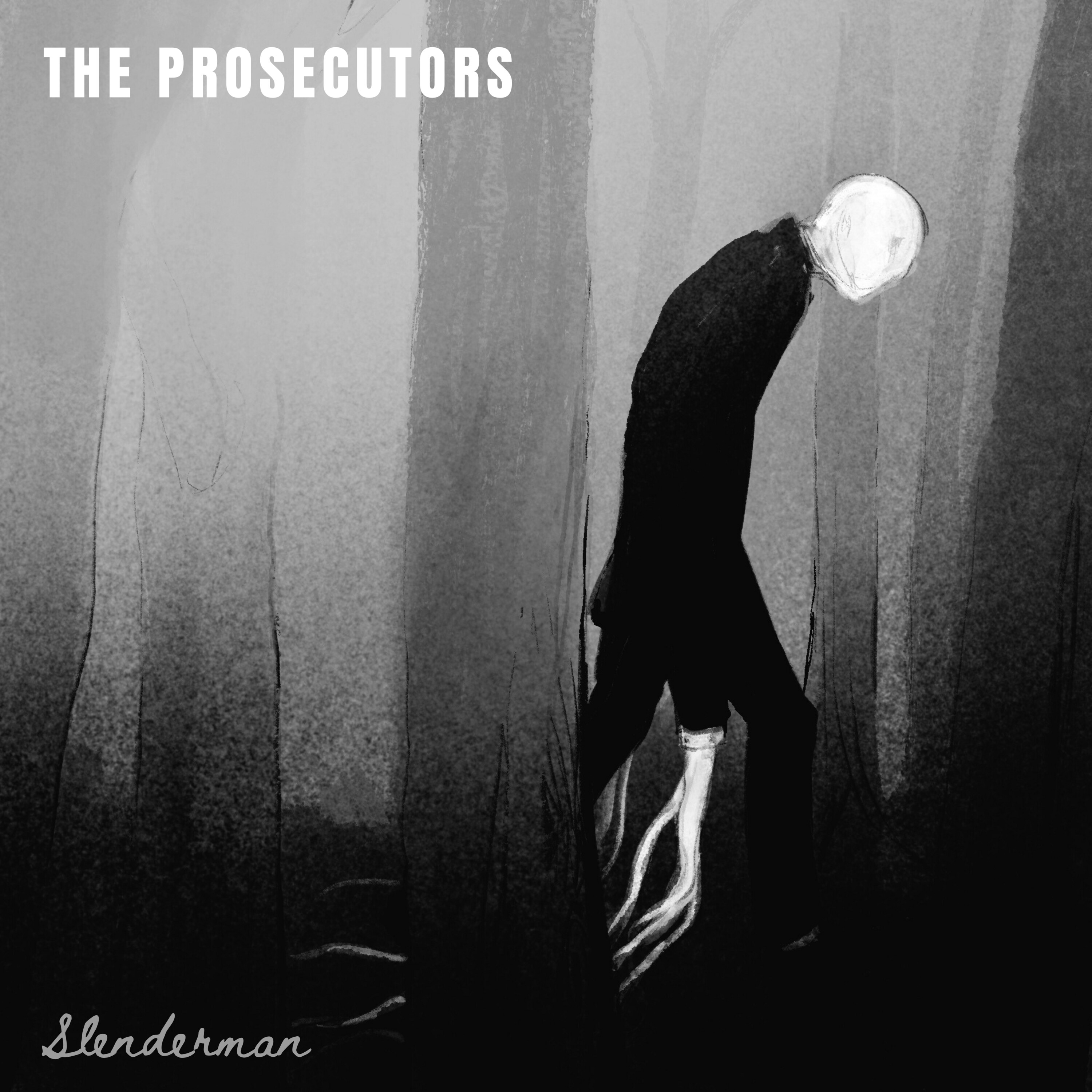
And we are the Prosecutors. Today on the Prosecutors, we didn't want to go. We didn't want to kill them. But his persistent silence and outstretched arms horrified and comforted us at the same time. Hello everybody and welcome to this episode of the Prosecutors. I'm Brett and I'm joined as always by my Slender co host, Alice.
- [01:50]
A
No, no, no, Brett. I don't know if I can do today's episode because I cannot get the image of who we are going to talk about out of my mind. First of all, thanks. I'll take Slender anytime. But we know we're not actually talking about me being slender, but perhaps Slender Man.
- [02:08]
B
Not a slender woman.
- [02:09]
A
Not a slender woman, but a Slender Man.
- [02:12]
B
Slender man and the power of ideas. That's the positive spin I'm going to put on this. This is about the power of ideas to influence people. Because what we're going to see in this case. Alice and I were talking about this before we started. Last week's episode was disturbing in a very visceral way. This case is disturbing in what it says about the mind, what it says about people, what it says about children.
- [02:45]
A
Innocence. Innocence, if there ever is any innocence.
- [02:49]
B
Lots of interesting legal questions, perspectives on this case. I mean, this is a truly fascinating case. Obviously we're talking about the Slender man stabbing attempted murder that occurred back in 2014 in Waukesha, Wisconsin. And everyone involved in this case, the perpetrators and the victim were only 12 years old when it happened and they were inspired by a horror meme from the Internet known as Slenderman.
- [03:30]
A
This is horrifying because I kept asking Brett repeatedly. I was like, surely as we get into the story, you'll see, but surely. I know it's an urban legend, but is it? Because when you see the power of this urban legend, this created horror figure, they have more power than any one person would have in reality. So does that make Slender man more real than a real person?
- [04:00]
B
It's kind of funny because Alice, she did. She kept asking me, like, so is this. Was there like a person online calling them themselves, Slender Man? They didn't really believe all this, did they? And it's like, no, they totally did. So with that, for those of you who don't know the story, for those of you who do, you know how disturbing this is going to be, and we'll try and give you some insight into some of the legal things that happened in this case, but I think let's go ahead and dive in. So Peyton Bella Lautner was an ordinary 12 year old 6th grader in the spring of 2014 before her life changed abruptly. Peyton's mother, Stacy, described her as kind, compassionate, empathetic kid, the kind of kid, you know, everybody wants to be friends with. And it was these traits, in fact, that led her to befriend a lonely girl in her fourth grade class, Morgan Geyser. Morgan struggled making friends, and Peyton did the thing that as a parent, you love to see. I mean, you love to see. When there's a kid who's struggling to make friends in class and your kids befriend them, it's like, yes, that's exactly how I raised you. And that's what Peyton did. She saw Morgan sitting alone in the cafeteria and she decided to intervene, decided to join her. So she approaches Morgan and the two became fast friends. Best friends, in fact. They would hang out after school, they would have sleepovers together, and all the other things that ordinary kids do. And Morgan would later describe Peyton as her only friend. But things changed when they entered the sixth grade. Anissa Ware joined their class in Waukesha, Wisconsin. That year, Anissa and Morgan hit it off immediately. And the two best friends became three, which is all the better, right? But things shifted further when Morgan became obsessed with the online fictional character. At least what some say is a fictional character known as Slender Man. For those of you don't know, Slenderman is, as described, an unnaturally tall, thin, spectral figure with a featureless white face and a black suit and tie. Morgan's obsession with Slender man scared Peyton, but she tried to go along with it as best she could to support her friend. Anissa, on the other hand, was interested. She and Morgan grew closer because of this shared obsession. And by the winter of 2014, that obsession grew darker, with Morgan telling Anissa that Slenderman was ordering them to kill Peyton Lautner, the one person who befriended her when no one else would. Scared that Slender man would kill their own families if they disobeyed his command. The two 12 year olds got to work planning the murder. And shockingly, in the spring of 2014, the girls would put their plan to the test.
- [07:25]
A
So before we dive into the timeline, you can see why I kept asking Brett, where did they get this idea if Slender man isn't someone they're talking to? Like, did someone assume the character of Slender man and ordered him to do these things? The answer, at least forensically, no. But this is the dark Inception question. Where do these thoughts come from? And who gets the blame when? The origin might be from one's mind, but one that is perhaps vulnerable and has been influenced by another character who may or may not have said these. Did not. Did not say these things. May or may not. I don't know. It's a Halloween episode. Who the heck knows?
- [08:10]
B
As we're going to learn. And I think, as many of you who follow this case know, Morgan had some real mental issues. I mean, we often deal with people who have maybe minor mental issues or maybe undiagnosed or undiagnosable issues. I mean, there's all sorts of things that can go on with the mind that we don't quite understand. But Morgan had a real issue. She was schizophrenic. And it was one of those things that I don't think people really knew at the time. There's some discussion about that. If you want to know more about this case, there is an HBO documentary called Beware the Slender man that gets into this. But it's really interesting because you had the situation as we just described, where Morgan is telling this other impressionable young girl that Slenderman, it's not just that they need to do this for Slender man, but that she knows Slender Man. It's sort of Peyton or them. It's Peyton or their families. Someone is going to be sacrificed. And the question is, who is it going to be? And so this notion of, where did she get that? And as I said earlier, Alice was like, was there someone online telling them this? I really think this was coming from Morgan's own mind. And she may very well have believed this. She may have heard this and seen this. I mean, one of the things about Slender man is once you see him, he will follow you until he drives you insane and kills you. Right. And so she may have believed that she actually had to do this to even be able to survive herself.
- [09:44]
A
So let's start from the beginning, or you may be thinking, well, Slender man must go back centuries. This is a lore that's been told for generations. Not really. In June of 2009. Eric Knudsen, who used the screen name Victor Surgeon, created Slenderman. It was a meme that was a submission to a Photoshop contest on the Something Awful forum of Creepypasta. The contest asked participants to create a modern myth to terrify people. So this is fascinating, right? This isn't. We've talked about the game Polybius, right, Where someone has created something but is trying to sell it as a real thing. This started as a fictional myth and that was the purpose of it. It was just an online contest. Now, Knudsen posted two faked photographs, purportedly from the mid-1980s, showing a tall, sinister figure lurking behind groups of children. Knudsen attached some vague text suggesting that 14 young people and the photographer had gone missing. So if you're listening to us right now, you're seeing these pictures and they do. I mean, they look very troubling, right? You don't know exactly what's going on and everyone looks worried. And when you have black and white photos a few decades back, right? So it's still within reach. It's just about 30 years prior. It all seems to have the veneer of reality, which is what the best myths have.
- [11:14]
B
I just got a fanboy out here for a second because as someone who, who in my past has written horror, been involved in the horror community, it is such genius. It is incredible that he did this. And you can go back and find the forum and find where it's posted. You know, you see what everybody else is doing and then you see this. And then as you're going through the forum, you just. More and more people are just so entranced by this because it is so beautifully subtle. It is the birth of something that we see throughout the Internet through horror, through Creepypasta today, where people attempt to take a very real world situation and just tweak it just a little bit, just enough to make it creepy. And you have these photographs. Go look them up. Look on our website. We'll have them. But you can find them very easily. The photographs themselves are already a little weird, right? I mean, there's something unsettling about the photographs themselves, which appear to just be. I don't know where he got them, but they're just photos, you know, like the kids in the photos actually look disturbed, like there's something going on that is troubling them. And then in just the. The greatest tradition of visual horror, in the background, blurry, you barely even see it, is this figure, this Slender man, right? If you weren't looking, you might not even see It. And it is so awesome. I mean, it is great. And you. You can tell why this grabbed hold of people in this era of the Internet and just didn't let go. And from these two photographs, this entire mythos was born. And people were. They were writing stories about it. They're making video games about it. They were making movies about it. They were doing YouTube movies about it. It was incorporated into all sorts of other stuff. It became part of even, like, the Lovecraftian mythos, because he has these sort of tentacles and everything, and it's just great. I love it. So I. I don't understand why what happened happened, but I definitely understand why this was such a. A powerful image and why it grabbed people so quickly.
- [13:39]
A
It really did. I mean, almost instantly, it became this sensation. This tall, dark figure where you can't even really clearly see them in these two photographs became across the Internet, every corner of it eventually becoming the subject of a 2018 film. It didn't seem like it was just an urban legend anymore, and now it was taking on a life of its own.
- [14:02]
B
So in December 2013, it was actually Anissa who first introduced Morgan Geyser to Slender Man. And this is going to be a reoccurring theme in this case. The strange thing about this case, and you probably noticed this if you've seen the documentary, Morgan is the one who has the diagnosed psychiatric issue. And you would think that what's going on here is Morgan, through her delusions, is sort of manipulating Anissa, and Anissa is going along with this. But I'll just tell you, throughout this, there are moments where it really feels like Anissa is the prime mover in this entire ordeal, not Morgan. And here, this is an innocuous one, because there's nothing wrong with introducing your friend to a cool meme on the Internet. But this is the first time we see Anissa introducing Morgan to Slender Man. And over the next few months, both girls, they become obsessed with Slender Man. And ultimately, Morgan decides that Slender man is not only real, but that they need to become proxies of Slender Man. So in much the way that the children in the photographs are part of. Of something going on with Slender Man. The text that I read in the sort of cold open is from the first photograph that has, like, a group of kids walking down a street, and Slender man is the background. And I just want to read it to you again. We didn't want to go. We didn't want to kill them. But it's persistent silence and outstretched arms, horrified and comforted. Us at the same time. There is a almost like Pied Piper of Hamlin feel about this. Slender man is always associated with children and this notion that children are coming to him and he is giving something to them, comfort, belonging. It's not clear what in exchange for them doing horrific things. If you've seen the movie Sinister, it's a similar type feeling to that. But in any event, they decide they want to be part of this Slender man family. They want to be proxies for Slender Man. And Morgan spends months planning this attack. And it's interesting because, you know, initially, Aneesa, she's weary of this whole plan. It's like, you want to be proxies, that's fine. But ultimately she agrees. And they decide they're going to murder Peyton. They called Bella at times at Morgan's birthday sleepover that spring. So they are planning on Peyton's gonna come over to this birthday party. And then after the birthday party, they are going to murder her in Morgan's own house, in Morgan's own bedroom. And after the murder is complete, they would go find Slender Man's mansion, which they had decided was apparently located in Wisconsin's Nicollet National Forest. They were going to go to this mansion in this national forest. Lucky that just so happened to be Slenderman is from Wisconsin, because of course he is. And they were going to go live with him forever. And doing this, this sacrifice, it would save their families and it would gain them entry into Slender Man's world.
- [17:25]
A
And this is so interesting because the amount of time that passes from deciding to be Slenderman's proxies to deciding they need to kill someone to deciding they need to kill their best friend actually takes some time. It takes months. And I note this because oftentimes we find these types of psychiatric based crimes to happen in the moment, right? They are in the midst of an episode and they're like, I need to do this to save all of humanity. And they go out and do it. That's not the case here. It's not like they decided to do it. And the next day or the next week, they carried out their plan. We're talking months go by and they continually plan this, and they continue to be friends with Peyton. So this brings us to May 30, 2014. After school had ended that day, Anissa and Morgan went to Anissa's house. There, Anissa packed a bag of clothes, granola bars, water bottles, and she also packed pictures of her family. Because remember, after this murder, they were going to go live with Slender man. And she said she didn't want to forget what her family looked like. So this wasn't just play. She's taking steps to pack for the rest of her life. Now, the two of them then go over to Morgan's house and Morgan's father drives them over to pick up Peyton for the sleepover. The girls went to Skateland and had pizza. Really a regular kind of birthday party. I don't know, the peak childhood. You're going skating in for pizza. And they're too young to drive, so Morgan's dad is actually driving them around. And after this, skate land and pizza, Morgan's dad drives all three girls back to Morgan's house and they arrive around 9:30pm and like girls their age, they start playing with their American Girl dolls. And I mean, you can't make this up. They are quite literally children. They're playing with dolls before they decide to go to sleep in Morgan's room. Now, typically, Morgan, like many of us when we're little during sleepovers, wants to stay up all night and play when there's a sleepover. But this night she wanted to go to bed right away. And that was not typical for her. Now, her reason for wanting to go to bed so early was probably because the original plan was to kill Peyton at 2am by duct taping her mouth and stabbing her in the neck. So I guess she wanted to make sure everyone was asleep and that she got enough rest to be able to carry out this stabbing. But 2am comes and goes and Morrigan can't get up the nerve to stab her friend in the neck. So you might think, thank goodness we're gonna abandon this crazy plan. But no, instead they get a good night's rest and Morgan and Anissa decide that they're going to kill Peyton in the morning in the bathrooms of a nearby park where they're going to go play. The bathroom, Morgan said, had a drain on the floor, which she hoped the blood would drain into and then allow her and Anissa to get away undetected.
- [20:43]
B
So the next morning after breakfast, they decide to go play in David's park. And as they're walking out the door, Morgan lifts up her jacket to show Anissa that she has the knife tucked into her waistband. Anissa's widens her eyes kind of shot, but it also indicates she sees what Morgan is showing her. And so it's this is the real deal. This is going to happen. So she says that, you know, we're gonna play a little while. And eventually they decide to Go into the bathroom. Now, when they're there, a couple things happen that are kind of weird. So Anissa is said she hates screaming, and so she doesn't want to hear Peyton scream, so she suggests that she go to sleep. Well, she's probably not going to go to sleep in the bathroom. That's not going to happen. So what she does is she actually hits Peyton in the head hard enough that the back of her head goes into the wall of this bathroom. She does this in the hopes that it will knock her out. Now, I don't know why this didn't stop at that point. I mean, if I'm Peyton, I'm like, what in the world are you doing? Why did you do that? I'm going home. I'm telling my parents something. And this is a weird part of the story, but it doesn't end this. And in fact, there's another event, which is strange. At some point, Morgan says, hey, there's some graffiti in this bathroom stall. Let's go look at this. And so they all go into this stall, but there's no graffiti. And at this point, Morgan actually gives the knife to Anissa and locks the door behind them. But for whatever reason, this doesn't alert Peyton. I mean, she's 12 years old. She probably would not expect that her friends are going to attack her. But then, at this point, Morgan actually grabs her arms and holds them behind her back, and she's waiting for Anissa to start stabbing her, and she doesn't do that. And Morgan says, I thought we agreed you were going to do this. And then says, I need to talk to you in the next stall. This is just wild. Right? So now you have Morgan and Anissa. They go into this next stall. They leave Peyton. They've already whacked her head into the wall. There's no telling what she's thinking. They go in there, they talk for a little while, and then they go back in the stall. And once again, this time you have Anissa, who grabs Peyton's arms, and Morgan's standing in front of her, staring at her. And she's got this knife, but she doesn't do anything. And instead they say, hey, let's go back out to the park to play. Which they do. Very strange. An incredibly unusual situation. Right? You got to wonder what's going through Peyton's mind. Obviously, she doesn't talk about this a lot for reasons that you can imagine, but. So they've. They made a wise decision at the birthday party not to do it. They've now gone to the bathroom and decided not to do it. And you would hope maybe at this point, they've just decided, this is not something we can do. This is not something we want to do. But unfortunately, that is not the end of this story.
- [24:07]
A
Yeah, I've been hung up on this bathroom situation a long time now. My understanding is that Peyton never saw the knife, although this behavior is very strange. And here's the thing with preteen teenage girls. The desire to fit in, especially with your best friends, you go along with things. That's why Peyton, who has no interest in Slender man, is going along with it, even though she's not nearly as interested. In fact, she's kind of scared of Slender man, but her two best friends are very into it, so she's in to it. Now, it's very strange for your friends to hold your hands behind your back, but the last thing you expect is your best friends to stab you, to attack you, to try to murder you. So even though this whole thing is strange, us as adults, rational adults looking in, can't imagine why Peyton didn't run. But if you have been around preteen teenage girls and have seen the dynamics of group mentality or just not pointing out things that are strange, it's incredibly strong, especially in these impressionable years. So, though I can't imagine why she wouldn't leave, I can see why Peyton continues to stay. And remember this. Where is she gonna go? She's at a sleepover. They're at a park. She's not near her home. What, is she gonna be a crybaby? Run back to someone else's dad and say, please take me home? She would lose her friends over that, right? Obviously, we know what's going to come next, and we would say, yes, absolutely, run. But in the moment, think about what her options are. There really aren't any options for her to get out of there. So a few moments later, Morgan and Anissa come out of the bathroom. Now, Anissa suggests that the girls go for a walk in this wooded area near the Rivera Drive and Big Bend Road. Now, the new plan that Morgan and Anissa had concocted when they were still in that bathroom stall was that they were going to play a game of hide and seek. Pure childhood, right? This is just so sad. They're gonna play hide and seek and use that as an opportunity to commit the murder. So Morgan is going to be the first seeker, and Anissa and Peyton are going to be hiding. When they were hiding, Anissa told Peyton where to hide and told her to lie face down in the dirt, which Peyton did. This is kind of what Brett was saying earlier. Anissa seems to be the one who kind of puts things in motion in all of these. The original plan was for her to do the stabbing. She's the one putting Peyton face down in the dirt. Now, in just a little while, Morgan and Anissa come up to Peyton, who's face down in the dirt. And Morgan hands the knife to Anissa, who then shoves the knife back to Morgan. And Anissa says to Morgan, you do it. Go ballistic. Go crazy. So Morgan sat on Peyton's legs and brought her face close to Peyton's face and whispered, I'm so sorry, in Peyton's ear. And then Morgan began stabbing Peyton repeatedly and viciously on her back while pushing her down into the ground. It was merciless. Peyton, as you can imagine, was so screaming and yelled, I hate you. I trusted you. Peyton had been stabbed 19 times in the chest, abdomen, arm and leg from a girl she thought was her best friend, from a girl who she befriended when that girl had no one else pay attention to her.
- [27:40]
B
So at this point, I mean, she's been stabbed 19 times, but she's able to sort of stumble up and she starts walking towards the street looking for help. And Anissa grabs her arm and pulls her back so that no one would see her. And at this point, whatever strength she had is gone. She falls to the ground. She can barely breathe. She certainly can't walk. At this point, Anissa leans down and tells Peyton that if she lies down and stays quiet, she will lose blood more slowly. She told her that they were going to find help, which, of course, they never intended to do. Which, once again, to the extent this story is ever told as Morgan leading Ana along, that is just not true. Anissa was a 5050 participant in this. And maybe even more than that. Either way, they weren't going to to find help. And obviously they wanted Peyton to die because that was what was necessary to meet Slender Man. Peyton didn't know any of this. She also didn't know that Morgan and Anissa apparently believed that Slenderman would kill their families if they didn't kill Peyton. So they don't go for help. They leave Peyton behind, and they head off through the woods now in search of of Slender Man's mansion, which they believe they have gained entrance to because they have committed this horrific crime and fate, divine intervention, coincidence, whatever you want to call it, it happens here because there's every reason to believe Peyton is going to die. She's been stabbed many, many times. She is bleeding profusely. But just at that moment a man named Greg Steinberg, he's out for bike ride and he comes across Peyton laying in a grassy area where she has managed to reach. She can't get to the road, she can't get to like the bike path, but she's crawled out of the woods where the girls have left her. That's as far as she can go. He's going by, he sees this and really I think probably with her last bit of energy she says to him, can you help me please? Been stabbed. Obviously he does. He immediately calls 91 1. He's giving Peyton some water. He's trying to stop the bleeding, he's trying to comfort her until the ambulance arrives. Fortunately, it arrived only minutes later and none too soon. She was rushed to Waukesha Memorial Hospital and a police officer was sent to her parents home to notify them of the situation. She gets to the hospital and she immediately goes back to surgery. One knife wound near her heart was particularly concerning and surgeons were very afraid that this could be a deadly knife wound. But when they opened her up for this surgery, they discovered that the knife had not hit anything critical, but it was as close as it could possibly be. According to Dr. John Kellerman, if the knife had gone the width of a human hair further, she wouldn't have lived. We are talking as close to death as you could possibly be. But fortunately she did live. And it didn't take long for for the police to find these two 12 year old girls covered in blood walking near an i94 own ramp. And when they found them, they weren't only covered in blood, they still had the knife which was in Morgan's backpack. And the police, I'm sure they never expected to have to arrest one 12 year old girl, much less two. But that's exactly what they did. This episode is brought to you by Progressive Insurance. You choose to hit play on this podcast today. And that was a smart choice. Progressive loves to help people make smart choices. That's why they offer a tool called Auto Quote Explorer that allows you to compare your Progressive car insurance quote with rates from other companies so you save time on the research and can enjoy savings. And when you choose the best rate for you, give it a try after this episode@progressive.com Progressive Casualty Insurance Company and affiliates. Not available in all states or situations. Prices vary based on how you buy. Guys, it is officially cozy season, which means soft sweaters, layered looks and comfort on every level. And if your bra isn't part of that equation. It's time to change that. If you're still dealing with underwire pokes or bras that feel like body armor, it's time for a serious upgrade. Honey Love makes the best wireless bras that feel like a second skin. They're lightweight, breathable, and designed to work with your body, not against it. Whether you're layering under a tee, slipping into a sweater, or just hanging out around the house, their bras give you just the right amount of lift without the squeeze. Thanks to years of research, development, and testing, honeylove's signature support comes from smart design, not stiff wires or bulky padding. It's all the shape and hold you want to without any of the stuff you don't. Once you try it, you'll honestly forget you're even wearing a bra. So go ahead, ditch the wires, ditch the digging straps, and give your top drawer the upgrade it deserves. Fall is all about leaning into comfort. Why should your bra be any different? Start cozy season off right with a base layer that actually feels as good as it looks. You guys know I don't wear a lot of bras myself, but I can say that Alice vouches for Honey Love. She loves it. And you're gonna love it, too. For a limited time, you can get Honey Love on sale. Take 20 off your entire order@honeylove.com Prosecutors support the show and check them out because your comfort should never be seasonal. Guys, we spend so much time caring for the skin on our face, but what about our neck? Fall is here, and it's the perfect time to give your neck and chest the care they deserve. Even as temperatures cool, this delicate area is still often exposed. Whether you're layering up with open collars, cozy knits, or V neck sweaters, the neck is still one of the first places to show visible signs of aging. And that's where Gopure Beauty's Tighten and Lift Neck cream comes in. Designed to be the hero of your fall skincare routine, this powerful formula is packed with clinically proven ingredients that visibly firm, smooth, and rejuvenate the skin on your neck and chest in as little as four to eight weeks. We got some of this stuff. My wife uses it, and she absolutely loves it. She says you can tell the difference after only a few uses. You're going to enjoy it as well, and it's going to be something that really is an upgrade for your skin care routine. With over 1 million jars sold, this beauty secret is no longer a secret. For a limited time, our listeners get 25% off GoPure with a code prosecutors at checkout. Just head to GoPure.com use code prosecutors and you're all set. And after you buy, do us a favor. When they ask you where you heard about Gopure, tell them it was from our show.
- [35:29]
A
So the next day, on June 1st, both girls were initially charged with attempted first degree intentional homicide, and they would be tried as adults as 12 year olds. A week later, on June 6, Peyton leaves the hospital. She miraculously returns home, and she's welcomed with messages from thousands of supporters from around the world who are just amazed and stunned by Peyton's bravery and resilience.
- [35:57]
B
And obviously, this was a worldwide story when it happened. I mean, it probably would have been a worldwide story even if it was just two 12 year olds conspiring to stab their friend. But you throw in this horror element and Remember, this is 2014, when the whole idea of memes is just really getting going in this notion of the Slender man meme attack. Right. It's one of the things they called it. It really grabs people and people are really fascinated by this whole story.
- [36:25]
A
So you may be thinking on the legal side, clearly something's wrong. Like they can't possibly be competent. Right. So in August of that year, a judge finds Morgan incompetent. He suspends the prosecution of attempted first degree intentional homicide. And at some point in that year, Morgan is actually diagnosed with early onset schizophrenia. And it would later be revealed that her father also suffers from the same condition. So it's something that ran in her family, but before the stabbing, she had not yet been diagnosed. But In September of 2014, a judge orders Anissa to undergo a psychological evaluation as well. Now, December of that year, both girls are found competent to proceed. Now, what judge Michael Boren said is that both girls can understand the charges against them and aid in their own defense, which is the standard for competency, different, as you'll see, than the defense of insanity. So competency is pretty pure and simple. Do you understand you're being charged with something. Can you help in your defense? The insanity defense is something altogether different. It is a defense. It allows the charges to go forward and you can assert it to say it. Yeah, yeah, yeah, I did that. But I was insane and didn't know what I was doing. So the first step has been made because up until now, it wasn't clear that anyone was even going to be able to be charged with this brutal stabbing.
- [37:56]
B
Yeah. So we talked about this before on legal briefs. Our other Podcasts. We talked about it in previous podcasts. This case actually has three really interesting legal things we've talked about before. Trying children as adults, what it means to be insane as a defense, and what it means to be competent. And Alice just nailed it on the competency thing. We'll probably come back to trying children as adults, but it's really the insanity defense. Were you sane when you committed the crime? That's the time period that matters. Competency. Are you sane now? Can you partake in your defense, help your defense, assist your defense, understand the trial? You can be perfectly sane when you commit a crime and not competent to stand trial. You can be completely insane when you commit a crime and competent to stand trial. They are different things, and you're going to see that play out here. So now we're in 2015 at this point, we're having preliminary hearings. And one thing the defense is putting forward, really interesting defense. I mean, this is an interesting case. You can probably already imagine if you truly believed, even if you were under delusion, if you truly believed that you were in a kill or be killed situation, he was either kill that person or die. Is that a defense to a murder charge? Fascinating question. Right? You see this play out in television shows all the time where, like, the criminals have told somebody, you have to go kill this person. If you don't, I'm gonna kill your family. I'm gonna kill you. Well, that's the situation the girls are in. And they ask to be able to present this as a defense. And as we talked about before, with a lot of these defenses, the first step is you got to convince a judge it's viable. So they put forward this whole, look, they thought it was a kill or be killed situation. And they say the judge says, no, not going to let you do that. And this is an important thing because how this shakes out affects, like, the charges. It affects where the girls are tried because they're charged with such a high offense. Right. That means they have to be tried as adults, basically under Wisconsin law. If, however, you can put forward this defense, it's a mitigator, it doesn't get you completely off the hook. Right. Like, this is fascinating, but we have not said that just because you're under duress means you can go kill somebody. Right. Like we haven't said that's going to be a defense. You run a duress. They told you they were going to kill you if you didn't do it. So therefore, when you went and killed that person, that's a perfect Defense, you're not going to go to prison. But what we have said is that will be a defense to first degree murder. Right. So it's still second degree murder, homicide, depending on your jurisdiction. Well, if they could have asserted that defense, it would have dropped them down to a crime that would have required them to be in juvenile court. So you see how this works. It's like really interesting legal maneuvering because they're really just trying to get them in juvenile court, because typically in a lot of states, if you're convicted as a juvenile, you can only be imprisoned until you're 18. You can't go beyond that. Whereas, obviously, if you're tried as an adult, you can be imprisoned for the rest of your life. So this is important, but this attempt fails. The judge says, you can't do that. We're going forward with this premeditated attempted murder, and they're going to be tried as adults. So Morgan is trying to get sent to some residential treatment programs where she can receive some care for her schizophrenia. The problem is a lot of the places she could go, they're not secure facilities. And because of what she did, she can't go there. So she's attempting to get care. And this is. We talked about this a lot, this sort of disconnect between mental health and the criminal justice system. Because of the charge that she faces, she's really having a tough time actually getting treatment for what her underlying mental condition is. So this continues on for a while. The defense is still fighting. They're still trying to get this moved to juvenile court. But every time the judge is rejecting that, the defense is filing interlocutory appeals. And interlocutory appeal is basically, it's before trial. Most appeals happen after conviction. Interlocutory appeal, you say, hey, we filed this motion with the judge, the judge got it wrong. And it's such a bad decision that really, we can't even go to trial under this decision. You can imagine on the prosecution side, this happens a lot with suppression motions. You filed a motion to suppress. It was granted by the judge. Well, the prosecution now says with the evidence suppressed, we can't even go forward. We have to have an appeal. Right now that's called interlocutory appeal appeal. So they are doing that. They're trying everything they can to stay in juvenile court. In January 2016, Morgan finally is able to succeed, not on the juvenile court issue, but is sent from jail to a state mental hospital. In July of that year, the Court of Appeals rules that this case will stay in adult court, and that these two girls who committed this crime when they were 12 years old will be tried as adults.
- [43:32]
A
So In August of 2016, once they've lost these interlocutory appeals, this is not surprising. Morgan pleads not guilty by reason of mental disease or defect. And I say it's not surprising because she wanted to make sure what court she was in before she asserted her defense. Now, that's not saying she didn't do it. It's saying she's not guilty because she had no idea she was out of her mind at the time. Now, in September, Anissa pleads not guilty, also by reason of mental disease or defect. Now, come August of The following year, 2017, Anissa pleads guilty to attempted second degree homicide as a party to a crime with use of a deadly weapon. And she will proceed to trial only whether her mental condition at the time should make her legally responsible for the crime.
- [44:22]
B
And this happens a lot in these cases. I think this always surprises people because I think people usually think, oh, defense attorneys, they just fight everything. But no, I mean, this is smart. You're basically narrowing what the trial is going to be about. You're like, we don't have to put on a whole bunch of evidence proving she did it. She admits she did it. We just need to trial on whether or not she was sane at the time.
- [44:41]
A
And here you have a 12 year old girl who does the unthinkable, who's not like a violent person, who isn't at home skinning dogs and killing animals. So you can see how I would take this to trial on this issue. You have the jury looking at these young girls. They look like young girls. They don't look like, you know, devil worshipers or slender man worshipers. They just look like 12 year old girls. And indeed, it pays off in the sense that 10 of the 12 jurors find Anissa not guilty by mental disease. That's a lot. Now, you remember how you can always reach a plea deal at any stage of the case. And that's what happens because later in September, Morgan reaches a deal with the prosecution. She agrees to plead guilty as charged, but in return, she would not be held criminally liable and will remain at the state mental hospital. This is really interesting. I think they reached this exactly because of what Bread said earlier. If she's held criminally liable, she needs to be held in like a very secure facility because she's still stabbed a girl 19 times, leaving her for dead. But if she does that, she won't get the mental help that she needs. And this girl clearly needs really intense mental help.
- [45:52]
B
One thing that I think is interesting about this is 10 of the jurors find Anissa not guilty by mental disease in Wisconsin. That's enough. So like, it's not a situation where they have to be unanimous on the. You can understand this is a very strange situation because you have someone who's already, they've already pled guilty, right? I mean they've already said I did it. Right. So they're just making this decision about whether or not they're insane. And there's just a different due process concern, a different way we look at that kind of decision. So it doesn't have to be unanimous. And so this isn't a hung jury. It's 10, 12, 10 of 12, but it's not hung. It is sufficient to find that she is going to be not guilty by that mental disease. So at this point you have both girls who have admitted to what they did, but both of them are being treated by the state at this point as having this mental disease. And I will say this, and maybe this is a good time to talk about this. When this came case was percolating through the courts, it was controversial amongst people who just think you shouldn't charge children as adults, that 12 years old is just too young. And you know, we've talked about this and my thing on this is always, and I feel like you always have to look at everything like this. Everything has a cost. Everything has a cost. Nothing worth anything is costless. And that includes the way you look at the justice system, the way you deal with punishment. How you're going to deal with these two 12 year olds is going to have a cost. And the question is, which cost are you willing to accept? There is a cost to trying children as an adult, there's no question about that. But on the other hand, you have these two 12 year olds who have planned and committed this incarnation, incredibly heinous crime, not against a stranger, but against their best friend, a vicious personal up close attempted murder. And the cost to the public of simply not charging them, letting them go, treating them as juveniles, just letting them sort of hang out in the juvenile detention center until they're 18 and then go free to me is not good at all. And I really feel like Wisconsin ended up dealing with this perfectly. They were charged as adults, they had that hanging over their head. They had the possibility of spending the rest of their lives in prison, but they were able, despite what happened, to sort of navigate the system and reach a Point where everybody's kind of like, yeah, there was clearly something wrong with you at the time. So we're going to put you in a situation where you're not automatically going to get out when you're 18, where we're not going to be in a situation where we just have to say, well, they're clearly still dangerous, but they were convicted as juveniles, so good luck, college roommate who doesn't know about this. Right. Rather, they're in a situation where both girls are basically sentenced to pretty stiff sentences in mental health treatment in a secure mental health cellie, basically a prison that is a hospital for extensive periods of time. So Anisa is ultimately committed to 25 years in the Winnebago Mental Health Institute. And this was the maximum length of incarceration that she could receive. And she also received the maximum length of supervision. So like most state sentences, she gets 25 years. That's the max she could spend in the mental health institution. So depending on her mental state, they could keep her for at least 25 years. She has to stay for at least three years. So she's got to be in there for at least three years. And then it's going to be one of those things where we are going to determine whether or not your mental state has improved, whether or not you're a danger to the community, etc. Etc. And if you are, we can possibly release you. However, no matter what, even if she's released after three years, she's under supervision by the state until she is 37 years old. And if during that supervision, obviously anything troubling happens, she can be recommitted to a facility. At the same time, Morgan is committed to 40 years mental health treatment.
- [50:36]
A
Isn't that crazy that with 25 years that still only brings her to age 37, which in the age of like recidivism, a 37 year old, if violent is still very much within the age of being violent. Although of course what we see here is not, you know, a history of being violent. The one instance of violence is the most extreme.
- [50:57]
B
Oh, look, I mean, this is by far not a perfect situation. I mean, this is, this is all scary and we talk about this all the time, that the legal system is an imperfect attempt by flawed people to deal with incredibly complex situations and it tends to fail at the extremes. This is an extreme. Nobody in the Wisconsin legislature was designing a system to deal with two 12 year olds who attempted to stab their best friend to death because a meme told them to do it. You know, that's just you don't write laws for that.
- [51:34]
A
Right.
- [51:35]
B
So they're doing the best they can. And you just have to hope that by 37, I mean, Alice is right. So we deal with recidivist criminals all the time. And the fact of the matter is, your working years, for those of you out there in the free world, are similar to your crime committing years. Criminals retire about the same time you start receiving Social Security. So the 20s and 30s and 40s are really the peak times. And we often talk about criminals aging out of crime. It's certainly the case at 37 for just your typical criminal would not be old enough that you would feel secure in this. And you're just hoping that really whatever it was when she was 12 will have passed by then. And I think it's important to remember, it's not even clear to me what Anise's actual basis for being criminally insane at the time of the murder is other than her being young, impressionable, susceptible to this sort of thing. And that's just an interesting legal philosophy question is being young and susceptible to this enough to say you are criminally insane? Ordinarily, it would not be like that would never reach what you're required to prove to show that you were insane at the time of a crime. In this case, obviously, I think everybody, the jury obviously accepted it and ultimately that's what matters. But it's, it's still not clear to me that she was actually insane. This is like a falie adieux situation, which I think we've talked about before. The madness of two where you really, you have these two people who end up in a shared psychosis and Morgan has an underlying mental condition that made her susceptible to it. It's not clear to me what it is about Anissa that got her where she was willing to do this. It's a difficult thing to say either way. Morgan, she's ordered committed to 40 years of mental health treatment and monitoring and is to remain during that period at a secure mental health institute. Similar situation as Anissa. Once again, it almost feels like to me that Morgan got more time because she was the one with the more serious mental illness. Like, I, I know she's the one who did the stabbing, but she did the stabbing while her friend was saying, go crazy, go ballistic. And I don't know, I just feel like their culpability is pretty similar.
- [54:01]
A
In fact, they literally passed the knife back and forth and it kind of didn't matter which one stabbed them because they each held, you know, in the bathroom. Each held Peyton's arms behind her back. And either one of them really could.
- [54:12]
B
Have done it, but either way, she gets 40 years. She appeals that decision, the decision to be tried, and it's adult. They're still fighting that she loses that appeal once again.
- [54:25]
A
So their attorneys don't stop, though. Despite losing the appeal in August. The next month, Morgan's attorney files a petition for review with the Supreme Court, trying to reverse the circuit court judges decide decision of allowing Morgan to be tried in adult court, as well as to set a standard and clarification for the law. But as we've said, Supreme Court, court of discretion, they don't take up her petition of review. It's, in fact, denied. Now, November of 2020, Anissa, who's 19 at the time, petitioned for a conditional release. Remember, she only had to serve at least three years. The next year, July 2021, Judge Boren grants Anissa's conditional release. So she's 19, 20 at this time. In September of 2021, Anissa is released from the Winnebago Mental Health Institute, and she'll be monitored with a GPS tracking device and be supervised with case managers until she's 37. But essentially, she's now out in the world. She will be subject to supervision. I will tell you this, especially when you're supervised for this long probation officers have a very big caseload. There is GPS tracking. That's great. But you will be one of potentially hundreds of people that one officer is supervising. So hopefully she stays on the straight and narrow. She doesn't hurt anybody else. But she is out and has been out for about four years now.
- [55:57]
B
And look, if y' all haven't seen Beware the Slender man in that documentary, they show recordings of police talking to these two girls about this murder. And it is disturbing the way they talk about it, the way they talk about their friends. And it's so strange because, like I said, you know, Morgan, and they talk a lot about Morgan's issues. Anissa is just as disturbing. I mean, the way she talks about it, sort of what you would expect as a lay person, the way a psychopath would discuss it. I mean, she talks about. The thing that she was most worried about was seeing a dead body. That's what she was worried about. They're going to kill their best friend, and then she'll be dead. Not to see a dead body, it's just. I mean, it is deeply disturbing. Like I said, last week's case was disturbing in a very visceral way. This gets at Your, like, heart and soul. And the first time I saw this documentary, I didn't have kids, and now I have kids. And it hit in a completely different way, watching it the second time. Okay, so in April of 2024. So Anise has been out for a while. Now we have Morgan. She's trying to get out. She's filing these petitions for conditional release, and this one is denied. It doesn't take long for her to file again. In January of this year, a judge ruled that Morgan could be conditionally released. But there were concerns about this. In April, Peyton's family expressed concerns about where Morgan was going to be resettled. At the time, it was only about 8 miles from where Peyton lived. And so this delayed the release as they worked on a plan, a release plan that would both allow Morgan to get the treatment she needs, but also would protect Peyton. And I think Peyton has to be at the top of everyone's mind. And I'll say this. During the course of these hearings, more stuff came out, and I don't know the truth of this or not. If you've seen the documentary, you know, Morgan's father also has schizophrenia. And I think in the 2024 set of hearings, Morgan would allege that her father had sexually abused her when she was a child, and this would become an important part of this. Her father actually died in 2023, so he wasn't able to answer these charges. So it's a little unclear whether it's true or not. Morgan also purported to be transitioning to a transgender male at this time. And the cynics out there, or maybe the realist, depending on your view, thought all of this is a ploy. This is all a ploy to sort of show it's not really her fault. You know, she's recovered, et cetera, et cetera. You should let her out. I don't know. The judge basically said, look, I don't care about any of that. The judge said at one point, a lot of people have been sexually abused. Didn't make them stab their friends. So to the judge, like, that's not important. The only thing that's important to me is, are you a danger or not? This is not so much about, were there things in your life that led you to do this? It's, will you do it again or not? But in any event, in July of this year, the plan was amended, and Morgan's conditional release was approved. Now, the thing about this is, and I am interested to know what Alice thinks about this, because this is one of those Things once again where there's a cost. The decision was made that the timing of the release, the details of the release, the location of the release, all of these things are sealed. They are not available to the public. We don't know whether Morgan could be living next door to you right now. We don't know that because it was all sealed in order to protect her as she is transitioning back into society.
- [60:05]
A
Normally, I would say I can understand with someone who wants to get back into society, but here we have a 22 year old who by all accounts will probably try to go to school, certainly will try to get a job. She's too young to just sit at home, right? She needs to do something with her life and she likely can. And she looks like a 22 year old girl. And I don't know, I mean, I don't have access to her medical records. Clearly the judge, and we've said this before too, it's really interesting. The legal system has to act like medical professionals sometimes with the help of course, of medical professionals. But the judge isn't a doctor. The judge is relying on maybe one or two medical experts who say that she's not a dangerous to society to be able to let her out. So in this day and age, if her information was released, she will 100% be harassed, maybe so much to the point that if she is mentally fragile, it will break her yet again. So unfortunately, we do live in a day and age where people will not respect her privacy whatsoever. And that's probably something that the judge thought of in keeping this sealed. But on the other hand, she's 10 years removed from this vicious stabbing, has a family history of mental illness, is still dealing with things objectively by her own admission of not having fully resolved or grown out of whatever it was that was affecting her 10 years earlier. These things are all concerning. And I just hope this isn't a situation where in a year or two years, or even in five years or maybe five days, something will happen and we've let the wrong person out and.
- [61:40]
B
That'S always a concern. Once again, you know, you have these situations, you want to believe in rehabilitation, you want to believe that no matter what they've done, particularly when they're this young, I mean they're 12 years old, that they can overcome it, that they can be productive members of society, that they can live good lives, that they can make up for what they've done. All the cliches, right? But if you're capable of doing something like this, even when you're 12. I wouldn't want to live next door to her. I wouldn't want to work in the cubicle next to her. I wouldn't want my son or daughter dating her. Like, I certainly would want to know. And you're right. I mean, once again, back to the cost. Because in the world that we live, if you know who she is and what's interesting about this, for us in the United States, this is very strange. We're, like, sealing all this, keeping it from the public. Some of you who are listening, in Britain, you know, this is fairly common. There is a famous horrific murder in Britain where two very young teenagers kidnapped an even younger boy from a grocery store, some sort of supermarket shopping place, take him to railroad tracks, beat him to death, murder him, put him on the railroad track so it looks like he's ran over by a train, and then leave. And there's no motive for this other than to hurt someone. They're eventually arrested. They stay in prison for a long time. When they're released, they're given new identities. Their locations are hidden, their jobs are hidden. Like, everything's hidden. Like, they basically just give them a new life. And people in Britain spent a long time. Yeah, Jamie Bulger. Bulger, I'm not sure exactly. Spent a long time trying to figure out who these people are and actually did identify them. Right. Did harass them, interestingly, one of them went on to, I think, sexually assault someone and went back to prison. The other one appears to basically have a normal life. Just a tough question about what the best way to deal with this kind of stuff when someone does something terrible at such a young age.
- [63:48]
A
The one good thing that came from this case is that Peyton lived. She shouldn't have lived. And by the grace of God alone, she's alive. I can't imagine what she is dealing with in terms of. I mean, I don't even know how you, like, trust anything in the world when your best friends stab you for no reason at all. But life is precious, and I'm glad that she was able to keep hers.
- [64:18]
B
Hello, Fresh is back. One of our very favorite sponsors, just in time for fall. It's here, guys. And with it comes cooler nights, heartier meals, and the craving for something warm and satisfying. And that's where HelloFresh comes in, bringing you comforting chef design recipes and fresh seasonal ingredients right to your door. This season, they're taking things to the next level with their biggest menu refresh yet. Say hello to a whole new way to do dinner. HelloFresh has doubled in its menu now you can choose from a hundred options each week, including new seasonal dishes and recipes from around the world. Dig into bigger portions. That'll keep everyone satisfied and you're gonna feel great while you do it because it's an even healthier menu filled with high protein and veggie packed recipes. HelloFresh now helps you eat greener and new veggie packed recipes that have two or more veggies. And I tell you, this is hard to believe, but it tastes better too. You can get steak and seafood recipes delivered every week with no extra cost. There's three times more seafood on the menu now at no extra cost. You can discover new seasonal produce each week, from snap peas to stone fruit to corn on the cob and more. Guys, we have made no secret that we love hello Fresh. Whether it's their bourbon peach chicken or their firecracker meatballs. Are there Thai noodles? There is something for everyone you are going to love hello Fresh. The best way to cook just got better. Go to hellofresh.com prosecutors10fm now to get 10 free meals and a free item for life. One per box with active subscription free meals applied as discount on first box. New subscribers only. Varies by plan. That's HelloFresh.com prosecutors10fm to get 10 free meals and a free item for life. Check it out yourself and find out why HelloFresh is America's number one choice for home cooking. And look, I mean, this case is horrific no matter what. But what takes it to the next level is this whole interaction between online culture, memes, the Internet. It's so funny to watch the documentary because it is crazy how much the world has changed in the last 25 years, but it's changed so much in the last 10 years. I mean, this documentary comes out like 2015 and it just, everything about it feels so quaint about the Internet. But they interview these kids who are online all the time. And you just think, man, it is so much worse now than it was back then. They're like watching YouTube videos together, right? Like, and you're thinking now everything is so pervasive. I don't know, it's just, it's terrifying if you're a parent. I mean, this kind of stuff, people can become obsessed with things even when they're adults. But obviously kids are so impressionable. And I don't know what it was about Slenderman because I experienced this myself before this happened, before the Slender man murders. I just thought Slender man was so cool. It was such a cool idea. Everything about it I loved it. And then you see this happen. You're like, wow. And I feel bad because the guy who created it has expressed regret because of what it led to with this crime.
- [67:59]
A
Can't possibly. I mean, there are there. I. I don't always agree with that line of argument where it's like, I say whatever I say and whatever people receive it as, I can't control. That's not true. This was a photo contest. And, like, truly, he did not, you know, put this man out there who all. You know, what we read at the very beginning of the episode is all the caption that was attributed to Slender Man. So there wasn't even lore around it from the creator of Slender Man. But it is gosh to have to live with that as well, because obviously, I only know Slender man because of these stabbings, you know, and forevermore, Slender man will be tied up into this horrific, horrific stabbing.
- [68:41]
B
So I've been trying to decide what horror movie to watch this week. Maybe you can help me out with your extensive knowledge of horror movies.
- [68:49]
A
I got nothing. I mean, is there a character that never speaks?
- [68:53]
B
Well, see, there's a few options. So, I mean, because people obviously have jumped on Slender man, and, you know, like, I think there's, like, one called, like, the Tall man or something is one. You know, there's a lot of different ones. There's the movie Urban Legends, which is a great movie and kind of goes along this. Even though it's different, right? Like, it's Urban Legends from before. The Empty Man. That's right, Sophie. That's another one. It's a very similar idea. I don't know. Is that. Is that what we should do, Sophie? Should we watch the Empty Man? Is that what our movie should be this week?
- [69:28]
A
Good news is you still have time because it's only September.
- [69:31]
B
Well, that's true, but when they hear this episode, it's gonna be, we're watching a movie in two days.
- [69:36]
A
That's true. That is true.
- [69:38]
B
Okay, Sophie says empty Man. So we're watching the Empty man this week. Probably Friday. But, you know, pay attention to Twitter. I'll tweet. Or X. I'll tweet if that schedule gets messed up. Because, you know, Alison, it's September as we record these, but we're traveling a lot.
- [69:55]
A
I was going to say gone every Friday of, like, October.
- [69:59]
B
I know, it's crazy. So we may have to.
- [70:01]
A
It might have to be Sunday night movies.
- [70:03]
B
Yeah, we may have to reschedule some of this, but just be prepared. We will watch the Empty man. Well, do you have time for a question or do you need to go?
- [70:11]
A
Yeah, I was. The only thing I was gonna say is, you know, we thought parenting was hard. Now throw in this kind of stuff and it's just impossible, it feels like. But yeah, let's answer some questions. I hope someone has some very light question to bring some levity to this topic.
- [70:26]
B
I'll say this, if you have Halloween questions, ask them so that we can use them next year. Cause we're out of Halloween questions. I don't have any. And obviously if you ask them after these episodes, we won't ask them on the Halloween episodes because we've already recorded them. But if you have some, shoot us some and we will answer them. And I'll just say while we're here, if anyone in the chat has any good Halloween questions, they can feel free to ask them. I will say this. Sophie, who we've mentioned several times, she was asking me for horror novel recommendations and I gave her one called December park. And she ended up really enjoying it. By Ronald Mafi is a fantastic author you probably never heard of. He's great. Read December park, you end up reading all his books. He also read a book called the Floating Staircase, which was tremendous. Great book. He's in a band too. He's a cool guy. Just awesome guy. Super nice too. Wrote the forward to one of my books. Can't even remember which one it was, but really good guy. You should check him out. December park, good book. That's my recommendation. Okay, Alice, you ever read a horror novel? Have you ever read a horror novel? Do you read horror novels?
- [71:36]
A
I mean, does, like, Sleepy Hollow count? Because that's probably it. Sure. Frankenstein, I call that horror.
- [71:43]
B
That is horror. It's one of the classic horrors. Did you ever read Dracula?
- [71:46]
A
Dracula, I read the classics, but just because I read everything as a kid, but nothing, nothing more. That wasn't classic. Are you gonna try to make me read something?
- [71:57]
B
No, I was just. I was gonna ask you if you had read any horror novels, what your favorite one was. But since you haven't, it's not a great question.
- [72:05]
A
Those are great horror. They are wonderful. Like Dracula is beautiful, Frankenstein is incredible. But I would even, as, you know, young me, get scared reading them. And so I adopted the Joey Tribbiani method, where when I got scared, I would put the book in the refrigerator.
- [72:21]
B
I gotta say this. As I was watching Beware the Slender man, knowing that Alice was gonna watch it in preparation for this episode, I laughed to myself because I was like, this Documentary is so scary.
- [72:31]
A
Have you seen how, like, jittery I've been all night? Okay, do you want to know how scared I actually am? You know, this is not fake, and I only watch it for you guys. When you had the pictures up, even though I can see the preview, I know what pictures you're gonna put up. I had my notes covering where the part of the screen is. See, right now, my. You can't see my screen, but I can't see the picture because I have my notes in front of the picture.
- [72:55]
B
That's hilarious. I love this photo. It is so great.
- [72:59]
A
I mean, the boy in the foreground.
- [73:01]
B
Oh, so great.
- [73:02]
A
Makes it right. I mean, look at that face.
- [73:06]
B
He could not have hired actors to create this photo, and it'd be as good as it is. You got the boy in the foreground, obviously, if you're listening, you got to look this up. This is one of the Slender man photos. The boy in the foreground, the couple behind him, they all look like they're being forced to go somewhere they don't want to go.
- [73:26]
A
You know, I mean, like, the hunched over. The man right behind the boy in the foreground, how he's kind of hunched over as if his hands were bound, but they're not.
- [73:34]
B
Yeah, yeah. I mean, he's got, like, his arms up with this. And the boy in the foreground, the focus is on him. So everyone else is progressively blurrier as they go back. They're more out of focus as you go back. And then in the very back, you have Slenderman. It's just awesome. I mean, just an incredible photograph. Just love it. I just really am impressed. All of this just. All of this is so great. And then what's great about the second photo, the first photo without Slender man would be creepy on its own. The second photo, unless you went in being prepared to be creeped out, which, if you do, even the photo itself is still a little weird. I don't think you would think it was creepy. It's younger kids. They all seem happy. They're in a playground, and then you have, like, four of them in the background, and they're surrounding this Slender man figure. Just awesome.
- [74:30]
A
But it's, like, a nice touch that it has, like, an official stamp, as if, like, this is a picture to capture our daily life, and it just happened. They picked a picture with him, the background. Like, they didn't see it. And so this is just what is life like in 1982. And this is just one of the exemplar pictures. But in that it's one of the. If you were watching a movie, you would all of a sudden zoom in and think, what is that in the background?
- [74:53]
B
Oh, it's great. I love this. I love it. It's so good. And there's some. I'm just ranting now. I'm just ranting. You guys got to go with it. So if you guys have seen the Netflix series the Haunting of Hill House, just based on the book by Shirley Jackson, which is amazing. That show. Great. Oh, God. So good. So good. Alice, it's not scary at all. You should watch it.
- [75:19]
A
No, it's very scary.
- [75:20]
B
So. So in that show, if you watch that show, throughout the show, there are ghosts in every episode, multiple times in every episode, and you wouldn't even notice them. They're in the background and just watching it, and you catch them out of the corner of your eye and realize they're there. And you see like a flash, you know, where you see the guy in the old timey clothes winding the clock, is there a whole bunch of workmen. And all the other workmen are normal, but that guy's a ghost. Like, oh, so great. And that's what this has, is this very ordinary thing. And then just in the background, you have the image, and it's just so good. It's just so good. I mean, there's a reason this launched. We talk about how there's nothing original anymore, right? Everything's a retread. Everything's a rehash. This is original art. This is new horror. It is so incredible, and I don't know, I have nothing but great words for it. Real quick, we have questions from the chat. I've rambled long enough. I've asked this question before, but I'm going to ask it again, and Sophie has an interesting addendum to it, which I think makes it even more fun. The first question is, what is your favorite Halloween candy? And the second question is, what Halloween candy would you give to someone you disliked?
- [76:36]
A
Not poison.
- [76:37]
B
Not poison. Just not good.
- [76:41]
A
My favorite is always the Reese's Pieces.
- [76:44]
B
Reese's Pieces, Really?
- [76:45]
A
I love Reese's Pieces. What is their Nazi cups? I like the, like, big, flat one because the surface area of the chocolate. The pinot. Oh, look. I also love the cups, but there's more chocolate to peanut butter ratio in the cups, which is great, but I like the flat, big Reese's.
- [77:05]
B
This is a fantastic question. Alice has just generated a new question. So Reese's cups, they have all sorts of special ones, right? For various holidays. So you have the standard cup. You have the Halloween Jack o' lantern. You have the Christmas tree. Easter. What are they for? Easter? The egg. The Easter egg.
- [77:29]
A
I'm sorry, I meant cup, by the way. I meant the flat.
- [77:31]
B
Yeah, I know some about.
- [77:33]
A
That's what I like. Yes.
- [77:34]
B
Okay.
- [77:34]
A
Not, not. Not the Eminem style.
- [77:36]
B
Right? Good, good clarification of the various types of Reese's.
- [77:43]
A
Good question.
- [77:43]
B
Which one has the best ratio of chocolate to peanut butter?
- [77:48]
A
I have an answer to that because I've thought a lot about this. It doesn't fit. It doesn't fit into the Halloween theme. But it's the Easter egg.
- [77:55]
B
That's the correct answer.
- [77:56]
A
It is like 100%. And I know people, as you all should, where you hoard the Easter eggs and eat them throughout the year because they're only available at a certain time because it's mostly peanut butter.
- [78:08]
B
They are the best. That is.
- [78:09]
A
They are so good.
- [78:09]
B
Correct answer. The Halloween ones are pretty close, but they're not bad.
- [78:15]
A
They've learned now they make the pumpkins like the Easter eggs, but back in the day, the Easter egg was like the OG with for the best ratio. They've now learned it. They really should just make that in different shapes now. Forget the other kinds. So Reese's is my go to. And much to my chagrin, because you guys know that I take all my kids Halloween candy. They never go for the orange wrapper. So they get all the grossest candies. Because this will answer the second part of the question. What do you give someone you don't like? Because they like the colors of them. But I'm like, go for orange, go for orange. And they never do.
- [78:49]
B
So my favorite. Now, y' all know this. I mean, we've discussed this a thousand times. I love Haribou. I want to thank whoever gave me the other kind of gummy bear, whatever they're called.
- [79:01]
A
Very good.
- [79:01]
B
Also, what are they called? What's the name of that one? They're from, like, Ohio or something.
- [79:05]
A
I could see it when they handed it to you.
- [79:07]
B
I can, too, but I can't remember what it's called. I can't either, but someone gave me. Someone will say it in the group. Their sour gummy bears.
- [79:17]
A
Yes.
- [79:17]
B
Those are really good. I will give them that.
- [79:20]
A
I really like sour.
- [79:21]
B
Really good.
- [79:23]
A
Apparently only kids taste buds like the sour candy, so I must still be a kid because I really like sour candies.
- [79:29]
B
So, Sophie, once again, the albanese. Albanese, yes.
- [79:33]
A
Yes. They're like soft.
- [79:35]
B
Super soft. And. And let me just say, those of you who say they're the best, I like the stouter Haribou gummy bears. Too soft. They were German, so they're a little bit.
- [79:48]
A
You know, that's my point. They're a little. Little tougher.
- [79:50]
B
They're a little tougher, exactly.
- [79:52]
A
So what's your favorite then? Would it be the Haribo?
- [79:55]
B
So Haribou gummy bears. And I. And I tell you what, that.
- [79:58]
A
Can I just say, when I was little, Haribo or gummy bears really didn't come in Halloween size packets, but we would get like welches. Like, there were gummy candies. But as well, just now you can get the Haribo in their tiny little packets. And the gummy bears are even little.
- [80:14]
B
Yeah, exactly. They're even small. But much like if you ask an addict, what kind of drug do you like? They're like powder cocaine, like the pure stuff or whatever. To me, the purest candy is like nerds because it's just sugar.
- [80:30]
A
Do you like it, though?
- [80:31]
B
I love it. That's one of my mainline nerds. I love.
- [80:34]
A
Really? Okay, I'm going to give you all.
- [80:36]
B
My nerds and I'll just pour them down my throat.
- [80:38]
A
I usually throw them away because I'm like, who likes these?
- [80:43]
B
When you're rating your kids candy, bring me the nerds.
- [80:45]
A
You know what? They actually always reach for the nerds. Because it shakes.
- [80:49]
B
Exactly.
- [80:50]
A
So we have a lot of nerds. Now that I know you like that. Disgusting. It's not disgusting. It's just. It's just sugar.
- [80:55]
B
It's pure sugar.
- [80:57]
A
There's no taste, there's no sugar. Kind of burns my tongue in between.
- [81:00]
B
You and the sugar.
- [81:01]
A
You just get the now. Looks like a chewy gummy basin. Sickly delicious. Love it.
- [81:09]
B
My least favorite. I hate black licorice. It's disgusting.
- [81:13]
A
Does anyone. Why do they make licorice?
- [81:15]
B
I don't understand.
- [81:16]
A
Does anyone actually like. Because that's the thing. My kids always reach for licorice because it looks like a rope. Bright red, you know, black. They think it looks cool, but it tastes the grossest.
- [81:27]
B
Sorry.
- [81:27]
A
So I don't like. Basically I like chocolates.
- [81:30]
B
Candy corn is just like eating wax.
- [81:33]
A
Yeah, I don't like candy corn either, but I feel like people have moved away from giving out candy corn. So I'm thinking about what's in my kids, like, box or put it in a box, what they have, what you said. Nerds. And basically anything but gummies. If it's not chocolate, I don't like it.
- [81:49]
B
Yeah. Anyway. Well, I will Say this. We went up to Liditz, and they gave us the best chocolate. Wilbur Buds.
- [81:59]
A
The best chocolates. It's like the original Hershey.
- [82:02]
B
They're like Hershey's Kisses. If Hershey's Kisses were what Hershey's Kisses should be.
- [82:08]
A
Yes.
- [82:08]
B
They are amazing.
- [82:09]
A
I just envision that it's these, like, sweet grandmas delicately squeezing out the perfect amount of chocolate to make these little buds on a little, like, wax paper. And they peel them off and say, here you go, honey. That's what it tastes like.
- [82:26]
B
Oh, God. So good. We got to get it back up there.
- [82:29]
A
We actually should get.
- [82:31]
B
Our schedules are so busy.
- [82:34]
A
Do you realize. Do you realize that in the last two weeks, let's say three weeks. In the last three weeks, between the two of us, I think we've been to, like, eight or nine states.
- [82:42]
B
It's crazy.
- [82:43]
A
Like, I'm so tired. I'm still tired. And I keep being like, why am I tired? I'm like, right. Because I've been in three time zones still in, like, within six days.
- [82:50]
B
I know.
- [82:51]
A
Anyway, it's not going to get any easier.
- [82:53]
B
It's not. It never will. And, you know, in 2016, we're going to try and, like, tour the country or something.
- [82:57]
A
Well, in 2016, it was 10 years ago, so hopefully in 2026 we'll be able.
- [83:02]
B
I'm always getting time wrong.
- [83:03]
A
No, no, I understand that.
- [83:05]
B
Somebody. I was listening to somebody yesterday, and they said they did something in 2001. It's a politician. They said they did something 2001, and they got, like, blasted for it because there was no way they could have done it in 2001. It was obvious to me from context that they meant 2021. And I do that all the time. I don't know what it is about the 20s, but people will ask us, when did you start your podcast? And the answer is 2020. But for some reason, 2020 is 2000 to me.
- [83:34]
A
I said 2000 multiple times.
- [83:36]
B
So weird.
- [83:36]
A
And people look at me like, what?
- [83:38]
B
You've been doing it for 25 years? And I'm like, oh, wait, no, no, no, it was 2020. I don't know why that is, but I do that all the time. I'm always taking time off. I don't know. It's weird.
- [83:47]
A
Anyways, cheers. Cheers to 25 years of the podcast.
- [83:52]
B
It's hard to believe we've been doing as long as we have. It's hard to believe we've been doing all the episodes live for only for two years. Only For a couple years.
- [84:00]
A
Well, because it's as old as Brittany is.
- [84:02]
B
Yeah. We used to do these. It was just me and her. She would call. I was saying, listen to her.
- [84:09]
A
A lot shorter back then.
- [84:10]
B
They were a lot shorter. And there are people who liked them better back then. They don't actually like it when we talk to each other. They liked it better.
- [84:19]
A
Which is so funny because most podcasts you want to be in a room together or this. Right. Because you get better rapport. We just have such good rapport. We don't actually need to talk to each other to get it. Sorry, back to the question. You get so much candy at Halloween. I do love it when someone throws in like a cheez it package. You know, like breaks up all the chocolate.
- [84:36]
B
I'm like, yeah.
- [84:38]
A
I'm like, thanks for the cheez its man. That was really nice. Thanks for the smart food, popcorn, whatever that's called.
- [84:44]
B
I also like ring pops are good.
- [84:47]
A
Okay. These are none of the things I like. I'm really excited to know this. I'm gonna give these all to you.
- [84:52]
B
Anything that's pure sugar.
- [84:54]
A
Now that I know because I. Those literally go straight in the trash. So you guys can help me with this. Those of you who are joining for the first time, I really do take all of my kids Halloween candy. But we go trick or treating because it's a childhood core memory. They get to go and get candy and they know I'm going to take it. Is not me stealing it in the middle of the night, but as it.
- [85:12]
B
Got birthday party and wouldn't let them have cake.
- [85:15]
A
This is true. But to be fair, Britney had cake because who can say no to her? But no one else had cake. But what I do is I trade them. So I have them buy something with their candy from me. So the night they come back, they give me all their candy and they really honestly are happy to do it. The years pass. It's been like a Jurassic World Lego or something. That's like a real present that they don't normally get and that they're excited about. But remember, you have to remember who my kids are. So my other kid, like he just wanted a snakeskin. The oldest wanted a snakeskin. I was like, okay, you can have a nasty snakeskin. And we put it in a Ziploc bag and it still lives on his wall. But he traded all of his candy for a snake skin. Skin. And he was super happy about it.
- [86:01]
B
Yeah, I don't know. I just.
- [86:03]
A
So all to say is we have a few weeks, but you guys can let me know what you do with all the candy because it's too much candy. People are very generous these days. Even if you let your kids eat candy is way too much candy. It's too much candy for me. And that says something.
- [86:15]
B
We, our kids are always like eating candy for breakfast and stuff.
- [86:18]
A
It's just too much. Just too much. And so. Oh, last year. Let's see. Let me. Do you remember what I gave Squanto last year? I may have been the wooden spoon because he wanted to be like, Squanto.
- [86:30]
B
Gave him the spoon. People keep mentioning Pixy sticks in the.
- [86:34]
A
That is just mainlining sugar.
- [86:36]
B
I used to take Pixy Sticks. And the thing about Pixy sticks is you gotta be careful with them because if you get too much saliva on the stick, it gunks up the work.
- [86:47]
A
It does. You're right. You can't touch it. Can't touch it.
- [86:49]
B
Which is why the big ones with the plastic, even better. But I would take Pixie sticks and I would get a plate and I would pour them onto the plate in like a pile.
- [86:59]
A
Like drugs, man. Like drugs.
- [87:01]
B
And then I would take a straw and just suck them up. Oh, so good.
- [87:06]
A
God. Loved it. I have. I have a sugar headache just hearing you describe that.
- [87:11]
B
But I love. I love.
- [87:12]
A
But look, I'm not saying that I'm any better because I can eat like all the chocolate candies, you know, in the world. Like, I can't stop myself. Like, all the Reese's will be gone. So, like, you know, M and M's.
- [87:22]
B
Are a weakness of mine. You give me a five pound bag. M and M's. I just.
- [87:27]
A
So it's not that this is true. We went to trial and you bought the like bucket size of M and M's and we just made our way through that bad boy. It was like £25. Yeah, yeah, that was that. We. We gained lots of pounds. And not just because of the M and M's, because you don't move for weeks at a time. I like M and Ms. In principle, but I don't know, it doesn't taste good anymore. As I've maybe as I've gotten older, maybe I just want like the pure.
- [87:53]
B
Chocolate and maybe the peanut butter M and M's.
- [87:55]
A
Okay. No, no, no. I love. We've had this conversation. I love the mint chocolates that you think are disgusting, but I don't not like them. They're just not as good as I always think they're going to be. I put them in my mouth now and I'm like, you know what? I don't really like this anymore. I do love the peanut butter ones. I love the almond ones. I. I love, as we know, the Christmas mint chocolate ones because it's a little taste of heaven and angels brought it here. But not kind of regular Twix. I love Twix. Okay. Twix are right under Reese's for me.
- [88:25]
B
Don't like Twix.
- [88:27]
A
Okay. We are have a very good friendship here. We need to trade the candy.
- [88:30]
B
We totally could.
- [88:32]
A
You are listing every candy that I really am. Like, who do I give this to?
- [88:35]
B
Do you like Starburst?
- [88:37]
A
It's not that I don't like those candies. It's not that I like fruity.
- [88:41]
B
You're a chocolate.
- [88:42]
A
I just really like chocolate and Starburst. Like, it's really fruity. It tastes delicious. The, like, straight up Pixy Stix. And what is the other one? You said nerds are just too much. Like, it's too much. I need, like, a flavor in there.
- [88:55]
B
Yeah, I mean, they do have a flavor. Strawberry and grape.
- [89:00]
A
Poison. Sugar.
- [89:02]
B
Sugar is poison.
- [89:03]
A
But it's poison. But it's delicious.
- [89:06]
B
Yeah.
- [89:07]
A
Now, but see, like, Skittles are also pure sugar. I really like them. So I think maybe it's the fruity flavor within the pure sugar that helps. I don't know.
- [89:15]
B
And I like bubblegum, too. I feel like people don't chew gum anymore.
- [89:18]
A
Okay. We are perfectly matched for how we should go trick or treating together. Because everything you're saying, I mean, again, I don't hate them, but I won't eat them.
- [89:27]
B
The gum you get, that comes in the yellow wrappers. It's like, pink.
- [89:30]
A
Yeah, yeah, yeah. I know what you're talking about.
- [89:32]
B
Yes.
- [89:33]
A
Double bubble.
- [89:34]
B
Is that double bubble?
- [89:35]
A
Are they like Chiclets?
- [89:36]
B
It's not Chiclets. It's bigger than a Chiclet. Those. I love those, man. I'll just like. I eat like 10 of those and have, like, a massive, like, bubble gum.
- [89:47]
A
Yeah. I will give you all of these.
- [89:49]
B
You are literally as much time talking about candy as we did the episode.
- [89:54]
A
As is appropriate because we're bringing back the innocence of childhood.
- [89:58]
B
That's true. That while destroying it.
- [89:59]
A
It's a feature, not a bug, you see.
- [90:01]
B
Well, I do have to say next week's episode is the most Halloween, as always. Always the one before. The bad thing about Halloween this year is there's only four episodes. Some of you will be happy about that.
- [90:13]
A
And then we can move on to Christmas.
- [90:15]
B
And then we can move on to Christmas murder. But next week is our most sort of Halloweeny episode of all. Be much more fun than this one in the last one. Far less. Well, I can say far less death, because there's definitely death involved, but because you can't have ghosts without death. But you're gonna enjoy that one, I think. Let us know what you think about this case. There's a lot of interesting issues here. So if you've got thoughts on charging juveniles, if you got thoughts on competency.
- [90:47]
A
Issues, I mean, insanity defense, mental health.
- [90:51]
B
Treatment, mental health issues, how to deal with this? I mean, once again, like there was a stupid Rolling Stone article when this came out that was all about like how terrible it was at Wisconsin's doing this. It's like, yeah, you guys have no idea what to do with these two girls. It's so easy to like write this article, right? How do you actually deal with this problem? And I will tell you, we talked about this with Ivan Bates in a recent. It's getting worse every day. The people who commit crimes are getting younger and younger and not because of these reasons, but just juveniles who are murdering people who are really just exposed.
- [91:27]
A
To so much more at such a young age. Right. Like my oldest is in second grade and another second grader like whipped out her phone to show it to him. What? Like, oh my goodness, like, I didn't know we were here already. And obviously, as we've talked about, with a phone comes a portal into memes and slender men and people who are there to put thoughts into very impressionable minds. So it's absolutely access to the world wide web that was never meant to have this fire hydrant of unfiltered chaos at such young minds. But that's what we're facing this day and age.
- [92:00]
B
You may recall our sponsor Gab, who.
- [92:03]
A
Creates Gabb Gabb, not the other Gab.
- [92:07]
B
Prosecutors for some amount off. If you want a phone that doesn't connect to the Internet anyway. So let us know what you think. Shoot us an email prosecutors podmail.com@ ProsecutorsPod for all your social media and join the gallery to discuss this and other cases. I hope you are enjoying the run up to Halloween. Let us know all your favorite Halloween traditions and what your favorite Halloween candy is and which Halloween candy you hate. Maybe you can send it all to me. Maybe when you come to Vegas you'll have a bottle of Pappy in one hand and a bag of Nerds in the other and it'll just be amazing.
- [92:49]
A
And if you want to bring me some chocolates I'm not gonna turn it down.
- [92:52]
B
And you can bring chocolates to Alice when you go to the concert together. It's gonna be awesome. All right, well, Alice, we've talked enough, but do you have anything else you want to say before we sign off?
- [93:03]
A
No. Here we are in Halloween. I'm here because I. I love you, Brett. That's why I haven't left with the other 20%.
- [93:09]
B
I love you too, Alice. And this is such an awesome time of year. So hope you guys are enjoying this. If you have cases you want us to cover when it's not Halloween. Once again, email's the best way. Prosecutors Pod gmail dot com. Alright, guys, we're going to be back next week with yet another October episode. But until then, I'm Brett.
- [93:32]
A
And I'm Alice.
- [93:33]
B
And we are the prosecutors.
- [93:55]
A
You know what I remember? I remember we would, when we worked on our first project together, very many all nighters, we would just sit up and listen to YouTube like. Like we would have a song playlist in the background. That's when we knew we'd be friends. Because we had similar taste in music and we needed something to keep us awake at 3:00am Kind of like now when we record. I'm ready.
- [94:20]
B
All right.
- [94:22]
A
This one scares me. I mean, they all scare me with this one. Really?
- [94:26]
B
This one is like.
- [94:27]
A
Oh, I can actually. I don't like it scary. It just. It's too disturbing. Sam.
- [95:31]
B
Hold on one second, okay? Oh. Oh. I don't know what they tell you.
- [95:37]
A
Oh no.
- [95:38]
B
Okay, I'm already scared.
- [95:40]
A
Don't make it too scary.
- [95:41]
B
Hold on, hold on.
- [95:42]
A
Okay, okay.
- [95:43]
B
Got it. The wrong side. The wrong side? Really? This October fear is free on Pluto tv With horror movie collections from Paranormal Activity, the Ring.
- [96:40]
A
You will die in seven days Scream.
- [96:44]
B
And from dusk till dawn. This is my kind of place. And don't miss the man made nightmares in Mary Shelley's Frankenstein. Or the world ending chaos in 28 days later.
- [96:54]
A
There's something in the blood.
- [96:56]
B
All the scares all for free. Pluto TV stream now pay never.