← The Prosecutors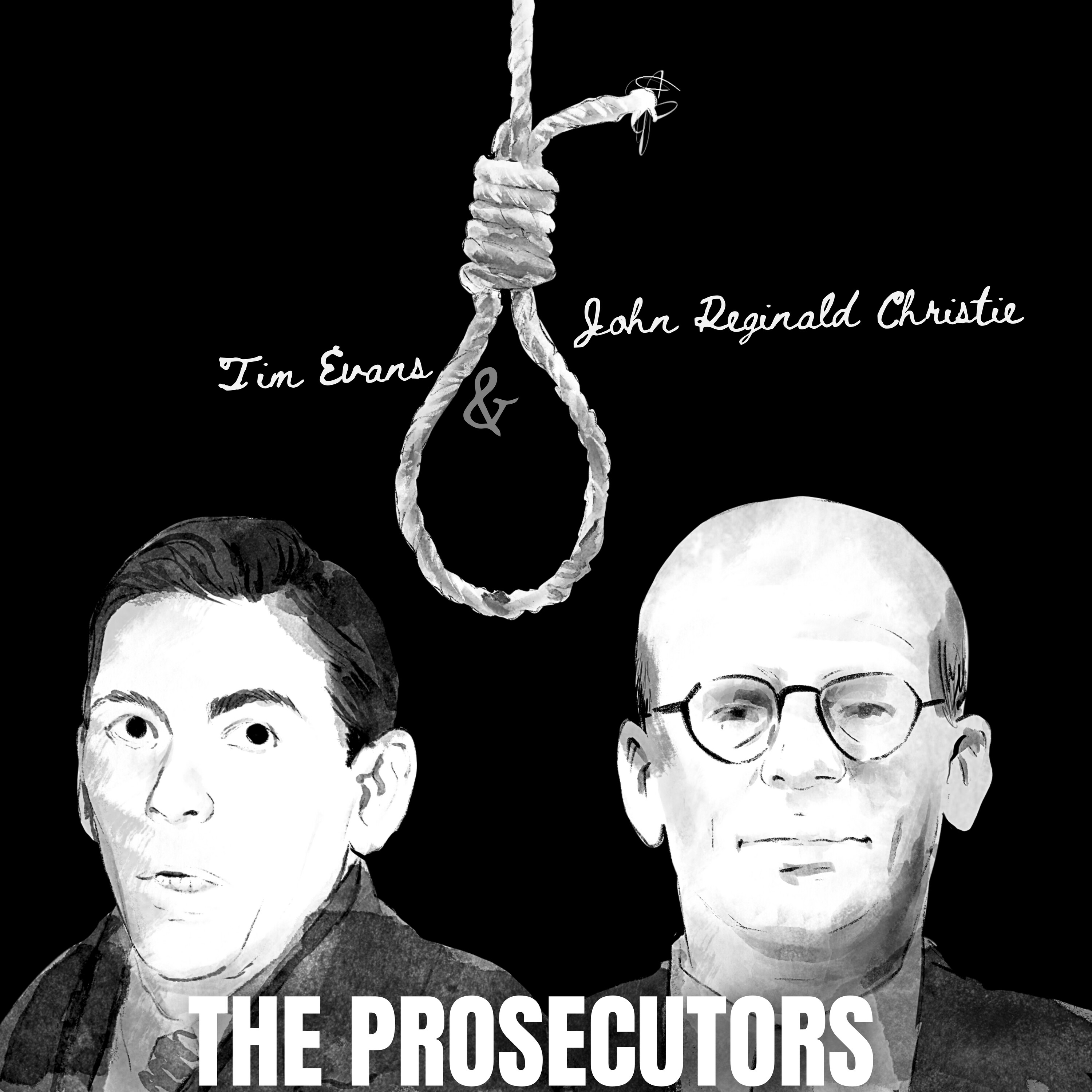
The Prosecutors
352. The Case of Timothy Evans and John Reginald Christie Part 1 of 2 -- With a Little Help From My Friends
01:22:42
Loading summary
Transcript278 lines
- [00:00]
A
Safeway and Albertsons have made saving easier than ever with great savings on family favorites this week. 16 ounce sweet strawberries are two for $5 member price. And don't miss the incredible deal on Signature Select Boneless skinless chicken breast value packs for $2.97 per pound limit. One plus medium avocados or mangoes are five for $5 member price. Fresh and delicious savings for every meal. Hurry in. These deals won't last. Visit safewayoralbertsons.com for more deals and ways to save. This podcast is brought to you by Progressive Insurance. Do you ever think about switching insurance companies to see if you could save some cash? Progressive makes it easy. Just drop in some details about yourself and see if you're eligible to save some money when you bundle your home and auto policies. The process only takes minutes and it could be hundreds more in your pocket. Visit progressive.com after this episode to see if you could save Progressive Casualty Insurance Company and affiliates.
- [00:54]
B
Potential savings will vary.
- [00:55]
A
Not available in all states.
- [00:57]
B
Hi, I'm Juliet Cowley, a retired FBI profiler and host of the true crime podcast the Real FBI Profilers. If you're fascinated with true crime and criminal profiling, then join us as we discuss real cases and examine the behavior exhibited before, during and after the commission of the crime. You can listen to the consult wherever you get your podcasts. It's as close as it gets to being in the room with the FBI's Behavioral Analysis Unit.
- [01:36]
A
I'm brett.
- [01:37]
B
And I'm alice.
- [01:39]
A
And we are the prosecutors. Today on the Prosecutor, a man murders his wife and daughter in a violent rage. Sadly typical. But this story has more twist than a Hollywood movie. Hello everybody, and welcome to this episode of the Prosecutors. I'm Brett. I'm joined, as always, by my Ace co host, Alice.
- [02:39]
B
Ace or Ace? Duh.
- [02:41]
A
Ace. Ace aced everything in life.
- [02:45]
B
I don't know if I aced everything, but Ace of Bass was my first CD and I had it on tape as well.
- [02:52]
A
Is that right? Wow.
- [02:54]
B
It was the music for me that bridged the gap of cassette tape and cd, because I had both.
- [03:00]
A
Ace of Bass. Wow. That's awesome. I love. No, I loved Ace of Bass. Everybody loved Ace of Bass.
- [03:08]
B
Everybody loved Ace of Bass. Everyone knew the words to the sign,
- [03:12]
A
but it opened up my mind.
- [03:14]
B
Weren't they English? Is that where Ace were? They were there. They spoke with an accent.
- [03:19]
A
I mean, they spoke English.
- [03:21]
B
They spoke English, but with an accent face.
- [03:25]
A
Wait, where they is Swedish?
- [03:27]
B
See, they had an accent. Yeah, because it was like I saw the Sign.
- [03:31]
A
Yeah, I guess we should have done Ace of Bass for the last case when we were in Norway. Sweden, right?
- [03:38]
B
Close to Sweden, but not the same. So perhaps best that you. You stayed with. Belgish words.
- [03:43]
A
Belgish. But, Alice, spoiler alert, just mentioned something important. So we've been doing. This is like the 352nd episode of this podcast. We've been doing this podcast for nearly six years. And in all that time, in all 350 episodes, we have done cases from Norway, from Russia, Ireland, a ton. In Canada, we've even done cases from South America. But one place we have never done a case is the uk. Jolly old England. We have never done an English case.
- [04:26]
B
And shame on us, because they're like number two on our countries of listens.
- [04:31]
A
I know when Canada's not mad at me for making fun of horses, Canada is usually number two. Canada's great at being number two, by the way. Real silver.
- [04:40]
B
Come on, come on, rub it in. It's too.
- [04:42]
A
Every now in the Olympics, England jumps in and they're number two. So, you know, the fact that we have neglected them for so long really is inexcusable. So my apologies to England, but we are making up for it now.
- [04:57]
B
I was going to say, for what it's worth, boy, do we have a banger of a case. A banger of a case. So if you had to wait for a UK case, this was, I'd like to say, worth the wait. Because the wait, my mind just kept spinning the more and more I learned about this case.
- [05:17]
A
And this is one. This has got all kinds of stuff in it, you guys. We're going to give you our opinions. When it's over, you guys are going to have to make decisions for yourself. But this is a fascinating case. Got books for you to read at the end of it as well. Really great books, by the way, or. Great book. There may be great books, but there's one book in particular that's fantastic on this particular case. But I feel like we should just. We've talked enough. I've insulted the Canadians enough. I think it's time to dive into this case.
- [05:49]
B
And you're going to want to dive in because. Come back with us to April of 1948. Timothy Evans and his wife Beryl moved into the top flat at 10 Rillington Place in Notting Hill, a neighborhood of London. Movies are made here. It seems like a romantic place. It is. But Notting Hill. So Timothy Evans was your typical working man in 1940s England. He was a Welshman from Glamorgan by birth and he'd moved with his family to London in search of a better life. Like many, Tim had suffered health problems most of his childhood and he missed a significant part of school. Because of those health problems. He was barely literate and later IQ tests would reveal substantial intellectual deficits. Whatever intellectual deficits he had didn't prevent him from being something of a Rocateur. He'd tell tall tales about his ex boys that few people would believe. And in reality he was a lorry driver who had very little excitement, save for when he was arrested for stealing a car in 1946, a serious offense for which he was fined 60 shillings or 3 pounds for reference. The average wage in London at the time was about £5,000 a year. So I don't know, might want to take your bets and steal some cars and see if you can sell them for parts.
- [07:14]
A
There you go. You know that we should have done this case first because we were trying to figure out how much a shilling was worth. Now we know, 20 shillings to the pound. But in 1947, things are looking up for Tim. He marries Beryl Thorley, a woman he met on a blind date. You know, even in 1940s, trying to figure out ways to meet people. Although initially living with their family, when Beryl became pregnant, they moved to Notting Hill. Notting Hill, Wow. They must have come into some money.
- [07:44]
B
Right?
- [07:45]
A
Well, although it is now thought of as a posh. I feel like it's proper use of that word, posh.
- [07:51]
B
Look at you.
- [07:51]
A
Yeah, look at me.
- [07:52]
B
Look at me. Look at you.
- [07:54]
A
Look at me. I'm basically from the UK, a posh district and the subject of the late 90s Julia Roberts and Hugh Grant flick. Did you see that one, Alice? Notting Hill.
- [08:04]
B
Did I see it? I'm just a girl standing before a boy asking him to love her.
- [08:08]
A
Is that from Notting Hill? I didn't even know that.
- [08:11]
B
Of course it is. That's one of the most famous scenes.
- [08:15]
A
And yes, I quoted that many times, but I didn't realize it was from.
- [08:17]
B
It's from Notting Hill. And he's also made fun of for saying Whoopsie Daisy. So. So a lot of people of our generation say whoopsie Daisy because of Hugh Grant.
- [08:26]
A
I think love, actually still my favorite Hugh Grant.
- [08:28]
B
I mean, he's fantastic in it.
- [08:30]
A
Yeah, well, anyways, at the time Notting Hill was known as one of the worst neighborhoods in London. Isn't it funny how things change? But it was cheap and they were able to find a place with respectable neighbors. Always important when you know you're moving into a new neighborhood, particularly one that maybe is not so nice. Downstairs, this was one of those places, was sort of a subdivided flat. I don't know exactly how to describe it, but essentially you had an upstairs apartment, then you had a downstairs apartment. I think you might even had two downstairs apartments. People are trying to make ends meet in Notting Hill at this time. And downstairs from them, in their house at 10 Rillington Place, lived an older couple. And in fact, the husband was a postal clerk and a former police officer. So not a bad place to bring a child into the world. And Geraldine was born on October 10, 1948.
- [09:28]
B
But things weren't perfect. As their downstairs neighbors, the Christie's would later attest, neither Tim nor Beryl were particularly good at fulfilling the expected roles of a married couple in 1940s London. Beryl was a terrible homemaker and wasn't good at managing finances. Just have to pause there for a moment because I feel personally attacked, like, I hope on my gravestone. It's not like, oh, that Alice. She wasn't particularly good at fulfilling the expected roles of a married couple. Terrible homemaker, am I right?
- [10:02]
A
But Beryl didn't have a podcast, Alice.
- [10:04]
B
So, you know, Beryl didn't have a podcast, but 1940s, she wasn't good at money and she wasn't good at keeping the home. Tim made that last part particularly difficult, the money aspect, because he was drinking away most of the money he earned as a truck driver.
- [10:22]
A
Match made in heaven, right?
- [10:24]
B
Not good. You can't have someone who's not good with money and someone who also drinks it away. And when Tim was drunk, he got loud and he got angry. Their arguments became legendary and. And the violence between them had a number of witnesses. Things came to a Head in 1949 when Beryl discovered she was again pregnant.
- [10:45]
A
And, you know, this is one of those things where in the right circumstance, this is wonderful news, right? But not the case for these two. The two were barely making ends meet, and Beryl decided there was no way they could have a baby in this situation, and instead she wanted to seek an abortion, which were illegal at that time in England. Tim was adamantly opposed to this, at least at first, but Beryl sort of didn't care what he thought, and she went ahead anyway, and she attempted to induce the abortion through the use of a number of home remedies that had been recommended to her by different people, but none of these worked. And so she started to seek other Options. And by November, she was becoming somewhat desperate. And that's when things took a violent and tragic turn.
- [11:39]
B
Okay, so we're going to dive into the first timeline that might just be a glimmer for you that this is going to be a wild ride.
- [11:48]
A
It's a little foreshadowing.
- [11:50]
B
A little foreshadowing that there's a gun. More than one timeline.
- [11:53]
A
I wonder if it'll go off. Anyways, continue. I don't know why I'm just. I'm just so excited to do it.
- [11:59]
B
You were really excited. I was going to say we should have, like, put a gun somewhere back here with the crooked art so that people kept looking at it saying, does it go off? Okay, timeline number one. What could that mean? She echoed for the future. Okay, let's go to November 8, 1949. So the Christie's are in bed while the Evans are engaged in one of their increasingly aggressive arguments. Suddenly, the Christie's hear a loud thump and then nothing. This was the last time the Christie's would hear or see anything from the Evans.
- [12:35]
A
So that's November 8, 1949. Let's move to November 9, 1949. So this is the next day. So the Christie's are in bed and here we go, we hear a big thump. Right. Well, the next day, Timothy Evans sells all of his furniture for 40 pounds, which, you know, not bad. I mean, you can attempt to steal like four or five cars. I was gonna say 10, 11 cars for 40 pounds. So a significant amount of money. And apparently it was enough for him to quit his job and leave London. He heads back to Wales, where he is from, to stay with his aunt and uncle. And they ask him the obvious question, where are his wife and daughter? He says that they have gone to visit Beryl's father and that's why he's there all by himself. And if red flags are going out for you, they probably should be. So that's November 9, 1949. Fast forward 20 days to November 29, 1949. Tim's mother, who had been in regular contact with Burl before Tim left London, learns what he has been telling others about Burl. And the one thing Tim's mom knows is if she's off as her dad, she would still be in contact with her. And she hasn't heard anything from her in three weeks. So she writes a letter to Tim's aunt, the one that he's staying with, which reads, quote, I don't know what lies Tim have told you down there. I have not seen Beryl or the baby for a month. There is some mystery about him. I never want to see him as long as I live. Everywhere I go, people asking for money, he owes them. I am ashamed to say he is my son. It's rough.
- [14:26]
B
That is really rough. Oh, that's from your own mother.
- [14:30]
A
But probably appropriate.
- [14:31]
B
Probably appropriate.
- [14:32]
A
But he wouldn't know about that because, I mean, she wrote the letter to his aunt. So it's all fine.
- [14:36]
B
It's fine, right? Why would you share a letter like this, Especially with someone who drinks and gets violent when they drink. So the next day on November 30, Tim's aunt reads this letter to him at breakfast. The letter from his mother saying she wants nothing to do with him and that she's ashamed he is her son. Upon hearing this, Timothy walked to the local police station, went inside and told the attending officer, quote, I have disposed of my wife. I have put her down the drain.
- [15:08]
A
Gotta imagine that was a shock, dude. Just hanging out the front door, you know, just people checking in. Hey, I need an officer. My cat's in a tree. Hey, I need an officer. You know, somebody broke into my house. Hey, I killed my wife and stuffed her down the drain. Okay, well, that's different day suddenly interesting.
- [15:25]
B
At least I don't know what in that letter makes him. Maybe he's like, well, darn, I've disappointed my mother. Perhaps I should come clean for 20 days. He's like, I know a Beryl is barrel's with her dad. Yeah, all's good. Mom's ashamed of me. Better go turn myself in, whatever it was, without a fight. There's no shootout. There's no running from the police. I mean, he has been running from the police for 20 days. They just didn't know he was running from them. But he turns himself in and says it very frankly, with kind of no fanfare. I disposed of my wife. Put her down the drain. So two detectives hear this, and they sit down with Timothy and have him tell them everything. It. It takes around two hours, with Timothy recounting the entire history of his marriage up until Beryl's latest pregnancy. Tim says that initially he'd opposed the idea of abortion. But as his wife grew more desperate and made wild claims about killing herself and their daughter Geraldine, he began to relent. On November 7, he met a man in a cafe, seemingly at random, who shared that he had access to abortion pills. He bought them and took them back home to Beryl. The next day, when Tim returned from home, he found Beryl dead. She'd taken those pills and they'd killed her. At this point, Tim, possibly because abortion was illegal in Britain and he would be blamed for his wife's death, decided to hide the body. He said he opened up the drain in front of the house and dropped her body in. So he wasn't kidding when he said that he put her down the drainage. He then left Geraldine, the daughter, with some mysterious people who would take care of her and fled to Wales. So this is the story that he tells the two detectives.
- [17:11]
A
You know how sometimes you guys ask us, how do you know if somebody's telling the truth and they tell you a story and they testify or they confess or whatever, how do you know if they're telling the truth? I mean, this is a story that if you told it to Jesse Misskelley, he'd be like, that's not what happened. And you know, I mean, let's just. Just walking through this, right? He just happened, you know, I know sometimes I go down to Starbucks, get my coffee, maybe a scone, depending on the day, some random guidelines like, hey, you need some abortion pills, because I got some. And I'm like, no. But in this case, Tim's like, that's exactly what I need. You just happened. How often do you do this? You just could tell and it just works out right? Then obviously she takes him and dies. And so he dumps her in the drain and gives his daughter to some mysterious people. Because that's what you do if you have a daughter and you know, you don't want to deal with her because your wife's dead. There's always mysterious people who are just willing to take them and then you go off. I mean, that's the story he tells. And I would think most of us, if we heard a story like that, would probably say that's not what happened. And wouldn't you know it, as you'd probably expect, the police in Wales found this story to be utterly unbelievable. But they are in a situation where Beryl has not been seen for a month. Nobody knows where his year old daughter is. He's come in and said that he murdered his wife and stuffed her down the drain. Which seems like the kind of thing someone wouldn't just say. So they're like, well, we have to follow this up. So they call up Scotland Yard, which is like the colloquial name for the Metropolitan Police in London. They call up Scotland Yard and they tell him this story and they're like, hey, can you look into this? And Scotland Yard says, we got nothing else Going on. So sure. So they go up to 10 Rillington places in a few officers up there and they're indeed in front of 10 Rellington Place is a sewer drain in the very front of the building which perfectly matches the description that Tim gave them. But there was a problem, they couldn't get the COVID off. So they're trying to open up this sewer because they're expecting if we can get this sewer open, we're gonna look down in it and there's gonna be a dead body in there, right? And that's what they think is gonna happen. They can't get the top off and in fact they got three sort of strong, able bodied men pulling at this cover and, and it takes them hours to get off but finally they get it removed. Now despite this indicating that there is no way that Tim could have actually removed this cover on his own, the police dutifully search the drain and wouldn't you know it, they do not find a body. So now we're in a weird situation, right, because we got a guy who's confessing to murdering his missing wife. But the story he's telling us about where the body is turns out not true, right? So they call up the Welsh police and they say, hey, no dice. We looked in the drain, there's nothing there. So the Welsh police, they go back to Tim. Now remember, Tim had taken two hours to tell them this relatively short story initially because basically apparently he related his entire life history and the police officer said it was like the most just mind numbing confession they had ever heard. But this time Tim says, I'm going to tell you the truth. And he launches into another sort of multi hour long confession and he admits there was no man at the cafe. He made that part up. Shocker of shocker. But Barrel was pregnant, that was true. And she did want to have an abortion. But Tim didn't need to go to the cafe to find someone to help him. He had someone much closer. His downstairs neighbor, the middle aged postal clerk, John Reginald Christie. Remember the downstairs neighbor, the one who's a postal clerk, He's a former cop, the one who he and his wife heard that thump the night before Tim ran off to Wales. Well now Tim is saying, hey, I didn't have to meet in the command in a cafe. John Reginald Christie decided to help me out. According to Tim, Christy had heard about his plight and offered to help. In addition to being a police officer and a postal clerk, he had received medical training during the second World War. Christie was one of Those people who had a lot of health issues. So he wasn't someone who was going to go off and fight. And then. So there were a lot of people who were in the Home Guard who were sort of older men or maybe men who had health issues who couldn't really serve. But everybody was involved in the war. I mean, it was a complete mobilization of the entire population to fight Second World War. And so a lot of people had these jobs at home. One of them was, so the medical corps. And so people were trained, ordinary people were trained in sort of basic medical care for the Blitz. You know, the Germans are bopping bombs all over London. People are getting hurt. They anticipated an invasion by the Germans. You're going to need a lot of people who are trained in medical care. So he had this training, and he said that based on his training, he was able to perform an abortion. And in fact, his method was foolproof. It would induce an abortion 100% of the time. But there was a catch. The only problem was it was so foolproof that it killed the mother 10% of the time. So you're rolling the dice. Definitely going to have the abortion. Kills the woman one out of ten times. Tim said, no, not going to take that chance. But when Beryl heard about Christie's offer, she was so desperate that she wanted to take the chance to take this risk and have Christy perform this abortion.
- [23:05]
B
This episode is brought to you by Progressive Insurance. You choose to hit play on this podcast today. Smart Choice. Progressive loves to help people make smart choices. That's why they offer a tool called Auto Quote Explorer that allows you to compare your Progressive car insurance quote with rates from other companies so you save time on the research and can enjoy savings when you choose the best rate for you. You guys are always hearing me talk about how busy I am. I am running to pick up my kids from school or soccer practice, and then I also have to be court ready. That means I have to make sure that I feel good and comfortable in my clothes. Yes, ladies, we're talking about the right support, both for your bras and also in all the suits I'm wearing all day. I'm. I am absolutely with Honey Love because they give me the confidence to go. Throughout my day, I have been wearing their crossover bra, which basically feels like wearing the most comfortable support you'll ever have, as well as their super power short. I mean, it's called a super power short, and I feel superpower with all the support that I have under my clothes. You can't tell that you're wearing the shapewear but you certainly feel the support. The best part is is that they have support for all shapes and sizes and I have so many girlfriends who have told me they depend on Honeylove, which is why I knew that I had to try it for myself and now that I have I can report back. It's all it's hyped up to be. Honeylove is an independent female founded brand. All Honeylove products are intelligently designed by women who actually wear them, including the founder Betsy, who's highly involved in the development of each product and and Honeylove recently launched their new Crossover Contour bra which I just talked about, which features their best selling wireless crossover bra design plus built in molded light foam pads for extra support and a beautifully contoured shape.
- [24:55]
A
Treat yourself to the most advanced bras and shapewear on the market. Use our exclusive link to save 20% off honeylove@honeylove.com prosecutors that's honeylove.com prosecutors after you check out, they'll ask where you heard about them. Please support our show and tell them we sent you experience the new standard and comfort and Support with Honey Love.
- [25:19]
B
The 20% off wine sale is back at Grocery Outlet, your Extreme value headquarters. Now through March 10th, every bottle of delicious wine is 20% off. That's right, every single bottle. Chardonnays, Cabernets, roses and everything in between. Whether you're hosting friends or or unwinding after a long week, you don't have
- [25:36]
A
to spend big to pour something great.
- [25:38]
B
Save more and sip more at Grocery Outlet. This deal is only available until March 10 while supplies last. So hurry to your local grocery outlet. Today. Grocery Outlet Bargain market support is available 24. 7 with VRBoCare. We're here day or night, ready whenever you need help because a great trip starts with with the right support. So as Tim said in his first confession, he came home from work on November 8, but he didn't initially find Beryl. Rather, he found Christy waiting on him. The procedure had killed Beryl. Tim found her lying in bed, dead, and baby Geraldine lay in her cot beside her, alive and hungry. Tim made something for the baby to eat while he and Kristi decided what to do. They couldn't go to the authorities because you know that abortion was illegal. Christy agreed to dispose of the body while Timothy was at work. He also told him he had a couple in Acton who would take the baby. Tim did as he was told, so his second shot at the story may be not shocking to you all he's still not really at fault. He's even actually less at fault than before. Before he opened up the sewer drain that apparently took three grown men to open and dropped a whole dead body in there. But in this version of it, he actually didn't even see his wife. He didn't even buy the pills. He's even more removed downstairs neighbor, who's this, like, postal worker extraordinaire, abortionist, killed his wife, and then he was the one. He even disposed of her while he was at work. So conveniently, the second confession further removes him from either killing his wife or disposing of her body. And yet again, though, Geraldine is gone this time, maybe a little bit more specific. I didn't just find some people, actually, it was Christy who knew some people who would take in this young girl.
- [27:42]
A
And, you know, this is a weird second confession because usually analysis sort of put a finger on it. Usually you would think the first confession distances you the most from the crime, but then the second confession gets a little bit closer to the truth, right? But this is the opposite. Like, for reasons that are unclear, I mean, let's just assume for a second, let's not prejudge this case. So let's just assume for a second, Tim's telling the truth the second time. So rather than tell this truth, I guess because it was a deep, abiding loyalty to Christie, he buys the pills, right? He buys the pills, gives them to his wife, and then dumps her body in the sewer. And then it's interesting because there are some consistencies, right? There is a man who's involved, who's not him in the abortion. The abortion does kill her, her body is disposed of. And Geraldine is given to mysterious people in both stories. But the first story, Tim is very culpable. In the second story, he's far less culpable. And it's really all his downstairs neighbor. And you can imagine the police are totally confused by this. They don't understand, like, why did you go from you did it all? And now you're saying it was the neighbor. Why did this happen? But Tim says, look, this is the story. This is how it actually went down. So the police and Wales, you can imagine, you know, you're it. You've just spent all afternoon trying to get the COVID off the sewer. And then all of a sudden, the Welsh police, they call you back and they say, hey, got a new story. So the new story is he was all this Christie guy. So they go out to 10 Rillington Place, knock on the door, Christy Answers it. And they. They tell him this story. They tell Chris the story. And Christie's like, what in the world are you talking about? I had everything to do with this, right? And the place, like, we don't think you had anything to do with it. We're just telling you this is a story. Is there anything else you can help us out with? And he's like, look, you know, we heard the thump. That's all we heard. We didn't see anything else. Right. We didn't see anybody like taking a body out the front door or anything. So the police, they think about this for a little while, and then they decide we need to search more thoroughly, because even though the body wasn't down in the sewer, it feels like the body must be somewhere on that property. So on December 2nd, they go back to 10 Rillington Place. Once again, they're going to search. Now, they had searched it before, but they'd found nothing. But this time they decide, we're going to look in the backyard. So in the backyard of this building, there's like a garden area, there's a fence, and there's a wash house. Fairly small little house, but, you know, a shed which has some various things in it, was big enough maybe to hold a couple bodies, for instance, and various other things. And so they decide, we're going to search this outdoor area, including this wash house. And they go inside. And when they walk into the wash house, they look around, and what they notice is that there's something in the back of this wash house that looks like some sort of large package. And what they find wrapped tightly in cloth is the body of Beryl. But she wasn't alone. They also found the body of Geraldine. So they find both Beryl's body and Geraldine's body. She had not been sent to some mysterious couple. She, in fact, was dead with her mother. And the police very quickly realize, and an autopsy confirms that both had been strangled to death. But the police found no evidence of a failed abortion. So this whole story seems to be falling apart. So, of course, they go back to Tim, they pull him into the interrogation room, and they basically, they do sort of a shock and awe approach. They sit him down, and then they start putting stuff on the table. They put the cloth that was used to wrap barrel, and they put a tie on the table that they believe was involved in this crime. And at this point, Tim picks up the tie and he looks at it, he puts it down. And now he tells the police an entirely new story. This story was that he and Barrel had gotten into a fight, and in a rage, he had strangled her with a rope. He does that the night that everyone heard the thump, Right. The following night, he strangles Geraldine using the tie. So he strangles Beryl with a rope. He strangles Geraldine with a tie. He then wraps the bodies up, and he puts both bodies in the wash house behind the building. Subsequently, he would tell another detective that he had not intended to kill Geraldine. I mean, he hadn't really intended to kill Beryl. Things got out of control, but that Geraldine wouldn't stop crying in the middle of the night, and he couldn't take it anymore, and that's why he killed her. And Evan's story of killing Beryl was consistent with bruising on her face. So it appeared that she had been beaten before she was strangled.
- [33:11]
B
Why do we do these types of cases? They're so sad.
- [33:14]
A
I know.
- [33:14]
B
They're so sad.
- [33:16]
A
It's only gonna get sadder.
- [33:17]
B
It's only gonna get sadder.
- [33:18]
A
Buckle up.
- [33:19]
B
Yeah. Buckle up. So shortly thereafter, not surprisingly, Tim recants. So this is his third confession. And it seems to match more of what the police are seeing. And now that they have found the bodies and they've done autopsies on both Geraldine and Beryl. But he recants. He went back to his second statement. Remember the one involving Christy. He claimed that Christy had been the one to kill Beryl. And then he just assumed that if Christy had killed Beryl, Christy must also have then killed Geraldine when he was supposed to be finding her a place to live. It was Christy, Tim said, who disposed of the bodies, and it was Christy that suggested Tim should flee the area. Tim had simply done what he was told to do. And again, in this fourth version of the confession, he distances himself away and puts blame on his downstairs neighbor, Christy.
- [34:17]
A
Can I just say why?
- [34:18]
B
Why would Christy murder Beryl?
- [34:20]
A
And also, this is the psychology of false confessions. I think this is one of those that it is so difficult to wrap your head around. I. I mean, how does a man. And let's assume this story is true. The fourth story is true, which is like a variation on the second story, right? How does a man confess to murdering his wife and baby daughter number one? How does he do that? How do you falsely confess? You know, fine. You falsely confess to murdering your wife. Shouldn't murder your wife. Shouldn't falsely confess to murdering your wife, Right? But how do you falsely confess to strangling your daughter with the tie sitting in front of you at the interrogation table? How do you do that? And you do it presumably to protect this random person who lives downstairs. And now you're like, actually, no, I didn't do anything. I am perfect. I am more innocent. What's crazy about the fourth story is he's the most innocent. He didn't do anything.
- [35:24]
B
He wasn't trying to get an abortion or anything.
- [35:26]
A
No, Christie just killed his wife.
- [35:28]
B
And this is crazy. Like your response to the man who murdered your wife not to try and induce an abortion that maybe you both wanted? Just. He just straight up homicide, right? He's killing your wife, and you give your baby daughter to the man who just killed your wife out of nowhere for safekeeping. That makes no sense.
- [35:48]
A
And then you come back and he's killed her, too.
- [35:51]
B
And you don't go to the police.
- [35:52]
A
You don't go to the police.
- [35:54]
B
My crazy neighbor killed everyone in my life.
- [35:57]
A
And remember, Tim is not. It's not like he's a peacemaker, right? He's not a guy who would never hurt a fly, this guy. He's a brawler. He's a Welshman. No offense to the Welsh, but, I mean, the Welsh are not exactly known as laid back folks, right? He likes to drink. You know, he doesn't seem like the kind of person who. If some old decrepit guy with all these, like, health issues downstairs had done this to his wife, that he would just let it go and just go live with Aunt Knuckle, you know?
- [36:30]
B
So the police, they're doing their due diligence, and they're like, guess we got to go investigate this lead. And they go and tell Christy, hey, by the way, remember that story we told you earlier? Well, there's a variation on it now. And guess what? You're not even a doctor in this version of the story. You just straight up killed Tim's wife. And apparently you also killed the baby. Geraldine. Christy, of course, was shocked by this confession, this story, and he denied it all. He's like, I have no idea what you're talking about. That's crazy. Tim's recantation really didn't make much sense to anyone, and it wasn't backed up by much in the way of evidence. True, there were some issues with his confession. Workmen who were often in the small building where the bodies were found claimed to have been there the day Tim would have had to put the bodies inside. But they weren't really sure about the dates, and the police weren't too interested in confirming their statements, and the contradiction fell away. But those weren't the Only problems with Tim's story. So Mrs. Christie said she'd been in the room and she'd seen nothing. But this shed was really small. How could Mrs. Christie have gone into the shed and not seen the bodies? Of course, both Mrs. Christy and the carpenters could have been wrong about the dates. Maybe they were in there before the bodies were put in there. We all know how when you don't have, you know, something planting you on a date, it's really hard to remember what you did this morning, what you ate for lunch. Right? That's a common trope. I don't even know what I ate for lunch. So maybe it's not a big deal that these workmen and Ms. Christie didn't see the bodies wrapped up in the cloth back there because they just didn't remember what days they were there. The bodies were wrapped up, and you can imagine that if it's looking like a package, even a body shaped package, maybe they just missed it. So prosecutors were like, okay, we have enough. We're moving forward. We're going to charge Tim because Tim is clearly so guilty here. He's confessed four times, four different stories, but that just shows his guilt. So they're afraid that Tim might be able to argue that Beryl goaded him into killing her. This apparently was some sort of successful strategy at the time. 1940s, wild times, y', all, that you can. The victim can goad you into murdering them. So he was only charged with killing the baby, Gerald Dean, so as to avoid any problems with Beryl having. This is like the definition of victim blaming.
- [38:58]
A
I mean, I guess, I don't know in 1950s England how differentiated their murder charges were. I mean, I guess you could say, look, we really want to get him for murder one. If he was in a heated argument with his wife, maybe that's a defense to murder one. It's really just manslaughter or murder two. Whereas there's no defense to killing the baby. Right. I mean, that's my charitable defense of the prosecutors. I think the reality was they were just worried that, like, there'd be men on the jury who were like, yeah, you know, woman is yelling at me like that. I'd probably do the same thing.
- [39:29]
B
Right?
- [39:30]
A
And I think there probably is some concern about that at the time. But either way, they make this decision that they're only going to charge him with the murder of Geraldine. January 11, 1950. The trial of Timothy Evans begins at the Old Bailey. Such cool names for everything in England. I think the Old Bailey got blown Up. And what was that movie? Remember, remember the 5th of November. The gunpowder, treason and Plot See no Reason. Oh, Treason, Therapy, Forgotten the. What was that, ah. What was the name of that movie? V. Oh, man, she was so.
- [40:05]
B
She was so young. Yeah.
- [40:07]
A
It either starts with them blowing up the Old Bailey or ends with him blowing up the old.
- [40:10]
B
What I like about the Old Bailey is, is it a courthouse? Is it a bar?
- [40:14]
A
I know. Could be either one, right? Could be both. Who knows? It's England, right? It's a public house. Either way, it could be a public house for alcohol or public house for justice. But in any event, that is where his trial is held. And as we said, he's only being tried for the murder of Geraldine. But Beryl's murder is allowed to be included in the testimony because it sort of completes the story. Right? So they're getting kind of the best of both worlds. And the prosecution had a strong case. Evans had confessed in some form or fashion four different times, and the evidence seemed to match his third confession, the one where he beat her and strangled her, but matches the injuries that she had. And who is their star witness? Well, Christie, of course, because he's the one he's accusing of doing it. He's gonna be their star witness. He is a fact witness. I mean, he heard the fight. He heard the moment that this happened. And the prosecution is gonna tell this story of a depressed man. He was recently unemployed.
- [41:17]
B
He.
- [41:18]
A
He was deeply unhappy in his marriage. He was suffering under the weight of all these financial burdens. And he gets into this fight with his wife, a fight that he had had multiple times before. But this time, everything boils over. He murders her. And what happens? He also kills his daughter. So that's the story that they're going to tell about Timothy Evans.
- [41:41]
B
So obviously, among those four confessions, Christie's implicated in two of them in a very serious way. Remember the story about Christie with the abortion help? Well, Christie gets on the stand, and he denied the claims that he had ever offered Barrel an abortion. And he provided detailed accounts of the frequent fights between Tim and Beryl. Christie came off well to the jury. He was thought to be pleasant and thoughtful. And although the defense tried to bring up his prior criminal past, it had been 17 years since his last conviction. And the jury instead viewed him as someone who had impressively turned his life around. So we'll talk about that more later. Evans claimed to be innocent throughout this entire trial, with Kristy up there talking about what a terrible guy he was when he drank, these horrible, violent fights he would hear. Evans maintained his innocence, but the jury wasn't convinced. He came across as a liar and was thought to be blaming Christy in an effort to save himself. He was unable to provide explanations to the jury as to why Christy would have committed the murder motive. And his statements were filled with all these inaccuracies, not to mention four wildly different confessions that kept him at arm's length or completely innocent of the crimes. So the trial lasted only three days, but it took the jury just 40 minutes to reach a guilty verdict. Honestly, not too surprising.
- [43:10]
A
I mean, really, it's not. In this case, you have a lot of things going. I mean, it's the 50s, right? So now there's all sorts of things you would expect. You would expect forensics, you would expect maybe some DNA, some phones. Tim's phone would be pinging upstairs and then pinging next to the shed, and you'd use all that.
- [43:30]
B
But.
- [43:30]
A
But in this case, you don't have that. So this, in many ways, is the ultimate circumstantial case in the way that people meant that in the past. I mean, now circumstantial evidence includes things like DNA, fingerprints, cell phone pings, like things that seem pretty rock solid. I mean, DNA is like one in a trillion or whatever, right? So when you see that, you're like, oh, that's much better than some eyewitness you can't trust. But at the time, you really did. You had sort of. Did somebody seem. Do it? Nobody did. So then it's this. We're kind of trying to put together these various things that. I mean, think about the evidence you have against him. I mean, is there any doubt that everyone on Twitter would think he's guilty? People on Twitter would have thought he was guilty before he was even arrested.
- [44:12]
B
Right.
- [44:12]
A
Like the moment they found Barrel dead, they'd be like, what was the husband who did it?
- [44:16]
B
Right.
- [44:17]
A
And there's a lot of reasons think it's him.
- [44:19]
B
Right?
- [44:19]
A
He's the husband who's been violent with his wife before. Very violent. There are multiple people who testify to this violence, including members of Barrel's family who testified to how violent Tim was with her. You have both Reginald Christie and his wife testifying to that night. When they hear this violent fight upstairs and they hear this thump and then silence, and they never hear Beryl again. You have her being found in the back, whatever that. The shed, right? And then you have the confessions. And not only that, I mean, you have evidence of guilt in his behavior. He flees the area. That's one of the big things that we look at, it's the kind of evidence that you typically would point to even in a trial today, fleeing the area is consciousness of guilt, something you point to. You have his multiple confessions, his changing story. He have the fact that his third confession seems to fit what physical evidence you do have. It is obvious that she's been beaten. He says that he beat her, he's an abusive guy, he explains exactly how he did it, he explains exactly how he killed his daughter.
- [45:29]
B
Right.
- [45:30]
A
All this seems to come together into a rock solid case. It's not surprising that it took the jury only 40 minutes to reach a guilty verdict. And let me tell you, unlike now, justice moved swiftly in 1950s England. Right? So this, he's convicted on January 11th, maybe January 14th. I'm not sure if the trial began on January 11th or it ended on January 11th, but either way, he's convicted in mid January 1950. On March 9th, two months later, 1950, Timothy Evans was hanged for his crimes. And yet, despite Evans apparent guilt and the overwhelming evidence against him, Evans's family, and particularly his mother, continued to blame the prosecution's star witness, John Reginald Christie, for the crime. Now, nobody thought much of this and they certainly didn't put much stock into the ravings of a woman who was obviously devastated by the loss of her son, even though she wrote that horrible letter about him and the loss of her daughter in law, who she liked better than her son, but certainly her grandchild. That is until a new tenant moved into Christie's flat and began to notice a horrible smell. And that's where we're going to stop for today. We'll be back next week, the rest of the story. And there is, there is more of the story. This is where things kind of go off the rails.
- [47:03]
B
This is what's crazy. Don't Google it, they only go off the rails. Remember, after justice has been served, Timothy Evans has been hanged for his crime.
- [47:12]
A
Yeah. And that's when everything goes crazy. Those of you in Britain probably know this story, but those of you who aren't in Britain don't. Like I said, restrain yourselves, don't Google it. We're going to give everything to you next week. That's all. That's all I'm going to say. That's all I'm going to say about it. Yeah, it's already been a really interesting case. If you want to end here, just come back in two weeks when we'll have a new case. But if you want to find out what happens next, join us Next week for the rest of the story. Alice, this has been a relatively short episode. Do you want to do some questions?
- [47:49]
B
With the change of the seasons, guys? I can feel my skin sometimes struggle to go from the heat to the cold and back and forth, which is why I depend on One Skin. I knew they were the ones to turn to because the founder is a female PhD scientist and all of their products are rooted in rigor is science and research. And you know how we feel about that. We follow the science. And I heard about it from so many friends who depended on One skin and felt the results immediately, not just in the texture, but in how easy it is to use. It stands out to me because it fits into my realistic routine. I don't have forever in the morning or at night to get ready or to go to bed. And so One Skin makes it easy because at the core is their patented OS1 peptide, the first ingredient proven to target senescent cells, a key driver of wrinkles, fine lines and loss of elasticity. Those are all key signs of skin aging and these results have been validated in four different peer reviewed clinical studies. They're certified safe for sensitive skin and their products are free from over 1500 harsh or irritating ingredients. Dermatologists tested and have been awarded the National Eczema association seal of acceptance by the nea, delivering powerful results without the harsh side effects.
- [49:01]
A
Born from over a decade of longevity research, One Skin's OS1 peptide is proven to target the visible signs of aging, helping you unlock your healthiest skin now. And as you age, for a limited time, try one skin with 15% off using code prosecutors at OneSkin Co Prosecutors. That's 15% off. OneSkin.co with code Prosecutors. After you purchase, they'll ask you where you heard about them. Please support our show and tell them we sent you guys. We are back with one of our absolute favorite sponsors, Lola Blankets. You guys know there's nothing I love more than relaxing. You work hard all day. What you want to do when you get home, lay down on the couch, get yourself a good book and wrap up in a great blanket. And there is nothing that will make you feel more luxurious, more comfortable, more wonderful than Lola blanket. It is the greatest blanket I've ever owned. I never thought I'd feel like I feel about this blanket. And I'm not even kidding you, when I give gifts now, you get in a Lola blanket. That's what you're getting. You're getting married, getting a Lola blanket. What I give my mom for Christmas, a Lola blanket. What am I getting myself for the next opportunity? I have to buy something for myself. A Lola blanket. The kids fight over them. I can barely keep one. I need as many as I can get. Lola instantly elevates your space. It's unbelievably soft, beautifully designed. It makes your home feel cozy and curated. You cannot go wrong with a Lola blanket.
- [50:40]
B
We love our Lola blankets and for a limited time, our listeners can get 40% off select Lola blanket products with code prosecutors at checkout. Just head to lolablankets.com and use code prosecutors to get 40% off your order. After you purchase, they'll ask where you heard about them. Please support our show and let them know we sent you. Wrap yourself in luxury with Lola blankets. Who get your heart rate up on this one.
- [51:10]
A
I know.
- [51:10]
B
We do.
- [51:11]
A
We do. You're right about the sad.
- [51:12]
B
What is sad? I mean, it's sad, but also, this is like wild.
- [51:16]
A
Okay, so as expected, I'm not surprised by this at all. We did get a follow up question. We briefly touched on this. But who our least favorite president is. I don't know if you've had an opportunity.
- [51:30]
B
Our least favorite president.
- [51:32]
A
I don't know if you had a chance to think more about who your favorite was.
- [51:36]
B
I can't give that. I mean, there's just so many, like, there's so many that. I mean, George Washington is a little too hard. George Washington is an easy one in the sense of, like, you have to take George Washington now you kind of got to take away. I already gave you my, you know, James K. Polk one. So I did kind of pick one. Okay. Our favorite. Our least favorite.
- [51:54]
A
It's funny growing up in the south because everybody still dislikes Lincoln to this day because the whole war thing, not in Texas. But I was like, oh, okay. People in Texas write in about all your stories about how much people dislike Lincoln.
- [52:08]
B
We did a lot of Texas history we didn't dislike.
- [52:10]
A
You know, I was a big fan of Lincoln because of the obvious. But it's funny because every now and then I can't remember what it was. There was something I was reading about, like the dedication of a building or what was it, man? I can't remember what it was, but they intentionally chose the day that Lincoln was assassinated today.
- [52:32]
B
Oh.
- [52:33]
A
I was like, wow. But I can't. And it was something that was like loosely attenuated to that, but I was like, wow. Anyways, hopefully most people have gotten over it by now, but I would say Washington is number one. Lincoln is number two for me. Roosevelt. The first one. Teddy. Teddy Roosevelt. That's gonna be my top.
- [52:53]
B
This is what you said last time. So we. See we didn't totally avoid the question, but this is my favorite what we said last time.
- [52:59]
A
And you like John K. Polk, the bitch.
- [53:00]
B
I'm. I'm just gonna. James K. Polk.
- [53:02]
A
What? I say. John K. Polk.
- [53:04]
B
John. I was like, you gotta get his name right. But I was taking away kind of the main ones. Right. Okay.
- [53:11]
A
So that's easy.
- [53:11]
B
Yeah. Okay, so who's your least favorite? I don't have a least favorite, but I have a story from my childhood. So I have nothing against Zachary Taylor, except there was this girl in my elementary school class, and she was adamant her last name was Taylor, which, now that I know when I'm an adult, that's, like, one of the most common last names. And she may have been related to Zachary Taylor, but, boy, was she just insufferable about it. Every single day for the, like, four years I knew her, she talked about how well my great grandfather, Zachary Taylor, the former president, said. And I was like, who is this crazy person? So I have no clue.
- [53:48]
A
He was only president because Tipica knew.
- [53:50]
B
Exactly. And then I looked into him, and I was like, that's your grandfather, not grandfather. She insisted it was like a direct line. It was like a great, great grandfather, like. And she was like, the sole heir. I Wikipedia ed it since then, but she talked about it every single day. And that's not an exaggeration. It was like first grade, second grade, third grade, fourth grade, fifth grade. And then I moved, and I was like, good riddance to the. To the Zachary Taylor spawn.
- [54:13]
A
But in my mind, I'm just gonna look at this.
- [54:16]
B
Taylor didn't do anything.
- [54:17]
A
He didn't do anything.
- [54:18]
B
He didn't do. He literally didn't do anything. And so I don't dislike him, like, as a person, but his great, great, great something talked about it all the time. And then when I became older, I was like, I wish I knew how he did nothing so I could make fun of her for having an ineffective.
- [54:33]
A
He fought a bunch of wars.
- [54:34]
B
Yeah, he did.
- [54:36]
A
He was president for one year.
- [54:38]
B
He did have gray hair one year. I know. That's what I'm saying. He did nothing. He did nothing. He died really early, right? He got sick. He got, like, the flu or something. He died in office, right?
- [54:51]
A
Oh, yeah. He died after one year.
- [54:53]
B
Yeah. No, he. He was barely. He barely makes my kids President's map. Huh?
- [54:58]
A
This is interesting. He appointed a judge to the Northern District Middle District and Southern District of Alabama. But it was just one judge.
- [55:04]
B
That was one judge.
- [55:06]
A
Yeah. Maybe they only had one district back then and they're just divided up like that. Okay, so here's how he died. You ready for this? This is straight from Wikipedia. This is not my knowledge. A lot of times I'm just spitting facts for you guys. It just come from my head. And I'm not doing that here because I didn't know this. Okay, July 4th, 1850.
- [55:23]
B
Right.
- [55:24]
A
Taylor reportedly consumed copious amounts of cherries and iced milk while attending holiday celebrations during a fundraising event at the Washington Monument, which was under construction. Over the course of several days, he became severely ill with an unknown digestive ailment.
- [55:40]
B
It was not milk and cherry.
- [55:42]
A
Initially resembling acute gastroentritis, the illness initially seemed mild. On the first day he continued working, his condition worsened. He was then diagnosed with cholera.
- [55:54]
B
Were the cherries soaked in like cholera water?
- [55:58]
A
Well, so it was an intestinal ailment as diverse as diarrhea and dysentery, but apparently not related to actual cholera though.
- [56:05]
B
So he died as if he were on the Oregon Trail. But from drinking too much.
- [56:09]
A
I know, but milk. Drinking too much milk. This is why you gotta. That's why I pasteurize your milk. All you raw milk people, you're gonna die like Taylor. We don't want that for you. Anyways, so his final.
- [56:21]
B
Remember his death was very. It was not cloaked in glory.
- [56:24]
A
He was 65 years old. I should not be surprised that this were to terminate in my death. I did not expect to encounter what has beset me since my elevation to the presidency. God knows I've endeavored to fulfill what I conceived to be an honest duty. But I've been mistaken. My motives have been misconstrued and my feelings most grossly outraged.
- [56:44]
B
Now I'm looking up his descendants. I mean, he did have six children.
- [56:48]
A
There was that one guy who, like,
- [56:51]
B
I'm looking into his genealogy now to
- [56:53]
A
see if she grandson was still alive until like last week or something.
- [56:57]
B
Yes.
- [56:57]
A
So there's a conspiracy theory that he was actually assassinated by Catholics. It's always the Catholics.
- [57:04]
B
It's always them Catholics.
- [57:06]
A
He'd been poisoned either by pro slavery Southerners or Catholics. And similar theories have persisted into the 21st century. And then Fillmore became president afterwards. Fillmore received a letter alleging that Taylor had been poisoned by a Jesuit lay official. There you go. So who knows? And they've apparently they dug him up. I guess they dug him up in 1991 to figure out Whether or not he had been murdered. So there you go. They dug him up. They took samples of his hair, fingernails, and other tissues, which apparently he still had after 150 years. That's pretty good. And then reburied him. And they did all sorts of analysis, and they did not find any evidence of poisoning. So there you go, huh? See, any potential recovery was overwhelmed by his doctors. He treated him with ipecac, opium, and quannon. There you go. So he probably was murdered, but it was by his doctors. Anyways. This was a little bit of a side. Anyways, so Taylor is your least favorite.
- [58:08]
B
Poor guy in the sense that he got nothing done. And then his great, great, great, great granddaughter, who I don't question whether it's really her, never stopped talking about how she was like royalty.
- [58:19]
A
Yeah, he really didn't do a whole lot.
- [58:21]
B
So it's a personal vendetta.
- [58:22]
A
I mean, he was pretty impressive. He started off as a first lieutenant in the military and retired as a major general. Well, that's not bad.
- [58:28]
B
Apparently, he's the third cousin once removed of Robert E. Lee.
- [58:32]
A
Is that right?
- [58:33]
B
Back then, everyone really.
- [58:34]
A
That's true.
- [58:35]
B
Everybody related to each other.
- [58:37]
A
He was from Kentucky, apparently. Okay, well, look, I mean, my least favorite president has not changed, is Wilson. Wilson is my least favorite president. And, like, I mean, there's all sorts of reasons not to like Wilson. I mean, there's like a laundry list of reasons, but I think. I don't know why people in this country are afraid of their history. They are totally afraid of their history. But, like, that period of the early 1900s was such a volatile period, and it could have gone either way. It really could have. You had sort of. It been 50 years since the Civil War had ended. You had, you know, freed slaves, had made a life for themselves, were building these prosperous communities. There was this hope for sort of maybe some sort of racial harmony. And then Wilson becomes president. And with. Okay, so the very first. Do you know what the very first movie ever screened in the White House was?
- [59:34]
B
I really don't.
- [59:35]
A
The first movie.
- [59:36]
B
I really do not screen.
- [59:37]
A
I mean, think about this.
- [59:38]
B
What year was it?
- [59:39]
A
The very first movie. 1912.
- [59:42]
B
Look, okay, talking. I mean, not talking picture. Silent picture.
- [59:46]
A
It was a silent picture.
- [59:47]
B
All right. I don't even know what silent pictures there were.
- [59:50]
A
It's called the Birth of a Nation. The very first movie ever shown in the White House. Birth of a Nation. And Birth of a Nation is based on a book written by Wilson's good buddy and former, I think, roommate in college. It's a book called the Klansman and it is single handedly responsible for. For reestablishing the Ku Klux Klan in America. The book in the movie together, to the extent that most of the things you know about the clan, the wearing the hoods and the white sheets, the names like the grand wizard and all that stuff, the burning of crosses all come from the book. Because the guy who wrote the book, he based it on the post Civil War Ku Klux Klan which was nowhere near as organized, right? So but he builds in, he's Scottish, right? So he builds in all these like, you know, Braveheart things into it. So he comes up with the like burning of crosses is sort of an emblem that you could see from very far away. And he comes up with the uniforms and the night riding and all this stuff. So what he did was he wrote the book. He then wrote a play based on the book. And they would go around the country and they would perform the play and they would hire people to dress up like Klansmen and ride in processions like through downtown. This was controversial even at the time. So this is not a. Wilson was a man of his time. How could he have known this was controversial at the time? To the point that the play was banned in Montgomery, Alabama of all places. And Atlanta ban the play because of fears that it would like in. In incite in sight. Exactly. All these sort of racial violence, right. So anyways, so he does the book, he does the play, then he decides to sell the rights and make a movie. And the movie is revolutionary for all its like different techniques that they used. So the movie to this day is like famous for all the techniques, the things people had never seen before, right. They make this movie, it becomes a huge hit. Wilson shows it in the White House. First movie ever screen the White House. They use the quote truth written lightning to sell the movie around the country. Wilson's defenders will say he never said that. Who cares if he actually said it like he screened the movie, right? And so that became super controversial for Wilson. But anyways it screens the movie and the movie is super popular and leads literally to the founding of the Klan in Georgia. On Stone Mountain, a bunch of people dress up like the guys in the movies. Go up to the top of Stone Mountain, Georgia and light across and that's like the Klan is now started.
- [62:35]
B
I did not know that's how the Second clan started. Geez.
- [62:38]
A
From that point forward, by the way, as an Alabama fan, you always give Notre Dame people a lot of grief, right? But I'm going to, you knowre, Dame people who don't know about this. So in the 20s. So this all happens, like, in the early 1900s. And the Klan, like, spreads like wildfire because of this movie. Right. And not just in the South. Like, it's huge in Oregon. Oregon becomes this, like, white nationalist empire, right? Takes over the state of Indiana. Like, all of the elected officials in Indiana are Klansmen. So then the Klan marches on Notre Dame because they hated Catholics. They're super anti Catholic.
- [63:15]
B
Right.
- [63:15]
A
Marches Notre Dame, and the students come out, fight them, and they get into this huge brawl between the students at Notre Dame and the Klansmen and drive them off. The students at Notre Dame drive off these Klansmen, drive them away from the. It's not. People often say that's why they're called the Fighting Irish. Not true. That'd be cool.
- [63:35]
B
That's pretty cool, though.
- [63:36]
A
But nevertheless is sort of indicative of it. So this big sort of moment in Notre Dame history that people don't talk about enough. So if you're a big Notre Dame fan, something to be proud of.
- [63:44]
B
Way to go. Way to fight off the Klansmen when everyone else adopted them anyways.
- [63:48]
A
So Wilson, like, so many reasons not to like him, but this to me, so emblematic. Emblematic. There you go. Of Wilson's presidency. So Wilson is my least favorite president.
- [64:02]
B
That was a good history lesson. I did not know that it was the screening of that movie. Clearly. I didn't even know he screened that movie. But it's set off.
- [64:10]
A
I mean, that's like a. When you're on Jeopardy. One day, that's like a final Jeopardy. Question. What's the first movie ever screened in the.
- [64:16]
B
That is crazy.
- [64:18]
A
That's my least favorite president.
- [64:19]
B
Well, that's a very good reason for him to be your least favorite president. Much better than my personal vendetta.
- [64:24]
A
Among.
- [64:24]
B
Yeah, no, among others. Yes. But that's a. I think. I did not know that he was
- [64:28]
A
also an academic and who likes academics. Right. Academics are the worst. He's the last academic to be elected president. Some people say it's because he was so terrible.
- [64:36]
B
Wow.
- [64:37]
A
And people did not give Wilson grief for a long time. I mean, it was. It took really, a reevaluation of Wilson in the last 20 years or so that people started to realize not a good dude. All right, okay. Let's ask another question. I'm gonna ask a question where Alice can talk for 10 minutes straight. No, I was monopolized.
- [64:55]
B
I learned a lot. You know what's gonna happen Reddit's just gonna clip you talking about clan, clan, clan.
- [64:59]
A
Exactly. That happens to me all the time, so it wouldn't surprise me.
- [65:03]
B
Like, as you're saying it, I'm like, I can totally see that someone's putting it all together. Like, clan, clan, clan. They march and victory. They don't get enough credit.
- [65:10]
A
Yeah, exactly, exactly. Like the.
- [65:12]
B
Wilson, I just clipped it for you guys.
- [65:14]
A
Be like, my favorite present is Wilson because he screamed. Yeah, be my luck. All right, so this is Kate. Kate wants to know. I'm a court reporting student sluggering through the long and difficult certification process. Do you have any great court reporter stories to motivate me until I get into the courtroom?
- [65:37]
B
Court reporters, they get the best tea. They hear everything. Remember, when you have your sidebars, everyone waits for the court reporter to come up with their. It looks like a little stand with their little. I actually don't know what the machine is called, but it's a modified keyboard for them to be able to type amazingly. They must be amazing.
- [65:56]
A
And it's only like, it's like four keys or something.
- [65:59]
B
It's like very few keys. I'm not making fun of it. It literally is like this compacted keyboard, but it's a code. Like, you literally play chords on it, but it creates words. I have no idea how you do it, so I am very impressed. But you hear everything. The judge calls you back. Nothing starts until you're there. So you hear everything that happens in the back chambers. You're hearing everything at the sidebars. And. And here's the thing. Everyone respects you the most, really, like the attorneys and the judges, because they can't do anything until you're settled. So you know how, like, everyone has to stand for the judge. Everyone has to wait for the defendant or the, you know, whoever to get in. Honestly, the most important person, especially during any sort of a substantive hearing or a trial, is the court reporter, the judge. A good judge and a good courtroom deputy will always check with the court reporter before anything starts. Madam court reporter, are you ready to start? And if she's not, nobody's moving. If she needs a bathroom break, everyone's taking a bathroom break. So that's just like background way to go. You are doing. And by the way, we have such a dearth. We need court reporters. And this is actually could be an inhibition to justice because we actually cannot have many of the. Our change of pleas, our guilty plea hearings, all of these without court reporters. So oftentimes we have to schedule around court reporters. If we don't have enough court reporters to be present for our hearings.
- [67:28]
A
And look, I mean, you know, AI is coming and it's going to affect everybody. But I just feel like that need to have an actual person do the job. It's one of those jobs where you just want to have real people because you are the record. I mean, so much of what we do, especially me. I mean if you're doing appellate work, everything is the record, the records. It doesn't actually matter what happened. All that matters is what the record says. Right. And so the, the court reporter is so critical and, and yeah, if you're a lawyer out there, be nice to court reporters because they can help you out a lot. I mean, there'll be times where you need transcripts very quickly, maybe even the same night so you can review them for the next day. And you need to have good relationships. Court reporters. I mean, our bet we told our best court reporter story was, was when we had the guy who sounds just like Ed Orgeron on the stand who could not hear anything. And so he ends up on his knees next to the court reporter because she had a. He had a screen in front of him in the stand, but he couldn't hear anything. And the other screen was sitting next to the court reporter. So he's on his knees next to the court reporter reading off what's on the screen because we're going through documents and she's sitting right next to him just.
- [68:42]
B
And he is like taking a knee like as if on the field. But his 50 yard line was the court reporter's lap. Essentially. Essentially she was right on top of she. And she was this tiny little lady and he was this hulk of a man and he was just. And he only spoke in like volume 100, right? There was no. So she must have been going deaf in one ear as he was screaming because he was a little bit deaf, which is why he couldn't hear. So he spoke very loudly as well.
- [69:11]
A
I did something in court recently and she was a court reporter. And afterwards she told somebody else that she liked seeing me in the court and she wished I was over there more often. And I was like, I've never been
- [69:21]
B
more honored because she sees everything.
- [69:24]
A
Exactly. Those are like high prices from her. So that was.
- [69:27]
B
I don't, I don't get those. I always get chastised by the court reporters to speak slower.
- [69:32]
A
Really.
- [69:33]
B
I get chastised a lot. Especially obviously you guys are all nodding along when I get going on an oral argument or something. They're like Ma', am, please slow down.
- [69:42]
A
Yeah, I always find myself apologizing afterwards be like, I'm sorry, I kind of got out of control. The worst is when you have a translator, because you have to talk, and then the translator has to talk. You can really. The court reporter is trying to take everything down, and you can really walk all over that. So.
- [70:00]
B
So here's a pro tip for practicing attorneys, but also something to adopt for our future court reporter friends. This is a very good practice that an attorney, long ago, I honestly can't even remember who taught me to do this. And it's adopted by most lawyers, I would say, is when you walk into a courtroom, this is how you make friends. You identify who the court reporter is, and you immediately go over and introduce yourself if you're one of the attorneys who's going to be speaking, and give them your business card so that they don't have to find out how to spell your name later. Because oftentimes, as the hearing is over, everyone's high fiving each other or debriefing or running out of the courtroom. The court reporter's trying to run after you to say, brett, how do you spell your last name? And so you save them all of that. And then guess what? If they can take you down better, they do. They're just able to do their job better. And so introduce yourself. That's what I always do. I come in the courtroom, put down my books early. You should definitely be earlier than the judge. Walk straight to the court reporter, introduce yourself. Don't assume they remember your name, because remember, they have to see so many people, and they'll say, of course I remember you, Alice, but let them say, of course. And I always hand them a card. And obviously over time they're like, I know yours. But it's always that gesture to show I know you have a really hard job. Let me help you make your job a little bit easier.
- [71:16]
A
And just to piggyback off that, for those of you young lawyers out there, there are a lot of sort of the difference between a good lawyer and a bad lawyer is X. But the real difference between a good lawyer and a bad lawyer is a bad lawyer thinks the judge is important. A good lawyer knows that everybody else in the courtroom is important, too. Like your courtroom deputies, your marshals, clerks, court reporters. They're the people who make it run. And if you're a jerk to them, which it always shocks me, how many attorneys are complete jerks to the court staff, if you're a jerk to them, you're Going to pay for it. I mean, you're going to pay for it. And.
- [71:51]
B
And you think is doing all the scheduling. Which court reporter do you think is going to haul? But to run across, they can easily say, you know what, five minutes isn't enough time for me to run from courtroom A to courtroom Z. So I'm not going to run. You guys can just schedule an hour later. But if Brett picks up the phone and said, I really have to get him in because this witness is going to leave, is there any way I will come carry your bags for you so you can run across the courthouse to do this five minutes after your last hearing, they'll say for you, yes, but they can easily say no. And then you just can't. You just can't do anything.
- [72:25]
A
The number of times. So you know, one of the things that happens is there are so many cases, like a thousand different cases going, and there's all these different lawyers on these cases and lawyers come and lawyers go. And so the number of times that there's a filing due and there's no one on the case and no one knows it and like our office misses it because there's nobody on it. But the number of times, like a courtroom deputy, instead of doing sort of like a show calls order. Why'd you miss this deadline? Will pick up the phone and call and say, hey, just want to let you know, like, this is due today. Y' all don't have anybody on it. Can you get somebody on it? Or this was due a week ago, but if you file it today, I'll just like get it in.
- [73:05]
B
Right.
- [73:06]
A
I mean, that's it. That little thing is the difference between embarrassing.
- [73:10]
B
Losing the whole case. Yeah.
- [73:12]
A
Possibly losing the case if you default, making the judge mad, having to respond to a show cause order. But having those kind of relationships. Or like a courtroom deputy who there's five minutes till the hearing starts and you hadn't shown up yet. And they know that you're always there 10 minutes early and they pick up the phone and call you and say, hey, do you know you have a hearing in five minutes?
- [73:30]
B
And then this goes both ways. It's just not just for prosecutors. For example, we have a no food in the courtroom sort of rule. And the security guard has like, they know no phones and no food. So when they're scanning things in and you're not part of like courtroom staff, you're not allowed to bring that in. Well, when we were in like our month long trial, like, it really helps to be able to have A Snickers bar or just something to chomp on when you're in court for 12 hours. And so, because they were nice to the courtroom deputy, the courtroom deputy walked down and essentially brought in their bag of food as their own through security for them so that the attorneys, the defendants, could have food when they took their breaks. Like, they didn't have to do that. But if those defense attorneys came in and were just like, you know, we're king of the world. You suck, you suck, you suck. No one's going to take that extra step because it was extra. Like, the courtroom deputy had to walk downstairs and. And go through security and grab their bag of food and bring it in every single day for them. For them to be able to have a bag of snacks, things like that, you know, it's not just benefiting prosecution.
- [74:31]
A
The lesson here is don't be a jerk. If you're a jerk, you know, no one owes you anything. It doesn't matter who you are either. Nobody owes you anything. Like, don't act like they do. Be a better person. That's my advice. Okay, one last question, and then we can go giving you guys extra, since we. For the cliffhanger. We don't normally have cliffhangers.
- [74:49]
B
That's a pretty big cliffhanger.
- [74:50]
A
Having a cliffhanger.
- [74:51]
B
That's a pretty big cliffhanger.
- [74:52]
A
All right, so this person wants to know. I love this question, even though I don't know that I have an answer for it. What is your favorite flower?
- [75:02]
B
Oh, I have a few favorite flowers. So I love hydrangeas. That's a very southern flower, and that was in my wedding bouquet. But they're not my favorite because they die so quickly. Once you cut the stem, they really need to be hydrated. But by the way, if you put them in the refrigerator, they revive. That's like a tip. I love azaleas because it's a flower of the south, and they are so bright, and I don't know about where you live, or maybe it's just where we live. Brett. Azaleas bloom eight times a year. Here it's like the dead of winter, and I'm like, why are these azaleas blooming? So they seem to always be in bloom where I live, which I really love, because they come in beautiful, vibrant colors, and they seem to be hardier than hydrangeas. I love the hydrangeas. They're just such delicate flowers. And a dying, dried up hydrangea is one of the saddest things I've ever seen. So they Are my favorite, except that they die so quickly. So. But I love all flowers. In fact, what I can't wait. I cannot wait for Bretany to be old enough that we can have a flower floral arrangement making party.
- [76:09]
A
Oh, that's awesome.
- [76:10]
B
Wouldn't that be cute? Everyone gets to take home something beautiful.
- [76:13]
A
So I'm gonna cheat because I'm not gonna say a flower.
- [76:16]
B
Oh.
- [76:17]
A
But so my favorite pretty plant. Can I say that?
- [76:22]
B
Don't say, like a pine tree.
- [76:23]
A
Is a Japanese maple, because I love the colors they turn.
- [76:28]
B
There was one outside my house in one of the houses I lived in, and it was my favorite plant.
- [76:32]
A
And what I love. There's this time of year where Japanese maples, they turn colors, you know, gold or red or, you know, whatever, and the leaves fall off. And when the wind blows, it's like this shower of color. And there's just this time of year, I'm driving through my neighborhood, and just these showers of color from the Japanese maples. I just love that so much. It's just so beautiful. So that's.
- [76:56]
B
That is.
- [76:57]
A
I love that.
- [76:57]
B
That is beautiful. And it's ethereal.
- [76:59]
A
It is ethereal.
- [77:00]
B
So along those lines. And this is kind of a. Because it's really more tree. I do. I mean, it's such a D.C. thing to say, but I love cherry blossoms and cherry blossom season. But I actually don't love the Cherry Blossom in D.C. because it's, like, way touristy. It's crazy. It's impossible to get around to see it if you get to see it's beautiful. But there are cherry blossoms kind of in pockets all over the United States, of course, and they are usually some sort of gift from Japan to that locality. So in New Haven, I don't know why they were gifted a bunch of cherry blossoms from Japan, but they were. Or maybe it was from the United. I think it was from Japan. So there are several streets in New Haven with beautiful cherry blossoms. So every year when they bloomed, and, you know, we've talked about New Haven. The winter is brutal, and it's usually just as the snow is beginning to melt, they'll start to bloom.
- [77:50]
A
Speaking of New Haven, bless all of you in New England right now.
- [77:52]
B
Oh, my goodness. It. I just was looking at the weather app because I have to fly tomorrow, and I don't know that I'm gonna get out, which is fine with me. But, like, hope y' all are keeping your heat on and watching this instead of being outside. But the cherry blossoms was one of the first dates that I went on with Mr. Alice. Aww. Was walking to the cherry blossoms from the library because he came over and was like, they're blooming. Do you want to go see them?
- [78:19]
A
Aw, that's so sweet.
- [78:21]
B
It is. But that's a tree. It's not really a flower.
- [78:25]
A
So as we sign off today, it's a beautiful story. Let us know what your favorite flowers are. Let us know what your least favorite president is. Let us know any stories about how you know you're somebody like a court reporter and someone was a jerk to you and you were able to crush them. Love to hear those as well. Want to hear all that. Do want to make a little bit of an announcement by the time this comes out? So we love Patreon because we get to see you guys on Patreon, but I know a lot of you hate Patreon. Well, we've signed up for Apple subscriptions, so if you want to, you can sign up on Apple, pay the same $3 a month, and get ad free episodes directly from Apple so you don't have to worry about Patreon and all that stuff. You will not get to see our beautiful faces when we record these things, nor will you receive the episodes early, but you will receive ad free episodes. So if you've been wanting to get ad free episodes but not join Patreon, that is now an option. So I wanted to announce that, as always, let us know what you think about this case so far. Shoot us an email. Prosecutors podmail.com prosecutors pod for all your social media, join the gallery to discuss this and other cases. Well, Alice, anything else you want to add before we sign off?
- [79:38]
B
No. Come back. You're gonna want to hear the rest of this story. I promise.
- [79:42]
A
So much, so much to tell you. And then the question, the ultimate question, which we're excited to get to as well. Oh, yes, crime cons coming up. It's kind of hard to believe. By the time you hear this, it'll be about two months away. If you haven't gotten your tickets yet, get them. Use code prosecutors for 10% off. It's in Vegas. Come see us in Vegas. Frankly, don't buy a ticket for CrimeCon. Come to Vegas and we'll play blackjack together. It'll be amazing. So if you're on Patreon or various other places, we'll let you know where we'll be so we can hang out. All right. With all that said, Alice, anything you want to add before we sign off?
- [80:22]
B
No, I'm excited to continue this story with you. Guys.
- [80:27]
A
Alright, guys. Well, this has been fun as always. Shout out to everybody in the UK has been asking for us to cover one of your cases. Here we are. This is not the last one we're gonna cover. So we got more. More to talk about. But we'll be back next week with the continuation of this story. And until then, I'm Brett.
- [80:47]
B
And I'm Alice.
- [80:48]
A
And we are the prosecutors.
- [81:09]
B
Guys, can I show you something real quick?
- [81:11]
A
Oh my goodness.
- [81:12]
B
I told you that my kids are obsessed with Star wars despite being never having seen, too young to really know what it's about or having ever watched it. So they went to the library and insisted on checking out. Like, this is in the adult sci Fi section. I should read it and make sure it's like, appropriate because it's definitely for like adults. Adults. Like no pictures.
- [81:30]
A
Yeah, that's the Clone wars book.
- [81:32]
B
Yeah, like I know what the Clone wars book is. I don't know what, what the Clone wars book is, but they're reading it and they're insisting on reading it and should I be worried? Is this rated R? No, Sam, Because they're like, there's a
- [82:46]
A
lot of people who die in it, if that matters.
- [82:47]
B
I'm okay with that. But like a bunch of weird, like, sex scenes or whatever because they are six and eight.
- [82:52]
A
They're no sex scenes. Okay, we watched four, five and six.
- [82:56]
B
No, no, those. Those I like generally know. But like, I don't know what's in these books. Like, I don't know who wrote this book. Pluto tv has thousands of free movies and tv shows. Free. This is the mantra.
- [83:57]
A
Free.
- [83:57]
B
This is the. With movies like interstellar, dreamgirls and gladiator,
- [84:04]
A
why you not entertained?
- [84:05]
B
And tv shows like survivor, spongebob squarepants, the fairly odd parents and ghosts, pluto tv is always free. Huzzah. Pluto tv. Stream now. Payo. When you manage procurement for multiple facilities, every order matters. But when it's for a hospital system, they matter even more. Grainger gets it and knows there's no time for managing multiple suppliers and no room for shipping delays. That's why Grainger offers millions of products in fast, dependable delivery. So you can keep your facility stocked, safe and running smoothly. Call 1-800-granger clickgranger.com or just stop by Granger for the ones who get it done.