Loading summary
Transcript220 lines
- [00:01]
A
That's my cat, Lulu. She's perfectly healthy, but I'm not waiting
- [00:05]
B
for issues to pop up.
- [00:06]
A
I'm feeding her new Purino One Whole body support.
- [00:09]
B
Proactive nutrition supporting her five key systems.
- [00:12]
A
It's Purino One's most advanced formula, helping us stay ahead at mealtime so we can stay ahead for a lifetime.
- [00:20]
B
Purina One a difference from day one. Try new Purina One Whole body support. Just say Alexa, add to cart.
- [00:26]
A
Purina Alexa, add to cart. Don't you wish everything was more rewarding with Rakuten? Almost everything is. You can earn cash back on those new shoes you've been wanting. You can save on the next trip you book. You can cash in on groceries. Just join. Shop your favorite brands and save Target, Instacart, Expedia, Macy's, Sephora, cvs. The list is long. Save online, in store and at over 22,000 restaurants. And when it's time to redeem those rewards, get your money exactly how you want it. Choose PayPal, check, Bilt points, or cash out with gift cards. Eligible Amex card members can choose to earn membership rewards points instead of cash back. Terms and conditions apply. So go ahead, take a trip, fill a cart. Order dessert. Rakuten is a world of rewards. Join today for free. Go to rakuten.com or get the app that's R a k u T E N. Hi, I'm Juliet Cowley, a retired FBI profiler and host of the true crime podcast the Real FBI Profilers. If you're fascinated with true crime and criminal profiling, then join us as we
- [01:44]
B
discuss real cases and examine the behavior
- [01:46]
A
exhibited before, during, and after the commission of the crime. You can listen to the consult wherever you get your podcasts. It's as close as it gets to being in the room with the FBI's Behavioral Analysis Unit.
- [02:07]
B
I'm brett.
- [02:08]
A
And I'm alice.
- [02:10]
B
And we are the prosecutors. Today on the Prosecutors, five planes vanish into thin air. And that's bad enough, but then there's where it the Bermuda Triangle. Hello, everybody, and welcome to this episode of the Prosecutors. I'm Brett and I'm joined, as always, by my navigational nightmare and triangular phantom. Alice.
- [03:14]
A
Brett, that was a roller coaster of a description, but I'm here for it because you know what we're doing every year, probably my hands down favorite episode, and that's the one where we get to work with the amazing season students at Litz Elementary.
- [03:29]
B
That's right. And that descriptor was Magda's, so thank you, Magda, for that probably going to be more than one episode on this, so we'll try and work some more in. There's so many great ones, it's hard to narrow them down. It was fantastic. It was awesome. We love working with the kids from Lititz, Pennsylvania, and they're awesome sixth grade teachers. Just every time I go up there, and I got to go up there this year. Alice, do you want to explain what happened?
- [03:58]
A
I have to apologize yet again to the entire town of Liditz because we were so excited to go. Now, you guys are listening to this in warmer weather, but if you remember, it was sub zero degrees. Brett and I were committed. We don't do well in, you know, teens, but we did it. We bought those tickets, and we got our parkas, and we were ready to go. And I was even at the airport. And as I'm, like, checking in, one child has pukepocalypse. And then I was like, it's one kid. Brett's like, let Mr. Alice handle it. And then within an hour, puke Pakopolix hits child number two. And by the time I'm even, like, seeing the airplane, four kids are all throwing up, and Mr. Alice is on his way to urgent care. They were literally falling apart, and I had to turn around and go home to them. And that's the only reason I. I was not at Liditz. But joke was on me because Brett got to have all of the amazing chocolate buds, which are the most delightful candies you'll ever eat. He got to basically be in a Hallmark movie because Litz is a Hallmark town, and I got to clean up buckets of vomit. So I'm sorry, The town of Liddit's. Please know that I wanted to be there instead of where I was.
- [05:17]
B
I mean, guys, number one, Wilbur Buds. Just bear with us. Oh, good, because we're gonna.
- [05:22]
A
You really didn't get me any. I just said you really didn't bring me back any.
- [05:26]
B
Say this.
- [05:27]
A
I did get you a bag, and you ate them.
- [05:29]
B
But then I ate the first two of my bags, and I was like, I hardly ever see her. I might as well just go and eat this one, too.
- [05:35]
A
So that's totally fair. You thought about it, and you ate it. That's okay.
- [05:40]
B
I got you. Because I got myself the milk chocolate ones, and I got you the mixed one.
- [05:44]
A
Oh, the mixed ones are good. Cause it's like, what are you gonna get next?
- [05:48]
B
I'm sorry. We're considering going up there for July 4th, and if we do, I will buy a bag for you. That I actually bring back to you.
- [05:54]
A
I'll believe it when I taste it.
- [05:56]
B
Yeah. Anyway, so if you've never had Wilbur buds, fantastic. They're like Hershey's. If Hershey's was good. That's basically. They're like. They're like Hershey's Kisses, but they're bigger and so much better.
- [06:08]
A
It's like, I imagine this is how they're made. Have you seen the episode of I Love Lucy where Lucy and Ethel work in a chocolate shop and they're doing everything by hand. Like, there's a little conveyor belt, and they're picking up each of the chocolates and wrapping them. I imagine that each individual Wilbur bud is hand squeezed by fairies. And then, like, magic dust is sprayed on them. And then, like, sweet children from Lititz elementary are placing them delicately into the bag. And that's how each one is made, because that's what it tastes like.
- [06:37]
B
They're amazing. And it was so the week before we were supposed to go, it was literally like, zero with a wind chill of negative 15.
- [06:44]
A
Yeah.
- [06:45]
B
It was so cold when I got there, it was like, high 20s, which is fine. And it was snowing, and it was beautiful, and there was snow everywhere. And they were getting ready for this festival they have called Fire and Ice, where they carve ice sculptures. And I'm walking into the coffee shop the morning that I'm doing the presentation. Alice joined by Zoom. So we got to do it together. And there's this group of people talking about how they've all got to pull together for the competition, the town competition that's coming up so their team could win. And I was just thinking, what is this place? It is literally out of a Hallmark movie. It's insane. It's an amazing place.
- [07:24]
A
And just so you know, the entire time, you know, I did completely leave Brett at the airport. Let's just talk about how a terrible podcast co host I am. So he was, like, jilted at the airport by me, and I was afraid he was going to be all like, oh, you've abandoned me. I'm so sad I'm by myself. No. The entire time, he's texting me pictures of the town of Lyditz and saying, don't come after me if I don't come home.
- [07:47]
B
It's so true. If I didn't have a wife and kids, it would be a Hallmark movie, and I would be the guy who left it all behind to. To carve ice sculptures in lit it. I mean, that's. That's what would Happen.
- [07:59]
A
I just want to clarify something for anyone who may be confused. Wilbur Chocolates is not a sponsor of the show, nor is lit it's the Town a sponsor. We just love those things so much. And we actually do have such. If don't know. We actually do have like a years long history with LIS Elementary. This is our fourth year. Fourth year.
- [08:20]
B
Our fifth.
- [08:21]
A
I mean, I don't know, maybe our fifth year. Basically, they've been part of us as long as our podcast has been around because of their amazing 6th grade teacher who reached out to us when we were nobody and just said, like your podcast. Do you want to do something with our kids? And we said yes. And it started out with doing like a case like this with them by Zoom. And then the last couple of years they asked us to come up there and we got to go up there, except not me this year, but we got to actually be in the classroom with them. And they're the ones if you've been listening to the only version of the song that you've ever liked. They're the ones who had this amazing music teacher rearrange our theme song. And they play it on xylophones and kazoos.
- [09:01]
B
They were so excited. So they played it as I was walking into the classroom. They played it for me live. And Alice had not yet joined the Zoom. And so at the end when we finished up, they were like, you can't leave. We have to play it for you. And they all got back together and played the song. It was. It was awesome.
- [09:17]
A
It was awesome. Especially because what floods my, like social media feed are really hilarious, terrible school concerts. You know, I'm sure you've seen these where like a parent's trying so hard not to laugh and it sounds like, you know, Apocalypse now or something, but it's instruments that's not lit. It's like, I don't think they are professional xylophone players, but they're really good. So anyways, you guys have like all the things going for. You can solve mysteries, you can do cases, and you have the best chocolates in the world and you're musicians.
- [09:47]
B
But don't move to Liditz because I don't want you to ruin it with your moving into that town and taking it over. But yeah. So their sixth grade teacher, Alex, he's awesome, Invited us to come. The other two sixth grade teachers are equally awesome. They've been really involved. Got to hang out with all three of them. Just an awesome place. We love taking part in it. And they always pick really incredible stories in this story that they picked. The disappearance of Flight 19 is one of those true crime mysteries that has endured since the moment it happened. It may be responsible for the legend of the Bermuda Triangle. It is something that people have been trying to figure out for the last 80 years. And of course we're going to solve it, because that's what we do.
- [10:39]
A
No, no, no. The students have solved it.
- [10:42]
B
That's good point. Yeah, the students solved it. Once again, they break them into groups and one does a timeline and one does all the research. And then they have a group that does the theories based on the timeline. And it's just incredible.
- [10:53]
A
And artwork.
- [10:54]
B
Great work.
- [10:55]
A
And artwork.
- [10:56]
B
Yeah. So while we're talking about this, they made me a. If you're watching live, you can see this. They made us.
- [11:03]
A
But you get to keep it.
- [11:05]
B
A Valentine's Day box. This has Valentine's in it, but you can see it's very murdery.
- [11:12]
A
Murder themed.
- [11:13]
B
It's murder themed, Exactly.
- [11:16]
A
And can you imagine whoever had to take that home? And their parent was like, johnny, what are you working on?
- [11:23]
B
Well, when I took it through security, I was like, am I gonna get arrested? I'm gonna be like, what?
- [11:28]
A
Because it really does look like smeared blood on it.
- [11:30]
B
It really does. So, yeah. So there's all sorts of great stuff, like Valentine's. I gotta. I gotta bring you. I gotta show you. They made us cards, guys.
- [11:41]
A
How good is that? How good is that?
- [11:43]
B
And then there. I mean, some of the artwork is just out of this world. I mean, I'll show you. Some of it.
- [11:48]
A
Look like. Look at this, guys.
- [11:50]
B
Yeah.
- [11:51]
A
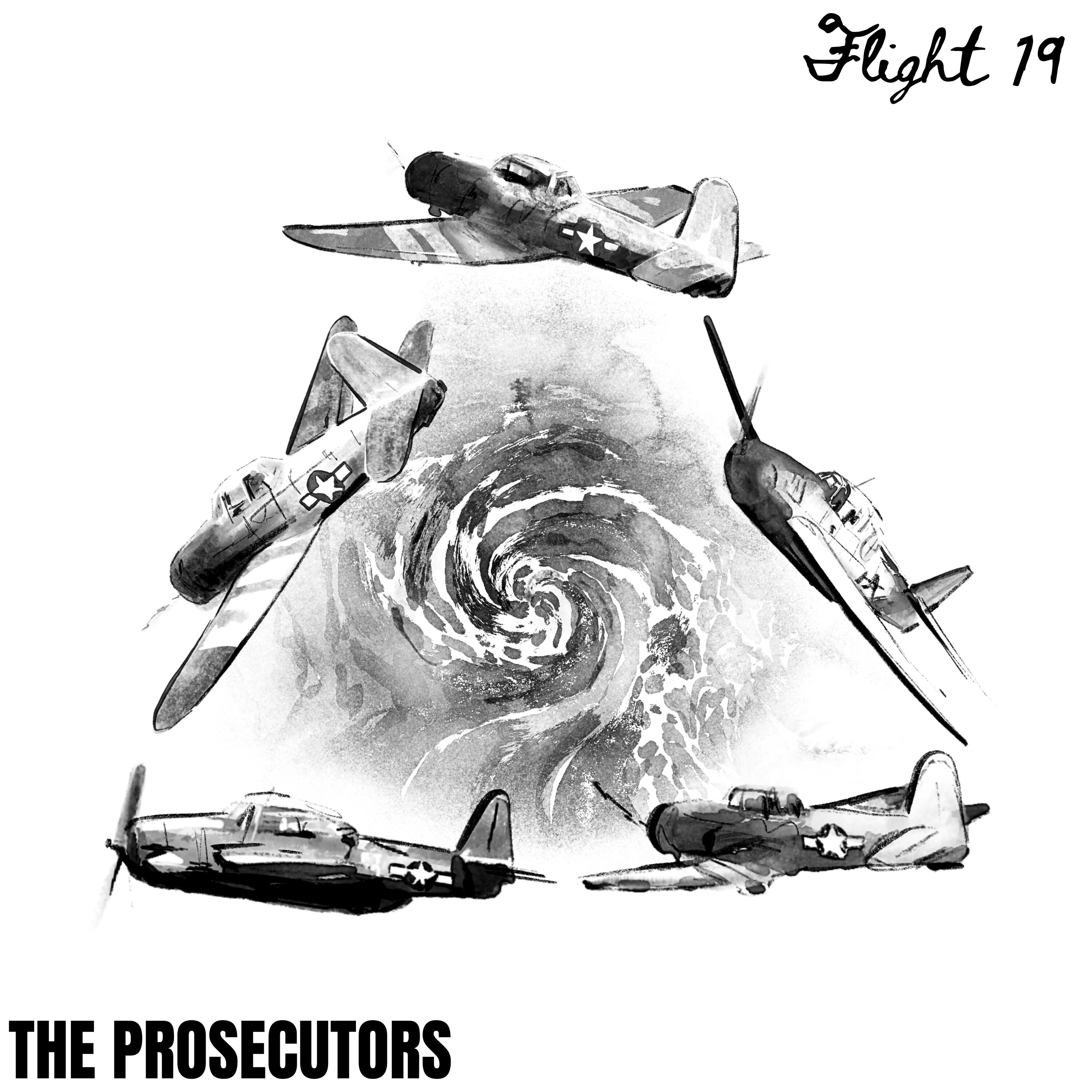
By the way, we're not patronizing you. Liddit's, if you're listening to this, we really are not patronizing you. I could not draw any of this. Like, look at that Bomber. That's an incredible. There's like the shading.
- [12:01]
B
I mean, I love this one. I love this one because it's got the obvious.
- [12:06]
A
Don't give away the answer yet.
- [12:07]
B
Sorry.
- [12:07]
A
Don't give away the answer yet.
- [12:09]
B
Yeah, I mean, just incredible stuff. And Alice, I'll see you soon. So I'll bring some of these so you can have.
- [12:15]
A
Those are really awesome. I will decorate my.
- [12:18]
B
There you go.
- [12:19]
A
Artwork with it.
- [12:20]
B
All right, all right, that's enough.
- [12:21]
A
All right, that's enough. We need to solve this, actually. We need to tell other people how we solve this case.
- [12:26]
B
That's right. Okay, so this is the disappearance of Flight 19 that we're gonna be talking about today. As I said, it is a very Famous true crime case. One that honestly, it's like so many of these, you cover these older cases and you kind of forget how tragic it is. This is a really tragic case. It's one of the largest losses of life in peacetime that the Navy had ever experienced. And you're gonna see a true mystery about how this could happen and what happened. So we're going to talk about that over this episode and probably at least one other. So for those of you who don't know, let me give you some background. Flight 19 started off as a remarkably average routine navigation and combat training exercise. It's sometimes called the Lost Patrol because that's what it was called in a famous Merchant Marine publication. But it wasn't actually a patrol. These weren't guys out, you know, looking for enemies or anything like that. This was a training exercise. And it was about the simplest training exercise you could imagine. Five TBM Avenger torpedo bombers, collectively known as Flight 19 were scheduled to complete a two hour and 40 minute exercise known as navigation problem number one. A couple things about that. It's Flight 19 because there are 18 flights before it that it completed this same problem number two, it's navigation problem number one. It is as simple a navigation exercise as you can imagine. Only a 2 hour and 40 minute flight to complete the entire thing. The sort of exercise that no one could have imagined would turn into a tragedy.
- [14:24]
A
But honestly, that's kind of why this is such a mystery as well. Right. And also it's always the least that you would expect comes about this. And we'll kind of dive into some maybe egos that were a part of this that may have. The easier the task, maybe the more danger there was lurking in the background.
- [14:42]
B
That's a really good point and some nice foreshadowing to what might have happened here, for those of you who don't know. So the Avenger torpedo bomber, this is a World War II era plane. This is all happening in December of 1945. So these are planes that had taken off of carriers during World War II in the Pacific specifically that were used to sink carriers and other naval ships. Basically they had a massive torpedo underneath them. They would dive low, fly right over the ocean, get as close as they could while these ships are, you know, firing everything they have at them and then drop their torpedo and then the torpedo would take off and hit the ship. And these are the kind of planes that won all the great battles of the Pacific Ocean. And you may know that George H.W. bush, President United States flew this aircraft The Avenger torpedo bomber, and actually had to ditch a Avenger torpedo bomber after one of his missions and actually was rescued by a submarine. Other members of his flight who had to ditch weren't so lucky. They were actually captured by the Japanese and executed. So amazing how important parts of history can turn on such small things. But. So this is a. A very common plane. We're now Post World War II, but we're still sort of maintaining our readiness and still training in this. You know, you're always preparing for the last war, right? So we're training in these bombers and that's what we're doing. We have this group of trainees who are in Fort Lauderdale, and they're going to be trained on how to fly these things, how to navigate with them, and how to bring them home. So this squadron was to take off from Fort Lauderdale, Florida, fly east for 56 miles to a place called Hens and Chickens Shoals, which is a great name, number one. But number two, you can also tell just how unimportant this place was to be called Hens and Chickens. So this is just some rocks that basically stick out of the water near Bimini. So they're flying almost directly east. They hit this location and then they practice their torpedo bombing. So basically they take turns acting like they're going in to drop their torpedoes. And then when they do all that, they continue a little bit on a little further east before turning, and then they're going to fly north 67 miles over Grand Bahama island before turning once again and flying the 120 miles back to base in Fort Lauderdale. So not a very long distance at all, particularly an aircraft. There's a reason that even with the bombing training, which took about 30 minutes, this is only a two hour and 40 minute exercise. So this was led by Lieutenant Charles Carroll Taylor, commonly referred to as CC. He was leading the flight training. He was 28 years old, but he was an extremely experienced naval aviator. He had over 2,500 flight hours, most of which took place during multiple combat tours in the Pacific theater of World War II, flying these same bombers attacking Japanese ships. Each of the five planes held three Navy men or Marines, except for one plane, which only had two, because one of them simply didn't feel like flying that day and just took the day off and would survive because of it. It's funny, there's always one, right? Like, it seems like whenever we do these, there's always exactly one guy who couldn't get.
- [18:36]
A
Also kind of shows how, like, unimportant this training was, it's like, it's no big deal. I mean, you know, this like, if you're really sick or something, I got to make it to school for this test because this test really matters. Or I'm kind of feeling off. I can make up this. This is not a big deal. This is navigation number one. No big deal. Like, I can do this in my sleep. I'll do another training run tomorrow.
- [18:55]
B
And what's interesting about it is there are multiple people who were supposed to be on this flight and decided not to go. So there were multiple people who could have replaced this guy. And they were like, eh. And there was one guy who ended up on this flight because he just loved flying so much that he would just fly in every flight that went out. He would jump on a plane. So yeah, not a really rigid thing. And like you said, not serious. I mean, this is not a big deal. We're just doing some training. We're hanging out in Fort Lauderdale. The war's over. It's close enough that we're not really taking this all that seriously. It's December. We're heading up towards Christmas anyway. But in any event, you have 14 naval aviators in total who are taking part in this exercise. But despite its unassuming start, the simplicity with which it should have been completed, the fact that no one even took it that seriously, Flight 19 would go down as one of the most notorious mysteries in US History and a catalyst for the decades of lore and legend now known as the Bermuda Triangle phenomenon.
- [20:09]
A
And this isn't the first time we're talking about the Bermuda Triangle. Because those of us who grew up in the 80s and 90s, number one fear next to quicksand, was probably somehow getting lost in the Bermuda Triangle. Whether or not you even were close to the Bermuda Triangle. That's how strong whatever this power around the Triangle was.
- [20:29]
B
But I used to wonder, how did people even get to Bermuda?
- [20:32]
A
I really did. I was like, that's a daring vacation. It's like a 5050 if you even make it. And then once you make it, do you just stay on island? Is it kind of like, you know, just go ahead, don't take your chances again, you made it. Don't try to get off this island now.
- [20:47]
B
Yeah, you got to come from the north down to Bermuda. You got to take the long flight around the Triangle or something. I don't know.
- [20:53]
A
So those of you who may not be familiar with the Bermuda Triangle, maybe you didn't have this ever present fear growing up, which I Certainly did. This triangle, it's an area of the ocean that supposedly has more than its fair share of mysterious disappearances. So we're about to talk about one of them. But there have been countless movies and books and comic strips even written about these disappearances. So it stretches from Miami to San Juan, Puerto Rico, and from San Juan to Bermuda and then back down to Miami. I will be very honest. For the first decade of my life, I definitely thought the Bermuda Triangle was an actual triangle, like, with barriers. And I was like, why do people cross the barriers? They tell you where it is, but really it's. It's. It doesn't exist. It's the ocean.
- [21:41]
B
So did you think there were, like, warning signs?
- [21:43]
A
Like, it was like, turn back now.
- [21:45]
B
Do not enter the triangle.
- [21:46]
A
I was like, what did we think? There's, like, this whole pillar over here, and there were, like, fences up. Don't pass it. And it was like, what do you think is going to happen when you go beyond that barrier? Okay, I'm going to. I'm also going to admit one other thing. I don't know that I should admit this. I trust you all, and this is. This is, like, my penance for not making it to Liditz. I didn't realize all the things they draw on the football field when you watch it on TV were not there in person.
- [22:13]
B
You didn't realize there was no yellow line going across the field that they just move.
- [22:18]
A
Okay. So it's not that I've never been to a football game. I hadn't been to, like, a pro or college game. And so I thought, wow, they're so advanced. They not only have drones, because they do. Like, you don't have high school games. Well, now you do, but not back in the day. I was like, wow, they not only have drones, but they have, like, all this stuff on the field to help them. It's, like, lit up to help them figure out, you know, what's the first down. This is so much more efficient than having to rely on, like, ref size. And then one time I realized as we were watching, I was like, oh, my gosh, that's on the TV alone.
- [22:53]
B
So I'll share a couple of things I do just to, you know, join you in your embarrassment. Thank you. A lot of times I'll be at a football game and it'll be like a big third down, right? And they're just getting ready to snap it, and my phone will buzz, and I'm like, oh, shoot, I can't look at that. Because what if they're spoiling what's about to happen, right? As if I'm at home watching it on tv, where maybe I'm on a tape delay and, like, one of my friends is seeing it live and texting, like, what's happening? And then I'm like, oh, wait a second. No, that's not possible. I'm here.
- [23:21]
A
I'm.
- [23:22]
B
I'm watching the game. Nothing could have happened before I saw it.
- [23:25]
A
That's good. Well, the other thing I did altered reality, right?
- [23:29]
B
This has nothing to do with football. But the other thing I do is occasionally I'll have, like, a printed piece of media and I'll try and make it bigger.
- [23:37]
A
Oh, my gosh. I do that on books. I do it on books and I see my children do it. I know. I'm like, oh, can't. Can't zoom it in or I'll double tap it. And I'm like, oh, can't that. I hope nobody saw that. Okay, sorry. Back to this. So this is relevant because, of course, this is not just like a conspiracy theory that we talk about. The Bermuda Triangle really has some staying power, and you're going to see why. So this triangle includes the Sargasso Sea, which is the only named sea without land boundaries. Instead, it's bounded by currents that combined with its reputation for having little wind, give it a reputation for being incredibly difficult to cross. This is fascinating to me that, like, how would you delineate an ocean? Just, like, by water. Right? It's like that line. That's where the end of the ocean is. But this is home to that curious type of body of water. Anyway, Then there's the Agonic Line, which passes through the Bermuda Triangle in most places on the planet. True north and magnetic north are actually not the same, and navigators are trained to adjust because of this. But the triangle happens to be in a place where the two poles perfectly line up, meaning you don't need a correction of your compass. Whatever the case, the triangle has become famous. And one of its most famous stories is the disappearance of Flight 19, which we're talking about today.
- [25:08]
B
Are you really buying a car online
- [25:10]
A
on Autotrader right now? Really? I can get super specific with dealer listings and see cars based on my budget. You can really have it delivered or pick it up.
- [25:18]
B
Mommy's walking kid is walking up the slide.
- [25:20]
A
Really? Autotrader, Buy your car online? Really? Are you really buying a car online on Autotrader right now? Really?
- [25:27]
B
At a playground?
- [25:28]
A
Yeah, really? Look at these listings from dealers. Wow, your search can really get that Specific, Really.
- [25:34]
B
And you just put in your info and boom. Cars in your budget. Mom needs a second.
- [25:38]
A
Honey, you can really have it delivered. Really? Or I can pick it up at the dealership.
- [25:44]
B
One sec, sweetie.
- [25:45]
A
Mommy's buying a car.
- [25:47]
B
I think your kid is walking up the slide, Kyle.
- [25:49]
A
Again? Really? Autotrader. Buy your car online. Really?
- [25:54]
B
This episode is brought to you by Progressive Insurance. Do you ever find yourself playing the budgeting game? Well, with the name your price tool from Progressive, you can find options that fit your budget and potentially lower your bills. Try it at progressive.com, progressive Casualty Insurance Company and affiliates pricing coverage match, limited by state law, not available in all states. And you can imagine how those two things could have added to this lore, because obviously one of the things people talk about with the Bermuda Triangle is unnaturally calm seas. Just bizarre. Like you're on the the ocean and the ocean is just flat as far as you can see and there's no wind. Like the doldrums, right? Almost like in that. I think it was Pirates of the Caribbean 2 when Jack Sparrow stuck in some sort of alternate dimensions kind of like that. And the Sargasso Sea has that. And so, you know, you can imagine how that would really a lot of unease if you're a sailor. And then the agonic line is an interesting thing too, because you can imagine if you forget that or if you don't know that and you're used to trying to make some sort of adjustment and then all of a sudden the adjustment's not working right. Like you're trying to make the proper adjustment and you're not seeing things work out. And that might make you think, oh, there's some sort of weird thing wrong with my compasses here in this place. So these are the kind of things that, if you don't know about them, could make the Bermuda Triangle a little bit more interesting. And we're going to talk later on about whether or not the Bermuda Triangle is a real thing other than in the memories of Aedes children. But there are some interesting things about it, and I think that's neat. Okay, that's enough build up. Let's talk about the timeline. So we're going back to December 5th, 1945. December 5th is my mom's birthday, not 1945, but so happy birthday, Mom. She listens to some of these. Maybe she'll listen to this one. So on that day, that auspicious day a couple of Years later, at 2:10pm Flight 19 successfully took off from Naval Air Station NAS in Fort Lauderdale, Florida. It was scheduled to depart at 1:45, but Lt. Taylor was a few minutes late. Now let's just go ahead and talk about this because we're one time thingy in, but something's happened. Lt. Taylor, who was the commander of this flight, is late. Now as we said, this is a pretty laid back thing, not a big deal, but already not the military precision that maybe you expect later on we're going to talk about the possibility that Lt. Taylor didn't want to be on this flight and then in fact he may have asked to be excused from this flight and what that might tell us about this whole thing. Also one other interesting thing, it's flat 19, it's taking off. Flight 18 had taken off only about 45 minutes before that. Flight 18 is going to be flying the exact same navigational problem just ahead of Flight 19. And for what it's worth, Flat 18 will make it back without any issues.
- [29:01]
A
And one thing to note here, for whatever reason, that he's late. Generally if you're running late or if you're trying to beg off of an assignment, there's probably some emotions that go behind that. Whether it's that you're rushed, you're not paying attention as well, but. Or everybody else is kind of getting antsy because they've been ready for the last 25 minutes and they're sitting around. It's not exactly the most comfortable garb to be in. And sitting in one of these planes. So kind of the mentality of where everybody else, everybody is. But also again shows you if this is already flight 19 of the day and the other flight only took 45 minutes, this is like kind of a nuisance. It's a short exercise. We're not talking about some training exercise that takes hours. This is a training exercise that you can get done and then you're off to go drink or do anything else. Right? This is not an all day affair
- [29:46]
B
and we're gonna see just how quickly this moves. So they take off at 2:10, by 2:30 they're all ready to their first location. They're at hens and chickens shoal and they're flying around, they're dropping their practice bombs. As expected, this takes about 30 minutes. So at this point I think it's important to remember they've only flown for 20 minutes. They've flown 20 minutes away from Fort Lauderdale, that's it. And now they're bombing these little shoals. They finish with that, they go a few more miles east and then they head north. So basically they're making a triangle themselves. But the first leg of the triangle actually has two sections. So they start off flying to hens and chickens. Then they regroup up, and they fly a little bit further east. So, you know, that would be 90 degrees. So if you read what they say, so 90 degrees is east, 180 degrees is south, 270 degrees is west, 360 degrees or 0 degrees is north. And so they're actually flying 91 degrees. So. So they fly 91 degrees from Fort Lauderdale to hens and chickens. They continue at 91 degrees for a little bit longer, and then they head north. Now, why are they doing this? Let's talk about that. Okay. This is called a navigation problem right? Now, one part of it is bombing practice, and that's obviously important. But the most important thing they're doing is finding locations in the ocean. So they don't have maps, like Google Maps, you know, they don't have. I was. I flew on Air Force Two once, and. Which is the Vice President's plane, and I had the opportunity to sit in the cockpit with the guys flying the plane, which was awesome.
- [31:39]
A
And also, I can't believe they let you sit in the cockpit.
- [31:41]
B
I thought the same thing.
- [31:43]
A
I don't know how safe I feel about that. I tried, but I still don't think I would trust that.
- [31:47]
B
I was sitting there. I literally sat in there. We took off, flew the whole flight, landed, and I'm sitting there the whole time, and I'm thinking, now there's like, five guys in here, and they're all in the military. They totally could take me. Right? But it's kind of wild that they're
- [32:01]
A
just like, you could also create a little havoc.
- [32:03]
B
I know, Exactly. But it was really cool because their navigators, they had, like, this table, and it just had a digital map on it. Right. And it looked like your Google Maps in your car. Like they're flying the plane, like, right along the line, right. Heading wherever they were going anyways. Well, they didn't have that back in 1945, and they had to navigate based on something called dead reckoning, which sounds way creepier than it is dead reckoning. Right. But basically it's knowing where you are based on where you've been. So if you know you're leaving from Fort Lauderdale and you know you're going at 91 degrees, so you need a compass, which tells you where you going. You're going 91 degrees, and, you know you went in that direction for a certain amount of time. Right. Like an hour and you know your speed and you know the wind speed, and you have a map, you can figure out exactly where you are. And then when you turn north and you do the same thing for a certain period of time, you should know exactly where you are, even though there are no landmarks. Right. There's nothing you can use to say, oh, okay, I know where we are now. Now, there are occasionally, obviously, you'll see islands that are familiar. But really the whole point of this is you got to figure out where you are based solely on navigation. And this is really important if you're doing something like fighting a war in the Pacific, right, because you've got to take off from an aircraft carrier, fly out to a battle, do the battle, turn around, and somehow find the aircraft carrier again, which is not easy to find an aircraft carrier in the middle of an ocean. And so that's why this is so important. The navigation aspect of this flight is the most important thing. And they've got little boards they can use to do this. Every flight has three people on it. The pilots doing some navigation, got a radio man, got a gunner. I mean, there are ways to figure this out, and that's what they're doing. So the whole point of this, the reason they're flying this triangle, is to practice dead reckoning. So that's what they're doing. And we've already basically flown due east. By the time they turn north, they've flown for about an hour. So you got that first 20 minutes to do another 40 minutes east, turn north, head up to your second location, which is going to be around Grand Bahama, then turn again to whatever the compass heading was, get back to Fort Lauderdale, and you should arrive. And the way you sort of test yourself is when you cross the Florida coast, how far are you from where you're supposed to be? The closer you are, the better. So Flight 18, for instance, was spot on. They crossed the coast three miles from where they were supposed to cross it. That's really good. And that's what we're trying to do here. And everything's been going fine until the group turns north and starts heading towards Grand Bahama island, which is really interesting,
- [35:06]
A
right, because it's only the second leg of this triangle. So we're not talking about fatigue. You know, an hour in, when they're flying out in the Pacific, it is many more hours. And so we're not talking about necessarily fatigue. It's still good weather. This may change soon, but it's still daylight, and all they're doing is doing the Next leg. This is a math problem. This is the Pythagorean theorem right here in action. You always ask, didn't you, what am I gonna do with the Pythagorean theorem? When I learned it, this dead reckoning and not becoming Flight 19. Dead, not reckoning, not dead, not reckoning, dead. So around 3:45, Lieutenant Robert F. Cox, another flight instructor preparing to complete the same flight training, received an unidentified transmission. It was, quote, a male voice that had asked Powers, which was one of the students, what his compass read. And the recorded reply being, I don't know where we are. We must have got lost after that last turn. So this is really interesting because again, we know that this is flight 19, meaning 18 other navigation problem. One flights have gone out and there's another 20 that's about to go out. This is so routine that they're quite literally all lining up on the Runway one at a time. Your turn, your turn, your turn. But in preparing, he wasn't supposed to get this, but kind of in transmission. Lieutenant Cox overhears this and this is the first indication that not is all well on this training run with one of the students saying, huh, I don't actually know where we are, so we're a little bit lost. Now, Lieutenant Cox responded to the radio signal. This is FT 74, plane or boat calling Powers. Please identify yourself so someone can help you. And this is because he's hearing something and he wants to help. Now, when powers doesn't respond, Lieutenant Cox tried again, but this time Lieutenant Taylor, who is head of this Flight 19 mission, said, quote, both my compasses are out. I am over land, but it's broken. I'm sure I'm in the Florida Keys, but I don't know how far down. And I don't know how to get to Fort Lauderdale. The whole point of this exercise is to get to Fort Lauderdale. So Lieutenant Cox is overhearing the communication among the five planes with Lieutenant Taylor, who's supposed to be the one in charge. So he's testing his students. Where are we? What does it say? That can all happen during the training run. But now he's saying, okay, I'm seeing broken up land. In other words, like islands below me. I'm over land. This must be the Florida Keys. Now, those of you who know Florida geography may be scratching your heads thinking, wait, I thought we were just east 91 degrees of Fort Lauderdale. How are we now in the Florida Keys?
- [37:52]
B
Yeah. So all of these transmissions, you can read about them, they're all quoted. Great book Called the disappearance of Flight 19. If you haven't read it by Larry Kush, great book, really goes through this. There is a Navy report that was done on this disappearance. It's like 500 pages long. Used to be available now it's almost impossible to get. I couldn't get it. But that book, the disappearance of Flight 19, has all of these transmissions as they've been recorded and yes, and I think it's worth stopping here and talking a little bit about what Alice just said. Remember what happened here. So Fort Lauderdale is near Hollywood, Florida. And so you have Miami. Fort Lauderdale's up there, I guess North Beach. Ish. And Miami is a little bit further south. Now there are a few interesting things about this that you need to know. One of them is that Lt. Taylor was not a long term resident Fort Lauderdale after he returned from the war. You know, he's, he's coming back for basically a cushy training job. And that's the way it worked in the American military. And there was this. One of the things about World War II that's always really interesting is American aces tended to survive the war because once you got really good and took down some ships or took down some other fighter planes, they just bring you back to train because they knew you were much more valuable so you'd come back and train. So like German aces often died because they were going up all the time because that's all they had, not the way they did it with the Americans. And so Taylor's had all this experience in the war. He's brought back for this cushy job as an instructor and he's sent to Miami. So he spends a long period of time doing training flights in Miami and he's doing a similar navigational problem, but he's doing it down over the Keys. And so he knew the Keys really well and he was very familiar with the Keys. And in fact this was one of the first flights he had done while at Fort Lauderdale. He'd only been there a couple weeks, so he had not done many training flights. And there's some discrepancy here. Some people say this is his first one. I don't know if that's true, but he had not done many flights. He wasn't that familiar with this. Some of his students might have been more familiar with this than he was. One interesting thing about this. So FT 74, Lieutenant Cox responds. This is FT 74, right? That's Fort Lauderdale. 74 is his call number. I forget what Taylor's call number is. We May get to it later. Let's assume it's 28 for now.
- [40:41]
A
Right.
- [40:41]
B
When he calls back, he calls back and he says, this is MT28. I'm over land. But it's broken. Now. Why is that important? Because when he says mt, the M is for Miami. Because he's so used to flying out of Miami, even when he's talking over the radio, he's sort of back to saying it's a Miami flight. He's actually ft. He's not mt. Right. But that's sort of a window into his mindset, and he's not entirely sure where he is. And he sees this land, and when he sees it, he thinks, wow, I'm back over the Keys. How did I end up over the Keys? And think about this. You know, Florida has the peninsula. The Keys are going west into the Gulf of Mexico. They're going over there and south. Yeah. West.
- [41:28]
A
When so far they've only gone. They think they should have only gone east and north. So the. The actual, complete opposite of the Keys,
- [41:36]
B
the opposite, entirely opposite direction to this. There's a reason it's called Key West. Right. He believes he's going in the exact opposite way. He says that his compasses aren't working and he's in a really bad place. He's trying to figure out where he is, but he's lost. And he thinks, man, my compasses are broken and they have taken me in the opposite direction that I thought they were taking me into. So that's the situation that he's in at this point. So Lieutenant Cox, he's talking to him, and he informs NAS what all had been transmitted, and he doesn't know that. The reality of the situation is there's really no way that this flight could have reached the Florida Keys in this timeframe. Remember, it hasn't been that long. At 3:45 when this call comes in, that's only an hour and 35 minutes after they took off. And 30 minutes of that was taken up doing the bombing run. So they've only been flying for about an hour. So it doesn't even seem like it's possible they could have been in the Florida Keys at this point. But he doesn't know that. So he says to Taylor, fly north. Keep the setting sun visible to the west on your left wing. Now imagine why you would do this if you think you're over the Florida Keys, which is south and west of where he took off from. If you fly straight north and you got the sun, the setting sun directly to your Left, that's west. You're going to hit Florida because of the way the peninsula comes down. It comes down at an angle. If you're over the Keys and you fly due north, you will hit Florida. So that is sort of the obvious thing to say to him. If you're where you think you are, fly north. You're going to be good. That's what he tells him. Now, at this point, the Fort Lauderdale folks, the naval air station down there, you know, they realize something weird's going on here. And so they start trying to communicate with Taylor. And they're asking him if his plane is equipped with a standard YG IFF transmitter, IFF friend or foe transmitter, so they could triangulate his position. But Taylor didn't respond. Basically, an IFF transmitter transmits a unique signal. That way you don't have friendly fire. If you see the signal, you know it's coming from a friendly flight. So that's why they do this. And they're asking like, do you have this? Because we're trying to figure out where you are. We're going to try and triangulate where you are and maybe we'll be able to find you.
- [44:20]
A
But Taylor doesn't respond, Unfortunately. So around 4:45, Taylor radios again. He says we are heading 30 degrees for 45 minutes. Then we will fly north to make sure we are not over the Gulf of Mexico. So think of your map of the United States. He's thinking he is west of the bottom of the peninsula, right? So he wants to make sure he's not over the Gulf of Mexico. And the operations were not able to triangulate Taylor's flight via IFF at this time.
- [44:49]
B
So I want to point out 30 degrees. Remember, due east is 90 degrees. Right. Back to all our. Do our geography lesson. So 30 degrees is going to be basically mostly north, north, northeast, right? Mostly north, but also tilted to the east. And you can imagine, remember how Florida goes if you're over the Keys. If you go north, northeast for a little while, you're putting yourself more directly underneath the peninsula. And then when you turn north, you're guaranteed to hit it. You can't miss it, right? So that's what you're going to do, and that's what he intends to do.
- [45:29]
A
But of course, if you're looking at about right now, and if you came from Fort Lauderdale, let's assume that they in fact had gone 91 degrees. So straight out towards. You're right. If you continue to fly north and east, where does that take you? Further into the Atlantic Ocean, nowhere, no matter what, at that angle, if you are in fact due east of Fort Lauderdale, you will never run into Florida, right? So you're beginning to see some math problems here.
- [46:01]
B
And in fact, this was so obviously true that the training that everyone got from instructor on down was if you ever get in trouble and you ever get lost, just fly directly into the sun and you will hit Florida. Like, if you take off and you go east, there's going to be this huge, massive peninsula of land to your west. All you have to do is fly west and you'll hit Florida. You don't know exactly where you are when you hit there, but then you can figure it out. You can find some landmarks down there. Worst case, you land another airbase, right? But you'll find it. So that was just hammered into their heads. You can't really get lost on any of these training flights because worst case you just go west. And so that's what they were trained to do, but that's not what Taylor is doing in this situation.
- [46:52]
A
So Taylor's been radioing, but if you notice what's been happening, the NAS controls or whoever is on the ground is responding, but Taylor doesn't really respond. And so again, the control center, they respond and they ask Taylor to broadcast on 4,000, 805 kilocycles, but Taylor does not acknowledge this message. And so the operations radios Taylor again, this time asking him to switch to 3,000 kilocycles. And this is relevant because this is the search and rescue frequency. So they're catching him on his basically training frequency, being able to talk to all five flights. And now this is no longer a. Just giving some pointers here and there. It's becoming a little bit more desperate. So they say, change it to the search and rescue frequency so we can better communicate with each other. But Taylor responds at this point, quote, I cannot switch frequencies. I must keep my planes intact.
- [47:49]
B
Okay, so what's going on here? So those of you who remember the dark old days of terrestrial radio, maybe you still use a radio every now and then. If you've ever been listening to your favorite radio station and you're driving along and you get out of range, all of a sudden the radio station changes. I always think of the wire. Basically, you can tie everything back really good.
- [48:10]
A
That's a really good tie in, actually.
- [48:12]
B
And there's this part where some of the guys from Baltimore, they go somewhere else. I can't remember if they go to Washington or they go to North Philly. They go somewhere Else, and they're listening to the radio, and as they go, the radio station they're listening to starts to fade out. And the guy doesn't understand why that's happening. And one of the other guys kind of laughs at him, and he says, I've never left Baltimore before. So he'd never experienced that. Right. Well, okay, so 4805 kilocycles is the training frequency. It's also a frequency that a lot of people operate on. So while it's fine to talk to the plane right next to you, because your signal is going to be the strongest they have, and they're going to be able to hear you trying to talk back to the base, your base, or any of the other listening stations in Florida is going to get harder and harder, particularly as it gets dark, because guess who else transmits at 4805 kilocycles? Radio stations, in particular, Cuban radio stations. So, weird thing about radio signals, some of you've experienced this as well. If you ever listen to AM radio, if you guys remember what that is, AM radio. So if I remember correctly, FM goes in a straight line. So, like, it's really strong when you're close to it and even when you're a little bit further away, but then it's gone, right? Like, it has an absolute limit to how far you can hear it, because then it just goes off into space. Because the earth, I'm sorry to tell some of you, this is round. So if it's going in a straight line, it's going to go right off into space. AM radio goes up, it hits the atmosphere, and it goes down, right? So at night, when the atmosphere cools and settles, AM radio stations can broadcast much further than FM radio stations, even though they're weaker, typically at night they get much stronger, and you can start hearing radio stations from distant cities. And then one of the problems that Florida had was at night, Cuban radio stations start coming in, and they fill up this. So you're trying to hear what he's saying, and you're hearing, like, mamba music right over it, so you can't hear what he's saying, because all you can hear is Cuban radio stations. So they're trying to tell him, change to a frequency that is only used for search and rescue. Then we'll be able to hear you. The problem with that was all of the planes, the entire flight, their radios are all set to 4805.
- [50:43]
A
Now.
- [50:43]
B
They all have radio men whose specific job is to be able to do this. But Taylor was Afraid, especially as it was getting dark, that if one of them didn't change the frequency, they would not be able to hear him because it's getting dark. They wouldn't be able to see the hand signals that they also used to communicate. And he might lose that person. And in a situation like this, if you get separated, much more likely if they have to do something like ditch in the ocean, that you're not going to make it. So he's thinking, the most important thing is keep my flight together. If I try and get them to change frequencies, I may lose them. The problem was his radio men could do this on the plane. It wasn't easy. It was hard, but they could do it. But in order for the stations to change, like if they wanted to change to 4,805 from 3,000 for their search and rescue, they're more powerful radios. It would take hours. An engineer would have to go in there and, like, change up everything, right? So it wasn't really possible for them to do. So they're telling him, do this so we can talk to you. And he basically refuses. And because he is in command of the flight, that's something he can do, even if it's not a very smart thing to do in the situation.
- [51:57]
A
You kind of explained it there, but every time I get to this part of the timeline, I'm like, they can all hear this and they can all hear 3000. Why don't they just all switch together? Like, so much of this could be different if they would have all just switched to 3,000. Because it is, as you can tell, even up to this point, it has not been constant communication with them. Communication is difficult. They kind of get spurts and bits of what he's saying.
- [52:19]
B
And this is one of the most interesting things during this entire story. And it's something that those of us who are civilians, who've never been in the military, have a very difficult time understanding. And it's the fact that the chain of command here is never broken. I mean, they're in a situation that is rapidly growing dire. They're fully fueled planes. They can fly for a thousand miles on these planes. There's no way they should have any problem at this point. They've only been gone for about two and a half hours, which is about how long the flight was supposed to take. So it's not critical yet, but it's getting there, right? And people are starting to say, like, look, it's December, it's almost five. It's gonna get dark. You know, you really need to do this and Taylor just won't do it. And you start to see some fraying of this. Command to control, but never to the point, apparently, that anyone takes any action. This happens at 445, at 4:56. So Taylor, he is absolutely convinced he's over the Keys, he's over the Gulf of Mexico. And he thinks basically he's flown further into the Gulf. He can't find Florida, so he must be much further west than he thought he was. So he's telling his flight, let's fly northeast. Based on where we are. If we fly northeast, eventually we'll run into Florida. And at this time, another transmission was picked up from a student in Flight 19 who said, Damn it, if we could just fly west, we would get home, head west, damn it, and we'll talk about later who that student probably was. This is the first indication that some members of Flight 19 have begun to question Taylor's decision making. This episode is brought to you by Progressive Insurance. Do you ever find yourself playing the budgeting game? Well, with the name your price tool from Progressive, you can find options that fit your budget and potentially lower your bills. Try it@progressive.com, progressive Casualty Insurance Company and affiliates. Price and coverage match, limited by state law. Not available in all states. This episode is brought to you by Progressive Insurance. Do you ever find yourself playing the budgeting game? Well, with the name your price tool from Progressive, you can find options that fit your budget and potentially lower your bills. Try it@progressive.com, progressive Casualty Insurance Company and affiliates. Price and coverage match, limited by state law. Not available in all states. The Bleacher Report app is your destination for sports right now. The NBA is heating up, March Madness is here, and MLB is on board almost back. Every day there's a new headline, a new highlight, a new moment you've got to see for yourself. That's why I stay locked in with the Bleacher Report app. For me, it's about staying connected to my sports. I can follow the teams I care about, get real time scores, breaking news and highlights all in one place. Download the Bleacher Report app today so you never miss a moment.
- [55:31]
A
And that's really interesting to already kind of see that fraying right there, right? But at 5:24pm Taylor seemed to take the advice of the other pilots and he radioed that Flight 19 would fly west until they hit landfall or ran out of gas. So whatever was happening back there, as they're talking to each other, he says, okay, fine, we will fly West. I think this is actually really interesting in terms of what was being said to convince, because he's so convinced and he must be completely turned around at this point. All they see is water, right? They don't have any landmarks. And once he's convinced, this has been hours now since he's convinced that he's been flying in the opposite direction. Now they're going to fly finally into the sun. Like Brett said, the peninsula is huge. You're supposed to be able to hit it just about anywhere if you fly West. So at 6:04, Taylor made a decision that would actually doom the entire squadron. So even though he took the advice of flying west about 30 minutes earlier, he actually concludes that, you know what, we didn't go far enough east, so we had to turn around again, and we may just as well turn around and go east again. So the lights were being lit at air stations and on ships up and down the Florida coast at this point because they are hoping that as it's getting darker, all of these lights lighting up the coast of Florida will guide these men home. Because it's huge. You've got to see it. Right? Especially in the dark. So everyone is turning on their lights, but Taylor decides to fly east. If you're looking at a map, you know that flying east, if they had flown east to begin with from Fort Lauderdale, is only driving them further away from the coast. There's going to be a point, and this is probably the point right here, where they're not going to have enough gas, even if they corrected course immediately and went back west. So around the same time, Operations was able to calculate a rough estimate of Flight 19's coordinates. They estimated them to be about 100 miles of 29 degrees north latitude and 79 degrees west longitude. In other words, well north of the Bahamas and roughly east of Daytona Beach,
- [57:48]
B
Florida, which is exactly where you expect.
- [57:51]
A
Exactly where they should have been based
- [57:51]
B
on how they've been flying. Yeah.
- [57:53]
A
Not where they should have been, exactly where they would have been based on where they were flying. They had not been flying in the wrong direction. They were not in the Gulf of Mexico, they were not over the Florida Keys. But by this point, they have flown so far out east that Flight 19's radio transmissions were becoming increasingly faint and and rescue operations could no longer reach them, though they could still pick up some of the garbled transmissions from the squadron from time to time. They just couldn't communicate to them to tell them, hey, we know where you are. This is what you need to do. To get home.
- [58:25]
B
This is like the moment where, because they've been trying to figure out where they were the whole time, you know, they've got this. He's saying he's in the Keys, and that doesn't really make any sense, but they don't know. And this is a very fractured command structure, right? I mean, the flow of information is not like it is now. You can't just send a text. You know, it's even hard to make a phone call. You have all these different bases along the coast. Some of them are in limited communication with each other. You know, they're calling each other, trying to find these guys, radioing to each other. But the guy who initially talked to him, Cox, he actually flies south to try and find Taylor. He's like, oh, well, you're in the. You're in the Keys. Well, I'll go find you, right? So he starts flying south. And he noted that the further south he flew, the weaker the transmissions got because they weren't over the Keys. He wasn't flying towards them, right? He comes back and he's like, let me take out a plane. Like a ready. They had these things called ready planes, which were planes that were ready to take off at any time. But the problem was I only had one, and they didn't know exactly where they were, and so they didn't want to waste it. So they're holding it because they keep hearing, we're gonna be able to triangulate these guys, right? So the message that allowed them to triangulate this was the message where Taylor refused to change his frequency. That was the message that was picked up by enough bases along the coast of Florida that they were all able to get a directional reading. And based on all their different directional readings, triangulate together to figure out within 100 mile radius where they were, where the flight was. That's when they were to figure that out because of that transmission, the one where he said he wouldn't change. But because he didn't change, they couldn't tell him that if he had changed to the emergency frequency, they could have radioed him, we know exactly where you are. Head west. But because he didn't change his frequency, they couldn't do that. Now, there have been people who've said they should have just tried, they should just sent this message out, head west. Head west. Like over and over. Just a blind call. Maybe they should have. But they don't actually have any contact with him. So there's no reason to believe that had any chance of success. All they're hearing are these sort of garbled transmissions and they can't make contact with any of them. So Shortly thereafter at 6:20, Taylor is picked up one final time, seemingly preparing the squadron for a crash landing at sea. He tells them, all planes close up tight. We have to ditch. Unless landfall when the first plane drops below 10 gallons, we all go down together. And the plan here is we can't wait until the engine runs out because at that point there's no control over this plane. And these planes were like flying vans, basically. Remember, what are they made to do? To fly low over the ocean right into enemy fire and drop a torpedo. So they're heavily armored, they're not that fast. They're basically tanks.
- [61:30]
A
That heavy?
- [61:31]
B
Yeah. So if you run out of gas, things going straight down, there's no, like gliding gently into the ocean. So it's basically. Once we get down to basically no gas before the engine shut off, we're all going to dish together because once again, we have to stay together. If we stay together, more likely we'll be seen. More likely we can get life rafts together, More likely will survive. And so that's his plan. And Taylor had actually ditched three prior times and survived all three, so he's ready to do that. The issue though is the weather is getting worse and worse. And in fact, the weather is so bad at this point that there's some very significant waves and the weather is only going to get worse as the night continues. And in fact, this is the last transmission ever received from Lieutenant Taylor. And the last transmission ever received from Flight 19 happened at 7:04pm when another pilot in the squadron, Ensign Joseph Bossi, tried to contact Taylor, but there was no response. All right, so that's where we're at. So this is the point where Flight 19 disappears. This is the point where we lose contact with them forever. But this is not the end of the story because at this point, everyone in Florida realizes they have a very serious situation. The weather is getting much worse. It is only going to get worse over night. It's going to turn into a pretty significant storm. So if they're going to find them, they got to find them now. There's going to be some rescue operations that are launched that will lead to even more tragedy and add even more to the lore of the Bermuda Triangle. And we'll talk about that more next episode. I hope you're enjoying this. We had a great time talking about this case with the kids at Liditz. We are going to talk about it some more in the next episode and some of their ideas, some of their theories, we'll go through that, some of our thoughts and theories, and maybe we'll come to some sort of conclusion on this. Alice, what do you think so far?
- [63:40]
A
Doom and gloom. It's not making me feel better about the Bermuda Triangle. I say that much. Or maybe the Florida Keys even.
- [63:47]
B
And you may be wondering, like so far, what is the role of the Bermuda Triangle in all this? Well, I think the biggest question and the one that you should keep in your mind, obviously Lieutenant Taylor's making some bad decisions, but he's making some bad decisions based on what he's seeing. And how is it possible that someone with 2400 hours of flight experience, a man who has fought in the Pacific, who has on untold occasions flown off an aircraft carrier into the wild blue yonder, been in some very serious fights, and then turned around and somehow found that same aircraft carrier and landed on it again. How is it possible that someone like that, someone who knew the keys like the back of his hand because he spent so much time there, how is it possible he could believe that he was so far south? And why is it that it seems as though his compasses, the things he depends on the most, suddenly didn't function and that's where the Bermuda Triangle comes in. Is there something about that area that so disconcerted him and messed with not only his compasses, but everyone else's on that flights and led to them being so confused that this kind of tragedy could happen? Love to hear your thoughts. Shoot us an email prosecutors pod gmail.com@professionals pod for all your social media, join us on the gallery where you can discuss this. If you want to see us record these early and ad free and see some of the awesome artwork of the kids from Liddit's. Just $3 a month on Patreon will get you there. Or if you don't want to see us but you want to get episodes early and ad free $3 as the same. We also now have an Apple subscription service where going forward you can hear episodes early and ad free on Apple. If you don't like Patreon and you don't care to see us. So we have lots of different options for what you can do. I also want to answer a question before we sign off for today. I think it's only fair that we ask one of the questions that we were asked by the Linux kids.
- [65:57]
A
There you go. Absolutely. We can answer all of their questions.
- [66:00]
B
I'm going to choose who is your celebrity crush?
- [66:07]
A
Oh, no. So this was really awkward because they asked this to us in real time, and I was like, we are in a school setting. We are in a school setting. That's all I could think of. And I don't even remember what I said, but I was like, this is.
- [66:20]
B
You never answered, is what you said.
- [66:22]
A
Yeah, because I was freaking out about
- [66:23]
B
what to say and then talked about my celebrity.
- [66:26]
A
I did talk about your celebrity crush, which had a good tie in. Okay, now I have to actually think about my celebrity crush.
- [66:32]
B
I will say, while she's thinking about her celebrity crush, her guess. I don't know if it's her guess what she said it was Allison Sweeney
- [66:40]
A
for me, which is true.
- [66:42]
B
She's a lot of listenings, and I don't want to make this creepy, but it was really cool to get to meet her through this podcast. Man. I'll go and.
- [66:51]
A
I'll go and answer, Allison, I made it not creepy.
- [66:54]
B
She didn't make it.
- [66:55]
A
I didn't make it creepy. I said that you basically had been part of, like, his entire media experience for his whole.
- [67:01]
B
True. Since I'm a child. Since I was a child.
- [67:03]
A
It was not creepy. Because this is for kids, y'.
- [67:06]
B
All. Yeah. Allison Sweeney, by the way, who has a new Hannah Swenson mystery coming out very soon, so you guys can check that out. You know, this is a hard one.
- [67:18]
A
I don't know that I can answer it, to be totally honest, because, first of all, not embarrassing at all, because I actually don't. I don't know. I don't feel that way about celebrities.
- [67:28]
B
I'll say this. Growing up, Jennifer Connelly from Labyrinth, I mean, when Labyrinth came out in, like, 87. 86. 87. When I was, like, 6 years old, and I can remember watching it probably a few years later at a birthday party, we watched Labyrinth, and, man, Jennifer Connelly was so beautiful. And it's still beautiful to this day. You talk about somebody who aged gracefully. I mean, she's as beautiful in Maverick as she ever was.
- [67:55]
A
Oh, she was in Maverick.
- [67:57]
B
She was just stunning. Great actress, too. Been in some incredible movies. I mean, Requiem for a Dream is one of the most awful and amazing movies ever. Anyways. Incredible actress, so I was always a big fan of her. I say now, probably Lana Del Rey. I mean, she married an alligator wrangler. So you have. She's even approachable.
- [68:19]
A
You have a shot.
- [68:20]
B
Yeah, exactly.
- [68:21]
A
There's an actual shot there.
- [68:22]
B
I've eaten alligator. That counts for something, right? Anyways. Well, you don't have to. Yeah. See? Pharma source. Rex. She nailed it. Nailed it. Yeah.
- [68:31]
A
Oh, nice, Nice. The ones you guys have listened. Yeah. I love Marky Mark, but not. Not for New kids on the block. I think he's hilarious, and he's a very good actor. James Marsden. I mean, he was perfect in. What is that Disney movie where he plays Prince Charming? No, not Enchanted.
- [68:49]
B
Never more happily ever after.
- [68:52]
A
No. They all come to life. They were cartoons, and they all come to life.
- [68:55]
B
That wasn't Ella Enchanted. That was something.
- [68:57]
A
No, not. Ellen chanted. It's more recent than that. Anyways, he was fantastic in that. He literally Prince Charming. But the thing is, I don't. I don't have crushes on, like, male actors. I'm like, great acting. That's fantastic. I probably have more crushes on, like, female actresses. I'm like, I wish I looked like that rather than, like, I want to date that. So I think that's Enchanted. No, they said it's Enchanted.
- [69:22]
B
It is Enchanted. Okay.
- [69:24]
A
I was thinking of the other Enchanted. Yes. Enchanted is the movie. I'm actually thinking about James Marsden. But there's Ella Enchanted that I got confused with.
- [69:32]
B
I'll say this about my celebrity crushes. These are people I just want to hang out with. Like, it's not, like, fair. Whatever. You know what I mean? Like, I don't have any interest. Like, just because you're interested in you. Just because you're a movie that's very actress. But there are people that I would love to spend time with. Right. Like, they would be cool to go to dinner with or to talk to or.
- [69:50]
A
Oh, yeah. Like, I would love to just hang out with Tina Fey. I think I would laugh nonstop. Yeah. So.
- [69:59]
B
And I'm fascinated by everything about London Ranch one.
- [70:03]
A
I love. I love Terrell. I'm rewatching all of the Office right now.
- [70:06]
B
Yeah.
- [70:07]
A
I did not. It took me a while. Sorry. I'm sure Steve doesn't listen, so it's not a big deal. I didn't get his humor for a very long time, and he was, like, utterly unattractive to me because I didn't get his humor now. Perhaps in my old age, I get his humor now, and now I find him wildly.
- [70:23]
B
I feel like I never appreciated the Office as much as everybody else did. My wife loved the Office.
- [70:27]
A
That's why I'm watching it now, because I don't think I would show me
- [70:30]
B
clips from it and I'd be like, I don't get it.
- [70:33]
A
You don't? You. It's Actually an ensemble narrative rather than like a punchline, you know, I did not like the Office when I watched it in real time. Now, decades later, I'm like, this is my life. Kind of like Arrested Development now.
- [70:49]
B
I love Arrested Development.
- [70:50]
A
Right? But I didn't appreciate it as much as I do. Now that I've lived life. Now that I've lived life and worked and been around people who are like the family, I'm like, I understand Arrested Development. Same maybe with the Office. I think I've worked in enough offices where there are characters like that. Where I'm like, this isn't satire. This is just reality.
- [71:09]
B
Well, it's like, you know how much I love the Great Gatsby?
- [71:12]
A
Yes.
- [71:12]
B
My favorite book ever. I read it every year. And, you know, you read so much Great Gatsby. Hate about how Great Gatsby is responsible for killing high schoolers. Love of reading or whatever, which I didn't find to be true. I liked it in high school because I was an old soul, I guess. But I will say this about the Great Gatsby. It is weird that we make high schoolers read it.
- [71:33]
A
I did not love it in high school.
- [71:35]
B
It so clearly is directed at like middle aged people. Like when Nick turns 30 at the very end of the book. I mean, there's this. That's important, that that's the time period where all this is happening in their lives. It's a much more. Yeah.
- [71:49]
A
I didn't understand all the angst and the like, life has passed you by and I didn't understand all that. I was like, I don't know. My whole life is.
- [71:56]
B
You're holding on to the past. I mean, how do you appreciate the last page of the Great Gatsby if you're in high school?
- [72:05]
A
If you're 17.
- [72:06]
B
Yeah.
- [72:06]
A
And read the Cliff Notes version.
- [72:08]
B
There's no green light that you're reaching towards in high school. You're not, you know, born back ceaselessly to the past in 10th grade. Like, you don't get that now. 10 years after that. You might, but you don't get it then. Anyways, this complete aside, I don't know how we get on this.
- [72:24]
A
That's great. That's great. My point is just I don't really have celebrity crushes, I will say. And children are listening to this. And I don't think it's gross at all. The way to my heart is definitely laughter, though. So I am. That's why I think I like Steve Carell and I like James Marsden. He was hilarious in Jury duty. Yes. I forgot he was in jury duty. That was hilarious. I watched it laughing.
- [72:44]
B
It was so good.
- [72:46]
A
So. So I'm beautiful. That was such a good character for him. But laughter is the way to my heart. So it's less than, like, stunning good looks. Although James Marsden is also stunningly good looking. It's the laughter.
- [72:59]
B
Yeah, he is stunningly good looking. That's true.
- [73:02]
A
He really is.
- [73:03]
B
All right, guys, well, I hope you'll be back next week if you want to learn more about this really awesome story. Disappearance of Flight 19 by Larry. I must say, Kush, I don't know how you pronounce his name, but disappearance of Flight 19. Great book, lots of detail. Astonishing Legends did three episodes on this. I think they actually ended up doing four episodes on it. But it's a good podcast for really anything like this if you're looking for something to listen to. And we'll be back next week with more on this. But until then, I'm Brett.
- [73:35]
A
And I'm Alice.
- [73:36]
B
And we are the prosecutors. It.
- [74:06]
A
Okay, remember to lean in again. Lean in, Alex.
- [74:08]
B
Lean in. Lean in. Lean in. What about that one chick? You probably wouldn't want me to call her a chick.
- [74:13]
A
Cheryl.
- [74:14]
B
Cheryl Sandberg.
- [74:16]
A
Lean in, chick.
- [74:16]
B
She leaned in. Look at her now.
- [74:19]
A
Look at her now. Britney is three today. Like, how is that even possible?
- [74:28]
B
How is that possible? Guys, Alec Murdaugh was just convicted three.
- [74:32]
A
That's not possible because two additional kids at this podcast came after her.
- [75:05]
B
Alice son. And Alice is your son.
- [75:08]
A
No. No, you're not. You're right.
- [75:09]
B
Braless. Brales.
- [75:11]
A
Brales. The worst name of all. The worst name of all, really? The worst name.
- [75:16]
B
She'll be one in a couple weeks.
- [75:18]
A
That's not possible.
- [75:21]
B
I. Sam. The Global Gaming League is presented by Atlas Earth, the fun cashback app. Hey, it's Howie Mandel and I am inviting you to witness history as me and my how we do it gaming team take on Gilly the king and wallow. $267 million gaming in an epic global
- [76:20]
A
gaming league video game showdown.
- [76:22]
B
Plus a halftime performance by multi platinum artist Travy McCoy. Watch all the action and see who wins and advances to the championship match right now@globalgamingleague.com that's globalgamingleague.com in partnership with Level Up Expo.
- [76:36]
A
You know what they say. Early bird gets the ultimate vacation home. Book early and save over $120 with Robo because early gets you closer to to the action, whether it's waves lapping at the shore or snoozing in a hammock that overlooks, well, whatever you want it to so you can all enjoy the payoff come summer with Verpo's early booking deals. Rise and shine average savings $141 select
- [77:04]
B
homes only the Bleacher Report app is your destination for sports right now. The NBA is heating up, March Madness is here, and MLB is almost back. Every day there's a new headline, a new highlight, a new moment you've got to see for yourself. That's why I stay locked in with the Bleacher Report app. For me, it's about staying connected to my sports. I can follow the teams I care about, get real time scores, breaking news and highlights all in one place. Download the Bleacher Report app today so you never miss a moment.