Loading summary
Transcript74 lines
- [00:00]
A
Why have I asked my H Vac guy I found on angie.com to change my grandpa's trachea tube? Because I was so amazed by how quickly he replaced our air ducts, I knew I could trust him to change Pop Pop's tube while I was on vacation.
- [00:12]
B
Make it quick, young man.
- [00:16]
C
Aw.
- [00:16]
A
See? Pop Pop trusts you.
- [00:19]
B
I think we should call a doctor. Connecting homeowners with skilled pros for over 30 years, Angie. The one you trust. Define the ones you trust. Find pros for all your home projects@angie.com. I'm brett.
- [00:41]
C
And I'm alice.
- [00:42]
B
And we are the prosecutors. What if I told you there was a murder case where investigators reached four totally different, completely inconsistent conclusions? Welcome to the prosecutors. I'm Brett, and I'm joined, as always, by my chronologically consistent co host, Alice.
- [01:42]
C
I don't like that, Brett. I don't like that one bit.
- [01:45]
B
You shouldn't.
- [01:46]
C
That feels like you're setting something up. You're getting good with the puns.
- [01:49]
B
It might be, but, Alice, you're just gonna have to come along this ride with me. As I said, what if I told you that there was a case where investigators reached four completely different conclusions, and each one was supported by physical evidence, witness testimony, and a coherent timeline. Not theories, not speculation, conclusions.
- [02:10]
C
I would say you're describing either four different cases or a very serious problem.
- [02:15]
B
It's one case. Same victim, same night, same crime scene.
- [02:21]
C
I think we've been doing this long enough to know that's not how that works.
- [02:24]
B
And here's the part that makes it worse. All four conclusions appear to be correct. Our victim is Elliot Wren, 46 years old, a financial compliance consultant living in Brentwood, Tennessee. He was structured, methodical, and precise. A man who trusted systems, routines, and timestamps. Co workers described him as someone who notices when a meeting starts 30 seconds late. Which tells you something about how he lived his life.
- [02:52]
C
That is a very specific kind of person. And when something disrupts that kind of routine, it stands out.
- [02:59]
B
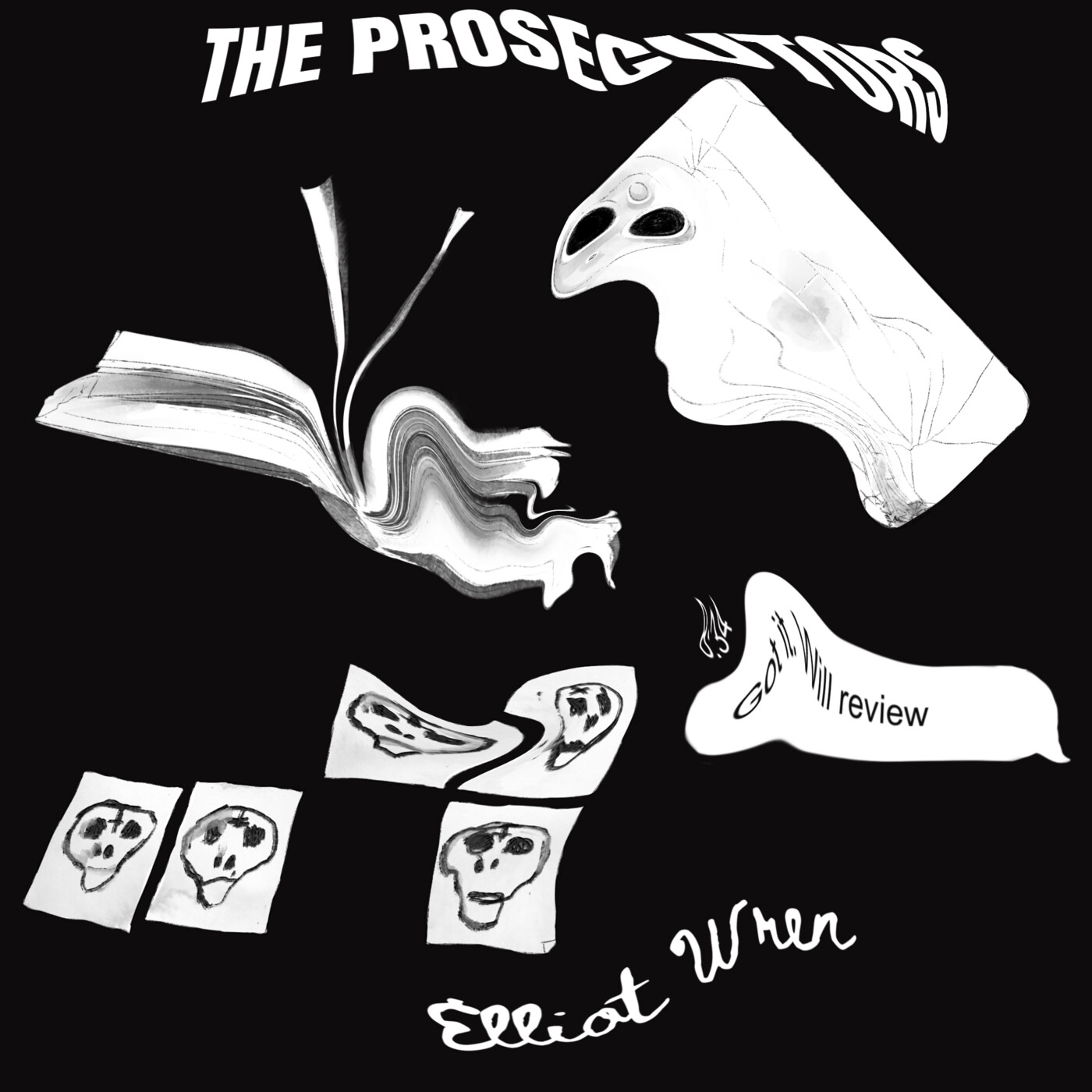
Let's walk through the timeline. At 7:50pm dinner ends. Nothing unusual. At 8:15pm Caroline Wren leaves for book club. At 8:21pm Elliot logs into his home computer. At 8:32pm a neighbor hears what he later describes as a pop. And at 8:34pm Elliot's phone sends a text message. Got it. We'll review.
- [03:20]
C
That feels important.
- [03:21]
B
It does. But maybe not in the way you think, because based on the medical estimate, that message may have been sent after he was already dead.
- [03:28]
C
That's a problem. It's pretty hard to type with your cold, dead hands, if you know what I mean, Brett.
- [03:34]
B
At 8:41pm the front door opens. At 8:43pm it closes. At 9:10pm Caroline returns home and finds Elliot dead. His phone is across the room.
- [03:45]
C
Phones don't usually relocate themselves.
- [03:48]
B
Before we get into the suspects, let's take a quick break.
- [03:50]
C
This episode is brought to you by MinuteMind.
- [03:53]
B
MinuteMind is a personal organization app that helps you keep track of everything. Appointments, deadlines, conversations, and Most importantly, timestamps.
- [04:04]
C
MinuteMind automatically syncs your schedule across all your devices so everything lines up exactly the way it should.
- [04:10]
B
And if something doesn't line up, Minute Mind will let you know, which is
- [04:13]
C
either helpful or deeply concerning. Find MinuteMind at the app store.
- [04:18]
B
All right, back to the show. Investigators begin with Caroline Wren. The gun is registered to her. There is gunshot residue on her jacket, and there is a financial motive. From a prosecutorial standpoint, that's a strong case.
- [04:31]
C
That's very strong. It feels like we've solved the case right there. And it's always the significant other, right, Brett?
- [04:37]
B
Except she's at book club the entire time. On camera, with witnesses, never leaving.
- [04:45]
C
Of course she is. You're killing me, Smalls.
- [04:48]
B
Next is the neighbor, Daniel Harper. There's gunshot residue in his garage, a history of conflict, and camera footage placing someone like him near the house.
- [04:58]
C
That's even stronger than the last one. Let me guess. He was out saving puppies at the time.
- [05:04]
B
Close. He's on a live zoom call with 30 CO workers responding to questions in real time, naturally. Then there's Marcus Delaney, the business partner. He has motive tied to financial exposure, and documentation suggests he's about to be implicated.
- [05:19]
C
That's compelling.
- [05:20]
B
Except he's on a commercial flight mid air, actively using wi fi during the relevant time.
- [05:25]
C
Of course he is.
- [05:26]
B
And finally, Travis Cole. His DNA is under the victim's fingernails, and he matches the description seen leaving the area.
- [05:35]
C
Okay, come on, man. That's huge. This is the guy, right?
- [05:38]
B
Except he's in jail.
- [05:40]
C
I hate this case. Of course he is. Come on, Brett. Give us something to work with here. We'll be right back.
- [05:45]
B
This episode is brought to you by Alibi.
- [05:47]
C
Alibi is a service that helps you document where you are at all times
- [05:51]
B
using location tracking, ambient audio, and verified timestamps. It creates a record you can rely on.
- [05:58]
C
So if you ever need to prove where you were, you'll have it. Thank you to Alibi for sponsoring this episode. Alibi when knowing where you are and when you were There is really important at this point.
- [06:10]
B
Investigators turn to the evidence itself. The bullet trajectory suggests the shooter was inside the room, but there are no usable fingerprints on the weapon. Gunshot residue patterns don't behave the way you would expect. And timestamps differ slightly across devices. They are all close enough to seem consistent, but not close enough to actually agree.
- [06:28]
D
You know, we see this sometimes, Brett. You think the science is going to solve the problem, but then all of the sudden, it creates more questions than answers. And in a case like this, when things are already wild, where in the world do you go next? Each theory solves part of the case, but creates a new problem. Every explanation works for a moment, every. And then collapses.
- [06:52]
C
And none of them solve everything. We'll come back to this, but first, one more quick break. This episode is brought to you by Continuum.
- [07:00]
B
Continuum is a research platform focused on temporal consistency.
- [07:05]
C
I'm sorry, what does that mean?
- [07:06]
B
It means making sure your data remains consistent across all possible timelines.
- [07:11]
C
That feels unnecessary. Anyway, back to the show before we run out of time.
- [07:16]
B
There is one more name in the file.
- [07:18]
C
I don't like this. I feel like I know where you're going with this.
- [07:21]
B
You guessed it, Alice. None other than Israel Keys.
- [07:25]
C
He's dead.
- [07:26]
B
That is correct.
- [07:27]
C
And he was dead at the time for, like, years.
- [07:30]
B
That is also correct. But there is also a final report that references electromagnetic anomalies, timestamp disruption, and what it describes as nonlinear event sequencing. And. This case is like Sherlock Holmes. When you eliminate the impossible, whatever remains, however improbable, must be the truth.
- [07:54]
C
That does not make it better. This is not a book. This is real life.
- [07:58]
B
The theory, and I know this is going to blow your mind, so bear with me, is that the crime did not occur once. It occurred multiple times. Each suspect committed the murder in a different version of events, and those versions overlapped, leaving behind conflicting but individually consistent evidence.
- [08:16]
C
No. I'm sorry. Just. No.
- [08:18]
B
Okay, fine. Maybe it was aliens. Anyway. Okay, now for our final theories, and I think, really, we only need one. None of this is real. It's all just in your head.
- [08:34]
C
If you made it this far, we admire your trust, and I have a feeling you figured this out a long time ago.
- [08:39]
B
And, you know, Alice, I feel like there's one more thing that needs to be said, one final point we should probably make. This story isn't real. But the craziest part of all, neither are we.
- [08:51]
C
I don't think that's how that works. I don't think that's how any of this works.
- [08:55]
B
I'LL leave it to our listeners to decide. Then can you figure out the mystery? Let us know, because I'm not Brett,
- [09:01]
C
and I'm not Alice, and we're not the prosecutors. Do you think the humans will figure it out?
- [09:41]
B
I doubt it. Long live the Robot Empire.
- [09:44]
C
Hail roboticism. I love it when a plan comes
- [09:47]
A
together, don't you, Nigel?
- [09:49]
D
Why, yes, of course, my dear. Smashing. Really.
- [11:23]
C
Whale. Whale. Whale. Whale. Whale. Ram. Ra.