Podcast
The Puck: Venture Capital and Beyond
Hosted by Jim Baer · EN
The Puck: Venture Capital & Beyond showcases the innovative forethought that defines the venture capital world. Join us as we follow the puck and explore what this community has to offer.
Listen as we have in-depth conversations, gaining insights and lessons from well-established VCs, entrepreneurs, and other leading technology experts. We will learn about their successes, challenges, and how they got to where they are today. Along the way we will discover what investors most look for in who they invest in and what to avoid when making your pitch.
We will also follow industry leaders to understand the cutting-edge technologies and trends that continue to shape our world.
11episodes
Episodes
Newest firstAll episodes
Episode 125: Avik Roy on Healthcare, Debt, and the Math Washington Won’t Touch
4w ago00:52:41Tap to summarizeIs healthcare the real driver of the national debt crisis? Avik Roy joins The Puck to discuss one of the most important questions in American public policy.Roy, president of the Foundation for Research on Equal Opportunity, argues that the United States has built the worst of both worlds — neither a true free-market healthcare system nor a fiscally disciplined universal system. Instead, employer-sponsored insurance, Medicare, Medicaid, tax subsidies, and distorted incentives have created what he calls an “open bar” healthcare model where patients, providers, employers, and government rarely confront the real cost of care.Jim and Avik discuss why healthcare costs are central to America’s rising deficits, how Federal Reserve policy and asset inflation have delayed the reckoning, why the Congressional Budget Office may be too optimistic, and why America may have no more than 20 years to get its fiscal house in order.They also explore what a realistic reform path could look like: means-tested subsidies, more consumer choice, defined-contribution health benefits, catastrophic coverage, and a Swiss-style private universal coverage model built around competition and innovation.This is a conversation about healthcare, debt, inflation, markets, politics, and whether Washington can act before a crisis forces its hand.
Transcribe →Episode 124: Annie Lamont on Healthcare, AI, Epic, Medicaid, and the Future of American Medicine
Jun 2500:46:41Tap to summarizeEveryone says AI is going to transform healthcare. Annie Lamont explains why this time may actually be different — but also why Epic, Medicaid, misaligned incentives, and China’s rise in drug development could determine whether American healthcare gets fixed or keeps breaking.
Transcribe →
Episode 123: Yuval Levin: Why America Stopped Trusting
May 3000:51:15Tap to summarizeYuval Levin joins The Puck to explain why Americans have stopped trusting their institutions — and what it would take to rebuild that trust.Levin argues that institutions are supposed to shape people into responsible citizens, leaders, professionals, and neighbors. But today, too many people use institutions as platforms for attention, status, branding, and political combat.Jim Baer and Yuval Levin discuss why trust has collapsed across politics, media, finance, and civic life — and why the answer is not nostalgia, but a renewed sense of responsibility, restraint, and shared ownership.At the center of the conversation is one urgent question: Can America learn to say “we” again?
Transcribe →
Episode 122: Katherine Baicker
May 1300:55:55Tap to summarizeIn Episode 122 of The Puck: Venture Capital & Beyond, Jim Baer sits down with Katherine Baicker, one of America’s leading health economists, for a clear-eyed conversation about what is broken—and what still works—in the U.S. healthcare system.Baicker explains why America spends enormous sums on healthcare without always getting better outcomes, and why the real problem is not simply “too much care” or “too little care,” but too much low-value care and too little high-value care. She and Jim explore the difficult tradeoffs behind insurance, Medicaid, Medicare, emergency-room care, prevention, innovation, and the uncomfortable reality that healthcare is already being rationed—just not in a rational or transparent way.The conversation also tackles one of the hardest questions in American politics: how much healthcare should be guaranteed as a basic right, and how much should individuals be free to buy beyond that floor? Baicker offers a pragmatic framework: preserve incentives for medical innovation, create a universal safety-net layer of high-value care, and allow supplemental coverage for those who want more.Jim and Katherine also discuss why prevention matters but does not always save money, how AI could improve risk prediction and healthcare targeting, and why evidence-based public debate is increasingly difficult in a media environment driven by anger, algorithms, and political tribalism.This is a nuanced, data-driven conversation about healthcare, economics, morality, and what a serious democracy must be willing to confront.
Transcribe →
Episode 121: Dr. Ashish Jha
Apr 2300:47:31Tap to summarizeIn this week's episode, Jim sits down with Dr. Ashish Jha — physician, health policy expert, and former White House COVID-19 Response Coordinator — for a candid look at what the pandemic revealed about how America actually works under pressure.This conversation moves well beyond COVID.Dr. Jha explains what happens inside government during a crisis, why emergency powers quietly reshape policy across the entire system, and how short-term urgency consistently crowds out long-term planning.From there, the discussion turns to the deeper structural issue: healthcare.The U.S. is on track to spend roughly $70 trillion on healthcare over the next decade — a number that sits at the center of federal debt, state budgets, and household finances. But the real problem isn’t how much care we use — it’s what we pay for it.Jim and Dr. Jha break down:Why prices — not utilization — are driving costsHow innovation is both life-saving and financially destabilizingWhy hospitals lack real surge capacityAnd why meaningful reform continues to stallThey also tackle harder questions around personal responsibility, prevention, and whether a system can be both compassionate and financially sustainable.At the core of the conversation is a broader insight:There is a reasonable 70% of Americans — not the extremes — who could support real solutions. But they are not the ones driving policy or public discourse. This episode is about healthcare — but more importantly, it’s about whether a polarized system can still solve complex problems before a crisis forces the issue.
Transcribe →
Episode 120: Dinny McMahon on China’s Hidden Crisis
Apr 1601:02:44Tap to summarizeChina looks unstoppable from the outside — record exports, dominant EVs, and a relentless push into AI, robotics, and advanced manufacturing.But beneath the surface, a very different story is unfolding.In Episode 120 of The Puck, Jim Baer sits down with Dinny McMahon — former Wall Street Journal Beijing journalist and author of China’s Great Wall of Debt — to unpack what’s really happening inside the Chinese economy.China didn’t have the financial crisis many expected. Instead, it chose a different path — one that’s led to quiet austerity, stressed local governments, and weakening confidence across households and businesses. At the same time, Beijing is making a massive strategic pivot: away from property and consumption, and toward productivity, innovation, and industrial dominance.The question is whether that model can actually deliver.In this episode:Why China avoided a financial crisis — and what replaced itThe “hidden austerity” hitting local governments and the private sectorThe collapse of the property-driven growth modelWhy China is rejecting consumption-led growthThe bet on productivity, AI, and industrial upgradingInnovation vs. imitation — can China create at the frontier?What China’s strategy means for the U.S. and global marketsThe real goal behind China’s currency push and de-dollarizationThis is not the China story you hear every day — but it may be the one that matters most.
Transcribe →
Episode 119 – Mark Dubowitz
Apr 800:52:51Tap to summarizeWhat happens when Iran gets the bomb—and the missiles to deliver it?In this episode of The Puck Venture Capital & Beyond, Jim Baer sits down with Mark Dubowitz, CEO of the Foundation for Defense of Democracies, for a clear-eyed look at one of the most consequential geopolitical risks of our time.As tensions escalate in the Middle East—with the Strait of Hormuz under threat, oil markets on edge, and U.S. and Israeli forces actively engaged—Dubowitz lays out the real stakes: not just nuclear weapons, but a broader strategy for regional dominance and global leverage.They break down:Why Iran’s nuclear ambitions are about far more than deterrenceThe strategic importance of the Strait of Hormuz to the global economyHow missile capability + nuclear weapons changes the balance of powerThe three-phase strategy: military degradation, weakening the regime, and supporting the Iranian peopleWhat history (from WWII to the Cold War) teaches about acting too lateWhether the U.S. and its allies are facing a once-in-a-generation decision pointThis is a sober, strategic conversation about power, timing, and the cost of inaction.If you want to understand where this is heading—not where it’s been—this episode is essential listening.
Transcribe →
Episode 118: Rabbi David Wolpe
Apr 101:00:17Tap to summarizeJim sits down with Rabbi David Wolpe in a wide-ranging conversation on wisdom, religion, and the moral challenges of modern life.In a world saturated with information but lacking deeper meaning, Rabbi Wolpe offers a grounded perspective shaped by decades of studying ancient texts while guiding people through life’s most profound moments. He challenges the common divide between “spiritual” and “religious,” arguing that real growth comes not just from what we feel—but from what we do.The discussion explores the role of gratitude as a daily discipline, the importance of community over abstraction, and why religious traditions—at their best—serve as force multipliers for human good. Wolpe also addresses the crisis of trust in institutions, the impact of social media on negativity and polarization, and the tension between justice and mercy in both religious and civic life.This is not a theological debate. It’s a conversation about responsibility, humility, and how we navigate a complicated world without losing our moral center.Key themes:Why gratitude is the foundation of a meaningful lifeReligion vs. spirituality—and why action matters more than feelingHow communities succeed where institutions often failThe danger of black-and-white thinking in a complex worldRebuilding trust, decency, and shared values in modern society
Transcribe →
Episode 117: Jessica Riedl
Mar 2601:02:16Tap to summarizeAmerica’s fiscal problem isn’t political—it’s mathematical.Jessica Riedl joins Jim Baer to explain why U.S. deficits are accelerating, why both parties misunderstand the drivers, and why Social Security and Medicare are at the center of the crisis.They explore the looming role of the bond market, rising interest rates, inflation, and why policymakers continue to delay action despite understanding the risks.This episode cuts through ideology and focuses on the core issue: promises that far exceed what the system can sustain.
Transcribe →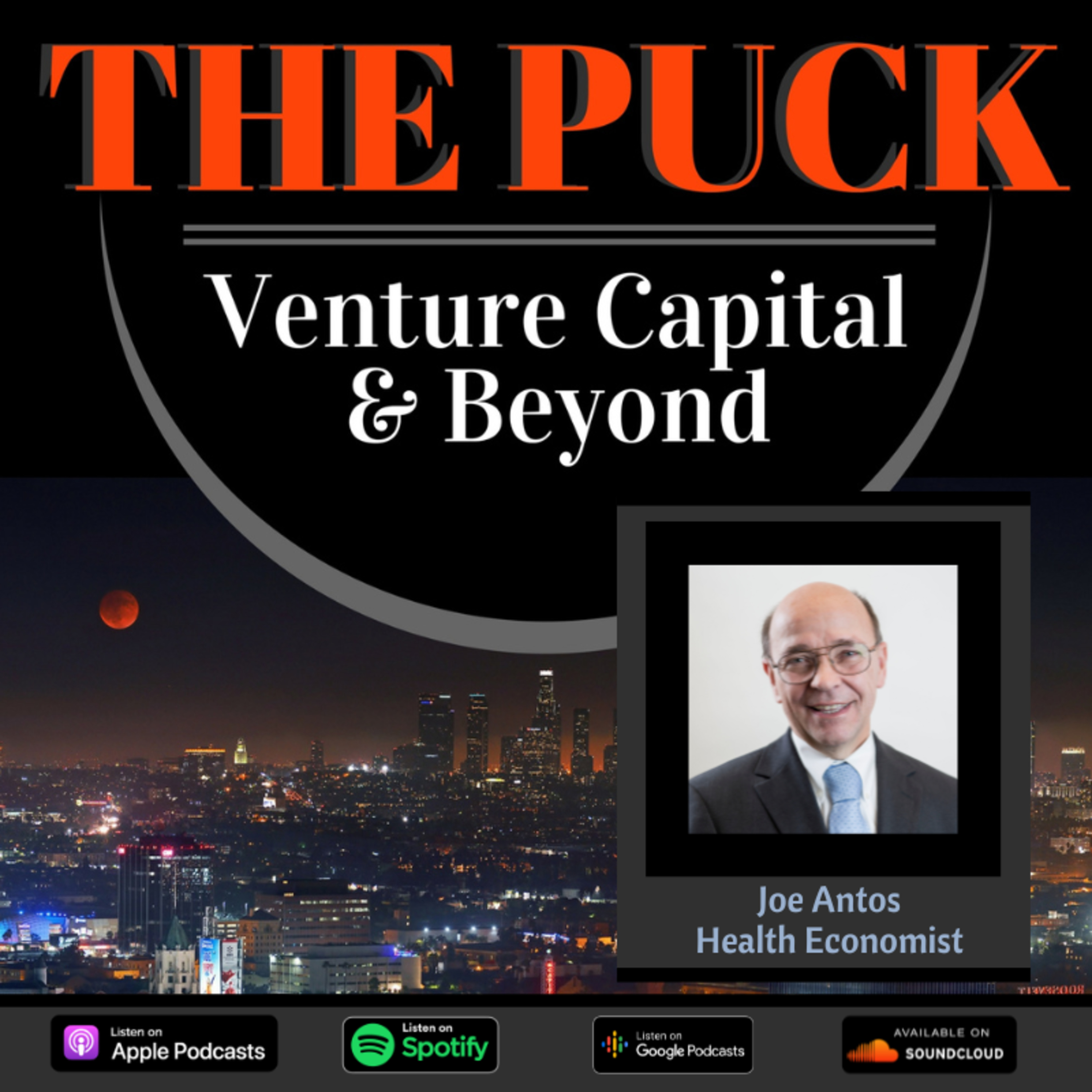
Episode 116: Joe Antos
Mar 1900:51:52Tap to summarizeAmerica’s healthcare debate has been stuck for decades — framed as a political fight between left and right. But what if that’s the wrong lens entirely?In this episode of The Puck, Jim Baer sits down with economist Joe Antos of the American Enterprise Institute to unpack the real issue: tradeoffs.Who pays? Who gets access? How much innovation do we support — and what are we actually willing to spend?Antos draws on decades of experience inside the Congressional Budget Office, the Office of Management and Budget, and Medicare policy to explain why the system feels broken — and why many of the proposed solutions miss the mark.Key themes include:Why insurance coverage ≠ access to careThe government-created bottleneck behind doctor shortagesHow incentives — not ideology — drive system dysfunctionWhy more subsidies won’t fix the problemThe hidden inefficiencies AI may accelerate instead of solveMedicare, life expectancy, and the actuarial reality we avoidWhere real reform might actually beginAs Antos puts it: “We have a system under pressure — but it created its own pressure.”This is a grounded, pragmatic conversation about how healthcare actually works — and what it would take to make it sustainable.
Transcribe →