← The Rest Is Classified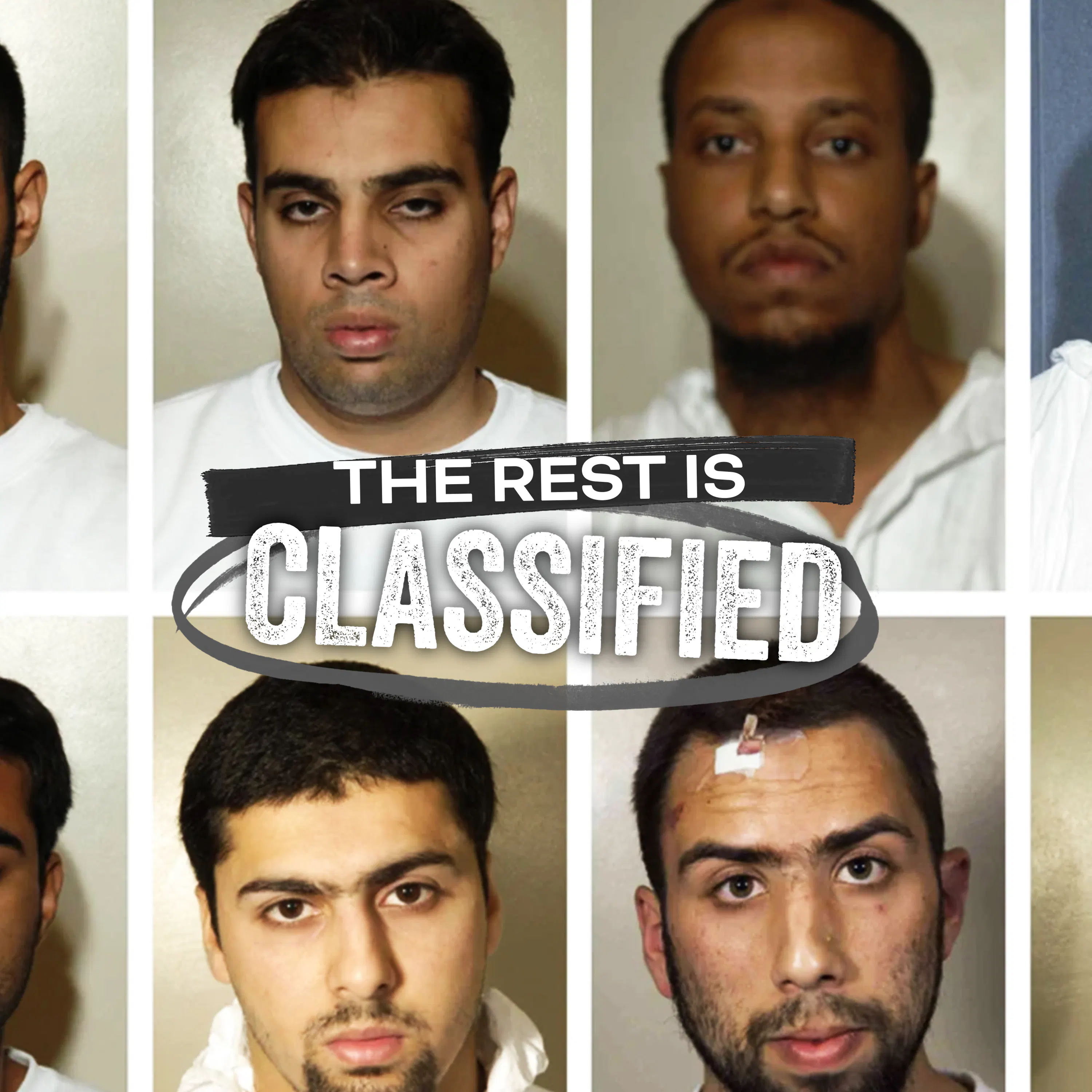
The Rest Is Classified
129. Al Qaeda’s Deadliest Plot: Why You Can’t Bring Liquids On Planes (Ep 4)
00:41:14
Loading summary
Transcript118 lines
- [00:04]
David
For exclusive interviews bonus episodes ad free listening early access to series first look at live show tickets a weekly newsletter and discounted books join the declassified club at the restisclassified dot com the plan to bring down transatlantic airliners with liquid bombs the plotters watched by britain's mi five but have the cia blown the operation by getting a key suspect early without telling their closest ally well welcome to the rest is classified i'm david.
- [00:40]
Gordon Carrera
Mccloskey and i'm gordon carrera i don't.
- [00:43]
David
Love that question that we started it is a question gordon it is a question i know i know when we left off last time i should say with the mi five and the british police watching this crew of airline bomb plotters trying to understand who's involved what their targets might be and ensure i think critically that there was enough evidence to charge them the target of the bomb plot is of course transatlantic airliners headed to the us and in the us government right up to president bush and the cia everybody is getting anxious about just how close this plot seems to be to come into fruition and as we talked about in the last episode there's been a bit of an incident with the pakistanis where simultaneous sort of an overlap with a cia visit the pakistanis have actually moved on rashid rauf the mastermind of this plot and arrested potentially at the cia's behest kind of a key plotter in this transatlantic.
- [01:46]
Gordon Carrera
Airline bomb plot and with rashid ralf now in pakistani custody is his arrest going to blow the operation let's find out after a quick word from our sponsors hp this episode is sponsored by hp most people are not counterespionage experts but that won't stop them getting targeted by cyber criminals seeking to extract their.
- [02:12]
David
Secrets hp understands that approximately four in ten uk businesses have reported cyber breaches in the past twelve months alone that's why hp business laptops desktops and workstations bought directly on hp store are secure straight out of the box with their.
- [02:28]
Gordon Carrera
Endpoint security no more stressing about dodgy emails or unexplained pop ups hp's independently verified wolf pro security works alongside your existing security security tools to protect your business users and reputation from malware and evolving cyber threats with your first click.
- [02:47]
David
You don't need an alias or a secret hideout to stay safe just wolffpro security working tirelessly to protect your hard work it's security that's built in not.
- [02:56]
Gordon Carrera
Bolted on find out more about how hp can protect your business at hp dot com classified podcast listeners benefit from a ten percent discount on all business pcs printers and accessories using the code tric ten terms and conditions apply this.
- [03:16]
Dominic Sambrook
Podcast is brought to you by carvana car shopping shouldn't feel like preparing for a marathon of paperwork that's why carvana makes buying and financing your car easy from start to finish search thousands of vehicles with great prices all online all on your time and when you're ready your new car shows up right at your door it doesn't get better than that buy your car the easy way delivery fees may apply hablas espanol spries.
- [03:47]
Gordon Carrera
Du dzoich com de nosq if you.
- [03:49]
Dominic Sambrook
Used babbel you would babbel's conversation based techniques teaches you useful words and phrases to get you speaking quickly about the things you actually talk about in the real world with lessons handcrafted by over two hundred language experts and voiced by real native speakers babbel is like having a private tutor in your pocket start speaking with babbel today get up to fifty five percent off your babbel subscription right now at babbel dot com spotify spelled b dash a dash b dash e dash l dot com spotify rules and restrictions may apply.
- [04:20]
Gordon Carrera
So rashid ralph is arrested between seven and eight pm in pakistan local time on august ninth two thousand six that's early morning nine ten am in washington about two or three in the afternoon in london it's happened without the brits knowing as we said last time the cia tells the white house fran townsend who's the homeland security advisor been pushing for more aggressive action calls president bush who's at his ranch in texas he says he'll call tony blair who's in holiday in barbados at cliff richards villa as we discussed last time but townsend also wants to tell her british counterparts so it doesn't kind of come from blair to them you know you can see everyone knows that this is gonna be an awkward conversation so everyone's thinking like i don't want them to find out from someone else you know that's that's the mood.
- [05:09]
David
And i'd imagine that once this trickles down to the police in the united kingdom there's some some frustration unhappiness i.
- [05:18]
Gordon Carrera
Think cause it's evening in london on august ninth when word finally gets to the police at scotland yard and they are furious i mean andy hayden who's one of the senior police officers at the time says it was a breaking of trust beneath him peter clark who's the head of counterterrorism finds out when he's in his office at scotland yard he seems to think they'd have at least two more days and he immediately realizes this could compromise the operation the problem is ralph as we'd said is in contact with lots of people every day by email text phone ali had been waiting in an internet cafe for some communication from ralph in that the regularity of the contact is part of the problem because it's immediately going to raise alarm bells the fact that he's not there anymore and i guess the possibilities are that they move ahead with the plot you know they could suddenly just try and get on a plane or they could even you know detonate the bomb somewhere else could they race to the airports could they destroy evidence as well making it harder to prosecute knowing that ralph has been compromised if he'd been arrested so police know they've only got hours really before the whole this long intensive operation falls apart so in new scotland yard they put up whiteboards with the names of the suspects they call in about three hundred officers to come in and to help them.
- [06:36]
David
Basically deal with it and i guess worth worth reminding in particular american listeners that mi five does not have powers of arrest so this is gonna the sort of intelligence picture needs to get transferred to the police who can then actually conduct the arrests that's right and.
- [06:50]
Gordon Carrera
One of the problems is that they had to locate and arrest all the people they were worried about in a real hurry and not it's not when you'd normally do it because normally you do these arrests the counterterrorism arrests in the early hours of the morning like four or five am when you know someone's gonna be at home probably they'll be asleep now you're actually having to find them in the evening and arrest them when they're on the move so it's chaos in the operations room at the police the phones are ringing communications are hard you'd normally want armed police to be in on these arrests that's because you don't know if they've got bombs or what they've got and the slight difference in the uk is you need to prepare an armed arrest team to be there and to be ready because most police in the uk are not armed so you've only got surveillance teams out there so that's also one of the challenges from them they've got a surveillance team covering ali and they've got one covering sawa and they actually see both ali and sawa heading both to walthamstow sawa remember is in high wycombe and that felt potentially significant because you've got the two lead figures in the conspiracy don't always meet up heading towards each other into the town hall and the worry is obviously that what if they're moving fast with the plot is that the signal to go so they're trying to get arrest teams out to meet them at walthamstow town hall but you haven't got arrest teams who can get there in time so you've actually only got the surveillance teams who've been watching them who were there at the time and the arrest teams are having to come from other locations they're kind of racing there so it's all that sense of of urgency so they're actually going to do something which they don't normally do which is prepare to use surveillance teams to do arrests so normally you'd have a separate arrest team as i said they might have armed backup and everything else but in this case they're it's so urgent they're going to have to bring in the surveillance.
- [08:44]
David
Teams and it's pretty anticlimactic isn't it there's no there's no sort of fight no they just surrender yeah it's interesting.
- [08:54]
Gordon Carrera
Because the two cars pull into the car park of walthamstow town hall the two men get out greet each other it's dark surveillance team's watching they open the boot of one car there is that worry you know what if there's explosives in the boot what if they're weapons something appears to be past it's actually the martyrdom video which just been recorded a few hours earlier which is.
- [09:13]
David
Being passed sarwar the quartermaster is not going to be on the floor exactly he's going to distribute the video exactly.
- [09:20]
Gordon Carrera
Given the video that's just been made a few hours earlier at that moment they get arrested and you're right they don't put up a fight ali has a memory stick on it whose is it he says it's mine on it he says his holiday destinations to america when asked but it's got the list of flight plans that he'd taken in that internet cafe as well as a to do list about you know which has got on the to do list clean batteries perfect disguise drink bottles lucozade orange red calculate exact drops of tang you know it was a basically a to do list of everything he needed to do i mean right down to one point five drops one teaspoon tang one teaspoon orange twelve you know it's the ingredients list to finally make the.
- [10:03]
David
Bomb which feels like good evidence against.
- [10:05]
Gordon Carrera
Him yeah we'll come to that doesn't it but they're going to pick up around about two dozen suspects in all and the police officer said we had the list of people who needed to be arrested we had pictures of them pinned to the wall and when the last red dot went on the last man arrested and someone said right we've got him there was a sigh of relief and a half a cheer but here's the problem it's been rushed and that's a problem not just for the police but also the politicians rushed yeah.
- [10:33]
David
What were they missing we'll come to.
- [10:36]
Gordon Carrera
That that afternoon home secretary john reed who we'd spoken about had given a speech on national security warning about the risks to it probably cause he had this plot in mind that evening he goes to stamford bridge do you know who stamford bridge is.
- [10:50]
David
That is the bridge in london with the castle on.
- [10:54]
Gordon Carrera
It no i think you're thinking about tower bridge but london bridge london bridge.
- [10:58]
David
Anyway london bridge it is confusing i.
- [11:00]
Gordon Carrera
Think stamford bridge is not a bridge.
- [11:01]
David
It'S not a bridge it is the.
- [11:03]
Gordon Carrera
Home of chelsea football club okay he is a celtic fan which is a scottish team and john reed who's scottish sports celtic they're playing chelsea at stamford bridge he's in the nice seats he gets the first call just before halftime that he might need to come in then another call during halftime saying go right now the cars are on their way and he's driven at pace through london to whitehall where government offices are.
- [11:25]
David
If kash patel had been the fbi director at the time they could have just had that meeting at the soccer.
- [11:30]
Gordon Carrera
Soccer game because we should explain kash patel director of fbi likes meeting his mi five counterparts or wanted to meet his mi five counterparts at soccer games.
- [11:40]
David
This was according to or on jet skis or on jet skis yeah or on jet skis or helicopter tours so he doesn't like having office meetings he.
- [11:46]
Gordon Carrera
Doesn'T like meeting this would have been.
- [11:47]
David
Good because john reed wouldn't have had.
- [11:49]
Gordon Carrera
To leave the game no because he could have talked to the fbi if the fbi had been in town could.
- [11:53]
David
Have just been right there in the.
- [11:54]
Gordon Carrera
Box instead in this occasion this is a different time twenty years ago yeah he goes to london to what's called a cobra meeting which is the cabinet office briefing room which is the kind of our equivalent of the situation route ten pm that night cobra meeting taking place goes until after midnight at two am the uk terror threat level is for the first time ever since it got created a few years earlier raised to the highest point which is called critical which means an attack is imminent so it's a sign that they are really worried and i can remember this cause i was a journalist for the bbc and it was one of the few times i got woken up in the middle of the night there are a few times where you got woken up normally you get woken up at five am when something big is happening but this was like a kind of four am wake up call going threat levels going up and it was all because that we got notice that the home secretary was going to give an imminent announcement of something big at the very first moment of the morning so the news desk woke me up because cobra reconvenes at five am because the big problem of course is airport security.
- [12:58]
David
Well right i guess because i mean at this point you think you all of a sudden have a significant and potentially global threat from a new sort of explosive because at this point in time for all of the sort of gen z types that are listening to the rest as classified there was an era where you could just walk onto an aircraft with a bottle of water right yeah sounds amazing it sounds amazing and so now you have to you actually have to adapt the rules yeah and any incoming blight into the us in theory you want to make sure that it's screened for liquids or that there's no liquids that anyone's bringing on that haven't been screened yeah because the.
- [13:39]
Gordon Carrera
Problem is that they've you busted this group of plotters and it's true they've made these arrests but it's what you can't see which is the worry you can understand this worry you've got this cell what if al qaeda what if rashid ralph what if those bomb makes in pakistan had given another completely compartmented.
- [13:58]
David
Separate cell and i just haven't seen.
- [13:59]
Gordon Carrera
You haven't seen that you know let's say in france or in you know germany they've given them a load of liquid bombs and then suddenly they're seeing the arrests in the uk and they go time to go time to go yeah so the big worry is you've got this cell but you don't know what other cells out there so you have to instantly without warning because of course the cia pushed the operation faster than people have wanted just returning to that point that you have to instantly institute effectively a global ban on liquids going into planes particularly coming into the us or uk but other other other countries as well and it's august it's the peak of holiday season as well.
- [14:35]
David
Yeah everyone's crazy at the ranch eliza van ambuller's on vacation tony blair's in barbados yeah it's amazing anyone's working but.
- [14:44]
Gordon Carrera
Because everyone's going on holiday yeah all the poor people going on holiday and it was i mean i can remember this it was total chaos that day because suddenly i mean flights are getting stopped people are being told they can't take any liquids on people are throwing stuff away people don't know the rules and of course the airlines and airports knew nothing about it's not like they've been pre pre briefed on this because it was a really sensitive piece of intelligence about the plot that you weren't going to start telling people oh we know there's a bunch of people who could bring on liquid explosives that's going to blow the thing so from zero knowledge you're having to tell the whole airline industry to to stop liquids getting.
- [15:22]
David
On planes i guess though it does bring us back though gordon to okay so the plot's disrupted the arrest has been made in the uk you need to charge them yeah like this this goes back to that central question of why was mi five waiting and what were they waiting for because now you have to go through an entire legal process in order to put these guys.
- [15:45]
Gordon Carrera
Away yeah and it's worth just reflecting on that because they had a big wall chart at the police headquarters and every time they got a piece of evidence which could be recorded against that defendant they would note it on this wall chart to try and build enough for each suspect until they got the threshold to charge them and the problem is they're under time pressure because you can only detain people it's just been raised i think from fourteen to twenty eight days before you could charge people so you're now able to do searches of premises and of people's phones and all those kind of things and try and collect evidence and interview them to get together their story but you've got a lot of defendants because we talked about a couple of dozen being arrested and the police are saying you know long hours of fatigue endless trips to fast food joints probably more monster munch because they're trying to see if how many of these people they can actually build a case against and in some cases the evidence is pretty good you've got the usb stick that ali had you know with the flight times in sarwa's house you find hidden in the roof of the garage was suicide martyrdom videos it takes a full week to find sarwa's suitcase which he'd hidden in the woods remember he'd struggle to his.
- [16:59]
David
Whole family he finally got around to hiding it well i think he put.
- [17:03]
Gordon Carrera
In the fallen tree tree trunk in the end because he struggled so much with digging you know and they're going to find the peroxide but that's going to take a week to find but the problem is you know this is where they've got a problem in doing this and i think the problems caused by that early arrest are borne out in the trials that come because you'd think and i think i found this fascinating looking back on it you'd think it would be easy to get convictions in this case but actually it's not one of the problems is no actual bombs have yet been built so you've had them talking about it you're having to do all these things but sarwa hadn't concentrated the hydrogen peroxide you know you don't have a workable bomb and that was one of the things i think the police and mi five were hoping they'd get by waiting a bit longer till you got something then you've got the fact that the men as we talked about had been surveillance awareness you know ralph had warned them they're always speaking in code about plans there was never that one explicit line which says we're making a bomb which is going to take down an aircraft he.
- [18:03]
David
Stared at the pinhole camera yeah and said that's my plan in the ceiling of his of his house and gave the plan i guess also i mean they do have the martyrdom videos yeah.
- [18:13]
Gordon Carrera
Right yeah but even there they claim they're going to be propaganda after some demonstrative act so they claim they're going to do something like a public demonstration.
- [18:23]
David
Rhythmic dance well you want to believe.
- [18:25]
Gordon Carrera
That but and that was the point of the videos was then the statement to that the problems of evidence are really clear and there were there was a lot of skepticism about the case i mean it seemed extraordinary at the time and so they don't get as many charged or even the verdicts they expected initially two thousand eight eight men on trial only three ali sawa and tambia hussain are found guilty of conspiracy to murder and the jury then can't reach a verdict on the specific charge of plotting to blow up an aircraft so in two thousand nine they go back for another trial where they are convicted of conspiracy to kill by blowing up an aircraft another person convicted of conspiracy to murder jury deadlocks against others two others convicted of conspiracy to murder but not the airliners and then there's a third trial in twenty ten where three additional men were found guilty of conspiracy to murder so you can see there that it takes multiple trials to get convictions of some of the men who'd been arrested and we should say anyone wasn't found guilty is obviously you know there's no allegations against them he says legally but there was real anger and shock from the uk side when they don't get the guilty verdicts first time i mean and some of them blame the americans you know they do they kind of go the fact we didn't get these verdicts was because we didn't have those extra two three days to really have them bang to rights.
- [19:49]
David
As it were and jose rodriguez i think it's fair to say in his memoir hard measures sort of doesn't care is that right yeah i think that's.
- [19:57]
Gordon Carrera
A fair way to go he wrote.
- [19:58]
David
The liquids plot saga turned out to be emblematic of my cia career if there was a common thread during my lengthy time at the agency it was that no good deed went unpunished the liquid plot incident further drove home to me the importance of swift action of nimble decision making and of being able to hold and interrogate key terrorist suspects ourselves without relying on surrogates who have different and uncertain agendas wow there's a.
- [20:22]
Gordon Carrera
Call for unilateral action i think that is a sign of where the tensions were when it came to counterterrorism and jose rodriguez who of course had triggered that arrest of rashid ralph that's right.
- [20:34]
David
And rashid ralph that's a good cliffhangers we have to come back oh yes.
- [20:39]
Gordon Carrera
There'S a wild story of what happens.
- [20:41]
David
To rashid rao that's right and it involves mcdonald's as a little a little tee up so let's take a break when we come back we will see what happens to the evil mastermind of this plot.
- [20:56]
Tabitha Syrett
Hello everybody and welcome to welcome to the book club a new podcast from goal hanger hosted by me.
- [21:02]
Dominic Sambrook
Dominic sambrook and me tabitha syrett as some of you may know i have been dominic's producer on the rest is history and we even did a miniseries last year about all things books and.
- [21:12]
Tabitha Syrett
Since we enjoyed that so much we have decided to roll it out as its own show so it'll be coming out every tuesday we'll be doing a different book each time and digging into all the stuff stories behind them and.
- [21:24]
Dominic Sambrook
We are going to be talking about the historical contexts behind some of the greatest and most famous books of all time we're going to be digging into the remarkable people behind them the unexpected stories behind the stories and also unraveling the plot of each book a bit and delving into the depths of the.
- [21:42]
Tabitha Syrett
Story now you don't have to have read the books to listen to the show but we hope that by the end of each episode you will be able to pretend to people that you you've read them that is the key thing and either way whether you read them or not we hope that you'll learn lots of fascinating facts you'll do lots of great stories and maybe tabby the odd laugh we will be looking.
- [21:59]
Dominic Sambrook
At thrilling gothic bodice rippers like wuthering heights and frankenstein as well as iconic stories like the great gatsby or little women and then also some more modern stuff so game of thrones normal people the high hunger games hamnet all manner.
- [22:16]
Tabitha Syrett
Of exciting stories so please join us on our journey into all things books wherever you get your podcasts just search for the book club every tuesday and hopefully we will see you there.
- [22:40]
Gordon Carrera
Well the holidays have come and gone once again but if you've forgotten to get that special someone in your life a gift well mint mobile is extending their holiday offer of half off unlimited wireless.
- [22:50]
Dominic Sambrook
So here's the idea you get it now you call it an early present for next year what do you have to lose give it a try at.
- [22:57]
Gordon Carrera
Mintmobile dot com switch limited time fifty.
- [23:00]
Dominic Sambrook
Percent off regular price for new customers upfront payment required dollar forty five for three months dollar ninety for six month or one hundred eighty dollars for for twelve month plan taxes and fees extra speeds may slow after fifty gigabytes per month when network is busy see terms.
- [23:15]
David
Welcome back we left off with this cliffhanger of what in the world has happened to rashid ralph who had been arrested in pakistan in two thousand six but the weird saga of rashid raf the mastermind of this attack does not.
- [23:30]
Gordon Carrera
End there ona i mean it is a kind of weird wild story he's arrested two thousand six at the instigation perhaps of the cia he gave a false name but the search of his room reveals a passport he'd used to flee the uk in two thousand two he's also got other passports in different names but with his photo one british one south african five mobile phones stun guns twenty nine small bottles of hydrogen peroxide it again fuels feels a little bit suspicious pretty damning he's initially held in military detention this is important and now this is where the first bit of murkiness comes he'll later claim he was tortured for two weeks before being hooded taken from a prison put on a plane flown for about three hours to another prison where he will claim he was questioned for two days by british intelligence officers now the brits and americans meanwhile say they never had access to to him now i mean rodriguez jose rodriguez of the cia says you know they refused to hand him over to the brits and insisted that any questions we or the british had for ralph be funneled through the isi happy as we were to have ralph off the streets he was not under our control so the brits and the americans say we we did not access him ralph will later say i was tortured and the brits were there which he would say but you know that's an.
- [24:53]
David
Interesting question at that point two thousand six it's almost impossible for me to imagine a british intelligence officer being there.
- [25:04]
Gordon Carrera
Yeah while he's being tortured and knowing don't you think because already by then the whole rendition torture thing is a thing in britain the complicity with the us with other but you know he's a top suspect do you question someone and not know what's happened you could.
- [25:22]
David
Certainly pass questions to the isi to.
- [25:26]
Gordon Carrera
Put to ralph we should be clear that the brits and americans say we did not have access to him and it's quite interesting why because ralph himself later claims that pakistani isi get very nervous about him and the reason is that they find out that he trained in kashmir as a jihadist if you remember ralph had been kind of motivated by kashmir he'd also married into jihadist groups and the problem is these are kashmiri jihadist groups whom isi and pakistani had quite deep connections with because they'd use them as surrogates against india and so there is this issue that the isi might have gone having picked him up maybe having realized if he talks to the brits and the americans or gets out he's going to point the finger at us as having perhaps supported some of the groups who he was associated with who trained with that whole issue of how pakistan's complicated relationship with these particularly groups which had their roots in kashmir but which became allied to al qaeda so you can see that that would be awkward and so it feel feels quite plausible that he that the isi pakistan are worried that letting the brits and americans talk to him would lead to some blame coming to them for having having had links you know and he's very well connected through marriage to these jihadist groups so it is also plausible to me that the isa were like this guy we we've got a problem with him we don't.
- [27:03]
David
Want people to talk to him yeah and maybe we we the isi don't actually want him in custody yeah exactly.
- [27:10]
Gordon Carrera
So this is where things get really crazy because ralph's family file a petition in pakistan's high court questioning his detention he's moved from army to police custody three months after his capture pakistan moved to drop terrorism charge against him allegedly for lack of evidence they still holding him on some accounts to do with false identities and explosives that they found with him there's talk maybe about extraditing him to the uk on the original murder charge two thousand two here's the crucial day december fifteenth two thousand seven he's being transferred for a court appearance now here's one story of what happens ralph arrives at court in islamabad around midday after the appearance is over his uncle talks to the two police not.
- [27:54]
David
The murdered uncle no good good good.
- [27:57]
Gordon Carrera
Good point a different uncle talk to two of ralph's police escorts ralph's uncle convinces them to ride in his car instead of the police van hmm back to the prison so the four men ralph his uncle and the two policemen leave the courthouse with ralph's uncle driving.
- [28:16]
David
This is driving ralph's uncle is driving the policeman as i said this is.
- [28:20]
Gordon Carrera
One account we have they're on the road around three pm well past lunchtime everyone's hungry so ralph asks his guards if they could stop at a mcdonald's ralph's uncle generously offers to pay for everyone's mcdonald's the constables agreed it's then afternoon prayer time ralph and his uncle asked to make a further stop at a mosque in ralpindi which is just outside islamabad on the road to the prison on the way back ralph enters the mosque with his uncle but the cops are asked to stay in the car his leg shackles are taken off the police wait twenty minutes and then he suddenly doesn't come back amazing two and a half hours later senior police chiefs are told two and a half hours later there is no messages on the police radio alerting anyone about it and the caretaker of the mosque says he never saw any manhunt in the area hmm what do you think well.
- [29:09]
David
I also like this detail which is his lawyer rashid rauf's lawyer will say he was told of his client's escape hours before it actually happened and also.
- [29:19]
Gordon Carrera
Predicted his client would eventually be dead.
- [29:21]
David
Well that that will prove so there.
- [29:24]
Gordon Carrera
Are other versions of this story which have him escaping earlier in the day right after the court hearing there's all of these stories that one police officer's phone pings off a cell tower off the route they were talking about and he's actually calling the other officer when they're both supposed to be with him there's a british diplomatic cable which says that a probe conclusively fled with the collusion of the police and some militants from one of these kind of groups jem so there's a bit of a debate about how far there's an official role in his escape because of course as we said he could have said a lot about pakistani complicity supporting groups you know the fact he's linked to seven seven and he's linked to groups backed by pakistan so one theory is isi organized the escape and then blamed the police officers others and people i've spoken to say it was just money changing hands and the police officers being bought off but either way he's gone.
- [30:20]
David
Well and he goes back to his old ways of terrorist planning that's right.
- [30:25]
Gordon Carrera
Back to the trial straight back to.
- [30:26]
David
It and i guess i mean he's continues i mean by late two thousand eight he's involved in three new al qaeda plots to attack the west including.
- [30:36]
Gordon Carrera
One against new york a suicide bombing on the new york subway that's being planned for two thousand nine which the fbi eventually bust plot against manchester yeah.
- [30:45]
David
Yeah a plot against somewhere in scandinavia yeah so all over the place and i guess though by the summer of two thousand eight the us pakistan relationship is really starting to break down and the us is pushing to do much more unilateral operations i think we could.
- [31:03]
Gordon Carrera
Say which some have reported as being.
- [31:05]
David
Drone strikes which some press outlets have reported ended up becoming predator a massive predator campaign in the tribal areas and is you know the cia really i think starts to we're obviously still in liaison with isi yeah but rely much less on the pakistanis to deal with the counterterrorism situation inside pakistan yeah i.
- [31:28]
Gordon Carrera
Mean we were talking a lot about liaison here mainly about us uk liaison but here with the us pakistan liaison it's fundamentally changing isn't it because of the frustrations we were talking about on both sides the us is suddenly like we're just going to use allegedly predator drones to kill those al qaeda commanders and do our own thing and there's all kinds of other tensions between the us strike and eventually november twenty second two thousand eight they come for rashid ralph or at least we think they do there's a drone strike on a mud and brick structure in north waziristan in the tribal areas hits a compound of a taliban commander killing him but also an al qaeda bomb maker and also it's thought rashid ralph now there are people in pakistan think he escaped you know some reports as ever we've had this with so many of these characters that he's still alive he's still wanted so he's never quite conclusively identified but other people i've spoken to seem pretty confident that they got him and.
- [32:28]
David
That he's dead yeah yeah i think we can say that he's dead i.
- [32:31]
Gordon Carrera
Think we can say he's dead right.
- [32:33]
David
Reliable sources have told the rest is classified that rashid rauf has passed he's.
- [32:38]
Gordon Carrera
Passed that's what we're led to believe as his lawyer had predicted when he escaped so he met the end that was deserved for a man who plotted some pretty awful terrorist attacks because some that of course this one didn't come off but some like seven seven did and this was a guy responsible for.
- [32:54]
David
It you know i was struck as we're going through this that this plot could have dramatically reshaped the transatlantic relationship led to the death of thousands and thousands of people had a massive economic impact and it also seems like it's just out of another era i guess it's kind of in some ways the the sort of high watermark of this al qaeda plotting against the us and the uk that's coming out of pakistan or getting pretty close to it i.
- [33:25]
Gordon Carrera
Think that's exactly right nine eleven obviously is the big moment but in those years afterwards out of the tribal areas al qaeda was able to recruit and was still able to organize big plots i mean it was able to organize this big plot with sending people back and forth with organizing bombs something more ambitious than nine eleven and still focused with that nine hundred and eleven feel i think on airplanes that's one of the interesting things about it but yes i think this was the high water mark and after that you see the attrition partly because of those alleged cia drones but it's true though the the.
- [33:59]
David
Safe haven in pakistan diminished gives space.
- [34:02]
Gordon Carrera
To plot and organize to plot and.
- [34:04]
David
Organize and two thousand seven two thousand eight that starts to diminish to go.
- [34:09]
Gordon Carrera
Away and the al qaeda operational leadership is basically droned into disappearing is that thing every few months you know the latest planner was was being killed from al qaeda so their ability to do those big plots i think this you're right this is the high water mark this is the peak and very fortunately it didn't come off because it would have been absolutely enormous if it had come off i mean really really as i said in some ways bigger than nine eleven perhaps maybe less of a shock than nine eleven because you'd had nine eleven but in terms of the consequences for us for uk for counterterrorism.
- [34:43]
David
It would have been just massive yeah i think it also as we've teed up and alluded to throughout the series this story says something i think important about the nature of the us uk intelligence relationship because throughout the story you see the tremendous intimacy between the two services but also i think how some of that intimacy can create enough surface area so there's friction if you if there are even slight differences not even strategic differences i think with the pakistanis you know in that relationship between cia and isi there there are big strategic differences in your priorities that leads to a kind of a double game here in between the us and the uk you don't see that but you do see still these opportunities for there to be mistrust injected into the relationship because we might not see eye to eye on how a counterterrorism investigation should run or sort of at what speed it.
- [35:39]
Gordon Carrera
Should go that's right i think it's always said oh we have a really close relationship in lots of intelligence sharing counterterrorism liaison is really close that's true but it's also more complicated than that because even if you whatever the tensions might be today where you've got strategic political differences even back then twenty years ago this is a reminder that we've had those some of those differences in the past in that point it was tactics over counter terrorism were you going to use rendition and things like that but also how much were you willing to let things run how much risk you're going to take there are tensions in the relationship there's no point pretending there aren't this is a good example of that and of the americans effectively throwing their weight around i think at the end of the day they are the bigger partner in this relationship and they can do that and they did that in this case and the brits basically had to had to deal with it but that's the reality of it it's no point pretending there isn't friction.
- [36:36]
David
In these relationships and that that power imbalance is still still the same today i would argue i think what what is different and what is maybe an interesting question to kind of close this on is you know have the strategic priorities changed a bit because twenty years ago both countries are really in lockstep on bush and geopolitical situation right bush and blair are close exactly and now are we in a different world where there are strategic differences over the way you resist the russians in ukraine or greenland or tariffs or china or china where what i think about is are we in a situation where some of those strategic differences actually could go down and kind of get into the depths of the relationship and affect how it operates at a working level so that there's more mistrust more friction or disconnection in some cases now that's a lot easier said than done but i do wonder about it because we're not we're not in the world of two thousand six anymore in this liaison relationship no.
- [37:48]
Gordon Carrera
I think that's exactly right and we both talk to people who are you know who know this relationship very well including at the moment the people i speak to say on an operational level things are still going the us uk the people operationally where they're dealing with counterterrorism or whether dealing with the middle east they're still talking working with each other but you're right the kind of top level strategic tension is there which is the you know the difference from from this time and you do wonder when you speak to people how long will it take before that the strategic difference between the us and uk the wider political and policy difference starts to feed down into the intelligence relationship and where the points of tension will start to come where you'll be like actually can we share with them about this thing or that thing i'm not sure it's breaking down yet no but you wonder how sustainable keeping that close relationship is going to be in this very different environment where however much they try and pretend they're not there are big differences between the two sides that's right.
- [38:49]
David
And twenty years on you haven't been able to take liquids on planes although they're starting to lift up although it's starting to change yeah so yeah i.
- [38:56]
Gordon Carrera
Think that's a good place to end because it's twenty year legacy twenty years of this story and of mi five busting this plot which we're only now it feels getting over that's right well.
- [39:08]
David
I think that's the right place to end this story gordon we'd be remiss of course if we didn't say go on you've listened to this whole series jump in and join the declassified club do that at the restisclassified com we'll also say we have a really exciting series coming up next which is we are going to be digging deep into russian interference in the twenty sixteen us presidential election actually getting beyond the politics of it to say what did the russians do and not do in an attempt to affect that election so we're digging into that and we'll also have a really exciting miniseries for members looking at the connections again in a really in depth and fact based way looking at the connections between trump and his team and russia and again getting beyond the noise of the politics to say what's actually going on it's going to be a good series it's going to.
- [40:07]
Gordon Carrera
Be a good series looking forward to that one but in the meantime we'll.
- [40:10]
David
See you next time see you then.
- [40:17]
Dominic Sambrook
Close your eyes exhale feel your body relax and let go of whatever you're carrying today while i'm letting go of the worry that that i wouldn't get my new contacts in time for this class i got them delivered free from one eight hundred contacts oh my gosh they're so fast and breathe oh sorry i almost couldn't breathe when i saw the discount they gave me on my first order oh sorry namaste visit one eight hundred contacts com today to save on your first order one eight hundred.
- [40:46]
Tabitha Syrett
Contacts troy the odyssey the iliad all of these great ancient epics depict a monumental collapse that destroyed the the interconnected empires of three thousand years ago and to understand the bronze age apocalypse that homer wrote about four hundred years after it happened subscribe to empire world history a fellow goal hanger podcast where we are deep diving into the biggest imperial collapse in ancient history to get a flavor of the series here is a clip from our episode with none other than stephen fry it is one of.
- [41:17]
Stephen Fry
My favorite subjects the story of the greeks and the siege of troy and odysseus return home of course i say greeks homer called them the achaeans the danaans the argives the word greeks is a much later one but it refers really to the mycenaeans a warrior aristocracy essentially obsessed with honor and reputation that would give them an eternal glory a kleos as they call it it's the kleos that's in the name of so many greeks know cleopatra and all the socrates heracles who's hercules you know hera's glory he was actually named heracles because she hated him because he was a love child of zeus and she never liked zeus's love childs her husband her errant husband and so as an attempt to placate her tiresias because he was born in thebes suggested that he change his name as a baby this was to heracles the glory of hera it didn't help much it didn't help at all athena even even put her on hera's breast when hera was asleep because it would bond them if he suckled her milk but she woke and saw it and tossed him away and her breast milk spread across the sky to form the milky way i didn't know that story because galaxy of course is from the greek for milk galactic as in lactic so the chocolate makers are right anyway this is completely separate lovely though clear keep going don't stop well.
- [42:43]
Gordon Carrera
We really hope you enjoyed that clip to hear more on the bronze age.
- [42:47]
Dominic Sambrook
Apocalypse and how it shaped the ancient greek epics just subscribe to empire wherever you get your podcasts.