← The Rest Is Classified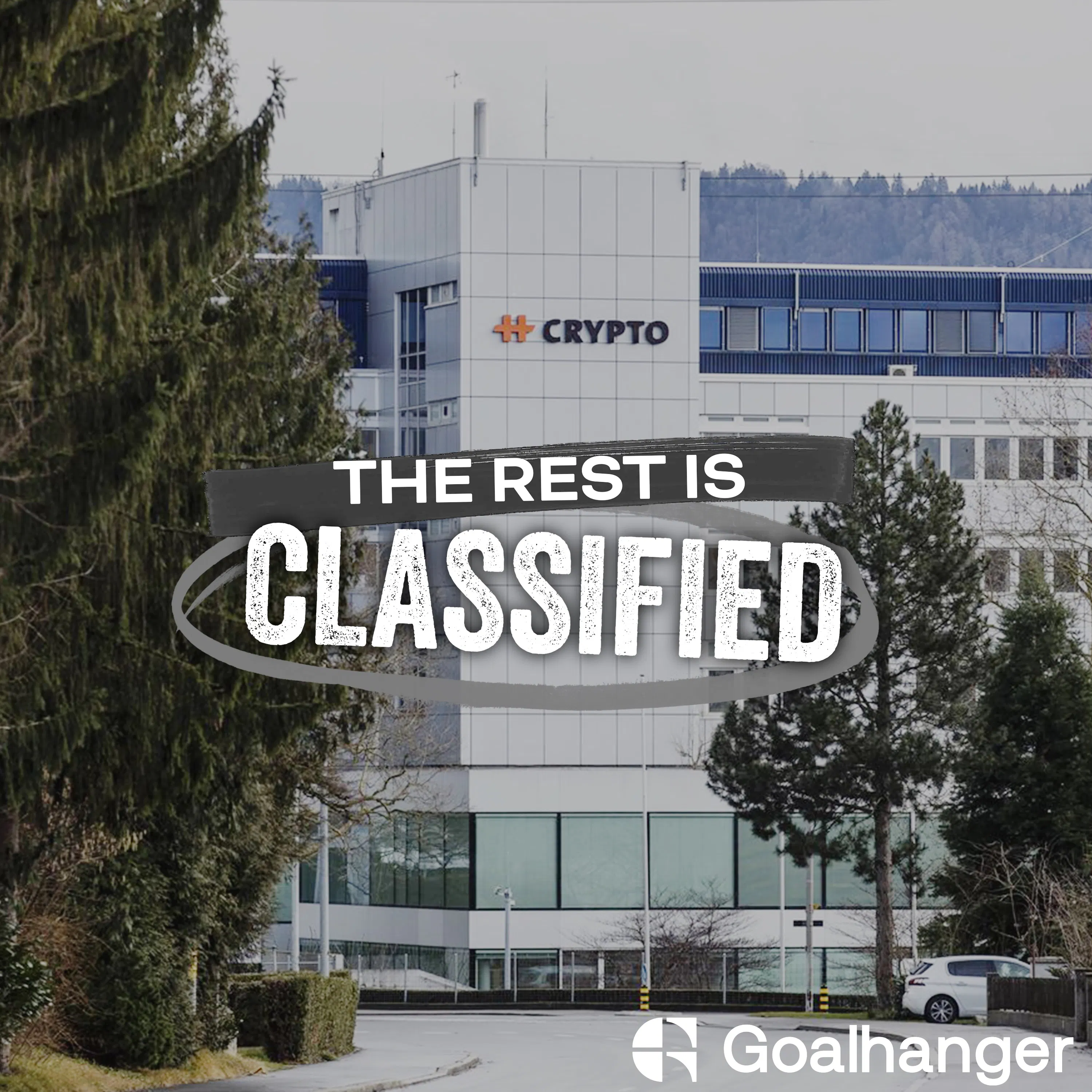
The Rest Is Classified
96. Selling The World's Secrets: Is The CIA Reading Your Messages? (Ep 1)
00:41:20
Loading summary
Transcript132 lines
- [00:04]
David McCloskey
For exclusive interviews, bonus episodes, ad free listening, early access to series first look at live show tickets, a weekly newsletter and discounted books. Join the declassified club@therealisclassified.com this podcast is.
- [00:19]
Sponsor/Advertiser Voice
Brought to you by Carvana. Carvana makes car selling fast and easy from start to finish. Enter your license plate or VIN and get a real offer in seconds, down to the penny. If you accept, Carvana will come pick up your car from your drive or you can drop it off at one of our car vending machines. Either way, you get paid instantly. It's fast, transparent and 100% online car selling that saves your time. That's Carvana.
- [00:44]
David McCloskey
Carvana.
- [00:46]
Sponsor/Advertiser Voice
Pickup fees may apply.
- [00:49]
David McCloskey
The holidays have arrived at the Home Depot and we're here to help bring the excitement with decor for every part of your home. Check out our wide assortment of easy to assemble pre lit trees so you can spend less time setting up and and more time celebrating. And bring your holiday spirit outdoors with unique decor like one of our Santa inflatables. Whatever your style, find the right pieces at the right prices this holiday season at the Home Depot.
- [01:21]
Gordon Carrera
Introducing Meta Ray Ban Display, the world's most advanced AI glasses with a full color display built into the lens of the glasses. It's there when you need it and gone when you don't. Send and receive messages, translate or caption live conversations, collaborate with Meta AI and more. Be one of the first to try Meta Ray ban display. Visit meta.com metaraybanddisplay to book a demo and find your pair. Welcome to the Rest is Classified. I'm Gordon Carrera.
- [02:00]
David McCloskey
And I'm David McCloskey.
- [02:01]
Gordon Carrera
David, have you ever wondered if your phone might be spying on you?
- [02:05]
David McCloskey
I have occasionally wondered if my phone is spying on me. Gordon. I would say more so after reading the outline that you put together for the next few episodes. For the story we're going to talk about, which is all about technology being rigged to spy on its users on the poor people who have paid for it. And it makes me think that like so many of these episodes that we do that deal with the intersection of spying and technology, that we should all get rid of our phones and computers and put the tinfoil hats on and shut the doors and disconnect and hide.
- [02:44]
Gordon Carrera
Yeah, I think there's something to that because if you are already a little bit worried about your tech, then this, this episode and the next one might get you even more worried. Because yeah, tech companies are always kind of promising they will offer you security from your phone in your messaging, but what if a spy agency actually secretly owned the company that made the devices that promised you security? I mean, that is the slightly crazy story we're telling today. The story of a company called Crypto AG and the way and the crazy operation used to effectively spy on all its customers.
- [03:23]
David McCloskey
We did the series on Oleg Gordievsky and I think agreed that he was maybe the most important human spy of the Cold War. You might be able to make the case that this far less well known story about Crypto AG is the greatest intelligence operation of the Cold War period, because it went on, as we'll see, for decades, and it compromised an absolutely staggering amount of global communications that was then decrypted by American and as we'll see, German intelligence and passed to so many different allies. I mean, this to me feels like it's right up there in terms of the most impactful intelligence operations run in the past, maybe ever, but certainly during the Cold War.
- [04:14]
Gordon Carrera
Yeah, that's right. I think it had, as we'll see, kind of really consequences which changed world events. And I think because it's only just emerged recently what was involved in this operation, we're still learning and kind of trying to find out how it did shape international relations, you know, throughout most of that Cold War period. And it is a amazing intelligence operation run by the us, but yes, also with a little bit of UK role and also the Germans.
- [04:38]
David McCloskey
The Germans.
- [04:39]
Gordon Carrera
The Germans make their shout out to the bnd, the German Foreign Intelligence Service. I think this is one of their first appearances on the pod.
- [04:45]
David McCloskey
The Bundesligre changes.
- [04:48]
Gordon Carrera
How do you.
- [04:49]
David McCloskey
What does it stand for?
- [04:50]
Gordon Carrera
Very good. Bnd.
- [04:51]
David McCloskey
The bnd. The Bundes Knox Richtenst. I listened to a German pronouncing that word a few times in preparation for this Gordon, and I still. The end is unintelligible to me. I still don't have it. So apologies to all of our German friends and listeners. The bnd, Gordon, I think, has appeared on the show in one prior episode, which is when I talked about how I went to Berlin for a liaison meeting with the BND and we presented them with very compelling information and they told us that we were wrong and then we had pizza and left Berlin. That was. That was the one other time the BND has appeared.
- [05:32]
Gordon Carrera
And so it's an international operation also. I think the other thing, just before we get into it, I really find interesting is that it is about kind of technical intelligence and communications intercept and, you know, complicated things about encryption, but it's actually also based on two people and A personal friendship between two people, a spy and a businessman. And I think it also is quite interesting because it gets to the relationship between the technical world of communications intelligence and signals intelligence and the human world of human relationships and the CIA. And so I find that bit of it actually quite compelling as well. And as well as the fact it's basically telling us about security and communications and what we need to worry about.
- [06:12]
David McCloskey
Today, it does feel like a bit of the missing link or a connective tissue between the world of Bletchley park, the decryption of German code and then Snowden.
- [06:27]
Gordon Carrera
Ah, friend of the pods, friend of.
- [06:29]
David McCloskey
Your side of the pond. Gordon. It feels like this story connect some of these themes around essentially the transatlantic partnership and the compromise of so much global telecommunications traffic that our two countries.
- [06:47]
Gordon Carrera
Have done together, really jointly. Yeah, no, I think that's right. And I think also the relationship between intelligence agencies and companies, which is interesting. And, you know, these days you've got battles between states and companies like Apple, and the British government is having a battle about encryption and whether Apple should build back doors into its devices. Well, this is about, in a way, how we got there. And, you know, there's even echoes of our recent series on Mossad pages. So, yeah, lots in there to get our teeth stuck into.
- [07:16]
David McCloskey
And Gordon, I think listeners to this pod are going to be very excited about how we're starting the story, because this isn't going to be Gordon Carrera explaining how you build a nuclear weapon, which he has done, I think now, two or three times on the pod, different pieces of how you constructed. Bob, this time you were going to give us a lesson in encryption to start, because the encryption and the value of encrypted communications is going to really be at the center of this story.
- [07:49]
Gordon Carrera
Yeah. So let's cut straight to the lesson. Encryption means encoding information. You can stop me anytime. David. So encryption is encoding information so that other people can't read it, keeping your messages private. So we all use it every day. Now, when you send your bank details over the Internet to pay for something, it's encrypted. You know, when you use WhatsApp, they talk about end to end encrypted so that anyone who intercepts it can't read it. There's lots of ways of doing it, and it goes back really to ancient times. The simplest way of scrambling the letters and making something unreadable, which kids get taught in some of those kind of spy books you get given is to use something called a Caesar cipher, named after Julius Caesar. Where you simply shift letters along the Alphabet. Another version is where you use a kind of wheel where you have two little rows and the letters line up and you create your message on one hand. And then you look at what the wheel tells you that each letter corresponds to. You write it down. And if someone has the same wheel set up at the same place, they could turn the gobbledygook back into a readable message. Right, so that's the simple explanation. But if you go back a century or so, just over that, you get the first encryption machines which are being built, electromechanical devices. They look like a typewriter. You type your message on a keyboard, scrambles it with rotors which turn, which give you lots more combinations, making it harder to crack. Then you get out the message. Looks like gobbledygook on a bit of paper. You can transmit it over radio, Morse code. Only if you've got another machine with the same settings can the person who receives the message read it. February 1918. A German engineer named Arthur Scheribus. Scherbius, I think it's the right pronunciation now, whose other inventions included an electric pillow. So I love that fact.
- [09:39]
David McCloskey
What does the pillow need to be electrified for? For? Is it heated?
- [09:43]
Gordon Carrera
I don't know. Is it heated? I guess it's like an electric blanket. But it was an electric pillow which he patented.
- [09:48]
David McCloskey
Maybe it inflates itself, I don't know.
- [09:52]
Gordon Carrera
But anyway, more importantly than the electric pillow, he is going to invent a machine which he's going to sell to businesses with a slogan. One secret, well protected, may pay the entire cost of the machine. Good salesman. And he's going to call the machine Enigma because it's so mysterious. Of course it's going to get very famous. It's actually made for businesses originally, but governments immediately see. Well, there's some advantage when you're sending diplomatic messages, intelligence reports, military orders to have them encrypted. Obviously, where you've got secrets, spies are going to try and steal them. So where there's code, you get code breakers. Most famously, the team at Bletchley park will set out to break various different types of Enigma in World War II. We're not going to do the whole Bletchley park story today, are we?
- [10:40]
David McCloskey
No, I mean, that is one that we have talked about doing in person, and it's its own story, I think, in its own right. I mean, you probably could say that it's the start of the modern us, UK intelligence relationship is really birthed at Bletchley park and the breaking of, of German codes.
- [11:00]
Gordon Carrera
Yeah, that's right. Because a bunch of Americans come over to kind of share what they've done against Japanese codes with, with the Brits. And the Brits have done, you know, the work against the German Enigma. And that starts actually the cooperation between the two countries which then becomes the heart of the intelligence relationship and you know, GCHQ and NSA and what's called the five eyes when Australia, Canada and New Zealand join.
- [11:24]
David McCloskey
So it should be 10 eyes, shouldn't it? Everybody should have two.
- [11:27]
Gordon Carrera
That is a really good point.
- [11:29]
David McCloskey
Yeah. There's five.
- [11:30]
Gordon Carrera
Each with two eyes.
- [11:31]
David McCloskey
Each with two eyes. It should be 10. I've always thought this. I've never had the platform to do anything about it, but I'm throwing it out there for anyone listening. But yes, five eyes, which you know is five eyes too short, is a code breaking alliance.
- [11:45]
Gordon Carrera
The big thing about Enigma is it's super secret during the war. You don't want your enemy to know you've broken their codes because then they'll change them and you won't be able to read them. But they keep it secret after the war. And this is really interesting. It's kept secret in Britain until the 1970s. The fact Bletchley park did what it did. And if you want to understand why they did that, actually this story about Crypto AG is going to help explain that. Because the point is, after the war no one knows they've broken Enigma. So everyone believes these kind of machines are unbreakable. And at the same time, other companies are building their own versions of the Enigma machine. And here we meet our first character. Boris Hagelin, born in Russia and that's going to be important in 1892 to a Swedish family. And his father works in a senior capacity for the Nobel family, which have a load of oil refineries in Baku. The Nobel family, as in the Nobel Prize? David. So I know your president is waiting for his Peace Prize. You're waiting for your prize for literature, I imagine that's right as we speak.
- [12:44]
David McCloskey
That's right. Another. Another year and I didn't get it. Gordon. Another year.
- [12:49]
Gordon Carrera
I'll have a word.
- [12:51]
David McCloskey
Another empty spot on my shelf for my.
- [12:54]
Gordon Carrera
So Boris Hagelin is, you know, working for the Nobel family. He goes back to Stockholm for his education. Graduates in Mechanical Engineering in 1914. He's expecting to go back to Russia. But then you get the Bolshevik Revolution, 1917. So that's over. The Nobel family are still kind of helping him and his father out. And young Boris ends up in charge of a small company in 1921 called A.B. cryptograph, which Nobel are investing in. And this builds these kind of very early cipher machines like the Enigma. And he's tinkering and trying to understand it. 1925, he hears the Swedish military, so he's back in Sweden, have got hold of one of these German Enigma machines and he rushes over to the Swedish military and he says, oh, hang a sec, I can build you something better. Now. I think he's a little bit of a modern techie in the kind of fake it until you make it category. Because the truth is I don't think he knows how to do that. I think he's, you know, he's just kind of guessing, bluffing that he's going to be able to do it. But he gets to work six months later, he's built off kind of knockoff, slightly inferior version of Enigma and he gets the Swedish general staff, the military to buy his machine. The B21 business starts then struggling a little bit. 1932 gets the French military to buy a model, followed by the French spies. How was my French there? It's okay.
- [14:14]
David McCloskey
Trs Bon, Gordon.
- [14:16]
Gordon Carrera
Thank you, David. And then he, of course, like anyone that was, you know, seeking to make it, he's got to go to the Americans. So he starts to sell. Late 30s, May 1940, he just about escapes the war in Europe and he escapes from Italy actually, with two machines in his luggage. Heads to the us, spends most of the war in the us and this is where he starts to sell big, crucially including to the U.S. army. He's going to sell 140,000 machines for the military to use for kind of encrypted tactical communications.
- [14:45]
David McCloskey
A deal for $9 million, probably like $80 billion today.
- [14:49]
Gordon Carrera
Not that much.
- [14:50]
David McCloskey
You didn't do the calculation, didn't do the math. Yeah, you didn't do the math.
- [14:53]
Gordon Carrera
But he's in his late 40s, you know, he's handsome, slim, silver, slick back hair, well dressed, kind of looks like a successful businessman, not quite a tech bro. Wars are good for business. 1948, he goes back to Sweden, but then moves the company to Switzerland. It merges with another company and it's going to become called Crypto ag. Crucial thing is it's starting to build better machines. And he's going to think, I'm going to start selling these around the world. Everyone wants these machines. Start of the 50s, Crypto AG builds a new machine called the CX52, which is a massive improvement on the Previous one. It's actually quite good. And it's so good that it freaks out US intelligence who when they see it, realise we can't break it. And this is the central problem. Then what do you do when someone is building in the private sector high grade encryption and offering to sell it to anyone? And that is the problem.
- [15:47]
David McCloskey
Well, and it makes me think, Gordon, it's not encryption, it's actually the opposite. But it makes me think of the Israeli, a software developer, NSO Group, that made the Pegasus spyware, which essentially was a, I guess a zero click exploit that enabled the user to get access to a target's phone. And that private company sold that spyware, you know, to the Emiratis and I think they sold it to a dozen other governments that used it to sort of monitor internal opposition. It's something that's commercially available and that immediately has intelligence or national security sort of implications or use cases. And it reminds me of that here. It's like, how do you, as a government or an intelligence agency, deal with a threat in the private sector and try to prevent that company from quite legally, in most cases, selling their wares to rivals?
- [16:48]
Gordon Carrera
And what's interesting in this case is it's a friendship. And that's where this kind of issue of friendship comes into play, because the friendship is going to be between Boris Hagelin, the businessman, and another man who is actually America's top code breaker. And it turns out they're friends. Now his name is William Friedman and he's described as the father of American cryptology. He's credited with coining the term cryptology to kind of talk about the science of secret communications. Now here's what's interesting. He was originally called Wolf, not William Friedman. And he also has a Russian background. He's the son of well educated Hungarian, Russian Jewish family who flee Russia just after he's born. Almost within a year of Boris Hagelin and his family go to Pittsburgh. So as a child he gets into codes. So he reads a short story by Edgar Allan Poe, which I think is called the Gold Bug, where there's a kind of secret code and a treasure hunt and the kind of people have to decode it and that gets him into it. He's then go to work at a private research lab where he meets Elizabeth, a young woman who's also a code nut. She's spending her time looking for secret messages hidden in the works of Shakespeare and other Elizabethan writers.
- [18:01]
David McCloskey
Sounds like a perfect match.
- [18:03]
Gordon Carrera
It is a perfect match. I mean, they inevitably fall for each other and get married. And he's a kind of balding, quite dapper in his dress. Often got the bow tie, neat moustache. Looks like a kind of crypt guy, I guess, if you want to be stereotypical about these people. Is that harsh?
- [18:17]
David McCloskey
Is that because of the bow tie?
- [18:18]
Gordon Carrera
I feel like 50s crypt people. That was their look, was kind of bow ties and D dress. I don't know.
- [18:24]
David McCloskey
Thin mustaches.
- [18:25]
Gordon Carrera
Thin mustaches, exactly. Goes to work for the US War Office in code breaking in the 20s. Interestingly enough, America had done code breaking in the First World War. A place called the Black Chamber. Secret facility in New York where. Which famously gets closed down because the Secretary of State says, gentlemen, don't read others mail. Which I love.
- [18:43]
David McCloskey
It's like such a simpler time. It was a simpler time.
- [18:46]
Gordon Carrera
Simpler time. So what happened to that?
- [18:48]
David McCloskey
It's gone.
- [18:49]
Gordon Carrera
Friedman's going to be tasked with rebuilding after the closure of the Black Chamber, a new service within the U.S. army. It's interesting, he works with his wife a lot. And the first kind of traffic they're cracking is what's called rum runner traffic because this was the days of Prohibition. David, can you believe that day when the US banned alcohol? I mean, seems bizarre to you after our cocktail making. Yes, that's what I was saying.
- [19:14]
David McCloskey
As someone who participated in a cocktail making livestream in which I consumed three quite strong drinks between 2:30 and 3:30pm in the afternoon. No, I cannot imagine the world of progress having my freedom to do that taken away, Gordon. Although that evening I might have. I might have hoped for someone to have prevented me from doing that.
- [19:36]
Gordon Carrera
Yeah. But. Yeah, a reminder, if you want to learn how to make some of those crazy cocktails, I think the live stream is still available to club.
- [19:43]
David McCloskey
It's very available, yes. Join the declassified club and you can watch us having a few drinks in the afternoon.
- [19:48]
Gordon Carrera
But anyway, this time back to prohibition. Criminal gangs are smuggling liquor into America from outside the U.S. organized by radio, using codes. And Friedman's wife Elizabeth, works in the Coast Guard, and she and her husband will kind of crack the codes. His team have got a nut file, which is all the people who are kind of claiming to have built unbreakable codes and demanding a million dollars from the government or else they'll sell them to other countries, which I love.
- [20:14]
David McCloskey
You maintain a nut file on our club members too, right? On our secret squirrels?
- [20:18]
Gordon Carrera
I do.
- [20:18]
David McCloskey
Not everyone's got a nut file.
- [20:20]
Gordon Carrera
Every secret squirrel is valued.
- [20:21]
David McCloskey
Has a nut file.
- [20:22]
Gordon Carrera
But as the 30s progresses, you know, Friedman and his Kind of army intelligence unit. Then see a new Japanese kind of code system called Purple, which is their high level cipher machine, you know, huge pressure to break it. As the war approaches, Friedman actually at one point has a breakdown and is hospitalized. But he's going to become a kind of core figure in American code breaking. And of course, he meets Hagelin in the late 30s when Boris Hagelin is trying to sell his crypto devices. And Friedman takes a look at them. He's not actually that impressed. Quickly works out how to break it. But the two men become friends and I guess it's obvious why, isn't it?
- [20:59]
David McCloskey
They're both Russians, they both love codes and cryptology.
- [21:03]
Gordon Carrera
One likes making them, one likes breaking them, but you can see why they're kind of two kind of nerdy Crip guys. So. Yeah. And their wives are also going to become good friends and that's going to last throughout their whole lives. And they'll stay at each other's houses when they go visit. So back to the story. 1951. The US is worried about Boris Hagelin building new machines that they can't break. So Friedman, now working for the nsa, the National Security Agency, decides, well, maybe I'll go talk to him. And so that is going to lead to a dinner at Friedman's favorite haunt, the Cosmos Club in dc. Is that still there? Does that still exist?
- [21:42]
David McCloskey
It's still there. I've not been, but the pictures online record quite, quite lovely. It made me wish I'd been invited. Gordon. It's kind of got this air, even in the pictures of you're going to have important people sitting kind of having conversation over these tables in this sort of grand dining room, hashing out really important political arrangements. And that is exactly, isn't it, what Hagelin and Friedman work out when they're at the Cosmos Club. It comes to be. I love this. It comes to be known as the gentleman's understanding.
- [22:15]
Gordon Carrera
Yeah, that's right. So let's maybe take a break there and when we come back, we'll learn what this gentleman's understanding really means.
- [22:26]
David McCloskey
This episode is brought to you by attio, the CRM for the AI Era.
- [22:32]
Gordon Carrera
Now, David, people think that spycraft is just car chases and secret codes, but an awful lot of it is just idling around waiting for the action.
- [22:41]
David McCloskey
It's a bit like starting your own business. You think it's going to be as easy as creating and selling a product, but the reality is business owners spend far too long trying to get their CRM to fit a system not built for them.
- [22:54]
Gordon Carrera
Attio's AI driven CRM enables you to take control of your platform to build something from the ground up that fits your needs.
- [23:02]
David McCloskey
James Bond had Q's, X ray shades, an explosive watch and a pair of pen grenade. Business owners have Adeo's real time customer insights and platform that grows with them. All tools relevant for your mission to build a company from the ground up.
- [23:18]
Gordon Carrera
Attio even has something called agent collaboration.
- [23:21]
David McCloskey
Yes, but in this case that means giving people the ability to let AI work seamlessly in the background for them.
- [23:28]
Gordon Carrera
Try Attio for free at attio.com/trick this.
- [23:36]
Sponsor/Advertiser Voice
Episode is brought to you by Indeed. Stop waiting around for the perfect candidate. Instead, use Indeed sponsored Jobs to find the right people with the right skills fast. It's a simple way to make sure your listing is the first candidate. C According to Indeed data, Sponsored Jobs have four times more applicants than non sponsored jobs. So go build your dream team today with Indeed. Get a $75 sponsors@ Indeed.com podcast terms and conditions apply.
- [24:05]
Gordon Carrera
Sean Bean and Connie Nielsen star in Robin Hood From Sherwood Forest to the.
- [24:10]
David McCloskey
Norman Court, a classic tale reborn for today. The story continues to unfold. New episodes Sundays on mgm.
- [24:24]
Sponsor/Advertiser Voice
When did making plans get this complicated? It's time to streamline with WhatsApp, the secure messaging app that brings the whole group together. Use polls to settle dinner plans, send event invites and pin messages so no one forgets mom 60th and never miss a meme or milestone. All protected with end to end encryption. It's time for WhatsApp message privately with everyone. Learn more@WhatsApp.com all right, welcome back.
- [24:56]
David McCloskey
It's 1951. We're at the Cosmos Club in Washington, D.C. doubtless deep into our second martini, and Boris Hagelin and William Friedman are hashing out this gentleman's understanding, which is going to really have tremendous implications for American intelligence and really the intelligence apparatus of the entire Cold War.
- [25:18]
Gordon Carrera
Yeah, that's right. So over dinner, Friedman asks questions. Would it be possible to control the sale of the new machines, these ones that are super secure in a way that only certain countries could purchase the newer, more secure machines? And now Friedman says Haglin sounded interesting. Now, at first this is just a kind of gentleman's agreement. Could we kind of work together to control the flow of these encryption machines? But it's going to kind of evolve into a formal deal and then something even more intense and surprising.
- [25:48]
David McCloskey
Does Hagelin know that Friedman works for the nsa?
- [25:52]
Gordon Carrera
Yeah, and I Think he knows what he's doing? I mean, yeah, that's what is interesting about this. He's not doing it even for the money particularly or for anything else. I think. I think he's doing it partly for friendship and partly because I think he kind of gets it and understands it. So it's interesting, isn't it? Because there's no doubt he knows exactly what he's being asked to do. Because effectively what he's being asked to do is restrict the sale of his most sophisticated models to just countries approved by the United States. It's kind of like, you know, export controls for weapons, but that's one thing. But then there's something kind of subtler which goes on, because I think if it was just that, that would be kind of okay. But I think what they're actually going to do is discuss that other countries will be sold machines and, and be told they're secure, whilst not knowing that the US can read the messages of the machines.
- [26:47]
David McCloskey
This, I think, is the or one aspect of the genius of this operation. Because my mental model for this, just after having read a couple articles prior to us having this conversation, was that the CIA, the nsa, had installed like a backdoor into these machines that allowed them to read the encrypted messages. But it's actually far more clever than that, isn't it? Because that might work for a while, but eventually someone, somewhere, some customer is going to spot that and it's going to be over. Right. The really, I think, diabolical piece of this is that the idea was just to reduce slightly the complexity of the code so that the CIA, the nsa, whomever, is still going to have to decrypt it, but it's just going to be made far less challenging to do.
- [27:40]
Gordon Carrera
So because it still looks secure. Because of course you hear this phrase backdoor. But if you have either literally a backdoor or, you know, in terms of code, a backdoor, other people can find it. So the trick in this is to reduce the complexity of the code so you can break it. And to do that, you have to kind of understand how it's made, how the encryption work, how the machine is configured and how it's used. And crucially, I think often with encryption, it's not the machine or the code itself, but it's how people use it. And there's actually a clue in the last line of Haglin's autobiography, which is.
- [28:13]
David McCloskey
Only 58 pages long.
- [28:15]
Gordon Carrera
Yeah, and most of it is pretty technical because I skim the technical bits. But he kind of ends. The guy goes, yeah, these codes can be incredibly complex. And you hear this stuff of like, there's 10 billion permutations of this, and it would take us, a supercomputer ages to do. But he says, but these numbers are meaningless if the user does not carefully accept and exercise the instructions and does not make full use of the possible variations. The old rule is still true. The quality of a machine depends largely on its user. It's a killer statement because it was also true with Enigma machines in World War II. That part, the reason the Brits could break them was because the Germans would kind of have predictable words in them. And the key thing, you know, as he's saying there is you have to follow the instructions. To set up a kind of machine and make it work at the highest level, you got to follow the instructions. So here's the question. What if you even sold the same machine to two different people, but you gave them different instruction manuals? And it's so brilliant, it's so sneaky. And so if you use one instruction manual, you're using it properly, and you're going to have a kind of unbreakable code or close to. But if you use a different manual, you don't know that you've not set up the machine right. And even though it looks encoded, it's encoded only to a certain point where most people can't break it. But if you know how the code was made and you've got some supercomputers and you're the NSA or whoever, you can break it. I mean, that was one of the kind of geniuses of this operation. And there's even kind of secret marks on the instruction manuals to indicate, you know, which ones are for whom. And so effectively, the NSA is going to start writing the kind of instruction manuals for these machines. It's brilliant in a way, because you're manipulating the way people use it, but not in a way that's going to be obvious in the machine itself. Should say gchq. The Brits.
- [30:11]
David McCloskey
I knew it was coming, Gordon.
- [30:13]
Gordon Carrera
They're also aware of it.
- [30:14]
David McCloskey
I could sense it. I could sense it.
- [30:16]
Gordon Carrera
It's not just the Americans, but they're.
- [30:18]
David McCloskey
Getting everything, presumably, right? Gchq. The Brits are getting access to all of this product.
- [30:23]
Gordon Carrera
Yeah, because Friedman goes to Switzerland and he goes on these visits to Switzerland to see Boris Haglin. When he comes back, he stops off at gchq, tells him what's going on. It's interesting because NSA are actually a little bit cautious about this, this is interesting culturally, I think, because NSA are kind of like, we like breaking codes and using supercomputers and computers to break codes and maths and all those things. We're a bit uncomfortable using businessmen to kind of manipulate the system. That's not their kind of comfort zone.
- [30:54]
David McCloskey
There's some agent handling involved here. It sounds like Gordon.
- [30:57]
Gordon Carrera
Yeah, exactly. And they don't like it very much. So Crypto ag, I mean, it's crazy. They are going to supply different machines to countries and also similar machines but with different instructions to countries around the world. And what that means is that more than 100 countries around the world are going to get machines where the US can read their messages. I mean, this company is going to get rich by selling customers compromised equipment. I mean, it's crazy, isn't it? I mean, in terms of a business deal and an intelligence deal, I mean.
- [31:30]
David McCloskey
The customer list is. It's interesting, right, because it's not the Soviet Union in China. Right. So it's not the kind of big dogs. They're off the customer list anyway. But it is a massive list of very interesting other countries like Egypt, Iraq, Iran, Saudi Arabia, Syria, Pakistan, India, Jordan, the Vatican. That's a, that's a good one. Argentina, Italy. I mean, this is the other, I think, fascinating thing and has real echoes of the Snowden story where shocker, the NSA and GCHQ were, were spying on our allies, our geo allies like the Germans. I mean, here there's signs of this kind of appetite for spying on other Western allies at the same time.
- [32:19]
Gordon Carrera
Italy and Greece, yeah, it's Turkey who are in NATO. They're all buying these machines thinking they're secure, but instead they're rigged. And it seems like about 40% of the diplomatic cable that the NSA is decoding in the 80s comes from compromised rigged crypto ag machines.
- [32:39]
David McCloskey
That is an astounding number, by the way. That quantity, yeah, I think backs up this point around it being one of the most important intelligence operations of the Cold War because it is responsible for supplying American, British, I mean, German policymakers with a huge amount of information on not the Soviet Union, not China, but on basically the rest of the world.
- [33:05]
Gordon Carrera
And it's kind of interesting because we'll come to later how this all emerges. And actually the full details of this has only just emerged in the last few years. So in a way, we don't know the full extent of how that intelligence was used, but there's some really kind of interesting little examples. So in the summer of 1958, there's a coup in Iraq and army officers who are sympathetic to the Egyptian president Nasser overthrow the pro British regime in Iraq. And the fear is that they'll then move on to Jordan and overthrow a pro British regime in Jordan. But Britain's able to move troops quickly enough to forestall that. Now, how do they act so fast? It looks like it's because the coup plotters were communicating with officers in Egypt, with Nasser's regime in Egypt. And the orders and the communications are going over these Hagalin machines that Egypt has bought. So you basically, you know what they're planning, what you're doing, what you can forestall it. So in this period, I think in the 50s and 60s, loads of countries are all using these machines and the west is going to be able to kind of read the messages and then act on the basis of it. I mean, in some cases we'll see kind of later. That's going to cause some kind of tensions and questions. But it's amazing as a kind of intelligence coup what it brings them.
- [34:24]
David McCloskey
And the sustainability of this over time really hinges on the friendship, right, doesn't it, between Friedman and Hagelin?
- [34:32]
Gordon Carrera
Yeah. And, you know, there's long letters between the two and there's all the health. Boris sends pictures of his wine cellar in Switzerland. They talk of their grandkids. You know, it's clearly like a real friendship. And as to the question of why Hagelin does it, I mean, he doesn't seem to have any qualms about it. I mean, Hagelin does say he's grateful to the NSA for what they'd done for members of his family, which looks like intervening to ensure a son in law had his active duty status in the Air Force retained. And a cousin of Hagelin's wife being employed at the nsa, so little favours. But he's not doing it for the money or for something big. So it looks like he is doing it for belief and for friendship, you know, that he's willing to go along with this. But in a way that's also the weakness of the operation because in 1955, Friedman is actually going to suffer a heart attack after he visits Hagelin and Crypto ag's manufacturing plant in Switzerland. And he's going to start thinking about retiring and he and Elizabeth, you know, they want to go back to working on medieval and early modern codes together. That's their plan. That's the retirement idea in the Friedman family is go look for codes in Shakespeare, although he's still going to kind of Stay friends with Haglin for all the years and. And you know, they stay friends after Friedman does retire, which actually I think does show this is a genuine friendship. It's not just Friedman doing it because he's been told to do it, or it's a kind of operational tasking. But Friedman's relationship with the NSA is also slightly breaking down. He's a bit marginalized, he's a bit left out in the new world of kind of computers. He's being put out to pasture. You know, when he's retiring, he's kind of working at home on contract. The NSA view him as a little bit of a security risk because he's semi public. And the NSA is getting less sure it wants to be in this game. It prefers to break codes with supercomputers rather than deal with people, which I think is interesting, isn't it?
- [36:16]
David McCloskey
I was struck by this. I mean, why do you think NSA was ambivalent in this period? And we're talking about the late 50s, early 60s as both of these men are starting to get on in age and for Friedman is being a bit put out to pasture. You know, he's still, I guess, working on a contract with the NSA and hanging around, but he's not there anymore formally. I mean, it just seems given the value of the product. I'm struck by the NSA's ambivalence there. I mean, what do you. It's got to be a bit more than just we want to sit behind our computers all day. I mean, what's driving that?
- [36:51]
Gordon Carrera
It's interesting. I mean, I've been into the NSA and it is a super secret organization. I think they are an organization which now they've opened up a bit. Hence the fact that I've been in as a journalist to interview people. But you know, in the past, in the Cold War, I think the NSA was known as no such agency, wasn't it? Because everyone kind of basically denied it even existed. And I think they, they were so obsessed with secrecy for lots of good reasons that I think anything which threatened that secrecy or the truth about code breaking, what they did, I think they felt was a bit dangerous. And I think they felt maybe it was like Friedman's project. I find it interesting that they seem to be reluctant to do it. But as we'll see, the NSA's reluctance opens the way for another intelligence agency to get in the game.
- [37:40]
David McCloskey
And who might that be, Gordon?
- [37:41]
Gordon Carrera
Who might that be? Here we go.
- [37:43]
David McCloskey
Here we go.
- [37:44]
Gordon Carrera
The CIA.
- [37:46]
David McCloskey
Oh, thank God.
- [37:47]
Gordon Carrera
A new player has entered the Game. Hello, CIA. You were waiting for that, weren't you?
- [37:53]
David McCloskey
I was, I was. I do think it makes sense, though, because the, the management of this program is going to come down to how you sort of liaise with and help run this company and strike arrangements with executives in the company. And as we'll see, you know, if you try to scale this thing up, which, which happens over the course of the 60s, 70s and 80s, it's going to be more complicated and there's going to need to be more people involved, like chief scientific advisors on crypto AG staff. Like, you're going to need more than just one person who's really in the know. And that's going to involve relationship management and asset and agent handling. And I think it does make some sense from that standpoint for the CIA to be involved.
- [38:40]
Gordon Carrera
By the 60s. It's, it's. The CIA is kind of offering Hagelin a licensing agreement to pay him to kind of basically formalize the deal. And they're going to pay him $70,000 a year in a retainer and give the company cash for marketing. So they're starting a kind of relationship with him. But as we'll see, this is going to be just the start of a much deeper, much more interesting relationship as Friedman leaves the scene in the 60s and retires. But you've also got this second problem, which is Boris Hagel, in the other half of their friendship, is also planning to retire. Now he's grooming his son to take over. But here's the problem. His son knows nothing of the secret deal.
- [39:20]
David McCloskey
That, Gordon, sounds like a cliffhanger to me because we've got a succession crisis looming inside Crypto ag. And if that's not enough to wet your whistle, there's going to be a mysterious death in Washington and the arrival on the scene of the Germans, who are going to play a critical role in this story. But Gordon, why wait to get that next episode right? You can get it right now by going to therestisclassified.com and becoming a member of the declassified club. Get early access to all of our series and wonderful bonus content like that boozy livestream we just did. We hope you join and. And we'll see you next time.
- [40:05]
Gordon Carrera
See you next time.
- [40:11]
David McCloskey
You know the words dominating today's headlines.
- [40:14]
Sponsor/Advertiser Voice
Private equity, generative capital gains.
- [40:18]
David McCloskey
On Fed rate cutlers.
- [40:19]
Gordon Carrera
But do you understand how they impact your world and your wallet? In a world that skims the what, Understand the why.
- [40:27]
David McCloskey
Because context changes everything. Subscribe@Bloomberg.com hey, Ryan Reynolds here from Mint Mobile.
- [40:36]
Sponsor/Advertiser Voice
Now I don't know if you've heard, but Mint's Premium Wireless is $15 a month. But I'd like to offer one other perk.
- [40:43]
Gordon Carrera
We have no stores. That means no small talk.
- [40:49]
David McCloskey
Crazy weather we're having. No, it's not.
- [40:51]
Sponsor/Advertiser Voice
It's just weather.
- [40:52]
David McCloskey
It is an introvert's dream.
- [40:54]
Gordon Carrera
Give it a try@minmobile.com Switch upfront payment.
- [40:58]
Sponsor/Advertiser Voice
Of 45 for 3 month plan, $15 per month equivalent required. New customer offer first 3 months only, then full price plan options available, taxes and fees extra. Cmnobile.com.