Loading summary
Transcript413 lines
- [00:00]
A
Hot, hot, hot, hot, hot on this. Hot, hot, hot, hot, hot, hot, hot, hot, hot, hot.
- [00:11]
B
Mess.
- [00:12]
A
Hot, hot, hot, hot, hot.
- [00:15]
B
Hello, and welcome to Mess World, a podcast dedicated to discussing the highs and lows of pop culture every month. I'm Jessica Defino and I write the newsletter Flesh World.
- [00:24]
A
And I'm Emily Kirkpatrick. I write the newsletter. I. And yeah, we are Mess World. Turns out we have a new name.
- [00:31]
B
Everyone, welcome.
- [00:33]
A
Obsessed with rebranding.
- [00:35]
B
Apparently I can't stop rebranding. I really can't stop rebranding.
- [00:39]
A
I mean, I feel like it just makes sense. I mean, it's the obvious again. It's just a new mashup of our same names.
- [00:47]
B
Exactly. No, I think. I think everyone's going to love it, honestly. And we're trying something else new today. We are recording some video in addition to the audio.
- [00:57]
A
Quite a. Quite a drastic change.
- [00:59]
B
I know, challenging me in my anxiety about being perceived, but you're telling me.
- [01:05]
A
Girl, I am not big on being perceived. And yet I keep putting myself in front of a camera. God. God only knows why.
- [01:12]
B
And you're doing great. My big concern is that every podcast I record, like, when I record other people's podcasts that have video, I'm, like, always wearing the same outfit. I'm always wearing the same, like, stuff. Silky robe. And I'm like, I'm. I'm gonna have to start changing this up. But it's just around the house.
- [01:30]
A
As I've told you before, no one is more critical of my attire than my YouTube viewers, when all they can see is literally what podcast viewers can see right now is, like, chest up. And they're just like, what is this T shirt? Why are we wearing T shirts? It's like, that's all I wear. I'm sorry to tell you.
- [01:43]
B
That's so, like, why do you care? Why?
- [01:46]
A
Yeah. And why do you care? I think it'll be okay. I also think, you know, you can just listen to my. My thoughts and opinions and ignore the T shirt. It'll be all right. I thought you were going to say that you're concerned because on all the podcasts you've been recorded on, something has gone awry with your wardrobe. I'm speaking specifically about the turf shirt heard around the Internet.
- [02:05]
B
Oh, my gosh. The turf shirt was really unfortunate. And then last week I recorded a podcast or a couple weeks ago, where I just had no idea that video was going to be recorded. And my hair is, like, not brushed. My shirt has a coffee stain on it. And then these Videos hit Instagram, and I was like, oh, my God, perfect. But it's fine. It's fine. I think it's actually helping. It's helping. It's good.
- [02:29]
A
That's how I also feel about being on camera is like, it's helping me kind of detach from caring about being perceived. Caring about how I look. I don't, in a weird backwards way, is the more people comment on my appearance, the more I'm kind of like, okay, whatever.
- [02:42]
B
Like, this is ridiculous.
- [02:44]
A
Yeah. Like, this is absurd and has nothing to do with anything. Like, cool.
- [02:48]
B
Yeah. Speaking of. Of being perceived in person, we had our launch party.
- [02:53]
A
Oh, yeah.
- [02:53]
B
The launch party of the Lowbrow Book Club.
- [02:55]
A
So much fun.
- [02:56]
B
The other week in New York. It was so fun. Thank you to everyone who came.
- [02:59]
A
Yeah. And thank you to St. Dymphna's, the bar, for having.
- [03:02]
B
Oh, my gosh, St. Dymphna's is so cool. I think that's going to be like my new go to spot. The leopard print carpet is just everything to me.
- [03:10]
A
Yeah, it was great. It was a really good party. Also, for those curious, I did end up going to the Balenciaga party before our own party. I double dipped and I did feel chicer and cooler for it, so it was such a cool move. It was the right choice. And I did. At the Balenciaga party, I ran into someone at Substack who ended up coming to our party. So it all worked out. Oh, yeah.
- [03:31]
B
Christina. Christina La Cristina.
- [03:32]
A
Yes. Who writes her own great newsletter, the Dry Down, I believe.
- [03:37]
B
The Dry Down Diaries.
- [03:38]
A
Yeah, the Dry Down Diaries. Yes.
- [03:40]
B
Great for the fragrance Heads out there.
- [03:42]
A
But, yeah, it was a great party and everyone was so cool. Um, everyone was insanely nice to me and gave me compliments that as a New Englander, I simply can't accept or internalize, but I do. I do appreciate them. Yeah. So it's so nice to meet people in real life and remember that I am speaking to real people.
- [04:01]
B
Right. If it wasn't, like, so stressful to plan an event, I'd want to do stuff all the time.
- [04:05]
A
Absolutely. For sure. But, yeah, I'm. I am not an event planner, so.
- [04:11]
B
Well, we also have now our monthly Zoom meetups, which are not quite the same as in person, but by the time this podcast comes out, we'll have hosted our first live book club discussion from the Lowbrow Book Club about thick by Tracy McMillan Cottam, with some subscribers like Live Face to Face, which I'm super excited about.
- [04:33]
A
I'm so excited about. And I'm excited to hear everyone's thoughts about the book. Like, I just, you know, we've talked about this before, but I just think in conversation is always the best way to learn and to think about what you consume and yeah, completely. I'm excited. And I'm especially excited for the book we're going to announce for October, which will also be out by the time that this podcast is out. Because, I don't know, I'm already anticipating some very heated conversations about the theories that are happening in there. Because even I like reading him. I disagree with some points that are being made and this author would very much want me to disagree with him. So I feel like I'm reading it in the true spirit, but I'm excited.
- [05:11]
B
Yeah, he welcomes. He welcomes Discourse.
- [05:12]
A
Welcomes Discourse.
- [05:14]
B
No, I think it'll be a good next one because for me, by and large, with thick by Tressie McMillan Cottam, I'm like in full agreement completely. At every point. I'm just like, you're a genius. I love this book. This is everything to me. So it's nice to mix it up with something where I'm like, hmm, I see what you're saying here, and I really just don't agree there totally.
- [05:32]
A
But then on other things, I'm like, I couldn't agree. Like, that is such a crazy lens through which to view capitalism and modernity. Like, I'm so excited. We'll get into it next week. Oh, and also, we're going to be using some of the theory from our next book to talk about Taylor Swift. Substack invited Jess and I to do a live in anticipation of the release of Taylor's new album. And part of me wonders if they. If they really know what they signed up for in having us talk about Taylor. Yeah, I don't know. We'll see.
- [06:06]
B
We're not going to be gushing.
- [06:07]
A
We're not going to be gushing for sure. We're going to be taking some critical analysis for sure. But that's going to be next Friday at 3:00pm Eastern Standard Time, if anyone wants to hop on Substack and give it a listen.
- [06:19]
B
Friday.
- [06:20]
A
Probably around the time this podcast is out as well.
- [06:23]
B
Yeah. Yeah, probably right around then.
- [06:26]
A
An audio rich day for you. For you all.
- [06:28]
B
It really will be for all of us. Let's talk about another pop star, please. To kick things off, I want to talk about Selena Gomez and this big report in New York magazine about the company Wondermind, which she founded with her mother, Mandy Teefee. Did you read that?
- [06:46]
A
No, I didn't.
- [06:47]
B
It was a wild read. So I'm still trying to wrap my head around the cuts, like, investigation into wondermind. So wondermind is a mental health startup that was co founded by Selena Gomez and her mother. Um, and. And the Cut says wondermind was supposed to build a world of mental health related content through a website, podcasts, TV shows, and films, also consumer products. Um, and its mission was lofty. To destigmatize mental health problems and democratize its care. Um, that's Angela Chapin, who wrote the story. And it very much matches, like, Selena Gomez's mission with rare beauty, too. Like rare beauty, her beauty brand has this big mental health component as well. And like, with wondermind, what comes through in the story is that, like, this is, like, a personal mission for Selena and her mother. They were both diagnosed with bipolar disorder in their 20s. Although Mandy Teefee has since said she's not bipolar, and she has an updated diagnosis of ADHD and ptsd, so she doesn't take bipolar medication, which is relevant to the story I'm about to tell. Okay, so. So anyway, the article's kind of like this big gotcha thing. It alleges that, like, while Mandy was acting as CEO, she had, like, erratic outbursts against her employees. She, like, hallucinated things in the office and was asking employees for help with. That was, like, snorting substances in her office, neglected her hygiene and office hygiene. Like, mismanaged the finances in such a way that employees, like, didn't get their checks on time multiple times, which are things that, like, I think, are all reasonably attributed to her illness. But, yeah, the story. So it's like a gotcha on how Mandy Teefee was an unfit boss and Selena Gomez didn't step in to help, even when she was alerted to some of the problems at the company. And how all of this, like, negatively affected the mental health of the employees, which is kind of like this ironic. It's a mental health company that's destroying the mental health of its employees. But I, like, I don't know. I had such a hard time with this story because I came away feeling like it kind of ultimately, like, re. Stigmatized mental illness.
- [09:00]
A
Yeah.
- [09:02]
B
And I'm still working out my thoughts, but I think, like, New York magazine missed the story here. Like, I think the story is about how aestheticizing mental illness in order to destigmatize it does not work. And so, like, for example, one of the products that Mandy Teefee talks about, like, developing in this story was a Quote Cheetos like snack topped with a supplement such as Ashwagandha powder that's very.
- [09:27]
A
Chloe's cloud popcorn or whatever. Completely popcorn.
- [09:32]
B
So there's like, products like that or I'm even thinking of, you know, related rare beauty. There's find comfort body hair body and hair fragrance mist in the scent Awaken confidence. And I just feel like we can only, like, re. Stigmatize mental health by suggesting that mental illness is somewhat easily managed through these consumer products. And therefore, when you act out the symptoms of your illness, it's a personal failure because you had all these tools. You had the Cheetos with Ashwagandha, you had the confidence spray. But it's like, confidence is not a cure for bipolar disorder.
- [10:10]
A
Sure. And also, I don't know, obviously, like, this is my first time hearing this story, but part of me also just feels like if you shouldn't you have space, like, isn't part of having, like, mental health struggles or whatever that there is space to, like, make mistakes and, like, have struggles and, like, come back? And also, I don't know, in the descriptions of this business, again, I'm not super familiar with this business, but, like, people not getting paid, like, shouldn't there not be a CFO at this company? Like, where kind of the hr, the checks and balances, like, why is Selena Gomez's mother, the exclusive, like, the one exclusively responsible for all of these activities? Which isn't to, like, you know, explain away her traumatizing other employees or whatever, but, you know, where's HR to intervene to, like, stop that or, you know, to counsel through that or to help others. Mental health. Her mental health. Yeah, right.
- [11:04]
B
It sounds like it was kind of set up as a vanity project because Mandy Teefee wanted a project of her own that wasn't necessarily, like, run by Selena, that was hers to own. And then it's just like, the problem is that this mental health company, Wondermind, like, doesn't seem to have offered or t herself, like, in mental health, in this, like, in her roles, like, doesn't offer anyone at the company, like, real accommodations for illness. And I think that's because they're not in the business of real accommodations or solutions. They're in the business of consumer products with, like, mental health adjacent names. Like, some other rare beauty products are like, Stay Vulnerable Melting Cream blush.
- [11:46]
A
Wow.
- [11:46]
B
Kind Words. Matte Lipstick. Positive Light Liquid Luminizer. And I just. Yeah, I feel like aestheticizing these issues, like, contributes to the demonization of, like, actual symptomatic outbursts. And I really just, like, want to think more about it. Like, not to be like, oh, all the blame belongs on this company, but it does contribute to this culture that makes it seem like handling your mental illness is as easy as buying, like, a lipstick or a snack or watching or listening to a podcast.
- [12:16]
A
And I think it's an interesting microcosm of obviously, like, the larger problem of how we talk about and deal with mental health and aestheticized mental health. And it's really crazy when you say all those names together like that, because I've never heard. I know these product names, and when you put them on a row, you're.
- [12:28]
B
Like, oh, oh, no, no, I hear what you're getting. It, like, all of it seems, like so kind of ambient. Like, this is. This is kind of the state of the beauty industry or skin care industry right now. We have, like, secure attachment, comfort serum and confidence in a cream and hope in a jar and, like, all of these sort of the same thing. But, yeah, when you, like, lump them under this one umbrella, it's kind of like, whoa, what are we doing?
- [12:51]
A
I remembered what I was going to say. I'm sorry. There's also a car aggressively honking directly outside.
- [12:56]
B
What's wrong with this person?
- [12:57]
A
Tired and they're very, very angry, I was going to say. It also kind of reminds me of what we've done to self care. Like, the concept of self care, of taking it from this, like, real revolutionary, like, radical action to just kind of this generic, like, feel good, you know, like, yeah, take a nap, like, take care of yourself. It's just kind of the, like, lightest, most consumeristic version of this actually, like, radical movement.
- [13:24]
B
Yeah.
- [13:24]
A
And it seems like we're now doing that with mental health. We're like, oh, we'll deal with it through a consumer goods. And yeah, the. The aestheticizing of it, which is unfortunate in a country that needs so much mental, like, real mental health help.
- [13:38]
B
Right. Yeah. I found myself, like, really sympathizing with Selena Gomez's mother throughout this story because it's just clear that she needs a kind of help that she's not getting.
- [13:48]
A
Yeah.
- [13:49]
B
And, yeah, I don't know. I really do think that this, like, flattening of everything into an aesthetic is a huge part of that.
- [13:57]
A
And also, I think, into a scandal, you know, like, into, like, kind of a clickbait scandal story. I mean, this is obviously an extremely different example with an extremely different end, but we saw this happen with the media, with Kanye, too. Right. You know, like, as he's descending into real issues we have the media just kind of like making light of it or being like, oh, he's so crazy, you know, blah, blah, blah. It's like, oh, this is someone who actually very publicly needs help and support.
- [14:25]
B
Is like having a resources.
- [14:26]
A
Yeah. And it's just a new way to capitalize off it in the media.
- [14:31]
B
There's actually. I'll link it in the show notes. There's an article I read from Freddy DeBoer, who has a newsletter on Substack. I forget what it's called, but he wrote an article about this wondermind investigation and he actually does bring the Kanye west of it all into it and make some really interesting points. So I'll put that in the show notes for our further reading.
- [14:51]
A
Yeah, I'll be. Further reading. That sounds interesting.
- [14:53]
B
Wondermind.
- [14:54]
A
Cool. Oh, and further news of consumerism. Kim Kardashian is collaborating with Nike. Very exciting stuff.
- [15:06]
B
Oh, I've seen.
- [15:08]
A
Oh, how could you miss it? How could anybody miss it? And yeah, I just want to talk a little about. Because she did a big stunt at the New York Public Library to celebrate the launch of the Skims by Nike collaboration. And I just think it's really interesting to me on many different levels. The first being. I don't know, I was just thinking about this while Kim is walking around New York and all of this kind of like, you know, I wouldn't say it's the most functional workout gear I've ever seen in my life. It's a lot of, like, sheer leggings with a thong cut coverage or like a little teeny tiny shrug made of spandex, you know, or I want to.
- [15:48]
B
Wear a little evening shrug.
- [15:49]
A
While she's also dipping into some what I would term do rags, quite honestly is what she's been wearing around the sea, which is a funny circle. Well, not funny. Not funny circle back to kind of her appropriation of black culture. That's the foundation of her. The very core of her brand through line. But I was thinking, looking at her in one of these Nike outfits, walking around, I was just thinking she is such a strange. Like, obviously I understand why Nike wants to partner with skims. Right? Like, massive successful company making a lot of inroads with young people. Nike right now is having a real branding problem. Honestly, they're. They're not dominating the market the way they have been for decades, and I think they're feeling the panic of that. So I get the collaboration. But at the same time, Kim is such an odd figure for a sportswear brand because I was thinking it's like this is a woman who actually does work extremely hard in the gym and documents all of it and posts it online for our consumption to let you know just how hard she works at creating this body. But at the same time, that is literally not what anyone in the public thinks about when they look at her body. They don't think about the labor that went into it or the gym or, you know, her bodybuilder trainer or whatever. They think about the surgical interventions. They think about, you know, the extreme proportions and. And all the money, I think, that went into crafting this physique.
- [17:10]
B
That's an interesting point. Yeah.
- [17:12]
A
And so in that light, I just think it's like on its very base level, like such a weird figure to be the face of your brand, even if it's just, you know, this quick cash grab.
- [17:22]
B
You know what that reminds me of real quick, is related Kris Jenner being the new face of Mac Foundation.
- [17:29]
A
Exactly.
- [17:29]
B
And I'm like, no one is looking at her being like, oh, her foundation's so great. You're looking at her.
- [17:34]
A
Exactly.
- [17:34]
B
Oh, she has a hundred thousand dollar facelift. Which I think, yeah, is very.
- [17:40]
A
That is one to one. That is exactly the point that I'm making. It's such a weird disconnect. And it's like I'm being. Yeah, I don't know, I'm being sold the simulacrum of health and, and beauty, which, like, you always are. But it's just so laid bare in these collaborations that it's like, it can't help but be striking. This person is so angry outside. My.
- [18:02]
B
I just cannot believe they're still going.
- [18:05]
A
They're gonna. And they're gonna rage.
- [18:07]
B
I wanna, like, give them a hug. I actually, I wanna give them some, like, kind words. Matte lipstick. Maybe it would help calm them down.
- [18:14]
A
That would help calm them. That. That body mist spray, I believe, would really help bring them. The aromatherapy of it all, would bring them to their systems. You know, to their credit, it's offside parking. They're doing some street sweeping, I'm sure. Courageous.
- [18:28]
B
It's hard. It's hard.
- [18:29]
A
You know, Anyway, if everyone can ignore the honking. Another point of fascination for me, always, whenever Kim collaborates with any sort of brand, I am fascinated by the way that she is able to like, absorb and flatten any brand she works with and turn it into an indistinguishable extension of herself and her own aesthetic. And I've. I've seen it happen so many times. I'm always so curious. Like, is it. Why does the brand want that? Like, money aside? Like, obviously they want the money. They want the, like, whatever weird clout they think Kim still has, which I think they're mistaken about, but they don't. The marketing must show them. Otherwise, I don't know. But I'm just always curious, as a brand, why would you want to be knocked off by, first of all, by the person that you're bringing into your company? Because she's always going to knock you off. And then also, why do you. I don't know, why do you want your brand to suddenly look like Skims? To be Skims? Yeah, it's absorbed by Skims. I first started thinking about this when she partnered with Balenciaga, and she was in her, like, relentless panta shoe era, because she was exclusively wearing one uniform from the brand every single day. Every time you saw her, it was exactly the same crop sweatshirt with the same panta shoes. And then she started making panto shoes at Skims that were indistinguishable. You could not tell the difference. Yes.
- [19:49]
B
I do not remember the panta shoe.
- [19:50]
A
At Skims, but she started to make identical. You could not tell the difference. You couldn't tell if she was wearing Skims or if she was wearing Balenciaga when she went out. Which is exactly the point. Right?
- [19:58]
B
Yeah.
- [19:59]
A
And she's. And that's not the first time she's done that. She's done that with designs she wore from Dolce, she ended up making for Skims. Designs she wore for Balmain, she ended up making for Skims. And what is Skims if not just rebranded Yeezy?
- [20:13]
B
Completely. Completely.
- [20:16]
A
Well, without kind of the innovation of.
- [20:18]
B
The latest stunt, especially this latest stunt, I was like, this is.
- [20:21]
A
I'm getting to that. Yes, the latest stunt is extremely. But I'm just. I'm so fascinated by the way she. Yeah. Takes brands in, absorbs them. It reminds me of exactly what she does with all her little horcruxes of, like, dead famous women stuff is it's a way to align her brand and then she becomes them, and then they're. They are an extension of her. And I was just. I don't. Are they not seeing what I'm seeing? Like, it's very confusing to me. And then also, I'm always curious, like, since Skims is a knockoff of Yeezy, why is she never going to the real source of where Kanye was stealing all of his ideas for Eazy from, which is Martin. Margiela.
- [20:57]
B
Margiela.
- [20:59]
A
Like, he all he was doing. I mean, Kanye's basically said this, which he was just going through the archives of Martin Margiela's original designs and straight lifting, essentially. He posted a million of the original lookbook images on his Instagram that one time when he was, like, flooding his Instagram with posts. Anyway, I just think. I wonder if she knows. I wonder if she knows the reference for Yeezy, because she's never really stealing from it, and I think that's odd. Anyway, that's a good question.
- [21:25]
B
I don't know. Who knows what's. What's going on in there?
- [21:28]
A
It's very strange. But I. I do think it's kind of this, like, incredible modern capitalist metaphor. Like, what she's doing is like. It's just all consuming. Like, no brand is individual. Like, you think you're. You're choosing between all these different labels and houses and, you know, income levels, but really, you're all just. It's all the same garbage made out of plastic and filling landfills, which is cool. Anyway, so she celebrated this launch with a performance on the steps of the New York Public Library that I learned in preparing for this segment is called Bodies at Work. That's what the performance was called. Bodies at Work.
- [22:08]
B
Really?
- [22:10]
A
Is that not fascinating? Yeah, I'm very intrigued by that name. And again, yes, as you said, the performance was extremely easy. And by extremely easy, I mean, it was extremely. Vanessa Beecroft, who is the performance artist who would choreograph all of the Yeezy shows and performances and stuff. And I mean, it's the straight lines, it's the models moving in unison. It's just kind of crazy. And it also almost looks like a Solange performance.
- [22:38]
B
Oh, I can see that.
- [22:40]
A
Like, just kind of the. I don't know, the movement of it. Like, it was very militaristic with, like, vague yoga moves. And also there was something, I don't know, doing it on the steps of the public library and having this kind of, like, vaguely capitalist, militaristic army of indistinguishable athleisure clad models. I don't know. There was something very dystopian and alarming about it almost.
- [23:09]
B
I know. I feel like it could be a moment, like, referenced in history books a hundred years from now, if we have history books at that point, you know, like, absolutely. As kind of this emblematic moment of.
- [23:22]
A
Yes. Amy o', Dell, who writes Back row on Subsecond, is also just, like a fashion reporter genius. She made a reel about it, and she was talking about how she hopes that Kim or Nike, like, paid the public library very handsomely for this display and for taking over their steps. I have to stay and, like, blocking the entrance for a couple hours.
- [23:44]
B
I think she must have. My. My sweet, sweet mother. Well, okay, big announcement in the middle of your. In the middle of this skims discourse is that I got engaged a couple weeks ago. So my mom has been, like, getting obsessed with wedding planning stuff, and she's like, you have to have your wedding at the New York Public Library because you both love to read.
- [24:06]
A
It is gorgeous in there.
- [24:07]
B
So cute. But she then she texted immediately, oh, Never mind. It's $60,000.
- [24:12]
A
No way. Wow.
- [24:14]
B
I mean, I did not fact check this. This is just from my mother. But I have to imagine that a performance like that must have cost, like, quite a bit of money.
- [24:22]
A
Well, I would hope so. And also, as Amy pointed out, it's like, it's at a time when our libraries are, like, particularly vulnerable in this country and need the money and are shuttering and having to cut back on staff and resources because of Trump's order to dismantle the Institute of Museum and Library Services. And so putting on this show in front of this institution, that's, like, crumbling. I don't know. There's something about the whole event that's so dystopian, but perfectly encapsulates our modern moment to me in the saddest way.
- [24:54]
B
Yes, completely. Well, and it makes me wonder, like, how savvy she is about all of this. Like, does she know that? Or is this just, like, a natural domino effect of someone who has been completely absorbed into capitalism? And that is. I don't know. I don't know. Does it naturally happen?
- [25:14]
A
That's kind of always my ultimate question with Kim is, like, how much is she aware of what she's doing? And how much is just, like, luck and happenstance and who she happens to be and the figure she happens to be in. Because then again, you think about all of the weird Maga spunk on she was doing, all the pivot, the Tesla promo, like, and then you think, maybe this isn't an accident that you're, like, putting this capitalist stamp on a public library. I don't know, you know, but. But it also just reeks of, like, not thinking. Like, not thinking through, just being, like, glam, like, chic, looks good, you know, like, seems cool, and not really thinking about the symbolism or the meaning behind it. I will say I did. The one thing I do appreciate about this performance is the sizing the size range is like, pretty generous. It's. It goes from extra, extra small to 4x and they have bra styles that go up to 44 quadruple D. Wonderful. I did think it was notable that absolutely zero dancers at the event displayed any of these. Any of this body range.
- [26:12]
B
I was just gonna ask.
- [26:14]
A
Nope.
- [26:14]
B
Okay.
- [26:15]
A
No. There were no 44 quadruple Ds out there, I'll tell you that.
- [26:18]
B
Take your money, but we're not gonna represent.
- [26:20]
A
Yeah, we don't wann. I don't want the public to see you, but we will take money from you. And then I guess my kind of my ultimate fascination with this event was really one singular specific image that I am going to talk about in my newsletter today as well, because I'm fixated on it. And it's another moment of paparazzi high art to me where there is this photo of Chris, Kim and Chloe all sitting in a row taking in this performance. And they're all dressed obviously in the collection, but like in almost identical black spandex looks with big blackout sunglasses. And they're all sitting in black director's chairs watching this. And all of them have their phones directly in front of their face filming the whole thing. And it just. I think, well, my first thought was like, wow, these three women are all different ages and are all the same age. Like they've all. They are all kind of this indistinguishable nebulous agelessness that they've created. That's. It's kind of incredible to see it all, like side by side. And then also, of course, seeing them. I immediately had a ways of seeing thought because I was just thinking about his. John Berger's theories about like the male gaze and like the consumption of women being via. And that in that women can never fully like, inhabit themselves or perceive themselves unless it's through an external party. And the direct quote is men dream of women. Women dream of themselves being dreamt of. And I was just thinking about this family and their inability to like, truly inhabit themselves or to live their life without it being mediated by some sort of screen. And being like, without like the. Even the invisible specter of like how they are being consumed by others is the only way in which through which they can consume themselves. And it's both like the literal phone in front of their face. Well, because I was thinking about the need to film this moment at all for them.
- [28:31]
B
I'm like, if you were filmed, it.
- [28:33]
A
Is 5,000% being filmed. There are paparazzi there. I'm sure Skims had a professional team there filming it. I am sure they had their reality show team there filming it. And these are the most photographed, documented women on planet Earth. There's a huge swarm of crowds behind them filming the whole thing. They're going to tag them in it and they have their phones glued in front of their faces. And it's like, oh, you can only perceive this as real as it's real on your screen to share with your followers, if that makes sense. Yeah. I was just really struck by it.
- [29:04]
B
Yeah. Yeah. I mean, these are, like, such, like, dystopian but emblematic images that they're producing at this moment. And I can't remember the name of the book, but you know MJ Corey, who does Kardashian colloquial?
- [29:20]
A
Yes. Love her.
- [29:20]
B
I believe her book on the Kardashians is coming out.
- [29:23]
A
It is, yeah. Deconstructing the Kardashians. I think.
- [29:25]
B
Deconstructing the Kardashians.
- [29:27]
A
Deconstructing with a King.
- [29:28]
B
I feel like a lot of these thoughts are gonna be really fleshed out in that book, which might be like a fun book club pick if we can get people to care about the Kardashians. I know everyone's always mad at us for talking about them too much, but they're just so relevant.
- [29:42]
A
MJ and I are Internet friends too. I bet she would come and talk.
- [29:45]
B
That would be so fun.
- [29:46]
A
She's truly an incredible mind. If people don't know Deconstructing the Kardashians, MJ Kourt, she's. She's a genius. She's the foremost, like, thinker on that family. And really a deep. A deep, deep thinker and really well read in theory. Which actually relates to. My final point of this section is like, people are desperate to get me to stop talking about the Kardashians on every platform that I'm talking about. And it's like, I just think it's crazy. And it's, like, why it's. It's clearly triggering to people, I think is why they want me to stop. But people, literally this week I posted just some, like, ruminations on Kim Shapewear. Like, probably exactly what I said on the podcast last month. And I talked about her, like, weird knee bracelet sandals and stuff. And there was all these comments that were like, don't waste your intellect on. On this family. Like, don't waste your time and your thoughts. And it's like, I got a lot of them. Like, the limit does not exist on my thoughts and opinions. And Like, I will. I can apply them to literally anything and anywhere. That, like, sparks interest to me. And I don't understand, like, why it's worse to do it with the Kardashians than literally any other celebrity, except that they're kind of like celebrity laid bare. Like, what you don't like about them is exactly how all celebrity functions. Like, your fave functions the same way. They're just better at hiding it. You know, they're, like, less avaristic. Like, they're just less flagrant with their love of being famous and rich. Yeah, but Taylor Swift operates in the same way the Kardashians operate. She's just better at hiding it.
- [31:08]
B
Yeah.
- [31:09]
A
Yeah.
- [31:09]
B
I think there's, like, a real saturation that people want to push back against where it's like, not them again. But it's also. I mean, I remember writing my Vice article about working for them and their beauty brands and things like that and going through and, like, tabulating how many followers they have across how many social media platforms. And, I mean, I can't remember the number off the top of my head, but it's important to talk about because a huge portion of the world's population is following them and paying attention and, like, taking the lessons from them and incorporating them into their own lives. Like, often years after the fact that.
- [31:46]
A
People are acting like their hatred of them negates the fact that they are, like, the dominant force of pop culture for the last 15 years. Like, to not examine them, to not talk about them, to me is insane. It's like pretending Walmart doesn't exist or Amazon doesn't exist.
- [32:01]
B
Yes.
- [32:01]
A
It's like, oh, that will make Amazon go away and that will fix all the problems we have in society is if we just ignore them. And also, like, me speaking about them isn't. Doesn't make them more popular, you know, Like, I'm not bolstering their bottom line by, like, having a critical opinion.
- [32:13]
B
And, like, if anything, it would make them less popular if people, you know.
- [32:17]
A
Exactly. If critically engaged with what they're doing.
- [32:21]
B
I'm gonna get the info from Emily when she also.
- [32:24]
A
I personally think their family's on the decline right now, and I like to watch the fall of an empire. I enjoy documenting, like, the decline of Rome. Excuse me. I don't think there's anything wrong with. I just think it's so fun. The. The pushback I've gotten this week, like, the DMs. The comment has just, like, has been so, to me, comically over the top. I'm like, you're acting like they. I don't know, like they're not important. Like, they're not central to, like, American fame and, like, how it operates. Like, they haven't been dominating beauty trends, dominating fashion trends, dominating our. Our marketplace.
- [33:00]
B
Yes.
- [33:00]
A
And to me, there's no difference in talking about them than talking about Selena Gomez, than talking about Taylor Swift. Like, that's. My interests are varied in many.
- [33:09]
B
These. Yes. These are the people influencing culture right now. I think it's fine and necessary to talk about them.
- [33:16]
A
Yeah. I'll release people now from my Kardashian monologue, but I just think it's very funny.
- [33:21]
B
Maybe no more Kardashian in the episode. So you're all.
- [33:24]
A
You're all welcome.
- [33:25]
B
You're free. But I do want to talk about Pamela Anderson, please.
- [33:30]
A
Always.
- [33:31]
B
Okay. So I have never been more influenced in my life than when Pamela Anderson and Flamingo Estate teamed up to release spicy dill pickles with rose.
- [33:45]
A
She gotcha.
- [33:46]
B
She got me. She got me. And I got two jars of $38 pickles.
- [33:51]
A
And you got got.
- [33:53]
B
And I got got. And it took me days to open the jars. Actually, I finally had one yesterday. I finally tasted the rose pickles.
- [33:59]
A
How did you finally get the jar open?
- [34:01]
B
John. John did it. You know, I needed a strong man to open my panel at Anderson Pickles. Um, but anyway, yes, I. I just. You know, I love her. I love her memoir. I think the book Love Pamela is so good, and I think everyone should read it. I mean, she talks a lot in the book about regretting getting her breast implants and Botox. And, like, she admits to feeling pressured to, like, undergo cosmetic procedures that she didn't truly want for herself. And so when she sort of stopped wearing makeup after that book came out, I felt like, oh, this is just, like, a very authentic expression of the things that she has been, like, working through in her life for years now. And I really loved it.
- [34:45]
A
And I think, like, how she lives her regular life anyway. Like, you know, like, it seems like she lives out in this remote island off Canada. Like, she's a farmer. Like, she's in her garden all day working. Like, it to me, her stopping wearing makeup, I'm like, right, that's, like, how you're living your. That's, like, who you truly are. You're living your normal life that way.
- [35:01]
B
So it makes total sense to me. And I loved it. But I have to say, as you were saying before, capitalism absorbs all the way. And I have been, like, frustrated because I love her so much about how I think people are really drawn to what this, this authentic statement that she was making about beauty and beauty standards and not wanting to use makeup products on her face anymore. And that authenticity was just, like, drawn and absorbed back into the capitalist market where it was kind of inherently this anti capitalist, anti modification stance. And now she's like, the partnered with Sanzi Skincare. She's partnered with Biolage Hair Care. She has this thing for Flamingo Estate, which, like, I bought and I'm part of it. Like, you know, I love it, but it's also just kind of depressing to me. She's also the new ambassador for a supplement, a menopause supplement, but it's this brand called Array, and the supplement is called MB145 Plus. And it's a GLP1 booster, apparently. So it's said to improve, like, menopause symptoms and regulate hormones. But, yeah, I'm just kind of bummed about it. And the tagline for this, this, this. This numerical supplement from Array is, life doesn't menopause with, like, Menno shut out crossed out. Neither should you. And I'm just like, this is so, like, life. Life does menopause. Like, that's the point. That's the point. Like, we can't. We're not stopping this with this supplement. I don't know.
- [36:41]
A
But your life does stop when you get menopause.
- [36:44]
B
Yeah, exactly. It's just kind of like, what are the. What message are we sending here? And, yeah, I think it's just kind of an interesting example of, like, how she's capitalizing on her new image of her as, like, natural and carefree to sell, like, less visibly unnatural standards. Yeah, like, you don't see the skincare, you don't see the hair care the same way that you see makeup. And it's like, ultimately the same project to promote all of these products that are like anti frizz or anti wrinkle.
- [37:14]
A
And if you want to be really cynical, the pickles are fermented gut health supplements. It's all about internal beauty. You know, it's all about fixing your gut health, healing your microbiome. Also, it just reminds me of what I think it was the last podcast where you're talking about Alicia Keys. To me, it's the exact same thing, because I remember I was working at People magazine when Alicia stopped wearing makeup, and the outpour was very similar to what we're seeing from Pam now of people just being like, wow, like, I'm loving seeing a natural beauty. I'M loving seeing her real freckles in her skin. And you know, a woman who's like pushing back against these beauty standards or whatever. And the way that, that likewise got completely co opted until ultimately Alicia circled right back around and was like, actually.
- [37:59]
B
It actually reminds me a lot of this book that I just read and I did an interview with the author P.E. moskowitz on my newsletter. But they write about how like everything with like radical potential gets just like reabsorbed into the system and in order to neutralize any potential radical, you know, transcendence or awakening that might come from it. And yeah, I guess that happens just like across industries with everything. And we're seeing it with, with, with Pam right now.
- [38:29]
A
Because capitalism is always going to find the angle to sell you things off the back of whatever it is. Even the anti capitalist like no shot movement or something. Like, they'll get in there, they'll figure out a way.
- [38:39]
B
They always do.
- [38:40]
A
They always do.
- [38:42]
B
Um, I guess sort of related. I want to also talk about Doja Cat's moment on the VMAs red carpet.
- [38:48]
A
Would love to.
- [38:49]
B
I know. I'm really excited to get your thoughts. So what really stuck out to me was. Well, and stuck out to everybody else obviously was Doja Cat eating her Mac lipstick on the red carpet. Like, turns out to be a chocolate recreation of a lipstick. But it really did look like a lipstick. She ate it, she chewed it, she swallowed it. You don't think it. I mean, I guess I didn't look that hard.
- [39:11]
A
I thought it looked very fake. And that was one of my problems with it. I wanted it to be more realistic. I thought it looked very much. I knew immediately that it was not real lipstick and I don't like that. I wanted to be.
- [39:20]
B
Oh, interesting. Yeah.
- [39:22]
A
I wanted more illusion. I have a discerning eye though. I don't know how the general public felt, but I felt like if you looked at the lipstick for one second too long, you're like, oh, yeah. Also. Well, I'll get into it. But also because it didn't smear or anything. There was no right.
- [39:37]
B
I was looking for her teeth. I wanted her teeth to be covered in red. That's what I wanted.
- [39:43]
A
Thank you. I wanted a mouthful of red. I want it smeared all over her teeth, if not also all over her face. I wanted her to spit it out at the end onto the red carpet. I wanted the full John Waters divine experience. And I got none of it. You can continue now.
- [39:59]
B
It has to hire you. No, you're a Genius. And that would have been so cool. But I think, think as is the symbolism. The symbolism of it is so wild, and I think it says so much about the current state of beauty culture and where it's heading. So, like, to eat the lipstick is, like, incorporating it into her body. She's, like, merging product and person. And it made me think of, like, the iconic Mac lip color Espresso yourself. And just, like, how beauty has been this means of self expression, but now it is one with the self. It is part of the self. There is no separation between self and performance through cosmetics.
- [40:36]
A
In fact, it's nutrients.
- [40:37]
B
Yeah, yeah.
- [40:38]
A
Your body's processing it and using it for energy.
- [40:41]
B
Exactly. Like, it literally becomes you.
- [40:44]
A
Yeah.
- [40:44]
B
So I think it's like, you know, this is glazed donut skin followed to its logical conclusion. This is, like cosmetic cannibalism we've been talking about. It's like, really the center of, like, objectifying people and also personifying objects. And I thought it was really interesting that Nylon, after this, did an interview with Doja Cat and asked her if she would ever collaborate with Mac on an actually edible lipstick. And she was like, that's something of my dreams. In a perfect world, I want to make this a reality. I'd love to do that. And I mean, bleak.
- [41:17]
A
But also, why is that something of her dreams? I thi. This is my problem with celebrity journalists sometimes not to call out this person soon, but, like, when celebrities say stuff like that, like, follow up. Yeah, ask the follow up question. Why is that something of your dreams? Why is that something you always want to do? Like, I don't think they'll have a good answer, but I would love to hear them try and explain why that's a fantasy that they've long held. Because it's not a normal fantasy.
- [41:40]
B
You know, that is not a normal fantasy.
- [41:42]
A
But also it's funny because my. For, like, eating the lipstick, my first thought was, like, some vague memory of a statistic about, like, how much lipstick women accidentally eat in a lifetime. Yes.
- [41:56]
B
Okay. Can I tell you that I wanted to write about that and I did all this research on it. Like, I went to the FDA website and was researching all of that sort of, like, safety stuff.
- [42:10]
A
Yeah.
- [42:10]
B
And my initial reaction was like, I'm all for them creating an actually edible lipstick. Because I was like, in order to do that, you'd have to figure out how to make a lipstick without leading, which no one has figured out how to do. Like, there's trace amounts of lead in, according to the FDA website, like, 99% of tested lip products.
- [42:29]
A
Right.
- [42:30]
B
And I think the. The like, parts per million is like under 15 or under 20 or something. Which, you know, the Environmental Protection Agency says there's no safe amount of lead to ingest, but the FDA allows for, like, threshold because it's like, almost impossible to get lead out of these natural pigments. Right.
- [42:50]
A
Lead for funsies.
- [42:51]
B
And so I was like, if this lipstick was edible, would they have to find a way to make lipstick without lead? Like, maybe this is actually a great safety measure.
- [42:58]
A
Exactly what I was thinking.
- [43:00]
B
But no, you're allowed to have lead in food because I guess it is just very hard to not.
- [43:04]
A
It's just like trace contaminant or lead and stuff.
- [43:07]
B
Yeah. And the threshold, I think, for like fruits and vegetables is like 10 parts per million or something. So most lipsticks probably fall under that. But yeah, it is distressing to know that, like, different agencies say, like, no, this is completely unsafe. And then unfortunately, we haven't figured out a way to get the lead out, so.
- [43:26]
A
But yes, that is exactly what I was thinking because I had some vague notion of, like, women consume a lot of lipstick accidentally in their lives. And I did know about the lead stuff. And I assume there's also probably other chemicals in there that are, like, not great, that we are eating accidentally. And so I was thinking, like, it's very funny for your dream to be making edible lipstick when we are eating lipstick already. And that's the problem. We shouldn't be. I don't know, man. But yeah, I found the performance unconvincing. I do love. I do love performance art on red carpets. And I don't know why celebrities don't do more of that. I will say that.
- [44:05]
B
Yeah.
- [44:06]
A
Because on that same VMAs red carpet, you get Summer Walker with her sugar daddy and she's feeding him cotton candy that matches her Pamela Anderson outfit to bring it back to Pam.
- [44:14]
B
Yeah.
- [44:14]
A
And I was like, iconic. That's exactly what I want to see. Like, give me a little narrative, give me a little story. Give me something to like lock into, you know?
- [44:21]
B
Yeah. This was just a, you know, a brand activation.
- [44:25]
A
This was just. This was very clearly just a brand activation. Absolutely. Like, invest a little more. Make a real edible lipstick. At least a one off, you know.
- [44:34]
B
It would be fun. It would be interesting.
- [44:37]
A
At least get some red dye. I also, I know. I mean, of course I know they wouldn't let her. They wouldn't. As a beauty brand, they wouldn't allow her to look ugly on a red carpet. But right, if you're eating lipstick, I want you to look a little fucked up afterwards. I'm so sorry.
- [44:50]
B
I would have loved it.
- [44:51]
A
A little clownish, a little crazy even. Don't know.
- [44:55]
B
Yeah, take it farther, take it further.
- [45:01]
A
Speaking of performance art, I'm gonna bring up a little trend I've been talking about on literally every platform available to me. And I don't care because I think it's so wild. And mostly I think it's so wild. Of course, I've said a lot of weird things that have come to fruition over the years, but this one just came to fruition so quickly in such an extreme way that I kind of still don't believe that it's happening, which is my bodies on bodies trend. We've had a pretty wild month of my predictions coming true on that front, basically since, like, 2022, I would say we started seeing a trompe l' oeil trend in fashion that I've been tracking since then. And in 2022, it was much more like kind of trompe l' oeil as you're used to seeing it. I'm thinking like, a pair of jeans photo printed on a. On a white skirt, for example, or. Or that was the year that Jean Paul Gaultier re released all of those dresses, those sheer dresses that had like, like, bought naked bodies photo printed on them.
- [46:06]
B
Yes.
- [46:06]
A
That women were wearing that type of stuff. And then. So it was. I don't know. I was noting it, and I thought it was interesting also, like, as a trend coming out of the pandemic, like, to have this kind of, like, fake presentation of the body in public. And it reminded me a lot of those masks people would wear, those joke masks people would wear where they'd have, like, their. The bottom of their face, like, photo printed on the mask.
- [46:31]
B
Oh, interesting.
- [46:32]
A
So, I don't know, it felt like a weird sartorial, like, extension of these. These silly face masks. But then it kind of. At the end of last year, we saw it reach like, a weird new. Or what I hoped at the time was like a weird new level, which is like an extension of my build a body trend. But it was specifically, Jojo Siwa and Dochi were both photographed for Lady Gun magazine and for Paper magazine wearing, like, full faux muscle suits, like, male body muscle suits, with, like, Jojo obviously had, like, a complete codpiece. Like, Dochi had a little mustache that went with it. And then even at the beginning of this year, we. I just thought of this. But we get that Duran Land Tink Runway show where they had the male model wearing a fake breasts chest piece, and then they had the female model wearing a fake male chest piece. And everyone laughed. The male model wearing boobs and not at the female model wearing six pack abs, of course. But yeah, so that's when I kind of really started pushing hard for like, Arrested Development, George Michael style bodysuits, faux plush bodysuits like you would wear at Halloween. And I thought, like, oh, that's silly. That's not gonna happen. And then at the beginning of this month, I. I started thinking about the trend again. Weirdly, because of Matthew Gray Gubler. Like, he was working.
- [47:49]
B
I also love him. A dream man.
- [47:52]
A
I think he's a lot of people's dream man. But he was wearing these shoes that, like, weren't unusual. I mean, I'm not sure if they were Schiaparelli or if they were just Schiaparelli inspired. But, like, we've certainly seen this a bunch of times with like, the fake gold toes, you know, kind of like the metal sculptural toes, like, plopped on top of the regular shoe. And I don't know, there were just something about his that, like, it looked a little eerily real. Like, it looked a little. I said it in my newsletter, like, but it looked a little doonies from Saturday Night Live. The lady with, like, Kristen wig and she has tiny little hands. There's something where I was like, oh, like, that might actually be what your feet look like anyway. And I was like, I like that feeling of being like, it's like uncertainty of like, where you're like, oh, that looks off, but, like, is it off like, or is that really what I'm looking at? And so then shortly after that, we get Joe Jonas wearing a tank top with a. With a mock turtleneck, which I think is honestly the most distressing part of the whole. I don't understand the mock turtleneck part of it. But it's a tank top featuring, like a real, like a hyper realistic, like, photo printed of his. What looks like his own body. Like, I think that it's a fake body. Like, I think it's a fake muscle suit. But, like, he is literally that ripped already. So it ends up just coming off as like, he took a picture of his own torso and then printed it out on a tank top and wore his torso atop his torso. And that's exactly what I'm interested in. That, to me, is like the simulacrum, the uncanny, the real atop of real. That is modernity to me. That's what's super interesting. And then shortly after that, we also get Nelly Furtado. This one is much more cartoonish, but just given the context in which it was worn, I think it's very interesting. Is Nelly for Torrato wore this kind of like Jersey Shore style boardwalk airbrush bikini body T shirt that. It's a T shirt and then it has a bikini body, but of her own body from 20 years ago. Because she was. She's on tour right now and she was getting all this, like, crazy weird pushback from like, fans and the. And the press about, like, looking different, like having a different body 20 years later, which is like, very normal. She's not a pop. She's not trying to be a young pop pop star anymore. And like, oh, my God, your body.
- [50:04]
B
Will be different in 20 years too.
- [50:06]
A
How dare you? Yeah, outrageous. Anyway, so I thought it was very interesting that in the face of all of that kind of like that commentary on her body to wear a, like a hyper fake version of her old real body on top of my. Like, is this what you want? Like, serving it back to the people? That's kind of like, okay, like, I'll give you the body you want under this, like, weird fake caricature circumstances. I thought that was very interesting and kind of like a powerful statement, whether she intended it or not.
- [50:36]
B
Yeah, it feels like a protest sort of.
- [50:39]
A
Yes. Yeah, absolutely. And then so because of all this stuff, I didn't start, like, joking around about, like, where I wanted this to go, which was like, in a very like, hyper real body horror dimension. Like, my joke was like strapping mannequin body parts on top of your real body parts, like, creating like, even more of like kind of a 3D body that is your body, but not of your body. I was just. What does that mean? Like body Snatchers maybe? Like, you know, it's like almost like an alien invasion type of situation where it's like, it's you, but it's not you. Like, that's very much what I would like to type. Doppelganger type stuff for sure. And. And specifically I made this reference and I keep asking people. No one can give me a definitive answer. I keep asking people, like, is this a weird reference that only I know? Or do all people of our generation know this? Which is there were. When we were young, in like the early aughts, there was this story that now that I've googled it as an adult, I am now learning was an urban legend and it was not real. But at the Time. I swear to God, everyone told it like a real story. I do believe they were, like, on Maury telling this as, like, a real story, which were these twin brothers and they were into extreme body modification. And so that was always their story. And they would go on Jerry Springer and stuff, and they're into extreme body mod, and they had, like, all this weird, like, you know, gauges in their ears and all these crazy tattoos. And then their new evolution of that was that they claimed that one twin had amputated his arm and the other one had gotten that arm sewed onto his chest and that his body didn't reject the, like, grafted on arm because they were identical twins. And then the other twin who got the other twin who got his arm amputated off, got the other twins, like, I think the first or the first two knuckles of one of his. Of his ring finger and got it attached onto the end of his ringer finger. So he had one extra, extra long finger. Do you know what I'm talking about?
- [52:40]
B
I do not know what you're talking.
- [52:41]
A
About, but I want to know what you're talking about. I feel like such an insane person for, like, knowing about this and thinking about this, but I swear someone out there will remember what I'm talking about. And if you Google it and you see the pictures, I feel. Feel like it will jog your memory because this was, like, a powerful cultural, like, freak touchstone thing of the early odds. Anyway, it turns out it was fake.
- [53:00]
B
Yeah.
- [53:01]
A
And it's an urban legend.
- [53:02]
B
Who would, like, perform these surgeries ethically?
- [53:05]
A
Well, they claimed it was like a back, you know, back room thing, and they gave them a bunch of money in cash and blah, blah, blah. They had a whole story for it. But anyway, they loom large in my imagination because those pictures are burned in my brain and I will never forget them. And so I started joking around, like, that's the realm that this, like, trompe l' oeil stuff should go. Like true body horror. Like, uncanny. Like, adding on, body parts, expanding. And then what happens at the VMAs, a musician named J. Hart. A musician named J. Hart shows up with four arms.
- [53:37]
B
Incredible.
- [53:38]
A
Very, very weird. Very, very specific.
- [53:41]
B
So weird.
- [53:42]
A
So basically, he's wearing, like, a long trench coat, and he has two fake arms that are underneath his real arms that are. They look like they're kind of holding onto the lapel of the. Like, he's posing. They look like he's posing and they're holding onto. And then the arms. His real arms are on top of it, you know, doing various poses. And it's just so strange. And I didn't see a single person on the Internet talk about it but me. And I don't understand why. I think it's so crazy. It's wild to see. And it fits perfectly into this weird trajectory we've been seeing in fashion. And I already thought that was nuts. And then right off the back of it, I think maybe literally the next day or that night even, I started Getting tagged in GQ's latest cover with Glen Powell, where he's wearing immediately. How could you not? Because it's exactly what I'm talking about.
- [54:26]
B
I mean, yes, yes.
- [54:27]
A
He's wearing, like, monstrous faux bodybuilder legs. Just the bottom half, though. Incredible. Incredible.
- [54:35]
B
Really incredible.
- [54:37]
A
So bizarre. And I love it. Although I will. My one note to GQ is it really drives me crazy that the. The fake belly button and the real belly button don't line up. And so he has a double belly button. And I think that's annoying, but otherwise phenomenal. And I just. I don't know, I don't really have, like, a conclusion for, like, what this trend means. I just think it's so, like, we're become so, like, the body is boring almost. You know what I mean? Like, we've done nudity, we've seen labia on the red carpet. Like, like, there's nowhere for us to go except into like, the fan, the fantasy realm of, like, what our bodies could be or also kind of speaks to like, futurism almost, where it's like, what will humans evolve into? You know, like, like bigger eyes, you know, small mouths. I don't know.
- [55:19]
B
It kind of reminds me of something that I was going to call out later in my New York Fashion Week trend roundup.
- [55:25]
A
Yeah, please.
- [55:26]
B
I don't know. Did you see the Colleen Estrada Runway where they had hats that were made out of human hair?
- [55:33]
A
Yes.
- [55:35]
B
And my thought on that was just like, it's so. It's interesting. It's really strange. Like, the point of hair is to cover the head. So in some way, this hat made out of the same looking hair is fulfilling. Like, the hair is still fulfilling its purpose, but in a weird way. But what it reminded me of was, like, the image of it looked like a chatgpt prompt gone wrong, which is what I could say about a lot of, like, extra limb things. Totally. Like, it's kind of chat. GPT finger, Extra finger, Weird leg. I don't know. I don't know what to call it.
- [56:08]
A
But now that you say about those hair hats also just kind of interesting to think, like, is a wig not a hair hat? You know what I mean? Where is the line between a wig and a. And a hat made of hair? I don't know.
- [56:21]
B
Oh, that's so true.
- [56:22]
A
Something to ruminate upon, I suppose. But also, you reminded me at Luar at the Loire Runway show, he makes these sunglasses that I'm obsessed with that I always call anime eye sunglasses, because they're a frame on top of a frame, and the frame underneath ends up making the wearer look like they have these huge, cartoonish, like, Powerpuff girl eyes. And I always think it's so striking, like, Madonna's worn them. Demi Lovato also just wore them at this fashion week. Anyway, I don't know. I just think. I always think about all these cosmetic plastic surgeries do and the blephoplasties, and, like, we are trying to make our eyes look bigger, and, like, what if we. I don't know, pushing them to this insane cartoonish proportion where they're taking up literally half your head. Doesn't it feel like we're kind of trying to get there?
- [57:10]
B
I love that analysis.
- [57:12]
A
Thank you.
- [57:12]
B
I hadn't thought about it in that way, but I do think it's related to, like, the eye lift and the bleph.
- [57:18]
A
Well, everything's getting, like, bigger, you know, like, the mouth has to be bigger, the cheekbones have to be sharper, the jawline more pronounced. And, like, the eyes are kind of the one thing we can't really fuck with. Like, that, you know, just for.
- [57:28]
B
Unless you want to change their color.
- [57:30]
A
Well, unless you want to change their color. But I just mean, like, the size. Like, your. The size of your eyes beyond blufferlights, like, actually taking away part of your eyelid. But even there, it's like, it's still limited to how much eyelid you can take away.
- [57:41]
B
You know what I mean?
- [57:41]
A
You can't really, like, make them take up more space on your face. But, like, I'm sure that people do kind of want that.
- [57:48]
B
Some people might, now that you're saying this, like, oh, my God, it ties into so many of the beauty trends that I saw at Fashion Week. London Fashion Week, Milan Fashion Week.
- [57:58]
A
Yeah.
- [57:58]
B
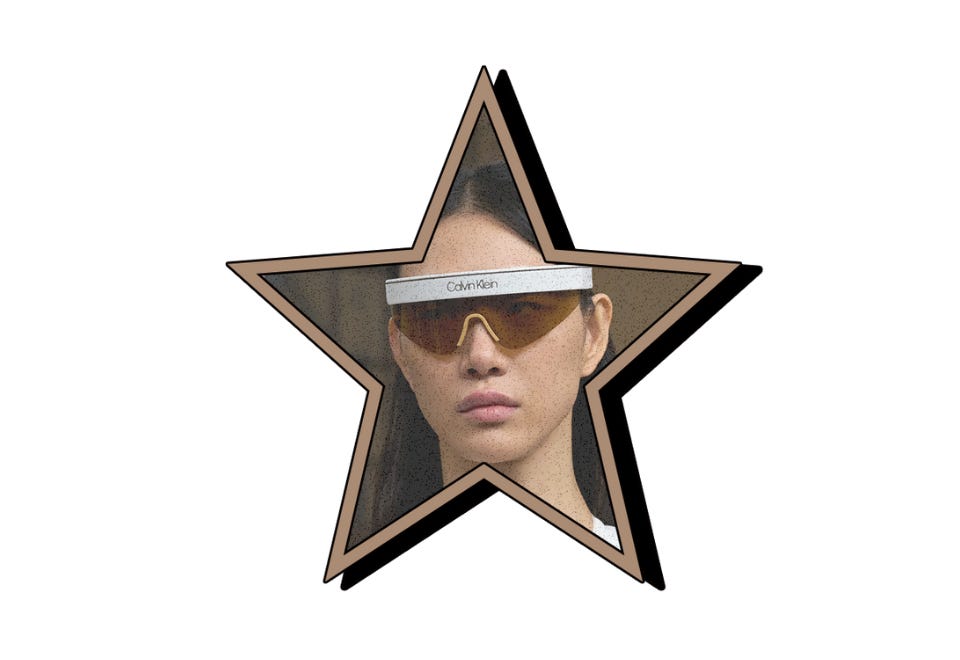
There's so much tie in here, I can't even believe it. Okay, so I'll start with mannequin skin. So mannequin skin, Women's Wear Daily reports, is the new iteration of the glass skin aesthetic. So it's like porcelain doll skin, but really mattified and like this. This term was coined by Mac, and it was created for the Weiderhoff New York Fashion Week Runway show by makeup artist Sharon Hinchcliffe. And actually, ironically, Hinchcliffe told Women's Wear Daily that the look keeps the focus on real skin, which is just, like, such a funny thing to say when the look like demands Mac Studio Fix foundation to be covering you completely.
- [58:47]
A
Titled after fake skin.
- [58:49]
B
Right. Exactly, exactly. So it's just like a really matte, textureless, like, no variation in tone, like one. One note kind of look. Yeah. We saw similar skin. I would say Calvin Klein, Grace Ling, Sandy Leung. And then also a lot of doll, like, lashes. And just what you were saying there, a lot of the doll, like, lashes were, like, the lashes were kind of glued underneath the eyeline to make the eye appear bigger.
- [59:19]
A
Very Mark. They kind of ripped Marc Jacobs off.
- [59:21]
B
Very Marc Jacobs. Very. Just like, 60s Twiggy. We saw that. Topova Loana. Is that how you say. And then. I have not heard of this designer. Bora Oxu.
- [59:34]
A
No, I'm not familiar.
- [59:35]
B
But the Bora OKSU Runway show featured something they're calling China doll hair. So the hairstylist for that Runway show. Yeah, Larry King, which is. I just keep picturing Larry King, like, being a hairstylist. I know.
- [59:51]
A
I love that.
- [59:52]
B
I know. He said the inspiration for this collection was rooted in, like, quote, classic China dolls with their porcelain faces, delicately painted lips, and beautifully curled hair. So this, like, doll mannequin automata object aesthetic is really still informing what's happening on the runways. And I think there's, like, a lot to be said, and there's a lot that has been said about this doll, like, aesthetic and how it's become popular at, like, this particularly, I would say, infantilizing moment of American history. And then also just like. And also, like, just straight up objectification, like turning the person into a doll.
- [60:34]
A
And stripping of women's rights as children who can't make decisions over our own bodies.
- [60:38]
B
It's so completely on the nose. But then I was also trying to think of this as maybe an aesthetic of lifelessness. And what does that say about how we feel about the conditions of the world that make living feel, like, sort of unbearable? Like, this might be some sort of, like, very ineffective, but protest against a.
- [61:01]
A
Life that feels lifeless or, like, almost aspirational. Like, life would be easier if I was just a doll.
- [61:07]
B
Yeah, completely.
- [61:08]
A
If I was just, like, manipulating me. I'm just a girl, right? I'm just a girl.
- [61:12]
B
I'm just a girl.
- [61:12]
A
Life is Too hard. So if I can just be this inanimate, perfect object that's like, beautiful, you know, and just serve my little function of beauty, wouldn't that be the dream? Wow. Also, as someone with automatonophobia, let me tell you, this is my life.
- [61:28]
B
I can only imagine.
- [61:30]
A
Did I tell you I think my phobia is getting worse?
- [61:34]
B
You did. And I think it's because of the beauty industry. Like, I think.
- [61:37]
A
Thank you. I'll take that. I'll take that. I'll blame them.
- [61:39]
B
Automata everywhere sort of related. Another. I guess you could call it trend, although I don't know that I would call it trend, is just like the state of skin today is.
- [61:52]
A
I just also want to say, like, I also just think it's funny for these trends are coming from cosmetic companies who did the makeup. I think that's so funny for this to say, like, Mac Cosmetics cited this trend. It's like, well, Mac Cosmetics invented.
- [62:04]
B
Made this trend. Yeah.
- [62:06]
A
Mac Cosmetics looked at what they were already doing, and they're like, how can we package this into a marketable buzzword that everyone will write about and proliferate across the Internet?
- [62:14]
B
And like, when I was looking at the Runway shows and trying to see, okay, what's happening? What's the same, it really reminded me of our little field trip to High Valley, which is this magazine archive place in New York. That's incredible. But we were looking through, like, decades of magazines, and all of them had, like, trend reports from the Runway. And it was just like every year, every season for the past 30 years has been the same. It's like dark eyeliners trending, Berry lips are trending, Side parts are trending. And yeah, it was just like, oh, okay, nothing. Nothing is ever trending. These are just basic beauty things that people have been doing for years.
- [62:51]
A
Also, like, totally a side note. But I was also struck by just how little magazines have changed. Like, just the format, like, the way things are laid out, the way they talk to women. Like, just the packaging of different ideas. It's all exactly what we're doing today. And then we're. It just. It drives me insane that we're having this conversation about, like, why are publications dying? Why are magazines. Why does no one want to make it? Well, you're doing the same thing that I'm looking at a magazine from 1972, and it's exactly the same content. So maybe start there. Maybe speak to a modern audience. Yeah. Maybe innovate a little. Change up how you do things. I don't know.
- [63:26]
B
Crazy Thought, I know, it was like, same format, same trends, like same directives. Yeah, pretty. Pretty bleak. But so anyway, something that can't necessarily be called a trend, but it's just like what skin looks like now. Also in the Women's Wear Daily article about New York Fashion Week trends was AI skin. You've been on that one, which I've been on forever. I'm going to call it simulacra skin, actually gorgeous. So there was a makeup artist that was quoted in the article who said his name was Romero Jennings. He said he created a futuristic, filtered looking complexion for Kim Shui. And he said, because of AI, everyone's obsessed with skin. And again, I didn't realize because of AI, everyone's obsessed with products that make your skin look like a screen. Like, that's not skin drawing.
- [64:14]
A
That connection is so wild. AI skin, they go hand in hand. And everybody knows it, of course.
- [64:20]
B
But yeah, we saw this, like, sort of hyper perfection across a ton of Runway shows. And, yeah, it's kind of like skin that looks like a digital simulation of skin, which people now prefer to real skin, which makes it like this hyper real esthetic or simulacra. So in the parlance of Baudrillard, I would say simulacra skin is. Is where we're at.
- [64:46]
A
It feels like almost if Instagram face come to, like, it feels like facetune come to life. Like, you can take with you completely.
- [64:55]
B
It's.
- [64:55]
A
Which is also very Kardashian, I have to say. It's like building a face that's only meant to be consumed digitally. I don't know. Very interesting. Yeah.
- [65:04]
B
And then. Okay, so sort of related to that, but also like, the complete opposite. Dirt. Dirt was all over faces on the runways.
- [65:15]
A
Oh, boy.
- [65:15]
B
So, okay, you might have to help me with pronunciation for this one. Dilara Finnicolu. Dilara Findicolu.
- [65:22]
A
Simpler than you think it would that it was.
- [65:23]
B
I know. Okay. Dara Finnicolu had the model's faces covered in patches of mud, and British Vogue explained this as, quote, to represent innocent figures breaking free from rigid societal gender norms.
- [65:37]
A
Excuse me.
- [65:38]
B
So, yeah, lots of mud on the face to represent.
- [65:40]
A
I didn't know dirt was a gender norm.
- [65:42]
B
Well, it's kind of like tomboys, I guess, you know?
- [65:44]
A
Oh, tough girls.
- [65:45]
B
Gotcha. And then at Le Brum, models, faces were pressed with, like, colored sand. Okay. And then at Demetria Petza, models, faces and bodies were brushed with clay, like drying clay. And so what it brought up for me with, like, like, was like, earth is A luxury in the age of climate change and in the age of AI.
- [66:07]
A
Yeah.
- [66:08]
B
So it's like this very earthy textural thing. But what's also kind of like, distressing to me is that we're incorporating this texture of the dirt, of the earth, of the clay, but in a way that allows for the complete elimination of human skin texture. So it's like perfect skin removing texture via cosmetic intervention and then adding dirt, clay, sand on top of this textureless skin.
- [66:32]
A
That, to me, is beauty. Like, that to me makes perfect sense because it's always about, like, well, you have to, like, eradicate it and then add it back in. Right. Like, you are naturally. Everyone kind of has a flush to their face. It's like, no, you have to block it out with foundation and then artificially put the blush back on top. Like, oh, you naturally have freckles. That's nice. Cover it with foundation, and then draw them back on. So to me, it's like, of course, you want to remove all the texture from the skin and then add a faux texture back on. On top of it. Because that's glamour, but also very funny. Well, two things that immediately made me think of is, one, a couple of years ago, I wrote this thing for InStyle Australia, which they, like, asked me for some trend predictions for the year to come. And one of them, again, I'm always kind of kidding, but. And then somehow it's, like, comes to reality. But one of them, we were talking about, like, the wet look. Like, everybody was sopping wet at the time. Like, clothes were wet, people's hair was wet, people's skin was wet. And I was talking and I was saying, like, yeah, well, water is a luxury. And in a. In a planet that's increasingly heating up, water is going to become a resource that only the wealthy have access to. So, of course, being wet is a luxury symbol because you have access to surplus moisture on a dry planet. And now here, I don't know, it's a similar thing where it's like, yeah, Earth is a luxury. Like, we are killing it. And so, like, only, yeah, it's glamorous somehow to, like, reincorporate into your outfit. And then also, it made me think of. I was talking about this recently in my newsletter, which is that my favorite part of the Venice Film Festival was, like, it rained a lot one day, and so it kind of got flooded, and all of these celebrities gowns, the bottom of them got totally soaked. And so they were walking the red carpet with these, like, dirty, wet, like, hems to These gorgeous like multi thousand dollar gowns. And I was like, that's the most interested I've been in a dress in so long. Because there something that feels real about like, it feels like they actually wore these through the street. Like it is a lived in garment.
- [68:35]
B
Yeah. Or like humanizing.
- [68:37]
A
Yes, it's very humanizing. But there's also something like to me, the red carpet. Right. Is about getting press outfit. Like expensive outfits are about getting press. And so you have to create a story. And often those celebrity stories to me are very boring. They're like, oh, like Elizabeth Hurley wore this in, in the 80s and now I'm re wearing it again. You know, you have to create a narrative because there's no reason for the media to just talk about a dress. Right. That's nudity. That's why the nudity trend take off. That's a reason to talk about the outfit. Right. That you wouldn't talk about otherwise. And so to me, you're always story crafting on a red carpet. And what is more story crafting than being like, I tromped through mud and puddles to get here. Like I overcame adversity and now here I am at this glamorous event with my destroyed gown and who cares? Like devil may care, you know?
- [69:25]
B
Yeah, it's like Kate Mossett Glastonbury for the red carpet.
- [69:28]
A
Absolutely. That's exactly it. And it was making me think of that Balenciaga show that Kanye walked in.
- [69:33]
B
Yeah.
- [69:34]
A
Where it was just a mud pit and they all the malls had to drag and their outfits were getting heavier and heavier as they walked through the mud. And Yeah, I don't. Yeah. Mud as luxury, I guess.
- [69:44]
B
Mud as luxury. It's happening. It's happening. Okay. The most delightful trend to me, please, was what I'm calling whatever happened to Baby Jane Makeup. Have you seen Whatever happened to Baby Jane?
- [69:58]
A
I have, yeah.
- [69:59]
B
I haven't seen it in years, but yeah. So there are a lot of looks that were very reminiscent of Bette Davis in that movie, which is kind of like she's an aging woman clinging to this like girlish aesthetic. Like her makeup is kind of painted on with shaky hands. So we saw like very high drawn on eyebrows, sort of like shaky, imperfect makeup. A lot of powder, a lot of powdered shadow all the way up to like the fake brow draw on. This was at Ashish and also at Batsheva. Weren't you there?
- [70:28]
A
No.
- [70:28]
B
Were you at. No. Who was at the Batsheva show? Somebody I know not there. Yeah. Okay. But so, yeah, the look was, like, kind of, like, cinematic in this sort of crumbling way. And even at Bathsheba, they drew oversized, like, cartoonish moles on the models, like, really big. And that's very Whatever happened to Baby Jane? So I kind of liked it. I kind of loved it.
- [70:54]
A
I don't remember why I was talking about this last month, but I was talking about Sunset Boulevard.
- [71:00]
B
Yes. Yeah.
- [71:01]
A
And this is also very Sunset Boulevard. I mean, because even the makeup style you're describing is very silent film star as well. And Sunset Boulevard is similarly like an aging woman clinging to her youth, like, to the point of psychosis.
- [71:17]
B
Yeah, yeah.
- [71:18]
A
Like, trying to relive her glory days of her youth and return to this time she can't return to.
- [71:23]
B
Yeah, yeah. I think it was, like, the thing that made me feel like, oh, this is fun. The most out of all of the things I saw. The other thing that I saw was statement lips at Simone Rocha. She, like, literally had the word sweet dream written on models lips in red lipstick. And it reminded me of, like, an inverted inner lip tattoo, you know, which I thought was.
- [71:49]
A
Kim Kardashian. Just flashed hers on a really. What does she have an infinity symbol on her inner lip? It's very thrilling. I know.
- [71:57]
B
Okay.
- [71:58]
A
I'm sorry.
- [71:58]
B
But, yeah, I thought this was, like, a fun evolution of the fake tattoo trend that we've talked about before.
- [72:05]
A
Interesting.
- [72:07]
B
And then another one was Pepto pink lipstick. Batsheva, Connor Ives, lots of just, like, pastel Peptoey. Like, not very sexy. Pretty, huh?
- [72:20]
A
Like, chalky.
- [72:21]
B
Yeah, yeah. And this is just like, my own broken brain talking, but it feels like the beauty evolution of, like, hot girls have ibs. It's like, hot girls have. You know, I love it mirrored all over the face.
- [72:34]
A
I see that. I'm sorry. I'm still thinking about. I'm still thinking about the Baby Jane makeup. I don't know. I was just thinking when we were talking about, like, these women who want to return to girlishness or silent film times. And during the time, I was also just thinking about, like, us as a society, like, as we're going into this, like, new technological age that seems unstoppable, and everyone's kind of like, hey, we don't want this. You know what I mean? Like, we're sliding into this AI future that everyone seems, like, really scared and hesitant of, like, with legitimate concerns that no one's addressing or. Or dealing with, and. And all of us trying to kind of be like, whoa, like, pump the brakes and, like, go back to this Time that actually doesn't exist anymore. Like, Like, AI is already fully embedded in our society. It's in our Google search. Like, we're literally not going to get rid of it. We're not going to go back. But all of us are kind of trying to, like, even us launching a book club, right? Like, is kind of trying to, like, hearken back to a. A technology that people are. People aren't reading like, that we're rapidly moving away from. I don't know. I'm sorry, I'll let it go now.
- [73:37]
B
No, I mean, it even reminds me, like, as you' about that of just the big resurgence of, like, early 2000s Y2K aesthetics. Like, I think that was a time when the Internet felt fun and freeing and, like, playful in a way that it doesn't necessarily feel now. And that feels like an idealized time of, like, we can have this technology and it can be, like, cool or at least feel a little bit better or less all consuming. Of course, there are plenty of issues that technology created in that time, but totally.
- [74:06]
A
But also a time of more like physical media and more like people being the creators of that physical media, perhaps being, like, properly paid for their work. I'm thinking about, like, streaming music and stuff. You know what I mean? A little. A touch before pirating was the norm and streaming TV was the norm and kind of everything that starts to corrupt the Internet the way we think about it today. I don't know. Interesting.
- [74:31]
B
Totally. And then the last trend that I wanted to bring up, which reminded me of you and reminded me of me, honestly, was reminded me of us. Reminded me of us was the Calvin Klein sunglasses, where the top of the sunglasses is like a recreation of the underwear band.
- [74:50]
A
When you showed this to me, I truly lost my mind in public. I had not seen it before. Jess brought up a photo. I can't believe these are real. They're so funny.
- [74:58]
B
They're so funny. And it really strikes me as like, this perfect mashup of what you've been talking about with, like, Diaper Chicago. Like, everyone wearing diapers. Like, this is like underwear on your head.
- [75:08]
A
And also, I was literally just thinking, you're a butthead.
- [75:11]
B
You're a butt head.
- [75:12]
A
You're literally a butthead. You're making yourself a butthead.
- [75:15]
B
I love that. Yes.
- [75:17]
A
Because where does that. Where your face is. Where the cheeks would go.
- [75:21]
B
Oh, my gosh. Cheeks on cheeks.
- [75:24]
A
Cheeks on cheeks. Bodies on bodies.
- [75:27]
B
Yes, cheeks on cheeks, bodies on bodies. And, you know, a little bit of a nod to the. The thriving butthole beauty space. We've got so many new products launching to take care of the butthole constantly.
- [75:40]
A
But when are we going to see the butthole? You know what I mean? Like, we're putting. Investing all of this time and money into beautifying our buttholes. But I'm not seeing any buttholes out there. And we already saw the vagina. Yeah, I'm just saying. Let's turn it around. I shouldn't have said that, because now.
- [75:55]
B
That I said that, now it's going to manifest.
- [75:57]
A
Going to see their butthole on the red carpet. I'm so sorry, everyone. But I do think it would be funny.
- [76:02]
B
Personally, I'm excited.
- [76:03]
A
Me too.
- [76:04]
B
But yeah, that is my little fashion month so far. Beauty recap.
- [76:09]
A
Love it.
- [76:10]
B
Should we do the mess of the month?
- [76:12]
A
Let's do it.
- [76:14]
B
Tell me. Tell me yours.
- [76:16]
A
Well, okay, so my mess of the month came from a reader at our book club party. And this did technically take place in July, but it. It's a photo that went viral on social media in July. But it was such a good suggestion, I had to just take it. Thank you to that reader. I completely forget your name. I'm so sorry. But their suggestion was the Labubu on Karl Marx's grave is the mess of the month. And I think that's gorgeous. I love that. I think that's so, so funny.
- [76:43]
B
It's something.
- [76:44]
A
It's definitely something. For those that don't know, Karl Marx is buried in London's Highgate Cemetery. And yeah, someone took a photo of his grave and shared it on Twitter, I believe. And someone had left. So people leave, you know, at all famous graves, people leave little, like, tokens and mementos and whatever. So there were, like, flowers, there were letters. And then amidst all of that, there was a Lou. Boo Boo. And people just pointed out that, like, there is probably nothing on this planet Karl Marx would have hated more than a Labubu and everything about it and the phenomenon around it. And I think that's a pretty good assessment. Someone was pondering if this is picture peak, if a Labubu is peak commodity fetishism.
- [77:25]
B
Yeah.
- [77:25]
A
And I don't know the answer to that, but I think it's an interesting question.
- [77:28]
B
Pretty close.
- [77:28]
A
Yeah, it's pretty close. I just want to say for people who maybe don't, aren't brushed up on their commodity fetishism, basically capitalism creates this situation where it presents the economic value of an object as inherent to the commodity itself. Like a Birkin is worth $20,000 because it's a Birkin instead of like a Birkin is worth $20,000 because the price of leather is this. The price of labor is this. Someone worked on it for X amount of hours. You know, like it obfuscates all of the real humanity and real labor invested into the creation of that product. And that's an intentional. Capitalism does that intentionally to divorce labor from consumption.
- [78:14]
B
Yeah, yes.
- [78:16]
A
And yeah, Labubu is pretty fucking divorced from labor. What you were paying for Labubu is definitely not intrinsic.
- [78:25]
B
What are people paying for Labubus? I don't even know. Are these expensive?
- [78:29]
A
Well, they can be. They certainly can be. I think in the resale market you're looking at like a hundred bucks. But I think the normal price, I mean, well, we're also. Now we're in the world of lefufu, if you're familiar.
- [78:41]
B
I am familiar with a lefoufu. Yes. Yes.
- [78:44]
A
For those who aren't, it's just a fake Labubu. But in a world of lefufuu, you could get them for like 10 bucks. You could get a lefoufu for 10, I would say. I think the normal price that you pay at like a pop mart is 20 or 30 bucks, which is still very high for a keychain of a stuffed animal, I would say. And definitely not what it costs to make, I'll tell you that. But yeah, the resale market can be a hundred. And then there was this lady who went viral on TikTok. Maybe you saw her, she. She promptly got canceled. But she had a bit that she was doing where she was like, this is a. I can't remember the exact price. She's saying it was like a hundred thousand or like a million dollar Labubu because she claimed that it was like gold plated. She had just like spray painted a Labubu gold. And she was claiming that she owns the one and only limited edition solid gold million dollar Labubu anyway. So it could be any price. It can be any price you want it to be. I guess is my point.
- [79:37]
B
Why get canceled for that?
- [79:38]
A
That's so funny. And okay, she wasn't canceled for the gold Labubu. She was canceled for the blackface Labubu she made after it.
- [79:45]
B
Oh, I saw that. That. Okay.
- [79:48]
A
She didn't realize it was offensive. She was, she wanted it to look like KSI. For people who don't know who KSI is, he's like a massive YouTuber from the UK and like aspiring, I'm gonna say aspiring rapper. He is really rapping. But it's very unfortunate. He's kind of.
- [80:05]
B
He.
- [80:06]
A
He partnered with Logan Paul. So I kind of think of him as Logan Paul, the British Logan Paul in my brain. Anyway, her plan, I don't. I didn't mean to get into this lady, but her plan, it's okay. Her plan was that she was gonna make after. Because you can only run the million dollar Labubu gimmick for so long right? Before it kind of loses esteem. So her next gimmick was gonna be she was gonna keep making different Labubus that, like, looked like different famous British figures. And for some reason, she started with KSI and she made like, a very racist blackface Labubu. And everyone's like, you did not need to do that to, like, make it look like KSI.
- [80:43]
B
But unnecessary.
- [80:45]
A
Very unnecessary. Anyway, that's why she got canceled. Not for the gold Labubu that everyone loved that there's nothing cancelable about a million dollar Labubu.
- [80:53]
B
Okay. Okay, good.
- [80:54]
A
Karl Marx would love that Labubu.
- [80:56]
B
I think you are right, though. That Labubu next has to make a Marx Labubu.
- [81:03]
A
It kind of feels inevitable at this point.
- [81:05]
B
Right?
- [81:05]
A
Like, that's gotta be what we're cruising for.
- [81:08]
B
Yeah. My mess of the month is ear seeding for cortisol face. Have you seen this?
- [81:16]
A
No. I've seen each separately, but I haven't. I've seen each trend separately, but I haven't seen them combined into one monster event.
- [81:23]
B
So my. My mess is not your seeding for cortisol phase itself, but rather the. The reaction to this article. It was a Harper's Bazaar article that asked, like, is ear seeding the solution to cortisol face?
- [81:37]
A
Okay.
- [81:38]
B
And for some reason, this headline and image together went viral. It was like on Twitter, On Instagram, on TikTok, people were like, this is insane. Beauty culture has. Is insane. Which, like, yes, it is.
- [81:52]
A
Yeah, of course.
- [81:53]
B
Yeah.
- [81:54]
A
Why now?
- [81:54]
B
Of course. But I'm like, why did ear seeding for cortisol fa. Why is that? What triggered this outpouring? Like, I'd like to see a little commotion for like 35 year old facelifts or just consumerism in general. Like, some of the actually harmful aesthetics and products that are out there. Like, I know ear seeding for cortisol face sounds silly, but if you break it down, ear seeding is like, comes from traditional Chinese medicine. It's just acupressure points in the ear to potentially, like, soothe other ailments throughout the body. And cortisol face is just like, cortisol is a stress hormone. If you have high levels of your stress hormone, which a lot of us do, there can be physical signs that your stress is.
- [82:40]
A
It's also like a very trendy self diagnosis thing at the moment.
- [82:43]
B
Yes.
- [82:44]
A
On TikTok over the place. But yeah, I was thinking, I was like ear seating is ultimately just like putting a sticker on your ear. So like all the harmful things beauty can do, like this seems like kind of one of the more benign. Like even if it did nothing, isn't it kind of benign to just put a sticker on your ear?
- [82:59]
B
Yeah. Yes. It's like, it's so benign. And I know it sounds silly if you don't know, don't know what those terms mean, but there are so many like worse things to get worked up about in the beauty industry that I don't understand why people are really coming for this when actually like almost no products are involved in what ear seeding for cortisol face would be. It would be like touching a pressure point in your ear to like calm your parasympathetic nervous system, which is fine, fine.
- [83:32]
A
Like I don't know. I noticed this often too with like celebrity stuff and celebrity scandals and stuff and like what people choose to like get really worked up over and what they choose to just like let them pass them by. And often I don't know, my thought about it in the celebrity space and I think it kind of applies here, is that like, like what we go after culturally is like low hanging fruit that ultimately like doesn't affect anything and doesn't actually require us to change anything about our thinking or our consumptive patterns or how we're living our life. But it allows us to feel this rightful moral outrage in an industry for the wrong reasons.
- [84:08]
B
Yes.
- [84:08]
A
You know what I mean? So you get to rage about stickers and cortisol phase and how media advertises things to you that are unnecessary without actually addressing the real problem. Yeah, of that.
- [84:20]
B
That's completely what it is. And also so much of that sort of outrage I think is often directed at like healing techniques that are considered to be woo woo but are actually like centuries old. Come from like eastern medicine. Like ear seeding has roots in traditional Chinese medicine. I'm also thinking of people who get really worked up about like gua sha and they're like, you're so stupid to rub a stone on your face and think that will help with anything. And it's like, okay, well this is actually something that's been used for centuries for like Health purposes beyond aesthetic purposes. I remember I interviewed a plastic surgeon once who was, like, really going after facial massage tools. And he was like, these things are, like, $60 a piece. You're gonna pay $60 for the stone. I was like, sir, people give you $100,000 for a facelift.
- [85:09]
A
Like, and people pay $60 for, like, a cleanser. You know what I mean? Like what?
- [85:13]
B
So, like, it's fine. There are. There are bigger things to get worked up about, and I think eager seating is fine.
- [85:20]
A
Yeah. But again, it's like you don't hear the same conversation happening about a serum that promises you mental health benefits. You know what I mean?
- [85:28]
B
Yeah. Let's start a little more commotion, right?
- [85:32]
A
Seems a little more nefarious to me than just putting a sticker on your boat. I don't know.
- [85:36]
B
Yeah, I agree. So that's. That's my mess of the month.
- [85:38]
A
Fantastic. We did it again.
- [85:41]
B
We've done it. If you listened this far and you liked or watched or watched. Oh, my gosh. Yeah. Sorry. I moved around so much. The other thing I will say is I fell down the stairs, like, horribly yesterday. Like, cement stairs.
- [85:54]
A
Oh, no.
- [85:55]
B
My tailbone is, like, bruised. I can't sit comfortably, so I've been, like, fidgeting the whole time. I'll try to sit more still for an extra floor.
- [86:04]
A
I can't promise that. I sit on a hard wooden stool and we get to a certain point where I'm just going to move around. I don't.
- [86:09]
B
Yeah.
- [86:09]
A
Sorry.
- [86:12]
B
But, yeah, thanks for watching. Thanks for listening. If you liked it, leave a review on Apple Podcasts or wherever, and we will see you next month for the next episode of Mess World.
- [86:23]
A
Hell, yeah. Thanks for listening.
- [86:25]
B
Bye.
- [86:26]
A
Bye.