← The Rise and Fall of Diddy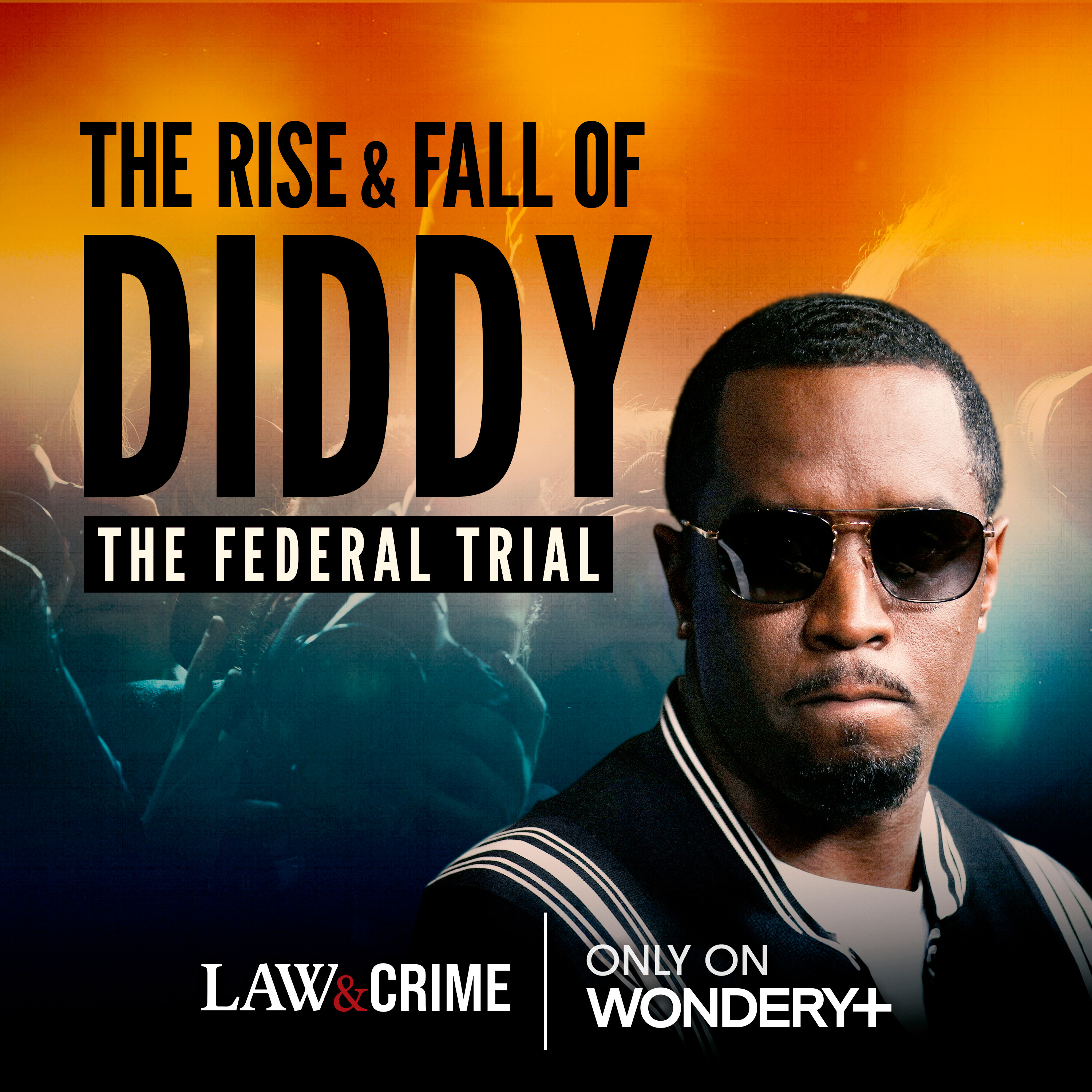
Loading summary
Transcript55 lines
- [00:01]
Jesse Weber
You're listening to a long crime series available exclusively on Wondery. To listen to the remaining episodes, join wondery and enjoy ad free listening to over 50,000 episodes, including more thrilling long crime series like new episodes of Karen, the Retrial and Sidebar with Jesse Weber. Join Wondery in the Wondery app, Spotify.
- [00:21]
Heather Barnhart
Or Apple Podcasts this podcast is a law and crime production. The content may include graphic descriptions of alleged sexual acts, violence, abuse and drug use. These topics may be disturbing or triggering for some listeners. Listener discretion is strongly advised. The allegations discussed are based on court documents, public testimony and media reporting. While normally we wouldn't spoil the ending of a story, the headlines were nearly impossible to ignore. On July 2, 2025, a jury convicted Sean Combs of two counts of transportation to engage in prostitution, but acquitted him of the RA, racketeering and sex trafficking charges.
- [01:04]
Jesse Weber
In the spring of 2024, federal agents raided Sean Combs homes in Los Angeles and Miami. What they found made headlines an arsenal of illegal weapons, piles of drugs, and suitcases stuffed with bottles of baby oil. But the headlines weren't the point. The evidence was. And when the case finally went to trial, two men took center stage to explain what those raids uncovered. Homeland Security agent Gerard Gannon, who sees the evidence, and Joseph Circiello, the agent tasked with turning that evidence into a story the jury could follow. Because finding guns and drugs was one thing, proving how and by whom they were used, that was something else entirely. I'm Jesse Weber, and this is the rise and fall of Diddy, the federal trial. Homeland Security agent Gerard Gannon wasn't there to explain theories or argue what the evidence meant. His role was simpler and in some ways, more powerful. He was the one who opened the doors to Combs palatial estate, the one who could tell the jury exactly where each piece of evidence came from, how it was collected, and what condition it was in once it left Diddy's Miami home on March 24, 2024. When Gannon took the stand, he walked the jury through it all, room by room. First, the drugs in a Gucci bag. Agents found cocaine, ketamine, mdma, Xanax and methamphetamine. In the bathroom, a box engraved with the word puffy held MDMA capsules and hallucinogenic mushrooms. Then came the weapons. A loaded.45 caliber handgun inside what Gannon called the guard shack, a guest house on the property. And upstairs in the master closet, two dismantled AR15 rifles with their serial numbers removed. The rest of the hall blurred the line between bizarre and incriminating. 18 pairs of platform heels, a sex toy, 25 bottles of baby oil, 31 bottles of lubricant. And tucked inside a pair of Balenciaga boots, hidden cell phones. To understand how that kind of discovery plays out inside a federal case, we turn to Colin Schmidt, a former FBI agent whose experience in criminal investigations runs the gamut.
- [03:40]
Colin Schmidt
The first step would be determine if they're legally there. So somebody has a gun collection, so to speak. So this certainly wasn't the case then. The second step is you have weapons with shaved off serial numbers, and then you have weaponry that is, frankly, weapons of war.
- [03:57]
Jesse Weber
This wasn't just one gun stashed in a drawer. It was an arsenal. And it was discovered in the same homes where witnesses said Combs hosted some of his so called freak offs. The prosecution wanted the jury to see a connection.
- [04:13]
Colin Schmidt
What they wanted to do is present all these firearms and all these drugs to set the setting from their perspective, or their hypothesis was that he was using all these freak offs or whatever as a way to extort or intimidate people to participate.
- [04:28]
Jesse Weber
And it wasn't just the weapons themselves. It was who had access to them. Combs wasn't known for surrounding himself with professional security teams. Instead, Gannon testified, the people inside those homes were friends, employees, and hangers on.
- [04:44]
Colin Schmidt
Whoever was in there had access to so many weapons that were unnecessary. He didn't need any of that. And he had the money to hire his own armed professional security, which appears that wasn't the case. He had his friends and his entourage doing his security.
- [05:00]
Jesse Weber
The government alleges that the arsenal was wasn't just dangerous. It was a potential tool of control, a backdrop to the claims of coercion, intimidation, and trafficking.
- [05:11]
Colin Schmidt
What the weapons do is gives them context for when they're questioning the witnesses. Because the bottom line is in a case like this, you have to have eyewitnesses or his own statements, whether it be through recorded statements on a telephone call or recorded, you know, video like they found at the hotel, something along those lines. But those weapons are basically what would prompt investigators to ask questions about the weapons. So these witnesses will give greater context and then perhaps weave those weapons possession of weapons into the RICO charges.
- [05:44]
Jesse Weber
But Gannon could only show what was found, not who held the guns or why. That question would haunt the prosecution's case from start to finish. The weapons only told part of the story for the prosecution. The copious amount of illegal drugs and controlled substances wasn't a case of a party simply getting out of hand, they said. This was about control itself.
- [06:11]
Colin Schmidt
Those are all party drugs. So the drugs were all indicative of what their hypothesis or their narrative was. It was just a gigantic orgy of craziness, and these drugs were there to fuel that behavior.
- [06:24]
Jesse Weber
Gannon's inventory filled out the world witnesses had described one where sex, drugs, and power mixed in ways that blurred the line between consent and coercion. But proving those drugs were tools of exploitation and not just a billionaire's indulgence would take more than a list of items seized in a raid.
- [06:44]
Colin Schmidt
The law possession for intent to distribute. They have to tie them directly to him.
- [06:49]
Jesse Weber
And with so many people coming and going, the question looming over Gannon's testimony wasn't just what they found. It was who it all belonged to.
- [07:00]
Colin Schmidt
That was the big problem, as he had literally hundreds of people streaming through these properties at all times.
- [07:07]
Jesse Weber
Inside the courtroom, the government argued these supplies weren't random. They fit a pattern described by witnesses, a pattern of highly orchestrated sexual encounters fueled by drugs and intimidation. The government needed to show that this wasn't just a permissive atmosphere, that the drugs and the baby oil weren't props at a party. They were part of a system designed to exploit. But proving that is a high bar under the law. It isn't enough to suggest the environment allowed for abuse.
- [07:40]
Colin Schmidt
You still have to show that person had care and control over that contraband.
- [07:46]
Jesse Weber
And in the world, Sean Combs built with an entourage, staff and guests coming and going by the hundreds. That was the prosecution's most difficult hurdle, because the defense didn't have to deny the evidence was there. They only had to suggest that Combs wasn't the one controlling it. And when the evidence gets messy, so does the case.
- [08:08]
Colin Schmidt
They had to have identified more people that were involved in this conspiracy. And frankly, they had just him on trial. Nobody else has been charged under this case. So I think the jury was a little bit overwhelmed with all of this salacious evidence. And they just got back down to, really, the charging documents and what he was clearly guilty of beyond a reasonable doubt.
- [08:31]
Jesse Weber
The weapons and drugs set the stage. But as the trial wore on, it became clear physical evidence alone wouldn't be enough.
- [08:40]
Colin Schmidt
They couldn't show Diddy was the one who controlled all this contraband.
- [08:45]
Jesse Weber
That challenge would define the trial, and it's what made the next phase of the government's case critical, because after Gannon came the witness who tried to do what Gannon couldn't pull it all together. By the time Homeland Security agent Joseph Cercielo took the standard, the jury Already knew about the raids. But Seriello wasn't there to talk about what Gannon and his team seized. He was there to talk about what they saw. Seriello's job was to sift through the data recovered from phones, computers, hard drives, Piecing together a timeline prosecutors claim confirmed there was nothing random about how these encounters happened and nothing accidental about who was involved. To prove it, Serciello presented a chart. 44 entries spanning from May 2021 to August 2024, mapping out each encounter, payment and travel record. One pattern jumped out almost immediately after the Casaventura lawsuit went public. The nature of these encounters shifted from hotel suites to private residences. But the encounters in the hotels left damage in their wake, Serciello found. In January 2023, a Los Angeles hotel billed nearly $4,000 for bodily fluid damage. Then in April, another mess. $1,800 for carpets and linen soaked in baby oil, the same kind Gannon found in the Miami home. This was just the beginning of Serciello's cryptic discoveries Dealing with cash in financial records. He found a $5,000 withdrawal labeled PD Personal London. And another for $3,500 marked his guest. This one was dated just days after an assault Jane had testified to. Then came the text messages, Some dating back as far as 2017. The prosecution zeroed in on an exchange between Diddy and cassie that year. Cassie wrote, you beat my head in, treat me like a hooker. Diddy replied, any other woman would have been happy. Beyond the individual pieces, Serciello's role was about patterns. A pattern of apparent drug use arranged, supplied, and widely used at Diddy's properties. Patterns of payments, cash often withdrawn around the same time alleged assaults took place. Patterns of behavior. Like how the freakoff venue shifted after public fallout from Cassie's lawsuit and ultimately a pattern of stories. Witness testimony that prosecutors argued matched the digital evidence Serciello pulled from see's devices. Finding the data was only the start interpreting it. Making sense of years worth of digital noise took time, and no one understands that better than Heather barnhart, the senior director of forensic research at celebrate, who's worked on some of the most complex digital investigations in the country.
- [11:54]
Heather Barnhart
Acquisition by itself, depending on how big a phone is, could take hours or even a day. We have something called the u fed. It's the universal forensic extraction device. So it's exactly what it sounds like. If you have 4U feds, you could do 4 phones at the same time. But if you're an organization that only has one, you're doing a lineup of these devices. And then typically, as they're finished, you would feed it into the examiner, who would triage it and get something immediately to the investigator. But all of this takes time to extract, to process, to then triage and press on. So you could say one device could easily take three days from beginning to, all right, I'm sitting and I'm looking at something and trying to make sense of data.
- [12:38]
Jesse Weber
The process is painstaking and critical.
- [12:41]
Heather Barnhart
If you get proper collection, you can do amazing analysis. And it just requires lawful access.
- [12:48]
Jesse Weber
And since this is the feds we're talking about, they had exactly what was needed. Once they had the data, the real work began.
- [12:56]
Heather Barnhart
I always tell people in forensic investigations, we're just looking for a thread, a loose thread. And once you find that thread, you can unravel everything.
- [13:05]
Jesse Weber
Finding the thread is one thing, pulling it all the way through, that's something else. Because the case wasn't just about isolated messages or random videos, the government's theory was bigger. Behind the chaotic world of combs, parties and freak offs, there was a coordinated system and it was Seriello's job to map it.
- [13:27]
Heather Barnhart
Imagine a web of communication. So a spiderweb looking thing that would pinpoint how people even communicate with arrows on who the link in between each individual is. You can also look at a timeline that shows locations where people were at the same time, chat messages, where it even detects the tone in these messages. Just to like help you get a clue.
- [13:51]
Jesse Weber
Serciello took every text, call, log, phone, flight record and payment receipt and plotted them on a timeline, date by date, hour by hour. It wasn't just data, it was a roadmap.
- [14:05]
Heather Barnhart
The level of effort that goes into presenting that type of evidence is astounding. Fantastic forensics there.
- [14:12]
Jesse Weber
But even the best forensic map doesn't tell you everything, especially in a case where who was there and who was in charge were two very different questions. The jury wouldn't only have to rely on black and white data to evaluate the case. Remember, the feds also found videos, lots of them. Woven through the text and payment records were graphic recordings of the so called freak offs. But if prosecutors wanted the jury to see the videos as more than just a collection of salacious encounters, they need to show exactly where, when and how they happened. And that meant digging into the data hidden inside every recording.
- [14:59]
Heather Barnhart
If it came from a cell phone and it's recorded, there are so many stamps in the metadata of the file saying if it was recorded with three cameras on the back of the phone or front facing camera, if flash was used, the location on where it was recorded, the iOS version or Android version. So all that detail is so helpful to forensics. But if we're looking at CCTV or any kind of recorded video like that, that is where other pieces of the puzzle have to come into play.
- [15:34]
Jesse Weber
Verifying when and where the videos were recorded was only the starting point. The real focus was on how they revealed a broader pattern, one prosecutors claimed was anything but isolated. And that meant connecting footage captured from different devices and perspectives, piecing together overlapping clips of the same scene.
- [15:55]
Heather Barnhart
The level of effort is huge to do an investigation like this, and it's a lot of time sitting behind a keyboard. So if you have forensic software that can help you pinpoint a specific face. So say you're looking for a person or a victim or someone that's involved, and it could just get you to that point in the video, that's really helpful. And there's a lot of investigative software out there that will do that. But without that, if you wanted to prove different angles or different Personas that were in a room or different devices to put a person at the event or the freak off, it's a lot of work, and it's a lot of manual review by the investigator and examiner.
- [16:31]
Jesse Weber
And once the forensic analysis was complete, Serciello's findings were turned over to the investigators leading the case, Typically the examiner.
- [16:40]
Heather Barnhart
Which is the role I have always identified as, is the person that digs deeply and presents you data. If you're the investigator and says, here you go, this is what the data shows, and then it's your job as the investigator to tap into the mindset of the victims, of the perpetrators, and then go back to the examiner and say, I think that this person is a victim, could you look for these things?
- [17:05]
Jesse Weber
Because even the clearest video, even data that checked every forensic box, still required context. And that's where the financial records came in, the texts, the travel logs, the footage, all key components showcasing how these events unfolded. But the money. The money could potentially show how they were orchestrated. Wire transfers, cash app payments, Venmo receipts, hotel charges, and flight bookings. Making sense of that web of payments isn't simple, especially when you're trying to prove the difference between personal vice and an alleged criminal enterprise.
- [17:45]
Heather Barnhart
If you think back to that web of communications, if it's a simple transaction, it's going to go from one person to the next. And maybe you're using Cash App or Venmo or something small or saying, I'll pay you some cash. But when it's a major Enterprise. You are going to see keywords that are being used. You're going to see major transactions. You will see really detailed communications because there's so many moving parts.
- [18:08]
Jesse Weber
Serciello didn't show the jury a simple spreadsheet of numbers. He mapped the payments against texts, travel records, and event timelines. And when those payments lined up with the videos in the messages, prosecutors argued it wasn't a coincidence. But turning a trail of transactions into proof of organized crime requires more than raw data.
- [18:32]
Heather Barnhart
You go back to the examiner and say, this is the stuff I found. Go validate it. Because obviously, software is doing its best job, but you need a really smart, trained person behind a keyboard to say, this is definitely where this was what occurred. So nothing's misconstrued.
- [18:49]
Jesse Weber
That's how Serciello tried to thread it all together, showing how money moved alongside people, how bookings lined up with flights, and how payments linked back to the names and devices already appearing in his investigation. But just like the arsenal, the drugs and the videos, the money raised the same question. Who was actually behind them?
- [19:12]
Colin Schmidt
What ends up happening is this agent. He ends up having to become the storyteller by piecing this whole thing together bit by bit and trying to, you know, weave a narrative that is prosecutable for them. And it's amazing how much he did, and it's amazingly hard to do.
- [19:31]
Jesse Weber
Serciello traced the paths of money, messages and people. He laid out the pattern of who showed up, who got paid, and when and where it all happened.
- [19:41]
Heather Barnhart
If you do this properly, you should be able to see a link to one person or certain key people that are involved in this type of crime.
- [19:50]
Jesse Weber
But was the pattern enough? That's exactly where the defense pressed. They didn't have to explain away the evidence. They only had to argue that Cercielo's web of data, even if accurate, didn't tie directly back to Sean Combs.
- [20:07]
Colin Schmidt
I think the Diddy case is a good lesson. That simple is better. That's the bottom line.
- [20:13]
Jesse Weber
Because in a case this sprawling, with this many players, complexity may have been the prosecution's greatest weakness. On the next episode of the Rise and Fall of the Federal Trial. He was the hotel security guard unwittingly pulled into Combs orbit.
- [20:31]
Heather Barnhart
He told the jury that Sean Combs said that this video could ruin his career.
- [20:36]
Jesse Weber
She was the one making sure it never came to light.
- [20:39]
Heather Barnhart
She always helped clean up his mess.
- [20:41]
Jesse Weber
And at the center of it all, a man who wasn't taking any chances.
- [20:45]
Heather Barnhart
Sean Combs did a lot to make sure that this was untraceable back to.
- [20:49]
Jesse Weber
Him, the testimony of Eddie Garcia and an alleged cover up hiding in plain sight. This has been a long crime production. I'm your host Jesse Weber. Our executive producer is Jessica Lowther. Our writer and producer is Cooper Mahl. Our associate producer is Tess Jagger Wells. Edit and sound design by Anna Maclean Guest booking by Diane Kay and Alyssa Fisher Additional production support from Giuliana Battaglia and Stephanie Doucet Legal review by Elizabeth Voulai Key art designed by Shawn Panzera and special thanks to Elizabeth Milner for her in depth reporting on this case. Follow Law on the Rise and Fall of Diddy the Federal Trial on the Wondery app. You can listen to more episodes exclusively and ad free right now on Wondery. Join Wondery in the Wondery app, Spotify or Apple Podcasts and get ad free access to more thrilling law and crime series like new episodes of the Retrial and Sidebar with Jesse Weber. Start your free trial today.