← The Ronan Levy Podcast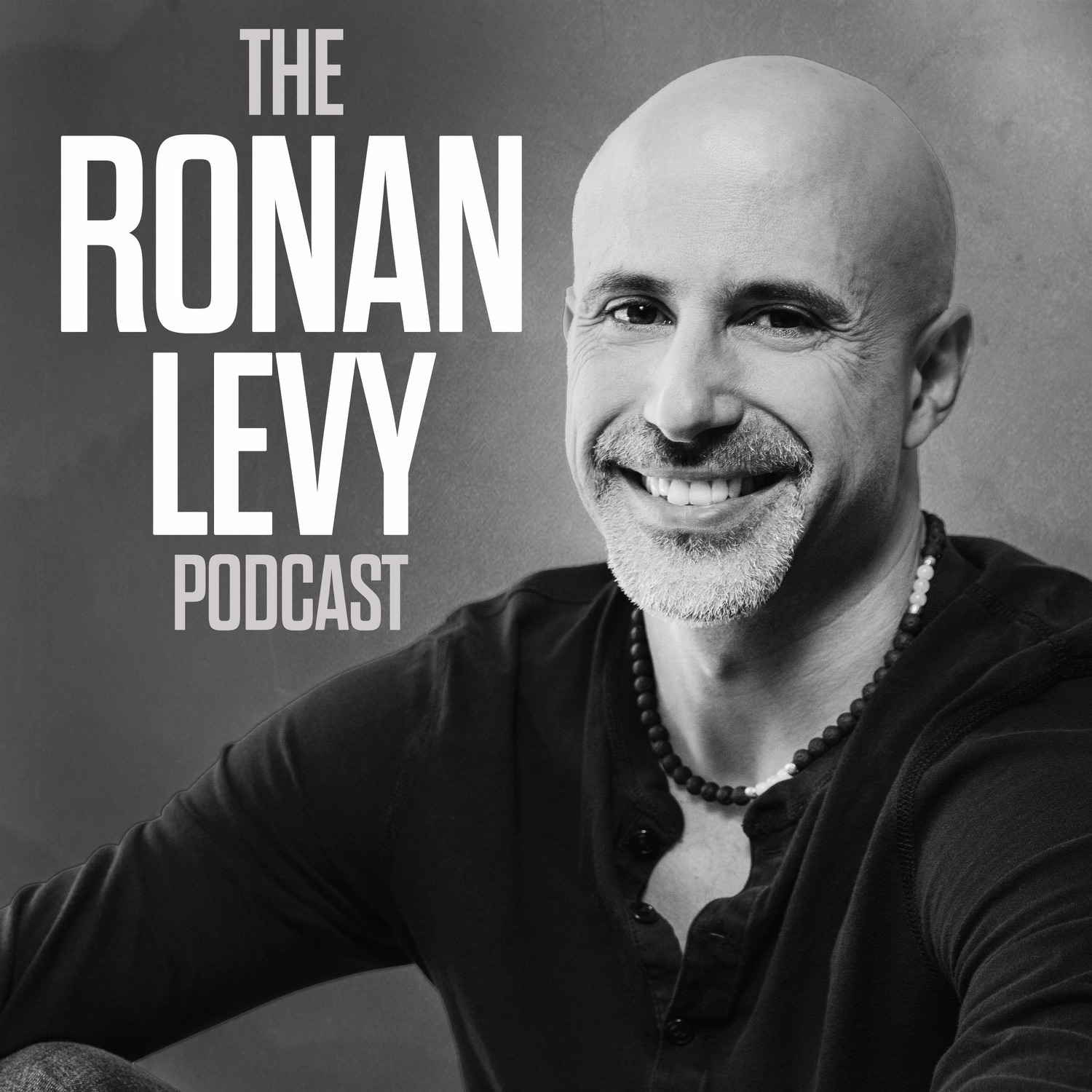
The Ronan Levy Podcast
Dr. Jared Pelo: An Honest Conversation About Longevity
01:13:09
Dr. Jared Pelo is the Chief Medical Officer at Bionic Health, a pioneering health startup that integrates biomarker testing, AI, and advanced technology to deliver personalized, precision, and preventative medical care. With a background as an emer...
Loading summary
Transcript96 lines
- [00:00]
Dr. Jared Pello
The fix. It's there are these hard problems that will not be fixed in our lifetime and these are those problems like we won't fix affordability. There are so many things we won't fix. If I had a magic WAND in the U.S. i know that I wouldn't make a lot of people happy, but I'd 100% move to a one payer system and get rid of the insurance industry.
- [00:25]
Ronan Levy
Hey everyone, Ronan here. If you've been listening to the podcast for a while, you'll notice that my interests have evolved from psychedelics to grow and spirituality, to longevity to masculinity, to, well, just about anything that I find curious. It's why I eventually gave up on having a woody name for the podcast and just went with the Ronan Levy podcast. But every once in a while you stumble upon someone that can speak to all of those things. And that's exactly what happened with today's guest. His name is Dr. Jared Pello. Jared is the Chief medical officer of Bionic Health, a health startup that combines BioMarker testing with AI and other technologies to make personalized precision preventative medicine available to a wider audience. Before Bionic, Jared had a number of health related startups and also was an emergency medicine physician. But unlike other doctors in the longevity space or on the podcast circuit, like Dr. Casey Means, who step way out of their lanes to offer some provocative and often questionable medical advice, what you'll hear in Jared is a remarkably sensible, open minded and thoughtful doctor doing some really cool shit and offering some really sage advice. Enjoy the conversation. So tell us about your journey into medicine to start and then we'll go from there.
- [01:36]
Dr. Jared Pello
Yeah, you know, I, when I was growing up, I did not think I wanted to be a doctor. I, I love sports. I kind of thought I'd be like something like a trainer or a coach or okay, something like that. But grew up in a very kind of religious, scrupulous lifestyle. So. Grew up in Utah, raised in the LDS Church. I went on a mission right after high school.
- [02:02]
Ronan Levy
Okay.
- [02:03]
Dr. Jared Pello
And as part of that I, I did some work in hospitals in Argentina and fell in love with like the idea of, you know, using medicine to help people. And so came back from that time, told my dad I was going to be a doctor. He laughed at me. I was a terrible high school student. I was like barely passing some classes and, but I was, I, I finally had something I cared about that I wanted to do and so went through medical school and you know, several things kind of happened to me then and I'll I'll kind of share this outside the scope of medicine a little bit, but during, during medical school, during the early years of my marriage, I kind of started doing things that were maladaptive for me, so doing things that were harming myself, harming my relationships. And medical school and the training of medicine is brutal. Residency is brutal. It's very dehumanizing. I think it's better than it was when I went through it. And I think before I went through it is even worse. And so you've got this hierarchical situation where people are belittling you, yelling at you, like treating you like garbage. And so I continued to kind of do these maladaptive things in my life and such as.
- [03:30]
Ronan Levy
Sorry, before we go on, like, if you don't mind sharing what maladaptive things?
- [03:34]
Dr. Jared Pello
Yeah, you know, I was, I would say I was workaholic. I definitely put my work in front of my own wellbeing, the well being of those I loved. And then the other maladaptive things I may not share as freely because they're not just my story. But there came a point in my life and I'd had a ton of success. So I had become an emergency medicine physician. I had started a company, sold the company, and it was right after I sold that company that I decided like, I couldn't keep living the way that I was living. And so decided that I was going to engage in therapy, engage in trying to change. And some of the things that I had been doing were very harmful to other people. And so starting to talk to them and let them know that I wanted to change. And what was interesting to me is on the outside you would have never known that I was changing. Like, I was always like a nice person. And as a physician, I always was trying to do my best. And even those around me didn't really know everything that I had been going through that I'd been hiding, that I've been suppressing so much of the, so much of my trauma over those years in. And I'll use trauma loosely, knowing that there are small T trauma and big cheat trauma. And I don't want to belittle anybody else's trauma. But as part of that, I found a great therapist who, you know, my first foray into therapy was really in my early 40s. And my first therapist, I was pretty good at putting on the face that he wanted to hear that he. And it was pretty easy to, I'd say dupe him and he didn't really give me a hard time about anything. He was, you Know, it kind of be like he was always on my side. And then I got a therapist. She's. She's amazing, she's extremely intelligent. She calls me out on all my shit and she took me through this healing process. But I, I got to this point where I had dealt with so much, but I just could never forgive myself. And, and so I had been. I've been looking at lots of different ways to work on this, and one of those was psychedelic assisted psychotherapy. And locally I'm in North Carolina. And of course in the U.S. there's, besides ketamine, there's, there's not a lot of other therapies to use unless you join a religion or do something else.
- [06:42]
Ronan Levy
Yeah.
- [06:43]
Dr. Jared Pello
And so she did. She finally connected me. At first, when I told my therapist about it, she was a little worried because she said that she had had a person in the past who had gone and done psilocybin and came back and was a completely different person and had kind of not had a great outcome from her point of view. And. But she connected me with a. Somebody who had graduated from Yale and studied ketamine at Yale and had published papers about psychedelic psychotherapy. And I went through a session with him. And I, I remember at the time, like, I, I had never done drugs in my life. Like, I'd never drank alcohol, I'd never smoked marijuana. I'd never. And, and you know, I had surgery and, and things like that. So I, you know, maybe some benzodiazepines and some other drugs during that. But yeah, and I came out of that experience and I, I was not that impressed. You know, ketamine was an interesting experience. I definitely disassociated, felt like I was part of the universe. But, but when I finished, I, I really didn't think much had changed, but it honestly was a life changing experience for me because something softened in me.
- [08:07]
Ronan Levy
Yeah.
- [08:08]
Dr. Jared Pello
And it was something that was unexpected. I was expecting like some light switch, like I would, I would be different than I was before, and I truly was. But it was so subtle in kind of how I softened towards myself, my stance towards others in the world that, that it changed. It changed who I was. And this is, this is a very. Obviously you asked me how I got into medicine, and this is not really speaking to that, but it's okay.
- [08:41]
Ronan Levy
I love it.
- [08:44]
Dr. Jared Pello
It actually allowed me that being able to work on that forgiveness for myself and that love for myself, which, of course, I had read Self Compassion by, by Kirsten Neff. I had read Radical Acceptance. I kind of had all those thoughts in my mind intellectually, I knew that I needed to accept myself and love myself and be cool with myself, but I just couldn't, like, get there emotionally. For some reason. There was something blocking me and there was something that changed. And I. It. It really is interesting because I want to explain everything. Like, I have a very scientific brain. I've published papers. I want to explain, like, this is the mechanism by how it happened. But kind of like you said, whether it's spiritual, like, for me, I do consider myself a spiritual person. There are things I cannot explain there. I've experienced things that I cannot explain with my intellect, with my brain, with science. And something changed. And that has been remarkable for me and allowed me to kind of progress in ways that I never thought it could progress.
- [10:05]
Ronan Levy
Thank you for hearing that. Wow, that got deep. I was not expecting that conversation at all, but thank you for going there. That's great. So a lot of things I want to kind of pull on a little bit, but just because it's alive right now. Can you articulate in some way. I know it's not logical, but what shifted? Was it just a feeling or is there like a perspective? Like, anybody who's listening will hear me talk about the documentary that we made that never got published. But one of the things that came out in documentary where I was like the Anthony Bourdain going around the world, experiencing different psychedelic ceremonies, procedures, all that kind of stuff. Yeah. But one of the central veins that came out of it is the realization that we're. We are. Ronan is, Jared is. We're a collection of stories. That's all we are our Personas. And in some ways, that's beautiful piece of means. I want to delete this story. I can just delete it if. If you want to on some levels and just be like, I'm going to tell a different story about that. On the other hand, obviously it's a very complex and it's not always ripe for intellect, intellectualization, or articulation. But I'm curious to know if you can put some framework around what it was that shifted in you or what was holding you back from loving yourself. And I'll just add this final thought, which is, I still struggle with that to this day. Right. I just released an Instagram clip talking about deservability. And when I really go into it, I tear up. When I talk about deserving of love and worthiness, it's so hard for me to accept that. And, you know, as much as I just said we're just a series of stories that we can change. It's not very easy to change, but it does sort of make it a little bit more approachable. So all that being said, would love to hear what, what your experience was.
- [12:00]
Dr. Jared Pello
Yeah. You know, the deservability is an interesting term to use. And I think that, I don't know, I used to always blame it on kind of my upbringing, my parents, the religiosity. But I think it's more of a human condition than, like, I used to think it was specific to me, but I think more it's part of the human condition that we go through. Like, no parent, no matter how good they are, will actually meet our needs.
- [12:40]
Ronan Levy
Right.
- [12:41]
Dr. Jared Pello
And like, they will always fall short for, for us, especially as a child. Like, they will not always be there. They won't be there in the middle of the night when we're scared and we'll feel unloved and, and they will have approval and disapproval of our actions. And, and so I, I feel like no matter who you are, you end up. And, and some people maybe don't experience this as much as, as I have, but I ended up feeling like I had to earn everything, earn love, earn acceptance, earn like worthiness. And I still struggle with that. I still hustle. I still want to prove to people that I'm worthy. And like, I imagine like walking off into the woods and just being by myself and not having to earn or, you know, just being able to experience life. But I crave people. I crave being with people. And then it kind of triggers this like, craving of their acceptance and all of that. And I, you know, that subtle change after going through the ketamine therapy, it really was subtle. It was really a softening of. And what it was more than what I had going on, which was more than just that craving of acceptance is I had a self loathing. And that was really the illness I wanted to cure was that self loathing. And I don't experience that like I used to. I still want acceptance and love and I crave that and I hustle for it and all those things, sometimes more than others. But I, I really, I, I looked back at myself and the mistakes I had made, and I didn't have very much compassion for that younger Jared. I just thought, how could you be so stupid? How could you have made such dumb mistakes? How could you have, like you, you're not worthy of, of anything. And there really was this kind of darkness and I would like in my mind's eye, I could see it off to my, the side, it was just like this black pit and, and it seemed like never ending, just like kind of self loathing for myself and that, that kind of disappeared and it did it slowly and I'm not sure what that was. I like to think it was kind of the, you know, the burial, the, the putting to sleep, the, the death of that piece of me just kind of going away and. Yeah, that's how I'd kind of explain it.
- [15:26]
Ronan Levy
Yeah, it's, it's interesting because few thoughts, one is like, it resonates with me. I don't know. I've definitely felt self loathing after one being hungover. And I, I don't know if you still don't consume alcohol and if you don't, good, but if you have, you may have experienced that sense of 4pm the next day after drinking too much. Like I just feel like everybody hates me and, and I remember waking up to that one day and being like, oh, it's the booze that's making. Oh, okay. It doesn't make it feel any better. At least I can rationalize it a little bit better. But it's interesting because you know, we have friends who are from lds and you would never know but for the fact that they tell you and they don't drink alcohol or coffee, but otherwise they seem like perfectly integrated. But I can also understand not knowing much about LDS that like churches, most existing religious institutions kind of embody a more traditional hierarchy of society. And, and in that structure, men are performance objects. We derive worth from providing, you know, building the house, making money, killing the animals back in that whatever it was. Right. And women are sex objects. They, they derive their worth from their physical beauty, from their ability to procreate and have babies. Right. And, and you know, it's talked about as a distortion of the masculine and feminine that like we all should just be worthy mention and get their worth from doing and women shouldn't get their worth from appearing. But that's how it is. And in a traditional structure where probably that narrative is more ingrained into this is what men do, I can see how that really starts to breed into hustle culture and working hard to get people's love and working hard to make money. And it's one of the things that like I'm super keen to try and break even just through these conversations being like, I don't know again, it's like I don't have the perfect answer because my sense of deservability probably has improved to some degree, but not Entirely. But I'm still trying to, like, encourage people to break from the hustle culture a little bit. Right. And one of the interesting things, and you touched on it, even though we kind of skipped over it. I just finished a podcast recording with my buddy Brandon, who manages the band the National. I don't know if you're familiar with them, and Aaron Dessner, and it's been a theme in almost every conversation I've had recently on this podcast, is that people work hard, they do the shit, they get it done. We talked about the discipline and all that kind of stuff to succeed, however you define that, making it as an artist, selling your business, whatever the case may be, only to get on the other side, to realize that all the things that you thought would go away when you, quote, unquote, succeed are still there. Right. And you no longer have that abstract dream of, oh, if I just get to that place right there, then all my problems are going to go away. All of a sudden, that's gone. So you still got your problems. You don't have this narrative. You can tell yourself to distract yourself from your problems, and you have to face the shit straight on. And it is a terrifying fucking experience when you hit that point, and it sounds like you kind of hit that point after the sale of your first business in particular. Is that accurate?
- [18:35]
Dr. Jared Pello
Yeah. Yeah, I think that's accurate. You know, there's one nice thing about medicine is, like, you've got this path and you've got milestone after milestone. You've got, you know, graduation from undergrad, and you take a test, and then you go into med school, and then you've got a test, and then you've got another test, and then you got a residency, and then you got a test, and then you get a job, and then you become a medical director and you've got these, like, so you can constantly put off into the future, like, actually needing to figure your stuff out because you're constantly hustling for, like, this next thing. And so I think that is, like, a pretty common story that when we actually get what we are always looking for and we realize the emptiness in that achievement, like, there is nothing there other than yourself. And if you don't, if you're not happy with yourself, then it's not going to work.
- [19:32]
Ronan Levy
Yep, yep. So along those lines, you follow these steps. And I'm a lawyer by training, so almost identical in many ways that that path is right before you. And in fact, my entire life I lived was like, get through high school, get to university, get to law school, get the articling, get the job, get the wife, get the house, get the car. Boom. Happiness, right? Yeah, obviously. Like, I got off that train as early as I could. And it sounds like you got off that train. So you were an ER doc and then you said. Then I started and sold a business, which is like a big leap of like, what happened there? What. What took you off the medical train? You know, how many raised eyebrows did you get saying like, what the hell are you doing, Jared? You spent your whole life trying to kick ass to get this thing, and now you're leaving it to do some crazy startup. Tell us about that.
- [20:21]
Dr. Jared Pello
Yeah, you know, it the stupidest reasoning. And so I went through medical school. I.
- [20:30]
Ronan Levy
Be gentle on yourself. Be gentle on yourself. This is a safe place. Okay? It's not stupid. It was maybe misguided.
- [20:36]
Dr. Jared Pello
Okay, Misguided.
- [20:37]
Ronan Levy
Okay.
- [20:39]
Dr. Jared Pello
So I went through medical school. I had a tremendous amount of debt, and part of that was the decisions by my wife and I to start a family, have kids. Like, by the time I finished medical school, I had three children, and which was kind of awesome. Like, I loved being a young dad, but. But tremendous amount of debt. So had a $350,000 in student loans as I started, and I practiced for a few years and I could see that I was going to pay my loans off over 15, 20 years.
- [21:15]
Ronan Levy
Oh, geez. It's that long, eh? Jesus.
- [21:17]
Dr. Jared Pello
Yeah, exactly. And so I got it in my head that the way to pay those off faster would be to start a business because the likelihood of success is so high, of course.
- [21:31]
Ronan Levy
100%.
- [21:33]
Dr. Jared Pello
But I did have a good idea. And the idea was we're going to record doctor patient conversations and one day AI is going to write notes for doctors. And so I started that a decade ago. And after three years, we sold it to a company in Boston called Nuance Communications. They make a product called Dragon, which is like a speech recognition software. Yeah. And. And so I did. I paid off my loans after. After those three years, and I actually worked both jobs full time. So I still worked in the er. I worked nights and weekends only, and then during the week I'd work on my business. And I had great co founders and a really amazing team and built a good culture. People definitely thought I was insane, but also kind of pushed myself to that breaking point that I already explained once. I got through that and looked around and kind of just saw that my life wasn't where I wanted it to be. And then what was nice though, is after I sold that Company, I still had a job and only one job, which was nice, and I had breathing room. I had time to work on my healing and my family was taken care of. And I had a wife who wanted me to heal and wanted to stay with me while I did my healing and was willing to grow with me. And really that was like a. I mean, an ongoing process, obviously, but an intense couple of years as I went through that process. And as part of that, I found that my desire for helping other people find peace and joy and their wellness in the world, that. That grew. Yeah. And I mean, I kind of look at. I look at you and the work that you do and how your healing has become something that you want to share. And I think that's kind of, that's kind of my evolution as well, is as I've healed both kind of spiritually, mentally, physically, I want to be able to share that with others. And particularly I've chosen to do that through kind of medicine and fitness and wellness. It's interesting because people have asked me from the beginning of kind of my new venture, which is kind of precision medicine, in particularly towards the individual. People have asked, like, what are you going to do about mental health? What are you going to do for the individual? And it's something I've struggled with, with knowing, because part of, part of what I'm trying to build is something that will help people live longer, happier lives. What we've solved for so far is longer. What I, what I haven't solved for yet is, is how do I help people live happier lives?
- [24:58]
Ronan Levy
I mean, I'm. I'm working on a startup in parallel with some of my other work, which is focused on, on longevity supplementation, that there's so much changing information, it's hard to know. So we did a deep, deep dive on longevity supplementation and what actually makes a difference and, and what is still at least unproven or maybe even snake oil. Um, but the theme was like, I'm not interested in just helping people live longer lives. You know, I think the definition of hell, if I could articulate one, is hating your life and not to die.
- [25:31]
Dr. Jared Pello
Right.
- [25:32]
Ronan Levy
You know, that would be terrible if you think about it. And so, yeah, there's got to be a happier component to it. And obviously, as you know, they're not distinctly related. And in something very specifically the mental, emotional, spiritual and the physical integrating in my life recently, which is I didn't feel like I was stressed out. You know, I've got a bunch of projects on the go, but nothing Was taking too much time. I didn't feel overwhelmed. And then about two months ago, like, I just started getting weird stomach pain, right? And, you know, as a good Jewish boy who's got a proclivity for hypochondria, I'm like, is this stomach cancer? Because my neighbor over here just died of stomach cancer. Is a pancreatic cancer? Because my uncle a few years ago died of pancreatic cancer. Of course I'm freaking the fuck out, you know, because it's not going away. I can't figure out what to do about it. And then I talked to my doctor, and after doing very extensive conversations with ChatGPT, I realized that it's probably IBS, right? Like, there's nothing functionally wrong, biologically wrong. It's. It's more functional. And just this past weekend, I was hanging out with my friend and Vale, and I just had this moment of clarity, being like, I've got too much on my plate. Like, I just do. Even though I don't feel stressed out on some mental, emotional, spiritual level, it's taking too much out of me. And literally the moment I had that realization, the pain stopped. It's not totally resolved, because I think the mental, emotional, spiritual actually has an impact on the physical. But it's so much better just from literally a momentary realization being like, I gotta shed some things. Like, I got to start editing things out of my life and make it simpler. So that's a long way of saying, like, I hear you on that, on that happiness point. And I think psychedelics obviously play a role in that. That's not necessarily my business right now, but it's important, and thank you for acknowledging it. So one of the things I struggle with is I've been into the biohacker thing for a long time. I bought a Whoop strap, God, 10 years ago, whenever it first came out. I an apple watch on right now. And there's so much noise right now about how to actually be healthy. And every time I go deep on it, it comes back to exercise, sleep well, eat real food. That's pretty much it. Now, there's some supplementation that may help, and there are some prescription medicines like Rapamycin and maybe Metformin and whatever. I guess Tadalafil and Sidan seem to have some positive impacts, but other than that, it's actually quite. I guess my first question is, like, what is your honest assessment of the state of the health of, I guess, Canada and the U.S. we have an obesity problem. There's no doubt about that. But beyond that, do you think that noise is worth the real situation?
- [28:28]
Dr. Jared Pello
It's interesting because I think the people that pay attention to the noise, it's probably not that important to them. So like yourself and like me, we probably pay so much attention to the noise and we're already exercising, eating, sleeping, doing the important things that really will help us live longer, healthier lives. I think the other things I would throw into the bucket is understanding our personal risk. So, you know, if, if our parents and our grandparents had dementia, like, what is our risk of dementia and understanding, is there anything particularly different we should do on top of those other things? The same with cancer. Understanding our personal risk for cancer or heart disease, the things that are most likely going to kill us. Yeah. So other than understanding your personal risk and then optimizing the basics, then I don't know that there is much help in all the noise. And there is so much noise. Like, I love, I love what Andrew Huberman puts out for the most part. Like, I think he puts out really good content. But do, do I really need a five hour podcast every week on just my body or just like health optimization? Probably not. I mean, that's, that's probably more than I need.
- [29:58]
Ronan Levy
Yeah. Yeah. Thank you for saying all that. So your current business, Bionic, tell us a little bit about that to frame my next questions.
- [30:08]
Dr. Jared Pello
Yeah, so Bionic is trying to, if you know who Peter Attia is. So I think as far as people in the space who kind of deliver, easy to follow, at least if you boil down what he says, easy to follow guidelines, then I think he does a good job at it. And so really it's trying to make kind of his work, which we term medicine 3.0 or like precision medicine, personalized, proactive. It's trying to make that affordable for the majority of people or those who can afford it. So, you know, our service is like a hundred bucks a month, where if you wanted to be treated by Peter Attia, it's going to be hundreds of thousands of dollars a year, and by most concierge doctors, it'll be tens of thousands or something. And so trying to build a service and part of what we've done is because I am a technology person at the core, and so part of what I believe is that AI is going to make it possible for us to abstract data on everybody, really understand their risk, and then allow doctors to take care of more people in a very personalized, precise way. And so that's what Bionic Health is trying to bring together, is kind of this Preventative longevity medicine, along with AI and make it so it's scalable for as many people as possible.
- [31:40]
Ronan Levy
I like a. I have trouble understanding how you can actually do it for about a hundred bucks a month. Like, even the blood tests alone, because I was looking at the panels you guys do. I don't know how often I didn't get that deep, but, you know, they're probably more expensive than 100 bucks a month. So how do you make this work?
- [31:57]
Dr. Jared Pello
So, I mean, blood panels are usually extra, but I would say if somebody. I'll use. Fountain Life is a company from Tony Robbins and Peter Diamandis, and they're in several big cities, and they charge $20,000 a year. And basically, if you wanted to do all the tests that they do, full genome, full body, mri, everything, with us, it would be about five or six thousand dollars.
- [32:24]
Ronan Levy
Okay.
- [32:24]
Dr. Jared Pello
And the thing that we do is we use a lot of advanced AI for kind of crunching everything and making it easy to understand. And then we try to help the member of our service be as proactive and make the changes that they need to on their own and then kind of report back. And so that's kind of the two levers we pull to try to make it affordable. And then we don't really mark anything up. So, like, our blood tests, we kind of. Kind of what Mark Cuban has done with. With medications, where he does, like, cost plus, we mark stuff up, like, 10% or something like that, where we try to do everything as inexpensive for the member as possible.
- [33:10]
Ronan Levy
How. How is AI facilitating that? I mean, when I get my blood t. So I go to a precision medical clinic in Toronto called Deerfields. And so three times a year, I get my blood drawn, and they have me on testosterone optimization and thyroid optimization. Not that I was deficient in either one, but they're like, you're insufficient for optimal outcomes. I'm like, okay, like, I'm all for it. Um, you know, I see the results, and, you know, it's a pretty easy scan to say, like, hey, you're above normal in this. You're below normal on this. Um, so where does the AI leverage value right now? And do you have examples of where maybe AI identified something that an average physician or lab tech or whatever the position might be has missed?
- [33:57]
Dr. Jared Pello
So it really comes down to a few factors. So one, AI is not needed for everything. And you kind of gave examples. Like, if it's blood tests, then really, let's just put it on a different scale, and let's say, what's optimal and what's not, you really don't need AI for that. And for our members, we almost never talk about AI because they don't care. Like they want the benefit of a doctor paying attention to them and great care, but otherwise they don't care about like what systems I'm using to make my job easier. And, and so a few of the things we'll do is we record every doctor patient conversation so that a patient can go back and search and say, hey, what did Jared say about my testosterone or about my thyroid? I want to share it with my spouse and we'll use AI to make that easily happen. The other thing is in the US there are new laws that are helping with health data exchange. So a patient can actually say, I want to share all my health information with you, Jared. And I can pull all their health information and then I can screen. And I'll give you a couple examples. And I would say for the most part, this becomes much more valuable as you age or for screening for things that run in your family. And so for one example, I'll use my father. So my father, he had colon cancer. And so when he had colon cancer, they did an upper GI scope as well. And when they did that, they found in his esophagus a little spot that concerned them time and they made a note of it in the report and then that report went away. And because what they were concerned about was his colon cancer, they treated his colon cancer, he got cancer free and five years later he ended up with esophageal cancer. And it was missed because it was just this little line in that report. And what AI does for us is it makes sure we don't miss stuff like that, right? And so when I pull in all the health records of someone and I say, hey, is there anything that I'm missing in this vast sea of data and it pulls things out for me or what is the most likely things causing the stomach pain or whatever it is Then just like you said about asking GPT about your symptoms, I recently had a conversation with Zach Cohane. He's the head of biomedical informatics at Harvard, the head of New England Journal of Medicine and AI. And we were talking about like, how should people think about AI? And he said, absolutely, every patient should really go get a second opinion from GPT. Interesting. Just like that, your doctor is limited, your doctor has limited time, limited resources. And so what we've done at Bionic is actually build, we built our own electronic health record, we built all our own technology to build AI into it. So like our patients automatically get a second opinion opinion. Right. So that's, that's kind of how AI helps.
- [37:17]
Ronan Levy
Yeah. Okay, that's good to know. In this particular case, like AI and my doctor's opinion seemed to align that it was probably IBS or, you know, sibo, small intestinal bacterial growth or something along those lines. So that made me feel better about it all. But that's really good advice. Okay, I understand. And what do you think the role of AI is going forward? Like, I saw a post on Instagram, you know, I thought it was on point, which was something about AI had discovered a. I think it was for breast cancer, potentially new potential new medicine for breast cancer or whatever it was. And someone was like, this is what AI should be used for. Not having stupid conversations with a chat bot. And I'm like, yes, very, very much so. But how do you see that evolving?
- [38:05]
Dr. Jared Pello
Yeah, it, it's interesting because, you know, we've had AI for years. We just didn't. It wasn't accessible to the common person. We had machine learning and that's what my last company did, was we used machine learning to build some of these first large language models. All they would do is write a doctor's note, though you couldn't have a conversation with it. And now everybody can have a conversation with AI which is fascinating and which is sometimes wonderful and sometimes terrible. And you're like, how could you be so dumb? AI.
- [38:44]
Ronan Levy
Be gentle, be gentle. It has feelings too. At least we shouldn't make sure. I was speaking to my friend Todd Herman the other day. He's like, Whenever I use ChatGPT, I always make sure to compliment. Just in case. Yeah, just in case it becomes Terminator, I want it to like me.
- [38:58]
Dr. Jared Pello
Like, okay, it's true, it's true.
- [39:00]
Ronan Levy
Sorry.
- [39:01]
Dr. Jared Pello
And they do perform better when you talk nice to them. Them. So. Yeah, that's been proven. So I, I think that we will see all sorts of interesting use cases. I actually think as a companion, it's not a terrible thing. You know, I have an 85 year old mother who is alone all day and I can imagine like a nice little AI companion that like asks her about her day and is interested in her. And I, I don't think it's like too creepy to have empathy towards a machine. Like, yeah, I think we're actually extraordinary beings with the ability to connect with all sorts of things, you know, nature, animals and machines. And so I think it's a really interesting question of like, what will AI look like? There is Also, this whole movement in the robotic space that's kind of happening off to the side right now with these humanoid robots. And I don't think they're going to be that far off from, you know, when you can buy a humanoid robot for $100,000, but it's guaranteed for 10 years and can do almost anything you ask it to do. Yeah, that is, that's going to become like, when you do the math, you'll be like, oh, actually that's not a terrible deal for getting things done if I can afford it. And I think we'll probably. We're emotional or emotional beings first, and so we will probably have emotions towards these machines. So it's going to be fascinating. I mean, hopefully it's not like all the science fiction movies that end up with them murdering us.
- [40:42]
Ronan Levy
Yes, exactly. Are you an optimist on that side of the equation, A pessimist, or are you agnostic about the potential threats of AI?
- [40:50]
Dr. Jared Pello
I'm 100% an optimistic. I, I think there are cures to be found. I think there are all sorts of things that will solve at the same time. I think we have to be eyes wide open and we, we need to spend time thinking about the risks and recognizing the risks and, and putting safeguards up, because there, there are definitely risks. If you think about an intelligence that.
- [41:16]
Ronan Levy
Surpasses us, I'm a little bit skeptical. I mean, I, I have, I had a Tesla and, you know, it drives pretty well, but it's far from human. And I get like, it's still fairly early stage. But one of the things that I, you know, I became aware of is that it can't anticipate human needs terribly well, at least right now, which is like, it can like, navigate and get me exactly where to going, but it couldn't look ahead and see like eight cars. And even though I wasn't doing consciously, I could be like, okay, I know exactly where I'm gonna go, when and why. And unless there's that interface of knowing what I actually want, as opposed to just getting from destination A to B, there's going to be a breakdown. And I don't know how you solve that gap in particular. I just had a question. Damn it. The interface here, the robots, humanoids. Oh, God, it was a good one, too. And it's just gone. I had to make that Tesla point and lost my train of thought. Give me a moment. Let's see if it comes back. Was that your stomach?
- [42:28]
Dr. Jared Pello
That was my stomach. That was my ibs.
- [42:33]
Ronan Levy
There you go. All right. Well, maybe they'll come back to me later, but. Oh, I know what it was. Let's talk about some of the spiritual implications of longevity, which is A, do you think, do you view the world like somewhere dying is just a disease or a problem to be solved? Do you think we'll get to that point? And then B, which I'm actually more interested, interested in, sorry, is the spiritual emotional considerations. And I'll just frame that a little bit. Which is one of the, you know, teachings I've explored is from something called Lazarus. It's a non physical entity channel through this guy Jack. You have to a little bit suspend your disbelief when you hear that. But what he talks about is the faces of the soul. And there's seven faces of the soul, seven experiences along the life journey that if you live to old age, you will go through. And that's part of the journey. That's why we're here on this planet at this time. And it makes sense. And when you read it, you're like, oh yeah. And it's like, you know, one of them is called the double, which is, I don't know exactly how old you are. I think you're maybe a few years older than me, but like your middle age. And you see two things happen is some men in particular break into like the midlife crisis by the Harley Davidson and go nuts and start dating 20 year old women. And then some embrace maturity and wisdom and go down that path and you see it literally in everybody and you see these moments. And so breaking that cycle through precision medicine to extend life in perpetuity, it feels like there's a lot of gravity that we don't understand. And actually that was the other point I was thinking of, which is like, as a lawyer, one of the things I've become a little bit dismayed about is just how shitty humans are at anticipating future outcomes. And I use Facebook as the example. When Facebook started, everyone was like, oh, this is pretty cool. I get to connect with my friends, I see pictures and all that kind of stuff. And I don't think anyone except maybe a few random voices would see it fundamentally changing the political discourse of the entire planet. Right. That's just not in the realm of where you think this can go. And so I guess there's kind of two questions I'm bordering on here, which is how do you think about the spiritual philosophical implications of longevity? And then how do you think about actually managing the risks associated with AI and the longevity consideration?
- [44:56]
Dr. Jared Pello
So I'll first start with just biological I don't think there is an ability to live forever.
- [45:04]
Ronan Levy
Okay.
- [45:06]
Dr. Jared Pello
I think there is an ability to lengthen life. And the reason I don't think there is no evidence that we can live forever. You can look at the longest lived mammals, which are whales, at 300 years. And so I can imagine, could humans get to a point where we could live hundreds of years? Maybe. And that would fundamentally change a lot of things. I mean, we would think about birth rate very differently. We would think about so many things differently. So. But biologically, I think there probably is a limit to what we can do and what we can solve. Now, is there some far off thing where we can download our consciousness and live forever in a machine or something like that? I don't know. But I'll just talk about where I think we're going to go over the next 50 to 100 years and I think we will come up with ways for us to live somewhat longer. For you and I, it's probably going to be 100 to 110 that like, I think we'll be able to optimize for many people. And on a spiritual and philosophical standpoint, I'm open to almost anything. And I think there are eternal truths and I think we see them kind of pop up from great religious thinkers over the years. I think we see it in Buddhism and Hinduism and Christianity and Islam. You can really kind of go along and you can find, you can pull those threads that are kind of universal around, you know, choosing, choosing togetherness, choosing wisdom, choosing otherness or becoming one with others. Um, all those things I think are, are kind of there and from. I, I like to think that the longer people live, the, the more opportunity they have to mature. And what you see in science is most people get happier until like their early 60s. Um, and so there is kind of this continued growth that seems to appear. And then people become less happy as they retire, so they lose purpose in their life and they start to become ill and they're kind of driven into not as much happiness. And you see more depression as they age and things like that. And so I like to think we keep people happier longer, that they will have more happiness, more growth, more kind of spiritual attunement than all of those things.
- [47:56]
Ronan Levy
Yeah, it feels like spiritual attunement is going to be critical to that because one of the podcasts I just recorded, I don't know if you're familiar with them, a guy named Chip Conley, who wrote a book called Wisdom at Work and started the Modern Elder Academy and He talks about how happiness has a bit, you, you shaped. Although I see the other side of that now, which is, you know, up until about 45, it's generally declining happiness with work and kids and pressure and all that kind of stuff. And somewhere around 45, 50, you start editing being like, oh, I can see the end. I see the light at the end of the tunnel or the darkness at the end of the tunnel, depending on how we want to do it. And so you start getting rid of all the shit that doesn't matter. And your sense of self and ego has matured to a point where you get to, I guess, a stronger sense of worthiness or whatever. And then happiness starts to go up because you're starting to get rid of all the shit that doesn't matter. And then I can see the next inflection point, which is loss of purpose, you know, and disease. And so both of those probably have a negative long term impact. But the longer you go where I guess a couple of things. One is even now people would say you and I are probably past our prime in terms of understanding technology and where it's going. And it's like, okay, well, if technological growth is going to happen faster, which means people are going to be pushed out of relevance sooner, but living longer, there's going to be a huge infrastructure need for making us old farts feel useful, you know, and yeah, and, and that's a significant problem. And, and I love that Chip's working on it through the modern elder academy, but I think most people are still focused on how do we make people live longer. We'll deal with the consequences later. And yeah, there's so many consequences like, you know, the economy, retirement, Social Security. It's, it's, it's daunting. What needs to be navigated in the, in the coming weeks and months and years. Not even weeks and months, but maybe.
- [49:49]
Dr. Jared Pello
Yeah, and we're not well practiced at, you know, we have this kind of loneliness epidemic. And what you really want to see is people like, like Chip is working on connecting more with others, building community. But unless we figure out ways to do that. But it's probably not just going to happen naturally. It doesn't seem that especially men, I think women do a better job with community, but especially men. We're going to have to actually put effort and time into building out connections and community and meaning and purpose. Especially if we're going to be retiring and be healthy. What are we going to do? Sit around all day and, you know, play golf or watch the news? Like, that just sounds terrible.
- [50:45]
Ronan Levy
Oh, fuck. Especially the news. I'm just like, it just, news is so bad for us. Brandon, the person I was just speaking with beforehand, he was saying like back in the day, you know, he sat down with a newspaper, he had a cup of coffee. You read the news once and that was your information. Maybe twice if you got two newspapers. And that was it. And now we're saturated with it.
- [51:05]
Dr. Jared Pello
It's crazy.
- [51:06]
Ronan Levy
And these things, to be quite honest, like, I genuinely despise this thing, you know, I long to go back to my flip phone and get text messages only. But it's become so instrumental in so many things. But like it's driving a huge wedge of separation and loneliness. It really is terrible. And you know, I grew up Jewish, not terribly practicing at all, not spiritual at all in that context. But as I've hit, you know, this age and had kids, I start to see the importance of the church and why or the synagogue. But I think Jews are probably less adherent. Has nothing to do with the religiosity of it. It's the community that you get with it. And I'm like, oh, that makes it so worthwhile. So I gotta in my mind figure out, you know, some sort of church or community gathering consistency that imports the obligation. So people show up every week or regularly without the politics that necessarily kind of falls from it. I think it's going to be critical, you know, now that we're talking about this. I hadn't. I. Every once in a while I glimpse into thinking about these issues. But this conversation has really opened my mind to, oh yeah, there's a lot going on there. How do you feel it looks like when you look at the US and you're right, people like you and I, all the precision medicine that we're getting, probably changing it at the margins. Right. Because we're pretty healthy and doing the right things and it's everybody else who's not doing that stuff that's probably being most negatively impacted by, I guess, the industrial food system. And the failure of the US healthcare system in particular. I mean, the Canadian one isn't ideal, but at least everyone has access to healthcare.
- [52:59]
Dr. Jared Pello
Yep.
- [53:02]
Ronan Levy
How do we, how do we fix that? Like, do you have any ideas around how we fix that? How we. I know you're trying to democratize access to this kind of care through lower price, but Even like at $100 a month, a lot of people are priced out of that. Yeah. What are your thoughts on like how we got here and where do we go besides Relying on aspiring. Not aspiring, that's the wrong word. Invigorated entrepreneurs like yourself trying to solve the problems.
- [53:29]
Dr. Jared Pello
Yeah. How we got here is like all things just a step at a time. I don't think there was like any mastermind that was like, you know what? I want to make everybody, you know, unhealthy and then they'll come to my hospital more. You know, I grew up in a family that was very kind of anti medicine and there was a lot of talk about oh well, you know, the doctors get paid from pharmacy and like from the drug companies. And so I've been really disappointed that I don't get any money from drug companies.
- [54:00]
Ronan Levy
Damn it.
- [54:01]
Dr. Jared Pello
I know I'm like where's that check? But I think it's just like decision after decision and some of it well intended and some of it, you know, not super well intended. You know, different, different. Attorneys, lawyers, politicians, like pushing for their interests. Doctors, medical societies pushing for their interests. Hospitals, insurance companies, you know, the, the US insurance, like the alignment of incentives towards health is like the worst. I, it drives me crazy that insurance companies are, are not incentivized to make us healthy. They are incentivized to spend the least amount of money on us and then get us off their rolls. So collect money from us and get us off. And the average person is on an insurance company's rolls for 18 to 24 months. And so they, they have no incentive to invest in us. And really the insurance that is best aligned to invest is life insurance. Like they don't want you to die. And so, and you see that there are like these life insurance companies. I think John Hancock is offering the grail test. Like they're these life insurance companies that are trying to offer kind of longevity medicine type screenings or treatments. Treatments. And so I think that's how we ended up where we're at the fix. There are these hard problems that will not be fixed in our lifetime and these are those problems we won't fix. Affordability we won't fix. There are so many things we won't fix. If I had a magic WAND in the U.S. i know that I wouldn't make a lot of people happy, but 100% move to a one payer system and get rid of the insurance industry. Like it's, I think we, we waste a tremendous amount of money paying for the administration of money in medicine where instead of the treatment and the care of our population. And it, it drives me crazy.
- [56:15]
Ronan Levy
I think that's entirely fair and that's really interesting about John Hancock. It gives me ideas being like, okay, like we just need to align incentives, which is like life insurance companies want people alive for a long time to pay premiums, so they should be the one administering health care. Like that. That's, that's a good alignment right there. Got me thinking. One of the things that I did before field trip was a company called Canadian Cannabis Clinics. And we became a large network of cannabis specialized medical clinics. And if you hear these stories, you don't know much about me, but like, I was straight kid, I didn't drink, I didn't do drugs, and here I am. And like my professional career has been in advocating for formerly illicit drugs being made much more mainstream. But what was interesting and my perspective on cannabis was I was never a cannabis person. Not really. Still really. Not terribly. I don't mind it, but was just like, it seems really ill advised to create a whole military industrial prison complex to put people in jail for something that's relatively harmless on the grand scheme of things. So if the medical path is the path to opening up attitudes towards it and shifting that whole structure, let's do it. What I found was cannabis was actually very potent medicine. And our doctors found it is really interesting. We launched as a website which was just an information website for cannabis at something called Primary Care Today, which is for ER docs, family physicians and nurses. Kind of like the front line of care. And we had a big sign that said medical marijuana starts here. And the doctors would be at this conference, walking along, they'd look at our sign and then they'd give us a wide berth. They didn't even want to walk in front of us. They'd walk around us to avoid us.
- [57:59]
Dr. Jared Pello
Dirty.
- [58:00]
Ronan Levy
Exactly. But we're all like clean cut kids. It's like, you know, Joseph, my business partner, had never tried pot. I had smoked it maybe three or four times in my life and then once or twice, like we were like the cleanest, like preppiest little guys, just like seeing an economic entrepreneurial opportunity. And we were fortunate. We met one doctor, Dr. Barry Weisglass, who became our medical director. He was a reformed hippie who was very avant garde in trying new things. So he was for acupuncture and massage therapy before that had become mainstream. And as a reformed hippie, he was like open to cannabis. So he did his research and he's like, the evidence is pretty good. Um, and what was interesting is initially we had that response and we had all these doctors, you know, here's the entrepreneur story. We had a whole bunch of doctors who came up to us, the ones who were brave enough to actually talk to us, and they're like, I will never touch this stuff. Like, I don't know how to triage yet. I don't know how to titrate, I don't, I just don't know anything about it. It doesn't fit in, you know what they're saying. It doesn't fit in my box about how medicine can be done. Um, they're like, but I have clients asking for it. So if you have doctors who are comfortable working with cannabis, I'm happy to refer them to you. And so we heard that idea and then eventually we opened clinics and lo and behold, after a couple of years, we estimated that one in two of every family doctor in the province of Ontario had referred a patient to us.
- [59:19]
Dr. Jared Pello
Oh wow.
- [59:20]
Ronan Levy
And the number of doctors who we initially were able to get one expanded rapidly because they would see their patients actually having positive outcomes on cannabis, even though it didn't fit the traditional notion of medicine that they had in their head. Long winded way of saying, what do you see happening in medicine right now in the sort of conventional practice that doctors are getting wrong? Like if you could change one or two things for immediate impact, what would they be?
- [59:50]
Dr. Jared Pello
That's a great question. I mean, I think for most doctors, they, I don't know that they're getting a lot wrong. They're just engaging too late. People are coming in with disease. You know, they're, they're already far down that path. In, as a population, we have to figure out like, how do we keep disease at bay? And it's, it's those misaligned incentives. So I don't know that the doctors are getting things too wrong because they are at this precipice where the person is falling off a cliff. Like they have diabetes, they have heart disease, like, you gotta do what you can. And now you're left with pharmacologics and other things, interventions that are dangerous or more dangerous than exercise. And if we had started, you know, 15, 20 years earlier, doing what we needed to, to not get disease in that person, then, then that would be. So I think as a health system, as a country, as countries, we're getting it wrong on how we think about health because we do, we treat disease instead of make people healthy. And that's the biggest problem.
- [61:10]
Ronan Levy
Yeah, I do find it frustrating having worked in the pharmaceutical industry, having worked with a lot of people in the pharmaceutical industry about people being like, these pharmaceutical companies are trying to make us Sick to sell us drugs. And I haven't met a single person who thinks like that. Everybody I meet in the system actually is genuine, genuinely trying to do good. I believe maybe not all, but everyone I've encountered when it comes to, I guess one area that I see, but I hear your point of it's probably too late by the time people are showing up, is like nutritional supplementation. And a lot of, you know, the studies I, you know, and then it's partly the media, but I remember reading one article saying about. It came out seven or eight years ago about how fish oil and vitamin D do nothing for you, right? And then you read the article and it said, you know, for blah, blah, blah, didn't really change any impact. But for people who don't consume enough fish, it reduced their risk of heart attack by like some extraordinary number, like 40%. I'm like, Jesus Christ. Like, what a misleading headline. That is a very clear evidence of, you know, effect in a subset of a population. Admittedly, not necessarily everybody, but it's so hard to distinguish signal from noise. So, yes, I guess my questions to you are twofold, which is, do you have a nutritional supplementation stack and what is in it? And for generally healthy people, what are the things that you might be recommending, if anything?
- [62:37]
Dr. Jared Pello
Yeah, I like supplements I can check numbers on. So I think a big problem with like the vitamin D studies is it was based on dose of the vitamin D, not level of the vitamin D in your blood. And the same with fish oil where you really see the fish oil data, the omega data being much stronger, as in the UK Biobank, and you're looking at omega indexes and that's a level. And so if you are at a certain level, you see this big benefit. And so, yeah, I like vitamin D, I like fish oil, I really like creatine, I'm a big fan of magnesium, whether you get that through dark leafy greens or through supplementation. And besides that, then it comes down to like, more precision for the person. You know, are we seeing like, one interesting one that I'll see is, you know, people's liver function tests being elevated and you can treat that with some glycine and N acetylcysteine and that makes glutathione and cleans out the liver and keeps their liver healthier. So I think there are a lot of precision ways to work on the individual, but for the general stack, it's gonna be those things, maybe Coq 10 some, some of those general ones. And then for most people I am gonna recommend some sort of daily supplement of a multivitamin or a. Or a green drink or something. I actually think probably multivitamins are better than green drinks just because you get broader coverage than the green drink with. With all the micronutrients. But people really dig a G1 and the other green drinks. And if they want to do that instead of a multivitamin, I think it's totally fine.
- [64:25]
Ronan Levy
Right. What's your view on nicotinamide riboside? Um, there seems to be. That seems to be a controversial one these days.
- [64:32]
Dr. Jared Pello
Yeah, I. I'm not. I'd say I'm not a big believer in it.
- [64:38]
Ronan Levy
Okay.
- [64:40]
Dr. Jared Pello
Whether, you know, whether we need NMN or NR to raise our nadh, I'm not a big believer. But also, if people want to spend their money on it, it's really not going to bother me. And particularly because if they're in my practice, I'm going to be screening for cancers, which. The only downside that I've seen is the small study that, you know, possibly NR might raise your risk of cancer. But we're going to be screening for cancers. We're going to catch all cancers at stage one. That's kind of our. Our protocol. And so I don't think there is. And that risk is very, very low. From the evidence that's out there now, whether, you know, IV NADH might be more beneficial, but it's very costly and expensive of. And there are other interesting ways to try to raise your NADH outside of nr, and even just taking niacin appears to raise that. But there are interesting studies on niacin causing kind of these oxidative stress molecules. So it's an interesting area for me. But if we hadn't had David Sinclair make a big deal about nmn, if we didn't have companies like Elysium and our companies really marketing to us, I don't think we'd be paying attention to it at all.
- [66:11]
Ronan Levy
Right, fair enough. What kind of screening do you do for cancer? How do you try and find stage one? Is it blood test? Do you do the full body MRIs as well? What's recommended there?
- [66:20]
Dr. Jared Pello
Yeah, so it depends on somebody's tolerance for false positives. So if somebody says, like, Jared, I can't take the emotional stress of thinking I have cancer and then finding out I don't, then I would say, okay, that's a fine choice to make. But I believe that we are already in a day and age where we have the technology with full body MRIs that continue to drop in price. Ezra is sub $1,000 or right around $1,000 per Nuvo is a little bit more expensive, but still not crazy expensive. Simon One is under $1,000. There are several full body MRI companies now with and for those who don't understand those scans, those scans are very fast, quick and dirty scans, but they do catch masses very, very well. And then pairing that with a liquid biopsy like a grail, I think you get really, really good coverage. And then your cancer specific tests like a mammogram. And for women, I'm going to say, you know, if you have dense breast tissues, you also need to get an MRI at least once a year along. And that's a different MRI than like a Pranubo or Ezra full body mri. And for men, you know, prostate screenings and colon cancer screenings, colonoscopy, those kinds of things. I think if you stick to a regimen, you can do a good job at catching cancers. It's not guaranteed that you're going to catch it at stage one, but I think that the technology is getting to a point where we are almost there.
- [68:03]
Ronan Levy
Right. At what age do you recommend people start doing that? And how many false positives have you seen? Because I know that waiting period between scan and conclusion would be very hard on me.
- [68:20]
Dr. Jared Pello
Yeah, I, I've seen very few false positives. Now the false positives from full body MRI that I see, they're almost always thyroid or adrenal. And then it's usually just a CT scan or ultrasound to figure that out or a dedicated mri. And so that's cost, but usually not very, very hard to do. And we are seeing more and more aggressive cancer in young people. So I used to feel very comfortable saying, yeah, wait till 40, wait till 45. But there are more and more aggressive cancers in young people. So really if somebody can afford it, I'm going to say start at age 30 and start screening every couple of years and then we're going to bump that up when you get to 40 and do it every, every year.
- [69:11]
Ronan Levy
Okay. Interesting. Yeah. I mean, it's interesting because the medical system in Canada works in some ways, but things like I signed up for the email for Pre Nouveau. And at least in Ontario, the regulatory environment makes it such they can't open. So they've opened up in Buffalo, across the border to try and attract Canadians because Ontario is making it too difficult.
- [69:30]
Dr. Jared Pello
And it's, God, that's interesting. They need to protect you.
- [69:34]
Ronan Levy
Yeah, it's one of my beefs, which is on the one hand, we're terrible at anticipating risk. But on the other hand we have too many regulators, like worrying about too many absurd risks about like, okay, why is this harmful to offer it up? So it's an interesting world.
- [69:52]
Dr. Jared Pello
Yeah, yeah.
- [69:55]
Ronan Levy
Is there anything you wanted to talk about that we haven't touched on at this point?
- [70:00]
Dr. Jared Pello
You know, I think we, I think we covered a lot of interesting ground. Enough. Enough stuff to make me feel uncomfortable. So good.
- [70:10]
Ronan Levy
That's always the point. Makes it interesting.
- [70:13]
Dr. Jared Pello
Exactly. It's great.
- [70:15]
Ronan Levy
So I think Bionic Health would not be available to me just being based in Canada. But where do you operate and if someone wanted more information about it, what should they be doing?
- [70:26]
Dr. Jared Pello
Yeah. So in the U.S. i think we're in 15, 16 states now. We, we are spreading slowly because there are these kind of rent a doctor things where I could go out and open in all 50 states with doctors that I haven't trained and doctors I don't really know. But we're not doing that. We're doing a very kind of slow rollout state by state. It is virtual telemedicine based. So all those states we cover, you don't necessarily have a clinic to go to, but we've come up with, with different ways to kind of mitigate that. And we want most people to keep a primary care doctor as well, just in case we find something that the typical health system needs to work on. So they can go to bionic health.com see the list of our states that we cover. If they just put in their zip code on our site, it'll tell them whether they're covered or not. And then we do have like a free app that people can download and they can upload their own labs and get, get biological aging and stuff like that.
- [71:26]
Ronan Levy
Oh yeah, I was going to ask about that. The biological aging clocks, how much stock do you put in those today?
- [71:33]
Dr. Jared Pello
Very little. They're getting better. I think they'll continue to get better. And where they really get interesting is the reason I don't put much into it today is understanding how they're made. And they're made off of mostly historical data and cohort data. But where they're going to become interesting is when we can see them change with therapies. And you really, with the methylation clocks, which are DNA methylation clocks, you really don't see like even if you took somebody who wasn't exercising and you do a methylation test and then you start exercising them a bunch, which, you know, biologically you are helping them and you are slowing down their grade rate of aging, you won't see a change in the biologic aging clocks yet. So the future is going to be much better. We'll come up with more precise aging clocks. And right now, I think of them as more like a curiosity and kind of a fun thing to do. Yeah.
- [72:31]
Ronan Levy
Cool. All right, Jared, that's all I got. So thank you for your time. This has been a delightful conversation and definitely went in directions I was not anticipating. So thank you for, for making yourself available. Thank you for the vulnerability and the work you're doing. You know, I think it is important. And having all of these conversations, I think adds to the awareness of all the things we're waiting into in the future. And it's all it all helps.
- [72:57]
Dr. Jared Pello
Ronan, I appreciate it. Thanks for having me.
- [73:00]
Ronan Levy
Thank you.