Loading summary
Transcript46 lines
- [00:00]
A
The guy himself who became the prime minister used the words hope and change. These are very familiar to the American ears as well. And they were saying that everything can be much better without giving up anything, actually. And you know, they are still in a honeymoon period phrase just 50, 60 days after the election. But, but the true is coming up like, like they had to giving up many issues against Brussels in the field of migration, gender, ideology. So we had to accept the migration pact. Rainbow flags are now all over to the, to the streets of Hungary. And you know, the liberals, I would say they can especially this, this progressive type of new liberals, they are very much authoritarians. So they go after you and they go after the political opponents. And this is what's happening right now.
- [01:09]
B
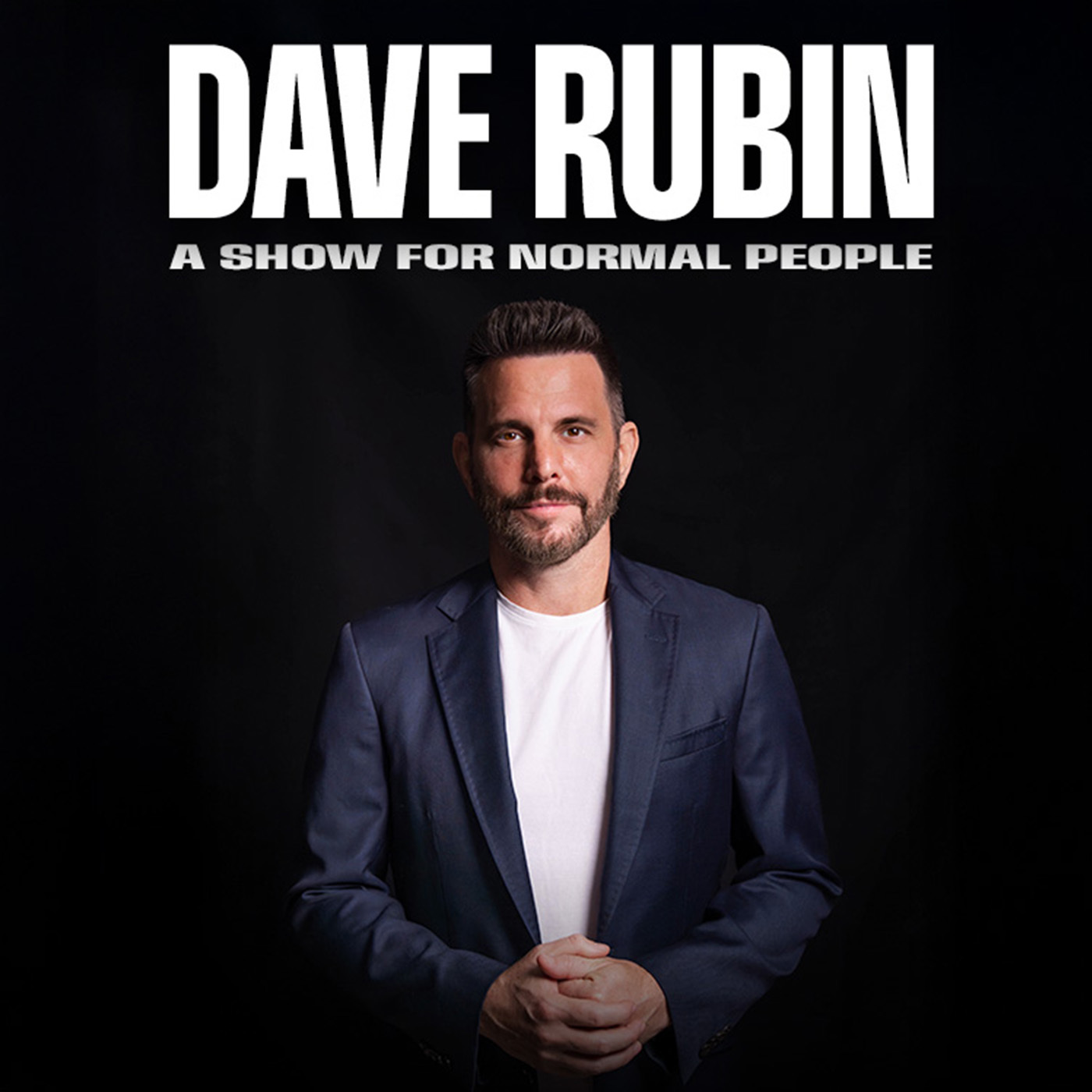
I'm Dave Rubin, this is the Rubin Report. And joining me today is the former political director to the Prime Minister of Hungary, Viktor Orban, as well as current member of Hungarian Parliament and an incoming member of the European Parliament in Brussels, my friend Balash Orban. Balash, how are you?
- [01:27]
A
Hello. Hello, Dave. Thank you very much for having me. We're still alive, which is the good news. Well, we cannot be.
- [01:34]
B
How are you?
- [01:35]
A
Happy Independence Day.
- [01:37]
B
Thank you. Well, I'm very happy to be an American today and always. And I should note that we connected for about 30 seconds before we started recording this. I said, how are you? You said, don't lose elections. So I think people will know a bit about what we're gonna talk about.
- [01:55]
A
But as your president says, keep winning,
- [01:58]
B
keep winning, keep winning. Well, we have to keep winning. And we're going to talk about obviously the somewhat precarious position that you find yourself in at the moment and that Viktor Orban and let's say like minded people do in your country. And you know, we're only a few months away from what could be something similar in our country, depending on how the midterms go. So there's a lot of parallels here. And you know how I've just fallen in love with Hungary and the people there and you've been so integral in that. So I'm interested to talk to you on a couple fronts. So when I saw you back in March was at cpac Hungary, it was about, I think two or three weeks before the election. The general feeling, at least in that room, was that Viktor Orban was going to win. It was going to be a little bit closer than perhaps you would want it to be, but that the bulwark against the eu, the globalists, whatever you want to call it, was going to stay strong and still be centered in Hungary. That did not happen happen. So where are we at? Well, I suppose what went wrong first and then we'll get to the current day.
- [03:03]
A
Well, you know, we won five consecutive times elections. So 16 years in power, that's a. That's a long time. And the last four years, I have to say it wasn't easy because in our neighborhood there is a war. The Ukrainian Russian war. It affects not just the security of everyday, the life of everyday people, but also the economic situation. You know, utility costs are going up, energy prices skyrocketing, inflation is there. And we Hungarians were fighting very heavy to. To try to represent the interest of our voters against Brussels. Because here in Europe they are the ones who are pushing the strategy on the war, on the sanctions, on the green trans. On the migration issue, they making very bad decisions. We try to convince the majority of the Hungarian voters very hard that it's worth to fight for your country, fight for your sovereignty, even if it makes you unpopular among the Brussels elites. I would say we Hungarian conservatives were quite well known all over the world, but we were not liked by the Brazilian liberals.
- [04:23]
B
So how much.
- [04:24]
A
And they came after us very hard.
- [04:26]
B
Yeah, so. So how much of that do you think in some sense was a function of success in that, as my audience has seen, because I've been there three times in the last three years. I mean, clean, safe cities and, and a flourishing economy. And that you kept the migrants and the, you know, in essence, you kept the invaders out. You protected your own borders, you paid a price for that. That in some sense, do you think it's just that the people of Hungary did not realize how good you had it other those other issues notwithstanding. That's not to say everything is perfect,
- [04:59]
A
obviously, of course, and there's still a lot to do. But you know, ordinary average Hungarians, they've grown up in this safe and sound environment and they took it for granted and they were looking for something new. They were looking for change. The guy himself who became the prime minister use the words hope and change. These are very familiar to the American ears as well. And they were saying that everything can be much better without giving up anything actually. And you know, they are still in a honeymoon period phrase just 50, 60 days after the election. But, but the truth is coming up like, like they had to giving up many issues against Brussels in the field. Migration, gender, ideology. So we had to accept the migration pact. Rainbow flags are now all over to the. To the streets of Hungary. And you know, the liberals, I. I would say they can Especially this con, this progressive type of new liberals. They are very much authoritarians. So they go after you and they go after the political opponents. And this is what's happening right now. So I hope that it's going to be an eye opening for the Hungarians. They realize that, you know, if you support the values, you have to stick for that. It's also the case that 2.5 million people voted for Fides. So now we are in opposition. We were, they were portraying us as autocrats, but it turned out that we are democrats if we lose the election.
- [06:49]
B
Right. Victor did not fight the election results. They're now fighting him, which we'll get to in a second.
- [06:55]
A
Yeah. Yes, we went to the opposition and now we are fighting for our voters and fighting for the survival of the country. So the job is the same, just the position is different.
- [07:06]
B
So explain something to me. So the new Prime Minister, Peter Magar, what a lot of people were telling me about him when I was there was that, oh, he's not some like lefty crazy person. He's sort of conservative, but just probably not as strong as Viktor Orban. So the sense was kind of, oh, if he comes in, maybe it just won't be that bad. But I suspect that's not what your take is now. Or that's pretty obvious.
- [07:35]
A
No. And you know, that's a usual trick in Europe. So in Europe, how the Brussels mainstream is keeping power is that they always grab people and politicians and political parties from the right. They turn them as to be centrist and they get united with the left together and they form a coalition against the patriots or the sovereignty forces, so to say. And, and they try to represent the interest of liberal Brussels policies. This is everywhere. This is what's going on in Germany. If you think about Merz, Friedrich Merz, German Chancellor at the beginning he seemed to be a conservative person, but he governs together with the, with the leftists, same with Macron, same with Donna Tusk in Poland. So I would, I would call it a usual mainstream European liberal playbook where you try to find somebody who looks like a conservative, gets united with the left and turns the country into a direction which is honestly not supported by the majority of the people.
- [08:47]
B
Okay, so now they've got Magar who's, you know, he's a young, good looking guy. You mentioned this hope idea. So there are some strange parallels, I guess you could say to Obama. But he's doing, it seems to me he's doing some pretty nefarious things right out of the gate. Can you mention a few of the things that he's doing electorally for future elections that I mean quite literally affect not only Viktor Orban, but you. And again, you're not related to Viktor Orban, just the same last name, but that, that affect you guys and your ability to run in the future.
- [09:17]
A
Well, you know, when we came into power in 2010, our first decision was a symbolic one. We provided citizenship for the Hungarians who were living abroad. So outside the country of Hungary, that was a big symbolic gesture, very important for all Hungarians. And guess what was their first and symbolic decision? They actually banned the Hungarian people to reelect Viktor Orban if they would want to do so. So actually they changed the constitution and they were saying they accepted the lex Orban where they were saying that he's not allowed to vote Viktor Orban again,
- [09:57]
B
as a Prime minister, what was their rationale? I mean, I mean I understand like the private rationale, but what was their public argument?
- [10:04]
A
In the public argument was that you cannot have a Prime Minister for more than eight years. You know, in Hungary that's a parliamentarian system, not presidential system where it's completely normal. But in a parliamentarian system the Prime Minister is elected by the mp, so the member of Parliaments and, and the, the usual thing is the term is unlimited for the PMs. But they accepted a law, so a constitutional modification where they were saying that you cannot be Prime Minister for more than eight years. And it of course affect Viktor Orban's ability to come back as well.
- [10:50]
B
What is this? Well, what do you think Viktor Orban thinks about this now? I mean, is he worried that this is going to end up in some sort of banana republic stuff where they're going to try to jail him and a whole bunch of other things?
- [11:00]
A
I mean, well, unfortunately it seems that that was only the beginning. So now they introduced a new constitutional change where they were saying that if you are an elected member of parliament for like 12 years, you cannot be re elected again. So of course it goes against the fides and the right wing conservative politicians who are in power, who are like elected politicians for a long, long time. And now they want to terminate the mandate of, of the President. In, in Hungary the President's role is very symbolic, but he is the one who is signing the, the new laws. So it, they just introduced a constitutional change that the current president's mandate ends and they of course want to have a new one who would be like party oriented puppet figure. I think this is the beginning of a constitutional crisis. So if you want to push the country into a constitutional crisis. This is exactly what you should have to do. And honestly, I don't understand why they doing that. I understand that they want power and more power, the better for them. But, but they won the election with a super majority, so they can technically do anything what they want. But now they're using that power to go against their opponents, just like it happens in the United States and it happens in so many places all over Europe. In France, you know, they want to jail the most popular candidate. Presidential Action Secret Service is going against the most popular party leaders in Germany. Election was canceled in Romania, if you remember. So, so the signals are very varying.
- [12:55]
B
Right. And as you point out, what's interesting here is that they just did it so quickly because they won the election fairly handily. So you'd think they'd say, okay, we can do a few things before we need to do all the, all the sort of crazy stuff. And yet that that isn't the case.
- [13:09]
A
Yes. And you know, during the election campaign, we made the calculation, they had 1,200 certain premises like this, good, this is going to be better. This is going to be better. This is going to be, you know, salaries are up, unemployment rate down, taxes down, and so on and so on. But they are not doing anything actually, so they are not dealing with, with these issues. They are using their power just to go against their political opponents and, and secure power. And my question is, you know, if you just won an election against Viktor Orban and you pretend that you are the new guy, why are you so afraid of him coming back if you are ready to keep your promises? So. Right. I mean, yeah, my fear.
- [13:59]
B
Well, it's just this incredible way of basically doing everything that you accused him of doing is exactly what they're becoming. I mean, it's. I want to read to you something. You posted this on Twitter, but it's from our friend Rod Dreher, who wrote Live not by Lies, and she wrote, Hungarian voters turn their country from an icon of national conservative resistance into just another small secular, liberal European state with a globalist system as a model for Maga and other nationalist conservatives in the West. Hungary is over. I've. I've had dinner with you and Rod several times and I think he's one of the clearest thinkers we've got. That's, that's pretty depressing. I mean, what, where do you see hope right now? If you see hope?
- [14:45]
A
Well, these are, are hard words, but unfortunately it's true. So what? You can wait for what you can expect from the current Hungarian government is just that they are going to be very similar like the other European governments, Germany, Poland and France. But unfortunately my problem as a politician, as a national conservative politician is that in Europe things are going to a really bad direction. So it's not just the business as usual where governments can come and go. And you know, no one really cares about the policy shifts, especially not in the field of international politics, especially not in connection with a medium sized European country like Hungary. But nowadays the situation is really complicated. We have the war, there is a serious risk of escalation. European economy is really going down. The migration issue is not solved at all. We're just going to the other way around. So we try to pretend that everything is okay, but it's far from being okay. Hundreds and hundreds of thousands of people are coming in every day to Europe. You see the social tensions and there is this power center which is coordinated and supported by financial means, Liga means from Brussels and it is trying to control everything. You know, like in the uk, Keir Starmer was the most popular politician two years ago. He, he was. Everybody was expecting change and, and something, hope and something good. And then just in two years time things became really ugly and their only idea was how to go against those people who are criticizing them on Facebook. So I think what hope. We need hope and the hope comes from Europe and we European national conservatives have still the responsibility to fight for our country's future. If it's not from a governmental position, then it has to be done from the opposition. Opposition, but it has to be done because otherwise this continent cannot will keep continuing to keep, continue to go down.
- [17:08]
B
So what has changed, if anything has changed at the border so far and if, if the answer to that is nothing, I mean you anticipate changes, right? Because I mean the main thing at CPAC was we're a strong independent, sovereign nation. We're going to pay the million dollar euros every day to keep our borders closed. Something is going to change with that. Has there been any announcements on that?
- [17:32]
A
Well, so the so called migration pact came into effect. It is a new regulation which is celebrated by all the centrist former conservative political for. And they are saying this is the solution, this is how we are going to solve the migration problem. But if you scan through the text you see that the opposition actually it's the opposite what is inside the text. And it's not surprising because it was supported by the left as well. And you know, according to this new pact, if somebody enters a European country then all the other member states should take responsibility for that migrant and they have to relocate the migrants. So if somebody is showing up in Spain, for example, we Hungarians have a responsibility to take the migrant. That's issue number one. And the second is like, they are still in love, honestly, politically, with the idea of open refugee camps. And the pact itself puts an obligation on all the member states to open these huge refugee camps which are not closed. People can move freely from these camps. And actually it means that sooner or later the border protection has to be limited and we have to let people in. And I think this is where you lose the game and you lose all your chances because the only chance you have is to stop the people, at least on your borders, and not letting them in unless you want to let them into your country. This is the basic idea behind border control. And the migration pack, which is a celebrated legal framework, is actually working against this basic idea of border control. So now the technical configuration is going on, but I'm expecting sooner or later migrants will realize that the new path is open and they will put, put big pressure on the Hungarian borders.
- [19:46]
B
It's just, I mean, I know nobody watching this is surprised, I suppose, but it's just so incredible after 16 years of doing it right. And in essence, in essence, you guys now voted in what, what is, what has destroyed so, so much of Europe.
- [20:01]
A
Yeah. And you know, I was, I was working in the European Parliament and by coincidence I ended up on the courtyard of the Greens. So Green Party, which is a very, very liberal.
- [20:14]
B
They let you over there?
- [20:16]
A
Yeah, yeah, yeah. They didn't know who I am. Most probably this is why I survived. But, you know, and there were signs on the walls and like all these pro refugee signs, like, like refugees welcome. Bring your families and relatives. We let all of them in. So it's, it's, it's, it's a suicide. It's, it's a dangerous, suicidal experiment which is going on and it's managed and it' by the Brussels institutions, supranational institutions. And the only chance you have is to protect your national sovereignty, where you can say no if you want.
- [20:53]
B
So in that you are going to spend a little more time in Brussels now. I mean, can anything be done? I mean, this is the same stuff everyone's talked about for, you know, a decade now, about how backwards everything is in Brussels and the globalists and all that.
- [21:08]
A
Honestly, I think that after so 2015, the mainstream was, was, you know, like pro refugees welcome and everybody can get in. And then like in a Couple years time, many of the politicians are started to realize that actually the people are rebelling. So they are not accepting this way of understanding. So that was a, there was a first wave when new politicians came, new faces who pretend that they are like, they have different views on migration, they are more tough on the migration issue. But in reality nothing happened. This is what we were talking about, you know, and we are here for like 11 years and everybody is celebrating a new law and people will just in couple of months time realize that oh, nothing happened actually everything became worse and worse. So I hope that the second wave will be about that. People will realize that, you know, we need more, we need stronger leaders like we need, we need those who take these things seriously, not just talk about it, not just pretend that they care, but they really take it serious and they have an action plan how to change the legal financial framework and how to support really the European member states to protect their borders and keep the people out. Because otherwise it's European continent as we love it, it's gone.
- [22:46]
B
What type of leadership would you like out of the US to whatever extent the US has influence at this point with, with the EU and with these, you know, internal migration situations.
- [22:58]
A
Honestly, I think, honestly I think that when President Trump and Vice President J.D. wanz is talking about the European migration problem, they just added truth. And like every single normal, rational individual person in Europe knows that, that they just tell the truth. So it's not an anti European position, it's a pro European position and they want to help. So I hope that we will be able to unite ourselves because that's a Western civilizational problem. And many things should be done on international legal frameworks. For example, UN regulations should be changed, international organizations regulations should be changed. International court's way of interpreting the law should be changed. And this can only be done by us Westerners together. So I'm expecting that President Trump and Vice President J.D. vance and the entire administration keep pushing that agenda further and they are looking for partners among the European governments. And we Europeans shouldn't be frustrated about someone is coming and telling the truth, but we should come together and find solutions because otherwise the problem will remain here and will be worse and worse.
- [24:37]
B
How worried are you that the ship has sailed? To some extent, you know, even in the US One of the things I've been talking about lately is okay, so we, we close the border. That's one thing you have to do. You guys previously had done that. Then you have to do deportations. A lot of people I would argue we haven't even done them fast enough here, but EU certainly is not doing them anywhere fast enough. But then it's also, there's a huge home grown problem. You don't have that in Hungary yet, but they absolutely have that in the UK and in France and in Germany and some other places. So that the numbers at this point are just so massive that to extricate yourself out of this is going to take a series of decisions that almost no leader will be willing to take. Really to your point that these leaders come in on the right and they end up, you know, aligning with the lefties and then they're sort of center lefties at best. Well, but that it's, that it's just a numbers thing.
- [25:27]
A
Yeah, but you know, honestly. But this is, this is the people's expectations. So like in Europe right now, the people's expectation is quite simple, especially invest in European countries. First they want somebody who is having an idea of what should be done on the issue of migration. That's number one. So come up with a plan. It has to be based on rule of law. It has to be based on serious legal and political coordinations. But, but still like trying to fix the problem. If it takes time, it requires energy. If you have to invest in it, they are ready to support it. You just have to be honest and outspoken with them about this issue. And the second one is the economy. Like, like they just simply, they, they have an everyday experience that the European economy is going down so there's an economic decay or at least stagnation. And they just want to have a serious strategy how to overcome the difficulties. Unfortunately, what I see as like most of the European countries now, they are in a, they are in a proxy war with Russia which was the biggest energy importer to Europe. They are in a, in a trade war with China and they are with the political, technological and trade war with the United States of America. America. So I don't see the strategy behind it. So honestly, I think Europe is in a situation where European people would ready to take tough decisions and ready to make sacrifices as well. Just they want someone who is capable and ready and honest and transparent with them.
- [27:30]
B
Well, we shall see about that. You've referenced the war a couple times. Obviously Viktor Orban was probably the loudest, most influential figure figure in Europe. Sort of, you know, just saying we shouldn't be involved in this. In essence, that's a bumper sticker version of it. How does this election change Hungary's stance on that? And, and what do you make of where the war is at. I mean, we're barely talking about it from an American perspective at this point.
- [27:56]
A
Yeah, well, so we still talk a lot about it here in Europe. It's in our neighborhood. There are really bad signs of escalation. So the situation is not getting any better. Thousands and thousands of people are dying weekly on the front line, both sides. That's a very, very sad story. It's a, honestly, it's a tragedy. And people in Hungary, the overwhelming majority of them are, they want peace and they don't want Hungary get involved. Unfortunately, we have now a government which is in line with the Brussels policies where, where they say that, you know, you should what we should support Ukraine with any mean financially, weapons, military equipment and, and in longer term, like with soldiers. And this kind of supportive preparatory work is going on. And of course the new Hungarian government, during the campaign they were saying that they are not going to change the policies. But immediately after the election they accepted the new framework where they were saying that they are on the Ukrainian side with the war. And there is a big debate about Ukraine fast track accession to the euro, which would, according to our understanding, cause serious problems for European security, agriculture, economy and so on. And of course they immediately gave a green line to Ukraine. So the process started very, very early in that.
- [29:42]
B
You guys have survived communism, you've survived Nazism, you're a small country. The problems because of good governance for 16 years haven't escalated to the crazy point yet. I mean, is that really the strength that, that you still have some defenses even though this is obviously a massive problem? Everything you've described here?
- [30:05]
A
Well, well yes, but you know, like we have, we have a common sense based society and they, they were taking politicians seriously. What we were telling them during the campaign is that we have huge problem because the situation around us is very complicated. So we have to defend ourselves and we have to protect what we achieved. And the new guy came and he was saying, you know, things could be much better without changing any significant strategic direction of the country. People took him also seriously and they choose to accept that offer. But if they realize that things are changing and the strategic directions getting to be different, I'm pretty sure that the Hungarian people will say, oh, this is not. We were waited for. They still against migration, they still against the crazy gender ideology. They're still against the war. They want clean streets and functioning state and the productive economy. So I'm, I'm pretty convinced that in central Europe and in Hungary the people's mind is still very much in line in general with the national conservative thinking. Now we are representing them from the opposition. But one day it will change. If the pressure grows and the liberals try to take over the country, especially from abroad, then we have to resist. And this is what we are doing, what we were doing for centuries. So we have quite a good experience on that.
- [31:50]
B
Yeah. Well, in the spirit of our 250th yeah, you guys have a little history of fighting for your nation and hopefully everything will be okay. Well, whether it is on the River Danube or whether it's in Biscayne Bay here in Miami, I hope to see you soon and good luck and I'll keep shining a light on this. I think it's important and I wanted to visit repeatedly when things were going good and obviously things have taken a little bit of a turn and I'd obviously still be willing to come back and hopefully, hopefully freedom will prevail.
- [32:21]
A
Thank you very much, Dave. I appreciate. God bless.
- [32:24]
B
Thanks.