
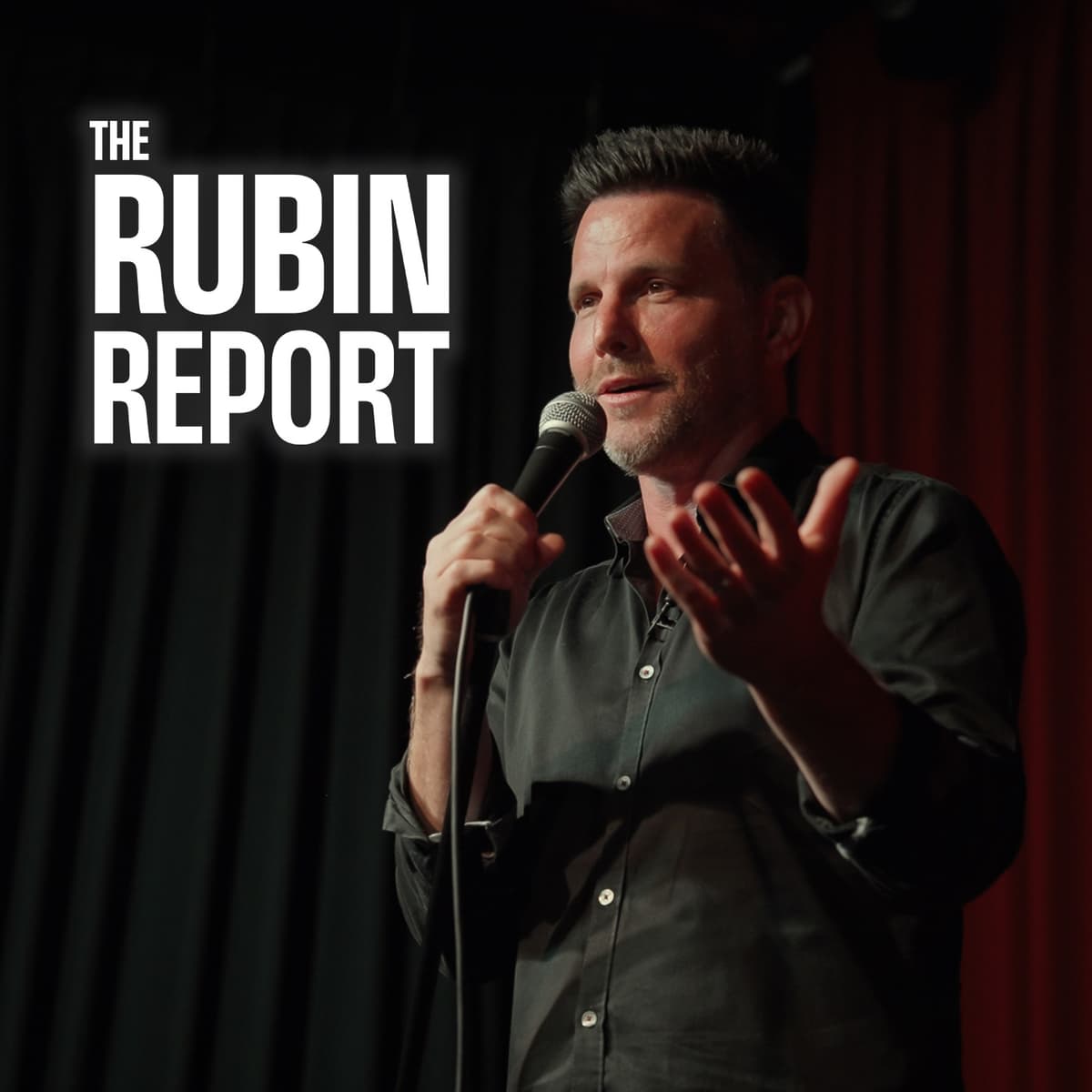

Podcast Summary: The Rubin Report
Episode: "Jimmy Kimmel's Audience Shocked at How Sick He Actually Is"
Date: January 9, 2026
Guest Panel: Michael Knowles (The Michael Knowles Show), Batya Ungar-Sargon (NewsNation)
Host: Dave Rubin
Overview
This Friday Roundtable features Dave Rubin, Michael Knowles, and first-time guest Batya Ungar-Sargon. The episode dives into recent current events, focusing on issues surrounding law enforcement, partisan reactions to high-profile incidents, mainstream media narratives, U.S. foreign policy—especially Venezuela—and a critical look at internal debates among conservatives. The tone is candid, at times sarcastic, and focused on the big themes of law, order, media distortion, and shifting political alliances.
Key Discussion Points & Insights
1. Political Diversity of the Panel
- Rubin sets up the roundtable as representing a spectrum: Batya as an "FDR leftist" now Trump-curious, Rubin himself as a "definite former lefty," and Knowles as "a man of the right."
- [02:05] Rubin: "We have someone that still associates with the left, a definite former lefty, and a man of the right. Can the three of us get along for the next 45 minutes. Let's find out."
2. Minneapolis ICE Shooting Incident
- Full breakdown of the video and reactions:
- Knowles insists the agent's actions were justified—the woman drove her car into a federal agent, and the resultant shooting was tragic but due to "years of [Democratic] politicians telling citizens they can obstruct law enforcement."
- [03:53] Knowles: "I think the officer, the federal agent, was entirely justified and in fact had a responsibility to stop a person who's about to run someone over, himself included... she really thought there would be no consequences."
- Batya places blame on "affluent white progressives" who mislead people for ideological causes, notably defending laws broken in the name of activism.
- [06:03] Batya: "The people who constructed the fantasy on which this woman died are out there watching the same video as us and just cannot see it. They are literally blinded to the fact."
- Knowles insists the agent's actions were justified—the woman drove her car into a federal agent, and the resultant shooting was tragic but due to "years of [Democratic] politicians telling citizens they can obstruct law enforcement."
3. Media Reaction and Narrative Manipulation
- Rubin and Knowles criticize Jimmy Kimmel and media figures for hypocrisy and dangerous rhetoric, particularly focusing on Kimmel's comments post-shooting and the tendency to "create unrest" by misrepresenting facts.
- [09:37] Rubin: "Why is it okay that he wants people from Somalia to wander into Minnesota, bilk the system and then have brainwashed middle aged progressive women die in the name of that cause?"
- Supremacy Clause & State vs. Federal Authority:
- Discussion around Minnesota officials allegedly calling for "insurrection" against federal law enforcement—in marked contrast to their condemnation of January 6.
- [11:45] Rubin: "It is far more of an insurrection than anything that happened on January 6th."
- Discussion around Minnesota officials allegedly calling for "insurrection" against federal law enforcement—in marked contrast to their condemnation of January 6.
4. Media, Protesters, and Asymmetric Narratives
- Clips played of mainstream coverage downplaying or misrepresenting law enforcement actions and protest violence.
- [15:21] Rubin: "It's days like this that guys like us really appreciate leaving that Los Angeles shithole, isn't it?"
- Knowles mocks coverage: [15:33] "They were peaceful flames, Dave. I mean we're trying to be fair here, right? Those were a totally non threatening peaceful rioters and assailants."
- Batya notes the difference in how protests treat CNN ("the good guys") vs. less left-aligned outlets.
- [17:36] Batya: "CNN are the good guys because they know they're going to give them fair shakes... this understanding between the reporter and the protester."
5. Venezuela—Foreign Policy Success
- Discussion shifts to Trump administration’s operation in Venezuela ("Maduroed"), the successful removal of Nicolás Maduro, and the three-step stabilization plan (stabilization, recovery, transition) as described by Marco Rubio.
- [21:39] Rubio: "We are in the midst right now and in fact about to execute on a deal to take all the oil they have... we're going to sell it in the marketplace at market rates... that money will then be handled in such a way that we will control how it is dispersed in a way that benefits the Venezuelan people, not corruption, not the regime."
- Batya lauds the "maturity" and competence of Rubio and the administration, calling the move pragmatic, beneficial for the U.S., and a departure from the failures of previous regime change efforts.
- [22:04] Batya: "You are so right, Dave. The word maturity really comes to mind here because what they did was they went in and managed to get the leader out without destabilizing the country."
- Knowles highlights that even former critics have been mollified, with the operation satisfying most political factions and achieving U.S. strategic aims vis-à-vis China, Russia, and Iran.
- [26:14] Knowles: "Trump managed to mollify both the hardcore neocons... and the restrictive isolationist types... Satisfied like everybody, including the Democrats, just not CNN."
- Batya: "You didn't even realize this was... possible, that you could have an administration that just every cabinet member was answering to the President and his one goal was to make America more prosperous and safer." [29:11]
6. Updated Childhood Vaccine Schedule
- Announcement: Trump administration reduces recommended childhood vaccines from 72 shots to 11, offering parents more flexibility—praised as aligning the U.S. with other developed countries.
- [37:31] Rubin: "America will no longer require 72 jabs for our beautiful, healthy children."
- Discussion diverges into class disconnects, the Kennedy family's privilege, and whether these health-focused measures address deep-rooted socioeconomic issues.
- [39:35] Batya: "Americans are unhealthy because they are fat and they are fat because they are poor. And Bobby Kennedy doesn't know this cuz he doesn't know any poor people."
- Knowles and Rubin counter that changes to the food system and vaccine schedule are meaningful and that, despite increased prosperity, health has declined, suggesting systemic problems with food and health guidance needing regulation.
- [41:21] Knowles: "A big part of that is we do have a bunch of unhealthy stuff and addictive kind of stuff in our foods, which probably requires a little bit more regulation, which is the exact kind of thing Bobby Kennedy campaigned on..."
7. Working Class & Party Realignment
- Batya points out that the GOP is now "the party of the working class" while Democrats are the party of the rich, urging Republicans to stop giving tax breaks to Democrats, who then fund policies she says harm working class interests.
- [43:31] Batya: "Now the Republicans are the party of the working class and the Democrats are the party of the rich."
- Extended discussion about housing costs, tax policy, and the impact of immigration on wages and rent.
- Praise for Trump's move to ban investment banks from buying single-family homes.
- [46:07] Batya: "Trump did a big thing this week. He made it illegal for investment banks to buy single family homes. This is incredible, incredible news."
8. Vaccine Skepticism & Anecdotal Evidence
- Rubin plays a Jenny McCarthy clip; Batya warns that anecdotes should not drive policy ("anecdotally feels true and isn't true"), expressing concern over the spread of anti-vaccine sentiment.
- Knowles shares his family's personal approach (some kids vaccinated, some not) and notes massive increase in recommended jabs since childhood, advocating for more parental choice and transparency.
- [49:49] Knowles: "When the preeminent public health officials lie to you and get caught in multiple lies in a short period of time, then it's actually reasonable to at least entertain some of the alternative theories."
9. Property Ownership, Identity Politics, and New York Governance
- Batya and Knowles mock a New York official’s (C. Weaver) comments about switching property from a private to collective good, with Knowles ridiculing the "euphemisms" of the left.
- [54:45] Knowles: "All of liberalism boils down to screw you, dad."
- They discuss the hypocrisy of wealthy progressives pushing anti-property, anti-white rhetoric, and the shifting tolerance for such discourse.
- [53:24] Batya: "Like, actually, no, it's not okay to say disgusting things about white people. You know, like, actually, no, you're not allowed to just act like they are the enemy and you're not allowed to take their property."
10. Right-Wing Media Ecosystem, Intra-Conservative Debates & 'Content Creator' vs. Grassroots Gap
- Rubin and Knowles lament right-wing infighting, especially among content creators—a split that seems divorced from policies or candidates and more about personalities and clicks.
- [58:54] Knowles: "I find the fighting on the right to be interesting in that it's not really about actual policies most of the time... It's all within the chattering class."
- Batya argues there’s a widening gap between the online right and the actual working-class Republican base; urges the “content class” to get back in touch with real voters.
- [61:37] Batya: "You see this again and again and again. You know, the content creators were against The Venezuela thing, 99% of Republicans loved it... It's just so alien to how Americans sound."
Memorable Quotes & Moments
- Rubin, on partisan division:
"A death on camera, but it ain't surprising after we've been dealing with this." – [08:20]
- Knowles, on activist violence:
"We used to know that, and we have to know it again." – [05:34]
- Batya, on left-wing elite activism:
"The construction of myth upon myth upon myth with the sole purpose of demonizing half of the country and leading to tragedies like this." – [06:03]
- Batya, on GOP identity:
"Now the Republicans are the party of the working class and the Democrats are the party of the rich." – [43:31]
- Knowles, on leftist hypocrisy:
"All of liberalism boils down to screw you, dad." – [54:45]
- Rubin, on vaccine schedule changes:
"America will no longer require 72 jabs for our beautiful, healthy children." – [37:31]
- Batya, on extraordinary government competence:
"You didn't even realize this was... possible, that you could have an administration that just every cabinet member was answering to the President and his one goal was to make America more prosperous and safer." – [29:11]
- Knowles, on the conservative "all star cast":
"This is the NBC 1984 sitcom lineup that we all wanted." – [31:16]
Notable Segment Timestamps
- [02:05] Setting up the panel's political differences
- [03:53, 06:03] Detailed discussion of Minneapolis ICE shooting
- [09:37–11:45] Media narratives & Kimmel's comments analyzed
- [15:33–18:09] Mocking peaceful protest coverage and CNN’s reputational gymnastics
- [21:39] Marco Rubio lays out Venezuela plan
- [22:04–26:14] Panel praises Venezuela operation and discusses realignment in foreign policy
- [37:31–43:31] Childhood vaccination schedule overhaul; health policy and class divides
- [54:45–57:33] Satirizing New York leftist property rhetoric and personal anecdotes about leaving blue states
- [58:54–63:48] Intra-right infighting and Batya’s warning to conservatives about losing touch
Tone & Style
The episode is marked by skepticism of mainstream media, a populist-conservative outlook, and sarcastic humor—often at the expense of left-wing elites and institutions. The discussion is rapid, unscripted, sometimes winding, and peppered with in-group jokes and jabs at well-known figures (Jimmy Kimmel, CNN, the Democratic Party, leftist activists).
Takeaways for New Listeners
- The show showcases honest and sometimes combative debates between panelists of different backgrounds, though there is often consensus on broader conservative critiques of media, policy, and culture.
- Key stories covered include law enforcement controversies, the relationship between state and federal authority, media manipulation, and U.S. foreign policy victories.
- Recurring themes: The impact of media on public perception, the importance of enforcing law and order, skepticism toward both mainstream and online partisan narratives, and the need for authenticity and competence in government.
- Memorable moments: Candid admissions about privilege, humor about political realignment, and personal anecdotes highlight both the gravity of the news and the personalities that deliver it.
For Full Context…
Those interested in law enforcement, the modern media landscape, American foreign policy, and the ongoing reshuffling of political tribes (and their internal infighting) will find the episode engaging and illuminating—even if they aren’t aligned with the panel's worldview.